Just International

What I Saw on Election Day in Nicaragua

By Rick Sterling

10 Nov 2021 – US media and politicians have condemned the November 7 Nicaragua election as a “fraud” and “sham”. On the day of the election, the White House issued a statement saying Nicaragua held a “pantomime election that was neither free nor fair, and most certainly not democratic.”

But are these accusations true?

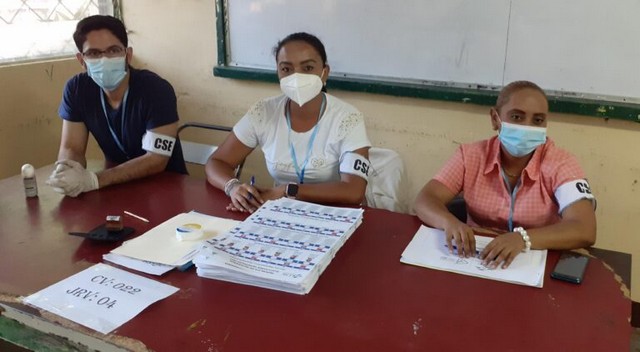
Along with other international volunteers, I was an eye-witness to the election last Sunday. Previously I have been an observer in elections in neighboring Honduras. Here is a snapshot of what I saw:

Our group of 6 people (two from Canada and four from US) visited three voting centers and twenty voting stations in the small city of Juigalpa in Chontales province.

At 7 am Sunday morning, there were long lines of voters. Hours later, there was still a steady of stream of voters. Election staff said the turnout seemed higher than the last election.

Voters were all ages.. Nicaraguans can vote starting at age 16. There were lots of families coming to vote together. There were kids playing on swings while their parents voted. There were very old or disabled peopled voting. Family members were allowed to help them if needed. Otherwise election staff helped them.

One elderly woman got dizzy and almost collapsed as she was to enter the voting station. She was adamant that she wanted to vote before taken away. The ambulance arrived in about five minutes and she was taken to hospital despite her protestations that she wanted to vote first.

The process was well organized and efficient. At the entrance there were staff with computers. They scanned the citizen’s ID card, confirmed the identity and that he or she was registered for this voting center. Then they explained which voting station to go to. The voting station assignments were also printed and taped to walls at the entrance.

There were 3,100 voting centers with 13,459 voting stations throughout the country. These are mostly in educational institutions (schools or colleges). Each voting station serves about 400 voters. In urban areas, there are 10 or 20 voting stations in one voting center (school).

A huge number of people staffed the election process. At each voting station, there were about ten people performing various tasks: two “electoral policia” for sanitary spraying the hands of each voter and to resolve any issues; three people verifying voter ID, recording the signature, and passing out the ballot; two or more “fiscal” from different parties who monitored the process. At each voting center, there were two co-coordinators. At all positions there were equal numbers of men and women.

All election staff wore vests or t-shirts with their official role as part of the Supreme Electoral Council. In Nicaragua this organization is independent of the government and responsible for organizing the election nationwide.

All voters wore masks and proceeded without difficulty, one person at a time. The process was clear: show your identity card and confirm that you are registered to vote in this station; receive an official ballot; mark your choices on the ballot (secretly); deposit your ballot in the ballot box; receive your identity card back; have your finger painted to indicate you have voted and to prevent double – voting.

The paper ballots were counted at the voting station and verified by all the party representatives. The results were then transmitted electronically to the Supreme Electoral Council headquarters for tabulation of the final results.

Media accusations that FSLN leader Daniel Ortega was running unopposed are blatantly false. The voting ballot was clear and showed six competing parties. Media reports that the population is fearful of President Daniel Ortega are laughably false and disproven by the large turnout. The final results show a turnout of 65% of registered voters with about 75% of those voting for FSLN.

We asked “fiscal” monitors representing both the Sandinista Front and opposition parties if there had been any problems. Each time they said the process was proceeding calmly -“Todo tranquilo”. One would-be voter said he had moved and not been able to register his new location because he was too busy working. The voting staff calmly said, “Sorry, you had months to register your new location. You will have to vote at your old residence voting station.”

We asked numerous voters why they were voting. The answers were that the country’s leadership matters, the constitution requires it, and to protect Nicaraguan sovereignty. “Sovereignty” and “peace” were the most common responses.

It is ironic and hypocritical that US media and politicians, who reject any question regarding the integrity of the US election, smear the Nicaraguan election based on false information. Biased media and information censorship are a major cause of the lack of knowledge and ability of major news outlets to repeat nonsense without correction. An example: While we were in Nicaragua, one of our team members, Dr. Tim Bood from Halifax Canada, was banned from Facebook just for posting a message regarding US interference in Nicaragua.

Washington politicians carry on the long tradition of US interference and aggression against Nicaragua. A few days before the election, the US Senate passed the RENACER Act imposing more sanctions based on false information about the election process in Nicaragua.

The high turnout and vote for the FSLN in the Nicaraguan election shows that the Nicaraguan people are not intimidated by Washington’s bullying and threats.

Rick Sterling is a member of the TRANSCEND Network and an investigative journalist who lives in the SF Bay Area, California.

15 November 2021

Source: www.transcend.org

Informed Consent on Behalf of Children

By Diane Perlman

A Checklist for Pfizer BioNTech Injections for Ages 5 – 11

“… We’re never going to learn about how safe this vaccine is unless we start giving it.”
– Professor Eric Rubin of Harvard University, testifying before FDA’s Vaccines and Related Biological Products Advisory Committee, 26 Oct 2021, on myocarditis and deaths, before voting to approve.

Vaccines and Related Biological Products Advisory Committee – 10/26/2021

14 Nov 2021 – Children are not capable of informed consent. Most parents and guardians trust the FDA, CDC, school authorities, and mainstream media. Most believe that the mRNA shots are necessary, safe, effective, and the only way to safely open schools, have parties and sleepovers, hug grandparents, travel and finally end the Covid pandemic.

For children under 12, there is no adequate safety data, and none on myocarditis, a disabling, life-threatening heart condition that only appeared after clinical trials on young people, mostly males. Athletes around the world are dropping dead on the field from heart damage. The experiment begins now.

Pop-up “clinics” are being rushed out to schools and other places around the country to mass “vaccinate” children as quickly as possible. Here is an example of a consent form, and another. They left a few things out.

The risks of injecting children are not trivial and some may be irreversible. Based on the data from Israel and 12 – 17-year-olds, adverse events, AEs, serious adverse events, SAEs, permanent injuries and disabilities and deaths are inevitable.

I am bound by a personal and professional ethical duty to warn, and familiar with the the Nuremberg Code which requires fully informed consent, so I created this consent form on behalf of children. It can be printed and the second side can be checked and signed. It is also pasted in the text below.

Fully Informed Consent Checklist For Pfizer Biontech Injections For Children ∙ PDF File –Read now

Lack of Safety Data

Studies used to justify approval for children from 5 – 11 were conducted on very few subjects and followed for a ridiculously short period of time. Subjects who had adverse reactions were eliminated from the study. There is zero information on potential long-term effects. And, there are at least Ten red flags in the FDA’s risk-benefit analysis of Pfizer’s EUA application to inject American children 5 to 11 with its mRNA product.

Loving, protective, frightened parents believe there was a legitimate, independent, scientific process that led 17 of 18 members of FDA’s Vaccines and Related Biological Products Advisory Committee (VRBPAC), with financial ties to Pfizer 2021, to vote that the benefits outweighed the risks. Dr. Michael Kurilla abstained having voiced concerns. All 14 members of CDC’s Advisory Committee on Immunization Practices (ACIP) voted for approval on November 2.

At all of these meetings they wildly exaggerate the threat of Covid for children, ignore the data, dismiss natural immunity, and minimize, deny and hide the data on adverse reactions, injuries, disabilities and deaths. How is it they don’t know that healthy children have zero risk of dying from Covid.

Some panelists minimized the incidence of vaccine-related myocarditis, falsely claiming that cases were mild and resolved quickly, had different causes and that there were more cases caused by the vaccines. They completely ignored all other known risks, except for the usual swelling, fever chills, headache.

The final vote was always a done deal. There was a pretense of going through the motions of a voting process while doses for 28 million children were on their way and thousands of pop up clinical were scheduled.

At the October 26 VRBPAC meeting, 17 voted Yes despite problems raised, questions unanswered, and awkward, illogical justifications for their vote . Panelists blatantly disregarded over 142,000 written public comments by knowledgeable citizens warning of dangers and urging them to vote No. Dr. Jay Portnoy, the consumer representative said he received 4000 emails asking him to vote No. Guess how he voted?

They disregarded brilliant challenges made with data by some selected to make 3 minute public comments permitted during a one-hour comment period. Here is one from Brian Dressen, husband of Brianne, who was eliminated from trial data.

Diane Perlman, PhD is a clinical and political psychologist, devoted to applying knowledge from psychology, conflict studies and social sciences to designing strategies and policies to reverse nuclear proliferation, to drastically reduce terrorism, reduce enmity, and to raise consciousness about nonviolent strategies for tension reduction and conflict transformation.

15 November 2021

Source: www.transcend.org

The People vs. COP26: Time for Politicians, Billionaires to Listen

By Dr Ramzy Baroud

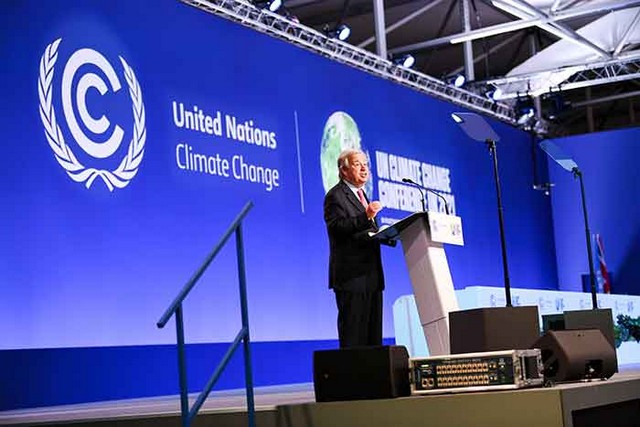
Of all the speeches and political grandstanding at the 2021 United Nations Climate Change Conference in Glasgow (COP26), the words of Mexican President, Andres Manuel Lopez Obrador, were the most profound and least hypocritical.

Lopez Obrador raged against the “technocrats and neoliberals” – world leaders who hold the future of humanity in their hands. This was a direct reference to leaders of the powerful countries that “increase their fuel production, at the same time that they hold summits for the protection of the environment,” while arriving in Glasgow on private jets.

Indeed, hypocrisy continues to define what is meant to be a collective global fight against climate change and its ravaging, often deadly consequences.

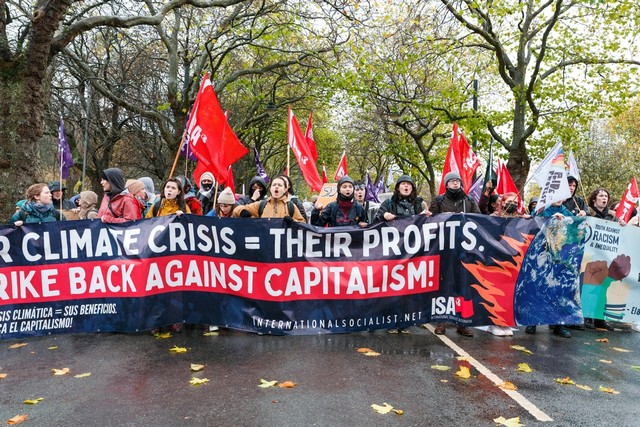
Over-consumption, inequality and unchecked capitalism were hardly the defining keywords at the COP26. Such references were largely made by “radical” and “leftist” environmentalists outside the conference halls. Pointing out the obvious has sadly become a radical act.

Inside the posh summit halls, it was politics as usual, though concealed as virtuous concern for the fate of all humankind.

“It’s one minute to midnight on that doomsday clock and we need to act now,” British Prime Minister Boris Johnson said, using a forceful and dramatic tone. He himself had admitted to the futility of past exercises of a similar rhetoric of the past. “I was there in Paris six years ago when we agreed to net zero (emissions) and all those promises will be nothing but blah, blah, blah.”

For his part, French President Emmanuel Macron lashed out at the “big emitters, whose national strategies are not in line with our 1.5°C objectives”, stating that “too many of us make commitments here and then sign trade agreements that do exactly the opposite”.

These leaders were not the exception. But others, the likes of US President Joe Biden, lashed out at specific countries, particularly the US’ global competitors in trade and political influence. His style of speech was distinctly different from Johnson’s and Macron’s. “The fact that China, trying to assert, understandably, a new role in the world as a world leader, not showing up? Come on!”, he said, following that with a jab against “Putin and Russia.” That is, in itself, a sad commentary; Biden had traveled thousands of miles merely to settle some trivial political scores.

Such futile political rhetoric accentuates our current dichotomy as we face the repercussions of our own abuse of the environment. On the one hand, we do need leaders who are capable of appreciating the gravity of the situation while, on the other hand, international politics has often proven to be the cause of problems and rarely the solutions.

So, how do we resolve this riddle?

The manifesto of Climate Action Network (CAN), Europe’s leading NGO coalition fighting dangerous climate change, offers some clues: “A sustainable, just, resilient society over the long term needs a proactive approach that is holistic, value-based and people-centered, addressing existing inequalities and power imbalances.”

That is definitely the starting point of a serious conversation on the environment. The self-serving logic of politicians and billionaires can only make us sink deeper in the unrelenting quagmire.

Amazon founder, Jeff Bezos who also arrived at the summit on his private jet, pledged to invest $2 billion for climate change by 2030, after receiving an “epiphany” during his 10-minute space ‘expedition’ “I was told that seeing the Earth from space changes the lens through which you see the world. But I was not prepared for how much that would be true,” he said in his speech.

Of course, for the likes of Bezos, such generous offers are quite beneficial. It further contributes to their successful business brands, while deflecting criticism that capitalism, limitless consumerism—thus incalculable, often undeserved amassing of wealth – have pushed our environment to the point of desperation.

However, can the people who have originated the problem be the very individuals who fix it, without even acknowledging their role in the crisis in the first place? Never.

“Enough hypocrisy and fad,” Lopez Obrador said, before attending the Glasgow summit. The Mexican leader, often dubbed as ‘populist’ by the likes of the Economist, Reuters and others, has pointed precisely to the ailment that resulted in the current environmental impasse. “We must fight the massive monstrous inequality that exists in the world,” he said.

The truth is this: the answer to the intensifying growing environmental crisis lies in our own hands, not those of politicians. The latter will only act if we raise our collective voice and pressure them to do so.

According to the latest report issued last August by the Intergovernmental Panel on Climate Change (IPCC), “human influence has warmed the climate at a rate that is unprecedented in at least the last 2,000 years.” All the fiery speeches, fancy summits and numerous political pledges have done very little to reverse this dismal and worsening trajectory.

Expecting COP26 to save the world is wishful thinking. Our fate is truly in our own hands. It always has been. It is high time for politicians to stop talking and, for once, truly listen.

Ramzy Baroud is a journalist and the Editor of The Palestine Chronicle.

14 November 2021

Source: countercurrents.org

US recognition of Taliban Government will be a game changer

By M K Bhadrakumar

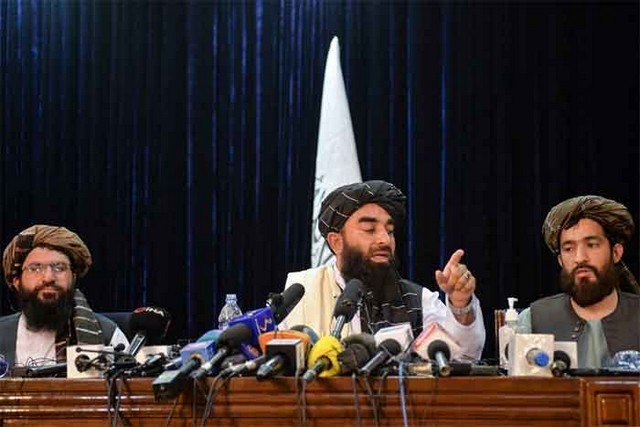
The stunning disclosure late Tuesday in Brussels that the US is working on a “road map” for according recognition to the Taliban Government will take a lot of people by surprise but it could have been expected sooner rather than later.

The US has a consistent record of rethinking its strategies once it realises that the policy has landed in a cul-de-sac. That is exactly what has happened in this case.

Pressure tactic will not work on the Taliban, which has a strong support base rooted in Pashtun ethno-nationalism. On the other hand, the US took no interest whatsoever in the self-styled Panjshiri “resistance”, either. In retrospect, the Biden Administration, quintessentially, resumed the Doha peace process.

Former US Special Representative Zalmay Khalilzad recently acknowledged that the US and Taliban were inches away from realising the understanding per the Doha agreement that an interim government would be formed in Kabul (which, of course, Ashraf Ghani and his clique duly sabotaged.)

The new US Special Representative for Afghanistan Tom West explained in a briefing on Tuesday that Washington is worried about an uptick in attacks by the ISIS affiliate in Afghanistan and remains deeply concerned about al Qaeda’s ongoing presence there.

West is currently on a visit to Brussels to brief the NATO allies on US’ talks with the Taliban and hold consultations on a “road map” toward recognition of the government. Importantly, he was speaking on-the record.

To quote West, “The Taliban have voiced very clearly and openly their desire to normalise relations with the international community, to see a resumption in aid, to see a return of the international diplomatic community to Kabul and to see sanctions relief. The United States can deliver none of these things on our own.” (here)

West is proceeding from Brussels to Pakistan for a meeting of the “Troika Plus” in Islamabad on Thursday. From there, he’ll travel to Delhi to brief the US’ Quad ally on the new thinking in Washington regarding the Taliban Government and the developments thereof.

From Delhi, West is proceeding to Moscow. Tass had reported earlier citing Foreign Minister Sergey Lavrov that during a telephone conversation with the Russian presidential envoy Zamir Kabulov, West had said he wanted to come to Moscow to establish contact with the Russian side. Accordingly, a “working visit” has been scheduled for coming Monday.

West’s disclosure comes against the backdrop of the Pakistani media reports on Tuesday that Islamabad is “set to host the interim Afghan foreign minister as well as special envoys from the United States, Russia and China as part of diplomatic efforts aimed at preparing the ground for the international community’s recognition of the Taliban government.”

Incidentally, Interim Afghan Foreign Minister Amir Khan Muttaqi, leading a high-powered delegation, is expected to arrive in Islamabad on Wednesday, which will be his official first visit to Pakistan.

The meeting of the special envoys in Islamabad will be in the format of the so-called “Troika Plus” — Russia, US, China and Pakistan. According to Express Tribune newspaper, Muttaqi will also join the “Troika Plus” meeting, which if correct, will be highly symbolic. In reality, Taliban authorities are being co-opted by the “Troika Plus.”

Conceivably, the US is considering to provide access to Afghanistan’s blocked funds in American banks to the tune of $9.5 billion. There is immense international pressure on this score, as was apparent at the recent meeting of the regional states in the so-called Moscow Format.

Clearly, the Biden Administration has veered round to the view that it is in the interests of regional and international security that the Taliban Government’s capacity to stabilise the Afghan situation, especially on the security and economic arena, is beefed up in whatever way possible.

Without doubt, the Biden Administration is taking the right approach, although this is going to be controversial in the polarised political opinion in the US. To be sure, this rethink carries the imprimatur of President Biden.

It appears that Beijing is in for a nasty surprise by the turnaround in the US thinking. A commentary in Global Times earlier Tuesday was apparently quite unaware of the meeting of the “Troika Plus” in Islamabad or that the ground beneath the feet was shifting dramatically.

The Global Times report said that “Muttaqi’s visit to Pakistan is likely to be transactional with discussions on practical issues of mutual concern, including Afghan Taliban’s role as mediator between the Pakistani government and the Pakistani Taliban.

“Despite the frequent recent interaction between the Taliban government and Pakistan, there is long way to go before a country recognises the Taliban government as legitimate. In addition to the implementation of anti-terrorism commitments ensuring inclusiveness and protecting women’s rights by the Taliban, there are also specific issues ahead such as borders and trade routes.”

Interestingly, the report went on to speculate that “one possibility is that after China, Russia, Pakistan and other regional countries establish a dialogue with relevant countries in the Middle East, they will recognise the Taliban regime collectively or independently.”

On the contrary, the Biden Administration has been talking directly to the Taliban and Islamabad all this while but kept the discussions strictly on a “need-to-know” basis, which excluded Beijing. At any rate, Beijing has been on a hostile belligerent mode and refusing to cooperate with Washington. Its growing assertiveness as kingmaker in Kabul has suffered a setback with Washington quietly moving in. The great game is shifting gear.

Indeed, the above developments completely change the regional alignments. For a start, Pakistan bounces back as Washington’s most important partner in the period ahead in regard of the “road map” under consideration for recognising the Taliban Government. An effective future US role in Afghanistan will need to be anchored on Pakistan’s cooperation.

Quite obviously, the Biden Administration has been swayed by the Pakistani argument that continued procrastination in engaging with the Taliban Government holds dangers and a replay of the anarchical conditions in the 1990s may well ensue with the added complication that the ISIS is gathering strength.

Equally, the US seems to share the British assessment that the progressive elements within the Taliban deserve to be supported. Giving evidence to the UK’s House of Commons Defence Committee on Tuesday, General Sir Nick Carter, the Chief of the Defence Staff said,

“Taliban 2.0 is different. There are a lot of people in Taliban 2.0 who would like to govern in a more modern way, but they are divided among themselves, as political entities so often are.

“If the less repressive elements end up gaining greater control… then I think there is no reason to suppose that Afghanistan over the next five years might not turn out into a country that is more inclusive than it might have been otherwise.

Interestingly, Gen. Carter who has had a hands-on role in the Afghan issues, was dismissive about winners and losers. As he put it, “I think it is too early to say that defeat has occurred. Victory here needs to be measured in the results and not some great military extravaganza.”

The US and the UK mostly move in tandem, especially when it comes to Afghanistan. Biden was in UK only last weekend for the climate summit in Glasgow.

Credit goes to Biden ultimately for the sense of realism that is on display here to let bygones be bygones and to open a new page as quickly as possible in the US national interests.

Ambassador M K Bhadrakumar served the Indian Foreign Service for more than 29 years. He introduces about himself thus: “Roughly half of the 3 decades of my diplomatic career was devoted to assignments on the territories of the former Soviet Union and to Pakistan, Iran and Afghanistan.

10 November 2021

Source: countercurrents.org

COP26 climate summit ends in failure

By Patrick Martin

As the global climate summit COP26 drags out to its miserable end this week in Glasgow, Scotland, the major capitalist powers and the banks and corporations that call the shots in national and world politics have largely failed in their efforts to use the summit to provide a semblance of “progress” in resolving the global climate emergency.

The rival powers have been unable to reach any significant agreement, even on the type of half measures and purely voluntary arrangements that characterized the last major world summit in Paris in 2015. And the pledges and promises made at that summit have largely fallen apart, as reports issued on the occasion of the Glasgow meeting have made clear.

Business Insider declared the event a “historic failure,” while an editorial in the Financial Times spoke of “More hot air than progress at COP26,” noting that the US’s decision not “to sign up to a deal to phase out coal production… struck a severe blow to what was meant to be a flagship policy of COP.”

One report appearing over the weekend underscored an obvious reason for the abortive character of the Glasgow event. The environmental campaign group Global Witness analyzed the provisional list of conference attendees, provided by the United Nations, and determined that representatives of fossil fuel companies have the largest single delegation at COP26, more than any single country.

The group found that at least 503 people linked to coal, gas and oil companies were in attendance, counting both direct representatives and those coming as part of groups acting on behalf of the fossil fuel industry. “The presence of hundreds of those being paid to push the toxic interests of polluting fossil fuel companies, will only increase the skepticism of climate activists who see these talks as more evidence of global leaders’ dithering and delaying,” a representative of Global Witness said.

Patricia Espinosa, head of the UN’s climate agency, said each of the 190 countries participating was free to send delegates of their own choosing. “It is really the sovereign right of every government to accredit every representative as part of its delegations, persons it deems appropriate,” she told CNN.

While throwing open the doors to the big polluters, the summit has largely excluded representatives of NGOs and environmental activist groups. The coronavirus pandemic has been cited as a reason either for barring entry into Britain entirely—with the Johnson government serving as a sort of palace guard for COP26—or keeping those activists on the ground in Scotland away from the summit itself.

One year ago, when the climate summit was postponed for a year out of pandemic-related health concerns, there were 20,000 cases a day in Britain. Today, the number of infections in Britain has risen to 30,000 a day, despite mass vaccination, thanks to the brutal policy of the Johnson government in reopening schools and businesses.

Over the course of the year, both the pandemic and the climate emergency have worsened, and the threat to humanity from both dangers has intensified.

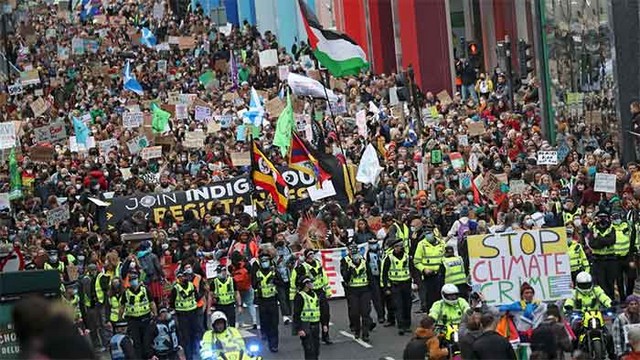
Last Friday, an estimated 100,000 people, most of them young, marched through the streets of Glasgow, delivering a vote of no confidence in the officials gathered at COP26. The demonstration was more a protest against the summit than an appeal to it, at least judging by many of the placards and banners, and the enormous applause given to speakers like Greta Thunberg, the youthful Swedish activist, now 18, who condemned the proceedings as a sham.

It is hard to argue with Thunberg’s characterization of the summit as “two-week-long celebration of business as usual and blah, blah, blah.”

She told the huge crowd, “The leaders are not doing nothing. They are actively creating loopholes and shaping frameworks to benefit themselves and to continue profiting from this destructive system. This is an active choice by the leaders to continue to let the exploitation of people and nature, and the destruction of present and future living conditions to take place.”

Thunberg has been an eloquent voice of the outrage among young people worldwide but offers nothing in the way of a political perspective besides continued, and inevitably more impotent, protests.

There can be no solution to the looming environmental disaster, any more than there can be an end to the global pandemic, without turning to the one social force whose interests are bound up with the struggle against both: the international working class.

Climate change, like the pandemic, is a crisis created by capitalism, and the only alternative is socialism—the revolutionary mobilization of the working class to put an end to the profit system, abolish the reactionary nation-state framework, and establish a global socialist society.

It is noteworthy that in the mass of media coverage of the Glasgow summit, there has been almost no mention of the fact that 100 global corporations are responsible for 71 percent of world emissions. This was first detailed in the 2017 Carbon Majors report, which identified giants like ExxonMobil, Royal Dutch Shell, BP, Chevron, Peabody and BHP Billiton, as well as the national coal and oil companies of China, Saudi Arabia, Russia, Mexico, Kuwait, UAE and Iran, among others.

One of the main apologists for global capitalism, perhaps the world’s leading practitioner of “blah, blah, blah,” former US President Barack Obama, made a day-long series of appearances Monday in Glasgow.

His speech to the summit was not mere blather, although there was plenty of that, citing his island origins (he was born in Hawaii) as proof of his sympathy towards the beleaguered island nations that face being overwhelmed by rising ocean waters, and touting the record of his own administration in fighting climate change.

The truth is that during Obama’s eight years in the White House, the United States was continually at war—a not insignificant contribution to global warming—and American corporations created incalculable amounts of carbon and toxic waste.

Obama delivered several thrusts against Russia and China, the major targets of American imperialism under the administration Joe Biden, his former vice president. He denounced Russian President Vladimir Putin and China’s President Xi for not attending the summit, saying this demonstrated a “dangerous lack of urgency.”

He took credit for the purely illusory gains of the 2015 Paris climate agreement, while admitting that since then “we are nowhere near where we need to be.” And he openly threatened the living standards of American workers, declaring, “All of us have a part to play. All of us have work to do. All of us have sacrifices to make … But those of us who live in wealthy nations, those of us who helped to precipitate the problem … we have an added burden.”

He also used the occasion for a typically sanctimonious lecture to the youthful protesters outside, essentially telling them to go back to their home countries and become foot soldiers in capitalist politics. He advised them against being “purists,” in other words, telling them to join the political campaigns of the Democratic Party in the United States and similar parties of a completely corrupt and conformist character.

Obama is being reinforced by a delegation of congressional Democrats, and even a few Republicans, this week, as the climate summit draws to a close. House Speaker Nancy Pelosi and other Democrats will pretend that the infrastructure bill they just approved and the social spending and climate bill they just agreed to postpone add up to a huge US commitment to resolve the climate crisis.

The truth is just the opposite. Both the Democrats and Republicans are willing to slash the consumption of American workers in the name of climate change, but not to cut a penny of the profits of American corporations.

The Biden administration aims to use the climate summit as part of its anti-China policy, which is directed, sooner rather than later, at unleashing military violence against the world’s second-largest economy and third-largest nuclear force.

Originally published in WSWS.org

9 November 2021

Source: countercurrents.org

The Foundation of Peace: The Wisdom of Mevlana Jalalud-Din Muhammad Rumi

By Prof Hoosen Vawda

“Make peace with the universe. Take joy in it. It will turn to gold. Resurrection will be now. Every Moment, a New Beauty.” — Rumi

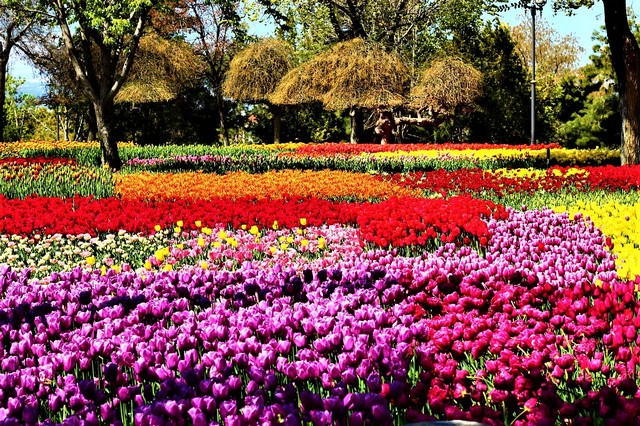
3 Nov 2021 – As soon as the bus entered the City of Konya, Turkey the passengers are greeted by the display of Tulip flowers in the centre of the traffic circle.  The guide informs us that the it is the April Tulip Flower Festival in Konya, and proudly proceeds to tell all the visitors that Konya is not only a pilgrimage centre for tourists to pay respects to Mevlana Jalladundin Rumi, whose mausoleum is a major attraction in the city of Konya, but also is the origin and tulip centre of the world. The visitor is confronted, with great delight, to colours of white, red, yellow, pink and myriads of variants of tulips against the bright blue, spring sky of Konya.

There was disquieting silence on the bus, as the European and American tourists were amazed at the colourful spectacle of the tulips.  The peace and tranquility was palpable and one could hear and feel the import of the city of Konya, which was a major centtre on the railway line which connected Istanbul to Baghdad in Iraq[1], in the era of the Osmani Empire, commonly known as the Ottoman Empire, prior to 1928.  As we all disembarked off our transport, the olfactory senses were maximally stimulated with the perfumed atmosphere of Konya, generated not by artificial scents but emanating from the delicate aromas of tulips and as we confronted the massive turquoise spire top of the mausoleum minaret , the beautiful perfume changed to that of numerous rose plants which adorned the gardens of the hallowed precincts of the burial site of Mevlana Rumi, the founder of the Mevleni sect, in ancient Turkey.

Konya[2] is a city in the Central Anatolia region of Turkey, which has protected its name for centuries. Legend says that Perseus killed a dragon that had been ravaging the town. The people set up a special monument to honor him, a stone obelisk with an icon of Perseus carved in it. This event gave the city it’s name, Ikonyon, Ikonyum, Iconium.

However, among Muslims, the followers of Islam, another legend is narated. Two dervishes, friends of God, were making an excursion through the skies from the far away countries of Horasan toward the west. When they flew over the lands of central Anatolia, one asked the other, “Shall I land?” (“Konayim mi?”). The other answered, “Sure, land.” (“Kon ya!”) So, they landed and founded the city of Konya.

Archaeology shows that the Konya area is one of the most ancient settlements of Anatolia. The results of excavations in Catalhöyük, Karahöyük, Cukurkent and Kucukoy show the region was inhabited as far back as the Neolithic Period (Late Stone Age) of 7000 BC. Other settlers of the city before Islam were; the Calcolitic Period (Copper Age) civilizations, Bronze Age civilizations, the Hittites, the Frigians, the Lydians, the Persians, the Romans and then Byzantines.

Konya is also an important place for early Christians because St. Paul and St. Barnabas came to the city on one of their journeys in Asia Minor around 50 AD. St. Paul preached in Konya but they angered both Jews and Gentiles so they had to leave the city and went to Derbe and Lystra.

The first exposure of the city to Islam happened during the time of the Caliph Muaviya[3]. Later, attacks made by Arabic Muslims, whether Emevi’s or Abbasi’s, yielded no results. Konya’s real meeting with and adopting of Islam began sometime after the victory of Seljuks at Malazgirt in 1071, in the time of Kutalmisoglu Suleyman. The attacks of the Crusaders from 1076 to the end of the 12th century could not wrench the city from Islam.[4]

Konya was the capital of Seljuk Empire between 1071 and 1308. In 1220 Alaeddin Keykubad I repaired the city wall and decorated them with towers. Historically, the city has been the site of a power struggle between the Seljuks, Karamanoglu’s, Mongols, and Ilhan’s and it changed hands a few times. In the time of Fatih Sultan Mehmet, in 1466, Konya joined the lands of the Ottoman Empire. The first general census was made by the sultan and repeated in the times of Beyazit II, Kanuni Sultan Suleyman, and Murad III.

Under the reign of Kanuni Suleyman the city, which had been named as Karaman ili, reached the status of a statehood. The borders of the Karaman state, which included the regions of Larende (Karaman), Seydisehri, Beysehri, Nigde, Kayseri (Cesarea), Aksaray, Maras, Elbistan, and Bozok, were reduced when Maras became its own state and Bozok Bozok was added to another state.

Konya was affected by the Celali Rebellion. This rebellion was an outcome of the instability in the Ottoman government and land orders in the Ottoman army was defeated by the command of Ibrahim Pasa, Grand Vizir of Sultan Suleyman, in the Battle of Konya.

The borders of the province of Konya, which was set up in 1867, included Nigde, Isparta, Icel and Teke Sanjaks. In the same year, the city was affected by a disastrous fire and in 1873 suffered a serious famine. In the 19th century the city appeared shabby and neglected and the city walls were in ruins and even the mosques were in terrible conditions. Many of the more recent houses were made of bricks and their lifespan was not more than 100-150 years, old. Commercial activity was slow. But at the end of the century, in 1896, after the railway to Eskisehir was opened, commercial activity was revived. After 1902, farming with machines developed. The period of Sultan Abdul Hamid II was a productive one for Konya. Transport, education and restoration works flourished the city.

The First World War caused the decrease of manpower in Konya and throughout the country. During the occupation of Anatolia by the Allies, Konya’s railway station was run by the British circa January 1919. The Italian powers which occupied the city in April 1919, left the city in March 1920 during the Independence War led by Atatürk.[5]

Konya is one of the oldest urban centres in the world. Excavations in Alâeddin Hill in the middle of the city indicate settlement dating from at least the 3rd millennium BCE. According to a Phrygian legend of the great flood, Konya was the first city to rise after the deluge that destroyed humanity. Still another legend ascribes its ancient name to the eikon (image), or the Gorgon’s head, with which the mythological warrior Perseus vanquished the native population before founding the Greek city.

Located near the frontier, Iconium was subject to Arab incursions from the 7th to the 9th century. It was taken from the Byzantine Empire by the emerging Seljuq Turks in 1072 or 1081 and soon became the capital of the Seljuq sultanate of Rūm. Renamed Konya, it reached its greatest prosperity under their rule and was accounted one of the most brilliant cities of the world. Its enlightened rulers were great builders and patrons of art who endowed the city with many buildings, including some of the finest existing examples of Seljuq art. Now used as museums, these include the İnce Minare, built in 1258, a former theological college housing the Seljuq Museum; the richly decorated Karatay Medrese (1251), a former theological school that now houses a ceramics museum; and the Sirçali Medrese (1242), which now contains a museum of Seljuq and Ottoman antiquities. The palace of the sultans stands on the acropolis mound. Nearby are the mosque and tomb of Sultan ʿAlāʾ al-Dīn Kay-Qubād I,

It was due the  invitation of Sultan ʿAlāʾ al-Dīn Kay-Qubād I, that the Muslim Sufi mystic, Rūmī settled in Konya and later founded the Mawlawiyyah (Mevleviye) order of mystics, known in the West as the “Whirling Dervishes.” , although Mevlana Rumi was not the founder of the Dervishes, per se, which was founded long before his arrival in Konya. The tekke (“monastery”) of Rūmī, comprising a number of buildings and his mausoleum, lies south of the city centre; since 1917 it has been used as an Islamic museum.

After the decline of the Seljuqs, Konya was ruled by the Il-Khanid Mongols and later by the Turkmen principality of Karaman until it was finally annexed to the Ottoman Empire about 1467. The city was in decline during the Ottoman period but revived after 1896, largely through the building of a rail line between Istanbul and Baghdad, which passes through Konya. Improvements in the irrigation of the Çarşamba plain led to an increase in agricultural productivity.

Until 1923 Konya was the most important city of central Anatolia, overshadowing Ankara. The southwestern part of the city has been redesigned, and a wide avenue leads through the western suburbs to the railway station, but the old city still survives to the east of the acropolis. Present industries include a sugar beet plant, flour mills, and carpet factories. Bauxite deposits were tapped by an aluminium-manufacturing complex established in the early 1970s. The city is linked by air with Ankara and by road with the principal urban centres of Turkey.

With its orchards, gardens, and monuments, modern Kon gardens, and monuments, modern Konya attracts a growing tourist trade. Its association with the Dervishes makes it a place of pilgrimage for Muslims. Christian monuments include the old church of Amphilochius inside the city and several shrines nearby. Konya is also the site of a teacher-training school; Yüksek Islam Institute, an institute of Islamic learning founded in 1962; and Selçuk University, established in 1975.[6]

The surrounding area, consisting of plains at the base of the Taurus Mountains, has numerous oases, and irrigation schemes have further extended the amount of cultivated land. Wheat and cotton are the main crops grown on the plains. North of the city, the bare Anatolian steppe provides spring pasture and supports some dry farming. The products of the steppe include wool and livestock. Lead is also mined in the vicinity. Çumra is a town and district of Konya Province in the Central Anatolia region of Turkey. According to 2000 census, population of the district is 104,576 of which 42,308 live in the town of Çumra.[7] This area is renowned for its large tulip forms which supply 90% of tulips to Eastern Europe.

The most important place to visit in Konya is Mevlana’s Mausoleum, the mystic poet on the way of sufism and the founder of the Mevleviye Whirling Dervish Order.

Another interesting attraction in Konya is the Tropical Butterflies Park which was opened in July 2015. Being the first of its kind in Turkey, the Park provides shelter to 6,000 butterflies of 15 different species, as well as 20,000 tropical plants.

Presently, more than 800 years later, Rumi’s words still manage to touch our hearts. The name Rumi, is usually associated with poetry in the western world, but little else is known about him if one enquires from an average person in New York, London, Paris or Cape Town.  The author’s personal experience in New Zealand revealed an extremely low level of Rumi awareness in cities like Auckland and Christchurch on the South Island, as to who exactly was Rumi?

Others associate Rumi with the whirling dervishes, who perform the mystical Sufi ceremony known as a sema, in which their series of mesmerising twirls help them, and the audience, reach a state of nirvana.  The author has noted, that these spiritual dancers raise their right upper limbs to point towards heavens, while their left upper limbs are pointing to the ground, as they twirl.  Furthermore, the left hand is pointing backwards.  The deep spiritual significance of this posture, while whirling, at great speeds, is to ask the Lord for His bounties with the right hand, raised up to Him, and when received, such bounties are then quietly and anonymously distributed to the needy.  Indeed, a wonderful gesture of enormous magnitude, which is most gracefully symbolised and executed, if these whirling dancers are carefully analysed, while in a state of mystic sufi trance.  The sema was graphically enacted in an epic 2008, Bollywood movie, Jodha Akbar[8] in a scene to the ecomanagement of A.R. Rahman’s[9] music by superhero Hrithik Roshan[10], when he establishes spiritual connection with the Supreme and seeks guidance.

Whirling dervish[11] ceremonies, as a form of meditation were adapted by the Persia-born, Jalaluddin Rumi, the famous Sufi Muslim mystic and poet, who was living in Konya, then the capital of the Turkish Seljuk Empire, told his followers, “There are many roads which lead to God. I have chosen the one of dance and music.” Rumi  would fast, mediate and then dance to reach a state of unparalleled enlightenment. Inspired, other sects started to spread his dance, called the sema, throughout the Ottoman Empire. The most renowned sect was the Mevlevi order; dance participants were called semazen. By the 15th century, the order had established rules for the ritual to maintain its myriad traditions. Dancers wear long white robes with full skirts, which symbolize the shrouds of their egos, art historian Nurhan Atasoy of the Turkish Cultural Foundation wrote in “Dervis Ceyizi,” her book on dervish clothing. On the dancers’ heads sit tall conical felt hats called sikke, ranging from brown to gray to black depending on their sect; these represent the tombstones of their egos. Over the robes, the dancers wear long dark cloaks, which embody the wearers’ worldly life and are cast off during the ceremony. When the dancer is finally wearing only his long white robe, he is assumed to be without fault and ready to start the mesmerising complex whirls that define the sema. The dancers, who fast for many hours before the ceremony, start to turn in rhythmic patterns, using the left foot to propel their bodies around the right foot with their eyes open, but unfocused. Their whirling is fueled by accompanying music, which consists of a singer, a flute-player, a kettle-drummer and a cymbal player. As the dancers turn, the skirts of their robes rise, becoming circular cones, as if standing in the air on their own volition. A team of researchers found that the edges of spinning skirts experience accelerations “of about four times Earth gravity”, reporting that the skirts “carry cusped wave patterns which seem to defy gravity and common sense.”

In 1925, Mustafa Kemal Ataturk, Turkey’s first president, closed all the orders and hermitages as part of his secularisation policies. For decades, the dervishes had to retreat underground. In 1956, even though legislation still outlawed these Sufi sects, the Turkish government revived the whirling dervish ceremony as a cultural asset. Dancers began to perform on the anniversary of the death of Rumi, a tradition that has led to an annual nine-day December festival in Konya. During this period, Turkish dervishes worked to spread the dance outside their country to preserve the pure sema traditions. In 1963, Munir Celebi, a direct descendant of Rumi, arrived at the philosophy-based Study Society in London to teach 60 students to turn. “They wanted to preserve the dance in its original form and not just be a tourist attraction,” said Philip Jacobs, who has been whirling for 43 years and still leads twice-monthly sema ceremonies in London. Although the Turkish government eased its regulations in the 1990s to allow dervishes to perform ritualistic ceremonies, critics contended that because the ceremonies have been commercialised for paying audiences, damage to Turkey’s cultural jewel had already been done. Whirling dervishes perform during a ceremony at Galata Dervish Lodge in Istanbul. In recent years, some lodges, which were closed on the orders of Turkey’s first president, Mustafa Kemel Ataturk, have reopened. During the past decade, a number of lodges have been reestablished in Istanbul, perhaps in a resurgence of cultural pride, or in response to the fact that in 2008, the Mevlevi ceremony was cited in the Proclamation of Masterpieces of the Oral and Intangible Heritage of Humanity by UNESCO, the arm of the United Nations that focuses on education, science and culture. These lodges include the Galata Dervish Lodge, which was built in 1491 and houses a museum; the Yenikapi Dervish Lodge, which opened as Istanbul’s largest lodge in the 16th century and is set on beautiful rolling grounds with a cemetery populated by Ottoman- Era sultans; and the Bahariye Dervish lodge, which was founded in 1613 and is located on the coastline of the Golden Horn.

During the sema, the full attention of the audience is integral to the success of the whirling performance. If spectators are engaged in the process, “you feel a light coming off them,”. Spectators sit in a semicircle around the dancers in seats or on the floor, and are not allowed to enter or leave during the ceremony, which lasts about an hour. Essentially, after a short introduction describing the history of the Mevlevi order, strobe lights lit the circular stage as five men wearing long black coats and tan conical hats came out and placed sheepskin rugs on the floor.[12] Behind them on a slightly raised stage, a small group of musicians played a ney, a long, thin reed-like flute, that produced a high, desolate sound; an oud, a wooden, pear shaped lute; and kettle drums. Then the dancers knelt, rolled up their rugs, took off their cloaks to display their white robes and started to whirl on the wooden floor.[13]  It is to be noted that Sema originated hundreds of years before Rumi.  It did not originally have instrumental music and dance and does not always have instrumental music or dance in modern Sufism.  Sema was and is controversial within Islam and in the details even controversial among Sufis.  Also, the term dervish is antiquated. Dervishes were originally mendicants and while there was some overlap with Sufis, they were not by and large Sufis belonging to tariqas or orders.  In Karamustafa’s God’s Unruly Friends[14] there is a definitive study on dervish and other interesting but not particularly Sufi pieties.  Whirling dervishes have lost their original spiritual philosophy and are now touristic concept.

Rumi was an enigmatic Persian poet during the 13th century. He was also a mystic and considered the most celebrated Sufi teacher of all time. His work gained popularity because of its universal message about peace, renunciation of materialism, love, and passion. and has long since influenced artists and thinkers with his insightful poetry and prose. While Rumi has been a crucial voice throughout the Middle East for centuries, he is also one of the all-time best-selling poets in the United States, thanks to the enduring ubiquity of his words of wisdom.[15]  Most Islamic scholars could only reach out to the hearts and minds of the literate, while Sufis could make connections with everyone, from the elite to the ignorant, relying on their verbal understanding of Islam and their imagery in communicating it. This sometimes led them to run into problems, even causing political unrest between madrasah scholars and the Sufis, with vociferous objections from orthodox Islamic scholars, countries like Saudi Arabia and the East, such as Indonesia.

However, the distinction between Sufism and scholarly Islamic interpretation was not always an ontological clash. There had been many Sufis who drew from the madrasah tradition, including Al-Qushayri and Al-Ghazali, both great Sunni scholars of the Seljuk Empire and Sufi authors in their own time. As for Anatolia, besides “heterodox” Sufi orders – such as the rather more extreme Qalandariyya[16], the Sunni Sufi orders created a bridge between the heart and the mind, between Sunni orthodoxy and mysticism. The Mevlevi order is perhaps the best example of such a bridging. Based on both the Sunnism and Sufism of Mevlana Jalaluddin Rumi, the Mevlevis have for centuries continued their peaceful rituals, which never implied a deviation from the Sunni tradition, with Rumi becoming an icon of peace, love and faith all over the world.[17]

Jalaladdin Muhammed Rumi, as his full name, variously spelt in the west, was born in 1207 in the city of Balkh in Khorasan, presently a province of Afghanistan. He is often referred to as Mevlana, which is his epithet and title, of an Islamic priest, or religious leader, commonly spelt “Moulana” though some texts refer to him as Al-Balkhi, after his birthplace. The name Rumi, meanwhile, is most often used, given he lived his entire creative life in Anatolia, which was historically known as Rum, the West, (Rome), the heartland of the Byzantine Empire.  Mevlana literally means “our beloved friend,” which shows Rumi’s authority and fame has not faded over centuries, not least among the Turks. He is also called “Molla Hünkar” (Mullah Sultan) and “Molla-yı Rum” (the Mullah of Anatolia).

Rumi’s ethnic origins have been much debated due to the fact that he referred to himself as a Turk in one of his rubaiyat (a poem consisting of four lines). Whether or not he was of Turkish origin, Rumi undisputedly lived in what is now Turkey, though he wrote in Persian. In any event, during this period ethnic origin was not as significant as it is in our current era.

Rumi’s father Muhammad Bahaeddin Walad was a notable Sufi and scholar in Balkh, which was under Khwarazmi rule, yet had to flee the country because of a political dispute with Alaaddin Muhammad, the Sultan. Rumi was only 5 years old when his father took his family from Balkh to Baghdad, and then to Hejaz for the hajj, the sacred Islamic pilgrimage. After some years in cities such as Damascus, Malatya, Erzincan and Larende presently Karaman province), Walad settled in Konya upon the invitation of Alaaddin Keykubat, the Seljuk Sultan.  Rumi married Gowhar Khatun of Larende, having two sons named Sultan Walad and Alaaddin, reflecting his father’s and the Sultan’s names. After Gowhar’s death, he married Kara Khatun and had a son and a daughter from her, Amir Alim Chalabi and Malakeh Khatun. Rumi’s mother Mumina Khatun died in Larende, while his father Bahaeddin Walad died in Konya after teaching for two years at the Konya Altınapa Madrasah, am Islamic religious school. Rumi was 24 years old at his father’s death.

Islam’s largest sect is Sunni[18] who are often described as orthodox Muslims. and as a Sufi scholar, Rumi replaced his father at the madrasah as a scholar of the Hanafi[19] school. On the other hand, he was a disciple of Seyyid Burhaneddin[20], who was a disciple of Bahaeddin Walad. Jalaluddin served Burhaneddin for nine years before he received his “ijazah,” or permission to scatter the teaching. Burhaneddin encouraged Rumi to visit the great madrasahs of Damascus and Aleppo in order to enhance his knowledge as a Sunni scholar. He gained a better knowledge of Arabic and poetry, lexicon, law, hermeneutics and hadith[21] while in Syria. He also utilised the opportunity to interact with such great Sufis in Damascus as Ibn Arabi, Awhaduddin Kirmani and Sadreddin al-Qunawi. Having received his “ijazah” from both the madrasah of Damascus and the Sufi order of Anatolia, Jalaladdin began to act and write on his own. Especially after his master’s death, he found a freer space prepared for him by his elders and peers in which he could better write, teach and think.  Rumi met Shams of Tabriz after Burhaneddin’s death, an incident that influenced him so much that he changed to an ascetic Sufi after so many years of learning and teaching at the madrasah. There are various versions of the story of their encounter, the main idea of which implies Rumi’s transformation from a scholar with a literary knowledge about mysticism to a proper ascetic mystic. However, Rumi never left the path of Sharia. In his poems, he holds the Sharia as the basis of Sufism. One of his famous allegories suggests that knowledge has four gates, the first of which is Sharia and the last of which relates to marifa (Sufism). His teachings offer Sufism as a psychological improvement in understanding Islam.

Since Rumi lived during a socially and politically chaotic environment brought about by the Mongol invasion[22], he emphasised peace and fraternity instead of fighting back, which some scholars and intellectuals have criticised, claiming that he should have supported the resistance of the Muslim Turks against the pagan Mongols.

The question as to why is Rumi so popular, globally.  Firstly, origins aside, the mystic spent many years of his life writing his most influential works in Konya. Secondly, and more importantly, the Mevlana has a cult following in Turkey unrivalled by any other religious personage, after the Prophet Muhammed.[23]  Furthermore, he succeeds in bridging class, religion, gender, nationality and every other major social divide in the country. This makes him a truly unique figure, and one who has inspired many subsequent generations of writers, artists and theologians alike. Nothing attests to Mevlana’s universal qualities better than the poet’s own, often quoted words, addressing an audience which excludes none. One of his inviting poems of embracement, peace, love and wisdom from a large tome is:-

“Come, come again, whoever you are, come! Heathen, fire worshipper or idolator, come! Come even if you have sinned a hundred times, Our’s is the portal of hope. Come as you are.”

The life of Mevlana is one of inspiration  for all of us. His family migrated from their original home to flee Mongol encroachment in Central Asia, and they spent many years on the move before settling in Anatolia. During the first leg of their exodus, the young Mevlana was walking behind his father, when the famous dervish poet Farid ud-din ‘Attar instantly identified the spiritual eminence of the two, crying out “Here comes a sea, followed by an ocean!”. Attar gave Mevlana his book, the Asrarnama, which warns against the entanglement of the soul with the material world.

The impact Attar had on the young Rumi is immortalised in the latter’s dedication in verse. “Attar has traversed the seven cities of Love, But We are still at the turn of one street”. For the fact was, that there, a rapidly more influential Islamic world, entrenched in political division and materially wealthy, especially in its upper echelons, was felt to be unsettling the humble foundations on which it was based. This undoubtedly increased the influence of the Sufi movement in Islamic discourse at the time. The Sufis were inadvertently founded by Rabia al Basri a number of centuries earlier, who detested materialism in favour of meditation and remembrance of God, or ‘Zikir’[24]. Mevlana’s name is almost synonymous with the Sufi movement. Anyone unfamiliar with the Sufis will surely be aware of one of their most famous sects, the Mevlevis, or the Whirling Dervishes, who perform their Zikir before audiences in Istanbul and Konya.

Mevlana would have been remembered as just another scholar, perhaps worthy of a footnote or two in one of the histories of Islam, were it not for a chance meeting with a dervish called Shams of Tabriz[25], which completely changed the course of his life. Many legends surround the nature of this first meeting. One such narration has it that Mevlana was sitting by the side of a lake reading a complex legal text, when a typically scruffy dervish, Shams of Tabriz, approached Mevlana and asked, “What are you reading?”. “It’s nothing you would understand,” replied Mevlana, rather annoyed by the old man. Upon this response, the dervish suddenly snatched the book from his hands, and threw it in the lake. Mevlana was incensed, and waded in to retrieve it. When he returned and laid it out on the side of the lake he was shocked to see that the book was bone dry and completely intact. He asked Shams to explain how this was possible. The dervish smugly replied, “it’s nothing you would understand”. It certainly sounds like the behaviour of the old Sufi dervish, a fact not lost on Shams himself. As one source quotes him, he had been travelling around the entire Middle East looking for someone who would “endure my company,” and decided to seek out the Mevlana. However, from then on, Mevlana spent most of his time learning wisdom and asceticism from Shams, that could not be found in any book. The pair were re-popularised in the West and in Turkey recently, thanks to the massive success of Elif Shafak’s latest novel “The 40 Rules of Love”[26], which is inspired by their friendship. In Shafak’s own words, the story is a ‘love story with a spiritual dimension’ and jumps back and forth between the experience of a dissatisfied house-wife in 21st century America, and friendship that took place in 13th century Konya. Shafak intended to discuss “love, with its divine and human dimensions,” finding Mevlana’s story a bridge by which to explore both.

Shafak is not the only artist to take the influence of Mevlana’s work, of which the bulk is collected in his masterpiece the Mesnevi[27]. Also spelt Masnavi and as various others. The Masnevi is known by many as “The Qu’ran in Persian” and contains 26,000 lines of mystical poetry. Many writers in the later period were influenced by the Mesnevi, which cemented Persian culture as the dominant centre around which the Islamic world would pivot for many centuries. Turkish owes close to a quarter of its current vocabulary stock to this period of influence. In spite of all the last century’s changes and upheavals, the Mesnevi offers a timeless and universal message of love and respect. It is surprising to note how many people from various segments of Turkish society, some with little or no overt interest in religion, can quote some of Mevlana’s most famous verses fully. One of the most popular verse is Mevlana’s seven rules for life:-

“In generosity and helping others, be like a river. In compassion and grace, be like the sun.In concealing others’ faults, be like the night. In anger and fury, be like the dead.In modesty and humility, be like the earth. In tolerance be like the sea. Either exist as you are, or be as you appear.”

With such simple, yet eloquent verses, it is not difficult to see the secret of Mevlana’s mass appeal. Moreover, it is no accident on Shafak’s part, for example, that the main character in her novel is a Jewish North American woman with no real religious affiliation. Overcoming the distractions of worldly identity lies much at the heart of Mevlana’s philosophy:

“Not Christian or Jew or Muslim, not Hindu, Buddhist, Sufi, or Zen. Not any religion, or cultural system. I am not from the East, or the West… not composed of elements at all. I do not exist, am not an entity in this world or the next, did not descend from Adam, or Eve or any creation story. My place is placeless, a trace of the traceless. Neither body or soul. I belong to the beloved.”

Mevlana was buried in Konya, where his tomb draws pilgrims from all over Turkey and beyond. His beloved friend Shams was unfortunately killed[28] on the road one night. According to contemporary Sufi tradition, Shams Tabrizi mysteriously disappeared: some say he was killed by close disciples of Mowlana Jalaluddin Rumi who were jealous of the close relationship between Rumi and Shams, but according to certain evidences, he left Konya and died in Khoy where he was buried.  Subsequently, an inconsolable Mevlana set off on a journey in order to find him. Once he got as far as Damascus however, he realised the vanity of his search, and came to a life-changing conclusion, perhaps one that should be pondered by those who pursue the unobtainable, the unattainable or travel in search of something:[29]

“Why should I seek? I am the same as He. His essence speaks through me. I have been looking for myself!”

Rumi died in 1273, as a recluse, a depressed Sufi by the death of his mentor and friend. His tomb is in Konya[30], which is a place of visit for Sufis and thousands of local as well as global tourists. His heritage includes his exemplary lifestyle, powerful poems and the Mevlevi order, a world-renowned mystical and aesthetic movement.[31] This philosophy is propagated in the west by the exiled Fethullah Gulen[32] the founder of the Gulen Movement[33], banned in Turkey, presently residing in the United States.  Rumi says “Be patient where you sit in the dark, the dawn is coming.”  “The quieter you become the more you are able to hear.” “Raise your words not your voice. It is rain that grows flowers not thunder.” “Two there are who are never satisfied, the lover of the world and the lover of knowledge.”

The Bottom Line to pursue peace and achieve amiability, is renunciation of your personal ego, pride and the importance of “I” and “We”  The overarching philosophy is “ Humanity is first and NOT any individual or nation”. In the words of Rumi:- “Somewhere beyond right and wrong, there is a garden. I will meet you there.” All your anxiety is because of your desire for harmony. Seek disharmony, then you will gain peace. Dance where you can break yourself up to pieces and totally abandon your worldly passions. When everyone is trying to be something, be nothing. Range with emptiness, according to Shams Tabrizi[34]

Professor G. Hoosen M. Vawda (Bsc; MBChB; PhD.Wits) is a member of the TRANSCEND Network for Peace Development Environment.

8 November 2021

Source: www.transcend.org

Hartford International Mourns Beloved Professor Mahmoud Ayoub

Mahmoud Mustafa Ayoub, a prominent Shia scholar and Honorary Faculty Associate in Islam and Christian-Muslim Relations at Hartford International University, passed away on Oct. 31 in Montreal, Canada, where he lived for the past several years. The HIU community mourns the loss of a great mind whose brilliance and compassion blessed us for so many years.

He will be buried on Tuesday, Nov. 2, 2021 at a Muslim cemetery. His family asks for prayers for to Allah for forgiveness and entrance into jannah – paradise. The news of his passing sparked and outpouring of tributes and fond memories from around the world.

Hartford International will long remember how Professor Ayoub spearheaded the establishment of our Imam Ali Chair for Shia Studies and Dialogue Among Islamic Schools of Thought, now held by Dr. Hossein Kamaly. This is the first chair for Shia studies in North America, a lasting legacy for Dr. Ayoub’s long and successful career.
“Professor Ayoub’s endorsement played a decisive role in my appointment to this position,” Dr. Kamaly said. “His commitment to interfaith and intra-faith dialogue continues to inspire me, and his dedication to hard work guides me along the way.”

Dr. Ayoub and his wife, Dasmalina (Lina), will also be remembered for their warm hospitality, serving cups of hot Turkish coffee to a never-ending stream of visitors at their home on campus.

President Lohr offered these words. “We join the world in mourning the loss of an incredible scholar, an amazing professor, and a dear, dear man. Dr. Ayoub was loved by all and set an example for us each one about what it means to love one’s neighbor. I am honored to have met him, shared meals with him in his home with his dear wife Lina, and to have been blessed by his many warm email messages and letters, not to mention his scholarship. The world is a better place because of Dr. Ayoub.”

Professor Ayoub was born in South Lebanon in 1935 and attended a British missionary school for the blind. He received his education at the American University of Beirut (BA, Philosophy, 1964), the University of Pennsylvania (M.A., Religious Thought, 1966), and Harvard University (Ph.D., History of Religion, 1975).
His doctoral dissertation, Redemptive Suffering in Islam: A Study of the Devotional Aspects of Ashura’ in Twelver Shiism in the Middle Ages turned into a book that still stands as a classic in the field.

From 1988 to 2008, Dr. Ayoub was a Professor and Director of Islamic Studies in the Department of Religion at Temple University in Philadelphia. Over his career, he also taught at the Pacific School of Religion, Berkeley, San Diego State University, the University of Toronto, and McGill University, among others.

During the early 1990s, he supervised a group project to translate Al-Mīzān fī tafsīr al-Qurʾān, a monumental contemporary commentary on the Qurʾān by the late Mohammad-Hossein Ṭabāṭabāʾī from Arabic into English. Although that project was never finished, it gave birth to Dr. Ayoub’s two-volume commentary on the early sūras of the Qurʾān.

In 1998, Dr. Ayoub helped devise and launch a graduate M.A. level program in Muslim-Christian relations and comparative religion for the Centre for Christian-Muslim Studies, University of Balamand, Lebanon.
After decades of working in leading universities nationwide, Professor Mahmoud Ayoub found a welcoming home at the Macdonald Center for the Study of Islam and Christian-Muslim Relations at Hartford Seminary — now Hartford International University for Religion and Peace. He and Lina lived on campus, attended educational events where Dr. Ayoub would often offer insightful commentary, and frequently welcomed students, alumni, faculty, and staff into their home.

Throughout his academic career, Professor Ayoub has received distinguished awards and scholarships, both for his achievements and research. Among others, he was a recipient of the Kent Doctoral Fellowship and the Canada Council Fellowship. In 1994-1995, he participated in the Fulbright Exchange of Scholars program for Malaysia. In the Spring-Summer of 2000, he undertook a research project on Christian-Muslim relations in Egypt and Lebanon, also on a Fulbright scholarship.

Dr. Ayoub is the author of a number of books including, Redemptive Suffering in Islam and The Qur’an and Its Interpreters (vol. 1 & 2). The summer of 2000 saw the release of his two-volume publication, Dirasat fi al-‘Alaqat al-Masihiyyah al-Islamiyyah in Arabic (Studies in Christian-Muslim Relations). Islam: Faith and History appeared in 2004. In addition, his articles have appeared in books and journals such as, The Muslim World, Journal of the American Oriental Society, Bulletin of the Institute of Middle Eastern Studies (Tokyo, Japan) and Islamochristiana (Rome, Italy).

Dr. Ayoub’s authority in both the scholarship and comparative study of Islam and Muslim-Christian relations, as well as interreligious dialogue, is demonstrated by the national and international recognition he has received. He will be dearly missed.

1 November 2021

Words without Action: The West’s Role in Israel’s Illegal Settlement Expansion

By Dr Ramzy Baroud

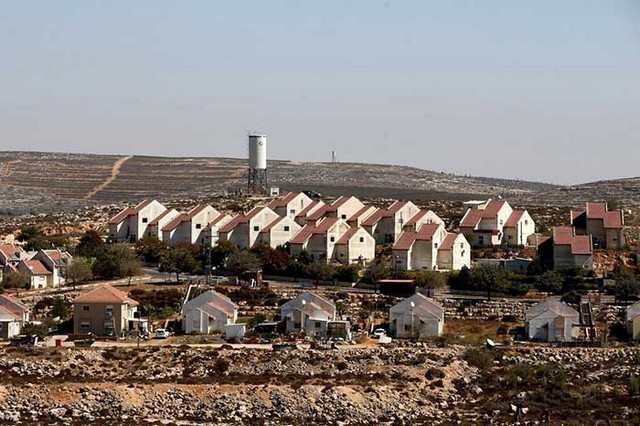
The international uproar in response to Israel’s approval of a massive expansion of its illegal settlement enterprise in the occupied Palestinian West Bank may give the impression that such a reaction could, in theory, force Israel to abandon its plans. Alas, it will not, because the statements of ‘concern,’ ‘regrets’, ‘disappointment’ and even outright condemnation are rarely followed by meaningful action.

True, the international community has a political, and even legal, frame of reference regarding its position on the Israeli occupation of Palestine. Unfortunately, however, it has no genuine political mandate, or the inclination to act individually or collectively, to bring this occupation to an end.

This is precisely why the announcement on October 27 by Israel that it has given a ‘final approval’ for the building of 1,800 housing units and initial approval for another 1,344 will unlikely be reversed anytime soon. One ought to keep in mind that this decision came only two days after an earlier announcement that the Israeli government had advanced construction tenders for 1,355 housing units in the occupied West Bank.

Israel has rarely, if ever, reversed such decisions since its establishment on the ruins of historic Palestine. Moreover, since Israel’s occupation of Palestinian East Jerusalem, the West Bank and Gaza in 1967, Israel’s colonial project has remained in constant and unhindered expansion. 54 years should have been enough for the international community to realize that Israel has no intentions whatsoever to end its military occupation on its own accord, to respect international law and to cease construction of its illegal settlements.

Yet, despite this obvious fact, the international community continues to issue statements, moderate in their language, at times, even angry at others, but without ever taking a single action to punish Israel.

A quick examination of the US government’s reaction to the news of settlement expansion tells of the lack of seriousness from Washington towards Israel’s continued disregard of international law, peace and security in the Middle East.

“We strongly oppose the expansion of settlements,” said US State Department spokesman, Ned Price, adding that the Israeli decision is “completely inconsistent with efforts to lower tension and ensure calm.”

Since when was Israel concerned about ‘lowering tensions’ and ‘ensuring calm’? If these were truly important US demands and expectations, why then, does the US keep funneling billions of dollars a year in military aid to Israel, knowing fully that such armaments will be used to sustain the illegal Israeli occupation of Palestine and other Arab lands?

If, for the sake of argument, we assume that Washington is finally shifting its policies on Israel and Palestine, how does it intend to pressure Israel to cease settlement construction? Mr. Price has the answer: The Biden Administration would “raise our views on this issue directly with senior Israeli officials in our private discussions”, he said on October 26. “Raise our views”, as opposed to demanding accountability, threatening retaliation, or, God forbid, withholding funds.

While it is true that the US government is Israel’s main western benefactor, Washington is not the only hypocritical administration in this regard. The Europeans are not fundamentally different, despite the fact that their statements might be a tad stronger in terms of language.

“Settlements are illegal under international law and constitute a major obstacle to the achievement of the two-state solution and a just, lasting and comprehensive peace between the parties,” read a statement issued by the office of EU foreign policy chief, Josep Borrell, on October 29.

The statement mirrors the exact sentiments and language of numerous statements issued in the past, ones that “strongly reject” the Israeli action, and “urge” the Israeli government to “revoke” its recent decisions for the sake of “sustainable peace”, and so on. One may even muse to claim that the task of preparing these statements must be the easiest of all clerical work at the EU offices, as it is largely a matter of a simple ‘cut and paste’.

Yet, again, when it comes to action, Brussels, like Washington, refrains from taking any. Worse, these entities often bankroll the very action they protest, while insisting that they are standing at the exact same distance between Israelis and Palestinians, assigning themselves such roles as “honest peace brokers”, “peace mediators” and the like.

One should not be in the least surprised by Israel’s recent announcement. In fact, we should expect more settlement expansion and even the construction of new settlements, because that is what colonial Israel does best.

Within a matter of a few days, Israel has announced its intentions to build, or start bids for, nearly 4,500 settlement units. Compare this number with the settlement expansion during Donald Trump’s term in office. “Israel promoted plans for more than 30,000 settler homes in the West Bank during the four years (Trump) was in power,” the BBC reported, citing an Israeli group, Peace Now, as saying in its recent findings.

Those figures in mind, if the Israeli government under Naftali Bennett continues with this hurried pace of illegal housing construction, it could potentially match – and even overtake – the expansion that took place during the terrible years of the Trump era. With no accountability, this catastrophic political paradigm will remain in place, irrespective of who rules Israel and who resides in the White House.

Israel is doing what any colonial power does. It expands at the expense of the native population. The onus is not on colonial powers to behave themselves, but on the rest of the world to hold them accountable. This was true in the case of the South African Apartheid and numerous other examples throughout the Global South. It is equally true in the case of Israeli Apartheid in Palestine.

The truth is that a thousand or a million more statements by western governments will not end the Israeli occupation, or even slow down the pace of Israeli military bulldozers as they uproot Palestinian trees, destroy homes and construct yet more illegal colonies. If words are not backed by action – which is very much possible, considering the massive military, political and economic leverage the West wields over Israel – then the West remains a party in this conflict, not as a ‘peace broker’, but as a direct supporter of the Israeli occupation and apartheid.

Ramzy Baroud is a journalist and the Editor of The Palestine Chronicle. He is the author of five books.

4 November 2021

Source: countercurrents.org

As the Planet Wants to Go Green, France Has a Nuclear Habit It Just Cannot Kick

By Vijay Prashad

On July 28, French President Emmanuel Macron landed in Tahiti and said that France owed a “debt” to French Polynesia. The debt was related to approximately 200 nuclear tests France conducted in the 118 islands and atolls that comprise this part of the central South Pacific, which France has controlled since 1842. These tests were conducted between 1966 and 1996. Macron did not apologize for the environmental and human damage caused by these tests. He remained stoic, acknowledging that the tests were not “clean.” “I think it’s true that we wouldn’t have done these same tests in the Creuse or in Brittany,” he said, referring to parts of territorial France. “We did it here because it was farther away, because it was lost in the middle of the Pacific.”

Of course, the people of these islands and atolls are not “farther away” from the sites where these nuclear tests were conducted. They live there and have suffered from the consequences of these tests. In 2006, Florent de Vathaire, a research director at the French National Institute of Health and Medical Research (Inserm), looked at the records from Polynesia and found direct evidence of—among other matters—thyroid cancer due to the nuclear explosions carried out by France. Unutea Hirshon, then president of the commission of inquiry of the French Polynesia Assembly, called upon the French government for “transparency.” France, she said in 2006, “has knowingly concealed the importance and extent of the radioactive fallout following the nuclear tests at Muroroa and Fangataufa.” Compensation has been minimal; justice has been absent.

Climate Change and Nuclear Power

Throughout his tenure as president, Macron has said that the key to an “ecological future depends on nuclear power.” A few days before the opening of the 26th United Nations Climate Change Conference in Glasgow, Macron was asked to reflect on Europe’s crisis over rising natural gas prices (mostly sourced from Russia’s Gazprom). “It’s not about whether we are too dependent on a company or not,” Macron replied. “It’s about how to create alternatives. The only alternatives are to have European renewable energies and, of course, European nuclear power.”

Germany has to legally phase out nuclear power by 2022. But about half of the countries in the European Union (13 out of 27) continue to have a nuclear energy program. Of them, France generates half the nuclear electricity produced in all of Europe. The European Union does not set policy for nuclear energy beyond the European Atomic Energy Community treaty (Euratom), which was signed in March 1957 to allow for the peaceful development of atomic energy. There is little appetite in most of these nuclear energy states in the EU to decommission reactors. In fact, there is an increasing appetite for them to say that the transition from carbon-based fuel to “green” fuel should include nuclear power.

“There is no uranium in France,” Jean-Luc Mélenchon, the leader of La France Insoumise, a democratic socialist party in France, said to me. “We import it mainly from Niger and Kazakhstan.” One of every three lightbulbs in France is lit by the yellow-cake uranium from Niger, with the major chunk of the uranium ore coming from the mining sites in Arlit, which is around five hours north of Niger’s capital of Agadez. The town is a fortress of European mining companies, from Niger’s own government company to a series of French firms, most prominently Areva. The road out of Arlit is known as Uranium Highway. France’s armies have garrisoned the Sahel, “from Mauritania at one end to Chad at the other,” with France’s Operation Barkhane, which is its “counterterrorism” military operation (launched in 2014), headquartered in Chad’s capital of N’Djamena. War is what turns on the lights in France.

There is increasingly an echo between the nuclear tests conducted by France at Mururoa and Fangataufa between 1966 and 1996 and the military operations in Niger.

Getting Out of Nuclear Power

Mélenchon will run in the presidential election against Macron in April 2022. Part of his campaign is to fight against nuclear power. The energy is not cheaper, he tells me. “The current price of nuclear electricity is already higher than many renewables,” he says. The cost of disposal and of water to cool reactors is immense and often maintained as externalities by power companies. Nuclear power, Mélenchon says, “is, like fossil fuels, an energy of the past.”

There are three methods to turn the tide, Mélenchon says: energy sobriety, energy efficiency, and renewable energy. Wind and wave power, as well as solar energy, are necessary options. “Getting out of nuclear power is not a technical but a political issue,” Mélenchon tells me. “It is a necessity. The alarming scientific forecasts on climate and on the nuclear threat demand it. We must start right away. No one invented electricity by trying to improve the candle. Radioactivity without danger does not exist any more than the candle without the flame.”

If Macron had taken the people of French Polynesia seriously, he might have learned that lesson.

Vijay Prashad is an Indian historian, editor and journalist. He is a writing fellow and chief correspondent at Globetrotter.

4 November 2021

Source: countercurrents.org

COP26: Will Humanity’s ‘Last and Best Chance’ to Save Earth’s Climate Succeed?

By Reynard Loki

There is a chance we can prevent the worst impacts of the climate crisis, but world leaders must hold businesses accountable and listen to Indigenous communities.

It would be an understatement to say that there is a lot riding on COP26, the international climate talks currently being held in Glasgow, Scotland. Officially, the gathering marks the 26th Conference of the Parties (COP) to the United Nations Framework Convention on Climate Change (UNFCCC) and the third meeting of the parties to the 2015 Paris climate agreement, which aims to limit the global temperature rise to well below 2 degrees Celsius above preindustrial levels, preferably limiting the increase to 1.5 degrees Celsius in order to avoid the worst impacts of climate change.

Since 1995, the countries that have signed onto the UNFCCC have met every single year (except in 2020 due to the COVID-19 pandemic), attempting to come up with an action plan to stem the climate crisis. But still, every year, the world’s greenhouse gas emissions keep going up. And for a fortnight that started on October 31, world leaders will try to come up with an action plan yet again. More than 100 heads of government and some 30,000 delegates are now gathered and deliberating in Glasgow in the most recent international attempt to implement the Paris agreement goals. CNBC called the summit “humanity’s last and best chance to secure a livable future amid dramatic climate change.”

“We face a stark choice: Either we stop it or it stops us,” said United Nations (UN) Secretary-General António Guterres in his opening remarks at the start of the World Leaders Summit of the COP26. “It’s time to say ‘enough.’ Enough of brutalizing biodiversity. Enough of killing ourselves with carbon. Enough of treating nature like a toilet. Enough of burning and drilling and mining our way deeper. We are digging our own graves… We need maximum ambition from all countries on all fronts to make Glasgow a success.”

The summit comes just a few months after the August release of a grim report published by the Intergovernmental Panel on Climate Change (IPCC), which found that climate change was “unequivocally” caused by human activity, and that within two decades, rising temperatures will cause the planet to reach a significant turning point in global warming. The report’s authors—a group of the world’s top climate scientists convened by the United Nations—predict that by 2040, average global temperatures will be warmer than 1.5 degrees Celsius above preindustrial levels, causing more frequent and intense heat waves, droughts and extreme weather events. Guterres called the bleak findings a “code red for humanity.”

UK Prime Minister Boris Johnson, who is hosting the summit, likened the race to stop climate change to a spy thriller, warning that “a red digital clock ticks down remorselessly to a detonation that will end human life as we know it.” He added, “The tragedy is this is not a movie, and the doomsday device is real.”

The dire assessment of the state of the planet’s climate was not lost on U.S. President Joe Biden, who called on world leaders to take aggressive action immediately to stave off the climate crisis in his remarks at the summit’s opening day. “There’s no more time to hang back or sit on the fence or argue amongst ourselves,” he said. “This is the challenge of our collective lifetimes, the existential threat to human existence as we know it. And every day we delay, the cost of inaction increases.”

But despite all the troubling data and dire warnings, the summit has had a fairly inauspicious start. On October 30, the day before COP26 opened, leaders of the G20 nations—19 countries and the European Union, which together are responsible for 80 percent of the world’s emissions—sought to bolster international leadership on climate change as they concluded their own meeting in Rome just before the summit in Glasgow. But their deliberations ended with a whimper: a mere reaffirmation of the Paris agreement goals. During the G20 summit, Johnson said that all the world leaders’ pledges without action were “starting to sound hollow,” and he criticized the commitments as “drops in a rapidly warming ocean.” Adding to the disappointment was the fact that the summit was not attended by Russian President Vladimir Putin or Chinese President Xi Jinping, even as both Russia and China “are among the world’s biggest polluters”: Russia and China are respectively responsible for 5 percent and 28 percent of global carbon dioxide emissions, respectively. Those two nations have pushed the goal of net-zero emissions by 2050 ahead to 2060.

A failure in Glasgow could have grave, cascading consequences. On October 26, the UN Environment Program released a worrying report warning that with “climate change intensifying… humanity is running out of time” due to the climate promises that have been made but have not yet been delivered. Failure to stem the climate crisis “would mean less food, so probably a crisis in food security. It would leave a lot more people vulnerable to terrible situations, terrorist groups and violent groups,” said UNFCCC executive secretary Patricia Espinosa. “It would mean a lot of sources of instability… [t]he catastrophic scenario would indicate that we would have massive flows of displaced people.”

“We’re really talking about preserving the stability of countries, preserving the institutions that we have built over so many years, preserving the best goals that our countries have put together,” said Espinosa, who took on the UN climate role in 2016. A former minister of foreign affairs of Mexico, Espinosa shares responsibility for the talks with UK cabinet minister Alok Sharma, who serves as the COP26 president. “What we need to get at Glasgow are messages from leaders that they are determined to drive this transformation, to make these changes, to look at ways of increasing their ambition,” Espinosa said.

In a new study published in the journal Global Change Biology, a group of international scientists found that if the world continues “business-as-usual” emissions, the impacts of the climate crisis could triple across 45 different “life zones”—distinct regions representing broad ecosystem types—across the planet. “The likely future changes in the world’s life zones is likely to have a substantial impact on [people’s] livelihoods and biodiversity,” said Dr. Paul Elsen, a climate adaptation scientist at Wildlife Conservation Society (WCS) and lead author of the study. “Large areas of the world are getting hotter and drier and this is already impacting the earth’s life zones,” added Elsen. The researchers predict that more than 42 percent of the planet’s land area will ultimately be affected if emissions are not significantly reduced. Dr. Hedley Grantham, director of conservation planning at WCS and a co-author of the study, said, “COP26 is our best chance of countries committing to reducing emissions and putting us on a better future pathway for climate change and its impacts.”

There have, however, been a few bright spots in the early days of the summit. On November 2, world leaders announced new plans to reduce the emissions of methane, a powerful global warming gas that “has more than 80 times the warming power of carbon dioxide over the first 20 years after it reaches the atmosphere.” President Biden welcomed the methane agreement, calling it a “game-changing commitment,” while also announcing that for the first time, the U.S. Environmental Protection Agency was going to enforce limits on the methane “released by existing oil and gas rigs across the United States.”

The Biden administration said that the government’s vast spending bill would mark the “largest effort to combat climate change in American history.” But with this critical climate legislation stalled on Capitol Hill, Biden’s aggressive target of reducing the United States’ greenhouse gas emissions by about half of its 2005 levels by the end of this decade will likely have to be pursued through executive actions such as regulations.

And on November 2, more than 100 nations, which together are responsible for about 85 percent of the world’s forests, agreed to a landmark $19 billion plan to end and reverse deforestation by 2030. Prime Minister Johnson said that it is critical for the success of COP26 “that we act now and we end the role of humanity as nature’s conqueror, and instead become nature’s custodian,” adding that “[w]e have to stop the devastating loss of our forests, these great teeming ecosystems—three-trillion-pillared cathedrals of nature—that are the lungs of our planet.”

​​In other welcome news, 14 nations including the United States, working on the sidelines of COP26, backed a Denmark-led initiative to reduce global maritime emissions to zero by 2050. “With around 90 percent of world trade transported by sea, global shipping accounts for nearly 3 percent of global CO2 emissions,” according to Reuters.

Indeed, non-state actors, i.e., businesses, are key participants in the world’s climate goals. UN chief Guterres said that the private sector has a critical role to play in this fight—and the UN will judge the performance of businesses’ pledges to achieve net-zero emissions. “I will establish a group of experts to propose clear standards to measure and analyze net-zero commitments from non-state actors,” which will go beyond mechanisms that have been established by the Paris climate accord, he said.

In the U.S., businesses are trying to influence Biden’s massive spending plan. “Across industries, business groups successfully pushed lawmakers to make significant changes to key sections of the original $3.5 trillion bill. Their lobbying efforts revolved around Sens. Joe Manchin (D-W.Va.) and Kyrsten Sinema (D-Ariz.), who ultimately sided with the business community on several issues… The White House plan does not raise tax rates on corporations—keeping a central part of the GOP’s 2017 tax cuts intact—in a stunning win for business interests,” stated an article in the Hill.

“This growing call for action can’t be underestimated,” writes EFL contributor Patti Lynn, executive director of Corporate Accountability, a consumer advocacy group, in Truthout, referring to the surge in climate activism across the world in recent years. But she also offered a caveat: “We need great social and economic change to fully and justly solve the climate crisis, and no change on this scale happens without public engagement fueling the political will to create such changes. But we also must be clear-eyed about what stands in the way of achieving such transformative change.” She added that for the world to move “from visions to actual policies that are just and effective, we must address the largest obstacle that lies between today’s status quo and a livable future for all: the influence of the fossil fuel industry on climate policy.”

Rainforest Action Network, a nonprofit environmental group, also trained their sights on the private sector, tweeting, “World leaders… must meet the climate crisis by holding brands and banks accountable to end fossil fuel expansion and deforestation.” But the COP26 homepage suggests a different story: Unilever, Scottish Power, Sainsbury’s, National Grid, Microsoft, Hitachi and GSK are some of the many corporations that COP26 thanks as “principal partners.”

And while many private firms, including several of the COP26 partners, have made significant climate commitments, they are often met with criticisms of “greenwashing”—appearing that they are climate-friendly when in fact, the promises are often not regulated by governments and actually not making a dent. “Businesses are the big polluters,” said Kristian Ronn, CEO and co-founder of Normative, a Swedish startup that has launched a carbon emissions tracker that he says can help end corporate greenwashing. The private sector is “responsible for two-thirds of the total emissions,” he said. “So they need to account for the footprint and mitigate that footprint, because essentially what gets measured gets managed.” He added, “There are no mechanisms in place to ensure the completeness of the information.”

COP26 partner Microsoft, for example, has formed Transform to Net Zero, a new initiative with several other companies, including Nike and Starbucks, to help the private sector achieve net-zero carbon emissions by 2050. But as Emily Pontecorvo reports in Grist, “There’s one gaping hole that persists in Microsoft’s climate action, one that the company has been repeatedly criticized for: How can it expect to pull more carbon out of the air than it puts in if it’s actively helping fossil fuel companies find and pull more oil and gas out of the ground?”

As world leaders attempt to hammer out a path to achieve the Paris climate accord goals, they would do well to listen to the world’s Indigenous people, who have been successful caretakers of their ecosystems for many generations—including 80 percent of the world’s biodiversity, though they represent just 5 percent of the global population—but who are suffering on the front lines of the climate fights, from deforestation to rising seas.

Nemonte Nenquimo, leader of the Waorani tribe in the Ecuadorian Amazon, co-founder of the Indigenous-led nonprofit organization Ceibo Alliance, and an EFL contributor, wrote an open letter to world leaders in 2020 that is even more important today. “When you say that the oil companies have marvelous new technologies that can sip the oil from beneath our lands like hummingbirds sip nectar from a flower, we know that you are lying because we live downriver from the spills,” writes Nenquimo, who was named one of Time’s 100 most influential people in the world. “When you say that the Amazon is not burning, we do not need satellite images to prove you wrong; we are choking on the smoke of the fruit orchards that our ancestors planted centuries ago. When you say that you are urgently looking for climate solutions, yet continue to build a world economy based on extraction and pollution, we know you are lying because we are the closest to the land.”

Reynard Loki is a writing fellow at the Independent Media Institute, where he serves as the editor and chief correspondent for Earth | Food | Life.

4 November 2021

Source: countercurrents.org