Just International

Ukraine and the Orwellian “Ministry of Truth”: The Attack Was Launched by NATO Eight Years Ago

By Manlio Dinucci

1 Mar 2022 – Today, the dangers of military escalation are beyond description.

* What is now happening in Ukraine has serious geopolitical implications. It could lead us into a World War III scenario.

* It is important that a peace process be initiated with a view to preventing escalation.

* A Bilateral Peace Agreement is required.

Commissioner Ursula von der Leyen announced that the EU is banning the Russian news agency Sputnik and the Russia Today channel so that “they can no longer spread their lies to justify Putin’s war with their toxic disinformation in Europe”.

The EU thus officially establishes the Orwellian Ministry of Truth, which by erasing memory rewrites history. Anyone who does not repeat the Truth transmitted by the Voice of America, the official agency of the U.S. government, which accuses Russia of “horrible, completely unprovoked and unprovoked attack against Ukraine” is outlawed. Outlawing myself, I report here in extreme synthesis the history of the last thirty years erased from memory.

In 1991, as the Cold War ended with the dissolution of the Warsaw Pact and the Soviet Union itself, the United States unleashed the first post-Cold War war in the Gulf, announcing to the world that “there is no substitute for the leadership of the United States, which remains the only state with global strength and influence”.

Three years later, in 1994, NATO under U.S. command carried out in Bosnia its first direct action of war and in 1999 attacked Yugoslavia: for 78 days, taking off mainly from Italian bases, 1,100 aircraft carried out 38,000 sorties, dropping 23,000 bombs and missiles that destroyed bridges and industries in Serbia, causing victims especially among civilians.

While demolishing Yugoslavia with the war, NATO, betraying the promise made to Russia “not to enlarge an inch to the East”, began its expansion to the East more and more close to Russia, which would lead in twenty years to expand from 16 to 30 members, incorporating countries of the former Warsaw Pact, the former USSR and the former Yugoslavia, preparing to officially include Ukraine, Georgia and Bosnia Herzegovina, which were already part of NATO (Il Manifesto, Che cos’è e perché è perico-loso l’ampliamento a Est della NATO, 22 February 2022),

Passing from war to war, the US and NATO attacked and invaded Afghanistan in 2001 and Iraq in 2003, demolished the Libyan State with war in 2011 and began the same operation in Syria through Isis, partly blocked four years later by Russian intervention. In Iraq alone, the two wars and the embargo directly killed about 2 million people, including half a million children.

In February 2014, NATO, which had seized key positions in Ukraine since 1991, carried out through specially trained and armed neo-Nazi-steal formations the coup d’état that overthrew the duly elected president of Ukraine. It was orchestrated according to a precise strategy: to attack the Russian populations of Ukraine in order to provoke a response from Russia and thus open a deep rift in Europe. When the Crimean Russians decided in a referendum to rejoin Russia, of which they had previously been a part, and the Russians in the Donbass (bombed by Kiev with white phosphorus) entrenched themselves in the two republics, NATO’s escalation of the war against Russia began. It was supported by the EU, in which 21 of the 27 member countries belong to NATO under US command.

In these eight years, US-NATO forces and bases with nuclear attack capabilities have been deployed in Europe closer and closer to Russia, ignoring Moscow’s repeated warnings. On December 15, 2021 the Russian Federation handed over to the United States of America an articulated draft treaty to defuse this explosive situation (The Manifesto, Russian “Aggressive Move”: Moscow Proposes Peace, December 21, 2021). Not only was it rejected but, at the same time, the deployment of Ukrainian forces began, under US-NATO command, for a large-scale attack on the Russians in the Donbass.

Hence Moscow’s decision to put a stop to the aggressive US-NATO escalation with the military operation in Ukraine.

Demonstrating against the war by erasing history, means to contribute consciously or not to the frantic US-NATO-EU campaign that brands Russia as a dangerous enemy, that splits Europe for imperial designs of power, dragging us to catastrophe.

Manlio Dinucci is a research associate of the Centre for Research on Globalization, a geographer, and geopolitical scientist.

Source: www.transcend.org

Navigating our Humanity: Ilan Pappé on the Four Lessons from Ukraine

By Ilan Pappé

4 Mar 2022 – The USA Today reported that a photo that went viral about a high-rise in the Ukraine being hit by Russian bombing turned out to be a high-rise from the Gaza Strip, demolished by the Israeli Air Force in May 2021. A few days before that, the Ukrainian Foreign Minister complained to the Israeli ambassador in Kiev that “you’re treating us like Gaza”; he was furious that Israel did not condemn the Russian invasion and was only interested in evicting Israeli citizens from the state (Haaretz, February 17, 2022). It was a mixture of reference to the Ukrainian evacuation of Ukrainian spouses of Palestinian men from the Gaza Strip in May 2021, as well as a reminder to Israel of the Ukrainian president’s full support for Israel’s assault on the Gaza Strip in that month (I will return to that support towards the end of this piece).

Israel’s assaults on Gaza should, indeed, be mentioned and considered when evaluating the present crisis in the Ukraine. It is not a coincidence that photos are being confused – there are not many high-rises that were toppled in the Ukraine, but there is an abundance of ruined high-rises in the Gaza Strip. However, it is not only the hypocrisy about Palestine that emerges when we consider the Ukraine crisis in a wider context; it is the overall Western double standards that should be scrutinized, without, for one moment, being indifferent to news and images coming to us from the war zone in the Ukraine: traumatized children, streams of refugees, sights of buildings ruined by bombing and the looming danger that this is only the beginning of a human catastrophe at the heart of Europe.

At the same time, those of us experiencing, reporting and digesting the human catastrophes in Palestine cannot escape the hypocrisy of the West and we can point to it without belittling, for a moment, our human solidarity and empathy with victims of any war. We need to do this, since the moral dishonesty underwriting the deceitful agenda set by the Western political elites and media will once more allow them to hide their own racism and impunity as it will continue to provide immunity for Israel and its oppression of the Palestinians. I detected four false assumptions which are at the heart of the Western elite’s engagement with the Ukraine crisis, so far, and have framed them as four lessons.

Lesson One: White Refugees are Welcome; Others Less So

The unprecedented collective EU decision to open up its borders to the Ukrainian refugees, followed by a more guarded policy by Britain, cannot go unnoticed in comparison to the closure of most of the European gates to the refugees coming from the Arab world and Africa since 2015. The clear racist prioritization, distinguishing between life seekers on the basis of color, religion and ethnicity is abhorrent, but unlikely to change very soon. Some European leaders are not even ashamed to broadcast their racism publicly as does the Bulgarian Prime Minister, Kiril Petkov:

“These [the Ukrainian refugees] are not the refugees we are used to … these people are Europeans. These people are intelligent, they are educated people. … This is not the refugee wave we have been used to, people we were not sure about their identity, people with unclear pasts, who could have been even terrorists…”

He is not alone. The Western media talks about “our kind of refugees” all the time, and this racism is manifested clearly on the border crossings between the Ukraine and its European neighbours. This racist attitude, with strong Islamophobic undertones, is not going to change, since the European leadership is still denying the multi-ethnic and multicultural fabric of societies all over the continent. A human reality created by years of European colonialism and imperialism that the current European governments deny and ignore and, at the same time, these governments pursue immigration policies that are based on the very same racism that permeated the colonialism and imperialism of the past.

Lesson Two: You Can Invade Iraq but not the Ukraine

The Western media’s unwillingness to contextualize the Russian decision to invade within a wider – and obvious – analysis of how the rules of the international game changed in 2003 is quite bewildering. It is difficult to find any analysis that points to the fact that the US and Britain violated international law on a state’s sovereignty when their armies, with a coalition of Western countries, invaded Afghanistan and Iraq. Occupying a whole country for the sake of political ends was not invented in this century by Vladimir Putin; it was introduced as a justified tool of policy by the West.

Lesson Three: Sometimes Neo-Nazism Can Be Tolerated

The analysis also fails to highlight some of Putin’s valid points about the Ukraine; which by no means justify the invasion, but need our attention even during the invasion. Up to the present crisis, the progressive Western media outlets, such as The Nation, the Guardian, the Washington Post etc., warned us about the growing power of neo-Nazi groups in the Ukraine that could impact the future of Europe and beyond. The same outlets today dismiss the significance of neo-Nazism in the Ukraine.

The Nation on February 22, 2019 reported:

“Today, increasing reports of far-right violence, ultra nationalism and erosion of basic freedoms are giving the lie to the West’s initial euphoria. There are neo-Nazi pogroms against the Roma, rampant attacks on feminists and LGBT groups, book bans, and state-sponsored glorification of Nazi collaborators.”

Two years earlier, the Washington Post (June 15, 2017) warned, very perceptively, that a Ukrainian clash with Russia should not allow us to forget about the power of neo-Nazism in the Ukraine:

“As Ukraine’s fight against Russian-supported separatists continues, Kiev faces another threat to its long-term sovereignty: powerful right-wing ultra-nationalist groups. These groups are not shy about using violence to achieve their goals, which are certainly at odds with the tolerant Western-oriented democracy Kiev ostensibly seeks to become.”

However, today, the Washington Post adopts a dismissive attitude and calls such a description as a “false accusation”:

“Operating in Ukraine are several nationalist paramilitary groups, such as the Azov movement and Right Sector, that espouse neo-Nazi ideology. While high-profile, they appear to have little public support. Only one far-right party, Svoboda, is represented in Ukraine’s parliament, and only holds one seat.”

The previous warnings of an outlet such as The Hill (November 9, 2017), the largest independent news site in the USA, are forgotten:

“There are, indeed, neo-Nazi formations in Ukraine. This has been overwhelmingly confirmed by nearly every major Western outlet. The fact that analysts are able to dismiss it as propaganda disseminated by Moscow is profoundly disturbing. It is especially disturbing given the current surge of neo-Nazis and white supremacists across the globe.”

Lesson Four: Hitting High-rises is only a War Crime in Europe

The Ukrainian establishment does not only have a connection with these neo-Nazi groups and armies, it is also disturbingly and embarrassingly pro-Israeli. One of President Volodymyr Zelensky’s first acts was to withdraw the Ukraine from the United Nations Committee on the Exercise of the Inalienable Rights of the Palestinian People – the only international tribunal that makes sure the Nakba is not denied or forgotten.

The decision was initiated by the Ukrainian President; he had no sympathy for the plight of the Palestinian refugees, nor did he consider them to be victims of any crime. In his interviews after the last barbaric Israeli bombardment of the Gaza Strip in May 2021, he stated that the only tragedy in Gaza was the one suffered by the Israelis. If this is so, than it is only the Russians who suffer in the Ukraine.

But Zelensky is not alone. When it comes to Palestine, the hypocrisy reaches a new level. One empty high-rise hit in the Ukraine dominated the news and prompted deep analysis about human brutality, Putin and inhumanity. These bombings should be condemned, of course, but it seems that those leading the condemnation among world leaders were silent when Israel flattened the town of Jenin in 2000, the Al-Dahaya neighborhood in Beirut in 2006 and the city of Gaza in one brutal wave after the other, over the past fifteen years. No sanctions, whatsoever, were even discussed, let alone imposed, on Israel for its war crimes in 1948 and ever since. In fact, in most of the Western countries which are leading the sanctions against Russia today, even mentioning the possibility of imposing sanctions against Israel is illegal and framed as anti-Semitic.

Even when genuine human solidarity in the West is justly expressed with the Ukraine, we cannot overlook its racist context and Europe-centric bias. The massive solidarity of the West is reserved for whoever is willing to join its bloc and sphere of influence. This official empathy is nowhere to be found when similar, and worse, violence is directed against non-Europeans, in general, and towards the Palestinians, in particular.

We can navigate as conscientious persons between our responses to calamities and our responsibility to point out hypocrisy that in many ways paved the way for such catastrophes. Legitimizing internationally the invasion of sovereign countries and licensing the continued colonization and oppression of others, such as Palestine and its people, will lead to more tragedies, such as the Ukrainian one, in the future, and everywhere on our planet.

Professor Ilan Pappé was born in Haifa, Israel in 1954.

7 March 2022

Source: www.transcend.org

On Humiliation

By Michael Brenner

28 Feb 2022 – The Mafia is not known for its creative use of language beyond terms like ‘hitman,’ ‘go to the mattresses,” ‘living with the fishes’ and suchlike. There are, though, a few pithy sayings that carry enduring wisdom. One concerns honor and revenge: ‘If you are going to humiliate someone publicly in a really crass manner, make sure that he doesn’t survive to take his inevitable revenge.” Violate it at your peril. That enduring truth has been demonstrated by Russia’s actions in the Ukraine which, to a great extent – are the culmination of the numerous humiliations that the West, under American instigation, has inflicted on Russia’s rulers and the country as a whole over the past 30 years.

They have been treated as a sinner sentenced to accept the role of a penitent who clad in sackcloth, marked with ashes, is expected to appear among the nations with head bowed forever. No right to have its own interests, its own security concerns or even its own opinions. Few in the West questioned the viability of such a prescription for a country of 160 million, territorially the biggest in the world, possessing vast resources of critical value to other industrial nations, technologically sophisticated and custodian of 3,000 + nuclear weapons. No mafia don would have been that obtuse. But our rulers are cut from a different cloth even if their strut and conceit often matches that of the capos in important respects.

This is not to say that Russia’s political class has been bent on revenge for a decade or two – like France after its humiliation by Prussia in 1871, like Germany after its humiliation in 1918-1919, or like ‘Bennie from the Bronx’ beaten up in front of his girlfriend by Al Pacino in Carlito’s Way. Quite the opposite, for almost a decade Boris Yeltsin was content to play Falstaff to any American President who came along just for the sake of being accepted into his company (and allowing himself to be robbed blind in the process – economically and diplomatically). The West nostalgically celebrates the Yeltsin years as the Golden Age of Russian Democracy – an age when life expectancy dropped sharply, when alcoholism rose and mental health declined, when the tanking economy threw millions into poverty, when criminality of every kind ravaged society, when celebrity oligarchs strutted their stuff, when the Presidential chauffeur was the most influential man in the country, and when everyone was free to declaim since nobody else heard him in the din of their own voices. You can’t make an omelet without breaking a few eggs – to coin a phrase.

Vladimir Putin, of course, was made of sterner stuff. He put an end to the buffoonery, successfully took on the Herculean task of reconstituting Russia as a viable state, and presented himself as ruler of an equal sovereign in cultivating relations with his neighbors. In addition, he insisted that the civil rights and culture of Russians stranded in the Near Abroad be respected.

Still, he gave no sign by word or deed that he contemplated using coercive means to restore the integration of Russian and Ukraine that had existed for more than 300 years. True, he opposed Western attempts to sever the ties between the two by incorporating Ukraine into their collective institutions – most notably the NATO declaration of 2008 stating that Ukraine (along with Georgia) were in the alliance’s antechamber being readied for entrance. Putin’s restraint contrasted with the audacity of Washington and its European subordinates who instigated the Maidan coup toppling the democratically elected President and promoting an American puppet in his place. In effect, the United States has been Ukraine’s overseer ever since – a sort of absentee landlord.

Putin’s views about the preferred principles of organization and conduct that should govern inter-state relations have been elaborated in a series of speeches and articles over the years. The picture it draws is far different from the cartoonish distortion created and disseminated in the West. It clearly delineates ways and means to constrain and limit the element of conflict, above all military conflict, the requirement for rules-of-the-road that should serve as the systems software, the necessity of recognizing that the future will be more multipolar – yet more multilateral – than it has been since 1991. At the same time, he stresses that every state has its legitimate national interests and the right to promote them as a sovereign entity so long as it does not endanger world peace and stability. Russia has that right on an equal basis with every other state. It also has the right to order its public life as it deems best suits its circumstances.

Western leaders and political class generally, have not accepted those propositions. Nor have they ever shown a modicum of interest in accepting Moscow’s repeated, open invitation to discuss them. Rather, every attempt by Russia to act in accordance with that logic has been viewed through a glass darkly – interpreted as confirmation of Russia as an outlaw state whose dictatorial leader is bent on restoring a malign Russian influence dedicated to undermining the good works of the Western democracies.

This attitude has progressively lowered the bar on accusation and insult directed at Russia and Putin personally. For Hillary Clinton he was “a new Hitler” as far back as 2016, for Joe Biden he was a ‘killer,’ for Congress members a Satan using a bag of diabolical instruments to corrupt and destroy American democracy. For all of them, a tyrant turning Russia back to the political dark ages after the glowing democratic spring of the Yeltsin years, an assassin – albeit an inept one whose targeted victims somehow survived in unnatural numbers, for the Pentagon a growing menace who moved rapidly up the enemies list – displacing Islamic terrorism by 2017 and vying with China for the top spot ever since.

The obsession with Putin the Evil spread as Washington pushed its allies hard to join in the denunciation. It became the fashion. The grossness of their personal attacks on Putin matched the ever-expanding scope of the accusations. In recent years, no election could be held in Europe without the leveling of charges that the Kremlin was ‘interfering’ by some unspecified means or other – and at Putin’s personal direction. The absence of evidence was irrelevant. Russia became the pinata there to be bashed whenever one felt the urge or saw a domestic political advantage.

None of the above discussion is meant to suggest that Russia’s foreign policy, in particular the invasion of Ukraine, can be personalized or reduced to the level of feelings and emotions. Putin himself constantly displays an exceptional emotional and intellectual discipline. Putin is not a ‘Benny from the Bronx.’ He does not act on impulse nor does he allow his judgment to be clouded by considerations of a purely individual nature. Russia had tangible grounds for concerns about the implications of developments in Ukraine and trends in Eastern Europe generally that jeopardized the country’s security interests. The thinking of Putin and his associates about how to deal with them expressed carefully thought-out analyses and strategies – as surely did the eventual decision to take military action.

Revenge per se was less significant than what Western treatment of Russia since 1991 augured for the future. In other words, the constant reinforcement of hostile images and intentions, as felt by Moscow, via the steady barrage of attacks and accusations colored the way that Russian leaders assayed the prospects for alleviating the threats they saw in Western actions – including their conduct throughout 2022.

Conclusion

The West had a variety of options for addressing the Russia question after 1991. One was to take advantage of its weakness to the fullest and to treat the country as a second-class nation in the American directed world system. That was the strategy we chose. It inescapably meant humiliation. What we didn’t recognize is that in doing so we were planting the seeds of future hostility. Over the years, every sign of a Russia rising from the ashes fed latent, if inchoate, fears of the bear coming out of hibernation. Instead of recognizing that the post-Yeltsin political elite resented the decade of disparagement and humiliation, and taking steps to compensate for it (e.g. carving out a place for Russia in Europe’s post-Cold War political configuration), anxiety led the West down the exact opposite course. Putin’s Russia was painted in ever more frightening caricatures while shunning became the order of the day.

Demonstrations of Russia’s growing self-confidence, and unwillingness to be pushed around – as in southern Ossetia in 2008 and then more stunningly in Syria in 2015, quickly evoked all the old Cold War images and set the pre-primed alarm bells ringing. Ignorance of Russian realities, coupled with the demonization of Putin whose actual thoughts didn’t interest them, Western leaders and pundits fretted that their master plan for an American overseen global system was being jeopardized. Now from the old enemy – Russia, and the new enemy – China. One set of anxieties reinforces the other.

Back in the 1990s, the humiliation of Russia logically could have been followed by the traditional mafia act of termination. Forestall any form of retaliation by killing off the victim. Of course, it is a lot harder to liquidate a country than an individual and his close associates. It has been done, though. Think of Rome razing Carthage. After victory in the Second Punic War, the Romans were in a position to act on Cato’s admonition: “Carthage must die !” Legend has it that they sowed the fields with salt. That, of course, is nonsense – the Romans were not that dumb. The Carthogenian lands became one of the empire’s two great granaries. They reconstituted the state and put in place a security apparatus that served their practical interests. (Rome didn’t even have to repopulate the place since most of the inhabitants were partially ‘Punicized’ ethnic Berbers who gradually became partially Romanized Berbers. As, today, Maghrebis are Arabized Berbers for the most part). Roman pragmatism, in this respect, can be contrasted with Germany’s readiness to cut itself off from vitally needed Russian natural gas supplies; admittedly, the Romans were not obeying orders from a United States that doesn’t rely on energy resources from Russia.

Genghis Khan and the Golden Horde, too, acted in accordance with their version of the liquidation strategy. It worked. The Abbasid dynasty and all the other states they destroyed never were in a position to wreak revenge. The Mongols and their Turkic auxiliaries avoided retribution and suffering at the vengeful hands of the countries they ravaged.

There are other methods as well for permanently eliminating a foe. Genocide is the most extreme – as implemented by Belgium in the Congo, the Germans in Namibia and the European occupiers of North America. Dismemberment is another. The tripartite division and annexation of Poland is the outstanding example. The total breakup of Ottoman Turkey as envisaged at Versailles is another.

A few people in Washington did promote the idea of executing a similar strategy against the Soviet Union/Russia. Beyond enlarging NATO so as to render prospects for a Russian revival as a European power nugatory, they envisaged breaking up the country into a number of fragmented parts. The Polish-born Zbigniew Brzezinski is the best known of these radical advocates of territorial mutilation. Washington’s unrelenting efforts to build an permanent wall between Ukraine and Russia grows out of this soil; so, too, assiduous efforts to provide aid and comfort to anti-Russian elements in Georgia, Azerbaijan, Belarus and Kazakhstan (as recent events in the last three signify).

The Western approach toward post-Soviet Russia which entailed marginalization and attendant humiliation was favored for a number of reasons, as summarized above. We should add that there was an additional, facilitating factor at work. The chosen strategy was much easier to implement – intellectually and diplomatically. Its simplicity appealed to Western leaders sorely lacking in the attributes of astute statesmanship. That disability skews their attitudes and policies to this day.

Michael Brenner is professor of international affairs at the University of Pittsburgh; a senior fellow at the Center for Transatlantic Relations, SAIS-Johns Hopkins (Washington, D.C.), contributor to research and consulting projects on Euro-American security and economic issues.

7 March 2022

Source: www.transcend.org

They Are ‘Civilized’ and ‘Look Like Us’: The Racist Coverage of Ukraine

By Moustafa Bayoumi

Are Ukrainians more deserving of sympathy than Afghans and Iraqis? Many seem to think so.

2 Mar 2022 – While on air, CBS News senior foreign correspondent Charlie D’Agata stated last week that Ukraine “isn’t a place, with all due respect, like Iraq or Afghanistan, that has seen conflict raging for decades. This is a relatively civilized, relatively European – I have to choose those words carefully, too – city, one where you wouldn’t expect that, or hope that it’s going to happen”.

If this is D’Agata choosing his words carefully, I shudder to think about his impromptu utterances. After all, by describing Ukraine as “civilized”, isn’t he really telling us that Ukrainians, unlike Afghans and Iraqis, are more deserving of our sympathy than Iraqis or Afghans?

Righteous outrage immediately mounted online, as it should have in this case, and the veteran correspondent quickly apologized, but since Russia began its large-scale invasion on 24 February, D’Agata has hardly been the only journalist to see the plight of Ukrainians in decidedly chauvinistic terms.

The BBC interviewed a former deputy prosecutor general of Ukraine, who told the network: “It’s very emotional for me because I see European people with blue eyes and blond hair … being killed every day.” Rather than question or challenge the comment, the BBC host flatly replied, “I understand and respect the emotion.” On France’s BFM TV, journalist Phillipe Corbé stated this about Ukraine: “We’re not talking here about Syrians fleeing the bombing of the Syrian regime backed by Putin. We’re talking about Europeans leaving in cars that look like ours to save their lives.”

In other words, not only do Ukrainians look like “us”; even their cars look like “our” cars. And that trite observation is seriously being trotted out as a reason for why we should care about Ukrainians.

There’s more, unfortunately. An ITV journalist reporting from Poland said: “Now the unthinkable has happened to them. And this is not a developing, third world nation. This is Europe!” As if war is always and forever an ordinary routine limited to developing, third world nations. (By the way, there’s also been a hot war in Ukraine since 2014. Also, the first world war and second world war.) Referring to refugee seekers, an Al Jazeera anchor chimed in with this: “Looking at them, the way they are dressed, these are prosperous … I’m loath to use the expression … middle-class people. These are not obviously refugees looking to get away from areas in the Middle East that are still in a big state of war. These are not people trying to get away from areas in North Africa. They look like any.” Apparently looking “middle class” equals “the European family living next door”.

And writing in the Telegraph, Daniel Hannan explained: “They seem so like us. That is what makes it so shocking. Ukraine is a European country. Its people watch Netflix and have Instagram accounts, vote in free elections and read uncensored newspapers. War is no longer something visited upon impoverished and remote populations.”

What all these petty, superficial differences – from owning cars and clothes to having Netflix and Instagram accounts – add up to is not real human solidarity for an oppressed people. In fact, it’s the opposite. It’s tribalism. These comments point to a pernicious racism that permeates today’s war coverage and seeps into its fabric like a stain that won’t go away. The implication is clear: war is a natural state for people of color, while white people naturally gravitate toward peace.

It’s not just me who found these clips disturbing. The US-based Arab and Middle Eastern Journalists Association was also deeply troubled by the coverage, recently issuing a statement on the matter: “Ameja condemns and categorically rejects orientalist and racist implications that any population or country is ‘uncivilized’ or bears economic factors that make it worthy of conflict,” reads the statement. “This type of commentary reflects the pervasive mentality in western journalism of normalizing tragedy in parts of the world such as the Middle East, Africa, south Asia, and Latin America.” Such coverage, the report correctly noted, “dehumanizes and renders their experience with war as somehow normal and expected”.

More troubling still is that this kind of slanted and racist media coverage extends beyond our screens and newspapers and easily bleeds and blends into our politics. Consider how Ukraine’s neighbors are now opening their doors to refugee flows, after demonizing and abusing refugees, especially Muslim and African refugees, for years. “Anyone fleeing from bombs, from Russian rifles, can count on the support of the Polish state,” the Polish interior minister, Mariusz Kaminski, recently stated. Meanwhile, however, Nigeria has complained that African students are being obstructed within Ukraine from reaching Polish border crossings; some have also encountered problems on the Polish side of the frontier.

In Austria, Chancellor Karl Nehammer stated that “of course we will take in refugees, if necessary”. Meanwhile, just last fall and in his then-role as interior minister, Nehammer was known as a hardliner against resettling Afghan refugees in Austria and as a politician who insisted on Austria’s right to forcibly deport rejected Afghan asylum seekers, even if that meant returning them to the Taliban. “It’s different in Ukraine than in countries like Afghanistan,” he told Austrian TV. “We’re talking about neighborhood help.”

Yes, that makes sense, you might say. Neighbor helping neighbor. But what these journalists and politicians all seem to want to miss is that the very concept of providing refuge is not and should not be based on factors such as physical proximity or skin color, and for a very good reason. If our sympathy is activated only for welcoming people who look like us or pray like us, then we are doomed to replicate the very sort of narrow, ignorant nationalism that war promotes in the first place.

The idea of granting asylum, of providing someone with a life free from political persecution, must never be founded on anything but helping innocent people who need protection. That’s where the core principle of asylum is located. Today, Ukrainians are living under a credible threat of violence and death coming directly from Russia’s criminal invasion, and we absolutely should be providing Ukrainians with life-saving security wherever and whenever we can. (Though let’s also recognize that it’s always easier to provide asylum to people who are victims of another’s aggression rather than of our own policies.)

But if we decide to help Ukrainians in their desperate time of need because they happen to look like “us” or dress like “us” or pray like “us,” or if we reserve our help exclusively for them while denying the same help to others, then we have not only chosen the wrong reasons to support another human being. We have also, and I’m choosing these words carefully, shown ourselves as giving up on civilization and opting for barbarism instead.

Moustafa Bayoumi is the author of the award-winning books How Does It Feel To Be a Problem?: Being Young and Arab in America and This Muslim American Life: Dispatches from the War on Terror.

7 March 2022

Source: www.transcend.org

Ukraine: Getting it Right: A Revolutionary Pan-African Perspective

by Gerald A. Perreira

“The White House hysteria is more revealing than ever. The Anglo-Saxons need a war at any cost. Provocation, misinformation and threats are a favourite method of solving their own problems. The American military-political machine is ready to steamroll through people’s lives again.”
Maria Zakharova, Spokesperson for the Russian Foreign Ministry

In the Caribbean we have a saying, “monkey know what limb to jump on”. Or at least, monkey should know. Usually this is the case with the US Empire and its criminal creature, NATO (North Atlantic Tribes Organization). They pick on countries that cannot stand up to them in terms of military might. But this time, not so. They met their match in the Russian Federation, when Vladimir Putin called their bluff.

US President, Joe Biden, UK Prime Minister, Boris Johnson, NATO General Secretary Jens Stoltenberg and European Commission President, Ursula von der Leyen, have been talking big over the past months. But it was all bluff. On the other hand, President Vladimir Putin was not bluffing. The Russian people know only too well what it means to have fascists at their door. The then Soviet Union led the fight against Nazi Germany and on February 24th, 2022, Russia was forced to take military action again against Anglo-Saxon fascists at its door, this time, Ukrainian neo-fascist militias, such as the Azov Battalion, and other extreme right-wing elements in the Ukrainian military. Since the 2014 coup in Ukraine, orchestrated by the US and backed by its NATO allies, Russia has withstood provocation after provocation, but the war mongers are restless, in desperate need of a war, and their reckless actions forced Russia into a position where it had no choice but to take action.

The Azov Battalion and the Fascist International
The far-right Azov Battalion, which has its genesis in the Organization of Ukrainian Nationalists. Throughout the Cold War and up to today, US imperialism and the intelligence agencies of other Western imperial powers provided financial and other support to the Organization of Ukrainian Nationalists (OUN) and later to its offshoot, the Azov Battalion. Membership of the various fascist groups in the Ukraine is estimated to be over 60,000. Volodymyr Zelensky’s government, which describes itself as ‘centrist’, has been infiltrated at all levels, including the State security apparatus, by these fascist organizations. Moscow is well aware of this and the very real danger it poses, not only to Russia, but to Europe and the world. Already the fascists in Ukraine are saying they will sabotage any peace talks. These fascist groups constitute an international body with branches and supporters in many countries, including Hungary, Poland, Germany, France, the UK, Denmark, Sweden, Norway, the US, Brazil, Peru and Venezuela, where they have been at the forefront of the attempt to destabilize and overthrow the Maduro government, infiltrating a number of political formations such as ‘Democratic Action’ and ‘Popular Will’ that are part of what is known as the ‘Unitary Platform’. They even have a presence in countries as far away as Australia and New Zealand. In fact, it the White supremacist who slaughtered 51 Muslims in the 2019 terrorist attack in two mosques in Christchurch, New Zealand, was connected to a branch of this international neo-Nazi formation.

Another US Backed Coup
Back in 2014, the US orchestrated a pseudo revolution in the Ukraine, which they called the ‘Revolution of Dignity’. Through violent street protests, they overthrew the democratically elected government of Victor Yanukovych. Prior to this coup, war-monger, John McCain had visited the Ukraine and addressed large crowds, instigating them against the Moscow-friendly government led by Yanukovych. Neo-Nazis from across Europe and the US journeyed to Ukraine to train and fight alongside the Azov Battalion and other far-right paramilitary formations. All the while, Victoria Nuland, ‘point person’ for the pseudo ‘Revolution of Dignity’ during Obama’s presidency, and now Under-Secretary of State for Political Affairs in the Biden administration, boasted about spending 5 billion USD on the Ukraine project. Under her guidance, Ukraine was flooded with NGOs, training and social programmes geared at spreading anti-Moscow sentiment. In a leaked telephone conversation between Victoria Nuland and then US Ambassador to Ukraine, Geoffrey Pyatt, on February 6th, 2014, eleven days prior to the US orchestrated coup, the transcript of which can be found online, Nuland and Pyatt openly discuss who will be in the new Ukraine government. All of this on Russia’s border. Imagine if Russia had done the same in Canada or Mexico.

The United States Fascist Friends
The US and their intelligence agencies have a long track record of recruiting, coopting and working with fascists. Bradley W. Hart, in his well-researched book, Hitler’s American Friends: The Third Reich’s Supporters in the United States wrote, “General Motors had a German division of its own and manufactured aircraft parts for the Luftwaffe.” In an article in The Guardian (25/09/2004), Ben Aris and Duncan Campbell exposed George Bush Snr’s father, US Senator Prescott Bush’s extensive financial dealings with Nazi Germany. And when Nazi Germany collapsed, the CIA recruited as many Nazi intelligence operatives as they could, settling most of them in South America, in Bolivia, Chile, Argentina, Paraguay and Brazil. The US utilized these fascists throughout the years to undermine and destabilize progressive and revolutionary regimes, via the front organizations they created. The US Embassy in Bolivia worked closely with the infamous Klaus Barbie, known as the ‘Butcher of Lyon’. Barbie was given the rank of colonel in the Bolivian Army and boasted about leading the team that targeted and tracked down Che Guevara.

Zelensky Facilitates Programme of Ethnic Cleansing and Genocide
On February 24th, in a further act of provocation, Kiev escalated their eight year war against the People’s Republics of Donetsk and Luhansk. These republics declared their autonomy following the 2014 coup, refusing to live under the anti-Russian, pro-NATO regime of Volodymyr Zelensky, who although described as a ‘centrist’ has allowed ethnic Russians in these territories to be targeted and attacked by various neo-fascist militias, resulting in thousands of civilian casualties and deaths. Zelensky stands accused of facilitating a programme of ethnic cleansing and genocide. The people of Eastern Ukraine, the Donbas region, where Donetsk and Luhansk are situated, are Russian speaking and want to be a part of the Russian Federation. The Ukrainian Soviet Socialist Republic was a founding member of the Soviet Union in 1922, and so Russia and Ukraine were part of the same country once. Zelensky, with the tacit support of his Anglo-Saxon handlers, had no intention of implementing the Minsk Agreement, which contains a blueprint for a peaceful and diplomatic solution to the Ukraine situation and is supported by the breakaway territories and Russia. He, along with his Western allies, were intent on only one thing, provoking a conflict with Russia.

In a televised address on February 24th, President Putin announced that in response to an appeal from leaders in the Donbass Republics (Donetsk and Luhansk), he had taken a decision to carry out a special military operation in order to protect the people in these territories “who have been suffering from abuse and genocide by the Kiev regime for eight years.” Thousands of refugees from Donetsk and Luhansk poured across the Russian border. The labelling of this as an ‘invasion’ of Ukraine by Russia is a misnomer. Putin has been very clear that Russia has no interest in occupying Ukraine. However, he is adamant about preventing NATO’s expansion to countries sharing a border with Russia for obvious reasons. How can Russia allow a hostile war machine such as NATO to deploy weapons of mass destruction including ballistic missile on its border? Can we imagine Russia deploying nuclear weapons and missiles in a country that shares a border with the US or in what the US refers to as their “backyard”? This is exactly what sparked the Cuban Missile crisis in 1962.

NATO – the North Atlantic Tribe’s Lethal War Machine
NATO was formed in 1949, ostensibly as a deterrent to Soviet and Communist expansion into Western Europe. The Soviet Bloc formed the Warsaw Pact as a counter to NATO’s military complex. When the Soviet Union and the Eastern Bloc were dissolved, the Warsaw Pact was disbanded. The Reagan administration promised Mikhail Gorbachev that NATO would not expand into Eastern Europe. Many years later, in an interview in the German newspaper Bild, Gorbachev declared that Moscow had been tricked. He said, “Many people in the West were secretly rubbing their hands and felt something like a flush of victory — including those who had promised that they would will not move one centimeter further east”. As we now know, NATO did move east, right up to Russia’s border, which has brought us to the current conflict. Instead of disbanding, since its alleged reason-for-being no longer existed, NATO morphed into an aggressive and destructive leviathan, armed with the most sophisticated weapons known to humankind. Commanded by the US Empire, NATO now engages in wars worldwide, with the aim of increasing and reinforcing Anglo-Saxon dominance, and is responsible for the wanton destruction of countries such as Afghanistan, Iraq and Libya and the death of literally millions of civilians. They have expanded as far into Eastern Europe as they can, and are now trying to complete the encirclement of Russia, leaving Russia in a situation where it would not be able to defend its territorial integrity and sovereignty. This is understandably unacceptable to Russia under any circumstance, but especially in the current political environment where the anti-Russian hysteria is being whipped up to levels reminiscent of the Cold War era.

Follow the Money and Resources
It is important to note that US foreign policy shaper, Zbigniew Brzezinski, in his book titled, The Grand Chessboard wrote, “A power that dominates Eurasia would control two thirds of the world’s three most advanced and economically productive regions. A mere glance at the map also suggests that control over Eurasia would almost automatically entail Africa’s subordination…about 75% of the world’s people live in Eurasia, and most of the world’s physical wealth is there as well, both in its enterprise and underneath its soil. Eurasia accounts for 60 percent of the world’s GNP and about three–fourths of the world’s known energy resources.”

Renowned Bilderberg Group researcher, Daniel Estulin, points out that human history has “always shown that controlling the heart of Eurasia was the key to controlling the entire known world”.

World War Already Raging
One of many absurd ideas that has taken hold in a world governed by White supremacy is that the world is only at war when Anglo-Saxons launch offensives in Europe. Even now, as every step of this current European dispute is followed around the globe with rapt attention, once again the headlines are screaming about the prospect of World War III.

On the same day as the Russians went to the aid of the Donbas Republics, and finally took action against the neo-fascists embedded in Ukraine, the US bombed Somalia via AFRICOM, and US surrogate, Saudi Arabia, bombed Yemen, killing more women and children. Not to be left out of the action, the racist and criminal entity known as Israel attacked Syria. If you live in Palestine, Iraq, Afghanistan, Somalia, Libya, Syria, or Yemen, you know you have been, and continue to be in a protracted world war. And those are just some of the hotspots. We can look back at Korea, Vietnam, Grenada, Panama, the former Yugoslavia and the list goes on. And all this was and is orchestrated, fueled and perpetuated by Anglo-US and its Anglo-Saxon allies, the very same forces that are provoking Russia. Of the 248 armed conflicts that occurred in 153 regions across the world from 1945 to 2001, 201 were initiated by the US, accounting for 81% of the total number.

In truth, the entire Global South is in a state of permanent war and holocaust. Those of us who reside in the Global South, in the trenches of this dirty war, know that we have been in a relentless world war for as long as we can remember. The US has built an entire economy dependent on arms sales – a military industrial complex. For this reason, they must continue to manufacture wars and unrest, because weapons of mass destruction, their main export, do not sell well in a world of peaceful co-existence. But it is more complex than just economics. Fact is, the Anglo-Saxon tribes have been at war ever since they first emerged in Europe. They have mastered the art and technology of warfare in a way that no other people ever have. They are the quintessential warlords, despite the fact that they love to attribute this term to non-European leaders, especially Africans. There is no civilization on the face of this earth that has waged war more relentlessly and permanently than the Anglo-Saxon tribes. This is not opinion, it is an indisputable historical fact.

European Tribal Wars
There was the Hundred-Year’s War (1337–1453), a European tribal war primarily between the French and the English, with various other European tribes supporting either side. This war claimed the lives of an estimated 3.5 million people. Then, there was the Thirty Year’s War (1618–1848) involving the majority of European nations. Military historians estimate the death-toll to be at least 8 million. Then there was so-called World War I and World War II, both European wars, in which the colonized were pressed into fighting alongside the various North Atlantic Tribes. Sadly today, too many of us are still defending or fighting on the side of the various North Atlantic Tribes, furthering the aims of the Empire, and in the process, subjugating and destroying our own people.

Russians Know this Enemy
The Russians are experienced when it comes to fighting Western Europe’s most notorious fascists. An accurate reading of history shows us that it was the Soviets who led the defeat of Nazi Germany. It is estimated that they lost more than 26 million citizens. The Soviets did not reveal the true extent of their losses at the time, since they could not afford to expose any weaknesses due to the prevailing anti-Soviet sentiment. Before the dust had settled, the Anglo-Saxon devils, Churchill and Chamberlain, met in secret to figure out a way that they could extend the war in order to destroy the Soviet Union. It is said that they abandoned their plan because they realized that they could not get their soldiers to turn on Soviet soldiers, since they had just fought alongside the Red Army and witnessed their incredible courage and the huge sacrifice they had made to rid Europe of Hitler’s onslaught.

Fast Forward to Ukraine, 2022, and the Information War
If you know this history, then you will know that Vladimir Putin was not bluffing when he warned that any interference from other countries would lead to “consequences you have never seen in history”. Finally, someone stood up to the arrogance and hypocrisy of the global hegemon. And of course, the internet is ablaze with confusion from those who don’t know, those who should know better, and those with a pro-imperialist agenda, who are deliberately spreading disinformation.

The “two sides to every story” narrative is being pushed, along with empty slogans such as “No to all wars and military aggression” and “No to Putin, No to war”. Thanks to the corporate media and the Silicon Valley cheerleaders for US imperialism, in many quarters, Zelensky and the Azov Battalion are being hailed as heroes, while Russian TV is banned. Those who are falling for these false narratives need to do their research or shut up. Such positions on the situation in Ukraine are simply not grounded in concrete reality. They lack rigorous historical analysis and perpetuate a total misunderstanding of the dynamics at work. As I write this article, footage is circulating showing Ukrainian army personnel refusing to allow African students in Ukraine onto the trains and buses evacuating civilians. There are reports of African, Asian and Caribbean citizens facing discrimination and in some cases violent attacks by members of the Ukrainian armed forces who are refusing to allow them to join the queues at the Ukraine/Polish border, and if they do manage to join keep pushing them to the back of the queue.

Many are afraid of calling a spade a spade. Neo-colonial regimes in the Global South dare not challenge the imperial hegemon. They are after all, simply managing their respective countries on behalf of the imperialists and this entails toeing the imperialist line and regurgitating their lies. For example, here in Guyana, both the Government and the official parliamentary opposition have adopted the US-NATO line, despite the fact that many of them know it is a lie. I can’t remember a time when they agreed on anything, but sure enough they agree on this, bullied into taking a position that completely negates the reality. They maybe in ‘office’ but they have no power. Our political formation, Organization for the Victory of the People (OVP) may not be in ’office’, but we have more power than all the tongue-tied politicians who occupy a space in our national assembly. Our power lies in our ability to speak the truth. CARCOM too has found it necessary to back the Anglo-Saxon version of events, despite so many in its ranks knowing better. Such is the control exercised and fear of retribution perpetrated by the Empire. Even as I am writing this article people are warning me about the fact that airing the views contained here will have serious consequences. This is the way the hegemon holds the world to ransom.

The Demise of Anglo-Saxon Global Domination
Those who are trying to equate Putin and Russia with the US and NATO on an equal footing, in terms of level of threat to world peace, either do not know the facts or are engaging in vulgar political opportunism, intellectual dishonesty and crude historical revisionism. Many, including neo-colonial regimes, liberal pundits, neo-Trotskyites, some ivory tower Marxists and social democrats are spreading this disinformation and creating mass confusion. There are multiple battlefronts open to those who are ready to join the global resistance to the US Empire and its NATO allies. One strategic battlefront is the battle of ideas. We must raise our voices wherever we are, thereby challenging the cleverly orchestrated deceptive agenda of the Empire. Theirs was once a dominant narrative, however it is surely crumbling as more and more people wake up to their games and lies. The battle to resist and finally end Anglo-Saxon global domination/White Supremacy has been raging ever since it raised its ugly head. All Empire’s fall and the US Empire and its Western allies are no exception. We are at a very critical historical juncture in the battle to rid ourselves of the Western/Anglo-Saxon scourge on this earth – there is no turning back and it is clear that the ushering in of a new era cannot be stopped. This is why it is very important for us as Africans to be clear about what is actually taking place and understand the history, characteristics, and agendas of the various players. NATO is an illegitimate entity and must be forced to disband.

Argentinian political analyst, Adrian Salbuchi, points out “In recent times…Russia is increasingly acting on Western hegemonic ambitions, notably in Syria and Iran. In November 2011 and February 2012, Russia vetoed two US/UK/French sponsored UN Resolutions against Syria, which if passed, would have had the same devastating effect on Syria as UN Resolution1973 had on Libya…Russia has dispatched credible dissuasive military forces to counteract NATO’s militarization of the Persian Gulf and the Mediterranean.”

Russia in Africa
In addition, Russia, dating back to the days of the Soviet Union and before, has assisted liberation struggles throughout Africa. As far back as 1895, it was Russia that provided Ethiopia with weapons during the first Italian-Ethiopian war. During the Soviet era, they provided assistance, including funding, thousands of scholarships and military training to numerous African liberation movements. This was done at a time when the US and its Western allies were supporting the racist Anglo-Saxon Boers during the Apartheid era. Presently, Russia is assisting Mali in its just struggle to root out heretical, pseudo-Islamic groups causing havoc in the Sahel. These groups, such as ISIS, Boko Haram, and Al Qaeda in the Islamic Maghreb, are aided and abetted by the US, Israel and their allies. NATO has used these fake jihadists as foot soldiers in many of its wars to overthrow non-compliant regimes, and is now using them to create mayhem on the continent and justify AFRICOM’s presence throughout Africa. Mali has expelled the French because they finally realized that the French are not serious about assisting them in their war with the various so-called jihadist groups and that their presence in Mali is simply to further France’s economic interests. They have appealed to the Russians for assistance, after witnessing the way in which Russian forces contributed tremendously to the flushing out of the bogus Jihadists in Syria, and Russia has answered Mali’s call. In fact, Vladimir Putin himself, in his capacity as a Soviet military advisor, spent four years (1973-77) in Tanzania training African freedom fighters from various liberation movements.

As Pan-African historian, Walter Rodney pointed out, Slavic Russia did not participate in the trade of captured Africans to build their country. Neither did they colonize countries in Africa or other parts of the Global South. The invasion, destruction and colonization of Africa, the Americas and the Caribbean was fundamentally an Anglo-Saxon/West European imperial project and still is.

Activism and Organization are the Anchor for Ideas
To all the purists, who remain in observer/commentator positions at their keyboards, let me quote revolutionary Pan-Africanist, Kwame Ture, who warned us over and over again about having these conversations with anyone who is not active, on the ground, in an organization. Why? Because they are out of necessity living in their heads. Activism and organization are the anchor for ideas. I am not negating the downside and contradictions that arise with all superpowers, of course there are many. I was deeply disappointed with both Russia and China’s response or lack of response to the Libyan crisis and the way they allowed the US and NATO to destroy the Libyan Jamahiriya. Libya’s destruction was a huge blow to the Pan-African movement, however, as a revolutionary I cannot allow this grave era on their part to influence my ability to make an accurate analysis of the current situation. If as revolutionaries we allowed disappointments to prevent us from taking principled positions, all resistance would have ceased a long time ago. What I am saying is that if we are genuinely interested in ending White supremacy, to be more specific, Anglo-Saxon global domination and terrorism, then given the challenges facing us, we must recognize that all superpowers are not the same. To see them as all the same is not only simplistic, but is actually completely removed from both the historical and unfolding reality before us. I know for certain that Muammar Qaddafi, regardless of Russia’s misjudgment regarding NATO’s invasion of Libya, would most definitely want us, as revolutionary Pan-Africanists, to stand by Russia and against NATO at this time.

In fact, the destruction of Africa’s most prosperous nation-state, the Libyan Jamahiriya, in 2011 clearly demonstrated that complete non-alignment, although ideologically sound and ideal, is not advisable in the current global political environment. Russia has given oxygen to progressive and revolutionary oriented regimes, helping them to survive the hostility of the Anglo-Saxon bullies. Truth is that without Russia’s timely intervention, Syria would have suffered the same fate as Libya. We live and learn many painful lessons in this struggle. It is only through organization and activism on the ground, wherever we are, that we can effectively resist, and in the process learn about and gain an understanding of the real world. In this way, we advance our struggles. Thankfully, the dynamics are shifting and the Ukrainian crisis has accelerated this shift, because it has shown the weakness of the US Empire and its NATO allies. As Mao Zedong said decades ago, “the US Empire is a paper tiger”.

Hypocrisy and Doublespeak
European Commission President, Ursula von der Leyen, and NATO Secretary General, Jens Stoltenberg, described Russia’s defense of these republics as a “barbaric” attack on an independent country. According to Stoltenberg, Russia is threatening “the stability in Europe and the whole of the international peace order.” International peace order? Did we miss something?

Von der Leyen said in a recent outburst that Russia and China are seeking to “replace the existing international rules and that they prefer the rule of the strongest to the rule of law, preferring intimidation instead of self-determination”. And “war is peace, slavery is freedom and ignorance is strength” Ms. Von der Leyen. In a clear act of doublespeak, she attributes the “rule of the strongest” mindset, and a preference for intimidation instead of a respect for self-determination to Russia and China, when in fact, it is her very own EU who backs NATO’s enforcement of such values.

Meanwhile, Volodymyr Zelensky was left with egg on his face as the saying goes. Having been led down a rabbit hole by the US and their allies, Zelensky found himself asking, is no one going to fight alongside Ukraine? As I write this article, Russia is neutralizing Ukrainian fascists, and the liberation of the independent territories of Donetsk and Luhansk from the Ukrainian neo-fascists, after an eight year war, is well under way.

The ratcheting up of the Ukraine situation by political morons Joe Biden and Boris Johnson has served to strengthen the relationship between Russia and China which can only escalate the already disintegrating Anglo-Saxon Empire. Putin and the Russian Federation have exposed these imperialists as the bullies, hypocrites and criminals they are.

Those of us who are forced to confront the harsh realities of the global political landscape will always be mired in contradictions. Whatever the contradictions we face we must heed Mao Zedong’s now famous guidelines concerning the correct handling of contradictions, that is, recognizing the important difference between primary and secondary contradictions. The primary contradiction here is between Western Anglo-Saxon imperialism and domination of the globe and those nations who refuse to accept their hegemony. The battle to extinguish Anglo-Saxon supremacy and domination of this planet is at fever pitch. The question for each of us is: what side of history will we find ourselves on?

1 March 2022

Gerald A. Perreira is a writer, educator, theologian and political activist. He is chairperson of Organization for the Victory of the People (OVP) based in Guyana and an executive member of the Caribbean Pan African Network (CPAN). He lived in the Libyan Jamahiriya for many years and was a founding member of the World Mathaba, based in Tripoli, Libya. He can be reached at mojadi94@gmail.com.


Pipeline Politics and the Ukraine Crisis

By John Foster

Why Nord Stream 2 Is a Key Part of the Impasse

“Canada is supporting Ukraine … because we have a clear and urgent national interest in the situation there.”
—Canadian Deputy Prime Minister Chrystia Freeland, January 26, 2022

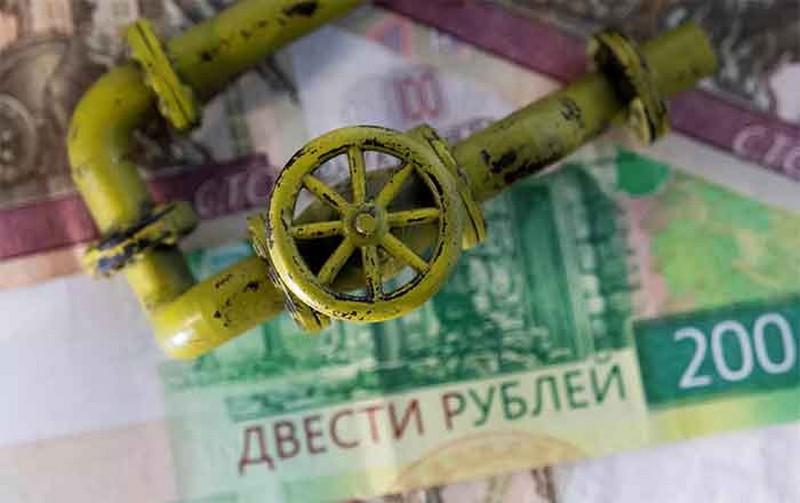
6 Feb 2022 – Amid escalating tensions between the United States, NATO and Russia, all eyes are on Ukraine. Canada’s Deputy Prime Minister Chrystia Freeland describes it as “a struggle between democracy and authoritarianism.” But Nord Stream 2, a pipeline built to bring Russian gas under the Baltic Sea directly to Germany, is an integral part of the story.

On January 27, US Under Secretary for Political Affairs, Victoria Nuland, asserted, “If Russia invades Ukraine one way or another … we will work with Germany to ensure it [the pipeline] does not move forward.” Delayed by US threats and sanctions, Nord Stream 2 highlights why countries are challenging the leadership of the Biden administration.

Since the 1960s when Europe first began importing Russian gas, Washington perceived Russian energy as a threat to US leadership and Europe’s energy security. More recently, with fracking, the US has become the world’s largest gas producer and a major exporter of LNG (liquefied natural gas). It wants to muscle in on Europe’s huge market, displacing Russian gas. With Nord Stream 2 completed and filled while it awaits German regulatory approval, the stakes are high.

Soon after pipeline construction began in 2018, the US passed a law threatening sanctions on the Swiss ship laying the pipe. The Swiss pulled out and two Russian vessels completed the line despite sanctions. The US threatened German contractors too, but Germany stood firm.

In 2021, with construction almost complete, German Chancellor Angela Merkel visited the White House, insisting on Nord Stream 2. President Biden gave way. He wanted to mend relations with Germany—the European Union’s most powerful country.

Nord Stream 2, like its predecessor Nord Stream 1, began as a joint venture (51 percent Russia’s Gazprom, 49 percent Royal Dutch Shell as well as Austrian, French and German companies). Then Poland’s government agency responsible for monopoly regulation forced European partners to relinquish their share, creating another delay. The European companies gave up their shareholding but remained as equivalent financial investors in the pipeline.

Upon the Europeans relinquishing their shareholding, Gazprom became the sole pipeline owner. It is also the world’s largest gas supplier, with a gas pipeline monopoly in Russia. Gazprom wants to deliver its own gas via its pipeline to Europe. The EU has maintained since 2009 that pipeline operators, in order to encourage market competition, cannot own the gas they carry. After construction of Nord Stream 2 began, the EU extended its rules to new marine pipelines originating abroad.

Nord Stream 2 was the only pipeline affected. While those pipelines completed prior to May 2019 were exempt, its completion was delayed by US sanctions on pipelaying. Gazprom claimed discrimination and appealed. In August 2021, a German court rejected the appeal. Gazprom then appealed to Germany’s Supreme Court.

German industrialists are desperate for Russian gas. Germany has only 17 days of gas supply in storage. Volatile short-term spot prices have compounded their woes. EU gas imports have increasingly shifted from long-term contracts with prices indexed to crude oil toward short-term deals by multiple traders in spot markets.

In 2020, spot prices were roughly half those of Gazprom’s long-term contracts. They surged as much as sevenfold in 2021, reflecting a mix of factors. On the demand side, economic revival from the pandemic boosted demand for gas in Asia as well as Europe. On the supply side, green sources of energy diminished in central Europe because of cloudy windless days. With the decommissioning of coal and nuclear power stations, utilities turned to natural gas.

European politicians blamed Russia for high gas prices, but Gazprom affirmed it was supplying the amounts stipulated in its long-term contracts. Gazprom wants long-term contracts to underpin the huge capital costs of gas field and pipeline investments.

Russia is a petro-state. It’s the world’s single largest exporter of natural gas, and the second largest oil exporter—just behind Saudi Arabia. Pipelines and sea routes to market are vital to its economy. Russia wants to sell oil and gas in Asia and Europe, and they want to buy it. Nord Stream 2 makes commercial sense. It incurs no transit fees. The route to market is much shorter than aging pipelines via Ukraine. For its part, Ukraine depends on transit fees from gas shipped through these pipelines.

Nord Stream 2 remains controversial, bitterly opposed by Poland and Ukraine who presume it will reduce volumes and transit fees on pipelines through their countries. Others (notably Germany, Austria, Croatia, Czech Republic, Hungary, Italy) want it. Germany, which carries huge weight in the EU, sees gas as a transition fuel after phasing out nuclear and coal. As Canadian foreign minister, Freeland voiced “significant concerns” about Nord Stream 2.

Numerous hurdles during and since construction have delayed the pipeline’s certification. The most recent forced its Swiss operating company to form a German subsidiary for the section in German waters. Upon eventual certification, Germany will become Europe’s main entry point for Russian gas.

The current crisis between Russia and the US/NATO has been brewing for many years. With the dissolution of the Soviet Union, NATO expanded membership to Eastern Europe. NATO facilitates US leadership, keeping European countries on its side against Russia. From a Russian viewpoint, NATO is provocative and threatening.

Part of the agreement underpinning the USSR’s dissolution was Western assurance that it would not expand into Russia’s sphere of influence, a pledge NATO most recently violated by stationing troops, ships and planes along Russia’s borders. The West accuses Russia of interference in Ukraine. Russia points to a 2014 Western-inspired coup in Ukraine and legitimate grievances of Russian-speakers in the breakaway Donbas republics. I document the two narratives in my book Oil and World Politics.

In December 2021, Russia presented draft treaties to the US and NATO, demanding a complete overhaul of Europe’s security architecture. Russia stressed the principle of indivisible and equal security for all countries, as agreed by all 56 members of the Organization for Security and Co-operation in Europe (OSCE) at Istanbul (1999) and reaffirmed at Astana (2010). Countries expressly agreed not to strengthen their security at the expense of others. In January, Russia wrote to all signatory countries, including Canada, demanding clear answers on how they each intended to fulfil these obligations in the current circumstances.

Russian President Vladimir Putin warned that if the West continued its aggressive policies (NATO’s expansion and missile deployment in eastern Europe), Russia would take ‘military-technical’ reciprocal measures. In his words, “They have pushed us to a line that we can’t cross.”

Russia’s initiative put the cat among the pigeons. A succession of high-level meetings occurred between Russia and the US, NATO and OSCE. On January 26, Washington presented written responses, seeking to narrow the debate to Ukraine and alleging the Russians were poised to invade it. Russia insisted repeatedly it would not initiate an invasion but would support Donbas if the latter were attacked.

The US escalated tensions by repeating claims of an “imminent” Russian invasion, even as Ukraine’s leaders expressed doubts. Washington threatened new sanctions of unprecedented severity, including major Russian banks, high-tech goods, the SWIFT financial messaging system, and Nord Stream 2. Britain and Canada followed suit. On January 11, Prime Minister Justin Trudeau asserted any Russian incursion into Ukraine would have “serious consequences,” including sanctions.

France, Germany and Italy balked because the sanctions would backfire on their economies. They appeared unconvinced Russia intended to attack unless provoked. A flurry of high-level bilateral discussions with Russia followed.

Significantly, on January 26, representatives of France, Germany, Russia and Ukraine confirmed support for the 2015 Minsk II agreement and an unconditional ceasefire. Minsk-II requires Ukraine to negotiate with the two Donbas republics on autonomy within a federalized Ukraine but, thus far, no negotiations have been held.

The EU imports 40 percent of its gas from Russia. For Russia, the routes through Ukraine and Poland are unreliable, because of hostility in both countries. Ukraine has a long-term deal with Gazprom for gas transit until 2024. Ukraine earns big transit fees, roughly US$2 billion per year, and desperately wants to keep them. For its internal market, Ukraine buys Russian gas indirectly from Poland, Romania and Slovakia.

Whatever happens with Western sanctions, Russia has a strategic new market in China. Russia’s Power of Siberia pipeline began exporting gas from east Siberia to northeast China two years ago. The two countries have agreed to build a second line, Power of Siberia 2. It will bring gas from the Yamal Peninsula in the Russian Arctic to China’s northeast. That means Yamal gas will be able to flow to China as easily as to Europe.

The current situation is dangerous and could easily escalate. Nord Stream 2 is critically important but national security trumps all. Security can only be achieved if it is universal. US efforts to contain Russia and maintain leadership over Europe are not working. It’s wake-up time for Canada, too. The world has become multi-polar and Nord Stream 2 is a fulcrum at the centre of the current crisis.

John Foster is the author of Oil and World Politics: The Real Story of Today’s Conflict Zones (Lorimer Books, 2018).

21 February 2022

Source: www.transcend.org

‘Politics as Usual’ Will Never Be a Solution to the Current Climate Threat (or to Nuclear War)

By C.J. Polychroniou interviews Richard Falk

(Commentary added by Roger Kotila)

[DWF NEWS editor Roger Kotila has taken the liberty to add “nuclear war” to the title of this article, which discusses the idea that “politics as usual” will never be a solution to climate threat. And included throughout (in red) are his views from the perspective of the Earth Constitution/Earth Federation movement.]

17 Feb 2022 – There is an ever-growing consensus that the climate crisis represents humanity’s greatest problem. Indeed, global warming is more than an environmental crisis — there are social, political, ethical and economic dimensions to it. Even the role of science should be exposed to critical inquiry when discussing the dimensions of the climate crisis, considering that technology bears such responsibility for bringing us to the brink of global disaster. This is the theme of my interview with renowned scholar Richard Falk. (Roger Kotila commentary: There is a growing number of people who believe that nuclear war is the “greatest” threat to humanity.)

For decades, Richard Falk has made immense contributions in the areas of international affairs and international law from what may be loosely defined as the humanist perspective, which makes a break with political realism and its emphasis on the nation- state and military power. He is professor emeritus of international law and practice at Princeton University, where he taught for nearly half a century, and currently chair of Global Law at Queen Mary University London, which has launched a new center for climate crime and justice; Falk is also the Olaf Palme Visiting Professor in Stockholm and Visiting Distinguished Professor at the Mediterranean Academy of Diplomatic Studies, University of Malta. In 2008, Falk was appointed as a United Nations Special Rapporteur on the situation of human rights in the Palestinian territories occupied since 1967. He is the author of some 50 books, the most recent of which is a moving memoir, titled Public Intellectual: The Life of a Citizen Pilgrim (2021). (Roger Kotila commentary: Richard Falk is a world citizen and top notch World Patriot. He is a courageous truth teller who, as UN Special Rapporteur, reported on the oppression by Israel of the Palestinians.)

C.J. Polychroniou: The climate crisis is the greatest challenge of our time, but, so far, we seem to be losing the battle to avoid driving the planet to dangerous “tipping points.” Indeed, a climate apocalypse appears to be a rather distinct possibility given the current levels of climate inaction. Having said that, it is quite obvious that the climate crisis has more than one dimension. It is surely about the environment, but it is also about science, ethics, politics and economics. Let’s start with the relationship between science and the environment. Does science bear responsibility for global warming and the ensuing environmental breakdown, given the role that technologies have played in the modern age? (Roger Kotila comment: Climate change is a great challenge which will need help from science, but nuclear war is even a greater challenge as we must end war itself. Both climate and war need to be dealt with at once. The present global war system will obstruct the necessary scientific steps needed to deal responsibly and effectively with climate change.)

Richard Falk: I think science bears some responsibility for adopting the outlook that freedom of scientific inquiry takes precedence over considering the real-world consequences of scientific knowledge — the exemplary case being the process by which science and scientists contributed to the making of the nuclear bomb. In this instance, some of the most ethically inclined scientists and knowledge workers, above all, Albert Einstein, were contributors who later regretted their role. And, of course, the continuous post-Hiroshima developments of weaponry of mass destruction have enlisted leading biologists, chemists and physicists in their professional roles to produce ever more deadly weaponry, and there has been little scientific pushback. (Kotila: Albert Einstein concluded that only world government could save us. These days many scientists are using their expertise to make nuclear weapons for first strike and for use in conventional warfare. Lawrence Livermore Lab located near San Francisco is part of this so-called nuclear “modernization” Life Extension Program (L.E.P.) according to Citizens Watch, but which DWF NEWS labels the Pentagon’s Life Extinction Program.)

With respect to the environmental breakdown that is highlighted by your question, the situation is more obscure. There were scientific warnings about a variety of potential catastrophic threats to ecological balance that go back to the early 1970s. These warnings were contested by reputable scientists until the end of the 20th century, but if the precautionary principle included in the Stockholm Declaration on the Human Environment (1972) would have been implemented, then certainly scientists bore some responsibility for continuing to work toward more capital-efficient means of finding technological applications for oil, gas and coal. As with adverse health effects, post-Enlightenment beliefs that human progress depended on scientific knowledge inhibited regulation for the benefit of the public good. Only when civil society began to sound the alarm were certain adjustments made, although often insufficient in substance, deferring to private interests in profitability, and public interests in the enhancement of military capabilities and governmental control. (Kotila: Insufficient? Profit over people has been disastrous. The military-industrial-covert operations complex is out of control. The US is not in the defense business, it is in the War Business. The so-called UN “Security” Council P-5 veto powers, supposedly for peace and security, are the world’s leading weapons dealers. The world has suffered war after war after war despite the launching of the United Nations in 1945.)

Overall, despite the climate change crisis, there remains a reluctance to hamper scientific “progress” by an insistence on respecting the carrying capacity of the Earth. Also, science and scientists have yet to relate the search for knowledge to the avoidance of ecologically dangerous technological applications, and even more so in relation to political and cultural activities. There is also the representational issue involving the selection of environmental guardians and their discretionary authority, if a more prudential approach were to be adopted. (Kotila: Good point. Scientists have learned how to destroy the world.)

C.J. Polychroniou: The climate crisis also raises important ethical questions, although it is not clear from current efforts to tame global warming that many of the world’s governments take them seriously. Be that as it may, how should ethics inform the debate about global warming and environmental breakdown?

Richard Falk: The most obvious ethical issues arise when deciding how to spread the economic burdens of regulating greenhouse gas emissions in ways that ensure an equitable distribution of costs within and among countries. The relevance of “climate justice” to relations among social classes and between rich and poor countries is contested and controversial. As the world continues to be organized along state-centric axes of authority and responsibility, ethical metrics are so delimited. Given the global nature of the challenges associated with global warming, this way of calculating climate justice and ethical accountability in political space is significantly dysfunctional. (Kotila: National self-interest often betrays the world public interest. The Earth Constitution calls for a World Parliament representing “we, the people” of the world. The design for its “House of Peoples” is for 1000 electoral districts to represent the world’s 7.9 billion people, and offers a broader view of what needs to be done than the current UN system which gives rich and powerful nations too much authority over global affairs. Too often a nation’s selfish self-interest harms the world community at large.)

Similar observations are relevant with respect to time. Although the idea of “responsibility to future generations” received some recognition at the UN, nothing tangible by way of implementation was done. Political elites, without exception, were fixed on short-term performance criteria, whether satisfying corporate shareholders or the voting public. The tyranny of the present in policy domains worked against implementing the laudatory ethical recognition of the claims of [future generations] to a healthy and materially sufficient future. (Kotila: The UN is limited by what it can accomplish for future generations by its defective Charter which allows, for example, war after war. The Earth Constitution is designed to replace the UN Charter. Activists should be encouraged to support the demand for UN Charter Review to open the door for the Earth Constitution — which happens to be the first green constitution ever drafted, and which is designed to abolish war. Under the Earth Constitution nations in conflict must go to a democratically elected World Parliament or to a World Court to peacefully resolve conflicts — the advantage of a democratic world federal union government (ie, “new UN” under the Earth Constitution).

Taking account of the relevance of the past seems an ethical imperative that is neglected because it is seen as unfairly burdening the present for past injustices. For instance, reparations claims on behalf of victimized people, whether descendants of slavery or otherwise exploited peoples, rarely are satisfied, however ethically meritorious. There is one revealing exception: reparations imposed by the victorious powers in a war. (Kotila: I believe that it is highly relevant and wise to include history in decision-making.)

In the environmental domain, the past is very important to the allocation of responsibility for the atmospheric buildup of greenhouse gas emissions. Most Western countries are more responsible for global warming than the vast majority of the Global South, and many parts of Africa and the Middle East face the dual facts of minimal responsibility for global warming yet maximal vulnerability to its harmful effects. (Kotila: Yes.)

These various ethical concerns are being forced onto the agendas of global conferences. This was evident at the 2021 COP-26 Glasgow Climate Summit under UN auspices. The intergovernmental response was disappointing, and reflected capitalist and geopolitical disregard of the ethical dimensions of the climate change challenge. (Kotila: The Earth Constitution under Articles 4.14. and 4.17 provides a better way than the UN Charter in order to regulate and supervise international capitalistic excesses which may hamper needed responses to climate change. No longer will Big Money be allowed to rule, but instead must adapt to serve “we, the people.”)

C.J. Polychroniou: Politics also figures prominently in the climate crisis, with questions being raised as to whether our current system of government, both at the national and international level, is adequate to meet the greatest challenge of our time. What are your thoughts on this matter?

Richard Falk: As suggested, addressing the global challenge of climate change with the tools developed for problem-solving in a state-centric world possessing weak institutional mechanisms for the effective promotion of the global public good is the organizational root of the problem. The UN was established with the ahistorical hope that the great powers of international relations would cooperate for peace as successfully as they cooperated for war between 1939 to 1945. Despite lofty rhetoric, the UN was designed to be a weak global mechanism. Why else disempower the UN by giving the victors of World War II a right of veto, which in effect was a recognition of the primacy of geopolitics? (Kotila: The World Constitution & Parliament Association anticipated the UN’s defective Charter, and proceeded over 30 years to draft the Earth Constitution (aka The Constitution for the Federation of Earth). While activists are putting into place what will become a democratically elected World Parliament, the UN General Assembly is being sought to launch Charter Review as a step to activating the Earth Constitution. The UN General Assembly could become the “House of Nations” in the EC’s World Parliament.)

Besides geopolitics, there were other obstacles to global-oriented problem-solving as a result of the persistence and expansion of statism after the collapse of European colonialism. This dominance of statism was reinforced by rigid ideological adherence to nationalism on the part of political leaders, shaping relations with other countries even if disguised somewhat by alliance diplomacy, “special relationships” (such as the U.S.’s relationship with Israel) and neoliberal patterns of globalization. (Kotila: Nationalism too easily becomes the evil of jingoism where we see belligerence toward foreign nations and lust for war. True national patriotism requires being a world patriot first and foremost — because what is good for our world is good for our country, because our country is part of the world.)

The core political issue is upholding the indispensable need for unprecedented degrees of globally oriented cooperation to address effectively climate change challenges that were being stymied by the continuing dominance of statist and geopolitical tendencies in international relations. These tendencies favor the part over the whole in multilateral forms of problem-solving. This structural reality has recently been accentuated by the rise of autocratic hyper-nationalist leaders in many important states, and by recent preoccupations with overcoming the COVID pandemic and containing its negative economic spillovers. (Kotila: Yes, we need “cooperation” on behalf of the whole world. But “cooperation” between nations [multilateralism] is unreliable unless buttressed by a well-written good government world federal constitution like the Earth Constitution.)

Until a robust mechanism for the promotion of global public goods is established, the political potential of present structures of world order do not seem capable of fashioning prudent and effective policies to cope with climate change. For such a mechanism to be established will require [either] the shock effect of future climate catastrophes, or a powerful, widely supported, militant transnational civil society movement dedicated to the protection of the Earth. (Kotila: The Earth Constitution is ready to go.)

C.J. Polychroniou: The climate crisis also reflects the failure of economics, with the argument being made that capitalism is actually the cause of the problem and climate change merely a symptom. Given where we are, and with the window of opportunity rapidly closing, should the fight against global warming be also a fight against capitalism? (Kotila: There is a place for both capitalism and socialism; like a bird it takes two wings to fly. Capitalism, however, will need supervision and regulation by the World Parliament as planned under the Earth Constitution.)

Richard Falk: David Whyte ends his book on ecocide with these stark words: “[W]e have to kill the corporation before it kills us.” The guiding idea of contemporary capitalism is to maximize short-term profitability, a posture that contradicts the kind of approach that would protect the natural habitat against the ravages wrought by contemporary capitalism. (Kotila: There are positive features to capitalism, but there must be strong regulation and supervision. Privatization, for example, has harmed health care systems where profits take away from patient care, and are overly expensive. Privatization tends to be bad for almost any public service such as public utilities, mass transportation, education, or health care.)

However, the issue may be broader than capitalism. Actually existing socialist governments, exercising greater state control over the economy, have exhibited no better record when it comes to environmental protection or taking responsible account of longer-term threats to the natural habitat. State-dominated economies may be less concerned about profitability, but their preoccupation with maximizing economic growth and susceptibility to corruption is as dangerous and destructive. (Kotila: A good point made here. Socialism, like capitalism, has its faults. The UN Charter which grants “sovereignty” for each nation, allows kleptocrats to steal from the people and the UN can’t stop the corruption. The “new UN” under the Earth Constitution with a World Parliament could address this problem if a nation goes corrupt using the Office of the Ombudmus.)

Until economic and political policies grounded upon a new kind of citizenship [prioritizing] humanity gain political traction, it seems highly improbable that ecological threats will be addressed responsibly. From your own perspective, how do we move forward in the fight against global warming? Indeed, what might be possible approaches to overcome climate inaction?

You saved the most difficult question for last! I do think education in the broad sense is key, including rethinking citizenship and activist civic participation. It is also essential that efforts be made to enable the UN to act more independently of geopolitical and nationalist manipulations, which have prevented the UN from playing an influential role throughout the COVID pandemic. This regressive interaction with states was highlighted by the hostility of Trump’s presidency to any kind of meta-nationalist approach to the control of the virus, including his disgraceful decision to defund and disengage from the World Health Organization. (Kotila: “enabling the UN to act more independently” will most likely require replacing the UN Charter with the Earth Constitution.)

A more credible UN requires independent and increased funding by way of an international tax, as well as curtailing of the right of veto by the five permanent members of the Security Council. Such global reforms will not happen without substantial pressure from civil society mobilizations coupled with the emergence of more enlightened leadership in important countries. (Kotila: Absolutely YES, but for a “new UN” using the Earth Constitution as its guide and model to establish the necessary world federal union government. The Earth Constitution movement must gain popular support for ratification, and be given the full attention from the UN General Assembly which currently has 188 nations denied voting rights.)

As suggested above, a reconstituted world order responsive to the magnitude and character of climate change challenge would seem to require the radical transformation of economic activity. This seems as though it could happen only through a revolutionary process, either as something that took the unprecedented shape of a transnational movement or spread from state to state as did the Arab Spring of 2010-2011, but without sparking a counterrevolutionary backlash. (Kotila: I’d like to see a nonviolent r- evolutionary movement — a renaissance, an awakening as described by Professor Glen T. Martin in his book “The Earth Constitution Solution.”)

Because there is no currently visible transition strategy to move from where we are to where we need to be, indulging the utopian imagination is a political act, envisioning futures attuned to the climate change agenda. (Kotila: A transition strategy is already underway with the Earth Constitution/Earth Federation movement. See earthfederation.info)

I believe that our escape from present entrapment depends on “a politics of impossibility.” Our leaders say, and the general consensus is, that politics should be conceived as “the art of the possible,” which assesses the play of forces to discover what is feasible. My argument has been that what is understood by the political class as feasible is insufficient to produce satisfactory policies and practices with regard to climate menaces. That is, the politics we know lacks the capacity to generate a solution. (Kotila: YES.)

It is evident that the impossible happens. This was manifested in recent international experience by the victories of national resistance movements in several major 20th- century anti-colonial wars, the collapse of the Soviet Union, the dismantling of apartheid in South Africa. In each instance, before the impossible happened, experts deemed the outcome utopian or impossible, not worthy of the attention of serious persons. What seems clear is that the impossible happens only when the mobilization of people is great enough to produce outcomes that defy the perceptions of those forces committed to the permanence of the status quo. (Kotila: Yes, the “impossible is possible.” See below at the end of this article taken from the front page of the earthfederation.info website.)

This leads me to view the future as uncertain and unknowable. For this reason, whatever future we believe necessary and desirable can unfold, defying current expectations. This makes it rational and justifiable for patriots of humanity to engage on behalf of this better future. There are many signs that a green vision of the future is gaining support throughout the planet, especially among youth who have most to lose, and hence to gain. Youth may be the vanguard among those demanding ecologically responsible patterns of humane governance for the planet.

Richard Falk is a member of the TRANSCEND Network, Albert G. Milbank Professor Emeritus of International Law at Princeton University, Chair of Global Law, Faculty of Law, at Queen Mary University London, Research Associate the Orfalea Center of Global Studies at the University of California, Santa Barbara, and Fellow of the Tellus Institute.

Roger Kotila, Ph.D. is a peace activist and a psychologist (ret.) with many years of clinical experience with the California Dept. of Corrections doing psychiatric diagnosis and treatment with inmates. President of Democratic World Federalists he is co-editor of DWF NEWS, and editor of Earth Federation News & Views.

21 February 2022

Source: www.transcend.org

The Western Allied Nations Bully the World While Warning of Threats from China and Russia

By Vijay Prashad

17 Feb 2022 – On January 21, 2022, Vice Admiral Kay-Achim Schönbach attended a talk in New Delhi, India, organized by the Manohar Parrikar Institute for Defense Studies and Analyses. Schönbach was speaking as the chief of Germany’s navy during his visit to the institute.

“What he really wants is respect,” Schönbach said, referring to Russia’s President Vladimir Putin. “And my god, giving someone respect is low cost; even no cost.” Furthermore, Schönbach said that in his opinion, “It is easy to even give him the respect he really demands and probably also deserves.”

The next day, on January 22, Ukraine’s Foreign Minister Dmytro Kuleba summoned Germany’s ambassador to Ukraine, Anka Feldhusen, to Kyiv and “expressed deep disappointment” regarding the lack of German weapons provided to Ukraine and also about Schönbach’s comments in New Delhi. Vice Admiral Schönbach released a statement soon after, saying,

“I have just asked the Federal Minister of Defense [Christine Lambrecht] to release me from my duties and responsibilities as inspector of the navy with immediate effect.”

Lambrecht did not wait long to accept the resignation.

Why was Vice Admiral Schönbach sacked? Because he said two things that are unacceptable in the West:

  • First, that “the Crimean Peninsula is gone and never [coming] back” to Ukraine and,
  • Second, that Putin should be treated with respect.

The Schönbach affair is a vivid illustration of the problem that confronts the West currently, where Russian behavior is routinely described as “aggression” and where the idea of giving “respect” to Russia is disparaged.

Aggression

U.S. President Joe Biden’s administration began to use the word “imminent” to describe a potential Russian invasion of Ukraine toward the end of January. On January 18, White House Press Secretary Jen Psaki did not use the word “imminent,” but implied it with her comment: “Our view is this is an extremely dangerous situation. We’re now at a stage where Russia could at any point launch an attack in Ukraine.” On January 25, Psaki, while referring to the possible timeline for a Russian invasion, said, “I think when we said it was imminent, it remains imminent.” Two days later, on January 27, when she was asked about her use of the word “imminent” with regard to the invasion, Psaki said, “Our assessment has not changed since that point.”

On January 17, as the idea of an “imminent” Russian “invasion” escalated in Washington, Russia’s Foreign Minister Sergei Lavrov rebuked the suggestion of “the so-called Russian invasion of Ukraine.” Three days later, on January 20, spokeswoman for Russia’s Foreign Ministry Maria Zakharova denied that Russia would invade Ukraine, but said that the talk of such an invasion allowed the West to intervene militarily in Ukraine and threaten Russia.

Even a modicum of historical memory could have improved the debate about Russian military intervention in Ukraine. In the aftermath of the Georgian-Russian conflict in 2008, the European Union’s Independent International Fact-Finding Mission on the Conflict in Georgia, headed by Swiss diplomat Heidi Tagliavini, found that the information war in the lead-up to the conflict was inaccurate and inflammatory. Contrary to Georgian-Western statements, Tagliavini said, “[T]here was no massive Russian military invasion underway, which had to be stopped by Georgian military forces shelling Tskhinvali.” The idea of Russian “aggression” that has been mentioned in recent months, while referring to the possibility of Russia invading Ukraine, replicates the tone that preceded the conflict between Georgia and Russia, which was another dispute about old Soviet borders that should have been handled diplomatically.

Western politicians and media outlets have used the fact that 100,000 Russian troops have been stationed on Ukraine’s border as a sign of “aggression.” The number—100,000—sounds threatening, but it has been taken out of context. To invade Iraq in 1991, the United States and its allies amassed more than 700,000 troops as well as the entire ensemble of U.S. war technology located in its nearby bases and on its ships. Iraq had no allies and a military force depleted by the decade-long war of attrition against Iran. Ukraine’s army—regular and reserve—number about 500,000 troops (backed by the 1.5 million troops in NATO countries). With more than a million soldiers in uniform, Russia could have deployed many more troops at the Ukrainian border and would need to have done so for a full-scale invasion of a NATO partner country.

Respect

The word “respect” used by Vice Admiral Schönbach is key to the discussion regarding the emergence of both Russia and China as world powers. The conflict is not merely about Ukraine, just as the conflict in the South China Sea is not merely about Taiwan. The real conflict is about whether the West will allow both Russia and China to define policies that extend beyond their borders.

Russia, for instance, was not seen as a threat or as aggressive when it was in a less powerful position in comparison to the West after the collapse of the USSR. During the tenure of Russian President Boris Yeltsin (1991-1999), the Russian government encouraged the looting of the country by oligarchs—many of whom now reside in the West—and defined its own foreign policy based on the objectives of the United States. In 1994, “Russia became the first country to join NATO’s Partnership for Peace,” and that same year, Russia began a three-year process of joining the Group of Seven, which in 1997 expanded into the Group of Eight. Putin became president of Russia in 2000, inheriting a vastly depleted country, and promised to build it up so that Russia could realize its full potential.

In the aftermath of the collapse of the Western credit markets in 2007-2008, Putin began to speak about the new buoyancy in Russia. In 2015, I met a Russian diplomat in Beirut, who explained to me that Russia worried that various Western-backed maneuvers threatened Russia’s access to its two warm-water ports—in Sevastopol, Crimea, and in Tartus, Syria; it was in reaction to these provocations, he said, that Russia acted in both Crimea (2014) and Syria (2015).

The United States made it clear during the administration of President Barack Obama that both Russia and China must stay within their borders and know their place in the world order. An aggressive policy of NATO expansion into Eastern Europe and of the creation of the Quad (Australia, India, Japan and the United States) drew Russia and China into a security alliance that has only strengthened over time. Both Putin and China’s President Xi Jinping recently agreed that NATO’s expansion eastward and Taiwan’s independence were not acceptable to them. China and Russia see the West’s actions in both Eastern Europe and Taiwan as provocations by the West against the ambitions of these Eurasian powers.

That same Russian diplomat to whom I spoke in Beirut in 2015 said something to me that remains pertinent:

“When the U.S. illegally invaded Iraq, none of the Western press called it ‘aggression.’”

Vijay Prashad is an Indian historian, editor and journalist.

21 February 2022

Source: www.transcend.org

What Russia Wants

By John Scales Avery

Russia Does Not Want to Invade Ukraine

21 Feb 2022 – Both Russia’s President Vladimir Putin and Foreign Secretary Sergey Lavrov have repeatedly stated that Russia does not intend to invade Ukraine. Logic also tells us that if they had wished to do so, they would have done it long ago. The threat of a Russian invasion of Ukraine is a western invention.

Russia Fears the Eastward Expansion of NATO

To understand how Russians feel about having western weapons and troops poured into a position on their nation’s borders, we should imagine how the United States would react if large numbers of Russian weapons and troops were stationed in Mexico or Canada.

A Broken Promise

In 1990, US Secretary of State James Baker assured Mikhail Gorbachev that “not an inch of NATO’s present military jurisdiction will spread in an eastward direction”. In return, Gorbachev agreed not to oppose the reunification. Russia kept its side of the bargain, but the United States broke its promise.

The Illegality of NATO

Former UN Assistant Secretary General Hans Christof von Sponeck used the following words to express his opinion that NATO now violates the UN Charter and international law: “In the 1949 North Atlantic Treaty, the Charter of the United Nations was declared to be NATO’s legally binding framework. However, the United-Nations monopoly of the use of force, especially as specified in Article 51 of the Charter, was no longer accepted according to the 1999 NATO doctrine. NATO’s territorial scope, until then limited to the Euro-Atlantic region, was expanded by its members to include the whole world”

Article 2 of the UN Charter requires that “All members shall refrain in their international relations from the threat or use of force against the territorial integrity or political independence of any state.” This requirement is somewhat qualified by Article 51, which says that “Nothing in the present Charter shall impair the inherent right of individual or collective self-defense if an armed attack occurs against a Member of the United Nations, until the Security Council has taken measures necessary to maintain international peace and security.”

Thus, in general, war is illegal under the UN Charter. Self-defense against an armed attack is permitted, but only for a limited time, until the Security Council has had time to act. The United Nations Charter does not permit the threat or use of force in preemptive wars, or to produce regime changes, or for so-called “democratization”, or for the domination of regions that are rich in oil.

What Military-Industrial Complexes Want

Military-industrial complexes do not actually want war. What they want is a level of tensions sufficiently high to justify obscenely bloated military budgets. In 2021 the world spent roughly two trillion dollars on armaments. This enormous river of money, almost too great to be imagined, flows like current in a devil’s dynamo from immensely rich arms corporations to buy the votes of corrupt politicians and the propaganda of mass media, numbed by which, citizens vote to perpetuate the system.

In the United States the industrial-military complex is particularly strong, and it has bipartisan support. This may explain US President Biden’s aggressive actions in the Ukraine crisis. However, although nobody wants war, and especially not a suicidal and potentially omnicidal nuclear war, a situation with very high tensions can become out of control through a technical or human error, through escalation of a small incident, or through a false flag operation.

The Threat of a Nuclear War

Looking at modern history we can remember a number of times when the world came extremely close to nuclear war, The Cuban Missile Crisis is one example, but there are a number of others. We cannot continue to be lucky forever. Just as the politicians and generals who started World War I had no imaginative idea of what it would be like, our present day leaders seem not to realize the catastrophic nature of nuclear war. Because of the nuclear winter effect and because of the long-lasting effects of radioactivity, our civilization and much of the biosphere would not survive such a war. In the present crisis over Ukraine, Both the United States and Russia possess more than enough nuclear weapons to destroy the world completely.

As citizens we must prevent our politicians from pursuing this insane brinkmanship.

John Scales Avery, Ph.D., who was part of a group that shared the 1995 Nobel Peace Prize for their work in organizing the Pugwash Conferences on Science and World Affairs, is a member of the TRANSCEND Network and Associate Professor Emeritus at the H.C. Ørsted Institute, University of Copenhagen, Denmark.

21 February 2022

Source: www.transcend.org

‘Nothing More Grotesque than a Media Pushing for War,’ Says Edward Snowden

The Intercept’s Jeremy Scahill similarly notes that “the talking heads on cable news are almost drooling over the prospect of a ratings-boosting war.”

By Jessica Corbett

12 Feb 2022 – Exiled American whistleblower Edward Snowden yesterday joined global critics who are decrying news outlets for encouraging war with their coverage of rising tensions between the United States and Russia—where he has lived since 2013—over Ukraine.

“With talk of war in Ukraine rising to a fever pitch, U.S. media outlets are once again beating the drums.”

“There is nothing more grotesque than a media pushing for war,” Snowden tweeted.

After a flood of responses—some highlighting that Russian President Vladimir Putin has stationed over 100,000 troops near his country’s border with Ukraine and is conducting military exercises in Belarus—Snowden doubled down on his anti-war message.

“When you see snide quote-tweets of this from the boot-licking think-tank crowd, look at the ratio and remember that even if they’re loud, they are in the minority,” he said. “Being pro-war is not smart, cool, or sophisticated, and their performative outrage doesn’t change that.”

Snowden is far from alone in blasting a media march toward war that has been compared to the lead-up to U.S. invasion of Iraq in 2003.

“Here we go again,” Jeremy Scahill, co-founder of The Intercept, wrote in a Friday fundraising email. “With talk of war in Ukraine rising to a fever pitch, U.S. media outlets are once again beating the drums.”

The investigative reporter, who has covered U.S. wars for decades, added:

The talking heads on cable news are almost drooling over the prospect of a ratings-boosting war. Retired Pentagon officials on the payroll of the defense industry are presented as “experts,” often with no disclosure of their financial conflicts of interest.

And once the shooting starts, mainstream pundits will drop any remaining pretense of journalistic integrity and begin openly cheerleading for “the troops,” like sports announcers rooting for the home team.

Meanwhile, the U.S. is the world’s largest arms dealer and it spends more on “defense” than China, Russia, India, the U.K., Germany, France, Japan, South Korea, and Australia combined.

In a Friday opinion piece for Middle East Eye, journalist Joe Gill wrote that “in the 21st century, the media war is a critical element of any pre-war planning, and this appears to be reaching its crescendo.”

“The narratives repeated in the Western media are so thunderingly pro-Ukrainian and anti-Putin that it is hard to extract from the simplistic framing the complex nature of the conflict.”

“By talking up the inevitability of a war in Ukraine against Russia, Western intelligence agencies and their media outliers are implanting the idea that war has already started,” he continued, noting that “Bloomberg even accidentally announced that Russia had invaded Ukraine (before apologizing).”

Ahead of U.S. President Joe Biden’s call with Putin reportedly planned for Saturday morning, the White House continued to warn of a potential imminent invasion.

During Friday’s White House press briefing, Jake Sullivan, Biden’s national security adviser, said that “Russian military action could begin any day now,” citing “what we are seeing on the ground and what our intelligence analysts have picked up.”

“We are not saying that… a final decision has been taken by President Putin,” Sullivan noted, while also emphasizing that “any American in Ukraine should leave as soon as possible, and in any event, in the next 24 to 48 hours.”

The adviser also insisted that “we are ready to continue results-oriented diplomacy that addresses the security concerns of the United States, Russia, and Europe consistent with our values and the principle of reciprocity.”

However, the Biden administration has also signaled an unwillingness to agree to any of Russia’s security demands—including Ukraine’s exclusion from the North Atlantic Treaty Organization (NATO)—and deployed B-52 bombers with nuclear capabilities to the United Kingdom as well as 3,000 more troops to Poland.

A senior defense official said in a statement that the troops “are being deployed to reassure our NATO allies, deter any potential aggression against NATO’s eastern flank, train with host-nation forces, and contribute to a wide range of contingencies.”

Noting that “the U.S. and NATO are pouring in high-tech weaponry and training up Ukraine’s armed forces, making it a much more militarily capable foe,” Gill wrote Friday that “from where the Russians are sitting, the deployment of billions of dollars worth of new U.S. and U.K. military hardware on its borders is a sign of escalation, rather than defense.”

He added that “the narratives repeated in the Western media are so thunderingly pro-Ukrainian and anti-Putin that it is hard to extract from the simplistic framing the complex nature of the conflict.”

Bryce Greene delivered a similar critique last month in a Fairness and Accuracy in Reporting analysis of the corporate media’s Ukraine coverage, writing that missing context, including “the crucial role the U.S. has played” in fueling regional conflict, “allows hawks to promote disastrous escalation of tensions.”

“As a result of this coverage, the interventionist mentality has trickled down to the public,” Greene added, citing recent polls. “Perhaps if the public were better informed, there would be more domestic pressure on Biden to end the brinkmanship and seek a genuine solution to the problem.”

Meanwhile, as Branko Marcetic pointed out at Jacobin earlier this week, progressives who have taken a forceful stand for a diplomatic resolution to the Ukraine crisis, such as Sen. Bernie Sanders (I-Vt.) and Rep. Ilhan Omar (D-Minn.), are “navigating a dangerous climate created by mainstream media—including liberal outlet MSNBC—that casts anti-war opinion as disloyalty.”

Journalists who are critical about a potential war between the world’s two nuclear superpowers—or even question Western governments’ claims about a potential Russian invasion—are also being met with hostility.

Last week, as Common Dreams reported, Matt Lee of the Associated Press grilled a U.S. State Department spokesperson about the administration’s refusal to provide any evidence backing up the claim that Russia is planning false flag operation as a pretext to invade Ukraine.

Referencing the George W. Bush administration’s infamous lies about weapons of mass destruction, Lee told the State Department’s Ned Price that “I remember WMDs in Iraq.” As the journalist pushed for more than “a series of allegations and statements,” Price accused him of wanting “to find solace in information that the Russians are putting out.”

Recalling the exchange, Gill said Friday that “this kind of briefing can’t help but recall, as Lee suggested, the feverish months in the run-up to the 2003 invasion of Iraq.”

Jessica Corbett is a staff writer for Common Dreams.

21 February 2021

Source: www.transcend.org