Just International

The Killing of Rohingya Leader Mohibullah is Part of Worrying Trend of Violence

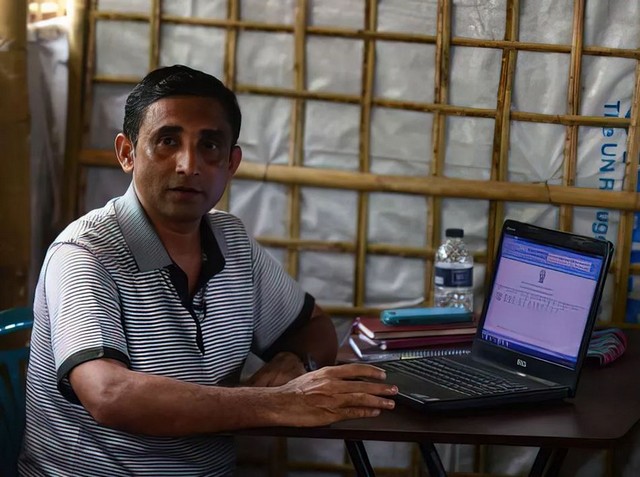
1 October 2021 – London/Yangon — In response to the assassination of Rohingya leader Mohibullah, BHRN calls on Bangladesh and its partners in the international community to take immediate measures to remedy the escalating violence in the refugee camps in Bangladesh. Mohibullah was an activist and the leader of the Arakan Society for Peace and Human Rights (ARSPH). He was one of the most respected leaders in the camps and raised the issues of the Rohingya’s plight at the highest levels. He was killed on Wednesday night 29 September while at his office in the Kutupalong refugee camp. No one has claimed responsibility for the killing, but Mohibullah’s brother, Habibullah, said he witnessed the attack and blamed the Arakan Rohingya Salvation Army (ARSA).

“The death of Mohibullah is a devastating loss for the Rohingya community, particularly the refugees in Bangladesh. No words can adequately address this loss, but action must be taken to prevent further tragedy from occurring in the camps. Authorities have ignored the crime and violence in the camps for too long, and it is clear now they must be addressed. In doing so we also urge restraint and diligence from the security forces so that no harm or duress is inflicted upon the innocent,”

Said BHRN’s Executive Director, Kyaw Win.

BHRN has received regular reports since 2017 of militant groups and criminal gangs maintaining a presence inside the refugee camps in Bangladesh. Their control has grown steadily and power struggles between them have often resulted in violence and death. Civilians who have opposed criminal gangs and militant groups have also found themselves to be targets of beatings, kidnappings, and assassinations.

BHRN calls on the Bangladeshi authorities to fully and thoroughly investigate the matter and to bring Mohibullah’s killers to justice. Bangladesh security forces should increase their presence in the camps but ensure the safety and freedoms of refugees. The expense and difficulty of this task should not be carried by Bangladesh alone but the international community should provide all available resources to aid them in their endeavors. If possible, countries with strong human rights records should offer instruction and training to the Bangladeshi authorities to ensure they can effectively do their jobs while preserving the rights and wellbeing of those in their care.

Organisation’s Background
BHRN is based in London and operates across Burma/Myanmar working for human rights, minority rights and religious freedom in the country. BHRN has played a crucial role in advocating for human rights and religious freedom with politicians and world leaders.

Media Enquiries
Please contact:

Kyaw Win
Executive Director
Burma Human Rights Network (BHRN)
E: kyawwin@bhrn.org.uk
T: +44(0) 740 345 2378


Petition Against Hudson Institute

By Junaid S Ahmad

The UN Secretary General His Excellency Mr. Antonio Guterres in his September 2020 document titled United Nations Strategy and Plan of Action on Hate Speech said:

“Fighting hate, discrimination, racism and inequality is at the core of United Nations principles and the Organization’s work…Hate speech, including online, has become one of the most frequent methods for spreading divisive and discriminatory messages and ideologies…It responds to the worrying growth of xenophobia, racism and intolerance, including anti-Semitism and anti-Muslim hatred, around the world”.

One of the prominent think tanks of Washington, D.C. is the Hudson Institute (HI), which is engaged exactly in what is described above. Earlier last month, a petition was launched reprimanding the hate activity of the Hudson Institute. Thousands of petitioners signed and now some media outlets are taking notice.

It is noteworthy that in the past HI has acknowledged its misconduct in other areas of research and policy pressure activities. In 2016, the New York Times accused HI of wrongful and unethical lobbying for an 11 billion dollar nuclear-powered aircraft carrier deal in which a naval officer was allegedly paid by Huntington Ingall Industries and HI platform was used without informing the House Armed Services Committee. Similarly, HI was involved in a campaign against organic farming because it receives large donations from anti-organic farming companies such as Monsanto. These activities of HI are relatively less alarming on the global level because, as bad as they may be, they do not justify imminent war and aggression, as does its current obsession with fanning the flames of Islamophobia which has directly misled many governments to the detriment of the global Muslim community. The spread of hate scholarship in the name of free speech continues to poison bilateral, multilateral and global relations. The Muslim world has perhaps the largest geographical and demographic spread across the globe. Wrongfully vilifying almost two billion people around the world who are present in every global enclave is a recipe for disaster.

In 2008 HI’s Paul Marshall criticized the OIC’s joint effort with the UNHRC against those who blaspheme against the Islamic sacred sources and spread Islamophobia in the name of suppression of dissent. In 2011, HI’s Nina Shea wrote the same, arguing that if the US or the world community desists in engaging in Islamophobia, it will delegitimize the freedom of expression. In 2014, Nina Shea and Mark Durie of HI reiterated that talking of Islamophobia will criminalize dissent. Given the American behavior in world politics, it should be the global Muslim community that should be worried about dissent and not those who drop bombs on innocent people and convince their republics with quack scholarship on Islam and Muslims.

It is our contention that HI’s systematic propaganda is harmful for Muslim populations around the world because it is based on hatred and ill will for Muslims and their beliefs.

It is about time that Hudson Institute is reprimanded for spreading unfounded negativity and strife on a global level.

Prof. Junaid S. Ahmad teaches Religion and World Politics and is the Director of the Center for Islam and Decoloniality, Islamabad, Pakistan.

30 September 2021

Source: countercurrents.org

On Afghanistan and Legitimate Resistance

By Dr Ramzy Baroud

An urgent task is awaiting us: considering the progression of events, we must quickly liberate ourselves from the limits and confines placed on the Afghanistan discourse, which have been imposed by US-centered Western propaganda for over 20 years, and counting. A first step is that we must not allow the future political discourse pertaining to this very subject to remain hostage to American priorities – successes, failures and geostrategic interests.

For this to happen, the language itself must be confronted. This is critical if we are to truly glean valuable lessons from Afghanistan and to avoid a repeat of the previous failure of comprehending the US defeat in Vietnam (1955-1975), the way it should have been understood, not the way Washington wanted Americans – in fact, the whole world – to understand. Vietnam was not merely an American ‘debacle’, and did not only culminate in an American ‘defeat’. It was also a Vietnamese victory and the triumph of the will of the people over the US imperialist war machine.

In US mainstream media and, to a large extent, academia, the Vietnam War history was almost entirely written from an American point of view. Even the anti-Vietnam war version of that history remained American-centric.

Alas, in the case of Afghanistan, many of us, whether in journalism or academia, whether wittingly or otherwise, remain committed to the US-based discourse, partly because the primary sources from which our information is gleaned are either American or pro-American. Al Akhdar al-Ibrahimi, former United Nations Peace Envoy to Afghanistan, from 1997 to 1999, and again from 2001 to 2004, had recently, in an interview with French newspaper, Le Monde, reminded us of the importance of using proper language to describe the unfolding events in Afghanistan.

“Why always speak of an American defeat? First of all, this is a victory for the Taliban, which must be attributed to their tactical genius,” al-Ibrahimi stated. (Translated from French)

The answer to al-Ibrahimi’s question can easily be deduced from his own words because, to speak of a Taliban victory, is to admit to their ‘tactical genius’. The admission of such a truth can have far-reaching consequences.

The use of the terms defeat vs. victory is critical because it situates the conversation within two entirely different intellectual frameworks. For example, by insisting on the centrality of the question of the American defeat, whether in Afghanistan or Vietnam, then the focus of the follow-up questions will remain centered on American priorities: Where did the US go wrong? What urgent changes must Washington implement in its foreign policy and military agendas to stave off its Afghanistan shortcomings? And where should the US go from here?

However, if the focus remains centered on the victory of the Afghan resistance – and yes, it is Afghan resistance, not merely that of the Taliban or Pashtun – then the questions that follow would relocate the conversation somewhere else entirely: How did poorly armed fighters manage to defeat the world’s combined greatest powers? Where should Afghanistan go from here? And what lessons can national liberation movements around the world learn from the Afghan victory?

For the purpose of this article, I am concerned with the Afghan victory, not the American defeat.

The Rise and fall of the ‘Terrorists’ Discourse

The collapse of the Soviet Union in 1991 had a massive impact, not only on the geopolitical map of the world but also on relevant global political discourses. As the USSR, its Warsaw Pact and global alliances began to disintegrate, the US quickly moved into action, asserting its dominance from Panama (1989) to Iraq (1991) to elsewhere. The American objective was not merely a violent declaration of its triumph in the Cold War, but a message to the rest of the world that the ‘American century’ had begun and that no form of resistance to US stratagem could be tolerated.

In the Middle East, in particular, the new narrative was in full display, with clear and repeated distinctions between ‘moderates’ and ‘extremists’, friends and enemies, allies and those marked for ‘regime change’. And, per this new logic, anti-colonial forces that were celebrated as liberation movements for decades fell into the category of the ‘terrorists’. This definition included Palestinian resistance groups, Lebanese and others, though these groups sought liberation from illegal foreign occupation.

Years later, the discourse on terrorism – summed up by George W. Bush’s statement in September, 2001, “Either you are with us or you are with the terrorists” – became the yardstick in which the world, according to Washington, was to be divided: freedom-loving nations and terrorists, extremist regimes. The latter category was eventually expanded to include Iraq, Iran and Syria. On January 29, 2002, North Korea was also added to Washington’s so-called ‘axes of evil’.

Afghanistan, of course, topped the American list of terrorist states, under various pretenses: initially the harboring of Osama Bin Laden and al-Qaeda and, later, the mistreatment of women, and so on. Eventually, the Taliban became a ‘terrorist’ group, leading an ‘insurgency’ against the ‘democratically-elected’ Afghan government in Kabul. The last 20 years were spent in the construction of this false paradigm.

In the absence of any strong voices in the media demanding an American withdrawal and defending the Afghan people’s right to resist foreign occupation, there was a near-complete absence of an alternative political discourse that even attempted to raise the possibility that the Taliban, despite all of their questionable strategies and practices, may, in fact, be a national liberation movement.

The reason we were discouraged from considering such a possibility is the same reason why US-Western-Israeli propaganda insisted on removing any distinction between ISIS, Al Qaeda, Taliban, Hamas, Hezbollah, Al-Houthis and many other such groups. On the one hand, discussing the particularities of each movement requires real knowledge of the history and formation of these groups separately, and the political circumstances through which they continue to operate. This kind of knowledge is simply non-existent in the cliche, soundbite-driven mainstream media. On the other hand, such understanding is inconvenient, as it complicates the deception and half-truths necessary for the US, Israel and others, to depict their military occupations, unlawful military interventions and repeated wars as fundamental to some imagined global ‘war on terror’ and, as some European intellectual circles prefer to dub it, a war on ‘radical Islam’.

However, unlike al-Qaeda and ISIS, Hamas, Hezbollah and the Taliban are not trans-border militant groups fighting a global agenda, but national liberation movements which, despite their emphasis on religious discourses, are political actors with specific political objectives confined largely within the borders of their own countries – Palestine, Lebanon and Afghanistan, respectively.

Regarding Hamas, London-based author, Daud Abdullah wrote in his just-released volume, ‘Engaging the World: The Making of Hamas Foreign Policy’ that “Hamas sees foreign relations as an integral and important part of its political ideology and liberation strategy. Soon after the Movement emerged, foreign policies were developed to help its leaders and members navigate this tension between idealism and realism. This pragmatism is evident in the fact that Hamas was able to establish relations with the regimes of Muammar Gaddhafi in Libya and Bashar al-Assad in Syria, both of whom were fiercely opposed to the Muslim Brotherhood.”

Consequently, it was also Abdullah who became one of the first to draw the parallels between Palestine and Afghanistan as soon as the Taliban declared victory in Kabul. In a recent article in the Middle East Monitor, Abdullah wrote, “Palestine and Afghanistan are salient examples. Throughout history, their peoples have witnessed numerous invasions and occupations. After two decades the US has finally run out of stamina. Similarly, they will eventually realize the futility of supporting the Zionist occupation of Palestine.”

Indeed, the lesson of Afghanistan must be studied carefully, especially by resistance movements that are undergoing their own wars of national liberation.

Now that the US has officially ended its military operations in Afghanistan, albeit not by choice, the emphasis on the so-called ‘war on terror’ discourse will certainly begin to fade. But what will come next? While another interventionist discourse will certainly fight for prominence in the new American thinking, the discourse of national liberation, based on legitimate resistance, must return to the center of the conversation.

This is not an argument for or against armed struggle, as this choice falls largely, if not entirely, on nations that are struggling for their own freedom, and should not be subject to the selective, frequently self-serving, ethics of Western moralists and activists. It is worth mentioning that international law does not prohibit people from using whatever means necessary to liberate themselves from the jackboot of foreign occupations. Indeed, myriad resolutions recognize the “legitimacy of (oppressed people’s) struggle by all means at their disposal, including armed struggle”. (UN Commission of Human Rights Resolution 1982/16)

Nevertheless, armed struggle without popular, grassroots support often amounts to nil, for a sustainable armed campaign, like that of Hamas, Hezbollah or the Taliban, requires deep-rooted social and socio-economic support. This proved as true in Vietnam as it did earlier in Algeria (1954-1962), Cuba (1953-1959) and even South Africa, which history of armed struggle has been largely written out in favor of what is meant to appear as a ‘peaceful’ anti-apartheid struggle.

For nearly 30 years, partly as a consequence of the dismantling of the Soviet Union and the seemingly uncontested rise of the American empire, almost any form of armed struggle in national liberation contexts has been depicted to be a form of terrorism. Moreover, in the post-September 11, 2001 US-dominated world, any attempt at arguing otherwise earned any daring intellectual the title of ‘terrorist sympathizer’.

Twenty years have elapsed since the American invasion of Afghanistan culminated in the defeat, not just of the US but also of the US political discourse on terrorism, resistance and national liberation. The resulting victory of the Taliban will extend well beyond the borders of Afghanistan, breaking the limits imposed on the discussion by western-centric officials, media and academia, namely the urgently needed clear distinction between terrorism and national liberation.

The American experiment, using firepower to control the world, and intellectual hegemony to control our understanding of it, has clearly failed. This failure can and must be exploited as an opportunity to revisit urgent questions and to resurrect a long-dormant narrative in favor of anti-colonial, national liberation struggles with the legitimate right – in fact, responsibility – to use all means necessary, including armed struggle, to free itself from the yoke of foreign occupation.

Ramzy Baroud is a journalist and the Editor of The Palestine Chronicle.

30 September 2021

Source: countercurrents.org

US, UK prepare to re-engage Taliban

By M K Bhadrakumar

Pakistan Prime Minister Imran Khan has written yet another opinion piece in the Washington Post, sensing a turning point lies ahead with the Biden Administration assembling a sustainable, durable policy toward Afghanistan taking into account the new reality of the Taliban government.

Quintessentially, Imran Khan revisited his argument in the earlier WaPo piece in July where he had concluded: “I believe that promoting economic connectivity and regional trade is the key to lasting peace and security in Afghanistan. Further military action is futile.”

Of course, the June article was written some six weeks before the Taliban captured Afghanistan in mid-August, but his argument is even more compelling today, six weeks after the tumultuous events in Kabul. This time around, Imran Khan persuasively argues with the benefit of hindsight that the right thing to do is to engage with the new Taliban government so as to ensure peace and stability.

He endorses the international community’s expectations from the Taliban and supplements them by underscoring that the best way to leverage the new government’s policies will be by extending “the consistent humanitarian and developmental assistance they need to run the government effectively.”

He warns that if the US abandons Afghanistan, “it will inevitably lead to a meltdown. Chaos, mass migration and a revived threat of international terror will be natural corollaries.”

Imran Khan seems to be emboldened by the consensus between the US, Russia and China that Ashraf Ghani’s nominee will not address the UN GA. It is an implicit signal that nobody is interested to create new facts on the ground. A necessary first step has been taken to address the so-called ‘legitimacy aspect’.

Imran Khan has not made an issue of the sanctions against Taliban or the recognition of the Taliban government. That is also the Russian and Chinese approach. Foreign Minister Sergey Lavrov said, while addressing the media at the UN Hqs in New York on Saturday, “There is no need for this (sanctions) for us to be able to engage with the Taliban movement at this stage. We all expect the Taliban to honour all the good-minded promises they made.”

Lavrov added, “There is a sufficient number of exemptions from sanctions imposed on the Taliban. This has been made on purpose to enable [the international community] to have a dialogue with them. It means that the UN Security Council recognises the Taliban as an inalienable part of Afghan society…

“We have mentioned the unfreezing of the assets. We think that this matter should be given a practical consideration… Serving in Moscow today is the ambassador appointed by the previous government. No one is urging an international recognition of the Taliban.”

Lavrov stressed, “We believe, and we did believe from the outset, that what has happened there [Afghanistan] is a reality… The reality on the ground is based on statements made by the Taliban… What matters the most at the moment is that they fulfil their promises… The Taliban claim to be moving in this direction, and the current architecture is only temporary. What matters the most is to make sure that they keep the promises that they made in public… We will do everything we can to support the Taliban in their determination… to fight ISIS and other terrorist groups, and to try to make sure that this determination paves the way to some practical progress.” read more

There is no more talk in Washington about “out-of-the-horizon” attacks on Afghanistan. Locus has shifted to diplomacy. The Biden Administration is at an inflection point. Indeed, it is difficult to disagree with Imran Khan’s narrative.

Meanwhile, the regional tour by the US Deputy Secretary of State Wendy Sherman next week includes Tashkent, New Delhi and Islamabad. Sherman is the ace negotiator in the Biden Team — low-key, highly skilled professional with the patience for filling in details. Clearly, Afghanistan is her main agenda.

The inclusion of Tashkent in Sherman’s itinerary is particularly noteworthy. Uzbekistan has stepped out to signal that it is ready to not only talk but do business with the Taliban government. Only last week, Uzbek president’s special representative on Afghanistan, Ismatulla Irgashev, called for the restoration of road and rail links with Afghanistan in order to help ship “food and medical supplies.”

Uzbekistan is practically the gateway and a viable transit route from Afghanistan to Central Asia, China and Europe. Significantly, last week, the UK Minister for the Armed Forces, James Heappey visited Termez, the transit port on the Uzbek-Afghan border.

There is yet another dimension to regional connectivity. In July, the Biden Administration had announced a Quadrilateral Diplomatic Platform “focused on enhancing regional connectivity”, predicated on the political assessment that peace in Afghanistan and regional connectivity “are mutually reinforcing.” The four countries had “agreed to meet in the coming months to determine the modalities of this cooperation with mutual consensus.” read more

There is growing acceptance of the idea by the international community — the UN, in particular — that engaging the Taliban government is a far better approach than ostracising it. The path pursued in the 1990s — refusing to recognise the Taliban government and giving the country’s seat to the warlord-dominated Rabbani government — proved counterproductive.

The Biden Administration’s stance that the international community should remain united on a range of commitments before granting legitimacy or support beyond humanitarian aid to Taliban is not disputed by anyone but there’ll be misgivings that Washington may start dictating the road map ahead.

However, there is also grudging acceptance by Washington that while the US may have leverage on the Taliban, as the State Department spokesman Ned Price told reporters on Friday, “But we have all the more leverage when we work in coordination and in harmony with our allies and partners around the globe.” Conversely, on the part of the Taliban too, their restrained behaviour so far signals their desire for recognition.

The trend toward re-engaging the Taliban may accelerate following the talks today by the visiting British Foreign Secretary Elizabeth Truss in Islamabad. The British Foreign Office readout said the two top diplomats discussed the situation in Afghanistan “and the need for the international community to work together to ensure a coordinated approach. They reaffirmed their commitment to preventing Afghanistan from becoming a safe haven for terror and providing vital humanitarian assistance for ordinary Afghans.”

On October 6, Sherman will be in Islamabad on a two-day visit. Britain has been urging Washington for a proactive policy and was the brain behind the meeting of the P-5 last week in New York to reconnect with Russia and China following their rejection of a similar G7 overture earlier.

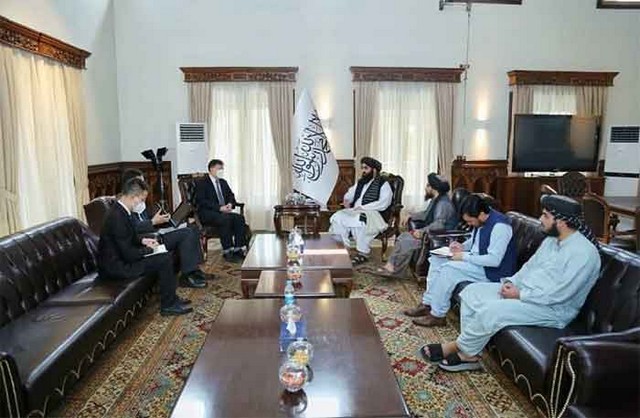
Stalemate doesn’t suit the US and the UK. Chinese ambassador Wang Yu met The Taliban Foreign Minister Mowlavi Amir Khan Muttaqi twice during the past fortnight, including on Sunday. Earlier, the special envoys of Russia, China and Pakistan jointly met the Acting Taliban Prime Minister Mullah Hasan Akhund.

Evidently, there is some heartburn in London and Washington that the Sino-Russian caravan is on the move on the Silk Road while they are stuck up in New York. This happens when you ride a high horse. The overall climate of relations between the US and the UK on one hand and Russia and China on the other is very poor. Pakistan cannot be unaware of it.

Ambassador M K Bhadrakumar served the Indian Foreign Service for more than 29 years.

30 September 2021

Source: countercurrents.org

Afghanistan’s Impoverished People Live Amid Enormous Riches

By Vijay Prashad

On September 25, 2021, Afghanistan’s Economy Minister Qari Din Mohammad Hanif said that his government does not want “help and cooperation from the world like the previous government. The old system was supported by the international community for 20 years but still failed.” It is fair to say that Hanif has no experience in running a complex economy, since he has spent most of his career doing political and diplomatic work for the Taliban (both in Afghanistan and in Qatar). However, during the first Taliban government from 1996 to 2001, Hanif was the planning minister and in that position, dealt with economic affairs.

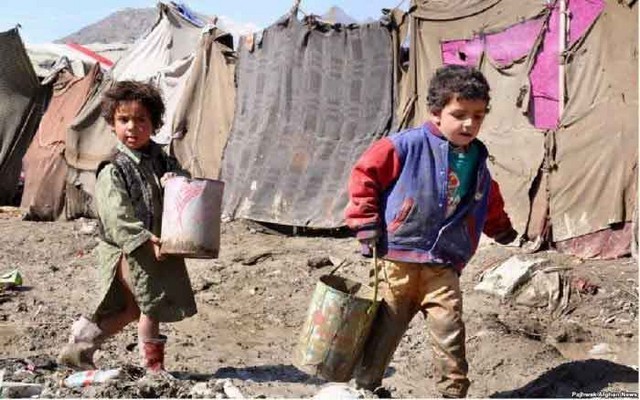
Hanif is right to point out that the governments of Presidents Hamid Karzai (2001-2014) and Ashraf Ghani (2014-2021), despite receiving billions of dollars in economic aid, failed to address the basic needs of the Afghan population. At the end of their rule—and 20 years of U.S. occupation—one in three people are facing hunger, 72 percent of the population lingers below the poverty line and 65 percent of the people have no access to electricity. No amount of bluster from the Western capitals can obscure the plain fact that support from the “international community” resulted in virtually no economic and social development in the country.

Poor North

Hanif, who is the only member of Afghanistan’s new cabinet who is from the country’s Tajik ethnic minority, comes from the northeastern Afghan province of Badakhshan. The northeastern provinces in Afghanistan are Tajik-dominated areas, and Badakhshan was the base from which the Northern Alliance swiftly moved under U.S. air cover to launch an attack against the Taliban in 2001. In early August 2021, the Taliban swept through these districts. “Why would we defend a government in Kabul that did nothing for us?” said a former official in Karzai’s government who lives in Badakhshan capital, Fayzabad.

Between 2009 and 2011, 80 percent of USAID funds that came into Afghanistan went to areas of the south and east, which had been the natural base of the Taliban. Even this money, a U.S. Senate report noted, went toward “short-term stabilization programs instead of longer-term development projects.” In 2014, Haji Abdul Wadood, then governor of the Argo district in Badakhshan, told Reuters, “Nobody has given money to spend on developmental projects. We do not have resources to spend in our district, our province is a remote one and attracts less attention.”

Hanif’s home province of Badakhshan—and its neighboring areas—suffer from great poverty, the rates upwards of 60 percent. When he talks about failure, Hanif has his home province in mind.

For thousands of years, the province of Badakhshan has been home to mines for gemstones such as lapis lazuli. In 2010, a U.S. military report estimated that there was at least $1 trillion worth of precious metals in Afghanistan; later that year, Afghanistan’s then Minister of Mines Wahidullah Shahrani told BBC radio that the actual figure could be three times as much. The impoverished north might not be so poor after all.

Thieves in the North

With opium production contributing a large chunk of Afghanistan’s gross domestic product, it is often a focus of global media coverage on the country’s economy and has partly financed the terrible wars that have wracked the country for the past several years. The gems of Badakhshan, meanwhile, provided the financing for Ahmad Shah Massoud’s Jamiat-e Islami faction in the 1980s; after 1992, when Massoud became the defense minister in Kabul, he made an alliance with a Polish company—Intercommerce—to sell the gems for an estimated $200 million per year. When the Taliban ejected Massoud from power, he returned to the Panjshir Valley and used the Badakhshan, Takhar, and Panjshir gems to finance his anti-Taliban resistance.

When the Northern Alliance—which included Massoud’s faction—came to power under U.S. bombardment in 2001, these mines became the property of the Northern Alliance commanders. Men such as Haji Abdul Malek, Zekria Sawda and Zulmai Mujadidi—all Northern Alliance politicians—controlled the mines. Mujadidi’s brother Asadullah Mujadidi was the militia commander of the Mining Protection Force, which protected the mines for these new elites.

In 2012, Afghanistan’s then Mining Minister Wahidullah Shahrani revealed the extent of corruption in the deals, which he had made clear to the U.S. Embassy in 2009. Shahrani’s attempt at transparency, however, was understood inside Afghanistan as a mechanism to delegitimize Afghan mining concerns and push through a new law that would allow international mining companies more freedom of access to the country’s resources. Various international entities—including Centar (United Kingdom) and the Polish billionaire Jan Kulczyk—attempted to access the gold, copper and gemstone mines of the province; Centar formed an alliance with the Afghanistan Gold and Minerals Company, headed by former Urban Development Minister Sadat Naderi. The consortium’s mining equipment has now been seized by the Taliban. Earlier this year, Shahrani was sentenced to 13 months’ jail time by the Afghan Supreme Court for misuse of authority.

What Will the Taliban Do?

Hanif has an impossible agenda. The IMF has suspended funds for Afghanistan, and the U.S. government continues to block access to the nearly $10 billion of Afghan external reserves held in the United States. Some humanitarian aid has now entered the country, but it will not be sufficient. The Taliban’s harsh social policy—particularly against women—will discourage many aid groups from returning to the country.

Officials at the Da Afghanistan Bank (DAB), the country’s central bank, tell me that the options before the government are minimal. Institutional control over the mining wealth has not been established. “What deals were cut profited a few individuals and not the country as a whole,” said one official. One major deal to develop the Mes Aynak copper mine made with the Metallurgical Corporation of China and with Jiangxi Copper has been sitting idle since 2008.

At the Shanghai Cooperation Organization (SCO) meeting in mid-September, Tajikistan’s President Emomali Rahmon spoke about the need to prevent terrorist groups from moving across the Afghan borders to disrupt Central Asia and western China. Rahmon positioned himself as a defender of the Tajik peoples, although poverty of the Tajik communities on both sides of the border should be as much a focus of attention as upholding the rights of the Tajiks as a minority in Afghanistan.

There is no public indication from the SCO that it would prevent not only cross-border terrorism, but also cross-border smuggling. The largest quantities of heroin and opium from northern Afghanistan go to Tajikistan; untold sums of money are made in the illegal movement of minerals, gemstones, and metals out of Afghanistan. Hanif has not raised this point directly, but officials at DAB say that unless Afghanistan better commandeers its own resources, something it has failed to do over the past two decades, the country will not be able to improve the living conditions of its people.

Vijay Prashad is an Indian historian, editor and journalist.

30 September 2021

Source: countercurrents.org

Reacting to Crime by Waging War(s) – 9/11+9/12: Compounding Tragedy

By Richard Falk

Part One: Reacting to Crime by Waging War(s)

20 Sep 2021 –  This is a somewhat edited post-publication version of Part One of my responses to questions posed by Daniel Falcone, published in CounterPunch, September 12, 2021, with the title of “9/11: Doctrines of Bush, Obama, Trump & Biden.” Although online the interview was schedule in response to the national attention understandably given to the 20th annual observance of the 9/11 attacks. The focus of my response follows a different line of reasoning. In this sense, my response, as suggested by the title give to Part One, can be read as suggesting that greater transformative effects resulted from 9/12 than the tragic events of 9/11 due to the vengeful recklessness of the U.S. response, partly pushed to excess by a belligerent neoconservative pre-9/11 agenda, which became politically viable only after the provocation of the attacks. It is a reflection of the deficiencies of political pedagogy and journalistic priorities in the United States that despite all that has happened at home and abroad in the course of the last twenty years, virtually no distinct attention is given to 9/12.

9/12: Reacting to Crime by War(s)

Daniel Falcone: Can you comment on September 11, 2001 as a historical event and provide how this day continues to shape the way the United States sees itself in the world?

Richard Falk:The attack itself on 9/11 was a most momentous event from the perspective of international relations, with the salient initial effect of further undermining the dominating historic role of hard power under the control of national governments in explaining historical agency. That role was already eroded as a result of high-profile anti-colonial wars being won by the weaker side militarily, principally as a result of the mobilizing effect of the soft power stimulus of nationalist fervor and perseverance in achieving political self-determination by resisting foreign intervention and domination.

Dramatically, 9/11 revealed the vulnerability of the most powerful country, as measured by military capabilities and global security hegemony, in all of world history, to the violent tactics of non-state combatants with comparatively weak military capabilities in coercive interactions labeled by war planners as ‘asymmetric warfare.’

On the basis of minimal expenditures of lives and resources, al-Qaeda produced a traumatizing and disorienting shock on the United States and the American body politic from which it has yet to recover, generating responses in ways that are fundamentally dysfunctional with respect to achieving tolerable levels of global stability in a historical period when security threats were moving away from traditional geopolitical rivalries so as to respond to climate change, pandemics, and a series of systemic secondary effect. While not fulfilling its goals, the launching of a ‘war on terror’ produced great devastation and human suffering spread far and wide, distant from the American homeland, especially in the Middle East and Asia.

Such an efficient use of terrorist tactics by al-Qaeda, not only as an instrument of destruction, but as a mighty symbolic blow directed at the World Trade Center and Pentagon, embodiments of American economic ascendancy and military hegemony. These material effects were further magnified by the spectacular nature of visual moment unforgettably inscribed on the political consciousness of worldwide TV audiences, above all conveying the universal vulnerability of the strong to the imaginative rage and dedicated sacrifice of the avenging weak who were induced to give the lives to make a point and serve a fanatical cause.

Of course, the ‘success’ of this attack was short-lived, producing an initial wave of global empathy for the innocent victims of such mayhem, heralding widespread support and sympathy to the United States, exhibiting an outburst of internationalist solidarity, including widespread support from governments around the world and at the UN for greatly augmented efforts at criminal enforcement of anti-terrorist policies and norms. Yet this early international reaction sympathetic to the U.S. has been erased in the American memory and international perceptions, as well as long overshadowed internationally by dual damaging effects of the American over-reaction that claimed during the next twenty years many times the number of innocent victims than were lost on 9/11, but also was on the losing end of prolonged, costly interventions and state-building undertakings that went along to show that the American imperial prowess was indeed a paper tiger. This over-reaction has also contributed to counterrevolutionary impacts worldwide that are still reverberating.

The seemingly highly impulsive and reactive responses to 9/11 by the American leadership was to herald the immediate launching of ‘the war on terror,’ which should be understood as a generalized forever war against a generic type of political behavior rather than declaring was on an adversary state. Before 9/11 terrorist tactics even if prolonged and threatening to the stability of the state, were regarded as a severe type of crime or anti-state criminal enterprise, with serious policing and paramilitary implications but not a matter of military engagement on conventional battlefields. Of course, on many prior historic occasions a political movement engaged in terrorist activity as a prelude to a sustained insurrectionary challenge to the prevailing government. This U.S. response by way of war, directed not only at the al-Qaeda perpetrators mainly situated in the mountains of Afghanistan, but potentially against all forms of non-state and foreign political extremism directed at the interests of Western states, made the historical effects of 9/12 far greater internally for America and externally for the world than the grim event of the prior day when the planes flew into the World Trade Center towers, killing 2,997. The ‘forever wars,’by comparison killed as estimated 900,000 (at a cost of $8 trillion) [conservative estimates of ‘The Costs of War Project’ at Brown University].

It is crucial to remember that 9/11 from the moment of the first explosion was politically much more than a mega-terrorist attack, however spectacular. It quickly provided a pretext for projecting American military power and political influence that the dominant wing of the political class then in control of the White House was awaiting with growing signs of impatience. It was no secret that the chief foreign policy advisors of George W. Bush wanted and needed a political mandate that would allow the U.S. to carry out a preexisting neoconservative agenda of U.S. intervention and aggression, focused on the Middle East that prior to 9/11 lacked sufficient political backing among the citizenry to become operative foreign policy. This earlier neocon foreign policy agenda was set forth in the reports of the Project for a New American Century (1997-2006), prepared and endorsed by leading foreign policy hawks with global hegemony, Israel, and oil uppermost in their thoughts. For those seeking even earlier antecedents “A Clean Break: A New Strategy for the Security of the Realm,” an Israeli policy report of 1996  prepared by influential American neocon foreign policy experts at the behest of Netanyahu is worthy of notice. The haunting reality that the 9/11 attack was masterminded and orchestrated from remote sites in Afghanistan reinforced the globalist ambitions of militarists to the effect that U.S. was significantly threatened by non-state enemies situated in geographically remote places on the planet, that deterrence and retaliation were irrelevant against such foes, and that preemptive styles of warfare were now necessary and fully justified against government that willingly gave safe havens to such violently disposed political extremism. New tactics seem needed and justified if the security of a country, however militarily capable, was in the future to be upheld against remotely situated non-state enemies. This post-9/11 strategic discourse produced a sequence of forever wars, most tellingly in Afghanistan and Iraq, but also in Syria and Libya, which were quite unrelated to al-Qaeda rationale for expanding prior notion of the right of self-defense, whether understood with reference to international law or geopolitics.

Another legacy of 9/11, although also evident in the outcome of the Vietnam War, is that the side that has the military superiority no longer has reason to believe that it will attain a political victory at an acceptable cost. “You have the watches, we have the time” vividly imparts the largely unreported news that perseverance, commitment, and patience, more than military hardware however sophisticated, shape political outcomes in characteristic conflicts for the control of sovereign political space in the 21st Century. Whether this trend will continue is, of course, uncertain as war planners in governments of geopolitical actors are devoting resources and energies to devising tactics and weapons that will restore hard power potency.

The message of a changed balance of power at least temporarily, despite the startling consistency of the evidence, is one that the political class in the West, especially in the U.S. refuses to heed. The militarization of the foreign policy establishment of Western states over the course of the Cold War, is also reflective of the ‘political realist’ ideological consensus led to a costly and futile process in which security challenges were predominantly seen through a reductionist lens that impoverished the political imagination by ignoring the shifting power balances that have favored the politics of post-colonial nationalism. The previously hidden weaknesses of external intervenors were exposed. These weaknesses included the onset of geopolitical fatigue in these combat zones distant from the homeland coupled with a lack of political success at all commensurate with the effort. The military prowess of the foreign intervenors being more than offset over time by nationalist perseverance, although at great costs for the resisters. The intervenors strain to justify these foreign missions to a domestic public that gradually comes to understand that the security claims used to ‘sell’ the war were all along a phony façade partly erected to hide the benefits to special interests within and outside the governmental bureaucracy, including the defense industry and private contracting firms that complemented the explicit military presence, and were economic winners even if the government was a political loser. Although brainwashed over the years, with the help of a corporatized media, there remained a remnant of accountability to the citizenry if American lives were sacrificed in a lost war that also revealed itself to be quite irrelevant from a security perspective. The victory of the National Liberation Front in Vietnam or of the Taliban this year is not likely to alter the regional status quo to any great extent further demonstrating that the war strategy was not only a failure but superfluous from a traditional security perspective, although consequential geopolitically.

It remains to be seen whether the withdrawal from ongoing forever wars in Afghanistan, Iraq, and elsewhere leads to a belated recognition of what I have in the past called ‘the unlearned lesson of the Vietnam War.’ So far, this is far from clear as the inflated level of the U.S. military budget, with its huge negative domestic opportunity costs, continues to enjoy overwhelming bipartisan support. Also telling is the tendency to meet the rise of China by bellicose posturing that may have already generated a second cold war that neither the country nor the world can afford or risk turning hot. Perhaps, the American political class has temporarily learned the lesson that state-building interventions do not work under current world conditions, but still harbor reckless beliefs that geopolitical ‘wars’ remain viable options, thereby providing continued validation of inflated military spending and consequent policy orientations toward conflict and rivalry rather than conciliation and compromise. China, admittedly bears some responsibility for escalating tensions due to its provocative militarist moves in the South China Seas and economistic provocations. The Biden foreign policy has clearly designated China as a credible geopolitical rival that threatens U.S. geopolitical primacy, and hence must be confronted as well as contained, even resisted by force of arms if necessary.

We should not overlook the lingering skepticism surrounding the official version of the 9/11 events. The official inquiry resulting in the report of the 9/11 Commission convinced few of the serious doubters as it put to convincing rest none of the reasons for doubt. As long as this, doubt remains embedded in a portion of the citizenry, no matter how castigated they may be as ‘conspiracy theorists’ and routinely maligned by mainstream media, a shadow of illegitimacy will be cast over the U.S. body politic. A truly independent second 9/11 investigation backed by the government is long overdue, but seems highly unlikely to happen. If given unrestricted access to FBI and CIA records and subpoena powers such an authentic processs could clear the air, and a crucial regenerative future for American democracy that might finally overcome the legacies of both 9/11 and 9/12.

********************

Part Two: 9/11 + 9/12: Compounding Tragedy

22 Sep 2021 – This is the second part of my interview with Daniel Falcone that was published by CounterPunch on September 12, 2021. It explores further the effects of the attacks and ongoing sequences of reactions, which were appropriately attributable to the events of 9/11 and those internal moves of surveillance and detention that were independently favored by the U.S. governmental leadership, but were too controversial to take until they were able to make to claim the cover of the War on Terror. A similar, even more pronounced dualism, is helpful in distinguishing the 9/12 developments that were plausible responses to the mega-terrorist transnational attacks and those escalated responses that reflected a preexisting disposition of the neoconservative foreign policy advisory circle around President George W. Bush to use American military capabilities against governments that were geopolitical outliers with respect to the neoliberal consensus on globalization or were hostile to American alignments in the Middle East and elsewhere.

International and Internal Impacts of 9/11, 9/12

Daniel FalconeHow has foreign policy and institutional approaches to global diplomacy changed over the past two decades in your estimation?

Richard Falk: The most notable change in American statecraft during this period is the abandonment of a core emphasis on economic globalization, with a corresponding swing in national security policy to counterterrorism, tactics and technological innovations that minimize visible U.S. warfighting and casualties on distant and dispersed combat zones situated within foreign sovereign states. While this counterterrorist impulse prevailed during the Bussh presidency, it placed heavy reliance on torture to obtain information relating to potential terrorist operations and the identity operatives. In the process, it turned official policy to ‘the dark side’ of counterterrorism, which meant a dismaying repudiation of international humanitarian law with respect to the belligerent conduct, and a total denial of human rights to those accused of a terrorist connection, however remote. It was contemptuous toward those who urged compliance with international law and human rights standards. The detention center at Guantanamo became a word of international opprobrium, dehumanizing conduct, shaming the nation, and forever tarnishing its liberal credentials.

As well, declaring a war on terror made the entire world into a potential battlefield featuring the targeting of individuals or their places of habitation as suspected of terrorist affiliation. It also foregrounded reliance on unmanned drones for attack and surveillance, the deployment of small special operations detachments with capture or kill missions in 85 countries, whose governments often were not consulted or asked for permission with respect to penetrations of their sovereign space to engage in non-accountable acts of political violence. The execution of Osama Bin Laden, given safe have in Pakistan, by such a mission was the most significant and publicized instance of this form of counterterrorism.

Other changes in warfare unrelated to 9/11 involve the use of features of digital networking to disrupt, steal industrial or state secrets, attack vital electric grids, disrupt nuclear facilities through computer viruses. In other words, cyber age conflict is characteristically carried on in mostly settings other than territorial battlefields.

During the Trump presidency these doctrinal and ideological tendencies were carried further as alliances were deemphasized and bilateral transactional relations and the search for ‘deals’ with adversaries were given high profiles. Multilateralism declined, and a chauvinistic, territorial nationalism was raucously promoted, and affected many countries, explained in part as protection against immigration by the forces of ‘radical Islam,’ but additionally as a reaction against the perceived failures of globalization, with its privileging of capital at the expense of people.

The Biden presidency commencing in January 2021 seemed to revert to the pre-9/11 and pre-globalization Cold War approach to foreign policy, reviving and initiating alliances, championing an emerging geopolitical rivalry with China, and configuring military capabilities toward more traditional forms of warfare, as well as continuing the non-territorial concerns addressed under the label of cyber security. Biden seems to view international relations through an ideological lens that seeks to align ‘democracies’ for a great struggle with ‘autocracies,’ above all with allegedly ‘socialist’ China, but secondarily with once socialist Russia. In this sense, there is a foreign policy transition under way from counterterrorism to geopolitical rivalry, although this shift could be reversed or modified by new mega-terrorist events that recalled the spectacle and trauma of 9/11. The stakes are high—global hegemony more politely described as ‘global leadership.’

What is lacking in the political scene, sadly, is any strong moves toward the demilitarization of foreign policy or related adjustment to the failures arising from the militarization of political challenges. There seems to be no discussion of what we can learn from the methods and results of China’s remarkable achievement of economic development, which overcame the extreme poverty of hundreds of millions of Chinese and spread its influence and achievements to many other countries by a win/win foreign economic policy that did not engage in intervention or state-building with respect to the internal politics of foreign countries. China’s Road and Belt Project that has brought many tangible developmental gains, especially in infrastructure, for countries throughout Africa and Asia, and virtually no military intrusions. The post-colonial West has developed nothing comparable, and is as reliant as ever on its military capabilities to hold its own geopolitically.

Daniel Falcone: What are your thoughts on how certain terminology has evolved in the context of the post 9/11 world? For example, “terrorism,” “extremism,” “state building,” “legitimacy,” and “international community” are all words that change meaning within the discourse, correct?

Richard Falk: Yes, language always reflects changing patterns of hegemonic politics, and this was certainly true in the aftermath of 9/11, more so than in 9/12 contexts. The overall effort was to stigmatize certain behaviors as beyond the boundaries of acceptable behavior while legitimating other patterns of action as providing justifications for previously dubious claims to encroach upon the sovereign rights of others or ignore the human rights of adversaries. Not since the death camps of Nazi Germany or Stalin’s Soviet Union has there been comparable image of abusing prisoners held in captivity. As suggested, Guantanamo is a name that defames America throughout the world. In effect, the discourse of international relations tries to provide geopolitical actors with ethical and legal justifications for their policy agendas and to discredit behavior adverse to their interests. This is especially true when new challenges emerge that make frameworks of permissible response seem insufficient.

Of the words in your question that acquired new relevance after 9/11: ‘terrorism,’ ‘state-building,’ and ‘extremism’ are particularly salient, and seem to describe the U.S. counterterrorist long-range efforts in Afghanistan and Iraq, although there were antecedents for each pre-9/11. The words ‘legitimacy’ and ‘international community’ were useful in evading the strict prohibitions of international law as with respect to ‘torture,’ further disguised as ‘enhanced interrogation.’ ‘International community’ was also helpful in suggesting that the political backing of the UN reflected an anti-terrorist consensus that created an almost unconditional mandate for pursuing counterterrorist tactics without questioning their impacts on innocent civilians, in effect, an implied license to kill on suspicion or to intervene to replace governments accused of being connected with 9/11 either by providing safe haven or material support.

The most radical idea accompanying counterterrorist intervention entailed replacing the former regime with a governing process thatth would fit the broader, longer range policy priorities, political ideals, and material interests of the intrusion on sovereign space.

Daniel Falcone: Can you comment on how Bush 43 through Biden have navigated the presidency while implementing select 9/11 narratives as a backdrop?

Richard Falk: Bush rallied the country primarily by demonizing the perpetrators of the 9/11 events, characterizing them as sub-human, to be ‘hunted’ as if wild animals. More than this he lent credence to the idea that non-state political violence was inherently extremist, wherever it occurred and regardless of justification, as posing a terrorist threat to all ‘civilized’ countries. Calling upon governments throughout the world to join with the US in this war on terror, or if unwilling to do so, be treated as siding with terrorism. In effect, Bush unilaterally by geopolitical fiat invalidated a neutral diplomacy as a legitimate policy option in the context of ‘the war on terror.’ Bush also, whether knowingly or not, allowed counterterrorist foreign policy to be converted into a vehicle for executing the pre-9/11 neoconservative agenda of regime change, state-building, and democracy promotion in the Middle East where the terrorist allegations or links to 9/11 were tenuous or non-existent, yet alleged. In Afghanistan the links to 9/11 seemed self-evident and rationalized a limited counterterrorist operation against al-Qaeda. It should have not surprised any close student of American foreign policy to take note of the speed with which the initial counterterrorist justification morphed into a failed twenty year politically, materially, and psychologically failed and expensive war against the Taliban.

Next Obama came to the White House as of 2009 with a pledge of a more restrained foreign policy approach, which meant operationally that Bush’s war on terror would go on but with more outward respect for international law and a less grandiose conception of an extended counterterrorist mission in the Middle East. Obama wanted to limit counterterrorism to al-Qaeda and Afghanistan. Manifesting geopolitical ambivalence, Obama favored a troop surge in Afghanistan, apparently believing that the state-building mission was on the verge of success. Obama also rejected the regime-changing, democracy-promotion neoconservative hijacking of the 9/11 provocation for its preoccupation with restructuring the politics of the Middle East in a manner that was particularly responsive to Israel’s goals, angering Netanyahu especially when extended to Iran. A highlight of the Obama presidency was the diplomacy that produced an agreement with Iran on its nuclear program in 2015, known as Joint Comprehensive Program of Action (or JCPOA) that was designed to give assurances that Iran would not cross the nuclear threshold and the United States would over time reduce the sanctions it had imposed.

Obama went along with stretching international law so as weaken some restraints on the use of force, especially by an increased reliance on attack drones in countries such as Pakistan and Yemen where al-Qaeda operatives were active. Obama supported the 2011 intervention in Libya, although demeaned by Republicans for ‘leading from behind’ when it came to the controversial NATO-led regime changing military operation that left the country at the mercy of prolonged violent ethnic strife. Qaddafi’s Libya although autocratic, had high ratings for social development, and is a further confirmation that intervention rarely achieves its purported goals.

When Trump’s turn came in 2015, there was a confusing mix of policies. Trump went further than any prior president in shaping American foreign policy in the Middle East to accord with the regional goals of Israel and the Gulf monarchies, especially Saudi Arabia. This led to Trump’s withdrawal from the JCPOA and the adoption of a policy toward Iran of ‘maximum pressure.’ At the same time, Trump set the stage for withdrawal from Afghanistan, denouncing forever wars as a waste of money and lives that were costly as well as tarnishing the US reputation as a fearsome hegemon. Trump’s America first, anti-immigration, pro-military policies were less a security posture directed at would be terrorists than an effort to build a right-wing, autocratic political movement in the United States that was hostile to all forms of internationalism, including multilateral diplomacy. Trump and Trumpism intensified a nativist Islamophobia that blamed ‘radical Islam’ for terrorism and generated a related negative form of identity politics that gave aid and comfort to the white supremacy movement. This was exemplified by Trump’s comments on a neo-fascist march through Charlottesville that was resisted by protesters, contending that there were ‘good people on both sides.’ Despite the home scene, geopolitical concerns about a rising China began displacing counterterrorism at the top of the foreign policy agenda, a dynamic already started during the Obama presidency under the rubric of a ‘pivot to Asia.’

The Biden presidency is still new, and its record mixed. It has moved to correct the criminal failures of Trumpism in dealing with the COVID challenge and climate change but has irresponsibly intensified rivalry with China and has exhibited continuity with much of Trump’s policies toward the Middle East despite reaffirming the moribund two-state approach to peace between Israel and Palestine. Biden deserves credit for pushing ahead with steps to end the war in Afghanistan, despite the unnecessarily humiliating and reckless final act, and maybe finally bringing to an end the debilitating intervention/state-building cycle. One hopes he recollects and builds upon his opposition to Afghanistan troop surge and Libya policy while serving as Vice President in the Obama administration rather than recalls his enthusiasm for embarking upon the Iraq War in 2003/.

Daniel Falcone: Scholars and writers such as Noam ChomskyLawrence Davidson and Isabel Allende have written about 9/11 – and September 11, 1973 in Chile. Can you talk about this historical analogue?

Richard Falk: The most illuminating insight drawn from a comparison between 9/11 and the Pinochet coup against the elected Allende government in Chile 28 years earlier encouraged and then supported by Washington, relates to the humanitarian and political costs for the United States of intervention in foreign societies. The whole 9/11 impetus for the U.S. to engage in state-building overseas in the aftermath of regime-changing interventions led to an estimated 929,000 deaths, more than eight trillion dollars of wasted expenditures, counterterrorist operations in 85 countries, and an estimated 38 million displaced persons according to the Cost of War Project of the Watson Institute of International and Public Affairs. This background of post-9/11 war-making is a major explanation of the unmistakable imperial U.S. decline abroad and alienating polarization within America. These failed efforts to control adverse political and economic tendencies at their source, often as in Chile were motivated by the pressures mounted by large corporate investors. They involved assaults on the most fundamental of human rights, that of the right of self-determination acknowledged as constitutive of more specific rights by being highlighted as a common Article 1 in both human rights Covenants.

This ‘war’ waged against the exercise of the right of self-determination did not begin with 9/11 but was a feature and legacy of the Cold War, receiving a second life thanks to the response of neoconservative Republican leadership to 9/11 as abetted by a history of complicit bipartisan passivity on the part of the Democratic Party opposition. We should pause in our reckoning and thank Barbara Lee as the sole member of Congress to vote against the ‘Authorization for the Use of Military Force of 2001’ legislation that to this day gives executive leadership a green light to wage war at will without either domestic constitutional oversight or respect for international law and the authority of the UN.

The United States should have learned the blowback consequences of interfering with the internal dynamics of self-determination when it conspired back in 1953 to overthrow the elected government of Mossadegh in Iran, supposedly to bolster the geopolitics of containment of the Soviet Union, but at least as much to satisfy the greed and ambition of ‘big oil.’ The whole political turn toward Islam, eventuating in the mass movement of 1978-79 led from exile by Ayatollah Khomeini, can be traced to the unifying impact on diverse strands of Iranian society due to the restored imposition of the Shah’s regime as a result of externally motivated and sustained intervention. The same lesson was made even plainer for detached observers to learn in the 1970s as a consequence of the Vietnam War where the intervention was overt and massive, and yet in the end led to a humiliating defeat.

Of course, the most relevant geopolitical pedagogy should have been absorbed as a result of the long experience of the West in Afghanistan stretching back to the time of ‘the great game’ of colonial competition to control the country. The recent post-colonial variation on the great game started with the effort to mobilize resistance to a Kabul government in the 1980s that was seen as leaning toward Moscow. With a cavalier disregard of consequences, the U.S. stimulated and supported the Islamic resistance to Afghanistan’s first secular modernizing elected government with training and weapons, including strengthening and emboldening the militia that evolved into al-Qaeda under the leadership of a charismatic religious ideologue, Osama Bin Laden! As hardly needs mention, it was this chain of imprudent moves that provided the proximate causes of 9/11 (together with the imprudent Western encroachments on the course of self-determination in the Middle East, including support for the colonizing project that produced decades of Israel/Palestine struggle with still no end in sight).

Why does this manifestly destructive and self-destructive cycle American foreign policy continue and repeat itself despite consistent failure? How can this cycle be disrupted? The political class in the United States and elsewhere in the NATO West, adheres to a worldview commonly identified as ‘political realism.’ Its central tenet is to link national interests to military superiority, with the tacit corollary that force and its threat is essential to uphold the global financial interests of neoliberal capitalism. Experience of the last 75 year increasingly demonstrates that political realism, while providing efficient geopolitical guidance during the colonial period, is dangerously out of touch with reality in the 21st century. Yet zombie-like obsolescent realism lingers because its worldview remains largely unchallenged by anti-imperial, anti-militarist, anti-capitalist ideas and oppositional politics. A new political realism, responsive to world conditions, would espouse a foreign policy that affirms the right of self-determination, shows respect for sovereign rights and international law, and recognizes the urgency of implementing human solidarity by establishing effective global problem-solving mechanisms, including the strengthening of international institutions, above all the United Nations. It would be equally important internationally, to restore trust in a humane democracy that serves the citizenry as a whole and moves to repudiate current plutocratic distortions of the social order as reflected by gross inequalities in the enjoyment and distribution of the benefits of growth and profits.

It is late in the day but let’s hope that seeds of transformative change have been planted both by the chaotic and discrediting withdrawal from Afghanistan and this anniversary occasion giving us one more opportunity to assess both the causes of and excessive 9/12 reactions to the 9/11 events. A step in the right direction would be the much belated willingness to engage in strategic self-criticism rather than to be distracted by partisan Republican accusations of tactical failures or a mind-numbing invocation of ‘American exceptionalism.’ More concretely, subjecting regime change and state-building to critique rather than focusing all attention on the bungled withdrawal dynamics might have a lasting impact on the political imagination. Such a willingness to learn from failure might actually rid the American political psyche of ‘American Exceptionalism,’ which has functioned as a huge dose of poisonous “kool-aid.” A benevolent 21st internationalism would instead give tangible expression to the imperatives of global solidarity, seeking governmental and civil society collaborators in meeting the tragic manifestations of such global challenges as climate change, pandemics, nuclearism. migration.

American democracy is under bipartisan threat due to its militarized state that orients the media propaganda machine to view internal and global security through a lens that magnifies international threats and confines the political and moral imagination to the realm of coercive responses. Those who dare leak ‘truths’ are criminalized and then face the vindictive choice of exile or prison (Snowden, Assange), as were those young Americans who fled to Canada and Sweden rather than fight in an immoral and unlawful war in Vietnam. A democracy that does not treat its heroes well, will not and should not endure. Daniel Ellsberg delivered a vital message 50 years ago–the citizens of a democracy deserve to be told the truth, and a government that refuses, deserves resistance not mute obedience–that continues to be unheeded by the enforcers of the political class.

Richard Falk is a member of the TRANSCEND Network, an international relations scholar, professor emeritus of international law at Princeton University, Distinguished Research Fellow, Orfalea Center of Global Studies, UCSB, author, co-author or editor of 60 books, and a speaker and activist on world affairs.

27 September 2021

Source: www.transcend.org

Clear Away the Hype: The U.S. and Australia Signed a Nuclear Arms Deal, Simple as That

By Vijay Prashad

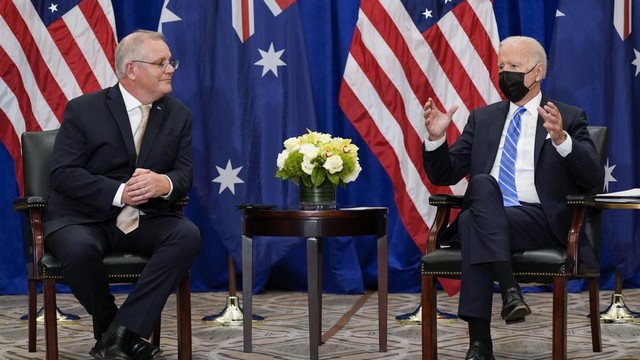
22 Sep 2021 – On 15 Sep 2021, the heads of government of Australia, the United Kingdom and the United States announced the formation of AUKUS, “a new enhanced trilateral security partnership” between these three countries. Australia’s Prime Minister Scott Morrison and Britain’s Prime Minister Boris Johnson joined U.S. President Joe Biden to “preserve security and stability in the Indo-Pacific,” as Johnson put it.

While China was not explicitly mentioned by these leaders at the AUKUS announcement, it is generally assumed that countering China is the unstated motivation for the new partnership. “The future of the Indo-Pacific,” said Morrison at the press conference, “will impact all our futures.” That was as far as they would go to address the elephant in the room.

Zhao Lijian of the Chinese Foreign Ministry associated the creation of AUKUS with “the outdated Cold War zero-sum mentality and narrow-minded geopolitical perception.” Beijing has made it clear that all talk of security in the Indo-Pacific region by the U.S. and its NATO allies is part of an attempt to build up military pressure against China. The BBC story on the pact made this clear in its headline: “Aukus: UK, US and Australia launch pact to counter China.”

What was the need for a new partnership when there are already several such security platforms in place? Prime Minister Morrison acknowledged this in his remarks at the press conference, mentioning the “growing network of partnerships” that include the Quad security pact (Australia, India, Japan and the United States) and the Five Eyes intelligence-sharing group (Australia, Canada, New Zealand, the UK and the United States).

A closer look at AUKUS suggests that this deal has less to do with military security and more to do with arms deals.

Nuclear Submarines

Prime Minister Morrison announced that “[t]he first major initiative of AUKUS will be to deliver a nuclear-powered submarine fleet for Australia.” Two red flags were immediately raised: first, what will happen to Australia’s preexisting order of diesel-powered submarines from France, and second, will this sale of nuclear-powered submarines violate the Nuclear Non-Proliferation Treaty (NPT)?

In 2016, the Australian government made a deal with France’s Naval Group (formerly known as Direction des Constructions Navales, or DCNS) to supply the country with 12 diesel-electric submarines. A press release from then Prime Minister Malcolm Turnbull and his minister of defense (who is the current minister of foreign affairs) Marise Payne said at the time that the future submarine project “is the largest and most complex defence acquisition Australia has ever undertaken. It will be a vital part of our Defence capability well into the middle of this century.”

Australia’s six Collins-class submarines are expected to be decommissioned in the 2030s, and the submarines that were supposed to be supplied by France were meant to replace them. The arms deal was slated to cost “about $90 billion to build and $145 billion to maintain over their life cycle,” according to the Sydney Morning Herald.

Australia has now canceled its deal with the French to obtain the nuclear-powered submarines. These new submarines will likely be built either in the U.S. by Electric Boat, a subdivision of General Dynamics, and Newport News Shipbuilding, a subdivision of Huntington Ingalls Industries, or in the UK by BAE Systems; BAE Systems has already benefited from several major submarine deals. The AUKUS deal to provide submarines to Australia will be far more expensive, given that these are nuclear submarines, and it will draw Australia to rely more deeply upon the UK and U.S. arms manufacturers. France was furious about the submarine deal, with its Foreign Minister Jean-Yves Le Drian calling it a “regrettable decision” that should advance the cause of “European strategic autonomy” from the United States. Words like “betrayal” have flooded the French conversation about the deal.

Australia ratified the NPT in 1973, and it is also a signatory to the Treaty of Rarotonga (1985), or the South Pacific Nuclear-Free Zone Treaty. It does not have nuclear weapons and has pledged not to have nuclear material in the South Pacific. Australia is the second-largest producer of uranium after Kazakhstan, and most of this nuclear material is sold to the UK and the U.S. For the past several decades, Australia has been considered a “nuclear threshold” state, but it has opted not to escalate its nuclear weapons program. The three heads of government of Australia, the U.S. and the UK made it clear that the transfer of the nuclear-powered submarines is not the same as the transfer of nuclear weapons, although these new submarines will be capable of launching a nuclear strike. For that reason, not only China but also North Korea has warned about a new arms race in the region after the AUKUS submarine deal.

Costs

Morrison admitted during a September 16 press conference that his country has already spent $2.4 billion on the French submarine deal. He did not, however, answer a journalist’s question as to what the ultimate price tag would be for the UK-U.S. nuclear-powered submarines. He asked his Secretary of Defense Greg Moriarty to answer it, to which Moriarty spoke about task forces “that will set up a number of working groups” with the U.S. and UK to look into several issues relating to the deal; but Moriarty also did not touch on the topic about the price tag. One of the questions asked at the press conference with regard to the cost to Australian taxpayers was whether Australia would buy the Astute (UK) class submarines or the Virginia (U.S.) class, since this decision has a bearing on the cost. The Virginia class submarine, according to a recent U.S. Congressional Research Service study, costs $3.45 billion per vessel. To this must be added the cost of upgrading the naval bases in Australia and the cost of running and maintaining the submarines. The U.S. and the UK firms will make considerable profits from this deal.

Ever since the Australians signed the deal with the French, media houses associated with the U.S.-based Rupert Murdoch have attacked it. Any small delay was picked up to be clobbered, and any adjustment to the contract—including a change in contract proposed on March 23, 2021—became front-page news. Aware of the problems, France’s Foreign Minister Le Drian spoke to U.S. Secretary of State Antony Blinken in Paris on June 25 about the deal. He told the French-speaking Blinken that the submarine contract is not only a French one but also a French-U.S. partnership since Lockheed Martin is party to the deal. French attempts to get U.S. buy-in to the deal came to nothing as the Biden administration was already in talks with the UK and Australia on their own regarding the AUKUS deal. That is why the language of “betrayal” is so pronounced in Paris.

Belligerence

On September 16, the Australian and U.S. governments released a joint statement that included a direct attack on China, with reference to the South China Sea, Xinjiang, Hong Kong, and Taiwan. Two days later, an article in Australia’s leading newspaper, the Australian, by Paul Monk, who is the head of the China Desk at Australia’s Defence Intelligence Organization, stated that his government should “facilitate a coup within China’s Communist Party.” This is a direct call for regime change in China by Australia.

The belligerent language from Australia should not be taken lightly. Even though China is Australia’s largest trading partner (both in terms of exports and imports), the creation of these new military pacts—with a nuclear edge to them—threatens security in the region. If this is merely an arms deal hidden behind a military pact, then it is a cynical use of war-making rhetoric for business purposes. This cynicism could eventually lead to a great deal of suffering.

Vijay Prashad is an Indian historian, editor and journalist.

27 September 2021

Source: www.transcend.org

WHIF: White Hypocritical Imperial Feminism

By David Swanson

13 Sep 2021 – In 2002, U.S. women’s groups sent a joint letter to then-President George W. Bush in support of the war on Afghanistan to benefit women. Gloria Steinem (formerly of the CIA), Eve Ensler, Meryl Streep, Susan Sarandon, and many others signed. The National Organization for Women, Hillary Clinton, and Madeline Albright supported the war.

Many years into a catastrophic war that had demonstrably not benefited women, and had in fact killed, injured, traumatized, and made homeless huge numbers of women, even Amnesty International was still encouraging war for women.

Even these 20 years later, with sane, factual analyses readily available on dozens of wars “on terror,” the National Organization for Women and related groups and individuals are helping advance mandatory female draft registration through the U.S. Congress on the grounds that it is a feminist right to be equally forced against one’s will to kill and die for Lockheed Martin’s female CEO.

Rafia Zakaria’s new book, Against White Feminism, critiques past and present mainstream Western feminism for not only its racism but also its classism, its militarism, its exceptionalism, and its xenophobia. Any discourse, political or otherwise, will tend to be tinged with racism in a society afflicted with racism. But Zakaria shows us how supposedly feminist gains have sometimes been directly at the expense of non-“white” people. When Britain had an empire, some British women could find new liberties by traveling outside of the Homeland and helping to subjugate the natives. When the U.S. got an empire, it became possible for women to gain new power, respect, and prestige by promoting it.

As Zakaria recounts, in the CIA-backed Hollywood film Zero Dark Thirty, the female protagonist (based on a real person) gains respect from the other characters, applause from the audience in the theater where Zakaria watched it, and later a Best Actress Academy Award by out-sadism-ing the men, by showing a greater eagerness to torture. “If white American feminists of the 1960s and the Vietnam era advocated for an end to war,” writes Zakaria, “the new American feminists of the newborn twenty-first century were all about fighting in the war alongside the boys.”

Zakaria’s book opens with an autobiographical account of a scene at a wine bar with white feminists (or at least white women whom she strongly suspects of being white feminists — meaning, not just feminists who are white, but feminists who privilege the views of white women and perhaps of Western governments or at least militaries). Zakaria is asked about her background by these women and declines to respond with information that experience has taught her will not be well received.

Zakaria is clearly upset with the response she imagines these women would have made had she told them things she didn’t. Zakaria writes that she knows she has overcome more in her life than have any of these other women in the wine bar, despite apparently knowing as little about them as they about her. Much later in the book, on page 175, Zakaria suggests that asking someone how to properly pronounce their name is superficial pretense, but on page 176 she tells us that failing to use someone’s correct name is majorly offensive. Much of the book denounces the bigotry within feminism using examples from past centuries. I picture much of this seeming a bit unfair to a defensive reader — perhaps a reader suspecting herself of having been at that wine bar that evening.

But the book does not review the bigotry of past eras of feminism for its own sake. In doing so, it illuminates its analysis of the problems found in feminism today. Nor does it advocate listening to other voices simply for some vacuous notion of diversity, but because those other voices have other perspectives, knowledge, and wisdom. Women who have had to struggle through planned marriages and poverty and racism may have an understanding of feminism and of certain kinds of perseverance that can be valued as much as career rebellion or sexual liberation.

Zakaria’s book recounts her own experiences, which include being invited to events as a Pakistani-American woman more to be displayed than listened to, and being reprimaded for not wearing her “native clothes.” But her focus is on the thinking of feminists who view Simone de Beauvoir, Betty Friedan, and upper-middle-class white feminism as leading the way. The practical outcomes of unwarranted notions of superiority are not hard to find. Zakaria offers various examples of aid programs that not only mostly fund corporations in wealthy countries but provide supplies and services that do not help the women who are supposed to be benefited, and who were never asked whether they wanted a stove or a chicken or some other get-righ-quick scheme that avoids political power, views whatever women are doing now as non-work, and operates out of total ignorance of what might economically or socially benefit a woman in the society she lives in.

Tacked onto the devastating war on Afghanistan right from the start was a USAID program called PROMOTE to help 75,000 Afghan women (while bombing them). The program ended up manipulating its statistics to claim that any woman they’d talked to had “benefitted” whether or not she had, you know, benefitted, and that 20 out of 3,000 women assisted finding a job would be a “success” — yet even that goal of 20 was not actually reached.

Corporate media reporting has carried forward longstanding traditions of letting white people speak for others, of displaying and violating the privacy interests of non-white women in ways that are not tolerated with white women, of naming white people and leaving others nameless, and of avoiding any notion of what those still thought of as the natives might want or might be doing to get it for themselves.

I highly recommend this book, but I’m not sure I’m supposed to be writing this book review. Men are virtually absent from the book and from any description within it of who feminists are. The feminism in this book is of, by, and for women — which is obviously a million miles preferable to men speaking for women. But I wonder if it doesn’t also feed into the practice of advocating for one’s own selfish rights, which some white feminists seem to interpret as advocating for the narrow interests of white women. It seems to me that men are largely to blame for unfair and cruel treatment of women and in at least as great a need of feminism as women are. But, I suppose, I’m a man, so I would think that, wouldn’t I?

David Swanson is an author, activist, journalist, and radio host.

20 September 2021

Source: www.transcend.org

20 Years, $6 Trillion, 900,000 Lives: The Enormous Costs and Elusive Benefits of the War on Terror

By Dylan Matthews

11 Sep 2021 – On the evening of September 11, 2001, hours after two hijacked airliners had destroyed the World Trade Center towers and a third had hit the Pentagon building, President George W. Bush announced that the country was embarking on a new kind of war.

“America and our friends and allies join with all those who want peace and security in the world, and we stand together to win the war against terrorism,”

Bush announced in a televised address to the nation.

It was Bush’s first use of the term that would come to define his presidency and deeply shape those of his three successors. The global war on terror, as the effort came to be known, was one of the most expansive and far-reaching policy initiatives in modern American history, and certainly the biggest of the 2000s.

It saw the US invade and depose the governments of two nations and engage in years- or decades-long occupations of each; the initiation of a new form of warfare via drones spanning thousands of miles of territory from Pakistan to Somalia to the Philippines; the formalization of a system of detention without charge and pervasive torture of accused militants; numerous smaller raids by special forces teams around the world; and major changes to air travel and border security in the US proper.

The “war on terror” is a purposely vague term. President Barack Obama famously rejected it in a 2013 speech — favoring instead “a series of persistent, targeted efforts to dismantle specific networks of violent extremists.”

But 9/11 signaled the beginning of a distinct policy regime from the one that preceded it, and a regime that exists in many forms to the present day, even with the US exit from Afghanistan.

Over the past 20 years, the costs of this new policy regime — costs in terms of lives lost, money spent, people and whole communities displaced, bodies tortured — have become clear. It behooves us, then, to try to answer a simple yet vast question: Was it worth it?

A good-faith effort to answer this question — to tally the costs and benefits on the ledger and not just resort to one’s ideological priors — is more challenging than you’d think. That’s largely because it involves quantifying the inherently unquantifiable. If, as proponents argue, the war on terror kept America safe, how do you quantify the psychological value of not being in a state of constant fear of the next attack? What about the damage of increased Islamophobia and violent targeting of Muslims (and those erroneously believed to be Muslims) stoked by the war on terror? There are dozens more unquantifiable purported costs and benefits like these.

But some things can be measured. There have been no 9/11-scale terrorist attacks in the United States in the past 20 years. Meanwhile, according to the most recent estimates from Brown University’s Costs of War Project, at least 897,000 people around the world have died in violence that can be classified as part of the war on terror; at least 38 million people have been displaced due to these wars; and the effort has cost the US at least $5.8 trillion, not including about $2 trillion more needed in health care and disability coverage for veterans in decades to come.

When you lay it all out on paper, an honest accounting of the war on terror yields a dismal conclusion: Even with an incredibly generous view of the war on terror’s benefits, the costs have vastly exceeded them. The past 20 years of war represent a colossal failure by the US government, one it has not begun to reckon with or atone for.

We are now used to the fact that the US government routinely bombs foreign countries with which it is not formally or even informally at war, in the name of killing terrorists. We are used to the fact that the National Security Agency works with companies like Facebook and Google to collect our private information en masse. We are used to the fact that 39 men are sitting in Guantanamo Bay, almost all detained indefinitely without trial.

These realities were not inevitable. They were chosen as part of a policy regime that has done vastly more harm than good.

What America and the world might have gained from the war on terror

Before going further, it’s important to define our terms. By “war on terror,” I mean all policy initiatives undertaken by the US government from September 11, 2001, to the present with a goal of fighting Islamist — and particularly al-Qaeda/ISIS — terrorism.

This means that not all US policy initiatives in the Middle East and North Africa are counted here as part of the war on terror. The stated rationale behind the NATO intervention in Libya in 2011, for instance, was to force a ceasefire in the country’s incipient civil war and to prevent Muammar Qaddafi’s army from committing atrocities against civilians — so it does not count for our purposes.

The US invasion and occupation of Iraq, by contrast, does count as part of the war on terror, for the simple reason that the Bush administration considered it so. The administration argued for and justified the invasion as a necessary measure to prevent terrorist groups from acquiring weapons of mass destruction and striking the United States.

The costs of the war in Iraq, and indeed of every other front in the war on terror, are relatively easy to relate: hundreds of thousands of lost lives, trillions in dollars spent, incalculable damage to the US’s reputation in the world.

So let’s start with a harder question: What, if any, benefits accrued to the US and the world as a result of the war on terror?

The first, and most obvious, is the wrecking of al-Qaeda’s ability to carry out large attacks in the West. Before 9/11, al-Qaeda was able to operate fairly openly as an organization training and indoctrinating thousands of recruits in how to carry out attacks on the US and its allies.

“The very top leadership [was based] in Afghanistan and able to orchestrate things with a degree of impunity,” Daniel Byman, a senior fellow at the Center for Middle East Policy at the Brookings Institution and a professor at Georgetown University, told me. “They were able to invite literally thousands of recruits there to train.” They could also indoctrinate recruits like future 9/11 ringleader Mohammed Atta, who arrived planning to fight Russians in Chechnya but was persuaded by al-Qaeda leadership to target the US.

“Even with the US departing from Afghanistan, you don’t have the mass,” Byman continued. “You can’t invite thousands of people there without great risk. [Al-Qaeda] leaders are always vulnerable to drone strikes or special ops raids.”

This situation took some time to come about; even after the US invasion of Afghanistan, al-Qaeda was able to maintain an international network of members who went on to carry out massive attacks in Europe, like the March 11, 2004, subway strikes in Madrid and the July 7, 2005, plot in London. Upstart regional groups like al-Qaeda in Iraq and al-Qaeda in the Arabian Peninsula were able to operate with even greater impunity within those countries.

But between direct ground troop assaults (up to and including the assassination of Osama bin Laden), targeted drone strikes, and a greatly expanded system of intelligence sharing both among US intelligence agencies (like the CIA and FBI, which famously failed to share intelligence before 9/11) and with foreign intelligence agencies, al-Qaeda’s operational capabilities have been badly degraded, especially when it comes to attacking the US.

This is not merely because of successes in the US-led war on terror. ISIS, a group that emerged as a direct result of the war, became a more effective recruiter of young aspiring militants than al-Qaeda, especially in 2014 and 2015. But it seems fair to credit at least a good share of the group’s weakening to US actions.

How much the destruction of al-Qaeda is worth to the US is a matter of perspective. Let us then take an incredibly generous estimate of its value, to see if that would justify the war on terror’s costs.

In the aftermath of 9/11, fears of attacks of that scale recurring on a regular basis were pervasive. Those fears were not realized because of the decimation of al-Qaeda and because the group, even at its height, was probably not capable of carrying out an attack like that every year.

Let’s suppose for the sake of argument, though, that al-Qaeda was capable of more attacks on the scale of 9/11, and that absent the war on terror, the US would have lost 3,000 people (the approximate death toll on 9/11) annually due to al-Qaeda strikes. That amounts to some 60,000 lives saved to date. Whoa, if true.

But even with that degraded capability, global deaths from al-Qaeda, ISIS, and Taliban attacks have not fallen since 9/11. While al-Qaeda’s ability to attack America has been badly degraded, its operations in countries like Yemen, Syria, and Libya are still significant and deadly. ISIS’s attacks, and those of the pre-conquest Taliban in Afghanistan, were even deadlier.

More clearly relevant in an accounting of the war on terror are the potential benefits that accrued to some civilians.

Civilians in Afghanistan and Iraq suffered horrifically as a result of America’s invasions and occupations. But the prior regimes in those countries were also horrific. Pre-war Iraq was suffering both from Saddam Hussein’s policies and from international sanctions, and Taliban-governed Afghanistan was a human rights disaster for ethnic minorities and women in particular.

The Taliban has now returned to power, but women in Afghanistan had 20 years free of a theocratic regime, with many able to attend school and university, hold political positions, and generally be more independent of their fathers and husbands. In a 2016-2017 survey, the Afghanistan Central Statistics Organization estimated the literacy rate among women ages 15 to 24 at 38.7 percent — far below the 68.2 percent rate reached among young men, but well above the 19.6 percent rate among women recorded in 2005.

That said, these gains tended to be concentrated in cities like Kabul; many women in more rural regions suffering under repeated American airstrikes, and enjoying fewer gains in liberties, were eager to see the US-backed regime gone.

Health conditions also improved for Afghans during the occupation, with mortality rates for children in particular falling. A study in The Lancet Global Health found that between 2003 and 2015, mortality for children under 5 in Afghanistan fell by 29 percent. Given current birth levels in Afghanistan, that could translate to roughly 44,500 lives saved annually due to reduced child mortality.

It would be a stretch, however, to give the war on terror sole credit for this; many neighboring countries saw child mortality gains in this period, too, at least in official statistics. Iraq, by contrast, did not see notable gains in child mortality post-invasion.

After the US destroyed Iraq’s relatively stable authoritarian regime and plunged the country into a sectarian civil war, the country eventually calmed somewhat, though factional violence continues at high levels. According to the University of Maryland’s Global Terrorism Database, in 2019, Iraq had the second-highest level of terrorism in the world (behind only Afghanistan), but “only” 564 people died in those attacks, down from a peak of 9,929 in 2014.

It would be a stretch to call the current Iraqi regime a “democracy”: Freedom House, a US government-funded nonprofit, rates it as “not free,” citing pervasive Iranian influence on Iraqi politics, endemic corruption, and ongoing violence. The Varieties of Democracy data set classifies Iraq as an “electoral autocracy.” But an electoral autocracy is still likely a step up from Saddam’s brutal regime, and Iraq’s Shia majority and Kurdish minority enjoy much more access to political power than they did pre-invasion.

Of course, these benefits weren’t the only outcomes of 20 years of war.

The costs of the war on terror

Since 2010, the best quantitative source on the toll exacted by US operations in Afghanistan, Iraq, and elsewhere to combat terrorism has been the Costs of War Project, based at Brown University and co-directed by Catherine Lutz, Neta Crawford, and Stephanie Savell.

The group’s mission is simple: to attempt a rigorous accounting of the human and financial cost of America’s post-9/11 wars and produce credible estimates of lives lost, people displaced, and dollars spent.

Their most recent estimates were released on September 1. The Costs of War Project estimates the total cost of America’s post-9/11 conflicts at roughly $8 trillion, of which $5.8 trillion has been spent or requested so far and $2.2 trillion represents estimated future obligations to care for veterans of these conflicts.

The biggest costs arose from actual war budgets for the Defense Department and associated increases in its base budget; these total around $3 trillion, with interest costs adding another $1.1 trillion. The homeland security part of the war’s cost amounted to roughly $1.1 trillion as well, with $465 billion spent on veteran care to date.

That $5.8 trillion spent over 20 years can be a bit hard to picture. It amounts to $290 billion per year — though very unevenly distributed, with the bulk of the costs coming at the apex of the Iraq War. For comparison, $290 billion is more than the US spent on traditional anti-poverty programs (SNAP, SSI, refundable tax credits) last year.

The Costs of War Project estimates that between 897,000 and 929,000 people have been killed in Afghanistan, Pakistan, Iraq, Syria, Yemen, and other post-9/11 war zones. These are conservative figures; they exclude, for instance, civilian deaths in countries like the Philippines and Kenya that have seen drone or special ops engagements but for which reliable civilian death figures are not available. It uses only confirmed deaths that are directly due to the wars, rather than estimated deaths using mortality surveys; the latter method has produced much higher civilian death estimates of the war in Iraq, for instance.

We can take a narrower view and look only at US lives lost. Crawford and Lutz estimate that 15,262 American military members, Defense Department civilians, and contractors have died in these conflicts — a much lower toll.

But if we’re looking myopically at the US as a self-interested actor, we also cannot consider any benefits to the war outside prevented terrorist attacks on the US. Any civilian lives saved through better health care in Afghanistan would be rendered irrelevant, as would any gains to women’s rights. And given how often humanitarian rationales were invoked to defend aspects of the war on terror, it feels important to include the full humanitarian costs and the full humanitarian benefits in our accounting.

A little less than two-thirds of the war on terror’s deaths were of civilians or allied members of national armies, like the armies of Afghanistan and Iraq. About a third of deaths were of opposition fighters, like Iraqi insurgents, the Taliban, and ISIS.

Some may object to including the latter deaths here on an equal footing with civilians and allied militaries. But failing to do so risks dramatically undercounting civilian deaths. “A lot of times, there are political incentives for governments to undercount civilians and put people in the category of ‘opposition fighters’ or ‘militants’ because politically that looks a lot less bad,” Savell, co-director of the Costs of War Project, told me.

As part of the US drone war under President Obama, the US government embraced a policy that “in effect counts all military-age males in a strike zone as combatants … unless there is explicit intelligence posthumously proving them innocent,” per reporting by the New York Times’s Jo Becker and Scott Shane. Obviously, not every adult male killed in the drone war was an opposition fighter.

Then there are the costs in terms of people not killed but displaced by war. A paper released by the Costs of War Project last month estimates that Iraq produced 9.2 million refugees, the Syrian theater of the ISIS battle produced 7.1 million, and Afghanistan produced 5.9 million. The authors estimate a total of 38 million displaced people, mostly in their own countries, as a result of US wars.

There are indirect costs as well. The war on terror and Iraq and the torture regime in particular caused a devastating blow to America’s standing in the world. “The U.S. image abroad is suffering almost everywhere,” the Pew Research Center reported in its assessment of global opinion of the US at the end of 2008.

The war created diplomatic catastrophes with America’s adversaries. Iran, which had been productively cooperating with the US in Afghanistan against their common enemy, the Taliban, cut off all cooperation when the Bush administration declared the country part of the “axis of evil” as part of its war-on-terror messaging. Kim Jong Il, the North Korean dictator, reportedly produced the country’s first nuclear weapon in 2002 in part as a response to the “axis of evil” speech, believing it meant the country needed an ironclad deterrent against US attack.

America’s interventions also played a role in provoking further conflicts in the regions in question. Most notably, the invasion of Iraq led directly to the creation of al-Qaeda in Iraq, and that group’s eventual transformation into the Islamic State of Iraq and Syria. The ISIS rising of 2014-’15 exacted a horrific humanitarian toll on the people of that region, and the group’s subsequent attacks like the November 13, 2015, strikes in Paris and attacks by individuals inspired by ISIS, like the June 12, 2016, Pulse nightclub shooting in Orlando, should be considered costs of America’s invasion of Iraq.

What sort of benefits would justify these costs?

The most comprehensive attempt I’ve seen of a cost-benefit analysis of counterterrorism policies is in the book Terror, Security, and Money: Balancing the Risks, Benefits, and Costs of Homeland Security, a 2011 book by political scientist John Mueller and engineering professor Mark G. Stewart.

They estimate the cost of a 9/11-scale attack at roughly $200 billion, both in economic costs in rebuilding, health care for survivors, and reduced business activity in the wake of the attack, and, more important, in the lives of those lost. To calculate the latter, they use a measure known as the value of a statistical life. The idea is to use, for instance, the extra wages that workers in especially dangerous jobs demand to be paid to estimate how much the typical person is willing to pay to extend their life.

In Mueller and Stewart’s book, they put the value of a statistical life in the US at $6.5 million (that’s actually lower than the $7 million a recent review of studies found). Using that, the gross cost of the war on terror falls to “only” about $13.9 trillion.

That implies that for the war on terror to have been worth it, it had to have prevented more than 69 9/11-scale attacks over the past two decades, or about 3.5 attacks every single year.

More plausibly, the war on terror could be justified through, say, the far greater number of lives saved through aid to the Afghan health system.

Here, too, though, the necessary number of lives saved needs to be enormous to justify the costs. At a total cost of $13.9 trillion and a value of $6.5 million per life saved, the entire effort would have had to save at least 2.1 million lives to have been worthwhile.

There’s simply no evidence suggesting that the war on terror, or the public health programs launched as part of it, saved that many lives on net. The only estimate I’ve seen in that territory is the Brookings Institution’s Michael O’Hanlon telling his colleague Jonathan Rauch that he “guesstimates that U.S. activities [in Afghanistan] saved a million or more lives.”

I emailed O’Hanlon to ask where that number came from. This was his reply:

Here’s a rough start on the problem: if deaths to children under 5 went down from 200 per 1,000 to 100 per 1,000 (illustratively), and there were more than half a million births a year, right there is a reduction of at least 25,000 deaths per year. Times 20 means at least 500,000 lives saved. That’s on the child survival front. There were also gains with life expectancy for adults, reductions in maternal mortality. I didn’t do a formal calculation; this is a ballpark estimate.

The figure of 25,000 deaths averted a year he cites is actually lower than the rough estimate of 44,500 I came to above on reduced child mortality. But even so, 500,000 total lives saved is likely an overestimate. The reduction in child mortality did not occur instantaneously between 2001 and 2002; it was gradual, meaning the gains, if they were the result of US actions, were only in effect for a fraction of the US occupation. And doubling the lives saved estimate to 1 million, without a specific reason to think an equivalent number of lives were saved through reductions in non-child mortality, seems foolish.

It is also important to think of the opportunity cost of the war. Coincident with the war’s launch was the initiation of PEPFAR, the President’s Emergency Plan for AIDS Relief. That program, then and now, buys and distributes massive quantities of antiretroviral drugs to treat HIV and AIDS in developing countries, and promotes condom distribution and other prevention measures.

One influential study of PEPFAR’s impact found that in its first four years, in 12 specific focus countries, the program reduced the death rate from HIV by 10.5 percent, resulting in 1.2 million lives saved, at a cost of $2,450 per death averted. It is truly one of George W. Bush’s great achievements.

That implies that the US, by expanding funding for HIV treatment and in other cost-effective areas like malaria prevention, could save 2 million lives at a cost of more like $5 billion, or less than one-thousandth the cost of the war on terror.

When you step back and think about the cost of the war on terror and all the possible benefits that could have come from it, you would be hard-pressed to arrive at a place where the benefits outstrip the costs. Indeed, the former never comes remotely close to the latter. The war on terror was as wasteful, and morally horrific, on the balance sheet as it was in the collective memory.

We need to remember the sheer magnitude of this disaster

At this juncture in history, perhaps the math above feels obvious, or even a non-story. Of course the war on terror, especially the war in Iraq, was a disaster. Of course the US wasted billions if not trillions of dollars, and ended hundreds of thousands of lives, when it did not need to. These are not original points, and many of us have internalized them so deeply that we no longer bat an eye.

It’s worth batting an eye, though. Jadedness has a tendency to cause us to glaze over outrages, to accept things that are not natural and to keep us from interrogating whether they are worthwhile parts of our world.

The war on terror has been naturalized to an astonishing degree over the past two decades. The drone war continues, usually off the news radar. Compare how much you heard about the ISIS strike on the Kabul airport to how much you heard about the 10 people — most or all of whom were reportedly civilians — the US killed in a reprisal drone strike.

As president, Donald Trump ramped up the effort by moving strikes outside a cumbersome interagency vetting process and toward faster-moving “country teams” responsible for strikes in their areas, and President Joe Biden is partially continuing that approach. The prison at Guantanamo Bay is still open and holding 39 people, including 9/11 mastermind Khalid Sheikh Mohammed. All but two of them are being detained essentially without trial, and in the case of some, like Mohammed, after many excruciating rounds of torture.

These are policies that warrant evaluating in their own right. But they’re also worth considering as the remaining components of an outrageously wasteful policy disaster. It seems clear the war on terror was a bad idea. What are we going to do about it?

Dylan Matthews, Senior Correspondent: I joined Vox as one of our first three employees in February 2014, and have been here ever since, writing about everything from furries to foreign aid.

20 September 2021

Source: www.transcend.org

The Third Revolution in Warfare

By Kai-Fu Lee

First there was gunpowder. Then nuclear weapons. Next: artificially intelligent weapons.

11 Sep 2021 – On the 20th anniversary of 9/11, against the backdrop of the rushed U.S.-allied Afghanistan withdrawal, the grisly reality of armed combat and the challenge posed by asymmetric suicide terror attacks grow harder to ignore.

But weapons technology has changed substantially over the past two decades. And thinking ahead to the not-so-distant future, we must ask: What if these assailants were able to remove human suicide bombers or attackers from the equation altogether? As someone who has studied and worked in artificial intelligence for the better part of four decades, I worry about such a technology threat, born from artificial intelligence and robotics.

Autonomous weaponry is the third revolution in warfare, following gunpowder and nuclear arms. The evolution from land mines to guided missiles was just a prelude to true AI-enabled autonomy—the full engagement of killing: searching for, deciding to engage, and obliterating another human life, completely without human involvement.

An example of an autonomous weapon in use today is the Israeli Harpy drone, which is programmed to fly to a particular area, hunt for specific targets, and then destroy them using a high-explosive warhead nicknamed “Fire and Forget.” But a far more provocative example is illustrated in the dystopian short film Slaughterbots, which tells the story of bird-sized drones that can actively seek out a particular person and shoot a small amount of dynamite point-blank through that person’s skull. These drones fly themselves and are too small and nimble to be easily caught, stopped, or destroyed.

These “slaughterbots” are not merely the stuff of fiction. One such drone nearly killed the president of Venezuela in 2018, and could be built today by an experienced hobbyist for less than $1,000. All of the parts are available for purchase online, and all open-source technologies are available for download. This is an unintended consequence of AI and robotics becoming more accessible and inexpensive. Imagine, a $1,000 political assassin! And this is not a far-fetched danger for the future but a clear and present danger.

We have witnessed how quickly AI has advanced, and these advancements will accelerate the near-term future of autonomous weapons. Not only will these killer robots become more intelligent, more precise, faster, and cheaper; they will also learn new capabilities, such as how to form swarms with teamwork and redundancy, making their missions virtually unstoppable. A swarm of 10,000 drones that could wipe out half a city could theoretically cost as little as $10 million.

Even so, autonomous weapons are not without benefits. Autonomous weapons can save soldiers’ lives if wars are fought by machines. Also, in the hands of a responsible military, they can help soldiers target only combatants and avoid inadvertently killing friendly forces, children, and civilians (similar to how an autonomous vehicle can brake for the driver when a collision is imminent). Autonomous weapons can also be used defensively against assassins and perpetrators.

But the downsides and liabilities far outweigh these benefits. The strongest such liability is moral—nearly all ethical and religious systems view the taking of a human life as a contentious act requiring strong justification and scrutiny. United Nations Secretary-General António Guterres has stated, “The prospect of machines with the discretion and power to take human life is morally repugnant.”

Autonomous weapons lower the cost to the killer. Giving one’s life for a cause—as suicide bombers do—is still a high hurdle for anyone. But with autonomous assassins, no lives would have to be given up for killing. Another major issue is having a clear line of accountability—knowing who is responsible in case of an error. This is well established for soldiers on the battlefield. But when the killing is assigned to an autonomous-weapon system, the accountability is unclear (similar to accountability ambiguity when an autonomous vehicle runs over a pedestrian).

Such ambiguity may ultimately absolve aggressors for injustices or violations of international humanitarian law. And this lowers the threshold of war and makes it accessible to anyone. A further related danger is that autonomous weapons can target individuals, using facial or gait recognition, and the tracing of phone or IoT signals. This enables not only the assassination of one person but a genocide of any group of people. One of the stories in my new “scientific fiction” book based on realistic possible-future scenarios, AI 2041, which I co-wrote with the sci-fi writer Chen Qiufan, describes a Unabomber-like scenario in which a terrorist carries out the targeted killing of business elites and high-profile individuals.

Greater autonomy without a deep understanding of meta issues will further boost the speed of war (and thus casualties) and will potentially lead to disastrous escalations, including nuclear war. AI is limited by its lack of common sense and human ability to reason across domains. No matter how much you train an autonomous-weapon system, the limitation on domain will keep it from fully understanding the consequences of its actions.

In 2015, the Future of Life Institute published an open letter on AI weapons, warning that “a global arms race is virtually inevitable.” Such an escalatory dynamic represents familiar terrain, whether the Anglo-German naval-arms race or the Soviet-American nuclear-arms race. Powerful countries have long fought for military supremacy. Autonomous weapons offer many more ways to “win” (the smallest, fastest, stealthiest, most lethal, and so on).

Pursuing military might through autonomous weaponry could also cost less, lowering the barrier of entry to such global-scale conflicts. Smaller countries with powerful technologies, such as Israel, have already entered the race with some of the most advanced military robots, including some as small as flies. With the near certainty that one’s adversaries will build up autonomous weapons, ambitious countries will feel compelled to compete.

Where will this arms race take us? Stuart Russell, a computer-science professor at UC Berkeley, says, “The capabilities of autonomous weapons will be limited more by the laws of physics—for example, by constraints on range, speed, and payload—than by any deficiencies in the AI systems that control them. One can expect platforms deployed in the millions, the agility and lethality of which will leave humans utterly defenseless.” This multilateral arms race, if allowed to run its course, will eventually become a race toward oblivion.

Nuclear weapons are an existential threat, but they’ve been kept in check and have even helped reduce conventional warfare on account of the deterrence theory. Because a nuclear war leads to mutually assured destruction, any country initiating a nuclear first strike likely faces reciprocity and thus self-destruction.

But autonomous weapons are different. The deterrence theory does not apply, because a surprise first attack may be untraceable. As discussed earlier, autonomous-weapon attacks can quickly trigger a response, and escalations can be very fast, potentially leading to nuclear war. The first attack may not even be triggered by a country but by terrorists or other non-state actors. This exacerbates the level of danger of autonomous weapons.

There have been several proposed solutions for avoiding this existential disaster. One is the human-in-the-loop approach, or making sure that every lethal decision is made by a human. But the prowess of autonomous weapons largely comes from the speed and precision gained by not having a human in the loop. This debilitating concession may be unacceptable to any country that wants to win the arms race. Human inclusion is also hard to enforce and easy to avoid. And the protective quality of having a human involved depends very much on the moral character and judgment of that individual.

A second proposed solution is a ban, which has been supported by both the Campaign to Stop Killer Robots and a letter signed by 3,000 people, including Elon Musk, the late Stephen Hawking, and thousands of AI experts. Similar efforts have been undertaken in the past by biologists, chemists, and physicists against biological, chemical, and nuclear weapons. A ban will not be easy, but previous bans against blinding lasers and chemical and biological weapons appear to have been effective. The main roadblock today is that the United States, the United Kingdom, and Russia all oppose banning autonomous weapons, stating that it is too early to do so.

A third approach is to regulate autonomous weapons. This will likewise be complex because of the difficulty of constructing effective technical specifications without being too broad. What defines an autonomous weapon? How do you audit for violations? These are all extraordinarily difficult short-term obstacles. In the very long term, creative solutions might be possible, though they are difficult to imagine—for example, can countries agree that all future wars will be fought only with robots (or better yet, only in software), resulting in no human casualties but delivering the classic spoils of war? Or perhaps there’s a future in which wars are fought with humans and robots, but the robots are permitted to use only weapons that will disable robot combatants and are harmless to human soldiers.

Autonomous weapons are already a clear and present danger, and will become more intelligent, nimble, lethal, and accessible at an alarming speed. The deployment of autonomous weapons will be accelerated by an inevitable arms race that will lack the natural deterrence of nuclear weapons. Autonomous weapons are the AI application that most clearly and deeply conflicts with our morals and threatens humanity.

Kai-Fu Lee is the CEO of Sinovation Ventures and a co-author of the new AI 2041: Ten Visions for Our Future.

20 September 2021

Source: www.transcend.org