Just International

Pacific Northwest heatwave virtually impossible without human-driven climate change, finds study

By Countercurrents Collective

The historic heat wave that struck the Pacific Northwest and killed hundreds of people would have been “virtually impossible without human-caused climate change,” an international team of climate researchers said in a new report.

The World Weather Attribution’s analysis, published July 8, 2021, Wednesday, found that the record-setting heat that triggered wildfires and was linked to hundreds of deaths was a one-in-a-1,000-year event that “would have been at least 150 times rarer without human-induced climate change.” The death toll in Oregon, U.S. alone has topped 100, while British Columbia, Canada, saw hundreds more deaths than usual. It will take months to calculate a full death toll, but scientists say these numbers will rise. Hospitals also saw jumps in the number of heat-related visits and emergency service calls.

An international team 27 scientists from the U.S., Canada, the U.K., the Netherlands, France, Germany and Switzerland spent just over a week using 21 climate models to work out how much climate change influenced the heat in areas around the cities of Seattle, Washington; Portland, Oregon; and Vancouver in Canada — covering a total population of more than 9 million.

The study said that before the industrial era, the region’s late June triple-digit heat was the type that would not have happened in human civilization. And even in today’s warming world, it said, the heat was a once-in-a-millennium event.

But that once-in-a-millennium event would likely occur every five to 10 years once the world warms another 1.4 degrees (0.8 degrees Celsius), said the study from World Weather Attribution (WWA), an international scientific collective that published the study. That much warming could be 40 or 50 years away if carbon pollution continues at its current pace, one study author said.

“There is a clear human fingerprint on this particular extreme heatwave in the Pacific Northwest, and in general on extreme heatwaves everywhere in the modern era we’re living though,” said Daniel Swain, a U.C.L.A. climate scientist who was not involved in the study, to Reuters.

Multiple cities in Oregon, Washington and the western provinces of Canada recorded temperatures “far above 104ºF,” noted the report.

These included Lytton in British Columbia setting Canada’s all-time high temperature record of 121°F on June 29. One day later, a massive wildfire swept through the village.

Maximum temperatures in several areas were up to 9 degrees higher than previous records — “by far the largest jump in the records,” noted Friederike Otto, a climate scientist at the University of Oxford in England, and study senior author to the New York Times. “We have seen quite big increases, but never that big.” “Without climate change this event would not have happened,” said Friederike Otto.

“People need to realize that heat waves are killers, and they are by far the deadliest extreme event,” said Friederike Otto, also co-leader of the WWA, an international scientific collective that published the study.

“Heatwaves are really changing so much more and so much faster than all other extreme events,” Otto said. “Heat preparation and preventing death during heatwaves need to be a No. 1 priority for every city authority.”

Although their study has yet to be peer-reviewed, the scientists used published peer-reviewed methods to conduct their analysis.

The scientists used a well-established and credible method to search for climate change’s role in extreme weather, according to the National Academy of Sciences. They logged observations of what happened and fed them into 21 computer models and ran numerous simulations. They then simulated a world without greenhouse gases from the burning of coal, oil and natural gas. The difference between the two scenarios is the climate change portion.

This heatwave was about 2C (35.6ºF) hotter than it would have been if it had occurred at the beginning of the industrial revolution in the 19th century “when global mean temperatures were 1.2°C [34.1ºF] cooler than today,” the study noted.

“Looking into the future, in a world with 2°C of global warming (0.8°C warmer than today which at current emission levels would be reached as early as the 2040s), this event would have been another degree hotter,” said the study. “An event like this — currently estimated to occur only once every 1,000 years, would occur roughly every 5 to 10 years in that future world with 2°C of global warming.”

This type of extreme heat “would go from essentially virtually impossible to relatively commonplace,” said study co-author Gabriel Vecchi, a Princeton University climate scientist. “That is a huge change.”

The study also found that in the Pacific Northwest and Canada climate change was responsible for about 3.6 degrees (2 degrees Celsius) of the heat shock. Those few degrees make a big difference in human health, said study co-author Kristie Ebi, a professor at the Center for Health and the Global Environment at the University of Washington.

“This study is telling us climate change is killing people,” said Ebi, who endured the blistering heat in Seattle. She said it will be many months before a death toll can be calculated from June’s blast of heat but it’s likely to be hundreds or thousands. “Heat is the No. 1 weather-related killer of Americans.”

What made the Northwest heatwave so remarkable is how much hotter it was than old records and what climate models had predicted. Scientists say this hints that some kind of larger climate shift could be in play — and in places that they didn’t expect.

“Everybody is really worried about the implications of this event,” said study co-author Geert Jan van Oldenborgh, a Dutch climate scientist. “This is something that nobody saw coming that nobody thought possible. And we feel that we do not understand heatwaves as well as we thought we did. The big question for many people is: Could this also happen in a lot of places?”

The WWA team does these quick analyses, which later get published in peer-reviewed journals. In the past, they have found similar large climate change effects in many heatwaves, including ones in Europe and Siberia. But sometimes the team finds climate change was not a factor, as they did in a Brazilian drought and a heat wave in India.

Six outside scientists said the quick study made sense and probably underestimated the extent of climate change’s role in the heat wave.

That’s because climate models used in the simulations usually underestimate how climate change alters the jet stream that parks “heat domes” over regions and causes some heat waves, said Michael Mann, a climate scientist at Pennsylvania State University.

The models also underestimate how dry soil worsens heat because there is less water to evaporate, which feeds a vicious cycle of drought, said Daniel Swain, a climate scientist at UCLA and the Nature Conservancy.

“There is a clear human fingerprint on this particular extreme heatwave in the Pacific Northwest, and in general on extreme heat waves everywhere in the modern era we are living though,” said Daniel Swain, who was not involved in the new study.

“This event was shocking to everybody who experienced it in the Pacific Northwest. Rightfully so, because there was just nothing even close to it in the modern historical record,” Swain said. “And yet it might be something that just becomes a relatively common event.”

The study hit home for University of Victoria climate scientist Andrew Weaver, who was not part of the research team.

“Victoria, which is known for its mild climate, felt more like Death Valley last week,” Weaver said. “I have been in a lot of hot places in the world, and this was the worst I have ever been in.

“But you ain’t seen nothing yet,” he added. “It is going to get a lot worse.”

The heatwave gripped parts of the U.S. and Canada for days at the end of June, smashing records in dozens of cities. Power lines melted in the heat. Roads buckled. Canada thrice broke its national temperature record, peaking on June 29 at 121 Fahrenheit (49.6 Celsius) – a full 8 degrees Fahrenheit (4.6 degrees Celsius) higher than the previous record set in 1937.

Another heatwave is expected to hit parts of Canada and the United States later this week.

The new research attributing the heatwave to climate change is not entirely surprising. Worldwide, climate change has made heatwaves more common, more severe and longer lasting.

The June heatwave was far beyond the norm for the Pacific Northwest. For that, the authors suggested two possible explanations: Either many factors came together to produce a very rare event that was worsened by climate change, or climate change has altered the atmospheric conditions so that this type of heatwave is now more common than previously understood.

Either way, industry-driven climate change played a key, and considerable, role, according to the study.

“Most types of extreme events have been getting more frequent,” said Philip Mote, a climate scientist at Oregon State University not involved in the study. Or in the case of the Pacific Northwest heatwave, he said, extreme events were sometimes becoming “things that were almost unimaginable.”

The temperature spike was caused by what scientists call a “heat dome”, or a mass of high-pressure air parked over the region. Like a lid on a pot, the dome trapped hot air beneath it.

While the weather was unusual in its timing – record-breaking temperatures are rare so early in the summer season – last month proved to be the warmest June on record for North America, and the fourth warmest globally, scientists at the EU’s Copernicus Climate Change Service reported Wednesday.

In recent years, scientific advances have allowed researchers to link specific extreme weather events to climate crisis.

9 July 2021

Source: countercurrents.org

The Chinese Miracle, Revisited

By Pepe Escobar

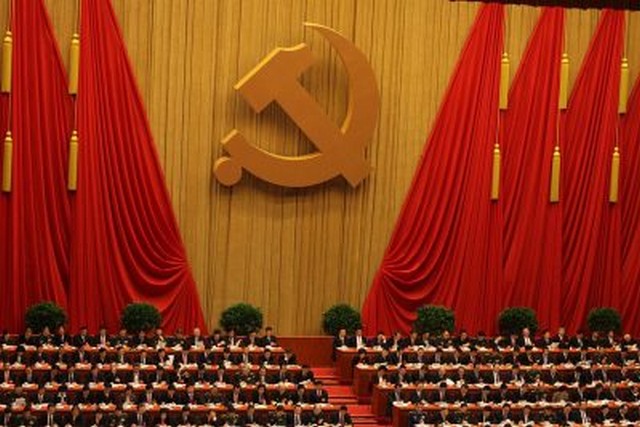
30 Jun 2021 – The Chinese Communist Party (CCP) centennial takes place this week at the heart of an incandescent geopolitical equation.

China, the emerging superpower, is back to the global prominence it enjoyed throughout centuries of recorded history, while the declining Hegemon is paralyzed by the “existential challenge” posed to its fleeting, unilateral dominance.

A mindset of full spectrum confrontation already sketched in the 2017 U.S. National Security Review is sliding fast into fear, loathing and relentless Sinophobia.

Add to it the Russia-China comprehensive strategic partnership graphically exposing the ultimate Mackinderian nightmare of Anglo-American elites jaded by “ruling the world” – for only two centuries at best.

The Little Helmsman Deng Xiaoping may have coined the ultimate formula for what many in the West defined as the Chinese miracle:

“To seek truth from facts, not from dogmas, whether from East or West”.

So this was never about divine intervention, but planning, hard work, and learning by trial and error.

The recent session of the National People’s Congress provides a stark example. Not only it approved a new Five-Year Plan, but in fact a full road map for China’s development up to 2035: three plans in one.

What the whole world saw, in practice, was the manifest efficiency of the Chinese governance system, capable of designing and implementing extremely complex geoeconomic strategies after plenty of local and regional debate on a vast range of policy initiatives.

Compare it to the endless bickering and gridlock in Western liberal democracies, which are incapable of planning for the next quarter, not to mention fifteen years.

The best and the brightest in China actually do their Deng; they couldn’t care less about the politicizing of governance systems. What matters is what they define as a very effective system to make SMART (specific, measurable, achievable, relevant and time-bound) development plans, and put them in practice.

The 85% popular vote

At the start of 2021, before the onset of the Year of the Metal Ox, President Xi Jinping emphasized that “favorable social conditions” should be in place for the CCP centennial celebrations.

Oblivious to waves of demonization coming from the West, for Chinese public opinion what matters is whether the CCP delivered. And deliver it did (over 85% popular approval). China controlled Covid-19 in record time; economic growth is back; poverty alleviation was achieved; and the civilization-state became a “moderately prosperous society” – right on schedule for the CCP centennial.

Since 1949, the size of the Chinese economy soared by a whopping 189 times. Over the past two decades, China’s GDP grew 11-fold. Since 2010, it more than doubled, from $6 trillion to $15 trillion, and now accounts for 17% of global economic output.

No wonder Western grumbling is irrelevant. Shanghai Capital investment boss Eric Li succinctly describes the governance gap; in the U.S., government changes but not policy. In China, government doesn’t change; policy does.

This is the background for the next development stage – where the CCP will in fact double down on its unique hybrid model of “socialism with Chinese characteristics”.

The key point is that the Chinese leadership, via non-stop policy adjustments (trial and error, always) has evolved a model of “peaceful rise” – their own terminology – that essentially respects China’s immense historical and cultural experiences.

In this case, Chinese exceptionalism means respecting Confucianism – which privileges harmony and abhors conflict – as well as Daoism – which privileges balance – over the boisterous, warring, hegemonic Western model.

This is reflected in major policy adjustments such as the new “dual circulation” drive, which places greater emphasis on the domestic market compared to China as the “factory of the world”.

Past and future are totally intertwined in China; what was done in previous dynasties echoes in the future. The best contemporary example is the New Silk Roads, or Belt and Road Initiative (BRI) – the overarching Chinese foreign policy concept for the foreseeable future.

As detailed by Renmin University Professor Wang Yiwei, BRI is about to reshape geopolitics, “bringing Eurasia back to its historical place at the center of human civilization.” Wang has shown how “the two great civilizations of the East and the West were linked until the rise of the Ottoman Empire cut off the Ancient Silk Road”.

Europe moving seaward led to “globalization through colonization”; the decline of the Silk Road; the world’s center shifting to the West; the rise of the U.S.; and the decline of Europe. Now, Wang argues, “Europe is faced with a historic opportunity to return to the world center through the revival of Eurasia.”

And that’s exactly what the Hegemon will go no holds barred to prevent.

Zhu and Xi

It’s fair to argue that Xi’s historical counterpart is the Hongwu emperor Zhu, the founder of the Ming dynasty (1368-1644). The emperor was keen to present his dynasty as a Chinese renewal after Mongol domination via the Yuan dynasty.

Xi frames it as “Chinese rejuvenation”: “China used to be a world economic power. However, it missed its chance in the wake of the Industrial Revolution and the consequent dramatic changes, and was thus left behind and suffered humiliation under foreign invasion …we must not let this tragic history repeat itself.”

The difference is that 21st century China under Xi will not retreat inward as it did under the Ming. The parallel for the near future would rather be with the Tang dynasty (618-907), which privileged trade and interactions with the world at large.

To comment on the torrent of Western misinterpretations of China is a waste of time. For the Chinese, the overwhelming majority of Asia, and for the Global South, much more relevant is to register how the American imperial narrative – “we are the liberators of Asia-Pacific” – has now been totally debunked.

In fact Chairman Mao may end up having the last laugh. As he wrote in 1957, “if the imperialists insist on launching a third world war, it is certain that several hundred million more will turn to socialism, and then there will not be much room left on earth for the imperialists; it is also likely that the whole structure of imperialism will utterly collapse.”

Martin Jacques, one of the very few Westerners who actually studied China in depth, correctly pointed out how “China has enjoyed five separate periods when it has enjoyed a position of pre-eminence – or shared pre-eminence – in the world: part of the Han, the Tang, arguably the Song, the early Ming, and the early Qing.”

So China, historically, does represent continuous renewal and “rejuvenation” (Xi). We’re right in the middle of another one of these phases – now conducted by a CCP dynasty that, incidentally, does not believe in miracles, but in hardcore planning. Western exceptionalists may continue to throw a fit 24/7 ad infinitum: that will not change the course of history.

Pepe Escobar is a Brazilian independent geopolitical analyst. He is a frequent contributor to websites and radio and TV shows ranging from the US to East Asia.

5 July 2021

Source: www.transcend.org

China Pulls Itself Out of Poverty 100 Years into Its Revolution

By Vijay Prashad and John Ross

1 Jul 2021 – On February 25, 2021, China’s President Xi Jinping announced that his country of 1.4 billion people had pulled its people out of poverty as it is defined internationally. Since 1981, 853 million Chinese people have lifted themselves out of poverty thanks to large-scale interventions from both the Chinese state and the Communist Party of China (CPC); according to the data of the World Bank, three out of four people worldwide who were lifted out of poverty live in China. “No country has been able to lift hundreds of millions of people out of poverty in such a short time,” Xi said.

When UN Secretary-General António Guterres visited China in September 2019, he gushed over this accomplishment, calling it the “greatest anti-poverty achievement in history.” “You reduced infant and maternal mortality rates, improved nutrition, reduced stunting and halved the proportion of the population without access to safe drinking water and sanitation,” Secretary Guterres said. In 1949, at the time of the Chinese Revolution, the infant mortality rate in China was 200 per 1,000 live births; this declined to fewer than 50 by 1980. A World Bank study from 1988 noted, “Much of China’s success in improving the health of its people can be attributed to the health policies and the national health service delivery system.” This is the historical context for Secretary Guterres’ 2019 comment; in other words, the Chinese state institutions—products of the revolution led by the CPC—improved the social conditions of life.

Before the Revolution

In 1949, China was one of the world’s poorest countries. Only 10 countries had a lower per capita GDP than China. Chairman Mao Zedong’s famous words at the inauguration of the People’s Republic of China—“The Chinese people have stood up”—is a reflection of a century of humiliations that produced terrible poverty in the country.

The degree of this national suffering may be seen in the fact that between 1840 and 1949 almost 100 million Chinese people died in wars, which directly resulted from foreign intervention, or were victims of civil wars and famines related to those interventions. China had suffered the longest Second World War, from 1937 to 1945 (with a civil war following that lasted until 1949); the death toll was at least 14 million (as documented by Rana Mitter in his book Forgotten Ally: China’s World War II, 1937-1945). From the Opium Wars beginning in 1839 to the Japanese invasion in 1931, China struggled to establish its sovereignty and its future.

It was the terrible burden of this past that brought together a range of radicals to establish the CPC in July 1921 in Shanghai. The small group of 13—including Mao—met in Shanghai’s French Concession and then on a tourist boat on Nanhu Lake after the foreign police came for them on the information of a spy. The principal task of the CPC was to organize and guide the working class. By May Day 1924, 100,000 workers marched in Shanghai, while 200,000 workers marched in Canton. “The time is past when workers are only cannon fodder for the bosses,” the workers wrote in a leaflet. The CPC threw itself into these struggles, growing through setbacks—including the Shanghai Massacre of 1927; leadership by the CPC in the protracted, anti-imperialist war against Japan led it to eventual victory in 1949.

Phases of Socialist Construction

The Chinese Revolution had to confront a broken state, a destroyed economy, and a society in deep turmoil. In 1949, China’s people lived three years less than the world average. They were less well-educated and deeply unhealthy. By 1978, they lived five years longer than the world average. Literacy rates had risen, and health care data showed a marked improvement. As China in 1978 was 22 percent of the world’s population, never in human history had such an immense step forward taken place.

From 1978, with the introduction of “reform and opening up,” China achieved the fastest economic growth ever calculated by a major country in recorded history. From 1978 to 2020, China’s annual average GDP growth was 9.2 percent. Since 1978, China’s household consumption has increased by 1,800 percent, twice that of any major country. This means that everyday life has improved markedly in China. China’s literacy rate is now 97.33 percent, up from 95.92 percent in 2010, far above the literacy rate of 20 percent in 1949.

By 2025, China will become a “high-income” economy by World Bank international standards, according to Justin Lin Yifu (a standing committee member of the Chinese People’s Political Consultative Conference National Committee, and dean and professor at the Institute of New Structural Economics of Peking University). That is, in about 75 years, a single lifetime, China will have gone from almost the world’s poorest country to a high-income economy—with all the enormous improvement in human living standards, life expectancy, education, culture, and numerous other dimensions of human welfare this results in.

With the foundation of the CPC 100 years ago by a handful of people, the Chinese people found a leadership that could deliver them from a struggle that dates back to 1839; now, the CPC will play a decisive role in deciding the fate not only of China but of the world. This historical context is too often lost when Western media and politicians play down China’s socioeconomic victories or imply they came out of nowhere. China’s people have fought for this outcome for centuries.

Vijay Prashad is an Indian historian, editor and journalist. He is a writing fellow and chief correspondent at Globetrotter.

5 July 2021

Source: www.transcend.org

The Three Revolutions of the Chinese Communist Party

By Walden Bello

1 Jul 2021 – The Communist Party of China led three revolutions of world-historic significance in its short 100-year-history: national liberation, the “Cultural Revolution,” and China’s rapid capitalist transformation.

Reflecting on the meaning of the 100th anniversary on July 1, 2021, of one of the most important institutions of our time, the Chinese Communist Party (CCP), the first thing that entered my head was that the present does change the significance of the past.

Before 1991, when the Soviet state went pffft, I would have bet that, hands down, the most important event of the 20th century was the Russian Revolution of 1917.

Now, owing to history’s merciless intolerance for failed experiments, the Chinese Revolution has emerged as the most momentous event of the last century, and its paradoxical consequence – the rise of China to become the center of global capital accumulation – bids fair to be the most significant development of this century as well.

From National Liberation to the Cultural Revolution

In 1949, China was able to put behind it the long century of shame that began with its defeat in the so-called Opium Wars of the 1840’s that resulted in the ceding of Hong Kong to Britain.

In the succeeding decades, imperial China collapsed, the country was plunged into deep social and spiritual crisis and went through a wrenching civil war between a corrupt and weak nationalist government and a puritanical revolutionary Communist Party led by Mao Zedong.

Other countries would have experienced a post-revolutionary consolidation after 1949, but not China. An incorrigible revolutionary, Mao pushed the country into the disastrous “Great Leap Forward,” then after a brief pause, to a decade-long cultural revolution which called on youth to declare war on their elders and all things ancient and traditional and pushed them to “bombard headquarters,” that is, the Communist Party, while the People’s Liberation Army held the ring within which the battle unfolded.

By the early seventies, China was exhausted, or perhaps a better way of putting it is that Mao had exhausted China. The so-called Asian Miracle was unfolding on China’s eastern borders, in Japan, Korea, and Taiwan, but, as two students of the Cultural Revolution put it, “China itself now lay spread-eagled, this time by its own hand, not as a result of foreign invasion or conventional civil war.”

For Deng Xiaoping and other survivors of Mao’s bombardment of headquarters, the message was clear: It was “to embark upon a policy of rapid economic growth to make up for lost time and to relegitimize CCP rule. They had to abandon Maoist utopianism in favor of building the strong and prosperous nation of which they had dreamed when they joined the nascent CCP in the 1920’s.

Otherwise, the CCP itself might not last. So ‘practice,’ not ideology—not Marxism-Leninism, not Mao Zedong Thought—became the ‘sole criterion of truth. If it worked, it would be done’.”

Nation and class have always had an uneasy coexistence in Chinese Communism. Reconciled during the struggle to free the country from imperialism, class conflict gained the upper hand during the Cultural Revolution.

With Mao gone and Deng in command, the emphasis shifted decisively to national solidarity in the late 1970’s, with “national modernization” declared as China’s new objective.

This collective goal of common prosperity was, however, not to be achieved by submerging the individual in the cooperative venture of the virtuous masses but by activating the latent spirit of competition that separated them.

From socialism to capitalism

Deng did not say, “To get rich is glorious,” as is commonly believed, but however he might have expressed the new outlook, it was squarely in the tradition of Adam Smith, who said that the common good would, paradoxically, be achieved by competition among individuals. There was, however, one difference, and it was a major one.

While Smith said a minimal state would be best for competition to thrive and achieve the common good, Deng and the CCP said a powerful state, holding the ring like the People’s Liberation Army did during the Cultural Revolution, was necessary for the common welfare to be achieved in a society where competition would also unleash corruption and in a world that continued to be dominated by predatory western capitalist societies.

It was an important difference that would shape the contours of China’s third revolution since the founding of the Communist Party in 1922: the country’s breathtakingly rapid capitalist transformation.

Mao’s socialist revolution petered out, but he had created the state that made possible the success of its capitalist revolution. For with that state, his successor Deng was emboldened to make a devil’s bargain.

That bargain was, in return for the country’s comprehensive development along capitalist lines, the CCP would offer the country’s labor force for super-exploitation by US transnational corporations.

That the force of capitalism unleashed by the deal would be bent in China’s favor instead of that of the transnationals would be ensured by a powerful state, one that was, on account of its revolutionary origins, far more powerful than the fabled developmental states of Japan and South Korea that had produced the Asian miracle economies.

Forty years on, Deng and his successors have clearly gotten the better of the western capitalist devil. True, there have been costs and not insignificant ones. Income inequality in China is close to that of the US. Environmental crises are rampant. Inland China has been left behind by coastal China.

Women are less equal to men than they were in the 1970’s. Democratic rights have been subordinated to the stability of the state, and in Xinjiang, forced cultural assimilation of the Uighur minority is the order of the day. And, of course, the shadow of Tiananmen Square 1989 continues to cast its shadow on the accomplishments of the CCP.

Yet, nothing succeeds like success, as the 90-year-old Mikhail Gorbachev – all but forgotten now in his homeland while Deng has been canonized in his—probably realizes with bitterness.

For China has become the center of world capital accumulation or, in the popular image, the “locomotive of the world economy,” accounting for 28% of all growth worldwide in the five years from 2013 to 2018, more than twice the share of the United States, according to the International Monetary Fund.

In the process, over 800 million people have been lifted out of the ranks of the poor, according to the World Bank, though the Chinese government’s claim that it has “abolished extreme poverty” has been met with skepticism.

Though protests are widespread on the ground and alienation from the authorities is widely expressed on the internet, there is no systemic challenge to the CCP. Fear of repression may be a factor here, but far more significant is a more mundane phenomenon.

As one western economist put it, “For most of the past three decades, all boats have been rising, and most people pay more attention to their own boat than the boats that have risen higher… They may, in short, have bought into Deng Xiaoping’s motto early in the reform era that ‘some people and some regions should be allowed to prosper before others’.”

China as a model?

After a visit to the new Soviet Union in the 1930’s, the famous American journalist Lincoln Steffens wrote, “I have seen the future and it works.” In a similar manner, China’s startling success has captivated many outside China, and one of those most mesmerized Is the Columbia University economics professor Jeffrey Sachs.

Sachs has done a complete turnaround from his early day as the champion of the free-market “Washington Consensus” in the 1980’s and 1990’s. In a recent talk with United Nations officials, Sachs claimed that “China shows a path for how it is possible to make profound transformations for well-being in a short period of time.”

Sachs, who is criticized by some of his colleagues for “channeling Xi Jin Ping,” is just one of a bevy of liberal and progressive western economists who no longer have any hope that a US economy ruined by neoliberal policies that have fostered deindustrialization, out-of-control financial speculation, and spectacular inequality (with 50 percent of the population having access to only 12 percent of the wealth) has much of value to offer the global South. China, on the other hand, is seen as the new North Star, the country most capable of providing global leadership for a strategy that Sachs calls “sustainable development.”

But China has not embraced Sach’s “sustainable development,” nor has it promoted what some western economists have deluded themselves into thinking as China’s response to the neoliberal Washington Consensus: the so-called Beijing Consensus.

When it comes to what China has to offer the world, Beijing has gone out of its way to say it is not prescribing a model for other countries. Indeed, it has gone to some length to claim that what Deng Xiaoping called “socialism with Chinese characteristics” is a state-guided capitalist system unique to China and probably non-transferable.

What Deng’s heir, Xi Jin Ping, wants though is for China to be recognized as the leader of globalization in its latest phase of “connectivity,” or the comprehensive linking via physical, economic, and digital infrastructures of vast areas of the globe.

Originally meant to be mainly a way by which China could reduce the overcapacity that was sapping the profitability of its industry, the much ballyhooed Belt and Road Initiative (BRI) has become Beijing’s flagship project in its pursuit of connectivity, aiming to bring about the compression in terms of time and space of the Eurasian landmass, Africa, and Latin America via a web of physical and digital projects.

In terms of actual and future commitments of money in the form of development aid or more straightforward commercial deals – up to $4 trillion now from Xi’s original commitment of $1 trillion, according to some estimates – has already been channeled by Beijing to BRI projects, the bulk of it to developing countries.

Indeed, the BRI can be seen as one giant foreign assistance project to the global South that is highly competitive with bilateral and multilateral aid from the West.

With its stingy sums and all sort of conditionalities, western aid is losing many of its former clients to Beijing, which offers much more money and fewer conditionalities (though critics say the real conditionalities are often unspoken but very real political concessions).

Group of seven on the rocks

The disparity between the “soft power” of the US and Beijing was in full display during the G7 meeting in Cornwall, England, and its immediate aftermath.

US President Joe Biden tried hard to recreate the old western alliance after Donald Trump’s demolition job, invoking a struggle between “western democracy” and “authoritarian China.”

It made for lovely photo ops, but the G7 rhetoric masked harsh realities. Washington’s allies knew that Biden faced an undeclared civil war at home with the white supremacist Republican Party led by Trump actively seeking to destabilize him.

The Europeans knew that the European Union itself was in a very real crisis, with Britain’s leaving it. The expansive Japan of the 1970’s and 1980’s was now the little Japan of the 2020’s which had never quite snapped from its more than 30 years of economic stagnation.

The B3W (Better World Partnership) meant to counter the BRI that was announced with fanfare was purely reactive, and purely reactive programs tend to be put together in a hurry, with little serious thought to follow through.

The biggest problem is, of course, is money, and with all these countries suffering fiscal crises, with the possible exception of Germany, where are the western governments going to get the trillions of dollars to match China’s estimated $4 trillion current and future investment in the BRI?

Washington, for one, has already committed $250 billion that could otherwise be earmarked for its tattered bilateral aid program to the new US-focused high-tech industrial policy program passed by the Senate and awaiting sure passage in the House of Representatives.

The fact is, even as they rhetorically proclaim B3W, all the other G7 countries, with the exception of Japan and the US, have signed on as partners in the China-led Asian Infrastructure Investment Bank (AIIB), despite the efforts of the Obama administration to dissuade them a couple of years ago.

These governments have a keen sense of where their interests lie at the same time that they know that rhetoric is cheap, especially rhetoric to keep Washington happy. No wonder Beijing could hardly conceal its scorn for the whole empty show when it characterized the G7 in Cornwall as a manifestation of “small circle politics.”

My problems with China

But I do have problems with China.

One of them has to do with the much-touted BRI. The BRI projects have to be designed to be more environmentally and climate-friendly instead of being what Arundhati Roy has called “gigantistic” top-down projects reminiscent of the mid-20th century. They also have to be sensitive to what the people want and not to what the local elites in the global South desire.

Also, China’s commitments to reduce greenhouse gas emissions should be more radical in scope and speed, something that is demanded of the world’s current champion in greenhouse gas emissions.

Beijing should likewise end the practice of bringing in thousands of Chinese workers to work in projects it funds in Africa and elsewhere and hire and rapidly train many more local workers.

Moreover, China should stop grabbing maritime formations such as Mischief Reef and Scarborough Shoal that belong to the Exclusive Economic Zone in the Philippines and making the outrageous claim that 90 percent of the South China Sea belongs to it.

These moves are illegal and unjustifiable, even if they are understandable as strategic defensive moves made by Beijing to counter the very real military threat to the country’s industrial base in Southeastern China posed by the US Seventh Fleet’s domination of the South China Sea and the West Philippine Sea.

Finally, Beijing must also end its forced cultural assimilation of the Uighurs, and while Hong Kong and Taiwan indisputably belong to China, it must be cognizant of the rights of the peoples of these areas to have a say in the way they are governed, especially given their long separation from the rest of the country.

So China has real problems, both domestic and in some of its relations with the global South. But overall, Beijing’s rise has been a large plus for most of the world. It has become a global economic force powering the economies of smaller countries, and it has achieved this with little, if any, of the force and violence that marked the rise to hegemony of the West.

It has provided the countries of the global South alternative opportunities for aid and finance that have contributed to their becoming much less dependent on the US and the rest of the West.

But beyond these has been its inspiring lesson to so many countries: that with determination, grit, and organization, it is possible not only to break western domination but to use the West as a means of achieving national resurrection. In the long view, the rise of China is but the latest stage of the global South’s 150-year-old struggle for decolonization to end the over 500-year-old yoke of western capitalist hegemony.

Danger ahead?

But our optimism must be tempered, and most of all by the fact that hegemonic powers like the US are often at their most vicious when in decline. The US enjoys absolute superiority over China in the area of war-making capability because China has elected to spend most of its available resources on economic priorities and economic diplomacy.

This yawning gap creates a dangerous situation since Washington will be tempted try to compensate for its rapid economic decline with new military adventures, this time not in the Middle East, where its troops continue to be pinned down in unwinnable struggles, but vis-à-vis China.

This is why the South China Sea is so volatile. In a region where there are no rules of the game except a volatile balance of power, it is not a distant possibility that a mere ship collision between two forces playing “chicken” with each other, which US and Chinese forces apparently frequently engage in, could easily escalate into a conventional war.

Are we being too alarmist in our reading of the dangers of Washington’s absolute military superiority?

The US has probably been the most warlike country on earth over the last 245 years, constantly expanding and taking over territory through military adventures in its first 150 years, then using military force to achieve and maintain military hegemony for the next 100 years. There have been few periods when this country has not been at war.

Indeed, Americans have been continuously in combat over the last 20 years in Afghanistan, and it is not at all sure that Washington’s powerful War-on-Terror Lobby will allow President Biden to follow through with his planned total withdrawal from Afghanistan by September of this year.

Compare this to China, which last deployed troops outside its borders over 40 years ago, with the cross-border expedition to “punish Vietnam” that ended in a disaster for the People’s Liberation Army that Beijing would prefer to forget. Indeed, the big fear of Chinese military strategists is that their forces do not have the experience of war-making that the US has, which would be decisive in any conflict.

In his latest book, Graham Allison, the dean of the American security studies establishment, asks rhetorically if China and the US are “destined for war?” as the volume’s title puts it.

Read the book closely, and despite its periodic protestations that it was written to enable Beijing and Washington to avoid conflict, one cannot avoid the impression that this work, which is required reading in West Point, Annapolis, and the National Defense University Washington, DC, is actually meant to lay out various ways of militarily containing China.

This does not surprise those who have a long and deep familiarity with the bellicose history of American society even before its formal declaration of independence in 1776.

And it would not be a surprise if the Chinese, who have been taught by experience to be utter realists when it comes to relations between states, would consider a preemptive or provocative move on the part of Washington as not only possible but probable.

For the leaders of the CPP, which has led China through 100 years of crises and conflicts, the question is most likely not whether but when, where, and how it will take place.

Walden Bello is the co-founder of and current senior analyst at the Bangkok-based Focus on the Global South, the International Adjunct Professor of Sociology at the State University of New York at Binghamton, and National Chairperson of Laban ng Masa, a progressive coalition of organizations and individuals in the Philippines.

5 July 2021

Source:www.transcend.org

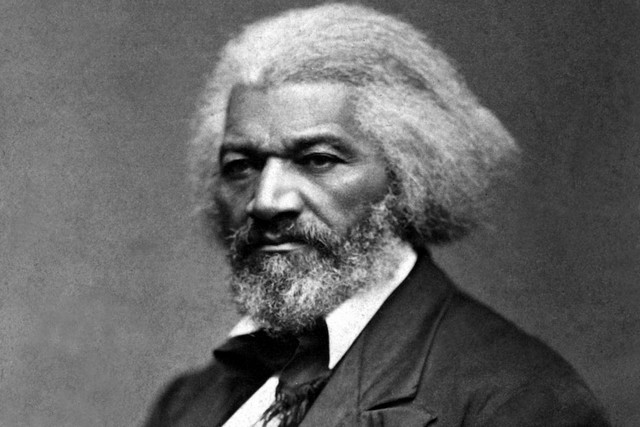
What to the Slave Is the Fourth of July?

By Frederick Douglass

“This oration stands with the most inspirational addresses in US history. The erudition, eloquence, and elocution are unmatched. Douglass’ words should bring shame and guilt to those zealots who deny the importance and essential inclusion of Critical Race Theory in US education as it is the authentic history of the USA.”
— Anthony Marsella, Ph.D. – Member of TRANSCEND

5 July 1852

Mr. President, Friends and Fellow Citizens,

This, for the purpose of this celebration, is the 4th of July. It is the birthday of your National Independence, and of your political freedom. This, to you, is what the Passover was to the emancipated people of God. It carries your minds back to the day, and to the act of your great deliverance; and to the signs, and to the wonders, associated with that act, and that day. This celebration also marks the beginning of another year of your national life; and reminds you that the Republic of America is now 76 years old. I am glad, fellow-citizens, that your nation is so young. Seventy-six years, though a good old age for a man, is but a mere speck in the life of a nation. Three score years and ten is the allotted time for individual men; but nations number their years by thousands. According to this fact, you are, even now, only in the beginning of your national career, still lingering in the period of childhood. I repeat, I am glad this is so. There is hope in the thought, and hope is much needed, under the dark clouds which lower above the horizon.

Fellow-citizens, I shall not presume to dwell at length on the associations that cluster about this day. The simple story of it is that, 76 years ago, the people of this country were British subjects. The style and title of your “sovereign people” (in which you now glory) was not then born. You were under the British Crown. Your fathers esteemed the English Government as the home government; and England as the fatherland. This home government, you know, although a considerable distance from your home, did, in the exercise of its parental prerogatives, impose upon its colonial children, such restraints, burdens and limitations, as, in its mature judgment, it deemed wise, right and proper.

But, your fathers, who had not adopted the fashionable idea of this day, of the infallibility of government, and the absolute character of its acts, presumed to differ from the home government in respect to the wisdom and the justice of some of those burdens and restraints. They went so far in their excitement as to pronounce the measures of government unjust, unreasonable, and oppressive, and altogether such as ought not to be quietly submitted to. I scarcely need say, fellow-citizens, that my opinion of those measures fully accords with that of your fathers…Feeling themselves harshly and unjustly treated by the home government, your fathers, like men of honesty, and men of spirit, earnestly sought redress. They petitioned and remonstrated; they did so in a decorous, respectful, and loyal manner. Their conduct was wholly unexceptionable. This, however, did not answer the purpose. They saw themselves treated with sovereign indifference, coldness and scorn. Yet they persevered. They were not the men to look back.

As the sheet anchor takes a firmer hold, when the ship is tossed by the storm, so did the cause of your fathers grow stronger, as it breasted the chilling blasts of kingly displeasure. The greatest and best of British statesmen admitted its justice, and the loftiest eloquence of the British Senate came to its support. But, with that blindness which seems to be the unvarying characteristic of tyrants, since Pharaoh and his hosts were drowned in the Red Sea, the British Government persisted in the exactions complained of.

The madness of this course, we believe, is admitted now, even by England; but we fear the lesson is wholly lost on our present ruler.

Oppression makes a wise man mad. Your fathers were wise men, and if they did not go mad, they became restive under this treatment. They felt themselves the victims of grievous wrongs, wholly incurable in their colonial capacity. With brave men there is always a remedy for oppression. Just here, the idea of a total separation of the colonies from the crown was born! It was a startling idea, much more so, than we, at this distance of time, regard it. The timid and the prudent (as has been intimated) of that day, were, of course, shocked and alarmed by it.

Such people lived then, had lived before, and will, probably, ever have a place on this planet; and their course, in respect to any great change, (no matter how great the good to be attained, or the wrong to be redressed by it), may be calculated with as much precision as can be the course of the stars. They hate all changes, but silver, gold and copper change! Of this sort of change they are always strongly in favor.

These people were called Tories in the days of your fathers; and the appellation, probably, conveyed the same idea that is meant by a more modern, though a somewhat less euphonious term, which we often find in our papers, applied to some of our old politicians.

Their opposition to the then dangerous thought was earnest and powerful; but, amid all their terror and affrighted vociferations against it, the alarming and revolutionary idea moved on, and the country with it.

On the 2nd of July, 1776, the old Continental Congress, to the dismay of the lovers of ease, and the worshipers of property, clothed that dreadful idea with all the authority of national sanction. They did so in the form of a resolution; and as we seldom hit upon resolutions, drawn up in our day whose transparency is at all equal to this, it may refresh your minds and help my story if I read it.

“Resolved, That these united colonies are, and of right, ought to be free and Independent States; that they are absolved from all allegiance to the British Crown; and that all political connection between them and the State of Great Britain is, and ought to be, dissolved.”

Citizens, your fathers made good that resolution. They succeeded; and to-day you reap the fruits of their success. The freedom gained is yours; and you, therefore, may properly celebrate this anniversary. The 4th of July is the first great fact in your nation’s history – the very ring-bolt in the chain of your yet undeveloped destiny.

Pride and patriotism, not less than gratitude, prompt you to celebrate and to hold it in perpetual remembrance. I have said that the Declaration of Independence is the ring-bolt to the chain of your nation’s destiny; so, indeed, I regard it. The principles contained in that instrument are saving principles. Stand by those principles, be true to them on all occasions, in all places, against all foes, and at whatever cost.

Fellow Citizens, I am not wanting in respect for the fathers of this republic. The signers of the Declaration of Independence were brave men. They were great men too—great enough to give fame to a great age. It does not often happen to a nation to raise, at one time, such a number of truly great men. The point from which I am compelled to view them is not, certainly, the most favorable; and yet I cannot contemplate their great deeds with less than admiration. They were statesmen, patriots and heroes, and for the good they did, and the principles they contended for, I will unite with you to honor their memory.

They loved their country better than their own private interests; and, though this is not the highest form of human excellence, all will concede that it is a rare virtue, and that when it is exhibited, it ought to command respect. He who will, intelligently, lay down his life for his country, is a man whom it is not in human nature to despise. Your fathers staked their lives, their fortunes, and their sacred honor, on the cause of their country. In their admiration of liberty, they lost sight of all other interests.

They were peace men; but they preferred revolution to peaceful submission to bondage. They were quiet men; but they did not shrink from agitating against oppression. They showed forbearance; but that they knew its limits. They believed in order; but not in the order of tyranny. With them, nothing was “settled” that was not right. With them, justice, liberty and humanity were “final;” not slavery and oppression. You may well cherish the memory of such men. They were great in their day and generation. Their solid manhood stands out the more as we contrast it with these degenerate times…

THE PRESENT

My business, if I have any here to-day, is with the present. The accepted time with God and his cause is the ever-living now.

“Trust no future, however pleasant,
Let the dead past bury its dead;
Act, act in the living present,
Heart within, and God overhead.”

We have to do with the past only as we can make it useful to the present and to the future. To all inspiring motives, to noble deeds which can be gained from the past, we are welcome. But now is the time, the important time. Your fathers have lived, died, and have done their work, and have done much of it well. You live and must die, and you must do your work. You have no right to enjoy a child’s share in the labor of your fathers, unless your children are to be blest by your labors. You have no right to wear out and waste the hard-earned fame of your fathers to cover your indolence…Washington could not die till he had broken the chains of his slaves. Yet his monument is built up by the price of human blood, and the traders in the bodies and souls of men, shout – “We have Washington to our father.” Alas! that it should be so; yet so it is.

“The evil that men do, lives after them,
The good is oft’ interred with their bones.”

What have I, or those I represent, to do with your national independence? Fellow-citizens, pardon me, allow me to ask, why am I called upon to speak here to-day? What have I, or those I represent, to do with your national independence? Are the great principles of political freedom and of natural justice, embodied in that Declaration of Independence, extended to us? and am I, therefore, called upon to bring our humble offering to the national altar, and to confess the benefits and express devout gratitude for the blessings resulting from your independence to us?

Would to God, both for your sakes and ours, that an affirmative answer could be truthfully returned to these questions! Then would my task be light, and my burden easy and delightful…

…But, such is not the state of the case. I say it with a sad sense of the disparity between us. I am not included within the pale of this glorious anniversary! Your high independence only reveals the immeasurable distance between us. The blessings in which you, this day, rejoice, are not enjoyed in common. The rich inheritance of justice, liberty, prosperity and independence, bequeathed by your fathers, is shared by you, not by me. The sunlight that brought life and healing to you, has brought stripes and death to me. This Fourth [of] July is yours, not mine. You may rejoice, I must mourn. To drag a man in fetters into the grand illuminated temple of liberty, and call upon him to join you in joyous anthems, were inhuman mockery and sacrilegious irony. Do you mean, citizens, to mock me, by asking me to speak to-day? …

…Fellow-citizens; above your national, tumultuous joy, I hear the mournful wail of millions! whose chains, heavy and grievous yesterday, are, to-day, rendered more intolerable by the jubilee shouts that reach them. If I do forget, if I do not faithfully remember those bleeding children of sorrow this day, “may my right hand forget her cunning, and may my tongue cleave to the roof of my mouth!” To forget them, to pass lightly over their wrongs, and to chime in with the popular theme, would be treason most scandalous and shocking, and would make me a reproach before God and the world. My subject, then fellow-citizens, is AMERICAN SLAVERY.

I shall see, this day, and its popular characteristics, from the slave’s point of view. Standing, there, identified with the American bondman, making his wrongs mine, I do not hesitate to declare, with all my soul, that the character and conduct of this nation never looked blacker to me than on this 4th of July! Whether we turn to the declarations of the past, or to the professions of the present, the conduct of the nation seems equally hideous and revolting. America is false to the past, false to the present, and solemnly binds herself to be false to the future. Standing with God and the crushed and bleeding slave on this occasion, I will, in the name of humanity which is outraged, in the name of liberty which is fettered, in the name of the constitution and the Bible, which are disregarded and trampled upon, dare to call in question and to denounce, with all the emphasis I can command, everything that serves to perpetuate slavery-the great sin and shame of America! “I will not equivocate; I will not excuse;” I will use the severest language I can command; and yet not one word shall escape me that any man, whose judgment is not blinded by prejudice, or who is not at heart a slaveholder, shall not confess to be right and just.

But I fancy I hear some one of my audience say, it is just in this circumstance that you and your brother abolitionists fail to make a favorable impression on the public mind. Would you argue more, and denounce less, would you persuade more, and rebuke less, your cause would be much more likely to succeed. But, I submit, where all is plain there is nothing to be argued. What point in the anti-slavery creed would you have me argue? On what branch of the subject do the people of this country need light? Must I undertake to prove that the slave is a man? That point is conceded already. Nobody doubts it. The slaveholders themselves acknowledge it in the enactment of laws for their government. They acknowledge it when they punish disobedience on the part of the slave. There are seventy-two crimes in the State of Virginia, which, if committed by a black man, (no matter how ignorant he be), subject him to the punishment of death; while only two of the same crimes will subject a white man to the like punishment. What is this but the acknowledgement that the slave is a moral, intellectual and responsible being? The manhood of the slave is conceded. It is admitted in the fact that Southern statute books are covered with enactments forbidding, under severe fines and penalties, the teaching of the slave to read or to write. When you can point to any such laws, in reference to the beasts of the field, then I may consent to argue the manhood of the slave. …

…For the present, it is enough to affirm the equal manhood of the Negro race. Is it not astonishing that, while we are ploughing, planting and reaping, using all kinds of mechanical tools, erecting houses, constructing bridges, building ships, working in metals of brass, iron, copper, silver and gold; that, while we are reading, writing and cyphering, acting as clerks, merchants and secretaries, having among us lawyers, doctors, ministers, poets, authors, editors, orators and teachers; that, while we are engaged in all manner of enterprises common to other men, digging gold in California, capturing the whale in the Pacific, feeding sheep and cattle on the hill-side, living, moving, acting, thinking, planning, living in families as husbands, wives and children, and, above all, confessing and worshipping the Christian’s God, and looking hopefully for life and immortality beyond the grave, we are called upon to prove that we are men!

Would you have me argue that man is entitled to liberty? that he is the rightful owner of his own body? You have already declared it. Must I argue the wrongfulness of slavery? Is that a question for Republicans? Is it to be settled by the rules of logic and argumentation, as a matter beset with great difficulty, involving a doubtful application of the principle of justice, hard to be understood? …There is not a man beneath the canopy of heaven that does not know that slavery is wrong for him.

What, am I to argue that it is wrong to make men brutes, to rob them of their liberty, to work them without wages, to keep them ignorant of their relations to their fellow men, to beat them with sticks, to flay their flesh with the lash, to load their limbs with irons, to hunt them with dogs, to sell them at auction, to sunder their families, to knock out their teeth, to bum their flesh, to starve them into obedience and submission to their masters? Must I argue that a system thus marked with blood, and stained with pollution, is wrong? No! I will not. I have better employments for my time and strength than such arguments would imply.

What, then, remains to be argued? Is it that slavery is not divine; that God did not establish it; that our doctors of divinity are mistaken? There is blasphemy in the thought. That which is inhuman, cannot be divine! Who can reason on such a proposition? They that can, may; I cannot. The time for such argument is past.

At a time like this, scorching irony, not convincing argument, is needed. O! had I the ability, and could I reach the nation’s ear, I would, to-day, pour out a fiery stream of biting ridicule, blasting reproach, withering sarcasm, and stern rebuke. For it is not light that is needed, but fire; it is not the gentle shower, but thunder. We need the storm, the whirlwind, and the earthquake. The feeling of the nation must be quickened; the conscience of the nation must be roused; the propriety of the nation must be startled; the hypocrisy of the nation must be exposed; and its crimes against God and man must be proclaimed and denounced.

What, to the American slave, is your 4th of July? I answer: a day that reveals to him, more than all other days in the year, the gross injustice and cruelly to which he is the constant victim. To him, your celebration is a sham; your boasted liberty, an unholy license; your national greatness, swelling vanity; your sounds of rejoicing are empty and heartless; your denunciations of tyrants, brass fronted impudence; your shouts of liberty and equality, hollow mockery; your prayers and hymns, your sermons and thanksgivings, with all your religious parade, and solemnity, are, to him, mere bombast, fraud, deception, impiety, and hypocrisy – a thin veil to cover up crimes which would disgrace a nation of savages. There is not a nation on the earth guilty of practices, more shocking and bloody, than are the people of these United States, at this very hour.

Go where you may, search where you will, roam through all the monarchies and despotisms of the old world, travel through South America, search out every abuse, and when you have found the last, lay your facts by the side of the everyday practices of this nation, and you will say with me, that, for revolting barbarity and shameless hypocrisy, America reigns without a rival.

INTERNAL SLAVE TRADE

Take the American slave-trade, which, we are told by the papers, is especially prosperous just now. Ex-Senator Benton tells us that the price of men was never higher than now. He mentions the fact to show that slavery is in no danger. This trade is one of the peculiarities of American institutions. It is carried on in all the large towns and cities in one-half of this confederacy; and millions are pocketed every year, by dealers in this horrid traffic. In several states, this trade is a chief source of wealth. It is called (in contradistinction to the foreign slave-trade) “the internal slave trade.” It is, probably, called so, too, in order to divert from it the horror with which the foreign slave-trade is contemplated. That trade has long since been denounced by this government, as piracy. It has been denounced with burning words, from the high places of the nation, as an execrable traffic. To arrest it, to put an end to it, this nation keeps a squadron, at immense cost, on the coast of Africa. Everywhere, in this country, it is safe to speak of this foreign slave-trade, as a most inhuman traffic, opposed alike to the laws of God and of man. The duty to extirpate and destroy it, is admitted even by our DOCTORS OF DIVINITY. In order to put an end to it, some of these last have consented that their colored brethren (nominally free) should leave this country, and establish themselves on the western coast of Africa! It is, however, a notable fact that, while so much execration is poured out by Americans upon those engaged in the foreign slave-trade, the men engaged in the slave-trade between the states pass without condemnation, and their business is deemed honorable.

Behold the practical operation of this internal slave-trade, the American slave-trade, sustained by American politics and America religion. Here you will see men and women reared like swine for the market. You know what is a swine-drover? I will show you a man-drover. They inhabit all our Southern States. They perambulate the country, and crowd the highways of the nation, with droves of human stock. You will see one of these human flesh-jobbers, armed with pistol, whip and bowie-knife, driving a company of a hundred men, women, and children, from the Potomac to the slave market at New Orleans. These wretched people are to be sold singly, or in lots, to suit purchasers. They are food for the cotton-field, and the deadly sugar-mill. Mark the sad procession, as it moves wearily along, and the inhuman wretch who drives them. Hear his savage yells and his blood-chilling oaths, as he hurries on his affrighted captives! There, see the old man, with locks thinned and gray. Cast one glance, if you please, upon that young mother, whose shoulders are bare to the scorching sun, her briny tears falling on the brow of the babe in her arms. See, too, that girl of thirteen, weeping, yes! weeping, as she thinks of the mother from whom she has been torn! The drove moves tardily. Heat and sorrow have nearly consumed their strength; suddenly you hear a quick snap, like the discharge of a rifle; the fetters clank, and the chain rattles simultaneously; your ears are saluted with a scream that seems to have torn its way to the center of your soul! The crack you heard, was the sound of the slave-whip; the scream you heard, was from the woman you saw with the babe. Her speed had faltered under the weight of her child and her chains! that gash on her shoulder tells her to move on. Follow the drove to New Orleans. Attend the auction; see men examined like horses; see the forms of women rudely and brutally exposed to the shocking gaze of American slave-buyers. See this drove sold and separated forever; and never forget the deep, sad sobs that arose from that scattered multitude. Tell me citizens, WHERE, under the sun, you can witness a spectacle more fiendish and shocking. Yet this is but a glance at the American slave-trade, as it exists, at this moment, in the ruling part of the United States.

I was born amid such sights and scenes. To me the American slave-trade is a terrible reality. When a child, my soul was often pierced with a sense of its horrors. I lived on Philpot Street, Fell’s Point, Baltimore, and have watched from the wharves, the slave ships in the Basin, anchored from the shore, with their cargoes of human flesh, waiting for favorable winds to waft them down the Chesapeake. There was, at that time, a grand slave mart kept at the head of Pratt Street, by Austin Woldfolk. His agents were sent into every town and county in Maryland, announcing their arrival, through the papers, and on flaming “hand-bills,” headed CASH FOR NEGROES. These men were generally well dressed men, and very captivating in their manners. Ever ready to drink, to treat, and to gamble. The fate of many a slave has depended upon the turn of a single card; and many a child has been snatched from the arms of its mother by bargains arranged in a state of brutal drunkenness.

The flesh-mongers gather up their victims by dozens, and drive them, chained, to the general depot at Baltimore. When a sufficient number have been collected here, a ship is chartered, for the purpose of conveying the forlorn crew to Mobile, or to New Orleans. From the slave prison to the ship, they are usually driven in the darkness of night; for since the antislavery agitation, a certain caution is observed.

In the deep still darkness of midnight, I have been often aroused by the dead heavy footsteps, and the piteous cries of the chained gangs that passed our door. The anguish of my boyish heart was intense; and I was often consoled, when speaking to my mistress in the morning, to hear her say that the custom was very wicked; that she hated to hear the rattle of the chains, and the heart-rending cries. I was glad to find one who sympathized with me in my horror.

Fellow-citizens, this murderous traffic is, to-day, in active operation in this boasted republic. In the solitude of my spirit, I see clouds of dust raised on the highways of the South; I see the bleeding footsteps; I hear the doleful wail of fettered humanity, on the way to the slave-markets, where the victims are to be sold like horses, sheep, and swine, knocked off to the highest bidder. There I see the tenderest ties ruthlessly broken, to gratify the lust, caprice and rapacity of the buyers and sellers of men. My soul sickens at the sight.

“Is this the land your Fathers loved,
The freedom which they toiled to win?
Is this the earth whereon they moved?
Are these the graves they slumber in?”

But a still more inhuman, disgraceful, and scandalous state of things remains to be presented. By an act of the American Congress, not yet two years old, slavery has been nationalized in its most horrible and revolting form. By that act, Mason & Dixon’s line has been obliterated; New York has become as Virginia; and the power to hold, hunt, and sell men, women, and children as slaves remains no longer a mere state institution, but is now an institution of the whole United States. The power is co-extensive with the Star-Spangled Banner and American Christianity. Where these go, may also go the merciless slave-hunter. Where these are, man is not sacred. He is a bird for the sportsman’s gun. By that most foul and fiendish of all human decrees, the liberty and person of every man are put in peril. Your broad republican domain is hunting ground for men. Not for thieves and robbers, enemies of society, merely, but for men guilty of no crime. Your lawmakers have commanded all good citizens to engage in this hellish sport. Your President, your Secretary of State, your lords, nobles, and ecclesiastics, enforce, as a duty you owe to your free and glorious country, and to your God, that you do this accursed thing. Not fewer than forty Americans have, within the past two years, been hunted down and, without a moment’s warning, hurried away in chains, and consigned to slavery and excruciating torture. Some of these have had wives and children, dependent on them for bread; but of this, no account was made. The right of the hunter to his prey stands superior to the right of marriage, and to all rights in this republic, the rights of God included! For black men there are neither law, justice, humanity, not religion. The Fugitive Slave Law makes MERCY TO THEM, A CRIME; and bribes the judge who tries them. An American JUDGE GETS TEN DOLLARS FOR EVERY VICTIM HE CONSIGNS to slavery, and five, when he fails to do so. The oath of any two villains is sufficient, under this hell-black enactment, to send the most pious and exemplary black man into the remorseless jaws of slavery! His own testimony is nothing. He can bring no witnesses for himself. The minister of American justice is bound by the law to hear but one side; and that side, is the side of the oppressor. Let this damning fact be perpetually told. Let it be thundered around the world, that, in tyrant-killing, king-hating, people-loving, democratic, Christian America, the seats of justice are filled with judges, who hold their offices under an open and palpable bribe, and are bound, in deciding in the case of a man’s liberty, hear only his accusers!

In glaring violation of justice, in shameless disregard of the forms of administering law, in cunning arrangement to entrap the defenseless, and in diabolical intent, this Fugitive Slave Law stands alone in the annals of tyrannical legislation. I doubt if there be another nation on the globe, having the brass and the baseness to put such a law on the statute-book. If any man in this assembly thinks differently from me in this matter, and feels able to disprove my statements, I will gladly confront him at any suitable time and place he may select.

RELIGIOUS LIBERTY

I take this law to be one of the grossest infringements of Christian Liberty, and, if the churches and ministers of our country were not stupidly blind, or most wickedly indifferent, they, too, would so regard it.

At the very moment that they are thanking God for the enjoyment of civil and religious liberty, and for the right to worship God according to the dictates of their own consciences, they are utterly silent in respect to a law which robs religion of its chief significance, and makes it utterly worthless to a world lying in wickedness…The fact that the church of our country, (with fractional exceptions), does not esteem “the Fugitive Slave Law” as a declaration of war against religious liberty, implies that that church regards religion simply as a form of worship, an empty ceremony, and not a vital principle, requiring active benevolence, justice, love and good will towards man. It esteems sacrifice above mercy; psalm-singing above right doing; solemn meetings above practical righteousness. A worship that can be conducted by persons who refuse to give shelter to the houseless, to give bread to the hungry, clothing to the naked, and who enjoin obedience to a law forbidding these acts of mercy, is a curse, not a blessing to mankind. The Bible addresses all such persons as “scribes, Pharisees, hypocrites, who pay tithe of mint, anise, and cummin, and have omitted the weightier matters of the law, judgment, mercy and faith.”

THE CHURCH RESPONSIBLE

But the church of this country is not only indifferent to the wrongs of the slave, it actually takes sides with the oppressors. It has made itself the bulwark of American slavery, and the shield of American slave-hunters. Many of its most eloquent Divines. who stand as the very lights of the church, have shamelessly given the sanction of religion and the Bible to the whole slave system. They have taught that man may, properly, be a slave; that the relation of master and slave is ordained of God; that to send back an escaped bondman to his master is clearly the duty of all the followers of the Lord Jesus Christ; and this horrible blasphemy is palmed off upon the world for Christianity.

For my part, I would say, welcome infidelity! welcome atheism! welcome anything! in preference to the gospel, as preached by those Divines! They convert the very name of religion into an engine of tyranny, and barbarous cruelty, and serve to confirm more infidels, in this age, than all the infidel writings of Thomas Paine, Voltaire, and Bolingbroke, put together, have done! These ministers make religion a cold and flinty-hearted thing, having neither principles of right action, nor bowels of compassion. They strip the love of God of its beauty, and leave the throng of religion a huge, horrible, repulsive form. It is a religion for oppressors, tyrants, man-stealers, and thugs. It is not that “pure and undefiled religion” which is from above, and which is “first pure, then peaceable, easy to be entreated, full of mercy and good fruits, without partiality, and without hypocrisy.” But a religion which favors the rich against the poor; which exalts the proud above the humble; which divides mankind into two classes, tyrants and slaves; which says to the man in chains, stay there; and to the oppressor, oppress on; it is a religion which may be professed and enjoyed by all the robbers and enslavers of mankind; it makes God a respecter of persons, denies his fatherhood of the race, and tramples in the dust the great truth of the brotherhood of man. All this we affirm to be true of the popular church, and the popular worship of our land and nation – a religion, a church, and a worship which, on the authority of inspired wisdom, we pronounce to be an abomination in the sight of God. In the language of Isaiah, the American church might be well addressed, “Bring no more vain ablations; incense is an abomination unto me: the new moons and Sabbaths, the calling of assemblies, I cannot away with; it is iniquity even the solemn meeting…. Yea! when ye make many prayers, I will not hear. YOUR HANDS ARE FULL OF BLOOD; cease to do evil, learn to do well; seek judgment; relieve the oppressed; judge for the fatherless; plead for the widow.”

The American church is guilty, when viewed in connection with what it is doing to uphold slavery; but it is superlatively guilty when viewed in connection with its ability to abolish slavery.

The sin of which it is guilty is one of omission as well as of commission. Albert Barnes but uttered what the common sense of every man at all observant of the actual state of the case will receive as truth, when he declared that “There is no power out of the church that could sustain slavery an hour, if it were not sustained in it.”

Let the religious press, the pulpit, the Sunday school, the conference meeting, the great ecclesiastical, missionary, Bible and tract associations of the land array their immense powers against slavery and slave-holding; and the whole system of crime and blood would be scattered to the winds; and that they do not do this involves them in the most awful responsibility of which the mind can conceive.

In prosecuting the anti-slavery enterprise, we have been asked to spare the church, to spare the ministry; but how, we ask, could such a thing be done? We are met on the threshold of our efforts for the redemption of the slave, by the church and ministry of the country, in battle arrayed against us; and we are compelled to fight or flee. From what quarter, I beg to know, has proceeded a fire so deadly upon our ranks, during the last two years, as from the Northern pulpit? As the champions of oppressors, the chosen men of American theology have appeared-men, honored for their so-called piety, and their real learning. The LORDS of Buffalo, the SPRINGS of New York, the LATHROPS of Auburn, the COXES and SPENCERS of Brooklyn, the GANNETS and SHARPS of Boston, the DEWEYS of Washington, and other great religious lights of the land, have, in utter denial of the authority of Him, by whom they professed to be called to the ministry, deliberately taught us, against the example or the Hebrews and against the remonstrance of the Apostles they teach, “that we ought to obey man’s law before the law of God.”

My spirit wearies of such blasphemy; and how such men can be supported, as the “standing types and representatives of Jesus Christ,” is a mystery which I leave others to penetrate. In speaking of the American church, however, let it be distinctly understood that I mean the great mass of the religious organizations of our land. There are exceptions, and I thank God that there are. Noble men may be found, scattered all over these Northern States, of whom Henry Ward Beecher of Brooklyn, Samuel J. May of Syracuse, and my esteemed friend on the platform, are shining examples; and let me say further, that upon these men lies the duty to inspire our ranks with high religious faith and zeal, and to cheer us on in the great mission of the slave’s redemption from his chains.

RELIGION IN ENGLAND AND RELIGION IN THE USA

One is struck with the difference between the attitude of the American church towards the anti-slavery movement, and that occupied by the churches in England towards a similar movement in that country. There, the church, true to its mission of ameliorating, elevating, and improving the condition of mankind, came forward promptly, bound up the wounds of the West Indian slave, and restored him to his liberty. There, the question of emancipation was a high[ly] religious question. It was demanded, in the name of humanity, and according to the law of the living God….. The anti-slavery movement there was not an anti-church movement, for the reason that the church took its full share in prosecuting that movement: and the anti-slavery movement in this country will cease to be an anti-church movement, when the church of this country shall assume a favorable, instead or a hostile position towards that movement.

Americans! your republican politics, not less than your republican religion, are flagrantly inconsistent. You boast of your love of liberty, your superior civilization, and your pure Christianity, while the whole political power of the nation (as embodied in the two great political parties), is solemnly pledged to support and perpetuate the enslavement of three millions of your countrymen. You hurl your anathemas at the crowned headed tyrants of Russia and Austria, and pride yourselves on your Democratic institutions, while you yourselves consent to be the mere tools and bodyguards of the tyrants of Virginia and Carolina. You invite to your shores fugitives of oppression from abroad, honor them with banquets, greet them with ovations, cheer them, toast them, salute them, protect them, and pour out your money to them like water; but the fugitives from your own land you advertise, hunt, arrest, shoot and kill. You glory in your refinement and your universal education yet you maintain a system as barbarous and dreadful as ever stained the character of a nation – a system begun in avarice, supported in pride, and perpetuated in cruelty. You shed tears over fallen Hungary, and make the sad story of her wrongs the theme of your poets, statesmen and orators, till your gallant sons are ready to fly to arms to vindicate her cause against her oppressors; but, in regard to the ten thousand wrongs of the American slave, you would enforce the strictest silence, and would hail him as an enemy of the nation who dares to make those wrongs the subject of public discourse! You are all on fire at the mention of liberty for France or for Ireland; but are as cold as an iceberg at the thought of liberty for the enslaved of America. You discourse eloquently on the dignity of labor; yet, you sustain a system which, in its very essence, casts a stigma upon labor. You can bare your bosom to the storm of British artillery to throw off a three penny tax on tea; and yet wring the last hard-earned farthing from the grasp of the black laborers of your country. You profess to believe “that, of one blood, God made all nations of men to dwell on the face of all the earth,” and hath commanded all men, everywhere to love one another; yet you notoriously hate, (and glory in your hatred), all men whose skins are not colored like your own. You declare, before the world, and are understood by the world to declare, that you “hold these truths to be self evident, that all men are created equal; and are endowed by their Creator with certain inalienable rights; and that, among these are, life, liberty, and the pursuit of happiness;” and yet, you hold securely, in a bondage which, according to your own Thomas Jefferson, “is worse than ages of that which your fathers rose in rebellion to oppose,” a seventh part of the inhabitants of your country.

Fellow-citizens! I will not enlarge further on your national inconsistencies. The existence of slavery in this country brands your republicanism as a sham, your humanity as a base pretence, and your Christianity as a lie. It destroys your moral power abroad; it corrupts your politicians at home. It saps the foundation of religion; it makes your name a hissing, and a by word to a mocking earth. It is the antagonistic force in your government, the only thing that seriously disturbs and endangers your Union. It fetters your progress; it is the enemy of improvement, the deadly foe of education; it fosters pride; it breeds insolence; it promotes vice; it shelters crime; it is a curse to the earth that supports it; and yet, you cling to it, as if it were the sheet anchor of all your hopes. Oh! be warned! be warned! a horrible reptile is coiled up in your nation’s bosom; the venomous creature is nursing at the tender breast of your youthful republic; for the love of God, tear away, and fling from you the hideous monster, and let the weight of twenty millions crush and destroy it forever!

THE CONSTITUTION

But it is answered in reply to all this, that precisely what I have now denounced is, in fact, guaranteed and sanctioned by the Constitution of the United States; that the right to hold and to hunt slaves is a part of that Constitution framed by the illustrious Fathers of this Republic.

Then, I dare to affirm, notwithstanding all I have said before, your fathers stooped, basely stooped

“To palter with us in a double sense: And keep the word of promise to the ear, But break it to the heart.”

And instead of being the honest men I have before declared them to be, they were the veriest imposters that ever practiced on mankind. This is the inevitable conclusion, and from it there is no escape. But I differ from those who charge this baseness on the framers of the Constitution of the United States. It is a slander upon their memory, at least, so I believe…In (the Constitution) I hold there is neither warrant, license, nor sanction of the hateful thing; but, interpreted as it ought to be interpreted, the Constitution is a GLORIOUS LIBERTY DOCUMENT. Read its preamble, consider its purposes. Is slavery among them? Is it at the gateway? or is it in the temple? It is neither. While I do not intend to argue this question on the present occasion, let me ask, if it be not somewhat singular that, if the Constitution were intended to be, by its framers and adopters, a slave-holding instrument, why neither slavery, slaveholding, nor slave can anywhere be found in it? Now, there are certain rules of interpretation, for the proper understanding of all legal instruments. These rules are well established. They are plain, common-sense rules, such as you and I, and all of us, can understand and apply, without having passed years in the study of law. I scout the idea that the question of the constitutionality or unconstitutionality of slavery is not a question for the people. I hold that every American citizen has a fight to form an opinion of the constitution, and to propagate that opinion, and to use all honorable means to make his opinion the prevailing one….

Now, take the constitution according to its plain reading, and I defy the presentation of a single pro-slavery clause in it. On the other hand it will be found to contain principles and purposes, entirely hostile to the existence of slavery…

Allow me to say, in conclusion, notwithstanding the dark picture I have this day presented of the state of the nation, I do not despair of this country. There are forces in operation, which must inevitably work the downfall of slavery.

“The arm of the Lord is not shortened,” and the doom of slavery is certain. I, therefore, leave off where I began, with hope. While drawing encouragement from the Declaration of Independence, the great principles it contains, and the genius of American Institutions, my spirit is also cheered by the obvious tendencies of the age. Nations do not now stand in the same relation to each other that they did ages ago. No nation can now shut itself up from the surrounding world, and trot round in the same old path of its fathers without interference. The time was when such could be done. Long established customs of hurtful character could formerly fence themselves in, and do their evil work with social impunity. Knowledge was then confined and enjoyed by the privileged few, and the multitude walked on in mental darkness. But a change has now come over the affairs of mankind. Walled cities and empires have become unfashionable. The arm of commerce has borne away the gates of the strong city. Intelligence is penetrating the darkest corners of the globe. It makes its pathway over and under the sea, as well as on the earth. Wind, steam, and lightning are its chartered agents. Oceans no longer divide, but link nations together. From Boston to London is now a holiday excursion. Space is comparatively annihilated. Thoughts expressed on one side of the Atlantic are, distinctly heard on the other.

The far off and almost fabulous Pacific rolls in grandeur at our feet. The Celestial Empire, the mystery of ages, is being solved. The fiat of the Almighty, “Let there be Light,” has not yet spent its force. No abuse, no outrage whether in taste, sport or avarice, can now hide itself from the all-pervading light. The iron shoe, and crippled foot of China must be seen, in contrast with nature. Africa must rise and put on her yet unwoven garment. “Ethiopia shall stretch out her hand unto God.” In the fervent aspirations of William Lloyd Garrison, I say, and let every heart join in saying it:

God speed the year of jubilee
The wide world o’er!
When from their galling chains set free,
Th’ oppress’d shall vilely bend the knee,
And wear the yoke of tyranny
Like brutes no more.
That year will come, and freedom’s reign.
To man his plundered rights again
Restore.
God speed the day when human blood
Shall cease to flow!
In every clime be understood,
The claims of human brotherhood,
And each return for evil, good,
Not blow for blow;
That day will come all feuds to end,
And change into a faithful friend
Each foe.
______________________________________________________

Abridged version by Janet Gillespie, Director of Programming, Community Change.

5 July 2021

Source: www.transcend.org

 

Scientific American Retracted Pro-Palestine Article without Any Factual Errors

By Murtaza Hussain

After right-wing outrage, the esteemed journal removed an opinion piece expressing solidarity with Palestinians under Israeli bombardment.

1 Jul 2021 – Sabreen Akhter felt an urge to help in whatever way she could. Like many people around the world this May, Akhter was following news of war in the Gaza Strip, where Israeli bombardment was exacerbating a humanitarian crisis in the territory. Scanning her social media feed, Akhter, a doctor from Chicago, made contact with a few other health care professionals across the United States who had also been posting news online about the crisis.

Akhter set up a call to discuss what they could do, on behalf of their profession, for Palestinians. They settled on the idea of writing an article together as a group of medical workers concerned about the medical situation in Gaza and pitching it to Scientific American, where Akhter had published in the opinion section in the past.

“We didn’t know each other previously but had all been watching all of this violence and devastation happening in Palestine and were feeling helpless about it,” said Akhter. “I remembered that there had been an article published in The Lancet in 2014 about health care workers speaking up for Palestine. I thought it was really powerful at the time and remembered that a lot of people in the health care field had responded to it when it was published.”

On June 2, following an extensive editing and fact-checking process with the publication, the article ran in Scientific American under the headline “As Health Care Workers, We Stand in Solidarity with Palestine.”

Less than two weeks later, on June 11, the article was removed from Scientific American’s website without warning. A short editor’s note appeared in its place. “This article fell outside the scope of Scientific American and has been removed,” the note said. That same day, an editor from the publication emailed Akhter and the others, informing them of the retraction and apologizing for any “confusion” caused by the initial decision to publish the article.

“We were shocked, completely shocked. We all got on a call together and talked about it,” Akhter said. “We sent an email back to the editor later stating that we were disappointed and asking to clarify what they meant that the article had fallen ‘outside the scope,’ but we never got a response.”

The article was a summary of the health crisis taking place in the Gaza Strip as a result of the war, including the role of the conflict in exacerbating the Covid-19 pandemic. The authors categorically condemned the Israeli government for using disproportionate force and expressed support for the Boycott Divestment and Sanctions movement against Israel — a call that evidently triggered the anger of Israel supporters online.

Since the retraction, the authors of the article, which has since been posted online as a PDF, have faced a wave of harassing emails and messages. Right-wing pro-Israel groups gloated over the move by Scientific American.

Pro-Palestine activists, for their part, have been unsurprised, chalking it up as another example of an insidious campaign of free speech suppression that has for years targeted their cause.

“Palestinians have been facing systematic reprisal for their speech and activism,” said Marwa Fatafta, the Middle East and North Africa policy manager for Access Now, a digital rights organization. “Folks have lost their jobs, scholarships, and career futures destroyed for legitimate expression. And when your livelihood is on the line, you’re most likely think twice before you express yourself.”

“Labels of antisemitism and terrorism are also weaponized to publicly smear and intimidate Palestinians and their allies,” Fatafta said. “There are websites and social media pages dedicated to this very mission. Not to mention the relentless efforts to criminalize the BDS movement and any peaceful and nonviolent calls for boycott and accountability. It’s a witch-hunt.”

The debacle at Scientific American seemed to follow a familiar playbook of silencing pro-Palestinian speech in the United States.

Immediately after its publication, the article triggered a backlash in right-wing pro-Israel circles online, with the media advocacy organization CAMERA denouncing the article as an “anti-Israel screed parroting Palestinian terror groups’ lies and incitement.”

In the following days, Scientific American received a flood of emails from individuals espousing roughly that same message. The New York Post later reported that “a number of influential New Yorkers,” including New York Medical College Chancellor Edward Halperin, as well as other medical professionals, sent a letter of their own opposing the article.

A person with insight into Scientific American’s internal processes, who asked for anonymity to avoid backlash, said that the language used in the editor’s note was written in a manner intended to convey that the retraction was not due to any factual errors in the article itself.

Journalism experts contacted by The Intercept pointed to the curiosity of a retraction of an op-ed taking place in a reputable publication without any admission of factual errors.

“There are no official guidelines for how to make editorial decisions of this kind, but it’s definitely unusual and not in keeping with standard practice for a publication to withdraw an article that they find no factual errors in, particularly when it’s an opinion piece clearly marked as such,” said Alisa Solomon, a professor at the Columbia School of Journalism.

“If the facts are accurate, one can only conclude that it’s the expressed opinion that is being stifled.”

The Intercept reviewed an email chain with editors at the publication and the authors in which the article was meticulously fact-checked before publication to avoid errors in anticipation of the scrutiny that the editors expected would come once it ran. “We expect pushback for this one, so if you haven’t already checked everything carefully, it would be great if you could do so,” a Scientific American staffer wrote to a colleague, in an email chain in which the magazine’s staff went over details of the article’s factual claims.

“I fact-checked it closely against the links,” a top Scientific American editor wrote later in the chain, amid an extensive discussion of specific fact-checking queries with the author. “I found it generally well-supported by the links, though the way things are framed, in piece and links, is definitely controversial. I expect the pushback will mostly be about toine [sic] and interpretation, not that numbers are wrong and such.”

Solomon said the lack of factual inaccuracy pointed to an editorial problem with the opinions in the piece.

“If the facts are accurate, one can only conclude that it’s the expressed opinion that is being stifled,” said Solomon, an award-winning theater critic. “There’s a long record in American discourse of discussion of Palestine being thwarted and suppressed, whether it’s in art museums, theaters, unconstitutional laws aiming to forbid the promotion of BDS or, in this case, in a scientific magazine.”

Though the Scientific American article was taken down several weeks ago, news coverage of the incident only recently began to mount, especially in conservative media. In addition to the New York Post’s reporting on June 26, which linked to personal details about each of the authors on the piece, Fox News published a short story about the incident two days later. The story has also been covered in right-leaning pro-Israel outlets, like Algemeiner and the Jerusalem Post, whose coverage has effectively treated the retraction as a victory lap.

The authors of the retracted Scientific American article, all of whom are medical professionals in the United States, have been inundated with hateful emails denouncing them as antisemitic and supporters of terrorists. These email writers have also frequently copied the health care workers’ employers or colleagues, in an apparent effort to have them fired.

One email sent to an author by a doctor from Toronto, which was shared with The Intercept, had copied several of the author’s Jewish colleagues at the hospital where they worked. “Israel is real,” the email said. “Your river to the sea ideal is an active wish for the destruction of the Jewish state, with Jerusalem as its capital.” The letter writer added, “I hope your department assists in tempering your anti-Semitism.”

“It’s really unfortunate when you can’t even speak to the truth as health care personnel on this subject without being silenced.”

The retraction and the ongoing harassment campaign targeting their reputations and livelihoods has had a negative effect on the authors, some of whom declined to go on the record for fear of more harassment. For her part, Akhter said she is disappointed but not entirely surprised by Scientific American’s apparent folding in the face of organized pressure to quash an article.

“I think it’s really sad, that any criticism of Israel, especially from health care workers calling out health care disparity and destruction, would be considered antisemitic and that people would lob that accusation at us,” Akhter said. “I knew that this happened in other forms of media, but it was hard to imagine it taking place in a medical and scientific journal. It’s really unfortunate when you can’t even speak to the truth as health care personnel on this subject without being silenced.”

Murtaza Hussain – murtaza.hussain@​theintercept.com

5 July 2021

Source: www.transcend.org

Who Was Edward Said? Biographically Interpreted and Existentially Recollected

By Richard Falk

[Prefatory Note: This is an edited text of Remarks on 30 June 2021 at the opening on the Book Launch of Timothy Brennan’s PLACES OF MIND: A LIFE OF EDWARD SAID (2021), an event under the auspices of the Cambridge Centre of Palestinian Studies, moderated by its director, Dr. Makram Khoury-Machool. Also participating in the discussion of Professor Brennan’s book Prof. As’ad Abu Khali and Dr. Kamal Khalef Al-Tawll.]

Who Was Edward Said? Biographically Interpreted and Existentially Recollected

I am honored to take part in this event celebrating the publication of Timothy Brennan’s extraordinary biography of Edward Said. This gathering also provides an occasion for considering once more Edward’s powerful legacy as a creative and progressive icon, someone with a global reach, possessed of as passionate and challenging an ethical, cultural, and political conscience as I have ever had the good fortune to experience. I understand from Makram that my role tonight is to set the stage for the featured performer, somewhat similar to the warmup given to the audience at a rock concert by an obscure local pop group before the acclaimed international star makes his or her dramatic appearance. As I mentioned to Makram, I have two qualifications to be a speaker tonight: I once played tennis with Edward on Cambridge’s exquisite grass courts several decades ago, and more to the point, we were both often embattled due to supporting the struggle of the Palestinian people for a just and sustainable peace.

Edward more than anyone else on the American scene exemplified what we understand to be a ‘public intellectual’ in the late 20th and early 21st century, that is after this presence had been epitomized by the life of Jean-Paul Sartre. Such a role presupposes a degree of democratic governance within sovereign space that tolerates, even if only barely and reluctantly, ideas and critiques that challenge the most fundamental behavioral tropes of the state, captured in spirit by the slogan ‘talking truth to power,’ which is somewhat less activist than Mario Savio’s slogan that embodied the spirit of the 1960s: ‘put your body up against the machine.’

One of the many achievements of Brennan’s book is to grapple with the complexity and contradictory character of Said, who as a friend and colleague was at once engaging, paradoxical, theatrical, seductive, critical, provocative, who could be on occasion defensive and even enraged. Such qualities were distinctively expressed by this most gifted individual possessed of a dazzling intelligence, a sparkling sense of humor, and of course, stunning erudition. Edward was continually reenergized by his curiosity about all aspect of life and about the world. More than the few notable academics of my acquaintance with whom he might be compared, in my reckoning Noam Chomsky and Howard Zinn, and on the right, Samuel Huntington, Said alone was both a hero to constituencies of outsiders and a welcome guest among most insiders, and with his paradoxical style on display he was often a commanding presence in both atmospheres. Perhaps, the secret of his personal magnetism and intellectual preeminence was that he was simultaneously a profound thinker and a consummate performer, a combination rarely found to inhabit the same person.

Such was his charm and the imaginative excellence of his academic contributions that Edward was almost even forgiven in Western elite circles for vigorously challenging the Zionist Project and denouncing Israel’s policies and practices. Brennan points out that Said after he declared himself an activist on behalf of Palestinian liberation was on multiple occasions offered jobs at Harvard and elsewhere that would have made his life easier, yet although tempted, he never abandoned the edgy Manhattan atmosphere that he explored as an adolescent, possibly because he wanted to guard against succumbing to the alluring comforts and urbane satisfactions of the more serene academic life style that the Harvard/Cambridge scene offered. In his pre-activist days, he had partaken of such serenity while a graduate student and earlier as an undergraduate at Princeton where he became a participant in the elitest eating club social life. Perhaps, nothing is more vividly revealing of Edward’s love/hate relationship to the establishment in the U.S. than his disgust with the way Middle East Studies were done at Princeton, undoubtedly prefiguring his most famous and influential rebuff to the disguised style of ‘othering’ Arabs and others by way of his book and work on Orientalism. Despite this, Edward took a bemused delight that his two beloved children followed in his footsteps and received their first university degrees at Princeton. Even after their graduation Edward annually came and taught my seminar in international relations once a year, a high point for the students, and for me a lesson in humility tinged with admiration and affection.

As Timothy Brennan is such a warrior of ideas, himself working in the Said tradition of comparative cultural studies, I am not so foolish as to venture comments in this venue on Said’s seminal work in literary and cultural studies, including music. My relations with Edward were during the last 25 years of his life, but it was for me an enriching friendship that centered on several personal connections and of course our shared commitment to and understanding of the Palestinian struggle, and the multiple obstacles that beset it.

I met Edward through his greatest political friend, somewhat of a guru for Edward of Thirdworldism, Eqbal Ahmad. Like Edward, Eqbal was a larger-than-life character who left an indelible impression on many he encountered, partly a result of his stage brilliance as a charismatic speaker before large audiences and partly as a legendary professor at Hampshire College. Eqbal brought to Edward a vivid form of Third World authenticity as well as exceptional warmth and loyalty as a stalwart friend. Beyond this they proudly shared a theatrical and romantic sense of life as performance, excelling in its execution, which characteristically exhibited disciplined passion backed by humane and humanistic worldviews, illuminating humor, and a deep knowledge of their subject-matter.

Yet both men were involuntary refugees of the spirit who never lost altogether their existential sadness, having been deprived of their homelands of childhood by alien forces. Despite their quite different success stories in America they long forgot these deep feelings of political and autobiographical nostalgia. Both men achieved much in their lives, yet died before fulfilling their respective redemptive dreams. Eqbal’s consuming wish of his latter years was to establish a quality university in Pakistan while Edward’s was to experience directly a liberated Palestine.

It was one of the great joys of my life to have been their friend and comrade over many years, somewhat sharing their strivings for societal, political, and personal fulfillment where justice and love flourish and coexist. And always learning from their example of devotion and steadfastness so meaningly fused with their dedication to justice and their appreciation of the precious quality of lives well lived.

Brennan’s book made me feel, despite my great differences of religion, temperament, background, and talent from Edward, that my life was yet in illuminating respects a pale replica of Edward’s illustrious life story, especially with respect to the choices we made in relation to Palestine, choices that crossed several red lines of political propriety.

I hope it is not overly self-indulgent for me to explicate nervously this comparison in the course of bringing these remarks to a close. We both were products of privileged socio-economic backgrounds, both shaped to a significant degree by the vivacities of NYC’s cultural milieu, specifically that of Manhattan, both educated in preparatory schools. We both attended Ivy League universities, and later earned doctorates at Harvard, and we both remained throughout long professional careers within the faculty confines of the Ivy League. We were multiply linked to Princeton University, and happened to write our most enduring books while visiting The Stanford Center for Advanced Study of the Behavioral Sciences, and finally, and perhaps most relevantly, we both endured defamation and threats because of our outspoken engagement with pro-Palestinian activism.

There were also some manifest differences, none starker than Edward as an ambivalent upper class Christian and me as a nominal middle class Jew, yet surprisingly not very relevant. Of course, Edward’s birth and experience of consciousness in Jerusalem and his Palestinian identity created for him a more natural vector for his political activism.

Brennan brilliantly shows how Said’s oppositional sensibility pervaded all that he did, including eventually including even his relationship to the Palestinian political establishment in Ramallah. My somewhat similar oppositional sensibility remains somewhat more mysterious, but like Edward involves the frustrations and satisfactions of a resolve to swim against the current.

And finally, I think as the years go by Edward Said’s life becomes more and more fused with his texts to form a seamless whole, and no one has done more to bring this confluence to our sense of Edward and his work than Timothy Brennan, whose presentation I now look forward to experiencing in this oral form different from the valuable experience of reading his book.

Richard Falk is an international law and international relations scholar who taught at Princeton University for forty years.

3 July 2021

Source: countercurrents.org

Taliban has won the war in Afghanistan, says Lord Dannatt, former British army head

By Countercurrents Collective

The Taliban has “prevailed” in its battle with the West in Afghanistan, said General Lord Dannatt, the former head of the British Army as it emerged all UK and U.S. troops will be withdrawn on Sunday.

Writing in The Telegraph, General Lord Dannatt said: “Ultimately, Taliban force of arms has prevailed, and the people of that country have been denied the chance to choose a better way of life.” Lord Dannatt said. “Tragically, a descent into the chaos of civil war seems highly likely.”

During the 20-year conflict, 454 British military personnel were killed while serving in Afghanistan. Taliban forces are now making sweeping gains across rural areas, declaring victory over NATO and its allies.

Lord Dannatt has called for a Chilcot-like “audit” of the campaign to take place as the Union flag has been lowered in Kabul, ending 20 years of British presence in Afghanistan.

Lord Dannatt added: “The Afghan National Army has seemingly lost the will to fight and many soldiers are abandoning their posts, no longer supported by substantial international air power.”

He warned that “tragically, a descent into the chaos of civil war seems highly likely”.

Groups form militia and rearm

A report by The Telegraph said:

The Taliban have yet to capture any significant town or city, but the toppling of rural district centers has spread alarm in Kabul and Washington that the momentum may build into a cascade of larger victories.

A former Taliban minister said the withdrawal showed that: “We are the winner”.

Afghan officials have claimed the loss of some districts represents a strategic withdrawal to protect urban centers, while others have been recaptured. Some groups that fear the government cannot protect them have begun to rearm and form militia.

Taliban envoys have attempted to reassure the Afghan government and international community that they will not reimpose their strict emirate of the 1990s, which was notorious for repressing women and executing criminals.

However, one commander said that was exactly what he was fighting for. The man, called Asad Sadaqat, said: “Taliban will establish an Islamic regime and there won’t be much difference with the old regime. Stoning, the adultery death penalty and chopping the hands off thieves are God’s rules. The Taliban can’t show flexibility and compromises on those rules.”

Yet the prospect of renewed civil war appeared to haunt at least one older insurgent commander, who said anarchy could not be deemed victory. The fighter, called Mullah Hamidullah, said he had spent 25 of his 55 years with the Taliban.

“We will certainly enter another civil war with our own fellow Muslims, so instead of being arrogant winners, the Taliban must think for a peaceful Afghanistan.”

He predicted world attention would quickly move on.

“Afghans killing Afghans won’t be noticed by anyone,” he said.

‘I want to talk about happy things’: Biden cuts off questions on Afghanistan

The U.S. President Joe Biden cut off reporters on Friday after being questioned about the withdrawal of US troops from Afghanistan, saying he would rather talk about “happy things”.

The U.S. president had sought to tout a strong employment report released on Friday, but instead faced questions on fears that the situation in Afghanistan could unravel into civil war amid the exit of American troops.

Biden, who met with Afghan leaders last week, said he did not want to take “negative” questions and would rather focus on the Fourth of July weekend.

“I want to talk about happy things, man” he said after being asked repeatedly about Afghanistan during a press conference to celebrate last month’s job growth.

Asked a fourth time about Afghanistan, Biden said: “I’m not gonna answer any more questions on Afghanistan… it’s Fourth of July [weekend].”

The president said he would answer questions on less “happy” affairs next week.

“You guys are asking me questions that I’ll answer next week. But this is a holiday weekend” he said. “I’m going to celebrate it. There are great things happening.”

“We’re bringing out our troops home, we have all across America people are going to ballgames and doing good things,” he said.

The president said he would “answer all of your negative questions, not negative – your legitimate questions” next week after the Fourth of July weekend.

Biden said on Friday that he believes Afghanistan will be able to “sustain a government” in the event of a heightened Taliban assault after US troops exit.

Asked about the US Air Force supporting Afghanistan, he said “we can be value-added but the Afghans are going to have to be able to do it themselves with the air force they have.”

U.S. to keep airstrike option in Afghanistan

An AP report said:

The U.S. military will remain involved in the Afghanistan war into September, keeping the option of launching airstrikes against the Taliban to defend Afghan forces, U.S. officials said Thursday.

A range of complicating factors means that will not end U.S.’s involvement in the 20-year war.

Officials said when U.S. Army Gen. Scott Miller, the top U.S. commander in Afghanistan, flies out of Afganistan, his combat role, including authority to carry out strikes on the Taliban and to conduct counterterror operations against al-Qaida or other groups, will be taken over by Marine Gen. Frank McKenzie, the top U.S. commander for the Middle East, who is based in Florida. Officials said there have been several U.S. airstrikes in support of the Afghans in recent weeks, using warplanes based outside of Afghanistan, and those strikes will continue.

The new U.S. commander inside Afghanistan will be Navy Rear Adm. Peter Vasely, who will head the security mission at the U.S. Embassy. He is already in Kabul, working with Miller on a transition, said the officials on condition of anonymity.

Vasely will have 650 U.S. troops in the country, based largely at the embassy to secure the diplomatic mission, a force that will remain indefinitely. In addition, until September, McKenzie will have the authority to keep up to 300 more troops in Afghanistan to help with security, including at the airport, said the officials.

The Pentagon and other U.S. leaders — from the White House to Capitol Hill — have expressed alarm about a recent surge in violence in Afghanistan, amid fears that it will lead to a widespread civil war and the collapse of the Afghan government and its military.

During his final press conference in Kabul earlier this week, Miller painted a grim picture of the security situation. He noted the rapid loss of districts around the country to the Taliban and warned that “a civil war is certainly a path that can be visualized if this continues on the trajectory it’s on right now, that should be of concern to the world.”

U.S. officials have repeatedly stressed that security at the Hamid Karzai International Airport in Kabul is a critical requirement for keeping any U.S. diplomatic staff in Afghanistan. While Turkey has agreed to continue that mission, agreements with the Afghans and the U.S. have not been finalized.

As part of the agreement with Turkey, the U.S. would keep a C-RAM — or Counter-Rocket, Artillery, Mortar system — at the airport, as well as troops to operate it. The U.S. also plans to leave aircrew for helicopter support at the airport.

The U.S. maintains its authority to strike any militants that pose a threat to the American homeland.

Other media reports said:

There are significant numbers of private security contractors working for the US in Afghanistan. This included as of the last quarter of 2020 more than 7,800 US citizens, according to US Congress research.

The human cost of the war

Since the war against the Taliban began in 2001, U.S. forces have suffered more than 2,300 deaths and around 20,660 soldiers injured in action.

The U.S. casualty figures are dwarfed by the loss of life among Afghan security forces and civilians.

Afghan president Ashraf Ghani said in 2019 that more than 45,000 members of the Afghan security forces had been killed since he became president five years earlier.

Brown University’s research in 2019 estimated the loss of life amongst the national military and police in Afghanistan to be more than 64,100 since October 2001, when the war began.

And according to the United Nations Assistance Mission in Afghanistan (Unama), nearly 111,000 civilians have been killed or injured since it began systematically recording civilian casualties in 2009.

3 July 2021

Source: countercurrents.org

It’s Apartheid, Say Israeli Ambassadors to South Africa

By Ilan Baruch and Alon Liel

“It is clearer than ever that the occupation is not temporary, and there is not the political will in the Israeli government to bring about its end.”

8 Jun 2021 – During our careers in the foreign service, we both served as Israel’s ambassador to South Africa. In this position, we learned firsthand about the reality of apartheid and the horrors it inflicted. But more than that – the experience and understanding we gained in South Africa helped us to understand the reality at home.

For over half a century, Israel has ruled over the occupied Palestinian territories with a two-tiered legal system, in which, within the same tract of land in the West Bank, Israeli settlers live under Israeli civil law while Palestinians live under military law. The system is one of inherent inequality. In this context, Israel has worked to change both the geography and the demography of the West Bank through the construction of settlements, which are illegal under international law. Israel has advanced projects to connect these settlements to Israel proper through intensive investment in infrastructure development, and a vast network of highways and water and electricity infrastructure have turned the settlement enterprise into a comfortable version of suburbia. This has happened alongside the expropriation and takeover of massive amounts of Palestinian land, including Palestinian home evictions and demolitions. That is, settlements are built and expanded at the expense of Palestinian communities, which are forced onto smaller and smaller tracts of land.

This reality reminds us of a story that former Ambassador Avi Primor described in his autobiography about a trip that he took with then-Minister of Defense Ariel Sharon to South Africa in the early 1980s. During the visit, Sharon expressed great interest in South Africa’s bantustan project. Even a cursory look at the map of the West Bank leaves little doubt regarding where Sharon received his inspiration. The West Bank today consists of 165 “enclaves” – that is, Palestinian communities encircled by territory taken over by the settlement enterprise. In 2005, with the removal of settlements from Gaza and the beginning of the siege, Gaza became simply another enclave – a bloc of territory without autonomy, surrounded largely by Israel and thus effectively controlled by Israel as well.

The bantustans of South Africa under the apartheid regime and the map of the occupied Palestinian territories today are predicated on the same idea of concentrating the “undesirable” population in as small an area as possible, in a series of non-contiguous enclaves. By gradually driving these populations from their land and concentrating them into dense and fractured pockets, both South Africa then and Israel today worked to thwart political autonomy and true democracy.

This week, we mark the fifty-fifth year since the occupation of the West Bank began. It is clearer than ever that the occupation is not temporary, and there is not the political will in the Israeli government to bring about its end. Human Rights Watch recently concluded that Israel has crossed a threshold and its actions in the occupied territories now meet the legal definition of the crime of apartheid under international law. Israel is the sole sovereign power that operates in this land, and it systematically discriminates on the basis of nationality and ethnicity. Such a reality is, as we saw ourselves, apartheid. It is time for the world to recognize that what we saw in South Africa decades ago is happening in the occupied Palestinian territories too. And just as the world joined the struggle against apartheid in South Africa, it is time for the world to take decisive diplomatic action in our case as well and work towards building a future of equality, dignity, and security for Palestinians and Israelis alike.

Ilan Baruch served as Israeli Ambassador to South Africa, Namibia, Botswana, and Zimbabwe.

Dr. Alon Liel served as Israeli Ambassador to South Africa and as Director General of the Israeli Ministry of Foreign Affairs.

28 June 2021

Source: www.transcend.org
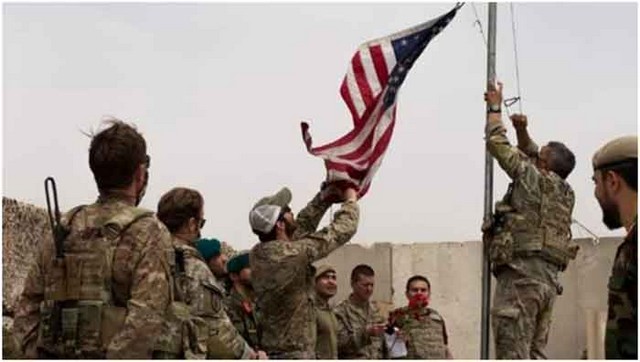
US Jews Are Turning against Zionism in a ‘Surge’ — Pro-Israel Voices Lament

By Philip Weiss

19 Jun 2021 – In recent days, four pro-Israel writers have lamented that American Jews are turning against Zionism in the wake of the latest Gaza attack. Two speak of a “surge in anti-Zionism” among Jews.

In recent days, four pro-Israel writers have lamented that American Jews are turning against Zionism. Two speak of a “surge in anti-Zionism” among U.S. Jews.These writers are seeing just what I am seeing from the other side: Jews are bailing on Israel. The latest Gaza conflict, in which Israel attacked civilian targets for the fifth time in a dozen years, generated tremendous discomfort inside the American Jewish community. Many of them see that Israel has no idea about how to build a future of coexistence-and-equality with Palestinians.

“I always thought Israel was a mistake,” one associate of mine who has long supported Israel said privately.

The lamentations from four pro-Israel writers are all focused on Jewish “identity.” They say there is something wrong with how American Jews have built their social identification. That seems to me a helpful focus. Because it raises the obvious question: When did Judaism become the same thing as Zionism?

First here is David Harris of the American Jewish Committee saying in the Times of Israel that “some Jews” attacked Israel during the recent fighting.

“Some Jews seem to believe that distancing, if not detaching, themselves from any link with Israel will protect them or, at the very least, endear them to the anti-Israel, anti-Zionist mobs,” Harris writes somewhat overheatedly. “[S]ome Jews… think they can buy time or space or security by joining in the assault against Israel…”

More good news. Harris laments that during the recent conflict, some American political leaders “who purport to be friends of the pro-Israel community, were missing in action or resorting to whispered comments for fear they could otherwise potentially jeopardize their careers.” I bet he is talking about Chuck Schumer.

So things have gotten worse for Harris since 2017 when he was upset about young Jews’ disaffection with Israel. “Where did we go wrong in our homes and our schools?” Now it’s the older Jews who are turning…

And it’s a matter of Jewish identity for Harris: “affirming Jewish identity, Zionism, and pro-Israelism.”

Natan Sharansky and Gil Troy are even angrier/more despairing in Tablet. They describe a “surge in anti-Zionism” inside the Jewish community during the recent conflict. And they call these Jews “un-Jews” — a disgusting term.

But a lot of their trendspotting is spot-on. They point to a May 22 statement by Jewish and Israel studies scholars” that said Zionism reflects “ethnonationalist” thinking “shaped by settler colonial paradigms” that has “contributed to unjust, enduring, and unsustainable systems of Jewish supremacy.” They also cite a CUNY Jewish Law Students’ Association statement in support the Palestinian right of return and of “an end to the ongoing Nakba.”

Troy and Sharansky say the criticism from some inside American Jewry has moved “from what Israel did to what Israel is.” That’s true. Many former Zionists believe that Israel’s brutal response to non-Jews arises from its official definition as a “Jewish state” with higher rights for Jews.

Again, this is a matter of identity. In the 90s the Jewish community embraced “Israel and Israel experiences as central Jewish-identity building tools.” Now the anti-Zionists are willfully seeking to change that identity.

They are trying to disentangle Judaism from Jewish nationalism, the sense of Jewish peoplehood, while undoing decades of identity-building. In repudiating Israel and Zionism, hundreds of Jewish Google employees rejected what they call “the conflation of Israel with the Jewish people.” The voices of inflamed Jewish opponents of Israel and Zionism are in turn amplified by a militant progressive superstructure that now has an ideological lock on the discourse in American academia, publishing, media, and the professions that formerly respected American Jewry’s Zionism-accented, peoplehood-centered constructions of Jewish identity…

Where do I sign?

Lastly, Etan Nechin is a liberal Israeli Zionist living in Brooklyn who writes in Haaretz that he welcomes the “sea change” in American coverage of the conflict, including the Human Rights Report stating that Israel practices “apartheid” and the “mainstreaming U.S. media coverage of the Sheikh Jarrah protests.”

And yet Nechin is dismayed by “today’s rush to a wholesale critique of Israel” by leftwing Jews who have turned against the idea of a Jewish state. He says these Jews are detached from the Israeli experience and given to glib answers — such as support for Boycott, Divestment and Sanctions (or BDS), or the idea “that one state is the only morally acceptable solution.”

Nechin attacks Peter Beinart for his advocacy for one democratic state and “self-styled activist Rafael Mimoun’s Washington Post op-ed, ‘Zionism cannot produce a just peace. Only external pressure can end the Israeli apartheid.’” It’s an issue of identity for Nechin: Privileged, solipsistic writers have put criticizing Israel at the center of their identities and cut themselves off from the leftwing discussion inside Israel.

“Now should be an obvious opportunity for the U.S. Jewish left to talk to the Israeli left and not only at it.”

My answer to that is that the American left Jewish and non-Jewish is in close contact with the oppressed population in Israel/Palestine — taking their cues from Palestinians about the nonviolent pressure we can put on an apartheid society. It is a lot like freedom riders and solidarity activists from the north who worked with the civil rights movement in the south against Jim Crow.

Yet all these articles are good signs, of a war inside American Jewry over Zionism.

Over the last 30 years or so, the American Jewish establishment decreed that Jewish identity means supporting Israel, that miracle of “Jewish peoplehood”. This was an instrumental belief; the Israel lobby has buoyed Israel through the settlement/apartheid years.

It was a successful imposition in that these leaders now believe the delusion so thoroughly that they can maintain with utter sincerity that when someone criticizes Israel, they are antisemitic.

More than 95 percent of American Jews support Israel, Batya Ungar-Sargon and Bari Weiss both affirm. Or they did once. The number is slipping before our eyes.

Philip Weiss is Founder and Co-Editor of Mondoweiss.net.

28 June 2021

Source: www.transcend.org