Just International

Dancing With The Israeli Flag In Jerusalem: What It Means And Why Palestinians Rage

By Rima Najjar

Today, June 15, 2021, Israeli Jewish supremacists are marching in East Jerusalem as Palestinians call for a ‘Day of Rage’ in response.

“We call on all free people everywhere to stand in solidarity with the Palestinian people and its just cause and end the Israeli aggression on our people and holy places,” The Committee of Islamic and National Groups stated. “Let the world know that the continuous Israeli violations in Jerusalem will remain to be the trigger, which sparks the fight.”

Palestinians see the Israeli annual raid of the Old City (including the Haram al-Sharif complex, where al-Aqsa mosque is housed) in celebration of the occupation, annexation and Judaization of Jerusalem under the flag of the Zionist Jewish state as an abomination.

In previous years, Palestinian Jerusalemites mostly cowered and shuttered their businesses and homes in the face of the rampage and hate-filled slogans of the Israeli Jewish marchers. They too took to describing the event as instigated by “far-right and anti-Palestinian activists,” rather than by the very apartheid and systemic structure of the Jewish supremacist state itself.

But this time, as Ahmed Abu Artema wrote in The Electronic Intifada on 14 May 2021, this time, it’s different:

The current escalation is distinguished by the fact that the Palestinian people demanded a response to the practices of the Israeli occupation. Hamas, in responding, is being considered heroic.

There is no public judgment or denunciation of Hamas’ decision to act, even when citizens are paying the harshest price of Israeli aggression, losing their loved ones and their homes.

It is clear in Gaza that Palestinians remain firm in their belief in resistance as the pathway to liberation from occupation.

This round of fighting is also significant because it came as a response to continuous violations in Jerusalem.

All previous rounds of Hamas escalation have been provoked by Israeli aggression on the Gaza Strip. Thus, when Jerusalem called for Gaza’s aid, and Gaza rose to defend Jerusalem, this amplified the burgeoning sense of Palestinian national unity and liberated the Palestinian resistance from its isolation in Gaza.

In effect, this time, Hamas is saying to Israeli Jews in occupied Jerusalem: If you want to worship in the Old City, leave your occupation flags at home and leave al-Aqsa alone.

Wikipedia informs us about Jerusalem Day in the following harmless Israeli PR narrative as: “an Israeli national holiday commemorating the reunification of Jerusalem and the establishment of Israeli control over the Old City in the aftermath of the June 1967 Six-Day War.” All kosher and above board.

That PR is in keeping with today’s rhetoric by Internal Security Minister Omer Bar-Lev, who issued a statement justifying the provocation of the Flag Day March through Jerusalem as, of all things, a democratic act!

“In a democracy it is allowed and important to demonstrate for all types of causes as long as it is within the confines of the law. We will hold a police assessment about the events and we will operate according to the recommendations of the police.”

For Palestinians, the rampaging herds of Jewish youth annually coursing through their streets shouting “Death to Arabs” are a far cry from what Bar-Lev is suggesting — that they represent a far-right racist group, like the KKK in the US, who have the right to freedom of speech in a democracy. What he is obscuring is the fact that Israel, as a state from top to bottom, is a Jewish supremacist colonial-settler state whose reason and strategy for existing is exactly that of these rampaging hoards.

To Palestinians, this march through Jerusalem means that “opportunities” continue to open up in Israel for “a lasting and radical solution of the most vexing problem of the Jewish state” — the Palestinian population.

Consider this:

On this day in 1948, future Israeli Prime Minister Sharett exulted to World Zionist Organization head Goldman on Israel’s successful ethnic cleansing: “the most spectacular event in the contemporary history of Palestine…is the wholesale evacuation of its Arab population…The opportunities opened up by the present reality for a lasting and radical solution of the most vexing problem of the Jewish state, are so far-reaching, as to take one’s breath away. The reversion to the status quo ante is unthinkable”, i.e. the refugees would not be allowed to return.

What we’re seeing here is the rise of a nakedly genocidal regime in Israel, one that is identical and faithful to its fundamental Zionist roots. And as a friend commented on Facebook: “This is going to go from horrible to a level of atrocious we can’t imagine. And thus makes stepping up the resistance even more imperative.”

Palestinian rage is righteous. It ought to be clear to the world now what and who “the obstacle to peace” is and has always been. This remarkable Palestinian uprising may have been sparked by the Sheikh Jarrah expulsions, but it has radiated across all of Palestine and beyond.

__________________

Rima Najjar is a Palestinian whose father’s side of the family comes from the forcibly depopulated village of Lifta on the western outskirts of Jerusalem and whose mother’s side of the family is from Ijzim, south of Haifa.

16 June 2021

Source: countercurrents.org

After Far-Right Marchers Chant ‘Death to Arabs,’ New Israeli Government Bombs Gaza

By Jake Johnson

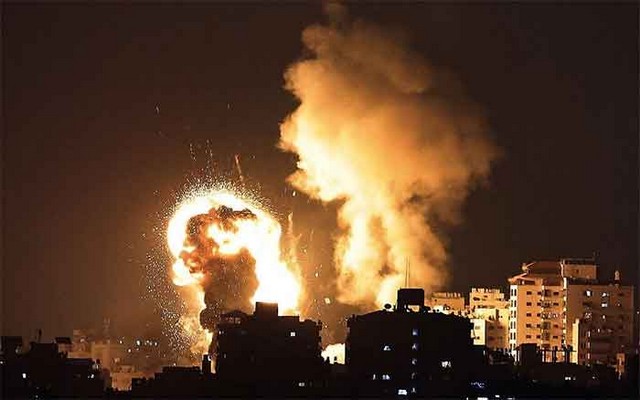
Just hours after far-right marchers chanted “Death to Arabs!” during a demonstration in the streets of Jerusalem, Israeli war planes bombarded the occupied Gaza Strip early Wednesday morning in the first series of airstrikes launched by the new government of Prime Minister Naftali Bennett, a former IDF officer who once boasted that he has “killed a lot of Arabs.”

While initial reports indicated that no Palestinians were killed in the new bombing campaign, the air raid intensified fears of a fresh wave of violence by the Israeli government just weeks after a tenuous cease-fire agreement paused Israel’s deadly 11-day assault on Gaza last month, which killed more than 240 people.

The Israeli military characterized the latest airstrikes as retaliation for “incendiary balloons” released into Israel from the Gaza Strip. The balloons reportedly caused at least ten fires in Israel.

“Homemade fire balloons versus U.S. bombs. Is there a better example of the disproportionate use of force?” asked Ariel Gold, national co-director of the anti-war organization CodePink.

Abu Malek, whom the Associated Press identified as “one of the young men launching the balloons,” said the incendiary objects were released into Israel in response to a far-right, government-sanctioned march through Jerusalem, where demonstrators rallied alongside several members of the Israeli Knesset and chanted “Death to Arabs!”

Israeli police fired rubber bullets at Palestinians who tried to disrupt the march, which reached the main entrance to the Old City’s Muslim quarter.

“This is a genocidal chant. Let’s call it what it is,” tweeted U.S. Rep. Jamaal Bowman (D-N.Y.). “I represent many within the Jewish community who disavow and condemn this hateful language. So why does only a small portion of our Congress?”

Rep. Rashida Tlaib (D-Mich.), the first Palestinian-American woman ever elected to the U.S. Congress, said that “after racist and violent ‘death to Arabs’ marches earlier today in Jerusalem, children in Gaza are being woken by bombs in the middle of the night.”

“Israel’s government doesn’t value Palestinian lives,” Tlaib added. “It has managed a decades-long ethnic cleansing project, funded by the U.S.”

The Israeli airstrikes came just over 48 hours after the country’s parliament narrowly voted to replace former Prime Minister Benjamin Netanyahu with Bennett, a change that defenders of Palestinian rights did not applaud given the latter’s record and policy stances, which include support for annexing the occupied West Bank in violation of international law.

“While being hailed by many as the opportunity for a fresh start, Naftali Bennett is at best a continuation of Netanyahu’s policies and at worst an ideologue whose positions are to the right of Netanyahu’s,” Gold of CodePink wrote for Common Dreams on Monday.

Originally published in CommonDreams

16 June 2021

Source: countercurrents.org

Inside the Pentagon’s Secret Undercover Army

By William M. Arkin

17 May 2021 – The largest undercover force the world has ever known is the one created by the Pentagon over the past decade. Some 60,000 people now belong to this secret army, many working under masked identities and in low profile, all part of a broad program called “signature reduction.” The force, more than ten times the size of the clandestine elements of the CIA, carries out domestic and foreign assignments, both in military uniforms and under civilian cover, in real life and online, sometimes hiding in private businesses and consultancies, some of them household name companies.

The unprecedented shift has placed an ever greater number of soldiers, civilians, and contractors working under false identities, partly as a natural result in the growth of secret special forces but also as an intentional response to the challenges of traveling and operating in an increasingly transparent world. The explosion of Pentagon cyber warfare, moreover, has led to thousands of spies who carry out their day-to-day work in various made-up personas, the very type of nefarious operations the United States decries when Russian and Chinese spies do the same.

Newsweek’s exclusive report on this secret world is the result of a two-year investigation involving the examination of over 600 resumes and 1,000 job postings, dozens of Freedom of Information Act requests, and scores of interviews with participants and defense decision-makers. What emerges is a window into not just a little-known sector of the American military, but also a completely unregulated practice. No one knows the program’s total size, and the explosion of signature reduction has never been examined for its impact on military policies and culture. Congress has never held a hearing on the subject. And yet the military developing this gigantic clandestine force challenges U.S. laws, the Geneva Conventions, the code of military conduct and basic accountability.

The signature reduction effort engages some 130 private companies to administer the new clandestine world. Dozens of little known and secret government organizations support the program, doling out classified contracts and overseeing publicly unacknowledged operations. Altogether the companies pull in over $900 million annually to service the clandestine force—doing everything from creating false documentation and paying the bills (and taxes) of individuals operating under assumed names, to manufacturing disguises and other devices to thwart detection and identification, to building invisible devices to photograph and listen in on activity in the most remote corners of the Middle East and Africa.

Special operations forces constitute over half the entire signature reduction force, the shadow warriors who pursue terrorists in war zones from Pakistan to West Africa but also increasingly work in unacknowledged hot spots, including behind enemy lines in places like North Korea and Iran. Military intelligence specialists—collectors, counter-intelligence agents, even linguists—make up the second largest element: thousands deployed at any one time with some degree of “cover” to protect their true identities.

The newest and fastest growing group is the clandestine army that never leaves their keyboards. These are the cutting-edge cyber fighters and intelligence collectors who assume false personas online, employing “nonattribution” and “misattribution” techniques to hide the who and the where of their online presence while they search for high-value targets and collect what is called “publicly accessible information”—or even engage in campaigns to influence and manipulate social media. Hundreds work in and for the NSA, but over the past five years, every military intelligence and special operations unit has developed some kind of “web” operations cell that both collects intelligence and tends to the operational security of its very activities.

In the electronic era, a major task of signature reduction is keeping all of the organizations and people, even the automobiles and aircraft involved in the clandestine operations, masked. This protective effort entails everything from scrubbing the Internet of telltale signs of true identities to planting false information to protect missions and people. As standard unforgettable identification and biometrics have become worldwide norms, the signature reduction industry also works to figure out ways of spoofing and defeating everything from fingerprinting and facial recognition at border crossings, to ensuring that undercover operatives can enter and operate in the United States, manipulating official records to ensure that false identities match up.

Just as biometrics and “Real ID” are the enemies of clandestine work, so too is the “digital exhaust” of online life. One major concern of counter-terrorism work in the ISIS age is that military families are also vulnerable—another reason, participants say, to operate under false identities. The abundance of online information about individuals (together with some spectacular foreign hacks) has enabled foreign intelligence services to better unmask fake identities of American spies. Signature reduction is thus at the center of not only counter-terrorism but is part of the Pentagon’s shift towards great power competition with Russia and China—competition, influence, and disruption “below the level of armed conflict,” or what the military calls warfare in the “Gray Zone,” a space “in the peace-conflict continuum.”

One recently retired senior officer responsible for overseeing signature reduction and super-secret “special access programs” that shield them from scrutiny and compromise says that no one is fully aware of the extent of the program, nor has much consideration been given to the implications for the military institution. “Everything from the status of the Geneva Conventions—were a soldier operating under false identity to be captured by an enemy—to Congressional oversight is problematic,” he says. He worries that the desire to become more invisible to the enemy not just obscures what the United States is doing around the world but also makes it more difficult to bring conflicts to a close. “Most people haven’t even heard of the term signature reduction let alone what it creates,” he says. The officer spoke on condition of anonymity because he is discussing highly classified matters.

The secret life of Jonathan Darby

Every morning at 10:00 a.m., Jonathan Darby embarks on his weekly rounds of mail call. Darby is not his real name, but it is also not the fake name on his Missouri driver’s license that he uses to conduct his work. And the government car he drives, one of a fleet of over 200,000 federal vehicles owned by the General Services Administration, is also not registered in his real or his fake name, and nor are his magnetically attached Maryland state license plates really for his car, nor are they traceable back to him or his organization. Where Darby works and the locations he visits are also classified.

Darby’s retired from the Army, and he asks that neither his real nor his cover name be used. He served for 20 years in counterintelligence, including two African assignments where he operated in low profile in Ethiopia and Sudan, masquerading as an expat businessman. Now he works for a Maryland-based signature reduction contractor that he asked Newsweek not to identify.

As Darby makes his rounds to some 40 or so post offices and storefront mailbox stores in the DC Metropolitan area, he picks up a trunk full of letters and packages, mailing a similar number from rural addresses. Back at the office, he sorts through the take, delivering bills to the finance people and processing dozens of personal and business letters mailed from scores of overseas locations. But his main task is logging and forwarding the signature reduction “mechanisms” as they are called, passports and State driver’s licenses for people who don’t exist, and other papers—bills, tax documents, organization membership cards—that form the foundation of fake identities.

To register and double-check the authenticity of his daily take, Darby logs into two databases, one the Travel and Identity Document database, the intelligence community’s repository of examples of 300,000 genuine, counterfeit and altered foreign passports and visas; and the other the Cover Acquisition Management System, a super-secret register of false identities where the “mechanisms” used by clandestine operators are logged. For false identities traveling overseas, Darby and his colleagues also have to alter databases of U.S. immigration and customs to ensure that those performing illicit activities can return to the United States unmolested.

For identity verification, Darby’s unit works with secret offices at Homeland Security and the State Department as well as almost all 50 states in enrolling authentic “mechanisms” under false names. A rare picture into this world came in April 2013 when an enterprising reporter at Northwest Public Broadcasting did a story suggesting the scale of this secret program. His report revealed that the state of Washington alone had provided hundreds of valid state driver licenses in fictitious names to the federal government. The existence of the “confidential driver license program,” as it was called, was unknown even to the governor.

Before the Internet, Darby says—before a local cop or a border guard was connected to central databases in real time—all an operative needed to be “undercover” was an ID with a genuine photo. These days, however, especially for those operating under deep cover, the so-called “legend” behind an identity has to match more than just a made-up name. Darby calls it “due diligence”: the creation of this trail of fake existence. Fake birthplaces and home addresses have to be carefully researched, fake email lives and social media accounts have to be created. And those existences need to have corresponding “friends.” Almost every individual unit that operates clandestinely—special operations, intelligence collections, or cyber—has a signature reduction section, mostly operated by small contractors, conducting due diligence. There they adhere to what Darby calls the six principles of signature reduction: credibility, compatibility, realism, supportability, verity and compliance.

Compliance is a big one, Darby says, especially because of the world that 9/11 created, where checkpoints are common and nefarious activity is more closely scrutinized. To keep someone covert for real, and to do so for any period of time, requires a time consuming dance that not only has to tend to someone’s operational identity but also maintain their real life back home. As Darby explains it, this includes clandestine bill paying but also working with banks and credit card security departments to look the other way as they search for identity fraud or money laundering. And then, signature reduction technicians need to ensure that real credit scores are maintained—and even real taxes and Social Security payments are kept up to date—so that people can go back to their dormant lives when their signature reduction assignments cease.

Darby’s unit, originally called the Operational Planning and Travel Intelligence Center, is responsible for overseeing much of this (and to do so it operates the Pentagon’s largest military finance office), but documentation—as important as it is—is only one piece of the puzzle. Other organizations are responsible for designing and manufacturing the custom disguises and “biometric defeat” elements to facilitate travel. Darby says this is where all the Special Access Programs are. SAPs, the most secret category of government information, protect the methods used—and the clandestine capabilities that exist—to manipulate foreign systems to get around seemingly foolproof safeguards including fingerprinting and facial recognition.

‘Signature reduction’ is a term of art

Numerous signature reduction SAPs, programs with names like Hurricane Fan, Island Hopper and Peanut Chocolate, are administered by a shadowy world of secret organizations that service the clandestine army—the Defense Programs Support Activity, Joint Field Support Center, Army Field Support Center, Personnel Resources Development Office, Office of Military Support, Project Cardinals, and the Special Program Office.

Befitting how secret this world is, there is no unclassified definition of signature reduction. The Defense Intelligence Agency—which operates the Defense Clandestine Service and the Defense Cover Office—says that signature reduction is a term of art, one that “individuals might use to … describe operational security (OPSEC) measures for a variety of activities and operations.” In response to Newsweek queries that point out that dozens of people have used the term to refer to this world, DIA suggests that perhaps the Pentagon can help. But the responsible person there, identified as a DOD spokesperson, says only that “as it relates to HUMINT operations”—meaning human intelligence— signature reduction “is not an official term” and that it is used to describe “measures taken to protect operations.”

Another senior former intelligence official, someone who ran an entire agency and asks not to be named because he is not authorized to speak about clandestine operations, says that signature reduction exists in a “twilight” between covert and undercover. The former, defined in law, is subject to presidential approval and officially belongs to the CIA’s National Clandestine Service. The latter connotes strictly law enforcement efforts undertaken by people with a badge. And then there is the Witness Protection Program, administered by the U.S. Marshals Service of the Justice Department, which tends to the fake identities and lives of people who have been resettled in exchange for their cooperation with prosecutors and intelligence agencies.

The military doesn’t conduct covert operations, the senior former official says, and military personnel don’t fight undercover. That is, except when they do, either because individuals are assigned—”sheep dipped”—to the CIA, or because certain military organizations, particularly those of the Joint Special Operations Command, operate like the CIA, often alongside them in covert status, where people who depend on each other for their lives don’t know each other’s real names. Then there are an increasing number of government investigators—military, FBI, homeland security and even state officials—who are not undercover per se but who avail themselves of signature reduction status like fake IDs and fake license plates when they work domestically, particularly when they are engaged in extreme vetting of American citizens of Arab, South Asian, and increasingly African background, who have applied for security clearances.

‘Get Smart’?

In May 2013, in an almost comical incident more reminiscent of “Get Smart” than skilled spying, Moscow ordered a U.S. embassy “third secretary” by the name of Ryan Fogle to leave the country, releasing photos of Fogle wearing an ill-fitting blond wig and carrying an odd collection of seemingly amateurish paraphernalia—four pairs of sunglasses, a street map, a compass, a flashlight, a Swiss Army knife and a cell phone—so old, one article said, it looked like it had “been on this earth for at least a decade.”

The international news media had a field day, many retired CIA people decrying the decline of tradecraft, most of the commentary opining how we’d moved on from the old world of wigs and fake rocks, a reference to Great Britain admitting just a year earlier that indeed it was the owner of a fake rock and its hidden communications device, another discovery of Russian intelligence in Moscow.

Six years later, another espionage case hit the news, this time when a jury sent former American military intelligence officer Kevin Patrick Mallory to 20 years in prison for conspiring to sell secrets to China. There was nothing particularly unique about the Mallory case, the prosecution making its own show of presenting the jury with a collection of wigs and fake mustaches looking like Halloween costumes, the whole thing seemingly another funny episode of clumsy disguise.

And yet, says Brenda Connolly (not her real name), one would be naïve to laugh too hard, for both cases provide a peek into the new tricks of the trade and the extreme secrecy that hides them. Connolly started her engineering career at the Directorate of Science and Technology at the CIA and now works for a small defense contractor that produces the gizmos—think “Q” in the James Bond movies, she says—for signature reduction operations.

That “ancient” Nokia phone carried by Ryan Fogle, she says, was nothing of the sort, the innocuous outsides concealing what she calls a “covert communications” device inside. Similarly, entered in evidence in Mallory case was a Samsung phone given to him by Chinese intelligence that was so sophisticated that even when the FBI cloned it electronically, they could not find a hidden partition used to store secrets and one that Mallory ultimately had to reveal to them.

Lost in the spy-vs-spy theater of both cases were other clues of modern signature reduction, Connolly says. Fogle also carried an RFID shield, a radio frequency identification blocking pouch intended to prevent electronic tracking. And Mallory had vials of fake blood provided by China; Connolly would not reveal what it would be used for.

Like many people in this world, Connolly is a connoisseur and curator. She can talk for hours about the broadcasts that used to go out from the Soviet Union—but also were transmitted from Warrenton, Virginia—female voices reciting random numbers and passages from books that agents around the world would pick up on their shortwave radios and match to prearranged codes.

But then Internet cafes and online backdoors became the clandestine channels of choice for covert communications, largely replacing shortwave—until the surveillance technologies (especially in autocratic countries) caught up and intelligence agencies acquired an ability not only to detect and intercept internet activity but also to intercept every keystroke of activity on a remote keyboard. That ushered in today’s world of covert communications or COVCOMM, as insiders call it. These are very special encryption devices seen in the Fogle and Mallory cases, but also dozens of different “burst mode” transmitters and receivers secreted in everyday objects like fake rocks. All an agent or operator needs to activate communications with these COVCOMMs in some cases is to simply walk by a target receiver (a building or fake rock) and the clandestine messages are encrypted and transmitted back to special watch centers.

“And who do you think implants those devices?” Connolly asks rhetorically. “Military guys, special ops guys working to support even more secretive operations.” Connolly talks about heated fabrics that make soldiers invisible to thermal detection, electric motorcycles that can silently operate in the roughest terrain, even how tens of feet of wires are sown into “native” clothing, the South Asian shalwar kameez, the soldiers themselves then becoming walking receivers, able to intercept nearby low-power radios and even cell phone signals.

Fake hands, fake faces

Wigs. Covert communications devices. Fake rocks. In our world of electronic everything, where everything becomes a matter of record, where you can’t enter a parking garage without the license plate being recorded, where you can’t check in for a flight or a hotel without a government issued ID, where you can’t use a credit card without the location being captured, how can biometrics can be defeated? How can someone get past fingerprint readers?

In 99 out of 100 cases, the answer is: there is no need to. Most signature reduction soldiers travel under real names, exchanging operational identities only once on the ground where they operate. Or they infiltrate across borders in places like Pakistan and Yemen, conducting the most dangerous missions. These signature reduction missions are the most highly sensitive and involve “close in” intelligence collection or the use of miniaturized enemy tracking devices, each existing in their own special access programs—missions that are so sensitive they have to be personally approved by the Secretary of Defense.

For the one percent, though, for those who have to make it through passport control under false identities, there are various biometrics defeat systems, some physical and some electronic. One such program was alluded to in a little noticed document dump published by Wikileaks in early 2017 and called “Vault 7”: over 8,000 classified CIA tools used in the covert world of electronic spying and hacking. It is called ExpressLane, where U.S. intelligence has embedded malware into foreign biometrics and watchlist systems, allowing American cyber spies to steal foreign data.

An IT wizard working for Wikileaks in Berlin says the code with ExpressLane suggests that the United States can manipulate these databases. “Imagine for a moment that someone is going through passport control,” he says, hesitant to use his real name because of fear of indictment in the United States. “NSA or the CIA is tasked to corrupt—change—the data on the day the covert asset goes through. And then switch it back. It’s not impossible.”

Another source pointed to a small rural North Carolina company in the signature reduction industry, mostly in the clandestine collection and communications field. In the workshop and training facility where they teach operators how to fabricate secret listening devices into everyday objects, they are at the cutting edge, or so their promotional materials say, a repository for molding and casting, special painting, and sophisticated aging techniques.

This quiet company can transform any object, including a person, as they do in Hollywood, a “silicon face appliance” sculpted to perfectly alter someone’s looks. They can age, change gender, and “increase body mass,” as one classified contract says. And they can change fingerprints using a silicon sleeve that so snugly fits over a real hand it can’t be detected, embedding altered fingerprints and even impregnated with the oils found in real skin. Asked whether the appliance is effective, one source, who has gone through the training, laughs. “If I tell you, I’ll have to kill you.”

In real life, identity theft (mostly by criminals’ intent on profit) remains an epidemic that affects everyone, but for those in the intelligence and counter-terrorism worlds, the enemy is also actively engaged in efforts to compromise personal information. In 2015, the Islamic State posted the names, photos and addresses of over 1,300 U.S. military personnel, instructing supporters to target and kill the identified individuals. The FBI said that the release was followed by suspected Russian hackers who masqueraded as members of ISIS and threatened military families through Facebook. “We know everything about you, your husband and your children,” one menacing message said.

Counterintelligence and OPSEC officials began a large-scale effort to inform those affected but also to warn military personnel and their families to better protect their personal information on social media. The next year, ISIS released 8,318 target names: the largest-ever release until it was topped by 8,785 names in 2017.

It was revealed that military personnel sharing location information in their fitness devices were apparently revealing the locations of sensitive operations merely by jogging and sharing their data. “The rapid development of new and innovative information technologies enhances the quality of our lives but also poses potential challenges to operational security and force protection,” U.S. Central Command said in a statement at the time to the Washington Post.

Then came the DNA scare, when Adm. John Richardson, then chief of naval operations, warned military personnel and their families to stop using at-home ancestry DNA test kits. “Be careful who you send your DNA to,” Richardson said, warning that scientific advancements would be able to exploit the information, creating more and more targeted biological weapons in the future. And indeed in 2019, the Pentagon officially advised military personnel to steer clear of popular DNA services. “Exposing sensitive genetic information to outside parties poses personal and operational risks to Service members,” said the memo, first reported by Yahoo news.

“We’re still in the infancy of our transparent world,” says the retired senior officer, cautioning against imagining that there is some “identity gap” similar to the “bomber gap” of the Cold War. “We’re winning this war, including on the cyber side, even if secrecy about what we are doing makes the media portrayal of the Russians again look like they are ten feet tall.”

He admits that processing big data in the future will likely further impinge on everyone’s clandestine operations, but he says the benefits to society, even narrowly in just making terrorist activity and travel that much more difficult, outweigh the difficulties created for military operational security. The officer calls the secrecy legitimate but says that the Defense Department leadership has dropped the ball in recognizing the big picture. The military services should be asking more questions about the ethics, propriety and even legality of soldiers being turned into spies and assassins, and what this means for the future.

Still, the world of signature reduction keeps growing: evidence, says the retired officer, that modern life is not as transparent as most of us think.
_________________

William M. Arkin has been working in the field of national security for almost 50 years, as an Army intelligence analyst, activist, author, journalist, academic and consultant.

14 June 2021

Source: www.transcend.org

Julian Assange and the Collapse of the Rule of Law

By Chris Hedges

Chris Hedges gave this talk at a rally on 10 June 2021 night in New York City in support of Julian Assange. John and Gabriel Shipton, Julian’s father and brother, also spoke at the event, which was held at The People’s Forum.

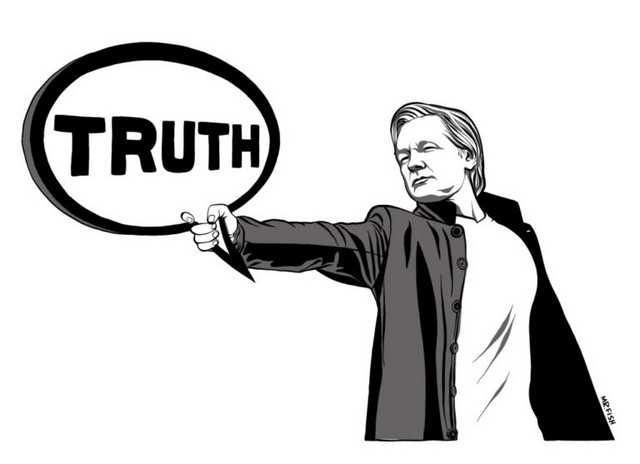
11 Jun 2021 – A society that prohibits the capacity to speak in truth extinguishes the capacity to live in justice.

This why we are here tonight. Yes, all of us who know and admire Julian decry his prolonged suffering and the suffering of his family. Yes, we demand that the many wrongs and injustices that have been visited upon him be ended. Yes, we honor him up for his courage and his integrity. But the battle for Julian’s liberty has always been much more than the persecution of a publisher. It is the most important battle for press freedom of our era. And if we lose this battle, it will be devastating, not only for Julian and his family, but for us.

Tyrannies invert the rule of law. They turn the law into an instrument of injustice. They cloak their crimes in a faux legality. They use the decorum of the courts and trials, to mask their criminality. Those, such as Julian, who expose that criminality to the public are dangerous, for without the pretext of legitimacy the tyranny loses credibility and has nothing left in its arsenal but fear, coercion and violence.

The long campaign against Julian and WikiLeaks is a window into the collapse of the rule of law, the rise of what the political philosopher Sheldon Wolin calls our system of inverted totalitarianism, a form of totalitarianism that maintains the fictions of the old capitalist democracy, including its institutions, iconography, patriotic symbols and rhetoric, but internally has surrendered total control to the dictates of global corporations.

I was in the London courtroom when Julian was being tried by Judge Vanessa Baraitser, an updated version of the Queen of Hearts in Alice-in Wonderland demanding the sentence before pronouncing the verdict. It was judicial farce. There was no legal basis to hold Julian in prison. There was no legal basis to try him, an Australian citizen, under the U.S. Espionage Act. The CIA spied on Julian in the embassy through a Spanish company, UC Global, contracted to provide embassy security. This spying included recording the privileged conversations between Julian and his lawyers as they discussed his defense. This fact alone invalidated the trial. Julian is being held in a high security prison so the state can, as Nils Melzer, the U.N. Special Rapporteur on Torture, has testified, continue the degrading abuse and torture it hopes will lead to his psychological if not physical disintegration.

The U.S. government directed, as Craig Murray so eloquently documented, the London prosecutor James Lewis. Lewis presented these directives to Baraitser. Baraitser adopted them as her legal decision. It was judicial pantomime. Lewis and the judge insisted they were not attempting to criminalize journalists and muzzle the press while they busily set up the legal framework to criminalize journalists and muzzle the press. And that is why the court worked so hard to mask the proceedings from the public, limiting access to the courtroom to a handful of observers and making it hard and at times impossible to access the trial online. It was a tawdry show trial, not an example of the best of English jurisprudence but the Lubyanka.

Now, I know many of us here tonight would like to think of ourselves as radicals, maybe even revolutionaries. But what we are demanding on the political spectrum is in fact conservative, it is the restoration of the rule of law. It is simple and basic. It should not, in a functioning democracy, be incendiary. But living in truth in a despotic system is the supreme act of defiance. This truth terrifies those in power.

The architects of imperialism, the masters of war, the corporate-controlled legislative, judicial and executive branches of government and their obsequious courtiers in the media, are illegitimate. Say this simple truth and you are banished, as many of us have been, to the margins of the media landscape. Prove this truth, as Julian, Chelsea Manning, Jeremy Hammond and Edward Snowden have by allowing us to peer into the inner workings of power, and you are hunted down and persecuted.

Shortly after WikiLeaks released the Iraq War Logs in October 2010, which documented numerous US war crimes—including video images of the gunning down of two Reuters journalists and 10 other unarmed civilians in the Collateral Murder video, the routine torture of Iraqi prisoners, the covering up of thousands of civilian deaths and the killing of nearly 700 civilians that had approached too closely to U.S. checkpoints—the towering civil rights attorneys Len Weinglass and my good friend Michael Ratner, who I would later accompany to meet Julian in the Ecuadoran Embassy, met with Julian in a studio apartment in Central London. Julian’s personal bank cards had been blocked. Three encrypted laptops with documents detailing US war crimes had disappeared from his luggage in route to London. Swedish police were fabricating a case against him in a move, Ratner warned, that was about extraditing Julian to the United States.

“WikiLeaks and you personally are facing a battle that is both legal and political,” Weinglass told Assange. “As we learned in the Pentagon Papers case, the US government doesn’t like the truth coming out. And it doesn’t like to be humiliated. No matter if it’s Nixon or Bush or Obama, Republican or Democrat in the White House. The US government will try to stop you from publishing its ugly secrets. And if they have to destroy you and the First Amendment and the rights of publishers with you, they are willing to do it. We believe they are going to come after WikiLeaks and you, Julian, as the publisher.”

“Come after me for what?” asked Julian.

“Espionage,” Weinglass continued. “They’re going to charge Bradley Manning with treason under the Espionage Act of 1917. We don’t think it applies to him because he’s a whistleblower, not a spy. And we don’t think it applies to you either because you are a publisher. But they are going to try to force Manning into implicating you as his collaborator.”

“Come after me for what?

That is the question.

They came after Julian not for his vices, but his virtues.

They came after Julian because he exposed the more than 15,000 unreported deaths of Iraqi civilians; because he exposed the torture and abuse of some 800 men and boys, aged between 14 and 89, at Guantánamo; because he exposed that Hillary Clinton in 2009 ordered US diplomats to spy on U.N. Secretary General Ban Ki Moon and other U.N. representatives from China, France, Russia, and the UK, spying that included obtaining DNA, iris scans, fingerprints, and personal passwords, part of the long pattern of illegal surveillance that included the eavesdropping on UN Secretary General Kofi Annan in the weeks before the US-led invasion of Iraq in 2003; because he exposed that Barack Obama, Hillary Clinton and the CIA orchestrated the June 2009 military coup in Honduras that overthrew the democratically elected president Manuel Zelaya, replacing it with a murderous and corrupt military regime; because he exposed that George W. Bush, Barack Obama and General David Petraeus prosecuted a war in Iraq that under post-Nuremberg laws is defined as a criminal war of aggression, a war crime, that they authorized hundreds of targeted assassinations, including those of U.S. citizens in Yemen, and that they secretly launched missile, bomb, and drone attacks on Yemen, killing scores of civilians; because he exposed that Goldman Sachs paid Hillary Clinton $657,000 to give talks, a sum so large it can only be considered a bribe, and that she privately assured corporate leaders she would do their bidding while promising the public financial regulation and reform; because he exposed the internal campaign to discredit and destroy British Labour Party leader Jeremy Corbyn by members of his own party; because he exposed how the hacking tools used by the CIA and the National Security Agency permits the wholesale government surveillance of our televisions, computers, smartphones and anti-virus software, allowing the government to record and store our conversations, images and private text messages, even from encrypted apps.

Julian exposed the truth. He exposed it over and over and over until there was no question of the endemic illegality, corruption and mendacity that defines the global ruling elite. And for these truths they came after Julian, as they have come after all who dared rip back the veil on power. “Red Rosa now has vanished too. …” Bertolt Brecht wrote after the German socialist Rosa Luxemburg was murdered. “She told the poor what life is about, And so the rich have rubbed her out.”

We have undergone a corporate coup, where the poor and working men and women are reduced to joblessness and hunger, where war, financial speculation and internal surveillance are the only real business of the state, where even habeas corpus no longer exists, where we, as citizens, are nothing more than commodities to corporate systems of power, ones to be used, fleeced and discarded. To refuse to fight back, to reach out and help the weak, the oppressed and the suffering, to save the planet from ecocide, to decry the domestic and international crimes of the ruling class, to demand justice, to live in truth, is to bear the mark of Cain. Those in power must feel our wrath, and this means constant acts of mass civil disobedience, it means constant acts of social and political disruption, for this organized power from below is the only power that will save us and the only power that will free Julian. Politics is a game of fear. It is our moral and civic duty to make those in power very, very afraid.

The criminal ruling class has all of us locked in its death grip. It cannot be reformed. It has abolished the rule of law. It obscures and falsifies the truth. It seeks the consolidation of its obscene wealth and power. And so, to quote the Queen of Hearts, metaphorically of course, I say, “Off with their heads.”

Chris Hedges is a Pulitzer Prize–winning journalist who was a foreign correspondent for fifteen years for The New York Times, where he served as the Middle East Bureau Chief and Balkan Bureau Chief for the paper.

14 June 2021

Source: www.transcend.org
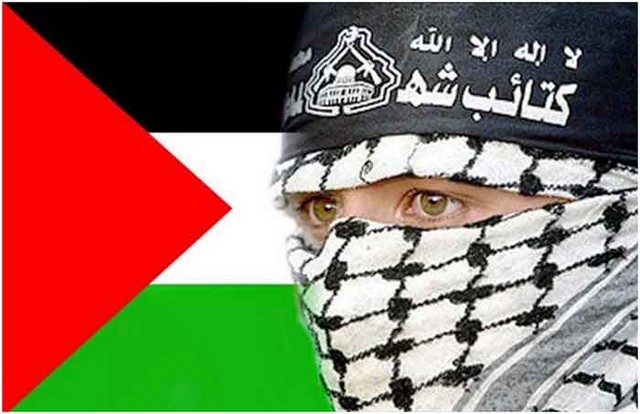
IDF Operation ‘Guardian of the Walls’: Prelude, Aftermath, Prospects

By Richard Falk

7 Jun 2021 – This consists of four journalistic pieces that were initially published in April and May leading up to the fourth in the sequence of massive military operations against Gaza in each instance falsely presented as ‘defensive.’ These operations resulted in large casualties and were further justified as ‘counter-terrorism’ because the alleged target was Hamas, a terrorist organization. Somehow, this latest attack on Gaza was more fairly reported in the Western press, and let to the most convincing show of Palestinian unity in a period of crisis. It also was an event that weakened Netanyahu’s hold on power, not because of objections to his hardline policies, but due to distaste for his personality and character, and a coalition is poised to form a new government awaiting only confirmation by the Knesset on June 9th.

*****************************************

IDF Operation ‘Guardian of the Walls’: Prelude, Aftermath, Prospects

Responses to Questions from Daniel Falcone (May 11, 2021)

1) Why is it that American politicians cannot say the words ‘Israeli apartheid’?

As an international crime, apartheid is a collective crime against a distinct race, that is one step down in severity from genocide. There is a major distinction. As the South African antecedent experience illustrates, apartheid is reversible, although the material and psychological harms suffered by its victims is not. As death is the core of genocide, it is as a practical matter irreversible, and its legacy lingers as the instance of the Holocaust illustrate. In fact, Israeli apartheid may be partly understood as an unintended consequence of the Holocaust. Israel probably could not have been successfully established without widespread international support, which would not have been so forthcoming without the shame of liberal guilt of the West in doing so little to oppose the extreme antisemitism and racism of Nazi Germany, including closing their doors to Jewish refugees.

In any event, the Palestinian people were made to pay the price of Nazi wrongdoing in the form of the imposition of a non-Palestinian state in their homeland at the very time when European colonialism was unraveling elsewhere in the world. In such a setting it was to be expected that Palestinian society would resist, and that Israel’s security would depend on effective means of repression. Such an interaction was accentuated by the characteristics of the Zionist Project that sought a Jewish state that was governed in accordance with democratic principles. Given the premise of such ethnic politics, this induced an ethos of ethnic cleansing to ensure stable Jewish demographic control of the state in what had been Palestine. It also meant discriminatory treatment of immigration and residency, denying Palestinians basic rights while giving Jews many privileges based on identity alone. Such discrimination is crudely exposed in the grant to Jews worldwide of an unrestricted right of return and immediate access to Israeli citizenship could

American mainstream political arenas and media are frightened and intimidated by the prospect of being labeled as antisemitic. The widely relied upon IHRA (International Holocaust Remembrance Anniversary) definition of antisemitism would easily result in any allegation of apartheid being treated as proof positive of antisemitism. This is so, despite respected studies concluding that Israel’s practices and policies satisfy the definition of apartheid as set forth in the 1973 UN International Convention on Suppression and Punishment of the Crime of Apartheid. And despite the Rome Statute (2002), the treaty governing the operations of the International Criminal Court regarding in Article 7(h) apartheid as one type of crime against humanity.

This inhibition on describing apartheid as ‘apartheid’ has been eroded by two 2021 reports confirming the apartheid allegation. The first report is by B’Tselem, the leading Israeli human rights NGO, that characterizes Israeli apartheid as the imposition of Jewish dominance upon the Palestinian people in the territory governed by Israel, that is, from the Jordan River to the Mediterranean Sea that encompasses both Israel proper and the Occupied Palestinian Territories of the West Bank, Gaza, and East Jerusalem. (This is Apartheid, 12 Jan. 2021) The second report by Human Rights Watch reaches the apartheid conclusion after an exhaustive examination of systematic Israeli racial discrimination and reliance on inhuman measures resulting in Palestinian victimization in furtherance of the Zionist Project of maintaining a Jewish state. (A Threshold Crossed: Israeli Authorities and the Crimes of Apartheid and Persecution, 27 April 2021) Back in 2017 I co-authored a report with Virginian Tilley, under UN auspices (Economic and Social Commission for West Asia or ESCWA) that investigated the apartheid allegation and concluded that Israeli practices and policies were an instance of apartheid, which we felt was best understood in relation to the Palestinian people (including refugees and exiles) rather than confined to territory. (Israeli Practices Toward the Palestinian People and the Question of Apartheid, March 2017)

2) How, in your estimation, will Biden respond to the “Jerusalem crisis?”

On the basis of past behavior and the initial statements of close advisors, it is most likely that Biden visors will call for calm, while making one-sided and unconditional criticisms of the rockets and artillery shells from Gaza fired by Hamas and Islamic Jihad as ‘provocations’ and ‘escalations’ of the underlying conflict. The one-sidedness is almost certain to be underscored by refraining from any criticism of Israeli responses, which are almost certain to be disproportionate in terms of casualties, devastation, and firepower.

The one-sidedness will be further highlighted by the absence of direct reference to Israeli provocations in Jerusalem such as right-wing settlers marching through East Jerusalem shouting ‘death to the Arabs’ or municipal plans to expel a series of Palestinian families from their homes in the Sheikh Jarrah neighborhood of East Jerusalem on the basis of flimsy legal pretexts. The admitted goal is to prepare the way for further Jewish settlements, which is regarded by almost every Palestinian as a continuation of the ethnic cleansing that began in 1947, and has occurred periodically in 74 ensuing years. The Palestinian steadfastness (sumud) in Sheikh Jarrar is epitomized by their slogan ‘we will not be erased.”

Biden places a high priority on sustaining a bipartisan image in the conduct of foreign policy, especially with respect to Israeli policies. He has already indicated that the United States will accept Trump’s unlawful initiative of moving the U.S. Embassy to Jerusalem, will not question the unlawful annexing of the Syrian Golan Heights, and applauding the normalization agreements between Israel and Arab countries so heralded as triumphant diplomatic achievements during the last stage of the Trump presidency.

Although there is some friction from a small group of Democrats in Congress resulting from such an imbalanced approach, it is strongly endorsed by both political parties and by the powerful lobbying influence of AIPAC. Leading Biden foreign policy representatives have made clear that the $3.8 billion military aid package will not be affected by negative findings in the annual country reports of the State Department, which signals a green light for Netanyahu’s aggressive approach to relations with the Palestinians.

3) The media still repeats in the passive voice, “21 killed by Israel’s Retaliatory strikes”. Has any dimension of the press coverage improved however in your estimation?

There is a subtle change in the coverage of the liberal print media, as highlighted by the New York Times and Washington Post. Instead, of reporting only Palestinian violence as objectionable there is more of a tendency to place nominal blame for periodic crises on both parties. I regard this as conveying a distorting image of symmetrical responsibility shared equally by Palestine and Israel while overlooking the structural realities of gross inequality arising from Israeli oppression and expanding territorial claims. It is always deceptive to treat the oppressor and the oppressed as if equal. As here, the oppressor acts contrary to applicable international law and elementary morality while the oppressed is countering by exercising rights of resistance and suffering the deprivation of basic rights. Of course, the tactics of resistance should be scrutinized by reference to legal and moral constraints, but without losing sight of overwhelming structures of dominance and the far greater harm done by state violence than by the violence of resistance.

4) Just hours ago, it was reported that “Israel launches airstrikes after rockets fired from Gaza in day of escalation.” This headline conveys that the situation is somehow symmetrical and the media’s interest in maintaining a false balance. Is this a correct observation?

As my last response suggests, one of the worst flaws in liberal journalism is to treat asymmetries as if symmetrical. Such a practice has been notorious in relation to the so-called ‘peace process’ or Oslo diplomacy where the Palestinians are made to share equal responsibility with the Israelis. This is so despite Israel making clear that its acceptance of ‘peace’ with the Palestinian people depends on Palestine giving up its inalienable right of self-determination as well as claims to having its capital in Jerusalem or challenges to extensive Israeli armed settlements unlawfully established.

5) I have a friend who recently wrote, “Israel, as an ethnostate is [on the verge of] committing suicide.” This in reaction to May 7th’s headline “Palestinians, Israel police clash at Al-Aqsa mosque; 53 hurt”. What kind of political consequences do you perceive the Israelis to suffer?

There is an ambiguity in your friend’s assertion of Israel being on the verge of committing suicide. Is this because Israel is encountering difficulty in the enforcement of its claims as an ethnocracy to occupy all of the ethno-religious space? Or is it because Israel has been compelled to challenge the red line of Islamic identity, by forcibly entering Al-Aqsa Mosque during Ramadan, attacking and injuring hundreds of Muslim worshipers, thereby threatening what it sought to achieve by the normalization agreements. Time will tell.

It remains to be seen what this latest flareup will produce by way of effects. One alternative is a Third Intifada that is sustained sufficiently to uphold claims to preserve the Palestinian identity of East Jerusalem. Another alternative is for Israel to mount a massive attack on Gaza in response to the 300 rockets that have allegedly targeted Jerusalem and southern Israel in the vicinity of Ashkelon and Ashdod in recent days of a similar or greater intensity to such prior attacks as in 2008-09, 2012, and 2014. With the West, especially the U.S. singling out the rockets from Gaza, despite the far greater human injury inflicted on the Palestinians in the Jerusalem incidents, the scene is set for Israeli violence in Gaza to be treated as ‘defensive’ or even as ‘self-defense.’

The unresolved Israeli domestic political turmoil is not to be discounted as an influence, tempted Israeli escalation. Netanyahu is thought to have better chances of surviving as Israel’s leader if the security agenda again becomes prominent.’

(2) Jerusalem: Bloody Polarization

The events of the past week revealed the deep fissures of the Israeli Apartheid state. Right-wing Israeli extremists, referred to ‘Israeli nationalists’ by most Zionist media, staged a demonstration some days ago that featured the slogan ‘death to the Arabs.’ Israeli security forces countered by attacking the Palestinian resisters, wounding hundreds, and reportedly using non-lethal weapons to inflict maximum injuries, with many head wounds reported, including eyes shot out.

In the background were fanatical efforts in April and early May by Israeli settlers to Judaize the Sheikh Jarrah neighborhood in East Jerusalem, evicting four Palestinian families. The Israeli High Court deferred ruling on these controversial moves for a month in light of the tensions in the city.

This riotous atmosphere was further inflamed when Israeli security personnel forced their entry to Al-Asqa Mosque compound where Muslim worshippers were present in large numbers on the last Friday of Ramadan. More injuries resulted as well as the defiling of the third holiest Islamic site in the world. Jordan called the Israeli behavior ‘barbaric’ and the UAE objected officially despite the recent normalization agreements. The magnitude of this interference with religious observance have led some to call the pre-Gaza encounter the ‘Ramadan Intifada.’

The latest episode is associated with the march route celebrating the unlawful annexation of East Jerusalem after the 1967 War, coupled with Israel’s claim of sovereignty over the expanded city limits of Jerusalem now that Israel controlled the entire city. The Knesset established May 12 as Jerusalem Day to acknowledge the unification of the city under its control, supposedly heeding the words of Psalm 122: “Built-up Jerusalem is like a city that was jointed together.” On the advice of Israeli security forces, backed by Benny Gantz, the Defense Minister, the proposed route of the march was revised to exclude passage through the Damascus Gate, which was regarded as a flashpoint, likely to provoke renewed Palestinian resistance and Israeli police violence. At the last moment, the Israeli authorities bowed to international pressure and redirected the settler demonstrations away from the Damascus Gate, which would assuredly have resulted in confrontations between unarmed Palestinian Youth and violent settlers alone among West Bank residents permitted to carry arms.

This is in the spirit of Netanyahu’s response to the mayhem, which is to say that Jerusalem is our capital and we will do want we want in the city. This signals an acceptance of the legitimacy of the settler violent efforts to push for further the ethnic cleansing of the Sheikh Jarrah neighborhood of East Jerusalem through eviction notices and intimidation based on discriminatory Israeli laws and thuggery as to Palestinian residency and property rights.

Netanyahu, speaking on TV at an event celebrating Jerusalem Day, defiantly voiced support of settler claims and of Israeli security behavior in violently suppressing Palestinian oppositional activity and Ramadan worship. “We firmly reject the pressure not to build in Jerusalem. To my regret, this pressure has been increasing of late,” “I say also to the best of our friends: Jerusalem is Israel’s capital and just as every nation builds in its capital and builds up its capital, we also have the right to build in Jerusalem and to build up Jerusalem. That is what we have done and that is what we will continue to do.”

I also take note of the silence of the UN, which once again fails to uphold its responsibilities for Israeli compliance with International Humanitarian Law as embodied in the Fourth Geneva Convention governing Belligerent Occupation.

U.S. officials, including Jake Sullivan, Biden’s National Security Advisor, calls for calm of both sides, which a meaningless whisper in the face crisis conditions prevailing in Jerusalem.

(3) Daniel Falcone Questions (June 3, 2021)

1) Can you comment on the US role in the ousting of Netanyahu?

The U.S. Government while vocal in denouncing leaders of rival countries, is discreet when it to friends, above all Israel. There are undoubtedly some private conversations

among influential persons in both countries, suggesting that sustaining friendly

relations would be easier without the belligerent discourse and political style of Netanyahu. Other Israelis are as resolutely right-wing but less confrontational, and one suspects that the Biden Administration would rather try its luck with a post-Neetanyahu leadership, no matter what its outlook on such questions as settlements, a state for Palestine, or a nuclear deal with Iran.

2) What is the game plan for the Israeli government moving forward?

It appears that if this so-called center/right coalition headed by Yair Lapid and Naphtali Bennett takes over the leadership of Israel for the next four years, it will not change its position on relations with Occupied Palestine or with the leadership of the Palestinian Authority. It will focus on the internal economic agenda, improving secular-religious relations, and promoting closer relations with Arab neighbors by implementing the ‘normalization agreements’ and seeking to additional such agreements within the Middle East. I feel that formal annexation of portions of the West Bank will also be deferred by Israel to avoid friction with the U.S. and Europe.

On the restoration of the Iran Nuclear Agreement Israel will likely offer less opposition than Netanyahu, but seek to exert influence in similar directions, seeking to impose more restrictions on Iran’s nuclear program and possibly conditioning the removal of sanctions on Iranian discontinuance of work on precision missile technology or support for Hamas and Hezbollah. It should be appreciated that Bennett is scheduled to serve as prime minister of Israel for the next two years, and he has been an impassioned advocate of settlement expansion and an uncompromising opponent of establishing a Palestinian state. Bennett favors what he calls ‘autonomy on steroids’ to be exercised by Palestinians on 40% of the West Bank.

3) Does this leadership shift signal anything to the rest of the world about authoritarianism?

I think Israel is such a special case of a hybrid state, combining an apartheid regime subjugating the Palestinians with democratic constitutionalism for the Jewish citizenry of the country, that this prospective leadership shift doesn’t signal any wider trend of departure from international authoritarian leadership. This is especially true as the political shift is almost totally about the personality and character of Netanyahu, and not any fundamental shift in policy or in governance. The issue of Palestinian governance is not even part of the main coalition-building conversation. I suppose there could be surprises. Maybe the small Islamic Arab party that belatedly joined the anti-Netanyahu coalition hints at this possibility, but it seems more motivated by the desire to get rid of Netanyahu than anything more substantive.

4) How can we expect the media to cover the change in leadership?

I would imagine that the mainstream media would share much of my assessment, perhaps giving more emphasis to a less stressful relationship with the U.S. and EU, and possibly the UN. There will likely be a more hopeful tone about this transition demonstrating Israel’s democratic character. Also, more discussion of Netanyahu mixed record during his years in office as the longest serving prime minister, as well as his legacy and recent fall from grace.

As Bennett is known to be a more pleasant and diplomatic in style, he will be presented to the public as more compatible with Biden. Possibly also, the media will give greater influence to the more secular and supposedly moderate outlook of Lapid, both as the leader of the coalition process and scheduled to succeed Bennett as prime minister in two years. Given the rightest consensus in the Knesset, estimated to be as 100 of its 120 members, it is not likely that there will be any expectation of changes of significance with respect to Palestine. There is an outside chance that more civil society pressure will cause some fracturing of this status quo consensus on Palestine, especially if global pressures grow from BDS, the UN, and governments and internal tensions in Israeli/Palestinian relations mount. .

(4) Is the Tide Finally Turning in Favor of the Palestinians? Repetition or Change?

The latest Israeli violence, at first glance, seemed just like the prior massive attacks on Gaza of 2008-09, 2012, and 2014. There were large number of primitive rockets fired by Hamas in Israel’s direction that fell harmlessly or were intercepted by the Iron Dome, causing minor damage. In its turn, Israel inflicted widespread death and destruction by bombs, artillery shells, missiles fired from land, sea, and air, which once again terrorized the totally vulnerable people of Gaza 24/7 for from May 10-21.

As in the earlier attacks, there were calls from almost everywhere for a ceasefire to halt the carnage, including at the UN Security Council. As before, these pleas were spurned by Israel and blocked by the United States. Denunciations of Israel’s attack without action came from Arab governments. As is its habit, the U.S. provided the shield that allowed Israel to continue with the attack against the weight of world public opinion, giving the familiar lame excuse: “Israel has the right to defend itself.” Further, anything goes, since Gaza is controlled by Hamas, ‘a terrorist organization’ by the Western moral compass, which amounts to signaling to Israel that anything goes, and international humanitarian law is not applicable to such an adversary.

When the smoke cleared in Gaza, 90,000 Gazans were displaced with their homes destroyed, over 1900 wounded, at least 243 dead, including 66 children. In contrast, Israel suffered 12 fatalities, including two children. Without minimizing the loss of life, the contrast reflects differences in military technology, tactics, and relative vulnerability of Israelis and Gazans, and Israel’s brazen indifference to the loss of Palestinian lives despite protestations to the contrary.

Nothing seemed changed. Hamas was still in firm control of Gaza with its impoverished population of over two million living in a permanent lockdown, borders were armed on the Israeli side and almost all Palestinians unable ever to leave the tiny, blockaded enclave where over 50% are unemployed and 80% are dependent for life support on humanitarian assistance.

It would seem that there is nothing new to report. We are left to speculate as when to expect the next cycle of violence. Yet this time maybe these appearances of repetition are deceptive.

Beneath the Surface

In the past few months Palestine has won notable victories in the symbolic domains of political struggle, which contrary to conventional wisdom, often determine the eventual winners more than combat zones.

The International Criminal Court in a Pre-Trial Chamber decided that its Prosecutor could launch a formal investigation is Israel’s international crimes in the Occupied Palestinian Territories of East Jerusalem, West Bank, and Gaza that occurred since 2014. It was evident that the Prosecutor had ample evidence of specific crimes associated with disproportionate violence in the 2014 attack on Gaza, the use of excessive violence in dealing with the 2018 Great March of Return at the Israeli border, and in relation to the expansion of Jewish settlements in the West Bank. Even if not a single Israeli official is ever prosecuted by the ICC, this validation of Palestinian allegations of Israeli wrongdoing, and what is more Israel knows it. Why else would Netanyahu greet such a decision with the simplistic dismissal of ‘pure antisemitism’? Israel has long insisted that the UN was biased, but has never before smeared an international institution that had given it the benefit of the doubt while conducting a legal proceeding.

An even bigger Palestinian victory was recorded by mainstream reports finding that Israel was guilty of imposing an apartheid regime on the Palestinians under their authority. Both the leading Israeli human rights organization, B’Tselem, and the most influential global human rights NGO, Human Rights Watch, issued reports documenting their central conclusion that Israeli policies and practices constituted apartheid. The recommendations of the reports call for application of international criminal law and confer on all countries a legal responsibility to take steps to suppress and oppose apartheid.

These developments are of great victories in what I have called the Legitimacy War dimensions of conflict. Reviewing the record in anti-colonial wars since 1945 it becomes clear that the side that prevails in such a legitimacy war fought to gain command of the high ground of law, morality, and public approval, usually goes on to control the political outcome. The French lost the Indochina and Algerian wars despite having superior weaponry, and the U.S. totally dominated the battlefield in Vietnam and yet lost the war.

The most relevant legitimacy for Palestine involves the collapse of the South African apartheid regime despite its effective monopoly of security capabilities. It collapsed because of the combination of non-violent resistance and global solidarity efforts rooted in anti-racist civil society initiatives prompting the apartheid leadership to reevaluate their options. They decided it was better to dismantle apartheid and take their chances with constitutional democracy than to go on living as an international pariah state.

Palestinian Symbolic Victories Impact on the Future

The just concluded Israeli military operation, code named Guardian of the Walls, exhibited some impacts of these Palestinian symbolic victories. The most salient can be. noted:

  • signs of division within Israel that never before were visible during prior military operations;
  • an opinion poll showing that 72% believe the ceasefire came too early, suggesting that the Israeli leadership bowed, after all, to international pressures, including from Washington;
  • increasing expressions of Palestinian Arab-Jewish communal violence in Israeli towns;
  • more balanced treatment of the violence by Western media platforms, with unprecedented coverage of the daily misery of Palestinian lives under occupation;
  • widespread condemnation of collective punishment inflicted on the blockaded civilian population of Gaza in the midst of the COVID pandemic and a badly degraded medical and health system;
  • new signs of Palestinian unity in reaction to Israeli violence within Jerusalem, including intrusions on worship during Ramadan, right-wing settler violent provocations protected by Israeli police, and protests by massed Palestinian refugees on the borders with Lebanon and Jordan;
  • weakening support for Israel and rising criticism of unconditional U.S. support of Israel;
  • increasing support in many countries for BDS and other civil society initiatives, as well as solidarity moves by labor unions and religious groups seeking boycotts and sanctions to promote a just peace for Palestinians.

A Sharpeville Moment?

In retrospect, many felt that the Sharpeville Massacre was the turning point that led in the end to the demise of apartheid in South Africa. The incident arose from a protest at the provincial police facility in the township of Sharpeville by Africans against the pass laws used to enforce segregation and limit mobility. 69 unarmed protesters were killed by the police, many shot in the back while fleeing the scene. The incident exposed to the world what apartheid meant.

Of course, even if history proves that Guardian of the Walls was a turning point, it does not mean that Israeli apartheid is on the verge of collapse. The Sharpeville massacre occurred in 1960, yet it was not until the early 1990s that apartheid was dismantled. It often takes a long time for prophetic writing on the wall to be registered in historical happenings.

The Palestinian ordeal is certainly not over, but for the first time we can envision it ending!

Richard Falk is a member of the TRANSCEND Network, an international relations scholar, professor emeritus of international law at Princeton University, Distinguished Research Fellow, Orfalea Center of Global Studies, UCSB, author, co-author or editor of 60 books, and a speaker and activist on world affairs.

14 June 2021

Source: www.transcend.org
Why Pakistan is reluctant to host US military bases?

By Abdus Sattar Ghazali

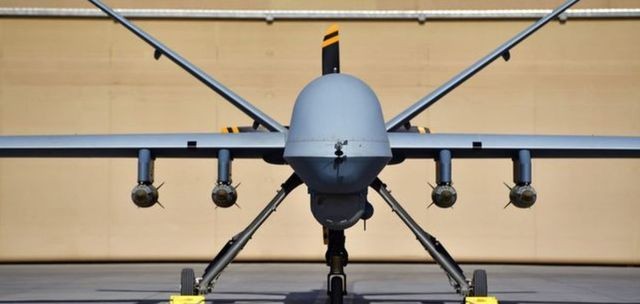
Pakistani officials have privately begun confirming a secret visit to Islamabad of CIA Director William Burns and are suggesting that he was firmly told that Pakistan would not host the spy agency’s drone bases on its territory, according to the daily Dawn.

This comes after New York Times in an article published on June 6 claimed that Mr Burns had travelled to Pakistan for meetings with Army Chief Gen Qamar Javed Bajwa and ISI Director General Lt Gen Faiz Hamid to explore the possibility of counterterrorism cooperation between the two sides.

The Central Intelligence Agency is said to be looking for bases around Afghanistan from where it could gather intelligence on Afghanistan and execute counterterrorism strikes after the completion of troop withdrawal from there, the Dawn said.

The purpose of quietly sharing of information by the Pakistani officials with select journalists at this stage apparently looked to dispel the impression that the two sides were engaged in negotiations on hosting of US drone bases by Pakistan.

New York Times article had at one point said that American officials believed that Pakistan wanted to allow the US to access a base. But, it indicated that Pakistani officials were setting very stringent conditions.

“In discussions between American and Pakistani officials, the Pakistanis have demanded a variety of restrictions in exchange for the use of a base in the country, and they have effectively required that they sign off on any targets that either the CIA or the military would want to hit inside Afghanistan, according to three Americans familiar with the discussions,” as per the NYT article.

Dawn quoted officials as saying that the CIA chief wanted to meet Prime Minister Imran Khan, but was plainly told that only counterpart meeting between heads of government of the two countries was possible.

The officials further said the CIA chief was categorically conveyed that no US operation would be allowed from Pakistani territory. They rather suggested to have asked the Americans to hand over the drones to them for carrying out the strikes against terrorist targets.

Three factors

There are three factors that will account for Pakistan’s perseverance and inflexibility on extending basing rights to the United States, according to Dr. Syed Ali Zia Jaffery of the Diplomat.

First, the consistency with which Pakistan’s Prime Minister Imran Khan has vociferously opposed his country’s past dealings with Washington has left little room for his government to acquiesce to U.S. requests. Before coming into power, Khan was a staunch critic of U.S. drone strikes in Pakistan, even launching a campaign against them.

Second, Pakistan aiding the United States in its efforts to keep an eye on the Taliban would likely vitiate the country’s ties with the powerful Afghan group. Pakistan can ill-afford to attenuate its relationship with the Taliban because it is becoming abundantly clear that they are the most dominant player in the Afghan political landscape.

Having already warned Afghanistan’s neighbors against making the historic mistake of allowing the U.S. to operate military bases, the Taliban would certainly not welcome Pakistan taking such a step. They could accuse Pakistan of wilting under U.S. pressure.

Third, Pakistan allowing the U.S. to use military bases for carrying out combat missions will likely be a cause of concern for two of Pakistan’s neighbors: China and Iran. That both countries are adversaries of the United States is all the more troubling. Washington has termed Beijing the biggest threat to U.S. national security.

Coupled with the U.S. aversion to the China-Pakistan Economic Corridor (CPEC), this mean that should Pakistan allow U.S. forces to operate out of its territory, Washington would almost certainly use that advantage to keep tabs on CPEC, which is expected to expand and gain momentum. Both Pakistan and China would not like to see the U.S. physically lurking around CPEC hotspots, including the critical Gwadar port.

Other than China, Iran will also be directly affected if Pakistan were to let the U.S. ensconce itself in close proximity to that country, Dr. Syed Ali Zia Jaffery, a strategic affairs and foreign policy analyst, concluded.

Airspace access

Pakistan has allowed the US military to use its airspace and given ground access so that it can support its presence in Afghanistan, a Pentagon official said last month.

David F. Helvey, Assistant Secretary of Defense for Indo-Pacific Affairs, told the US Senate Armed Services Committee last month that the United States would continue its conversation with Pakistan because it had a critical role in restoring peace to Afghanistan.

The official was replying to a question from Senator Joe Manchin, a West Virginia Democrat, who asked him to “outline your assessment of Pakistan, and particularly of Pakistani intelligence agencies, and the role you expect them to play in our future”.

“Pakistan has played an important role in Afghanistan. They supported the Afghan peace process. Pakistan also has allowed us to have over-flight and access to be able to support our military presence in Afghanistan,” Mr Helvey said.

“We will continue our conversations with Pakistan because their support and contribution to the future of Afghanistan, to future peace in Afghanistan, is going to be critical,” he added.

Diplomatic sources in Washington told Dawn that Pakistan had always allowed over-flights and ground access to the US to facilitate its military presence in Afghanistan and would continue to do so.

Abdus Sattar Ghazali is the Chief Editor of the Journal of America (www.journalofmaerica.net)

13 June 2021

Source: countercurrents.org

Power at Any Cost: How Opportunistic Mansour Abbas Joined Hands with Avowed ‘Arab Killers’

By Dr Ramzy Baroud

We are led to believe that history is being made in Israel following the formation of an ideologically diverse government coalition which, for the first time, includes an Arab party, Ra’am, or the United Arab List.

If we are to accept this logic, the leader of Ra’am, Mansour Abbas, is a mover and shaker of history, the same way that Naftali Bennett of the far-right Yamina Party, and Yair Lapid, the supposed ‘centrist’ of Yesh Atid, are also history makers. How bizarre!

Sensational media headlines and hyperboles aside, Israel’s new government was a desperate attempt by Israeli politicians to dislodge Benjamin Netanyahu, the country’s longest-serving Prime Minister, from power. While Lapid is fairly new to Israel’s contentious politics, Bennett and Abbas are opportunists, par excellence.

Lapid is a former TV anchorman. Despite his claims to centrist ideologies, his political views are as ‘right’ as they get. The problem is that such characters as Bennett, Ayelet Shaked, also of Yamina, and Netanyahu, of course, among others, have relocated the center of Israel’s political spectrum further to the right, to the point that the right became the center and the ultra-right became the right. This is how Israel’s neofascist and extremist politicians managed to become kingmakers in Israel’s politics. Bennett, for example, who in 2013 bragged about “killing lots of Arabs” in his life, is set to be the Prime Minister of Israel.

It is in this strange context that we must understand Mansour Abbas’ position. His meager four seats at the Israeli Knesset made his party critical in forming the coalition that has been purposely created to oust Netanyahu. Ra’am does not represent Israel’s Palestinian Arab communities and, by joining the government, Abbas is certainly not making history in terms of finding common ground between Arabs and Jews in a country that is rightly recognized by Israeli and international human rights groups as an apartheid state.

On the contrary, Abbas is moving against the current of history. At a time that Palestinians throughout historic Palestine – the occupied Palestinian territories and today’s Israel – are finally unifying around a common national narrative, Abbas is insisting on redefining the Palestinian agenda merely to secure a position for himself in Israeli politics – thus, supposedly ‘making history.’

Even before Abbas shook hands with Bennett and other Israeli extremists who advocate the killing of Palestinians as a matter of course, he made it clear that he was willing to join a Netanyahu-led government. This is one of the reasons behind the splintering of the once unified Arab political coalition, known as the Joint List.

Following his meeting with Netanyahu in February, Abbas justified his shocking turnabout with unconvincing political platitudes as one “needs to be able to look to the future, and to build a better future for everyone”, and so on.

The fact that Netanyahu was largely responsible for the despairing outlook of Israel’s Palestinian communities seemed entirely irrelevant to Abbas, who was inexplicably keen on joining any future political alliance, even if it included Israel’s most chauvinistic political actors. Sadly, though not surprisingly, this has proved to be the case.

Abbas’ position became impossible to sustain in May during the well-coordinated Israeli war in Gaza and the racist attacks on Palestinian communities in Jerusalem, the occupied West Bank and throughout Israel. Even then, when Palestinians were finally able to articulate a common narrative linking the occupation, siege, racism and apartheid in Jerusalem, the West Bank, Gaza and Israel together, Abbas insisted on developing a unique position that would allow him to sustain his chances of achieving power at any cost.

Although it was the Palestinian Arab communities that were under systematic attacks carried by Israeli Jewish mobs and police, Abbas called on his community to “be responsible and behave wisely,” and to “maintain public order and keep the law.” He even parroted similar lines used by right-wing Israeli Jewish politicians, as he claimed that “peaceful popular protests” by Palestinian communities inside Israel have turned “confrontational,” thus creating a moral equilibrium where the victims of racism, somehow, became responsible for their own plight.

Abbas’ position has not changed since the signing of the coalition deal on June 2. His political narrative is almost apolitical as he insists on reducing the national struggle of the Palestinian people to the mere need for economic development – not fundamentally different from Netanyahu’s own ‘economic peace’ proposal in the past. Worse, Abbas intentionally delinks the state of poverty and under-development in Palestinian communities from state-championed racial discrimination, which constantly underfunds Arab communities while spending exuberant amounts of funds on illegal Jewish settlements that are built on ethnically cleansed Palestinian lands.

“We have reached a critical mass of agreements in various fields that serve the interest of Arab society and that provide solutions for the burning issues in Arab society — planning, the housing crisis and, of course, fighting violence and organized crime,” Abbas said triumphantly on June 2, as if the rooted inequality, including communal violence and organized crime, are not direct results of racism, socio-economic inequality and political alienation and marginalization.

No history has been made by Abbas. He is but an example of the self-serving politician and a direct expression of the endemic disunity in the Palestinian Arab body politic inside Israel.

Sadly, the unprecedented success of the Arab Joint List following the March 2020 elections has now culminated in a tragic end, where the likes of Abbas become the unwelcomed ‘representative’ of a politically conscious and awakened community.

In truth, Mansour Abbas, a Palestinian Arab politician who is willing to find common ground with extremists and proud ‘Arab killers’, only represents himself. The future will attest to this claim.

Ramzy Baroud is a journalist and the Editor of The Palestine Chronicle.

11 June 2021

Source: countercurrents.org

The Great Reset: The Davos playbook for the post-Covid world

By Sajai Jose

Series Note: We are in the middle of an unprecedented crisis as the Covid-19 pandemic, and the lockdowns implemented in response, continue to deliver a series of economic, social and psychological shocks to the world. In this time of chaos, some of the world’s most powerful interest groups have stepped forward claiming that this crisis presents an opportunity to ‘reset’ the world’s systems.

Leading the charge is Geneva-based World Economic Forum (WEF) with its ‘Great Reset’ initiative, an ambitious plan to shape the contours of the post-Covid world. This three-part series critically examines the origin, workings and implications of the Great Reset agenda, which its critics have denounced as the corporate capture of global governance and the global commons.

The second part traces the origins of the Great Reset, setting it in the context of the WEF’s own history and its persistent efforts to dictate world affairs on behalf of its corporate benefactors.

For decades, the World Economic Forum has been trying to influence global policy in favour of the world’s financial super-elite. Thanks to the global crisis unleashed by the pandemic and lockdowns, it may finally have found a way to do it.

The World Economic Forum (WEF), a non-profit based in Geneva, states its mission as being “committed to improving the state of the world by engaging business, political, academic, and other leaders of society to shape global, regional, and industry agendas.” Over the years, the annual WEF meeting held at Davos-Klosters, a Swiss mountain resort, has emerged as the world’s most prestigious gathering for its financial, technological and political elites.

The Great Reset

The list of attendees for Davos 2020 (the 2021 event was held virtually) reads like no other; counting in it just about every major head of state from Donald Trump to Narendra Modi, heads of major multilateral organisations, some of the world’s biggest investors, representatives of major banking firms, leading lights from the worlds of economics, technology and law, as well as top executives of Fortune 500 companies, all of which, incidentally, are official partners of the WEF. In a display of the WEF’s global reach, the event was accompanied by virtual events in 430 cities across the world, pulling in thousands more attendees.

Later that year, as the world reeled from a series of unprecedented blows in the form of Covid-19, the lockdowns and the resultant social and economic crises, the WEF stepped into the vacuum created by these events to announce its ‘Great Reset’ initiative, the single most decisive and ambitious attempt by any organisation to shape the contours of the post-lockdown world.

What’s so great about The Great Reset?

Officially, the WEF describes the Great Reset as “a commitment to jointly and urgently build the foundations of our economic and social system for a more fair, sustainable and resilient future.” On the surface, this seems like a commendable attempt to give direction and focus to the world in a time of chaos. Such is the vision articulated by Klaus Schwab, founder and executive chairman of the WEF, which held its 2021 summit on the theme of the Great Reset.

According to Schwab, in a world beset by a host of economic, social and environmental challenges, “The Covid-19 crisis has shown us that our old systems are not fit any more for the 21st century. We have to restore a functioning system of smart global cooperation structured to address the challenges of the next 50 years.” He called for the world to “act jointly and swiftly to revamp all aspects of our societies and economies, from education to social contracts and working conditions. Every country, from the United States to China, must participate, and every industry, from oil and gas to tech, must be transformed. In short, we need a “Great Reset” of capitalism.”

Echoing these sentiments, Prince Charles, who announced the event along with Schwab, said, “In order to secure our future and to prosper, we need to evolve our economic model and put people and planet at the heart of global value creation.” António Guterres, Secretary-General of the United Nations, chimed in, “The Great Reset is a welcome recognition that this human tragedy must be a wake-up call. We must build more equal, inclusive and sustainable economies and societies that are more resilient in the face of pandemics, climate change and the many other global changes we face.”

In many ways, this rhetoric is indistinguishable from the language of bland do-goodism found in the proceedings of the United Nations or reports by international NGOs. But beyond rhetoric, what does the Great Reset have in store for the world, at least, as its originators would have it?

The gameplan

How does the WEF imagine it would actually work itself out in terms of policies and institutional and structural changes? Here is how Schwab, who has personally conceptualised the Great Reset, and has even published a book on it explaining his ideas, describes its three main components:

Stakeholder economy: The first component consists of government policies that would steer the market toward “fairer outcomes”, ultimately to build a “stakeholder economy.” This calls for, among other things, improved government coordination (for example, in tax, regulatory, and fiscal policy), new rules governing intellectual property, trade, and competition, and reforms that promote more equitable outcomes, such as wealth taxes.

Shared goals: The second component of the Great Reset agenda is to ensure that investments advance shared goals that benefit the world at large. Among other things, this calls for the ambitious economic-stimulus plans announced by most major countries, as well as investments from private entities and pension funds, to be used to build a new, “socially equitable and environmentally sustainable global economy” that works in the long term.

Technology governance: The third priority of the Great Reset is to manage and direct the ‘Fourth Industrial Revolution,’ so that its disruptive impacts are minimised, and its benefits maximised. Among other things, the WEF calls for greater collaboration between governments, corporations, universities, research institutions etc., to achieve this. (The WEF’s advocacy of the Fourth Industrial Revolution or Industry 4.0 was covered in detail in the first part of this series).

The Great Reheat?

Schwab’s book outlining his vision of the Great Reset has been touted as “the first policy book on the Covid crisis globally.” But given how comprehensively it deals with just about every aspect of governance and the economy, it’s clear that there’s more to it than meets the eye.

Not surprising then, that it was published as early as June 2020, when the world was still reeling from the lockdowns. It’s actually a much-reheated dish, which recycles many of the ideas Schwab and the WEF has been championing for decades through a number of publications and events over the years. Of special interest among these is a 600-page report released as part of the WEF’s ‘Global Redesign Initiative,’ organised along with the United Nations in the aftermath of the 2008 financial crisis, and described as “the most comprehensive proposal for re-designing global governance since the formulation of the U.N.”

All of the WEF’s proposals have more or less the same official line: a radical transformation of global systems in line with new technological, political and environmental realities. What is never mentioned is that this transformation, conceived and promoted by technocrats such as Schwab, and sponsored by global financial powers whose interests it is meant to serve, is to be executed top-down, ignoring democratic norms and bypassing parliament and other public institutions; a process euphemistically called ‘public-private partnership.’

The Great Reset in action

The WEF’s high profile but exclusive annual Davos event, now the top draw for political and policy leaders around the globe, is the most significant conduit through which the organisation influences government policies worldwide. Thanks to the intense media buzz it creates around these events, they also play a huge role in influencing the general public with the ideas it wants to promote.

At the moment, the WEF is actively injecting the idea of a ‘Great Reset’ into the mainstream through slickly produced video features and podcasts targeting the general public, apart from major features in such favoured outlets as The Economist and Time magazine. In fact, Time’s special issue on Davos 2020 was produced in partnership with the World Economic Forum (not coincidentally, Time’s owner Marc Benioff sits on the WEF board).

The WEF is also increasingly playing a hands-on role when it comes to the implementation of its agenda through a range of ‘strategic partnerships’ and affiliate programmes such as Global Shapers, Young Global Leaders and UpLink Platform which cover not just manufacturing and trade, but every field from governance to agriculture to health.

A particularly ambitious effort is its Fourth Industrial Revolution Network, which opened its India Centre in Mumbai in 2018, in partnership with NITI Aayog, India’s apex planning body, explicitly defining its mission as to “co-design, test and refine governance protocols and policy frameworks” that enable Industry 4.0.

Corporate capture of global governance

The true significance of the Great Reset cannot be understood without knowing the history and agenda of its originator. The WEF started life in 1971 as the European Management Forum, the brainchild of Schwab, then a business professor at the University of Geneva. It later broadened its invitee list to include political leaders and its agenda to include “resolving international conflicts.” Afterwards, it introduced a membership system for the world’s 1,000 leading companies, and in 1987, changed its name to ‘World Economic Forum.’

Even though it claims to be “independent, impartial and not tied to any special interests,” by way of disclaimer, the fact is that the WEF organisation is the premier mouthpiece for global financial and corporate elites today. It’s a central player in a tightly-knit web of privately funded mega ‘non-profits’, ‘think tanks’ and assorted lobbying organisations through which the world’s power elite seek to shape policies and events to their advantage.

However, the WEF is not just any industry lobbying group. It can be argued that especially in the last decade or so, the Davos events have almost become a de facto world parliament, eclipsing even the UN General Assembly meetings in the breadth and depth of influence and prestige it commands.

Not content to project itself as a kind of faux-U.N. for plutocrats, in 2019 the WEF went one step ahead and signed a memorandum of understanding (MOU) to officially partner with the U.N. The move was widely condemned by hundreds of leading civil society organisations, who denounced it as “corporate capture of global governance,” which they said “delegitimises the U.N. and weakens the role of states in global decision-making.”

Furthermore, they point out that the agreement grants transnational corporations (not coincidentally, all WEF members) preferential access to the UN System, at the expense of states and public interest actors. A key component of the agreement are public-private partnerships to globally deliver public goods in many fields, including education, financing, climate change, and health.

The WEF calls itself “the international organisation for public-private cooperation.” As it turns out, their use of the definite article ‘the’ is more significant than it appears. One commentator recalled how the WEF’s Global Redesign Initiative report had “recommended a sort of public-private United “Nations” – something that has now been formalised in this MoU.”

Backed as it is by the full weight of some of the world’s most powerful financial interests and technology corporations, the Great Reset is more than a theoretical construct or a techno-fantasy woven on the magic mountain of Davos.

And given the evident compliance of political and policy elites to this agenda, it very much has the power to remake the world in its image.

(To be continued)

Sajai Jose is a freelance journalist

11 June 2021

Source: countercurrents.org

Modi’s silence over London, Ontario attack tells us a lot about his mindset

By Gurpreet Singh

The hawkish Prime Minister of India, who is generally prompt in denouncing terrorism anywhere in the world, remains quiet over the recent killings of four members of a Muslim family in Ontario.

On Sunday, 74-year-old Talat Afzaal, her 46-year-old son Salman Afzaal, 44-year-old daughter-in-law Madiha Salman and 15-year-old granddaughter Yumma Afzaal, were struck by a vehicle in a pre-planned manner in London, while the family was out on a walk. A nine-year-old boy is still recovering from his injuries in the hospital.

Canadian Prime Minister Justin Trudeau has already described this as a terrorist incident, and the police believe it is a hate crime.

However, Indian Prime Minister Narendra Modi, who is fond of making statements on terror-related incidents on twitter, did not react.

This is in sharp contrast to his tweets condemning a similar terror attack in London, UK, in June 2017. Eight people died in that incident, which was blamed on Islamic extremists. The attackers had mowed down pedestrians.

The only explanation could be Modi’s own prejudice against Muslims.

After all, attacks on religious minorities, especially Muslims, have grown under his right wing Hindu nationalist Bhartiya Janata Party (BJP) government since 2014.

The BJP aspires to turn India into a Hindu theocracy. Modi himself faced a travel ban by the US and other western countries for his complicity in the 2002 massacre of Muslims. This was when Modi was the Chief Minister of Gujarat, where thousands of Muslims were targeted by the mobs under his watch after a train carrying Hindu pilgrims caught fire, leaving more than 50 people dead. Modi had blamed it on Muslims. Though he was never charged, the survivors and human rights activists continue to allege his involvement. Modi was able to visit the US after becoming Prime Minister in 2014.

It is interesting that Modi took quick notice of the 2017 terror attack in London, UK, but conveniently overlooked what happened in London, Canada. This may be because the perpetrators in the UK attack were alleged to be Muslims, whereas in Canada the suspect is a non-Muslim.

This is highly problematic, but not surprising, considering Modi’s track record on terrorism. He had introduced a highly controversial female ascetic, Sadhvi Pragya Singh Thakur, into politics during the 2019 election as a BJP candidate. Thakur now sits in the Indian Parliament. She was an accused in the 2008 bombings in a Muslim community that claimed 10 lives. The incident was planned and executed by Hindu extremists to terrorise Muslims. The trial isn’t over yet, but Thakur got a bail on medical grounds and fought the election.

Modi justified her candidacy by saying that Hindus can never be involved in terrorism. In other words, terrorism can only be attributed to Muslims or any other faith group, as far as his brand of politics is concerned. It is refreshing to see Trudeau acknowledging majoritarian terrorism in Canada, but that is unlikely to happen in Modi’s India. His indifference to the London, Ontario attack only proves that.

Gurpreet Singh is a journalist

10 June 2021

Source: countercurrents.org

On the Politics of Victory and Defeat: How Gaza Dethroned the King of Israel

By Dr Ramzy Baroud

How did Benjamin Netanyahu manage to serve as Israel’s longest-serving Prime Minister? With a total of 15 years in office, Netanyahu surpassed the 12-year leadership of Israel’s founding father, David Ben Gurion. The answer to this question will become particularly critical for future Israeli leaders who hope to emulate Netanyahu’s legacy, now that his historic leadership is likely to end.

Netanyahu’s ‘achievements’ for Israel cannot be judged according to the same criteria as that of Ben Gurion. Both were staunch Zionist ideologues and savvy politicians. Unlike Ben Gurion, though, Netanyahu did not lead a so-called ‘war of independence’, merging militias into an army and carefully constructing a ‘national narrative’ that helped Israel justify its numerous crimes against the indigenous Palestinians, at least in the eyes of Israel and its supporters.

The cliched explanation of Netanyahu’s success in politics is that he is a ‘survivor’, a hustler, a fox or, at best, a political genius. However, there is more to Netanyahu than mere soundbites. Unlike other right-wing politicians around the world, Netanyahu did not simply exploit or ride the wave of an existing populist movement. Instead, he was the main architect of the current version of Israel’s right-wing politics. If Ben Gurion was the founding father of Israel in 1948, Netanyahu is the founding father of the new Israel in 1996. While Ben Gurion and his disciples used ethnic cleansing, colonization and illegal settlement construction for strategic and military reasons, Netanyahu, while carrying on with the same practices, changed the narrative altogether.

For Netanyahu, the biblical version of Israel was far more convincing than secular Zionist ideology of yesteryears. By changing the narrative, Netanyahu managed to redefine the support for Israel around the world, bringing together right-wing religious zealots, chauvinistic, Islamophobic, far-right and ultra-nationalist parties in the US and elsewhere.

Netanyahu’s success in rebranding the centrality of the idea of Israel in the minds of its traditional supporters was not a mere political strategy. He also shifted the balance of power in Israel by making Jewish extremists and illegal settlers in the occupied Palestinian territories his core constituency. Subsequently, he reinvented Israeli conservative politics altogether.

He also trained an entire generation of Israeli right-wing, far-right and ultra-nationalist politicians, giving rise to such unruly characters such as former Defense Minister and the leader of Yisrael Beiteinu, Avigdor Lieberman, former Justice Minister, Ayelet Shaked, and former Defense Minister, and Netanyahu’s likely replacement, Naftali Bennett.

Indeed, a whole new generation of Israelis grew up watching Netanyahu take the right-wing camp from one success to another. For them, he is the savior. His hate-filled rallies and anti-peace rhetoric in the mid-1990s galvanized Jewish extremists, one of whom killed Yitzhak Rabin, Israel’s former Prime Minister who engaged the Palestinian leadership through the ‘peace process’ and, ultimately, signed the Oslo Accords.

On Rabin’s death in November 1995, Israel’s political ‘left’ was devastated by right-wing populism championed by its new charismatic leader, Netanyahu, who, merely a few months later, became Israel’s youngest Prime Minister.

Despite the fact that, historically, Israeli politics is defined by its ever-changing dynamics, Netanyahu has helped the right prolong its dominance, completely eclipsing the once-hegemonic Labor Party. This is why the right loves Netanyahu. Under his reign, illegal Jewish colonies expanded unprecedentedly, and any possibility, however meager, of a two-state solution has been forever buried.

Additionally, Netanyahu changed the relationship between the US and Israel, where the latter was no longer a ‘client regime’ – not that it ever was in the strict definition of the term – but one that holds much sway over the US Congress and the White House.

Every attempt by Israel’s political elites to dislodge Netanyahu from power has failed. No coalition was powerful enough; no election outcome was decisive enough and no one was successful enough in convincing Israeli society that he could do more for them than Netanyahu has. Even when Gideon Sa’ar from Netanyahu’s own Likud party tried to stage his own coup against Netanyahu, he lost the vote and the support of the Likudists, later to be ostracized altogether.

Sa’ar later founded his own party, New Hope, continuing with the desperate attempt to oust the seemingly unconquerable Netanyahu. Four general elections within only two years still failed to push Netanyahu out. Every possible mathematical equation to unify various coalitions, all united by the single aim of defeating Netanyahu, has also failed. Each time, Netanyahu came back, with greater resolve to hang on to his seat, challenging contenders within his own party as well as his enemies from without. Even Israel’s court system, which is currently trying Netanyahu for corruption, was not powerful enough to compel disgraced Netanyahu to resign.

Until May of this year, Palestinians seemed to be marginal, if at all relevant to this conversation. Palestinians living under Israeli military occupation looked as if they were mollified, thanks to Israeli violence and Palestinian Authority acquiescence. Palestinians in Gaza, despite occasional displays of defiance, were battling a 15-year-long Israeli siege. Palestinian communities inside Israel seemed alien to any political conversation pertaining to the struggle and aspirations of the Palestinian people.

All of these illusions were dispelled when Gaza rose in solidarity with a small Palestinian community in Sheikh Jarrah in occupied East Jerusalem. Their resistance ignited a torrent of events that, within days, unified all Palestinians, everywhere. Consequently, the popular Palestinian revolt has shifted the discourse in favor of Palestinians and against the Israeli occupation.

Perfectly depicting the significance of that moment, the Financial Times newspaper wrote, “The ferocity of the Palestinian anger caught Israel by surprise.” Netanyahu, whose extremist goons were unleashed against Palestinians everywhere, similar to his army being unleashed against besieged Gaza, found himself at an unprecedented disadvantage. It took only 11 days of war to shatter Israel’s sense of ‘security’, expose its sham democracy and spoil its image around the world.

The once untouchable Netanyahu became the mockery of Israeli politics. His conduct in Gaza was described by leading Israeli politicians as “embarrassing”, a defeat and a “surrender”.

Netanyahu struggled to redeem his image. It was too late. As strange as this may sound, it was not Bennett or Lieberman who finally dethroned the “King of Israel’, but the Palestinians themselves.

Ramzy Baroud is a journalist and the Editor of The Palestine Chronicle.

10 June 2021

Source: countercurrents.org