Just International

Israel attacks Gaza after Jerusalem defeat

Written by Ali Abunimah, Maureen Clare Murphy and Tamara Nassar

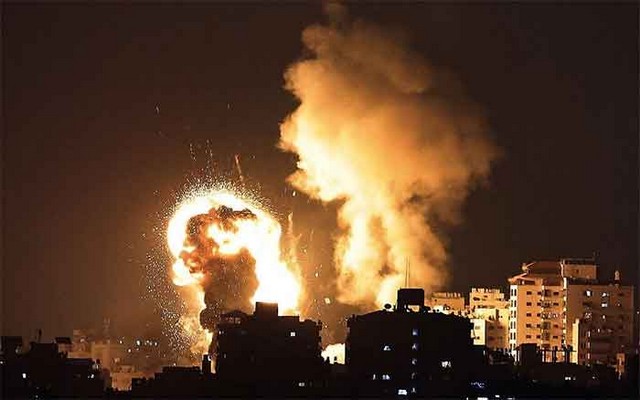
Twenty Palestinians, nine of them children, were killed in Israeli bombing attacks in the Gaza Strip on Monday night.

This came at the end of a day of violence that began in occupied East Jerusalem, where Israeli forces assaulted worshippers at the al-Aqsa mosque compound, injuring hundreds.

Scenes of brutality in Jerusalem generated outrage and solidarity among Palestinians and around the world.

The military wing of the Palestinian resistance organization Hamas issued an ultimatum giving Israel an hour – until 6 pm local time – to withdraw its forces from al-Aqsa and the occupied East Jerusalem neighborhood of Sheikh Jarrah, and free detainees.

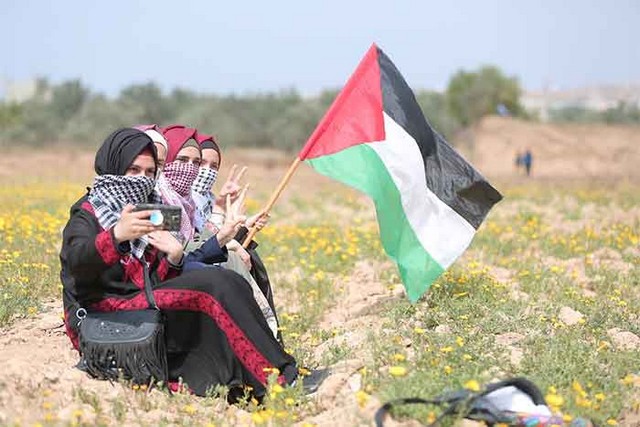
When the deadline passed, resistance groups in Gaza fired volleys of rockets towards Jerusalem for the first time since the summer 2014 war, prompting celebrations from some Palestinians.

Israelis who had been gathering for the so-called Jerusalem Day march ran for cover as sirens sounded.

No serious Israeli casualties were reported.

A Hamas spokesperson in Gaza said that resistance fighters “fired rockets at occupied Jerusalem, in response to the enemy’s crimes and aggression against the holy city, and its abuse of our people in Sheikh Jarrah and al-Aqsa mosque.”

“Israel will respond with great force,” Israeli Prime Minister Benjamin Netanyahu said, adding that “whoever attacks us will pay a heavy price.”

Such warnings should be understood as threats of collective punishment against civilians in Gaza.

Israeli ministers approved an aerial offensive against the territory, with an Israeli military spokesperson saying that the assault “will take a few days.”

The Palestinian health ministry in Gaza reported that 20 people in the besieged territory were killed in Israeli airstrikes.

Nine children were among those killed, Palestinian media reported.

Israel claims that three Hamas fighters were killed in one of its airstrikes and Hamas said one of its commanders was killed.

Israel also reportedly closed Gaza’s sole commercial crossing and further restricted access to the Strip’s coastal waters.

Settler march canceled

Before Hamas’ ultimatum, Israel had suffered a humiliating setback in its effort to assert control over occupied East Jerusalem.

Monday was supposed to be the day thousands of extremist Jewish settlers marched through the Old City to mark so-called Jerusalem Day.

This annual parade is a grotesque display of racism and provocation in which Israelis celebrate their 1967 occupation of the eastern part of Jerusalem.

This year’s march was slated to take place amid heightened tensions and resistance against Israel’s efforts to expel dozens of Palestinian families from their homes in the Sheikh Jarrah neighborhood as part of the ongoing ethnic cleansing and Judaization of Jerusalem.

For much of the day, Israeli police maintained that the settler march would proceed on its planned route through the Damascus Gate and into the narrow alleys of the Old City, including its Muslim Quarter.

By afternoon, however, and after recommendations from Israel’s military and the Shin Bet, the state’s domestic spying and torture agency, Netanyahu decided to reroute it before it was canceled altogether.

It was a striking victory for Palestinians, though one that came at a high price in injuries from the indiscriminate Israeli violence.

Hundreds injured

Before dawn on Monday, thousands of Palestinians headed to the al-Aqsa mosque compound to pray at the site and protect it from expected incursions by Jewish extremists and the kinds of violent assault by occupation forces witnessed on Friday and Saturday, when hundreds of Palestinians were injured.

Among the 90,000 Palestinians who gathered at al-Aqsa on Saturday to mark Laylat al-Qadr, one of the holiest nights of Ramadan, were thousands of Palestinian citizens of Israel.

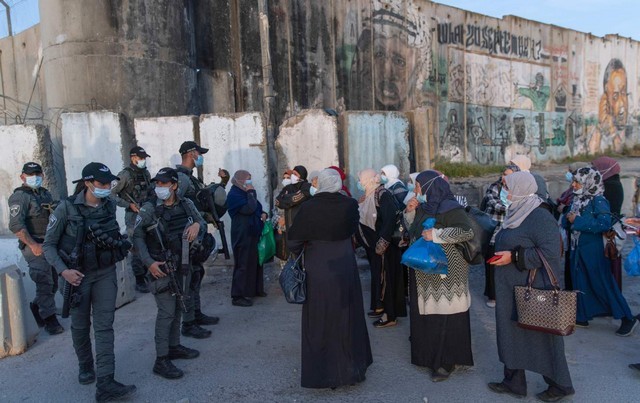
After Israeli police halted dozens of buses bringing worshippers to Jerusalem, many continued their journey to the city on foot.

As dawn broke on Monday, videos and photos shared on social media showed Palestinians preparing to defend the mosque from a new assault that morning by barricading entrances with furniture and gathering rocks.

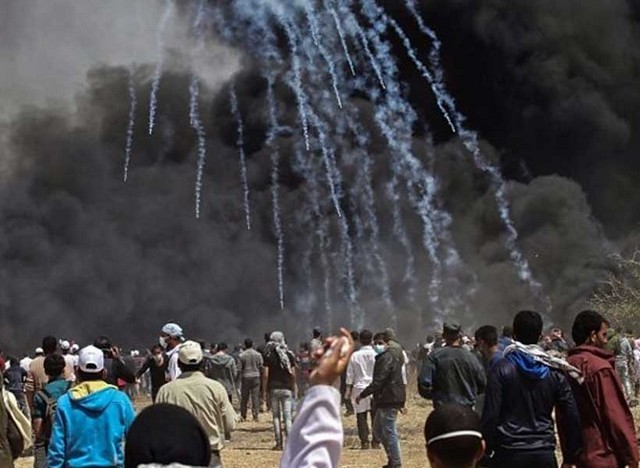
Just after 8 am, occupation forces launched an assault on the compound, firing volleys of stun grenades, tear gas canisters and rubber-coated steel bullets at Palestinians there, injuring worshippers, journalists and medics.

The Palestine Red Crescent Society said it attended to almost 400 injured people, with some 220 taken to hospitals.

At least seven Palestinians were seriously hurt, some requiring surgery.

Forces also attacked the women’s prayer area near Bab al-Rahma, the eastern gate of the compound which has been mostly sealed by Israeli authorities since 2003:

Israeli weaponry caused damage inside mosques in the compound:

Yet despite this extreme and indiscriminate violence, Israel’s police chief Kobi Shabtai told media on Monday night that his forces had been too restrained and that it was time to take off the “kid gloves.”

Journalists injured

Among hundreds of Palestinians injured by Israeli forces on Monday were reporters.

This video shows Israeli soldiers cornering Palestinian photojournalist Faiz Abu Rmeleh and beating him on his head

Abu Rmeleh, whose photos have previously been published by The Electronic Intifada, was also assaulted by occupation forces in 2017.

The Palestinian news outlet Al Qastal said three of its reporters were injured by rubber-coated steel bullets and tear gas.

Another Palestinian bleeding from his eye was carried by medics who told an Anadolu Agency reporter that the injured man was a journalist:

Attacks on medics

The Palestine Red Crescent Society said Israeli forces prevented their medics from entering the al-Aqsa mosque compound where dozens of wounded Palestinians needed medical attention.

A Palestinian doctor from Jerusalem who came to assist the injured said soldiers prevented him from entering the compound “from every gate”:

Quds News Network reported that Israel attempted to expel Palestinian medics from the compound.

Rescue workers were also among the scores injured inside.

Israeli forces shot Palestinian paramedic Ahmad Dweikat with a rubber-coated steel bullet under his eye:

https://pbs.twimg.com/media/E1BUERBWQAAqfvd?format=jpg&name=900×900

Court hearing delayed

Israel’s highest court tried to defuse growing resistance to the ethnic cleansing of Palestinians by delaying a hearing on the forced expulsion of three families from their homes in the Sheikh Jarrah neighborhood on Sunday.

Israel is applying openly discriminatory laws in an effort to force Palestinians out of their homes so they may be handed over to Jewish settlers.

A high court judge said the hearing would be rescheduled within a month and Palestinian families would be able to stay in their homes until a decision is made.

Israeli courts have consistently ruled in favor of settler groups to expel Palestinian families from homes in occupied East Jerusalem.

Settler organizations, backed by Israel’s state apparatus, are unlikely to abandon their efforts to ethnically cleanse the city of Palestinians.

The goal, however, is to do it quietly, without the commotion that comes with an international outcry.

US blocks UN statement

Egypt, Qatar and the United Nations were reportedly mediating between Hamas and Israel to slow the escalation of hostilities.

The US government expressed its deep concern over “violent confrontations” in Jerusalem but reserved explicit condemnation for rockets fired from Gaza.

Washington’s mission to the UN Security Council reportedly prevented the release of a joint statement condemning violence in Jerusalem.

The European Union’s envoy to Israel meanwhile said he was “extremely concerned over the violence in Jerusalem but only said that the firing of rockets was “totally unacceptable and needs to stop.”

11 May 2021

Source: countercurrents.org

Dignity

I was interviewed in many media outlets in the past 48 hours about the events here. My message beyond telling them what is really going on on the ground here is simple: This is not a “conflict” or a border dispute nor a tribal or religious issue. It is simple: the last tantrums of the unsettled settler colonial system. I expect things will get a bit worse (always darkest before the dawn). Bombing civilian neighborhoods, shooting unarmed protesters, and lying is a hallmark of all European colonial power encounter with natives. As this was true in South Africa under apartheid and in America after Spanish and British colonization, so it is true in Palestine under European Jewish colonization. Colonial officials like corrupt leader Benjamin Netanyahu (originally Mileikowsky from Poland) are proud of the so called “Iron Dome” defense system against Palestinian resistance rockets from Gaza (but the dome works only to very limited extent and is very costly). $40,000 per iron dome missile, over 1000 fired in the past week so it means it cost US taxpayers $40 million just in spent missiles in one week. US taxpayers are of course footing the bill against their wishes (thanks to the Zionist lobby in Washington) to defend Israeli apartheid ($4 billion annually in military aid– more than US foreign aid to Subsaharan Africa and Latin America combined). All so Israel can advance its illegal and racist policies of ethnic cleansing in Jerusalem and beyond. Thus the US continues to be complicit in violations of International law that amount to war crimes and crimes against humanity (e.g. 12 children killed by US supplied weapons just in one week in Gaza).But the new equation has shown that we are past that age when military might, walls, & armies can dictate the future. People will will dicate the future. The >13 million Palestinians (7.5 million of them refugees and displaced people) supported by hundreds of millions of decent human beings around the world will not succumb to brutal force of colonizers/occupiers/thieves. The smiles on the faces of young Palestinians being kidnapped by heavily armed thugs (aka Israeli security forces) alone gives us hope in a bright future. Palestine will be freed! Demonstrations were held not only in (occupied) Palestinian cities like Jaffa, Haifa, Lod, Bethlehem, and Jerusalem but in over 100 other cities from Washington DC to New York to London to Amman to Sanaa etc. All people see and feel the need to free Palestine – all of Palestine. This is also remarkable despite the manipulated mainstream media trying to hide and obfuscate (even when they report they claim “clashes” and hide the fact of colonial oppression vs oppressed people) and the governments colluding, funding, or normalizing with the apartheid regime. This is one of the most just causes in the world still left unresolved. The latest round started 12 April when Israeli occupiers started the latest round to attempt to restrict Muslims in Jerusalem in its relentless effort to Judaicize the city. For me personally, Jerusalem is my city. I was a high school teacher there and I live in a suburb of it called Bethlehem (5 km away from city center). That Israel denies me and millions others the right to even visit our city (illegally occupied according to International law) will not pass. We will be free. My recommendation to the Israeli public is decolonize their minds and shed the illusion of Jewish supremacy / exceptionalism, return the refugees and sit down with us to forge a future of peace with justice for all! Iron domes, concrete apartheid walls, delusions of destroying the third holiest mosque in Islam, and all the other “measures” taken only backfire.

Here are three forward looking article I wrote many years ago that are relevant today and remind me to keep hope alive

http://qumsiyeh.org/biologyofpeace/

http://qumsiyeh.org/peaceoneartheveninpalestine/

http://qumsiyeh.org/ofcowardicedignityandsolidarity/

Footnote 1: Sheikh Jarrah: Clashes, scuffles, conflict – western media’s euphemisms for Israel’s violence https://www.middleeasteye.net/opinion/sheikh-jarrah-israel-palestine-western-media-coverage-euphemism
Footnote 2:  Tormented dance of the colonizer
https://mondoweiss.net/2021/04/the-tormented-dance-of-the-colonizer-peter-beinart-liberal-zionism-and-the-battle-for-palestine/

Footnote 3: On 9 May 2011, Haaretz published that Defense Ministry director general Maj. Gen. (res.) Udi Shani said that Israel plans to invest nearly $1 billion in the coming years for the development and production of Iron Dome batteries. “We are no longer approaching this in terms of initial operational capabilities but are defining the final target for absorbing the systems, in terms of schedule and funds. We are talking about [having] 10–15 Iron Dome batteries. We will invest nearly $1 billion on this. This is the goal, in addition to the $205 million that the U.S. government has authorized,” Shani said

Stay Human and keep Palestine alive

Mazin Qumsiyeh is a Palestinian scientist and author, founder and director of the Palestine Museum of Natural History (PMNH) and the Palestine Institute for Biodiversity and Sustainability (PIBS) at Bethlehem University where he teaches.

12 May 2021

Source: popular-resistance.blogspot.com

Will Corporate Greed Prolong the Pandemic?

By Lori Wallach and Joseph E. Stiglitz

6 May 2021 – The only way to end the COVID-19 pandemic is to immunize enough people worldwide. The slogan “no one is safe until we are all safe” captures the epidemiological reality we face. Outbreaks anywhere could spawn a SARS-CoV-2 variant that is resistant to vaccines, forcing us all back into some form of lockdown. Given the emergence of worrisome new mutations in India, Brazil, South Africa, the United Kingdom, and elsewhere, this is no mere theoretical threat.

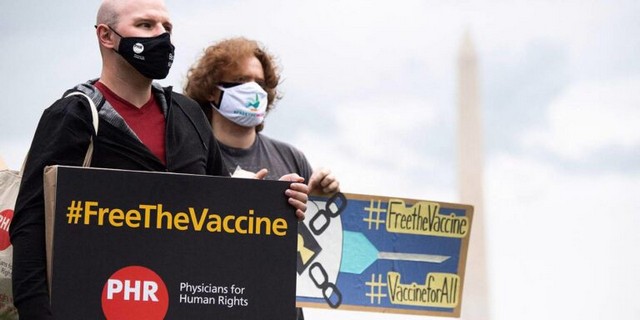
Worse, vaccine production is currently nowhere close to delivering the 10-15 billion doses needed to stop the spread of the virus. By the end of April, only 1.2 billion doses had been produced worldwide. At this rate, hundreds of millions of people in developing countries will remain unimmunized at least until 2023.It is thus big news that US President Joe Biden’s administration has announced it will join the 100 other countries seeking a COVID-19 emergency waiver of the World Trade Organization intellectual-property (IP) rules that have been enabling vaccine monopolization. Timely negotiations of a WTO agreement temporarily removing these barriers would create the legal certainty governments and manufacturers around the world need to scale up production of vaccines, treatments, and diagnostics.Last fall, former President Donald Trump recruited a handful of rich-country allies to block any such waiver negotiations. But pressure on the Biden administration to reverse this self-defeating blockade has been growing, garnering the support of 200 Nobel laureates and former heads of state and government (including many prominent neoliberal figures), 110 members of the US House of Representatives, ten US Senators, 400 US civil-society groups, 400 European parliamentarians, and many others.

An Unnecessary Problem

The scarcity of COVID-19 vaccines across the developing world is largely the result of efforts by vaccine manufacturers to maintain their monopoly control and profits. Pfizer and Moderna, the makers of the extremely effective mRNA vaccines, have refused or failed to respond to numerous requests by qualified pharmaceutical manufacturers seeking to produce their vaccines. And not one vaccine originator has shared its technologies with poor countries through the World Health Organization’s voluntary COVID-19 Technology Access Pool.Recent company pledges to give vaccine doses to the COVID-19 Vaccines Global Access (COVAX) facility, which will direct them to the most at-risk populations in poorer countries, are no substitute. These promises may assuage drug companies’ guilt, but won’t add meaningfully to the global supply.As for-profit entities, pharmaceutical corporations are focused primarily on earnings, not global health. Their goal is simple: to maintain as much market power as they can for as long as possible in order to maximize profits. Under these circumstances, it is incumbent on governments to intervene more directly in solving the vaccine supply problem.

A Commonsense Solution

In recent weeks, legions of pharmaceutical lobbyists have swarmed Washington to pressure political leaders to block the WTO COVID-19 waiver. If only the industry was as committed to producing more vaccine doses as it is to producing specious arguments, the supply problem might already have been solved.

Instead, drug companies have been relying on a number of contradictory claims. They insist that a waiver is not needed, because the existing WTO framework is flexible enough to allow for access to technology. They also argue that a waiver would be ineffective, because manufacturers in developing countries lack the wherewithal to produce the vaccine.

And yet, drug companies also imply that a WTO waiver would be too effective. What else are we to make of their warnings that it would undermine research incentives, reduce Western companies’ profits, and – when all other claims fail – that it would help China and Russia beat the West geopolitically?Obviously, a waiver would make a real difference. That is why drug companies are opposing it so vehemently. Moreover, the “market” confirms this thinking, as evidenced by the sharp decline in the major vaccine-makers’ share prices just after the Biden administration’s announcement that it will engage in waiver negotiations. With a waiver, more vaccines will come online, prices will fall, and so too will profits.Still, the industry claims that a waiver would set a terrible precedent, so it is worth considering each of its claims in turn.

Big Pharma’s Big Lies

After years of passionate campaigning and millions of deaths in the HIV/AIDS epidemic, WTO countries agreed on the need for compulsory IP licensing (when governments allow domestic firms to produce a patented pharmaceutical product without the patent owner’s consent) to ensure access to medicines. But drug companies never gave up on doing everything possible to undermine this principle. It is partly because of the pharmaceutical industry’s tight-fistedness that we need a waiver in the first place. Had the prevailing pharmaceutical IP regime been more accommodating, the production of vaccines and therapeutics already would have been ramped up.The argument that developing countries lack the skills to manufacture COVID vaccines based on new technologies is bogus. When US and European vaccine makers have agreed to partnerships with foreign producers, like the Serum Institute of India (the world’s largest vaccine producer) and Aspen Pharmacare in South Africa, these organizations have had no notable manufacturing problems. There are many more firms and organizations around the world with the same potential to help boost the vaccine supply; they just need access to the technology and know-how.For its part, the Coalition for Epidemic Preparedness Innovations has identified some 250 companies that could manufacture vaccines. As South Africa’s delegate at the WTO recently noted:“Developing countries have advanced scientific and technical capacities… the shortage of production and supply [of vaccines] is caused by the rights holders themselves who enter into restrictive agreements that serve their own narrow monopolistic purposes putting profits before life.”

While it may have been difficult and expensive to develop the mRNA vaccine technology, that doesn’t mean production of the actual shots is out of reach for other companies around the world. Moderna’s own former director of chemistry, Suhaib Siddiqi, has argued that with enough sharing of technology and know-how, many modern factories should be able to start manufacturing mRNA vaccines within three or four months.

Drug companies’ fallback position is to claim that a waiver is not needed in light of existing WTO “flexibilities.” They point out that firms in developing countries have not sought compulsory licenses, as if to suggest that they are merely grandstanding. But this supposed lack of interest reflects the fact that Western pharmaceutical companies have done everything they can to create legal thickets of patents, copyrights, and proprietary industrial design and trade secret “exclusivities” that existing flexibilities may never cover. Because mRNA vaccines have more than 100 components worldwide, many with some form of IP protection, coordinating compulsory licenses between countries for this supply chain is almost impossible.Moreover, under WTO rules, compulsory licensing for export is even more complex, even though this trade is absolutely essential for increasing the global vaccine supply. The Canadian drug maker Biolyse, for example, is not permitted to produce and export generic versions of the Johnson & Johnson vaccine to developing countries after J&J rejected its request for a voluntary license.Another factor in the vaccine supply shortage is fear, both at the corporate and the national level. Many countries worry that the United States and the European Union would cut off aid or impose sanctions if they issued compulsory licenses after decades of threats to do so. With a WTO waiver, however, these governments and companies would be insulated from corporate lawsuits, injunctions, and other challenges.

The People’s Vaccines

This brings us to the third argument that the big pharmaceutical companies make: that an IP waiver would reduce profits and discourage future research and development. Like the previous two claims, this one is patently false. A WTO waiver would not abolish national legal requirements that IP holders be paid royalties or other forms of compensation. But by removing the monopolists’ option of simply blocking more production, a waiver would increase incentives for pharmaceutical companies to enter into voluntary arrangements.Hence, even with a WTO waiver, the vaccine makers stand to make heaps of money. COVID-19 vaccine revenue for Pfizer and Moderna just in 2021 is projected to reach $15 billion and $18.4 billion, respectively, even though governments financed much of the basic research and provided substantial upfront funds to bring the vaccines to market.To be clear: The problem for the pharmaceutical industry is not that drug manufacturers will be deprived of high returns on their investments; it is that they will miss out on monopoly profits, including those from future annual booster shots that doubtless will be sold at high prices in rich countries.Finally, when all of its other claims fall through, the industry’s last resort is to argue that a waiver would help China and Russia gain access to a US technology. But this is a canard, because the vaccines are not a US creation in the first place. Cross-country collaborative research into mRNA and its medical applications has been underway for decades. The Hungarian scientist Katalin Karikó made the initial breakthrough in 1978, and the work has been ongoing ever since in Turkey, Thailand, South Africa, India, Brazil, Argentina, Malaysia, Bangladesh, and other countries, including the US National Institutes of Health.Moreover, the genie is already out of the bottle. The mRNA technology in the Pfizer-produced vaccine is owned by BioNTech (a German company founded by a Turkish immigrant and his wife), which has already granted the Chinese producer Fosun Pharma a license to manufacture its vaccine. While there are genuine examples of Chinese firms stealing valuable IP, this isn’t one of them. Besides, China is well on its way to developing and producing its own mRNA vaccines. One is in Phase III clinical trials; another can be stored at refrigerator temperature, eliminating the need for cold chain management.

How the US Could Really Lose

For those focused on geopolitical issues, the bigger source of concern should be America’s failure to date to engage in constructive COVID-19 diplomacy. The US has been blocking exports of vaccines that it is not even using. Only when a second wave of infections started devastating India did it see fit to release its unused AstraZeneca doses. Meanwhile, Russia and China have not only made their vaccines available; they have engaged in significant technology and knowledge transfer, forging partnerships around the world, and helping to speed up the global vaccination effort.With daily infections continuing to reach new highs in some parts of the world, the chance of dangerous new variants emerging poses a growing risk to us all. The world will remember which countries helped, and which countries threw up hurdles, during this critical moment.The COVID-19 vaccines have been developed by scientists from all over the world, thanks to basic science supported by numerous governments. It is only proper that the people of the world should reap the benefits. This is a matter of morality and self-interest. We must not let drug companies put profits ahead of lives.

Joseph Eugene Stiglitz is an American economist and a professor at Columbia University.

Lori Wallach is Director of Public Citizen’s Global Trade Watch.

10 May 2021

Source: www.transcend.org

United States Withdraws from Afghanistan? Not Really!

By Noam Chomsky and Vijay Prashad

5 May 2021 – The U.S. invasion of Afghanistan in October 2001 was criminal. It was criminal because of the immense force used to demolish Afghanistan’s physical infrastructure and to break open its social bonds.

On October 11, 2001, journalist Anatol Lieven interviewed the Afghan leader Abdul Haq in Peshawar, Pakistan. Haq, who led part of the resistance against the Taliban, was getting ready to return to Afghanistan under the cover of the U.S. aerial bombardments. He was, however, not pleased with the way the United States had decided to prosecute the war. “Military action by itself in the present circumstances is only making things more difficult—especially if this war goes on a long time and many civilians are killed,” Abdul Haq told Lieven. The war would go on for 20 years, and at least 71,344 civilians would lose their lives during this period.

Abdul Haq told Lieven that “the best thing would be for the U.S. to work for a united political solution involving all the Afghan groups. Otherwise, there will be an encouragement of deep divisions between different groups, backed by different countries and badly affecting the whole region.” These are prescient words, but Haq knew no one was listening to him. “Probably,” he told Lieven, “the U.S. has already made up its mind what to do, and any recommendations by me will be too late.”

After 20 years of the incredible destruction caused by this war, and after inflaming animosity between “all the Afghan groups,” the United States has returned to the exact policy prescription of Abdul Haq: political dialogue.

Abdul Haq returned to Afghanistan and was killed by the Taliban on October 26, 2001. His advice is now out-of-date. In September 2001, the various protagonists in Afghanistan—including the Taliban—were ready to talk. They did so partly because they feared that the looming U.S. warplanes would open the doors to hell for Afghanistan. Now, 20 years later, the gulf between the Taliban and the others has widened. Appetite for negotiations simply does not exist any longer.

Civil War

On April 14, 2021, the speaker of Afghanistan’s parliament—Mir Rahman Rahmani—warned that his country is on the brink of a “civil war.” Kabul’s political circles have been bristling with conversations about a civil war when the United States withdraws by September 11. This is why on April 15, during a press conference held in the U.S. Embassy in Kabul, Sharif Amiry of TOLOnews asked U.S. Secretary of State Antony Blinken about the possibility of a civil war. Blinken answered, “I don’t think that it is in anyone’s interest, to say the least, for Afghanistan to descend into a civil war, into a long war. And even the Taliban, as we hear it, has said it has no interest in that.”

In fact, Afghanistan has been in a civil war for half a century, at least since the creation of the mujahideen—including Abdul Haq—to battle the People’s Democratic Party of Afghanistan government (1978-1992). This civil war was intensified by the U.S. support of Afghanistan’s most conservative and extreme right-wing elements, groups that would become part of Al Qaeda, the Taliban, and other Islamist factions. Never once has the United States offered a path to peace during this period; instead, it has always shown an eagerness at each turn to use the immensity of the U.S. force to control the outcome in Kabul.

Withdrawal?

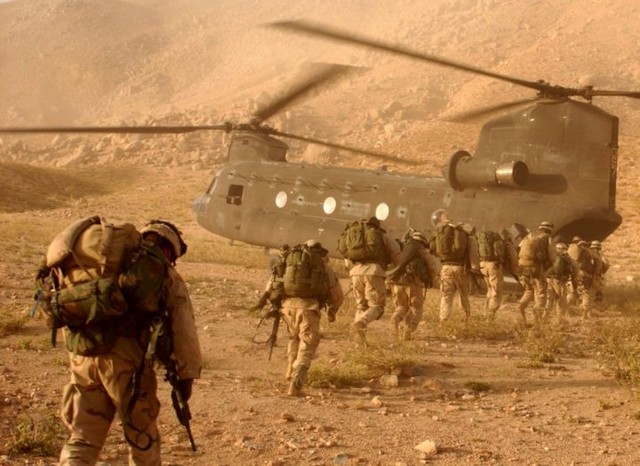
Even this withdrawal, which was announced in late April 2021 and began on May 1, is not as clear-cut as it seems. “It’s time for American troops to come home,” announced U.S. President Joe Biden on April 14, 2021. On the same day, the U.S. Department of Defense clarified that 2,500 troops would leave Afghanistan by September 11. In a March 14 article, meanwhile, the New York Times had noted that the U.S. has 3,500 troops in Afghanistan even though “[p]ublicly, 2,500 U.S. troops are said to be in the country.” The undercount by the Pentagon is obscurantism. A report by the Office of the Assistant Secretary of Defense for Sustainment, furthermore, noted that the United States has about 16,000 contractors on the ground in Afghanistan. They provide a variety of services, which most likely include military support. None of these contractors—or the additional undisclosed 1,000 U.S. troops—are slated for withdrawal, nor will aerial bombardment—including drone strikes—end, and there will be no end to special forces missions either.

On April 21, Blinken said that the United States would provide nearly $300 million to the Afghanistan government of Ashraf Ghani. Ghani, who—like his predecessor Hamid Karzai—often appears to be more of a mayor of Kabul than the president of Afghanistan, is being outflanked by his rivals. Kabul is buzzing with talk of post-withdrawal governments, including a proposal by Hezb-e-Islami leader Gulbuddin Hekmatyar to form a government that he would lead and that would not include the Taliban. The U.S., meanwhile, has consented to the idea that the Taliban should have a role in the government; it is now being said openly that the Biden administration believes the Taliban would “govern less harshly” than it did from 1996 to 2001.

The United States, it appears, is willing to allow the Taliban to return to power with two caveats: first, that the U.S. presence remains, and second, that the main rivals of the United States—namely China and Russia—have no role in Kabul. In 2011, U.S. Secretary of State Hillary Clinton spoke in Chennai, India, where she proposed the creation of a New Silk Road Initiative that linked Central Asia through Afghanistan and via the ports of India; the purpose of this initiative was to cut off Russia from its links in Central Asia and to prevent the establishment of the Chinese Belt and Road Initiative, which now runs all the way to Turkey.

Stability is not in the cards for Afghanistan. In January, Vladimir Norov, former foreign minister of Uzbekistan and the current secretary-general of the Shanghai Cooperation Organization (SCO), addressed a webinar organized by the Islamabad Policy Research Institute. Norov said that Daesh or ISIS has been shifting its fighters from Syria to northern Afghanistan. This movement of extremist fighters is of concern not only to Afghanistan but also to Central Asia and to China. In 2020, the Washington Post revealed that the U.S. military had been providing aerial support for the Taliban as it made gains against ISIS fighters. Even if there is a peace deal with the Taliban, ISIS will destabilize it.

Forgotten Possibilities

Forgotten are the words of concern for Afghan women, words that provided legitimacy for the U.S. invasion in October 2001. Rasil Basu, a United Nations official, served as a senior adviser on women’s development to the Afghan government from 1986 to 1988. The Afghan Constitution of 1987 provided women with equal rights, which allowed women’s groups to struggle against patriarchal norms and fight for equality at work and at home. Because large numbers of men had died in the war, Basu told us, women went into several occupations. There were substantial gains for women’s rights, including a rise in literacy rates. All this has been largely erased during the U.S. war over these past two decades.

Even before the USSR withdrew from Afghanistan in 1988-89, men who are now jockeying for power—such as Gulbuddin Hekmatyar—said that they would undo these gains. Basu remembered the shabanamas, notices that circulated to women and warned them to obey patriarchal norms (she submitted an opinion piece warning of this catastrophe to the New York Times, to the Washington Post, and to Ms. Magazine, all of whom rejected it).

Afghanistan’s last communist head of government—Mohammed Najibullah (1987-1992)—submitted a National Reconciliation Policy, in which he put women’s rights at the top of the agenda. It was rejected by the U.S.-backed Islamists, many of whom remain in positions of authority today.

No lessons have been learned from this history. The U.S. will “withdraw,” but will also leave behind its assets to checkmate China and Russia. These geopolitical considerations eclipse any concern for the Afghan people.

Avram Noam Chomsky is an American linguist, philosopher, cognitive scientist, historian, logician, social critic, and political activist.

Vijay Prashad is an Indian historian, editor and journalist.

10 May 2021

Source: www.transcend.org

Can the Pope End Corruption?

By Frank Vogl

Pope Francis is taking all the right steps to end the deep-rooted corruption in the Vatican. Will he be successful?

6 May 2021 – I’m shocked. Corruption in the Vatican?

The most opaque of institutions is now announcing a new era of transparency. Bishops and cardinals beware. Your finances are going to be subject to inspection and terrible things may happen if you accept a gift worth more than €40 (about $48).

The Pope’s understandable anger

Evidently, Pope Francis has had enough of the mysteries of finance that swirl through the hallowed corridors of the Holy See.

His anger is not so much addressed at sins throughout the centuries, of which — as far as illicit cash is concerned — there have been too many to count.

His anger is addressed at the seemingly unstoppable flow of financial embarrassments that have had a nasty habit of emerging during his eight-year tenure in the Vatican.

Papal decree

The papal decree, known as a “motu proprio,” bars members of the Roman Catholic clergy and those who work for them from practices such as running offshore secretive holding companies in tax havens, engaging in multi-million-dollar mysterious real estate deals and hiding financial assets.

The decree includes new regulations on public procurement. It claims to bring the Vatican into line with the standards and norms embodied in the United Nations Convention Against Corruption.

What started this?

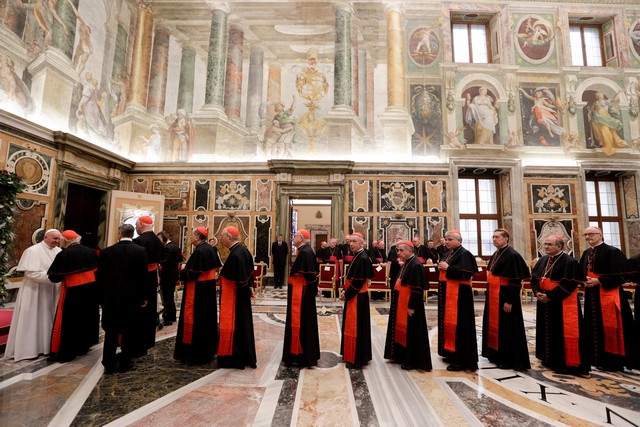
The spark that finally moved the Pope to stamp out corruption was the curious alleged involvement of Cardinal Angelo Becciu, an Italian prelate of the Roman Catholic Church, in a $200 million Vatican investment in a London property.

The Cardinal, once one of the most powerful officials in the Vatican, has now lost his influence, if not yet his title.

Can anyone stop this?

Investigations of one sort or another have been going on for years within the Vatican. The Vatican Bank has been allegedly involved in money laundering.

Its top management has been replaced and international forensic auditors were hired. They have reported widespread mismanagement.

The Pope, however, in announcing his new decree, avoided any mention of any cardinals or bishops who may be under suspicion.

The corruption runs too deep

If I sound somewhat skeptical about the impact that the Pope’s new measures are likely to have, there is a good reason for this. Too many people close to the Vatican’s leadership hold too many secrets.

And they have too many connections beyond the Holy See to allow the dawning of meaningful transparency. It has always been like this.

The Watergate-mafia-Vatican connections

When I came to Washington D.C. as a journalist in early 1974, it was around the time when the Richard Nixon Watergate scandal had soared toward its climax. I was intrigued by the question of who owned the Watergate.

The sprawling complex of offices, apartments and a hotel located right on the banks of the Potomac River had been built by a major Italian construction firm, Societa Generale Immobiliare (SGI).

The man with connections to the financing of SGI was apparently Michele Sindona, then head of Franklin National Bank in New York, the 20th largest bank in the United States. Sindona would not tell me anything about his dealings with SGI or the Watergate.

Franklin National Bank declared bankruptcy in October 1974. Later, it was to emerge that some of its dealings were with the Italian Mafia and with Banco Ambrosiano of Milan, which in turn had close ties to the Vatican.

Sindona and Calvi

Sindona died in an Italian prison in 1986. It was never clear whether he had committed suicide or been poisoned. His once close friend, Roberto Calvi, the one-time chairman of Banco Ambrosiano, was found hanged in June 1984 from London’s Blackfriars Bridge.

Calvi was closely associated with the Institute for the Works of Religion, better known as the Vatican Bank. That institution also happened to be the largest shareholder in Banco Ambrosiano.

As journalist Rupert Cornwell wrote in his 1984 book called “God’s Banker,” Calvi’s ties to many cardinals ran very deep.

The connection to Italian politics

Banco Ambrosiano had deep ties as well to prominent Italian politicians, who also had close relationships with the Vatican.

The sordid corruption that embroiled them all was at the core of major corruption investigations launched by public prosecutors in Milan who brought prominent businessmen and political leaders to trial.

The full role of the Vatican in international dealings with the likes of Sindona and Calvi was never disclosed.

The cover-up operation

This brings us back to current events. In 2018, the Vatican accused Gianluigi Torzi, who had worked in the offices of the Vatican’s Secretary of State, of being behind an alleged fraud who used the Vatican’s cash to buy property in London’s Chelsea.

Under Vatican pressure, Torzi’s UK bank accounts were frozen for a time until a UK judge, Tony Baumgartner, hurled aside a lower court ruling. Judge Baumgartner said there had been appalling non-disclosures and misrepresentations by the Vatican.

Once again, as so often in the past, the Vatican preferred keeping its financial secrets to itself than revealing them in a court of law. It is a long tradition and one that now Pope Francis seeks to end.

Frank Vogl is co-founder of Transparency International and author of Waging War on Corruption: Inside the Movement Fighting the Abuse of Power.

10 May 2021

Source: www.transcend.org

Israeli Apartheid and Palestine Grievances

By Richard Falk

3 May 2021 – Questions from Rodrigo Craveiro from Correio Braziliense, 27 Apr 2021, in response to Report of Human Rights Watch on Israeli Apartheid; it is followed by my responses to questions of Zahra Mirzafarjouyan on behalf of Mehr News Agency in Tehran, addressing some of the underlying causes of Palestinian grievances.

1- In the 213-page report, HRW accuses the Israeli authorities of crimes against humanity of apartheid and of persecuting the Palestinians. What do you have to say about it?

For a mainstream and highly respected NGO such HRW to make such accusations, backed by extensive documentation, is a major development, almost unthinkable a few years ago. There will certainly be hostile reactions from Israeli sources and governments supporting in Israel but many consequences will follow adverse to Israel. It is notable that this HRW Report came just months after the principal Israeli human rights NGO B’Tselem issued a similar bombshell report that also concluded that Israel was guilty of the crime of apartheid.

Although apartheid originated with the racist regime in South Africa the international crime of apartheid need not resemble those structures of white supremacy. It stands on its own.

It is also highly significant that the finding of apartheid pertains not just to occupied Palestine, but to Israel itself, or to the entirety of Palestine as it existed under the British mandate, that is, from the Jordan River to the Mediterranean Sea. This extended scope of criminality is explained not only by references to the similarity of discriminatory practices, but also by Israel annexationist moves against Jerusalem and the West Bank.

2- How do you see the use of the term “apartheid” for the situation in the Palestinian territories?

It is has been increasingly recognized by independent expert observers that the interplay of the Israeli state and the Palestinian people satisfies the core features of the crime of apartheid. The Israel Basic Law of 2018 made explicit the claim of Jewish supremacy by vesting the right of self-determination exclusively in the Jewish people.

It should be understood that the allegation of apartheid is based on the core feature of the crime, which is domination, systemic discrimination, and victimization so as to sustain Jewish supremacy over the Palestinians under their control. Apartheid is defined in the HRW Report by reference to comprehensive racial domination of Jews over Palestinians and in Article 7(j) of Rome Statute governing the International Criminal Court as one type of Crime Against Humanity. The most authoritative definition of apartheid from the perspective of international law is to be found in Article II of the 1973 International Convention on the Suppression of the Crime of Apartheid, which is reprinted in full because of its importance:

Article II

For the purpose of the present Convention, the term “the crime of apartheid”, which shall include similar policies and practices of racial segregation and discrimination as practised in southern Africa, shall apply to the following inhuman acts committed for the purpose of establishing and maintaining domination by one racial group of persons over any other racial group of persons and systematically oppressing them:

(a) Denial to a member or members of a racial group or groups of the right to life and liberty of person:

(i) By murder of members of a racial group or groups;

(ii) By the infliction upon the members of a racial group or groups of serious bodily or mental harm, by the infringement of their freedom or dignity, or by subjecting them to torture or to cruel, inhuman or degrading treatment or punishment;

(iii) By arbitrary arrest and illegal imprisonment of the members of a racial group or groups;

(b) Deliberate imposition on a racial group or groups of living conditions calculated to cause its or their physical destruction in whole or in part;

(c) Any legislative measures and other measures calculated to prevent a racial group or groups from participation in the political, social, economic and cultural life of the country and the deliberate creation of conditions preventing the full development of such a group or groups, in particular by denying to members of a racial group or groups basic human rights and freedoms, including the right to work, the right to form recognized trade unions, the right to education, the right to leave and to return to their country, the right to a nationality, the right to freedom of movement and residence, the right to freedom of opinion and expression, and the right to freedom of peaceful assembly and association;

d) Any measures including legislative measures, designed to divide the population along racial lines by the creation of separate reserves and ghettos for the members of a racial group or groups, the prohibition of mixed marriages among members of various racial groups, the expropriation of landed property belonging to a racial group or groups or to members thereof;

(e) Exploitation of the labour of the members of a racial group or groups, in particular by submitting them to forced labour;

(f) Persecution of organizations and persons, by depriving them of fundamental rights and freedoms, because they oppose apartheid.

It is clear that there is no legal requirement that Israeli apartheid resemble South African apartheid. The policies and practices may vary with national conditions, but it makes no difference so long as the core reliance on discriminatory practices to maintain racial or ethnic supremacy is present.

The HRW Report specifies the kinds of systemic discrimination that has been undertaken by Israeli apartheid to maintain Jewish domination and to secure Palestinian subordination. Among the principal policies and practices constituting Israeli apartheid are as follows: confiscation of Palestinian land; discriminatory issuance of building permits; restrictions on movement; manipulation of residency rights; discriminatory budgeting of public services; closure of Gaza; 99.7% conviction rate in Israeli military courts prosecuting Palestinians living under occupation.

3- The report recommends the prosecution of the International Criminal Court to open an investigation against the State of Israel for crimes against humanity and apartheid. How do you analyze this?

It is a simple matter. The HRW Report found overwhelming evidence of discriminatory practices based on the dual identities of Jew and Palestinian that seemed to establish a strong case for alleging apartheid as a Crime against Humanity under the Rome Statute. Israel is not a Party of the Rome Statute, and hence crimes on its territory are not within the jurisdictional reach of the ICC. However, Palestine is a Party, and as a result the ICC has legal authority to inquiry into alleged crimes committed on occupied Palestinian territories since Palestine became a Party,, which covers the West Bank, East Jerusalem, and Gaza. As it happens, the ICC decided earlier in 2021 that it possesses this authority to conduct criminal investigations of occupied Palestine with respect to Israeli crimes in violation of the law of war arising out of its military operations in Gaza back in 2014, its uses of excessive force in responding to Great March of Return in 2018, and its unlawful settlement activity in the West Bank and East Jerusalem.

Whether this will actually happen is problematic. The United States not only backs Israel in the contention that the ICC lacks authority to proceed against non-Parties, but has its own complaint arising from an investigation of its crimes in Afghanistan and some secret black sites in Europe where torture is alleged to have occurred of Afghan detainees. The ICC is a fragile international institutional with severe funding challenges that partly reflect the geopolitical

pressure it has come under in recent years since it began challenging the impunity of Western states. Whether the UN follows the recommendation of HRW to set up a commission of inquiry is more uncertain. It could happen despite furious opposition by Israel and its supporters, but if as is likely the findings and recommendations were similar to those of the HRW, it seems almost certain that their implementation will be effectively blocked, This has been the fate of the several UN formal inquiries into Israeli wrongdoing, most prominently the Goldstone Commission investigating the violations of the law of war during the Israeli attack on Gaza in 2008-2009. All these reports confirmed Israeli wrongdoing, yet all were blocked when it came to carrying out the policy recommendations.

And yet this report, and the trend to acknowledge credibly on the basis of evidence and legal analysis that Israel is an apartheid state is of lasting importance. It will spread and intensify the solidarity efforts of pro-Palestinian groups throughout the world. It will make it hard to smear such efforts as anti-Semitism. It will strengthen the resolve of Palestinian resistance. In years to come we may look back on this day when HRW issued its report as the turning point in the struggle. It is time to declare Palestine as the victor in the Legitimacy War for the control of the legal and moral discourse, the symbolic battlefield where many of the prolonged struggles of the last 75 years have been won and lost.

**********************************************

Questions from Zahra Mirzafarjouyan, Mehr News Agency (May 1, 2021), on Failures to Protect the Basic Rights of the Palestinian People

Have international organizations been successful in addressing the human rights situation in Palestine? If so, why are Israel’s human rights abuses still continuing?

International organizations, particularly the United Nations, has a mixed record when it comes to dealing with human rights violations in Palestine. The UN, especially the Human Rights Council, has a generally good record in identifying violations and recommending remedies. Such delimitations of Israeli behavior are important in validating Palestinian grievances and justifying international solidarity efforts. Unfortunately, this symbolic verification of wrongdoing with respect to human rights is not substantively implemented. All efforts to enforce human rights are

blocked by geopolitics, and particularly the United States. This interference takes various forms, including shielding Israel from accountability by the use of the veto power entrusted to the five Permanent Members of the Security Council.

In addition, Israel has defied the findings and recommendations of international organizations that have found it responsible for serious violations of international human rights standards and the norms of international humanitarian law without suffering from adverse consequences. Israel defends itself not by substantive claims that it has been falsely accused, but by contending falsely that its critics are guilty of antisemitism.

2. Why are most UN Security Council resolutions against the Israeli regime vetoed by the United States?

The United States has interpreted its ‘special relationship’ as obliging it to shield Israel from criticism at the UN and to block the implementation of any moves to hold Israel accountable. Partly the US Government takes such a position because of its strategic interests in the region and partly as a reflection of well-organized pro-Israeli lobbying,

which has been very effective with the US Congress. The UK and France, and the EU generally, have also supported Israel at the international level, although not as strongly as the US.

3. Which governments do you think play the biggest role in violating Palestinian rights?

It seems obvious that the US and the EU countries are most responsible. This reflects in part the broader conflict patterns in the Middle East, which focus on Iran. It is generally believed in the West that Iran seeks the destruction of the Jewish state, and this partly accounts for the strong backing of Israel as the last European colonial venture. It is my understanding that Iran opposes the Zionist Project so far as it seeks to extend Jewish supremacy over the non-Jewish residents of Israel and the Occupied Palestinian Territories. This supremacy has been recently determined to be an instance of the international crime of apartheid by the influential and politically independent human rights organization, Human Rights Watch, as well as by the leading human rights NGO in Israel, B’Tselem.

4. What is the mission of world public opinion, especially Europe and the United States, in dealing with such inhuman behavior?

There is an encouraging increase is solidarity support in Europe and the US for the Palestinian struggle to achieve basic rights. The BDS campaign is exerting pressure from without and below upon Israel in a manner similar to anti-apartheid campaign waged successfully against South Africa more than 25 years ago. Israel is losing the Legitimacy War to the Palestinian movement, and the history of anti-colonial movements has demonstrated that what happens with respect to the control of the legitimacy discourse is generally more important over time than what happens on the battlefield in terms of the ultimate political outcome of political struggles in the period since World War II.

5. How do you assess the internal situation in Israel, given the growing economic pressures and identity challenges in this society?

I think the electoral impasse in Israel is a clear indication that all is not well. Israel has drifted politically steadily to the right as to the pursuit of a diplomatic solution of the conflict with Palestine, and feels no current security pressure to scale back the ambitions of the Zionist movement. At the same time there are internal identity challenges evident in the tensions between the secular character of the Israeli state and the increasing leverage of extreme Orthodox Judaism. Whether the economic effects of the boycott and divestment efforts supporting Palestinian goals is being offset by the normalization agreements concluded with Arab governments at the end of 2020 remains to be seen.

6. Why have peace projects in the region, which are more in the interests of Israel, failed to move forward?

Israel relies on alleged security threats from Iran to keep its citizens mobilized and unified around this central challenge, although it is Israel that commits aggression against Iran and tries its best to prevent the revitalization of the JCPOA Nuclear Agreement, which will have the effect of eliminating US sanctions on Iran. There has been a shift in Israeli foreign policy priorities from the Palestinian/Arab threat, which has been neutralized at present, to the primacy of the Iranian threat. Iran is seen as threatening Israel’s nuclear weapons regional monopoly and as supporting groups throughout the region that are perceived as hostile to Israel’s interests, including Hamas, Hezbollah, and the Houthis. Israel is aware that the regional balance could shift quickly against it by future political developments, as well as by the deployment and development of weaponry that could challenge its security at home and throughout the region. So long as the Islamic Republic Tehran exists, Israel will base its foreign policy on aggressive military actions toward Iran. Israel has always felt that its regional security depends on opposing the consolidation of any strong regional actor that is sympathetic with the Palestinian struggle, such as Iran, Turkey, and Syria.

Richard Falk is a member of the TRANSCEND Network, an international relations scholar, professor emeritus of international law at Princeton University, Distinguished Research Fellow, Orfalea Center of Global Studies, UCSB, author, co-author or editor of 60 books, and a speaker and activist on world affairs. In 2008, the United Nations Human Rights Council (UNHRC) appointed Falk to two three-year terms as a United Nations Special Rapporteur on “the situation of human rights in the Palestinian territories occupied since 1967.” Since 2002 he has lived in Santa Barbara, California, and associated with the local campus of the University of California, and for several years chaired the Board of the Nuclear Age Peace Foundation. His most recent book is On Nuclear Weapons, Denuclearization, Demilitarization, and Disarmament (2019).

10 May 2021

Source: www.transcend.org

Israel Is Trying Hard to Erase Jerusalem’s Palestinians

By Jalal Abukhater

4 May 2021 – For us Jerusalemites, it is frankly nauseating to hear commentators throw around cliches of “cycle of violence”, call for a “return to calm”, and generally engage in bothsidesism, whenever violence erupts. And in the past few weeks, we have heard them yet again. There are no two equal sides in Jerusalem.

The problem with these statements is that they whitewash the fact that Jerusalem is a city under violent occupation and its occupier, Israel, has made its intent to slowly uproot the native population quite public.

In this sense, violence is a permanent feature of the lives of Jerusalem residents, even when outside observers perceive the streets to be “quiet”. And it is not a matter of “both sides” de-escalating.

This past year had been particularly violent for Palestinian Jerusalemites. The impact of COVID-19 on our community is dwarfed by the effects of relentless harassment, arrests, home demolition and displacement by the Israeli authorities, ultimately aimed at the ethnic cleansing of the city.

No one should be surprised at the amount of anger Palestinians hold towards the Israeli occupation authorities in the city. Their encroachments on the rights of our community are endless and are directly responsible for any uptick in violence.

Such is the case with this latest violent episode which began in the first days of the holy month of Ramadan.

Ramadan is a special time for Muslims all around the world, but in Jerusalem, the festive atmosphere is simply magical. It is a time when Jerusalemites – young and old – come together with friends and family, stroll through the streets of the city, buy sweets, drink coffee, and enjoy the light displays, impromptu music shows and street performances.

You would not see Jerusalem come alive late at night during any other time of the year. It is a special experience that reflects the strong communal bonds among Palestinian Jerusalemites. And it is, of course, a favourite occasion for the Israeli authorities to harass Palestinians and spoil their festivities. This year was no different.

On April 12, a day before the start of Ramadan, I walked down the steps of Damascus Gate into the Old City to have my last hummus and falafel breakfast meal at Abu Shukri, before beginning the month-long fast. On my way, I noticed the first signs that the Israeli authorities were planning something. The space, benches and steps around the Damascus Gate plaza were blocked by metal barricades. Damascus Gate, with its three police garrisons erected in recent years, looked like a militarised encampment.

There was no reason to set up these barriers at a popular Ramadan hangout spot other than to upset the Palestinians. The decision to bar West Bank Palestinians from visiting Jerusalem to pray at Al-Aqsa, citing a lack of vaccinations as an excuse, further riled Jerusalemites.

The reaction was immediate: on the first day of Ramadan, April 13, a large number of young people gathered at the Damascus Gate to protest against the arbitrary actions of the Israeli occupier. Over the following days, the protests grew, as Israeli provocations continued. On April 22, hundreds of extremist Jews marched on the old city under the protection of the Israeli police, chanting “Death to Arabs!” Palestinian youth were relentless in their resistance.

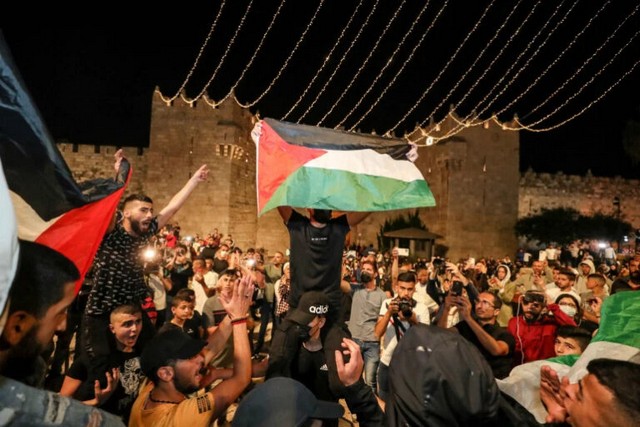
Thirteen days into Ramadan, on April 25, the barricades fell. I arrived a little after 9pm that night, around the time when people were beginning to gather after Taraweeh prayers. Large crowds of Palestinians marched, determined to take back the occupied Damascus Gate. The Israeli police withdrew and the youth then forced the removal of all barricades and poured into the space. Chanting, singing and dancing, we reasserted our presence on our land.

The “victory” was bittersweet, however. For almost two weeks, Palestinian youth were subjected to brutal suppression, getting beaten up, attacked with stun grenades and foul-smelling “skunk” water cannon, and detained. And while foreign media paid attention to these dramatic images, it ignored completely Israel’s other sustained campaigns of brutality against Jerusalemites.

While Palestinian youth were resisting encroachment on their public spaces, some Jerusalemites were facing brutal dispossession of their homes.

In Jerusalem’s Sheikh Jarrah neighbourhood, 500 Palestinians from 28 families are facing eviction from homes that have belonged to them for generations. In February, a court ruled that six Palestinian houses where 27 people live are to be handed over to Jewish settlers. Earlier this week, the court gave the Palestinian families four days to “reach an agreement” with the Jewish settlers, in which they would renounce that they own their homes in exchange for a delay of their eviction.

The appalling absurdity of the court decision is a prime example of Israel’s brutal occupation and ethnic cleansing policies. In Israeli apartheid courts, there is no justice for Palestinians. More than 200 families in East Jerusalem are at risk of eviction due to similar court cases filed against them.

The Palestinian families have vowed to resist. In one video that went viral prior to the court hearing, Sheikh Jarrah resident Muna al-Kurd is seen confronting a settler about stealing Palestinian homes, in which he replies with a heavy American accent “If I don’t steal it, someone else will.” Half of al-Kurd’s home had been taken over by Jewish settlers in 2009.

Home demolitions are another brutal Israeli practice to have continued over the past year, even amid the worst of the COVID-19 pandemic. Since March 2020, more than 163 homes and structures were demolished in East Jerusalem, displacing 359 Palestinians, including 167 children.

In February, the Jerusalem Municipality requested the activation of demolition orders against some 70 Palestinian homes in the al-Bustan area of Silwan neighbourhood, adjacent to the Old City of Jerusalem. The Israeli municipality plans to build an archaeological park there. If carried out, the demolitions would uproot some 1,500 Palestinians.

Jabal al-Mukaber, a neighbourhood of Jerusalem most affected by demolitions over the past three years, has seen homes demolished and families displaced to make way for a planned ring road that is supposed to connect Israeli settlements in the southern West Bank to Jerusalem. In June 2020 alone, 23 buildings belonging to Palestinians were demolished, resulting in the displacement of 57 people, including 34 children.

In al-Walaja, seven buildings were destroyed and families displaced without warning to make space for the establishment of an Israeli national park. Homes were also demolished in the Sur Bahir area because the buildings were in a “buffer zone”, arbitrarily determined by Israeli authorities.

Israeli violence does not stop at evictions and home demolitions. It also extends into the political sphere, where the Israeli authorities continue to deny the Jerusalemite Palestinians their political rights. They regularly attack and arrest Palestinians engaged in political activities or attempting to represent political parties; even Palestinian Authority (PA) officials are harassed.

In recent days, the Israeli government unequivocally indicated that it would not allow the Palestinian legislative elections, originally scheduled for May 22, to be also held in East Jerusalem, where nearly 400,000 Palestinians live. Israeli police regularly raided events that promoted the Palestinian elections and arrested Palestinian parliamentary candidates. As a result, PA President Mahmoud Abbas officially postponed the planned elections, citing Israel’s outright refusal for the election process to be held in East Jerusalem.

By contrast, Israelis living in Jerusalem have been free to vote four times in the past two years, many of them casting a ballot for the same Jewish extremists who recently were chanting “Death to Arabs!” in our streets.

Jerusalem may have disappeared from the news for now, but the occupiers have not left us alone. The colonial violence has not gone away. On Thursday, Palestinian families in Sheikh Jarrah expect to be evicted from their homes by force, to be immediately replaced by Jewish settlers.

Over the weekend is Laylat al-Qadr, the one night of Ramadan where Jerusalem’s Al-Aqsa mosque is the busiest, which also coincides with what Israelis call “Jerusalem Day”, the day Israel occupied East Jerusalem. Israelis mark that day by marching through our streets and raiding Al-Aqsa, fully protected by the Israeli police, who put us under strict lockdown. But we will not passively watch on.

Israel does its best to make life for Jerusalem’s Palestinians a misery and a constant struggle. It does everything to make us disappear. But we will not. Every day, we face police brutality, arrests, home evictions and demolitions, impoverishment and a denial of basic human rights. The occupier’s violence is a permanent feature of our lives.

But we are determined to fight for our city and remain, no matter what Israel does in its tireless effort to erase us.

Jalal Abukhater, a Jerusalemite, holds an MA in International Relations and Politics from the University of Dundee.

10 May 2021

Source: www.transcend.org

Napoleon Between War and Revolution

by Jacques R. Pauwels

The French Revolution was not a simple historic event but a long and complex process in which a number of different stadia may be identified. Some of these stadia were even counterrevolutionary in nature, for example the “aristocratic revolt” at the very start. Two phases, however, were unquestionably revolutionary.

The first stage was “1789”, the moderate revolution. It put an end to the “Ancien Régime” with its royal absolutism and feudalism, the power monopoly of the monarch and privileges of the nobility and the Church. The important achievements of “1789” also included the Declaration of the Rights of Man and of the Citizen, the equality of all Frenchmen before the law, the separation of Church and state, a parliamentary system based on a limited franchise, and, last but not least, the creation of an “indivisible”, centralized, and modern French state. These achievements, amounting to a major step forward in the history of France, were enshrined in a new constitution that was officially promulgated in 1791.

France’s pre-1789 Ancien Régime had been intimately associated with the absolute monarchy. Under the revolutionary system of “1789”, on the other hand, the king was supposed to find a comfortable role within a constitutional and parliamentary monarchy. But that did not work out because of intrigues by Louis XVI, and thus arose a radically new type of French state in 1792, a republic. “1789” was made possible by the violent interventions of the Parisian “mob”, the so-called “sans-culottes”, but its outcome was essentially the handiwork of a moderate class of people, virtually exclusively members of the haute bourgeoisie, the upper-middle class. On the ruins of the Ancien Régime, which had served the interests of the nobility and the Church, these gentlemen erected a state that was supposed to be in the service of the well-to-do burghers. Politically, these solid gentlemen initially found a home in the “club” or embryonic political party of the Feuillants, subsequently in that of the Girondins. The latter name reflected the place of origin of its leading element, a contingent of members of the bourgeoisie of Bordeaux, the great harbour on the banks of the Gironde estuary, whose wealth was based not only on trade in wine but also, and primarily, in slaves. In Paris, the den of the revolutionary lions, the sans-culottes, and more respectable but still radical revolutionaries known as the Jacobins, these provincial gentlemen never felt at home.

The second revolutionary stage was “1793”. That was the “popular”, radical, egalitarian revolution, with social rights (including the right to work) and relatively thorough social-economic reforms, reflected in a constitution promulgated in the revolutionary year I (1793), which never went into effect. In that stage, incorporated by the famous Maximilien Robespierre, the revolution was socially oriented and prepared to regulate the national economy, thus limiting individual freedom to some extent, “pour le bonheur commun”, that is, for the benefit of the entire nation. Since the right to own property was rmaintained, one can describe “1793” in contemporary terminology as “social democratic”, rather than truly “socialist”.

“1793” was the work of Robespierre and the Jacobins, especially the most ardent Jacobins, a group known as the Montagne, the “mountain”, because they occupied the highest rows of seats in the legislature. They were radical revolutionaries, predominantly of petit-bourgeois or lower-middle class background, whose principles were just as liberal as those of the haute bourgeoisie. But they also sought to satisfy the elementary needs of the Parisian plebeians, especially the artisans who constituted a majority among the sans-culottes. The sans-culottes were ordinary folks who wore long pants instead of the knickers (culottes) complemented by silk stockings typical of aristocrats and prosperous burghers. They were the storm troops of the revolution: the storming of the Bastille was one of their achievements. Robespierre and his radical Jacobins needed them as allies in their struggle against the Girondins, the bourgeoisie’s moderate revolutionaries, but also against the aristocratic and ecclesiastical counterrevolutionaries.

The radical revolution was in many ways a Parisian phenomenon, a revolution made in, by, and for Paris. Unsurprisingly, the opposition emanated mainly from outside of Paris, more specifically, from the bourgeoisie in Bordeaux and other provincial cities, exemplified by the Girondins, and from the peasants in the countryside. With “1793”, the revolution became a kind of conflict between Paris and the rest of France.

The counterrevolution – embodied by the aristocrats who had fled the country, the émigrés, priests, and seditious peasants in the Vendée and elsewhere in the provinces – was hostile to “1789” as well as “1793” and wanted nothing less than a return to the Ancien Régime; in the Vendée, the rebels fought for king and Church. As for the wealthy bourgeoisie, it was against “1793” but in favour of “1789”. In contrast to the Parisian sans-culottes, that class had nothing to gain but a lot to lose from radical revolutionary progress in the direction indicated by the Montagnards and their constitution of 1793, promoting egalitarianism and statism, that is, state intervention in the economy. But the bourgeoisie also opposed a return to the Ancien Régime, which would have put the state back in the service of the nobility and the Church. “1789”, on the other hand, resulted in a French state in the service of the bourgeoisie.

A retour en arrière to the moderate bourgeois revolution of 1789 – but with a republic instead of a constitutional monarchy – was the objective and in many ways also the result of the “Thermidor”, the 1794 coup d’état that put an end to the revolutionary government – and the life – of Robespierre. The “Thermidorian reaction” produced the constitution of the year III which,.as the French historian Charles Morazé has written, “secured private property and liberal thought and abolished anything that seemed to push the bourgeois revolution in the direction of socialism”. The Thermidorian updating of “1789” produced a state that has correctly been described as a “bourgeois republic” (république bourgeoise) or a “republic of the property owners” (république des propriétaires).

Thus originated the Directoire, an extremely authoritarian regime, camouflaged by a thin layer of democratic varnish in the shape of legislatures whose members were elected on the basis of a very limited franchise.The Directoire found it excruciatingly difficult to survive while steering between, on the right, a royalist Scylla yearning for a return to the Ancien Régime and, on the left, a Charybdis of Jacobins and sans-culottes eager to re-radicalize the revolution. Various royalist and (neo-)Jacobin rebellions erupted, and each time the Directoire had to be saved by the intervention of the army. One of these uprisings was smothered in blood by an ambitious and popular general called Napoleon Bonaparte.

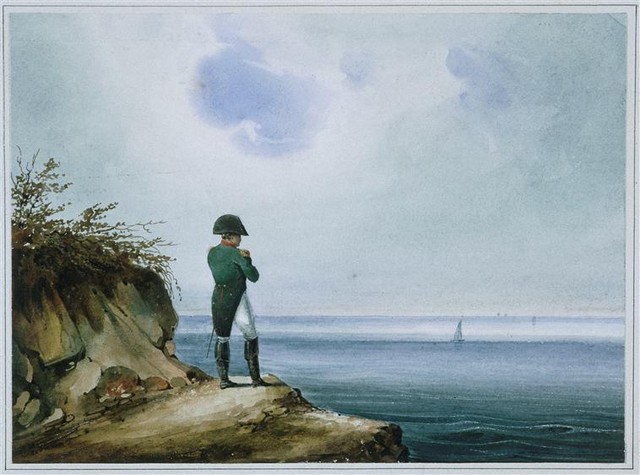
The problems were finally solved by means of a coup d’état that took place on 18 Brumaire of the year VIII, November 9, 1799. To avoid losing its power to the royalists or the Jacobins, France’s well-to-do bourgeoisie turned its power over to Napoleon, a military dictator who was both reliable and popular. The Corsican was expected to put the French state at the disposal of the haute bourgeoisie, and that is exactly what he did. His primordial task was the elimination of the twin threat that had bedeviled the bourgeoisie. The royalist and therefore counterrevolutionary danger was neutralized by means of the “stick” of repression but even more so by the “carrot” of reconciliation. Napoleon allowed the emigrated aristocrats to return to France, to recuperate their property, and to enjoy the privileges showered by his regime not only on the wealthy burghers but on all property owners. He also reconciled France with the Church by signing a concordat with the Pope.

To get rid of the (neo-)Jacobin threat and to prevent a new radicalization of the revolution, Napoleon relied mostly on an instrument which had already been used by the Girondins and the Directoire, namely warfare. Indeed, when we recall Napoleon’s dictatorship, we do not think so much of revolutionary events in the capital, as in the years 1789 to 1794, but of an endless series of wars fought far from Paris and in many cases far beyond the borders of France. That is not a coincidence, because the so-called “revolutionary wars” were functional for the primordial objective of the champions of the moderate revolution, including Bonaparte and his sponsors: consolidating the achievements of “1789” and preventing both a return to the Ancien Régime and a repeat of “1793”.

With their policy of terror, known as la Terreur – the Terror -, Robespierre and the Montagnards had sought not only to protect but also to radicalize the revolution. That meant that they “internalized” the revolution within France, first and foremost in the heart of France, the capital, Paris. It is not a coincidence that the guillotine, the “revolutionary razor”, symbol of the radical revolution, was set up in the middle of Place de la Concorde, that is, in the middle of the square in the middle of the city in the middle of the country. To concentrate their own energy and the energy of the sans-culottes on the internalization of the revolution, Robespierre and his Jacobin comrades – in contrast to the Girondins – opposed international wars, which they considered to be a waste of revolutionary energy and a threat to the revolution. Conversely, the endless series of wars that were fought afterwards, first under the auspices of the Directoire and then Bonaparte, amounted to an externalization of the revolution, an exportation of the bourgeois revolution of 1789. Domestically, they simultaneously served to prevent a further internalization or radicalization of the revolution à la 1793.

War, international conflict, served to liquidate the revolution, domestic conflict, class conflict. This was done in two ways. First, war caused the most ardent revolutionaries to disappear from the cradle of the revolution, Paris. Initially as volunteers, but all too soon as draftees, countless young sans-culottes vanished from the capital to fight in foreign lands, all too often never to return. As a result, in Paris only a comparative handful of male fighters remained to carry out major revolutionary actions such as the storming of the Bastille, too few to repeat the successes of the sans-culottes between 1789 and 1793; this was clearly demonstrated by the failure of the Jacobin insurrections under the Directoire. Bonaparte perpetuated the system of compulsory military service and perpetual war. “It was he”, wrote the historian Henri Guillemin, “who shipped the potentially dangerous young plebeians far away from Paris and even all the way to Moscow – to the great relief of the well-to-do burghers [gens de bien]”.

Second, the news of great victories generated patriotic pride among the sans-culottes who had stayed at home, a pride that was to compensate for the dwindling revolutionary enthusiasm. With a little help form the god of war, Mars, the revolutionary energy of the sans-culottes and the French people in general could thus be directed into other channels, less radical in revolutionary terms. This reflected a displacement process whereby the French people, including the Parisian sans-culottes, gradually lost its enthusiasm for the revolution and the ideals of liberty, equality, and solidarity not only among Frenchmen but with other nations; instead, the French increasingly worshipped the golden calf of French chauvinism, territorial expansion to their country’s supposedly “natural” borders such as the Rhine, and the international glory of the “great nation” and – after 18 Brumaire – of its great leader, soon to be emperor: Bonaparte.

Thus we can also understand the ambivalent reaction of foreigners to the French wars and conquests of that era. While some – e.g. the Ancien Régime elites and the peasants – rejected the French Revolution in toto and others – above all local Jacobins such as the Dutch “patriots” – warmly welcomed it, many people wavered between admiration for the ideas and achievements of the French Revolution and revulsion for the militarism, the boundless chauvinism, and the ruthless imperialism of France after Thermidor, during the Directoire, and under Napoleon.

Many non-French struggled with simultaneous admiration and aversion for the French Revolution. In others, initial enthusiasm gave way sooner or later to disillusion. The British, for example, welcomed “1789” because they interpreted the moderate revolution as the importation into France of the kind of constitutional and parliamentary monarchy they themselves had adopted a century earlier at the time of their so-called Glorious Revolution. William Wordsworth evoked that feeling with the following lines:

Bliss was it in that dawn to be alive,
But to be young was very heaven!

After “1793” and the Terror associated with it, however, most British observed the events on the other side of the Channel with revulsion. Edmund Burke’s Reflections on the Revolution in France – published in November 1790 – became the counterrevolutionary Bible not only in England but all over the world. In the mid-20th century, George Orwell was to write that “to the average Englishman, the French Revolution means no more than a pyramid of severed heads”. The same thing could be said about virtually all non-French (and many French) to this day.

It was to put an end to the revolution in France itself, then, that Napoleon abducted it from Paris and exported it to the rest of Europe. In order to prevent the mighty revolutionary current from excavating and deepening its own channel – Paris and the rest of France – first the Thermidorians and later Napoleon caused its troubled waters to overflow the borders of France, inundate all of Europe, thus becoming vast, but shallow and calm.

To take the revolution away from its Parisian cradle, to put an end to what was in many ways a project of the petit-bourgeois Jacobins and sans-culottes of the capital, and conversely, to consolidate the moderate revolution dear to bourgeois hearts, Napoleon Bonaparte was the perfect choice, even symbolically. He was born in Ajaccio, the French provincial city that happened to be the farthest from Paris. Moreover, he was “a child of the Corsican gentry [gentilhommerie corse]”, that is, the scion of a family that could be equally described as being haut-bourgeoise but with aristocratic pretensions, or else as lesser nobility but with a bourgeois lifestyle. In many ways, the Bonapartes belonged to the haute bourgeoisie, the class that, in all of France, had managed to achieve its ambitions thanks to “1789”, and later, in the face of threats from the left as well as the right, attempted to consolidate this triumph via a military dictatorship. Napoleon embodied the provincial haute bourgeoisie which, following the example of the Girondins, wanted a moderate revolution, crystallized in a state, democratic if possible but authoritarian if necessary, that would permit itself to maximize its wealth and power. The experiences of the Directoire had revealed the shortcomings in this respect of a republic with relatively democratic institutions, and it was for that reason that the bourgeoisie finally sought salvation in a dictatorship.

The military dictatorship that replaced the post-Thermidorian “bourgeois republic” appeared on the scene like a deus ex machina in Saint-Cloud, a village just outside Paris, on “18 Brumaire of the year VIII”, that is, 9 November 1799. This decisive political step in the liquidation of the revolution was simultaneously a geographic step away from Paris, away from the hotbed of the revolution, away from the lions’ den of revolutionary Jacobins and sans-culottes. In addition, the transfer to Saint-Cloud was a small but symbolically significant step in the direction of the far less revolutionary, if not counterrevolutionary countryside. Saint-Cloud happens to be on the way from Paris to Versailles, the residence of the absolutist monarchs of the pre-revolutionary era. The fact that a coup d’état yielding an authoritarian regime took place there was the topographic reflection of the historic fact that France, after the democratic experiment of the revolution, found itself back on the road towards a new absolutist system similar to the one of which Versailles had been the “sun”. But this time the destination was an absolutist system presided over by a Bonaparte rather than a Bourbon and – much more importantly – an absolutist system in the service of the bourgeoisie rather than the nobility.

With respect to the revolution, Bonaparte’s dictatorship was ambivalent. With his advent to power, the revolution was ended, even liquidated, at least in the sense that there would be nor more egalitarian experiments (as in “1793”) and no more efforts to maintain a republican-democratic façade (as in “1789”). On the other hand, the essential achievements of “1789” were maintained and even enshrined.

So, was Napoleon a revolutionary or not? He was for the revolution in the sense that he was against the royalist counterrevolution, and since two negatives cancel each other, a counter-counterrevolutionary is automatically a revolutionary, n’est-ce pas? But one can also say that Napoleon was simultaneously against the revolution: he favoured the moderate, bourgeois revolution of 1789, associated with the Feuillants, Girondins, and Thermidorians, but was against the radical revolution of 1793, handiwork of the Jacobins and sans-culottes. In her book La Révolution, une exception française?, the French historian Annie Jourdan quotes a contemporary German commentator who realized that Bonaparte “was never anything other than the personification of one of the different stages of the revolution”, as he wrote in 1815. That stage was the bourgeois, moderate revolution, “1789”, the revolution Napoleon was not only to consolidate within France but also to export to the rest of Europe.

Napoleon eliminated the royalist as well as Jacobin threats, but he rendered another important service to the bourgeoisie. He arranged for the right to own property, cornerstone of the liberal ideology so dear to bourgeois hearts, to be legally enshrined. And he showed his devotion to this principle by reintroducing slavery, still widely regarded as a legitimate form of property. France had actually been the first country to abolish slavery, namely at the time of the radical revolution, under Robespierre’s auspices. He had done so despite the opposition of his antagonists, the Girondns, supposedly moderate gentlemen, precursors of Bonaparte as champions of the cause of the bourgeoisie and of its liberal ideology, glorifying liberty – but not for slaves.

“In Napoleon”, wrote the historian Georges Dupeux, “the bourgeoisie found a protector as well as a master”. The Corsican was unquestionably a protector and even a great champion of the cause of the well-to-do burghers, but he was never their master. In reality, from the beginning to the end of his “dictatorial” career he was a subordinate of the nation’s captains of industry and finance, the same gentlemen who already controlled France at the time of the Directoire, the “république des propriétaires”, and who had entrusted him with the management of the country on their behalf.

Financially, not only Napoleon but the entire French state were made dependent on an institution that was − and has remained until the present time − the property of the country’s elite, even though that reality was obfuscated by the application of a label that created the impression that it was a state enterprise, the Banque de France, the national bank. Its bankers raised money from the moneyed bourgeoisie and made it available, at relatively high interest rates, to Napoleon, who used it to govern and arm France, to wage endless war, and of course to play emperor with lots of pomp and circumstance.

Napoleon was nothing other than the figurehead of a regime, a dictatorship of the haute bourgeoisie, a regime that knew how to dissimulate itself behind a lavish choreography in the style of ancient Rome, conjuring up first, rather modestly, a consulate and subsequently a boastful empire.

Let us return to the role of the endless series of wars waged by Napoleon, military adventures undertaken for the glory of the “grande nation” and its ruler. We already know that these conflicts served first and foremost to liquidate the radical revolution in France itself. But they also enabled the bourgeoisie to accumulate capital as never before. Supplying the army with weapons, uniforms, food, etc., huge profits were realized by industrialists, merchants, and bankers. The wars were great for business, and the victories yielded territories that contained valuable raw materials or could serve as markets for the finished products of France’s industry. This benefited the French economy in general, but primarily its industry, whose development was thus accelerated considerably. Consequently, industrialists (and their partners in banking) were able to play an increasingly important role within the bourgeoisie.

Under Napoleon, industrial capitalism, poised to become typical of the 19th century, started to overtake commercial capitalism, economic trendsetter during the previous two centuries. It is worth noting that the accumulation of commercial capital in France had been possible above all thanks to the slave trade, while the accumulation of industrial capital had a lot to do with the virtually uninterrupted string of wars fought first by the Directoire and then by Napoleon. In this sense, Balzac was right when he wrote that “behind every great fortune with no apparent source there lies a forgotten crime”.

Napoleon’s wars stimulated the development of the industrial system of production. Simultaneously, they sounded the death knell for the ancient, small-scale, artisanal system in which craftsmen laboured in the traditional, unmechanized manner. Via warfare, the Bonapartist bourgeoisie not only made the sans-culottes – predominantly artisans, shopkeepers, etc. – disappear physically from Paris, it also caused them to vanish from the social-economic landscape. In the drama of the revolution, the sans-culottes had played a major role. Because of the wars that liquidated the (radical) revolution, they, the storm troops of revolutionary radicalism, exited the stage of history.

Thanks to Napoleon, France’s bourgeoisie thus managed to rid itself of its class enemy. But that turned out to be a Pyrrhic victory. Why? The economic future belonged not to the workshops and the craftsmen who laboured “independently”, owned some property, if only their tools, and were therefore petit-bourgeois, but to the factories, their owners, the industrialists, but also their labourers, the wage-earning and typically very poorly paid factory workers. This “proletariat” was to reveal itself to the bourgeoisie as a much more dangerous class enemy than the sans-culottes and other craftsmen had ever been. Moreover, the proletarians aimed to bring about a much more radical revolution than Robespierre’s “1793”. But this was to be a concern for the bourgeois regimes that were to succeed that of the supposedly “great” Napoleon, including that of his nephew, Napoleon III, denigrated by Victor Hugo as “Napoleon le Petit”.

There are many people inside and outside of France, including politicians and historians, who despise and denounce Robespierre, the Jacobins, and the sans-culottes because of the bloodshed associated with their radical, “popular” revolution of 1793. The same folks often display a great deal of admiration for Napoleon, restorer of “law and order” and saviour of the moderate, bourgeois revolution of 1789. They condemn the internalization of the French Revolution because it was accompanied by the Terror, which in France, especially in Paris, made many thousands of victims, and for this they blame the Jacobin “ideology” and/or the presumably innate bloodthirstiness of the “populace”. They appear not to realize – or do not want to realize – that the externalization of the revolution by the Thermidorians and by Napoleon, accompanied by international wars that dragged on for almost twenty years, cost the lives of many millions of people throughout Europe, including countless Frenchmen. Those wars amounted to a much greater and bloodier form of terror than the Terreur orchestrated by Robespierre had ever been.

That terror-regime is estimated to have cost the lives of approximately 50,000 people, representing more or less 0.2 percent of France’s population. Is that a lot or a little, asks the historian Michel Vovelle, who cites these figures in one of his books. In comparison with the number of victims of the wars fought for the temporary territorial expansion of the grande nation and for the glory of Bonaparte, it is very little. The Battle of Waterloo alone, the final battle of Napoleon’s presumably glorious career, including its prelude, the mere “skirmishes” of Ligny and Quatre Bras, caused between 80,000 and 90,000 casualties. Worst of all, many hundreds of thousands of men never returned from his disastrous campaigns in Russia. Terrible, n’est-ce pas? But nobody ever seems to talk about a Bonapartist “terror”, and Paris and the rest of France are full of monuments, streets and squares that commemorate the presumably heroic and glorious deeds of the most famous of all Corsicans.

By substituting permanent warfare for permanent revolution within France, and above all in Paris, noted Marx and Engels, the Thermidorians and their successors “perfected” the strategy of terror, in other words, caused much more blood to flow than at the time of Robespierre’s policy of terror. In any event, the exportation or externalization, by means of war, of the Thermidorian, (haut) bourgeois revolution, update of “1789”, claimed many more victims than the Jacobin attempt to radicalize or internalize the revolution within France by means of la Terreur.

Like our politicians and media, most historians still consider warfare to be a perfectly legitimate state activity anda source of glory and pride for the victors and, even for our inevitably “heroic” losers. Conversely, the tens or hundreds of thousands, and even millions of victims of warfare – now mainly carried out as bombings from the air and therefore really one-sided massacres, rather than wars – never receive the same attention and sympathy as the far less numerous victims of “terror”, a form of violence that is not sponsored, at least not overtly, by a state and is therefore branded as illegitimate.

The present “war on terror” comes to mind. As far as the never-ceasing-to-wage-war superpower is concerned, this is a form of permanent and ubiquitous warfare that stimulates unthinking, flag-waving chauvinism among ordinary Americans – the American “sans-culottes”! – while providing the poorest among them with jobs in the marines. To the great advantage of American industry, this perpetual warfare gives US corporations access to important raw materials such as petroleum, and for weapons manufacturers and many other firms, especially those with friends in the halls of power in Washington, it functions as a cornucopia of sky-high profits. The similarities to Napoleon’s wars are obvious. How do the French say it again? “Plus ça change, plus c’est la même chose”.

With Napoleon Bonaparte, the revolution ended where it was supposed to end, at least as far as the French bourgeoisie was concerned. With his arrival on the scene, the bourgeoisie triumphed. It is not a coincidence that in French cities members of the social elite, known as les notables, meaning businessmen, bankers, lawyers and other representatives of the haute bourgeoisie, like to congregate in cafés and restaurants that are named after Bonaparte, as the brilliant sociologist Pierre Bourdieu has observed.

The haute bourgeoisie has always remained grateful to Napoleon for the eminent services he rendered to their class. The most prominent of these services was the liquidation of the radical revolution, of “1793”, which threatened the considerable advantages the bourgeoisie had acquired, thanks to “1789”, at the expense of the nobility and the Church. Conversely, the bourgeoisie’s hatred of Robespierre, figurehead of “1793”, explains the almost total absence of statues and other monuments, names of streets and squares, that honour his memory – even though his abolition of slavery amounted to one of the greatest achievements in the history of democracy worldwide.

Napoleon is also venerated beyond the borders of France, in Belgium, Italy, Germany, etc., mostly by the well-to-do bourgeoisie. The reason for this is undoubtedly that all those countries were still feudal, quasi-medieval societies, where his conquests made it possible to liquidate their own Ancien Régimes and introduce the moderate revolution, wellspring, as it had already been in France, of considerable improvements for the entire population (except nobility and clergy, of course) but also of special privileges for the bourgeoisie. That probably also explains why, in Waterloo today, not Wellington but Napoleon is the undisputed star of the tourist show, so that tourists who do not know better might get the impression that it was he who won the battle!

Jacques R. Pauwels is the author of The Great Class War: 1914-1918.

7 May 2021

Source: www.counterpunch.org

Is ‘Vaccine Consent’ Journalism Killing The “Watchdog” Model?

A special feature by Kalinga Seneviratne* to mark UNESCO’s World Press Freedom Day.

SYDNEY (IDN) — In recent months, there has been alarming one-sided reporting in the so-called mainstream media—both internationally and nationally—that sounds more like public relations handouts from the big pharmaceutical companies from the West. This ‘vaccine consent’ journalism and the labelling of anyone questioning the safety or ethics of the vaccine roll out as “conspiracy theorists” is slowly but surely killing the “watchdog” role of journalism.

The Libertarian Media Function Theory (LMFT) that we have been teaching in mass communication courses for over half a century as the basis of a ‘free media’, says that the media should have absolute freedom to play the role of a “watchdog” and there should be no censorship because the people are rational, and they should be allowed to make up their minds once they receive a diversity of viewpoints from the news media.

The theme of this year’s UNESCO’s World Press Freedom Day (May 3) is ‘Information as a Public Good’ and is focusing on topics such as transparency of online platforms and the importance of media and information literacy. But it is equally important to focus on the transparency of mainstream corporate media and whether they are acting in the public good, when labelling those who wish to raise concerns about the Covid-19 vaccine roll out as “conspiracy theorists”?

The “watchdog” model of journalism has been on the decline around the world in the past two decades and the ‘manufacturing vaccine consent’ journalism we see today vindicates Noam Chomsky’s theory that the libertarian model is dead in the West. He argues, that as the power of corporate media increase, what we have is a “manufacturing consent” model of “propaganda” journalism to promote the interests of whoever owns or funds the media—be it governments or corporations or powerful interest groups.

Robin Marantz Henig writing in the National Geographic in July last year noted that, except for AIDS, other recent epidemics—such as severe acute respiratory syndrome (SARS) in 2003, Middle East Respiratory Syndrome (MERS) in 2012, and Ebola in 2014—did not go global. “It was easy to attribute susceptibility in other countries to behaviours that didn’t exist in ours,” argued Henig.

“Chinese Virus”

Thus, when Covid-19 spread to the West, the Anglo-American (as well as the Indian) media was quick to grasp US President Donald Trump’s assertion that this is a “Chinese Virus” and politicized the pandemic with reporting sprinkled with racism. This mentality has continued to this day, when non-western vaccines are dismissed as “untrustworthy” even though medical evidence seems to indicate that these are safer (because these uses tested technology, not new experimentations) and as effective as the western ones.

This racism led to the initial Chinese concerns of a possible American or European origin of Covid-19 were not taken seriously while calling for an investigation of American concerns about the virus escaping from the Wuhan Institute of Virology was considered —even by the World Health Organisation (WHO). Among Chinese concerns was the closing down of a US army deadly germ research centre in Fort Detrick, Maryland in August 2019 by the Centre for Disease Control and Prevention (CDC) over safety concerns.

In October 2019, an exercise called “Event 201″[1], organized by John Hopkins University’s Centre for Health Security, was held, simulating a pandemic, which causes 65 million deaths. The press release said: “Event 201 simulates an outbreak of a novel zoonotic coronavirus transmitted from bats to pigs to people that eventually become efficiently transmissible from person to person, leading to a severe pandemic”.

It goes on to describe the virus as originating in pig farms in Brazil and quietly spreading to the community. It then spreads by air travel to Europe, the US, and China, and ultimately creates health scare chaos globally. The event was funded by the Bill and Melinda Gates Foundation, which is also a huge donor to the WHO contributing over $400 million a year[2].

While promoting Covid-19 vaccination with evangelical zeal, in an interview with Britain’s Sky News on April 25, Gates opposed the lifting of patents on Covid-19 vaccines, which countries like South Africa and India have been pressing for, to make these more widely available and especially at cheaper prices.

“The thing that’s holding things back, in this case, is not intellectual property,” Gates said. “It’s not like there’s some idle vaccine factory, with regulatory approval, that makes magically safe vaccines. You’ve got to do the trial on these things. And every manufacturing process needs to be looked at in a very careful way.”[3]

A taboo subject

But questioning or investigating the effectiveness of the trials done on the western vaccines is a taboo subject in the mainstream media today. Even when development of blood clots or deaths following the taking of these vaccines are reported, it is dismissed as “insignificant” compared to millions that have been vaccinated.

In New Zealand, when an airport cleaner who had taken a western vaccine was diagnosed with Covid-19 in late April, the media covered it up arguing that no vaccine will give 100 percent protection. At the same time, when a Chinese medical officer said that their vaccines don’t yet give protection in the 90 per cent range, this was amplified in the Anglo-American media as an admission of the ineffectiveness of the Chinese vaccines.

But, when a peer reviewed article in the British medical journal Lancet[4] said Russia’s Sputnik V was found to be about 95 percent effective after clinical trials, that news was basically ignored or downplayed by the same media.

According to an analysis released on April 22 by the People’s Vaccine Alliance, major western vaccine producers—Pfizer, Johnson & Johnson, and AstraZeneca—have paid out a combined $26 billion in dividends and stock buybacks to their shareholders over the past year. The new report notes that Pfizer/BioNTech and Moderna are projecting revenues of $33.5 billion this year from their mRNA vaccines[5]

In recent weeks, there have been many video clips circulated through social media sites where western activists have accused the rich pharmaceutical companies of using their financial resources to influence the mainstream media to promote their vaccines. UNESCO should be investigating these as part of their media literacy programs.

Many of the western countries’ inability to control the pandemic compared to initial successes in Asia (except for India), has badly dented Western egos. As 2020 was coming to an end, it seems they were racing to prove that they were still the masters of knowledge and the sciences. But when the Russians beat them by launching the Sputnik V vaccine the Western media dismissed it as not properly tested.

But no such questions were asked when the Pfizer vaccine was launched a couple of months later. President Trump hailed it as a “medical miracle” and said the vaccine “will save millions of lives and soon end the pandemic.” [6]

Writing in the South China Morning Post recently, Chandran Nair, the founder and CEO of the Hong Kong based Global Institute for Tomorrow noted that for months, the Russian, Chinese, and Indian vaccines have been dismissed as a serious option to combat Covid-19 and viewed with suspicion.[7].

Non-Western vaccines face deep-rooted racism

Looking at the way the world talks about non-Western vaccines shows “structural Western privilege and deep-rooted racism” argues Nair. He adds that when Sinovac’s Brazilian partner noted an efficacy rate of around 50 percent for preventing mild illness, Western commentators jumped on it while ignoring the far more positive news on Sinovac’s ability to stop moderate and severe illness.

“However, when Johnson & Johnson released similar numbers in their trial, the vaccine was still hailed as an important addition to the vaccine portfolio … in preventing moderate to severe illness—much like Sinovac’s offering” Nair points out.

According to Bloomberg’s ‘Vaccine Tracker’ 6 of the 10 top countries in the world on a dose per capita basis, use the Russian, Chinese and Indian vaccines. 57 countries according to recent statistics have ordered Russia’s Sputnik V and this includes 3 European countries —Austria, Hungary and Slovenia—even though EU medical authorities are yet reviewing it.

While the international media focused on whether the WHO would approve a proposal to investigate the origins of Covid-19, the World Health Assembly in November 2020 adopted a much more important resolution that the international response to the pandemic should be considered a “global public good” and any unjustified obstacles must be removed. It was specifically pointed out that flexibilities allowed in the World Trade Organization’s TRIPS (Trade Related Aspects of Intellectual Property Rights) need to be strengthened.

On October 2, 2020, India and South Africa had presented a proposal for a waiver of a number of provisions in the TRIPS agreement as a legal-institutional response to fight the Covid-19 pandemic. Western nations, particularly the US, UK, Canada, and EU are resisting such changes to the IPR regime that favours big pharmaceutical companies.

While ‘Big Pharma’ resists shedding any of their controls over IPRs, the media need to investigate how much public monies have been spent on vaccination development that these companies are benefiting from. This is “watchdog” journalism in the public interest.

Beneficiaries of research in public-funded universities

In an article in the World University News (WUN), questions were raised on who is benefiting from years of research in public funded universities in vaccine development since the SARS and MERS epidemic. For example, the Pfizer and Moderna vaccines use what is called mRNA research. “Basic research on DNA vaccines began at least 25 years ago and RNA vaccines have benefitted from 10 to 15 years of strong research,” says immunologist Akiko Iwasaki of Yale School of Medicine.

WUN also points out that the Moderna vaccine has benefited from university research that used RNA sequencing to attack earlier coronavirus strains such as SARS and MERS. Thus, Moderna has collaborated with Harvard University and the University of Pennsylvania to develop their vaccine, while Astra Zeneca use a different ‘viral vector’ technology, it has worked with Oxford University and benefitted from years of research into selecting the vector[8].

WUN points out that Pfizer has not taken any US federal government money to avoid any government control of their IPR, but Bill Gates Foundation has helped to “surcharge the research”. With Gates so passionately promoting the uptake of Western vaccines, the media needs to question his financial stakes in such vaccines. He also needs to be questioned about what made him fund “Event 201” and his continuing advocacy of vaccines that benefit a handful of pharmaceutical companies. After all, a major emphasis of the “watchdog” theory is that journalists must question people in powerful positions.

Meanwhile, the Asian Development Bank (ADB)—which is controlled by Japan and Western governments—announced on March 12 that they will be giving a loan of $400 million to the Philippines to buy vaccines and the vaccines they could buy are only the ones approved by the WHO (so far it is only Western ones). The ADB will pay the vaccine manufacturers direct, and the Philippines has to pay back the loan within 10 years. Philippines is the first recipient of ADB’s new $9 billion Asia Pacific Vaccine Access Facility (APVAX).

If the Chinese offered such a loan to buy Chinese vaccines the Western media will be shouting their guts out claiming this is a “debt trap”. The ADB loan sniff of such a trap and the ethics of this should be questioned.

“The big question is whether Western nations can shed their sense of superiority and moral authority which is integral to their approach to actively retaining and preserving economic power within the globalised system, at a time when they are feeling most insecure from the rise of others such as China,” argues Nair.

Western mainstream media focus on Covid-19

As we focus on press freedom, it is also important to question the focus of especially western mainstream media reporting of the Covid-19 pandemic.

There has been far too much focus on deaths and Covid-19 test results, and the recovery rates have all but ignored. Currently in India, some 19 million have tested positive to Covid-19 and about 200,000 have died, but that means 18.8 million have recovered. Same applies to the US, where 33.1 million have tested positive and just over 590,000 have died, which means about 32.5 million have recovered.

If the recovery rates were emphasized instead of death rates, would there have been less fear generated in the community? After all, every year most countries go through a flu epidemic where thousands die, and millions recover. We have learned to live with it because the media has not focused on death rates.

There is also another important issue that needs to be addressed on World Press Freedom Day. That is how, civil liberties have been curtailed around the world to fight the pandemic. Forget the Global South, western nations have used ‘bio-security” protocols or laws to muzzle the media that question government policies such as lockdowns, vaccine passports and freedom of assembly.

As mentioned earlier, the very essence of a “free media” is access to a diversity of viewpoints, the media need to facilitate it if it is going to be the “watchdog”. [IDN-InDepthNews – 02 May 2021]

* The writer is the author of ‘Myth of Free Media and Fake News in the Post-Truth Era’ (Sage 2020).

Photo: Vaccine equity and not vaccine consent should be part of the watchdog model. Credit: WHO / P. Phutpheng

IDN is the flagship agency of the Non-profit International Press Syndicate.

Visit us on Facebook and Twitter.

This article is published under the Creative Commons Attribution 4.0 International licence. You are free to share, remix, tweak and build upon it non-commercially. Please give due credit.

[1] https://www.centerforhealthsecurity.org/event201/scenario.html

[2] https://www.usnews.com/news/articles/2020-05-29/gates-foundation-donations-to-who-nearly-match-those-from-us-government

[3] https://observer.com/2021/04/bill-gates-oppose-lifting-covid-vaccine-patent-interview/

[4] https://www.thelancet.com/journals/lancet/article/PIIS0140-6736(21)00191-4/fulltext#:~:text=Lancet.,(published%20online%20Feb%202.)&text=report%20their%20interim%20results%20from,across%20all%20participant%20age%20groups.

[5]https://www.nationofchange.org/2021/04/22/big-pharmas-appalling-26-billion-in-shareholder-payouts-could-fund-vaccines-for-all-of-africa/ fbclid=IwAR05q9p95chYTF4BHrk72lgI1CWGPmLrUUzmDdh3nGtPJt_XPE-NI4Wdcrc

[6] https://www.voanews.com/covid-19-pandemic/trump-hails-approved-coronavirus-vaccine-medical-miracle

[7]https://www.scmp.com/week-asia/opinion/article/3125085/vaccine-apartheid-how-white-privilege-woven-fabric-globalisation

[8] ttps://www.universityworldnews.com/post.php?story=2021022413060258

2 May 2021

Source: www.indepthnews.net

Bottom-up Politics: Grassroots Activism Behind Pro-Palestine Shift in the US

By Dr Ramzy Baroud

At a recent virtual J Street Conference, US Senators, Bernie Sanders and Elizabeth Warren broke yet another political taboo when they expressed willingness to leverage US military aid as a way to pressure Israel to respect Palestinian human rights.

Sanders believes that the US “must be willing to bring real pressure to bear, including restricting US aid, in response to moves by either side that undermine the chances for peace,” while Warren showed a willingness to restrict military aid as a “tool” to push Israel to “adjust course”.

Generally, Sanders’ increasingly Pro-Palestinian stances are more progressive than those of Warren, although both are still hovering within the mainstream Democratic discourse – willingness to criticize Israel as long as that criticism is coupled with equal – if not even more pointed – criticism of the Palestinians.

Seraj Assi explained this dichotomy in an article published in Jacobin Magazine: “Sanders’ stance on Israel-Palestine could undoubtedly be more progressive. He has consistently voted in favor of US military aid to Israel, which subsidizes occupation, settlement expansion, and systematic violence against Palestinians. He still opposes the BDS (Boycott, Divestment and Sanctions) campaign, signing onto an anti-BDS letter to the UN Secretary-General in 2017 and reiterating his opposition to BDS”, years later.

However, as Assi himself indicated, Sanders’ position on Palestine and Israel cannot be judged simply based on some imagined ideal, but within the context of the US’ own political culture, one in which any criticism of Israel is viewed as ‘heretical’, if not outright anti-Semitic.

Sanders’ influence on the overall Democratic political discourse is also palpable, as he has paved the way for more radical, younger voices in the US Congress who now openly criticize Israel, while remaining largely unscathed by the wrath of the pro-Israel lobby, mainly the American Israel Public Affairs Committee (AIPAC).

Gone are the days when AIPAC and other pro-Israel pressure groups shaped domestic American political discourse on Israel and Palestine. Nothing indicates that the tide has completely turned against Israel, as this is nowhere close, yet. However, a decisive US public opinion shift must also not be ignored. It is this popular shift that is empowering voices within the Democratic Party to speak out more freely without jeopardizing their political careers, as was often the case in the past.

In order to decipher the roots of the anti-Israeli occupation, pro-Palestinian sentiments among Democrats, these numbers could be helpful. While Sanders, Warren and other Democratic officials who are willing to criticize Israel but vehemently reject BDS, the public within the Democratic Party does not hold the same view. An early 2020 Brookings Institute poll found that, among Democrats who had heard about BDS, “a plurality, 48%, said they supported the Movement, while only 15% said they opposed it.”

This indicates that grassroots activism, which directly engages with ordinary Americans, is largely shaping their views on the Movement to boycott Israel. Ordinary Democrats are leading the way, while their representatives are merely trying to catch up.

Other numbers are also indicative of the fact that the vast majority of Americans oppose pro-Israeli efforts to promote laws and legislations that criminalize boycotts as a political tool, as such laws, they rightly believe, infringe on the constitutional rights to free speech. Expectedly, 80% among Democrats lead the way in opposing such measures, followed by 76% independents, then 62% among Republicans.

Such news must be disturbing for Tel Aviv as it has heavily invested, through AIPAC and other pro-Israel groups, in branding BDS or any other movement that criticizes Israel’s military occupation and systematic apartheid in Palestine, as anti-Semitic.

Israelis find this new phenomenon quite confounding. Israeli Prime Minister, Benjamin Netanyahu, has been repeatedly criticized in the past, even by mainstream Israeli officials and media pundits, for turning Democrats against Israel by unabashedly siding with former President Donald Trump and his Republican Party against their domestic rivals. Hence, Netanyahu has turned the support of Israel from being a bipartisan issue into a Republican-only cause.

A February 2020 Gallup poll perfectly reflected that reality as it found that a majority of Democrats, 70%, support the establishment of a Palestinian State, in comparison with 44% Republicans.

The rooted support for Israel among establishment Democrats is too deep – and well-funded – to be erased in a few years, but the pro-Palestine, anti-Israeli-occupation trend continues unabated, even after the defeat of Trump at the hands of Democratic candidate, now President, Joe Biden.

The last year, in particular, was possibly difficult for the Israel lobby, which is unaccustomed to electoral disappointments. Last June, for example, the lobby painted itself into a corner when it rallied behind one of the most faithful Israel supporters, Rep. Eliot Engel of New York, depicting his opponent, Jamaal Bowman, as ‘anti-Israel’.

Bowman was hardly anti-Israel, though his position is relatively more moderate than the extremist one-sided views of Engel. In fact, Bowman had made it clear that he continues to support US aid to Israel and openly opposed BDS. However, unlike Engel, Bowman was not the perfect candidate whose love for Israel is blind, unconditional and ever-lasting. To the embarrassment of the lobby, Engel lost his seat in the US Congress, one which he had held for more than 30 years.

Unlike Bowman, Cori Bush, a grassroots activist from Missouri who has ousted the pro-Israel candidate, Congressman William Lacy Clay, has defended the Palestine boycott Movement as being a matter of freedom of speech, despite a relentless smear campaign describing her as ‘anti-Semitic’ for merely appearing in photos with pro-Palestinian activists. Last August, Bush – a black woman from a humble background – became US Representative for Missouri’s 1st congressional district, despite all pro-Israeli efforts to deny her such a position.

Indeed, it is important to acknowledge the role played by individuals in the undeniable shift within the American political discourse on Palestine and Israel. However, it is ordinary people who are making the real difference. While the Israel lobby still wields the dual weapon of money and propaganda, politically engaged grassroots activism is proving decisive in garnering American solidarity with Palestine, while slowly translating this solidarity into actual political gains.

Ramzy Baroud is a journalist and the Editor of The Palestine Chronicle.

29 April 2021

Source: countercurrents.org