Just International

20 Years, $6 Trillion, 900,000 Lives: The Enormous Costs and Elusive Benefits of the War on Terror

By Dylan Matthews

11 Sep 2021 – On the evening of September 11, 2001, hours after two hijacked airliners had destroyed the World Trade Center towers and a third had hit the Pentagon building, President George W. Bush announced that the country was embarking on a new kind of war.

“America and our friends and allies join with all those who want peace and security in the world, and we stand together to win the war against terrorism,”

Bush announced in a televised address to the nation.

It was Bush’s first use of the term that would come to define his presidency and deeply shape those of his three successors. The global war on terror, as the effort came to be known, was one of the most expansive and far-reaching policy initiatives in modern American history, and certainly the biggest of the 2000s.

It saw the US invade and depose the governments of two nations and engage in years- or decades-long occupations of each; the initiation of a new form of warfare via drones spanning thousands of miles of territory from Pakistan to Somalia to the Philippines; the formalization of a system of detention without charge and pervasive torture of accused militants; numerous smaller raids by special forces teams around the world; and major changes to air travel and border security in the US proper.

The “war on terror” is a purposely vague term. President Barack Obama famously rejected it in a 2013 speech — favoring instead “a series of persistent, targeted efforts to dismantle specific networks of violent extremists.”

But 9/11 signaled the beginning of a distinct policy regime from the one that preceded it, and a regime that exists in many forms to the present day, even with the US exit from Afghanistan.

Over the past 20 years, the costs of this new policy regime — costs in terms of lives lost, money spent, people and whole communities displaced, bodies tortured — have become clear. It behooves us, then, to try to answer a simple yet vast question: Was it worth it?

A good-faith effort to answer this question — to tally the costs and benefits on the ledger and not just resort to one’s ideological priors — is more challenging than you’d think. That’s largely because it involves quantifying the inherently unquantifiable. If, as proponents argue, the war on terror kept America safe, how do you quantify the psychological value of not being in a state of constant fear of the next attack? What about the damage of increased Islamophobia and violent targeting of Muslims (and those erroneously believed to be Muslims) stoked by the war on terror? There are dozens more unquantifiable purported costs and benefits like these.

But some things can be measured. There have been no 9/11-scale terrorist attacks in the United States in the past 20 years. Meanwhile, according to the most recent estimates from Brown University’s Costs of War Project, at least 897,000 people around the world have died in violence that can be classified as part of the war on terror; at least 38 million people have been displaced due to these wars; and the effort has cost the US at least $5.8 trillion, not including about $2 trillion more needed in health care and disability coverage for veterans in decades to come.

When you lay it all out on paper, an honest accounting of the war on terror yields a dismal conclusion: Even with an incredibly generous view of the war on terror’s benefits, the costs have vastly exceeded them. The past 20 years of war represent a colossal failure by the US government, one it has not begun to reckon with or atone for.

We are now used to the fact that the US government routinely bombs foreign countries with which it is not formally or even informally at war, in the name of killing terrorists. We are used to the fact that the National Security Agency works with companies like Facebook and Google to collect our private information en masse. We are used to the fact that 39 men are sitting in Guantanamo Bay, almost all detained indefinitely without trial.

These realities were not inevitable. They were chosen as part of a policy regime that has done vastly more harm than good.

What America and the world might have gained from the war on terror

Before going further, it’s important to define our terms. By “war on terror,” I mean all policy initiatives undertaken by the US government from September 11, 2001, to the present with a goal of fighting Islamist — and particularly al-Qaeda/ISIS — terrorism.

This means that not all US policy initiatives in the Middle East and North Africa are counted here as part of the war on terror. The stated rationale behind the NATO intervention in Libya in 2011, for instance, was to force a ceasefire in the country’s incipient civil war and to prevent Muammar Qaddafi’s army from committing atrocities against civilians — so it does not count for our purposes.

The US invasion and occupation of Iraq, by contrast, does count as part of the war on terror, for the simple reason that the Bush administration considered it so. The administration argued for and justified the invasion as a necessary measure to prevent terrorist groups from acquiring weapons of mass destruction and striking the United States.

The costs of the war in Iraq, and indeed of every other front in the war on terror, are relatively easy to relate: hundreds of thousands of lost lives, trillions in dollars spent, incalculable damage to the US’s reputation in the world.

So let’s start with a harder question: What, if any, benefits accrued to the US and the world as a result of the war on terror?

The first, and most obvious, is the wrecking of al-Qaeda’s ability to carry out large attacks in the West. Before 9/11, al-Qaeda was able to operate fairly openly as an organization training and indoctrinating thousands of recruits in how to carry out attacks on the US and its allies.

“The very top leadership [was based] in Afghanistan and able to orchestrate things with a degree of impunity,” Daniel Byman, a senior fellow at the Center for Middle East Policy at the Brookings Institution and a professor at Georgetown University, told me. “They were able to invite literally thousands of recruits there to train.” They could also indoctrinate recruits like future 9/11 ringleader Mohammed Atta, who arrived planning to fight Russians in Chechnya but was persuaded by al-Qaeda leadership to target the US.

“Even with the US departing from Afghanistan, you don’t have the mass,” Byman continued. “You can’t invite thousands of people there without great risk. [Al-Qaeda] leaders are always vulnerable to drone strikes or special ops raids.”

This situation took some time to come about; even after the US invasion of Afghanistan, al-Qaeda was able to maintain an international network of members who went on to carry out massive attacks in Europe, like the March 11, 2004, subway strikes in Madrid and the July 7, 2005, plot in London. Upstart regional groups like al-Qaeda in Iraq and al-Qaeda in the Arabian Peninsula were able to operate with even greater impunity within those countries.

But between direct ground troop assaults (up to and including the assassination of Osama bin Laden), targeted drone strikes, and a greatly expanded system of intelligence sharing both among US intelligence agencies (like the CIA and FBI, which famously failed to share intelligence before 9/11) and with foreign intelligence agencies, al-Qaeda’s operational capabilities have been badly degraded, especially when it comes to attacking the US.

This is not merely because of successes in the US-led war on terror. ISIS, a group that emerged as a direct result of the war, became a more effective recruiter of young aspiring militants than al-Qaeda, especially in 2014 and 2015. But it seems fair to credit at least a good share of the group’s weakening to US actions.

How much the destruction of al-Qaeda is worth to the US is a matter of perspective. Let us then take an incredibly generous estimate of its value, to see if that would justify the war on terror’s costs.

In the aftermath of 9/11, fears of attacks of that scale recurring on a regular basis were pervasive. Those fears were not realized because of the decimation of al-Qaeda and because the group, even at its height, was probably not capable of carrying out an attack like that every year.

Let’s suppose for the sake of argument, though, that al-Qaeda was capable of more attacks on the scale of 9/11, and that absent the war on terror, the US would have lost 3,000 people (the approximate death toll on 9/11) annually due to al-Qaeda strikes. That amounts to some 60,000 lives saved to date. Whoa, if true.

But even with that degraded capability, global deaths from al-Qaeda, ISIS, and Taliban attacks have not fallen since 9/11. While al-Qaeda’s ability to attack America has been badly degraded, its operations in countries like Yemen, Syria, and Libya are still significant and deadly. ISIS’s attacks, and those of the pre-conquest Taliban in Afghanistan, were even deadlier.

More clearly relevant in an accounting of the war on terror are the potential benefits that accrued to some civilians.

Civilians in Afghanistan and Iraq suffered horrifically as a result of America’s invasions and occupations. But the prior regimes in those countries were also horrific. Pre-war Iraq was suffering both from Saddam Hussein’s policies and from international sanctions, and Taliban-governed Afghanistan was a human rights disaster for ethnic minorities and women in particular.

The Taliban has now returned to power, but women in Afghanistan had 20 years free of a theocratic regime, with many able to attend school and university, hold political positions, and generally be more independent of their fathers and husbands. In a 2016-2017 survey, the Afghanistan Central Statistics Organization estimated the literacy rate among women ages 15 to 24 at 38.7 percent — far below the 68.2 percent rate reached among young men, but well above the 19.6 percent rate among women recorded in 2005.

That said, these gains tended to be concentrated in cities like Kabul; many women in more rural regions suffering under repeated American airstrikes, and enjoying fewer gains in liberties, were eager to see the US-backed regime gone.

Health conditions also improved for Afghans during the occupation, with mortality rates for children in particular falling. A study in The Lancet Global Health found that between 2003 and 2015, mortality for children under 5 in Afghanistan fell by 29 percent. Given current birth levels in Afghanistan, that could translate to roughly 44,500 lives saved annually due to reduced child mortality.

It would be a stretch, however, to give the war on terror sole credit for this; many neighboring countries saw child mortality gains in this period, too, at least in official statistics. Iraq, by contrast, did not see notable gains in child mortality post-invasion.

After the US destroyed Iraq’s relatively stable authoritarian regime and plunged the country into a sectarian civil war, the country eventually calmed somewhat, though factional violence continues at high levels. According to the University of Maryland’s Global Terrorism Database, in 2019, Iraq had the second-highest level of terrorism in the world (behind only Afghanistan), but “only” 564 people died in those attacks, down from a peak of 9,929 in 2014.

It would be a stretch to call the current Iraqi regime a “democracy”: Freedom House, a US government-funded nonprofit, rates it as “not free,” citing pervasive Iranian influence on Iraqi politics, endemic corruption, and ongoing violence. The Varieties of Democracy data set classifies Iraq as an “electoral autocracy.” But an electoral autocracy is still likely a step up from Saddam’s brutal regime, and Iraq’s Shia majority and Kurdish minority enjoy much more access to political power than they did pre-invasion.

Of course, these benefits weren’t the only outcomes of 20 years of war.

The costs of the war on terror

Since 2010, the best quantitative source on the toll exacted by US operations in Afghanistan, Iraq, and elsewhere to combat terrorism has been the Costs of War Project, based at Brown University and co-directed by Catherine Lutz, Neta Crawford, and Stephanie Savell.

The group’s mission is simple: to attempt a rigorous accounting of the human and financial cost of America’s post-9/11 wars and produce credible estimates of lives lost, people displaced, and dollars spent.

Their most recent estimates were released on September 1. The Costs of War Project estimates the total cost of America’s post-9/11 conflicts at roughly $8 trillion, of which $5.8 trillion has been spent or requested so far and $2.2 trillion represents estimated future obligations to care for veterans of these conflicts.

The biggest costs arose from actual war budgets for the Defense Department and associated increases in its base budget; these total around $3 trillion, with interest costs adding another $1.1 trillion. The homeland security part of the war’s cost amounted to roughly $1.1 trillion as well, with $465 billion spent on veteran care to date.

That $5.8 trillion spent over 20 years can be a bit hard to picture. It amounts to $290 billion per year — though very unevenly distributed, with the bulk of the costs coming at the apex of the Iraq War. For comparison, $290 billion is more than the US spent on traditional anti-poverty programs (SNAP, SSI, refundable tax credits) last year.

The Costs of War Project estimates that between 897,000 and 929,000 people have been killed in Afghanistan, Pakistan, Iraq, Syria, Yemen, and other post-9/11 war zones. These are conservative figures; they exclude, for instance, civilian deaths in countries like the Philippines and Kenya that have seen drone or special ops engagements but for which reliable civilian death figures are not available. It uses only confirmed deaths that are directly due to the wars, rather than estimated deaths using mortality surveys; the latter method has produced much higher civilian death estimates of the war in Iraq, for instance.

We can take a narrower view and look only at US lives lost. Crawford and Lutz estimate that 15,262 American military members, Defense Department civilians, and contractors have died in these conflicts — a much lower toll.

But if we’re looking myopically at the US as a self-interested actor, we also cannot consider any benefits to the war outside prevented terrorist attacks on the US. Any civilian lives saved through better health care in Afghanistan would be rendered irrelevant, as would any gains to women’s rights. And given how often humanitarian rationales were invoked to defend aspects of the war on terror, it feels important to include the full humanitarian costs and the full humanitarian benefits in our accounting.

A little less than two-thirds of the war on terror’s deaths were of civilians or allied members of national armies, like the armies of Afghanistan and Iraq. About a third of deaths were of opposition fighters, like Iraqi insurgents, the Taliban, and ISIS.

Some may object to including the latter deaths here on an equal footing with civilians and allied militaries. But failing to do so risks dramatically undercounting civilian deaths. “A lot of times, there are political incentives for governments to undercount civilians and put people in the category of ‘opposition fighters’ or ‘militants’ because politically that looks a lot less bad,” Savell, co-director of the Costs of War Project, told me.

As part of the US drone war under President Obama, the US government embraced a policy that “in effect counts all military-age males in a strike zone as combatants … unless there is explicit intelligence posthumously proving them innocent,” per reporting by the New York Times’s Jo Becker and Scott Shane. Obviously, not every adult male killed in the drone war was an opposition fighter.

Then there are the costs in terms of people not killed but displaced by war. A paper released by the Costs of War Project last month estimates that Iraq produced 9.2 million refugees, the Syrian theater of the ISIS battle produced 7.1 million, and Afghanistan produced 5.9 million. The authors estimate a total of 38 million displaced people, mostly in their own countries, as a result of US wars.

There are indirect costs as well. The war on terror and Iraq and the torture regime in particular caused a devastating blow to America’s standing in the world. “The U.S. image abroad is suffering almost everywhere,” the Pew Research Center reported in its assessment of global opinion of the US at the end of 2008.

The war created diplomatic catastrophes with America’s adversaries. Iran, which had been productively cooperating with the US in Afghanistan against their common enemy, the Taliban, cut off all cooperation when the Bush administration declared the country part of the “axis of evil” as part of its war-on-terror messaging. Kim Jong Il, the North Korean dictator, reportedly produced the country’s first nuclear weapon in 2002 in part as a response to the “axis of evil” speech, believing it meant the country needed an ironclad deterrent against US attack.

America’s interventions also played a role in provoking further conflicts in the regions in question. Most notably, the invasion of Iraq led directly to the creation of al-Qaeda in Iraq, and that group’s eventual transformation into the Islamic State of Iraq and Syria. The ISIS rising of 2014-’15 exacted a horrific humanitarian toll on the people of that region, and the group’s subsequent attacks like the November 13, 2015, strikes in Paris and attacks by individuals inspired by ISIS, like the June 12, 2016, Pulse nightclub shooting in Orlando, should be considered costs of America’s invasion of Iraq.

What sort of benefits would justify these costs?

The most comprehensive attempt I’ve seen of a cost-benefit analysis of counterterrorism policies is in the book Terror, Security, and Money: Balancing the Risks, Benefits, and Costs of Homeland Security, a 2011 book by political scientist John Mueller and engineering professor Mark G. Stewart.

They estimate the cost of a 9/11-scale attack at roughly $200 billion, both in economic costs in rebuilding, health care for survivors, and reduced business activity in the wake of the attack, and, more important, in the lives of those lost. To calculate the latter, they use a measure known as the value of a statistical life. The idea is to use, for instance, the extra wages that workers in especially dangerous jobs demand to be paid to estimate how much the typical person is willing to pay to extend their life.

In Mueller and Stewart’s book, they put the value of a statistical life in the US at $6.5 million (that’s actually lower than the $7 million a recent review of studies found). Using that, the gross cost of the war on terror falls to “only” about $13.9 trillion.

That implies that for the war on terror to have been worth it, it had to have prevented more than 69 9/11-scale attacks over the past two decades, or about 3.5 attacks every single year.

More plausibly, the war on terror could be justified through, say, the far greater number of lives saved through aid to the Afghan health system.

Here, too, though, the necessary number of lives saved needs to be enormous to justify the costs. At a total cost of $13.9 trillion and a value of $6.5 million per life saved, the entire effort would have had to save at least 2.1 million lives to have been worthwhile.

There’s simply no evidence suggesting that the war on terror, or the public health programs launched as part of it, saved that many lives on net. The only estimate I’ve seen in that territory is the Brookings Institution’s Michael O’Hanlon telling his colleague Jonathan Rauch that he “guesstimates that U.S. activities [in Afghanistan] saved a million or more lives.”

I emailed O’Hanlon to ask where that number came from. This was his reply:

Here’s a rough start on the problem: if deaths to children under 5 went down from 200 per 1,000 to 100 per 1,000 (illustratively), and there were more than half a million births a year, right there is a reduction of at least 25,000 deaths per year. Times 20 means at least 500,000 lives saved. That’s on the child survival front. There were also gains with life expectancy for adults, reductions in maternal mortality. I didn’t do a formal calculation; this is a ballpark estimate.

The figure of 25,000 deaths averted a year he cites is actually lower than the rough estimate of 44,500 I came to above on reduced child mortality. But even so, 500,000 total lives saved is likely an overestimate. The reduction in child mortality did not occur instantaneously between 2001 and 2002; it was gradual, meaning the gains, if they were the result of US actions, were only in effect for a fraction of the US occupation. And doubling the lives saved estimate to 1 million, without a specific reason to think an equivalent number of lives were saved through reductions in non-child mortality, seems foolish.

It is also important to think of the opportunity cost of the war. Coincident with the war’s launch was the initiation of PEPFAR, the President’s Emergency Plan for AIDS Relief. That program, then and now, buys and distributes massive quantities of antiretroviral drugs to treat HIV and AIDS in developing countries, and promotes condom distribution and other prevention measures.

One influential study of PEPFAR’s impact found that in its first four years, in 12 specific focus countries, the program reduced the death rate from HIV by 10.5 percent, resulting in 1.2 million lives saved, at a cost of $2,450 per death averted. It is truly one of George W. Bush’s great achievements.

That implies that the US, by expanding funding for HIV treatment and in other cost-effective areas like malaria prevention, could save 2 million lives at a cost of more like $5 billion, or less than one-thousandth the cost of the war on terror.

When you step back and think about the cost of the war on terror and all the possible benefits that could have come from it, you would be hard-pressed to arrive at a place where the benefits outstrip the costs. Indeed, the former never comes remotely close to the latter. The war on terror was as wasteful, and morally horrific, on the balance sheet as it was in the collective memory.

We need to remember the sheer magnitude of this disaster

At this juncture in history, perhaps the math above feels obvious, or even a non-story. Of course the war on terror, especially the war in Iraq, was a disaster. Of course the US wasted billions if not trillions of dollars, and ended hundreds of thousands of lives, when it did not need to. These are not original points, and many of us have internalized them so deeply that we no longer bat an eye.

It’s worth batting an eye, though. Jadedness has a tendency to cause us to glaze over outrages, to accept things that are not natural and to keep us from interrogating whether they are worthwhile parts of our world.

The war on terror has been naturalized to an astonishing degree over the past two decades. The drone war continues, usually off the news radar. Compare how much you heard about the ISIS strike on the Kabul airport to how much you heard about the 10 people — most or all of whom were reportedly civilians — the US killed in a reprisal drone strike.

As president, Donald Trump ramped up the effort by moving strikes outside a cumbersome interagency vetting process and toward faster-moving “country teams” responsible for strikes in their areas, and President Joe Biden is partially continuing that approach. The prison at Guantanamo Bay is still open and holding 39 people, including 9/11 mastermind Khalid Sheikh Mohammed. All but two of them are being detained essentially without trial, and in the case of some, like Mohammed, after many excruciating rounds of torture.

These are policies that warrant evaluating in their own right. But they’re also worth considering as the remaining components of an outrageously wasteful policy disaster. It seems clear the war on terror was a bad idea. What are we going to do about it?

Dylan Matthews, Senior Correspondent: I joined Vox as one of our first three employees in February 2014, and have been here ever since, writing about everything from furries to foreign aid.

20 September 2021

Source: www.transcend.org
The Third Revolution in Warfare

By Kai-Fu Lee

First there was gunpowder. Then nuclear weapons. Next: artificially intelligent weapons.

11 Sep 2021 – On the 20th anniversary of 9/11, against the backdrop of the rushed U.S.-allied Afghanistan withdrawal, the grisly reality of armed combat and the challenge posed by asymmetric suicide terror attacks grow harder to ignore.

But weapons technology has changed substantially over the past two decades. And thinking ahead to the not-so-distant future, we must ask: What if these assailants were able to remove human suicide bombers or attackers from the equation altogether? As someone who has studied and worked in artificial intelligence for the better part of four decades, I worry about such a technology threat, born from artificial intelligence and robotics.

Autonomous weaponry is the third revolution in warfare, following gunpowder and nuclear arms. The evolution from land mines to guided missiles was just a prelude to true AI-enabled autonomy—the full engagement of killing: searching for, deciding to engage, and obliterating another human life, completely without human involvement.

An example of an autonomous weapon in use today is the Israeli Harpy drone, which is programmed to fly to a particular area, hunt for specific targets, and then destroy them using a high-explosive warhead nicknamed “Fire and Forget.” But a far more provocative example is illustrated in the dystopian short film Slaughterbots, which tells the story of bird-sized drones that can actively seek out a particular person and shoot a small amount of dynamite point-blank through that person’s skull. These drones fly themselves and are too small and nimble to be easily caught, stopped, or destroyed.

These “slaughterbots” are not merely the stuff of fiction. One such drone nearly killed the president of Venezuela in 2018, and could be built today by an experienced hobbyist for less than $1,000. All of the parts are available for purchase online, and all open-source technologies are available for download. This is an unintended consequence of AI and robotics becoming more accessible and inexpensive. Imagine, a $1,000 political assassin! And this is not a far-fetched danger for the future but a clear and present danger.

We have witnessed how quickly AI has advanced, and these advancements will accelerate the near-term future of autonomous weapons. Not only will these killer robots become more intelligent, more precise, faster, and cheaper; they will also learn new capabilities, such as how to form swarms with teamwork and redundancy, making their missions virtually unstoppable. A swarm of 10,000 drones that could wipe out half a city could theoretically cost as little as $10 million.

Even so, autonomous weapons are not without benefits. Autonomous weapons can save soldiers’ lives if wars are fought by machines. Also, in the hands of a responsible military, they can help soldiers target only combatants and avoid inadvertently killing friendly forces, children, and civilians (similar to how an autonomous vehicle can brake for the driver when a collision is imminent). Autonomous weapons can also be used defensively against assassins and perpetrators.

But the downsides and liabilities far outweigh these benefits. The strongest such liability is moral—nearly all ethical and religious systems view the taking of a human life as a contentious act requiring strong justification and scrutiny. United Nations Secretary-General António Guterres has stated, “The prospect of machines with the discretion and power to take human life is morally repugnant.”

Autonomous weapons lower the cost to the killer. Giving one’s life for a cause—as suicide bombers do—is still a high hurdle for anyone. But with autonomous assassins, no lives would have to be given up for killing. Another major issue is having a clear line of accountability—knowing who is responsible in case of an error. This is well established for soldiers on the battlefield. But when the killing is assigned to an autonomous-weapon system, the accountability is unclear (similar to accountability ambiguity when an autonomous vehicle runs over a pedestrian).

Such ambiguity may ultimately absolve aggressors for injustices or violations of international humanitarian law. And this lowers the threshold of war and makes it accessible to anyone. A further related danger is that autonomous weapons can target individuals, using facial or gait recognition, and the tracing of phone or IoT signals. This enables not only the assassination of one person but a genocide of any group of people. One of the stories in my new “scientific fiction” book based on realistic possible-future scenarios, AI 2041, which I co-wrote with the sci-fi writer Chen Qiufan, describes a Unabomber-like scenario in which a terrorist carries out the targeted killing of business elites and high-profile individuals.

Greater autonomy without a deep understanding of meta issues will further boost the speed of war (and thus casualties) and will potentially lead to disastrous escalations, including nuclear war. AI is limited by its lack of common sense and human ability to reason across domains. No matter how much you train an autonomous-weapon system, the limitation on domain will keep it from fully understanding the consequences of its actions.

In 2015, the Future of Life Institute published an open letter on AI weapons, warning that “a global arms race is virtually inevitable.” Such an escalatory dynamic represents familiar terrain, whether the Anglo-German naval-arms race or the Soviet-American nuclear-arms race. Powerful countries have long fought for military supremacy. Autonomous weapons offer many more ways to “win” (the smallest, fastest, stealthiest, most lethal, and so on).

Pursuing military might through autonomous weaponry could also cost less, lowering the barrier of entry to such global-scale conflicts. Smaller countries with powerful technologies, such as Israel, have already entered the race with some of the most advanced military robots, including some as small as flies. With the near certainty that one’s adversaries will build up autonomous weapons, ambitious countries will feel compelled to compete.

Where will this arms race take us? Stuart Russell, a computer-science professor at UC Berkeley, says, “The capabilities of autonomous weapons will be limited more by the laws of physics—for example, by constraints on range, speed, and payload—than by any deficiencies in the AI systems that control them. One can expect platforms deployed in the millions, the agility and lethality of which will leave humans utterly defenseless.” This multilateral arms race, if allowed to run its course, will eventually become a race toward oblivion.

Nuclear weapons are an existential threat, but they’ve been kept in check and have even helped reduce conventional warfare on account of the deterrence theory. Because a nuclear war leads to mutually assured destruction, any country initiating a nuclear first strike likely faces reciprocity and thus self-destruction.

But autonomous weapons are different. The deterrence theory does not apply, because a surprise first attack may be untraceable. As discussed earlier, autonomous-weapon attacks can quickly trigger a response, and escalations can be very fast, potentially leading to nuclear war. The first attack may not even be triggered by a country but by terrorists or other non-state actors. This exacerbates the level of danger of autonomous weapons.

There have been several proposed solutions for avoiding this existential disaster. One is the human-in-the-loop approach, or making sure that every lethal decision is made by a human. But the prowess of autonomous weapons largely comes from the speed and precision gained by not having a human in the loop. This debilitating concession may be unacceptable to any country that wants to win the arms race. Human inclusion is also hard to enforce and easy to avoid. And the protective quality of having a human involved depends very much on the moral character and judgment of that individual.

A second proposed solution is a ban, which has been supported by both the Campaign to Stop Killer Robots and a letter signed by 3,000 people, including Elon Musk, the late Stephen Hawking, and thousands of AI experts. Similar efforts have been undertaken in the past by biologists, chemists, and physicists against biological, chemical, and nuclear weapons. A ban will not be easy, but previous bans against blinding lasers and chemical and biological weapons appear to have been effective. The main roadblock today is that the United States, the United Kingdom, and Russia all oppose banning autonomous weapons, stating that it is too early to do so.

A third approach is to regulate autonomous weapons. This will likewise be complex because of the difficulty of constructing effective technical specifications without being too broad. What defines an autonomous weapon? How do you audit for violations? These are all extraordinarily difficult short-term obstacles. In the very long term, creative solutions might be possible, though they are difficult to imagine—for example, can countries agree that all future wars will be fought only with robots (or better yet, only in software), resulting in no human casualties but delivering the classic spoils of war? Or perhaps there’s a future in which wars are fought with humans and robots, but the robots are permitted to use only weapons that will disable robot combatants and are harmless to human soldiers.

Autonomous weapons are already a clear and present danger, and will become more intelligent, nimble, lethal, and accessible at an alarming speed. The deployment of autonomous weapons will be accelerated by an inevitable arms race that will lack the natural deterrence of nuclear weapons. Autonomous weapons are the AI application that most clearly and deeply conflicts with our morals and threatens humanity.

Kai-Fu Lee is the CEO of Sinovation Ventures and a co-author of the new AI 2041: Ten Visions for Our Future.

20 September 2021

Source: www.transcend.org
Despite Its Exit, the US Will Continue to Wage War on Afghanistan

By Jonathan Cook

14 Sep 2021 – The United States has always been a bad loser. Whether it has viewed itself as an imperial power, a military superpower or, in today’s preferred terminology, the “world’s policeman”, the assumption is that everyone else must submit to its will.

All of which is the context for judging the outcry in western capitals over the US army’s hurried exit last month from Kabul, its final hold-out in Afghanistan.

There are lots of voices on both sides of the Atlantic lamenting that messy evacuation. And it is hard not to hear in them – even after a catastrophic and entirely futile two-decade military occupation of Afghanistan – a longing for some kind of re-engagement.

Politicians are describing the pull-out as a “defeat” and bewailing it as evidence that the US is a declining power. Others are warning that Afghanistan will become a sanctuary for Islamic extremism, leading to a rise in global terrorism.

Liberals, meanwhile, are anxious about a renewed assault on women’s rightsunder the Taliban, or they are demanding that more Afghans be helped to flee.

The subtext is that western powers need to meddle a little – or maybe a lot – more and longer in Afghanistan. The situation, it is implied, can still be fixed, or at the very least the Taliban can be punished as a warning to others not to follow in its footsteps.

All of this ignores the fact that the so-called “war for Afghanistan” was lost long ago. “Defeat” did not occur at Kabul airport. The evacuation was a very belated recognition that the US military had no reason, not even the purported one, to be in Afghanistan after Osama bin Laden evaded capture.

In fact, as experts on the region have pointed out, the US defeated itself. Once al-Qaeda had fled Afghanistan, and the Taliban’s chastened fighters had slunk back to their villages with no appetite to take on the US Robocop, each local warlord or tribal leader seized the moment. They settled scores with enemies by informing on them, identifying to the US their rivals as “terrorists” or Taliban.

US commanders blew ever bigger holes through the new Pax Americana as their indiscriminate drone strikes killed friend and foe alike. Soon most Afghans outside the corrupt Kabul elite had good reason to hate the US and want it gone. It was the Pentagon that brought the Taliban back from the dead.

Deceitful spin

But it was not just the Afghan elite that was corrupt. The country became a bottomless pit, with Kabul at its centre, into which US and British taxpayers poured endless money that enriched the war industries, from defence officials and arms manufacturers to mercenaries and private contractors.

Those 20 years produced a vigorous, powerful Afghanistan lobby in the heart of Washington that had every incentive to perpetuate the bogus narrative of a “winnable war”.

The lobby understood that their enrichment was best sold under the pretence – once again – of humanitarianism: that the caring West was obligated to bring democracy to Afghanistan.

That deceitful spin, currently being given full throat by politicians, is not just there to rationalise the past. It will shape the future, too, in yet more disastrous ways for Afghanistan.

With American boots no longer officially on the ground, pressure is already building for war by other means.

It should not be a difficult sell. After all, that was the faulty lesson learned by the Washington foreign policy elite after US troops found themselves greeted in Iraq, not by rice and rose petals, but by roadside bombs.

In subsequent Middle East wars, in Libya, Syria and Yemen, the US has preferred to fight more covertly, from a greater distance or through proxies. The advantage is no American body bags and no democratic oversight. Everything happens in the shadows.

There is already a clamour in the Pentagon, in think tanks, among arms manufacturers and defence contractors, and in the US media, too, to do exactly the same now in Afghanistan.

Nothing could be more foolhardy.

Brink of collapse

Indeed, the US has already begun waging war on the Taliban and – because the group is now Afghanistan’s effective government – on an entire country under Taliban rule. The war is being conducted through global financial institutions, and may soon be given a formal makeover as a “sanctions regime”.

The US did exactly the same to Vietnam for 20 years following its defeat there in 1975. And more recently Washington has used that same blueprint on states that refuse to live under its thumb, from Iran to Venezuela.

Washington has frozen at least $9.5bn of Afghanistan’s assets in what amounts to an act of international piracy. Donors from the World Bank and International Monetary Fund to the European Union, Britain and the US are withholding development funds and assistance. Most Afghan banks are shuttered. Money is in very short supply.

Afghanistan is already in the grip of drought, and existing food shortages are likely to intensify during the winter into famine. Last week a UN report warnedthat, without urgent financial help, 97 percent of Afghans could soon be plunged into poverty.

All of this compounds Afghanistan’s troubles under the US occupation, when the number of Afghans in poverty doubled and child malnutrition became rampant. According to Ashok Swain, Unesco’s chair on international water cooperation, “more than one-third of Afghans have no food, half no drinking water, two-thirds no electricity”.

That is an indictment of US misrule over the past two decades when, it might have been assumed, at least some of the $2tn spent on Afghanistan had gone towards Washington’s much-vaunted “nation-building” project rather than guns and gunships.

Now Afghans’ dire plight can be used as a launchpad for the US to cripple the Taliban as it struggles to rebuild a hollowed-out country.

The real aspiration of sanctions will be to engineer Afghanistan’s economic collapse – as an exemplar to others of US power and reach, and vindictiveness, and in the hope that the Afghan people can be starved to the point at which they rise up against their leaders.

Deepen existing splits

All of this can easily be framed in humanitarian terms, as it has been elsewhere. Late last month, the US drove through the United Nations Security Council a resolution calling for free travel through Kabul airport, guarantees on human rights, and assurances that the country will not become a shelter for terrorism.

Any of those demands can be turned into a pretext to extend sanctions to the Afghan government itself. Governments, including Britain’s, are already reported to be struggling to find ways to approve charities directing aid to Afghanistan.

But it is the sanctions themselves that will cause humanitarian suffering. Unpaid teachers mean no school for children, especially girls. No funds for rural clinics will result in more women dying in childbirth and higher infant mortality rates. Closed banks end in those with guns – men – terrorising everyone else over limited resources.

Isolating the Taliban with sanctions will have two entirely predictable outcomes.

First, it will push the country into the arms of China, which will be well-positioned to assist Afghanistan in return for access to its mineral wealth. Beijing has already announced plans to do business with the Taliban that include reopening the Mes Aynak copper mine.

As US President Joe Biden’s administration is already well-advanced in crafting China as the new global menace, trying to curtail its influence on neighbours, any alliance between the Taliban and China could easily provide further grounds for the US intensifying sanctions.

Secondly, sanctions are also certain to deepen existing splits within the Taliban, between the hardliners in the north and east opposed to engagement with the West, and those in the south keen to win over the international community in a bid to legitimise Taliban rule.

At the moment, the Taliban doves are probably in the ascendant, ready to help the US root out internal enemies such as the ISKP, Islamic State group’s offshoot in Afghanistan. But that could quickly change if Washington reverts to type.

A combination of sanctions, clumsy covert operations and Washington overplaying its hand could quickly drive the hardliners into power, or into an alliance with the local IS faction.

That scenario may have already been given a boost by a US drone strike on Kabul in late August, in retaliation for an ISKP attack on the airport that killed 13 US soldiers. New witness testimonies suggest the strike killed 10 Afghan civilians, including seven children, not Islamic militants.

Familiar gameplan

If that weren’t bad enough, Washington hawks are calling for the Taliban to be officially designated a “foreign terrorist organisation”, and the new Afghan government a state sponsor of terrorism, which would make it all but impossible for the Biden administration to engage with it. Others such as Lindsey Graham, an influential US politician, are trying to pile on the pressure by calling for troops to return.

How readily this mindset could become the Washington consensus is highlighted by US media reports of plans by the CIA to operate covertly within Afghanistan. As if nothing has been learned, the agency appears to be hoping to cultivate opponents of the Taliban, including once again the warlords whose lawlessness brought the Taliban to power more than two decades ago.

This is a gameplan the US and Britain know well from their training and arming of the mujahideen to oust the Soviet army from Afghanistan in the 1980s and overthrow a few years later Afghanistan’s secular communist government.

Biden will have an added incentive to keep meddling in Afghanistan to prevent any attacks originating from there that could be exploited by his political opponents and blamed on his pulling out troops.

According to the New York Times, the CIA believes it must be ready to “counter threats” likely to emerge from a “chaos” the Taliban will supposedly unleash.

But Afghanistan will be far less chaotic if the Taliban are strong, not if – as is being proposed – the US undermines Taliban cohesion by operating spies in its midst, subverts the Taliban’s authority by launching drone strikes from neighbouring countries, and recruits warlords or sponsors rival Islamic groups to keep the Taliban under pressure.

William J Burns, the CIA’s director, has said the agency is ready to run operations “over the horizon” – at arm’s length. The New York Times has reported that US officials predict “Afghan opponents of the Taliban will most likely emerge who will want to help and provide information to the United States”.

This strategy will lead to a failed state, one immiserated by US sanctions and divided between warlords feuding over the few resources left. That is precisely the soil in which the worst kind of Islamic extremism will flourish.

Destabilising Afghanistan is what got the US into this mess in the first place. Washington seems only too ready to begin that process all over again.

Jonathan Cook is an award-winning British journalist based in Nazareth, Israel, since 2001.

20 September 2021

Source: www.transcend.org
Chris Hedges: We Americans kill with an inchoate fury. The evil we do is the evil we get

By Chris Hedges

The hijackers who carried out the attacks on 9/11, like all radical jihadist groups in the Middle East, spoke to us in the murderous language we taught them.

I was in Times Square in New York City shortly after the second plane banked and plowed into the South Tower. The crowd looking up at the Jumbotron gasped in dismay at the billowing black smoke and the fireball that erupted from the tower. There was no question now that the two attacks on the Twin Towers were acts of terrorism. The earlier supposition, that perhaps the pilot had a heart attack or lost control of the plane when it struck the North Tower seventeen minutes earlier, vanished with the second attack. The city fell into a collective state of shock. Fear palpitated throughout the streets. Would they strike again? Where? Was my family safe? Should I go to work? Should I go home? What did it mean? Who would do this? Why?

The explosions and collapse of the towers, however, were, to me, intimately familiar. I had seen it before. This was the familiar language of empire. I had watched these incendiary messages dropped on southern Kuwait and Iraq during the first Persian Gulf War and descend with thundering concussions in Gaza and Bosnia. The calling card of empire, as was true in Vietnam, is tons of lethal ordnance dropped from the sky. The hijackers spoke to America in the idiom we taught them.

The ignorance, masquerading as innocence, of Americans, mostly white Americans, was nauseating. It was the worst attack on American soil since Pearl Harbor. It was the greatest act of terrorism in American history. It was an incomprehensible act of barbarity. The stunningly naive rhetoric, which saturated the media, saw the blues artist Willie King sit up all night and write his song “Terrorized”.

“Now you talk ‘bout terror,” he sang. “I been terrorized all my days.”

But it was not only Black Americans who were familiar with the endemic terror built into the machinery of white supremacy, capitalism, and empire, but those overseas who the empire for decades sought to subdue, dominate, and destroy. They knew there is no moral difference between those who fire Hellfire and cruise missiles or pilot militarized drones, obliterating wedding parties, village gatherings or families, and suicide bombers.

They knew there is no moral difference between those who carpet-bomb North Vietnam or southern Iraq and those who fly planes into buildings. In short, they knew the evil that spawned evil. America was not attacked because the hijackers hated us for our values. America was not attacked because the hijackers followed the Quran – which forbids suicide and the murder of women and children. America was not attacked because of a clash of civilizations.

America was attacked because the virtues we espouse are a lie. We were attacked for our hypocrisy. We were attacked for the campaigns of industrial slaughter that are our primary way of speaking with the rest of the planet. Robert McNamara, the Secretary of Defense in the summer of 1965, called the bombing raids, which would eventually kill hundreds of thousands of civilians north of Saigon, a form of communication with the communist government in Hanoi.

The lives of Iraqis, Afghanis, Syrians, Libyans, and Yemenis are as precious as the lives of those killed in the Twin Towers. But this understanding, this ability to see the world as the world saw us, eluded Americans who, refusing to acknowledge the blood on their own hands, instantly bifurcated the world into good and evil, us and them, the blessed and the damned. The country drank deep of the dark elixir of nationalism, the heady elevation of us as a noble and wronged people. The flip side of nationalism is always racism. And the poisons of racism and hate infected the American nation to propel it into the greatest strategic blunder in its history, one from which it will never recover.

We did not, and do not, grasp that we are the mirror image of those we seek to destroy. We too kill with an inchoate fury. Over the past two decades, we have extinguished the lives of hundreds of thousands of people who never sought to harm the United States or were involved in the attacks on American soil. We too use religion, in our case the Christian faith, to mount a jihad or crusade. We too go to war to fight phantoms of our own creation.

I walked down the West Side Highway that morning to the moonscape the Twin Towers had become after they collapsed. Climbing over the rubble, hacking and coughing because of the toxic fumes from the burning asbestos, jet fuel, lead, mercury, cellulose, and construction debris, I saw the tiny bits of human flesh and body parts that were all that remained from the towers’ nearly 3,000 victims. It was obvious no one in the towers when they collapsed survived.

The manipulation of the images, however, had already begun. The scores of “jumpers,” those who leapt to their deaths before the collapses, were censored from the live broadcasts. They seemed to wait for turns. They often fell singly or in pairs, sometimes with improvised parachutes made from drapes, sometimes replicating the motions of swimmers. They reached speeds of 150 miles an hour during the 10 seconds it took before they hit the pavement. The bodies made a sickening thud on impact. All who saw them fall spoke of this sound.

The mass suicide was one of the pivotal events of 9/11. But it was immediately expunged from public consciousness. The jumpers did not fit into the myth the nation demanded. The hopelessness and despair were too disturbing. It exposed our smallness and fragility. It illustrated that there are levels of suffering and fear that lead us to willingly embrace death. The “jumpers” reminded us that one day we will all face only one choice and that is how we will die, not how we will live.

The story being fabricated out of the ashes of the Twin Towers was a story of resilience, heroism, courage and self-sacrifice, not collective suicide. So, the mass murder and mass suicide were replaced with an encomium to the virtues and prowess of the American spirit.

The nation, fed this narrative, soon parroted back the clichés about terror. We became what we abhorred. The 9/11 deaths were used to justify the invasion of Afghanistan, “Shock and Awe”, targeted assassinations, torture, offshore penal colonies, gunning down families at checkpoints, airstrikes, drone attacks, missile strikes and the killing of dozens and soon hundreds and then thousands and later tens of thousands and finally hundreds of thousands of innocent people. The corpses piled up in Afghanistan, Iraq, Syria, Libya, Somalia, Yemen, and Pakistan, justified by our beatified dead. Twenty years later these dead haunt us like Banquo’s ghost.

The intoxication of violence, the anodyne of war, is a poison. It condemns critical thought as treason. Its call to patriotism is little more than collective self-worship. It imparts a god-like power and license to destroy, not only things, but other human beings. But war is, ultimately, about betrayal, as the defeat in Afghanistan elucidates. Betrayal of the young by the old. Betrayal of idealists by cynics. Betrayal of soldiers and marines by war profiteers and politicians.

War, like all idols, begins by demanding the sacrifice of others but ends with the demand for self-sacrifice. The Greeks, like Sigmund Freud, grasped that war is the purist expression of the death instinct, the desire to exterminate all systems of life, including, ultimately, our own. Ares, the Greek god of war, was frequently drunk, quarrelsome, impetuous, and a lover of violence for its own sake. He was hated by nearly all the other gods, except the god of the underworld, Hades, to whom he delivered a steady stream of new souls. Ares’s sister, Eris, the goddess of chaos and strife, spread rumor and jealousy to fan the flames of war.

The defeat in Afghanistan has not forced a reckoning. The media coverage does not acknowledge the defeat, replacing it with the absurd idea that, by withdrawing, we defeated ourselves. The plight of women under Taliban rule and the frantic effort of the elites and those who collaborated with the foreign occupation forces to flee are myopically used to ignore the two decades of unmitigated terror and death we perpetrated on the Afghan people.

This moral fragmentation, where we define ourselves by tangential and often fictitious acts of goodness, is a psychological escape hatch. It allows us to avoid looking at who we are and what we have done. This willful blindness is what the psychiatrist Robert Jay Lifton calls “doubling,” the “division of the self into two functioning wholes, so that the part-self acts as an entire self.” This doubling, Lifton noted, is often done “outside of awareness.” And it is an essential ingredient to carrying out evil. If we refuse to see ourselves as we are, if we cannot shatter the lie perpetuated by our moral fragmentation, there is no hope of redemption. The gravest danger we face is the danger of alienation, not only from the world around us, but from ourselves.

Chris Hedges is a Pulitzer Prize-winning journalist and host of RT’s On Contact, a weekly interview series on US foreign policy, economic realities and civil liberties in American society.

11 September 2021

Source: www.rt.com

American Muslims 20 years after 9/11

By Abdus Sattar Ghazali

“The rising power of American Muslims” is the title of special issue of The Newsweek on the 20th anniversary of 9/11.  It published an article by Steve Friess under the title: Since 9/11, US Muslims have gained unprecedented political, cultural influence.

It’s been an impressive 2021 so far for Muslim Americans. The U.S. Senate, that bastion of partisan gridlock, overwhelmingly confirmed, Judge Zaidi Quraishi, the nation’s first Muslims as a federal district court judge and Lina Khan to chair the Federal Trade Commission. Legislatures in five states swore in their first Muslim members, including a non-binary, queer hijab-wearing representative in, of all places, Oklahoma. Three Detroit suburbs are poised this fall to elect their first Muslim mayors, according to the Newsweek.

The recent rise of many Muslim Americans to positions of power and influence—in Washington and in statehouses, on big screens and small ones, across playing fields and news desks—is a development that few in the U.S. would have predicted two decades ago, Muslims included.

It is the experience of coming of age in this post-9/11 environment, experts say, that drew a new generation of young Muslims to activism, and motivated them to use their voices in political and cultural arenas to debunk misinformation. That they’ve found a receptive audience beyond the Muslim community suggests to some observers that many Americans now understand that the anti-Islamic rhetoric they’ve been served in recent years is based on myths and untrue. As Minnesota Attorney General Keith Ellison, who in 2007 became the first Muslim sworn in as a member of Congress, tells Newsweek, “The haters have been proven to be liars.”

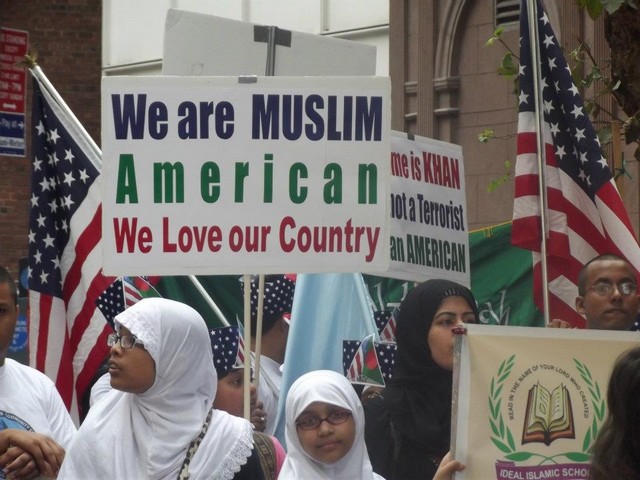
9/11 set off a wave of Islamophobia that has endured to this day

The September 11 attacks stirred a crescendo of Islamophobia that for the next two decades challenged their beliefs about what it means to be American, according to Dallas News.

Muslims were not the only victims of post-9/11 Islamophobia. The hate against the community also plagued others, such as Sikhs and other non-Muslims of South Asian descent, who were targeted solely for their appearance.

Harbhajan Singh, 65, director of the Gurdwara Nishkam Seva religious and community center in Irving,Texas, said Sikhs around the country were harassed and assaulted because of their religious practice of having beards and wearing turbans.

But rather than reject or distance themselves from the Muslim community, Singh said, many Sikhs, including those in Dallas-Fort Worth, chose to show solidarity.

“We made connections to show them that we support them in their time of need. The Muslim community is as affected by these extremists as perhaps other communities are,” he said. “We felt that the Muslim community was being wrongfully, collectively aligned with these extreme views and they need the support of other people to come around to fight against those types of sentiments together.”

Muslims growing up post-9/11 still can’t escape the long shadow of that day

Muslims who grew up post-9/11 are unable to escape the long shadow of that day, forever pushed to be on the defensive, to justify our place in this country, according to Boston Globe.

What followed the attacks was a war on terror that claimed hundreds of thousands of lives overseas, stripped our civil rights here at home, and caused enormous spikes in anti-Muslim violence.

One of the terrifying anti-Muslim violence happened in 2015 when three Muslim college students were shot to death in Chapel Hill, N.C., by a man who prosecutors said had made hateful comments to them in the past. In 2017, a shooter killed six people at a Quebec City mosque. Two years later, 51 Muslim worshipers were killed in attacks in Christchurch, New Zealand.

Islamophobia does not just hurt Muslims. On Sept. 15, 2001, in what is believed to be the first hate-motivated murder in response to 9/11, a Sikh gas station owner was fatally shot in Mesa, Arizona and in 2012, a gunman killed six people at a Sikh gurdwara in Oak Creek, Wisconsin, before shooting himself. Experts suspected he believed he was targeting a mosque.

The reverberations from 9/11 are far from history

Twenty years may have passed, but for Muslims, the reverberations from 9/11 are far from history.

The Council on American-Islamic Relations (CAIR), the nation’s largest Muslim civil rights and advocacy organization, in July 2021 released a mid-year report highlighting serious cases of anti-Muslim incidents that occurred in the United States during the first seven months of 2021.

CAIR  typically publishes an annual report tracking hate crimes and bias incidents. The organization decided to release a mid-year “snapshot report” because of a spike in May and June, Robert McCaw, CAIR’s government affairs director, told CNN.

The hundreds of anti-Muslim incidents include hate crimes, harassment, school bullying, discrimination and hate speech.

CAIR documented a spike in anti-Muslim incidents in May and June, including four at mosques in May alone. Those cases involved vandalism, harassment towards women who wear hijab or headscarf and an attempted stabbing.

Remembrance and Resilience

Meanwhile, the Council on American-Islamic Relations has released a survey report to mark the twentieth anniversary. Titled “Remembrance and Resilience: American Muslims Twenty Years After 9/11,” this educational report reviews and analyzes the ways 9/11 has impacted the Muslim community in the United States.

Key research findings of the Survey are:

  1. 63% of American Muslims believe that American media coverage of Muslims has not become more accurate in the years since 9/11.
  2. 40% of respondents said that they are frequently stopped for extra screening or questioning at airports [strongly agree (20%) and agree (20%)]. This number is on par with the amount of complaints CAIR receives concerning immigration and travel related issues.
  3. 95% of Muslims said that when they hear negative comments about Islam and Muslims, they always (45%) or sometimes (50%) speak out.
  4. 69% of our respondents said that they have personally experienced one or more incidents of anti-Muslim bigotry or discrimination since 9/11. Moreover, 83% said that they know a Muslim who has personally experienced anti-Muslim bigotry or discrimination since 9/11.
  5. 79% of our respondents said that they witnessed or experienced increased anti-Muslim bigotry after the 9/11 attacks. 69% said that they witnessed or experienced it after President Trump’s Muslim Ban and 51% stated that they witnessed or experienced it after the invasion of Iraq. [Note: Respondents were asked to check all that apply].
  6. 34% of those surveyed said that anti-Muslim rhetoric in the years since 9/11 has had an impact on their mental health [strongly agree (14%) and agree (20%)].
  7. 47% of Muslims reported feeling comfortable requesting a religious accommodation at school or work. 19% said that they feel somewhat comfortable while 19% do not feel comfortable.
  8. African American Muslims are more likely to be comfortable requesting a religious accommodation at school or work (58% strongly agree or agree) and more likely to always feel comfortable wearing Islamic religious attire in public (52%) than other ethnic groups in the American Muslim community, including respondents who identify as White, African, Arab, South Asian, etc.
  9. 72% of Muslim women have personally experienced one or more incidents of anti-Muslim bigotry or discrimination since 9/11, compared to 67% of Muslim men. Muslim women also reported feeling less accepted in American society (56%) compared to Muslim men (65%).
  10. 63% of Muslims report that their mosques have engaged in increased interfaith work since 9/11.

The CAIR survey was based on 1,338 responses from different walks of life in the Muslim community.

Abdus Sattar Ghazali is the Chief Editor of the Journal of America (www.journalofamerica.net)

14 September 2021

Source: countercurrents.org

Taliban get a government!

By M K Bhadrakumar

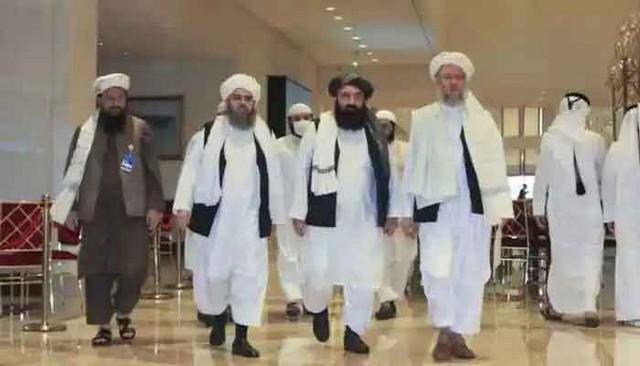
The regional states will be shell-shocked by the brazen way Lt. Gen. Faiz Hameed, head of Pakistan’s Inter-Services Intelligence (ISI), coerced the Taliban to announce an interim government that is guaranteed to preserve Rawalpindi’s control over the levers of power in Kabul.

There are several things to be noted about the so-called interim government announced by the Taliban on September 7. The “moderate” Taliban political chief Mullah Abdul Ghani Baradar, supposedly number 2 in the Taliban hierarchy, has been designated to serve as First Deputy to Mullah Hasan Akhund who will be the acting prime minister.

Baradar who led the Taliban delegation at the Doha talks and was earlier mentioned widely as the likely head of the new Taliban government, has been pigeonholed — assigned to a titular post which will be, typically, an overly restrictive one.

Mullah Akhund will wield the baton. Now, he is one of the most enigmatic figures in the Taliban movement, rarest of rare exceptions of a shadowy figure who did not participate in the “jihad” against the Soviets in the 1980s but only to emerge as the powerful “ideologue” of the movement to serve on the shura councils.

He is singularly credited with the destruction of the Buddhas of Bamiyan in 2001 and had a pivotal role in the development of the Taliban’s religious identity rooted in the brand of strict Islamist ideology, known as Deobandism.

Akhund dictated the ideological justification for the insurgency against the US-backed Afghan governments. Significantly, he operated almost entirely in exile from Pakistan through the past 20-year period.

Akhund’s impeccable Pashtun lineage is drawn from the powerful Durrani tribe from Kandahar, which, historically, anointed the Afghan rulers. After the overthrow of the Taliban regime (where he had served as foreign minister), Akhund landed with the powerful position as the head of the Rahbari Shura council of leaders, often called the “Quetta Shura”, which the ISI put together to plot the Taliban’s second coming to power.

The sidelining of Baradar is to be attributed to the political tension between him and the Haqqani Network. The ISI has had the final say in the matter. Baradar’s conciliatory politics with Karzai had earlier cost him 8 years’ incarceration in an ISI jail — until President Trump wanted him in Doha. The ISI never trusted him.

The most startling thing about Akhund is that his entrenched beliefs include treating women as mere chattels of men to bear children and treating ethnic and religious minorities as a lower form of life. He has been hard as rock on issues of civil rights. His edicts in the 1990s, adopted by the Taliban, included the banning of women’s education, enforcing gender segregation and the adoption of strict religious garb.

In retrospect, Baradar served merely as the facade of reason before the international community in Doha. With Akhund on one side and Sirajuddin Haqqani, Interior Minister-designate on the other side, he finds himself between the rock and a hard place.

Sirajuddin is unquestionably the blue-eyed boy of the ISI. His appointment is horrible news for New Delhi. But the big question for the future is about the US’ equation with the Haqqani Network. The mythology harps on the FBI notification of a “reward of up to $10 million for information leading directly to the arrest of Sirajuddin Haqqani” and its clarion call, “If you have any information concerning this person, please contact your local FBI office or the nearest American Embassy or Consulate.”

The FBI calls Sirajuddin “a specially designated global terrorist” with close ties to the al-Qaeda but the charges against him are unsubstantiated and remain vaguely worded. Thus, Sirajuddin is “wanted for questioning in connection with the January 2008 attack on a hotel in Kabul, Afghanistan, that killed six people, including an American citizen. He is believed to have coordinated and participated in cross-border attacks against United States and coalition forces in Afghanistan. Haqqani also allegedly was involved in the planning of the assassination attempt on Afghan President Hamid Karzai in 2008.”

At the same time, the farcical FBI notice also says, “Haqqani is thought to stay in Pakistan, specifically the Miram Shah, North Waziristan, Pakistan, area.” read more

If the US could nab Osama bin Laden from a Pakistani cantonment town, why should it have outsourced the task as in the Wild West — posting a notice in every bar and brothel?

The point is, State Department’s archival materials also show that the US and the Haqqanis go back a long way. The Mujahideen group of Jalaluddin Haqqani was actually the only group in the 1980s jihad, which was trusted by Gen. Zia-ul-Haq to be allowed to have direct dealings with the CIA. The CIA of course described him as a “unilateral” asset who in turn received tens of millions of dollars in cash directly.

Indeed, when the time came for the CIA to transfer Osama bin Laden from Sudan to Afghanistan, it was to the safe custody of none other than Jalaluddin that the fugitive was left. Such was the bonding!

True, Jalaluddin subsequently refused to betray bin Laden and, possibly, helped him to evade the American net in the fastness of the Tora Bora mountain caves in December 2001. But, apparently, the two sides since moved on.

In fact, Lieutenant General John Nicholson, told the Senate Armed Services Committee during hearings when he was picked to lead the US and NATO forces in Afghanistan in January 2016 that the US counterterrorism operations in Afghanistan were not targeting the Haqqani network of militants. To quote the general, “They are not part of that designation right now…The Haqqanis are principally a focus of the Afghan security forces.”

Nicholson gave a laboured explanation that the US counterterrorism actions focused on al-Qaida and Islamic State. The US expected Pakistan to put enough pressure on the Haqqanis to prevent cross-border attacks! read more

The four star general indulged in this sophistry full 8 years after the Haqqani Network’s attack on the Indian embassy in Kabul. It is a matter of shame and disgust, nothing less, that India’s Afghan policies all along toed the US strategies in Afghanistan — right up to this day so much so that Prime Minister Modi is reportedly looking forward to discussing with President Biden on the sidelines of the Quad summit in DC how the coordination can be strengthened in the current circumstances.

By the way, who is Maulawi Amir Khan Muttaqi, the foreign minister-designate in the interim government?

Ambassador Peter Tomsen, US Special Envoy on Afghanistan from 1989 to 1992, has written in his classic work The Wars of Afghanistan: Messianic Terrorism, Tribal Conflicts, and the Failures of Great Powers that then Pakistani President Pervez Musharraf personally called US President George W Bush on or about November 2001 for a VIP airlift out of Kunduz which was besieged by the Northern Alliance militia under Rashid Dostum (with support of US Special Forces) in the downstream of the 9/11 attacks.

Bush and Vice-President Dick Cheney expressly approved Musharraf’s personal request. The well-known investigative journalist Seymour Hersh later wrote based on briefing from ex-CIA sources that US Central Command set up a special air corridor out of Kunduz to ensure the safety of the Pakistani military flights.

Close to a thousand people were evacuated, including al-Qaeda members, in the Kunduz airlift (known famously as the “Airlift of Evil”) to remote bases in Chitral and Gilgit in Pakistan-Occupied Kashmir. And the grapevine is that one of the VIPs so evacuated was Maulawi Amir Khan Muttaqi, apart from senior Pakistani military officials. The ISI saw greater destiny for Muttaqi!

Can Pakistan get away with all this? This interim government won’t fly easily, but it won’t wither away either, although it can be recast. The regional capitals will react — Tehran and Moscow (and possibly even Beijing.) They have been taken for a ride by the Pakistani narrative of “inclusive government”.

Pakistan dared to push the envelope with the cool assessment that the US and its Western allies will engage with the Taliban once the dust settled down. The visit by the UK Foreign Secretary Dominic Rabb on 3rd September to Islamabad was the clincher. read more

On September 5, Gen. Hameed took off for Kabul. By September 7, we already saw the Taliban’s response to his dog whistle.

Originally posted in , indianpunchline

Ambassador M K Bhadrakumar served the Indian Foreign Service for more than 29 years.

9 September 2021

Source: countercurrents.org

The money that never arrives in Cuba

By Rosa Miriam Elizalde

Cubans living abroad have been unable to send remittances to their loved ones on the island due to the unilateral coercive measure imposed by Donald Trump just before leaving office

With the money she earns cleaning houses in the morning and an office at night, Virgen Elena Pupo, a 47-year-old Cuban migrant, has managed to raise her family in Washington, D.C., but has not been able to help her parents in Holguín, Cuba. She is separated from her parents by more than 1,246 miles. In Cuba’s eastern region, Holguín has been hit hard by an increase in COVID-19 cases, but Pupo cannot visit or send money to her parents due to the restrictions on flights and remittances from the United States as a result of former US President Donald Trump’s policies that President Joe Biden has continued.

On October 27, 2020, a week before the US presidential elections took place on November 3, Trump issued his final sanction against the island. Trump included Cuban financial company Fincimex, Western Union’s main partner in the country, in the Cuban Restricted List. The pretext was that it belongs to the Cuban business corporation, Grupo de Administración Empresarial S.A.

This measure cut off the channels for sending remittances to Cuba, and Pupo’s elderly parents have not been able to receive any help amid the pandemic as a result of this move.

Fincimex issued a statement on August 27, 2021, announcing delays in the delivery of remittances that arrive in Cuba from third countries due to the difficulty of finding financial institutions willing to authorize operations. The inclusion of this company in the list of restricted entities by the US Treasury Department “continues to generate fears in the international banking sector about accepting operations directed to… [Fincimex] and tendencies to limit the scope of these transactions,” said the Fincimex statement.

The US policy relating to remittances goes against all logic. Remittances have come to the rescue of families affected by the coronavirus all over the world. According to the World Bank, money sent by migrants to their families in “low- and middle-income countries surpassed the sum of FDI [foreign direct investment] ($259 billion) and overseas development assistance ($179 billion) in 2020.” For example, remittances grew historically in Mexico in the first six months of 2021, as La Jornada recently reported. They reached $23.6 million, which is 22 percent more than the remittances received during the same period in 2020.

“As COVID-19 still devastates families around the world, remittances continue to provide a critical lifeline for the poor and vulnerable,” said Michal Rutkowski, global director of the Social Protection and Jobs Global Practice at the World Bank. The regular remittances that poor Latin American migrants send to their families have become vital to many of the region’s economies. Generally, it’s the working poor who send small sums of money, sometimes up to eight times a year, usually sending more money than they earn during the year. For years, remittances have been one of Mexico’s main sources of foreign exchange, and remittances form close to or more than 20 percent of the gross domestic product of Honduras, El Salvador and other countries in Central America. They protect millions of people. But why do migrants do it? Why do they make sacrifices and send money back to their home countries? Surveys say that the explanation for this grand gesture of solidarity, with enormous macroeconomic impact, lies above all in supporting the institution of family. Migrants send money out of moral inspiration and loyalty to their parents, siblings, children, and nieces and nephews.

In a 2006 study on remittances and their imprint on the Cuban family, researcher Edel Fresneda Camacho recognized that this type of aid is not intended for productive investment. “It constitutes an important source of income for the recipient families, [for] their consumption and saving capacity, and implies an improvement in living conditions,” which in the case of Cuba includes the possibility of investing in a small private business.

Camacho and other researchers have given an account of the manipulative forays of the US government on this front. In the 1990s, during the crisis known in Cuba as the “Special Period,” the United States reinforced the economic siege. The former US President Bill Clinton prohibited remittances from August 1994 to 1998 except under strictly humanitarian conditions: illness or in cases of people with official immigration permission. Bush imposed even more cruel restrictions, allowing only visits to the island once every three years if the person visiting had very close relatives in Cuba—aunts, uncles, and cousins ​​were not considered “family.”

Even then, remittances managed to continue reaching the island. That is, until now. Without Western Union offices, without the possibility of shipments by DHL, with banks being intimidated and flights being suspended to all provinces, except for those very limited to Havana, Pupo can only hope that her elderly parents can survive the pandemic without any help from her. And she prays every day for common sense to prevail among those making policies in the White House, which is located just two blocks away from the office she cleans at night with the stubborn will to keep her loved ones afloat.

Rosa Miriam Elizalde is a Cuban journalist and founder of the site Cubadebate.

9 September 2021

Source: countercurrents.org

Hashtag ‘Untie_Our_Hands’: How Many More Palestinians Must Die for Israel’s ‘Security’?

By Dr Ramzy Baroud

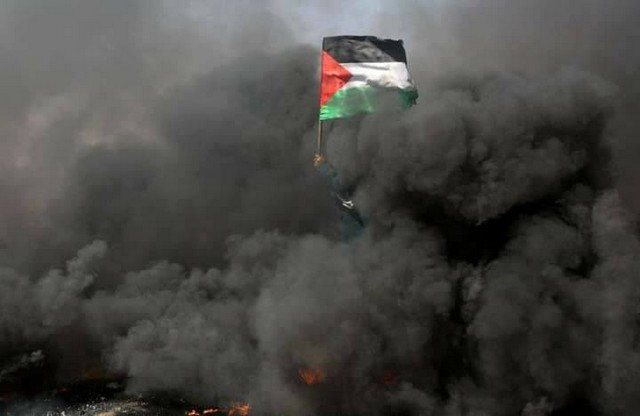
A large Israeli army campaign is taking social media by storm. The unstated aim of what is known as the “#Untie_Our_Hands” initiative is the desire to kill, with no accountability, more Palestinian protesters at the Gaza fence. The campaign was motivated by the killing of an Israeli sniper, Barel Hadaria Shmueli, who was reportedly shot from the Palestinian side of the fence on August 21.

An immediate question comes to mind: what do Israeli soldiers want, considering that they have already killed over 300 unarmed Palestinian protesters and wounded and maimed thousands more at the Gaza fence during what Palestinians referred to as the ‘Great March of Return’ between 2018 and 2020?

This ‘march’ is now being renewed, though it often takes place at night, where frustrated Palestinian youth gather in their thousands, chanting anti-Israeli occupation slogans and, at times, throwing rocks at Israeli snipers who are stationed nearly a mile away.

Months after the Israeli onslaught on Gaza – a relatively brief but deadly war between May 10-21 – the stifling status quo in the besieged Strip has not changed: the hermetic Israeli siege, the snipers, the occasional nightly bombardment, the devastating unemployment, the closures, and the lack of everything, from clean water to cement to even cancer medication.

Therefore, it should not be surprising that Palestinians in Gaza, especially the youth, are in desperate need of a platform to express their justifiable rage at this ongoing misery; thus, the renewed mass protests at the fence.

Israeli politicians and media intentionally exaggerate the ‘threat’ posed by the Gaza protesters to Israel’s security. They speak of ‘incendiary balloons’ as if they are 500-pound bombs dropped by fighter jets. They are terrified by the prospect of Gaza kids ‘breaching the border’, with reference to fences that Israel has arbitrarily established around Gaza without respecting any ceasefire demarcations as recognized by the United Nations.

This fear-mongering is now back with a vengeance, as the killing of the Israeli sniper is offering an opportunity for Israeli politicians to present themselves as the defenders of the army and the champions of Israeli ‘security’. A political witch hunt quickly followed, regarding those who are supposedly ‘cuffing the hands of our troops.’

This same assertion was made by Naftali Bennett in 2019, before he became the country’s prime minister. “The High Court is cuffing the hands of IDF troops,” Bennett has said, vowing to “free the IDF from the High Court”.

A year earlier, Bennett offered more details on how he intends to end Palestinian protests at the Gaza fence. Responding to a question during an Israeli Army Radio interview on what he would do if he were the country’s defense minister, he replied: “I would not allow terrorists to cross the border from Gaza every day … and if they do, we should shoot to kill. Terrorists from Gaza should not enter Israel … Just as in Lebanon, Syria or anywhere else we should shoot to kill.”

The emphasis on ‘killing’ in response to any form of Palestinian protests seemed to be the common denominator between Israeli officials, military brass and even ordinary soldiers. The latter, who are purportedly behind the social media campaign, seem to be enjoying their time at the Gaza fence. Israeli snipers – per their own testimonies – keep track of the number of Palestinians they shoot, try to break each other’s’ records and cheer on video when they document a ‘clean shot’ of a Palestinian protester, which should demonstrate the horrific violence meted out against those Palestinian youth.

Israeli snipers at the Gaza fence work in pairs. A third person, known as the ‘locator’, helps the snipers locate their next target. Eden is an Israeli sniper, who, among others, gave testimonies to the Israeli newspaper Haaretz, in March 2020. Eden is particularly proud of a grizzly milestone that he and his team have achieved.

“On that day, our pair had the largest number of hits, 42 in all,” he said. “My locator wasn’t supposed to shoot, but I gave him a break, because we were getting close to the end of our stint, and he didn’t have knees. In the end you want to leave with the feeling that you did something, that you weren’t a sniper during exercises only. So, after I had a few hits, I suggested to him that we switch. He got around 28 knees there, I’d say.”

Such testimonies are further validated by occasional video footage of Israeli snipers cheering after shooting Palestinian kids at the fence. In April 2018, a particular video of cheering soldiers, along with the kind of dialogue that indicates that Israelis have no regard for Palestinian lives whatsoever, was leaked to international media. Even CNN reported on it.

This violent phenomenon is not confined to Gaza. The debate on Israel’s ‘shoot-to-kill’ policy in the rest of the occupied Palestinian territories has been raging on for years. In 2017, Human Rights Watch linked the increased number of Palestinian casualties, who are killed at the hands of trigger-happy soldiers, to the violent discourse emanating from the Israeli government itself.

HRW “has documented numerous statements since October 2015, by senior Israeli politicians, including the police minister and defense minister, calling on police and soldiers to shoot to kill suspected attackers, irrespective of whether lethal force is actually strictly necessary to protect life,” the report read.

The above issue was highlighted in the execution of the incapacitated Palestinian, Abdel Fattah al-Sharif, in the occupied city of Al-Khalil, Hebron, in March 2016 and in the killing of Ahmad Erekat, at a military checkpoint in the West Bank in July 2020. Not only did Erekat pose no immediate threat to the lives of the occupation soldiers, but according to a statement by 83 Palestinian and international NGOs, Erekat “was then left to bleed to death for an hour and a half, while the Israeli occupying forces denied him access to medical care”.

Considering the disproportionate number of Palestinian casualties which, at times, push Palestinian morgues in Gaza to full capacity, it is inconceivable what Israeli soldiers, army generals, and politicians want exactly when they speak of ‘untying their hands’. Far more bewildering is the international community’s apathy while Israelis debate about how many more Palestinians ought to be killed.

Ramzy Baroud is a journalist and the Editor of The Palestine Chronicle.

9 September 2021

Source: countercurrents.org

9/11 Killed It, But Twenty Years on Global Justice Movement Is Poised to Reincarnate

Analysis by Kalinga Seneviratne

SYDNEY (IDN) — Since the attacks on the United States by 15 Saudi Arabian Islamic fanatics on September 11, 2001 (now known as 9/11) the world has been divided by a ‘war on terror’ with any protest group defined as “terrorists”. New anti-terror laws have been introduced both in the West and elsewhere in the past 20 years and used extensively to suppress such movements in the name of “national security”.

It is interesting to note that the 9/11 attacks came at a time when a huge ‘global justice’ movement was building up across the world against the injustices of globalization. Using the internet as the medium of mobilization, they gathered in Seattle in 1999 and were successful in closing down the World Trade Organisation (WTO) meeting.

They opposed what they saw as large multinational corporations having unregulated political power, exercised through trade agreements and deregulated financial markets, facilitated by governments. Their main targets were the WTO, International Monetary Fund (IMF), OECD, World Bank, and international trade agreements.

The movement brought ‘civil society’ people from the North and the South together under common goals. In parallel, the ‘Jubilee 2000’ international movement led by liberal Christian and Catholic churches called for the cancellation of $90 billions of debts owed by the world’s poorest nations to banks and governments of the West.

Along with the churches, youth groups, music, and entertainment industry groups were involved. The 9/11 attacks killed these movements as ‘national security’ took precedence over ‘freedom to dissent’.

Dr Dayan Jayatilleka, a former vice-president of the UN Human Rights Council and a Sri Lankan political scientist notes that when “capitalism turned neoliberal and went on the rampage” after the demise of the Soviet Union, resistance started to develop with the rise of the Zapatistas in Chiapas (Mexico) against NAFTA (North American Free Trade Agreement) and culminating in the 1999 Seattle protests using a term coined by Cuban leader Fidel Castro ‘another world is possible’.

“All that came crashing down with the Twin Towers,” he notes. “With 9/11 the Islamic-Jihadist opposition to the USA (and the war on terror) cut across and buried the progressive resistance we saw emerging in Chiapas and Seattle.”

“9/11 panicked us into the ‘war on terror’ using lethal weapons of questionable legality which inspired more terrorists. 20 years on, those same adversaries are back and we now have a fear of US perfidy—over Taiwan or ANZUS or whatever. There will be many consequences,” warns Geoffrey Robertson QC, well known British human rights campaigner, and TV personality. But, he sees some silver lining that has come out of this ‘war on terror’.

“One reasonably successful tactic developed in the war on terror was to use targeted sanctions on its sponsors. This has been developed by so-called ‘Magnitsky acts’, enabling the targeting of human rights abusers—31 democracies now have them and Australia will shortly be the 32nd. I foresee their coordination as part of the fightback—a war not on terror but state cruelty,” he told IDN.

When asked about the US’s humiliation in Afghanistan, Dr Chandra Muzaffar, founder of the International Movement for a Just World told IDN that the West needs to understand that they too need to stop funding of terror to achieve their own agendas. “The ‘war on terror’ was doomed to failure from the outset because those who initiated the war were not prepared to admit that it was their occupation and oppression that compelled others to retaliate through acts of terror.” he argues. “Popular antagonism towards the occupiers was one of the main reasons for the humiliating defeat of the US and NATO in Afghanistan,” he added.

Looking at western attempts to introduce democracy under the pretext of ‘war on terror’ and the chaos created by the ‘Arab Spring’, a youth movement driven by western-funded NGOs, Iranian born Australian Farzin Yekta who worked in Lebanon for 15 years as a community multi-media worker argues that the Arab region needs a different democracy.

“In the Middle East, the nations should aspire to a system based on social justice rather than the western democratic model. Corrupt political and economic apparatus, external interference and dysfunctional infrastructure are the main obstacles for moving towards establishing a system based on social justice,” he maintains, adding that there are signs of growing social movements being revived in the region while “resisting all kinds of attacks”.

Yekta told IDN that while working with Palestinian refugee groups in Lebanon he has seen how peoples’ movements could be undermined by so-called ‘civil society’ NGOs (non-governmental organizations). “Alternative social movements are infested by ‘civil society’ institutions comprising primarily NGO institutions. ‘Civil society’ is effective leverage for the establishment and foreign (western) interference to pacify radical social movements. Social movements find themselves in a web of funded entities which push for ‘agendas’ drawn by funding buddies,” noted Yekta.

Looking at the failure of western forces in Afghanistan, he argues that what they did by building up ‘civil society’ was encouraging corruption and cronyism that is entangled in ethnic and tribal structures of society. “Western nation-building plan was limited to setting up a glasshouse pseudo-democratic space in the green zone part of Kabul. One just needed to go to the countryside to confront the utter poverty and lack of infrastructure,” Yekta notes. ”We need to understand that people’s struggle is occurring at places with poor or no infrastructure.”

Dr Jayatilleka also sees positive signs of social movements beginning to raise their heads after two decades of repression. “Black Lives Matter drew in perhaps more young whites than blacks and constituted the largest ever protest movement in history. The globalized solidarity with the Palestinian people of Gaza, including large demonstrations in US cities, is further evidence. In Latin America, the left-populist Pink Tide 2.0 began with the victory of Lopez Obrador in Mexico and has produced the victory of Pedro Castillo in Peru. The slogan of Justice, both individual and social, is more globalized, more universalized today, than ever before in my lifetime,” he told IDN.

There may be ample issues for peoples’ movements to take up with TPP (Transpacific Partnership) and RCEP (Regional Comprehensive Economic Partnership) trade agreements coming into force in Asia where companies would be able to sue governments if their social policies infringe on company profits. But Dr Jayatilleka is less optimistic of social movements rising in Asia.

“Sadly, the social justice movement is considerably more complicated in Asia than elsewhere, though one would have assumed that given the social inequities in Asian societies, the struggle for social justice would be a torrent. It is not,” he argues. The brightest recent spark in Asia, according to Dr Jayatilleka, was the rise of the Nepali Communist Party to power through the ballot box after a protracted peoples’ war, but “sectarianism has led to the subsiding of what was the brightest hope for the social justice movement in Asia.”

Robertson feels that the time is ripe for the social movements suppressed by post 9/11 anti-terror laws to be reincarnated in a different life. “The broader demand for social justice will revive, initially behind the imperative of dealing with climate change but then with tax havens, the power of multinationals, and the obscene inequalities in the world’s wealth. So, I do not despair of social justice momentum in the future,” he says. [IDN-InDepthNews – 09 September 2021]

9 September 2021

Dr. Kalinga Seneviratne is a Sri Lanka born journalist, radio broadcaster, television documentary maker and an international communications lecturer.

Photo: Activists protest policies of the World Bank in Washington, DC. CC BY 2.5.

Source: https://www.indepthnews.net/index.php/sustainability/peace-justice/4716-9-11-killed-it-but-twenty-years-on-global-justice-movement-is-poised-to-reincarnate

The Empire Does Not Forgive

By Chris Hedges

The Americans, like the British and the Soviets before them, dug their own graveyard in Afghanistan.

30 Aug 2021 – The Carthaginian general Hannibal, who came close to defeating the Roman Republic in the Second Punic War, committed suicide in 181 BC in exile as Roman soldiers closed in on his residence in the Bithynian village of Libyssa, now modern-day Turkey. It had been more than thirty years since he led his army across the alps and annihilated Roman legions at the Battle of Trebia, Lake Trasimene and Cannae, considered one of the most brilliant tactical victories in warfare which centuries later inspired the plans of the German Army Command in World War I when they invaded Belgium and France. Rome was only able to finally save itself from defeat by replicating Hannibal’s military tactics.It did not matter in 181 BC that there had been over 20 Roman emperors since Hannibal’s invasion. It did not matter that Hannibal had been hunted for decades and forced to perpetually flee, always just beyond the reach of Roman authorities. He had humiliated Rome. He had punctured its myth of omnipotence. And he would pay. With his life. Years after Hannibal was gone, the Romans were still not satisfied. They finished their work of apocalyptic vengeance in 146 BC by razing Carthage to the ground and selling its remaining population into slavery. Cato the Censor summed up the sentiments of empire: Carthāgō dēlenda est (Carthage must be destroyed). Nothing about empire, from then until now, has changed.

Imperial powers do not forgive those who expose their weaknesses or make public the sordid and immoral inner workings of empire. Empires are fragile constructions. Their power is as much one of perception as of military strength. The virtues they claim to uphold and defend, usually in the name of their superior civilization, are a mask for pillage, the exploitation of cheap labor, indiscriminate violence, and state terror.

The current American empire, damaged and humiliated by the troves of internal documents published by WikiLeaks, will, for this reason, persecute Julian Assange for the rest of his life. It does not matter who is president or which political party is in power. Imperialists speak with one voice. The killing of thirteen U.S. troops by a suicide bomber at the Hamid Karzai International Airport in Kabul on Thursday evoked from Joe Biden the full-throated cry of all imperialists: “To those who carried out this attack … we will not forgive, we will not forget, we will hunt you down and make you pay.” This was swiftly followed by two drone strikes in Kabul against suspected members of the Islamic State in Khorasan Province, ISKP (ISIS-K), which took credit for the suicide bombing that left some 170 dead, including 28 members of the Taliban.

The Taliban, which defeated U.S. and coalition forces in a 20-year war, is about to be confronted with the wrath of a wounded empire. The Cuban, Vietnamese, Iranian, Venezuelan and Haitian governments know what comes next. The ghosts of Toussaint Louverture, Emilio Aguinaldo, Mohammad Mossadegh, Jacobo Arbenz, Omar Torrijos, Gamal Abdul Nasser, Juan Velasco, Salvador Allende, Andreas Papandreou, Juan Bosh, Patrice Lumumba, and Hugo Chavez know what comes next. It isn’t pretty. It will be paid for by the poorest and most vulnerable Afghans.

The faux pity for the Afghan people, which has defined the coverage of the desperate collaborators with the U.S. and coalition occupying forces and educated elites fleeing to the Kabul airport, begins and ends with the plight of the evacuees. There were few tears shed for the families routinely terrorized by coalition forces or the some 70,000 civilians who were obliterated by U.S. air strikes, drone attacks, missiles, and artillery, or gunned down by nervous occupying forces who saw every Afghan, with some justification, as the enemy during the war. And there will be few tears for the humanitarian catastrophe the empire is orchestrating on the 38 million Afghans, who live in one of the poorest and most aid-dependent countries in the world.

Since the 2001 invasion the United States deployed about 775,000 military personnel to subdue Afghanistan and poured $143 billion into the country, with 60 percent of the money going to prop up the corrupt Afghan military and the rest devoted to funding economic development projects, aid programs and anti-drug initiatives, with the bulk of those funds being siphoned off by foreign aid groups, private contractors, and outside consultants.

Grants from the United States and other countries accounted for 75 percent of the Afghan government budget. That assistance has evaporated. Afghanistan’s reserves and other financial accounts have been frozen, meaning the new government cannot access some $9.5 billion in assets belonging to the Afghan central bank. Shipments of cash to Afghanistan have been stopped. The International Monetary Fund (IMF) announced that Afghanistan will no longer be able to access the lender’s resources.

Things are already dire. There are some 14 million Afghans, one in three, who lack sufficient food. There are two million Afghan children who are malnourished. There are 3.5 million people in Afghanistan who have been displaced from their homes. The war has wrecked infrastructure. A drought destroyed 40 percent of the nation’s crops last year. The assault on the Afghan economy is already seeing food prices skyrocket. The sanctions and severance of aid will force civil servants to go without salaries and the health service, already chronically short of medicine and equipment, will collapse. The suffering orchestrated by the empire will be of Biblical proportions. And this is what the empire wants.

UNICEF estimates that 500,000 children were killed as a direct result of sanctions on Iraq. Expect child deaths in Afghanistan to soar above that horrifying figure. And expect the same imperial heartlessness Madeline Albright, then the U.S. Ambassador to the United Nations, exhibited when she told “60 Minutes” correspondent Lesley Stahl that the deaths of half a million Iraqi children because of the sanctions was “worth it.” Or the heartlessness of Hillary Clinton who joked “We came, we saw, he died,” when informed of Libyan leader Muammar Qaddafi’s brutal death. Or the demand by Democratic Senator Zell Miller of Georgia who after the attacks of 9/11 declared, “I say, bomb the hell out of them. If there’s collateral damage, so be it.” No matter that the empire has since turned Libya along with Afghanistan, Iraq, Syria, and Yemen into cauldrons of violence, chaos, and misery. The power to destroy is an intoxicating drug that is its own justification.

Like Cato the Censor, the U.S. military and intelligence agencies are, if history is any guide, at this moment planning to destabilize Afghanistan by funding, arming, and backing any militia, warlord or terrorist organization willing to strike at the Taliban. The CIA, which should exclusively gather intelligence, is a rogue paramilitary organization that oversees secret kidnappings, interrogation at black sites, torture, manhunts, and targeted assassinations across the globe. It carried out commando raids in Afghanistan that killed a large number of Afghan civilians, which repeatedly sent enraged family members and villagers into the arms of the Taliban. It is, I expect, reaching out to Amrullah Saleh, who was Ashraf Ghani’s vice president and who has declared himself “the legitimate caretaker president” of Afghanistan. Saleh is holed up in the Panjashir Valley. He, along with warlords Afgand Massoud, Mohammad Atta Noor and Abdul Rashid Dostum, are clamoring to be armed and supported to perpetuate conflict in Afghanistan.

“I write from the Panjshir Valley today, ready to follow in my father’s footsteps, with mujahideen fighters who are prepared to once again take on the Taliban,” Ahmad Massoud wrote in an opinion piece in The Washington Post. “The United States and its allies have left the battlefield, but America can still be a ‘great arsenal of democracy,’ as Franklin D. Roosevelt said when coming to the aid of the beleaguered British before the U.S. entry into World War II,” he went on, adding that he and his fighters need “more weapons, more ammunition and more supplies.”

These warlords have done the bidding of the Americans before. They will do the bidding of the Americans again. And since the hubris of empire is unaffected by reality, the empire will continue to sow dragon’s teeth in Afghanistan as it has since it spent $9 billion—some estimates double that figure—to back the mujahedeen that fought the Soviets, leading to a bloody civil war between rival warlords once the Soviets withdrew in 1989 and the ascendancy in 1996 of the Taliban.

The cynicism of arming and funding the mujahedeen against the Soviets exposes the lie of America’s humanitarian concerns in Afghanistan. One million Afghan civilians were killed in the nine-year conflict with the Soviets, along with 90,000 mujahedeen fighters, 18,000 Afghan troops, and 14,500 Soviet soldiers. But these deaths, along with the destruction of Afghanistan, were “worth it” to cripple the Soviets.

Jimmy Carter’s national security advisor, Zbigniew Brzezinski, along with the Pakistan’s Inter-Services Intelligence (ISI) agency, oversaw the arming of the most radical Islamic mujahedeen groups fighting the Soviet occupation forces, leading to the extinguishing of the secular, democratic Afghan opposition.

Brzezinski detailed the strategy, designed as he said to give the Soviet Union its Vietnam, taken by the Carter administration following the 1979 Soviet invasion to prop up the Marxist regime of Hafizullah Amin in Kabul:

We immediately launched a twofold process when we heard that the Soviets had entered Afghanistan. The first involved direct reactions and sanctions focused on the Soviet Union, and both the State Department and the National Security Agency prepared long lists of sanctions to be adopted, of steps to be taken to increase the international costs to the Soviet Union of their actions. And the second course of action led to my going to Pakistan a month or so after the Soviet invasion of Afghanistan, for the purpose of coordinating with the Pakistanis a joint response, the purpose of which would be to make the Soviets bleed for as much and as long as is possible; and we engaged in that effort in a collaborative sense with the Saudis, the Egyptians, the British, the Chinese, and we started providing weapons to the Mujaheddin, from various sources again — for example, some Soviet arms from the Egyptians and the Chinese. We even got Soviet arms from the Czechoslovak communist government, since it was obviously susceptible to material incentives; and at some point we started buying arms for the Mujahedeen from the Soviet army in Afghanistan, because that army was increasingly corrupt.

The clandestine campaign to destabilize the Soviet Union by making it “bleed for as much and as long as is possible” was carried out, like the arming of the contra forces in Nicaragua, largely off the books. It did not, as far as official Washington was concerned, exist, a way to avoid the unwelcome scrutiny of covert operations carried out by the Church Committee hearings in the 1970s that made public the three decades of CIA-backed coups, assassinations, blackmail, intimidation, dark propaganda, and torture. The Saudi government agreed to match the U.S. funding for the Afghan insurgents. The Saudi involvement gave rise to Osama bin Laden and Al Qaeda, which fought with the mujahedeen. The rogue operation, led by Brzezinski, organized secret units of assassination teams and paramilitary squads that carried out lethal attacks on perceived enemies around the globe. It trained Afghan mujahedeen in Pakistan and China’s Xinjiang province. It shifted the heroin trade, used to fund the insurgency, from southeast Asia to the border between Afghanistan and Pakistan.

This pattern of behavior, which destabilized Afghanistan and the region, is reflexive in the military and the intelligence community. It will, without doubt, be repeated now in Afghanistan, with the same catastrophic results. The chaos these intelligence agencies create becomes the chaos that justifies their existence and the chaos that sees them demand more resources and ever greater levels of violence.

All empires die. The end is usually unpleasant. The American empire, humiliated in Afghanistan, as it was in Syria, Iraq, and Libya, as it was at the Bay of Pigs and in Vietnam, is blind to its own declining strength, ineptitude, and savagery. Its entire economy, a “military Keynesianism,” revolves around the war industry. Military spending and war are the engine behind the nation’s economic survival and identity. It does not matter that with each new debacle the United States turns larger and larger parts of the globe against it and all it claims to represent. It has no mechanism to stop itself, despite its numerous defeats, fiascos, blunders and diminishing power, from striking out irrationally like a wounded animal. The mandarins who oversee our collective suicide, despite repeated failure, doggedly insist we can reshape the world in our own image. This myopia creates the very conditions that accelerate the empire’s demise.

The Soviet Union collapsed, like all empires, because of its ossified, out-of-touch rulers, its imperial overreach, and its inability to critique and reform itself. We are not immune from these fatal diseases. We silence our most prescient critics of empire, such as Noam Chomsky, Angela Davis, Andrew Bacevich, Alfred McCoy, and Ralph Nader, and persecute those who expose the truths about empire, including Julian Assange, Edward Snowden, Daniel Hale, and John Kiriakou. At the same time a bankrupt media, whether on MSNBC, CNN or FOX, lionizes and amplifies the voices of the inept and corrupt political, military and intelligence class including John Bolton, Leon Panetta, Karl Rove, H.R. McMaster and David Petraeus, which blindly drives the nation into the morass.

Chalmers Johnson in his trilogy on the fall of the American empire – “Blowback,” “The Sorrows of Empire” and “Nemesis” – reminds readers that the Greek goddess Nemesis is “the spirit of retribution, a corrective to the greed and stupidity that sometimes governs relations among people.” She stands for “righteous anger,” a deity who “punishes human transgression of the natural, right order of things and the arrogance that causes it.” He warns that if we continue to cling to our empire, as the Roman Republic did, “we will certainly lose our democracy and grimly await the eventual blowback that imperialism generates.”

“I believe that to maintain our empire abroad requires resources and commitments that will inevitably undercut our domestic democracy and, in the end, produce a military dictatorship or its civilian equivalent,” Johnson writes. “The founders of our nation understood this well and tried to create a form of government – a republic – that would prevent this from occurring. But the combination of huge standing armies, almost continuous wars, military Keynesianism, and ruinous military expenses have destroyed our republican structure in favor of an imperial presidency. We are on the cusp of losing our democracy for the sake of keeping our empire. Once a nation is started down that path, the dynamics that apply to all empires come into play – isolation, overstretch, the uniting of forces opposed to imperialism, and bankruptcy. Nemesis stalks our life as a free nation.”

If the empire was capable of introspection and forgiveness, it could free itself from its death spiral. If the empire disbanded, much as the British empire did, and retreated to focus on the ills that beset the United States it could free itself from its death spiral. But those who manipulate the levers of empire are unaccountable. They are hidden from public view and beyond public scrutiny. They are determined to keep playing the great game, rolling the dice with lives and national treasure. They will, I expect, preside gleefully over the deaths of even more Afghans, assuring themselves it is worth it, without realizing that the gallows they erect are for themselves.

Chris Hedges is a Pulitzer Prize–winning journalist who was a foreign correspondent for fifteen years for The New York Times, where he served as the Middle East Bureau Chief and Balkan Bureau Chief for the paper.

6 September 2021

Source: www.transcend.org