Just International

Biography Prof. Johan Galtung (Born 24 Oct 1930)

By Antonio C. S. Rosa

The ‘Father of Peace Studies’ completes 90 years of age. At 24, he was jailed for 6 months as a Conscientious Objector in Norway. In jail he wrote, with Arne Næss, his first book: Gandhi’s Political Ethics. Today he has contributed more than 170 books; over 1500 papers, articles and book chapters; and over 500 Editorials for TRANSCEND Media Service on peace and conflict studies, mediation, and related issues.

Johan Vincent Galtung, dr, dr hc mult, a professor of peace studies, was born in Oslo, Norway on the same day that the UN would come to existence 15 years later. He is a mathematician–his first Ph.D.–, sociologist, political scientist and the founder of the academic disciplines of Peace and Conflict Studies. He founded the International Peace Research Institute, Oslo (1959), the world’s first academic research center focused on peace studies, as well as the influential Journal of Peace Research (1964). He has helped found dozens of other peace centers around the world since.

He has served as a professor for peace studies at universities all over the world, including Columbia (New York), Oslo, Berlin, Belgrade, Paris, Santiago de Chile, Buenos Aires, Cairo, Sichuan, Ritsumeikan (Japan), Princeton, Hawai’i, Tromsoe, Bern, Alicante (Spain), Islamic University of Malaysia in Kuala Lumpur, and dozens of others on all continents. He has taught thousands of individuals and motivated them to dedicate their lives to the promotion of peace and the satisfaction of basic human needs.

He has mediated in over 150 conflicts between states, nations, religions, civilizations, communities, and persons since 1957. His contributions to peace theory and practice include conceptualization of peace-building, conflict mediation, reconciliation, nonviolence, theory of structural violence, theorizing about negative vs. positive peace, peace education and peace journalism. Prof. Galtung’s unique imprint on the study of conflict and peace stems from a combination of systematic scientific inquiry and a Gandhian ethics of peaceful means and harmony.

“I have never been an advocate of world-saving narratives. The point about my work is to identify the neuralgic, specific contradiction in a specific place in space and at a specific moment in time and dissolve the contradiction with conflict transformation in order to prevent an escalation of whatever social contradiction one is dealing with into violence, whether direct or structural. To ask me whether I want to save the world is to have understood nothing about how conflict transformation works in practice. It’s like suggesting that a brain surgeon would want to extract a patient’s entire brain instead of working on the specific complication identified and localized in a specific region of the cerebral cortex. No, that is no way to proceed. One identifies concrete underlying contradictions in the social system at hand, then one identifies the causes, its drivers, and strives to undo the harm and hurt that could result from it by nonviolent means. I am not concerned with saving the world – I am concerned with finding solutions to specific conflicts before they become violent.”

Galtung was jailed in Norway for six months at age 24 as a Conscientious Objector to serving in the military, after having done 12 months of civilian service, the same time as those doing military service. He agreed to serve an extra 6 months if he could work for peace, but that was refused. In jail he wrote his first book, Gandhi’s Political Ethics, together with his mentor, Arne Næss. This event would trigger a world-changing lifetime work for peace: 170 books, plus.

In 2008, along with editor Antonio C. S. Rosa, he founded the pioneering TRANSCEND Media Service-TMS website, which features Solutions-Oriented Peace Journalism and for which he writes editorials.

He is founder (in 2000) and rector of the TRANSCEND Peace University, the world’s first online Peace Studies University. He also founded in 1993 TRANSCEND International, a global nonprofit network for Peace, Development and the Environment, with over 500 members in more than 70 countries around the world. As a testimony to his legacy, peace studies are now taught and researched at universities across the globe and contribute to peacemaking efforts in conflicts around the world. In 2008, he founded the TRANSCEND University Press.

Johan Galtung has conducted a great deal of research in many fields and made original contributions not only to peace studies but also, among others, human rights, basic needs, development strategies, a world economy that sustains life, macro-history, theory of civilizations, federalism, globalization, theory of discourse, social pathologies, deep culture, peace and religions, social science methodology, sociology, ecology, future studies.

As a recipient of over a dozen honorary doctorates and professorships and many other distinctions, including a Right Livelihood Award (also known as Alternative Nobel Peace Prize), Johan Galtung remains committed to the study and promotion of peace.

Galtung has mediated in over 150 conflicts in more than 150 countries, and written more than 170 books on peace and related issues, 96 as the only author. More than 40 have been translated to other languages, including 50 Years-100 Peace and Conflict Perspectives published by TRANSCEND University Press. Transcend and Transform was translated to 25 languages. He has published more than 1500 articles and book chapters and over 500 Editorials for TRANSCEND Media Service. More information about Prof. Galtung and all of his publications can be found at transcend.org/galtung.

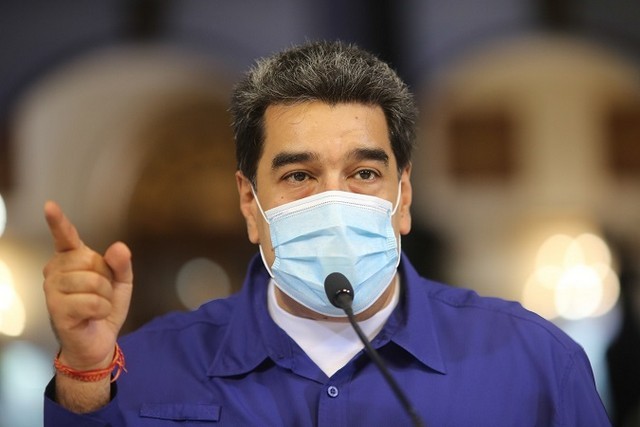
Antonio C. S. Rosa (on the right of Johan Galtung in the photo), born 1946, is founder-editor of the pioneering Peace Journalism website, TRANSCEND Media Service-TMS (from 2008) under Galtung’s inspiration and guidance.

19 October 2020

Source: www.transcend.org

Myanmar: ‘Shocking’ Killing of Children Allegedly Used as Human Shields

By UN News

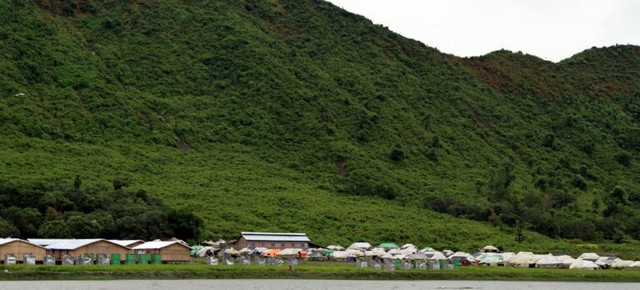
UN agencies in Myanmar have expressed ‘sadness’ and ‘shock’ over the killing of two boys, allegedly used as human shields by security forces in the country’s northern Rakhine province, earlier this month.

14 Oct 2020 – The two boys were killed in a crossfire between Myanmar’s military, known as the Tatmadaw, and the separatist Arakan Army. The incident occurred on 5 October in Buthidaung township – a hotspot for army abuses against children for non-combat purposes, since mid-2019, the UN agencies said in a statement, on Wednesday.

The children were part of a group of around 15 local farmers, all of whom were allegedly forced to walk in front of a Tatmadaw unit to ensure the path towards a military camp was clear of landmines, and to protect the soldiers from potential enemy fire.

On the way, fighting broke out between the Tatmadaw and the Arakan Army, after which the two boys were found dead with gunshot wounds.

‘Hold killers accountable’

The incident occurred within the 12 months of the delisting of the Tatmadaw for underage recruitment in the UN Secretary-General’s Annual Report on Children and Armed Conflict (CAAC) of 2020, agencies noted.

In the statement, the UN agencies – co-chairs of the UN Country Taskforce on Monitoring and Reporting on Grave Violations against Children in Myanmar (CTFMR) – called for a “full, transparent, and expedited investigation of the incident” and for anyone responsible for the use and for the killing of the children to be held accountable.

“This egregious incident serves as a stark reminder that children are put at risk of being killed or injured whenever they are associated with armed forces and groups in any capacity or function, regardless of the duration of their association,” the agencies said.

‘Alarming’ increase in violations

The UN agencies also voiced “deep alarm” over an alarming increase of reports of killings and injuries of children in Myanmar.

More than 100 children were killed or maimed in conflict during the first three months of 2020, amounting to more than half of the total number in 2019, and significantly surpassing the total number of child casualties in 2018.

“As Myanmar tackles the resurgence of COVID-19, we urge all parties to the conflict to intensify efforts to ensure children are protected from all grave violations, to ensure access to humanitarian assistance and services, and to exercise maximum restraint in the use of force where civilians are present,” they urged.

‘Grave Violations’

Adopted unanimously by the Security Council, resolution 1612 on children and armed conflict mandates the United Nations to establish UN-led taskforces in countries where there is verified evidence that grave violations against children are being committed by parties to a conflict, either by armed forces and/or by armed groups.

Through a monitoring and reporting mechanism, the taskforce documents, verifies and reports to the Security Council on the six grave violations: killing or maiming; recruitment and use in armed forces and armed groups; attacks against schools or hospitals; rape or other grave sexual violence; abduction; and denial of humanitarian access.

In Myanmar the the taskforce was established in 2007 and is co-chaired by the UN Resident and Humanitarian Coordinator and the UNICEF Representative to the country.

19 October 2020

Source: www.transcend.org

Unite against Washington’s ‘Old-Fashioned Cold War Mentality’, Beijing Urges Asian Nations

By Countercurrents

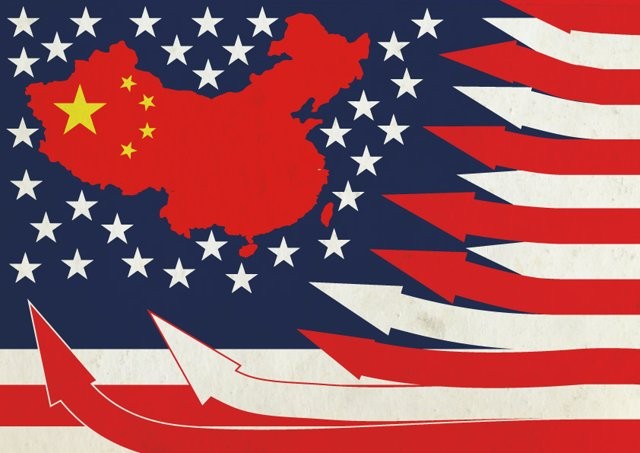
14 Oct 2020 – China’s top diplomat has urged neighboring states to guard against Washington’s geopolitical ambitions in Asia and called for regional cooperation to thwart foreign provocations in the South China Sea.

Media reports said:

Wang Yi, Chinese Foreign Minister, said during a joint news conference with his Malaysian counterpart that members of the Association of Southeast Asian Nations (ASEAN) should work together to ensure security in the region.

The top Chinese diplomat argued that the “South China Sea should not be a ground for major power wrestling teeming with warships.”

He added: “China and ASEAN have full capacity and wisdom, as well as responsibility, to maintain peace and tranquility.”

Earlier on Tuesday [13 Oct], Wang, who is visiting Malaysia as part of a tour of Southeast Asia, called for cooperation among ASEAN states to remove “external disruption” in the South China Sea.

He called on China’s regional partners to remain “vigilant” against Washington’s “Indo-Pacific” strategy, which he said presented a clear “security risk” for East Asia.

The Chinese minister said: What [the U.S.] pursues is to trumpet the old-fashioned cold war mentality and start up confrontation among different groups and blocks, and stoke geopolitical competition.

Tensions between Beijing and Washington have been rising for months, with U.S. naval patrols through the South China Sea continuing to strain bilateral relations. Washington has frequently conducted so-called “freedom of navigation” missions as well as aerial surveillance missions in the region, claiming that such operations safeguard marine traffic there. Beijing has denounced the U.S. military presence as a provocation that threatens its territorial sovereignty. China has accused Washington of “militarizing” the South China Sea, warning that the unwanted naval activity could lead to accidents. The U.S. has alleged that Beijing is aiming to create a “maritime empire” in the region.

Our success against you in Korea serves as a warning to you, Chinese general taunts U.S.

About a week ago, another media report said:

General He Lei recalls the PLA’s successful expulsion of American troops from North Korea in 1950 as he warns that China will be “ready for war” amid growing tensions between Washington and Beijing.

Seventy years ago, in October 1950, Chinese troops crossed the Yalu River into North Korea. Labeled the ‘People’s Volunteers’ they set out to confront an imminent threat to their homeland. General Douglas MacArthur, leading a United States coalition against Pyongyang, had succeeded not only in thwarting Kim Il Sung’s bid to take the South, but sought to advance beyond the 38th parallel to terminate the DPRK altogether.

The U.S. general made no secret about what he planned to do next: he spoke of “continuing” the Korean War into China and dropping a number of atomic bombs around the border to nullify Beijing’s strategic influence on the neighboring peninsula. Fearing strategic encirclement and checkmate by Washington, Mao Zedong, China’s leader, decided to intervene in the war, sending millions of troops into Korea. Despite at that time being an impoverished country with an essentially peasant army; China’s forces overran the UN coalition and forced them back into the South.

The memories in Beijing of what they describe as the “war to resist American aggression” have not been forgotten. The successful intervention into the Korean War and the rescue of the DPRK against a far superior opponent is heralded as the symbolic end to “China’s century of humiliation” by Western powers and newly found confidence in itself.

Facing an increasingly hostile United States on the global stage, People’s Liberation Army General He Lei recalled the victory of 1950 in a jibe against Washington, saying China “[has] the will to fight and the confidence to win” and “We will work hard to cultivate the will to fight, strengthen our sense of mission, responsibility and urgency to be ready for war.”

The highly charged comments reflect the growing atmosphere of public fear as to whether these two powers will ultimately clash militarily, especially given America’s escalation of tensions in the South China Sea and Taiwan Strait by ramping up military exercises.

19 October 2020

Source: www.transcend.org

Japan to Release 1M Tonnes of Fukushima’s Radioactive Water into Pacific Ocean

By Reuters

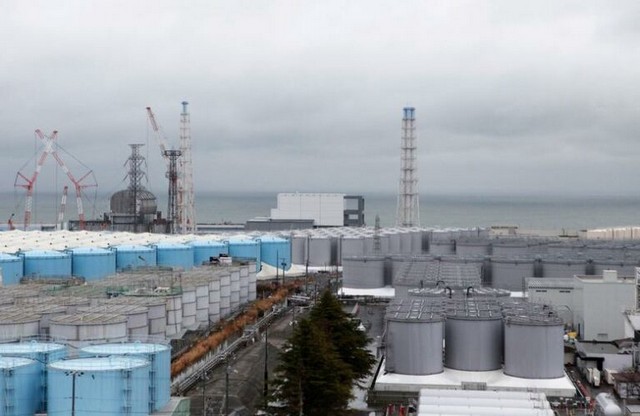
16 Oct 2020 – Nearly a decade after the Fukushima nuclear disaster, Japan’s government has decided to release over one million tonnes of contaminated water into the sea, media reports said today, with a formal announcement expected to be made later this month.

The decision is expected to rankle neighbouring countries like South Korea, which has already stepped up radiation tests of food from Japan, and further devastate the fishing industry in Fukushima that has battled against such a move for years.

Watch Reuters Video

The disposal of contaminated water at the Fukushima Daiichi plant has been a longstanding problem for Japan as it proceeds with an decades-long decommissioning project. Nearly 1.2 million tonnes of contaminated water are currently stored in huge tanks at the facility.

The plant, run by Tokyo Electric Power Company Holdings Inc 9501.T, suffered multiple nuclear meltdowns after a 2011 earthquake and tsunami.

On Friday, Japan’s industry minister Hiroshi Kajiyama said no decision had been made on the disposal of the water yet, but the government aims to make one quickly.

“To prevent any delays in the decommissioning process, we need to make a decision quickly,” he told a news conference.

He did not give any further details, including a time-frame.

The Asahi newspaper reported that any such release is expected to take at around two years to prepare, as the site’s irradiated water first needs to pass through a filtration process before it can be further diluted with seawater and finally released into the ocean.

In 2018, Tokyo Electric apologised after admitting its filtration systems had not removed all dangerous material from the water, collected from the cooling pipes used to keep fuel cores from melting when the plant was crippled.

It has said it plans to remove all radioactive particles from the water except tritium, an isotope of hydrogen that is hard to separate and is considered to be relatively harmless.

It is common practice for nuclear plants around the world to release water that contain traces of tritium into the ocean.

In April, a team sent by the International Atomic Energy Agency to review contaminated water issues at the Fukushima site said the options for water disposal outlined by an advisory committee in Japan – vapour release and discharges to the sea – were both technically feasible. The IAEA said both options were used by operating nuclear plants.

Last week, Japanese fish industry representatives urged the government to not allow the release of contaminated water from the Fukushima plant into the sea, saying it would undo years of work to restore their reputation.

South Korea has retained a ban on imports of seafood from the Fukushima region that was imposed after the nuclear disaster and summoned a senior Japanese embassy official last year to explain how Tokyo planned to deal with the Fukushima water problem.

During Tokyo’s bid to host the Olympic Games in 2013, then-prime minister Shinzo Abe told members of the International Olympic Committee that the Fukushima facility was “under control”.

The Games have been delayed to 2021 because of the pandemic and some events are due to be held as close as 60 km (35 miles) from the wrecked plant.

Reporting by Kaori Kaneko, Yuka Obayashi and Mari Saito; Editing by Muralikumar Anantharaman and Raju Gopalakrishnan

19 October 2020

Source: www.transcend.org

Che Guevara Is Assassinated on 9 Oct 1967

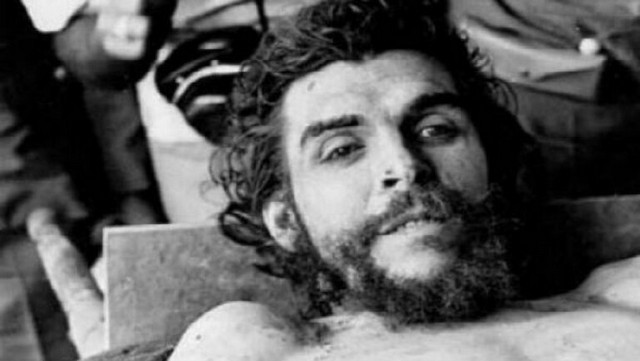
53 year ago, socialist revolutionary and guerilla leader Che Guevara, age 39, was killed by the Bolivian army. The U.S.-military-backed Bolivian forces captured Guevara on October 8 while battling his band of guerillas in Bolivia and executed him the following day. His hands were cut off as proof of death and his body was buried in an unmarked grave. In 1997, Guevara’s remains were found and sent back to Cuba, where they were reburied in a ceremony attended by President Fidel Castro and thousands of Cubans.

Ernesto Rafael Guevara de la Serna was born to a well-off family in Argentina in 1928. While studying medicine at the University of Buenos Aires, he took time off to travel around South America on a motorcycle; during this time, he witnessed the poverty and oppression of the lower classes. He received a medical degree in 1953 and continued his travels around Latin America, becoming involved with left-wing organizations. In the mid 1950s, Guevara met up with Fidel Castro and his group of exiled revolutionaries in Mexico. Guevara played a key role in Castro’s seizure of power from Cuban dictator Fulgencio Batista in 1959 and later served as Castro’s right-hand man and minister of industry. Guevara strongly opposed U.S. domination in Latin America and advocated peasant-based revolutions to combat social injustice in Third World countries. Castro later described him as “an artist of revolutionary warfare.”

Guevara resigned—some say he was dismissed—from his Cuban government post in April 1965, possibly over differences with Castro about the nation’s economic and foreign policies. Guevara then disappeared from Cuba, traveled to Africa and eventually resurfaced in Bolivia, where he was killed. Following his death, Guevara achieved hero status among people around the world as a symbol of anti-imperialism and revolution. A 1960 photo taken by Alberto Korda of Guevara in a beret became iconic and has since appeared on countless posters and T-shirts. However, not everyone considers Guevara a hero: He is accused, among other things, of ordering the deaths of hundreds of people in Cuban prisons during the revolution.

19 October 2020

Source: www.transcend.org

Leaked Docs Expose Massive Syria Propaganda Operation Waged by Western Gov’t Contractors and Media

By Ben Norton

23 Sep 2020 – Western government-funded intelligence cutouts trained Syrian opposition leaders, planted stories in media outlets from BBC to Al Jazeera, and ran a cadre of journalists. A trove of leaked documents exposes the propaganda network.

Update (September 29, 2020): A few days after this article was published, the authenticity of these leaked materials was indirectly confirmed by the British government, which reported that hundreds of Foreign Office documents detailing its Syria propaganda operations were hacked in an alleged cyber attack.

Leaked documents show how UK government contractors developed an advanced infrastructure of propaganda to stimulate support in the West for Syria’s political and armed opposition.

Virtually every aspect of the Syrian opposition was cultivated and marketed by Western government-backed public relations firms, from their political narratives to their branding, from what they said to where they said it.

The leaked files reveal how Western intelligence cutouts played the media like a fiddle, carefully crafting English- and Arabic-language media coverage of the war on Syria to churn out a constant stream of pro-opposition coverage.

US and European contractors trained and advised Syrian opposition leaders at all levels, from young media activists to the heads of the parallel government-in-exile. These firms also organized interviews for Syrian opposition leaders on mainstream outlets such as BBC and the UK’s Channel 4.

More than half of the stringers used by Al Jazeera in Syria were trained in a joint US-UK government program called Basma, which produced hundreds of Syrian opposition media activists.

Western government PR firms not only influenced the way the media covered Syria, but as the leaked documents reveal, they produced their own propagandistic pseudo-news for broadcast on major TV networks in the Middle East, including BBC Arabic, Al Jazeera, Al Arabiya, and Orient TV.

These UK-funded firms functioned as full-time PR flacks for the extremist-dominated Syrian armed opposition. One contractor, called InCoStrat, said it was in constant contact with a network of more than 1,600 international journalists and “influencers,” and used them to push pro-opposition talking points.

Another Western government contractor, ARK, crafted a strategy to “re-brand” Syria’s Salafi-jihadist armed opposition by “softening its image.” ARK boasted that it provided opposition propaganda that “aired almost every day on” major Arabic-language TV networks.

Virtually every major Western corporate media outlet was influenced by the UK government-funded disinformation campaign exposed in the trove of leaked documents, from the New York Times to the Washington Post, CNN to The Guardian, the BBC to Buzzfeed.

The files confirm reporting by journalists including The Grayzone’s Max Blumenthal on the role of ARK, the US-UK government contractor, in popularizing the White Helmets in Western media. ARK ran the social media accounts of the White Helmets, and helped turn the Western-funded group into a key propaganda weapon of the Syrian opposition.

The leaked documents consist mainly of material produced under the auspices of the UK Foreign and Commonwealth Office. All of the firms named in the files were contracted by the British government, but many also were running “multi-donor projects” that received funding from the governments of the United States and other Western European countries.

In addition to demonstrating the role these Western intelligence cutouts played in shaping media coverage, the documents shine light on the British government program to train and arm rebel groups in Syria.

Other materials show how London and Western governments worked together to build a new police force in opposition-controlled areas.

Many of these Western-backed opposition groups in Syria were extremist Salafi-jihadists. Some of the UK government contractors whose activities are exposed in these leaked documents were in effect supporting Syrian al-Qaeda affiliate Jabhat al-Nusra and its fanatical offshoots.

The documents were obtained by a group calling itself Anonymous, and were published under a series of files entitled, “Op. HMG [Her Majesty’s Government] Trojan Horse: From Integrity Initiative To Covert Ops Around The Globe. Part 1: Taming Syria.” The unidentified leakers said they aim to “expose criminal activity of the UK’s FCO and secret services,” stating, “We declare war on the British neocolonialism!”

The Grayzone was not able to independently verify the authenticity of the documents. However, the contents tracked closely with reporting on Western destabilization and propaganda operations in Syria by this outlet and many others. (Update: After this article was published, the UK government told Middle East Eye that Foreign Office documents concerning the work of its contractors in Syria had been hacked and published online.)

UK Foreign Office and military wage media war on Syria

A leaked UK Foreign and Commonwealth Office report from 2014 reveals a joint operation with the Ministry of Defence and the Department for International Development to support “strategic communications, research, monitoring and evaluation and operational support to Syrian opposition entities.”

The UK FOC stated clearly that this campaign consisted of “creating network linkages between political movements and media outlets,” by the “building of local independent media platforms.”

The British government planned “Mentoring, training and coaching for enhanced delivery of media services, including digital and social media.”

Its goal was “to provide PR and media handling trainers, as well as technical staff, such as cameramen, webmasters and interpreters,” along with the “production of speeches, press releases and other media communications.”

An additional 2017 government document explains clearly how Britain funded the “selection, training, support and communications mentoring of Syrian activists who share the UK’s vision for a future Syria… and who will abide by a set of values that are consistent with UK policy.”

This initiative entailed British government funding “to support Syrian grassroots media activism within both the civilian and armed opposition spheres,” and was targeted at Syrians living in both “extremist and moderate” opposition-held territory.

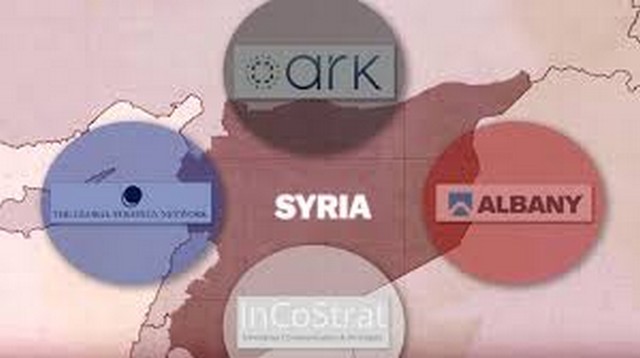
In other words, the UK Foreign Office and military crafted plans to wage a comprehensive media war on Syria. To establish an infrastructure capable of managing the propaganda blitz, Britain paid a series of government contractors, including ARK, The Global Strategy Network (TGSN), Innovative Communication & Strategies (InCoStrat), and Albany.

The work of these firms overlapped, and some collaborated in their projects to cultivate the Syrian opposition.
Western government contractor ARK plays the media like the fiddle

One of the main British government contractors behind the Syria regime-change scheme was called ARK (Analysis Research Knowledge).

ARK FZC is based in Dubai, in the United Arab Emirates. It brands itself as a humanitarian NGO, claiming it “was created in order to assist the most vulnerable,” by establishing a “social enterprise,  empowering local communities through the provision of agile and sustainable interventions to create greater stability, opportunity and hope for the future.”

In reality ARK is an intelligence cutout that functions as an arm of Western interventionism.

In a leaked document it filed with the British government, ARK said its “focus since 2012 has been delivering highly effective, politically-and conflict-sensitive Syria programming for the governments of the United Kingdom, United States, Denmark, Canada, Japan and the European Union.”

ARK boasted of overseeing $66 million worth of contracts to support pro-opposition efforts in Syria.

On its website, ARK lists all of these governments as clients, as well as the United Nations.

In its Syria operations, ARK worked together with another UK contractor called The Global Strategy Network (TGSN), which is directed by Richard Barrett, a former director of global counter-terrorism at MI6.

ARK apparently had operatives on the ground inside Syria at the beginning of the regime-change attempt in 2011, reporting to the UK FCO that “ARK staff are in regular contact with activists and civil society actors whom they initially met during the outbreak of protests in spring 2011.”

The UK contractor boasted an “extensive network of civil society and community actors that ARK has helped through a dedicated capacity building centre ARK established in Gaziantep,” a city in southern Turkey that has been a base of intelligence operations against the Syrian government.

ARK played a central role in developing the foundations of the Syrian political opposition’s narrative. In one leaked document, the firm took credit for the “development of a core Syrian opposition narrative,” which was apparently crafted during a series of workshops with opposition leaders sponsored by the US and UK governments.

ARK trained all levels of the Syrian opposition in communications, from “citizen journalism workshops with Syrian media activists, to working with senior members of the National Coalition to develop a core communications narrative.”

The firm even oversaw the PR strategy for the Supreme Military Council (SMC), the leadership of the official armed wing of Syria’s opposition, the Free Syrian Army (FSA). ARK created a complex PR campaign to “provide a ‘re-branding’ of the SMC in order to distinguish itself from extremist armed opposition groups and to establish the image of a functioning, inclusive, disciplined and professional military body.”

ARK admitted that it sought to whitewash Syria’s armed opposition, which had been largely dominated by Salafi-jihadists, by “Softening the FSA Image.”

ARK took the lead in developing a massive network of opposition media activists in Syria, and openly took credit for inspiring protests inside the country.

In its training centers in Syria and southern Turkey, the Western government contractor reported, “More than 150 activists have been trained and equipped by ARK on topics from the basics of camera handling, lighting, and sound to producing reports, journalistic safety, online security, and ethical reporting.”

The firm flooded Syria with opposition propaganda. In just six months, ARK reported that 668,600 of its print products were distributed inside Syria, including “posters, flyers, informative booklets, activity books and other campaign-related materials.”

In one document spelling out the UK contractors’ communications operations in Syria, ARK and the British intelligence cutout TGSN boasted of overseeing the following media assets inside the country: 97 video stringers, 23 writers, 49 distributors, 23 photographers, 19 in-country trainers, eight training centers, three media offices, and 32 research officers.

ARK emphasized that it had “well-established contacts” with some of the top media outlets in the world, naming Reuters, the New York Times, CNN, the BBC, The Guardian, the Financial Times, The Times, Al Jazeera, Sky News Arabic, Orient TV, and Al Arabiya.

The UK contractor added, “ARK has provided regular branded and unbranded content to key pan-Arab and Syria-focused satellite TV channels such as Al Jazeera, Al Arabiya, BBC Arabic, Orient TV, Aleppo Today, Souria al-Ghadd, and Souria al-Sha’ab since 2012.”

“ARK products promoting HMG (Her Majesty’s Government) priorities by fostering attitudinal and behavioural change are broadcast almost every day on pan-Arab channels,” the firm bragged. “In 2014, 20 branded and un-branded Syria reports were produced on average by ARK each month and broadcast on major pan-Arab television channels such as Al Arabiya, Al Jazeera, and Orient TV.”

“ARK has almost daily conversations with channels and weekly meetings to engage and understand editorial preferences,” the Western intelligence cutout said.

The firm also took credit for placing 10 articles per month in pan-Arab newspapers such as Al Hayat and Asharq Al-Awsat.
US-UK program Basma cultivates Syrian media activists

The Syrian opposition media war was organized within the framework of a project called Basma. ARK worked with other Western government contractors through Basma in order to train Syrian opposition activists.

With funding from both the US and UK governments, Basma developed into an enormously influential platform. Its Arabic Facebook page had over 500,000 followers, and on YouTube it built up a large following as well.

Mainstream corporate media outlets misleadingly portrayed Basma as a “Syrian citizen journalism platform,” or a “civil society group working for a ‘liberatory, progressive transition to a new Syria.’” In reality it was a Western government astroturfing operation to cultivate opposition propagandists.

Nine of the 16 stringers used by Al Jazeera in Syria were trained through the US/UK government’s Basma initiative, ARK boasted in a leaked document.

In an earlier report for the UK FCO, filed just three years into its work, ARK claimed to have “trained over 1,400 beneficiaries representing over 210 beneficiary organisations in more than 130 workshops, and disbursed more than 53,000 individual pieces of equipment,” in a vast network that reached “into all of Syria’s 14 governorates,” which included both opposition- and government-held areas.

The Western contractor published a map highlighting its network of stringers and media activists and their relationships with the White Helmets as well as newly created police forces across opposition-controlled Syria.

In its trainings, ARK developed opposition spokespeople, taught them how to speak with the press, and then helped arrange interviews with mainstream Arabic- and English-language media outlets.

ARK described its strategy “to identify credible, moderate civilian governance spokespeople who will be promoted as go-to interlocutors for regional and international media. They will echo key messages linked to the coordinated local campaigns across all media, with consortium platforms able to cover this messaging as well and encourage other outlets to pick it up.”

In addition to working with the international press and cultivating opposition leaders, ARK helped develop a massive opposition media super-structure.

ARK said it was a “key implementer of a multi-donor effort to develop a network of FM radio stations and community magazines inside Syria since 2012.” The contractor worked with 14 FM stations and 11 magazines inside Syria, including both Arabic- and Kurdish-language radio.

To propagate opposition broadcasts across Syria, ARK designed what it called “Radio in a Box” (RIAB) kits in 2012. The firm took credit for providing equipment to 48 transmission sites.

ARK also circulated up to 30,000 magazines per month. It reported that “ARK-supported magazines were the three most popular in Aleppo City; the most popular magazine in Homs City; and the most popular magazine in Qamishli.”

A Syrian opposition propaganda outlet directly run by ARK, called Moubader, developed a huge following on social media, including more than 200,000 likes on Facebook. ARK printed 15,000 copies per month of a “high-quality hard copy” Moubader magazine and distributed it “across opposition-held areas of Syria.”

The British contractor TGSN, which worked alongside ARK, developed its own outlet called the “Revolutionary Forces of Syria Media Office (RFS),” a leaked document shows. This confirms a 2016 report in The Grayzone by contributor Rania Khalek, who obtained emails showing how the UK government-backed RFS media office offered to pay one journalist a staggering $17,000 per month to produce propaganda for Syrian rebels.

Another leaked record shows that in just one year, in 2018 – which was apparently the final year of ARK’s Syria program – the firm billed the UK government for a staggering 2.3 million British pounds.

This enormous ARK propaganda operation was directed by Firas Budeiri, who had previously served as the Syria director for the UK-based international NGO Save the Children.

40 percent of ARK’s Syria project team were Syrian citizens, and another 25 percent were Turkish. The firm said its Syria team staff had “extensive experience managing programmes and conducting research funded by many different governmental clients in Lebanon, Jordan, Syria, Yemen, Turkey, the Palestinian Territories, Iraq and other conflict-affected states.”
Western contractor ARK cultivates White Helmets “to keep Syria in the news”

The Western contractor ARK was a central force in launching the White Helmets operation.

The leaked documents show ARK ran the Twitter and Facebook pages of Syria Civil Defense, known more commonly as the White Helmets.

ARK took credit for developing “an internationally-focused communications campaign designed to raise global awareness of the (White Helmets) teams and their life saving work.”

ARK also facilitated communications between the White Helmets and The Syria Campaign, a PR firm run out of London and New York that helped popularize the White Helmets in the United States.

It was apparently “following subsequent discussions with ARK and the teams” that The Syria Campaign “selected civil defence to front its campaign to keep Syria in the news,” the firm wrote in a report for the UK Foreign Office.

“With ARK’s guidance, TSC (The Syria Campaign) also attended ARK’s civil defence training sessions to create media content for its #WhiteHelmets campaign which launched in August 2014 and has since gone viral,” the Western contractor added.

In 2014, ARK produced a long-form documentary on the White Helmets, titled “Digging for Life,” which was repeatedly broadcast on Orient TV.

While it was running the White Helmets’ social media accounts, ARK bragged that it was boosting followers and views on the Facebook page for Idlib City Council.

The Syrian city of Idlib was taken over by al-Qaeda affiliate Jabhat al-Nusra, which then went on to publicly execute women who were accused of adultery.

While effectively aiding these al-Qaeda-aligned extremist groups, ARK and the British intelligence cutout TGSN also signed a document with the FCO hilariously pledging to follow “UK guidance on gender sensitivity” and “ensure gender is considered in all capacity building and campaign development.”

Setting the stage for lawfare on Syria

Another leaked document shows the Western government-backed firm ARK revealing that, back in 2011, it worked with another government contractor called Tsamota to help develop the Syrian Commission for Justice and Accountability (SCJA). In 2014, SCJA changed its name to the Commission for International Justice and Accountability (CIJA).

The Grayzone exposed CIJA as a Western government-funded regime-change organization whose investigators collaborated with al-Qaeda and its extremist allies in order to wage lawfare on the Syrian government.

ARK noted that the project initially worked “with seed funding from the UK Conflict Pool to support investigative and forensic training for Syrian war crimes investigators” and has since “grown to become a major component of Syria’s transitional justice architecture.”

Since the US, European Union, and their Middle East allies lost the military phase of their war on Syria, CIJA has taken the lead in trying to prolong the regime-change campaign through lawfare.

InCoStrat creates media network, helps them interview al-Qaeda

In the leaked documents, another UK government contractor called Innovative Communications Strategies (InCoStrat) boasted of building a massive “network of over 1600 journalists and key influencers with an interest in Syria.”

InCoStrat stressed that it was “managing and delivering a multi donor project in support of UK Foreign Policy objectives” in Syria, “specifically providing strategic communication support to the moderate armed opposition.”

Other funders of InCoStrat’s work with the opposition in Syria, the firm disclosed, included the US government, the United Arab Emirates, and anti-Assad Syrian businessmen.

InCoStrat served as a liaison between its government clients and the Syrian National Coalition, the Western-backed parallel government that the opposition tried to create. InCoStrat advised senior leaders of this Syrian shadow regime, and even ran the National Coalition’s own media office from Istanbul, Turkey.

The Western contractor took credit for organizing a 2014 BBC interview with Ahmad Jarba, the then-president of the opposition National Coalition.

The firm added that “journalists have often reached out to us in search of the appropriate people for their programmes.” As an example, InCoStrat said it helped plant its own Syrian opposition activists in BBC Arabic reports. The firm then added, “Once making the initial connections we encouraged the Syrians to maintain the relationships with the journalists in the BBC instead of using ourselves as the conduit.”

Like ARK, InCoStrat worked closely with the press. The firm said it had “extensive experience in engaging Arab and international news media,” adding that it worked directly with “heads of regional news in major satellite TV networks, press bureaus and print media.”

“Key members of InCoStrat have previously worked as Middle East correspondents for some of the world’s largest news agencies including Reuters,” the Western contractor added.

Also like ARK, InCoStrat established a vast media infrastructure. The firm set up Syrian opposition media offices in Dera’a, Syria; Istanbul and Reyhanli, Turkey; and Amman, Jordan.

InCoStrat worked with 130 stringers across Syria, and said it had more than 120 reporters working inside the country, along with “an additional five official spokesmen who appear several times a week on international and regional TV.”

InCoStrat also established eight FM radio stations and six community magazines across Syria.

The firm reported that it penetrated the armed opposition by developing “strong relationships with 54 brigade commanders in Syria’s southern front,” that involved “daily, direct engagement with the commanders and their officers inside Syria,” as well as defected officers Free Syrian Army (FSA) units in government-held Damascus.

In the leaked documents, InCoStrat boasted that its reporters organized interviews with many armed opposition militias, including the al-Qaeda affiliate Jabhat al-Nusra.

Don’t just plants media stories; “initiate an event” to create your own scandals

In its media war on Damascus, InCoStrat pursued a two-pronged campaign that consisted of the following: “a) Guerrilla Campaign. Use the media to create the event. b) Guerrilla Tactics. Initiate an event to create the media effect.”

The intelligence cutout therefore sought to use the media as a weapon to advance tangible political demands of the Syrian opposition.

In one case, InCoStrat took credit for a successful international campaign to force the Syrian government to lift its siege of the extremist-held opposition stronghold of Homs. The Grayzone contributor Rania Khalek reported on the crisis in Homs, which was besieged by Damascus after the far-right Sunni fundamentalists that controlled it began carrying out sectarian massacres against religious minorities and kidnapping Alawite civilians.

“We connected international journalists with Syrians living in besieged Homs,” InCoStrat explained. It organized an interview between Britain’s Channel 4 and a doctor in the city, which helped raise international attention, ultimately leading to an end to the siege.

In another instance, the UK contractor said it “produced postcards, posters and reports” comparing the secular government of Bashar al-Assad to the fundamentalist Salafi-jihadists in ISIS. Then it “provided a credible, Arabic-English speaking Syrian spokesperson to engage the media.”

The campaign was very successful, according to InCoStrat: Al-Jazeera America and The National published the firm’s propaganda posters. The British contractor also organized interviews on the topic with The New York Times, The Washington Post, CNN, The Guardian, The Times, Buzzfeed, Al-Jazeera, Suriya Al-Sham, and Orient.

After regime change comes Nation Building Inc.

InCoStrat has apparently been involved in numerous Western-backed regime-change operations.

In one leaked document, the firm said it helped to train civil society organizations in marketing, media, and communications in Afghanistan, Honduras, Iraq, Syria, and Libya. It even trained a team of anti-Saddam Hussein journalists inside Basra, Iraq after the joint US-UK invasion.

In addition to contracting for the United Kingdom, InCoStrat disclosed that it has worked for the governments of the United States, Singapore, Latvia, Sweden, Denmark, and Libya.

After NATO destroyed the Libyan state in a regime-change war in 2011, InCoStrat was brought in in 2012 to conduct similar communications work for the Libyan National Transitional Council, the Western-backed opposition that sought to take power.
Coordinating with extremist militias, cooking news to “reinforce the core narrative”

The leaked documents shed further light on a UK government contractor called Albany.

Albany boasted that it “secured the participation of an extensive local network of over 55 stringers, reporters and videographers” to influence media narratives and advance UK foreign policy interests.

The firm helped create an influential Syrian opposition media outfit called Enab Baladi. Founded in 2011 in the anti-Assad hub of Daraya, at the beginning of the war, Enab Baladi was aggressively marketed in the Western press as a grassroots Syrian media operation.

In reality, Enab Baladi was the product of a British contractor that took responsibility for its evolution “from an amateur-run entity into one of the most prominent Syrian media organizations.”

Albany also coordinated communications between opposition media outlets and extremist Islamist opposition groups by hiring an “engagement leader (who) has deep credibility with key groups including (north) Failaq ash-Sham, Jabha Shammiyeh, Jaysh Idleb al Hur, Ahrar ash-Sham, (center) Jaysh al Islam, Failaq al Rahman, and (south) Jaysh Tahrir.” Many of these militias were linked to al-Qaeda and are now recognized by the US Department of State and European governments as official terrorist groups.

Unlike other Western government contractors active in Syria, which often tried to feign a semblance of balance, Albany made it clear that its media reporting was nothing more than propaganda.

The firm admitted that it trained Syrian media activists in a unique “newsroom process” that called to “curate” news by “collecting and organising stories and content that support and reinforce the core narrative.”

In 2014, Albany boasted of running the Syrian National Coalition’s communications team at the Geneva Peace talks.

Albany also warned that revelations of Western government funding for these opposition media organizations that were being portrayed as grassroots initiatives would discredit them.

When internal emails were leaked showing that the massive opposition media platform Basma Syria was funded by the United States and Britain, Albany wrote, “the Basma brand has been compromised following leaks about funding project aims.”

The leaks on social media “have damaged the credibility and trustworthiness of the existing branded platform,” Albany wrote. “Credibility and trust are the key currencies of the activities envisaged and for this reason we consider it essential to refresh the approach if the content to be disseminated is to have effect.” The Basma website was taken down soon after.

These files provide clear insight into how the Syrian opposition was cultivated by Western governments with imperial designs on Damascus, and was kept afloat with staggering sums of cash that flowed from the pockets of British taxpayers – often to the benefit of fanatical militiamen allied with Al Qaeda.

While Dutch prosecutors prepare war crimes charges against the Syrian government for fighting off the onslaught, the leaked files are a reminder of the leading role that Western states and their war-profiteering companies played in the carefully organized destruction of the country.

Ben Norton is a journalist, writer, and filmmaker.

19 October 2020

Source: www.transcend.org

Humility, Caring and Wisdom Make a Better Future Possible

By David Suzuki

For many, the pandemic has renewed our innate appreciation for and connection to nature. People have taken to growing food on windowsills and in backyard and community gardens. We’re cultivating yeasts to bake bread and getting outside more to walk, run, swim and cycle.

In the face of uncertainty, nature brings solace and sustenance. Research shows time spent in forests — and even just looking at trees or photos of them — boosts immune systems, lowers blood pressure, reduces stress, improves mood and ability to focus, and increases energy levels and sleep quality.

As we consider the natural world, we must remember that how we talk about it matters. Steven Nitah, former elected chief of Lutsel K’e Dene First Nation and four-time member of the Northwest Territories legislative assembly, says shifting our language can help shift our understanding. “We need to re-do land use plans. We need to rebuild those plans as land-relationship plans,” he says, urging us to re-imagine and re-orient our relationship with nature — to manage for abundance based on reciprocity and to recognize our responsibilities to the land, water and air.

As a society, we continue to exceed biological limits, which increases our species’ collective exposure to risk. With climate disruption, our refusal to contain carbon emissions has put our well-being and survival at risk.

In his essay “The year America melted down,” Omar El Akkad observes, “Mask-wearing has become politicized, just as school shootings became politicized, just as climate change became politicized, just as any instance of communal survival at the expense of personal profit inevitably becomes politicized.”

Things that shouldn’t be politicized are, but El Akkad argues battle lines continue to be drawn around issues that pit individual rights against responsibilities to uphold the common good. Individual rights only matter in the commons, though, and so must include responsibility.

In times of compounded crises — a pandemic, crippling racism, rising inequity and escalating climate risk — we can no longer afford to listen to advocates of narrow self-interest or those who falsely claim that favouring the wealthy and powerful will send benefits trickling down to the rest. In Canada, the most affluent 0.5 per cent of families now holds 20.5 per cent of the wealth — some $2.4 trillion — and income inequality continues to grow.

If, as El Akkad says, polarization is rising between those who champion individual rights to profit and those who believe in collective responsibility to people and planet, we must make explicit choices to work toward equity, inclusivity and a more balanced relationship with the natural world.

We have the chance to invest in and create a better future. Why wouldn’t we choose this path? What stands in our way?

To envision new ways and to act differently, we need to co-create stories of what is possible and worthwhile.

In her book Braiding Sweetgrass: Indigenous Wisdom, Scientific Knowledge and the Teachings of Plants, ethnobotanist, professor and Citizen Potawatomi Nation member Robin Wall Kimmerer encourages us to recognize the world as a gift. Humility, she says, will help us make better choices.

Stories have always helped humans make sense of the world, and Kimmerer says they’re strong tools for restoring the land and our relationship to it. “We need to unearth the old stories that live in a place and begin to create new ones, for we are storymakers, not just storytellers.” We have the power to tell different stories that help right our relationships and better enable us to work for the good of all.

Although everyone can benefit from the wisdom in Indigenous Peoples’ stories, Kimmerer cautions against wholesale appropriation. We must take inspiration from the old stories and build more balanced narratives about relationships between people, place and planet.

The choice isn’t as complex as some might have us believe. We can choose humility, caring and wisdom based on knowledge gained from Indigenous Peoples, scientists and experts, and shoulder the responsibilities to each other and Earth through our actions — creating a better future for all. Or we can continue on as we have, knowing that the crises we face will worsen.

Humanity’s ability to take the first path lies in the values we choose, the stories we tell ourselves and the strength of the relationships we are willing to build with each other and Earth.

David Suzuki , an award-winning geneticist and broadcaster, co-founded the David Suzuki Foundation in 1990.

18 October 2020

Source: countercurrents.org

Afghanistan: 19 Years of War

By Maya Evans

The NATO & US backed war on Afghanistan was launched 7th October 2001, just a month after 9/11, in what most thought would be a lightning war and a stepping stone onto the real focus, the Middle East. 19 years later and the US is still trying to extricate itself out of the longest war in its history, having failed in 2 of its three original aims: toppling the Taliban and liberating Afghan women. Perhaps the only target confidently met was the assassination of Osama Bin Laden in 2012, who was in fact hiding out in Pakistan. The overall cost of the war has been over 100,000 Afghan lives, and 3,502 NATO and US military fatalities. It has been calculated that the US has so far spent $822 billion on the war. While no up to date calculation exists for the UK, in 2013 it was thought to have been £37 billion.

Peace talks between the Taliban, Mujaheddin, Afghan Government and US have been slowly unfolding over the last 2 years. Mainly taking place in the city of Doha, Qatar, the talks consisted predominantly of older male leaders who have been trying to kill one another for the last 30 years. The Taliban almost certainly have the upper hand, as after 19 years of fighting 40 of the richest nations on the planet, they now control at least two thirds of the country’s population, claim to have an endless supply of suicide bombers, and have most recently managed to secure a controversial deal with the US for the release of 5,000 Taliban prisoners. All along the Taliban have been confident of the long game despite the US initial 2001 promise to defeat the Taliban.

Most ordinary Afghans hold out little hope for the peace talks, accusing the negotiators of being disingenuous. Kabul resident 21-year-old Naima says: “The negotiations are just a show. Afghans know those people have been involved in war for decades, that that they are now just making deals to give Afghanistan away. What the US says officially and what is done is different. If they want to wage war then they will, they are in control and they are not in the business of bringing peace.”

20-year-old Imsha, also living in Kabul, noted: “I don’t think the negotiations are for peace. We’ve had them in the past and they don’t lead to peace. One sign is that when negotiations are going on people are still being killed. If they’re serious about peace, then they should stop the killing.”

Civil society groups and young people have not been invited to the various rounds of talks in Doha, and on only one occasion was a delegation of women invited to put their case for maintaining the hard-earned rights gained over the last 19 years. Although women’s liberation was one of the three main justifications given by the US and NATO when invading Afghanistan in 2001, it is not one of the key negotiation issues for the peace agreement, instead the main concerns are around the Taliban never again hosting al Qaeda, a ceasefire, and an agreement between the Taliban and Afghan Government to share power. There is also the question as to whether the Taliban present at the peace talks in Doha represent all the various fractions of the Taliban both across Afghanistan and in Pakistan – many Afghans note they do not have the remit of all divisions, and on that basis, talks are automatically illegitimate.

So far, the Taliban have agreed to talk with the Afghan Government, a somewhat promising indication as previously the Taliban have refused to accept the legitimacy of the Afghan Government which, in their eyes, was the illegitimate puppet Government of the US. Also, a ceasefire is one of the prerequisites of the peace deal, sadly there has been no such ceasefire during the talks with attacks on civilians and civil buildings being an almost everyday occurrence.

President Trump has made it clear that he wants to remove US troops from Afghanistan, though it is likely the US will want to maintain a foothold in the country by way of US military bases, and the mining rights being opened up to US corporations, as discussed by President Trump and Ghani in September 2017; at that point, Trump described US contracts as payment for propping up the Ghani Government. Afghanistan resources make it potentially one of the richest mining regions in the world. A joint study by The Pentagon and the United States Geological Survey in 2011 estimated $1 trillion of untapped minerals including gold, copper, uranium, cobalt and zinc. It is probably no coincidence that the US special peace envoy at the talks is Zalmay Khalilzad, former consultant for the RAND corporation, where he advised on the proposed trans-Afghanistan gas pipeline.

Although Trump wants to reduce the remaining 12,000 US troops down to 4,000 by the end of the year, it is unlikely the US will withdraw from their remaining 5 military bases still ensconced in the country; the advantage of having a foothold in a country which boarders its main rival China will be near impossible to relinquish. The main bargaining piece for the US is the threat to withdraw aid, as well as the potential to drop bombs – Trump has already shown willingness to go in hard and fast, dropping ‘the mother of all bombs’ on Nangahar in 2017, the biggest non-nuclear bomb ever dropped on a nation. For Trump, a single large bomb or intense carpet aerial bombing will be his probable course of action if talks fail to go his way, a tactic that would also shore up his presidential campaign which is being fought on the lines of a ‘cultural war’, whipping up racism mixed with white nationalism.

Despite the UN call for an international ceasefire during the Covid 19 lockdown, fighting has continued in Afghanistan. The disease is known to have infected to date 39,693 and killed 1,472 people since the first confirmed case on the 27th February. Four decades of conflict have undermined a barely functioning health service, leaving the old especially vulnerable to the disease. After the virus first emerged in Afghanistan, the Taliban released a statement saying they considered the disease to be both a divine punishment for human wrongdoing and a divine test of human patience.

With 4 million people internally displaced, Covid 19 will undoubtably have a devastating impact on refugees in particular. Dire living conditions within camps make it almost impossible for internally displaced people to protect themselves, with impractical social distancing in a one room mud hut, normally home to at least 8 people, and hand washing a huge challenge. Drinking water and food are in scarce supply.

According to the UNHCR there are 2.5 million registered refugees from Afghanistan globally, making them the second biggest population of displaced peoples in the world, yet it’s the official policy of many EU countries (Britain included) to forcibly deport Afghans back to Kabul, in the full knowledge that Afghanistan has been classified the “world’s least peaceful country”. In recent years forcible deportations from EU countries have tripled under the “Joint Way Forward” policy. According to leaked documents, the EU were fully aware of the dangers for Afghan Asylum seekers. In 2018 UNAMA documented the highest ever recorded civilian deaths which included 11,000 casualties, 3,804 deaths and 7,189 injuries. The Afghan Government agreed with the EU to receive deportees out of fear that a lack of cooperation would lead to aid being cut.

This weekend is part of a national action to mark solidarity with refugees and migrants who are currently facing the hostile environment of harsh British policy and treatment. It comes within days of our Home Secretary Preti Patel having suggested we dump refugees and undocumented migrants trying to cross the channel on Ascension Island, to imprison people on disused ferries, to build “marine fences” across the channel, and to deploy water cannons to make huge waves to swamp their boats. Britain wholeheartedly committed to the war on Afghanistan in 2001, and now it dodges its international responsibilities to safeguard people fleeing for their lives. Britain should instead admit culpability for conditions forcing people to become displaced and pay reparations for the suffering its war has caused.

Maya Evans co-coordinates Voices for Creative Nonviolence, UK. www.vcnv.org.uk

13 October 2020

Source: countercurrents.org

70 Per Cent of COVID Cases Located in Just 10 Countries, WHO Reports

By UN News

5 Oct 2020 – While COVID-19 has affected all countries, the pandemic is “uneven”, and it is estimated that 10 per cent of the global population may have been infected with the virus, senior officials with the World Health Organization (WHO) said today.

Speaking to a special session of the agency’s Executive Board, WHO chief Tedros Adhanom Ghebreyesus said 10 countries account for 70 per cent of all reported cases and deaths, and just three countries account for half.

“Not all countries have responded the same way, and not all countries have been affected the same way”, he told the 34 members.

Most people still at risk

Globally, there were more than 35 million cases of COVID-19 as of Monday, and more than one million deaths.

Dr. Michael Ryan, WHO Emergencies Director, reported that the pandemic continues to evolve, with a surge in Southeast Asia, an “upward trajectory” in the northern hemisphere, and an increase in cases and deaths in Europe and the Eastern Mediterranean. Meanwhile, the situation “is currently rather more positive” in Africa and the Western Pacific.

“Our current best estimates tell us that about 10 per cent of the global population may have been infected by this virus. This varies depending on country; it varies from urban to rural; it varies between different groups. But what it does mean is that the vast majority of the world remains at risk”, said Dr. Ryan.

“We know the pandemic will continue to evolve. But we also know we have the tools that work to suppress transmission and save lives right now, and they are at our disposal. The future depends on the choices we collectively make about how we use those tools; develop, scale-up and distribute others.”

Four country scenarios

Tedros outlined four scenarios countries are facing during the crisis.

Some nations took quick and decisive action against the pandemic, thus avoiding large outbreaks. And while some countries suffered large outbreaks, they were able to bring them under control and suppress the virus.

“Third, while some countries brought the virus under control, as economies and societies have eased restrictions, there has been an increase in cases”, he continued. And fourth, there are still some countries in the “intense phase of transmission.”

Tedros stressed that “every situation can be turned around”, underlining the importance of strong leadership, clear and comprehensive strategies, consistent communication, as well as engaging the population.

Funding and solidarity

With the northern hemisphere influenza season fast approaching, and COVID-19 cases increasing in some countries, the WHO chief outlined three priorities for the coming months, including increasing funding to ensure all people will have equal access to any potential treatments.

Tedros urged countries to “realize the full potential” of the Access to COVID-19 Tools (ACT) Accelerator, which includes a groundbreaking global collaboration to speed up development of vaccines that will be available to anyone, anywhere who needs them.

The ACT Accelerator was launched in April and has secured around $3 billion so far. However, Tedros said some $34 billion is still required, with $14 billion needed now to maintain momentum.

“History will not judge us kindly if it records that trillions of dollars were poured into domestic stimulus packages, but the international community could not find the funds to ensure equitable access for all people”, he said.

Besides highlighting the funding gap, Tedros underscored the need to “continue to make the most of the tools we have” to fight the pandemic. These range from practicing physical distancing and wearing masks, but also include surveillance, isolation, compassionate care, contact tracing and quarantine.

“And third, I will never tire of calling for solidarity”, he said. “Finger-pointing will not prevent a single infection. Apportioning blame will not save a single life.”

Independent review expected

The meeting with WHO’s Executive Board provided an opportunity to discuss developments around the implementation of a COVID-19 strategic preparedness and response plan, as well as steps taken to initiate a review by an independent panel.

The 34 members will be briefed on Tuesday by the Independent Panel for Pandemic Preparedness and Response (IPPR). They also will hear from two other bodies: the International Health Regulations Review Committee and the Independent Oversight and Advisory Committee for the WHO Health Emergencies Programme.

Tedros has also launched an urgent investigation into reports of alleged sexual exploitation and abuse by people who identified themselves as working for WHO in the Democratic Republic of the Congo, during the major Ebola outbreak in the east which ended in June.

A list of candidates to lead the investigation has been identified, with more details to follow.

12 October 2020

Source: www.transcend.org
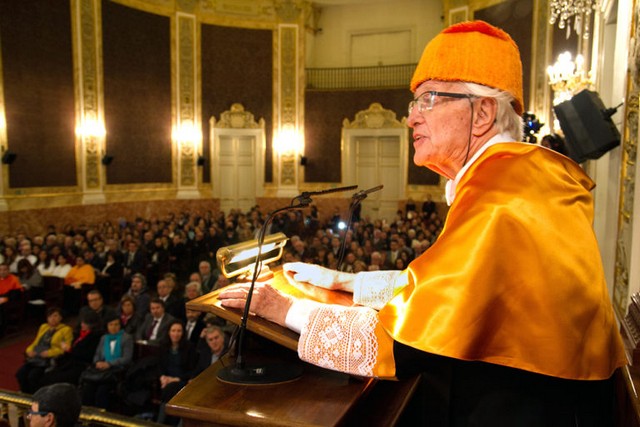
President Maduro: ‘US Blockade on Venezuela Has Cost at Least 400,000 Deaths’

By teleSUR

In the last five years, the blockade succeeded in cutting off financing to Venezuela, preventing it from accessing the required currency to acquire food, medicine, spare parts and essential raw materials for economic activity.

11 Oct 2020 – Venezuela’s President Nicolás Maduro addressed to the peoples of the world in a letter published on Saturday to denounce the illegal blockade that the U.S. government has imposed upon his country for about two decades.

Maduro explained that in the last five years “the blockade succeeded in cutting off financing to Venezuela, preventing it from accessing the required currency to acquire food, medicine, spare parts and essential raw materials for economic activity.”

Moreover, “the U.S. has decreed a ban on the commercialization of Venezuelan hydrocarbons, its main export product, and source of fiscal income,” the president added.

Amid the increase of hostilities against the South American nation, Venezuela’s National Constitutional Assembly approved on October 8 the Anti-Blockade Law for National Development and the Guarantee of the Rights of the Venezuelan people, which aims at protecting the citizens from the continuous attacks on the economy and the wellbeing of the population.

In this sense, Maduro explained that the law “will allow for the creation of mechanisms to improve the nations’ income.” Furthermore, it will stimulate internal economic activity and carry out productive alliances.

The letter highlights the deadly impact of the U.S. blockade on the Venezuelan people as research carried out by the U.S. Center for Economic and Policy Research revealed that the blockade “is responsible for at least 400.000 deaths” in the country.

Despite several attempts by the U.S. government to discredit Venezuela’s electoral process, president Nicolás Maduro explained that all democratic conditions were established to hold the legislative elections on December 6 2020 as over 90 percent of political organizations have registered before the National Electoral Council.

12 October 2020

Source: www.transcend.org