Just International

Independence of Journalism

By Noam Chomsky

Mark Twain famously said that “it is by the goodness of God that in our country we have those three unspeakably precious things: freedom of speech, freedom of conscience, and the prudence never to practice either of them.”

In his unpublished introduction to Animal Farm, devoted to “literary censorship” in free England, George Orwell added a reason for this prudence: there is, he wrote, a “general tacit agreement that ‘it wouldn’t do’ to mention that particular fact.” The tacit agreement imposes a “veiled censorship” based on “an orthodoxy, a body of ideas which it is assumed that all right-thinking people will accept without question,” and “anyone who challenges the prevailing orthodoxy finds himself silenced with surprising effectiveness” even without “any official ban.”

We witness the exercise of this prudence constantly in free societies. Take the US-UK invasion of Iraq, a textbook case of aggression without credible pretext, the “supreme international crime” defined in the Nuremberg judgment. It is legitimate to say that it was a “dumb war,” a “strategic blunder,” even “the greatest strategic blunder in the recent history of American foreign policy” in President Obama’s words, highly praised by liberal opinion. But “it wouldn’t do” to say what it was, the crime of the century, though there would be no such hesitancy if some official enemy had carried out even a much lesser crime.

The prevailing orthodoxy does not easily accommodate such a figure as General/President Ulysses S. Grant, who thought there never was “a more wicked war than that waged by the United States on Mexico,” taking over what is now the US Southwest and California, and who expressed his shame for lacking “the moral courage to resign” instead of taking part in the crime.

Subordination to the prevailing orthodoxy has consequences. The not-so-tacit message is that we should only fight smart wars that are not blunders, wars that succeed in their objectives – by definition just and right according to prevailing orthodoxy even if they are in reality “wicked wars,” major crimes. Illustrations are too numerous to mention. In some cases, like the crime of the century, the practice is virtually without exception in respectable circles.

Another familiar aspect of subordination to prevailing orthodoxy is the casual appropriation of orthodox demonization of official enemies. To take an almost random example, from the issue of the New York Times that happens to be in front of me right now, a highly competent economic journalist warns of the populism of the official demon Hugo Chavez, who, once elected in the late ‘90s, “proceeded to battle any democratic institution that stood in his way.”

Turning to the real world, it was the US government, with the enthusiastic support of the New York Times, that (at the very least) fully supported the military coup that overthrew the Chavez government – briefly, before it was reversed by a popular uprising. As for Chavez, whatever one thinks of him, he won repeated elections certified as free and fair by international observers, including the Carter Foundation, whose founder, ex-President Jimmy Carter, said that “of the 92 elections that we’ve monitored, I would say the election process in Venezuela is the best in the world.” And Venezuela under Chavez regularly ranked very high in international polls on public support for the government, and for democracy (Chile-based Latinobarómetro).

There were doubtless democratic deficits during the Chavez years, such as the repression of the RCTV channel, which elicited enormous condemnation. I joined, also agreeing that it couldn’t happen in our free society. If a prominent TV channel in the US had supported a military coup as RCTV did, then it wouldn’t be repressed a few years later, because it would not exist: the executives would be in jail, if they were still alive.

But orthodoxy easily overcomes mere fact.

Failure to provide pertinent information also has consequences. Perhaps Americans should know that polls run by the leading US polling agency found that a decade after the crime of the century, world opinion regarded the United States as the greatest threat to world peace, no competitor even close; surely not Iran, which wins that prize in US commentary. Perhaps instead of concealing the fact, the press might have performed its duty of bringing it to public attention, along with some consideration of what it means, what lessons it yields for policy. Again, dereliction of duty has consequences.

Examples such as these, which abound, are serious enough, but there are others that are far more momentous. Take the electoral campaign of 2016 in the most powerful country in world history. Coverage was massive, and instructive. Issues were almost entirely avoided by the candidates, and virtually ignored in commentary, in accord with the journalistic principle that “objectivity” means reporting accurately what the powerful do and say, not what they ignore. The principle holds even if the fate of the species is at stake – as it is: both the rising danger of nuclear war and the dire threat of environmental catastrophe.

The neglect reached a dramatic peak on November 8, a truly historic day. On that day Donald Trump won two victories. The less important one received extraordinary media coverage: his electoral victory, with almost 3 million fewer votes than his opponent, thanks to regressive features of the US electoral system. The far important victory passed in virtual silence: Trump’s victory in Marrakech, Morocco, where some 200 nations were meeting to put some serious content into the Paris agreement on climate change a year earlier. On November 8, the proceedings halted. The remainder of the conference was largely devoted to trying to salvage some hope with the US not only withdrawing from the enterprise but dedicated to sabotaging it by sharply increasing the use of fossil fuels, dismantling regulations, and rejecting the pledge to assist developing countries shift to renewables.

All that was at stake in Trump’s most important victory was the prospects for organized human life in any form that we know. Accordingly, coverage was virtually zero, keeping to the same concept of “objectivity” as determined by the practices and doctrines of power.

A truly independent press rejects the role of subordination to power and authority. It casts the orthodoxy to the winds, questions what “right-thinking people will accept without question,” tears aside the veil of tacit censorship, makes available to the general public the information and range of opinions and ideas that are a prerequisite for meaningful participation in social and political life, and beyond that, offers a platform for people to enter into debate and discussion about the issues that concern them. By doing so it serves its function as a foundation for a truly free and democratic society.

Avram Noam Chomsky is an American linguist, philosopher, cognitive scientist, historian, logician, social critic, and political activist.

31 August 2020

Source: www.transcend.org
The Israel-UAE Deal Isn’t About Peace at All

By Phyllis Bennis

In some ways, the U.S.-brokered plan for mutual recognition between Israel and the United Arab Emirates is big news. For more than a quarter of a century, only two Middle Eastern countries—Egypt and Jordan—had officially recognized Israel. None of the Gulf monarchies did.

So, it was a pretty big deal when the announcement was made. Except, actually, not so much.

Despite the UAE’s claimed adherence to a decades-long position that no Arab country should normalize relations with Israel until it ended its occupation of Palestinian land, ties between the UAE and Israel had been quietly underway for years. The same is true of many other Arab states.

Quiet but not-quite-covert trade, technology transfers, and security partnerships are an old story. Intelligence ties began in the 1970s, and commercial links took off after the 1994 Oslo accords. After 9/11, the Bush administration encouraged technology as well as security connections. These expanded continuously, pausing only when Israel assassinated a Hamas leader in the UAE in 2010 and the UAE briefly severed relations.

But by 2011, when Arab popular uprisings across the region were terrifying the autocratic Gulf monarchies, the ties were quickly reestablished. All it took was an Israeli decision to allow a weapons technology sale to the UAE to go through, and a promise they wouldn’t carry out future assassinations in UAE territory.

Over the next decade, Iran emerged as the major enemy du jour for both Israel and the UAE, not to mention several other U.S.-backed Arab monarchies and dictatorships. By the time Trump came into office, his Middle East policy was shaped almost entirely around the creation of a regional anti-Iran coalition with Israel, Saudi Arabia, and the UAE at its core.

No Pretense of Peace for Palestinians

What wasn’t involved in any of this recent trajectory? Palestine.

Almost 30 years ago, Washington orchestrated a supposed Middle East peace conference in Madrid, based on what became known as the “outside/in” strategy. The idea was that under U.S. and—sort of—international auspices, Israel would normalize relations with Arab states while continuing its occupation, settlement expansion, land theft, and discrimination against Palestinians. And once the Arab governments were on board the U.S.-Israeli train, the Palestinians would have no choice but to get on board, too.

That plan failed, of course. And the next iteration, the so-called “inside/out” strategy of creating an Israeli-Palestinian agreement first, which shaped the Oslo accords of the mid-1990s, failed as well. Neither held any potential for actual peace, because neither aimed to provide justice for Palestinians living under Israeli control and facing Israel’s wildly disproportionate power.

So why would anyone think that a return to the earlier failed “outside/in” approach would work any better this time? Because this time around, there was no pretense that Israeli-Palestinian peace—let alone justice—was the goal.

Who Gets What?

Both Israel and the UAE have wanted normalization for a long time. And now they’ve got it. No serious Israeli opposition exists. Public opposition in the UAE, if it exists, is sufficiently suppressed as to appear non-existent. And Palestinian opposition is irrelevant.

Israel gets its first acknowledged normalization with a Gulf monarchy, and gives up nothing.

Formally, Israel says it will suspend its formal annexation of the West Bank as part of the deal. But its de facto annexation of huge swathes of Palestinian land in the West Bank has been in place for decades, and Prime Minister Benjamin Netanyahu’s government had already put off a declaration of formal annexation because right-wing pressure had shifted from demands for annexation to concerns about the pandemic. And Israel’s United Nations Ambassador Gilad Erdan maintains even now that annexation “isn’t off the table and will be back on the agenda.”

Meanwhile, going public with UAE ties strengthens Israel’s role at the center of the regional anti-Iran coalition. All good for Tel Aviv.

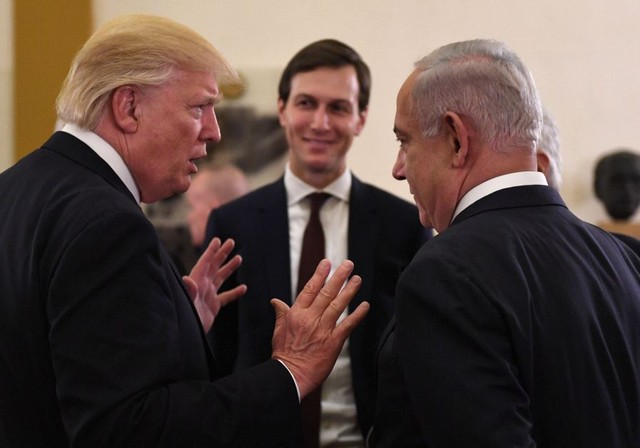
For its part, the UAE gets brownie points with the United States, especially with the Trump administration (and most especially with Trump son-in-law and Middle East adviser Jared Kushner, who has become a BFF of UAE crown prince Mohammed bin Zayed as well as his Saudi counterpart Mohammed bin Salman).

Normalizing public ties with Israel strengthens the Emiratis’ regional position within Washington’s Middle East orbit. And the new connection gives much-needed credibility to the more aggressive regional role the UAE has been playing in recent years in the region, where it’s been punching far above its weight.

With a population of less than 10 million—of which only about 12 percent are UAE citizens— the breathtakingly wealthy statelet is playing major military roles in war-devastated Yemen and in chaos-riven Libya. The result has been a much more visible role within Washington’s anti-Iran coalition.

The UAE’s Israel embrace also gives the Saudis a bit of a poke in the eye, as it represents a direct repudiation of the 2002 Saudi-launched Arab Peace Initiative. That plan was never implemented, but it was predicated on a clear rejection of normalization with Israel absent an end to Israel’s occupation of the 1967 territories, a just solution for Palestinian refugees, and the creation of a Palestinian state with Jerusalem as its capital.

The U.S. gains strength in the region by getting two key economically and militarily powerful allies to hook up ever more closely against Iran. Trump can claim re-election credit from his extremist pro-Israel base (primarily Christian fundamentalists) for helping Israel gain more Arab recognition.

And of course what better way to follow the Trump family performance disguised as the Republican convention than a high-visibility, high-pomp signing ceremony between two of the president’s favorite allies?

It Could Get Worse

And the Palestinians. The Palestinians get what the Palestinians always get. Bupkes, as my grandma used to say. Yiddish for “nothing.”

Not a big shift, since Arab governments in general and the UAE monarchy in particular have done little to nothing to actually support Palestinian rights in recent years. The deal does nothing to end the threat of annexation, since de facto annexation is already in place and de jure annexation is just being delayed for a while.

Could it get worse? Absolutely. The UAE move provides political cover for other Arab states to make their covert ties with Israel public—despite on-again/off-again denials, Sudan and Oman are rumored to be moving towards recognition, and possibly Bahrain as well.

Those moves could complicate Palestinian diplomatic efforts at the United Nations or elsewhere.

Even without substance, rhetorical validation from Arab governments has sometimes been useful for Palestinian efforts to show the global breadth of their support. At the non-governmental level, some boycott campaigns against businesses profiting from occupation might face challenges because of Arab governments protecting those companies. But the agreement will not seriously affect BDS, a global grassroots movement led by Palestinian civil society that does not rely on any government support.

Like so many U.S. “peace plans” before it, the Israel-UAE normalization deal will fail to bring peace. De facto annexation of illegally occupied Palestinian land continues, and refugees are still denied their right of return. While those things continue, no new Israel-Arab normalization effort has any chance of bringing peace.

We need to remember, once again, Dr. Martin Luther King Jr.’s warning that “Peace is not just the absence of war, but the presence of justice.”

Phyllis Bennis is a fellow of the Institute for Policy Studies.

30 August 2020

Source: countercurrents.org

Israel’s dirty tricks department and Palestinian ingenuity

By Ranjan Solomon

Israel’s government obviously has a well-staffed department in one of its cells where they arrive each morning to invent political muck. Among the many things they plan there, one can be certain they design irrational methods for ethnic cleansing. They go further. They make their plans look like actions that guarantee security to their own citizens. On the contrary however their plans are evil blueprints to subjugate the Palestinians.

Our first article in this edition: “Israel’s deals to ‘transfer’ Palestinians are thinly-disguised ethnic cleansing” exposes this wicked design”. For as long as Israel practices racism, colonialism and apartheid, and employs occupation as a political tool, they must also learn to expect reactions from Palestinians and their supporters around the world that may not be quite-so-politically appetizing.

Palestinians from Gaza have resorted to send incendiary balloons in the same way as as they used to fire rockets into areas across the border. An Electronic Intifada report underlines how the incendiary balloons are no match to Israel’s sophisticated and modern weapons. They are simply burning wicks attached to balloons and releasing them in the direction of Israel. The balloons are carried into Israel by the wind. Reports say they cause fires on farm land and, as a result, incur a small amount of damage to Israel’s economy. Yet nobody has been killed or injured by them. Israel despises these relatively harmless acts of resistance. In revenge, it unashamedly employs highly destructive missiles from F-16s in heavily populated Gaza.

Even those who once aspired for a peaceful, dialogue-centered solution which would be just for both Palestinians and Israelis have lost patience with Israel. A criminal rogue state which kills at will and shoots at any target that moves which they don’t like may have won them a space in the deep blue sea. It may sound anti-Semitic to say this. But a rogue regime, which has no license to persist with crude laws, policies, and practices does not deserve a place in civilization.

Israel may want to remember that even the Nazi era came to an end. Their own Nazi-type behavior will also have to face and abrupt halt. Injustice to the Palestinians cannot be eternal. The political rogues who run Israel will do better for themselves by learning this lesson.

As an integral part of its ongoing propaganda, Israel, along with its ardent supporters and mass of mysterious instruments, fervently reiterate in the media, on university campuses, in blogs and comment sections, the same old, tired Zionist myths. Israel treats international laws and conventions with contempt, and contravenes them with escalating promptness and maintains a brutal military occupation. Israel is easily the foremost rogue State. Its overt and covert allies and supporters are part of this ‘rougeness’ .

28 August 2020

Source: palestineupdates.com

Israel’s deals to ‘transfer’ Palestinians are simply thinly-disguised ethnic cleansing

By Eman Abusidu

It seems that Israel is not satisfied with driving 750,000 Palestinians from their homes and land in 1948, and another 400,000 in 1967; nor with its many massacres of Palestinian civilians. It is, in fact, working to expel even more Palestinians with a view to emptying the land of its indigenous inhabitants having known long ago that Palestine was never “a land without a people for a people without a land” as Zionist propaganda would have us believe.

It is no surprise, therefore, to learn that the government of Golda Meir (1898-1978) sought to “encourage” 60,000 Palestinians from the Gaza Strip to migrate to Paraguay in South American with payments that would have cost the occupation state millions of dollars. According to Israeli public broadcaster KAN, recently-released secret papers from 1969 give details of the scheme.

Is it a coincidence that these documents have been released now, in the wake of the “deal of the century” and the increasing Arab normalisation with the occupation state? Moreover, why Paraguay?

With 53 years’ of hindsight, we can say that the fact that the scheme did not go ahead does not mean that it is off the table for ever. Israel has always looked for “alternative homelands” for the Palestinians so that the occupation can be completed with as much of Palestine and as few Palestinians living there as possible.

The possibility of “transferring” Palestinians to Latin America is a bit of a recurring theme. Aside from Paraguay, Israel has made several attempts to encourage Palestinians to migrate to Brazil and other Latin American countries. In 2017, Israel revealed proposals discussed by ministers after the 1967 Six Day War which included the minutes of meetings of the security cabinet between August and December 1967. Prime Minister Levi Eshkol speculated about how to deal with the hundreds of thousands of Palestinians newly under Israeli control. “If it were up to us,” said Eshkol, “we’d send all the Arabs out to Brazil.”

At that time Israel was working hard to make Palestinian emigration easy, not least through organised work missions. A Palestinian refugee who has been in Brazil for more than 53 years confirmed to me that his father went there as part of an agricultural work mission with help from the Jordanian government.

Why Latin America? According to specialist in Israeli affairs Adnan Abu Amer, the region has political and geographical dimensions that made it attractive to the Israelis. “Latin American countries are a long way from the physical conflict, making it harder for Palestinians to return to their land,” he explained. “This will help to turn the page on the whole issue of Palestinian refugees and the right of return.” Furthermore, Palestinian refugees automatically became local citizens, despite the differences in languages and traditions between Palestine and Latin American countries.

In May 1969, therefore, Israeli Ministers discussed the secret plan agreed between the head of the Mossad spy agency, Zvi Zamir, and President Alfredo Stroessner in Paraguay. The Paraguayan authorities agreed to take up to 60,000 Palestinians, which was about 10 per cent of the population of the Gaza Strip at that time.

“The Paraguayan government was a dictatorship then and it was promoting immigration,” Susan Mangana from the Catholic University of Uruguay pointed out. “Paraguay is a neighbour to two regional giants — Argentina and Brazil — and Paraguayan society has a large percentage of indigenous people, the Guarani, as well as the descendants of European settlers. Thus, it is accustomed to immigrants.” What’s more, the Researcher in International Studies noted, Paraguay is well known even today for its corruption and porous borders.

Under the 1969 Israeli plan, the travel costs incurred by Palestinians moving to Paraguay would have been covered, and each person would have got $100. The government in Asunción would have received $33 for each immigrant as well as an initial lump sum of $350,000. The total that Israel was ready to pay was thus $20-30 million.

“Presumably Israel knew about the eagerness of the Paraguayans to make big money by signing this type of agreement and hence it exploited this situation to its advantage,” said Mangana. The plan was a failure, though; only 30 Palestinians made the move to Paraguay. In 1970, two of them shot and killed Edna Peer, who was a secretary at the Israeli Embassy in the country. The attack put an abrupt end to the Israeli plan.

Abu Amer believes that there could be a desire on the part of the Israelis to resurrect such proposals, if not by moving Palestinians to neighbouring Arab countries, then to elsewhere. “Suitable changes would be made to the plan to suit the current circumstances, such as Arab normalisation,” he said, “but the end result, from Israel’s point of view, would be the same: the ‘transfer’ of tens of thousands of Palestinians.”

Susana Mangana thinks that it would be impossible to consider Latin American countries today. “I don’t believe that it would be possible to carry out such a plan today since news travels fast and even though Paraguayans may not be active when it comes to arguing in favour of the Palestinian cause, as more people have access to the reality of the situation they are better prepared to react in case their government tries to sign such an agreement with Israel.”

As happened 53 years ago, when only 30 out of a proposed 60,000 Palestinians took the bait and made the move to Paraguay, the people of Palestine today remain determined to stay on their land, and the refugees remain determined to exercise their legitimate right of return. Israel’s deals to “transfer” the Palestinians are simply thinly-disguised ethnic cleansing of the indigenous population from their homeland. If justice is to mean anything in the modern world, then global opinion will simply not allow the 1948 Nakba (Catastrophe) and 1967 Naksa (Setback) to happen again.

The views expressed in this article belong to the author and do not necessarily reflect the editorial policy of Middle East Monitor.

25 August 2020

Source: www.middleeastmonitor.com

Better to launch balloons than die in silence

By Ahmed Abu Artema

In recent weeks, the tension between Palestinians in Gaza and Israel’s forces of occupation has increased. Israel has used the launching of incendiary balloons by Palestinian youths as a pretext to bomb Gaza once again.

The release of the balloons is a gesture of protest against how the Israeli occupation has procrastinated in abiding by its previous agreements with the Palestinian resistance. Under those agreements, Israel had committed to easing the siege on Gaza.

This procrastination has caused the continued deterioration of Gaza’s health and public services and its economy. Meanwhile, the Israeli government continues to control the movement of goods and people in and out of Gaza.

The Israeli military has responded to the incendiary balloons by carrying out dozens of raids on sites used by Palestinian resistance fighters with US-made F-16 jets. The Israeli naval forces, which besiege Gaza from the sea, have prevented fishers from doing their work and fired at their boats.

The Israeli government has also closed the only crossing through which commercial goods enter Gaza. This closure led to the shutting down of the only power plant in the territory, which, in turn, means households in Gaza receive only four hours of electricity per day.

Israeli Prime Minister Benjamin Netanyahu has stated frankly that Israel would respond to the incendiary balloons in the same way as it responds to rockets fired from Gaza. Israel, it seems, wishes to keep on responding with deadly force to largely symbolic acts of resistance that make use of very basic materials.

Israel has put this statement into practice by dropping highly destructive missiles from F-16s onto densely populated Gaza for 13 consecutive nights.

The incendiary balloons bear no resemblance to Israel’s sophisticated and modern weapons. Youths have simply attached burning wicks to balloons and released them toward Israel.

The balloons have been carried into Israel by the wind. They have caused some fires on farm land and, as a result, incurred a small amount of damage to Israel’s economy.

Yet nobody has been killed or injured by them.

Compelled to act

Israel and pro-Israeli media exaggerate the effects of this form of resistance while completely ignoring the reasons motivating it.

If one wishes to understand why incendiary balloons have been launched from Gaza, it is crucial to go back to the circumstances under which Palestinian youths feel compelled to act.

I have been asked repeatedly by many Western journalists if the youth who launch incendiary balloons are contradicting the principles of the Great March of Return, unarmed protests which began in 2018.

I have replied by asking the journalists to imagine a person locked in a room without access to food or medicine while they are dying slowly and silently. The person decides to bang on the door of the room with all their strength and anger and shouts for their freedom and their need to escape from death.

Then their jailer comes from outside to give a moral sermon and tell people: Look at this prisoner’s barbarism. They are not behaving properly because they are not knocking on the door calmly and not presenting their demands to us in a respectful way.

It is unfair to blame the victim, to be preoccupied with assessing their behavior. By neglecting to address the root of the problem, we are distracted from the real criminal, the one who placed a prisoner in those life-threatening and inhuman conditions.

Whatever a prisoner who feels death approaching them does, their behavior will be in harmony with the principles of freedom and justice, even if they break the door of the prison cell.

This analogy captures Israel’s behavior toward Palestinians in Gaza. Israel has exaggerated the significance of the simple incendiary balloons launched by groups of Palestinian youths.

Israel has tried to portray these balloons as akin to a military threat. By doing so, it has tried to devise new “rules.”

Under those “rules,” Israel thinks it may respond to crude balloons with missiles launched from F-16 warplanes.

Banging on the tank’s walls

Israel says nothing about the political and economic environment in which the young people who release those balloons are growing up.

These young people are victims of Israeli aggression many times over.

Their problems began before they were born. In 1948, their families were expelled from their villages by Zionist forces.

Two-thirds of Gaza’s population are refugees hailing from towns and villages in what is now called Israel.

Many young Palestinians can see their families’ original villages beyond the fence separating Gaza and Israel. But they cannot reach them.

That offers some explanation as to the motives of people releasing balloons. The balloons are crossing the boundary and reaching towns and villages that have been stolen from Palestinians.

They are being flown as a protest against the theft of our homeland.

After the expulsions of 1948, Israel committed countless other crimes. Those include occupation, massacres, the mass detention and torture of Palestinians.

They have included, too, a siege that has deprived Palestinians in Gaza of basic rights and necessities. The siege has undermined our economy, destroyed the labor market and shattered the dreams of Palestinian youth for a decent life.

Gaza’s youth banged against the prison walls during the Great March of Return. Israel responded by firing live bullets against them, causing death and permanent disabilities.

These youths, crushed by the Israeli occupation and deprived of their fundamental rights, still feel the urge to scream at their jailers. They want to make noise so that they do not die in silence.

In his novel Men in the Sun, Ghassan Kanafani tells a story of three Palestinians undertaking a perilous journey hidden in a water tank. After the men are found dead by their driver, Kanafani asks why they didn’t bang on the water tank wall.

Banging on the walls of a tank is better than suffocating.

Launching handmade incendiary balloons from the besieged Gaza Strip is like banging on the walls of a water tank and refusing to die in silence.

Ahmed Abu Artema is a writer who lives in Gaza and a researcher at the Center for Political and Development Studies.

25 August 2020

Source: electronicintifada.net

Fatah criticises Arab League’s neglect of its request to hold emergency meeting

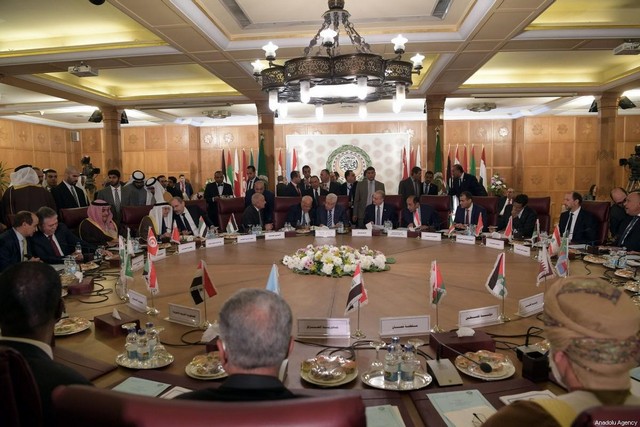
A prominent Fatah leader spoke of the Arab League’s neglect of the Palestinian leadership’s request to hold an emergency meeting to discuss the UAE’s decision to normalise relations with Israel.

Ahmed Aboul Gheit, Secretary–General of the League of Arab States, said on Saturday that the League will hold a regular meeting on 9 September at the ministerial level, ignoring the Palestinian leadership’s request for an emergency meeting.

On 13 August, US President Donald Trump announced a peace deal between the UAE and Israel brokered by Washington.

Abu Dhabi said the deal was an effort to stave off Tel Aviv’s planned annexation of the occupied West Bank, however, opponents believe normalisation efforts have been in the offing for many years as Israeli officials have made official visits to the UAE and attended conferences in the country which had no diplomatic or other ties with the occupation state.

Netanyahu repeated last week that annexation is not off the table, but has simply been delayed.

The Palestinian government has recalled its ambassador to the United Arab Emirates (UAE) in protest over the country’s agreement to normalise ties with Israel.

The PA president’s official spokesman Nabil Abu Rudeineh said the deal was a “betrayal of Jerusalem, Al-Aqsa and the Palestinian cause.”

24 August 2020

Source: www.middleeastmonitor.com

UNRWA calls for unimpeded passage into Gaza for vital goods

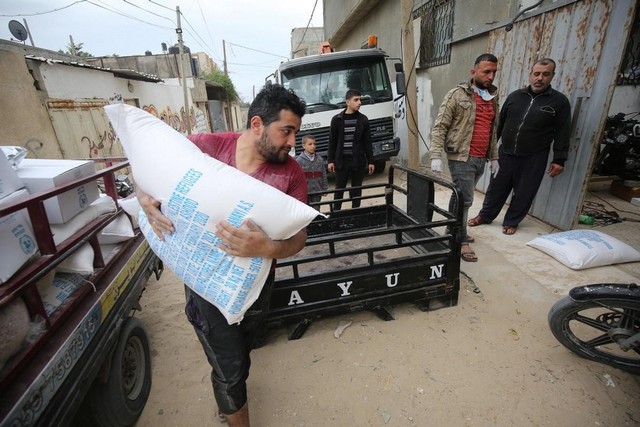
The UN Relief and Works Agency for Palestine Refugees in the Near East (UNRWA) called on Tuesday for all vital goods to be granted unimpeded passage into the besieged Gaza Strip, including fuel for electricity. UNRWA made the appeal against the background of 14 years of an illegal blockade and the socio-economic impact of the COVID-19 pandemic.

“The agency in Gaza is extremely concerned about the closure of the lone power plant since last Tuesday, 18 August,” UNRWA said. “The closure of the plant has caused the power feed to decline to two or three hours per day, followed by 20 hours of interruption.”

This, explained UNRWA, will have a negative impact on the wellbeing and safety of the people of Gaza and devastating effects on the Strip’s vital services, including hospitals. “Thus, this puts at risk the lives and health of nearly two million people, including 1.4 million registered Palestine refugees.”

The official statement from the UN agency pointed out that, “Under international humanitarian law, the passage of all relief consignments, in this case fuel for electricity, should not be prevented.”

Commenting on the situation in the Gaza Strip, the Director of UNRWA Affairs in the Palestinian territory, Matthias Schmale, said that the call is being made to all concerned parties to maintain a supply of electricity that is sufficient to meet the basic needs of the civilian population. “UNRWA is, furthermore, concerned about other measures perceived as punitive to the civilian population, such as closing down the fishing zone, as well as the escalating tensions and military activities.”

Gaza, Schmale pointed out, has now been hit by air raids for more than ten nights in a row. “All parties must show utmost restraint and protect the civilian population with full respect for their dignity and human rights.”

25 August 2020

Source: www.middleeastmonitor.com

The PA Rises up to Fail the Palestinians at Every Occasion

By Ramona Wadi

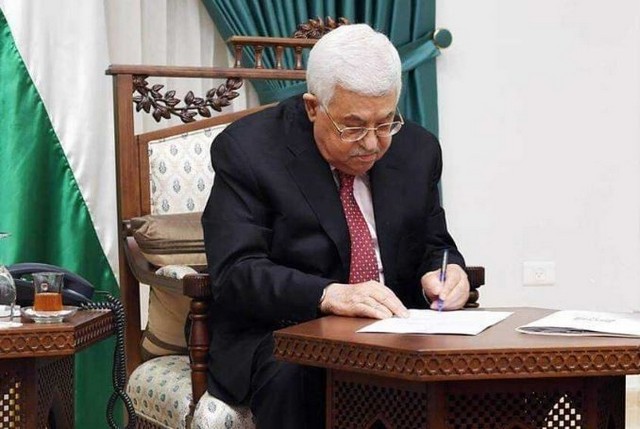
It is a pity that Palestinian Authority leader Mahmoud Abbas wasted so much time in declaring that no one has the right “to speak on behalf of the Palestinian people.” The statement was made within the context of the US-brokered deal normalizing relations between the United Arab Emirates and Israel, which has allegedly stalled annexation of land from the occupied West Bank for an indefinite period.

The deal exacerbates Palestine’s isolation in the region; in particular, it signifies the start of a tacit consensus for when Israel decides it is time to take up annexation once again. For the Palestinian people, another round of “waiting” has been initiated – a tactic much favored by the international community when it comes to brushing aside Palestinian political demands.

Israeli Prime Minister Benjamin Netanyahu has not ruled out annexation; the only change is that now there is a context to the earlier, vague statements. Normalization of relations is the easiest option and the one that is likely to ward off unwanted scrutiny for Israel.

Normalization should not have come as a surprise, after all, Netanyahu had repeatedly stated that Israel would be able to build ties with Arab countries and Gulf states since the Palestinian cause was no longer a top priority in the region. Is it a surprise, seeing that the Arab Peace Initiative of 2002 promoted the concept of normalization, albeit tied to the two-state compromise?

Yet prior to the announcement, the PA had no qualms about promoting the Arab Peace Initiative. Until last month, this paradigm was endorsed by PLO Secretary-General Saeb Erekat, as part of the PLO’s “national program”.

If “national program” was replaced by “international impositions”, a clearer truth would emerge. The PA’s reaction to the UAE-Israeli deal is to be expected, yet it is also making an exception that excludes all the impositions upon the Palestinian people that have altered the Palestinian cause beyond recognition. The PA never turned inwards to consult with the Palestinian people.

It blindly worked its way through international frameworks and resolutions, following an illusion of statehood that never happened, because it was created to promote the international narrative on Palestine.

Not only has the PA failed to promote the Palestinian narrative and political demands. It allowed the international community to determine what Palestine should be, particularly through its endorsement of the two-state compromise and concessions regarding the Palestinian right of return. With each loss, the PA motivated itself to work towards further losses, alongside leaders and countries that pay duplicitous lip service to Palestinians.

France, once deemed an ally due to aiding Palestinians in drafting UN resolutions, has welcomed the normalization of relations between the UAE and Israel. What has the PA achieved for Palestinians other than accentuating and promoting further loss of territory and a steady erosion of political rights?

How will the PA respond to this turn of events? Another wasteful international conference? Lobbying for the defunct two-state compromise? The Palestinian people are being forgotten even within the context of this normalization deal.

Erekat has already opined that the UAE-Israeli agreement will “kill” the two-state compromise. That the PA can regularly rise up to the occasion to fail Palestinians is a macabre spectacle, beyond any political embarrassment.

Ramona Wadi is a staff writer for Middle East Monitor, where this article was originally published. She contributed this article to the Palestine Chronicle.

25 August 2020

Source: www.palestinechronicle.com

Thousands of Palestinian homes in Jerusalem facing demolition threat: PA official

Jerusalem/PNN/

A senior Palestinian official says thousands of Palestinian-owned houses in occupied Jerusalem are facing the threat of demolition by Israeli authorities.

The Palestinian Authority’s deputy governor of Jerusalem, Abdullah Siam, told the Arabic-language Voice of Palestine radio station on Monday that Israeli courts are considering the demolition of some 18,000 Palestinian homes.

He added that the measure comes at a time when there is a need for 15,000 housing units in the occupied city.

Siam noted that the demolition of the Palestinian homes in Jerusalem is in line with the Israeli regime’s collective punishment, ethnic cleansing, and Judaization of the occupied city through forced displacement of Palestinians.

Israeli officials have issued nearly 650 demolition orders against Palestinian-owned structures in Jerusalem since the beginning of the current year.

Israel’s demolition of Palestinian homes and structures in occupied Jerusalem and elsewhere in the West Bank are part of a plan by the regime to expand settlements and force Palestinians from their homes and land.

Israeli officials say demolition orders are carried out because the Palestinian-owned structures have been built without the required construction permits.

Palestinians, on the other hand, argue such authorization is routinely denied, forcing unlicensed building.

According to Israeli rights group B’tselem, Israel has demolished hundreds of houses over the years as part of Israel’s “collective punishment” policy, leaving thousands of Palestinians homeless.

A report by the United Nations Office for the Coordination of Humanitarian Affairs released in January said the year 2019 saw a 45 percent increase in demolitions and confiscations of Palestinian homes in the occupied West Bank compared with the previous year.

The figures showed that a total of 393 Palestinian structures were destroyed or confiscated in Area C, which is under full Israeli control, compared with 271 structures in 2018, while the number of Palestinians displaced from their homes also increased to 507 in 2019, compared with 218 the previous year.

The demolitions of Palestinian homes come at the same time that Israel continues to expand settlements on occupied Palestinian land.

More than 600,000 Israelis live in over 230 settlements built since the 1967 Israeli occupation of Palestinian territories in the West Bank and East Jerusalem.

Israeli settlements in the West Bank are considered illegal under international law and are a major stumbling block to peace efforts as they are built on land Palestinians consider to be part of their future state.

24 August 2020

Source: english.pnn.ps

UAE’s normalisation with Israel follows years of secret relations

By Afro-Middle East Centre

Within days of the United Arab Emirates and Israel signing a deal to normalise relations, the UAE indefinitely postponed a ceremonial signing eventthat was to be held with the USA and Israel because of Israeli opposition to Abu Dhabi purchasing F-35 fighters from the USA. The UAE cancelled the trilateral meeting that was supposed to take place on 31 August. It is clear that the F-35 sale was an integral part of the agreement, and the Emiratis claim that the Israeli prime minister, Benyamin Netanyahu, had agreed to it. No wonder that Netanyahu’s rejection of the possibility of such a sale outraged the UAE. These developments also suggest, as some Palestinians have pointed out, that the deal had nothing to do with Israel agreeing to halt plans to annex Palestinian territory, as Abu Dhabi had claimed.

The normalisation agreement between the UAE and Israel, concluded on 13 August, is far from being the historical deal the protagonists make it out to be. Instead, it exposed an existing affair the two states have cultivated from the mid-2000s. Although the UAE has just joined Egypt and Jordan as the only Arab countries with peace agreements with Israel, UAE-Israel secret relations for more than a decade have included commerce, cyber technology, security and military hardware and energy; these will strengthen and become overt under the new agreement. Israel had, in fact, secretly established and strengthened relations with a number of Gulf States in recent years, and some of these have reached maturity under US president Donald Trump.

Even before this agreement was concluded, Emirati-Israeli cooperation had strengthened with the assistance of the Trump administration. The UAE was one of three Arab countries to attend the unveiling of Trump’s farcical ‘deal of the century’ in January, and was a critical part of the June 2019 economic package for Palestinians designed by Trump’s adviser and son-in-law Jared Kushner, and announced in a conference for this purpose in Bahrain. Following the conference, Israeli ministers undertook several visits to the UAE, signalling progress towards normalisation. A series of cooperation agreements between the UAE and Israel to tackle the COVID-19 pandemic and an Emirati plane landing in Tel Aviv in July signalled increasing relations between the two countries, and the normalisation agreement was the logical next step. In July, in a move now seen as preparing the ground for the normalisation deal, the Emirati ambassador to the USA, Yousef Al-Otaiba, published an op-ed in an Israeli newspaper after Netanyahu had announced plans to annex parts of the West Bank, calling for these plans to be halted. Two other Gulf countries, Bahrain and Oman, as well Sudan could follow soon with normalisation plans.

Tracing UAE-Israel relations

Current relations between the UAE and Israel may be traced back to 2009, after the inauguration of Barack Obama as US president. The relationship blossomed via secret meetings held to pressure Washington into taking a stronger stance against Iran. However, UAE purchases of military intelligence software and arms deals suggest the relations started in the early 2000s. The two countries had already been communicating via intermediaries, mostly discussing their common opposition to Iran.

Mossad’s assassination of Mahmoud al-Mabhouh, Hamas leader and co-founder of the movement’s armed wing, Al-Qassam Brigades, in January 2010 threatened carefully-nurtured and ongoing secret links between the two states. Contact stalled over Mabhouh’s murder until 2012 when Netanyahu secretly met the Emirati foreign minister, Abdullah Bin Zayed, in New York during the UN General Assembly. Talks on Iranian activities in the region resumed, establishing mutual geopolitical concerns. Emirati cooperation with Israel accelerated as a response to the 2010/11 Arab uprisings and Iranian involvement in the Syrian conflict. In January 2014, then Israeli energy minister, Silvan Shalom, attended a renewable energy conference in Abu Dhabi, spurring on relations. In the following year, the UAE granted Israel permission to establish an office in Abu Dhabi for the International Renewable Energy Agency, which has served as platform for regular communication between the two countries.

To showcase the relationship and test responses, the UAE, in a break with a decades-old practice among Arab states, allowed the Israeli national anthem to be played for Israeli athletes at a judo tournament held in Abu Dhabi in October 2018. This was followed by visits to Abu Dhabi by Israel’s communications and culture ministers, Ayoub Kara and Miri Regev respectively, in the same week that Netanyahu made an unprecedented visit to Oman in which he met the country’s ruler, Sultan Qaboos. Gulf leaders reciprocated. For example, the Saudi crown prince, Mohammed bin Salman (MBS) was reported secretly to have visited Israel and met with Israeli officials; his visit was preceded by a July 2016 delegation led by former Saudi general, Anwar Eshki, who also met with Israeli officials.

In July 2019, the Israeli foreign minister, Israel Katz, attended the UN climate conference in Abu Dhabi, and, on the sidelines of the conference, discussed Iran with senior UAE officials as well as the Israeli ‘Tracks for Regional Peace’ initiative meant to open up travel and trade between Israel and Gulf countries. Katz’s visit came on the heels of the US economic conference in Bahrain. While such official visits between Israeli and certain Gulf states did not represent diplomatic relationships, they showed that Israel was making headway towards normalisation with Gulf countries – especially key players such as Saudi Arabia and the UAE. This was cemented in December 2019 when USA hosted Israel and the UAE in an anti-Iran meeting that discussed a non-aggression pact between the two states as a step towards full diplomatic ties.

Normalisation, weapons and strategic alliances

Until recently, the UAE and Saudi Arabia had shied away from overt relations with Israel for fear of backlash from their citizens. This changed with Trump’s attempts to build an anti-Iran coalition with Gulf states.

Emirati-Israeli relations have grown significantly in the fields of cyber-espionage and big data analysis since 2009. Acquiring Israeli technology and cybersecurity expertise has boosted the UAE’s domestic and regional surveillance capabilities – even against its own citizens. The UAE uses Israeli companies such as DarkMatter and NSO Group, staffed by Israeli cyber experts, to hack phones, gather intelligence and monitor Islamists, other dissidents and other Gulf leaders. Many Israeli military and security specialists also work for Emirati companies, and have often been hired as mercenaries since the Arab uprisings of 2010/2011.

Although the 13 August normalisation deal is a victory for Israel, which seeks legitimacy among Arab states in order to make the Palestinians irrelevant in international affairs, the Emiratis also scored big in the deal, or so they initially thought. The package included a US agreement to sell F-35 fighter jets to Abu Dhabi in a multi-million-dollar-sale. The UAE had been looking for ways to acquire F-35s as it seeks to present itself militarily as the region’s emerging hegemon. Netanyahu, however, quickly denied these Emirati claims that F-35 acquisition had been secured, emphasising that Israel remained opposed to the sale of advanced weapons to Arab countries. Israel’s opposition to the sale of the jets to the UAE created tensions in the new alliance. Abu Dhabi cancelled the meeting that was to mark the official and ceremonial signing of the normalisation agreement in protest against Netanyahu’s opposition to the F-35 sale. Meanwhile, conflicting sentiments have emerged from the White House.

Differences also quickly emerged about Emirati claims that the normalisation agreement included an end to Israeli plans for the annexation of the West Bank. Within hours of the deal’s announcement, Netanyahu confirmed his commitment to annexation, saying it only been delayed, not cancelled. Kushner supported the Israeli prime minister, clarifying that the annexation was only temporarily halted to allow Israel to focus on strengthening its relations with Gulf countries. Clearly, the Emiratis failed in their attempts to win Arab support by packaging normalisation with Israel as a move to support Palestinians.

The attendance of Otaiba, the UAE ambassador to the USA, at the unveiling of Trump’s ‘deal of the century’ in January had already indicated the increasing Emirati disregard for Palestinians. In drafting Trump’s plan, Kushner had consulted widely with Gulf countries – especially the UAE and Saudi Arabia. These countries had formed part of the process despite the fact that no Palestinians had been consulted. The Palestinian Authority (PA) and other Palestinian groups had slammed Emirati support for the heavily pro-Israel plan as the ultimate betrayal. The same sense of betrayal was expressed when the UAE-Israel deal was announced this month.

The Dahlan effect

The Emirati attitude to and interference in Palestinian affairs can be seen in the role of exiled former Fatah strongman, Mohammed Dahlan, arch enemy of PA and PLO leader Mahmoud Abbas. After being expelled by Fatah, Dahlan found refuge and massive financial support in the UAE. Some of those financial resources have been dedicated to undermining Abbas to set the stage for Dahlan to capture the PA and PLO. Many Palestinians credit him for being behind the UAE-Israel deal. Dahlan, who used to be close to the CIA and the Israeli security establishment, was convicted for corruption by a Palestinian court in 2014. Since then, from exile, he has tried to to re-enter Palestinian politics and return to Palestine. The UAE, Egypt and Israel prefer him as a replacement or replacement for or successor to Abbas. He has built a support base among sections of Fatah youth in Gaza, some of the refugee camps in Lebanon, and in a few Palestinian diplomatic missions abroad.

The UAE also has a difficult relationship with Gaza-based Hamas, which it treats with hostility because of the group’s links to the Muslim Brotherhood. Although the UAE has not officially designated Hamas a terrorist group, Emirati officials refer to it as such in private, especially after the 2017 blockade on Qatar, imposed by the UAE, Saudi Arabia, Bahrain and Egypt. UAE ally Saudi Arabia has detained dozens of Hamas activists since February 2019, allegedly at Israel’s bidding.

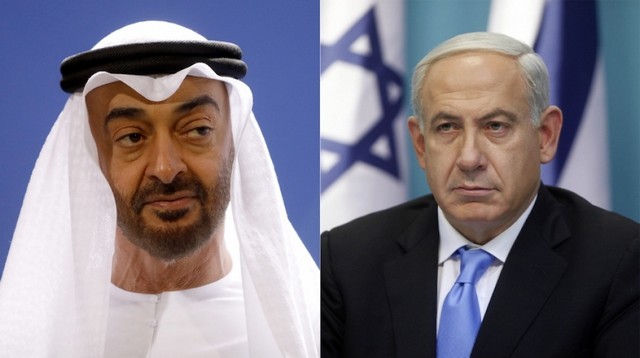
Through Dahlan, the UAE has sponsored aid projects in Gaza. In May and June this year, the UAE also sent two planeloads of COVID-19 aid to Israel for Palestinians in the West Bank. The first plane landed in Tel Aviv in May, unmarked, while the second plane bore the Etihad airline logo and the UAE flag, marking significant strides in UAE-Israel relations. Despite being cash strapped and battling the pandemic, the PA rejected both planeloads, viewing Emirati coordination with Israel (and the lack of consultation with Palestinians) as a betrayal. The recent normalisation deal emphasised this sense of betrayal; protests against it erupted in both the West Bank and Gaza, with protesters burning pictures of the UAE crown prince, Mohammed Bin Zayed Al-Nahyan, Dahlan, Trump and Netanyahu.

Other Gulf states may follow

Oman and Bahrain, both of which immediately praised the UAE-Israel agreement, are expected to follow the Emiratis, allowing Israel to realise its long-time dream of normalisation with regional states while isolating the Palestinians. Israel’s foreign minister, Gabi Ashkenazi, and his Omani counterpart, Yusuf bin Alawi bin Abdullah, have already discussed strengthening bilateral ties. The USA hoped that plans to normalise might be announced soon, and the recent regional tour of Kushner and US Secretary of State Mike Pompeo was aimed to finalise these plans. Pompeo’s trip to Bahrain on 26 August did not yield the hoped-for results, however, as the Bahraini king emphasised the creation of a Palestinian state. Sudan’s transitional government also backtracked. Saudi Arabia, Kuwait and Morocco have reiterated their stance not to normalise relations with Israel until a peace deal with Palestinians is reached. However, this does not preclude relations taking place secretly.

Secret relations persist between Israel and certain Gulf countries, as well as some Arab states in Africa. Before Bahrain, Pompeo visited Khartoum and met the Sudanese prime minister, Abdullah Hamdok, who disputed claims that his country will normalise relations with Israel, despite Sudanese officials having secretly met Netanyahu in February to discuss normalisation. Despite Sudan’s transitional government issuing conflicting statements on the matter, an 18 August meeting between Mossad chief Yossi Cohen and member of Sudan’s Sovereignty Council, Mohamed Hamdan Dagalo (Hemeti), in Abu Dhabi suggests that that closed door relations will take place despite Hamdok’s statement.

AMEC insights is a series of publicly-accessible publications, providing trenchant analyses of topical issues related to the Middle East and North Africa.

31 August, 2020

Source: amec.org.za