Just International

Why Do Most People Believe Propaganda and False Flag Attacks?

By Robert J. Burrowes

In his 1995 book The Demon-Haunted World Carl Sagan lamented as follows:

“I have a foreboding of [a] time when… awesome technological powers are in the hands of a very few, and no one representing the public interest can even grasp the issues; when the people have lost the ability to set their own agendas or knowledgeably question those in authority; when, clutching our crystals and nervously consulting our horoscopes, our critical faculties in decline, unable to distinguish between what feels good and what’s true, we slide, almost without noticing, back into superstition and darkness.

“The dumbing down… is most evident in the slow decay of substantive content in the enormously influential media… but especially a kind of celebration of ignorance…. The plain lesson is that study and learning – not just of science, but of anything – are avoidable, even undesirable.

“We’ve arranged a global civilization in which most crucial elements… profoundly depend on science and technology. We have also arranged things so that almost no one understands science and technology. This is a prescription for disaster. We might get away with it for a while, but sooner or later this combustible mixture of ignorance and power is going to blow up in our faces.”

While it is 25 years since these words of Sagan’s were published a year before his death, one can only lament the ongoing decline of what might simply be labeled the capacity for critical thinking, whether in relation to society and politics, or the science and technology that so concerned Sagan.

At a time in human history when so much is at stake, why is it so difficult to engage most people in anything resembling a thoughtful investigation, consideration and analysis of what is taking place? Why is it that more people do not question what they are told, what they read and what they are shown? In short, why is it that most people do not seek out the evidence for themselves rather than simply believing what is presented to them?

In one sense, the answer to this question might seem simple. People are daily bombarded with ‘information’, in various guises, and a lifetime of submissively accepting what they are told leaves few with any inclination, or energy, to question anything. But let me offer a fuller explanation given the critical importance of this issue if we are to mobilize an effective response to the challenges confronting humanity.

So first: What is propaganda? A false flag attack? Why do most people simply believe what they are told without investigating, carefully, for themselves? And why are those who challenge the elite-driven narrative often labeled ‘conspiracy theorists’ or, depending on the issue, some other pejorative such as ‘peddling debunked science’, ‘anti-vaxxer’ or ‘anti-semitic’ for example?

What is Propaganda?

Propaganda is the deliberate and systematic effort, using a variety of means, to manipulate people into believing and behaving in accordance with something that is not true. For one comprehensive explanation of how this is done, see Trust Us, We’re Experts! How Industry Manipulates Science and Gambles with Your Future, a book which Robert F. Kennedy Jr. observes ‘shows how giant corporations employ sophisticated psychiatric techniques, unscrupulous public figures, junk science, tainted studies and clever PR mercenaries in a relentless effort to market products that routinely kill, maim, deform and poison consumers and our environment’. See ‘Trust Us, We’re Experts!: How Industry Manipulates Science and Gambles with Your Future’.

While some people argue that propaganda can be used for good, the fact is that something that is simply true should appeal to people anyway, even if it is unpleasant. This is because the truth is the only powerful place from which to start to address any circumstance, including unpleasant and difficult ones.

Propaganda is delivered by a variety of means. Aside from that issued, in various ways, by governments and corporations, propaganda is delivered by education systems as ‘knowledge’, by the corporate media as ‘news’ and by the entertainment industry as films, television programs, video games, music, literature and in other forms. But all propaganda is designed to instill and reinforce a limited set of fears, approved beliefs and endorsed behaviours so that the ‘individual’ responds submissively within the carefully managed system of elite political, social and economic control.

For example, education is designed to teach the individual a limited range of technical functions intended to help create, maintain but essentially serve the emerging technocratic tyranny (as it supersedes the existing version of industrial capitalism), make the individual a passive consumer and politically submissive, while ensuring that an intelligent mind capable of seeking out relevant evidence for themselves, critiquing society and responding powerfully does not develop. See ‘Do We Want School or Education?’

What is a False Flag Attack?

A false flag attack occurs when a government carries out a terror attack against its own population and then falsely blames an enemy to justify a political course of action, such as going to war against the country or countries it blames. While, again, those who question false flag attacks are often denounced by elite propagandists as ‘conspiracy theorists’, in fact the documentation of false flag attacks that have later been admitted is quite long. For one list, see ‘53 Admitted False Flag Attacks’. Of course, plenty of false flag attacks have not been admitted, even when the evidence is overwhelming, as in the case of 9/11 for example.

So Why Do Most People Believe Propaganda?

In an early book on propaganda written in 1928 by Sigmund Freud’s nephew, Edward Bernays, he opened with this paragraph:

“The conscious and intelligent manipulation of the organized habits and opinions of the masses is animportant element in democratic society. Those who manipulate this unseen mechanism of society constitute an invisible government which is the true ruling power of our country.”

As Bernays makes clear from the outset, his preoccupation is the manipulation of people to do the bidding of others: clearly, a debased and cynical view of the human individual on which many of humanity’s less morally committed characters have capitalized since Bernays wrote the book.

For example, Joseph Goebbels, Nazi Minister of Propaganda from 1933 to 1945 and an avid reader of Bernays’ work, observed that ‘Propaganda works best when those who are being manipulated are confident they are acting on their own free will.’

But to understand why the approach of Bernays and his disciples such as Goebbels even works, we need to consider why it is that most people are so gullible in the first place. Why don’t more people ask deeper questions about what is taking place rather than simply accepting, without serious question, whatever is presented to them (whether by parents, teachers, religious figures, doctors, propagandists, marketing agents, governments or the corporate media)?

The fundamental problem is simply this: parents, teachers, religious figures and other significant adults in the child’s life require obedience. And obedience means that the child not only behaves as directed by the adult but also that the child believes what the adult believes. This latter point is easily overlooked but is actually the key issue. Why? Because a child who does not believe what the adult believes might think and behave in a way that scares the adult. And demanding obedience is essentially about eliminating beliefs (and their consequent behaviours) that would frighten the parent, teacher or other adult.

Parents require obedience virtually from the moment of birth, doing everything from comforting a child to stop them crying – see ‘Comforting a Baby is Violent’ – to punishing them for acting contrary to parental will once they start moving independently. Of course, once the child starts to think or believe differently, especially if this ‘difference’ is too far from a belief of the child’s parents, teachers or religious leaders (or a widely-accepted belief within their society), the child is quickly pulled back into line with some combination of inducements and/or violence. See ‘Punishment is Violent and Counterproductive’.

Despite legal conventions meaninglessly affirming versions of it – such as the Universal Declaration of Human Rights Article 18 declaring ‘Everyone has the right to freedom of thought…’ – the freedom to think for oneself is not a human right in any meaningful sense of the term and, even if it were, it would really only mean the freedom to think for oneself within certain clearly defined and narrow parameters. And only if you are an adult.

This is why, for example, a child who decides not to go to school does not emerge. Such a possibility would be frightening to virtually every parent, so no child is given that option, let alone allowed the opportunity to come up with, consider and act on that option for themself. Why? Because attendance at school, wherever it exists, is legally compulsory (meaning punishment will be inflicted for failure to comply), and only the rarest parent has the vaguest concept of freedom themselves, let alone the courage to defend their child’s freedom, including the freedom to choose how they spend the bulk of their time for the 8-13 years of ‘school age’.

Consequently, the freedom to think for oneself and act accordingly is strangled at a very young age and certainly by the time a child is compelled to attend a prison for children, also known as ‘school’. As a result the child’s concept of freedom, should they ever come across the notion, can only be a parody of the real thing. And the adult who emerges from this childhood is simply incapable of comprehending what freedom might mean for the obvious reason that to be meaningfully understood, freedom must be experienced.

Of course, is it not just parental authority and school that denies any child the experience of liberty. As Jean-Jacques Rousseau noted in his treatise The Social Contract in 1762, ‘Man is born free; and everywhere he is in chains’. Every institution in society is designed to circumscribe freedom, one way or another. It is just that a childhood spent living under the control of their parents and then teachers and religious figures leaves all children devoid of the experience of freedom and so any subsequent limits are not even noticed. In fact, they are expected and ‘taken for granted’.

So with parents, teachers and religious figures endlessly inflicting ‘visible’, ‘invisible’ and ‘utterly invisible’ violence on the child in the name of ‘socialization’ (which includes requiring obedience under threat of violence for non-compliance), the child progressively and rapidly loses several innate capacities, notably including a sense of their own Self-will, the capacities to think and feel for themselves, as well as conscience. See ‘Why Violence?’ and ‘Fearless Psychology and Fearful Psychology: Principles and Practice’. Anything that is too far from the dominant narrative simply becomes ‘unthinkable’ because the child’s innate capacity to perceive the truth is suppressed along with other mental capacities.

But soon it is not just parents, teachers and religious leaders that are the accepted ‘authority figures’ in the child’s life. No longer able to seriously question the imperatives of parents, teachers and religious figures because they have been terrorized out of doing so, the child has also unconsciously ‘learned’ that virtually any information with which they are presented must be true, even when the source is simply a government or corporate media outlet presenting elite propaganda. For the vast bulk of adult humans, the idea of questioning a dominant narrative does not even occur to them and it is certainly not something they can do with any intelligence, persistent research effort or courage.

So just as Hitler, ably supported by his Propaganda Minister Joseph Goebbels, was able to direct most Germans prior to and into World War II, it is quite straightforward for the global elite to be able to direct the bulk of the human population to believe, for example, that President John F. Kennedy was assassinated by the ‘lone gunman’ Lee Harvey Oswald, that the ‘Gulf of Tonkin incident’ justified the United States war on Vietnam, that a ‘virus’ labeled HIV caused a ‘disease’ labeled AIDS, that the three buildings 1,2 and 7 of the World Trade Center were destroyed by two aircraft flown by novice pilots into the top stories of the Twin Towers and justified the subsequently launched US ‘War on Terror’, that a ‘virus’ labeled SARS-Cov-2 exists and causes a ‘disease’ labeled Covid-19 that has justified the destruction of everything from a range of human rights to the global economy while accelerating four distinct paths to human extinction, that we live in a democracy in which each adult has a say in how they are governed, or even that ongoing effort is being made to bring a greater degree of shared prosperity to the people of the world.

For just a taste of the extensive evidence to debunk each of these propaganda-driven delusions, see these respective analyses of what the evidence actually demonstrates: On the Trail of the Assassins: One Man’s Quest to Solve the Murder of President Kennedy, the Pentagon Papers, AIDS Inc.: Scandal of the Century, Architects & Engineers for 9/11 Truth, ‘Unmasking the Lies Around COVID-19: Facts vs Fiction of the Coronavirus Pandemic’, ‘The Elite’s COVID-19 Coup to Destroy Humanity that is also Fast-Tracking Four Paths to Human Extinction’, ‘America After the Election: A Few Hard Truths About the Things That Won’t Change’ and ‘The Federal Reserve Cartel: The Eight Families’.

In essence: my point is that is it is not the power of the propaganda, increasingly sophisticated though it has become, that makes people believe it, but a ‘socialization’ model designed to produce submissively obedient ‘individuals’ who gullibly interpret what is happening, and even their own ‘experience’, in terms of the information or scenario (that is, propaganda) with which they are presented. And because of the deeply-seated and unconscious fear of holding a divergent view, most people simply believe the widely-promulgated propaganda narrative with which they become familiar and, hence, comfortable. Moreover, those who challenge the elite-driven narrative frighten them, particularly when elite agents in government and the corporate media label them ‘conspiracy theorists’. For one explanation of why the term ‘conspiracy theorist’ emerged to denigrate those who challenge elite orthodoxy, see ‘In defence of conspiracy theories (and why the term is a misnomer)’.

And so this combination of dysfunctional parenting, education and religious exposure leaves the child devoid of their intuitive ‘truth register’ as well as the other mental faculties that would make them question explanations that obviously lack credibility while investigating and analyzing the evidence for themself. In fact, the idea of doing so never even occurs to them. Hence, a terrorized, gullible and easily manipulated individual enters adulthood. And, as the elite intends, galvanizing an effective response by such people to the truth hidden behind the propaganda is very difficult.

Resisting Propaganda

There is no point hoping that the global elite will discontinue their use of propaganda to shape the course of human events. This is largely because the global elite is insane. See ‘The Global Elite is Insane Revisited’. Moreover, attempts to curb the use of propaganda must inevitably run into the institutions and organizations that the elite controls. And while we can strategically resist these if we choose, the most powerful defence we have against elite propaganda is the human mind that can perceive and critique it. Hence, as a priority, I would profoundly alter our parenting model to achieve this outcome. See ‘My Promise to Children’.

If you are uncertain of your own capacity to critique propaganda, you can expand your capacity to do so by feeling the fear (to release it) that limits your mental faculties. See ‘Putting Feelings First’.

If you are interested in planning or participating in a strategy to achieve a peace, environmental or social justice outcome (particularly in relation to those issues that threaten human extinction), or to resist the elite coup currently taking place under cover of Covid-19, you can read sets of strategic goals for doing so in Campaign Strategic Aims or Coup Strategic Aims.

Moreover, if you wish to tackle the environmental threats to human existence while also strengthening your self-reliant capacity to resist the latest elite onslaught to take (much) greater control of your life, consider participating in ‘The Flame Tree Project to Save Life on Earth’. The greater your dependence on elite systems and processes of any kind, the less power you will have to resist as the noose tightens.

If you are interested in participating in the worldwide effort to resist elite and other violence, you are also welcome to sign the online pledge of ‘The People’s Charter to Create a Nonviolent World’.

More simply, if you like, you might consider committing to:

The Earth Pledge

Out of love for the Earth and all of its creatures, and my respect for their needs, from this day onwards I pledge that:

  1. I will listen deeply to children. See ‘Nisteling: The Art of Deep Listening’.
  2. I will not travel by plane
  3. I will not travel by car
  4. I will not eat meat and fish
  5. I will only eat organically/biodynamically grown food
  6. I will minimize the amount of fresh water I use, including by minimizing my ownership and use of electronic devices
  7. I will not own or use a mobile (cell) phone
  8. I will not buy rainforest timber
  9. I will not buy or use single-use plastic, such as bags, bottles, containers, cups and straws
  10. I will not use banks, superannuation (pension) funds or insurance companies that provide any service to corporations involved in fossil fuels, nuclear power and/or weapons
  11. I will not accept employment from, or invest in, any organization that supports or participates in the exploitation of fellow human beings or profits from killing and/or destruction of the biosphere
  12. I will not get news from the corporate media (mainstream newspapers, television, radio, Google, Facebook, Twitter…)
  13. I will make the effort to learn a skill, such as food gardening or sewing, that makes me more self-reliant
  14. I will gently encourage my family and friends to consider signing this pledge.

Conclusion

The world is complex: it is difficult to understand and requires enormous effort.

Propaganda is designed to give people information that is easy to understand (and sometimes frightening) while distracting them from the truth and offering a simple ‘choice’ (or command) designed to mobilize action in support of an elite-driven narrative.

For example, by telling people they are threatened by a virus, most will be scared into focusing their attention on the ‘virus’. They will pay no attention to the many more complex and dangerous things that are taking place under cover of the ‘virus’: a technocratic/transhumanist coup that is utterly transforming the very essence of human society, economy and even the human individual. See ‘Beware the Transhumanists: How “Being Human” is being Re-engineered by the Elite’s Covid-19 Coup’ and ‘Klaus Schwab and His Great Fascist Reset’.

Only a tiny proportion of the human population has even the vaguest idea of how the world actually works. But not even a tiny proportion of these people recognize that terrorizing children into obedience is the fundamental explanation of why the world works in the way that it does.

Unless we can mobilize greater recognition of our responsibility for giving the global elite the control over us that it has, and tackle this problem at its core – by fundamentally revising existing parenting and education models so that we produce powerful individuals – it will continue to be enormously difficult to mobilize sufficient strategic response to the challenges that confront humanity.

And while we are now fast-tracking four distinct paths to human extinction, there is an urgency about our predicament that accelerates daily.

_______________________________________________

Robert Burrowes, Ph.D. is a member of the TRANSCEND Network for Peace Development Environment and has a lifetime commitment to understanding and ending human violence.

9 November 2020

Source: www.transcend.org

Inequality Is Not Inevitable

By Joseph E. Stiglitz

An insidious trend has developed over this past third of a century. A country that experienced shared growth after World War II began to tear apart, so much so that when the Great Recession hit in late 2007, one could no longer ignore the fissures that had come to define the American economic landscape. How did this “shining city on a hill” become the advanced country with the greatest level of inequality?

One stream of the extraordinary discussion set in motion by Thomas Piketty’s timely, important book, “Capital in the Twenty-First Century,” has settled on the idea that violent extremes of wealth and income are inherent to capitalism. In this scheme, we should view the decades after World War II — a period of rapidly falling inequality — as an aberration.

This is actually a superficial reading of Mr. Piketty’s work, which provides an institutional context for understanding the deepening of inequality over time. Unfortunately, that part of his analysis received somewhat less attention than the more fatalistic-seeming aspects.

Over the past year and a half, The Great Divide, a series in The New York Times for which I have served as moderator, has also presented a wide range of examples that undermine the notion that there are any truly fundamental laws of capitalism. The dynamics of the imperial capitalism of the 19th century needn’t apply in the democracies of the 21st. We don’t need to have this much inequality in America.

Our current brand of capitalism is an ersatz capitalism. For proof of this go back to our response to the Great Recession, where we socialized losses, even as we privatized gains. Perfect competition should drive profits to zero, at least theoretically, but we have monopolies and oligopolies making persistently high profits. C.E.O.s enjoy incomes that are on average 295 times that of the typical worker, a much higher ratio than in the past, without any evidence of a proportionate increase in productivity.

If it is not the inexorable laws of economics that have led to America’s great divide, what is it? The straightforward answer: our policies and our politics. People get tired of hearing about Scandinavian success stories, but the fact of the matter is that Sweden, Finland and Norway have all succeeded in having about as much or faster growth in per capita incomes than the United States and with far greater equality.

So why has America chosen these inequality-enhancing policies? Part of the answer is that as World War II faded into memory, so too did the solidarity it had engendered. As America triumphed in the Cold War, there didn’t seem to be a viable competitor to our economic model. Without this international competition, we no longer had to show that our system could deliver for most of our citizens.

Ideology and interests combined nefariously. Some drew the wrong lesson from the collapse of the Soviet system. The pendulum swung from much too much government there to much too little here. Corporate interests argued for getting rid of regulations, even when those regulations had done so much to protect and improve our environment, our safety, our health and the economy itself.

But this ideology was hypocritical. The bankers, among the strongest advocates of laissez-faire economics, were only too willing to accept hundreds of billions of dollars from the government in the bailouts that have been a recurring feature of the global economy since the beginning of the Thatcher-Reagan era of “free” markets and deregulation.

The American political system is overrun by money. Economic inequality translates into political inequality, and political inequality yields increasing economic inequality. In fact, as he recognizes, Mr. Piketty’s argument rests on the ability of wealth-holders to keep their after-tax rate of return high relative to economic growth. How do they do this? By designing the rules of the game to ensure this outcome; that is, through politics.

So corporate welfare increases as we curtail welfare for the poor. Congress maintains subsidies for rich farmers as we cut back on nutritional support for the needy. Drug companies have been given hundreds of billions of dollars as we limit Medicaid benefits. The banks that brought on the global financial crisis got billions while a pittance went to the homeowners and victims of the same banks’ predatory lending practices. This last decision was particularly foolish. There were alternatives to throwing money at the banks and hoping it would circulate through increased lending. We could have helped underwater homeowners and the victims of predatory behavior directly. This would not only have helped the economy, it would have put us on the path to robust recovery.

OUR divisions are deep. Economic and geographic segregation have immunized those at the top from the problems of those down below. Like the kings of yore, they have come to perceive their privileged positions essentially as a natural right. How else to explain the recent comments of the venture capitalist Tom Perkins, who suggested that criticism of the 1 percent was akin to Nazi fascism, or those coming from the private equity titan Stephen A. Schwarzman, who compared asking financiers to pay taxes at the same rate as those who work for a living to Hitler’s invasion of Poland.

Our economy, our democracy and our society have paid for these gross inequities. The true test of an economy is not how much wealth its princes can accumulate in tax havens, but how well off the typical citizen is — even more so in America where our self-image is rooted in our claim to be the great middle-class society. But median incomes are lower than they were a quarter-century ago. Growth has gone to the very, very top, whose share has almost quadrupled since 1980. Money that was meant to have trickled down has instead evaporated in the balmy climate of the Cayman Islands.

With almost a quarter of American children younger than 5 living in poverty, and with America doing so little for its poor, the deprivations of one generation are being visited upon the next. Of course, no country has ever come close to providing complete equality of opportunity. But why is America one of the advanced countries where the life prospects of the young are most sharply determined by the income and education of their parents?

Among the most poignant stories in The Great Divide were those that portrayed the frustrations of the young, who yearn to enter our shrinking middle class. Soaring tuitions and declining incomes have resulted in larger debt burdens. Those with only a high school diploma have seen their incomes decline by 13 percent over the past 35 years.

Where justice is concerned, there is also a yawning divide. In the eyes of the rest of the world and a significant part of its own population, mass incarceration has come to define America — a country, it bears repeating, with about 5 percent of the world’s population but around a fourth of the world’s prisoners.

Justice has become a commodity, affordable to only a few. While Wall Street executives used their high-retainer lawyers to ensure that their ranks were not held accountable for the misdeeds that the crisis in 2008 so graphically revealed, the banks abused our legal system to foreclose on mortgages and evict people, some of whom did not even owe money.

More than a half-century ago, America led the way in advocating for the Universal Declaration of Human Rights, adopted by the United Nations in 1948. Today, access to health care is among the most universally accepted rights, at least in the advanced countries. America, despite the implementation of the Affordable Care Act, is the exception. It has become a country with great divides in access to health care, life expectancy and health status.

In the relief that many felt when the Supreme Court did not overturn the Affordable Care Act, the implications of the decision for Medicaid were not fully appreciated. Obamacare’s objective — to ensure that all Americans have access to health care — has been stymied: 24 states have not implemented the expanded Medicaid program, which was the means by which Obamacare was supposed to deliver on its promise to some of the poorest.

We need not just a new war on poverty but a war to protect the middle class. Solutions to these problems do not have to be newfangled. Far from it. Making markets act like markets would be a good place to start. We must end the rent-seeking society we have gravitated toward, in which the wealthy obtain profits by manipulating the system.

The problem of inequality is not so much a matter of technical economics. It’s really a problem of practical politics. Ensuring that those at the top pay their fair share of taxes — ending the special privileges of speculators, corporations and the rich — is both pragmatic and fair. We are not embracing a politics of envy if we reverse a politics of greed. Inequality is not just about the top marginal tax rate but also about our children’s access to food and the right to justice for all. If we spent more on education, health and infrastructure, we would strengthen our economy, now and in the future. Just because you’ve heard it before doesn’t mean we shouldn’t try it again.

We have located the underlying source of the problem: political inequities and policies that have commodified and corrupted our democracy. It is only engaged citizens who can fight to restore a fairer America, and they can do so only if they understand the depths and dimensions of the challenge. It is not too late to restore our position in the world and recapture our sense of who we are as a nation. Widening and deepening inequality is not driven by immutable economic laws, but by laws we have written ourselves.

27 Jun 2014

______________________________________________

Joseph Eugene Stiglitz is an American economist and a professor at Columbia University.

7 November 2020

Source: www.transcend.org

U.S. Presidential Elections: The Triumph of Neo-Tribalism

By Richard E. Rubenstein

When I taught political science in my younger days, the received wisdom was that the major U.S. political parties were loose coalitions of diverse groups bound together principally by their common interest in acquiring political power: i.e., governmental offices and the spoils of office. What they notably lacked was the sort of ideological, cultural, and socioeconomic unity that characterized party organizations in many other nations. As a result, except during unusual periods like the runup to the Civil War and the era of the Great Depression, America’s Republican and Democratic parties tended to resemble each other like Tweedledum and Tweedledee. One could either celebrate this incoherence or criticize it, but the lust for office and a taste for unprincipled deal-making long seemed unshakeable political norms in the U.S.A.

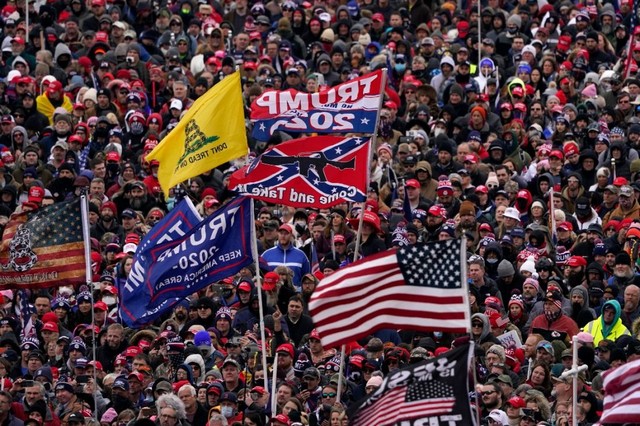
No longer! Although President Trump is demanding a recount of votes, the current national elections will almost certainly expel him from the White House and make Joe Biden the 46th U.S. President. They will also confirm Democratic control of the House of Representatives and produce a closely divided Senate, with Vice-President Kamala Harris (the first woman and first person of color to occupy that office) in a position to break tie votes as the Senate’s presiding officer. But the elections’ real headline is the division of the American electorate into two groups almost exactly the same size (approximately 70 million in each camp), which are not describable merely as ad hoc coalitions of power-seeking “interest groups.”

On the contrary, those now identifying themselves either as Republicans or Democrats have come to think of themselves and their comrades as embodying identical or closely related ideological commitments, cultural characteristics, and moral or religious values. They have become modern tribes – a development that is transforming American politics and the politics of many other nations as well.

Some may consider this reference to tribalism an exaggeration, but it is not. Tribalism is what happens when competing social groups identify themselves as peoples or “nations,” with each group embracing a narrative that expresses a commonly accepted version of its history, grievances and destiny. Tribalism emerges when each group comes to trust and patronize its own sources of information and opinion and to distrust “hostile” sources, thus producing separate and conflicting images of the world. Neo-tribal groups consider their own members trustworthy, caring brothers and sisters, while branding outsiders deceitful, cruel, or malicious. The conflicts they engage in with other groups thus come to look far more like ethnic, racial, or religious conflicts than traditional public policy disputes.

This is why – to take one small example – scholars report that “fact checking” rarely changes the minds of group members committed to their own version of the facts. As one researcher puts it, political party affiliation is now as strong as religious identity. “You’re not going to change your religion if somebody tells you that Moses didn’t actually have the Ten Commandments.”[i] The rise of neo-tribalism also helps to explain why conflicts formerly framed as differences over public policy tend to be reframed in terms of the defense of a threatened way of life. The debate about gun control, for example, once considered a dispute about the costs and benefits of firearms regulation now appears to partisans on both sides to be a conflict pitting “civilized” against “uncivilized” groups, with the definition of “civilized” varying according to the political and ethical values of one’s tribe.

The response of each group to the COVID pandemic provides another example of neo-tribal thought. Witnessing the unwillingness of many Trump followers (especially in rural areas) to wear masks, and noting their powerful impulse to reopen workplaces, places of entertainment, churches, and schools as early as possible, members of the liberal tribe see the right-wingers as self-destructive, reckless with other people’s lives, obsessed with primitive ideas of macho freedom, and more interested in moneymaking than lifesaving. To those same conservatives, however, the liberals who label them uncivilized are an effete, overeducated, self-indulgent elite able to work remotely from their homes – snobs looking down their noses at those dependent for their survival on open schools and workplaces. Each side considers the other a deviant tribe and their own group the true America. Stereotyping is the rule on both sides and looking into the mirror the exception.

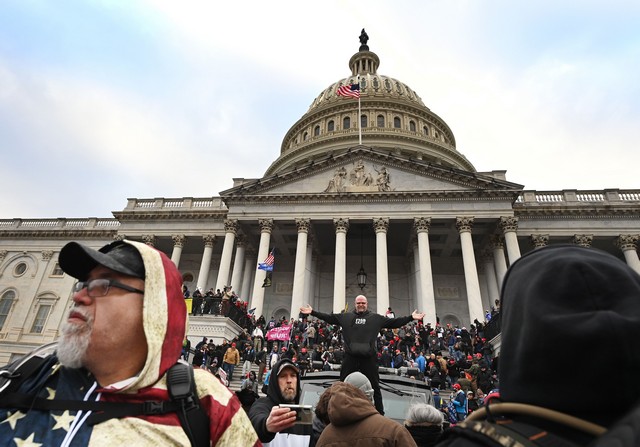
Many Americans interested in peace and progress are now greeting Donald Trump’s departure from office with sighs of relief and prayers of thankfulness. This is justified, since Trump is a dangerous figure whose attack on the electoral system in the late stages of the electoral campaign resembled nothing so much as the fascist assault on parliamentary institutions in the 1920s and 1930s. But this President did not create American neo-tribalism, and it will not disappear with his departure from office. To create a national community linked organically to an international community also in the process of creation will the task of the next generation of peace- and justice-makers.

The key questions that will soon confront the Biden administration, and that must interest everyone interested in the peaceful resolution of conflicts, are what is causing the pronounced trend toward neo-tribalism, and what can be done to resolve or transform neo-tribal conflicts. Four brief suggestions may be worth considering:

1. Admit that we do not yet have good answers to these questions. The first requirement, yet to be fulfilled, is to recognize the transformation of politics in the direction of neo-tribalism and our own tribal commitments. This immediately suggests that traditional methods of political dispute-resolution (power-based bargaining, judicial interpretation of rules, circulation of elites, and so forth) are unlikely to be effective. The goal here must be conflict prevention to avoid further developments that could lead to serious civil violence.

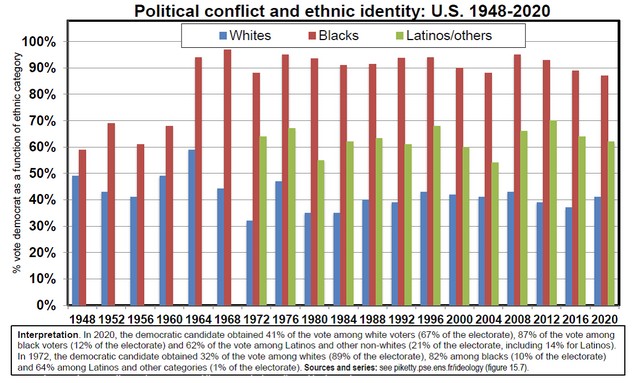
2. Recognize that neo-tribal conflicts are not cultural/religious as opposed to socioeconomic/political, but explosive combinations of class-based and culture-based antagonism. The American news media, which have an aversion to uttering the words “working class,” note that the majority of supporters of President Trump and the Republican party are white people (white men in particular) without college degrees, while college-educated men and women (women in particular) tend to support the Democrats. The task immediately confronting conflict resolvers is to gain a better understanding of the intimate links between social class and political, racial, and religious identities, and to discuss the systemic changes that will be necessary to satisfy each group’s basic needs.

3. Understand that elections and the advent of new leaders will not produce the needed systemic changes unless politics, on the deepest level, becomes the avocation of masses of people, something to be practiced continuously in a spirit of communal collaboration and experimentation, not reserved for periods of electoral competition. In nations like the United States, democracy will not be “restored”; it will be redefined. The task of redefinition must involve searching for examples of sociopolitical innovation in one’s own history (in the America of the New Deal, for example) and in other nations. Have the Americans nothing to learn about social welfare policy from Europeans, or about how to defeat a plague from Asians? Such questions answer themselves.

4. Recognize that from Roman times until the present, the rise of neo-tribal conflict has been a symptom of imperial decline. It is particularly important for Americans to “connect the dots” that run between the existence of an empire that maintains 800 or so military bases in eighty nations and consumes close to $1 trillion annually in military expenditures and the problems of communities in virtually every part of the nation plagued by poverty, precarity, poor schools, familial discord, overstressed social services, and a decaying infrastructure – all conditions that inflame conflict between groups struggling to maintain basic levels of economic and cultural security. The American system will not be rebuilt so long as it remains subordinate to the demands of the American Empire.

Equally important, the Empire’s decline raises the same sort of questions that have faced other peoples in a post-imperial context: if we are not defined by our role as a global or regional hegemon, who are we? Who do we want to be? Tribalism is one answer to that question, although a very poor one.

Goodbye (and good riddance), Mr. Trump. Welcome, Mr. Biden. Now that the election is over, it is time to get down to business. And the first order of business, in my view, will be to confront and consider how to transcend America’s intense neo-tribalism.

NOTE:

[i] Farah Stockman in New York Times, 11 Sep 2020 (“What I Learned from a List of Trump Accomplishments”)

_______________________________________

Richard E. Rubenstein is a member of the TRANSCEND Network for Peace Development Environment and a professor of conflict resolution and public affairs at George Mason University’s Jimmy and Rosalyn Carter Center for Peace and Conflict Resolution.

9 November 2020

Source: www.transcend.org

The task of ‘Sleepy Joe’ is to put liberal America right back to sleep

By Jonathan Cook

At birth, all of us begin a journey that offers opportunities either to grow – not just physically, but mentally, emotionally and spiritually – or to stagnate. The journey we undertake lasts a lifetime, but there are dozens of moments each day when we have a choice to make tiny incremental gains in experience, wisdom and compassion or to calcify through inertia, complacency and selfishness.

No one can be engaged and receptive all the time. But it is important to recognise these small opportunities for growth when they present themselves, even if at any particular moment we may decide to avoid grasping them.

When we shut ourselves into the car on the commute to work, do we use it as a moment to be alone with our thoughts or to silence them with the radio or music? When we sit with friends, do we choose to be fully present with them or scroll through the news feed on our phones? When we return from a difficult day at work, do we talk the issues through with family or reach for a glass of wine, or maybe bingewatch something on TV?

Everyone needs downtime, but if every opportunity for reflection becomes downtime then we are stagnating, not growing. We are moving away from life, from being human.

Dried-out husk

This week liberal Americans reached for that glass of wine and voted Joe Biden. Others did so much more reluctantly, spurred on by the fear of giving his opponent another four years.

Biden isn’t over the finishing line quite yet, and there are likely to be recounts, court challenges and possibly violence over the result, but he seems all but certain to be crowned the next US president. Not that that should provoke any kind of celebration. The rest of the world’s population, future generations, the planet itself – none of us had a vote – were always going to be the losers whichever candidate won.

The incumbent, Donald Trump, miscalculated, it seems, if he thought dismissing his opponent as “Sleepy Joe” would be enough to damage Biden’s electoral fortunes. True, Trump was referring to the fact that Biden is a dried-out husk of the machine politician he once was. But after four years of Trump and in the midst of a pandemic, the idea of sleeping through the next presidential term probably sounded pretty appealing to liberals. Most of them have spent their whole political lives asleep.

Four years ago, however, they were forcibly roused from their languor to protest against Donald Trump. They grew enraged by the symptom of their corrupt political system rather than by the corrupt system itself. For them, “Sleepy Joe” was just what the doctor ordered.

But it won’t be Biden doing the sleeping. It will be the liberals who cheerlead him. Biden – or perhaps Kamala Harris – will be busy making sure his corporate donors get exactly what they paid for, whatever the cost to the rest of us.

Anger and blame

In this analogy, Trump is not the opposite of Biden, of course. He represents stagnation too, if of a different kind.

Trump channels Americans’ frustration and anger at a political and economic system they rightly see as failing them. He articulates who should be falsely blamed for their woes: be it immigrants, minorities, socialists, or the New World Order. He offers justified, if misdirected, rage in contrast to Biden’s dangerous complacency.

But however awful Trump may be, at least some of those voting for him are grappling, if mostly unconsciously, with the tension between stagnation and growth – and not of the economic kind. Unlike most liberals, who dismiss this simplistically as “populism”, some of Trump’s supporters do at least seem to recognise that the tension exists. They simply haven’t been offered a constructive alternative to anger and blame.

Ritually disappointed

Unlike the liberals and the Trumpists, many in the US have come to understand that their political system offers nothing but stultifying stagnation for ordinary Americans by design, even if it comes in two, smartly attired flavours.

They see that the Trump camp rages ineffectually against the corporate elite, deluded into believing that a member of that very same elite will serve as their saviour. And they see that the Biden camp represents an ineffectual rainbow coalition of competing social identities, deluded into believing that those divisions will make them stronger, not weaker, in the fight for economic justice. Both of these camps appear resigned to being serially – maybe ritually – disappointed.

Failure does not inspire these camps to seek change, it makes them cling all the more desperately to their failed strategies, to attach themselves even more frantically and fervently to their perceived tribe.

That is why this US election – at a moment when the need for real, systemic change is more urgent, more evident than ever before – produced not just one but two of the worst presidential candidates of all time. We are looking at exactly what happens when a whole society not only stops growing but begins to putrefy.

Enervating divisions

Not everyone in the US is so addicted to these patterns of self-delusion and self-harm.

Large swaths of the population don’t bother to vote out of hard-borne experience. The system is so rigged against them that they don’t think it matters much which corporate party is in power. The outcome will be the same for them either way.

Others vote third party, or consciously abstain in protest at big money’s vice-like grip on the two-party system. Others, appalled at the prospect of Trump – and before him the two Bushes, and before that Ronald Reagan – were forced once again to vote for the Democratic ticket with a heavy heart. They know all too well who Biden is (a creature of his corporate donors) and what he stands for (whatever his corporate donors want). But he is slightly less monstrous than his rival, and in the US system those are the meaningful electoral options.

And among Trump’s supporters too, there are many desperate for wholesale change. They voted for Trump because at least he paid lip service to change.

These groups – most likely a clear electoral majority – could redirect the US towards political, social, even spiritual growth, if they could find a way to come together. They suffer from their own enervating divisions.

How should they best use their numerical strength? Should they struggle to win the presidency, and if so should it be a third-party candidate or should they work within the existing party structures? What lesson should they draw from the Democratic leadership’s sabotaging – twice over – of Bernie Sanders, a candidate offering meaningful change? Is it time to adopt an entirely different strategy, rejecting traditional politics? And if so, can it be made to work when all the major institutions – from the politicians and courts, to the police, intelligence services and media – are firmly in the hands of the corporate enemy?

Terrible reckoning

There is no real way to sleep through life, or politics, and not wake up one day – usually when it is too late – realising catastrophic mistakes were made.

As individuals, we may face that terrible reckoning on our death-beds. Empires rarely go so quietly. They fall when it is time for their citizens to learn a painful lesson about hubris. Their technological innovations come back to haunt them, as ancient Rome’s lead water-pipes supposedly once did. Or they over-extend with ambitious wars that drain the coffers of gold, as warrior-kings have discovered to their cost through the ages. Or, when the guardians of empire least expect it, “barbarians” – the victims of their crimes – storm the city gates.

The globe-spanning US empire faces the rapid emergence of all these threats on a planetary scale. Its endless wars against phantom enemies have left the US burdened with astounding debt. Its technologies, from nuclear weapons to AI, mean there can be no possible escape from a major miscalculation. And the US empire’s insatiable greed and determination to colonise every last inch of the planet, if only with our waste products, is gradually killing the life-systems we depend on.

If Biden becomes president, his victory will be a temporary win for torpor, for complacency. But a new Trump will emerge soon enough to potentise – and misdirect – the fury steadily building beneath the surface. If we let it, the pendulum will swing back and forth, between ineffectual lethargy and ineffectual rage, until it is too late. Unless we actively fight back, the stagnation will suffocate us all.

This essay first appeared on Jonathan Cook’s blog: https://www.jonathan-cook.net/blog/

Jonathan Cook won the Martha Gellhorn Special Prize for Journalism.

7 November 2020

Source: countercurrents.org

A Troubling Discovery in the Arctic

By Robert Hunziker

A notable satellite-telephonic call to colleagues in late October from Swedish scientist Örjan Gustafsson of Stockholm University briefly described a haunting discovery. On board the research ship R/V Akademik Keldysh, a 6,240-ton Russian scientific research vessel equipped with 17 on-board laboratories and a library, far off the coast of Russia, Dr. Gustafsson reported: “This East Siberian slope methane hydrate system has been perturbed and the process will be ongoing.” (Source: Sleeping Giant Arctic Methane Deposits Starting to Release, Scientists Find, The Guardian, Oct. 27, 2020)

That satellite call referenced a sleeping giant that has enough carbon firepower to adversely impact the world’s climate system. The expedition discovered methane (CH4) that had been securely frozen in shallow subsea permafrost waters forever, and ever, and ever, now “stirring.” Colloquially, “The Monster of the North awakened.” (Although, in fairness to accuracy, the ESAS has been perturbed and leaking/seeping into the atmosphere for some time… but, now it’s much worse than ever before, and terrifyingly, it’s more noticeable to passersby, like expeditions of discerning scientists).

After all, there are scientists who believe the East Siberian Arctic Shelf and neighboring Russian coastline continental shelf seas contain enough methane in frozen hydrates to change human history forever, unfortunately, not for the betterment of civilization.

The East Siberian Arctic Shelf, as well as other Arctic seas off Russia’s northern coastline, has been the subject of clashing opinions within the scientific community.

Over the years, mainstream science has “talked down the risks” of a massive methane breakout in Arctic waters which could start a vicious cycle of runaway global warming that would be devastating on several fronts for civilized societies, and uncivilized too.

Three years ago, the U.S. Geological Survey labeled Arctic hydrates as one of the world’s four most serious causation events of abrupt climate change. Yet, according to USGS geophysicist Carolyn Ruppel, who oversees the USGS Gas Hydrates Project: “After so many years spent determining where gas hydrates are breaking down and measuring methane flux at the sea-air interface, we suggest that conclusive evidence for release of hydrate-related methane to the atmosphere is lacking.” (Gas Hydrate Breakdown Unlikely to Cause Massive Greenhouse Gas Release, US Geological Survey, Feb. 9, 2017)

According to USGS calculations, sediments in the Arctic contain a huge quantity of frozen methane and other gases – known as hydrates. Along those lines, it’s important to note that methane (CH4) has a warming effect 80 times stronger than carbon dioxide over its initial 20 years. Meaning CH4 has a sharper, quicker impact on global warming than does CO2.

That USGS position (“no conclusive evidence”) about the risk of methane release is now three years old. Thus, this new discovery prompts a logical question: Does the current expedition provide conclusive evidence of a change? Meaning, what’s the likelihood of an abrupt shift in the planet’s climate system as a result of the new discovery?

Assuming a major CH4 release, or big burp, is it possible it could lead to planet-wide upheaval? Accordingly, the expedition team reported: “At this moment, there is unlikely to be any major impact on global warming, but the point is that this process has now been triggered.” (Gustafsson)

Therein lies the problem: “It has been triggered.”

Along those lines, a Latin proverb suffices: “Forewarned is forearmed.” Clearly, the results of the Akademik Keldysh expedition qualify as “forewarned,” no doubt about that.

All of which prompts a significant question: How will countries throughout the world respond to this newly discovered risk to climate systems with its potential to damage agriculture and coastal cities beyond recognition?

In that regard, and based upon the nations of the world failing to adhere to voluntary commitments to the Paris 2015 climate accord to reduce carbon emissions, which in fact increase (Oops) year-over- year, the answer is: “It’s not encouraging, not at all.” Indeed, it is questionable that any nation/state anywhere will actually “forearm” as a result of this new report signaling: “The East Siberian slope methane hydrate system has been perturbed.”

Furthermore, what does “forearmed” even look like? Realistically, how does a country prepare for an all-out assault on agriculture and coastlines by an out of whack runaway climate system? Good luck with that.

Meanwhile, according to the initial report from the 60-member team onboard the Akademik Keldysh expedition, the findings are only “preliminary.” The true scale of the discovery will be confirmed when full complements of data are analyzed and published peer-reviewed in a scientific journal.

Significantly, and tellingly, the discovery includes six monitoring points over a slope area of 150km (93 mi.) by 10km (6 mi.) with “clouds of bubbles released from sediment.” It should be noted that “clouds of bubbles” obviously implies one helluva lot of methane erupting from the seafloor. In point of fact, some measurements registered “methane concentrations 400 times higher than should be seen if the sea and the atmosphere were in equilibrium.” (Gustafsson)

By way of comparison to planetary distances, “400xs higher than equilibrium” is a trip to Pluto.

Robert Hunziker, MA, economic history DePaul University, awarded membership in Pi Gamma Mu International Academic Honor Society in Social Sciences is a freelance writer and environmental journalist who has over 200 articles published.

7 November 2020

Source: countercurrents.org

Bidding farewell to America’s failed democracy

By Pepe Escobar

A gaming exercise of the perfect, indigenous color revolution, code-named Blue, was leaked from a major think tank established in the imperial lands that first designed the color revolution concept.

Not all the information disclosed here about the gaming of Blue has been declassified. That may well elicit a harsh response from the Deep State, even as a similar scenario was gamed by an outfit called Transition Integrity Project.

Both scenarios should qualify as predictive programming – with the Deep State preparing the general public, in advance, for exactly how things will play out.

The standard color revolution playbook rules they usually start in the capital city of nation-state X, during an election cycle, with freedom fighting “rebels” enjoying full national and international media support.

Blue concerns a presidential election in the Hegemon. In the gaming exercise, the incumbent president, codenamed Buffon, was painted Red. The challenger, codenamed Corpse, was painted Blue.

Blue – the exercise – went up a notch because, compared to its predecessors, the starting point was not a mere insurgency, but a pandemic. Not any pandemic, but a really serious, bad to the bone global pandemic with an explosive infection fatality rate of less than 1%.

By a fortunate coincidence, the lethal pandemic allowed Blue operators to promote mail-in ballots as the safest, socially distant voting procedure.

That connected with a rash of polls predicting an all but inevitable Blue win in the election – even a Blue Wave.

The premise is simple: take down the economy and deflate a sitting president whose stated mission is to drive a booming economy. In tandem, convince public opinion that actually getting to the polls is a health hazard.

The Blue production committee takes no chances, publicly announcing they would contest any result that contradicts the prepackaged outcome: Blue’s final victory in a quirky, anachronistic, anti-direct democracy body called the “electoral college”.

If Red somehow wins, Blue would wait until every vote is counted and duly litigated to every jurisdiction level. Relying on massive media support and social media marketing propelled to saturation levels, Blue proclaims that “under no scenario” Red would be allowed to declare victory.

Countdown to magic voting

Election Day comes. Vote counting is running smoothly – mail-in count, election day count, up to the minute tallies – but mostly favoring Red, especially in three states always essential for capturing the presidency. Red is also leading in what is characterized as “swing states”.

But then, just as a TV network prematurely calls a supposedly assured Red state for Blue, all vote counting stops before midnight in major urban areas in key swing states under Blue governors, with Red in the lead.

Blue operators stop counting to check whether their scenario towards a Blue victory can roll out without bringing in mail-in ballots. Their preferred mechanism is to manufacture the “will of the people” by keeping up an illusion of fairness.

Yet they can always rely, as Plan B, on urban mail-in ballots on tap, hot and cold, until Blue squeaks by in two particularly key swing states that Red had bagged in a previous election.

That’s what happens. Starting at 2 am, and later into the night, enter a batch of “magic” votes in these two key states. The sudden, vertical upward “adjustment” includes the case of a batch of 130k+ pro-Blue votes cast in a county alongside not a single pro-Red vote – a statistical miracle of Holy Ghost proportions.

Stuffing the ballot box is a typical scam applied in Banana Republic declinations of color revolution. Blue operators use the tried and tested method applied to the gold futures market, when a sudden drop of naked shorts drives down gold price, thus protecting the US dollar.

Blue operators bet the compliant mainstream media/Big Tech alliance will not question that, well, out of the blue, the vote would swing towards Blue in a 2 to 3 or 3 to 4 margin.

They bet no questions will be asked on how a 2% to 5% positive ballot trend in Red’s favor in a few states turned into a 0.5% to 1.4% trend in favor of Blue by around 4am.

And that this discrepancy happens in two swing states almost simultaneously.

And that some precincts turn more presidential votes than they have registered voters.

And that in swing states, the number of extra mysterious votes for Blue far exceeds votes cast for the Senate candidates in these states, when the record shows that down ticket totals are traditionally close.

And that turnout in one of these states would be 89.25%.

The day after Election Day there are vague explanations that one of the possible vote-dumps was just a “clerical error”, while in another disputed state there is no justification for accepting ballots with no postmark.

Blue operators relax because the mainstream media/Big Tech alliance squashes each and every complaint as “conspiracy theories”.

The Red counter-revolution

The two presidential candidates do not exactly help their own cases.

Codename Corpse, in a Freudian slip, had revealed his party had set up the most extensive and “diverse” fraud scheme ever.

Not only Corpse is about to be investigated for a shady computer-related scheme. He is a stage 2 dementia patient with a rapidly unraveling profile – kept barely functional by drugs, which can’t prevent his mind slowly shutting down.

Codename Buffoon, true to his instincts, goes pre-emptive, declaring the whole election a fraud but without offering a smoking gun. He is duly debunked by the mainstream media/Big Tech alliance for spreading “false claims”.

All this is happening as a wily, old, bitter operator not only had declared that the only admissible scenario was a Blue victory; she had already positioned herself for a top security job.

Blue also games that Red would immediately embark on a single-minded path ahead: regiment an army of lawyers demanding access to every registration roll to scrub, review and verify each and every mail-in ballot, a process of de facto forensic analysis.

Yet Blue cannot foresee how many fake ballots will be unveiled during recounts.

As Corpse is set to declare victory, Buffon eyes the long game, set to take the whole thing all the way to the Supreme Court.

The Red machine had already gamed it – as it was fully aware of how operation Blue would be played.

The Red counter-revolution does carry the potential of strategically checkmating Blue.

It is a three-pronged attack – with Red using the Judiciary Committee, the Senate and the Attorney General, all under the authority of codename Buffoon until Inauguration Day. The end game after a vicious legal battle is to overthrow Blue.

Red’s top operators have the option of setting up a Senate commission, or a Special Counsel, at the request of the Judiciary Committee, to be appointed by the Department of Justice to investigate Corpse.

In the meantime, two electoral college votes, one-month apart, are required to certify the presidential winner.

These votes will happen in the middle of one and perhaps two investigations focused on Corpse. Any state represented at the electoral college may object to approve an investigated Corpse; in this case it’s illegal for that state to allow its electors to certify the state’s presidential results.

Corpse may even be impeached by his own party, under the 25th Ammendment, due to his irreversible mental decline.

The resulting chaos would have to be resolved by the Red-leaning Supreme Court. Not exactly the outcome favored by Blue.

The House always wins

The heart of the matter is that this think tank gaming transcends both Red and Blue. It’s all about the Deep State’s end game.

There’s nothing like a massive psy ops embedded in a WWE-themed theater under the sign of Divide and Rule to pit mob vs. mob, with half of the mob rebelling against what it perceives as an illegitimate government. The 0.00001% comfortably surveys the not only metaphorical carnage from above.

Even as the Deep State, using its Blue minions, would never have allowed codename Buffoon to prevail, again, domestic Divide and Rule might be seen as the least disastrous outcome for the world at large.

A civil war context in theory distracts the Deep State from bombing more Global South latitudes into the dystopian “democracy” charade it is now enacting.

And yet a domestic Empire of Chaos gridlock may well encourage more foreign adventures as a necessary diversion to tie the room together.

And that’s the beauty of the Blue gaming exercise: the House wins, one way or another.

Pepe Escobar is correspondent-at-large at Asia Times.

6 November 2020

Source: www.informationclearinghouse.info

American Requiem

By Chris Hedges

However inequitable its bias, capitalist democracy at least offered the possibility of incremental and piecemeal reform. Now it is a corpse.

Well, it’s over. Not the election. The capitalist democracy. However biased it was towards the interests of the rich and however hostile it was to the poor and minorities, the capitalist democracy at least offered the possibility of incremental and piecemeal reform. Now it is a corpse. The iconography and rhetoric remain the same. But it is an elaborate and empty reality show funded by the ruling oligarchs — $1.51 billion for the Biden campaign and $1.57 billion for the Trump campaign — to make us think there are choices. There are not. The empty jousting between a bloviating Trump and a verbally impaired Joe Biden is designed to mask the truth. The oligarchs always win. The people always lose. It does not matter who sits in the White House. America is a failed state.

“The American Dream has run out of gas,” wrote the novelist J.G. Ballard. “The car has stopped. It no longer supplies the world with its images, its dreams, its fantasies. No more. It’s over. It supplies the world with its nightmares now.”

There were many actors that killed America’s open society. The corporate oligarchs who bought the electoral process, the courts and the media, and whose lobbyists write the legislation to impoverish us and allow them to accumulate obscene amounts of wealth and unchecked power. The militarists and war industry that drained the national treasury to mount futile and endless wars that have squandered some $7 trillion and turned us into an international pariah. The CEOs, raking in bonuses and compensation packages in the tens of millions of dollars, that shipped jobs overseas and left our cities in ruins and our workers in misery and despair without a sustainable income or hope for the future. The fossil fuel industry that made war on science and chose profits over the looming extinction of the human species. The press that turned news into mindless entertainment and partisan cheerleading. The intellectuals who retreated into the universities to preach the moral absolutism of identity politics and multiculturalism while turning their backs on the economic warfare being waged on the working class and the unrelenting assault on civil liberties. And, of course, the feckless and hypocritical liberal class that does nothing but talk, talk, talk.

If there is one group that deserves our deepest contempt it is the liberal elites, those who posture as the moral arbiters of society while abandoning every value they purportedly hold the moment they become inconvenient. The liberal class, once again, served as pathetic cheerleaders and censors for a candidate and a political party that in Europe would be considered on the far-right. Even while liberals were being ridiculed and dismissed by Biden and by the Democratic Party hierarchy, which bizarrely invested its political energy in appealing to Republican neocons, liberals were busy marginalizing journalists, including Glenn Greenwald and Matt Taibbi, who called out Biden and the Democrats. The liberals, whether at The Intercept or The New York Times, ignored or discredited information that could hurt the Democratic Party, including the revelations on Hunter Biden’s laptop. It was a stunning display of craven careerism and self-loathing.

The Democrats and their liberal apologists are, the election has illustrated, oblivious to the profound personal and economic despair sweeping through this country. They stand for nothing. They fight for nothing. Restoring the rule of law, universal health care, banning fracking, a Green New Deal, the protection of civil liberties, the building of unions, the preservation and expansion of social welfare programs, a moratorium on evictions and foreclosures, the forgiveness of student debt, stiff environmental controls, a government jobs program and guaranteed income, financial regulation, opposition to endless war and military adventurism were once again forgotten. Championing these issues would have resulted in a Democratic Party landslide. But since the Democratic Party is a wholly owned subsidiary of corporate donors, promoting any policy that might foster the common good, diminish corporate profits and restore democracy, including imposing campaign finance laws, was impossible. Biden’s campaign was utterly bereft of ideas and policy issues, as if he and the Democrats could sweep the elections by promising to save the soul of America. At least the neofascists have the courage of their demented convictions.

The liberal class functions in a traditional democracy as a safety valve. It makes piecemeal and incremental reform possible. It ameliorates the worst excesses of capitalism. It proposes gradual steps towards greater equality. It endows the state and the mechanisms of power with supposed virtues. It also serves as an attack dog that discredits radical social movements. The liberal class is a vital component within the power elite. In short, it offers hope and the possibility, or at least the illusion, of change.

The surrender of the liberal elite to despotism creates a power vacuum that speculators, war profiteers, gangsters and killers, often led by charismatic demagogues, fill. It opens the door to fascist movements that rise to prominence by ridiculing and taunting the absurdities of the liberal class and the values they purport to defend. The promises of the fascists are fantastic and unrealistic, but their critiques of the liberal class are grounded in truth. Once the liberal class ceases to function, it opens a Pandora’s box of evils that are impossible to contain.

The disease of Trumpism, with or without Trump, is, as the election illustrated, deeply embedded in the body politic. It is an expression among huge segments of the population, taunted by liberal elites as “deplorables,” of a legitimate alienation and rage that the Republicans and the Democrats orchestrated and now refuse to address. This Trumpism is also, as the election showed, not limited to white men, whose support for Trump actually declined.

Fyodor Dostoevsky saw the behavior of Russia’s useless liberal class, which he satirized and excoriated at the end of the 19th century, as presaging a period of blood and terror. The failure of liberals to defend the ideals they espoused inevitably led, he wrote, to an age of moral nihilism. In Notes From Underground, he portrayed the sterile, defeated dreamers of the liberal class, those who hold up high ideals but do nothing to defend them. The main character in Notes From Underground carries the bankrupt ideas of liberalism to their logical extreme. He eschews passion and moral purpose. He is rational. He accommodates a corrupt and dying power structure in the name of liberal ideals. The hypocrisy of the Underground Man dooms Russia as it now dooms the United States. It is the fatal disconnect between belief and action.

“I never even managed to become anything: neither wicked nor good, neither a scoundrel nor an honest man, neither a hero nor an insect,” the Underground Man wrote. “And now I am living out my life in my corner, taunting myself with the spiteful and utterly futile consolation that it is even impossible for an intelligent man seriously to become anything, and only fools become something. Yes, sir, an intelligent man of the nineteenth century must be and is morally obliged to be primarily a characterless being; and a man of character, an active figure – primarily a limited being.”

The refusal of the liberal class to acknowledge that power has been wrested from the hands of citizens by corporations, that the Constitution and its guarantees of personal liberty have been revoked by judicial fiat, that elections are nothing more than empty spectacles staged by the ruling elites, that we are on the losing end of the class war, has left it speaking and acting in ways that no longer correspond to reality.

The “idea of the intellectual vocation,” as Irving Howe pointed out in his 1954 essay This Age of Conformity, “the idea of a life dedicated to values that cannot possibly be realized by a commercial civilization — has gradually lost its allure. And, it is this, rather than the abandonment of a particular program, which constitutes our rout.” The belief that capitalism is the unassailable engine of human progress, Howe wrote, “is trumpeted through every medium of communication: official propaganda, institutional advertising and scholarly writings of people who, until a few years ago, were its major opponents.”

“The truly powerless people are those intellectuals — the new realists — who attach themselves to the seats of power, where they surrender their freedom of expression without gaining any significance as political figures,” Howe wrote. “For it is crucial to the history of the American intellectuals in the past few decades — as well as to the relationship between ‘wealth’ and ‘intellect’ — that whenever they become absorbed into the accredited institutions of society they not only lose their traditional rebelliousness but to one extent or another they cease to function as intellectuals.”

Populations can endure the repression of tyrants, as long as these rulers continue to effectively manage and wield power. But human history has amply demonstrated that once those in positions of power become redundant and impotent, yet retain the trappings and privileges of power, they are brutally discarded. This was true in Weimar Germany. It was true in the former Yugoslavia, a conflict I covered for The New York Times.

The historian Fritz Stern in The Politics of Cultural Despair, his book on the rise of fascism in Germany, wrote of the consequences of the collapse of liberalism. Stern argued that the spiritually and politically alienated, those cast aside by the society, are prime recruits for a politics centered around violence, cultural hatreds and personal resentments. Much of this rage, justifiably, is directed at a liberal elite that, while speaking the “I-feel-your-pain” language of traditional liberalism, sells us out.

“They attacked liberalism,” Stern writes of the fascists emerging at the time in Germany, “because it seemed to them the principal premise of modern society; everything they dreaded seemed to spring from it; the bourgeois life, Manchesterism, materialism, parliament and the parties, the lack of political leadership. Even more, they sense in liberalism the source of all their inner sufferings. Theirs was a resentment of loneliness; their one desire was for a new faith, a new community of believers, a world with fixed standards and no doubts, a new national religion that would bind all Germans together. All this, liberalism denied. Hence, they hated liberalism, blamed it for making outcasts of them, for uprooting them from their imaginary past, and from their faith.”

We are in for it. The for-profit health care system, designed to make money — not take care of the sick — is unequipped to handle a national health crisis. The health care corporations have spent the last few decades merging and closing hospitals, and cutting access to health care in communities across the nation to increase revenue — this, as nearly half of all front-line workers remain ineligible for sick pay and some 43 million Americans have lost their employee-sponsored health insurance. The pandemic, without universal health care, which Biden and the Democrats have no intention of establishing, will continue to rage out of control. Three hundred thousand Americans dead by December. Four hundred thousand by January. And by the time the pandemic burns out or a vaccine becomes safely available, hundreds of thousands, maybe a few million, will have died.

The economic fallout from the pandemic, the chronic underemployment and unemployment — close to 20 percent when those who have stopped looking for work, those furloughed with no prospect of being rehired and those who work part-time but are still below the poverty line are included in the official statistics — will mean a depression unlike anything we have seen since the 1930s. Hunger in US households has already tripled since last year. The proportion of US children who are not getting enough to eat is 14 times higher than last year. Food banks are overrun. The moratorium on foreclosures and evictions has been lifted while over 30 million destitute Americans face the prospect of being thrown into the street.

There is no check left on corporate power. The inevitable social unrest will see the state, no matter who is in the White House, use its three principle instruments of social control — wholesale surveillance, the prisons and militarized police — buttressed by a legal system that routinely revokes habeas corpus and due process, to ruthlessly crush dissent. People of color, immigrants and Muslims will be blamed and targeted by our native fascists for the nation’s decline. The few who continue in defiance of the Democratic Party to call out the crimes of the corporate state and the empire will be silenced. The sterility of the liberal class, serving the interests of a Democratic Party that disdains and ignores them, fuels the widespread feelings of betrayal that saw nearly half the voters support one of the most vulgar, racist, inept and corrupt presidents in American history. An American tyranny, dressed up with the ideological veneer of a Christianized fascism, will, it appears, define the empire’s epochal descent into irrelevance.

Chris Hedges, spent nearly two decades as a foreign correspondent in Central America, the Middle East, Africa and the Balkans.

6 November 2020

Source: www.informationclearinghouse.info


Veteran journalist and author Robert Fisk dies aged 74

By Conor Pope

Highly regarded, controversial foreign correspondent had long relationship with Ireland

Veteran foreign correspondent and author Robert Fisk has died after becoming unwell at his Dublin home on Friday.

It is understood the journalist was admitted to St Vincent’s hospital where he died a short time later. He was 74.

Fisk was one of the most highly regarded and controversial British foreign correspondents of the modern era and was described by the New York Times in 2005 as “probably the most famous foreign correspondent in Britain”.

He had a long relationship with Ireland dating back to 1972 when he moved to Belfast to work as Northern Ireland correspondent for the London Times at the height of the Troubles.

He subsequently did his PhD in Trinity College, completing a thesis on Ireland’s neutrality during the second World War. He owned a home in Dalkey where he lived for many years.

His career in journalism started with the Sunday Express in London but that relationship was brief and he soon moved to the Times.

After making a name for himself reporting from Northern Ireland for that paper, Fisk relocated briefly to Portugal and then to Beirut where he worked as Middle East correspondent, once again for the Times.

He covered, among other events, the Lebanese civil war, Russian invasion of Afghanistan, Iranian revolution and the Iran-Iraq War.

He joined the London Independent in 1989 after a row with the Rupert Murdoch-owned newspaper and continued to work for that publication until his death. It is understood that he was planning his return to the Middle East in recent days.

Critical of the United States

He reported extensively on the first Gulf War basing himself for a time in Baghdad where he was fiercely critical of other foreign correspondents whom he accused of covering the conflict from their hotel rooms.

He also covered the US-led war wars in Afghanistan and Iraq and frequently condemned US involvement in the region. Fisk was one of very few western reporters to interview Osama Bin Laden, something he did on three occasions in the 1990s.

He also covered five Israeli invasions, the Algerian civil war, Saddam Hussein’s invasion of Kuwait and the 2011 Arab revolutions. He worked in the Balkans during the conflict there and more recently covered the conflict in Syria.

He received numerous awards over the course of his career including the Orwell Prize for Journalism, British Press Awards International Journalist of the Year and Foreign Reporter of the Year on multiple occasions.

He was given honorary degrees and doctorates from universities in several countries. And in 2009 was awarded Trinity College Dublin’s Historical Society’s gold medal, bestowed upon those who have made a significant contribution in the public sphere towards forwarding the society’s ideals of debate, discussion and public discourse.

Among his most well regarded books were The Point of No Return: The Strike Which Broke the British in Ulster, Pity the Nation: Lebanon at War and The Great War for Civilisation – The Conquest of the Middle East.

Higgins tribute

President Michael D Higgins expressed his and his wife Sabina’s condolences to Fisk’s family.

“I have learned with great sadness of the death of Robert Fisk. With his passing the world of journalism and informed commentary on the Middle East has lost one of its finest commentators,” said President Higgins.

“I have had the privilege of knowing Robert Fisk since the 1990s, and of meeting him in some of the countries of which he wrote with such great understanding. I met him in Iraq, and last year I had my last meeting with him in Beirut, during my official visit to Lebanon.

“I knew that his taking of Irish citizenship meant a great deal to him. And his influence on young practitioners in journalism and political writing was attested by the huge audiences which attended the occasions on which he spoke in Ireland.”

Mr Higgins said that generations, not only of Irish people but worldwide, relied on Fisk for a critical and informed view of what was taking place in the conflict zones of the world and, even more important, the influences that were perhaps the source of the conflict.

1 November 2020

Source: www.irishtimes.com

Trump Denounced for False Election Night Claim of Victory

By Jon Queally

President Donald Trump realized the fears of many political observers Tuesday night by falsely claiming a “big win” in the U.S. presidential election despite many millions of votes yet to be counted and no clear victor even remotely in sight.

With the battle over crucial electoral college votes still potentially days or even weeks away—and just after Democratic nominee Joe Biden spoke to the nation in a televised address to urge patience for official results—Trump, just before 1:00 am ET, tweeted he would be “making a statement tonight” and then called it “a big WIN!”

Moments later, Trump falsely stated “We are up BIG”—even though at the time both the Associated Press and New York Times election desks had Biden up 213 to 174 in their electoral college projections. Trump then unleashed another lie, stating that the Democrats “are trying to STEAL the Election. We will never let them do it. Votes cannot be cast after the Polls are closed!”

Twitter immediately slapped a message on the Trump tweets warning that they contained overt misinformation, stating: “Some or all of the content shared in this Tweet is disputed and might be misleading about an election or other civic process.” In order for viewers to see the tweets, they would have to click through the warning.”

Firing back against Trump’s brazen misinformation, Biden himself tweeted: “It’s not my place or Donald Trump’s place to declare the winner of this election. It’s the voters’ place.”

In his earlier speech, Biden urged the nation to remain “patient” as all the votes are counted, but added that he was “optimistic about the outcome.”

“We believe we are on track to win this election,” Biden told supporters from his home city of Wilmington, Delaware. “It ain’t over until every vote is counted,” he said.

Trump emerged to supporters after 2:00 pm ET inside the East Room of the White House where he again falsely claimed victory in the election and lied repeatedly by equating the counting of votes with an effort by Democrats to steal the election.

“This is a fraud on the American public,” Trump asserted, with no evidence whatsoever to support such a claim. “This is an embarrassment to our country,” he continued. “We were getting ready to win this election—frankly, we did win this election.”

The president continued by saying his campaign’s “goal now is to ensure—for the good of this nation, and this is a very big moment—this is a major fraud in our nation. We want the law to be used in the proper manner. So we’ll be going to the U.S. Supreme Court.”

“We want all voting to stop,” Trump continued, though of course since polls closed in states on Tuesday evening, all voting has already ended. Trump then bizarrely claimed that phantom ballots might somehow appear “at four o’clock in the morning” that would be “added to the list,” apparently by Democrats.

“As far I’m concerned,” Trump said, “we already have won it.”

George Goehl, director of the progressive advocacy group People’s Action, was among those issuing immediate rebuke to any effort by Trump or the Republican Party to steal the election or misinform the American people before the tally of every vote is complete.

“Count every vote, no matter how long it takes,” said Goehl. “Democracy includes us all. Anyone running for office can say whatever they want to, but it’s the will of the voters that decides. Donald Trump and Republicans know they’re losing and like any cowards would, are doing everything they can to try and steal this election and block our votes and voices. The voters will decide our next president. And once every single vote is counted, the will of the people will be overwhelmingly clear.”

While progressives and pro-democracy watchdogs for weeks have warned that Trump would try pull such shenanigans on Election Night, in the end it played out much as many reported and predicted it might.

“You are as predictable as you are corrupt,” tweeted progressive organizer Kai Newkirk in response to the president’s tweet. “All the votes have been cast already. Now they just have to be counted. This is a democratic republic—not a dictatorship. And We the People intend to keep it. Every vote will be counted.”

Linda Sarsour, co-founder of the advocacy group M Power Change, said Trump’s efforts to subvert the election results would not be tolerated for even one moment.

“We must count every single vote—period,” Sarsour said in a statement late Tuesday night. “We must count every vote, and prepare for what’s coming. This is a crucial moment to defend democracy from fascism at home. We are committed to making sure every vote is counted, whether that means us hitting the streets, taking part in massive nonviolent civil disobedience, or showing up in Washington, D.C. ourselves.”

Originally published by CommonDreams

Our work is licensed under a Creative Commons Attribution-Share Alike 3.0 License. Feel free to republish and share widely.

4 November 2020

Source: countercurrents.org

Israel’s Contribution to the Destruction of Armenian Nagorno-Karabakh

By David Davidian

Every state makes decisions and enacts policies based on its interests and security perceptions. Some state decisions are more insidious than others in that the secondary effects can be devastating, especially by those states that can project sovereignty outside their own borders.

Undoubtedly, Israel’s decision to create a relationship with Azerbaijan was a well-thought-out process. Not that Israel has any long-term stratagem with Azerbaijan, but Azerbaijan having a border with Iran speaks for itself. Azerbaijan’s horrid human rights record, its oligarchic ruling structure, and money-laundering propensity culminated with Azerbaijani President Ilham Aliyev being awarded the moniker “Corrupt Person of the Year.”

Regardless, Azerbaijan is the only state bordering Iran that Israel found compliant enough with whom to create an alliance of convenience. Azerbaijan doesn’t even have an embassy in Israel, yet both engage in trade in the billions of dollars. An embassy in Israel would not be welcomed by either Iran or a wide swath of Azerbaijani society. While no public documents exist detailing what synergistic relations exist between Azerbaijan and Israel, Aliyev described the relationship, “like an iceberg, nine-tenths … below the surface”. Over the past decade, Azerbaijan received well over an estimated six billion dollars (five billion as of the end of 2017) of Israeli high-technology weaponry. Israel receives about half of its crude oil supply from Azerbaijan. The same reference notes many military air flights occurring between Israel and Azerbaijan since the start of the war Azerbaijan inflicted on the Armenians.

So, suppose Israel wants a facility on Iran’s border to gather intelligence on Iran, or further, airbases with the ability to launch a strike on Iran without having to refuel its fighter jets. In that case, it has to give something to Azerbaijan in return. When asked about Israel’s activity in Azerbaijan during an interview on Russian TV, Yaakov Kedmi, the former Head of the Israel Defense Forces Program “Nativ” and, now a military and political expert, said, “I will answer carefully. There were reports in the Western media that very often drones flying from Azerbaijan fly over Iran. These are not Turkish drones. And for a reason, not out of love for aeronautics, Azerbaijan allows drones from Luxembourg to use Azerbaijan to fly over Iran,” Kedmi smiled as Luxembourg is the metaphor for Israel. Azerbaijan allows “Luxembourg’s” UAVs to fly over Iran, and in return, Azerbaijan is sold military hardware that it has clearly stated would be used to kill Armenians. In the current Azerbaijani offensive to capture Nagorno-Karabakh, Israeli-manufactured cluster bombs were used by Azerbaijan. It is still unclear where Azerbaijan purchased outlawed white phosphorus bombs that it has begun raining over Armenian Karabakh. Yet we know who manufactures them.

As reported in the Israeli media, Israel has access to at least one former Soviet airbase in Azerbaijan. The English-language version of this Israeli-media report is slightly different from the original Hebrew and refers to several Azerbaijani bases made available to Israel. In Figure 1, the pink balloon “A” is a former Soviet airbase in Sitalchay, Azerbaijan. Figure 2 is a satellite image with a caption claiming Sitalchay could be an Israeli base. Of course, publicly available documents that confirm any of this don’t exist.

Quoting Haaretz, in 2012,

“U.S. officials told Foreign Policy that they believe Israel has been granted access to these air bases through a “series of quiet political and military understandings. I doubt that there’s actually anything in writing,” said a former U.S. diplomat who spent his career in the region. “But I don’t think there’s any doubt – if Israeli jets want to land in Azerbaijan after an attack, they’d probably be allowed to do so. Israel is deeply embedded in Azerbaijan, and has been for the last two decades.”

As expected, Azerbaijan denies any of this.

Just as it was in Israel’s interest to covertly (Iran-Contra) sell arms to Iran during Iran’s battle with Saddam Husayn’s Iraq, Azerbaijan and Israel cooperate as their varied interests complement each other. Israel requires surveillance of and staging grounds for any potential offensive against Iran. Azerbaijan needs state-of-the-art offensive military weaponry from Israel. During September 2015, in one of many visits to Baku, Azerbaijan by Israeli Knesset members, the chairman of the parliamentary security commission Oren Khazan and the head of the Safadi International Diplomatic Center, Israeli politician Mendi Safadi brought a package of proposals to fight the Armenian lobby. Safadi stated, “I have always been on the side of Azerbaijan, and we are ready to provide protection and assistance to the Azerbaijani side in neutralizing the influence of the Armenian lobby in the U.S. Congress, EU structures and international organizations.” From this point on, an organized anti-Armenian media and political campaign strengthened.

Israeli policymakers had to weigh the potential benefits of a covert agreement with Azerbaijan that factored in billions of dollars-worth of arms sales, a crude oil supplier, and a base of operations against Iran versus any potential off-setting benefits that would take into account Armenia’s current status. Armenia lost. Could Israel have stipulated that its weapons sold to Azerbaijan could not be used against Armenia? It could have, but Azerbaijan would reject such conditions. Israeli calculations put Armenians and ethical matters at the bottom of the priority pile.

Israel has seen the usefulness of Turkey’s expansionist neo-Ottoman policy. Turkey itself and its use of Islamic jihadists against Syrian President Bashar al-Assad serves an Israeli goal of sending Syria decades back in development. Turkey’s Erdogan makes many anti-Israeli claims, including that Jerusalem is Turkey’s, but Israeli-Turkish trade has not suffered; instead, it has expanded.

Israel’s policymakers could see the writing on the wall after Azerbaijan demonstrated its military incompetence during last July’s border flare-up with Armenia. Immediately, Turkey took the initiative and engaged in substantial war games with Azerbaijan, keeping an unknown amount of material and advisors on the ground. On September 27, Azerbaijan began its most massive offensive against Nagorno-Karabakh and its indigenous Armenian population. Some Israelis pronounced support for Armenia; most others did not.

Some Israelis and agents of Israel still claim that Armenia supports Iran or visa-versa. Yet trade between Iran and Azerbaijan has expanded to well over twice that of Armenia’s and Iran’s. In any event, just as Erdogan claims Jerusalem, talk is cheap. Israeli arms and Turkish-Azerbaijani-Israeli-sponsored PR are destroying Nagorno-Karabakh and its people. The silly arguments that “guns don’t kill people, people do,” also breaks down as quickly as guns intercepted in tunnels under Gaza.

Erdogan’s lip service to the Palestinian Cause while discriminating against them is one thing, while his claim made on July 14, 2020, that “we will continue to fulfill this mission, which our grandfathers have carried out for centuries, in the Caucasus again,” is something else. Erdogan’s outburst is a reference to the Turkish genocide of the Armenians. Turkish arms and soldiers are killing Armenian civilians and not just military personnel. Turkey’s import of Islamic Jihadists from Syria and Libya into Azerbaijan are decimating Armenians with Israeli weapons and communications gear.

Without Turkey and its imported Jihadist thugs, Azerbaijan would never have attacked Nagorno-Karabakh, thus defining the limits of its sovereignty. Does Israel hope Turkey militarily penetrates the Caucasus, both cutting off Russia and perhaps fomenting an Azerbaijani-speaking Iran insurrection in Iran’s northwest? Perhaps.

Aliyev thought his blitzkrieg on the Armenians would be over in less than a week, yet the attempted Azeribaijani incursion has dragged into its fifth week. The Turks planned for at most two months of attacks. Perhaps with the Armenians fighting for their very existence, the result will be a government collapse in Azerbaijan. Sun Tzu, the renowned author of The Art of War, wrote, “There is no instance of a country having benefited from prolonged warfare.”

We might never know if Israel is directly providing intelligence to Azerbaijan in its war against the Armenians. The truth will eventually be revealed, as such secrets are the most fleeting.

In 1992, when I was an avid user of an early version of social media (the term hadn’t been invented yet) called UseNet, I was approached by an ex-coworker who was the chairperson of a local Zionist Council, just west of Boston, MA. I was asked why I still posted eyewitness accounts of Azerbaijani pogroms against Armenians in Soviet Azerbaijan that occurred two years earlier. I found this question odd and the tone arrogant, considering that we both spent much of our free time at work discussing common aspects of the Holocaust and the Turkish genocide of the Armenians. I told this person I was informing the world about what was happening to my people, just the way I thought she wished the world knew about what was happening to her people in Poland during WWII. In response, I was told that my postings had a harmful impact on Azerbaijan, which was developing a relationship with Israel. What was a friendship between us, in one phone call, degenerated into “we both will go our separate ways.” A rather foreshadowing incident.

David Davidian (Lecturer at the American University of Armenia. He has spent over a decade in technical intelligence analysis at major high technology firms. He resides in Yerevan, Armenia).

4 November 2020

Source: countercurrents.org