Just International

Return the gold to Venezuela

By Dr Francisco Dominguez

On July 2nd 2020 British Judge Nigel Teare, with regard to a Central Bank of Venezuela litigation for 31 tons of gold entrusted to the Bank of England to be returned to the Venezuelan state, issued a verdict in favor of ‘interim president” Juan Guaidó.

The real Venezuelan government has proposed that the gold was given to the United Nations Development Programme (UNDP) to be administered so it was used to purchase food, medicine and vital health inputs. Such a guarantee has not been demanded of Mr Guaidó.

The spurious grounds on which Teare’s verdict is based are essentially that Her Majesty’s Government (HMG) of the UK, “whatever the basis for the recognition”, has “unequivocally recognized Mr Guaidó as President of Venezuela.” Thus the UK Court rules in favor of Mr Guaidó because HMG recognized him as ‘interim president’ because in turn he invoked Article 233 of the Venezuelan Constitution.

But Justice Teare’s verdict is based on a fabricated interpretation of Article 233 used by Guaidó to declare the Presidency “vacant”, hence his self-proclamation. Article 233 states:

The President of the Republic shall become permanently unavailable to serve by reason of any of the following events: death; resignation; removal from office by decision of the Supreme Tribunal of Justice; permanent physical or mental disability certified by a medical board designated by the Supreme Tribunal of Justice with the approval of the National Assembly; abandonment of his position, duly declared by the National Assembly; and recall by popular vote.

President Maduro is alive, has not resigned, has not been removed from office, is not physically or mentally incapacitated, has not abandoned the Presidency, and has not been recalled by popular vote. Furthermore, the very notion of ‘interim presidency’ does not exist in the Venezuelan Constitution.

HMG’s utterances on Venezuela’s domestic crisis are full of high-flying rhetoric (‘democracy’, ‘free elections’, ‘legitimacy’, ‘human rights’ and so forth) but the true reason for Guaidó’s recognition was revealed by The Canary journalist, John McEvoy, who, resorting to the Freedom of Information Act, reported on a secretive Foreign Office “Unit for the Reconstruction of Venezuela”, set up in collusion with the ‘self proclaimed’ and which involved his “ambassador to the UK”, Venezuelan-US citizen, Vanessa Neumann.

As early as May 2019, Neumann wrote to FCO officials that she had contacted Rory Stewart at DFID for a meeting that “will sustain British business in Venezuela’s reconstruction”; the discussions also included “Venezuela debt restructuring.”

Thus, HMG extended recognition for Mr Guaidó as laying the ground to fully participate in the spoils once and if US policy of ‘regime change’ came to fruition. The irony is that Jeremy Hunt, in his official Guaidó recognition statement – probably at the same time he said he was “delighted to cooperate with the US on freezing Venezuelan gold deposits in the BoE” – charged the government of President Maduro with being “kleptocratic”. A typical UK colonial pillage operation disguised as altruistic concern motivated by ethical political principles.

Mr Guaidó is not only thoroughly discredited in Venezuela, where he enjoys little support, but substantial sections of the opposition have publicly broken with him and have constructively engaged with President Maduro in creating the best conditions for the coming elections to the National Assembly on 6th December 2020, which includes a new agreed National Electoral Council. After that there will be not even be fictional basis for the UK, the US or the EU to continue recognizing Guaidó. Thus, with sublime hypocrisy, Trump excepted, Europe and the UK de facto recognize the Bolivarian government: they all, including the UK, have ambassadors in Caracas who have presented their credentials to President Maduro in public ceremonies.

After a recent diplomatic spat with Maduro, the EU applied sanctions on 11 Venezuelans, including opposition politicians who favor elections, dialogue, and who oppose Guaidó’s sanctions, violent ‘regime change’ and external interference, leading the latter to expel the EU ambassador. A joint communiqué by Jorge Arreaza and Josep Borrell, foreign ministers of Venezuela and the EU respectively, resolved it. They “agreed to promote diplomatic contacts between the parties at the highest level, within the framework of sincere cooperation and respect for international law.”

Given his farcical ‘self-proclamation’, Guaidó’s democratic credibility has been highly dubious – if he ever had any. Since then he has associated himself with Colombian narco-paramilitaries; used paramilitary force to try and control Venezuelan territory in preparation for external (US) forces to invade; staged a failed coup seeking to oust the Maduro government by force; contracted US mercenaries to carry out an attack on the presidential palace and kidnap and/or assassinate President Maduro and high government officials; and he and his entourage reek of corruption, leading many to resign in disgust.

Guaidó’s “presidency” unequivocally controls nothing, not even a street lamp in Venezuela. He is just a device for the pillage of his country’s vast wealth. Does the UK government seriously intend to hand over Venezuela’s gold to such a felonious character? Likewise, why do European countries continue to recognize such a repellent and corrupt US proxy?

The Central Bank of Venezuela will appeal seeking to reverse Judge Teare’s decision so that the gold can be returned to its rightful owners (https://www.change.org/p/boris-johnson-mp-give-venezuela-back-its-gold) and through the UNDP can be used to continue saving lives against the pandemic. Retaining illegally these resources from Venezuela in the middle of the pandemic is denying the human rights of 32 million ordinary, Chavista and non-Chavista, Venezuelans

Dr Francisco Dominguez is a senior lecturer at Middlesex University, where he is head of the Research Group on Latin America.

20 July 2020

Source: countercurrents.org

Will China be the New USSR? The Future of American Geopolitics

By Richard Falk

[Prefatory Note: The text below is a modified interview conducted by Daniel Falcone, and published in Counterpunch on July 9th. Even the passage of a few days has made it seem more likely that a new geopolitical confrontation could dominate the global peace and security landscape for years, with likely dire economic consequences coming on top of the dislocations arising from COVID-19 pandemic and heightened risks of war and regional tensions. One question is whether the differences in the global setting and main geopolitical actors sufficiently resemble the Cold War circumstances to make designating a U.S./China confrontation as a Second Cold War. As my responses below suggest, I have my doubt.]

Will China be the New USSR? The Future of American Geopolitics

Daniel Falcone: Do you anticipate the United States entering a new Cold War with China? What are the prospects for a new Cold War? Can you also discuss the fall of the Soviet Empire and the modern rise of China to better contextualize the present set of diplomatic tensions?

Richard Falk: I think there are grave dangers of either sliding into a new Cold War by unwitting interactions, especially with China, and possibly with Russia. More complex opposing alignments could also take shape, for instance, an alignment that features the U.S., Europe, and India on one side and China and Russia on the other. Such an encounter would likely be less ideological than the Cold War that broke out after World War II and also less preoccupied about the outbreak of an all-out nuclear war. The next cold war is likely to be more focused on economic rivalry, cyber dimensions of conflict and major regional wars involving Iran, the Korean Peninsula, India/Pakistan, or elsewhere. In this regard, what might start as a cold war has a greater prospect of producing major hot wars as there could be present less of a self-deterrent. In this altered global setting, there are distinctive risks arising from what I would call ‘nuclear complacency, underestimating the dangers and catastrophic results of nuclear war.

In the background of this look ahead is the extent to which China has spoiled the triumphalist narrative that was spun in the West after the collapse of the Soviet Union. One somewhat notorious version, associated with Francis Fukuyama ‘s claim, which seemed ludicrous when it was put forward in the early 1990s, is that after the Cold War the world had reached ‘the end of history.’ Western secular values had prevailed both with regard to state/society relations and in relation to the organization of the world economy. The future seemed, for some years, almost to vindicate this myopic interpretation, with a virtually universal endorsement of neoliberal globalization, which Fernando Henrique Cardoso, the previously left socialist leader of Brazil explained in the 1990s as ‘the only game in town.’
A cruder version of this clear vision of a victorious West was the assertions of the Tory leader in Britain, Margaret Thatcher, who aggressively shouted down the British opposition to her economic policies with the slogan ‘there is no alternative’ (to market driven economies), or simply TINA. This idea had been initially attributed to Herbert Spencer, notorious for suggesting in the 19th Century that history of society parallels human evolution in the sense of privileging ‘the survival of the fittest.’ Not surprisingly, given such an uncongenial atmosphere, progressive forces felt demoralized.

Left perspectives often adopted defeatist postures after the Soviet collapse, and were derided as having endorsed political oppression and backed economic failure. Perhaps worse for progressive prospects, was the awkward fact that the only surviving major socialist economy, post-Mao China after the ascent of Deng Xiaoping in 1978, seemed itself to be opting for joining the capitalist choir, seeking and gaining membership by in the World Trade Organization and rationalizing its active participation in the neoliberal world economy as ‘market socialism’ fooling almost no one, least of all capitalist investors and traders.
For many years, this seemed like a win/win reality. China’s economy expanded at a remarkable rate, but world trade increased and Western investors were pleased with their profits, associated with the low costs of skilled labor in China and the absence of strict environmental and safety standards. All was well as long as China stayed in its lane as ‘the factory for the world,’ but when it made the transition to a sophisticated high technology innovating economy it began to pose a new kind of geopolitical challenge to the primacy of the United States and the West, and murmurs began to be heard about stealing Western technology, unfair trade practices, and currency manipulations. In my view, although these issues were significant, they were capable of negotiated solutions, and were not the core concern. What began to bother the West was the degree to which China for all of its superficial adaptations to capitalist logic was dramatically outperforming its competitors in the West, seeming benefitting from the state management of economic activity, despite political authoritarianism, in a manner superior to what seemed possible in the developed societies of the West, especially with respect to savings, the investment of public funds, and even with regard to technological innovativeness relating to the post-industrial, digital age.

This extraordinary Chinese dynamic is brilliantly depicted for Asia as whole by the Indian economist, Deepak Nayyar, in The Asian Resurgence: Diversity in Development (2019). The book explains the overall post-colonial Asian challenge to Western ascendancy in which 14 Asian countries, led by China, produced the most remarkable record of economic growth and poverty alleviation in the past 50 years that the world has ever known. These countries achieved these remarkable results without the private sector trappings of liberal democracy, thus drawing into question the American claim that market-driven constitutionalism was the only modern arrangement of state/society relations that was both legitimate and materially successful.

With these considerations in mind, three rather distinct alternative futures for the U.S./China relationship deserve scrutiny if the objective is to avoid the onset of a lose/lose second cold war. On a preliminary basis it would seem helpful to take notice of a serious language trap that suggests misleadingly that because the words ‘cold war’ are convenient to designate a new central geopolitical confrontation, if it occurs, it would resemble in its essential features the Cold War that followed directly from the contested peace arrangements of World War II, and represented two major states that both conceived of international relations through the realist postwar prisms of hard power as complemented by adherence to rival ideologies that temporarily suspended their enmity toward each other in order to join forces to defeat fascism. There are many differences between the global settings then and now. First, there is only a rather shallow ideological difference among the leading political actors at this time, although those on the far right in the West are seeking a renewal of intense geopolitical conflict by portraying China as a Communist, socialist, even Maoist, and hence an ideological adversary of the supposedly freedom-loving West. In contrast, old style Cold War liberals are thinking more along traditional lines of geopolitical competition among principal states promoting national interests as measured by growth, military capabilities, wealth, status, and influence, with ideological differences and human rights invoked, but put situated far in the background.

With these thoughts in mind it becomes reasonable to depict three world futures that portray relations between China and the West. The first, and most evident one, arises from the kind of provocative Trump diplomacy that combines blaming the COVID pandemic on Chinese malfeasance with intensifying the divergencies relating to economic policies and in relation to the island disputes in the South China Sea. Such a conflict-generating diplomacy is best understood as a diversionary tactic to obscure the multiple and shocking failures by the Trump presidency to provide unifying leadership or science-based guidance during the unfolding of the health disaster that continues its lethal sweep across the country with undiminished fury, and should be exposed as such. If China takes the Trump bait, the world will be plunged into a new ferocious geopolitical rivalry that will divert resources and energies from an agenda or urgent global-scale challenges.

A variation on this theme is connected with the possibility that Trump thinks he faces a landslide defeat in the November election, and esscalates hostile diplomacy to stage a confrontation with China, possibly accompanied by declaring a national emergency, or by contriving Gulf of Tonkin style false incidents as a pretext for launching some sort of attack on China that is the start of a hot war, which if saner minds prevail, would be contained, and toned down to mere Cold War proportions, and likely becoming a multi-dimensional rivalry that comes to dominate international relations.

The second more subtle drift into a Cold War with China would arise from a deep state consensus reinforcing a bipartisan consensus in Congress, and further encouraged by private sector war industry pressures. The likely objective would be to challenge China militarily in the South China Sea or in the course of some regional confrontation, possibly arising from tensions on the Korean Peninsula, along the Indian border, or in the Indo-Pakistani context. It would represent a more common structural militarist response patterns to growing evidence of relative Western decline in the face of a continuing Asian rise.

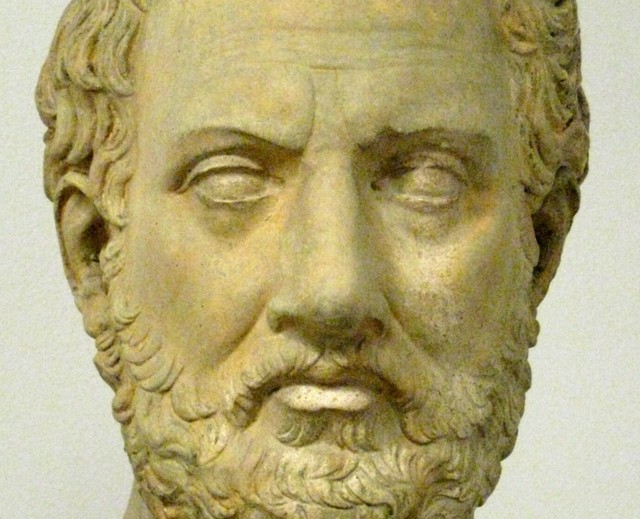
The third future is even more abstract and structural, and has been influentially labeled ‘Thucydides Trap’ in a book by Graham Allison [Destined for War: Can America and China escape the Thucydides’s Trap? (2017)], who accepts the analysis of the classical Greek historian on the basis of case studies over the centuries finds that when an ascendant Great Power fears the loss of its primacy to a Rising Power, it frequently initiates war while believing it still retains a military edge, which it will not retain for long. Note that such an assessment presumes actual warfare, and should not be perceived as a sequel to the U.S./Soviet Cold War, which came close to war in several situations of bipolar, but managed to restore order in a series of tense crises without engaging in direct combat.

There is a further complication with an analysis that extrapolates from the Cold War. Unlike the Soviet Union, China’s rise and challenge is far less associated with military capabilities and threats than it is with a remarkable surge of economic growth and soft power expansionism by pursuing win/win approaches that combine infrastructure aid to foreign societies with the growth of influence. In this regard, China has not weakened its domestic society by excessive investment in a militarist geopolitics, which depends on maintaining an expensive and vast global military presence that produced a several failed interventions that cast doubts on the United States’ capacity to uphold global security. This loss of credibility with respect to global security, despite its military dominance can be traced back to the Vietnam War in which overwhelming combat superiority on the battlefield nevertheless led to a political defeat.

The United States has repeated that fundamental failure first fully exposed in Vietnam in several other military misadventures. This inability to adjust to the realities of the post-colonial era in which nationalism mobilized on behalf of self-determination often neutralizes and eventually outlasts an intervening external power despite having grossly inferior weaponry has still not been overcome by the United States as it continues to act as if its military prowess shapes contemporary history. There is a second Thucydides trap that Allison doesn’t mention, which is that Athens lost its ascendancy from internal moral and political decay more than from the challenge posed by rising Sparta, succumbing to demagogues who led Athens into imprudent military adventures that weakened its overall capabilities, and especially its political self-confidence. Such a downhill path has been traveled by the United States at least since the 9/11 attacks in 2001 in which wars and contested long occupations of hostile societies has been expensive and contributed to alienation, extremism, and unrest within the United States.

Daniel Falcone: Can you draw on specific historical comparisons to the Soviet Union and China in terms of what is at stake geopolitically?

Richard Falk: There are several important comparisons. To begin with, the Soviet Union emerged from a devastating war as a victorious military power, and soon acquired nuclear weapons, posing a direct threat, ideologically and militarily to the European heartland of the Western alliance. The Cold War unfolded out of the tensions associated with the mutual disappointments of the peace diplomacy, especially as it divided Europe, including the city of Berlin.

The other flashpoint that provoked extremely destructive and dangerous wars in Korea and Vietnam, and recurrent crises in Germany, was the problems arising from unstable compromises between the victors in the war taking the form of countries divided without the consent and against the will of their national populations, and in disregard of the right of self-determination. In the present historical situation, the only leftover divided country is Korea, which after a serious and devastating war, 1950-52, ended as it began with the division remaining along with crises, tensions, threats, and periodic diplomatic efforts to achieve normalization leading to some form of reunification. It should be noted that although China’s geopolitical profile is overwhelmingly economistic as compared to the U.S. militarist profile, China become very sensitive about threats and disputes along its borders, and has had fighting wars with both India and Vietnam, as well as a defensive engagement in defense of North Korea.
Tensions rising to confrontation levels with China would probably either derive from disputes within China’s sphere of South Asian influence with respect to Taiwan, Hong Kong, island disputes or in some way related to China’s economic rise to a position of primacy, which contrasts with the grossly inferior economic performance of the Soviet Union if compared to the U.S. and the other major world economies, including Germany and Japan. The Soviet Union was never an economic rival or mounted a challenge in the manner of China.

The Cold War also coincided with the decolonizing process in Asia and Africa, which put the West and the Soviet bloc on opposite sides in a variety of struggles. In one respect this provided a safety valve that shifted bipolar confrontations to peripheral countries while trying to keep nuclear peace and stability at the center of the world system, which both sides assumed to be Europe, as well as their relations with one another. If a prolonged geopolitical confrontation emerges with China, Europe will not likely be an important site of struggle, and Europe even might sensibly opt to be non-aligned. Asia, including the Middle East, will become the main geopolitical battlegrounds, and Africa will offer a peripheral zone of contention where a Cold War II rivalry might assume its most direct expression as escalation risks would seem lower than in the various Asian theaters of encounter.

Unquestionably, the biggest difference is between the nature of the two challengers to Western systemic hegemony. The Soviet Union was a traditional geopolitical actor relying for expanding influence on its material capabilities and ideological penetration, while China focuses its energies and resources on soft power economic growth at home that is sustained and managed by the state in a manner that attracted massive foreign investment and domestic reinvestment based on a high rate of savings, a skilled labor force, and benefitting from highly favorable trade balances. China’s expansionist energies relied on win/win forms of economic and infrastructure assistance to countries in need with minimal interference with their political independence. The Soviet Union never undertook anything remotely comparable to China’s Road and Belt extraordinarily massive infrastructure initiative, again stressing huge win/win gains for a large number of countries, including in Africa. Aside from the special case of Cuba, the Soviet Union provided only military support to its allies in the so-called ‘Soviet bloc,’ and in East Europe intervened militarily to avoid ideological deviation.
It remains to be seen whether now that China is being challenged geopolitically by the United States it will begin to adopt a hard power mode, and the resulting confrontation between the two countries will come to resemble the Cold War. It is likely that China will emerge from the COVID pandemic with a reputation for greater efficiency in controlling the spread of the disease, reviving its economy, and understanding the functional benefits of global cooperation than the Trumpist West. At the same time, the Chinese image has been badly tarnished by damaging disclosures documenting the repression of the 10 million Uighur minority in Xinjiang Province and by forcible extensions of direct control over Hong Kong.

Daniel Falcone: The Cold War featured widespread propaganda in all facets of American cultural and political life. How could the United States attempt to sell the concept of an ideological confrontation with China in these times? The Republicans and Democrats are both constructing similar policy proposals it seems.

Richard Falk: I believe there are two approaches to confrontation with China that might be followed in the coming months, depending on which leadership controls American foreign policy after the November elections. Neither is desirable in my opinion. There is the approach of provocation adopted by Trump, which blames China for the pandemic and imposes various sanctions designed to roll back their economic and technological advances coupled with Trump’s normal transactional emphasis on securing a more favorable trade deal for the U.S. tied to a promise of warmer diplomatic relation.

The second approach is more closely associated with a reenactment of the Cold War bipartisan consensus that formed after World War II, and continues to animate the national security establishment in Washington. It involves a new version of containment as focused on the South China Seas island disputes, sometimes more loosely described as ‘boxing China in’ with India playing the role that Europe played in the earlier Cold War, along with an emphasis on China’s human rights abuses to achieve liberal backing, or at least acquiescence.

This approach is more likely to be pursued by a Biden presidency reasserting U.S. global leadership, with a Carteresque revival of ideological emphasis on Western liberalism as a superior mode of governance and global leadership due to its record on human rights and democracy, proclaiming its dedication to ‘a new free world.’ It is this approach that is more usefully and accurately regarded as a successor to the first Cold War. This softer version of confrontation with China would not challenge the structural features of America’s geopolitical posture adopted during the Cold War based on militarism at home and globally, capitalism, Atlanticism, and ‘special relationships’ with Israel and, somewhat less stridently, with Saudi Arabia, India, Egypt.

At the same time, there are some strong disincentives for so engaging China in a post-pandemic setting when policy priorities should be directed at restoring the economy and addressing climate change/biodiversity, which was almost forgotten about during the health crisis. The wisest course for future American foreign policy is providing constructive global leadership with an emphasis on inter-governmental cooperation for the human interest, a receptivity to compromise and conflict resolution in dealing with economic and political disputes, a radical defunding of the military, and strong commitments to restoring the spirit and substance of the New Deal with respect to social protection and national infrastructure.

Daniel Falcone: Are there any specific human rights issues and regions that would present immediate concerns and be jeopardized in your estimation within a new Cold War framework?

Richard Falk: Neither China nor the United States are currently positioned to promote human rights in other parts of the world with any credibility. The U.S. has lost credibility due to its handling of asylum-seekers on its borders and the maintenance of sanctions against such countries as Iran and Venezuela despite widespread humanitarian appeals for temporary suspension. In addition, the worldwide surge of support for Black Lives Matter after the Floyd police murder has called attention to the ugly persistence of systemic racism in gun-toting America. With these and other concerns in mind, it is hypocritical for the U.S. to be lecturing others, complaining about human rights abuses, and imposing sanctions allegedly as punitive responses to human rights failures.

China has never treated human rights as an element of its foreign policy, and with its own failures to adhere to international standards at home it is unlikely to engage the West on these terms. At the same time, there are at least two positive sides to China’s treatment of human and humanitarian issues that are rarely acknowledges in the West. First, China has lifted tens of millions of its own people out of extreme poverty (while the U.S. has widened disparities between rich and poor, and oriented growth policies over the course of the last half century to benefit the super-rich causing dysfunctional forms of inequality and acute alienation and rage on the part of working class). The Chinese achievement could easily be interpreted as a great contribution to the realization of the economic and social rights and to some extent should balance its disappointing record with regard to civil and political rights.

Secondly, during the COVID pandemic China has displayed important contributions to human solidarity while the United States has retreated to an ‘America First’ statist outlook that is combined with very poor performance with regard to both preventive and treatment aspects of responding to the virus. China has added funding to the WHO, send doctors and supplies to many countries, and most impressive of all has pledged to place any formulas it develops for effective vaccines in the public domain, placing this vital intellectual property on the web accessible to public and private sector developers. China deserves to receive positive recognition for such acts of what is sometimes described as ‘medical solidarity,’ while the United States deserves to be shamed for its blending of capitalist greed and nationalist selfishness.

Should there be a Second Cold War, human rights would become even more than, at present, a tool of cynical propaganda, especially if the bipartisan consensus regains the upper hand in U.S. policymaking. As with the First Cold War, human rights considerations would be brought to bear on countries deemed hostile to U.S. geopolitics and ignored with respect to friends and allies. At present, such a dichotomy is evident by way of an emphasis on Turkish human rights failures while ignoring the far worse failures in Egypt, Saudi Arabia, and Israel. Because the Second Cold War would be more explicitly geopolitical rather than ideological, I would expect less emphasis on ‘free world’ definitions of the core issues giving rise to the conflict.

Daniel Falcone: Although it’s a long-standing concern of strategists and planners, how do you see or anticipate China becoming an issue in the upcoming presidential election?

Richard Falk: It seems likely that Trump will campaign on a new strategic threat to the United States emanating from China, primarily aimed at its unacceptable economic manipulations to deprive the U.S, of trading benefits and jobs as well as its charging China with responsibility for American deaths due to the pandemic resulting from its refusal to release information about the virus immediately after it struck Wuhan and by way of conspiring with the WHO to conceal information about the international dangers of the COVID-19 disease. As in 2016 with its inflammatory message about immigrants, it can be anticipated that Trump will use the same techniques to cast China as an evil challenge to American greatness that only he has recognized and possesses the will and ability to crush.

I would expect that the Democratic Party election strategy would not take fundamental issue with the Trump approach, although its emphasis might seem quite different, attacking Trump for using China as a means to distract Americans from his gross failures of international and domestic leadership. A Biden campaign would also condemn China with regard to curtailing Hong Kong democracy and autonomy, as well as its abusive policies toward the maltreated Uighur minority. Biden might also agree that Chinese behavior has been unacceptable with respect to trade practices, stealing industrial secrets, including advocating militarization and confrontation in the South China Seas.

Where Biden and the Democrats would differ from Trump quite dramatically is with respect to Russia. Biden Democrats would likely make Russia enemy #1, sharply criticizing Trump for being ‘Putin’s poodle,’ and arguing that Russian expansionism and its alleged responsibility for killing Americans in Afghanistan is a more frontal threat to American interests in the Middle East and Europe than are the China challenges. Depending on the rhetoric and supporting policies being advocated there is a risk that Biden’s approach would lead to geopolitical fireworks, but probably not with China, and with less preoccupation with Europe than the First Cold War that ended with the fall of the Berlin Wall in 1989.

Daniel Falcone: How does our ongoing and continual: medical, racial, economic and environmental pandemics help in exploiting Cold War narratives and approaches for heads of state around the world?

Richard Falk: I believe it is not yet clear whether these competing narratives will outlive the health crisis when pressures to revive the economic aspects of the ‘old normal’ will be intense. It is possible that if Trump remaining in control of the U.S. Government, there would be an opportunity for China or possibly a coalition of countries to exercise global leadership by seeking to promote a global cooperative approach to health, while also seeking common ground and shared action on climate change, global migration, food security, and extreme poverty.

If Biden becomes the U.S, president and reasserts U.S. leadership it will likely strike a balance between pushing back against Russian and Chinese challenges and learning from the pandemic to seek global cooperative solutions to urgent problems confronting humanity. This renewal of liberal internationalism would likely be signaled on Day One by rejoining the Paris Climate Change Agreement and soon thereafter restoring American participation and support for the Iran Nuclear Agreement, supplemented by such internationalizing initiatives as returning to active membership in and robust funding for the WHO and support for the UN.

In conclusion, the buildup of anti-Chinese sentiments is establishing this dual foundation for a Second Cold War. Not surprisingly, the Editorial Board of the NY Times calls on Trump to use sanctions against China in response to reports of its mistreatment of the Uighur minority and its Hong Kong moves. Such advocacy is set forth without a mention of the hypocrisy of Trump being an international advocate of human rights given his record of support for autocratic denials at home and abroad, not to mention border politics and cruelty toward those millions in the U.S. without proper residence credentials. This kind of belligerent international liberalism, if not moderated, would recall the ideological joustings that made the First Cold War such a drain on resources and destroyed hopes for a rule-governed geopolitics, anchored in respect for the UN Charter and embodying commitments to promote a more peaceful, just, and ecologically responsible world.

22 July 2020

Professor Richard Falk is one of the world’s leading authorities on international politics. He is also a member of JUST’s international Advisory Panel .

Real Economy Plunges but Financial Profits Surge

By Nick Beams

16 Jul 2020 – Reports issued by four major US banks this week have highlighted the widening dichotomy between the real economy and the financial system.

The US is set to record the worst recession since the Great Depression, threatening elevated levels of unemployment well into the future and a wave of bankruptcies. Yet the banks are raking in billions of dollars through speculative operations financed by the massive intervention of the Fed into all corners of the financial markets.

On Tuesday, JPMorgan Chase, Wells Fargo and Citigroup set aside a combined total of $28 billion for current and expected losses on their loans. The second quarter provisions bring the total for the three banks for 2020 to $47 billion, more than they set aside in the last three years combined.

At the same time, two of them, JPMorgan and Citigroup, reported major increases in revenues derived from financial market trading.

Yesterday, Goldman Sachs reported a profit of $2.4 billion in the second quarter, unchanged from a year earlier, resulting from what the Financial Times described as a “bonanza in bond trading” that offset provisions for losses on loans.

Citing the elevated provisions for loan losses, bank executives have pointed to the worsening state of the real economy. There is a significant element of truth in their claims, but their remarks are also directed to ensuring that the Fed maintains its unprecedented support for financial markets from which they have so richly benefited.

After JPMorgan reported a record $10.5 billion provision for losses on loans, its chief executive, Jamie Dimon, said the charges could rise if the economy worsened. “We don’t know what the future is going to hold,” he said. “This is not a normal recession. The recessionary part of this you are going to see down the road.” He added that the bank was “preparing for the worst case scenario.”

The outlook of the major banks, all of which downwardly revised their projections for the economy and made higher-than-expected provisions for bad loans, stands in marked contrast to the statements coming from the White House. Speaking to Fox News on Monday, economic adviser Larry Kudlow said, “I don’t see an interruption to the V-shaped recovery.” With “fingers crossed and some prayers” the US was “on track for a very strong second half of the year,” he added.

The picture painted by the banks is very different. JPMorgan’s chief financial officer, Jennifer Piepszak, said additional amounts had been set aside to cover bad loans because of the expectation that unemployment would remain above 10 percent well into next year, representing a downward revision of the bank’s outlook issued in the first quarter.

“May and June will prove to be the easy months in terms of this recovery,” she said. “Now we’re really hitting the moment of truth in the months ahead.”

The bank’s loss provisions went across the board. The largest portion of $5.83 billion came from the consumer bank, while $2 billion came from the corporate and investment bank, with another $2.43 billion from the commercial bank.

Speaking on a conference call with financial analysts, Michael Corbat, the CEO of Citigroup, which set aside $7.9 billion in provisions for bad loans, also poured cold water on the idea that the US economy is going to enjoy some kind of rapid snapback.

“I don’t think anybody should leave any bank earnings call simply feeling like the worst is absolutely behind us and it’s a rosy path ahead,” he said. “We don’t want people leaving this call simply thinking the world is a great place and it’s a V-shaped recovery.”

The situation in the real economy, where workers confront mass unemployment and small and medium-sized business are threatened with a wave of bankruptcies, stands in marked contrast to the financial world.

JP Morgan took in $33.8 billion in revenue in the second quarter, recording a profit of $4.69 billion, largely because of its operations in financial markets boosted by the actions of the Fed.

As the business channel CNBC noted on its website, it was able to “capture opportunities created by the response to the pandemic.” It continued: “Surging volatility and unprecedented steps taken by the Federal Reserve to support credit markets have created the best environment for trading and advising on debt and equity issuance in years.”

JPMorgan’s corporate and investment bank more than doubled its profits, to a record high of $5.5 billion for the second quarter.

Bond traders brought in revenues of $7.3 billion, an increase of 120 percent on the year before, easily exceeding the projection of $5.84 billion. The revenue from equity trades was $2.4 billion, compared to an estimate of $2.07 billion. And investment bank revenue rose by 91 percent to $3.4 billion on the back of advisory fees from corporate clients seeking to stock up on cash to counter the effects of the pandemic.

Goldman reported its best quarter for trading in fixed income assets for nine years, raking in revenues of $4.24 billion compared to $1.7 billion the year before.

Citigroup was also able to counter a 10 percent fall in revenues from its consumer banking division with a 68 percent rise in fixed income trading revenue resulting from operations in bond markets that have been supported by the Fed. This accounted for most of the rise in its market and services revenues, which climbed by 48 percent to $6.9 billion.

CEO Corbat said that while credit costs weighed down net income, overall business performance was “strong,” and the bank was able to “navigate the COVID-19 pandemic reasonably well.”

Skilful navigation had little or nothing to do with it. The main factor has been the intervention of the Fed, which has pumped more than $3 trillion into financial markets since they effectively froze in mid-March, when the entire system was facing a meltdown beyond that of 2008.

Given the worsening situation in the real economy, the banks and Wall Street as a whole will be pressing for still further interventions by the Fed so that the orgy of financial parasitism, so vital for the bottom line, can continue.

And the next move is being prepared. The Fed is now discussing so-called yield curve targeting, in which the central bank intervenes in financial markets to keep the yields on specified government bonds at a fixed rate.

The move is under consideration because the increase in US government debt resulting from the corporate bailouts under the CARES Act will increase the supply of Treasury bonds, tending to lower their price and push yields (interest rates) higher.

Further Fed intervention would raise their price and lower the yield, thereby enhancing the ultra-low interest rate regime that has been central to a recouping of financial profits by the banks and Wall Street traders.

In a speech to a webinar hosted by the National Association for Business Economics, Lal Brainard, a member of the Fed’s governing board, warned of the possibility of a “wave of insolvencies,” and said that looking ahead it would be important for monetary policy to “pivot from stabilization to accommodation”—that is, the provision of still more money.

With downside risks to the outlook, she said, there may come a time when it would be helpful to “reinforce the credibility of forward guidance… with the addition of targets in the short-to-medium end of the yield curve.” She stuck to the official position that it would come into focus only after additional analysis and discussion, but clearly Fed intervention to provide still more assistance to Wall Street is under active consideration.

20 July 2020

Source: www.transcend.org

Markets Soar as the Corpses Pile Up

By Andre Damon

Wednesday [15 Jul] was a disaster in the United States. There were 71,670 new cases of COVID-19 recorded, the second-worst day on record. Nearly 1,000 people lost their lives to the disease, according to official figures.

With Texas hospitals at 90 percent capacity, dozens of mobile morgues are being dispatched to the state. In Florida, 54 hospitals now have zero available beds in their intensive care units. And, amid a full-on drive to reopen schools, officials said that one third of children who were tested in Florida were positive, adding to the body of evidence that children can play a major role spreading the disease.

The Institute for Health Metrics and Evaluation at the University of Washington reported that it estimates 224,089 people will die from COVID-19 by November 1, an upward revision of 20,000 from just one week ago.

Meanwhile, the most basic medical supplies, such as masks, gowns, gloves and disinfectants, “simply are not readily available from the usual sources our physicians use,” the American Medical Association reported.

The economic situation is equally disastrous. American Airlines said it would likely furlough 25 , 000 workers later this year, adding to the 36,000 furloughs announced at United Airlines last week. These layoffs are scheduled to take place despite the $25 billion bailout of the airline industry by the federal government.

The Organization for Economic Co-operation and Development (OECD) now predicts two possible scenarios by the end of 2020. Its “pessimistic” scenario is one in which the unemployment rate remains at 11.3 percent and economic output falls by 7.3 percent, both worse than any other recession since World War II. Its “more pessimistic” scenario is one in which the unemployment rate is 12.9 percent and economic output falls by 8.5 percent.

Amid all of this death and economic devastation, the stock markets surged, with the Dow Jones Industrial Average closing up for the fourth trading day in a row, with an increase totaling over a thousand points. The S&P 500 is now significantly higher than it was one year ago today.

Wednesday’s market binge was triggered by the announcement early in the day that Goldman Sachs, the Wall Street investment bank, posted one of its most profitable quarters ever, doubling the predictions of analysts.

There is no longer any question of the extent to which the stock market and the fate of society have totally separated. “The stock market and the economy have parted ways,” Mark Zandi, chief of Moody’s Analytics, told the Washington Post.

The massive run-up in stock prices and the profits of banks has only one explanation: The capitalist state has put at the disposal of its masters in the financial oligarchy unlimited amounts of money, the central purpose of which is nothing other than the enrichment of the wealthiest people in the world. As a result of the massive surge in the markets, US billionaires have become some $600 billion richer since mid-March.

To date, the Federal Reserve has funneled more than $3 trillion dollars into the financial markets, in addition to the $2 trillion in economic stimulus—much of it in the form of corporate bailouts—created by the CARES Act passed in late March.

All the claims that the bailout of major corporations by the CARES Act and the Fed’s bailout of Wall Street had anything to do with helping the mass of the population is totally exposed by what has taken place.

It would be hard to imagine a more corrupt social order than currently exists. The pandemic has become a favorable factor for enriching the financial oligarchy. As long as the crisis provides the pretext for massive bailouts by the Federal Reserve, there is no incentive to bring it under control.

If there were, even for a minute, any cutoff of the massive subsidies to the markets, there would be a devastating crash on the scale of that which took place in March, when the Dow fell by 50 percent.

The financial oligarchy lives at the expense of society, not just through class exploitation in factories and workplaces, but through the massive upward redistribution of wealth through the mechanism of the market.

While it has been hell for millions of people, the pandemic will be seen by sections of the ruling class as a certain golden age. As the bodies piled up, the oligarchs quarantined themselves in their beachfront properties and condominiums, flying between their residences on private helicopters and, at the sign of the slightest sniffle, attended to by private physicians.

It makes no difference that corpses are piling up in refrigerated trucks around the country. The bank accounts of the rich keep getting bigger and bigger.

As millions die, the ruling class and its media mouthpieces have only two demands: Reopen the schools and cut unemployment benefits. “American children need public schools to reopen in the fall,” declared the lead editorial of the New York Times on Friday. On Wednesday, it called for “a plan to reduce the payments” to workers “as the economy recovers.”

In the endless discussion of the pandemic in the media, there is never any examination of the social interests that drove the back-to-work campaign and the ensuing resurgence of the pandemic.

During the First World War, a major factor in keeping the war going—even as tens of millions died in the trenches—was the immense fortunes generated through war profiteering. So too now, it is the massive fortunes piled up that explain why there is no effort to bring the pandemic under control. While the oligarchy that dominates society makes trillions exploiting the crisis, there will be no serious effort to stop the daily toll of death and destruction.

Under these conditions, the expropriation of the capitalist class and the shutdown of Wall Street becomes a matter of public health. There will be no end to the pandemic without the class-conscious intervention of the working class, in a struggle against capitalism and the establishment of socialism, which will create the conditions for an effective response to the disease.

20 July 2020

Source: www.transcend.org

Cold War with China and the Thucydides Trap: A Conversation with Richard Falk

By Daniel Falcone

9 Jul 2020 – Should there be a Second Cold War an alleged US concern for human rights would indeed become another ongoing tool of propaganda. In this interview, International Relations scholar Richard Falk breaks down the grave dangers and prospects for a New Cold with China. Falk worries that tensions and rivalries both regionally and economically could result in a series of hot war conflicts set off by nuclear complacent countries that fail to recognize the catastrophic risks at stake.

In retracing the collapse of the Soviet Union and China’s entrance into the World Trade Organization, Falk analyses the origins of US resentment towards China’s remarkable market growth that is absent of liberal democratic structures. Aside from commenting on how ‘cold war’ with China, an economic rival, is different from 20th century Russian tension, which was largely militaristic and ideological, Falk suggests additional motivations for an escalation on the part of Trump and the possibly forthcoming bi-partisan consensus.

Daniel Falcone: Do you anticipate the United States entering a new Cold War with China? What are the prospects for a new Cold War? Can you also discuss the fall of the Soviet Empire and the modern rise of China to better contextualize the present set of diplomatic tensions?

Richard Falk: I think there are grave dangers of either sliding into a new Cold War by unwitting interactions, especially with China, and possibly with Russia. More complex opposing alignments could also take shape, for instance, an alignment that features the U.S. and India on one side and China and Russia on the other. Such an encounter would likely be less ideological than the Cold War that broke out after World War II and also less preoccupied about the outbreak of an all-out nuclear war. The next cold war is likely to be more focused on economic rivalry, cyber dimensions of conflict and major regional wars involving Iran, the Korean Peninsula, or India/Pakistan. In this regard, what might start as a cold war has a greater prospect of producing major hot wars as there could be present less of a self-deterrent. In this altered global setting, there are risks arising from what I would call ‘nuclear complacency, underestimating the risks and catastrophic results of nuclear war.

In the background of this look ahead is the extent to which China has spoiled the triumphalist narrative that was spun in the West after the collapse of the Soviet Union. One prominent version, associated with Francis Fukuyama claim, which seemed ludicrous when put forward in the early 1990s, is that after the Cold War the world had reached ‘the end of history.’ Western secular values had prevailed both with regard to state/society relations and in relation to the organization of the world economy. The future seemed, for some years, almost to follow this kind of interpretation, with a virtually universal endorsement of neoliberal globalization, which Fernando Henrique Cardoso, the previously left socialist leader of Brazil explained as ‘the only game in town.’

A cruder version of this clear vision of a victorious West was the assertions of the Tory leader in Britain, Margaret Thatcher, who aggressively shouted down the British opposition to her economic policies with the slogan ‘there is no alternative’ (to market driven economies), or simply TINA. This idea had been initially attributed to Herbert Spencer, notorious for suggesting in the 19th Century that history of society parallels human evolution in the sense of privileging ‘the survival of the fittest.’ Not surprisingly, given such an atmosphere, progressive forces felt demoralized. Left perspectives often adopted defeatist postures after the Soviet collapse, and were derided as having endorsed political oppression and backed economic failure. Perhaps worse for progressive prospects, was the awkward fact that the only surviving major socialist economy, China, seemed itself to be opting for joining the capitalist choir, seeking and gaining membership by in the World Trade Organization and rationalizing their active participation in the neoliberal world economy as ‘market socialism’ fooling almost no one, least of all investors and traders.

For many years, this seemed like a win/win reality. China’s economy expanded at a remarkable rate, but world trade increased and Western investors were pleased with the low costs of skilled labor in China and the absence of strict environmental and safety standards. All was well as long as China stayed in its lane as ‘the factory for the world,’ but when it made the transition to a sophisticated high technology economy it began to pose a new kind of geopolitical challenge to the ascendancy of the United States and the West, and murmurs began to be heard about stealing Western technology, unfair trade practices, and currency manipulations. In my view, these issues were significant, not the core concern. What began to bother the West was the degree to which China for all of its superficial adaptations to capitalist logic was dramatically outperforming its competitors in the West, seeming benefitting from the state management of economic activity, despite political authoritarianism, in a manner superior to what seemed possible in the developed societies of the West, especially with respect to savings and the investment of public funds.

This dynamic is brilliantly depicted for Asia as whole by the Indian economist, Deepak Nayyar, in The Asian Resurgence: Diversity in Development (2019), which suggested an overall post-colonial Asian challenge to Western ascendancy in which 14 Asian countries, led by China, produced the most remarkable record of economic growth and poverty alleviation in the past 50 years that the world has ever known, and these countries achieved these remarkable results without the trappings of liberal democracy, thus drawing into question the American claim that market-driven constitutionalism was the only arrangement of state/society relations that was legitimate and materially successful.

With these considerations in mind, three rather distinct alternative futures for the U.S./China relationship deserve scrutiny if the objective is to avoid the onset of a second cold war. On a preliminary basis it would seem helpful to take notice of a serious language trap that suggests misleadingly that because the words ‘cold war’ are convenient to designate a new geopolitical confrontation, if it occurs, it would resemble in its essential features the Cold War that followed directly from the contested peace arrangement of World War II, and represented two major states that both conceived of international relations through the realist postwar prisms of hard power as complemented by adherence to rival ideologies that suspended their enmity toward each other in order to join forces to defeat fascism.

There are many differences between the global settings then and now. First, there is only a rather shallow ideological difference among the leading political actors at this time, although those on the far right in the West are seeking a renewal of intense geopolitical conflict by portraying China as a Communist, socialist, even Maoist, and hence an ideological adversary of the supposedly freedom-loving West. In contrast, old style Cold War liberals are thinking more along traditional lines of geopolitical competition among principal states promoting national interests as measured by growth, military capabilities, wealth, status, and influence, with ideological differences mentioned, but put far in the background.

With these thoughts in mind it becomes reasonable to depict three world futures that portray relations between China and the West. The first, and most evident one, arises from the kind of provocative Trump diplomacy that combines blaming the COVID pandemic on Chinese malfeasance. Such a conflict-generating diplomacy should be understood and opposed as a diversionary tactic to obscure the multiple and shocking failures by the Trump presidency to provide unifying leadership or science-based guidance during the unfolding of the health disaster that continues its lethal sweep across the country with undiminished fury. If China takes the bait, the world will be plunged into a new ferocious geopolitical rivalry that will divert resources and energies from an agenda or urgent global-scale challenges.

A variation on this theme is connected with the possibility that Trump thinks he faces a landslide defeat in the November election, and foregoes hostile diplomacy to stage a confrontation with China, possibly accompanied by declaring a national emergency, or by staging Gulf of Tonkin style false incidents to create a pretext for launching some sort of attack on China that is the start of a hot war, which if saner minds prevail, is toned down to a mere Cold War, that is, a multi-dimensional rivalry that comes to dominate international relations.

The second more subtle drift into a Cold War with China would arise from a deep state, bipartisan consensus, reinforced by private sector war industry pressures to challenge China militarily in the South China Sea or in the course of some regional confrontation, possibly arising from tensions on the Korean Peninsula, along the Indian border, or in the Indo-Pakistani context. It would represent a more common structural militarist response patterns to growing evidence of Western decline, Asian rise.

The third future is even more abstract and structural, and has been influentially labeled ‘Thucydides Trap’ in a book by Graham Allison [Destined for War: Can America and China escape the Thucydides’s Trap? (2017), who accepts the analysis of the classical Greek historian on the basis of case studies over the centuries finds that when an ascendant Great Power fears the loss of its primacy to a Rising Power, it frequently initiates war while believing it still retains a military edge. Note that such an assessment presumes actual warfare, and should not be perceived as a sequel to the U.S./Soviet Cold War, which came close to war in several situations of bipolar, but managed to restore order without direct combat.

There is a further complication with an analysis that extrapolates from the Cold War. Unlike the Soviet Union, China’s rise and challenge is far less associated with military capabilities and threats than it is with a remarkable surge of economic growth and soft power expansionism by pursuing win/win approaches that combine infrastructure aid with the growth of influence. In this regard, China has not weakened its domestic society by excessive investment in a militarist geopolitics, which has produced a series of costly failures for the United States, which can be traced back to the Vietnam War in which overwhelming military superiority on the battlefield led to a political defeat.

The United States has repeated that fundamental failure to adjust to the realities of the post-colonial era in which nationalism mobilized on behalf of self-determination neutralizes and eventually outlasts an intervening external power despite having grossly inferior weaponry. There is a second Thucydides trap that Allison doesn’t mention, which is that Athens lost its ascendancy from internal moral and political decay more than from the challenge posed by rising Sparta, succumbing to demagogues who led Athens into costly military adventures that weakened its overall capabilities. Such a path has been traveled by the United States at least since the 9/11 attacks in 2001 in which wars and contested long occupations has been expensive and contributed to alienation, extremism, and unrest within the United States.

Daniel Falcone: Can you draw on specific historical comparisons to the Soviet Union and China in terms of what is at stake geopolitically?

Richard Falk: There are several important comparisons. To begin with, the Soviet Union emerged from a devastating war as a victorious military power, which soon acquired nuclear weapons, and posed a direct threat, ideologically and militarily to the European heartland of the Western alliance. The Cold War unfolded out of the tensions associated with the mutual disappointments of the peace diplomacy, especially as it divided Europe, including the city of Berlin.

The other flashpoint that provoked extremely destructive and dangerous wars in Korea and Vietnam, and recurrent crises in Germany, was the problems arising from unstable compromises in the form of countries divided without the consent of the national population, and in disregard of the right of self-determination. In the present historical situation, the only leftover divided country is Korea, which after a serious and devastating war, 1950-52, ended as it began with the division remaining along with tensions, threats, and periodic diplomatic efforts. It should be noted that although China’s geopolitical profile is overwhelmingly economistic as compared to the U.S. militarist profile, China become very sensitive about threats and disputes along its borders, and has had fighting wars with both India and China.

Tensions rising to confrontation levels with China would probably either derive from disputes within China’s sphere of South Asian influence with respect to island disputes or in some way related to China’s economic rise to a position of primacy, which contrasts with the inferior economic performance of the Soviet Union as compared to the U.S. and the other major world economies, including Germany and Japan. The Soviet Union was never an economic rival or challenge in the way that China has become.

The Cold War also coincided with the decolonizing process in Asia and Africa, which put the West and the Soviet bloc were on opposite sides. In one respect this provided a safety valve that shifted bipolar confrontations to peripheral countries while trying to keep nuclear peace at the center of the world system, which both sides assumed to be Europe, as well as their relations with one another. If a Cold War emerges with China Europe will not be an important site of struggle, and might opt to be non-aligned. Asia, including the Middle East, will become the main geopolitical battlegrounds, and Africa will offer a peripheral zone of contention where the Cold War II rivalry might assume its most direct expression as escalation risks would seem lower than in the various Asian theaters of encounter.

Unquestionably, the biggest difference is that the Soviet Union was a traditional geopolitical actor relying for expanding influence on its material capabilities and ideological penetration, while China focused its energies and resources on soft power economic growth at home that is sustained and managed by the state in a manner that attracted massive foreign investment and domestic reinvestment based on a high rate of savings and benefitting from highly favorable trade balances. China’s expansionist energies relied on win/win forms of economic and infrastructure assistance to countries in need with minimal interference with their political independence. The Soviet Union never undertook anything remotely comparable to China’s Road and Belt extraordinarily massive infrastructure initiative, again stressing huge win/win gains for a wide number of countries, including in Africa. Aside from the special case of Cuba, the Soviet Union provided only military support to its allies, and in East Europe intervened militarily to avoid ideological deviation.

It remains to be seen whether now that China is being challenged geopolitically by the United States it will begin to adopt a hard power mode, and the resulting confrontation between the two countries will come to resemble the Cold War. It may be that China will emerge from the COVID pandemic with a reputation for greater efficiency in controlling the spread of the disease, reviving its economy, and understanding the functional benefits of global cooperation than the Trumpist West. At the same time, the Chinese image has been badly tarnished by damaging disclosures documenting the repression of the 10 million Uighur minority in Xinjiang Province and by forcible extensions of direct control over Hong Kong.

Daniel Falcone: The Cold War featured widespread propaganda in all facets of American cultural and political life. How could the United States attempt to sell the concept of an ideological confrontation with China in these times? The Republicans and Democrats are both constructing similar policy proposals it seems.

Richard Falk: I believe there are two approaches to confrontation with China that might be followed in the coming months, depending on which leadership controls American foreign policy after the November elections. Neither is desirable in my opinion. There is the approach of provocation adopted by Trump, which blames China for the pandemic and imposes various sanctions designed to roll back their economic and technological advances coupled with Trump’s normal transactional emphasis on securing a more favorable trade deal for the U.S. tied to a promise of warm diplomatic relation.

The second approach is more closely associated with a reenactment of the Cold War bipartisan consensus that formed after World War II, and continues to animate the national security establishment in Washington. It involves a new version of containment as focused on the South China Seas island disputes, sometimes more loosely described as ‘boxing China in’ with India playing the role that Europe played in the earlier Cold War, along with an emphasis on China’s human rights abuses to achieve liberal backing.

This approach is more likely to be pursued by a Biden presidency would reassert U.S. global leadership, with a Carteresque revival of ideological emphasis on Western liberalism as a superior mode of governance and global leadership due to its record on human right and democracy, proclaiming ‘a new free world.’ It is this approach that is more usefully and accurately regarded as a successor to the first Cold War.

At the same time, there are some strong disincentives for so engaging China in a post-pandemic setting when policy priorities should be directed at restoring the economy and addressing climate change, which was almost forgotten about during the health crisis. The wisest course for future American foreign policy is providing constructive global leadership with an emphasis on inter-governmental cooperation for the human interest and a receptivity to compromise and conflict resolution in dealing with economic and political disputes.

Daniel Falcone: Are there any specific human rights issues and regions that would present immediate concerns and be jeopardized in your estimation within a new Cold War framework?

Richard Falk: Neither China nor the United States are currently positioned to promote human rights in other parts of the world. The U.S. has lost credibility due to its handling of asylum-seekers on its borders and the maintenance of sanctions against such countries as Iran and Venezuela despite widespread humanitarian appeals for temporary suspension. In addition, the worldwide surge of support for Black Lives Matter after the Floyd police murder has called attention to the depths of systemic racism in America. With these and other concerns in mind, it is hypocritical for the U.S. to be lecturing others and complaining about their human rights abuses.

China has never treated human rights as an element of its foreign policy, and with its own failures to adhere to international standards it is unlikely to engage the West on these terms. At the same time, there are at least two positive sides to China’s treatment of human and humanitarian issues that are rarely acknowledges in the West. First, China has lifted millions of its own people out of extreme poverty (while the U.S. has widened disparities between rich and poor, and oriented growth policies over the course of the last half century to benefit the super-rich causing dysfunctional forms of inequality and acute alienation and rage on the part of working class).

The Chinese achievement could easily be interpreted as a great contribution to the realization of the economic and social rights and to some extent should balance its disappointing record with regard to civil and political rights. Secondly, during the COVID pandemic China has displayed important contributions to human solidarity while the United States has retreated to an ‘America First’ statist outlook that is combined with very poor performance with regard to both preventive and treatment aspects of responding to the virus.

China has added funding to the WHO, send doctors and supplies to many countries, and most impressive of all has pledged to place any formulas for the development of effective vaccines in the public domain, placing its intellectual property on the web accessible to public and private sector developers, and deserves to receive credit for such acts of what is sometimes described as ‘medical solidarity.’

Should there be a Second Cold War, human rights would become even more than at present a tool of propaganda, especially if the bipartisan consensus regains the upper hand in policymaking. As with the earlier Cold War human rights considerations would be brought to bear on countries deemed hostile to U.S. geopolitics and ignored with respect to friends and allies. At present, such a dichotomy is evident in focusing on Turkish human rights failures while ignoring the far worse failures in Egypt, Saudi Arabia, and Israel. Because the Second Cold War would be more manifestly geopolitical rather than ideological, I would expect less emphasis on ‘free world’ definitions of the conflict.

Daniel Falcone: Although it’s a long-standing concern of strategists and planners, how do you see or anticipate China becoming an issue in the upcoming presidential election?

Richard Falk: It seems likely that Trump will campaign on a new strategic threat to the United States emanating from China, primarily aimed at its unacceptable economic manipulations to deprive the U.S, of trading benefits and jobs as well as its charging China with responsibility for American deaths due to the pandemic resulting from its refusal to release information about the virus immediately after it struck Wuhan and by way of conspiring with the WHO to conceal information about the dangers of the COVID-19 disease. As in 2016 with its inflammatory message about immigrants, it can be anticipated that Trump will use the same techniques to cast China as an evil threat to American greatness.

I would expect that the Democratic Party election strategy would not take fundamental issue with the Trump approach, although the emphasis might be different, and attack Trump for using China as a means to distract Americans from his gross failures of international and domestic leadership. A Biden campaign would also condemn China with regard to curtailing Hong Kong democracy and autonomy, as well as its abusive policies toward the Uighurs. Biden might also agree that Chinese behavior has been unacceptable with respect to trade practices, stealing industrial secrets, and pushing toward militarization and confrontation in the South China Seas.

Where Biden and the Democrats would differ from Trump quite dramatically is with respect to Russia. Biden Democrats would likely make Russia enemy #1, sharply criticizing Trump for being ‘Putin’s poodle,’ and arguing that Russian expansionism and its alleged responsibility for killing Americans in Afghanistan is a more frontal threat to American interests in the Middle East and Europe than are the China challenges. Depending on the rhetoric and supporting policies being advocated there is a risk that Biden’s approach would lead to a new cold war, but probably not with China, and with more of a geopolitical tone than the First Cold War that ended with the fall of the Berlin Wall in 1989.

Daniel Falcone: How does our ongoing and continual: medical, racial, economic and environmental pandemics help in exploiting Cold War narratives and approaches for heads of state around the world?

Richard Falk: I believe it is not yet clear whether these competing narratives will outlive the health crisis when pressures to revive the economic aspects of the ‘old normal’ will be intense. It is possible that if Trump remaining in control of the U.S. Government, there would be an opportunity for China or possibly a coalition of countries to exercise global leadership by seeking to promote a global cooperative approach to health, while also seeking common ground and shared action on climate change, global migration, food security, and extreme poverty.

If Biden becomes the U.S, president and reasserts U.S. leadership it will likely strike a balance between pushing back against Chinese challenges and learning from the pandemic to seek global cooperative solutions to urgent problems confronting humanity. Such an approach might start by rejoining the Paris Climate Change Agreement and renewing American participation and support for the Iran Nuclear Agreement, supplemented by such internationalizing initiatives as returning to active membership in and robust funding for the WHO.

In conclusion, the buildup of anti-Chinese sentiments is establishing this dual foundation for a Second Cold War. Not surprisingly, the Editorial Board of the NY Times calls on Trump to use sanctions against China in response to reports of its mistreatment of the Uighur minority and its Hong Kong moves. Such advocacy is set forth without a mention of the hypocrisy of Trump being an international advocate of human rights given his record of support for autocratic denials at home and abroad. This kind of belligerent international liberalism does recall the ideological atmosphere that made the First Cold War such a drain on resources and on the possibilities for promoting a rule-governed geopolitics anchored in respect for the UN Charter.

__________________________________________

Richard Falk is a member of the TRANSCEND Network, an international relations scholar, professor emeritus of international law at Princeton University, Distinguished Research Fellow, Orfalea Center of Global Studies, UCSB, author, co-author or editor of 60 books, and a speaker and activist on world affairs. In 2008, the United Nations Human Rights Council (UNHRC) appointed Falk to two three-year terms as a United Nations Special Rapporteur on “the situation of human rights in the Palestinian territories occupied since 1967.” Since 2002 he has lived in Santa Barbara, California, and associated with the local campus of the University of California, and for several years chaired the Board of the Nuclear Age Peace Foundation.

20 July 2020

Source: www.transcend.org

Oppose US Moves To Drag India-China Conflict Into Its Indo-Pacific Strategy

By Ramakrishnan

Human Rights violation in Tibet is a bogey. It is an alibi for interference by US.

PM Modi had said, less than one year ago, that the Mahabalipuram (Chennai) summit (Oct 11-12, 2019) had begun “a New Era of Cooperation between the two countries”.

He had famously said, about his summit with Xi Jinping:

“ We have decided that we would prudently manage our differences without letting them turn into disputes, that we would be sensitive to each other’s’ concerns, and that our relations strive towards world peace and stability.”

“The two sides decided to designate 2020 as year of India-China Cultural and People-to-people Exchanges” and to deepen all-sided relations.

Thus 2020 apparently began accordingly. That was so even after corona pandemic commenced, in India too: India and China had mutually cooperated on Covid; exchanged medicines and goods; ICMR imported lakhs of test kits; India even declined to call it Wuhan virus, despite US pressures. India even decided to allow 5G trials, much against US diktat.

Early May 2020 saw a couple of skirmishes – even bloody fist fights on May 5 near Pangong Tso, like in Galwan valley – along LAC, but they were rather underplayed initially. Then manifested a sharp turn:

WHO’s World Health Assembly, May 18-19 Meet, where India backed a US-led Draft Resolution against China (on Covid-19) marked “a decisive shift in India’s stance towards China,” it was observed.

After this WHO meet, it was recalled by an Australian : China has accurately called Australia acting as an attack dog of the US. And QUAD was activated against China, India joined. India is now thinking of inviting Australia, for the first time, to Malabar Naval Exercises in which US and Japan were participants earlier. Thus they will be QUAD Exercises, and will be taken as aimed at China.

India led by UPA and now NDA have been pro-US, no doubt. Nothing new in it. But they did not take an anti-China belligerent position in recent past, carried on business with it like US itself did, as part of what they both claimed as multi-polarity and strategic autonomy : We are engaging with US, Russia, China etc. India joined SCO, and China-backed bank, AIIB despite US wrath. Modi visited even Iran, the Red Rag for US, in May 2016 to sign MOUs for massive deals.

The latest shift is different from that policy; whether it is divergence or divorce from that policy of strategic autonomy is yet to be observed.See two developments for instance:

AIIB, a global Bank set up with China’s initiative, announced $ 750 million loan on June 17, on top of $500 M in May, to help India battle Covid impact, this despite India’s role in WHO Meet May18.

Talks at various levels in several rounds led to India China agreements on disengagement and de-escalation of troops, even being executed on the ground, despite jingoistic propaganda.

There is progress in talks. Clouding the efforts for peace, the hawks are playing up jingoism. They are aided and abetted in this by USA, and Dalai Lama and Tibet are pawns in this great game.

Dalai Lama Is At The Centre Of a New Great Game In Himalayas Between India China And Tibet, wrote Prof. Phunchok Stobdan, former diplomat, himself a resident of Ladakh, Senior Fellow IDSA, and an expert on related affairs, and Foreign Policy. (theprint.com , 22 October,2019). In fact that was an extract of a book by him: The Great Game In the Buddhist Himalayas. ( Penguin Random House, 2019).

The Game authored by USA needs to be understood. Aksai Chin and Ladakh have been part of the hot spots. Amit Shah ominously declared, in August 2019, when Ladakh was separated from Kashmir, that India would get them back. Many experts believed it is one trigger for the current face-off, unprecedented in 45 years. Citing this face-off as an alibi, US recently shifted 25000 plus troops to India-Pacific. And it has been allowed to meddle in Arunachal Pradesh,

*** **

US centre in disputed Tawang of Arunachal pradesh

theprint.in, 31 October, 2019 reported:

US Ambassador to India Kenneth Juster’s was invited as chief guest to Tawang Festival, in Arunachal in October 2019, said its Chief Minister Pema Khandu, an outcome of the envoy’s own written request to visit the border district, a part of “South Tibet” as China calls it. Dalai Lama also treated it as such until 2008 .

The CM underplayed it but Alice Wells, the Trump administration’s Assistant Secretary of State in-charge of South Asia, tweeted Oct 30 : “.@USAmbIndia’s #Tawang visit highlights resolute U.S. support for Indian sovereignty and commitment to local partnerships.”
(It was not merely verbal)
US Embassy spokesperson said Juster and Khandu discussed “how the U.S. Mission to India can enhance its cooperation with the state”….The US has increased its activities in Arunachal and is working jointly with the state on developing 70 smart villages…

The programme is being led by Prof. Solomon Darwin, executive director of the Garwood Centre for Corporate Innovation, who is known as the father of the smart village movement…The work also focuses on helping self-help groups in the state and finding an international market for their products.

These moves come at a time when US-China relations are strained. ..A similar visit to Arunachal Pradesh in 2016 by then-US ambassador to India Richard Verma had sparked a terse exchange with China.

That is how US strategy and Business are rolled into one, penetrate sensitive areas where no Indian is allowed to enter freely, facilitated by a comprador centre.

US had entered Arunachal Pradesh and adopted scores of villages. US Ambassador got himself invited to Tawang, one main centre of India China dispute, amid China’s protests, last October. US investments are being invited in that sensitive area, where nobody is allowed to travel without a special permit. “The state has huge potential in the form of natural resources …and to become one of the most prosperous states in India”, said the CM Pema Khandu. (Arunachal Times, Oct 29, 2019)

All this has more strategic value, and US has its Indo-Pacific Strategy. This is the second time a US envoy visits the sensitive areas; earlier it was in 2016 October.

Let alone China, Dalai Lama did not recognize, until 2008, Arunachal Pradesh as part of India, i.e., for 50 years after his arrival in India. He said it is part of Tibet, itself a part of China. Now US envoy said his visit marks US backing for India’s sovereignty claims there, and provoked China.Taiwan even now does not recognize it, but India, at behests of US, is seeking to play Taiwan card also against China. This May 22, after LAC clashes, two BJP MPs were dispatched to greet new President of Taiwan,which India does not recognize officially, the first time ever.

All this shows how US is gripping India’s foreign policy, promoting the idea to abandon One China Policy, and antagonizing China.

*** ***

Recent shifts in India’s China policy are part of a Great Game

The shift – rather the push for it – was not sudden, it has been in the works. Indian hawks have been pushing their agenda to draw India-China conflict into the Indo-Pacific Strategy of the American super power. Chennai summit happened in spite of them; in fact the summit was uncertain only a few days earlier.

Indian Hawks Join Hands With US Vultures Against China, was an article written just before June 15 night clash, and published June 16, 2020. It was a marker of the shifts. In fact it was a part of a series on the subject by this writer.

The following were pointed out in that article :

–Bill to recognize TAR (Tibet) as an ‘independent country’ introduced in US House of Representatives on May 19, 2020.

–“There has been pressure on India by USA …to come down heavily on China… US pressure regarding Taiwan, Tibet…ThePrint, 13 May, 2020.

–World should give recognition to Taiwan and Tibet -Comment in wionews.com, May 20, 2020.

— “Join anti-China global platform… Revise ‘One China’ policy” –Seshadri Chari, former editor, Organizer, RSS voice, June 12.

— PM Modi “maintained India’s appeasement policy towards China,” alleged Brahma Chellany in an article June 10, 2020.

The above are some of the headlines in recent weeks, which are a pointer to what is working in the hawkish minds of Indian Establishment, as part of a campaign against China by US vultures. This alliance would only benefit merchants of death, the war industry.The above views are consolidated in a webinar on June 12, as reported briefly…

*** ***

Dalai Lama 85 celebrations revealed it is all part of US strategy

Dalai Lama turns 85 today…That was an article, Part-4 in this series published on July 6,2020. “ For 60 years, he served US imperialism, from Indian soil, playing havoc with India-China Relations”, it highlighted exposing the historical aspect.

Now in this Part-5, we go into HOW it is all dovetailed into US strategy, planning for decades ahead.

Dalai Lama 85 was an occasion hyped and exploited by both US and India for this purpose.The monk had served them for 61 years; and now they are planning for 50 more years to perpetuate turmoil in the region, to de-stabilize China, and to sabotage any chances of an Asian Century led by India and China. Thus they are seeking to rescue the hated imperialists, led by the war-monger US, who are facing an all round crisis, aggravated all the more by Covid-19.

US is in one of its worst phases of decline comparable to the Great Depression of the 1930s.

Given its crises, it has been seeking to shift its burden on to others’ shoulders – QUAD is one such instrument of outsourcing its hegemonism – and Trump represented that by his apparently Quixotic policies covered up by the high-sounding America First Policy. Trade wars, anti-China offensive on Covid-19, activation of QUAD, the NATO of the East, shifting of some US troops to the Indo-Pacific as part of a Strategy, proposed QUAD naval exercises in Indian Ocean. All these marked the shift.

The Strategic, global hegemonic, interests of US are being mixed up with President Trump’s narrow political goals of a re-election.

The same game is on in India mixing up the goals of regional hegemonism with political goals of the Sangh parivar. The so-called Opposition, more so the Congress, instead of opposing the dangerous moves deleterious to peace and development of India and its people, is playing one-upmanship in pushing jingoism.

The geo-strategic moves against China in Asia Pacific, renamed Indo-Pacific to rope in India, were unfolding in recent weeks.

There has been speculation, in imperialist camp, on post-Dalai Lama scenario. He was used as its pawn for 61 years, operating from a base India provided.

Tibetan Newsdesk Phayul July 7 reported Dalai Lama 85 function. CTA President discussed Dalai Lama’s achievements in exile over the decades, noting the international awards and titles..

CTA Speaker Pema Jungney in his address gave an overview of the Tibetan struggle with a detailed account of the Dalai Lama’s political and spiritual background… He noted recent developments in the international geopolitics concerning Tibet including the Free Tibet Act 2020 introduced in the US House by Representative Scott Perry, Inter-Parliamentary Alliance on China (IPAC) formed by the US, EU and Australia, and spoke of LAC incidents.

Congress vies with BJP to please US bosses

Congress party on July 6 Monday, while greeting Dalai Lama, used the occasion for its one-upmanship, PTI reported, took a swipe at PM Modi, saying he may have had “compulsions for not doing so”. It is more to impress US bosses about their greater commitment to them, as displayed by UPA-1 and 2. Congress has been playing a more rabid hawk currently.

“We waited for Hon’ble @PMOIndia to lead the nation in wishing HE the Dalai Lama a very Happy Birthday. Modi ji may have had his compulsions for not doing so. On behalf of the entire Nation, we wish HE @DalaiLama a long and healthy life. We are privileged for your blessings,” Congress chief spokesperson Randeep Surjewala tweeted.

It is not that official greetings at the level of PM etc are not conveyed. It is said they are being concealed. Instead Union Minister Kiren Rijiju, hailing from Arunachal, disputed by China, conveyed the greetings, thus rubbing the point.

US Thanks India For Hosting Dalai Lama Since 1959

US may greet or thank Dalai Lama for its own hegemonic politics. Dalai Lama may thank India for the asylum it provided. But curiously it is US that thanks India!

It is as if to confirm the roles of US, India and the Lama, discussed in these articles, came this news of thanks-giving:

“Happy 85th birthday to His Holiness @DalaiLama, who has inspired the world through his peace & kindness, and as a symbol of the struggle for Tibetans and their heritage. We thank India for hosting His Holiness and Tibetans in freedom since 1959 & wish His Holiness happiness,” the US State Department’s South and Central Asian Affairs (SCA) bureau tweeted on July 6.

The U.S. Ambassador to India said : it has been my privilege to work with you and your colleagues to advance the values that Americans and Tibetans share, and the ties between us…

One wonders what values US an imperialist super power and a merchant of death can share with a Buddhist monk, unless both sides are co-conspirators, which they have been for over 60 years.

Speaker of the US House of Representatives Nancy Pelosi also conveyed her greetings…Sadly, the aspirations of His Holiness and the Tibetan people remain unfulfilled …Ms Pelosi said. She noted that the US Congress on a bipartisan basis has long spoken with one voice…

She mentioned Tibet Policy and Support Act…”The Senate must pass this bipartisan legislation and support the bond of friendship that has existed between the US States, the Dalai Lama and the Tibetan people for decades,” Ms Pelosi said. She also mentioned Hong Kong, Uyghurs etc …

“May this next year bring His Holiness The Dalai Lama, the people of Tibet and all those working to advance freedom in China and around the world a future of peace, security and prosperity for all,” Ms Pelosi said. ( Washington PTI, ndtv.com, July 07, 2020)

Sadly, the Tibetan aspirations remain unfulfilled for 50 years. But whose aspirations are represented by USA and CTA? America has been using Human Rights as a stick to beat its adversaries with.

*** ***

Hypocrisy on Human Rights and Religious Rights : Unholy Alliance of US and India

US and India have been using Dalai Lama for decades to condemn and penalize China blaming it of suppression of Human and Religious Rights in Tibet. They used the Dalai Lama 85 celebrations also.

It is like the Devil quoting scriptures. The bloodiest super power in mankind’s history that killed millions of civilians, bombed hospitals, and carried on a crusade against Muslims and Islamic countries, speaks of Human and Religious Rights and peace.

The double standards of US and India on human rights was exposed very recently, late in April 2020, just a few months before these celebrations. A US official body then censured India on Rights. India rejected it all. And now in July, both join hands to condemn China, and use Dalai Lama-85. see details :

US Commission on International Religious Freedom (USCIRF), a bipartisan US govt Commission, in its 2020 Report ( reported in April 2020) categorized India as a Country of Particular Concern (CPC). It was clubbed with Iran, Saudi Arabia, Pakistan,Myanmar,North Korea and China among others.

“India took a sharp downward turn in 2019,” it said. It blamed the Centre for “ policies violating religious freedom across India,especially Muslims,” specified CAA-NRC, the Babri Masjid verdict (“culture of impunity”),the Sabarimala Review, falling Freedom of Press Index, lynching by cow-protectors etc.

The Vice Chancellor Faizan Mustafa of NALSAR University of Law, in an OpEd , Indian Express June 1,2020 commented on this issue. He explained what is meant by “the sharp downward turn”. India is now called CPC… “they are countries where the government engages in or tolerates particularly severe violations of religious freedom.” That is the dubious distinction India led by Modi got from US, his natural ally. Earlier India was called a Country of Special Concern (CSC).

The CAA “potentially exposes millions of Muslims to detention,deportation, and statelessness… when the Govt completes its NRC,” it said.

It mentioned Home Minister Amit Shah who said, in relation to CAA-NRC, “migrants are termites to be eradicated”

It named the CM of UP for his vengeful comments ( “bullets, not biryani”).

It mentioned many things and Government’s complicity.

UN Human Rights Council and various agencies of the USA and the West, including official bodies, many times criticized India for its violations of human rights,minority rights etc,in relation to Kashmir,communal violence, dalit and gender rights,custodial violence,hate crimes, AFSPA , JNU, and latest the Citizenship Act.

The Annual Report thus downgraded India to the lowest ranking as a “Country of Particular Concern”; it even recommended “ targeted sanctions on Indian Govt agencies and officials responsible for violations”

India flatly refused to take cognizance of the Report, said it is “biased”; it is not new, said MEA spokesperson Anurag Srivastava, it only “reached new levels…We will treat it accordingly.”

It was a 9-Member body, two of them, Trump nominees, they agreed with many points, but dissented on recommendations. (BBC April 29,2020)

This is not the first time India led by Modi was censured by the USCIRF. The Report in 2015 spoke of “violent attacks” against minorities after 2014 Modi-led win by BJP etc. ‘Hindutva groups announced plans to forcibly “re-convert” at least 4000 Christian families and 1000 Muslim families to Hinduism as part of UP’s Ghar Wapsi (home coming) Program, it said. (BBC May 1, 2015)

India rejected them saying they are internal issues of India, and others have no business to poke their nose. India had joined China in opposing such moves in various fora.

Not only US blamed India. The UNHRC had submitted a Report to UN General Assembly in 2017 February.

The EU spoke of HR violations in India,latest:

PM Modi on July 15 raised the issue of the border standoff with China at the 15th India-European Union (EU) (virtual ) Summit, even as both sides lauded each other for sharing common universal values of “democracy, pluralism, inclusivity, respect for international institutions, multilateralism, freedom, transparency”.

PM Modi said India and the 27-nation bloc are “natural partners” even as both should “adopt a long-term strategic perspective”. But he met with no positive response…

But EU is not US. It was not impressed by Modi’s speeches: Neither on China nor on human rights.

Charles Michel, President, EU Council, said, “we support all the efforts in order to maintain a channel of dialogue, in order to find a peaceful solution.”

Ursula Von der Leyen, President, EU Commission said : while the EU shares “important” relationships with both India as well as with China…, “strong” trading relationships with both.. .and both are “very important” for Brussels in the fight against climate change…but with Delhi, Brussels shares “democracies and values”, while relationship with China is “complex”.

Apart from formal statements on sharing common values, they have not spared India: Vikas Swarup of MEA mentioned EU “reservations on human rights” in India, they cited Kashmir and CAA.

The Joint Statement (See www.mea.gov.in) of the 15th India-EU Summit (July 15, 2020) mentioned COVID-19 pandemic, and said “global cooperation and solidarity are essential”. Reaffirmed their commitment to the Paris Agreement from which Trump-led US began the process of withdrawal. It spoke of need to “seek synergies… cooperation on connectivity with third countries including in the Indo-Pacific region.

It nowhere mentioned, directly or indirectly, the Border face-off, or the very word China, implying EU, at least as a Group is not for an anti-China position. On the other hand, Trump-led US, is NOT leaving out even one occasion, and is blaming China for everything.

( For more on this see theprint.in, 15 July, 2020. And PTI indianexpress.com July 14, 2020)

The Big Media in India, more so TV channels, is mainly hegemonist US voice, a jingoist voice, that has no regard for facts. They are votaries of Post-truth. Even when the PM and his Cabinet colleague VK Singh, a former Military Chief, officially said , there was no intrusion, they harped on aggression. The hawks are pressing the government into a war-like situation. Even after official statements spoke of successful talks, disengagement etc., they fan jingoism..against Pakistan and China.

indianexpress.com July 7, 2020 published an analysis by Shubhajit Roy. It helps to see how media distorts reality to promote jingoism :

A COMPARISON of two phone conversations between India and China 18 days apart, June 17 and July 5, shows a sharp dialling down of rhetoric on the border dispute…

The first call, two days after the Galwan Valley clash on June 15, between External Affairs Minister S Jaishankar and Chinese Foreign Minister Wang Yi was frosty. However, on July 5, the conversation between National Security Advisor Ajit Doval and State Councillor Wang (his counterpart as Special Representative for the boundary talks) was conciliatory, both in tone and tenor…

July 5, 2020: The two Special Representatives (SRs) agreed that both sides should take guidance from the consensus of the leaders that maintenance of peace and tranquillity in the India-China border areas was essential for the further development of our bilateral relations and that two sides should not allow differences to become disputes.

China’s Minister said: We hope India can work with China to guide public opinion in the right direction, keep and advance bilateral exchanges and cooperation, and avoid amplifying the differences and complicating matters so as to jointly uphold the big picture of China-India relations.

*** ***

US playing havoc with India-China Relations, Dalai Lama has been a tool

The Big Media has been a source of misinformation and disinformation regarding Dalai Lama and Tibet, in the past and now too. Violation of Human Rights and Religious Rights in Tibet… they harp on falsehood. It is more as a handle to help US strategy than as genuine concern.

Reports of Dalai Lama’s birthday celebrations “across the world” were pushed in the media, which as usual is blind to facts. And they cover up the sinister politics, harmful to the interests of India and its people, behind the political monk , with religious garb, exposed again through these reports, which we shall see now. Much is talked of his Buddhist and peaceful intentions, utterly false. How manufacturing consent, for hegemonic interests, goes on can be seen here.

Dalai Lama turns 85 today (July 6) and 60 years of that he served US imperialism, operating from Indian soil, playing havoc with India-China Relations.

This was the title of an article published July 6 in Countercurrents.org. US and the Lama played and continues to play havoc with India-China Relations as can be anticipated, it said. Much is said of about his peace & kindness, and the Nobel Prize. But note this:

Here is a Buddhist monk rewarded with the 1989 Nobel Peace Prize but who never condemned USA, and its Allies, who have been, over the decades, killing millions of civilians of several countries. Never condemned when tens of thousands of civilians were killed, admitted even by Home Minister Amit Shah in parliament in August 2010, in Kashmir by Indian armed forces. The same applies to thousands of poor peasants and adivasis killed or fighting for land, he never condemned; and when thousands of Rohingyas were killed by Myanmar and its Buddhists.(Aung San Suu Kyi, Myanmar’d “Democracy” leader, is another Nobel Peace Awardee who was one with him in this.) The Buddhist monk was associated with armed guerrilla battles against China, both overtly and covertly. And perhaps he was rewarded with the 1989 Nobel Peace Prize for these contributions.

Tibet, Dalai Lama and USA, a detailed article by this author and published last year, by countercurrents.org, April 30, 2019, brought out much about him and his US-CIA links.

India hosted such a Dalai Lama, a fake monk, for 60 years at US behests. Hence the thanks by US to India.

Violation of human rights in Tibet ? It needs to be seen in a proper perspective. It is for Tibetans to strive for betterment, if any, without any interference by hegemonists, which only complicates the situation.

*** ***

Abolition of Slavery in Tibet can’t be called violation of human rights

Tibetans wonder why Abraham Lincoln is celebrated for abolishing slavery in US in 1862, but China is faulted for the same Reform a century later in 1959 .

Wherever human rights are lacking, it is for the respective people to strive or fight for them. US has no business meddling everywhere.

Abolition of Slavery in Tibet led to better HDI as we can see below.

Tibetans who fled China in 1959 were basically the class of (relatively) wealthy slave-owners, and their retinue, in a most backward area.

Before 1959, as per the then law, slaves could be owned (like Oxen, and worked without pay), traded, beaten up or even killed at will by slave-owners.They lost their happy hunting ground in Tibet of old China, and fled along with a few hundred staff. 95 percent Tibetans were slaves and serfs in old Tibet, ruled by the Lamas, and serfdom was abolished by Communist China, the PRC. Dalai Lama’s family for instance had owned over 15 slaves.

Despite Tibet being one of the most backward areas in the world, with a difficult terrain and inhospitable climate, after liberation they are comfortable, far developed by socialist China.

Out of an estimated 6.5 million Tibetan population, 6.3 million live within China.And they are better off, living happily : .

Today GDP per capita of Tibet is around $7000, compared to India’s 2200, and Maharashtra’s 2900, Gujarat’s 2800, the two being India’s toppers.

Hospital Beds per 1000 population, of interest now in Covid times, in Tibet are 2.3, compared to India’s 0.53, US 2.77, China 4.05. India aspires to have 2 beds in coming few years. Comparative performances of US China and India in tackling Covid-19 can be related to this data.

Average Life Expectancy in Tibet was 35 then, now 70, equal or slightly better than that of developed Delhi and Gujarat. HDI score for Tibet (0.585) is comparable TO UP (0.596) and Bihar (0.585). It has a double digit growth rate for 25 years in a row.

Tibet, with a Tibetan population of 6.3 million, has over 1700 religious sites, 46000 resident monks and nuns; millions visit Lhasa to visit and worship Buddha. Norbulingka, UNESCO World Heritage Palace in Tibet completed a survey of 13700 ancient books a year ago.

Tibet has over 80 air routes and 2.7 million tourists, 50 % up over previous year; it included 40000 foreigners, Jan to April (2018 May) report. Foreigners need a permit to visit remote areas and mountains.

Such development of a backward Tibet can not take place in an environment of oppression.

*** ***

Class nature of anti–China forces cultivated by the US

Whose aspirations are represented by USA and CTA? The class nature of anti-China forces cultivated by the US needs to be understood. It is not a question of human rights or religious rights as projected by USA, the Devil that led an anti-Muslim Crusade , killed millions, stifled freedoms, violated privacy. It is imperialism serving its billionaires and part of a new Cold War that fuels its War Business.

The slave-owners class fled with hundreds of kilograms of gold, as per contemporary accounts. Dalai Lama’s family had “owned” more than 15 slaves. Taiwan is likewise the den of the old exploiting classes, compradors of imperialism, who fled China after liberation. They were represented by KMT trounced by PLA. US has been protecting them with a nuclear umbrella.

Tibet being crushed by China is a myth. Tibetan population of 6.3 million have autonomy, surely more than any state in India, including those in North-east and in ST areas. Around two lakh Tibetans,around 3 percent of Tibetans, are outside China.In old Tibet, less than 5 percent were wealthy, lived as slave owners. It was they who fled China in 1959.

US and its servitors misrepresent Tibet as an oppressed and closed society, which is false.

Elected leaders to various bodies in Tibet (TAR) comprise of 92 % ethnic Tibetans and minorities.

Tibet is well represented in NPC, China’s parliament. A Tibetan delegation of NPC , led by Nyima Cering, a leader of TAR, visited EU Parliament in Brussels, in October 2019, and explained “the regional ethnic autonomy system” practised in TAR. They explained issues including language, culture, inheritance, ecological protection etc. They visited France and Netherlands too.

Earlier in 2017 June , a similar Tibetan NPC delegation visited Japan for five days, and interacted with their counterparts, officials as well as experts. They explained how old Tibet with serfdom has been replaced, is being transformed into an “open,civilized and wealthy place.”

A EU Delegation of Ambassadors had visited Tibet in 2017 June, and discussed religion, education, human rights etc. A similar visit to TAR in 2013 included EU Special Representative of Human Rights, Stavros Lambridinis. (EU website eeas.europa.eu)

2019 March 6 had a media meet in Beijing, with 130 journalists, including from 48 overseas media outlets, for an open-door discussion of the Tibetan delegation to NPC (China parliament) meet.Questions on Tibet travel, education, language were discussed. Several US officials, and foreign journalists were travelling and reporting from Tibet at that time.

Hong Kong with about 87 billionaires, Israel with 128, Taiwan with 35 are similar enclaves of the rich. Each of them have strong lobbies in US, allied with imperialists. Their populations are less than half of population of Shanghai (2.7 crore) or Mumbai 2 crore plus. But they have so many billionaires. Comparable figures are: Japan 35, France 39. UK and Canada 45 each.

Hong Kong has its own share of elite classes, historically linked to Ango-American imperialism, and Japan. The huge GDP of Hong Kong of around $50,000 per capita, compared to 41000 of UK and Japan, 43000 of Israel shows it. It is around $ 25000 for Taiwan, compared to China’s 10000 plus, Russia’s 11000 plus, Brazil’s 8800, and India’s 2200.

US and imperialism in general have been fishing in troubled waters, banking mainly on these disgruntled classes to de-stabilize People’s China, PRC.

In Russia of 1917-24 period, it took the form of civil wars, backed by around 12 capitalist powers. In China these hostile forces are outside China. Those within China are mostly won over by a CPC policy of United Front, and by One Country-Two Systems Policy devised by Deng.

CTA and US have been manipulating basically those outside China. Tibetans inside China have little to do with the CTA or the monk, who has only a small following in TAR of China.

According to CTA website, after the Lama fled Tibet in 1959, 80,000 Tibetans sought refuge in India, Nepal and Bhutan. Currently, the exiles are over 140,000, including around one lakh in India.

Wikipedia data: Two lakh Tibetans live outside China: 1.2 lakh in India, the successors of those who fled Tibet in 1959; Then in other areas adjoining Tibet : 20 to 40 thousand in Nepal; 8000 in Pakistan; 5000 in Bhutan.

*** ***

Here is a “Buddhist” monk who ditched principles of both truth and non-violence:

He backed out of a 17 point agreement of 1951he signed with Mao-led China, (in point 12 of which he agreed to sever relations with imperialists and its agent KMT) ; met Mao (see photo ), acknowledged socialism as close to Buddha and became Vice President of China for a few years, after which he repudiated the same; was part of an armed insurgency, joined hands with the most aggressive superpower (USA) in that process, repudiated the 1951 Agreement , a condition laid down by US, winked at its killing millions across the Globe. He was personification of falsehood in this process, and bluffed that he was only a religious person even while he presided over a political CTA as a Head of State of Tibet, for decades, and even today he continues it post-retirement from formal office.

Funded by the US, the West, India and NGOs, this elaborate “Buddhist” monster is allowed to carry on from Indian soil for decades. Under Dalai Lama it went on for 60 years. The successor Sangay said a “sustainable Tibetan movement for the next 50 years would be a priority.”

Dalai Lama failed to realize goals he said are good for Tibetans till now. China today is many times stronger than it was decades ago, and CTA can not succeed now as indicated by the “50 years” slogan. Tibetans in the mainland China are on a path of progress, as admitted by the monk himself.

The “50 years” slogan is a only means, an alibi, for US and its agents in India to fish in troubled waters, in South Asia, whose goal is to harass PRC. India should not be allowed to be drawn into this hegemonic strategy of US.

India’s sovereignty and territorial integrity violated by Dalai Lama and his CTA

That is what is happening when a Government-in-exile (CTA) is allowed to operate from Indian soil for decades. See why and how:

India made lot of fuss on citizenship issue. But allows A Parallel Govt., led by a US citizen, on Indian Soil.

How is a foreign citizen is allowed to dabble in anti-China politics in India, hoist their flag, and work with foreign powers?

The CTA gets elected, has a President, leads a so-called Cabinet and Secretariat; Departments including Home, Finance, Education, Security, Education, Health, International Relations, Information and media, Religion and Culture; a parliament and judiciary; with a Constitution of 1991 later revised.

Dalai Lama presided over it for decades, followed by his successors, the latest being Lobsang Sangay, a citizen of USA.

“In 2011, the “political leadership”, says the CTA website, was devolved by Dalai Lama ( who was till then “the Head of the State of Tibet” ) to a directly elected cabinet. It was announced the Lama retired, rather he was retired.

It is a lie, uttered by the Lama, his camp and Indian state, to state that Dalai Lama was not engaged in politics, but was only a monk. Technically, its registration is otherwise.

Dalai Lama did not agree that Tawang and Arunachal are part of India for 50 years after he arrived as a refugee; they run a Govt. in Exile(CTA) from Dharamshala; it continued after he was formally retired and his successor Sangay hoisted a Tibet Flag in an area along LAC.

Taiwan also does not recognize McMahon Line and thus Arunachal as part of India, even today.

Dalai Lama in 60 years failed to achieve anything tangible for Tibetans, but served the strategy of the US and its junior partners, and did all they could to strain India China relations. Thus the dream of Asian Century is aborted even while a crisis-ridden US is enabled to push its America First Policy.

The Tibetan flag waves in the background as Lobsang Sangay, head of the Tibetan government-in-exile, gestures on the shore of Pang Gong lake. Photo courtesy: Central Tibetan Administration website

The CTA hoisted a Tibet flag in the areas along LAC that now witnessed a face-off with China. Tibet is part of China, and India accepts that officially for decades.

Is this to strengthen India’s sovereignty there?

It is a world created and sustained by US and West

Tibetans worldwide greet His Holiness the Dalai Lama on his 85th birthday, said a July 7 report from DHARAMSHALA, Phayul Newsdesk. It quoted CTA President etc. Who is he?

“Lobsang Sangay, the Sikyong or the ‘president’ of the CTA Tibetan government-in-exile, is a creation of the US” wrote M K Bhadrakumar, former Ambassador, and a specialist on related affairs, in an article. (October 15, 2019, Rediffnews)

Sangay(43), reportedly a US citizen, the political successor to the Dalai Lama, was sworn-in as PM of CTA in August 2011, reported PTI. (indiatvnews.com August 08, 2011).

Sangay(43), now heads this CTA. Born in Darjeeling, educated in Delhi, with higher studies and anti-China activities in the US for 16 years, a senior Fellow at the Harvard Law School, he is chosen by US to destabilise India China relations. Dalai Lama, formally retired or rather was retired, is still a figurehead, says Wikipedia.

Sangay, said he would strive to restore freedom for Tibetans and try and ensure the return of the Dalai Lama to Tibet. Striking a more realistic note, he said laying a foundation for a stronger and sustainable Tibetan movement for the next 50 years would be a priority.

Besides pursuing law, he also organised conferences and seminars which were attended by several Chinese scholars during his 16-year stay in the US.

Two lakh Tibetans, three percent of all Tibetans, live outside China, including 1.2 lakh in India, and 50,000 more in sub-Himalayan zones in Nepal, Pakistan etc. 10, 000 in USA; around 8000 each in Canada and Switzerland; 2000 in Taiwan; 1000 in Australia. They are like Cuban emigrants working against Cuban socialism, backed and used by US. CTA claims to represent them.

One can see that very few Tibetans live in so-called Buddhist countries. Japan has 60 of them.

“Worldwide” support from Tibetans for CTA is a tall and false claim, as seen from above data. In an Interview of April 07, 2014, by thediplomat.com, CTA President Lobsang Sangay himself explained what constituted the world outside India :

(In India) except Sikkim, I have been to all the Tibetan settlements in India, all Tibetan schools, 90 percent of the monasteries and around 80 percent of old-age homes.

In North America and Europe, I’ve visited all major Tibetan communities except three or four places…The major challenge is the travelling …across the globe in five continents. It’s a grueling schedule every time—seven countries in 13 or 14 days in Europe and seven states in eight days in the U.S.

(Other reports mention Canada, Australia, Newzealand etc. Few from third world. )

The 2014 Interview exposes some facts:

CTA President discussed Dalai Lama’s achievements in exile over the decades, noting the international awards and titles he has received; Nobel Peace Prize in 1989, UN Earth Prize in 1991, US Congressional Gold Medal in 2007, the Templeton Prize in 2012 and first rank on the Watkins list of 100 Most Spiritually Influential Living People in 2020.

Except Sikkim, I have been to all the Tibetan settlements in India, all Tibetan schools, 90 percent of the monasteries and around 80 percent of old-age homes. In North America and Europe, I’ve visited all major Tibetan communities except three or four places. I am still working hard and intend to continue doing so; the rest I leave to the collective karma of the Tibetan people.

One can notice little about so-called Buddhist countries or awards from them in these details. That is the crux, he is one promoted and sustained by US and West, and maintained by India.

Religion is only a mask for his role serving USA for 60 years.

And this has been a major hurdle for India- China relations.

Ramakrishnan is a media person

18 July 2020

Source: countercurrents.org

Racist Mainstream Ignores “US-Imposed Post-9/11 Muslim Holocaust & Muslim Genocide”

By Dr Gideon Polya

I am a long-time Countercurrents correspondent and on 4 June 2020  published in Germany a large book entitled “US-Imposed Post-9/11 Muslim Holocaust & Muslim Genocide” that is substantially based on articles I have published in Countercurrents as well as in other progressive media over the last 2 decades.  Despite thousands of Mainstream journalists around the world being informed over the last 40 days, the Silence has been Deafening. Evidently black and brown lives don’t matter to the English-speaking Western Mainstream.

(1). The essence of this exhaustively documented,  400-page book is as follows:   

While holocaust means a huge number of deaths, genocide is defined by the UN Genocide Convention as “acts committed with intent to destroy, in whole or in part, a national, ethnic, racial or religious group”.  Articles 55 and 56 of the Geneva Convention relative to the Protection of Civilian Persons in Time of War demand that an Occupier must supply life-sustaining food and medical services to its Conquered Subjects “to the fullest extent of the means available to it”. “Deaths from violence and imposed deprivation” are well known for the Germany-imposed WW2 Jewish Holocaust (5-6 million) but are largely  ignored for the Germany-imposed WW2 European Holocaust of Slavs, Jews and Roma (30 million),  the Australia-complicit, British-imposed WW2 Bengali Holocaust (6-7  million), the Japan-imposed WW2 Chinese Holocaust (35-40 million), and ongoing atrocities such as the Australian Aboriginal Genocide (2 million),  the Palestinian Genocide (2 million), the Global Avoidable Mortality Holocaust (1,500 million post-1950 deaths from deprivation),  and the post-9/11 Muslim Holocaust and Muslim Genocide (over 30 million).

Holocaust ignoring and genocide ignoring are far, far worse than repugnant  holocaust denial and genocide denial because the latter at least permit refutation and public debate. My  new book “US-imposed Post-9/11 Muslim Holocaust & Muslim Genocide” quantitatively  records 60 such genocidal atrocities, and in particular focusses  on exposing and detailing  the Mainstream-ignored, huge  mortality in the ongoing, US-imposed post-9/11  US War on  Muslims (over 30 million deaths from violence and imposed deprivation) and the ongoing Global Avoidable Mortality Holocaust (15 million avoidable deaths from deprivation annually; see Gideon Polya, “Body Count. Global avoidable mortality since 1950”, that includes a succinct history  of all countries and  is now available for free perusal on the Web: http://globalbodycount.blogspot.com/   ).  These atrocities will be dwarfed by the worsening Climate Genocide in which, in the absence of requisite urgent action,  10 billion people will perish prematurely this century en route  to a sustainable human population of only 0.5-1.0 billion in 2100 (see “Climate Genocide”:  https://sites.google.com/site/climategenocide/  ).  Peace is the only way but silence kills and silence is complicity.

The book concludes: “Decent people must oppose the neoliberal Gadarene rush to global suicide by (a) informing everyone they can, (b) following the example of the marvellous Greta Thunberg and the School Strikers and launching a Climate Revolution (peaceful and nonviolent of course) with millions out in the streets, and (c) urging and applying Boycotts, Divestment and Sanctions (BDS) against all people, politicians, parties, collectives, corporations and countries disproportionately involved in the worsening climate emergency, climate genocide and Biosphere destruction. There is no Planet B and there must be zero tolerance for the neoliberal, genocidal and terracidal climate criminals. However, as argued in the Introductory comments, fundamentally we must all rigorously adhere to the principle that “all men are created equal and have an inalienable right to life, liberty and the pursuit of happiness” – and that means an end to Mainstream mendacity, the ongoing Global Avoidable Mortality Holocaust, the ongoing Muslim Holocaust and Muslim Genocide, and the worsening Climate Genocide”.

(2). Over the last 40 days I have written versions of the following message to thousands of Mainstream journalists as well as to Alternative media, scholars, MPs and activists:

LETTER. Dear Dr/ Professor/Senator/ Honorable Member/ fellow journalist/ fellow humanitarian etc,

New book: Climate Genocide & Muslim Holocaust

2 decades in the making,  my 400 page, science-informed,  humanitarian book has just been published in Germany – Gideon Maxwell Polya, “US-imposed Post-9/11 Muslim Holocaust & Muslim Genocide”, Korsgaard Publishing, Germany, 2020 (for details see: https://korsgaardpublishing.com/portfolio/23945/  and https://www.amazon.com/US-Imposed-Post-9-Muslim-Holocaust-Genocide/dp/8793987056 ).

A picture says a thousand words – for a complete  image of my big “Manhattan Madonna” painting (1.3 x 2.9 metres) that was used for the front and back cover of the book see: http://www.flickr.com/photos/gideonpolya/3429196820/in/set-72157616584873236/ . See also my huge painting for West-Muslim World friendship  entitled  “Isfahan Matisse”:  https://www.flickr.com/photos/gideonpolya/4290121654 .

While the terms “holocaust”, “genocide” and “Geneva Convention observance” are precisely defined, the terminology  and shocking underlying substance of most of the  chapter headings (see below) are overwhelmingly  ignored  by Western Mainstream politicians, academics  and journalists in a process of ongoing holocaust ignoring and genocide ignoring that is far, far worse than repugnant  holocaust denial and genocide denial because the latter at least permit refutation and public debate.

This appalling catalogue of human suffering and premature death in the 21st century Muslim Holocaust and Muslim Genocide should be considered in the context of atrocities in the 20th century and earlier. The Epilogue succinctly,  quantitatively and comprehensively details deaths from violence and deprivation in man-made famines, holocausts, and genocides from the 19th century Irish Famine, the “forgotten” 1757-1947 Indian Holocaust, and the “forgotten” WW2 Bengali Holocaust   to the 21st century Muslim Holocaust, and  including the worsening Climate Genocide (Chapters 1, 19 & 21) and the ongoing Australian Aboriginal Genocide that is quantitatively compared with the ongoing Palestinian Genocide in Chapter 16.

Peace is the only way but silence kills and silence is complicity. We are obliged to bear witness. Please tell everyone you can.

Yours sincerely, Dr Gideon Polya, Melbourne, Australia

Table of Contents

Foreword by S. Korsgaard: Accountability and Freedom of Press……iii

Foreword by K. Barrett: Holocaust Studies…………….……………..xx

Introductory Comments by G. Polya………………….……….………xxvi

Chapter 1: Global Avoidable Mortality Holocaust…..………..……….3

Chapter 2: Mainstream media fake news through lying by omission…17

Chapter 3: “Forgotten” WW2 Bengali Holocaust (1942-1945)……….27

Chapter 4: American Empire (1776-)…………………………………41

Chapter 5: US state terrorism & 9-11 (2001-)………………………..53

Chapter 6: Afghan Holocaust & Afghan Genocide (2001-)………….65

Chapter 7: Iraqi Holocaust & Iraqi Genocide (1990-2011)…………..77

Chapter 8: Muslim Holocaust & Muslim Genocide (2001-)…………89

Chapter 9: Libyan Genocide (2011-)…………………………………111

Chapter 10: Iranian Holocaust & Iranian Genocide (1978-)…………125

Chapter 11: Iraqi Genocide resumed (2012-)…………………………143

Chapter 12: Syrian Holocaust & Syrian Genocide (2012-)…………..157

Chapter 13: Somali Holocaust & Somali Genocide (1992-)…………191

Chapter 14: Yemeni Genocide (2015-)…………………………….…203

Chapter 15: Opiate Holocaust (2001-)…………………………….….219

Chapter 16: Palestinian Genocide (1916-)……………………………235

Chapter 17: Indian Avoidable Mortality Holocaust (1757-)………….261

Chapter 18: Rohingya Genocide (2016-)………………………….….275

Chapter 19: Air pollution deaths…………………………………..….293

Chapter 20: American Holocaust…………………………………..…307

Chapter 21: Climate Genocide & War on Terra……………………….321

Chapter 22: War on Truth……………………………………………..339

Epilogue…………………………………………………………………357

END LETTER.

(3). This appalling catalogue of human suffering and premature death in the 21st century Muslim Holocaust and Muslim Genocide should be considered in the context of atrocities in the 20th century and earlier as listed in the Epilogue of the book and set out below:

Deaths in holocausts, genocides and famines and deriving from actual violence or from imposed deprivation are given in brackets as follows for the following alphabetically listed atrocities:

1978-1997 Afghan Genocide and Afghan Holocaust (6 million),

2001 onwards Afghan Genocide and Afghan Holocaust (7 million),

15th – 19th century African Holocaust (slave trade; 6 million),

16th century onwards Amerindian Genocide (90 million),

19th century Argentinian Indian Genocide (1 million),

1915-1923 Armenian Genocide (1.5 million),

post-1950 Asian Holocaust due to Australia-complicit US Asian Wars (40 million),

1914-1924 Assyrian Genocide (Syriac Genocide; 0.2-0.3 million),

1788 onwards Australian Aboriginal Genocide and Aboriginal Ethnocide (2 million),

1769-1770, Bengal Famine (10 million),

1942-1945 WW2 Bengali Holocaust, WW2 Bengal Famine and WW2 Indian Holocaust (6-7 million),

1971-1972 Bengali Holocaust and gendercide (3.0 million),

1967-1970, Biafran Genocide (2 million),

1990s Bosnian Genocide (circa 0.1 million),

20th century Brazilian Indigenous Genocide (1 million),

1969-1998 Cambodian Genocide (6.0 million),

19th century Chinese Holocaust (Opium wars and Tai Ping rebellion; 20-100 million),

1937-1945 WW2 Chinese Holocaust (35 million),

1958-1961 Chinese Holocaust of the Great Leap Forward (20-30 million),

19th -20th century Congo Genocide (Belgian Congo) (10 million),

1960 onwards Congolese Genocide and Congolese Holocaust (20 million),

1984-1985 Ethiopian famine (1 million),

1939-1945 WW2 European Holocaust (30 million Slavs, Jews and Roma killed),

1941-1950 German Genocide and German Holocaust (9 million),

Global Avoidable Mortality Holocaust (1,500 million since 1950),

1960-1996, Guatemala Mayan Indian Genocide (1.9 million),

1757-1947 Indian Holocaust from famine and deprivation (1,800 million),

1947 Indian Holocaust due to Partition (1.0 million),

1918-1920 Influenza epidemic (50-100 million),

1917-1919 Iranian Famine (2 million),

1978 onwards Iranian Holocaust and Iranian Genocide (3 million),

2003-2011 21st century Iraqi Genocide and Iraqi Holocaust (2.7 million),

1990-2011 Iraqi Genocide and Iraqi Holocaust (4.6 million),

1914-2011 Iraqi Genocide and Iraqi Holocaust (9 million),

1939-1945 WW2 Jewish Holocaust, Shoa (5-6 million),

1950-1953 Korean Genocide and Korean Holocaust (5.2 million),

1840s Irish Famine (2 million),

1955-1975 Laotian Genocide (1.2 million),

2011 Libyan Genocide (0.2 million),

19th century Maori Genocide in New Zealand (0.2 million),

2000 onwards 21st century Muslim Genocide and Muslim Holocaust (32 million),

1900s Namibian Genocide (0.1 million),

17th – 19th century North American Indian Genocide (up to 18 million),

1916 onwards Palestinian Genocide and Palestinian Holocaust (2.2 million),

1865-1870 Paraguay Genocide (1 million)

1939-1945 WW2 Polish Genocide and Polish Holocaust (6 million),

21st century Rohingya Genocide (circa 0.1 million),

1921-1922 Russian famine, Povolzhye famine (5 million),

1930-1953 Russian Holocaust under Stalin (20 million),

1994 Rwandan Genocide (0.9 million),

1992 onwards Somali Genocide and Somali Holocaust (2.2 million),

19th century South Pacific Genocide via disease (0.1 million),

1930-1953 Soviet Holocaust under Stalin (20 million),

1955-2018 Sudan Genocide and Sudan Holocaust (13 million),

2011 onwards Syrian Genocide (1.0 million),

1990-2018 Tamil Genocide in Sri Lanka (0.2 million),

1975-1999 East Timorese Genocide (0.3 million),

1930s Ukrainian Famine, Holodomor (7 million),

1945-1975 Vietnamese Genocide and Vietnamese Holocaust (15.3 million),

2015 onwards Yemeni Genocide (circa 0.1 million) (my sincere apologies for any absences or underestimates).

Final comments.

One can envisage monuments listing the above catalogue of atrocities being erected in every city in every country in the world. Holocaust ignored yields holocaust repeated. Genocide ignored yields genocide repeated. History ignored yields history repeated. Peace is the only way but silence kills and silence is complicity. Please tell everyone you can.

Dr Gideon Polya taught science students at La Trobe University, Melbourne, Australia for 4 decades.

17 July 2020

Source: countercurrents.org
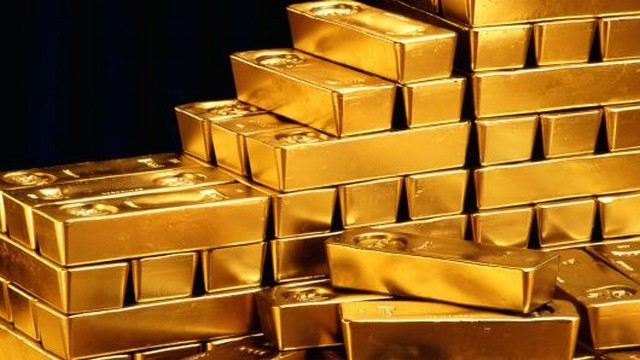
Palestine Lost?

By Jafar M Ramini

In all the years that I have been involved in the desperate story of my country and my people I have never felt more despair than at this moment.

My despair does not stem from the loss of faith in my people’s ability to fight, resist and sacrifice. No, not at all. We Palestinians have been resisting and fighting our colonisers for over a century. I know, deep in my heart, that those in the front line in all of historic Palestine will continue to fight, come what may, no matter how much, or how long it takes.

I wish I could say the same about our so-called leaders on both sides of the National Palestinian political divide. I was a supporter of the PLO, the Palestine Liberation Organisation, from its inception in the 1960s. But that band of brothers, fighting for justice has been corrupted over the years and the PLO of the 1960s is no longer.

While they sit in Ramallah or Gaza pretending to rule over the fraction that remains of Palestine the Israeli Government continues stealing the land, imprisoning our men, women and children and murdering them in cold blood and in broad daylight.

What does the PLO/PA do about it? Words.

But, these words are costly because they give the impression that we are represented, that we have someone who is championing our cause, standing up to our occupiers.

Nothing of the sort.

They just offer words while Israel swallows our lands, a chunk at a time.

The latest greedy mouthful that Israel is about to relish amounts to 30% of the land-mass of what is known as The West Bank and The Jordan Valley. Yes, the PLO/Palestinian Authority is making noises, issuing condemnations, saying this is unacceptable and calling upon the international community to do something about it.

Wait a minute. Didn’t Israel swallow the majority of Palestinian land during the savage ethnic cleansing of our country in 1947/48. What did the International community do?

Nothing.

Didn’t Israel swallow the rest of historical Palestine after the 1967 war?

What did the international community do?

Nothing.

Didn’t Israel, with the help of their benefactor, the USA, swallow the whole of Jerusalem and declare it their eternal and undivided capital in 2018?

What did the international community do?

Nothing.

Didn’t Israel swallow the Syrian Golan Heights at the same time?

What did the international community do?

Nothing.

Didn’t Israel swallow the shab’a farms in Southern Lebanon?

What did the international community do?

Nothing.

The fact of the matter is that we, the Palestinians, through no fault of our own have been let down over and over and over again, ever since 1917 when the British Government decided, both immorally and unjustly, to offer our land to the Zionist movement as a homeland for the Jews in Palestine.

The UN let us down and continues to let us down. Britain let us down and continues to let us down. Europe let us down and continues to let us down. Russia (the Soviet Union) let us down and continues to let us down. The USA let us down and continues to let us down. Australia, Canada and New Zealand let us down and continues to let us down. Our own so-called Arab League let us down and continues to let us down. The Muslim World let us down and continues to let us down.

And now, in the age of instant and changing technology, those who are at the helm of the technological explosion are letting us down.

Facebook, Twitter, Instagram all censor our messages and all delete them at a push of a button as if we do not deserve a voice. But the killer blow was from Google. In its recent issue of World Maps they have decided, again with a push of a button, to erase Palestine off the map. You see, the Zionists said, 130 years ago, ‘What are Palestinians? They do not exist.”

And so it came to pass. See it for yourselves. Proud Palestine, birth-place of Christ, sweet land of milk and honey is no more. According to the great god, Google.

Jafar M Ramini is a Palestinian writer and political analyst, based in London, presently in Perth, Western Australia.

17 July 2020

Source: countercurrents.org
Good News from Washington: AIPAC, Israel Losing to Progressive Democrats

By Dr Ramzy Baroud

While the US administration of President Donald Trump remains adamant in its support for Israel, the traditional democratic leadership continues to employ underhanded language, the kind of ‘strategic ambiguity’ that offers full support to Israel and nothing but lip service to Palestine and peace.

Trump’s policies on Israel and Palestine have been damaging, culminating in the outrageously unfair ‘Deal of the Century’, and his administration remains largely committed to the trend of growing affinity between the Republican establishment and the Israeli right-wing camp of Prime Minister Benjamin Netanyahu.

The views of the Democratic leadership, represented in the presumptive Democratic challenger in the upcoming November election, Joe Biden, are still those of a bygone era, when the Democrats’ unconditional love for Israel equaled that of Republicans. It is safe to say that those days are drawing to an end, for successive opinion polls are reaffirming the changing political landscape in Washington.

Once upon a time, America’s political elite, whose politics diverged on many issues, wholeheartedly agreed on one single foreign policy matter: their country’s blind and unconditional love and support for Israel. In those days, the influential pro-Israel lobby group, the American Israel Public Affairs Committee (AIPAC) ruled the roost, reigning supreme in the US Congress and, almost single-handedly, decided on the fate of Congressmen and women based on their support, or lack thereof, of Israel.

While it is too early to proclaim that ‘those days are over,’ judging by the vastly changing political discourse on Palestine and Israel, the many opinion polls, and the electoral successes of anti-Israeli occupation candidates in national and local elections, one is compelled to say that AIPAC’s tight grip on US foreign policy is finally loosening.

Such a statement may seem premature considering the current administration’s unparalleled bias towards Israel – the illegal US embassy move from Tel Aviv to Jerusalem, the dismissal of the ‘Right of Return’ for Palestinian Refugees, and the administration’s support of the Israeli plan to illegally annex parts of the West Bank, and so on.

However, a distinction must be made between support for Israel among the ruling, the increasingly isolated clique of politicians, and the general mood of a country that, despite numerous infringements on democracy in recent years, is still, somewhat democratic.

On June 25, a whopping number of nearly 200 Democratic House members, including some of the most staunch supporters of Israel, called, in a letter, on Netanyahu and other top Israeli officials to scrap their plan to illegally annex nearly 30 percent of the West Bank.

“We express our deep concern with the stated intention to move ahead with any unilateral annexation of West Bank territory, and we urge your government to reconsider plans to do so,” the letter said, in part.

While the wording of the letter was far from being dubbed ‘threatening’, the fact that it was signed by stalwart Israeli allies, such as Florida Congressman, Ted Deutch and Illinois Congressman, Brad Schneider, speaks volumes about the shifting discourse on Israel among the center and even conservative corners of the Democratic Party. Among the signers were also prominent figures in the Democratic establishment, like Congresswoman Debbie Wasserman Schultz and House Majority Leader, Steny Hoyer.

Equally important, is that the influence of the younger and more progressive generation of Democratic politicians continues to push the boundaries of the party’s discourse on Israel, thanks to the tireless work of Rep. Alexandria Ocasio-Cortez and her colleagues. Along with a dozen Democratic lawmakers, Ocasio-Cortez issued another letter on June 30, this time addressed to US Secretary of State, Mike Pompeo.

Unlike the first letter, the second one was assertive and markedly daring. “Should the Israeli government continue down this path (of annexation), we will work to ensure non-recognition of annexed territories as well as pursue legislation that conditions the $3.8 billion in US military funding to Israel to ensure US taxpayers are not supporting annexation in any way,” the letter read, in part.

Imagine if this exact wording was used by Democratic representatives in July 1980, when the Israeli Parliament unlawfully annexed East Jerusalem in an action that was – and remains – contrary to international law. The fate of these politicians would have been similar to the fate of others who dared to speak out at the risk of losing their seats in Congress; in fact, their political careers altogether.

But times have changed. It is quite unusual, and refreshing, to see AIPAC scrambling to put out the many fires ignited by the new radical voices among Democrats.

The reason that it is no longer easy for the pro-Israel lobby to maintain its decades-long hegemony over Congress is that the likes of Ocasio-Cortez are, themselves, a byproduct of the generational and, likely, irreversible change that has taken place among Democrats over the years.

The trend of polarization of American public opinion regarding Israel goes back nearly twenty years, when Americans began viewing their support for Israel based on party lines. More recent polls suggest that this polarization is growing. A Pew opinion poll published in 2016 showed that sympathy for Israel among Republicans morphed to an unprecedented 74% while falling among Democrats to 33%.

Then, for the first time in history, support for Israel and Palestinians was almost equally split among Democrats; 33% and 31% respectively. This was a period in which we began seeing such unusual mainstream news headlines as, “Why Democrats are abandoning Israel?”

This ‘abandonment’ continued unabated, as more recent polls have indicated. In January 2018, another Pew survey showed that the Democrats’ support for Israel dwindled to reach 27%.

Not only are the rank-and-file of Democrats walking away from Israel as a result of the growing awareness of Israel’s relentless crimes and violent occupation in Palestine, young Jews are also doing the same.

The changing views on Israel among young American Jews are finally paying dividends, to the extent that, in April 2019, Pew data concluded that Jewish Americans, as a whole, are now far more likely (42%) than Christians to say that President Trump was “favoring the Israelis too much.”

While many Democrats in Congress are increasingly in touch with the views of their constituencies, those at the helm, such as Biden, remain stubbornly committed to agendas that are championed by AIPAC and the rest of the old guard.

The good news from Washington is that, despite Trump’s current support for Israel, an incremental, but lasting structural change continues to take place among Democratic Party supporters everywhere and throughout the country. More sobering news is that Israel’s traditional stronghold over the country’s Jewish communities is faltering – and quickly so.

While AIPAC is likely to continue using and improvising on old tactics to protect Israel’s interests at the US Congress, the long-dubbed ‘powerful lobby’ will unlikely be able to turn back time. Indeed, the age of total dominance of Israel over the US Congress is likely over, and hopefully, this time, for good.

– Ramzy Baroud is a journalist and the Editor of The Palestine Chronicle.

16 July 2020

Source: countercurrents.org
Violence Against Christians Spreads To 50% of Indian States, 95 Incidents of Mob Violence So Far in India

By Press Release

The Covid-19 pandemic and the ensuing lockdown does not appear to have brought much relief to Indian citizens following the Christian faith. The first half of this year has so far witnessed 121 incidents of violence against Christians in 15 states of India as per the recorded data of New Delhi based United Christian Forum (UCF).

The 121 incidents of violence have, sadly, taken the lives of two. Mob violence grew with 95 incidents recorded. Several of the churches which were attacked, were either illegally occupied or sealed shut. An additional 20 incidents of social boycott took place in several areas as well. UCF and its networking partners – Alliance Defending Freedom India (ADF India), Religious Liberty Commission of EFI and Christian Legal Association (CLA) have managed to get 19 churches reopened, 28 pastors released (either on bail or acquitted of false charges) and obtained positive outcomes in 45 cases of false conversion charges in various courts of India.

These incidents reveal the grim reality that the freedom to practice one’s faith is being curtailed in 15 of 28 states in India. Similarly, since 95 out of 121 incidents are mob attacks, mob violence now accounts for over 75% of the various communal crimes, becoming the new norm. UCF is troubled to observe that no political party is taking a strong position against such acts of violence.

Dr Michael Williams, National President of UCF says: “Nobody should be persecuted because of their faith. It is worrying to see these horrendous acts of mobocracy still continuing even after a slew of directions to the government from the Supreme Court Bench. The police and local administration who are responsible for law and order, must take quick action against anyone who involves themselves in mob violence.”

Meanwhile, another new norm, the trend of not filing FIRs against the perpetrators of violence, continues to grow unchecked. Only 20 incidents out of the 121 have FIRs registered against them. Modus operandi followed in all these incidents are similar… a mob, accompanied by the local police, arrives at a prayer service shouts slogans, beats up the men, women and children. Then the pastors are arrested or detained by the police under the false allegation of conversion. Following is the list of States wherein violence against Christians has been reported: Andhra Pradesh, Bihar, Chhattisgarh, Goa, Haryana, Himachal Pradesh, Jharkhand, Karnataka, Madhya Pradesh, Maharashtra, Odisha, Punjab, Tamil Nadu, Telangana and Uttar Pradesh.

In Chhattisgarh from where the highest numbers of incidents of violence against Christians are reported (32 incidents), majority of them are of social ostracism wherein the Christian families are threatened to renounce their faith in Christ. Those who resist are denied basic public facilities including drinking water. Some are even thrown out of their own houses.

There were 66 women and 16 children who sustained injuries in the 121 reported incidents. Tribals accounted for 106 of the total injured. The data on record with UCF and its partners shows the dangerous trend of violence against Christians has been steadily increasing. The numbers of incidents recorded in 2014 were below 150; nearly 200 in 2015, over 200 in 2016, crossed 250 in 2017, doubled to 300 in 2018. 2019 witnessed 328 incidents.

To track violence against Christians in India please visit: https://mapviolence.in/

Inquiries: A C Michael: acmichael@ucfindia.org

14 July 2020

Source: countercurrents.org