Just International

Palestine: Still Chasing The Mirage

By Jafar M Ramini

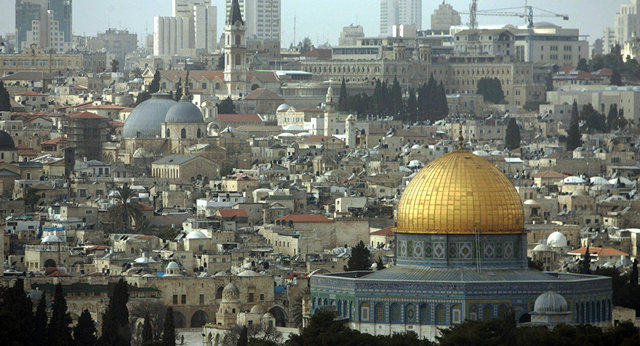
In all my years on this earth I have never had any doubt that we Palestinians will one day get our rights recognised and our land liberated and that we will, at last, have the right to return home. When I say, ‘we the Palestinians’ I do not refer to officialdom. I do not refer to The Palestinian Authority, to the Palestine Liberation Organisation, Fatah, Hamas, Islamic Jihad, the Popular Front For The Liberation of Palestine or any other faction. My faith is not in any of these. My faith is solely in my brethren in Palestine and the diaspora. It is incumbent upon us all to work diligently and relentlessly to achieve our goals of liberation and freedom by all means available to us. We are Palestine.

This faith, no this conviction, has been tested, shaken to its core, but never lost. Not even when Fatah and Hamas decided to war amongst themselves and not against our enemy and occupier, Israel. Not even when Trump came to power and started his demolition plan of all our hopes and aspirations did I lose faith.

We Palestinians need a world order that does not only recognise might but gives morality, the rule of law and humanity a chance. We need a level playing field.

This scenario has been tested over and over and over again since Mr Trump came to power. He first gifted the Israelis Jerusalem as their eternal and ‘undivided’ capital against all international norms and conventions. Israel demanded more and he obliged by moving his embassy to Jerusalem. Against all international norms and conventions. Then he went a step further by closing the offices of the PLO in Washington and deporting the Palestinian representative there and stopping all aid to The Palestinian Authority. That was not enough. He went one step further. He decided to starve UNRWA – the United Nations Relief and Works Agency, which takes care of the welfare of 5 million Palestinian refugees, from any further American funds, putting the lives and the livelihoods of 5 million Palestinians in jeopardy. His team, mostly composed of Jewish Zionists, advised him to remove the words ‘Palestinian Refugees’ from the vocabulary of American Foreign Policy. All of this was a concerted effort to pressurise the Palestinian Authority to accept his so-called peace plan. Then, to top it all he gifted Israel the occupied Syrian Golan Heights.

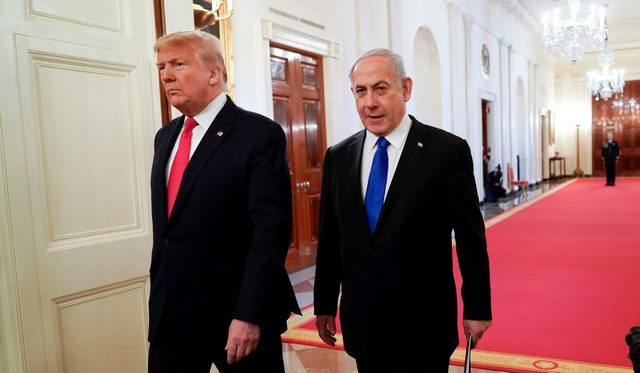
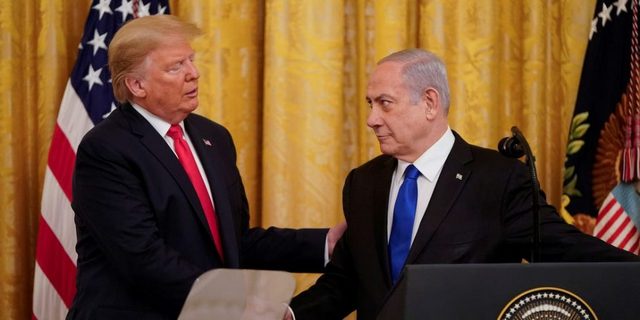
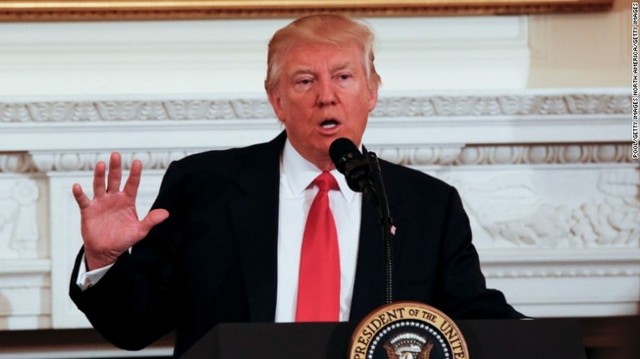
And then came the coup de gråce, when on the 28th January 2020, at a gathering in The White House with his bosom pal, Benjamin Netanyahu at his side and a room full of sycophants, Jewish and Christian Zionists he announced what I can only call ‘The Steal Of The Century’.

We all know what’s in it. We all know it’s violently one-sided and biased to a farcical degree and we know how utterly unfair to the Palestinians it is. They were not even there. As such, the Palestinian Authority objected to it, so did the Arab League, so did The Organisation of Islamic Cooperation as did most of Europe, Russia and China. The exception was the British Prime Minister, Boris Johnson and his Foreign Secretary, Dominic Raab who gave it a luke-warm welcome and regurgitated the same banal rhetoric about the two state solution.

All the above made not a jot of difference. Not to Israel, not to their main benefactor, the United States of America. They decided it’s a good deal and is an opener for dialogue. What dialogue I wonder? Hasn’t the Palestinian Authority been having a dialogue with Israel for a quarter of a century? No matter.

Yesterday, the 11th February 2020 was the 30th anniversary of the release from prison in South Africa of the great Nelson Mandela, who famously said, “ We know full well that our freedom is incomplete without the freedom of the Palestinians”. Yesterday, the 11th of February also saw our President, Mr Abbas trotting off to the Security Council to put his case – yet again – and literally to beg the international community to give peace, not Apartheid in Palestine, a chance.

I sat through two and a half hours of speeches by the fifteen member states, all of whom repeated the usual mantra of how committed they are to the two-state solution based on the June 4th, 1967 borders and equally committed to all the UN resolutions, of which there are many, and all respect international law and conventions. With the exception of United States of America and Israel who both insisted that all agreements of the past and resolutions were irrelevant and that their ‘deal’ was the only way forward.

Strangely, at the end of it all there was no vote.

What is the point of stating the obvious and not taking a stand? Even knowing full well that America would have vetoed it?

The Israeli ambassador, Danny Danone, openly called for the removal of Mr Abbas from office and described him as ‘not being ‘sincere’ in his search for peace. Why, asked Mr Danone, is he here at the Security Council and not in Jerusalem talking to Mr Netanyahu?

Hasn’t Mr. Abbas been talking to Mr Netanyahu for over twenty five years? What has he achieved? Apartheid.

Mr Abbas would have done much better if he had gone to Gaza, repaired the damage that has been done over the last thirteen years, gathered all the factions around him and started formulating a plan to confront and quell the Steal Of The Century. Sadly, he chose otherwise. As usual.

If the definition of madness is to do the same thing over and over and over again while each time expecting a different result is true then all our leaders must be institutionalised. When you know that if you go to any of the capitals of the western world to air your legitimate grievances against Israel that the answer will always be, ‘Israel has a right to exist and Israel has a right to defend itself” why bother?

And when you know that every time you scurry like cockroaches to the UN and, in particular, the UN Security Council to lodge another legitimate complaint against the myriad of crimes Israel commits against Palestine you are faced with the solid wall that is the American veto, why do it?

The conclusion I have reached is nobody is coming to our aid. Nobody is coming to our rescue and most of the Arab leaders are more interested in preserving their shaky thrones than protecting Jerusalem, Hebron, Palestine or even us, the Palestinians.

All that I can live with because we,Palestinians, given half a chance, are capable of doing what is needed to protect our holy sites and liberate our land. What I can’t live with is the continuous to-ing and fro-ing of Mr. Mahmoud Abbas and his colleagues to the UN to justify their existence, knowing full well that nothing good or useful will come out of these visits.

Insanity indeed.

Jafar M Ramini is a Palestinian writer and political analyst, based in London, presently in Perth, Western Australia.

13 February 2020

Source: countercurrents.org

The Philippines scrap security agreement with U.S.

By Countercurrents Collective

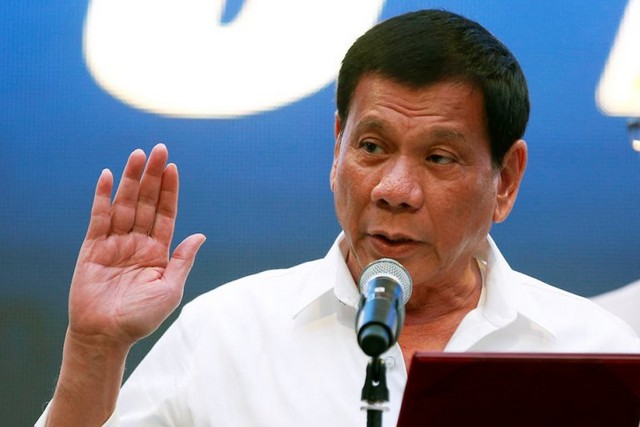
Philippines President Rodrigo Duterte has terminated the 1998 Visiting Forces Agreement (VFA) with the U.S.

The Philippines announced its decision Tuesday – a move the U.S. embassy in the Philippines called a “serious step” – touching off a six-month countdown to the end of the deal.

Duterte’s disdain for the Philippines’ close ties with the U.S. is well-known, He sees the ties as subservience to an abusive and hypocritical former colonial ruler. Duterte is determined to build a strong relationship with China.

Duterte’s spokesperson Salvador Panelo said U.S. disagreement with the president’s move was motivated by its own strategic interests, and that it was time for the Philippines to be militarily independent.

“Reliance on another country for our own defenses against the enemies of the state will ultimately weaken and stagnate our defense mechanisms,” Panelo said in a statement. “We must stand on our own and put a stop to being a parasite to another country in protecting our independence and sovereignty.”

The VFA was signed in 1998. It is the legal framework allowing thousands of rotating U.S. troops, ships, and aircraft to visit the Philippines and train soldiers, conduct 300 joint exercises a year. It specifies which country will have jurisdiction over the U.S. soldiers who may be accused of crimes while in the Philippines, a sensitive issue in the former U.S. colony.

Some Philippines lawmakers hope it can be saved in the 180 days before the termination takes effect.

They worry that without it, two other U.S. military agreements will be irrelevant.

Duterte has threatened since his 2016 election to put an end to the Filipino-U.S. alliance. He specifically mentioned a desire to do away with the VFA again in January, after the US cancelled the travel visa of senator and former national police chief Ronald Dela Rosa. “I’m warning you … if you won’t do the correction on this, I will terminate” the agreement,” he said, adding, “I’ll end that son of a b—-.”

The VFA is divisive in the Philippines, with leftist and nationalist critics arguing it guarantees preferential treatment for U.S. service members accused of crimes.

Its rightist defenders say ending the agreement would compromise the country’s ability to defend itself and undermine the U.S. goal of containing China.

After the U.S. embassy in Manila received notice of the Philippines’ desire to end the VFA —one of three defense agreements, among which are also the Mutual Defense Treaty and the Enhanced Defense Cooperation Agreement, that collectively serve as a cornerstone for the alliance — it called the move a “serious step with significant implications for the U.S.-Philippines alliance.”

A separate defense pact subsequently signed in 2014, the Enhanced Defense Cooperation Agreement, allows the extended stay of U.S. forces and authorizes them to build and maintain barracks and warehouses and store defense equipment and weapons inside five designated Philippine military camps.

A Filipino senator and former national police chief, Panfilo Lacson, said terminating the treaty would reduce the 1951 Mutual Defense Treaty “to a mere paper treaty as far as the U.S. is concerned.”

Military backs the scrap

The Philippine military on Wednesday stood by the president’s decision to scrap the security agreement with the U.S., saying the country could now develop its own defense capabilities and alliances, and would do fine without it.

The military chief backed President Rodrigo Duterte’s termination of the 1998 VFA and said doing so would allow the Philippines to expand its modernization program and its engagement with Australia and Japan – both U.S. allies.

Armed forces commander, General Felimon Santos, said planes and ships were being procured from countries other than the U.S., such as South Korea, while Filipinos were now “doing the leg work” on intelligence gathering on Islamist extremists.

“You know these sentiments of soldiers, we are all high morale,” he told reporters. “It will make us more eager to build up our own capabilities.”

“Wrong direction”

U.S. Defense Secretary Mark Esper is a little concerned about the Philippines’ decision.

Esper on Tuesday said the decision was a move in the wrong direction at a time when Washington and its Asian allies were trying to press China.

Esper said the decision was “unfortunate,” while admitting he was still processing the news.

“I do think it would be a move in the wrong direction as we both, bilaterally with the Philippines and collectively with a number of other partners and allies in the region, are trying to say to the Chinese, ‘You must obey the international rules of order. You must obey, you know, abide by international norms,” he said, according to USNI News.

“As we try and bolster our presence and compete with [China] in this era of great power competition, I think it’s a move in the wrong direction for the longstanding relationship we’ve had with the Philippines for their strategic location, the ties between our peoples, our countries.”

“Right direction”

Duterte’s spokesperson Panelo rejected that, calling it “a move in the right direction that should have been done a long time ago.”

Trump shrugs off

Mark Esper’s boss, U.S. President Donald Trump thinks the Philippines moves is no big deal.

When asked about the decision Wednesday, Trump said he really doesn’t mind, not least of all because it will likely save the U.S. money down the road.

The U.S. president acknowledged his view likely differs from other officials.

Trump dismissed concerns about the Philippines decision canceling a major military accord.

Trump has also put pressure on other East Asian alliances, namely those with Japan and South Korea, through repeated requests for allies to pay more for U.S. security assurances.

U.S. admiral’s hope

The move by the Philippines potentially “challenged” future U.S. operations with Filipino forces, a U.S. admiral said on Thursday.

Adm. Philip S. Davidson, commander of the U.S. Indo-Pacific Command, told a foreign policy think-tank in Sydney that he hoped the U.S. State Department would be able to negotiate a solution that would keep the VFA in place.

“It’s a 180-day notice, so we have some time for diplomatic efforts to be pursued here,” Davidson said. “I hope we can get to a successful outcome.”

Davidson said the U.S. did not have such agreements with every country in the region.

Davidson said countries in the Indo-Pacific region are beginning to take a stand against Chinese attempts to manipulate them through debt-trap diplomacy, coercion and bullying.

All nations in the region were involved in a strategic competition “between a Beijing-centric order and a free and open Indo-Pacific,” he said.

“Through excessive territorial claims, debt-trap diplomacy, violations of international agreements, theft of intellectual property, military intimidation and outright corruption, the Communist Party of China seeks to control the flow of trade, finance, communications, politics and a way of life throughout the Indo-Pacific,” Davison said.

The U.S. admiral did not mention the World Bank-IMF debt trap.

China has scoffed at what it calls U.S. interference in the Asia-Pacific region and has denied linking aid to politics.

13 February 2020

Source: countercurrents.org

OPINION – A hard look into the genesis of Myanmar’s genocide

Genesis of sustained, institutionalized destruction of Rohingya is anchored in group’s identity as Muslims

By Maung Zarni

The writer is a Burmese coordinator of the Free Rohingya Coalition and a fellow of the Genocide Documentation Center in Cambodia.

LONDON

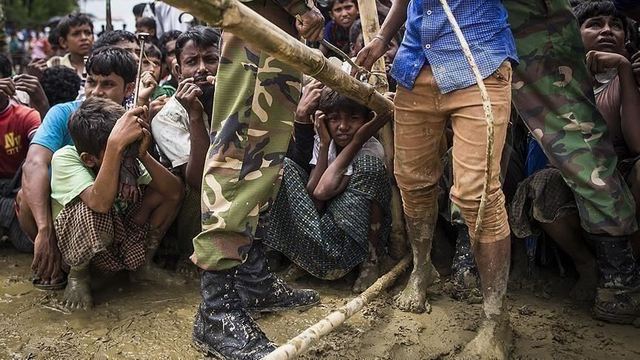
The International Court of Justice’s Jan. 23 interim order in a case filed by Gambia against Myanmar is designed to protect the Rohingya and preserve the crime sites. It has brought a sense of vindication to several million Rohingya victims – in the diaspora, inside Myanmar, and in refugee camps in Bangladesh.

It was by far the most significant act the international community has taken since the Rohingya have been subjected to a national policy of discrimination, disenfranchisement, displacement and destructive deportation by various organs of the state in Myanmar.

The case which Gambia brought before the court has focused narrowly on the violent events of 2016 and 2017. However, it is crucial to see this group destruction in the proper context which began under the false pretext of Myanmar’s attempts at cracking down on the “illegal immigration” across Myanmar-Bangladesh borders which stretch 270 miles.

As a matter of fact, today (Feb. 12) marks the 42nd anniversary of the first violently genocidal purge — centrally organized by the then military dictatorship of General Ne Win in Rangoon involving various agencies, not only the government troops and police force but also departments or ministries of religious affairs, customs and various branches of intelligence

Paradoxically, this is also the date in which Myanmar celebrates “Union Day” — when the country’s majority Buddhist Burmese public and several national minorities along the borders of colonial Burma agreed to merge their regions voluntarily to form a single federated independent nation in 1947.

On the very same day, in Rakhine, a state in western Myanmar that borders Bangladesh, Myanmar launched the first-ever violent deportation of literally hundreds of thousands of Rohingya — the majority of whom were born and raised in the region and had official IDs and documentation that proved their Myanmar nationality.

The purges were carried out in two phases under military-style operations collectively known as Operation Dragon King.

The first phase was launched in Rakhine state’s capital Sittwe on Feb. 12, 1978, and lasted only a week, involving 200 interagency forces that resorted to various acts of violence and terror. The second phase was carried out in the northern Rakhine towns of Buthidaung and Maungdaw with 400 interagency security forces.

Myanmar troops resorted to arson, slaughter, rape and other terror methods in the region where the population was peaceful, unarmed and compliant as evidenced in the newspaper reports of the time from Bangladesh, Pakistan and other Asian regions.

The “terror” or “panic” run resulted in the first-ever large-scale Rohingya exodus — about 250,000 according to Myanmar intelligence records — across the borders into the new nation-state of Bangladesh which, with India’s direct military intervention, emerged victorious from its civil war of liberation from West Pakistan in 1971.

In his Burmese language book “The Problem at Myanmar’s Western Gate” (2016), Khin Nyunt, a former general, chief of Myanmar’s military intelligence services and prime minister, recorded the number of Muslim residents who could not prove their nationality or legal residency — or “(immigration) law breakers” in his words — as 643 (out of the total residents of 108,431) in Buthidaung town and 458 (out of the total residents of 125,893) in Maungdaw town.

The minuscule numbers of those found without any proper Myanmar national identification papers indicated the drastic achievement in Myanmar’s attempts to control its porous borders with Bangladesh, one of the world’s largest predominantly Muslim populations.

In 1959, the Myanmar military had conducted a similar immigration crackdown in the same northern Rakhine region.

According to “Myanmar’s Journey Towards Democracy and Thura U Tin Oo,” a two-volume authorized Burmese language biography of ex-General Tin Oo, the former commander-in-chief of Myanmar’s Armed Forces (published in Yangon in 2016), the then Lt. Col. Tin Oo, in his capacity as the regional commander of Rakhine, rounded up and deported 11,380 illegal migrants residing in the Rohingya region of Northern Rakhine to East Pakistan.

Tin Oo recounted that he set up two expulsion points along the two countries’ land borders from where all the East Pakistani residents without any legal documents were made to walk across the borders into Teknaf in Chittagong district in batches of several hundred each. In his words, “many of these illegals were dragging their feet upon order to cross the borders. And Myanmar troops had to load the guns and point at them as if we were going to fire unless they started crossing the borders as ordered. Under the real threats of violence, these mobs all of a sudden ran into East Pakistan.”

Now as vice-chair and co-founder of Myanmar’s ruling National League for Democracy, Tin Oo is Suu Kyi’s closest colleague. Tin Oo’s racist and violent views towards Muslim Rohingya undoubtedly influence the party’s refusal to recognize them as a national minority, a verifiable fact.

Both of these prominent veterans from Myanmar’s armed forces had the first-hand experience as military commanders tasked with taking care of illegal immigration from across East Pakistan (until 1971) and Bangladesh (since 1971).

The number of illegal migrants from across Myanmar’s western borders had verifiably nosedived from 11,380 in 1959 to 1,100 in 1978. Despite these well-documented numbers, Myanmar governments since the 1970s, particularly the Ministry of Defense and the state-controlled mass media, have continued to fuel the myth that Myanmar is under the very real threat of a large and uncontrolled incessant influx of “Bengali” who take “our Buddhist women,” grab “our Buddhist lands” and overwhelm “our Buddhist villages.”

In their respective books linguistically inaccessible for international journalists and Myanmar watchers, not once did either general Tin Oo or Khin Nyunt — who knew the region in question expertly — use the words “terrorist threats” “secession by Muslims” or “territorial grabs,” for neither Rohingya nor Bengalis from across the borders pose any threats to predominantly Buddhist Myanmar — neither demographically nor culturally nor economically.

Despite Myanmar’s official and popular discourses on the “Bengali threat at the Western Gate of Myanmar,” the illegal immigration of unwanted Muslims from East Pakistan or Bangladesh has long stopped being a real issue on the ground. The real issue is the Myanmar military’s attempts to remake the western Myanmar state of Rakhine in line with their ideological vision, according to which the region was once “purely Buddhist.”

In his introduction to the aforementioned book “The Crisis at Myanmar’s Western Gate,” ex-general Khin Nyunt spelled out this historical myth which has long guided the military’s policies of persecution — and destruction — of the Rohingya, a predominantly Muslim community: “Rakhine chroniclers have prominently characterized their nation and region as an absolutely Muslim-clean, Bengali-absent region.”

Over the last eight years since the two bouts of violence in Rakhine in 2012, Myanmar leaders including Aung San Suu Kyi have offered the world evolving narratives about the crisis in Rakhine, including “counter-insurgency” “communal conflict” “lack of economic development” “Muslim terrorism” and “excessive violence”– explanations and justifications for the country’s pattern of violent and institutionalized abuses — or crimes against Rohingya.

But the genesis of the sustained and institutionalized destruction of Rohingya is firmly anchored in the group’s identity as Muslims.

Although the country is bordered by giant neighbors such as Northeast India and Southern China with populations of over 1 billion respectively, both densely populated and both with a thousand years of overlapping migratory histories, neither Indo-Burmese borders nor Sino-Burmese borders are framed in the Burmese military’s narrative as a crisis or threat. Neither China nor India is predominantly Muslim, while both countries — particularly China — are sources of mass irregular immigration to Myanmar.

Throughout the upper Myanmar region, there are estimated 1 million Han Chinese from the bordering Yunnan province who are known to have moved into Myanmar and acquired Myanmar citizenship through bribes and other means. Neither Suu Kyi nor the military make any fuss over this.

Only Rohingya Muslims are falsely made out to be “illegals” and their presence “the crisis”.

This faith-based framing of Rohingya, a borderland population, as a threat is precisely what qualifies Myanmar’s policies as genocidal.

*Opinions expressed in this article are the author’s own and do not necessarily reflect the editorial policy of Anadolu Agency

Maung Zarni is a Burmese educator, academic, and human rights activist.

12 February 2020

Source: www.aa.com.tr

Duh, Jared! So who built the PA as a ‘police state’?

By Jonathan Cook

Nazareth: Maybe something good will come out of the Trump plan, after all. By pushing the Middle East peace process to its logical conclusion, Donald Trump has made crystal clear something that was supposed to have been obscured: that no US administration has ever really seen peace as the objective of its “peacemaking”.

The current White House is no exception – it has just been far more incompetent at concealing its joint strategy with the Israelis. But that is what happens when a glorified used-car salesman, Donald Trump, and his sidekick son-in-law, the schoolboy-cum-businessman Jared Kushner, try selling us the “deal of the century”. Neither, it seems, has the political or diplomatic guile normally associated with those who rise to high office in Washington.

During an interview with CNN’s Fareed Zakaria this week, Kushner dismally failed to cloak the fact that his “peace” plan was designed with one goal only: to screw the Palestinians over.

The real aim is so transparent that even Zakaria couldn’t stop himself from pointing it out. In CNN’s words, he noted that “no Arab country currently satisfies the requirements Palestinians are being expected to meet in the next four years – including ensuring freedom of press, free and fair elections, respect for human rights for its citizens, and an independent judiciary.”

Trump’s senior adviser suddenly found himself confronted with the kind of deadly, unassailable logic usually overlooked in CNN coverage. Zakaria observed:

“Isn’t this just a way of telling the Palestinians you’re never actually going to get a state because … if no Arab countries today [are] in a position that you are demanding of the Palestinians before they can be made a state, effectively, it’s a killer amendment?”

Indeed it is.

In fact, the “Peace to Prosperity” document unveiled last week by the White House is no more than a list of impossible preconditions the Palestinians must meet to be allowed to sit down with the Israelis at the negotiating table. If they don’t do so within four years, and quickly reach a deal, the very last slivers of their historic homeland – the parts not already seized by Israel – can be grabbed too, with US blessing.

Preposterous conditions

Admittedly, all Middle East peace plans in living memory have foisted these kinds of prejudicial conditions on the Palestinians. But this time many of the preconditions are so patently preposterous – contradictory even – that the usually pliable corporate press corps are embarrassed to be seen ignoring the glaring inconsistencies.

The CNN exchange was so revealing in part because Kushner was triggered by Zakaria’s observation that the Palestinians had to become a model democracy – a kind of idealised Switzerland, while still under belligerent Israeli occupation – before they could be considered responsible enough for statehood.

How was that plausible, Zakaria hinted, when Saudi Arabia, despite its appalling human rights abuses, nonetheless remains a close strategic US ally, and Saudi leaders continue to be intimates of the Trump business empire? No one in Washington is seriously contemplating removing US recognition of Saudi Arabia because it is a head-chopping, women-hating, journalist-killing religious fundamentalist state.

But Zakaria could have made an even more telling point – was he not answerable to CNN executives. There are also hardly any western states that would pass the democratic, human rights-respecting threshold set by the Trump plan for the Palestinians. Nor, of course, would Israel.

Think of Britain’s flouting last year of a ruling by the International Court of Justice in The Hague that the Chagos Islanders must be allowed to return home decades after the UK expelled them so the US could build a military base on their land. Or the Windrush scandal, when it was revealed that a UK government “hostile environment” policy was used to illegally deport British citizens to the Caribbean because of the colour of their skin.

Or what about the US evading due process by holding prisoners offshore at Guantanamo? Or its use of torture against Iraqi prisoners, or its reliance on extraordinary rendition, or its extrajudicial assassinations using drones overseas, including against its own citizens?

Or for that matter, its jailing and extortionate fining of whistleblower Chelsea Manning, despite the Obama administration granting her clemency. US officials want to force her to testify against Wikileaks founder Julian Assange for his role in publishing leaks of US war crimes committed in Iraq, including the shocking Collateral Murder video.

And while we’re talking about Assange and about Iraq…

Would the records of either the US or UK stand up to scrutiny if they were subjected to the same standards now required of the Palestinian leadership.

Impertinent questions

But let’s fast forward to the heart of the matter. Angered by Zakaria’s impertinence at mildly questioning the logic of the Trump plan, Kushner let rip.

He called the Palestinian Authority a “police state” and one that is “not exactly a thriving democracy”. It would be impossible, he added, for Israel to make peace with the Palestinians until the Palestinians, not Israel’s occupying army, changed its ways. It was time for the Palestinians to prioritise human rights and democracy, while at the same time submitting completely to Israel’s belligerent, half-century occupation that violates their rights and undermines any claims Israel might have to being a democracy.

Kushner said:

“If they [the Palestinians] don’t think that they can uphold these standards, then I don’t think we can get Israel to take the risk to recognize them as a state, to allow them to take control of themselves, because the only thing more dangerous than what we have now is a failed state.”

Let’s take a moment to unpack that short statement to examine its many conceptual confusions.

First, there’s the very obvious point that “police states” and dictatorships are not “failed states”. Not by a long shot. In fact, police states and dictatorships are usually the very opposite of failed states. Iraq was an extremely able state under Saddam Hussein, in terms both of its ability to provide welfare and educational services and of its ruthless, brutal efficiency in crushing dissent.

Iraq only became a failed state when the US illegally invaded and executed Saddam, leaving a local leadership vacuum that sucked in an array of competing actors who quickly made Iraq ungovernable.

Oppressive by design

Second, as should hardly need pointing out, the PA can’t be a police state when it isn’t even a state. After all, that’s where the Palestinians are trying to get to, and Israel and the US are blocking the way. It is obviously something else. What that “something else” is brings us to the third point.

Kushner is right that the PA is increasingly authoritarian and uses its security forces in oppressive ways – because that’s exactly what it was set up to do by Israel and the US.

Palestinians had assumed that the Oslo accords of the mid-1990s would lead to the creation of a sovereign state at the completion of that five-year peace process. But that never happened. Denied statehood ever since, the PA now amounts to nothing more than a security contractor for the Israelis. Its unspoken job is to make the Palestinian people submit to their permanent occupation by Israel.

The self-defeating deal contained in Oslo’s “land for peace” formula was this: the PA would build Israeli trust by crushing all resistance to the occupation, and in return Israel would agree to hand over more territory and security powers to the PA.

Bound by its legal obligations, the PA had two possible paths ahead of it: either it would become a state under Israeli licence, or it would serve as a Vichy-like regime suppressing Palestinian aspirations for national liberation. Once the US and Israel made clear they would deny the Palestinians statehood at every turn, the PA’s fate was sealed.

Put another way, the point of Oslo from the point of view of the US and Israel was to make the PA an efficient, permanent police state-in-waiting, and one that lacked the tools to threaten Israel.

And that’s exactly what was engineered. Israel refused to let the Palestinians have a proper army in case, bidding to gain statehood, that army turned its firepower on Israel. Instead a US army general, Keith Dayton, was appointed to oversee the training of the Palestinian police forces to help the PA better repress internal dissent – those Palestinians who might try to exercise their right in international law to resist Israel’s belligerent occupation.

Presumably, it is a sign of that US programme’s success that Kushner can now describe the PA as a police state.

Freudian slip

In his CNN interview, Kushner inadvertently highlighted the Catch-22 created for the Palestinians. The Trump “peace” process penalises the Palestinian leadership for their very success in achieving the targets laid out for them in the Oslo “peace” process.

Resist Israel’s efforts to deprive the Palestinians of statehood and the PA is classified as a terrorist entity and denied statehood. Submit to Israel’s dictates and oppress the Palestinian people to prevent them demanding statehood and the PA is classified as a police state and denied statehood. Either way, statehood is unattainable. Heads I win, tails you lose.

Kushner’s use of the term “failed state” is revealing too, in a Freudian slip kind of way. Israel doesn’t just want to steal some Palestinian land before it creates a small, impotent Palestinian state. Ultimately, what Israel envisions for the Palestinians is no statehood at all, not even of the compromised, collaborationist kind currently embodied by the PA.

An unabashed partisan

Kushner, however, has done us a favour inadvertently. He has given away the nature of the US bait-and-switch game towards the Palestinians. Unlike Dennis Ross, Martin Indyk and Aaron David Miller – previous American Jewish diplomats overseeing US “peace efforts” – Kushner is not pretending to be an “honest broker”. He is transparently, unabashedly partisan.

In an earlier CNN interview, one last week with Christiane Amanpour, Kushner showed just how personal is his antipathy towards the Palestinians and their efforts to achieve even the most minimal kind of statehood in a tiny fraction of their historic homeland.

He sounded more like a jilted lover, or an irate spouse forced into couples therapy, than a diplomat in charge of a complex and incendiary peace process. He struggled to contain his bitterness as he extemporised a well-worn but demonstrably false Israeli talking-point that the Palestinians “never miss an opportunity to miss an opportunity”.

He told Amanpour: “They’re going to screw up another opportunity, like they’ve screwed up every other opportunity that they’ve ever had in their existence.”

https://twitter.com/CNN/status/1222267596210343940?ref_src=twsrc%5Etfw%7Ctwcamp%5Etweetembed%7Ctwterm%5E1222267596210343940&ref_url=https%3A%2F%2Fwww.haaretz.com%2Fus-news%2F.premium-sorry-jared-this-time-it-s-not-the-palestinians-who-ve-screwed-up-it-s-you-1.8467901

The reality is that Kushner, like the real author of the Trump plan, Israeli prime minister Benjamin Netanyahu, would prefer that the Palestinians had never existed. He would rather this endless peace charade could be discarded, freeing him to get on with enriching himself with his Saudi pals.

And if the Trump plan can be made to work, he and Netanyahu might finally get their way.

This article first appeared on Jonathan Cook’s blog: https://www.jonathan-cook.net/blog/

Cook won the Martha Gellhorn Special Prize for Journalism.

6 February 2020

Source: countercurrents.org

Crisis and Opportunity: The ‘Deal of the Century’ Challenge for Palestinians

By Dr Ramzy Baroud

After several postponements, US President, Donald Trump, has finally revealed the details of his Middle East plan, dubbed ‘Deal of the Century’, in a press conference in Washington on January 28.

Standing triumphantly beside Trump, Israeli Prime Minister, Benjamin Netanyahu, must have surely understood that the timing of the announcement, only a few weeks before Israel’s third general elections in one year, was tailored especially to fit the embattled Israeli leader’s domestic agenda.

Consisting of 80 pages, 50 of which are entirely dedicated to the plan’s economic component, the document was a rehash of previous Israeli proposals that have been rejected by Palestinians and Arab governments for failing to meet the minimum standards of justice, equality and human rights.

Former Palestinian negotiator, Saeb Erekat, contended in an interview that the plan is not even American, but an Israeli one.

“What you heard last night from Trump is what I heard from Netanyahu and his negotiating team in 2011-2012,” Erekat said. “I can assure you that the US team did not make a single word or comma in this program. I have the protocols and I am willing to reveal to you what we have been offered. This is the plan of Netanyahu and the settler council.”

It was no surprise, then, to read the reaction of Palestinian Authority (PA) President Mahmoud Abbas, who assigned Trump’s plan to the “dustbin of history”.

As expected, Trump has granted Netanyahu everything that he and Israel ever wanted. The American vision for Middle East ‘peace’ does not demand the uprooting of a single illegal Jewish settlement and recognizes Jerusalem as Israel’s ‘undivided’ capital. It speaks of a conditioned and disfigured Palestinian state that can only be achieved based on vague expectations; it wholly rejects the Right of Return for Palestinian refugees, and fails to mention the word ‘occupation’ even once.

Obviously, only Israel benefits from the US plan; the Zionist discourse, predicated on maximum territorial gains with minimal Palestinian presence, has finally prevailed. Every Israeli request has been met, to the last one. Meanwhile, Palestinians received nothing, aside from the promise of chasing another mirage of a Palestinian state that has no territorial continuity and no true sovereignty.

Palestinian concerns continue to be ignored, as Palestinian rights have been ignored for many years, even during the heyday of the ‘peace process’, in the early and mid-1990s. At the time, all fundamental issues had been relegated to the ‘final status negotiations’, which have never taken place.

The ‘Deal of the Century’ merely validated the status quo ante as envisioned and unilaterally carried out by Israel.

That said, Trump’s plan will fail to resolve the conflict. Worse, it will exacerbate it even further, for Israel now has a blank check to speed up its colonial venture, to entrench its military occupation and to further oppress Palestinians, who will certainly continue to resist.

As for the economic component of the plan, history has proven that there can be no economic prosperity under military occupation. Netanyahu, and others before him, tried such dubious methods, of ‘economic peace’ and such, and all have miserably failed.

Time and again, the UN has made it clear that it follows a different political trajectory than that followed by Washington, and that all US decisions regarding the status of Jerusalem, the illegal settlements and the Golan Heights, are null and void. Only international law matters, as none of Trump’s actions in recent years have succeeded in significantly altering Arab and international consensus on the rights of the Palestinians.

As for the status of – and Palestinian rights in their occupied city – East Jerusalem, rebranding a few neighborhoods – Kafr Aqab, the eastern part of Shuafat and Abu Dis – as al-Quds, or East Jerusalem, is an old Israeli plan that has already failed in the past. The late Palestinian leader, Yasser Arafat, had enough political sagacity to reject it, and neither Abbas nor any other Palestinian official would dare compromise on the historic and legal Palestinian rights in the city.

The Palestinian leadership cannot be absolved from its responsibility towards the Palestinian people, and its unmitigated failure to develop a comprehensive national strategy.

Immediately after Trump announced his plan, Abbas called on all Palestinian factions, including his rivals in the Hamas movement, to unite and to develop a common strategy to counter the ‘Deal of the Century’.

Knowing that the US-Israeli plot was imminent, why did Abbas wait this long to call for a common strategy?

National unity among Palestinians should never be used as a bargaining chip as a scare tactic, or as a last resort option aimed at validating ineffectual Abbas in the eyes of his people.

The PA is now facing an existential crisis. Its very formation in 1994 was meant to marginalize the more democratically-encompassing Palestine Liberation Organization (PLO).

According to the new American diktats, the PA has already outlasted its usefulness.

As for Israel, the PA is only needed to maintain ‘security coordination’ with the Israeli army, which essentially means ensuring the safety of the illegal and armed Jewish settlers in occupied Palestine.

While unity among Palestinian parties is an overriding demand, Abbas’ PA cannot expect to maintain this ridiculous balancing act: expecting true and lasting national unity while still diligently serving the role expected of him by Israel and its allies.

While Trump’s sham ‘plan’ does not fundamentally alter US foreign policy in Israel and Palestine – as US bias towards Israel preceded Trump by decades – it has definitely ended the so-called ‘peace process’ charade, which divided the Palestinians into ‘moderate’ and ‘extremist’ camps.

Now, all Palestinians have become ‘extremists’ from Washington’s viewpoint, all equally shunned and marginalized.

Abbas would be terribly mistaken if he thinks that the old political discourse can be saved, which was, oddly enough, written in Washington.

The problem with the Palestinian leadership is that, despite its frequent protestations and angry condemnations, it is yet to take independent initiatives or operate outside the American-Israeli paradigm.

And this is the Palestinian leadership’s greatest challenge at this stage. Will it move forward with a Palestinian-centric strategy or persist in the same place, regurgitating old language and reminiscing of the good old days?

Ramzy Baroud is a journalist and the Editor of The Palestine Chronicle.

6 February 2020

Source: countercurrents.org

Increased USA-Iran tensions after Soleimani’s assassination and their regional impact

By Afro-Middle East Centre (AMEC)

The assassination of Quds Force head, Qasem Soleimani, in January intensified tensions in the MENA region. Iran responded with missiles targeting bases housing US troops. Its long-term strategy, however, is likely a low-level war of attrition targeting US and allied targets in the region.

The US assassination, on 3 January 2020, of Major-General Qasem Soleimani, head of the Quds Force unit of Iran’s Islamic Revolutionary Guard Corps (IRGC), greatly intensified tensions in the MENA region, taking it, by some accounts, to the brink of war. Iran responded five days later with attacks on American troops in Iraq, and will likely use its allies and proxies to undertake further attacks on US soldiers stationed in Iraq, thus maintaining a low-level war of attrition, less intense in the days after Soleimani’s assassination, but a longer-term strategy.

The assassination followed and intensified a series of incremental and escalating indirect attacks by Iran and the USA on each other’s interests in the MENA region, especially after the 2018 US withdrawal from the Joint Comprehensive Plan of Action (the 2015 Iran Nuclear deal), and more so after around March 2019, when Iran decided to respond more assertively to the US withdrawal. The USA subsequently accused Iran of increasing its support to armed groups in Iraq, Syria and Yemen; and of being involved in the May 2019 Fujairah sabotage of four oil tankers, and an attack on Saudi Aramco facilities in Al-Qaiq and Khuraise in September 2019. Both the tanker and the Aramco attacks were blamed on Iranian-backed groups. Contributing to a tense situation, The USA deployed a carrier strike-group to the gulf in May 2019, increased its troop presence in the region, and resolved to no longer grant oil wavers to countries purchasing Iranian oil.

However, neither Iran nor the USA wants an all-out war. Instead, the USA will continue pressuring Iran through current and further sanctions, while Tehran and its allies will conduct numerous low-level actions aimed at disrupting US operations and interests. Further, two of Iran’s main rivals in the region, Saudi Arabia and the UAE, have stretched their resources over the Middle East and North Africa, and have realised that they cannot rely on the USA to fight their battles with Iran. Both have thus made overtures to Tehran, especially after the tanker and Aramco operations; Riyadh advocated de-escalation after Soleimani’s assassination, and is negotiating an end to the Yemeni conflict.

Roots of current tensions
Iran and the USA have had long-standing tensions, heightened after the US role in the coup against Iran’s democratically-elected president, Mohammad Mosaddegh, in 1953. The ouster was supported, financially and diplomatically, by the CIA and the Eisenhower Administration. The Shah, whose powers were then strengthened, making him an absolute ruler, was subsequently propped up by successive US administrations through the 1960s and 1970s.

Relations between the two states further deteriorated after the 1979 Islamic Revolution, which forced the Shah out of power and into exile. He was granted asylum in the USA, prompting Iranian students to storm and besiege the US embassy in Tehran in November 1979, holding US diplomats hostage for 444 days. The USA imposed an economic embargo on Iran, and US sanctions have progressively been strengthened over the past forty-one years. Washington also actively supported Saddam Hussein in Iraq’s eight-year war against Iran, which sought to overthrow that country’s new government, and resulted in a million deaths.

In 2011, the USA, prodded by Israel, added sanctions on Iranian oil as a means of pressurising Iran to halt its nuclear programme. Since Donald Trump’s entry into the White House in 2016, relations between USA and Iran have mainly been related to or a consequence of Trump’s withdrawal from the 2015 Iran Nuclear Deal or Joint Comprehensive Plan of Action (JCPOA). The American president hoped to pressure Tehran to negotiate a more comprehensive agreement with him, to also address its support for groups such as the Houthi and Hizbullah, and the Syrian regime, as well as Iran’s ballistic missile capability. US allies Saudi Arabia and the UAE have used their economic clout, purchasing large quantities of American weapons, to convince Trump to maintain pressure on Iran. The Saudis successfully slowed down the initial JCPOA negotiations in 2013 by using its arms’ purchases to lobby France to demand more restrictions on Iran’s Arak reactor and on Tehran’s stockpile of uranium.

Measures, countermeasures
In 2018, after pulling out of the JCPOA, the USA began instituting new sanctions on Iranian companies, and, more significantly, decided not to issue new waivers on the import of Iranian oil, a key source of foreign exchange for Iran. These waivers previously allowed certain countries, such as Turkey, South Korea, Japan and India, to purchase Iranian oil. Then, in April 2019, Washington declared the IRGC a terrorist organisation, the first time the administration had labelled an entire military arm of another state in this way. Trump also deployed an additional 3 000 troops to the region, including an aircraft carrier and destroyer group. He imposed additional sanctions on Iran and Iranian officials, including on Iran’s supreme leader, Ayatollah Ali Khamenei and on its chief diplomat, Iran’s foreign minister Mohammed Javad Zarif, severely limiting his ability to travel within New York.

With an economy ravaged by the sanctions, rebellion from hardliners within the regime, and because of the failures of the EU’s proposed special purpose financial vehicle, which was supposed to facilitate the circumvention of US sanctions, the Rouhani administration began to incrementally reduce its compliance with the JCPOA, hoping to pressure the EU to comply with its side of the agreement and to ease trade and investment with Iran. This series of violations is what Iranian deputy foreign minister Abbas Araqchi referred to as a ‘rebalancing’ of, rather than a withdrawal from, the JCPOA. Tehran will still allow International Atomic Energy Agency (IAEA) officials to inspect its uranium enrichment facilities, has not (yet) increased the level of enrichment to twenty per cent, and has not sought to repurpose the design of its Arak nuclear reactor to process plutonium. This suggests the country wants to salvage the JCPOA, but wants compliance form other partners, especially the EU.

The EU responded by declaring a dispute under the JCPOA. Little will result from this, since any decision on imposing sanctions on Iran will need to be adopted by the UNSC in which Russia and China, both Iranian allies, hold veto powers. A key factor in Iran’s favour is that it has not enriched uranium to twenty per cent – the level which would radically decrease the time and effort required to enrich to weapons-grade ninety per cent.

Tehran has deployed mobile short-range missiles on naval vessels in the Gulf, in Iranian waters, in response to Washington’s deployment of an aircraft carrier and destroyer group to the region. Iran also used its proxies, especially the Hashd al-Shabi (Popular Mobilization Forces/Units) in Iraq and the Houthi in Yemen to attack US troops and interests in the region, and in June 2019 Tehran shot down an American Global Hawk surveillance drone, one of only four the USA possessed at the time.

Soleimani assassination – on a knife edge
On 3 January 2020, the USA military assassinated Soleimani and Abu Mahdi al-Muhandis, one of the most influential leaders of Iraq’s Popular Mobilisation Forces (PMF), largely supported by Iran. The assassinations, widely recognised by international scholars – including the UN Special Rapporteur for Extrajudicial, Summary or Arbitrary Executions, Agnès Callamard – as being illegal under international law, and even domestic US law. The White House initially claimed the assassination was a pre-emptive strike because Soleimani had been planning ‘imminent attacks’ on US interests, including American embassies in the region. This claim proved to be hollow, with even the US Defense Secretary, Mark Esper, stating that no evidence existed around the imminence and targets of the supposed plans.

Soleimani’s influence and popularity meant that the assassination was especially contentious for both Iran and the USA. He had been the key person involved in providing advice, training and weapons to Iran’s allies in Syria and Iraq, and coordinating between Iran and various PMF forces in Syria and Iraq, as well as with Hamas and Hizbullah. He was also revered by many Iranians who credited him with preventing the Islamic State group (IS) gaining a foothold in Iran. But he was also despised by many Syrians and Iraqis for his role in protecting regimes in their countries. Critics also blame him for Russia’s entry into the Syrian civil war, arguing that his July 2015 meeting with Russia’s president, Vladimir Putin, secured Moscow’s aerial support for the Syrian regime, without which it might have fallen. In Iraq, Soleimani consolidated support in the past few months for the Adel Abdul Mahdi administration, which has been accused of corruption and ineptitude, and which has violently cracked down on protests, killing hundreds.

Soleimani had previously worked with the USA in Afghanistan and Iraq. In the former, Soleimani coordinated certain activities with the USA in the fight against the Taliban, which both viewed as an enemy. The ‘relationship’ broke down, however, after then-US president, George W Bush, named Iran as part of an ‘axis of evil’ in 2002. Later, in Iraq, Soleimani was the point person dealing with the USA for Iran, including in discussions to form the Iraqi governing council, which took office in July 2003, and in 2009-10 to install the Nouri al-Maliki government.
After Soleimani’s assassination and funeral, which millions of Iranians and Iraqis participated in, Iran had to respond to the US aggression. Tehran decided on a two-pronged approach: a direct attack, in its name, on US troops, and a longer war of attrition with the USA through its partners and proxies. The direct response was through the attacks on the Ayn Al-Asad Airbase, west of Baghdad, and on the Irbil base, which host US troops, using around twenty Fateh and Qaim ballistic missiles on the 8 January 2020. Before the attack, the Iranians stressed that they would target only US military interests. They also informed the Iraqis which bases would be targeted. The warning, coupled with the fact that Iran conveyed a message to the USA, first via a Swiss back channel and later publicly, that this was the totality of its response, suggests that Tehran sought immediate de-escalation. The ‘indirect’ responses began soon after, in Iraq, with rockets launched at bases hosting US troops and even a the American embassy, but ensuring there were no casualties. Such attacks will likely continue, in Iraq and perhaps also in Syria and Yemen, targeting either US interests or those of its allies.

Run-up to the assassination
Before Soleimani’s assassination, regional tensions had been increasing. On 12 May 2019, four oil tankers belonging to Saudi Arabia, the UAE and Norway, were sabotaged off the UAE port of Fujairah; two days later, Houthi drones damaged Saudi Arabia’s reserve oil pipeline in Riyadh province, forcing its closure. While no one claimed responsibility for the tanker attacks, the Norwegian insurer alleged that the shrapnel from the explosions displays similarities to shrapnel from IEDs used by Houthi fighters in Yemen. Further, a Saudi-UAE-Norwegian investigation alleged ‘state involvement’ in the sabotage.

A month later, Iran shot down an American drone that had entered its airspace. Trump initially contemplated retaliatory airstrikes on Iranian missile defence systems, but later stood down. Then, in September 2019, precision drone and missile attacks on Saudi-Aramco oil facilities in Al-Qaiq and Khuraise forced a shutdown of over half of Saudi Arabia’s oil capacity, resulting in a loss of over two billion dollars. Although Yemen’s Houthi claimed the attack, a UN report suggests that the missiles originated from the north, likely from Iraq.

The USA and Israel responded by increasing attacks on Iranian troops in Syria, killing scores of people. US strikes were more limited than Israel’s, commencing in December 2019 after the death of an American contractor in a PMF attack on a military base in Iraq. Israel was more blatant, continually violating Lebanese and Syrian airspace, and launching missiles at Iranian assets in Syria. The USA also increased its troop deployment to the region, and dispatched more naval hardware to the Gulf.
Gulf countries, specifically Saudi Arabia and the UAE, shocked by what they saw as a lack of an adequate response by the USA to the tanker and Aramco attacks, and believing they could no longer rely on the USA for protection, responded through attempts at rapprochement with Iran. Riyadh sought to initiate indirect talks with Iran, having Iraq and Pakistan simultaneously acting as mediators. The UAE also sought to negotiate with Iran. In August 2019, in the aftermath of the Fujairah attack, a maritime border agreement was concluded between the UAE and Iran, regarding Abu Dhabi’s access to sea lanes. It is worth noting that the UAE’s Jebel Ali port is the largest in the region, while DP World, an Emirati port operator is the fourth largest globally. Abu Dhabi is thus invested in maintaining and enhancing sea lane access as a means of both economic growth and military influence.

In September 2019, Riyadh entered direct talks with the Houthi; Saudi coalition airstrikes in Yemen decreased by over eighty per cent in November 2019; and hundreds of prisoners, including around 130 in besieged Taiz, were exchanged between the two parties as a confidence-building measure. Further, the perceived lack of American support also saw Saudi Arabia commence negotiations to end the Qatar blockade, which Riyadh – along with the UAE, Bahrain and Egypt – imposed in 2017. Although differences still remain, the blockade has weakened at a diplomatic level with the Saudi, Emirati and Bahraini teams attending the Gulf Cup in Qatar in November 2019, and Qatar’s prime minister, Abdullah bin Nasser bin Khalifa Al Thani, attending the annual GCC Summit in Saudi Arabia in December 2019. A ‘cold peace’ between the two sides is likely soon to emerge.

Conclusion
It seems that both the USA and Iran, and regional heavyweight Saudi Arabia, do not want an all-out confrontation, especially since Iran possesses powerful military assets that can cause real damage, and Iran seems willing to use these. Saudi Arabia called for calm after Soleimani’s assassination, while Israel’s prime minister, Benjamin Netanyahu, shortened his trip to Greece and returned to Israel in an attempt to prepare for any Iranian response. Further, both the Iranian and American governments have cautioned against a war, even though Soleimani’s assassination had the potential to cause events to spiral out of control.

With 2020 being a presidential election year in the USA, Trump is unlikely to want a war (especially one that could result in a large number of American casualties) when a key promise of his 2016 campaign was to halt America’s wars and remove American troops from the Middle East. Even though he has not succeeded in this regard, Trump would not want the negative publicity that another war would bring, unless his popularity rapidly drops and he requires something to create a rally-around-the-flag effect.
For the moment, it seems as if Iraq will bear the brunt of these tensions, serving as a key battleground between the USA and Iran, especially since it is dependent on both countries, and because it is seen by Tehran as falling within its sphere of influence. Soleimani was assassinated in Iraq, and Iran’s response was to target American troops in Iraq. The Iraqi protests over unemployment, corruption and for a restructuring of the political system have thus been overshadowed. The protests, which saw tens of thousands gather in December 2019 in opposition to the government, waned after the US attacks on PMF forces in Iraq in late December. More recently, the larger protests have been those calling for US troops to leave, rather than the earlier ones which called for Iranian influence in Iraq to be decreased.

Afro-Middle East Centre (AMEC)

6 February 2020

Source: www.amec.org.za

Free Rohingya Coalition calls for Religious Harmony and Respect for Freedom of Religion among Rohingya Refugee Communities

February 5, 2020

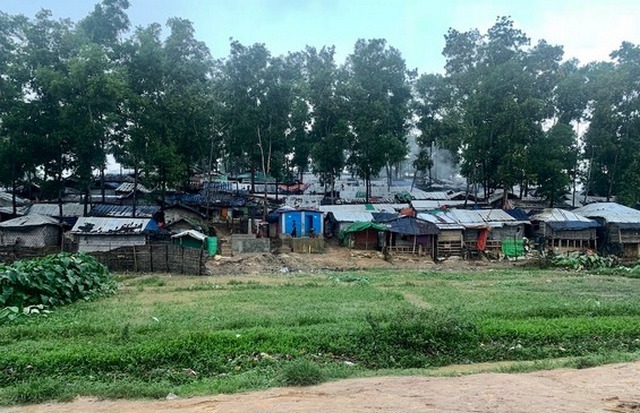
The Free Rohingya Coalition, an international grassroots network of Rohingya refugee activists and supporters, are profoundly dismayed by the news that on 26 January evening, certain members of Rohingya refugee community had attacked 17 Rohingya Christian families and destroyed their make-shift homes in the Kutupalong refugee camp in Bangladesh. The victims of the religiously motivated attacks have now been relocated to a secure camp by Bangladesh camp authorities. The coalition condemns the violence perpetrated against Christian Rohingyas by their fellow Rohingyas who are part of the overwhelming Muslim majority.

On 3 February, Nay San Lwin, the cofounder and coordinator of the coalition, spoke out against such act and urged his fellow Rohingya refugees to respect freedom of religion and to refrain from religious discrimination and intolerance in his interview with Kutapalong Podcast news at https://medium.com/kutupalong/violence-between-muslim-and-christian-rohingya-in-kutupalong-c7a833665259

“We refugee activists have been focused on ending Myanmar’s institutionalized destruction or genocide of our Rohingya community. Our activism internationally has never been about the safety and welfare of only Muslim Rohingyas, but for all Rohingya people, irrespective of faiths among us as an ethnic community” said Nay San Lwin, himself a devout Muslim and a refugee based in Germany.

Although Rohingyas are predominantly Muslim there are approximately 500 Hindu Rohingya and 1500 Christian Rohingya said to be living in various refugee camps in Bangladesh. The religious tensions among Rohingya Muslims and Christians have been attributed to the zealous efforts by evangelical groups that attempt to convert Muslim refugees in dire situations.

Nay San Lwin called on Rohingya communities not to fear the Christianization of Rohingyas. He reminded the community, that “we all fled the religiously and racially-motivated violence, persecution, physical destruction and segregation by the pre-dominantly Buddhist Myanmar. Particularly, we as the dominant Muslims among Rohingya, must not mirror that of the violent Myanmar society whose persecution we fled.”

Ref: https://www.ucanews.com/news/probe-sought-into-attack-on-rohingya-christians-in-bangladesh/87105

Media Contact:

Maung Zarni – Coordinator for Strategic Affairs – +44 771 047 3322
Nay San Lwin – Coordinator for Campaign & Media Relations – +49 176 62139138
E-mail: info@freerohingyacoalition.org

Source: freerohingyacoalition.org

Will the Coronavirus Cause a Major Growth Slowdown in China?

By Shang-Jin Wei

Some fear that the timing of China’s coronavirus outbreak – at the start of the country’s week-long New Year celebration, and in the middle of traditional school-break travels – will exacerbate the economic fallout from the epidemic. But three important factors may limit the virus’s impact on Chinese and global GDP.

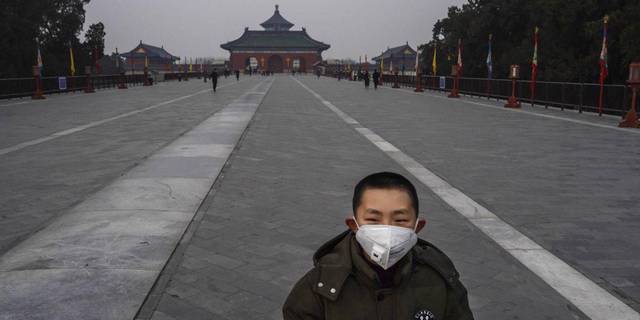
NEW YORK – The panic generated by the new coronavirus, 2019-nCov, which originated in Wuhan, one of China’s largest cities and a major domestic transport hub, reminds many of the fear and uncertainty at the peak of the 2003 SARS crisis. China’s stock market, after rising for months, has reversed itself in recent days, and global markets have followed suit, apparently reflecting concerns about the epidemic’s impact on the Chinese economy and global growth. Are these worries justified?

My baseline projection is that the coronavirus outbreak will get worse before it gets better, with infections and deaths possibly peaking in the second or third week of February. But I expect that both the Chinese authorities and the World Health Organization will declare the epidemic to be under control by early April.

Under this baseline scenario, my best estimate is that the virus will have only a limited negative economic impact. Its effect on Chinese GDP growth rate in 2020 is likely to be small, perhaps a decline on the order of 0.1 percentage point. The effect in the first quarter of 2020 will be big, perhaps lowering growth by one percentage point on an annualized basis, but this will be substantially offset by above-trend growth during the rest of the year. The impact on world GDP growth will be even smaller.

Such a prediction recalls the experience of the 2003 SARS crisis: a big decline in China’s GDP growth in the second quarter of that year was then largely offset by higher growth in the subsequent two quarters. While the full-year growth rate in 2003 was about 10%, many investment banks’ economists over-predicted the epidemic’s negative impact on growth. Looking at annual real GDP growth rates from 2000 to 2006, it is very hard to see a SARS effect in the data.

Some fear that the epidemic’s timing – at the start of the week-long Chinese New Year celebration, and in the middle of traditional school-break travels – will exacerbate the economic fallout by keeping many people away from shops, restaurants, and travel hubs. But three important factors may limit the virus’s impact.

First, in contrast to the SARS outbreak, China is now in the Internet commerce age, with consumers increasingly doing their shopping online. Much of the reduction in offline sales owing to the virus will likely be offset by an increase in online purchases. And most of the vacations canceled today will probably be replaced by future trips, because better-off households have already set aside a holiday travel budget.

Many factories have scheduled production stoppages during the Chinese New Year holidays anyway, so the timing of the epidemic may minimize the need for further shutdowns. Similarly, many government offices and schools had planned holiday closures independently of the virus outbreak. The government has just announced an extension of the holiday period, but many companies will find ways to make up the lost time later in the year. The short-term negative impact is thus likely to be concentrated among restaurants, hotels, and airlines.

Second, all reports indicate that the Wuhan coronavirus is less deadly than SARS (although it may have a faster rate of transmission initially). Equally important, the Chinese authorities have been much swifter than they were during the SARS episode in moving from controlling information to controlling the spread of the virus. By implementing aggressive measures to isolate actual and potential patients from the rest of the population, the authorities have improved their chances of containing the epidemic much sooner. That, in turn, increases the likelihood that the lost economic output this quarter will be offset by increased activity in the remainder of the year.

Third, whether or not China’s trade negotiators realized the severity of the Wuhan virus when they signed the “phase one” trade deal with the United States on January 15, the timing of the agreement has turned out to be fortunate. By greatly increasing its imports of facemasks and medical supplies from the US (and elsewhere), China can simultaneously tackle the health crisis and fulfill its promise under the deal to import more goods.

The virus’s impact on other economies will be even more limited. During the last half-decade, many major central banks have developed models to gauge the impact of a slowdown in China on their economies. These models were not built with the current health crisis in mind, but they do take into account trade and financial linkages between China and their respective economies.

As a rule of thumb, the negative impact of a decrease in China’s GDP growth on the US and European economies is about one-fifth as large in percentage terms. For example, if the current coronavirus epidemic lowers China’s growth rate by 0.1 percentage point, then growth in the US and Europe is likely to slow by about 0.02 percentage point. The impact on Australia’s economy may be twice as large, given its stronger commodity-trade and tourism links with China, but a 0.04-percentage-point reduction in growth is still small.

Such calculations assume that the coronavirus does not spread widely to these countries and cause direct havoc. This currently seems unlikely, given the low number of cases outside China.

Of course, the impact on China and other economies could be more severe if the coronavirus crisis were to last much longer than this baseline scenario assumes. In that case, it is important to remember that Chinese policymakers still have room for both monetary and fiscal expansion: the banking-sector reserve ratio is relatively high, and the share of public-sector debt to GDP is still manageable compared to China’s international peers. By using this policy space when necessary, China’s authorities could limit the ultimate impact of the current health crisis.

The coronavirus outbreak is understandably causing alarm in China and elsewhere. But from an economic perspective, it is too early to panic.

Shang-Jin Wei, a former chief economist at the Asian Development Bank, is Professor of Finance and Economics at Columbia Business School and Columbia University’s School of International and Public Affairs.

27 January 2020

Source: www.project-syndicate.org

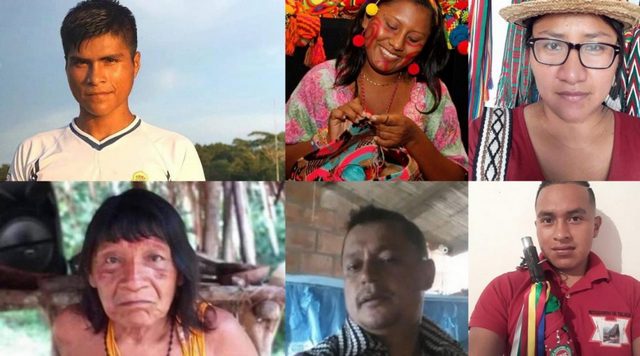
In Memoriam: 28 Indigenous Rights Defenders Murdered In Latin America In 2019

By Admin

As we enter 2020, Cultural Survival remembers 28 courageous Indigenous human rights and environmental defenders who were murdered in 2019 in the Latin American countries where we do our work. We invite you to take a moment to learn about and support the human rights and environmental defense work being carried out by these individuals that likely led to their targeting.

Attacks against Indigenous human rights defenders have shown an alarming surge over the past three years. UN Special Rapporteur Vicky Tauli Corpuz has called this trend a “global crisis,” denouncing persistent impunity against those who commit these crimes. Of this list, only one of 28 murders have been investigated conclusively and perpetrators brought to justice.

We acknowledge that this list is not exhaustive. Due to marginalization and discrimination by authorities, unequal access to justice, language barriers, and the lack of coverage by mainstream media, there are many acts of violence against Indigenous Peoples around the world that go unreported.

Please join us in celebrating the legacies of these defenders who gave their lives in pursuit of a better world.

Óscar Cazorla (Zapotec) – MEXICO

On February 9, 2019, Óscar Cazorla (62), was found murdered in his home in Juchitán de Zaragoza, Oaxaca, Mexico. Cazorla was a  Zapotec activist and an advocate for Muxe and LGBTQIA rights. He self-identified as Muxe, a non-binary third gender originating within Zapotec culture in the region of Istmo de Tehuantepec in Oaxaca, Mexico. Muxes live throughout the Istmo de Tehuantepec region, however, Juchitán is historically regarded as a safe haven for Muxe culture and self-expression. However, while Muxes are both inherent and revered members of Zapotec culture, they still confront nonacceptance and persecution from those opposed to gender diversity and nonconformity to a binary structure of gender. Óscar Cazorla fought to maintain and and raise awareness of Muxe culture. He was a founding member of Las Auténticas Intrépidas Buscadoras del Peligro or “The Authentic Intrepid Seekers of Danger,” a Muxe-run group created in 1976 to foster solidarity amongst the Muxe community and celebrate sexual diversity. As an Indigenous person, a human rights activist, and member of the LGBTQIA community, Óscar Cazorla existed in an intersection of targeted identities. Indigenous Peoples, human rights activists, environmental defenders, and members of the LGBTQIA community remain targets of hate crime both within Mexico and throughout the globe. In July 2019, supporters and relatives of Óscar continued demanding that the Fiscalía General de Justicia del Estado de Oaxaca (FGJEO) bring Cazorla’s death justice, but the murder remains unresolved.

Photo: Miho Hagino/Facebook

Saturnino Ramírez Interiano (Maya Ch’orti’) Guatemala

Maya Ch’orti’ linguist Saturnino Ramírez Interiano was assassinated in Chiquimula, Guatemala on February 13, 2019. He was a linguist, educator, and active proponent of the history and culture of the Indigenous Ch’orti’ Peoples. Saturnino Ramírez Interiano worked for over 10 years as a director at the Academy of Mayan Languages of Guatemala in Chiquimula, Guatemala. The Ch’orti’ are an Indigenous Peoples that reside in the Chiquimula and Zacapa departments of Guatemala and in bordering communities in Honduras. They have suffered from a history of colonization, persecution, land loss, and political discrimination. As an advocate for Ch’orti’ culture, Saturnino Ramírez Interiano frequently traveled throughout the Ch’orti’ region to teach classes on the Ch’orti’ language and history. A colleague and professor at the Academy, Petronilo Pérez López, declared: “We worked together for a long time, committed to the rescue of the Chortí language and culture. He always fought so that the community leaders of the region would not let this valuable ancestral tool – one which identifies us – die. We were great companions and his death hurts me. The Chortí region is in mourning.” Ramírez Interanio’s death continues to shake his community. Police have failed to make progress in investigating the crime.

Photo: Facebook

Sergio Rojas (Bribri)- COSTA RICA

On the evening of March 18, 2019, Indigenous leader Sergio Rojas Ortiz was assassinated in his residence in Salitre de Buenos Aires, part of the Puntarenas province, after being shot multiple times. Rojas was a member of the Uniwak clan, part of the Bribri community, one of the eight Indigenous Peoples that are recognized in Costa Rica. A well-known Indigenous leader in the region, Rojas Ortiz was a member of the National Front of Indigenous Peoples (Frente Nacional de Pueblos Indígenas – FRENAPI), the Council for the Defenders of Mother Earth (Autoridades Propias Defensoras de la Madre Tierra), and the Association for the Development of the Salitre People (Asociación para el Desarrollo del Pueblo de Salitre). He worked tirelessly to implement Indigenous land rights in Costa Rica, advocating for the removal of unauthorized settlers on Indigenous-titled lands.  The crime occurred only hours after Rojas Ortiz, along with two neighbors, went to the state prosecutor to report a series of threats that members of the Salitre community had received regarding a land dispute over Indigenous territories. After the murder, Costa Rican president Carlos Alvarado Quesada condemned the crime, stating: “A tragic day for the Bribri People, for all our Indigenous communities, and for all of Costa Rica.”  Costa Rica has created a specialized investigative unit in order to pursue the crime, but aside from releasing a sketch of two suspects, work being carried out by this unit, if any, has been kept tightly under wraps and as of July 2019 no recent news has been released.

In October 2018, Cultural Survival submitted a report on human rights violations against Indigenous Peoples in Costa Rica to the UN Human Rights Council via Universal Periodic Review, which specifically urged authorities to improve security measures for the people of Salitre, Rojas’ home village.  Five months after submitting this report, Sergio Rojas was killed. This prompted Cultural Survival to take further action; in April 2019, Cultural Survival attended the United Nations Permanent Forum on Indigenous Issues and met with the Permanent Mission of Costa Rica to the UN to urge for immediate investigations into the asassination of Sergio Rojas inquire on progress to secure Indigenous territorial autonomy.

Photo: Facebook

Cristian Javá Ríos (Urarina), PERU

On April 17, 2019, in the Peruvian Amazon, Cristian Javá Ríos (20) was killed in a gang-organized ambush , motivated to sabotage pipelines transporting oil across the region. For years, Peru’s northern Amazon has been subjected to oil spills and the releasing of billions of barrels of toxic waste, at the hands of Argentinian Pluspetrol and the China National Petroleum Corporation. The Urarina along with other Indigenous Peoples of the Peruvian Amazon are constantly under threat due to these degrading oil activities, which have caused health epidemics, pollution, economic dependency and land violations, including the destruction of forests and spiritual sites. Javá Ríos fought adamantly to defend his land, despite unstable and precarious circumstances. There is a continued need to mitigate violence and aggression in this region, which harm the lives of Indigenous Peoples, their environment, and their surrounding ecology. Those accused of murdering  Javá Ríos and injuring other members of the community were reported to authorities, but no further investigation has unfolded. Soon after Javá Ríos’ murder, however, the Ministry of Justice and Human Rights in Peru passed a Protocol that prioritizes and safeguards human rights defenders, but it is one of many steps remaining to be taken in order to guarantee safety of Indigenous Peoples in Peru.

Photo: Facebook

 José Alfredo Hernandez  (Nahuat Pipil) – EL SALVADOR

José Alfredo Hernandez was killed in the service of protecting his sister-in-law, Indigenous activist Margot Perez.
Reports reveal that the military police in Nahuizalco harassed Alfredo Hernandez after Perez fled her community of Nahuizalco with threats against her life. When he did not submit to police – blackmailing him to reveal Margot’s whereabouts – Alfredo Hernandez was shot five times allegedly by military police and died immediately after, on May 3, 2019. His legacy is the continued human rights work that his sister-in-law has been able to dedicate her life to, including the promotion of the right to Free, Prior and Informed Consent in Indigenous communities, the implementation of the United Nations Declaration on the Rights of Indigenous Peoples. She also has urged the El Salvadoran government to halt criminal organizations that have flourished unchecked while detrimentally impacting Indigenous youth and their  academic, social, and physical potential. As the president of the Nahuat Pipil Native Peoples Council of Nahuizalco (Consejo de Pueblos Originarios Nahuat Pipil de Nahuizalco), Margot Perez’s courageous advocacy has continued to put her life in jeopardy. An open letter, written by the The Union of BC Indian Chiefs and addressed to the Office of the United Nations High Commissioner for Human Rights, demanded justice and expressed solidarity for the people of El Salvador: Alfredo Hernandez’s death remains unsolved and Margot Perez is still in hiding.

Otilia Martínez Cruz and Gregorio Chaparro Cruz (Rarámuri) – MEXICO

On the outskirts of Chihuahua and Sinaloa, Mexico, Otilia Martínez Cruz (60) and her son Gregorio Chaparro Cruz (20) were murdered outside their home on May 3, 2019. The mother and son, belonging to the Rarámuri Indigenous Peoples, resonated with their community as powerful defenders of surrounding forests and advocates for environmental justice. Additionally, they were relatives of Julián Carrillo Martínez, an Indigenous leader and protector of the Coloradas de la Virgen Forest located in Chihuahua, Mexico. Despite being protected under the Federal Mechanism for the Protection of Journalists and Human Rights Defenders, Carrillo Martínez was killed in October 2018 by illegal loggers. Speculations pertaining to the motive behind the recent murders of Otilia Martínez Cruz and Gregorio Chaparro Cruz believe their relationship to Julián Carrillo Martínez is a fundamental component. According to investigations, three gunmen affiliated with a criminal group “Los Chorohuis” broke into the home and and fatally inflicted both mother and son with multiple bullet wounds. A witness recognized one alleged murderer, Ramón Muela Loera, but no updates have been released ascertaining the whereabouts nor convictions of the suspects.

 José Lucio Bartolo Faustino and Modesto Verales Sebastián (Nahua) MEXICO

On May 4,2019, both José Lucio Bartolo Faustino and Modesto Verales Sebstián had attended a meeting with other members of the Emiliano Zapata Popular Indigenous Council of Guerrero (CIPOG-EZ), a partner organization under the National Indigenous Congress and Indigenous Governing Council. On their way back home from the meeting in Chilpancingo, Guerrero, both were kidnapped and murdered by narco-paramilitary groups. These criminal groups are protected under complicit arms of the Mexican government’s marital and police authorities, which inevitably delays measures seeking justice. For years, community members of these two victims have strived to develop their own Community Police to denounce the criminal groups backed by Mexican authorities, but their rights are continuously repressed and disregarded. Bartolo Faustino and Verales Sebastián were  well-known participants in the Indigenous Council, defenders of Indigenous territories, cultures, and pivotal advocates for their Nahua and Mixtec autonomy. Their murder remains unsolved; the National Indigenous Congress, Indigenous Governing Council, and  Zapatista Army for National Liberation denounced the injustice and demand that the government be held accountable.

Photo: Facebook

 Leonel Díaz Urbano (Nahua), MEXICO

The fatal shooting of Nahua leader Leonel Díaz Urbano took place on May 9, 2019, while he was sleeping in his home, located in the municipality of Zacapoaxtla in the state of Puebla, Mexico. Días Urbano protested the continued construction of a hydroelectric plant in Zacapoaxtla. Run by the Hidroeléctrica Gaya SA from Mexico, backed by governmental actors Semarnat (Mexico’s environmental agency) and the Federal Commision of Energy (CFE), conflicts have existed for years near the Apulco River. For decades, there was a relentless struggle between the Nahua community and Gaya plant; Gaya was officially forced to withdraw its construction plans in 2016, but the legitimacy of its compliance remain in question and the well-being of Indigenous communities are forever damaged. Many of its projects had already led to irreversible, environmental destruction while diverting the riverbed off course. A few political activists have expressed their grievances for Díaz Urbano. Enrique Cárdenas, a candidate for a local government position, declared shortly after his murder that “the rights of Indigenous Peoples and communities will be respected and defended under my term.” Enrique Cárdenas lost the May 2019 election to Luis Miguel Barbosa, but remains a powerful voice within his community. Meanwhile, Díaz Urbano’s  murder remains unsolved.

Daniel Rojas (Nasa) COLOMBIA

North of Cauca, Colombia, the president of  the Junta de Acción Comunal (JAC) in Caloto, Daniel Rojas (40), was murdered at around 8 pm in his home on May 14, 2019. He was a prominent member of the Indigenous Guard of López Adentro in Caloto, remembered for his defense of Indigenous land and agricultural rights. He also encouraged sports practices, particularly soccer, among his community’s youth to help unify his neighbors through sport and culture. Those responsible for the murder fled afterwards and no further details have been released pertinent to the fugitives’ escape. However, members of the Nasa community are still seeking answers, and the Association of Indigenous Councils of Northern Cauca stated that the Colombian government’s inaction is one of the primary reasons for the murder: the situation has occurred within a systematic pattern of threats and attacks against social and Indigenous leaders throughout Colombia.

Photo: Twitter

Jorge Juc Cucul (Q’eqchi’ Maya) – GUATEMALA

Jorge Juc Cucul was a respected elder and president of a local chapter of  the organization Campesino Development Committee or Comité de Desarrollo Campesino (CODECA) in Paracaidista de Livingston, Izabal. He was attacked with a machete by an unknown man on his property near his home, alongside his eight-year-old son.  As a CODECA member for 5 years, Juc Cucul was a frontrunner behind efforts to defend Indigenous territories and campesino livelihoods, nationalize electrical energy, respect Mother Earth, and criticize the policies and corruption within the administration of Guatemalan President Jimmy Morales. Juc Cucul’s murder remains unsolved, as well as other assassinations of Committee members. His death was one of ten total murders of CODECA members during 2019, an upsurge from 6 in 2018, which had prompted Victoria Tauli-Corpuz, the United Nations Special Rapporteur on the rights of Indigenous Peoples, to condemn the murders in a 2018 Washington Post op-ed. The startling, increased death toll in 2019 revitalizes the need to bring further attention to the violent and corrupt acts that target Indigenous Peoples.

Emyra Wajãpi (Wajãpi) – BRAZIL

A leader of the Wajãpi tribe, Emyra Wajãpi was  fatally stabbed on July 23, 2019, in his Brazilian village. Community members reported that a few dozen armed goldminers, dressed in military fatigues, had raided their village, threatening and aggressively intruding upon Wajãpi People and homes. Reports from villagers assert that Emyra Wajãpi was stabbed in the adjacent woods near his village, and then his corpse was thrown into a river. Community members, meanwhile, managed to escape to nearby villages and called for help from federal police. Emyra Wajãpi’s death epitomizes the inhumane, prejudicial treatment of Indigenous Peoples under Brazilian President Bolsonaro, and has rallied many Indigenous rights defenders to further demand change. President Bolsonaro launched his political platform claiming that Indigenous People dominate a majority of profitable land that should be opened up to corporate industries. To this day, police forces and federal agencies designated to protect Indigenous rights have failed to ascertain more information about Emyra Wajãpi’s murder. Land invasions in Indigenous villages have skyrocketed under Bolsonaro’s administration, at the hands of miners, loggers and farmers. Emyra Wajãpi’s murder sheds light on the increasing numbers of killed Indigenous leaders in the Brazilian amazon, which has escalated to a record high in 2019: 10 Indigenous People were murdered, the highest amount in two decades. Their murders composed 37% of all rural killings in 2019, a dramatic increase from 7% in 2018. Even more devastating, while more than 300 murder cases in the past 10 years, only 14 were brought to court; many of those responsible for the crimes were part of illegal logging and deforestation activities.

Photo: https://hrdmemorial.org/hrdrecord/emyra-wajapi/

Kevin Mestizo Coicué and Eugenio Tenorio (Nasa) – COLOMBIA

In the Indigenous region of Cauca, in the southwest of Colombia, two Indigenous guards were murdered on August 10, 2019, amidst rising violence and instability. Kevin Mestizo Coicué and Eugenio Tenorio served as pivotal Nasa community members. Members of the Indigenous Guard denounced the bloodshed, asserting: “We condemn an act so low, executed by an armed group against these life guardians who have defended the territory with their batons.” According to a statement, the attack occurred when the two guards accompanied participants in a coffee fair in Cauca. As they boarded a bus to the fair, all were ambushed, killing Mestizo Coicué  and Tenorio while wounding  four others. The murderers are linked to one of many armed, illegal narco-trafficking groups that have crippled the region with death and have long yet unjustly enjoyed impunity.

Cristina Bautista – (Nasa) – COLOMBIA

Ne’h Wesx Authority Cristina Bautista and four members of the Nasa Tacueyo Indigenous Reserve – Asdrúbal Cayapu Kiwe Thegna, Eliodoro Finscue, José Gerardo Soto, and James Wilfredo Soto – were killed; five other members were wounded during a targeted attack on October 29, 2019. According to reports, a black vehicle with armed members of the FARC dissident group “Dagoberto Ramos” opened fire on Cristina Bautista and other guards after plowing through a barricade the community had set up to protect their territory. Bautista was a traditional leader, social worker, land defender and Indigenous rights activist. She was also a 2017 Indigenous Fellow of the Office of the High Commission for Human Rights in Geneva, Switzerland. On August 13, she was filmed making the following speech in Toribio, Resguardo San Francisco, Cauca, in which she denounced previous murders of Indigenous guards. She exclaimed: “If we stay quiet, they kill us, and if we speak, they kill us too. So, we speak.” Her murder marked the seventh Indigenous traditional authority who was been assassinated in Cauca in the month of October 2019 alone. Indigenous organizations in Colombia, including the Regional Indigenous Council of Colombia (CRIC) have been urgently demanding response to this incessant wave of violence, which they have labelled a genocide. These demands, however, remain unmet by Colombian authorities; Bautista’s murder and other casualties are yet to be solved. Her legacy, meanwhile, remains alive, and Bautista was commemorated as Colombia Reports’ personality of 2019.

Photo: Cristina Bautista/ Facebook

 Juan Francisco Luna Álvarez (Zenú) – COLOMBIA

On August 8, 2019, Juan Fransisco Luna Álvarez (60) was found assassinated near his rural home in the municipality of San José de Uré, Colombia. Authorities, based on the accounts of some witnessesses, believe the killers are members of “Los Caparrapos, an infamous criminal group of the region with ties to drug trafficking. There is a withstanding reward for anyone who has information on the whereabouts of those responsible for the crime, but no recent updates have been released.  Luna Álvarez was campesino farmer and member of the  Indigenous Guard of Zenú del Alto San Jorge. Following his murder, Luna Álvarez’s house was incinerated and his family was forced to flee. A few days after the event, authorities of the San José de Uré municipality convened  a security council to discuss additional measures that could mitigate the growing violence against Indigenous Peoples and campesinos in the region. Fransisco Luna’s case remains unresolved, and his family still lives in fear of further retaliation.
 

Abraham Domicó (Embera) – COLOMBIA

An Indigenous member of the Embera Eyábida community, in Tarazá, Colombia, Abraham Domicó was shot and murdered in his home on August 14, 2019, while his wife and children were also inside. The family was ambushed by armed men; despite attempts to revive Abraham, he was pronounced dead before arriving to the local hospital. Domicó (30), was devoted to agricultural practices and justice, a valued member of his community, and a loving father of four. Ever since an already-fraying 2016 peace agreement between the Colombian government and its once-largest rebel group, FARC-EP, there has been a resurgence of violence among Indigenous communities in Colombia. Following Domicó’s death, The Indigenous Organization of Antioquia (Organización Indígena de Antioquia) has called on the United Nations, as well as other national and international human rights defenders, to prevent the escalation of armed conflict. Friends and family of Domicó still await answers.

Mirna Suazo (Garifuna)  – HONDURAS

Mirna Suazo, president of the Masca Board of Trustees in Honduras, was murdered inside her restaurant, “Champa Los Gemelos,” when two hitmen disembarked their motorcycles and repeatedly shot her on September 8, 2019. Suazo had already informed the police that she had received anonymous death threats, yet no further investigation nor protection was implemented. Suazo was one of four other victims of the Masca Community killed in September, many associated with land tenure and management. As president, she expressed her frustrations in a video that reflects the corruption – both economic and political – that threatened her safety. In the video, she repeatedly asserts that while some of her colleagues are personally exploiting their town’s fiscal and environmental resources: “I am not working for personal gain, I am working for the community. We stay here and we keep fighting for this town.” She adamantly rejected the installations of two hydroelectric plants on the Masca river, both of which were included in and sponsored by the United Nations MDG Carbon Facility without Free, Prior, and Informed Consent. Her death has heightened calls for justice, especially by the Honduran Black Fraternal Organization (Organización Fraternal Negra Hondureña, OFRANEH) which reminds both the national and international community that in Honduras there has been unstoppable waves of violence and homicides in recent years, but 92% of criminal cases remain in impunity. Suazo’s case is one of them.

Photo: Facebook

Paulina Cruz Ruiz (Maya Achi) – GUATEMALA

Paulina Cruz Ruiz (58), member of the Autoridad Ancestral de Maya Achi from Rabinal, Baja Verapaz, Guatemala was shot a mere 100 meters from her home on September 14, 2019. Her husband was also wounded and spent time in the hospital. Cruz Ruiz was an active organizer in her community, especially for the “March for Dignity” which took place a year prior to her death. She was also dedicated to defending women’s rights. Alongside other members of the Autoridad Ancestral, Cruz Ruiz interposed legal action in opposition to threats to her community’s land. The Maya Achi People have long suffered from the environmental consequences of the Chixoy Dam, funded by the World Bank and the Inter-American Development bank and built by the Guatemalan government in 1985. Even years later, agreements to repair damages have stalled. In January 2014, the US Congress finally ordered the Banks to implement the Chixoy Reparations Plan of 2010, but improvements are slowly gaining traction and the Maya Achi lives will never be fully restored. After Cruz Ruiz’s recent death, her community called upon the Guatemalan government to expedite an investigation process that will not only bring Cruz Ruiz and her family justice, but will protect and guarantee the security of the Autoridad Ancestral. More specifically, La Colectiva,  a nonprofit organization run entirely by the Latinx community, condemned the murder, stating: “Ancestral authorities are keepers of our traditional ways, Maya justice system, and ancestral knowledge and attacking them is a direct attack to the core of our peoples and existence. Attacking the women of our Nations is the murder of our future generations.” Hundreds of people attended Cruz Ruiz’s funeral, more than 50 of whom were Maya Achi authorities. According to the Public Prosecutor’s Office, less than a month later a coordinated effort successfully captured three men involved in the murder of Cruz Ruiz and injury of her husband, but their names were not released.

Photo: Facebook

Víctor Manuel Chanit Aguilar (Murui Muina) – COLOMBIA

The mayor and Indigenous leader of Murui Muina was murdered by an armed group in his hometown, a rural area in the Colombian Amazon on September 26, 2019. Members of the Indigenous community of Bajo Aguas Negras Caqueta claim that the national army is responsible for the death. They blame the army for the murder because they found footprints from military boots near Víctor’s body, and located the body a mere 40 meters away from where military personnel were stationed. The mayor was forcibly kidnapped and later discovered lifeless in a field of banana crops, his facial features disfigured and bearing signs of torture. His death heightens the risk of the Indigenous community’s cultural and physical extinction, as calls for justice and protection pass unnoticed by Colombian authorities. The Coordinator of Human Rights and Peace of the National Organization of Indigenous Peoples of the Colombian Amazon (OPIAC) has denounced the murder and sent a formal complaint to the Colombian government, demanding for responsibility to be accepted and action to be taken. The Murui Munina (Huitoto) community, under a Constitutional Court Order, have been identified as an Indigenous group at risk of physical and cultural disappearance. Other Indigenous communities have denounced this crime and are demanding the reopening of investigations to assure justice.
Marlon Ferney Pacho (Nasa) – COLOMBIA

At around 5 pm on September 26, 2019, Marlon  Ferney Pacho, 24, was attacked by four armed strangers, who dragged him from his residence and fatally shot him multiple times.  Ferney Pacho was a member of the Nasa community in Colombia. A member of the Consejo Regional Indígena del Cauca (CRIC), Ferney Pacho had many companions that are now denouncing the government’s complacency with armed violence, and are reaching out to both local and regional levels of government for immediate action. The Consejo denounced the murder, declaring that its community will “continue to make united efforts in order to defend the lives and land of each and every one of us…our territory nor our people are instruments for the social conflict that unfolds in the current colombian climate.” The Indigenous Guard embarked upon investigations to track down those responsible for the murder, but no leads nor arrests have surfaced.

Photo: Facebook

Milgen Idán Soto Ávila (Tolupán) – HONDURAS

Milgen Idán Soto Ávilia (29), had been a long-time fighter to protect the forests in the Yoro mountains of Honduras, despite animosity and pushback from commercial logging companies. He was declared missing by neighbors on September 23, 2019, and his body was discovered four days later. Soto Ávila was an Indigenous Tolupán leader from Honduras, and a recent member of the Broad Movement for Dignity and Justice (Movimiento Amplio por la Dignidad y la Justicia, MADJ). Leading up to his death, the MADJ director stated that Soto Ávila received threats from a logging company named INMARE after he led a movement against its exploitative motives in tribal areas. MADJ holds INMARE responsible for his murder. His death epitomizes the heightened tension between the Indigenous community and INMARE. In past years, many of Soto Ávilia’s associates had been arrested for their environmental activism, which placed Soto Avilia into a prominent leadership position before he was killed. Earlier, in February 2019, two of Soto Ávilia’s relatives were murdered, also known members of the movements defending Indigenous land. A statement from MADJ declared: “Soto Avilia was one of the Indigenous People that criticized the impunity in his relatives’ crimes…two other Indigenous People assassinated and whose murderers remain in total impunity.”

Photo: https://hrdmemorial.org/hrdrecord/milgen-idan-soto-avila/

Dumar Mestizo (Nasa) – COLOMBIA

On October 4, 2019, in the rural area of Toribío, Cauca, Colombia was assassinated. Dumar Mestizo (24), an artist and an art teacher at the program Youth Guard of Jambaló, (Jóvenes del Resguardo de Jambaló) was killed when men on motorcycles attacked and shot him. No recent updates pertinent to those responsible for the murder have been released. Dumar was an integral member of the Youth Movement Álvaro Ulcúe, an organization founded in 1980 whose mission is to educate Indigenous communities about different art forms. Mestizo was a muralist, and used his art as a form of expression for peace and resistance. A mural was painted to commemorate Mestizo’s life. In 2009, Dumar’s father, Indigenous Nasa leader Marino Mestizo, had also been murdered in Cauca. The North Cauca Indigenous Association denounced both murders: “we hold responsible the Colombian government for showing total indifference to the incidents of genocide facing Indigenous People.” A neighbor remembered Mestizo as an always-smiling boy who was drawn to art at a young age, as a form of self-expression and identity. As he grew older, Mestizo’s art took on socio-political meaning and activism. For example, some of his murals was accompanied with sentences such as these: “Podrán matarnos, pero nunca callarán nuestras voces” (They might kill us, but we will never quiet our voices). Dumar Mestizo’s death revives that crisis that many Indigenous Peoples are enduring in Cauca, which debilitates any peace-building or unity among communities.

Photo: Facebook

Isaías Cantú Carrasco (Mè’phàà) – MEXICO

As the president of the Commission of Public Goods of Paraje Montero, the president of the municipality of Malinaltepec, and a member of the Regional Council of Agrarian Authorities in Defense of the Territory (CRAADT), Isaías Cantú Carrasco was a prominent defender of Indigenous rights and environmental justice. Cantú Carrasco was killed with a firearm near the region’s police station on October 11, 2019, but regretfully no more information about the murder nor the culprits have been released. During the seven years prior to his murder, Cantú Carrasco ignited a fight against mining exploitation and the imposition of a Biosphere Reserve in the Mè’phàà Indigenous region, located in the Guerrero mountains. In a press release, the Regional Council condemned the National Commission of Natural Protected Areas (CONAP) and its promotion of the Biosphere Reserve, stating on behalf of Me’phaa and other Indigenous communities: “it implies that the federal government takes control of our ancestral territories; subject us to regulations that are alien to our forms of community organization, prohibiting our traditional activities related to the use and enjoyment of our natural assets.” The press release also identified Casmin and Hochschild Mining as the companies behind the mining projects that are damaging Indigenous lands. The Mexican Network of  those Affected by Mining, (Red Mexicana de Afectados por la Minería, REMA) denounced Cantú Carrasco’s death and commemorated him for his tireless activism as a vocal defender and protector of his Indigenous Mè’phàà roots and traditions.

Photo: Twitter
Oneida Epiayú (Wayúu) – COLOMBIA

Oneida Epiayú, a leader in the Wayúu Community, was murdered in broad daylight on October 17, 2019, while eating lunch at a restaurant in Riohacha, Colombia. Two men entered the restaurant, still wearing their motorcycle helmets, to approach, shoot, and kill Epiayú. The attackers also gravely  injured four other people, including her husband José González and a 12-year-old child. Epiayú was known for revealing supposed corruption in certain food programs executed under the Colombian Family Welfare Institute (ICBF). However, it is unclear whether or not the asassination was intended for her or her husband, and further investigations have yet to be publicized.

Photo source: https://hrdmemorial.org/hrdrecord/oneida-epiayu/

Paulo Paulino Guajajara (Guajajara) – BRAZIL

The Indigenous Amazon Forest Guard Paulo Paulino Guajajara had predicted his imminent death, fatefully occurring on November 1, 2019, for being one of nearly 130 “guardians of the forest” or armed Indigenous sentinels. While fetching water with a fellow colleague, Laércio Souza Silva, Paulino Guajajara was shot in the neck by armed loggers and died in the forest, while his companion managed to escape. As an Amazon Guardian of Brazil, Paulino Guajajara was relentless in defending his eastern Amazon territory, despite threats and invasions by loggers. An acquaintance of Paulino Guajajara declared: “He knew that he might pay with his life, but he saw no alternative, as the authorities did nothing to protect the forest and uphold the rule of law.” Paulino Guajajara’s death is emblematic of the drastic Amazonian deforestation under Brazilian President Bolsonaro, with has destabilized thousands of Indigenous Peoples and their surrounding environment. Additionally, perpetrators of the violence have not been punished and Paulino Guajajara’s death has not received justice.
Jesús Eduardo Mestizo  (Nasa) – COLOMBIA

Jesús Dumar Mestizo was attacked and[1]  fatally shot by strangers in the rural area of Toribío, located in Cauca Colombia, right outside of his home. In addition to his murder, there was an assassination attempt on the coordinator of the Indigenous guard of the Toribío village, Arbey Noscue, who managed to flee unharmed. Jesús’s death was registered as the seventh homicide within a single week in the Cauca region of Colombia. Jesús Eduardo Mestizo was a member and co-founder of the Asociación Indígena Avelino Ui. The Association is also involved with the Proceso de Unidad Popular del Suroccidente Colombiano (PUPSOC) and the social organization and coordination of the Patriotic March (Marcha Patriótica). Those responsible for Dumar Mestizo’s murder are still unknown.

Arnulfo Cerón Soriano (Nahua) – MEXICO

After being declared missing for 40 days, the 47-year-old activist and lawyer was found dead along the Tlapa-Igualita highway, in the Mexican state of Guerrero. Arnulfo Cerón Soriano was a member of the Nahua Indigenous community, and a prominent social leader of the Frente Popular de la Montaña (FPM). He was kidnapped by an armed group on the night of October 11, 2019, after leaving his house that night to attend an event which he failed to arrive at. During his social advocacy career,  Cerón Soriano endured consistent smear campaigns and discrediting backlash but continued to fight alongside other human rights activists up until the end. He is remembered as an integral component to the dangerous yet necessary endeavors of the Frente Popular to mobilize Indigenous communities, collaborate with the Tlachinollan Mountain Human Rights Center, and defend his community. Cerón Soriano’s case has not been solved.

Photo: Facebook

Catalino Barradas Santiago (Chatino) – MEXICO

On November 30, 2019, policemen from the Santo Reyes Nopala municipality in Oaxaca, Mexico murdered Catalino Barradas Santiago (32),  and injured two other individuals. Barradas Santiago belonged to the Chatino Indigenous community and was a notable human rights defender. He was travelling with other colleagues the night of the assassination. Testimonies from police who were involved in the murder defended their actions, stating that the travelers were proselytizing illegally which justified the policemen’s decision to pull them over and open fire on the victims. Some of the group were able to escape to the mountains; Barradas Santiago was the only reported fatality. Barradas Santiago’s murder occurred only days before the municipal elections in the region, causing the election day – scheduled for December 1st – to be suspended. Despite the fact that Santos Reyes Nopala, Oaxaca municipality has a traditional, Chatino government, it is often corrupted by other external political leaders who indirectly control and organize overt force to suppress the rights of the Indigenous Chatino community. As a result, Barradas Santiago’s murder has mostly been ignored by authorities, who have not prioritized seeking justice for him.

Josué Bernardo Marcial Santos (Mixe-Popoluca) – MEXICO

Known as Tío Bad on stage, the  rapper from the town of Sayula de Alemán in Veracruz, Mexico, was murdered on December 19, 2019, after kidnappers demanded a ransom that was unmet. He used the power of musical and artistic expression to condemn the slow extinction of his native Mixe-Popoluca language, the murders of journalists, the narco-trafficking forces in Veracruz, and the exploitative fracking in his local area. He rapped in his native language of Sayulteca, one of many Indigenous languages in Mexico that has been threatened due to marginalization, migration of youth, and globalization. Not only did Tío Bad’s music revive the fading connections between older and younger generations, it vocalized and disseminated the many injustices and prejudices experienced by  his Indigenous community across a diverse audience. He was also an engaged member of the Altepee Collective, a group that preserves and promotes traditional string music. His legacy remains indelible among his community, but those responsible for his death have not been found, let alone detained.

Photo: Facebook

Originally published in Cultural Survival

31 January 2020

Source: countercurrents.org

Trump’s ‘deal of the century’ won’t bring peace – that was the plan

By Jonathan Cook

Much of Donald Trump’s long-trailed “deal of the century” came as no surprise. Over the past 18 months, Israeli officials had leaked many of its details.

The so-called “Vision for Peace” unveiled on Tuesday simply confirmed that the US government has publicly adopted the long-running consensus in Israel: that it is entitled to keep permanently the swaths of territory it seized illegally over the past half-century that deny the Palestinians any hope of a state.

The White House has discarded the traditional US pose as an “honest broker” between Israel and the Palestinians. Palestinian leaders were not invited to the ceremony, and would not have come had they been. This was a deal designed in Tel Aviv more than in Washington – and its point was to ensure there would be no Palestinian partner.

Importantly for Israel, it will get Washington’s permission to annex all of its illegal settlements, now littered across the West Bank, as well as the vast agricultural basin of the Jordan Valley. Israel will continue to have military control over the entire West Bank.

Prime Minister Benjamin Netanyahu has announced his intention to bring just such an annexation plan before his cabinet as soon as possible. It will doubtless provide the central plank in his efforts to win a hotly contested general election due on March 2.

The Trump deal also approves Israel’s existing annexation of East Jerusalem. The Palestinians will be expected to pretend that a West Bank village outside the city is their capital of “Al Quds”. There are incendiary indications that Israel will be allowed to forcibly divide the Al Aqsa mosque compound to create a prayer space for extremist Jews, as has occurred in Hebron.

Further, the Trump administration appears to be considering giving a green light to the Israeli right’s long-held hopes of redrawing the current borders in such a way as to transfer potentially hundreds of thousands of Palestinians currently living in Israel as citizens into the West Bank. That would almost certainly amount to a war crime.

The plan envisages no right of return, and it seems the Arab world will be expected to foot the bill for compensating millions of Palestinian refugees.

A US map handed out on Tuesday showed Palestinian enclaves connected by a warren of bridges and tunnels, including one between the West Bank and Gaza. The only leavening accorded to the Palestinians are US pledges to strengthen their economy. Given the Palestinians’ parlous finances after decades of resource theft by Israel, that is not much of a promise.

All of this has been dressed up as a “realistic two-state solution”, offering the Palestinians nearly 70 per cent of the occupied territories – which in turn comprise 22 per cent of their original homeland. Put another way, the Palestinians are being required to accept a state on 15 per cent of historic Palestine after Israel has seized all the best agricultural land and the water sources.

Like all one-time deals, this patchwork “state” – lacking an army, and where Israel controls its security, borders, coastal waters and airspace – has an expiry date. It needs to be accepted within four years. Otherwise, Israel will have a free hand to start plundering yet more Palestinian territory. But the truth is that neither Israel nor the US expects or wants the Palestinians to play ball.

That is why the plan includes – as well as annexation of the settlements – a host of unrealisable preconditions before what remains of Palestine can be recognised: the Palestinian factions must disarm, with Hamas dismantled; the Palestinian Authority led by Mahmoud Abbas must strip the families of political prisoners of their stipends; and the Palestinian territories must be reinvented as the Middle East’s Switzerland, a flourishing democracy and open society, all while under Israel’s boot.

Instead, the Trump plan kills the charade that the 26-year-old Oslo process aimed for anything other than Palestinian capitulation. It fully aligns the US with Israeli efforts – pursued by all its main political parties over many decades – to lay the groundwork for permanent apartheid in the occupied territories.

Trump invited both Netanyahu, Israel’s caretaker prime minister, and his chief political rival, former general Benny Gantz, for the launch. Both were keen to express their unbridled support.

Between them, they represent four-fifths of Israel’s parliament. The chief battleground in the March election will be which one can claim to be better placed to implement the plan and thereby deal a death blow to Palestinian dreams of statehood.

On the Israeli right, there were voices of dissent. Settler groups described the plan as “far from perfect” – a view almost certainly shared privately by Netanyahu. Israel’s extreme right objects to any talk of Palestinian statehood, however illusory.

Nonetheless, Netanyahu and his right-wing coalition will happily seize the goodies offered by the Trump administration. Meanwhile the plan’s inevitable rejection by the Palestinian leadership will serve down the road as justification for Israel to grab yet more land.

There are other, more immediate bonuses from the “deal of the century”.

By allowing Israel to keep its ill-gotten gains from its 1967 conquest of Palestinian territories, Washington has officially endorsed one of the modern era’s great colonial aggressions. The US administration has thereby declared open war on the already feeble constraints imposed by international law.

Trump benefits personally, too. This will provide a distraction from his impeachment hearings as well as offering a potent bribe to his Israel-obsessed evangelical base and major funders such as US casino magnate Sheldon Adelson in the run-up to a presidential election.

And the US president is coming to the aid of a useful political ally. Netanyahu hopes this boost from the White House will propel his ultra-nationalist coalition into power in March, and cow the Israeli courts as they weigh criminal charges against him.

How he plans to extract personal gains from the Trump plan were evident on Tuesday. He scolded Israel’s attorney-general over the filing of the corruption indictments, claiming a “historic moment” for the state of Israel was being endangered.

Meanwhile, Abbas greeted the plan with “a thousand nos”. Trump has left him completely exposed. Either the PA abandons its security contractor role on behalf of Israel and dissolves itself, or it carries on as before but now explicitly deprived of the illusion that statehood is being pursued.

Abbas will try to cling on, hoping that Trump is ousted in this year’s election and a new US administration reverts to the pretence of advancing the long-expired Oslo peace process. But if Trump wins, the PA’s difficulties will rapidly mount.

No one, least of all the Trump administration, believes that this plan will lead to peace. A more realistic concern is how quickly it will pave the way to greater bloodshed.

A version of this article first appeared in the National, Abu Dhabi.

Jonathan Cook won the Martha Gellhorn Special Prize for Journalism.

30 January 2020

Source: countercurrents.org