Just International

Pipeline or a Pipedream: Israel, Turkey Hydrocarbon Conflict is Brewing in the Mediterranean

By Dr Ramzy Baroud

Massive natural gas discoveries off the eastern coast of Israel and Palestine is slated to make Tel Aviv a regional energy hub. Whether Israel will be able to translate positive indicators of the largely untapped gas reserves into actual economic and strategic wealth is yet to be seen.

What is certain, however, is that the Middle East is already in the throes of a major geostrategic war, which has the potential of becoming an actual military confrontation.

Unsurprisingly, Israel is at the heart of this growing conflict.

“Last week, we started to stream gas to Egypt. We turned Israel into an energy superpower,” Israeli Prime Minister, Benjamin Netanyahu, bragged during a cabinet meeting on January 19.

Netanyahu’s self-congratulating remarks came on the heels of some exciting financial news for the embattled Prime Minister, as both Jordan and Egypt are now Tel Aviv’s clients, receiving billions of cubic meters of Israeli gas.

For Netanyahu, pumping Israeli gas to two neighboring Arab countries constitutes more than just economic and political advantages – it is a huge personal boost. The Israeli leader is trying to convince the public to vote for him in yet another general election in March, while pleading to Israel’s political elite to give him immunity so that he can stay out of prison for various corruption charges.

For years, Israel has been exploiting the discovery of massive deposits of natural gas from the Leviathan and Tamar fields – located nearly 125 km and 80 km west of Haifa respectively – to reconstruct regional alliances and to redefine its geopolitical centrality to Europe.

The Israeli strategy, however, has already created potentials for conflict in an already unstable region, expanding the power play to include Cyprus, Greece, France, Italy, and Libya, as well as Egypt, Turkey, Lebanon, and Russia.

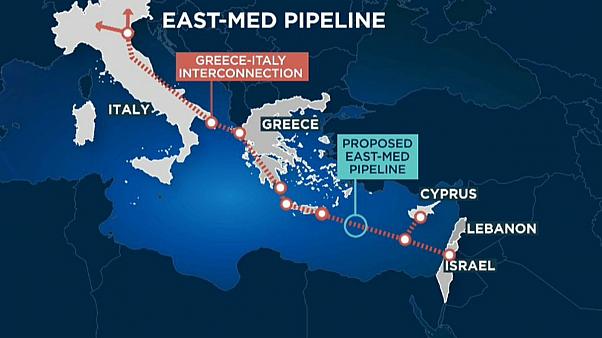
On January 2, Netanyahu was in Athens signing a gas pipeline deal, alongside Greek Prime Minister, Kyriako Mitotakis, and Cyprus President, Nicos Anastasiades.

The EastMed pipeline is projected to travel from Israel to Cyprus, to Greece and, ultimately, to Italy, thus transporting eastern Mediterranean gas directly to the heart of Europe.

A few years ago, this scenario seemed unthinkable, as Israel has, in fact, imported much of its natural gas from neighboring Egypt.

Israel’s Tamar field partly rectified Israel’s reliance on imported gas when it began production in 2003. Shortly after, Israel struck gas again, this time with far greater potential, in the massive Leviathan field. On December 31, 2019, Leviathan began pumping gas for the first time.

Leviathan is located in the Mediterranean Sea’s Levantine Basin, a region that is rich with hydrocarbons.

“Leviathan is estimated to hold over 21 trillion cubic feet of natural gas—enough to fill Israeli power-generation needs for the next 40 years, while still leaving an ample supply for export,” wrote Frank Musmar in the BESA Center for Strategic Studies.

Egypt’s share of Israeli gas – 85 billion cubic meters (bcm), with an estimated cost of $19.5 billion – is acquired through the private Egyptian entity Dolphinus Holdings. The Jordanian deal was signed between the country’s national electricity company NEPCO, and American firm, Noble Energy, which owns a 45% stake in the Israeli project.

Jordanians have been protesting Israel’s gas deal en-masse, as they view economic cooperation between their country and Israel as an act of normalization, especially as Tel Aviv continues to occupy and oppress Palestinians.

The echoes of the popular protests have reached the Jordanian parliament which, on January 19, unanimously voted in favor of a law to ban gas imports from Israel. Israel is diversifying beyond exerting regional economic dominance to becoming a big player on the international geopolitical stage as well. The EastMed pipeline project, estimated at €6bn, is expected to cover 10% of Europe’s overall need for natural gas. This is where things get even more interesting.

Turkey believes that the deal, which involves its own regional rivals, Cyprus and Greece, is designed specifically to marginalize it economically by excluding it from the Mediterranean’s hydrocarbon boom.

Ankara is already a massive energy hub, being the host of TurkStream, which feeds Europe, with approximately 40% of its needs of natural gas coming from Russia. This fact has provided both Moscow and Ankara not only with more than economic advantages but geostrategic leverage as well. If the EastMed pipeline becomes a reality, Turkey and Russia will stand to lose the most.

In a series of successive, and surprising moves, Turkey retaliated by signing a maritime border deal with Libya’s internationally-recognized Government of National Accord (GNA), and by committing to send military support to help Tripoli in its fight against forces loyal to General Khalifa Haftar.

“Turkey will not permit any activity that is against its own interests in the region,” Fuat Oktay, Turkey’s Vice-President, told Anadolu News Agency, adding that “any plan that disregards Turkey has absolutely no chance of success.”

Although European countries were quick to condemn Ankara, the latter has succeeded in changing the rules of the game by staking a claim to vast areas that are also claimed by Greece and Cyprus as part of their so-called exclusive economic zones (EEZ).

Not only will Turkey be drilling in Libya’s territorial waters for natural gas, but in disputed water near Cyprus as well. Ankara is accusing Cyprus of violating “the equal claim to discoveries”, an arrangement that followed the military conflict between both countries in 1974.

If the issue is not resolved, the EastMed pipeline project could potentially turn into a pipedream. What seemed like a lucrative deal, with immense geopolitical significance from an Israeli point of view, now appears to be another extension of the wider Middle Eastern conflict.

While the EU is eager to loosen Russia’s strategic control over the natural gas market, the EastMed pipeline increasingly appears unfeasible from every possible angle.

However, considering the massive deposits of natural gas that are ready to fuel struggling European markets, it is almost certain that the Mediterranean natural gas will eventually become a major source of political disputes, if not a war.

Ramzy Baroud is a journalist and the Editor of The Palestine Chronicle.

29 January 2020

Source: countercurrents.org
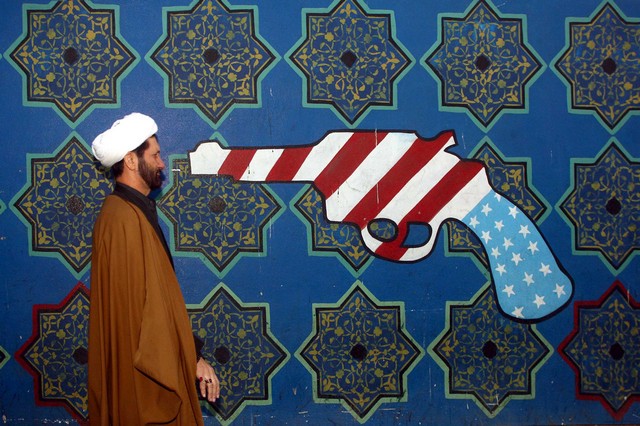
The U.S. Is Recycling Its Big Lie About Iraq To Target Iran

By Nicolas J S Davies

Sixteen years after the U.S. invasion of Iraq, most Americans understand that it was an illegal war based on lies about non-existent “weapons of mass destruction.” But our government is now threatening to drag us into a war on Iran with a nearly identical “big lie” about a non-existent nuclear weapons program, based on politicized intelligence from the same CIA teams that wove a web of lies to justify the U.S. invasion of Iraq in 2003.

In 2002-3, U.S. officials and corporate media pundits repeated again and again that Iraq had an arsenal of weapons of mass destruction that posed a dire threat to the world. The CIA produced reams of false intelligence to support the march to war, and cherry-picked the most deceptively persuasive narratives for Secretary of State Colin Powell to present to the UN Security Council on February 5th 2003. In December 2002, Alan Foley, the head of the CIA’s Weapons Intelligence, Nonproliferation and Arms Control Center (WINPAC), told his staff, “If the president wants to go to war, our job is to find the intelligence to allow him to do so.”

Paul Pillar, a CIA officer who was the National Intelligence Officer for the Near East and South Asia, helped to prepare a 25-page document that was passed off to Members of Congress as a “summary” of a National Intelligence Estimate (NIE) on Iraq. But the document was written months before the NIE it claimed to summarize and contained fantastic claims that were nowhere to be found in the NIE, such as that the CIA knew of 550 specific sites in Iraq where chemical and biological weapons were stored. Most Members read only this fake summary, not the real NIE, and blindly voted for war. As Pillar later confessed to PBS’s Frontline, “The purpose was to strengthen the case for going to war with the American public. Is it proper for the intelligence community to publish papers for that purpose? I don’t think so, and I regret having had a role in it.”

WINPAC was set up in 2001 to replace the CIA’s Nonproliferation Center or NPC (1991-2001), where a staff of 100 CIA analysts collected possible evidence of nuclear, chemical and biological weapons development to support U.S. information warfare, sanctions and ultimately regime change policies against Iraq, Iran, North Korea, Libya and other U.S. enemies.

WINPAC uses the U.S.’s satellite, electronic surveillance and international spy networks to generate material to feed to UN agencies like UNSCOM, UNMOVIC, the Organization for the Prohibition of Chemical Weapons (OPCW) and the International Atomic Energy Agency (IAEA), who are charged with overseeing the non-proliferation of nuclear, chemical and biological weapons. The CIA’s material has kept these agencies’ inspectors and analysts busy with an endless stream of documents, satellite imagery and claims by exiles for almost 30 years. But since Iraq destroyed all its banned weapons in 1991, they have found no confirming evidence that either Iraq or Iran has taken steps to acquire nuclear, chemical or biological weapons.

UNMOVIC and the IAEA told the UN Security Council in 2002-3 they could find no evidence to support U.S. allegations of illegal weapons development in Iraq. IAEA Director General Mohamed ElBaradei exposed the CIA’s Niger yellowcake document as a forgery in a matter of hours. ElBaradei’s commitment to the independence and impartiality of his agency won the respect of the world, and he and his agency were jointly awarded the Nobel Peace Prize in 2005.

Apart from outright forgeries and deliberately fabricated evidence from exile groups like Ahmad Chalabi’s Iraqi National Congress (INC) and the Iranian Mojahedin-e Khalq (MEK), most of the material the CIA and its allies have provided to UN agencies has involved dual-use technology, which could be used in banned weapons programs but also has alternative legitimate uses. A great deal of the IAEA’s work in Iran has been to verify that each of these items has in fact been used for peaceful purposes or conventional weapons development rather than in a nuclear weapons program. But as in Iraq, the accumulation of inconclusive, unsubstantiated evidence of a possible nuclear weapons program has served as a valuable political weapon to convince the media and the public that there must be something solid behind all the smoke and mirrors.

For instance, in 1990, the CIA began intercepting Telex messages from Sharif University in Tehran and Iran’s Physics Research Centre about orders for ring magnets, fluoride and fluoride-handling equipment, a balancing machine, a mass spectrometer and vacuum equipment, all of which can be used in uranium enrichment. For the next 17 years, the CIA’s NPC and WINPAC regarded these Telexes as some of their strongest evidence of a secret nuclear weapons program in Iran, and they were cited as such by senior U.S. officials. It was not until 2007-8 that the Iranian government finally tracked down all these items at Sharif University, and the IAEA inspectors were able to visit the university and confirm that they were being used for academic research and teaching, as Iran had told them.

After the U.S. invasion of Iraq in 2003, the IAEA’s work in Iran continued, but every lead provided by the CIA and its allies proved to be either fabricated, innocent or inconclusive. In 2007, U.S. intelligence agencies published a new National Intelligence Estimate (NIE) on Iran in which they acknowledged that Iran had no active nuclear weapons program. The publication of the 2007 NIE was an important step in averting a U.S. war on Iran. As George W Bush wrote in his memoirs, “…after the NIE, how could I possibly explain using the military to destroy the nuclear facilities of a country the intelligence community said had no active nuclear weapons program?”

But despite the lack of confirming evidence, the CIA refused to alter the “assessment” from its 2001 and 2005 NIEs that Iran probably did have a nuclear weapons program prior to 2003. This left the door open for the continued use of WMD allegations, inspections and sanctions as potent political weapons in the U.S.’s regime change policy toward Iran.

In 2007, UNMOVIC published a Compendium or final report on the lessons learned from the debacle in Iraq. One key lesson was that, “Complete independence is a prerequisite for a UN inspection agency,” so that the inspection process would not be used, “either to support other agendas or to keep the inspected party in a permanent state of weakness.” Another key lesson was that, “Proving the negative is a recipe for enduring difficulties and unending inspections.”

The 2005 Robb-Silberman Commission on the U.S. intelligence failure in Iraq reached very similar conclusions, such as that, “…analysts effectively shifted the burden of proof, requiring proof that Iraq did not have active WMD programs rather than requiring affirmative proof of their existence. While the U.S. policy position was that Iraq bore the responsibility to prove that it did not have banned weapons programs, the Intelligence Community’s burden of proof should have been more objective… By raising the evidentiary burden so high, analysts artificially skewed the analytical process toward confirmation of their original hypothesis – that Iraq had active WMD programs.”

In its work on Iran, the CIA has carried on the flawed analysis and processes identified by the UNMOVIC Compendium and the Robb-Silberman report on Iraq. The pressure to produce politicized intelligence that supports U.S. policy positions persists because that is the corrupt role that U.S. intelligence agencies play in U.S. policy, spying on other governments, staging coups, destabilizing countries and producing politicized and fabricated intelligence to create pretexts for war.

A legitimate national intelligence agency would provide objective intelligence analysis that policy-makers could use as a basis for rational policy decisions. But, as the UNMOVIC Compendium implied, the U.S. government is unscrupulous in abusing the concept of intelligence and the authority of international institutions like the IAEA to “support other agendas,” notably its desire for regime change in countries around the world.

The U.S.’s “other agenda” on Iran gained a valuable ally when Mohamed ElBaradei retired from the IAEA in 2009, and was replaced by Yukiya Amano from Japan. A State Department cable from July 10th 2009 released by Wikileaks described Mr. Amano as a “strong partner” to the U.S. based on “the very high degree of convergence between his priorities and our own agenda at the IAEA.” The memo suggested that the U.S. should try to “shape Amano’s thinking before his agenda collides with the IAEA Secretariat bureaucracy.” The memo’s author was Geoffrey Pyatt, who later achieved international notoriety as the U.S. Ambassador to Ukraine who was exposed on a leaked audio recording plotting the 2014 coup in Ukraine with Assistant Secretary of State Victoria Nuland.

The Obama administration spent its first term pursuing a failed “dual-track” approach to Iran, in which its diplomacy was undermined by the greater priority it gave to its parallel track of escalating UN sanctions. When Brazil and Turkey presented Iran with the framework of a nuclear deal that the U.S. had proposed, Iran readily agreed to it. But the U.S. rejected what had begun as a U.S. proposal because, by that point, it would have undercut its efforts to persuade the UN Security Council to impose harsher sanctions on Iran.

As a senior State Department official told author Trita Parsi, the real problem was that the U.S. wouldn’t take “Yes” for an answer. It was only in Obama’s second term, after John Kerry replaced Hillary Clinton as Secretary of State, that the U.S. finally did take “Yes” for an answer, leading to the JCPOA between Iran, the U.S. and other major powers in 2015. So it was not U.S.-backed sanctions that brought Iran to the table, but the failure of sanctions that brought the U.S. to the table.

Also in 2015, the IAEA completed its work on “Outstanding Issues” regarding Iran’s past nuclear-related activities. On each specific case of dual-use research or technology imports, the IAEA found no proof that they were related to nuclear weapons rather than conventional military or civilian uses. Under Amano’s leadership and U.S. pressure, the IAEA “assessed” that “a range of activities relevant to the development of a nuclear explosive device were conducted in Iran prior to the end of 2003,” but that ”these activities did not advance beyond feasibility studies and the acquisition of certain relevant technical competences and capabilities.”

The JCPOA has broad support in Washington. But the U.S. political debate over the JCPOA has essentially ignored the actual results of the IAEA’s work in Iran, the CIA’s distorting role in it and the extent to which the CIA has replicated the institutional biases, the reinforcing of preconceptions, the forgeries, the politicization and the corruption by “other agendas” that were supposed to be corrected to prevent any repetition of the WMD fiasco in Iraq.

Politicians who support the JCPOA now claim that it stopped Iran getting nuclear weapons, while those who oppose the JCPOA claim that it would allow Iran to acquire them. They are both wrong because, as the IAEA has concluded, and even President Bush acknowledged, Iran does not have an active nuclear weapons program. The worst that the IAEA can objectively say is that Iran may have done some basic nuclear weapons-related research some time before 2003 – but then again, maybe it didn’t.

Mohamed ElBaradei wrote in his memoir, The Age of Deception: Nuclear Diplomacy in Treacherous Times, that, if Iran ever conducted even rudimentary nuclear weapons research, he was sure it was only during the Iran-Iraq War, which ended in 1988, when the U.S. and its allies helped Iraq to kill up to 100,000 Iranians with chemical weapons. If ElBaradei’s suspicions were correct, Iran’s dilemma since that time would have been that it could not admit to that work in the 1980s without facing even greater mistrust and hostility from the U.S. and its allies, and risking a similar fate to Iraq.

Regardless of uncertainties regarding Iran’s actions in the 1980s, the U.S.’s campaign against Iran has violated the most critical lessons U.S. and UN officials claimed to have learned from the debacle in Iraq. The CIA has used its almost entirely baseless suspicions about nuclear weapons in Iran as pretexts to “support other agendas” and “keep the inspected party in a permanent state of weakness,” exactly as the UNMOVIC Compendium warned against ever again doing to another country.

In Iran as in Iraq, this has led to an illegal regime of brutal sanctions, under which thousands of children are dying from preventable diseases and malnutrition, and to threats of another illegal U.S. war that would engulf the Middle East and the world in even greater chaos than the one the CIA engineered against Iraq.

Nicolas J S Davies is a freelance writer, a researcher for CODEPINK and the author of Blood On Our Hands: the American Invasion and Destruction of Iraq.

29 January 2020

Source: countercurrents.org
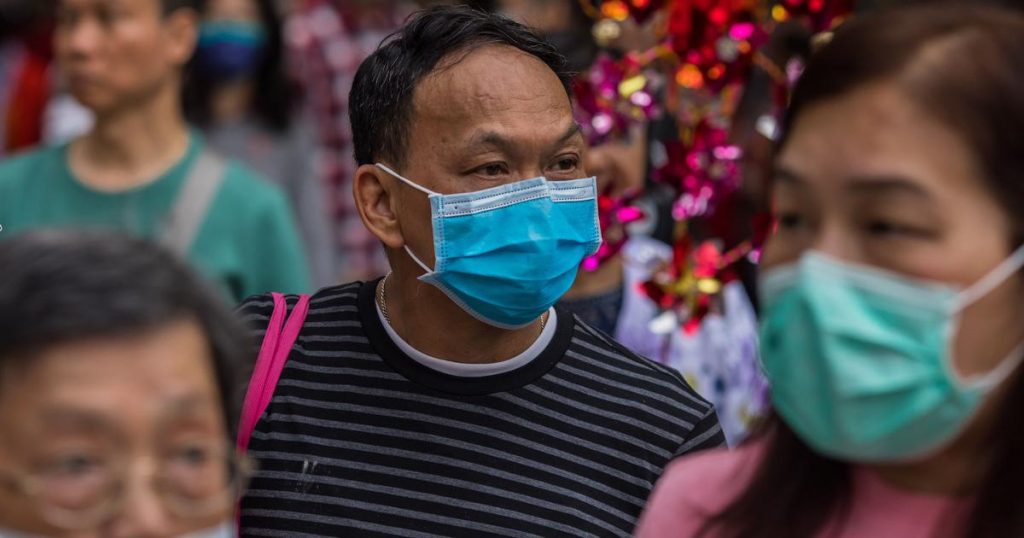
Chinese Resilience and Silent, Simple and Steady Resistance – A Model for Mankind

By Peter Koenig

In a positive appeal to the Chinese people, last Saturday, President Xi Jinping has called on the nation’s courage to defeat the deadly epidemic which has already claimed more than 80 lives and more than 2,000 infected worldwide, the vast majority in China. These figures are changing fast, as the spread of the epidemic is accelerating. President Xi warned that the situation was serious, but not unsurmountable.

“As long as we have steadfast confidence, work together, [rely on] scientific prevention and cures, and precise policies, we will definitely be able to win the battle,” President Xi told a politburo meeting, according to Xinhua.

It is thought that the deadly coronavirus, 2019-nCoV has originated from wild animals, such as bats, but science is still out to confirm the details.

In short, the Government of China deserves high-flying congratulations for the efficient, rapid sanitary measures it has taken to avoid further infection – putting about 50 million people in a state of quarantine, blocking potentially dangerous travel routes and checking travelers for possible symptoms.

The timing of the outbreak has an additional dimension of pain and suffering, as it affects and hinders people’s celebration of the New Chinese Lunar Year’s joy of visiting families and of togetherness. On a tertiary plan, it also affects the retail economy.

Chinese doctors and nurses have already healed several dozen cases. Chinese scientists in collaboration with Russian scientists are accelerating their research into developing a vaccine against the virus. Indeed, there is no country in the world that has ever achieved with such ardor, efficiency and love for the people, progress towards isolation of a potentially highly infectable and deadly disease, preventing millions from infection and providing them with protective as well as curative measures, and by setting up a countrywide impenetrable health surveillance mechanism.

There could not be a clearer sign, that the Government of China is making every effort for the betterment and the well-being of its population. This is also reflected in the high esteem and credibility the Chinese people entrust in their government. – Something not heard of in the west – not by far.

Rather to the contrary: in the west disease means foremost business and that (business) model of health care is steadily increasing, treating sick people like a “market” – and those not yet sick, as a potential market. The medical industry, is one of the most ferocious money-making apparatuses, next to the war industry.

It’s more, the big western bought and manipulative media have immediately put the blame on China. They are demonizing and slandering China, for insufficient hygiene, for medical negligence – it is one more accusation of the “yellow peril” causing worldwide danger. A horror of western attitude and injustice.

Aside from such lies and false propaganda, let’s look at the context. In the USA alone, the regular influenza causes every year several thousand deaths, and that despite country-wide carpet vaccination, and in some states forced vaccination. The 2019/20 flu-season has already claimed more than 7000 reported deaths and uncounted cases of serious flu infections; and that only in the United States. We are talking about a country of some 350 million people. – The statistics of this flu-epidemic could be expanded to a much larger dimension throughout Europe and the rest of the western world – and the order of magnitude would be even more overwhelming.

Yet, China, with a population of some 1.4 billion people, an outbreak, where up to this writing less than 3000 people have been infected with the new 2019-nCoV virus, and the death toll stands at below 100, the country is being badgered non-stop for being at the origin of this new disease.

Let me be clear, China does not need or want to compare herself to the west, nor does she want to measure her degree of efficiency in mastering the disease and dealing with the disease’s consequences against the west. Not at all. It’s not part of the Chinese philosophy. – However, WHO immediately calls the outbreak a potential pandemic, thereby frightening the public at large with yet another danger coming from the east, from China.

The Chinese Government and the Chinese scientists work for the people, to contain the outbreak to the extent possible. And they will ‘win’; their determination like with most everything China engages in overcomes almost all obstacles.What China has already achieved in stopping the disease from seriously spreading within China and to other countries is simply remarkable. It is what no other country in the world would have achieved in this short period.
China does all this quietly, no bragging. It is simply an endless flow of creation for the well-being of her population and for harmony – and eventually for a peaceful, trustful cohabitation of the people with their government. People willingly participate in this mammoth effort to contain and cure the disease, willingly, despite the suffering of many for not being able to visit their families during that highly revered Chinese New Year, the New Lunar Year celebration which in magnitude and importance would be the western equivalent of Christmas.

Having said this, it should also be noted that this case of 2019-nCoV is curiously similar to other CoronoVirus diseases, like the Middle East Respiratory Syndrome – MERS, first found in Saudi Arabia (2012) and then it spread to other Middle Easter and Sub-Saharan African countries; and the Severe Acute Respiratory Syndrome (SARS), first discovered in China in 2002, spread around the world but was quickly contained and caused no know infections after 2004. Both are coronaviruses, suspected having been laboratory-made, with animal trials, and the viruses’ transfer to humans was only possible with human assistance. Then the viruses mutated to make human-to-human infection possible. Bothe SARS and the new 2019-nCoV virus also have the particularity of affecting primarily people of the Chinese race (see also https://www.globalresearch.ca/chinas-new-coronavirus-an-examination-of-the-facts/5701662).

There are some 100-plus CIA / Pentagon sponsored clandestine and semi-known laboratories spread throughout the world – laboratories to fabricate and test agents for biological warfare. A few years ago, one such laboratory was discovered and reported on in Ukraine. They were working on a virus affecting the “Russian Race”. Since there is no homogenous Russian Race – their initial trials supposedly failed. Since the empire never gives up in its evil attempts to dominate the world, we can assume that research on race directed bio-agents continues.
This western, especially American (CIA, Pentagon, NATO) project to develop bio-chemical weapons to kill people by disease rather than bullets and bombs – it is much cheaper! And less obvious – does exist. You may draw your own conclusion on whether SARS and the new 2019-nCoV fits that pattern. The timing of the appearance was especially curious. It was first reported on 31 December 2019 in Wuhan (the center of China) – and then expanded rapidly, so that it interfered with China’s most important Holiday, the Lunar New Year. It could, of course, be just coincidence.

One of Washington’s “low-grade” warfare models is destabilizing China (and Russia for that matter) with any means. With the objective of destabilization, China is constantly being harassed and aggressed – see Hong Kong, Taiwan, the Uyghurs in Xinjiang, Tibet, the tariff wars – and why not with a contagious virus, a trial for a potential pandemic?

What can be observed and even the west must notice to their chagrin and frustration – is China’s extreme resilience and capacity to adapt and resist –to resist with powerful minds and ingenuity that saves her people. And that without counter-aggression, without even an accusation and never a threat. This is China’s way forward: a steady flow of endless creation, avoiding conflict, no dominance, but seeking harmony by building bridges between people and among countries and cultures – creating understanding and wellbeing, towards a multi-polar world. A model for mankind? – If only the west would open its eyes and wake up.

Peter Koenig is an economist and geopolitical analyst. He is also a water resources and environmental specialist.

29 january 2020

Source: countercurrents.org
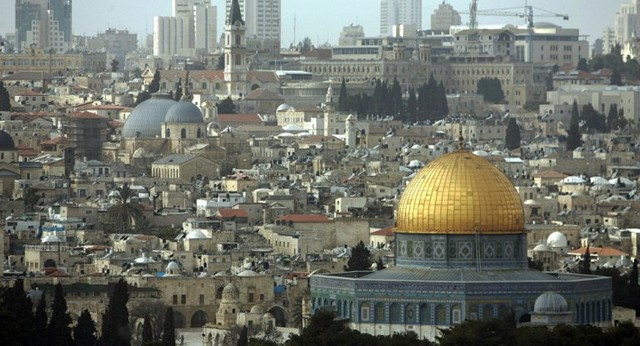
Jerusalem is not for sale, your conspiracy will not pass, Abbas reacts to Trump’s Middle East proposal

By Countercurrents Collective

Palestinian President Mahmoud Abbas has slammed U.S. President Donald Trump’s Middle East “peace” plan, declaring “Jerusalem is not for sale”. Abbas warned that the “conspiracy deal will not pass.”

“Your conspiracy deal will not pass and the Palestinian people will reject it,” Abbas warned on Tuesday after Trump unveiled his long-awaited plan for peace between Israel and Palestine.

Calling it “impossible” for Palestinians to “accept a state without Jerusalem,” which would remain the U.S.-recognized capital of Israel under Trump’s plan, Abbas made his feelings absolutely clear on the matter.

The Palestine President said: “No, no, a big no to the ‘deal of the century.’”

The plan, he predicted, would be consigned to the “dustbin of history.”

Vowing not to “bow to the demands of the occupation,” Abbas announced a new round of negotiations with Fatah and stated that Palestine was ready to meet with the Middle East Quartet, which has advised on the Israel-Palestine peace.

Hamas

Hamas also rejected the plan as “nonsense” and called Trump’s statement “aggressive.”

Political theatre

Speaking to Reuters before the release of the plan, top Palestinian envoy to Britain Husam Zomlot said that the announcement would be a “piece of political theatre” and would push the situation “over the cliff and into apartheid.”

Iran

A top advisor to Iranian President Hassan Rouhani tweeted that the Trump plan is “solely” a deal made “between the Zionist regime and America” and that interaction with Palestinians is “not on the agenda.”

Jordan

Jordan’s foreign minister Ayman Safadi said that the establishment of a Palestinian state with east Jerusalem as the capital is the “only path to comprehensive and lasting peace” but also warned against potential consequences of unilateral measures taken by Israel.

Trump’s two-state solution

Trump has proposed a two-state solution for Israel-Palestine, which would see the Palestinian capital located in east Jerusalem, in a move the U.S. president called a “big step towards peace.”

Trump said that Israel had agreed to negotiate on the basis of a conceptual and detailed proposed map for the first time. If Israel agrees to the proposed map, the US will recognize it, he said.

The plan will “more than double the Palestinian territory” and “no Israelis or Palestinians will be uprooted.” The U.S will also “proudly” open an embassy in the new Palestinian capital in east Jerusalem, Trump said.

Trump boasted that he has done “a lot” for Israel since taking office. It’s “only reasonable that I have to do a lot for the Palestinians” too or it “wouldn’t be fair,” he added.

In return for U.S. recognition of Israel’s settlements in the occupied West Bank, Israel would accept a four-year freeze on new settlement building while Palestinian statehood is negotiated.

The plan will also set up a $50 billion economic revival program for Palestinians, Jordan and Egypt.

Standing alongside Trump, Netanyahu said the presence of ambassadors from Oman, Bahrain and the United Arab Emirates in Washington boded well for the success of the Trump plan.

Netanyahu said previous attempts to solve the crisis “did not strike the right balance” between dealing with Israel’s fears for its security and Palestinians’ desire for self-determination.

The Israeli PM also said that Trump has been the “best friend” Israel has ever had and though there have been good friends of Israel’s in the White House before, they do not even “come close” to Trump.

Netanyahu was also full of praise for Trump’s son-in-law Jared Kushner, who was the chief author of the plan, saying that it was “great to have these real estate people” involved territorial disputes because they can “come up with things normal human beings don’t think about.”

He added that Israel owes both Kushner and Trump “an eternal debt of gratitude.”

Despite the positive words from Washington, however, the Palestinian side has already said it will reject the plan.

The Trump administration, having made numerous and major concessions to Israel since 2017, is not seen by the Palestinians as a neutral arbiter in the conflict.

Trump’s tweet

Following his remarks, Trump sent a tweet in Arabic with a map attached of “what the future state of Palestine might look like.”

Top of Form

What’s in Trump’s plan

The 180-page proposal unveiled by Trump envisions the conditions under which a Palestinian state might be recognized.

The “Vision for Peace, Prosperity and a Brighter Future” bills itself as “the best, most realistic and most achievable outcome for the parties” right from the start.

It says that the 700 or so UN General Assembly resolutions and 100-plus Security Council resolutions have failed to bring peace, while the 1993 Oslo Accords left too many key issues unresolved, “including, among other items, borders, security, refugees and Jerusalem.”

Trump’s plan addresses all those issues, mostly by siding with Israel.

Security

“A realistic solution would give the Palestinians all the power to govern themselves but not the powers to threaten Israel,” says the Vision at the very beginning.

Therefore, any Palestinian state would have to be fully demilitarized.

Palestine would not have any right to “develop military or paramilitary capabilities” without Israel’s approval.

It would also be barred from any sort of security or diplomatic arrangements with other countries without Israeli consent.

Israel would retain the right to “dismantle and destroy any facility in the State of Palestine that is used for the production of prohibited weapons or for other hostile purposes,” and maintain control over “all international crossings into the State of Palestine.”

Also, as a precondition for recognition, the Palestinian Authority would have to drop all pending or planned legal action against Israel, the U.S. and their citizens before the International Criminal Court, the International Court of Justice, and all other tribunals.

Borders

On page 45, the Vision introduces a “Conceptual Map,” a basis for negotiations that is designed to address the “spirit” of UN Security Council Resolution 242, dealing with the Palestinian territories previously held by Egypt and Jordan but taken by Israel in the 1967 war – namely, West Bank and Gaza.

The map reflects the U.S. view that Israel is not legally bound to provide Palestinians with 100 percent of the pre-1967 territory, but something “reasonably comparable in size.”

It shows a Palestinian state almost entirely enclosed by Israel to address “security requirements.”

As noted above, Israel gets to maintain control over Palestinian borders.

The map “avoids forced population transfers of either Arabs or Jews,” often by creating enclaves within enclaves, connected to the rest by access roads, tunnels or overpasses.

It envisions “high-speed transportation links” for Palestinians, but it is unclear what this might mean, as no such infrastructure presently exists in the U.S.

Israel has already said it would basically annex the strip along the Jordanian border and other areas assigned to it by the map right away, while pausing all settlement activity in the Palestinian-designated areas for four years, to give the Palestinians time to make their choice.

Jerusalem

Partitioned by the 1949 armistice between Israel and Jordan, Jerusalem has been fully under Israeli control since 1967. Israel has officially annexed the entire city – a claim recognized by Trump in December 2017, but not the UN.

The Vision treats Jerusalem as the Israeli capital – albeit with freedom of access to its holy sites to all religious communities – and proposes the Palestinian capital to be “in the section of East Jerusalem located in all areas east and north of the existing security barrier, including Kafr Aqab, the eastern part of Shuafat and Abu Dis, and could be named Al Quds” or however else the Palestinian state wishes.

Refugees

One of the most intractable issues has been the question of Palestinian refugees, displaced since 1948.

The Trump plan asserts that “nearly the same number of Jews and Arabs were displaced by the Arab-Israel conflict,” but while the Jews were given citizenship and absorbed by Israel, the Palestinians were “cruelly and cynically held in limbo to keep the conflict alive” by the neighboring Arab states.

It said: “There shall be no right of return by, or absorption of, any Palestinian refugee into the State of Israel.”

Palestinians will be given a choice to seek citizenship in the Palestinian state, integrate into the countries where they currently live, or resettle in a third country. A “generous trust” will be established to pay for this.

Much of the document is in fact about economic incentives for Palestinians that lays out the proposal masterminded by Trump’s son-in-law and adviser Jared Kushner and presented last year in Bahrain.

The detailed presentation envisions how Palestinians should structure their government, society, economy, education, healthcare, etc.

In sum, Palestinians are promised a million new jobs, billions of dollars in investments to bring them out of poverty, and a state they can call their own – if they agree to a peculiar form of restricted sovereignty that is subordinated to Israeli security interests; recognize Israel as the Jewish state and abandon all claims to the land it holds; and reorganize their entire society along the lines of a western liberal democracy.

flock to U.S. diplomatic compounds in Ankara & Istanbul to protest Trump’s plan

Demonstrators have flooded the streets outside the U.S. embassy in Ankara and the consulate in Istanbul, venting their rage over the newly-unveiled “deal of the century” that Turkey has slammed as an “annexation plan.”

Hours after the much-hyped Middle East peace plan was announced by U.S. President Trump, demonstrators in Turkey’s two biggest cities came out in force to protest the roadmap to peace that many argue is skewed in favor of Tel Aviv.

Videos posted on social media show demonstrators chanting slogans and waving Palestinian as well as Turkish banners, as they marched towards the U.S. embassy in the Turkish capital.

The rally, organized almost on the spot shortly after Trump’s announcement, drew in a huge crowd. Many could be seen holding their smartphones up to the night skies, turning the streets into a sea of light.

Hundreds turned out in Istanbul as well, voicing support for Palestinians who have already rejected the plan.

While majority of the US allies in the region have either expressed cautious optimism about the arrangement, or endorsed it, Turkey has lambasted the “stillborn” plan, calling it an “attempt to kill the two-state solution” and annex Palestinian territory.

29 January 2020

Source: countercurrents.org
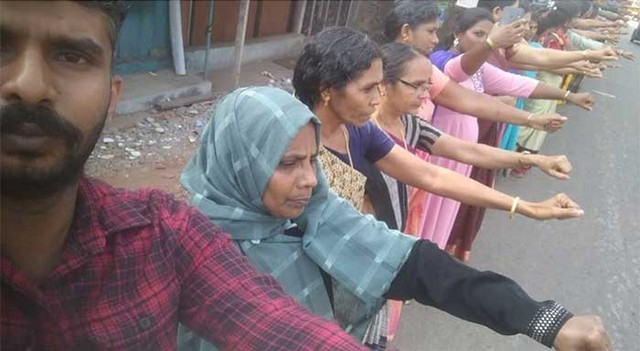
7 Million Form A Human Chain Across Kerala To Protest Against CAA

By Countercurrents Collective

A 620 km long human chain from the northern part of Kerala to the south was formed on Republic Day by the CPI(M) led Left Democratic Front, to register the protest against the ‘unconstitutional: Citizenship Amendment Act (CAA). People from all walks of life including newly weds participated in the human chain.

The organizers claimed that around 60 to 70 lakh people participated in the human chain.

Chief Minister Pinarayi Vijayan and CPI leader Kanam Rajendran joined the protest in capital city Thiruvananthapuram.

The preamble of the Constitution was read out by lakhs of protesters who join in human chain.

Many prominent personalities including politicians, cultural activists, religious leaders and artists participated in the human chain. The participation of hundreds of newly wedded couples in human chain was also gained the attraction.

An oath was taken to protect the Constitution from the “attempts of the Central government” to destroy it.

People formed a 620-km human chain from Kasargod in the north of Kerala to Thiruvananthapuram in the south to register their protest against the Citizenship Amendment Act on Republic Day. Organised by Kerala’s ruling Left Democratic Front, the protest saw lakhs of people — including Chief Minister Pinarayi Vijayan — lining up along roads across the state.

Several newly weds were also seen participating in the protest, billed as one of the biggest against the amended Citizenship law until now.

This morning, the constitution of India was read out in several mosques and churches in the state, which also saw hoisting of the national flag and prayers being offered for the nation.

The Left and Congress led United Democratic Front, though principal political opponents, have also held a joint protest against the Act last year. The state has already declared that it will not implement the National Population Register.

“I congratulate all people who have joined this human chain. It’s not time for us to stop or to rest. We have to continue to resist all attempts to change our constitution”, Kerala Chief Minister Pinarayi Vijayan said.

The last time the LDF organised a similar human chain was on December 29, 2016, to protest against the hardships faced by the people following demonetisation.

On January 1, 2019, the Pinarayi Vijayan-led government held a Women’s Wall to uphold renaissance values and gender equality in society, with the aim of welcoming the Supreme Court’s decision to open the Sabarimala temple to women of all ages.

26 January 2020

Source: countercurrents.org
ICJ Interim Genocide Ruling on Myanmar Vindicates Rohingya

By Maung Zarni

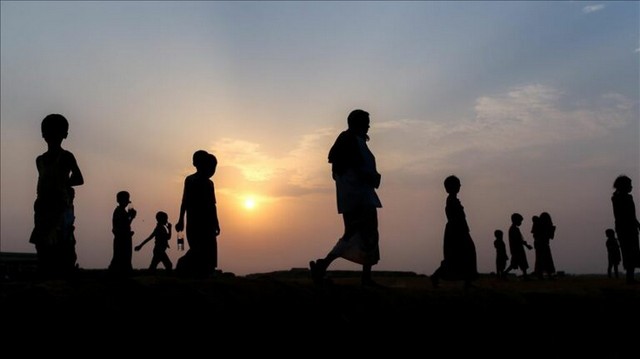
24 Jan 2020 – Rohingya around the world yesterday shared a pervasive sense of vindication after four-decades of policy-inflicted sufferings at the hands of Myanmar state which has systematically sought to destroy their identity and physical existence in the country.

The historic interim decision on Myanmar genocide by the International Court of Justice (ICJ), tasked principally to adjudicate legal disputes among UN member states, has made several millions Rohingya — in the camps in Bangladesh, in the diaspora and inside Myanmar — feel — their cries of pain and calls for solidarity are heeded by the UN court finally.

Among other things, the ICJ crucially reaffirmed what the UN International Independent Fact-Finding Mission sought to establish — that the Rohingya are a protected group under an inter-state treaty known as the Convention on the Prevention and Punishment of the Crime of Genocide of 1948, or the Genocide Convention.

Over the last several decades, Myanmar has waged a relentless and systematic official campaign to erase Rohingya group identity and history — both of which the Union of Burma had officially acknowledged — while literally destroying their existence as a group. Against this backdrop, I have for the last 10 years campaigned to get the facts of the plight and systematic persecution of the Rohingya people of my country of birth, in partnership with my researcher colleague and wife Natalie Brinham.

So, we too shared the sense of jubilation among all Rohingya communities over the court’s pronouncement that war or peace, Myanmar as a state party to the Genocide Convention is legally obligated to protect Rohingya ethnic group.

This sentiment of vindication was palpable among Rohingya refugee activists who were inside the court in The Hague and those waiting outside the Palace of the Peace — the seat of the UN’s highest court — who came to support their fellow Rohingya privileged enough to hear the president judge read out the 28-page Application of the Genocide Convention by issuing measures designed to oblige Myanmar as a party to the Convention to end its breaches.

From the elevated gallery right opposite from the presiding judge, I sat with my Myanmar activist brother Nay Say Lwin, himself a Rohingya. Biting our nails, we both leaned forward from our bench and listened intensely as the presiding judge read out the court’s decision to grant four out of six binding measures aimed at both protecting the 600,000 Rohingya inside Myanmar’s concentration camps and open air prisons, and preserving the evidence of Myanmar killing fields.

This UNESCO World Heritage site-worthy crime scene is the vast tract of charred land in western Myanmar immediately adjacent to Bangladesh that spans an area as long as 68 square kilometers where only two years ago stood nearly 400 exclusively Rohingya villages. As stated factually in Myanmar Government’s Burmese language encyclopedia of 1964, northern Rakhine state has always been predominantly Rohingya region throughout the country’s pre- and post-independence histories. The apartheid conditions that existed in this northern most part of western Myanmar culminated in the largest wave of genocidal purges of 2016 and 2017, which triggered the largest exodus of 740,000 across the borders.

To be sure, the Court’s decision explicitly states that Thursday’s decision, again unanimous, to issue legally binding orders to Myanmar — theoretically speaking as the UN has no enforcement mechanisms in place — does not prejudge the matter in dispute, whether Myanmar has really breached the Convention by failing to prevent the crime of genocide against Rohingya as a protected group and itself, commissioning the heinous crime.

It is, however, worth nothing that the court was, at this initial judicial phase, persuaded that there exists a very real plausibility of a genocide committed by Myanmar against Rohingya protected group, as Gambia has alleged. The evidence presented to it by Gambia was based principally on thousands of pages of documents and reports amassed by the UN Fact-Finding Mission on Myanmar — and UN Special Rapporteur on the human rights situation in Myanmar Yanghee Lee.

To my own deep dismay, like a typical terrible 3 who plays “catch-me-if-you-can”, Myanmar has on the same day responded to the court’s interim decision with cheeky defiance as evidenced in its Jan. 23-dated statement entitled “Myanmar takes note of ICJ decision. There was no genocide in Rakhine.”

Additionally, Myanmar’s de facto head of state Aung San Suu Kyi published an opinion editorial in the Financial Times which attempts to trash the validity of the witness statements by Rohingya survivors including thousands of rape victims, while also attacking the global human rights community of activists, genocide researchers, legal experts and the assemblage of UN human rights monitoring mechanisms.

Offering the report of her government’s own commission — billed as Independent Commission of Enquiry — as the world’s most comprehensive and most credible, Suu Kyi, who is Myanmar’s official agent in the ICJ case, said: “Some refugees may have provided inaccurate or exaggerated information. … The international justice system may not yet be equipped to filter out misleading information before shadows of incrimination are cast over entire nations and governments. Human rights groups have condemned Myanmar based on unproven statements without the due process of criminal investigation.” That came after her characteristically honey-tongued line or lie that “the voice of victims must be heard and must always touch our hearts”.

On its part, Myanmar’s most powerful protector, China, has come forward with its support for Myanmar’s dismissal of the global human rights community and the UN accountability mechanism. On Thursday, the Embassy of China in Yangon uploaded on its Facebook a statement by the State Councillor and Foreign Minister Wang Yi on President Xi Jinping’s state visit to Myanmar, and approvingly said: “… the leaders of the Myanmar side briefed on Myanmar’s position on the Rakhine State and other issues, saying that some countries have been wantonly interfering in the internal affairs of other countries in the name of human rights, ethnic or religious issues and Myanmar will never bow to such pressure and interference.”

Besides, the wider alarming global trends which have clearly signaled the rise of right-wing populists and dictators among the world’s most powerful countries such as the U.S. and India, not to mention Russia and China — as George Soros pointedly observed in his remarks at the World Economic Forum in Davos — favor Myanmar’s anti-human rights regime and its Neanderthal outlook, which Suu Kyi champions with China’s backing.

Despite our shared sentiments of vindication and jubilation, Rohingya and rights activists are painfully aware of the uphill struggle that lies ahead. Still, yesterday was a good and historic day. The World Court’s decision was a shot in our collective arm. It has restored a degree of confidence in the global justice mechanisms, and the Genocide Convention, with their shortcomings and deep flaws.

___________________________________________

A Buddhist humanist from Burma, Maung Zarni is a member of the TRANSCEND Network for Peace Development Environment, former Visiting Lecturer with Harvard Medical School, specializing in racism and violence in Burma and Sri Lanka, and Non-resident Scholar in Genocide Studies with Documentation Center – Cambodia.

27 January 2020

Source: www.transcend.org

154 European Union Lawmakers Draft Stunning Resolution Anti-India’s Citizenship Amendment Act

By Mala Jay

25 Jan 2020 – In a scathing denouncement of CAA, the lawmakers have drafted a formal five-page resolution to be tabled during the plenary session of the European Parliament starting in Brussels next week.

India’s Citizenship Amendment Act (CAA) could trigger the “largest statelessness crisis in the world and cause widespread human suffering”, a powerful group of 154 European Parliament members have warned.

In a scathing denouncement of CAA, the lawmakers have drafted a formal five-page resolution to be tabled during the plenary session of the European Parliament starting in Brussels next week.

The proposed resolution not only describes the CAA as “discriminatory and dangerously divisive” but also a violation of India’s “international obligations” under the International Covenant on Civil and Political Rights (ICCPR) and other Human Rights treaties to which New Delhi is a signatory.

The 154 lawmakers belong to the ‘S&D Group’ – a progressive forum of MEPs from 26 EU countries, recognised as the second-largest political caucus in the European Parliament. They are committed to upholding social justice and democratic values such as Equality, Diversity and Fairness.

Significantly the draft resolution also refers pointedly to the United Nations Basic Principles on the Use of Force and Firearms by Law Enforcement Officials, to which India is also bound.

This is in the context of their observation that the adoption of the CAA “has sparked massive protests against its implementation, with 27 reported deaths, 175 injured and thousands arrested and reports that the Indian government has ordered internet shutdowns, imposed curfews and placed limits on public transportation to prevent peaceful protests”.

Moreover, “reports have emerged of hundreds of protesters being beaten, shot, and tortured, in particular in Uttar Pradesh”.

The draft resolution notes that on January 5, 2020, the campus of Jawaharlal Nehru University, where students were protesting against the CAA and the National Register of Citizens (NRC), was attacked by a masked mob that injured over 20 students and teachers from the University.

It says various media reports and students have alleged that the police stood witness to the attack and refused to control and arrest the mob, about which the international community, including the UN, has already expressed concerns regarding the CAA and the violence that it has sparked. It quotes the spokesperson for the UN High Commission for Human Rights as having expressed concern that the CAA is ‘fundamentally discriminatory in nature’.

The S&D Group has pointed out that CAA was amended ostensibly to enable irregular migrants to acquire Indian citizenship through naturalisation and registration. However the CAA restricts eligibility to only Hindus, Sikhs, Buddhists, Jains, Parsis and Christians from Afghanistan, Bangladesh and Pakistan who entered India on or before 31 December 2014. “The CAA is explicitly discriminatory in nature as it specifically excludes Muslims from having access to the same provisions as other religious groups”, it says.

Further, whereas the Indian Government has stated that the countries listed in the CAA are Muslim-majority countries where minority religions are more likely to face persecution in their home countries, thus using this as justification for fast-tracked citizenship, but India shares a border with Bangladesh, Bhutan, Burma, Nepal, Pakistan and Sri Lanka – “yet the CAA does not bring Sri Lankan Tamils under its purview, who form the largest refugee group in India and who have been resident in the country for over thirty years”.

Moreover, CAA also excludes Rohingya Muslims from Myanmar, who have been described by Amnesty International and the United Nations as the world’s most persecuted minority; and also ignores the plight of Ahmadis in Pakistan, Bihari Muslims in Bangladesh, and the Hazaras of Pakistan, all of whom are subject to persecution in their home countries.

According to the S&D Group, the CAA contradicts Article 14 of India’s own Constitution, which guarantees the right to equality to every person and protects them from discrimination on the grounds of religion, race, caste, sex or place of birth.

In effect, the amended law “undermines India’s commitment to uphold the Universal Declaration of Human Rights, the ICCPR and the Convention for the Elimination of Racial Discrimination, to which India is a State party, which prohibit discrimination on the basis of racial, ethnic or religious grounds”.

The draft resolution states that the CAA was enacted during the Government’s push for a nationwide citizenship verification process (the NRC). “The Government’s statements revealed that the aim of the NRC process was to strip Muslims of their citizenship rights while protecting those of Hindus and other non-Muslims” and “whereas Muslims who are not included in the NRC will have recourse to the Foreigners’ Tribunals that have been established to determine the right to citizenship, these tribunals have been internationally condemned for failing to protect the right to a fair trial and human rights guarantees”.

It notes that although the Indian Government has stated that it is yet to start a nationwide NRC, this exercise was recently concluded in Assam and “resulted in the exclusion of more than 1.9 million people and has been used to label them as illegal migrants, who now face an uncertain future and possible deportation”.

Several Indian States have already announced that they would not implement the law and the Government of Kerala, in its petition to the Supreme Court, called the CAA ‘a violation of the secular nature of the Indian Constitution’ and accused the federal Indian Government of ‘dividing the nation on religious lines’.

The draft resolution “denounces the fact that India has incorporated religious criteria into its naturalization and refugee policies … and calls on the Indian Government to address the legitimate concerns raised over the NRC, which may be used to target marginalised groups”.

It also calls on the Indian authorities to ensure the right to peaceful protest and to guarantee the life and physical integrity of those who choose to demonstrate and also to ensure that the security forces comply with the United Nations Basic Principles on the Use of Force and Firearms by Law Enforcement Officials.

27 January 2020

Source: www.transcend.org

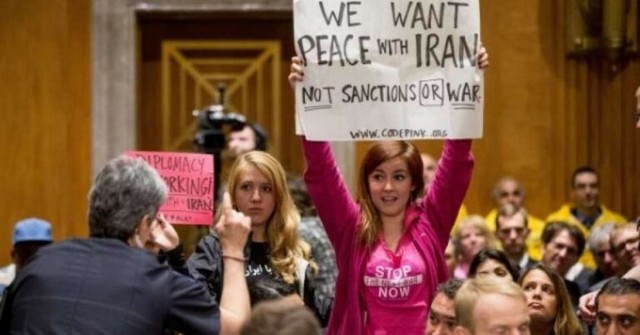
‘We Apologize’ for Trump’s Reckless Aggression, US Peace Advocates Say in Open Letter to Iranian People

By Eoin Higgins

The letter, from activist group CodePink, comes ahead of peace demonstrations scheduled Saturday in 200 cities around the world.

24 Jan 2020 – The peace advocacy group CodePink is collecting American signatures for a letter apologizing to the Iranian people for U.S. aggression and warmaking, particularly President Donald Trump’s decision on January 3 to order the assassination by drone strike of Iranian military commander Qasem Soleimani while Soleimani was in Iraq.

“As Americans committed to peace and the safety of all people, we, the undersigned, apologize for the actions of our reckless, hate-filled president,” the letter says, “and pledge to do everything we can to stop Trump’s aggression, remove the crippling sanctions you are suffering under, and resume a process of diplomacy with your country.”

The U.S. and Iran have been in a Cold-War style conflict for decades, but the Soleimani assassination marked a notable escalation in tensions.

In a tweet about Saturday’s demonstrations, CodePink cofounder Medea Benjamin warned that war was still a very real possibility.

“Think we avoided war with Iran a few weeks ago?” said Benjamin. “Think again. We are still on the brink.”

CodePink’s letter condemns in no uncertain terms the continuing conflict.

“The recent U.S. actions towards Iran are the most dangerous and provocative of all of Donald Trump’s foreign policy decisions,” reads the letter. “The assassination of Soleimani—ordered by President Trump and carried out on sovereign Iraqi soil—risked the safety of the entire world, set a dangerous precedent, and was likely illegal under international law.”

The demonstrations, which are in 200 cities around the world, are set for Saturday. CodePink is joining more than 150 other sponsors for the event.

Find a protest near you here.

“Please accept our hand in friendship,” says the letter. “May the peacemakers prevail over those who sow hatred and discord.”

________________________________________

Eoin Higgins is senior editor and staff writer for Common Dreams.

27 January 2020

Source: www.transcend.org

Malaysia in the middle of Israel-Palestine conflict

By Nile Bowie, Kuala Lumpur

In ordinary circumstances, Kuala Lumpur would be an unlikely place to find an Israeli historian.

Malaysia and other Muslim-majority countries in Southeast Asia have long been steadfast in their support for the Palestinian cause and generally refuse entry for Israeli passport holders as part of a policy of diplomatic non-recognition of Israel. Ilan Pappé, however, is no ordinary Israeli historian.

The 65-year-old academic has published over 20 books on the history of the Middle East and the Israeli-Palestinian conflict in particular and has been labelled a “traitor” by some in his country for his opposition to Zionism, Israel’s national ideology and the explicitly Jewish character of the Israeli state it denotes.

“It is an ideology which believes that as much of Palestine as possible should be a Jewish state, and in it there should be as few Palestinians as possible, to put it simply,” said Pappé in an interview with Asia Times, relaying a central theme of his “Palestine Is Still The Issue” lecture delivered recently in the Malaysian capital.

During his visit, Pappé met privately with veteran politician Anwar Ibrahim, the man widely presumed to become Malaysia’s next prime minister. Anwar wrote afterwards in an Instagram post that Pappé’s books On Palestine (2005) and The Idea of Israel (2014) had “opened my eyes to the Israeli-Palestinian conflict.”

Like elsewhere in the Muslim world, support for Palestine is articulated by those in the highest positions of government in Malaysia and can often unify otherwise divided political forces. Critics, however, regard such activism as religiosity-infused domestic posturing rather than a broader recognition of human rights.

Even so, Pappé acknowledges Malaysia as being particularly proactive in its recognition of Palestinian statehood and even sees glimmers of a solution in the Southeast Asian nation’s multi-ethnic, multi-religious social compact. That is despite persistent allegations that Prime Minister Mahathir Mohamad holds anti-Semitic views.

At a summit of Islamic leaders and state representatives held in Kuala Lumpur last month, the 94-year-old premier accused the world of closing “both eyes, and their mouths and their ears” to Israeli aggression against Palestinians and called for Tel Aviv to face justice in an international tribunal.

Analysts regarded the summit – attended by the leaders of Turkey, Iran and Qatar – as underscoring divisions within the Muslim world following criticism of the gathering by Saudi Arabia, the traditional gatekeeper of the Organization of Islamic Cooperation (OIC), which some regard as having quietly cozied up to Tel Aviv in recent years.

Pappé left Israel in 2007 after losing his teaching position at the University of Haifa and has received death threats over his political activism and revisionist historical account of Israel’s creation in 1948. He says his advocacy for the human and civil rights of Palestinians was shaped by the trauma of the Holocaust.

“My parents escaped from Germany in the 1930s before the rise of the Nazis to power, but most of their immediate family were killed. It’s an important factor that shapes my moral position,” said Pappé, who is now a professor at the University of Exeter in the United Kingdom and director of the European Centre for Palestine Studies.

The nature of the Israeli state under Prime Minister Benjamin Netanyahu, he maintains, is one that consciously enforces “an apartheid model”, describing the global divide over Palestine as pitting solidarity-committed activists and civil society groups against political elites aligned with Tel Aviv for strategic, commercial and ideological reasons.

Israel has worked to establish closer military and security ties with Southeast Asia in recent years, becoming a key arms supplier to the Philippines, Myanmar and others. But for the region’s Muslim-majority countries, Israel’s adherence to the two-state solution set out in the 1993 Oslo Accords remains a general pre-condition for diplomatic engagement.

Political currents in Israel, however, are flowing in the opposite direction.

In July, Israel adopted a divisive law declaring the country a Jewish state in which Jews enjoy “an exclusive right to national self-determination”, stoking the ire of Arab lawmakers in the Knesset or parliament who regard the legislation as institutionalizing discrimination toward Israel’s Arab citizens, who make up around 20% of the nation’s nine million population.

Muslim-majority Southeast Asian states are making countervailing moves. In October, Malaysia announced plans to open an embassy accredited to Palestine in the Jordanian capital Amman to better facilitate aid to Palestinians. This followed Tel Aviv’s refusal to grant Malaysian officials access to the West Bank city of Ramallah over what the Israeli foreign ministry called Mahathir’s “extremist anti-Israel and anti-Semitic policy.”

The outspoken 94-year-old Malaysian premier, now in his second tenure after ruling from 1981-2003, is known to brush aside such criticisms. Mahathir famously alleged that Jews “rule the world by proxy” at a 2003 summit of the OIC and refused to walk back his description of Jews as “hook-nosed” in a BBC interview last year.

“I think that in the past he used to generalize about the Jews, which was not helpful,” Pappé remarked.

Nonetheless, in the wake of controversial decisions by the US, Brazil and others to relocate their embassies from Tel Aviv to Jerusalem, the Israeli academic praised Malaysia’s opening of an embassy for Palestinians in Jordan as a move that would help to “re-politicize” the issue.

“An important part of the present coalition against the Palestinians is their attempt to depoliticize the Palestine issue and turn it into an economic issue, and to say that Palestinians have no national rights, no political rights and so on,” he said in reference to the Donald Trump administration’s so-called “deal of the century.”

Jared Kushner, Trump’s son-in-law, last year unveiled a $50 billion Middle East peace plan aimed in part at lifting the economies of the West Bank and Gaza. The offer was widely panned by Palestinian officials for papering over the political and security dimensions of Israel’s occupation, the resolution of which Palestinians regard as a prerequisite for their prosperity.

“Palestine is still a political issue. It’s an issue of human rights, of civil rights, of collective rights, of self-determination, of the right of return and not an economic problem of poverty or unemployment,” said Pappé. “This aspect of Mahathir’s policy I think is welcome.”

The dissident Israeli scholar also maintains that Tel Aviv has unreasonably leveled accusations of anti-Semitism against critics. For example, Netanyahu last month accused the International Criminal Court (ICC) of anti-Semitism over its chief prosecutor’s plan to pursue a war crimes probe in the Palestinian Territories.

“Israel has weaponized anti-Semitism in order to stifle any criticism and debate because its international legitimacy, its moral standing, has been dramatically eroded,” claimed Pappé, who called for a clear distinction to be made between criticism of Zionism as an ideology and prejudice against followers of Judaism when evaluating anti-Semitic labelling.

“It’s meant to intimidate. It’s meant to stifle people. But it depends a lot about you, whether you’re willing to be intimidated,” he told Asia Times. “From the very beginning of my writing, I have dealt with accusations of betrayal, of treason. If you believe in what you do and you are at peace with yourself, you can withstand even worse than that.”

As a proponent of a democratic bi-national state where Israelis and Palestinians would live as equal citizens under a single flag, Pappé remarked that he found multi-ethnic Malaysia to be “important not just in terms of establishing the solidarity movement, but also in terms of thinking about a solution.”

Malaysia, he said “offers many ways of looking at Islam’s relationship with other religions. The ability of people here to be of different faiths and different religions, both secular people, less secular, more religious – and without claiming this is a love story – it looks on the face of it, and in many parts of it, a good solution.”

While mindful not to overstate the degree to which genuine harmony across racial and religious lines have been realized in Malaysia, Pappé opted to describe the country as “a people that have boarded a train headed in the right direction.”

“You haven’t reached your destination, but you have started the journey. You are on the railway. We (Israelis) don’t know where the station is.”

Nile Bowie is a journalist and correspondent with the Asia Times covering current affairs in Singapore and Malaysia.

24 January 2020

Source: asiatimes.com

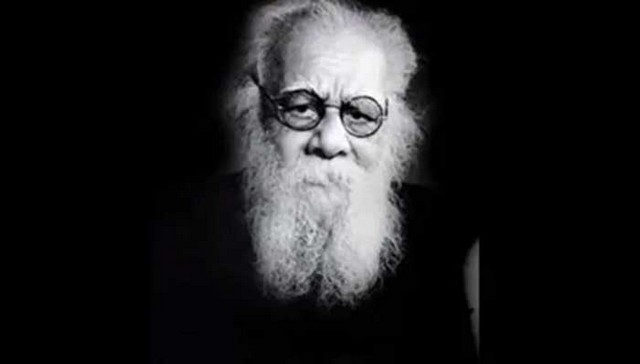
Why India needs Periyar today

By Satya Sagar

In the ongoing movement against the Citizenship Amendment Act the images of Gandhi, Ambedkar and even Bhagat Singh have been put forward as symbols of religious tolerance, non-violence, Dalit empowerment and even socialist revolution.

However, outside Tamil Nadu, few seem to have remembered E.V.Ramaswamy ‘Periyar’, the founder of the Dravidian movement– who perhaps offers the most potent challenge to the idea of a Hindu Rashtra – sought to be imposed by the BJP and its mentor RSS.

It is Periyar’s ideas, actions and most importantly his overall grammar of protest that, in my view, can most effectively take on the forces of Hindutva today. The Dravidian movement itself offers an excellent model to the rest of India to combat the barbarism of the caste system, redistribute resources, empower women and establish a society where reason and democracy prevail over the dictatorial urges of a tiny minority of upper caste Hindus.

Undoubtedly Periyar’s greatest cause was that of thoroughly exposing the Hindu caste system, which confers superior or inferior status to people by birth and not their individual merit. In other words, Hinduism does not have a conception of the human being as a universal entity with equal rights but divides society arbitrarily into the ‘high’ and the ‘low’.

“One should respect another in a way in which one expects to be respected by the other. This is a revolutionary principle for the Hindus. It can materialise not by reform but only by revolution. There are certain things that cannot be mended, but only ended. Brahmanic Hinduism is one such,” said Periyar. The key insight about Hindu society that Periyar highlighted was of it being an elaborate exploitative system – camouflaged with colourful mythology- that provided Brahmins and upper caste Hindus free labour, resources and monopoly over power.

The politics, administration and education system of Tamil Nadu at beginning of the twentieth century, like many other parts of India, was overwhelmingly dominated by Brahmins. For instance, although the Brahmins were only 3.2% of the population, 70% of the university graduates between 1870 and 1900 were Brahmins. This together with their control of all Hindu religious institutions and practice of untouchability against non-Brahmins led Periyar to dub the existing order as a ‘Brahminocracy’.

Periyar joined hands with other political thinkers to demand a blanket 50 percent reservation for non-Brahmins in all government jobs and educational institutions. Despite strong opposition from the Brahmin lobby Madras state, the precursor to Tamil Nadu, was the first state to implement such reservations in 1928.

Next, Periyar sought to demolish the ‘varnashrama dharma’ of Hinduism by deconstructing its theoretical basis, which lay in Hindu scriptures like the Puranas and Hindu epics such as Ramayana and Mahabharata. Periyar and other scholars of the Dravidian Kazhagam he founded, laid bare the contradictions, immorality and biases of these religious texts in great detail and showed how they provided religious sanction to the caste system.

For example, the Dravidian movement offered a detailed critique of the Ramayana, which according to Periyar was essentially a tale of conquest by migrant Aryans coming from Persia and parts of central Asia of the original people of India, broadly categorized as Dravidians.

In their reading of the Ramayana the hero of the epic Rama is actually the invading villain and Ravana, the so-called ‘demon king’ is the hero, who is a victim of Rama’s colonial aggression (there is a clear and very heartening echo of this idea in the way the dynamic Dalit leader Chandrashekhar Azad has added ‘Ravan’ to his name) . Periyar and his fellow activists also openly mocked the various gods of Hinduism for being as fallible as humans and still expecting to be worshipped without question (where was the Vishnu Chakra hiding when it was needed most against Ghazni or Clive?).

One of the keys to the success of the Dravidian movement was its brilliant use of pride in language and culture to awaken people, with many of its leaders being not just skilled orators but also good quality Tamil poets, musicians, actors and writers. Given the pride in the Tamil language that the Dravidian movement had aroused, it was not surprising at all that it strongly opposed the imposition of Hindi, with Periyar even conceiving the idea of a separate ‘Dravidanadu’ in response.

The threat of separatism together with the fierce anti-Hindi agitation in Tamil Nadu encouraged other states around India to assert their rights and concerns, ultimately strengthening the principle of federalism and diluting concentration of power in New Delhi. It is this kind of positive and assertive sub-nationalism that is urgently needed today to defeat the fascist vision of a monolith and homogenizing ‘Hindu Rashtra’ – which is at its core is nothing more than a projection of power over India by Hindi speaking, upper caste Hindus.

On the social reform front, Periyar promoted what he called ‘Self Respect Marriages’, which enabled couples from any religion to get married in a secular manner through just a simple exchange of garlands and without the services of any Brahmin. Just imagine today if such marriages were to be conducted across India as part of the anti-CAA, NRC movement. (all the priests of cow belt India would start an armed revolt in response)

Periyar also repeatedly asserted the right of non-Brahmins to enter the sanctum sanctorum of Hindu temples, arguing that stopping them from doing so was to deny them status of human beings. In 1970 Tamil Nadu, again became the first state in India to have a legislation to ensure people from all castes could become temple priests if they wanted to.

Another area where Periyar was far ahead of his times was in his radical feminism, which he theorised well before the term itself was invented anywhere in the world. A big champion of widow remarriage in his times, Periyar attacked the oppressive notion of female ‘chastity’ thus: “The tyranny of the male is the only reason for the absence of a separate word in our languages for describing the ‘chastity of men’.”

Of course, much water has flowed in the Kaveri since Periyar’s time and today Tamil Nadu’s ruling politicans have become notorious for rampant corruption, casteism and even forming alliances with the BJP, once seen as a hated promoter of ‘Aryan supremacy’ and Hindi chauvinism.

The state has also courted infamy in recent years for attacks on Dalits by the middle-castes who, while benefiting from the anti-Brahmin movement, do not want those further below them to assert their own rights. This was something Periyar had warned about, when he said that as long as there was a hierarchy of castes there could always be a ‘master-slave’ relationship between any of these.

Despite all this it can be said that the Dravidian movement effected the most successful social transformation in modern Indian history on the issues caste, education, assertion of language, federalism, social welfare and gender rights anywhere in the country.

It is not a coincidence at all that, compared to other parts of India, Tamil Nadu has the least amount of communal disturbances, with the Hindutva forces finding it extremely hard to grow here, despite many desperate attempts to do so. This is largely because Tamil Nadu, thanks to Periyar, is one of the few Indian states where the Brahmins no longer enjoy a hegemony over power or society and are unable to spread their centuries old philosophies of racism and hatred so easily.

To see Periyar as just the leader of the Tamils would be a grave mistake as his message was universal and relevant to the rest of India – especially in our times when a Brahminical theocracy is sought to be established under the garb of religious, majoritarian nationalism.

Satya Sagar is a journalist who can be reached at sagarnama@gmail.com

21 January 2020

Source: countercurrents.org