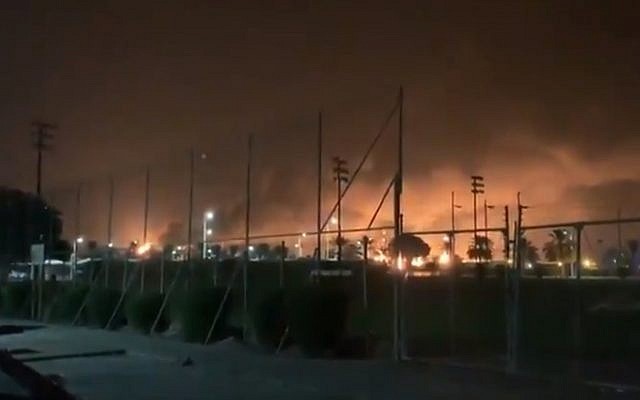
Just International

Putin offers Russian missile defense system to protect Saudi oil installations

By Abdus Sattar Ghazali

In the aftermath of Houti rebels drone attack on Saudi oil installations, President Vladimir Putin Monday offered Russian missile system to Saudi Arabia which now relies on American armaments including Patriot Missile system.

“We are ready to provide respective assistance to Saudi Arabia, and it would be enough for the political leadership of Saudi Arabia to make a wise government decision – as the leaders of Iran did in their time by purchasing S-300 and as (Turkish) President (Tayyip) Erdogan did by purchasing the latest S-400 ‘Triumph’ air defense systems from Russia,” Putin said after talks in Ankara with the Iranian President Hassan Rouhani and Turkish president Tayyab Erdogan.

These Russian weapons would protect any infrastructure facilities of Saudi Arabia, Putin added.

As Russian President Vladimir Putin meets in Ankara with the Iranian President Hassan Rouhani Monday Russia and China have called for de-escalation of tensions in the aftermath of the Drone attack on major Saudi oil installations claimed by Yemen’s Houthi rebels but blamed on Iran by the United States.

Russia has warned against a hasty reaction to the drone strikes. “We call on all countries to avoid hasty steps or conclusions that could exacerbate the situation, and on the contrary keep to a line of conduct that will help soften the impact of the situation,” Kremlin spokesman Dmitry Peskov told journalists.

Moscow also warned other countries against putting the blame on Iran for the attack and said that plans of military retaliation against Iran are unacceptable.

In a similar fashion, the China’s foreign ministry said it was “irresponsible” to blame anyone for the weekend attack on Saudi Arabia, given the absence of a conclusive investigation. Chinese Foreign Ministry spokeswoman Hua Chunying said Beijing was opposed to the intensification of any conflict. “We call on the parties concerned to avoid actions that could escalate regional tensions,” Hua said.

U.S. officials have released satellite images of the damage at Saudi Arabia’s crucial oil processing plant and a key oil field, claiming that the pattern of destruction suggested the attack on Saturday came from either Iraq or Iran.

Bernard Hudson, a former director of counterterrorism for the CIA, was quoted Monday by media as saying that the attacks probably involved a mix of drones and cruise missiles.

“It used to be that only governments had air forces, but drones have democratized violence from the sky,” said Hudson, now a fellow on gulf security issues at Harvard University. “The Houthis, with help and advice from Iran, have perfected it to a level no one else has done.”

Hudson called the counter-drone industry “exceptionally immature.” For military personnel, he said, the biggest problem is “detection at a distance. . . . If you don’t detect it until it’s on top of you, you have very little time to respond.”

Why Washington has to blame Iran over Saudi attacks?

On Monday RT published an article by Finian Cunningham, who said that US officials are blaming Iran for the devastating blitz on Saudi Arabia’s oil industry because of Washington’s spectacular failure to protect its Saudi ally.

Cunningham went on to say: “The Trump administration needs to scapegoat Iran for the latest military assault on Saudi Arabia because to acknowledge that the Houthi rebels mounted such an audacious assault on the oil kingdom’s heartland would be an admission of American inadequacy.

“Saudi Arabia has spent billions of dollars in recent years purchasing US Patriot missile defense systems and supposedly cutting-edge radar technology from the Pentagon. If the Yemeni rebels can fly combat drones up to 1,000 kilometers into Saudi territory and knock out the linchpin production sites in the kingdom’s oil industry, then that should be a matter of huge embarrassment for US “protectors.”

“American defense of Saudi Arabia is germane to their historical relationship. Saudi oil exports nominated in dollars for trade – the biggest on the planet – are vital for maintaining the petrodollar global market, which is in turn crucial for American economic power. In return, the US is obligated to be a protector of the Saudi monarchy, which comes with the lucrative added benefit of selling the kingdom weapons worth billions of dollars every year.”

Notably too, most US media reported initially that the attacks were by drones flown from Yemen, Cunningham argued and added: Associated Press reported a level of sophistication in the attacks whereby drones were used first to disable the US Patriot radar systems before other UAVs proceeded to execute the air strikes. It therefore seems that US officials are attempting to switch the story by blaming Iran. It is reckless scapegoating because the logical consequence could elicit a military attack against Iran, in which event Tehran has warned it is ready for war.

According to Cunningham, a timeline shows that the Houthis are more than capable of launching ever-more powerful ballistic missiles and deeper penetrating drones into Saudi territory. The rebels have been using drones from the beginning of the war which the US-backed Saudi-UAE coalition launched on the southern Arabian country in March 2015.

Over the past four years, the Houthi aerial firepower has gradually improved. Earlier, the Saudis, with American defense systems, were able to intercept drones and missiles from Yemen. But over the last year, the rebels have increased their success rate for hitting targets in the Saudi interior, including the capital Riyadh.

In May this year, Houthi drones hit Saudi Arabia’s crucial east-west pipeline. Then in August, drones and ballistic missiles were reported to have struck the Shaybah oil field near the border with the United Arab Emirates (UAE), as well as the Dammam exporting complex in Saudi Arabia’s Eastern Province.

The attacks on Aramco’s main crude processing facility knocked out 5.7 million barrels of daily oil production for Saudi Arabia, or more than 5% of the world’s daily crude production.

According to the New York Times, “oil prices rose about 10 percent on Monday as investors reacted to a weekend attack on one of Saudi Arabia’s most important oil facilities that could cripple petroleum exports for days or even weeks. But experts say that a severe shock to energy markets and the world economy would be unlikely.”

“The attack on the Abqaiq processing facility and another plant, deep in Saudi territory, displayed the vulnerability of the kingdom to tensions in the Persian Gulf region,” the NYT added while Eurasia Group said that Saudi Arabia’s air defense systems are designed to defend against traditional threats but are ill-equipped to tackle asymmetrical aerial threats from drones.

Abdus Sattar Ghazali is the Chief Editor of the Journal of America (www.journalofamerica.net) email: asghazali2011 (@) gmail.com

17 September 2019

Source: countercurrents.org
The Myth of the Cold War: 74 Years Ago, Secret September 1945 Plan to “Wipe the Soviet Union off the Map”

By Prof Michel Chossudovsky

Seventy four years ago, on September 15, 1945, the US released a secret document which consisted in waging a coordinated nuclear attack directed against 66 major urban areas of the Soviet Union, which at the time was an ally of the US.

The War Department estimated that a total of 204 atomic bombs would be required to “Wipe the Soviet Union off the Map”.

The War Department had studied the destructive impact of the atomic bomb on Hiroshima and Nagasaki (See Major General Grove’s letter to General Norstad dated September 25, 1945.

The military planners were talking about physical destruction rather than “death and destruction”. They failed to mention acknowledge the impact of this diabolical and criminal undertaking on human life. Genocide is an understatement.

In Hiroshima, a 100,00o people died within the first seven seconds following and solely as a result of the explosion (without accounting for deaths resulting from radiation).

The War Department in its September 15, 1945 document referred to “the number of atomic bombings which should be available to insure our national security”. That number was 204 atomic bombs to be dropped on 66 cities. They had studied the impacts of Hiroshima and Nagasaki. They were fully aware that “insuring their national security” would lead to millions of deaths.

The Cold War is a myth.

A US-led “hot war” against the Soviet Union was formulated at the height of World War II. For the US, the Cold War was a continuation of World War II.

The Manhattan project was launched in 1939, two years prior to America’s entry into World War II in December 1941. The Kremlin was fully aware of the secret Manhattan project as early as 1942.

The Manhattan project was largely directed at the Soviet Union.

Were the August 1945 Hiroshima and Nagasaki attacks used by the War Department to evaluate the viability of a much larger attack on the Soviet Union consisting of more than 204 atomic bombs?

The formulation of the secret September 15, 1945 document was preceded by an August 30, 1945 document which was dispatched by Major General Lauris Norstad to the head of the Manhattan Project General Leslie Groves

This document [outlined] “a total of 15 “key Soviet cities” to be struck with US atomic weapons, headed by the capital Moscow. This was followed by another 25 “leading Soviet cities” listed for annihilation, topping this latter group was Leningrad, almost destroyed during the Nazi siege finally lifted in late January 1944.”

The above nuclear plans were being composed three days before the Second World War had even officially concluded (on 2 September 1945), and a mere two weeks following Japan’s surrender. (Shane Quinn, Global Research, May 28, 2019)

The key documents to bomb 66 cities of the Soviet Union (15 September 1945) were finalized 5-6 weeks after the Hiroshima and Nagasaki bombings (6, 9 August 1945). The US Nuclear Attack against the USSR had been planned as early as 1942.

The 1945 documents confirm that the US was involved in the “planning of genocide” against the Soviet Union.

Central to our understanding of the Cold War which started (officially) in 1947, Washington’s September 1945 plan to bomb 66 Soviet cities into smithereens played a key role in triggering the nuclear arms race.

The Soviet Union was threatened and developed its own atomic bomb in 1949 in response to 1942 Soviet intelligence reports on the Manhattan Project.

While the Kremlin knew about these plans to “Wipe out” the USSR, the broader public was not informed because the September 1945 documents were of course classified.

Today, neither the September 1945 plan to blow up the Soviet Union nor the underlying cause of the nuclear arms race are acknowledged.

The Western media has largely focussed its attention on the Cold War US-USSR confrontation. The plan to annihilate the Soviet Union dating back to World War II and the infamous Manhattan project are not mentioned.

Had there not been a Manhattan Project leading up the September 1945 plan to “Wipe the Soviet Union off the Map”, a nuclear arms race would not have taken place. There would not have been a Cold War.

Much of the analysis and history of the so-called “Cold War” are mistaken.

Washington’s Cold War nuclear plans are invariably presented in response to so-called Soviet threats, when in fact it was the U.S. plan released in September 1945 (formulated at an earlier period at the height of World War II) to wipe out the Soviet which motivated Moscow to develop its nuclear weapons capabilities.

Michel Chossudovsky is an award-winning author, Professor of Economics (emeritus) at the University of Ottawa, Founder and Director of the Centre for Research on Globalization (CRG), Montreal, Editor of Global Research.

15 September 2019

Source: www.globalresearch.ca

In Tamil Nadu, Hindus Observe ‘Allah Festival’ on Eve of Muharram

By Syed Ali Mujtaba

Muharram is first month of the Islamic New Year. This month holds special place for the Muslims all over the world due to killing of Imam Husain in the battle of Karbala (Iraq) on the 10th day of Muharram. Husain was grandson of Prophet Muhammad (PBUH) and son of Caliph Ali. Muslims mourns the first 10 days of Muharram month and this mourning is observed in different ways in different parts of the world.

However, in a sleepy village of Tamil of Tamil Nadu Muharram is observed as ‘Allah Festival’ by the Hindu residents with equal fervor as Muslim brethren do so in other places of the world.

The residents of Kasanadu Pudu, in Thanjavur district who are predominantly Hindus except for a handful of MusliMs, start preparation for the festival ten days in advance. They clean the vicinity of the Allah temple (Koil) near the public square of the village. They paint and decorate the Koil with new green flags, flowers and decorative lights.

On the eve of Muharram, the Hindu women of the village take out a procession from each street and that ends at ‘Allah Koil.’ They carry a large pot filled with sweetened water atop their heads with a small pot over the larger pot that has puffed rice and jiggery inside. Members of the Muslim families also conduct some rituals and offer puffed rice and jaggery to the Allah Koil.

While women take out the procession with pots, the men of the village take out another procession with hand symbol with five fingers, tied to a pole and call it “Five finger Allah.” This is followed some caring four, three, two and single finger symbols. This procession wades through the entire village and reaches the ‘Allah Koil’ in the end.

As the procession proceeds through the village streets, residents pay obeisance to the hand symbols from their houses and those who make vows offer garlands made of lemon and silk towels to the symbols.

The procession ends on the 10th Muharram and those holding the finger symbols and those making vows, observe a fire-walk ritual by walking bare foot on the burning fire.

With this activity, the festival comes to a close and the finger symbols are deposited at the Allah Koil. It will be taken out again next year for the Allah festival on the eve of Muharram.

The tradition of the ‘Allah festival’ celebration is quite ancient. A legend has it that some villagers of Kasanadu Pudu saw a light in the flowing water of Pudhu Aaru River which passes near the village. A resident found a hand symbol with five fingers made of metal. Later, he had a dream in which a Muslim saint told him that he would be residing in this village to bestow his blessings to the villagers.

As such this became the reason for ‘Allah festival’ that is celebrated every year beginning from the first day of Muharram and concluded on the 10th day of Muharram.

M Singaravel, a native of the village who works as a health inspector with the health department said, ‘Allah festival’ is a faith based festival celebrated by the Hindu residents of Kasanadu Pudu village from centuries. There is an emotional attachment to the festival as many people’s vows being getting fulfilled in this festival.

“I had vowed to offer a silk shawl, if my daughter got a seat in the desired course,” Singaravel said adding his wish was granted.

Apart from Kasanadu Pudu village ‘Allah festival’ is also celebrated in a few other villages including Ko Vallundampattu near Thanjavur. The most fascinating part of this festival is the excitement with which Hindu families start preparation for the festival. The natives of the village working elsewhere in various places make it a point to come to their village especially for attending the celebration of ‘Allah festival.’

This is a remarkable story of the survival of little tradition in the country, at a time when the great tradition of Hindutva is bulldozing all other tradition under the juggernaut of ‘Jai Sri Ram.’ This ‘little tradition’ of syncretic culture upholds the liberal values of Hinduism and maintains the communal harmony of the country.

Syed Ali Mujtaba is a journalist based in Chennai. He can be contacted at syedalimujtaba2007@gmail.com

14 September 2019

Source: countercurrents.org

British judge jails Assange indefinitely, despite end of prison sentence

By Oscar Grenfell

In a hearing at Westminster Magistrates’ Court yesterday morning, British District Judge Vanessa Baraitser ruled that WikiLeaks’ founder Julian Assange will remain in prison, despite the fact that his custodial sentence for “absconding” bail expires on September 22.

The ruling is the latest in a series of attacks on Assange’s legal and democratic rights by the British judiciary. It means that the publisher and journalist will be detained until court proceedings next February for his extradition to the US, where he faces 175 years imprisonment for exposing American war crimes.

Given that the extradition proceedings will likely involve a protracted legal battle, Baraitser’s decision potentially confines Assange to the maximum-security Belmarsh Prison for years to come.

The court case was widely presented in the corporate media as a bail hearing for Assange. A statement posted by the official WikiLeaks Twitter account this morning rejected these claims, explaining: “This morning’s hearing was not a bail hearing, it was a technical hearing. Despite this, the magistrate preemptively refused bail before the defence requested it.”

WikiLeaks stated: “Magistrate says Assange to remain in prison indefinitely. He has been in increasing forms of deprivation of liberty since his arrest 9 years ago, one week after he started publishing Cablegate.” “Cablegate” refers to WikiLeaks’ 2010 publication of hundreds of thousands of US diplomatic cables, exposing the sordid intrigues of the American government and its allies around the world.

In remarks directed at Assange, Baraitser reportedly stated: “You have been produced today because your sentence of imprisonment is about to come to an end. When that happens your remand status changes from a serving prisoner to a person facing extradition.”

She continued: “Therefore I have given your lawyer an opportunity to make an application for bail on your behalf and she has declined to do so. Perhaps not surprisingly in light of your history of absconding in these proceedings.” This claim, however, is contradicted by the WikiLeaks statement, accusing the judge of preempting any application for bail by Assange’s lawyers.

Baraitser declared: “In my view I have substantial ground for believing if I release you, you will abscond again.”

A further administrative hearing is scheduled for October 11, followed by a case management hearing on October 21.

Baraitser’s ruling was based on the fraudulent claim that Assange illegitimately “absconded” on bail in 2012. In reality, Assange exercised his right, protected under international law, to seek political asylum in Ecuador’s London embassy. He did so after British courts ruled that he would be extradited to Sweden to “answer questions” over manufactured and politically motivated sexual misconduct allegations.

The British and Swedish authorities refused to explain why extradition was necessary for a “preliminary investigation” to proceed, or why Swedish prosecutors would not agree to Assange’s repeated offer to answer any questions from London. Assange was finally questioned by prosecutors in December 2016, after which they dropped their fraudulent “investigation” in April 2017.

The issue for Assange was that Swedish authorities refused to guarantee that they would not extradite him to the US if he was in their custody.

The fact that seeking asylum was necessary to protect Assange from a politically-motivated US show trial was fully confirmed in April this year, when the Trump administration’s Justice Department unveiled 17 charges of espionage against him. If convicted of the espionage charges, and one lesser offence, Assange would face the life sentence of up to 175 years’ imprisonment.

Assange was convicted of absconding on bail, as a result of his application for political asylum, just hours after he was illegally expelled from Ecuador’s London embassy and arrested by the British police on April 11.

The British judge presiding over the hearing ignored the fact that Assange had forfeited the bail monies his supporters had paid; that he had spent close to seven years effectively detained by the British authorities in the small embassy building; and that his right to seek political asylum had been repeatedly upheld by United Nations’ bodies.

Assange was sentenced to 50 weeks. Under British legislation, the maximum sentence for a bail violation is 52 weeks. Those convicted of such an offence, however, are eligible for release after half of that time served.

Baraitser’s refusal to release Assange demonstrates the vindictive disregard of the British establishment for the warnings about his physical and mental health.

Recent visitors to Assange, including John Pilger and the WikiLeaks founder’s brother Gabriel Barber-Shipton, have stated that he has lost a significant amount of weight. Barber-Shipton publicly warned, after visiting Assange last month, that he fears he “might never see” his brother again.

UN Special Rapporteur on Torture Nils Melzer, who found earlier this year that Assange was the victim of a protracted campaign of “psychological torture,” has repeatedly condemned the British authorities for jailing him in a maximum-security prison.

In a letter to the British government in May, Melzer stated that the conditions of Assange’s detention had resulted in his “continued exposure to progressively severe psychological suffering and the ongoing exacerbation of his pre-existing trauma.”

For the past five months, Assange has frequently been held in conditions of virtual solitary confinement. His right to receive visitors has been heavily restricted and he has been denied access to a computer, the prison library and legal documents relating to his defence against US extradition.

Yesterday’s ruling demonstrates the determination of the British legal and political establishment to trample upon Assange’s democratic rights and facilitate his extradition. A US prosecution of Assange for WikiLeaks’ lawful publishing activities would represent a sweeping attack on fundamental democratic rights, including freedom of speech and freedom of the press.

The callous judgement underscores the urgent necessity of transforming the mass sympathy for Assange among workers, students and young people around the world, into a conscious political movement fighting for his immediate freedom.

In Australia, maximum pressure must be placed on the federal Liberal-National government to force it to uphold Assange’s rights as an Australian citizen and journalist. The demand must be raised internationally that the Australian government intervene with all its diplomatic weight and legal discretion to secure Assange’s immediate release from Belmarsh Prison and his right to return to Australia, if he chooses to do so, with a guarantee against extradition to the US.

Originally published in WSWS.org

14 September 2019

Source: countercurrents.org
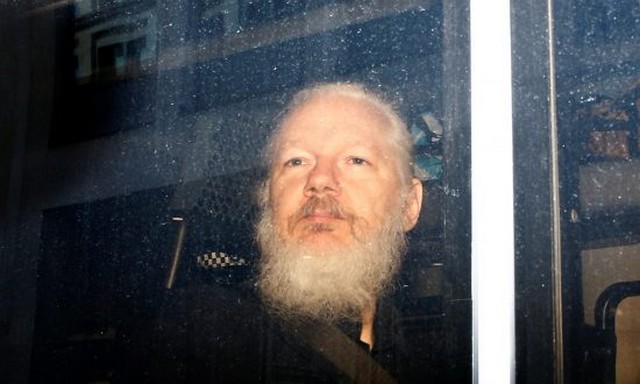
With $295 billion 2019 defense budget Saudi Arabia failed to stop drone attack on oil installations from the Yemeni Houthi ragtag militia

By Abdus Sattar Ghazali

With $295 billion 2019 defense budget, Saudi Arabia Saturday failed to stop a drone attack on its oil installations from the Yemeni rebel rag tag militia.

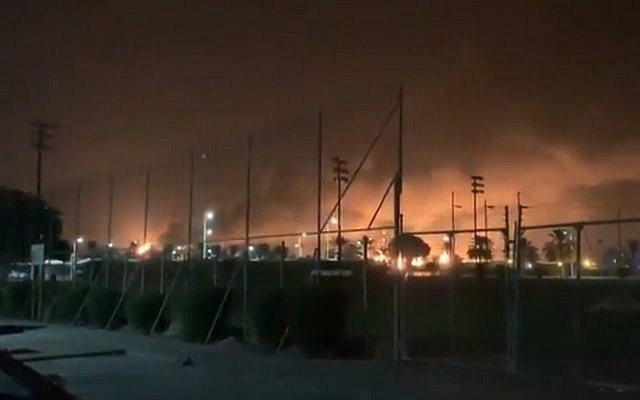
Drones launched by Yemen’s Houthi rebels attacked the world’s largest oil processing facility in Saudi Arabia and another major oil field, sparking huge fires.

The facilities are operated by Saudi Aramco, Saudi Arabia’s state-owned oil giant, and produce up to 70% of the country’s crude oil output.

The Wall Street Journal, quoting “people familiar with the matter,” reported that Saudi Arabia is shutting down about half of its oil output following the strikes. The shutdown would amount to a loss of about 5 million barrels a day or roughly 5% of the world’s daily production of crude oil, the Journal said.

The attack by the Houthis in the war against a US-backed and Saudi-led coalition comes after weeks of similar drone assaults on the kingdom’s oil infrastructure, but none of the earlier strikes appeared to have caused the same amount of damage.

While the Houthis do not have significant financial resources, the drones have given them a way to hurt Saudi Arabia, which was the world’s third highest spender on military equipment in 2018, investing an estimated $67.6 billion on arms, the New York Times said.

“This has given the Saudis a challenge they can’t confront, no matter what their financial, military or intelligence capabilities are,” Farea Al-Muslimi, co-founder of the Sanaa Center for Strategic Studies, which focuses on Yemen, was quoted as saying.

The attacks — some 500 miles from Yemeni soil — not only exposed a Saudi vulnerability in the war against the Houthis, but demonstrated how relatively cheap it has become to stage such high-profile attacks. The drones used in Saturday’s attack may have cost $15,000 or less to build, said Wim Zwijnenburg, a senior researcher on drones at PAX, a Dutch peace organization.

Conflict Armament Research, was quoted by the Associated Press as saying that the rebels have flown drones into the radar arrays of Saudi Arabia’s Patriot missile batteries disabling them and allowing the Houthis to fire ballistic missiles into the kingdom unchallenged.

The Houthis launched drone attacks targeting Saudi Arabia’s crucial East-West Pipeline in May. In August, Houthi drones struck Saudi Arabia’s Shaybah oil field.

In March 2018, it was reported that US-made missile defenses spectacularly failed in Saudi Arabia.

David Axe of VICE, wrote, at least five American-made Patriot missiles apparently missed, malfunctioned, or otherwise failed when Saudi forces tried to intercept a barrage of rockets targeting Riyadh on March 25, 2018. That’s bad news for the US military and its closest allies, who are counting on the Patriot to stop large-scale enemy attacks during a major war.

It’s nothing but an unbroken trail of disasters with this weapon system, Axe wrote.

The ground-launched, radar-guided Patriot missile, which is 19 feet long in its basic version, has been controversial since shortly after its introduction in 1984. It missed many of its targets during the 1991 Gulf War. Twelve years later during the US-led invasion of Iraq, Patriot crews shot down two allied warplanes, killing three crew members.

In August 2015, as the U.S. State Department approved a $5.4 billion sale of 600 Lockheed-made Patriot missiles to Saudi Arabia, alongside an additional half billion dollars in ammunition for various smaller weapons.

Tellingly, Saudi Arabia is buying 68% of its arms purchases from the U.S. According to the Stockholm International Peace Research Institute (SIPRI) from 2014-18, the kingdom received 56 combat aircraft from the United States and 38 from the United Kingdom, with aircraft in both cases equipped with cruise missiles and other guided weapons.

Associated Press quoted UN investigators as saying that the Houthis’ new UAV-X drone, found in recent months during the Saudi-led coalition’s war in Yemen, likely has a range of up to 1,500 kilometers. That puts the far reaches of both Saudi Arabia and the UAE in range.

Abdus Sattar Ghazali is the Chief Editor of the Journal of America (www.journalofamerica.net) email: asghazali2011 (@) gmail.com

15 September 2019

Source: countercurrents.org
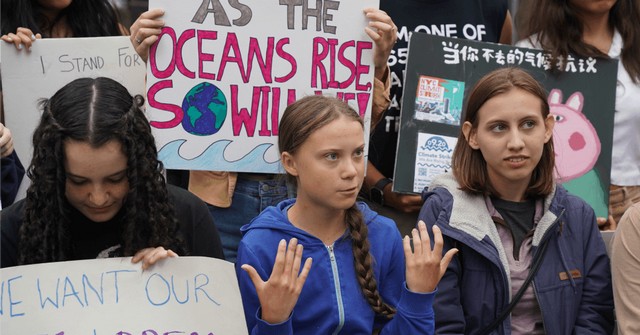
Maxime Bernier Attacked Greta Thunberg’s Autism. Naomi Klein Says Autism Made the Teen a Global Voice of Conscience

By Naomi Klein

Maxime Bernier wants us to think he is sorry. The leader of the extremist People’s Party of Canada had tweeted that Swedish climate activist Greta Thunberg is “clearly mentally unstable. Not only autistic, but obsessive-compulsive, eating disorder, depression, and lethargy, and she lives in a constant state of fear. She wants us to feel the same.”

Facing a ferocious backlash, he has since backpedaled, calling the 16-year-old “a brave young woman” who unfortunately is a “pawn” of the climate movement.

Thunberg is nobody’s pawn. I have rarely met anyone — child or adult — who better knows their own mind. And this is not despite her autism; it may well be because of it. In fact, a big part of what has made Thunberg such an inspiring figure, is the fact that she is living proof that diversity — in her case neurodiversity — is absolutely key to the survival of our species.

Every person with autism is different, but there are some traits that many with the diagnosis share in common. As Thunberg has said, people with her type of autism tend to be extremely literal and often have trouble coping with cognitive dissonance, those gaps between what we know and what we do.

Many people on the autism spectrum are also less prone to imitating the social behaviors of people around them and instead forge their own unique paths. This can make them intensely vulnerable to bullying.

“For those of us who are on the spectrum,” Thunberg says, “almost everything is black or white. We aren’t very good at lying, and we usually don’t enjoy participating in this social game that the rest of you seem so fond of.”

Many people on the spectrum also have a powerful capacity to focus on a particular area and to not be distracted. This is often a gift, but it can also be painful, as it was in Thunberg’s case. She turned her laser-like focus on the climate crisis, including the failure of politicians to do what is required to protect a habitable planet. The fact that other people around her seemed relatively unconcerned about the urgent need for transformative action did not send her reassuring social signals, as such signals do for children who are more socially connected. The lack of concern terrified her even more.

According to Thunberg, the only way she was able to cope was to find ways to reduce the cognitive dissonance between what she had learned about the climate crisis and how she lived her life. If she desperately wanted powerful politicians to put our societies on emergency footing to fight climate change, then she needed to reflect that state of emergency in her own life.

So, at age 15, she decided to stop doing the one thing all kids are supposed to do when everything is normal: go to school. Every Friday, she skipped class and stationed herself outside of Sweden’s parliament with a handmade sign that said simply: “School Strike For the Climate.”

“Why,” Thunberg wondered, “should we be studying for a future that soon may be no more, when no one is doing anything whatsoever to save that future?”

The rest is history — the speeches at United Nations conferences, at the European Union, at TEDx Stockholm, at the Vatican, at the British Parliament.

To the rich and mighty at the annual World Economic Summit in Davos she said: “I want you to feel the fear I feel every day. I want you to act. I want you to act as you would in a crisis. I want you to act as if the house is on fire, because it is.”

Videos of her went viral. It was as if by yelling “Fire!” on our warming planet, she had given others the confidence to believe their own senses and smell the smoke coming in under all those tightly closed doors. And so, children around the world began taking their cues from her — the girl who takes social cues from no one — and started organizing student strikes of their own every Friday. (They have now called on people of all ages to join them, starting on Sept. 20.)

Thunberg’s voyage from “invisible girl,” as she described herself, to global voice of conscience is an extraordinary one, and it has a lot to teach us. In a way, she is asking those of us whose mental wiring is more typical — less prone to extraordinary focus and more capable of living with moral contradictions — to be more like her. And she has a point.

During normal, non-emergency times, the capacity of the human mind to rationalize, compartmentalize, and be distracted are important coping mechanisms. It’s also extremely helpful to unconsciously look to our peers and role models to figure out how to feel and act — those social cues are how we form friendships and build cohesive communities.

When it comes to rising to the existential threat of climate breakdown, however, these traits are proving our collective undoing. They are reassuring us when we should not be reassured. They are distracting us when we should not be distracted. And they are easing our consciences when they should not be eased.

In part this is because pretty much every aspect of our economy would have to change if we were to decide to take climate change seriously, and there are many powerful interests that like things as they are. Not least the fossil fuel corporations, which have funded a decades-long machine of disinformation, obfuscation and straight-up lies about the reality of climate change.

As a result, when most of us look around for social confirmation about climate disruption, we are confronted with all kinds of contradictory signals: Don’t worry about that; it’s an exaggeration; there are countless more important problems; there are no alternatives; you’ll never make a difference, and so on. And it certainly doesn’t help that we are trying to navigate this civilizational crisis at a moment when some of the most brilliant minds of our time are devoting vast energies to figuring out ever more ingenious tools to keep us running around in digital circles in search of the next dopamine hit online.

This may explain the odd space that the climate crisis occupies in the public imagination, even among those of us who are actively terrified of climate collapse. One minute we’re sharing articles about insect apocalypse and viral videos of walruses falling off cliffs because sea ice loss has destroyed their habitat. The next we’re online shopping and willfully turning our minds into Swiss cheese by scrolling through Twitter or Instagram.

“I think in many ways that we autistic are the normal ones, and the rest of the people are pretty strange,” Thunberg has said, adding that it helps not to be easily distracted or reassured with rationalizations.

“Because if the emissions have to stop, then we must stop the emissions. To me, that is black or white.”

Naomi Klein is Senior Correspondent at The Intercept and the inaugural Gloria Steinem Chair of Media, Culture and Feminist Studies at Rutgers University.

15 September 2019

Source: countercurrents.org
Will NPR Now Officially Change Its Name to National Propaganda Radio?

By Edward Curtin

Back in the 1960s, the CIA official Cord Meyer said the agency needed to “court the compatible left.” He knew that drawing liberals and leftists into the CIA’s orbit was the key to efficient propaganda. Right-wing and left-wing collaborators were needed to create a powerful propaganda apparatus that would be capable of hypnotizing audiences into believing the myth of American exceptionalism and its divine right to rule the world. The CIA therefore secretly worked to influence American and world opinion through the literary and intellectual elites.

Frances Stonor Saunders comprehensively covers this in her 1999 book, The Cultural Cold War: The CIA And The World Of Arts And Letters, and Joel Whitney followed this up in 2016 with Finks: How the CIA Tricked the World’s Best Writers, with particular emphasis on the complicity between the CIA and the famous literary journal, The Paris Review. By the mid-1970s, as a result of the Church Committee hearings, it seemed as if the CIA, NSA, FBI, etc. had been caught in flagrante delicto and disgraced, confessed their sins, and resolved to go and sin no more. Then in 1977, Carl Bernstein wrote a long piece for Esquire – “The CIA and the Media” – naming names of journalists and media (The New York Times, CBS, etc.) that worked hand-in-glove with the CIA, propagandizing the American people and the rest of the world. It seemed, which is the intent of a “limited hangout,” as if all would be hunky-dory now with the bad boys purged from the American “free” press. Seemed to the most naïve, that is, by which I mean the vast numbers of people who wanted to re-stick their heads in the sand and believe, as Ronald Reagan’s team of truthtellers would announce, that it was “Morning in America” again with thefree press reigning and the neo-conservatives, many of whom had been “converted” from their leftist views, running things in Washington.

So again it is morning in America this September 6, 2019, and the headline from National Public Radio announces the glad tidings that NPR has named a new CEO. His name is John Lansing, and the headline says he is a “veteran media executive.” We are meant to be reassured. It goes on to say that Mr. Lansing, 62, is currently the chief executive of the government agency, The U.S. Agency for Global Media, that oversees Voice of America, Radio and Television Marti, and Radio Free Europe/Radio Liberty, among others. We are furthermore reassured by NPR that Lansing “made his mark in his current job with stirring defenses of journalism, free from government interference.” The announcement goes on to say:

Lansing has earned an advanced degree in political agility. At the U.S. Agency for Global Media, Lansing championed a free press even as leaders of many nations move against it.

‘Governments around the world are increasingly cracking down on the free flow of information; silencing dialogue and dissent; and distorting reality,’ Lansing said in a speech he delivered in May to the Media for Democracy Forum. ‘The result, I believe, is a war on truth.’

He continued: ‘Citizens in countries from Russia to China, from Iran to North Korea, have been victimized for decades. But now we’re seeing authoritarian regimes expanding around the globe, with media repression in places like Turkey and Venezuela, Cambodia and Vietnam.’

So we are reassured that the new head of NPR, the chief of all U.S. propaganda, is a champion of a free press.

Perhaps NPR will soon enlighten the American public by interviewing its new head honcho and asking him if he thinks Julian Assange and Chelsey Manning, by exposing America’s war crimes, and Edward Snowden, by exposing the U.S. government’s vast electronic surveillance programs of its own citizens, deserve to be jailed and exiled for doing the job the American mainstream “free press” failed to do.What NPR failed to do.

Perhaps they will ask him if he objects to the way his own government “interfered” in the lives of these three courageous people who revealed truths that every citizen of a free country is entitled to.

Perhaps they will ask him if the U.S. government’s persecution of these truthtellers is what he means by there being “a war on truth.” Perhaps they will ask him if he thinks the Obama and Trump administrations have been “distorting reality” and waging a war on truth.

Perhaps not. Of course not.

Don’t laugh, for the joke will be on you if you listen to NPR and its sly appeal to “liberal” sensibilities. If you are wondering why we have had the Russia-gate hoax and who was responsible (see/hear Russia expert Prof. Stephen Cohen here) and are now involved in a new Cold War and a highly dangerous nuclear confrontation with Russia, read Lansing’s July 10, 2019 testimony before the House Appropriations Sub-Committee on State, Foreign Operations and Related Programs: “United Sates Efforts to Counter Russian Disinformation and Malign Influence.”

Here is an excerpt:

USAGM provides consistently accurate and compelling journalism that reflects the values of our society: freedom, openness, democracy, and hope. Our guiding principles—enshrined in law—are to provide a reliable, authoritative, and independent source of news that adheres to the strictest standards of journalism….

Russian Disinformation. And make no mistake, we are living through a global explosion of disinformation, state propaganda, and lies generated by multiple authoritarian regimes around the world. The weaponization of information we are seeing today is real. The Russian government and other authoritarian regimes engage in far-reaching malign influence campaigns across national boundaries and language barriers. The Kremlin’s propaganda and disinformation machine is being unleashed via new platforms and continues to grow in Russia and internationally. Russia seeks to destroy the very idea of an objective, verifiable set of facts as it attempts to influence opinions about the United States and its allies. It is not an understatement to say that this new form of combat on the information battlefield may be the fight of the 21st century.

Then research the history of Radio Free Europe/Radio Liberty, the Voice of America, Radio and Television Marti, etc. You will be reassured that Lansing’s July testimony was his job interview to head National Propaganda Radio.

Then sit back, relax, and tune into NPR’s Morning Edition. It will be comforting to know that it is “Morning in America” once again.

Edward Curtin is a writer whose work has appeared widely.

13 September 2019

Source: countercurrents.org
Iran – a Club of Sanctioned Countries – In Solidarity Against US Economic Terrorism

By Peter Koenig

PressTV Interview – transcript Excerpts:

An Iranian parliamentary faction has come up with the idea of establishing a club of sanctioned countries for concerted action against the US economic terrorism.

The chairman of the Parliament’s faction on countering sanctions, Poormokhtar, gave a report on the formation of the faction and its activities, as well as the ongoing efforts to establish the club of sanctioned countries. Iran’s FM, Zaraf, said this would be enhancing the already existing alliance of Russia, China, Syria, Iran, Cuba, Venezuela against US economic terrorism.

PressTV Questions:
1. Russia, China, Iran, Syria, Cuba, and Venezuela are among the nations that have come out against the United States’ use of sanctions to enforce its foreign policy around the world. In what ways can they fight these US sanctions as a group?

PK
Brilliant idea.
Solidarity makes stronger and eventually will attract other countries who are sick and tired of the US sanction regime, and since they have the backing of Russia and China – that’s a very strong alliance, especially an economic alliance. The sanction regime can only be broken through economics, meaning decoupling from the western monetary system. I said this before and say it again, at the risk of repeating myself.

After all, China is the world’s largest and strongest economy in Purchasing Power GDP measures – which is the only comparison that really counts. I believe this solidarity alliance against US sanctions is certainly worth a trial.

And personally, I think it will be a successful trial, as more countries will join, possibly even non-sanctioned ones, out of solidarity against a common tyrant.

The countries in solidarity against sanctions, in addition to ignoring them – and the more they ignore them, the more other countries will follow-suit, that’s logical as fear disappears and solidarity grows.

For example, Iran and Venezuela, oil exporting countries, could accompany their tankers by war ships. Yes, it’s an extra cost, but think of it as temporary and as a long-term gain. Would “Grace I” have been accompanied by an Iranian war ship – the Brits would not have dared confiscating it. That’s for sure.

PressTV:
2. Many of the US sanctions have led to death of civilians in those particular countries. At the same time, sanctions have also led to the improvement of these countries to the point where domestic production in various fields advanced. Don’t sanctions become country-productive to US aims?’

PK
Of course, the sanctions arecounter-productive. They have helped Russia to become food-self-sufficient, for example. That was not Washington’s intention and less so the intention of the EU, who followed Washington’s dictate like puppets.

Sanctions arelike a last effort before the fall of the empire, to cause as much human damage aspossible, to pull other nations down with the dying beast.It has always been like that – starting with the Romans through the Ottoman’s. They realize their time has come – but can’t see a world living in peace. So, they must plant as much unrest and misery as possible before they disappear.

That’s precisely what’s happening with the US.

Intimidation, building more and more military bases, all with fake money, as we know the dollar is worth nothing – FIAT money – that the world still accepts – but less and less so, therefore military bases, deadly sanctions – and trade wars –
Trump knows that a trade war against China is a lost cause. Still, he can intimidate other countries by insisting on a trade war with China – or that’s what he thinks.

PressTV
3. The more countries US sanctions, illegally, more people turn against the US: doesn’t that defeat the US so-called fight against terrorism and violence?

PK
Well, US sanction and the entire scheme of US aggression has nothing to do with fighting terrorism,as you know. It’s nothing but expanding US hegemony over the world,and if needed, and more often than not,the US finances terrorism to fight proxy wars against their so-called enemies, meaning anybody not conforming to their wishes and not wanting to submit to their orders and notletting them exploit – or rather steal – their natural resources.

Syria is a case in point. ISILis funded and armed by the Pentagon,who buys Serbian produced weapon to channel them through the Mid-East allies to Syrian terrorists, the ISIL or similar kinds with different names -just to confuse.

Venezuela too – the opposition consist basically of US trained, financed and armed opposition “leaders” – who do not want to participate in totally democratic elections – order of the US – boycott them. But as we have seen as of this day, the various coup attempts by the US against their legitimate and democratically elected President, Nicolás Maduro, have failed bitterly – and this despite the most severe sanctions regime South American has known, except for Cuba, against whom the US crime has been perpetuated for 60 years.

So, nobody should have the illusion that Washington’s wars are against terrorism. Washington is THE terrorist regime that fights for world hegemony.

https://ifpnews.com/iranian-mps-propose-formation-of-club-of-sanctioned-countries
https://www.newsweek.com/russia-china-iran-fight-sanctions-1458096

Peter Koenig is an economist and geopolitical analyst.

13 September 2019

Source: countercurrents.org
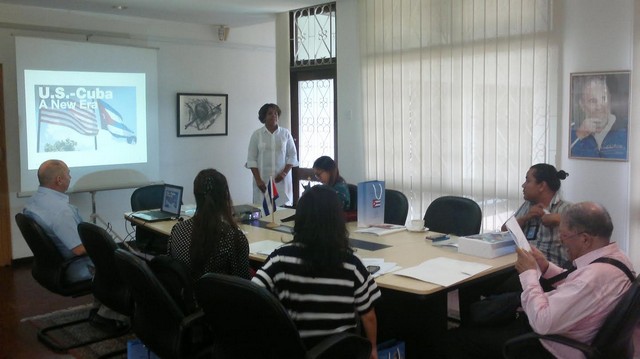
Counter Kremlin: USAID’s strategy in the name of democracy

By Countercurrents Collective

An intergovernmental coalition about a new U.S. initiative planned to counter Russia in Europe hosted a presentation on September 12, 2019 in Warsaw.

Media reports said:

The U.S. Agency for International Development (USAID) describes its initiative – Countering Malign Kremlin Influence – as a framework to help democratic institutions safeguard elections, counter propaganda and misinformation, and avoid dependence on Russian energy.

The effort, first announced in July, is aimed at countries such as Ukraine, Georgia and Moldova.

USAID Assistant Administrator Brock Bierman presented it on September 12 to diplomats in Warsaw, delivering the message that the U.S. is committed to its strategic interests across a region that is important to the U.S.

Bierman was speaking at the Warsaw-based Community of Democracies, a coalition of a number of states closer to the U.S.

Bierman said: The Kremlin has nothing to offer. USAID will not stand by as the Kremlin seeks to undermine what the countries in the region “have fought so hard for and for so long.”

He told about USAID’s efforts that include supporting journalism in Moldova and the Balkans, and helping countries diversify their energy supplies so that Russian energy does not remain a tool of political control.

Wojciech Przybylski, the editor of Visegrad Insight magazine, which focuses on Central Europe, said that it was reassuring to hear of U.S. efforts to support democracy across Europe.

“The fact that a U.S. government agency is undertaking efforts to tell the story that Americans are countering the Kremlin — and exactly on the territory the Kremlin would dispute, where Moscow would rather not have anyone else but themselves — it’s a powerful message and the right message,” Przybylski told The Associated Press.

In July, the chief of the USAID Mark Green presented a strategy on ‘countering malign Kremlin influence,’ the USAID said on its website and dated June 27.

The document featured measures to counter Russia’s influence in Europe, in particular in Moldova and Ukraine.

“The United States has long believed that a strong, prosperous, and free Europe is vitally important to American strategic interests. The Russian Government and its proxies aim to weaken U.S. influence in the world and divide us from our allies and partners,” reads the document.

The document targets four major areas: energy and economy, democracy and law, media.

Pro-Hong Kong rally in Washington DC sponsored with US govt.-linked money

A planned Washington DC protest in support of Hong Kong activists and promoting the ‘Chinazi’ flag is being sponsored by at least six organizations backed by the US-funded National Endowment for Democracy (NED).

Posters for the event circulated online contain an image of the so-called ‘Chinazi’ flag – an altered version of the Chinese national flag with the yellow stars arranged to form a swastika and with a hammer and sickle placed in the center.

The list of event sponsors proves that the anti-China movement in Hong Kong is backed not only by the U.S. politicians, but also by the U.S. government-funded groups.

A DC-based organization called Citizen Power Initiatives for China, which describes itself as a “grassroots movement” dedicated to promoting democracy in China through “overseas assistance” appears to be the chief event organizer.

Information on the group’s funding is not easily found on its website, but a search of the NED database shows it received $206,500 from the US-funded organization between 2015 and 2016.

The NED, founded in 1983, has been used mainly as a “soft-power” vehicle to advance the U.S. foreign policy and military agenda through sowing chaos in countries targeted for “regime change.”

Prominent investigative journalists made claims over the last few years that the NED is “dedicated to meddling in other countries’ affairs, interfering in elections, toppling elected leaders and spreading public relations campaigns to sow chaos against countries that resist U.S. agenda.”

Even one of the NED’s former presidents, Carl Gershman, has admitted it was created in order to continue the work of the CIA without the stigma of being attached to the spy agency.

Six more of the “Chinazi” rally’s sponsors have also collaborated with or received significant funding from the NED in recent years. Those include the Princeton China Initiative (received $323,811 between 2015-2017), Students for a Free Tibet (received $270,810 between 2015-2018), International Campaign for Tibet (received $35,558 in 2015), the Southern Mongolian Human Rights Information Center (received $104,496 in 2015), and the Uyghur American Association (received $295,000 in 2015). ChinaAid lists the NED and the US-funded Freedom House as partners.

Other sponsors of the event are also US-based, including Dialogue China (Maryland), The China Organ Harvest Research Center (New York) and The East Turkestan National Awakening Movement (Washington DC) – but information on their funding is not clear.

The NED’s focus on Hong Kong fits with the typical U.S. approach to anti-government protest activity abroad.

China has accused the U.S. of orchestrating the movement and analysts have argued that encouraging unrest in Hong Kong is seen to be beneficial for Washington as U.S. President Donald Trump wages a trade and tech war with China.

The Hong Kong protesters have been seen waving US flags and key figureheads of the movement visited Washington DC to meet with high-ranking U.S. officials, including Secretary of State Mike Pompeo, at the height of the chaos.

The links between US officials, anti-China activists and shady U.S. government-funded organizations is reminiscent of countless US regime-change or ‘color revolution’ efforts seen around the world, from Ukraine to Syria, Libya and Venezuela.

Now, more evidence is coming up that prove that the U.S. is playing an active role in fueling turmoil in Hong Kong.

13 September 2019

Source: countercurrents.org
Brexit reveals Jeremy Corbyn to be the true moderate

By Jonathan Cook

If there is an upside to Brexit, it is this: it has made it increasingly hard to present Jeremy Corbyn, contrary to everything the corporate media has been telling us for the past four years, as anything but a political moderate. In truth, he is one of the few moderates left in British – or maybe that should read English – politics right now. The fact that still isn’t obvious to many in Britain is a sign of their – not his – extremism.

Brexit has brought into sharp focus, at least for those prepared to look, the fanaticism that dominates almost the entire British political class. Their zealotry has been increasingly on show since the UK staged a referendum in 2016 on leaving Europe that was won by the pro-Brexit camp with a wafer-thin majority. The extremism has only intensified as Britain approaches the exit deadline, due at the end of October.

The feud has usually been portrayed this way: The UK has split into two camps, polarising popular opinion between those who feel Britain’s place is in Europe (Remainers) and those who prefer that Britain makes its own way in the world (Brexiters). But it has actually divided the British political class into three camps, with the largest two at the political extremes.

On the one side – variously represented by the new prime minister Boris Johnson and many in his Conservative party, as well as Nigel Farage and his supporters – are those who want Britain to break from Europe and rush into the embrace of the United States, stripping away the last constraints on free-market, ecocidal capitalism. They aren’t just Brexiters, they are no-deal Brexiters, who want to turn their back on Europe entirely.

The other side – variously supported by many Labour MPs, including the party’s deputy leader Tom Watson, and the Liberal Democrats – are those who wish to stay in the secure embrace of a European bureacracy that is nearly as committed to suicidal capitalism as the US but, given the social democratic traditions of some of its member states, has mitigated the worst excesses of free-market fundamentalism. These UK politicians aren’t just Remainers, they are Remainists, who not only refuse to contemplate any weakening of the bonds between the UK and Europe but actually want those bonds to tighten.

Suspending parliament

And as the divide has deepened, it has become clear that neither side is prepared to pay more than lip service to democracy.

On the Brexit side, Johnson has suspended parliament, an institution representing the people, that is supposed to be sovereign. Like his predecessor, Theresa May, he has repeatedly found there is no legislative majority for a hard or no-deal Brexit. He has faced an unprecedented and humiliating series of defeats in parliament in the few days he has been prime minister. So now he has swept parliament out of the way in a bid to run down the clock on a no-deal Brexit without legislative interference.

Watson and the Remainists have been trying a counter-move, arguing that the referendum is no longer valid. They believe that new voters, youngsters more likely to support Remain, have come of age in the three years since 2016, and that more information about the true costs of Brexit have lately swung support to their side. They want to ignore the original referendum result and run the ballot again in the hope that this time the tide will turn in their favour.

The reality is that, if Johnson drives through a no-deal Brexit by ignoring parliament, or if Watson gets to quash the first referendum result to engineer a second, it is likely to trigger civil war in the UK.

The first option will drive Scotland out of the union, could very well reignite the sectarian “Troubles” of Northern Ireland, and will have English urban elites in open revolt. The second option will ensure that large sections of the English public who voted for Brexit because they feel marginalised and ignored are up in arms too. Their trust in politics and politicians will sink even further, and there is the danger that they will turn in droves to a crowd-pleasing autocrat like Johnson, Farage or worse.

Zealotry vs compromise

In these circumstances, anyone responsible would be looking to find common ground, to understand that political compromise is absolutely necessary to stop Britain breaking apart. And that is exactly what Corbyn and the largely ignored and maligned third camp have been trying to do.

They want to honour the spirit of the vote by leaving the EU but hope to do so in a way that doesn’t cut the UK adrift from Europe, doesn’t prevent the continuation of relatively free trade and movement, and doesn’t leave the UK exposed and vulnerable to serfdom under a new US master.

For many months Corbyn has been calling for a general election as a way for the majority of the public, having chosen in the referendum what they want to do, to now decide who they want to negotiate how Britain departs from Europe. But even that realistic compromise has not satisfied the fanatics within his own party.

Because the zealots of the right and the immoderate centre dominate the political and media landscape, this approach has barely registered in public debates. Corbyn’s efforts have been misrepresented as evidence of muddled thinking, ambivalence, or his covert opposition to Europe. It is none of those things.

Caught in the spider’s web

The common argument that Corbyn is a Brexit wolf in sheep’s clothing draws on the fact that, like many democratic socialists, such as the late Tony Benn, Corbyn has never been enamoured of the unelected European technocratic class that is misleadingly termed simply “Europe” or the “European Union”.

Rightly, socialists understood long ago that the more Britain was locked into Europe’s embrace, the more it would become caught like a fly in the spider’s web. At some level, most people have started to recognise this, if only because finding a way to leave Europe, even for Brexiters, has proved so inordinately difficult.

Just like banks were too big to fail in 2008 so they had to be bailed out with our, public money to save them from their private malfeasance, the publics of Europe have incrementally had their sovereignty transferred to an unelected and centralised bureacracy all in the name of pursuing freedom – of movement and trade, chiefly for global corporations.

We haven’t noticed, it is true, because for decades our own, domestic politics has come in one flavour only – support for our little corner of the global neoliberal empire. Till recently the consensus of Britain’s ruling elite, whether of the right or of New Labour centrists, was that being a player in Europe was the best way to protect their – though not necessarily our – interests on that global battlefield. Now, as the neoliberal empire enters a period of terminal decline, this same elite are bitterly divided over whether the US or Europe is the best guarantor of their wealth and influence continuing a little longer.

Iron fist in velvet glove

But Britain and the world’s problems – whether in the shape of impending economic meltdown or environmental collapse – cannot be solved from within the neoliberal paradigm, as becomes clearer by the day. New political structures are desperately needed: at the local level to foster new, more decentralised economic models, free of corporate influence, resource-stripping and unnecessary consumption; and at the global level to ensure that such models reverse rather than perpetuate the ecocidal policies that have dominated under neoliberal capitalism.

To start on that path will require the democratisation of Britain. The fear of Benn and others was that even if a truly socialist government was elected, its ability to make real, profound changes to the political and economic order – by bringing much of the economy back into public or cooperative ownership, for example – would be made impossible within the larger framework of European corporate managerialism.

We have been given glimpses of the iron fist Europe’s technocrats wield beneath the velvet glove in the treatment of Greece over its financial troubles and the Catalan independence movement in Spain.

The attitude of Corbyn and other democratic socialists to Brexit, however, has been wildly misrepresented by the other two camps of zealots.

In Benn’s time, it was still possible to imagine a world in which neoliberalism might be prevented from gaining a tyrannical grip on our political imaginations and on national economies. But things have changed since then. Now the issue is not whether Britain can stop being locked into a European neoliberal order. It is that the UK, like everyone else, is already in the stranglehold of a global neoliberal order.

Not just that, but Britain has willingly submitted to that order. As the zealotry of most of the political class demonstrates, few can imagine or want a life outside the neoliberal cage. The debate is about which corner of that suicidal, ecocidal global order we prefer to be located in. The Brexit row is chiefly about which slavemaster, America or Europe, will be kinder to us.

Inside the leviathan’s dark belly

In this context, there is no real escape. The best that can be done, as the moderates in both the Brexit and Remain camps realise, is loosen our chains enough so that we have room once again to contemplate new political possibilities. We can then breathe deeply, clear our heads and start to imagine how Britain and the the world might operate differently, how we might free ourselves of the tyranny of the corporations and heal our planet of the deep scars we have inflicted on it.

These are big matters that cannot be solved either by binding ourselves more tightly to European technocrats or by cutting loose from Europe only to chain ourselves to the US. The Brexit feud is an endless theatrical distraction from the real questions we need to face. That is one reason why it drags on, one reason why our political class revel in it, John Bercow-style.

Strangely, it is the Remainists of the immoderate centre – typified by commentary in corporate “liberal” media like the Guardian – who so often claim to lament the fact that the left has failed to offer a vision, a political future, that might serve as an alternative to neoliberalism. But how can such a vision emerge from deep inside the leviathan’s dark belly?

Hiding in ideological life-rafts

It goes without saying that the Atlanticists cheerleading Brexit are up to no good when they speak of “taking back control” and “reclaiming our sovereignty”. They demand those powers only so they can immediately surrender them to a US master.

But the much-maligned leftwing, soft Brexit – a version that wishes to distance Britain from Europe without pretending that the UK can stand alone on the global neoliberal battlefield – also has use for such language.

This version of taking back control isn’t about spitting in the face of Europe, blocking the entry of immigrants, or reinventing the imagined halycon days of empire. It is about recognising that we, like the rest of humankind, are responsible for the crimes we have been, and still are, committing against the planet, against other species, against fellow human beings.

Chaining ourselves to an unelected, distant European technocratic class that simply follows orders – implementing the requirements of an economic system that must end in the destruction of the planet – is cowardice. We can more easily shelter from that truth when we cede our political and economic powers to those compelled to carry out the (il)logic of neoliberalism.

Standing a little outside Europe is probably the best we can hope to manage in current circumstances. But it might give us the political space – and, more importantly, burden us with the political responsibility – to imagine the deep changes that are urgently needed.

Change has to happen if we as a species are to survive, and it has to happen soon and it has to happen somewhere. We cannot force others to change, but we can recognise our own need to change and offer a vision of change for others to follow. That can begin only when we stop shielding ourselves from the consequences of our decisions, stop hiding in someone else’s ideological life-raft in the forlorn hope that it will weather the coming, real-world storms.

It is time to stop acting like zealots for neoliberalism, squabbling over which brand of turbo-charged capitalism we prefer, and face up to our collective responsibility to change our and our children’s future.

Jonathan Cook won the Martha Gellhorn Special Prize for Journalism.

13 September 2019

Source: countercurrents.org