Just International

Budding frenemies: The complicated US-Turkish relationship

By Afro-Middle East Centre (AMEC)

Relations between the two NATO allies, USA and Turkey, have bcome increasingly complicated, due to a number of reasons. Along with ongoing disagreements over US policy in supporting the Kurdish YPG in Syria, and Turkey’s extradition request for Fethullah Gulen, Ankara’s recent purchase of the Russian S-400 defence system has placed enormous stress on this long-standing relationship. The USA has since expelled Turkey from its F-35 fighter jet programme and has threatened sanctions, but Turkey remains confident that the Trump administration will not follow through on this as it tries to balance its ties with the USA and Russia.

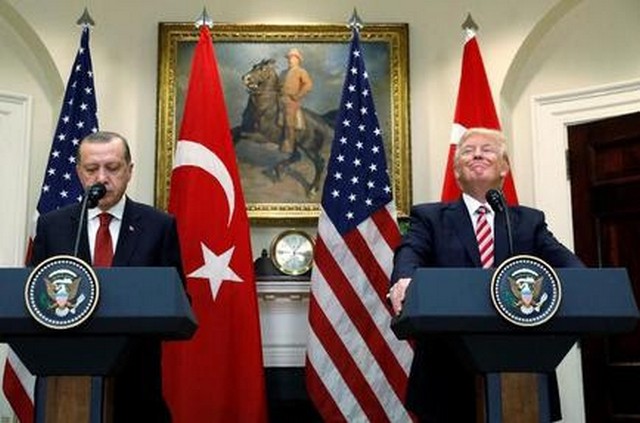
When Donald Trump was elected the forty-fifth president of the USA in November 2016, the Turkish president, Recep Tayyip Erdogan, was among the first world leaders to congratulate him. His congratulatory phone call echoed Erdogan’s ambition to strengthen US-Turkish relations, which had gone cold over the US Syria policy under Barack Obama. On 17 May 2017, Trump hosted the Turkish president in the first official meeting between the two leaders. Before the meeting, both leaders were still in honeymoon mode, despite diplomatic tensions, such as the US decision to support Kurdish militias in Syria and the unresolved matter of the Turkish request for the extradition of Fethullah Gulen. The honeymoon quickly ended as waves of diplomatic spats drastically changed the relationship.

The USA introduced sanctions on Turkey in 2018 over the detention of a US pastor, Andrew Brunson, indicating rapidly escalating tensions between two countries that had had a complicated history of diplomatic relations. While tensions calmed somewhat after Brunson’s release, Turkey’s purchase of the Russian S-400 air defence system significantly ruptured the relationship between the two North Atlantic Treaty Organisation (NATO) allies, with the crisis likely to deteriorate over other tensions pertaining to Syria. In August, Turkey’s refusal to cancel the S-400 deal saw the USA freezing the Turks out of its F-35 joint strike fighter programme. Despite this, a US delegation was sent to Ankara early August to help set up a ‘safe zone’ in north-eastern Syria. Both Turkish and US commitment to create the safe zone appears to have staved off a Turkish military campaign against Kurdish People’s Protection Units (YPG) fighters, who are aligned to and supported by the USA. Despite making some headway in terms of Syria, Turkey’s improving relations with Russia, exemplified by the S-400 deal, and the Turkish request to extradite Gulen from the USA present ongoing sticking points in this long-standing and complicated diplomatic relationship.

History of USA-Turkey relations
The USA and Turkey have enjoyed several decades of diplomatic relations on the political, economic and military fronts. Soon after the creation of the Turkish Republic in 1923, Turkey established relations with the USA by signing the Economic and Technical Cooperation agreement in 1947. In 1952, Turkey was admitted as a member of NATO, forging a closer relationship with the USA on military and political-diplomatic fronts. Bilateral relations remained relatively smooth until April 1975, when the US Congress pushed to recognise the mass killings of Armenians in 1915 as a genocide. Turkey protested, but failed to convince US lawmakers to rescind the decision.

When the Justice and Development Party (AKP) came into government in Turkey in 2002, US-Turkish relations were on shakier ground than ever before. During the first years of the AKP government, diplomatic relations moved from friendly, with the US president, George W Bush, hailing the AKP as a ‘powerful voice in the Muslim world’, to moderately hostile following the USA-led invasion of Iraq in 2003. Souring relations led Turkey to refuse a US request to allow US forces to use Turkish territory to open a front against Saddam Hussein in Iraq. Despite the NATO alliance, the two countries saw relations deteriorate, eventually taking a turn for the worse at the start of the MENA uprisings in 2011, quickly followed by the Syrian civil war. USA-Turkey hostilities escalated after July 2016, when Ankara blamed a failed coup attempt on Turkish cleric Fethullah Gulen, who lives in self-imposed exile in the USA.

Gulen and the Gulenist split with AKP
Fethullah Gulen is a Turkish Muslim cleric and businessperson who enjoys a large support base in Turkey and previously shared a close relationship with the AKP. Gulen’s following is estimated to be between three and six million people worldwide, with charities, schools and businesses in many countries, including the USA,. Now a staunch critic of Erdogan and the AKP, Gulen had close relations with Erdogan and later with the AKP after its founding in 2001. Both men opposed the secular Kemalist forces in Turkey, and the Gulenists (or Hizmet, as they call themselves) quickly supported the AKP’s rise to power. Gulen has significant influence, that has been nurtured over decades, in the Turkish police force and judiciary, and his supporters are believed to have been behind the Ergenekon and Sledgehammer investigations and trials. These looked into alleged plots to overthrow the AKP government and Erdogan in 2003, and resulted in mass arrests of police officers and military officers – most of whom were eventually freed in 2014. The cases were part of Gulen’s power struggle with Erdogan. In 2016, a court found that Gulenists within the judiciary had fabricated evidence, and dismissed all charges against the suspects.

The relationship between Erdogan and Gulen began to fray after the Mavi Marmara incident in 2010. The ship, owned by the Turkish Humanitarian Aid Foundation (IHH), was part of the Freedom Flotilla that was headed to the besieged Gaza Strip in Palestine. The IHH vessel was forcefully boarded by Israeli forces, leading to the death of nine Turkish activists, including one with dual USA-Turkey citizenship. Gulen criticisedErdogan’s harsh response to Israel following the incident, signalling a growing rift between the two. Erdogan and Gulen again clashed over negotiations, on Erdogan’s instructions,between a senior Turkish intelligence official and jailed Kurdistan Worker’s Party (PKK) leader, Abdullah Ocalan. Gulen and his supporters argued that Erdogan should not have negotiated with PKK ‘terrorists’. Gulen also disapproved of Erdogan’s chief negotiator in the matter, Hakan Fidan, who was close to Erdogan and who Gulen accused of secretly profiling his supporters in government institutions. The Gulen-Erdogan conflict reached its apex in 2013, when corruption allegations were levelled against Erdogan’s cabinet ministers and his son Bilal. Erdogan blamed the allegations on Gulen supporters in the police force and judiciary and accused Gulen of trying to form a parallel state in Turkey. He began a purge in government institutions of officials suspected to be Gulen loyalists and closed schools and charities linked to Hizmet. The impasse continued as several National Intelligence Organisation investigations were conducted against Gulen and his supporters.

Soon thereafter, Gulen’s supporters faced major crackdowns by the AKP-led government, and the relationship broke down irretrievably. This culminated in the attempted coup in 2016, with the AKP blaming the Gulenists for orchestrating. The failed July 2016 coup attempt was carried out by elements within the Turkish military that mobilised air and ground forces to seize political power. The attempted coup exacerbated an already polarised political climate in Turkey and led to the mass dismissal of members in the judiciary, public officials and journalists, all accused of having links to the Gulen movement. Gulen denied allegations that he played a part in the coup attempt, after Turkey called on the USA to extradite him to Turkey to face charges.

Since then, Gulen has remained an obstacle in USA- Turkey relations. Turkey has officially filed papers and applied diplomatic pressure for Gulen’s extradition over the attempted coup, but the USA has refused to comply, worsening diplomatic ties. Under Obama, the USA referred the extradition issue to the Treaty on Extradition and Mutual Assistance in Criminal Matters of 1980, which both countries signed. The treaty required Turkey to submit compelling supporting evidence for Gulen to be extradited and tried in Turkey for the alleged crimes. In August 2016, Erdogan said Turkey had sent about seven boxes of evidence to show Gulen was implicated in activities to undermine the state. Despite Turkey’s efforts, the USA has not acceded to their demands, with US officials insisting there was insufficient evidence supporting Turkish claims. After a serious diplomatic row over the release of a US pastor in 2018, Trump told Erdogan he would look into the issue of Gulen’s extradition, but has since remained mum in spite of ongoing Turkish requests.

US pastor Andrew Brunson
Erdogan’s diplomatic efforts to convince the USA to extradite Gulen continued under the Trump administration. In the 2018 case of US pastor Andrew Brunson, Turkey sought to exchange Brunson for Gulen, despite Trump’s calls to release the detained pastor. Brunson had been imprisoned by Turkey on terrorism charges relating to the July 2016 attempted coup. Turkey accused Brunson of having links with both the PKK and the Gulen movement, but he denied all accusations and called for the USA to intervene on his behalf. In late 2018, Trump called on Ankara to release Brunson, and when Turkey refused, the USA applied economic sanctions on Turkey, sending its economy into chaos. Soon thereafter, in October 2018, a Turkish court ordered the Brunson’s release in what was perceived to be Ankara’s attempt to rescue its economy. Despite Turkey releasing Brunson, the USA refused to engage Ankara on the issue of Gulen’s extradition, even after numerous appeals by Erdogan. Diplomatic relations between the two countries had already suffered immensely amidst contradictory positions regarding YPG fighters in Syria.

Syrian civil war and Kurdish fighters
After the outbreak of the Syrian civil war, Obama’s policy sat uncomfortably with the Turks and this strained ties in 2012, when the USA turned down an appeal for military intervention in Syria after Syria’s violation of Obama’s self-proclaimed ‘red-line’. Turbulent diplomatic relations between Ankara and Washington took a further dive when Obama rejected Erdogan’s proposal for humanitarian intervention and the introduction of a no-fly zone in northern Syria to protect fleeing refugees. The rejection of efforts to alleviate the Syrian crisis became a cocktail of tensions when Obama announced that the Kurdish YPG in the Syrian Democratic Forces (SDF) were America’s best option to defeat the Islamic State group (IS). US support for Kurdish fighters in the Syrian conflict, which continues to this day, has seen the two NATO allies on opposite sides of the fence. Turkey sees the YPG as an affiliate of the PKK, which has waged an insurgency against Turkey since 1984 and has been declared a terrorist organisation by both the USA and Turkey. Thus, US support to the YPG is seen as an affront by Turkey, which has launched several attacks against YPG fighters in Syria and PKK in neighbouring Iraq.

Since the start of the Syrian war, Turkey launched two cross-border campaigns into Syria. Both focused on Turkey’s fight against the YPG from areas inside Syria bordering Turkey. Starting with Operation Euphrates Shield along the eastern bank of the Euphrates River in August 2016, Ankara launched a military campaign aimed at clearing out IS and YPG fighters from Syrian areas bordering Turkey. The campaign took the border town of Jarablus on the Euphrates river and an area stretching 100 kilometres from the border, moving south to Al-Bab village. Turkey’s operations angered the USA, which had already begun supporting Kurdish fighters against IS. In January 2018, Turkey announced it would undertake a military campaign, Operation Olive Branch, in Syria’s Afrin province against the YPG, after receiving permission to use Syrian airspace from Russia. Although the operation again angered the USA, they did not intervene, despite calls from YPG fighters who felt that their allies were abandoning them under Turkish bombardment. Following this escalation, talks between the USA and Turkey quickly followed and the two sides agreed on a roadmap, including the creation of a buffer zone between YPG fighters in Manbij, northern Syria, and Turkish troops.

Despite agreements for military patrols in Afrin and Manbij, Turkey still presses for US implementation of a roadmap, already agreed to in June 2018, to disarm the YPG once the fight against IS has been completed. Recognising US hesitancy, Turkey’s strategy appears to be to pressure the USA to coordinate ‘safe-zones’ in northern Syria, which would become Turkish areas of control to maintain security. This strategy was already visible in Afrin, where Turkey transferred its allied fighters to operate as a security force, and where Turkey financially invested in rebuilding houses, schools, and hospitals. This strategy seems to be Turkey’s new export to northeastern Syria via a recent cooperation agreement with the USA to establish a safe-zone in Syrian areas bordering Turkey along the eastern Euphrates.

Recent talks between US and Turkish officials appear to have yielded some mutual gains for Ankara and Washington, although the lack of agreement on details quickly casts a shadow over the possibility of a way forward. Following the August talks, the USA has averted a Turkish attack against the YPG east of the Euphrates in northern Syria. The announcement of the agreement implies that Washington will acquiesce to some of Ankara’s demands.

Despite disagreement on intricate details, both the USA and Turkey have taken steps to set up joint coordination centres in Urfa and Ankara. This coordination will see the establishment of a peace corridor stretching from the Turkish border with Syria into areas of northeastern Syria, although there is disagreement about the size of the corridor. Turkish drones have been spotted in Syrian areas along the east Euphrates since the arrival of a US delegation in southern Turkey on 13 August. Although no timeline has been set for the coordination, a recent statement by the head of the YPG-led SDF, Mazloum Kobani, welcoming the deal for a buffer zone in northeastern Syria shows that Turkey might make gains in this process. The YPG’s acceptance of the safe zone deal between Turkey and the USA is largely due to the YPG’s concern that it might lose areas under its control if a military clash with Turkey were to erupt.
Playing the ball to Turkey is a US strategy to avoid losing allied forces on the ground ahead of their troop withdrawal from northern Syria that was announced by Trump earlier this year. There is a general fear that a Turkish military campaign against the YPG might allow an IS resurgence, eradicating US gains in eliminating the group from large parts of Syria. Although a safe zone is intended to be a corridor of safety in conditions of war, the USA-Turkey safe zone in northeastern Syria will have adverse effects, as seen in Afrin, where the operation saw a major displacement of civilians and numerous causalities. The northeastern Syria operation too is likely to lead to the displacement of people already suffering under dire humanitarian conditions caused by the eight-year-long Syrian conflict.

S-400 deal with Moscow
A more recent, and, arguably, more serious, dispute between Ankara and Washington is over the former’s purchase of the Russian S-400 missile defence system in 2018. The USA opposes the purchase, stating that the S-400 clashes with the Lockheed Martin F-35 programme used by NATO allies. Further, the USA fears that F-35 technology could be accessed by Moscow through the S-400, a claim Erdogan denies. In July, Turkey received its first shipment of S-400 parts from Russia, with the rest of the shipment expected to continue until 2020. After months of Washington threatening to apply sanctions on Ankara should the S-400 deal go through, the USA responded by kicking Turkey off the F-35 programme, despite Turkey manufacturing certain parts used in its production. Turkey’s removal from the programme will have severe economic consequences for the country, as Turkish F-35 personnel have been forced to leave the USA and return home. Further, the projected losses for Turkey amounts to $9 billion that it would have gained for supplying materials.

Turkey has dismissed the US threat of sanctions, despite previous sanctions over the Brunson row in 2018. The S-400 deal continues to fuel tensions between the USA and Turkey, and Trump has not ruled out the possibility of applying further sanctions. The 2017 Sanctions Act mandates the USA to apply upto twelve different types of sanctions to any state involved in a large arms deal with Russia. If applied, the sanctions would have a detriment on the already-troubled Turkish economy. The Turkish Lira plummeted in the last two years, losing 40 per cent of its value, after the 2018 sanctions. Further US sanctions could cripple the Turkish economy, threatening Erdogan and the AKP’s hold on power, especially after they suffered massive electoral losses in the 2019 local elections. It seems Erdogan is gambling on Trump’s hesitance to apply new rounds of sanctions on Turkey, despite the looming possibility.

Conclusion
The USA and Turkey continue to be neither friends nor foes after years of protracted diplomatic rifts and alliances. The two states remain NATO members, despite Turkey’s recent ousting from the F-35 programme used by all NATO members. Further, Turkish requests for the extradition of Fethullah Gulen have cast a shadow over the already complicated diplomatic relations between the countries. Recent cooperation for the creation of a safe-zone in northeastern Syria by both countries has managed a temporary peace between the Turkish military campaign and US-Kurdish allies in Syria. The lack of agreement over specific details regarding the safe zone, however, threatens this cooperation, and could see an escalation of already-heightened tensions. Despite this cooperation in northern Syria, Ankara and Washington disagree over the Russian S-400 missile defence system. Trump warned he could slap sanctions on Turkey if it went ahead with the S-400 deal with Moscow. Turkey called Trump’s bluff and received the first equipment shipment from Russia in July and the second shipment in August. If Trump forges ahead with the sanctions, the already strained Turkish economy would suffer, leaving Erdogan with the option of not assembling the S-400, despite receiving its parts, if he wants to salvage relations with Washington.

AMEC insights is a series of publicly-accessible publications, providing trenchant analyses of topical issues related to the Middle East and North Africa.

4 September 2019

Source: www.amec.org.za
Who Needs Romila Thapar’s CV?

By Subhash Gatade

…an historian who is indefatigable in the pursuit of knowledge and prolific in its publication, and who is above all a devoted partisan of the truth. … The early history of the country has been illuminated by Professor Thapar, whom I now present, more than by almost any other scholar. An historian of that period who seriously wishes to refute accepted fictions and dispel the general darkness will need several high qualities. (From a citation presented by Oxford University to Romila Thapar while conferring on her an honorary Doctorate of Letters in 2002.)

It was 1960, when Romila Thapar, a young historian at the time, wrote a 400 plus-page monograph on Asoka and the Decline of the Mauryas. According to Oxford University Press, which published it in 2017, it tried to “trace virtually the entire span of Indian history.” The monograph is considered a classic today.

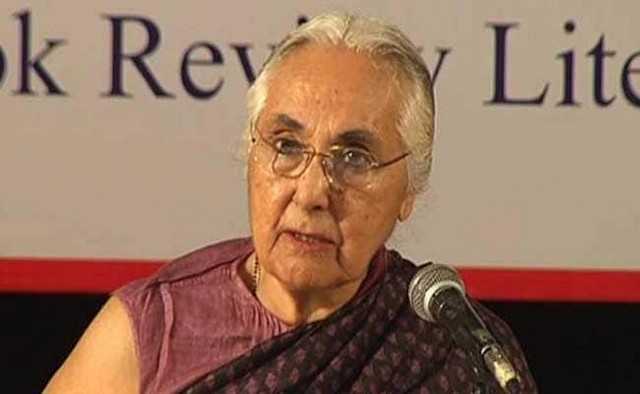
Thapar’s scholarly journey continues unabated at the age of 88. She is among the world’s foremost intellectuals, known for path-breaking work on Indian ancient history, as this interview acknowledges. Undoubtedly, her work has informed and inspired at least three generations of history students.

It hardly needs mention that Thapar has prestigious prizes to her credit for the scores of books and academic papers she has published. Twice, she declined the Padma Bhushan, the highest civilian award granted by the government.

Now Thapar is in the news because of a strange query from the Jawaharlal Nehru University (JNU) administration, where she has held teaching and administrative positions for roughly three decades. Thapar was instrumental in setting up JNU’s prestigious department of modern history. This is the department she is still associated with as Professor Emerita after she retired in 1993. Now the university wants her CV, or curriculum vitae, so as to “review” her status and contribution as an honorary emeritus professor.

It is no wonder then that academic circles are up in arms, for they have rightly construed it as one more effort to “denigrate the teaching and learning traditions of JNU” and Thapar herself. An emeritus professorship is simply an honorary position, a status accorded to scholars an institution regards as valuable. The JNU Teachers Association (JNUTA) has said that it is unquestionably the university’s honour that scholars such as Thapar are associated with it.

Before asking Thapar to send her CV, JNU’s administration (it later said 11 others had been sent similar letters) could have checked what the American Philosophical Society, considered one of the most learned societies in the United States (US), thinks about her work. Set up by Benjamin Franklin, one of the founding fathers of the US 276 years ago, this society selected Thapar as its member in June.

In 2008, Thapar was awarded the $1 million Kluge Prize for the Study of Humanity, along with the historian Peter Brown, who is also an emeritus professor at Princeton University. For the benefit of JNU’s administrators, this prize is regarded as the Nobel that honours disciplines not covered by the Nobel Prize itself. Fortunately, the possibility of being declared ‘intellectuals’—a disparaging term in the populist discourse that prevails in India—did not bother the administrators of the Kluge Prize.

The custodians JNU, exposing their anti-intellectual position, want to convey to Thapar and other scholars a message that their work beyond academics (Thapar has played a stellar role as a public intellectual who never shies away from speaking truth to power) is neither welcome nor acceptable to the present dispensation.

In an interview just before the parliamentary elections this year, Thapar had boldly stated that minorities feel alienated living under the rule of [Prime Minister Narendra] Modi. She also commented on how India’s governing party is rewriting history to justify its Hindu nationalist ideology. It is these clear-cut positions, and not the achievements listed in her CV, that seem to be the real stumbling block for JNU.

Thapar’s academic work has always been seen as ‘controversial’ by the Hindutva lobby, for her research is grounded in professional methods of investigation rather than pet theories of Hindu extremists based on extrapolation from Sanskrit texts. Thapar’s documentation of early India is at odds with the Hindutva preference for a mythical past replete with orthodoxies. To them, India is a purely Hindu civilisation; and the political advantages of this approach hardly need to be detailed in contemporary India. Regressive positions, the Right hopes, will cement its popular position even if it comes at the cost of valuable research and scholarship.

Thapar has for decades questioned the historical theories that are expounded by the Hindutva brigade. In her Communalism and the Writing of Ancient Indian History, brought out by Popular Prakashan in 1969, the Right’s flawed reliance on assumptions that date back to 19th century colonial history-writing are exposed. Again, while delivering the Athar Ali Memorial Lecture at the Aligarh Muslim University in February 2003, Thapar makes it clear why the Hindutva brigade dislikes her.

The reason is the colonial interpretation of history, which was craftily composed and propagated by the British over the 19th century. It is this history that the Hindutva brigade still goes by and readily accepts, and thus their dislike for Thapar and other proponents of modern historiography.

As Thapar said, by 1823, the History of British India by James Mill was available and widely read in India and had become a standard text of British imperialists. In it, Mill slotted Indian history into three ‘periods’—Hindu civilisation, Muslim civilisation and the British period. This periodisation was accepted in India largely without question through the 19th century (Mill died in 1836).

Thus the effects of this book lasted on Indian historiography and research for 200 years. Mill had argued in it that ‘Hindu civilisation’ was stagnant and backward, that the ‘Muslim’ era was only marginally better and that it is the British colonial power that became an agency of progress of India.

The Hindutva version of Indian history, tragically, accepts this periodisation even today. As Thapar has pointed out, the Hindu Right only changed the colours of each of these phases: It regards the Hindu period as a golden age, the Muslim period as a black and dark age of tyranny and oppression, and the colonial period as a grey zone of near-marginal importance.

What is being done by JNU is by no means Thapar’s first brush with the Hindutvadis. Nor is she the only scholar to suffer its abuse. Two decades ago, the Bharatiya Janata Party’s (BJP) assumed power at the Centre and set about rewriting the educational curriculum, giving it its own chauvinistic flavour. As the project gained momentum, intellectuals and academics who were at odds with the Sangh Parivar’s view of history came under attack. Again, various pretexts were used to make their life difficult or humiliate them.

It stalled the Indian Council of Historical Research-sponsored Towards Freedom project, which was being edited by Sumit Sarkar of the University of Delhi and KN Panikkar of JNU. The National Council of Educational Research and Training also went all out to exlcude from the curriculum all influences of—in the words of the then chief of the Rashtriya Swayamsevak Sangh KS Sudarshan—“anti-Hindu Euro-Indians”.

In 2001, when NCERT was deleting passages from school textbooks on the grounds that they “hurt” the sentiments of one community or the other, a delegation of Arya Samajists met Murli Manohar Joshi, then human resource development minister, and demanded that Thapar and historians such as Delhi University’s RS Sharma and Arjun Dev of NCERT, be arrested. Joshi had reiterated time and again his pet thesis that “academic terrorists” are more dangerous than armed ones.

Manufactured controversies, such as demanding Thapar’s CV, also remind one of the malicious campaign of Hindutva acolytes in the Indian diaspora, who launched a vitriolic campaign in 2002 when she was honoured by the US Library of Congress. The Library wanted to appoint her as its first Kluge Chair of ‘Countries and Cultures of the South’.

While this honour was welcomed by serious students of history, Right-wingers found it “a great travesty”, and gathered over 2,000 signatures to demand that it be revoked. Political commentator, late Praful Bidwai, had then argued at the time that the campaign represented the “rebirth of McCarthyism.”

The matrix of political conditions in 1950s’ America and present-day India (and the outlook of many in the Indian diaspora) is similar. Hindu nationalists, both in India and abroad, are sensitive to India’s position in the world and see themselves as fierce defenders of the Indian nation against ‘dangerous’ elements, typically constructed as Muslim and also at times as communist/Marxist.”

Bidwai’s was a fitting comparison, for the American conservative had denigrated his political and ideological opponents by fostering deep-seated religion-led suspicion of left-wing ideologies. He had advanced a powerful and dangerous cocktail of nationalism in the US, which was grounded in so-called Christian values, whose hallmark was unquestioning support for the conservatism and its political reflections and institutions.

Clearly, the more things change, the more they remain the same.

Subhash Gatade is an activist and scholar.

3 September 2019

Source: countercurrents.org

Venezuela, Ukraine, Hong Kong, … : Color Revolutions and Regime Change, A Modern Scourge Spawning Economic Destabilization and Civil War Three Case Studies

By Carla Stea

Venezuela

There are innumerable examples throughout the twentieth and twenty-first centuries, but three of the most notorious demonstrations of Washington, and its European cohorts incubating massive human tragedy and/or civil wars can be exemplified by Washington’s cultivation, indeed creation of toxic opposition movements whose goal is the destabilization and destruction of progressive governments and egalitarian economic and social structures. Currently, one of the most venal is Washington’s latest inamorata, or inamorato, Juan Guaido, the teflon Quisling of Venezuela, whose attempt to usurp the Presidency from democratically elected Nicolas Maduro would be comic in its ineffectiveness, were it not so tragic in its destruction of the lives of Venezuelan citizens. Venezuela, which controls the world’s largest oil reserves, among other coveted resources, is currently one of the most viciously targeted victims of imperialism, (cosmetically now described as “democracy development,” the latest rhetorical politically correct name for plunder). Yet, Venezuela, contrary to mainstream media disinformation, seems to be enduring, with a loyal populace who are evidently capable of detecting and resisting economic, social, and cultural manipulation, and a military who are so far unwilling to prostitute themselves.

This is a phenomenally heroic example of human integrity, and the success of socialism. President Maduro has assembled a team of brilliant leaders to represent his government, in particular, his Foreign Minister, Jorge Arreaza, an intellectual aristocrat of the highest order, his expert Ambassador Samuel Moncada, and many others of remarkable sophistication, whose capacity to see beyond the idiocies of bourgeoise propaganda is admirable, and indeed, enviable. (There are, after all, other things in life beyond designer handbags and plastic surgery, as the young women of South Korea discovered at the arrival of Kim Yo Jong, the DPRK envoy at the Winter Olympics in Seoul, who dazzled the West by her elegant simplicity and eschewal of conspicuous consumption.)

But, as Jeffrey Sachs demonstrated, in his excellent recent essay (“Economic Sanctions as Collective Punishment”), Washington’s sanctions are designed and determined to devastate and destroy the very fabric of the lives of the Venezuelan people, while making a mockery of U.S. “concern for human rights.” And all this is being done in the name of “democracy,” which, as a result, is acquiring a putrid odor. These sanctions are a form of economic genocide.

Yesterday’s New York Times reports Elliot Abrams offering President Maduro amnesty if he resigns office, which is in staggering contrast to recent threats by U.S. Senator Marco Rubio that Maduro will suffer the same fate as Libya’s Khadafi, who was sodomized with a bayonet among other tortures prior to his murder by the opposition. President Maduro might understandably conclude that the inmates have taken over the asylum.

Ukraine

In his famous book, “The Grand Chessboard,” the late Zbigniew Brezezinski, (the architect of the US policy of training, funding and arming of the savage Islamic jihadists to overthrow the socialist government of Najibullah in Afghanistan,) stressed, at length, the necessity of severing all relations between Russia and Ukraine, to completely isolate Russia from Europe, and force it to become an Eurasian state. Brzezinski’s policies were carried out during the Obama Administration, and this was implemented by State Department officials, led by Victoria Nuland.

If the history of US efforts to destabilize and overthrow the democratically elected presidency of Victor Yanukovich in Ukraine is written, one of the central figures is the US Assistant Secretary of State for European and Eurasian Affairs, Victoria (“Fuck the EU”) Nuland. And in all likelihood, she will be remembered for that famous expletive, which reveals her (and her cohorts) attitude toward illegal intervention in the sovereign affairs of another country. The BBC published the leaked transcript of the Nuland-Pyatt phone call, which reveals the scandalous details of Nuland and Pyatt’s masterminding the overthrow of a democratically elected government, which they replaced with a neo-nazi regime more to their liking, and which has resulted in a virtual civil war in Ukraine, glorification of Ukranian Nazis such as Stefan Bandera, and ethnocide of the Russian-speaking Ukranians which bears striking similarity to the early stages of Hitler’s extermination of the Jews, which began with destroying their cultural identity.

Nuland:

“I think Yats is the guy who’s got the economic experience, the governing experience. He’s the…what he needs is Klitsch and Tyahnybok on the outside…..I just think Klitsch going in…he’s going to be at that level working for Yatseniuk, it’s just not going to work.”

Pyatt:

“….I think you reaching out directly to Klischko helps with the personality management among the three and it gives you also a chance to move fast on all this stuff and put us behind it before they all sit down and he explains why he doesn’t like it.”

Nuland:

“….when I talked to Jeff Feltman (UN Under-Secretary-General for Political Affairs) this morning, he had a new name for the UN guy Robert Serry did I write you that this morning? OK. He’s now gotten both Serry and (UN Secretary-General) Ban Ki-moon to agree that Serry could come in Monday or Tuesday. So that would be great, I think, to help glue this thing and to have the UN help glue it and, you know, Fuck the EU.”

BBC diplomatic correspondent Jonathan Marcus notes:

“An intriguing insight into the foreign policy process with work going on at a number of levels: Various officials attempting to marshal the Ukranian opposition, efforts to get the UN to play an active role in bolstering a deal; and the big guns waiting in the wings – US Vice-President Biden clearly being lined up to give private words of encouragement at the appropriate moment.”

Every year at the United Nations, the Russian Federation submits a resolution prohibiting the glorification of Nazism. Every year the Resolution is adopted by a majority vote, and the Resolution has consistently been opposed by only one country: the U.S. In recent years Ukraine has joined with the U.S. in opposition to the anti-nazi resolution.

Today, conditions in Ukraine are appalling, and the horrific event in Odessa, recently, where workers were trapped in a building deliberately set on fire, and were burned to death, while neo-nazis circled the building chanting neo-nazi slogans is only one among innumerable such events, in a country which had previously known peace and stability.

Perhaps, the most moving and accurate description of the destruction of the democratically elected Presidency of Victor Yanukovich was delivered in a speech by Russia’s late Ambassador Vitali Churkin on March 27, 2014 at the UN General Assembly, and it bears quoting in large part here:

Ambassador Churkin:

“The crisis was to a large extent provoked by the adventurous actions of the current political forces, which sought to break the centuries-old ties of Russia and Ukraine, by giving Kiev a false choice between either the European Union and the West or Russia. That policy was carried out with unprecedented bluntness. They could either sign a Ukraine-European Union association agreement, as demanded of the Ukranian Government, or they could face sanctions. Within the ranks of anti-Government demonstrators were representatives of the European Union and the United States, who openly marched alongside them and called on them to openly carry out anti-Government actions.”

“The central square of the city –Maidan Nezalezhnosti—was turned into a militarized camp. Well-trained and equipped units of militants carried out violent attacks against law enforcement bodies and seized administrative buildings. In one of those buildings, the trade unions building, the so-called common diversion of the Maidan was organized. On the seventh floor of that building was a permanent staff member of the United States Embassy. By the way, it is from that building that snipers were shooting at police and demonstrators; that action was clearly aimed at provoking a violent overthrow of the government. At some point, it appeared that it would be possible to stop before the situation became worse….However, someone thought that such a scenario was not sufficiently radical. The violence continued. Under the threat of death, President Yanukovich had to leave Kiev and then Ukraine. The legitimate Government stopped operating in Kiev. Violence became the rule of politics. In the Verkhovna Rada, the parties that supported the Yanukovich majority became victims of that violence. As a result, the Rada was reshuffled, and instead of a Government of national unity, a so-called Government of victors emerged. The shots were called by those who conducted an armed coup, national radicals who –according to the definition of the European Parliament—preached racist, anti-semitic and xenophobic views and seemed to hate everything that was Russian and did not conceal that they considered the Ukranian allies of Nazis as their ideological ancestors.”

Violence and hatreds fester today in Ukraine, xenophobia, Russophobia, neo-nazism are the “new normal” in this “democracy?”

Hong Kong

Several years ago, Syrian Ambassador Bashar Ja’afari told me, personally, that each year recently Saudi Arabia invites at least 5,000 moslem Uighurs from the northwest of China to the pilgrimage in Mecca. The Saudis pay all their expenses, and extend their stay there for one month after all other pilgrims have left. The Saudis train the Uighurs in religious extremism and jihad, and then return these newly minted jihadist to their homes in Xingjiang, China, where they have been primed to destabilize the region, and promote jihad, with its terrorist core. China is not ignorant of these manoeuvers by the West, and it is attempting to restrain the metastasization of jihad terrorism elsewhere in China. This is the origin of the re-education camps which the mainstream Western media is attempting to depict as concentration camps, violating all human rights of the Uighurs. Carefully omitted from the Western media narrative is the background and origin of the re-education efforts by the Chinese, their efforts to eliminate the incitement to violence inculcated into these Uighur Chinese by the Saudis…and by other interested parties.

Once again, China must simultaneously confront engineered terrorism in its northwest, a trade war with the USA, and another “Color Revolution,” in Hong Kong, the last one, picturesquely titled the “Umbrella Revolution” occurred in 2013, and at that time there was also a violent terrorist attack in Beijing, as I know, since I was there at that time.

And once again, the US and European mainstream media and various government and quasi government entities are supporting destabilization of the government in Hong Kong, with an August 6 meeting between US Consulate Official Julie Eadeh and Hong Kong opposition figures Martin Lee, Anson Chan (who also met with Vice-President Pence in March) and Joshua Wong of “Occupy Central” in 2014.

Opposition protests have escalated in violence, with protesters now hurling Molotov cocktails at police. There is evidence that some of the most extreme provocative violent actions are, in fact, the work of agent provocateurs, and allegations are made that CIA infiltration is attempting to force the authorities to violent repression that can then be likened to the Tiennamen Square events of 1989. There was, however, even then, evidence that the Tiennamen protests, which had been peaceful for an extended period, but then suddenly escalated to violence, was the result of infiltration by agents, seeking to provoke the government to violent repression, which could then be used to discredit it. This provocative tactic is well known.

The current destabilization of Hong Kong in the name of “democracy” has become so chaotic that even as mainstream a US publication as “Newsweek” featured an article on August 12, 2019 headlined: “China Warns of Terrorism in Hong Kong Protests, Says U.S. is Supporting it.” “In the past few days, Hong Kong’s radical demonstrators have repeatedly attacked police officers with extremely dangerous tools, which already constitutes serious violent crimes and has begun to show signs of terrorism,” Yang Guang, a spokesperson for the Chinese State Council’s Hong Kong and Macau Affairs Office,” condemning petrol bomb attacks against police, and other violent actions. On August 14 CBS reported that those “peaceful, non-violent, pro-democracy” protesters had smashed to the ground two unarmed men, whom they wantonly accused of sympathy with the government, and these defenseless men were kicked, beaten, punched and drenched in ice water; one of the men “was bound with cable ties and left on the ground in a fetal position,” unaided, until “finally emergency workers were allowed to take them away.”

The U.S. and the U.K. support these violent demonstrations, with U.S. Vice President Pence, State Secretary Pompeo, and John Bolton openly meeting Hong Kong opposition figures. According to Chinese Foreign Ministry Spokesperson Hua Chunyang,

“Senior U.S. politicians met and engaged with anti-China rabble-rousers in Hong Kong, propped up violent and illegal activities and undermined Hong Kong’s prosperity and stability…I’d like to ask the US this question again: what is the true intention behind your behaviors relating to Hong Kong?”

Spokesperson Hua’s question is virtually rhetorical. The motive for the multi-pronged effort to weaken and destabilize China in the Northwest, in Hong Kong, through economic trade wars, and escalated pressures is obvious. China’s denial to permit an American warship to dock in Qingdao on August 29 is an inevitable reaction to U.S. provocations, including the Trump administration’s decision to pursue an $8 billion sale of F-16 fighter jets to Taiwan. The U.S. cannot tolerate the competition of a China on the ascendency, and will do everything, so far, covert, to disintegrate and collapse the world’s second largest economy.

Zbigniew Brzezinski’s ultimate nightmare is an alliance, or close cooperation between China and Russia. On April 28, 2017 China Daily headlined: “China, Russia Note Strategic Importance Tied To Relationship,” reporting: “The mutual trust and cooperation between Russia and China are stronger now than at any time in the past.” Though Brzezinski’s hope of severing relations between Russia and Ukraine has become a reality, at least at this time, Brzezinski’s nightmare of close ties between Russia and China may next become a reality, brought about by those very short-sighted zero-sum policies pursued by the West.

These abhorrent “color revolutions” bear resemblance to the ravages of Attilla the Hun, and the nations fostering them are themselves decaying of their own greed and moral degeneracy, as can be observed by any visitor to the capitols of Washington, London, Paris, etc., with their crowds of homeless, impoverished citizens sleeping in the gutters, deprived of all dignity and hope, but nevertheless bearing within themselves the potential to ultimately resist their destitution, and end this intolerable affront to humanity.

*

Note to readers: please click the share buttons above. Forward this article to your email lists. Crosspost on your blog site, internet forums. etc.

Carla Stea is Global Research’s correspondent at United Nations Headquarters, New York, N.Y.

2 September 2019

Source: www.globalresearch.ca

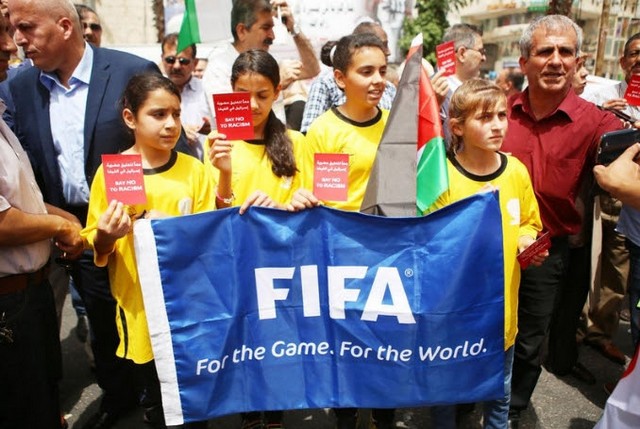
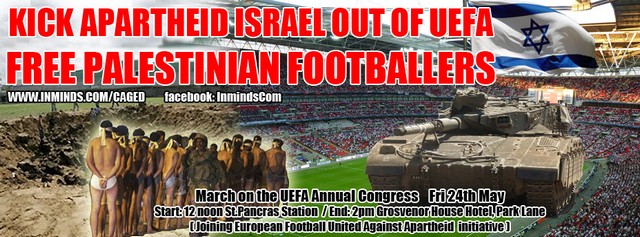
Racist FIFA must lead Israel boycott

By Ramzy Baroud

The Palestinian Football Association is struggling to survive. Combined US-Israeli pressure on Palestinian organizations that provide aid and support to the Palestinian people is now felt in the field of sports as well. In recent months, the association’s budget has been slashed by more than half, and the new football season may be canceled entirely. In Palestine, football, in particular, represents more than just a game. It provides respite, continuity, hope, and unity. The Palestine Football Association has been in existence since 1928 that is 20 years before Israel was founded on destroyed Palestinian cities, towns and villages. But, not even the tragic Nakba would end the sport in Palestine. When Palestine was admitted as a full member of the Fédération Internationale de Football Association (FIFA) in 1998, a rare moment of triumph prevailed over the sense of political stagnation. The Palestinian national team became a representation of a collective sense of pride and defiance. It meant that despite Israeli military restrictions, the targeting of Palestinian athletes and the bombing of stadiums and sports facilities, Palestinians continue to embrace life and thrive.

Even after the factional clash between Fatah and Hamas and the subsequent political disconnect between Gaza and the West Bank, sports continued to provide a critical outlet for unity. While Gaza and the West Bank have their own football leagues, they still competed in a final match to determine the winner of the Palestine Cup. Alas, last month, Israel prevented the Rafah football team from reaching the West Bank, to meet its Balata Youth Centre rivals in the Cup’s final match.

Israel’s restriction on Palestinian sports is relentless and is part of a long record of making it nearly impossible for Palestinians to pursue activities that should have no bearing on “Israel’s security”. The Palestine national team is possibly the most beleaguered football team in the world today. “Due to Israeli restrictions, the Palestinian national team has been banned from playing their home games in Palestinian stadiums for many years and is forced to host them in nearby Arab countries,” … no foreign trainers are allowed to enter besieged Gaza. Moreover, the occasional news of a Palestinian footballer being shot, beaten or imprisoned, though tragic, is routine news for Palestinians.

Israel has, however, hardly received any serious reprimand for its unlawful actions. Despite Tel Aviv’s constant violations of Palestinian sports rights, FIFA and other international sports federations continue to treat Israel with kid gloves. Worse, instead of being punished for violating international law regarding sports, Israel is often rewarded. The fact that Israel’s Football Association includes six teams from illegal Jewish settlements (colonies that are built on stolen Palestinian land) seems to be of no consequence to FIFA’s bosses.

Recently, the sports brand, Puma has replaced Adidas as the sponsor of Israel’s national football teams. The decision indicates that the company is completely oblivious to sports apartheid in Israel. Puma’s lack of sportsmanship is now the subject of a major international boycott campaign led by the Boycott, Divestment and Sanctions (BDS) movement. Over 200 Palestinian sports clubs support the call on Puma to end its dealings with Israel, in an attempt to pressure Israel to put an end to its violations of Palestinian human rights. In fact, Israel should be boycotted in every possible way until it relents and respects international law regarding the rights and freedom of the Palestinian people. Often, however, we overlook the centrality of sports boycott in the overall boycott strategy.

Sports boycott engages not only politicians and intellectuals but also ordinary people around the world. “The case for football boycott of Israel is just as compelling as that of football boycott of South Africa.,” BDS wrote on its homepage. For one, “boycott would spread awareness of Israeli racism and abuse of Palestinian human rights across the football community worldwide. Moreover, boycotting Israeli sports, especially football, will deny Israel an important tool aimed at normalizing its military occupation, apartheid, and racism. It will force ordinary Israelis to think about the consequences of their support of right-wing racist governments. It could; in fact, it will espouse a serious debate in Israel. This same logic worked in Apartheid South Africa and was a powerful tool in the international support for the anti-Apartheid movement in that country.

But with FIFA and others turning a blind eye to Israeli violations, Palestinians continue to suffer while Israel continues to sell itself as a sports-loving member of FIFA and other sports organizations. “Divestment and boycotts are familiar tactics from the international anti-apartheid movement, but they didn’t match the psychological power of the sports boycott,” wrote Tony Karon in the National.

“Rugby was an essential part of the identity of the South African regime’s base, and denying their ability to compete on an international stage was one of the most painful sanctions in the minds of many apartheid supporters.”

FIFA suspended the membership of the Football Association of South Africa in 1961, followed by a decision, in 1968 by the United Nations General Assembly that called for boycotting all sports bodies in South Africa that practiced apartheid. The pressure continued to mount, uniting international solidarity around clear and achievable objectives.

Many organizations have taken the lead in their respective countries to create a similar movement for Palestine. Israel must not be allowed to participate in international sports while simultaneously cementing its apartheid, racist regime in Palestine.
Source:

– Ramzy Baroud is a journalist, author and editor of The Palestine Chronicle.

2 September 2019

Source: palestineupdates.com

Boycott Israel in all sports arenas

By Ranjan Solomon

Boycotts of Israel are a political tactic of avoiding economic, political and cultural ties with the State of Israel, with individual Israelis or with Israeli-based companies or organizations. Boycott campaigns are used by those who oppose Israel’s policies or actions over Israeli policies in general, or its economy or military in particular.
Boycott campaigns within the Arab world began before Israel became an independent state and continued through the Arab League boycott of Israel. The most prominent boycott campaign presently is the Boycott, Divestment, and Sanctions movement, which has gained some traction in the Western world. Israel asserts that these campaigns are anti-Semitic.

In many international competitions, where Israel does take part, such as the Olympic Games, some Arab and Muslim competitors avoid competing against Israelis. Some countries even compel their athletes not to compete against Israelis or in Israel.

Israel’s cultural institutions are part and parcel of the ideological and institutional scaffolding of Israel’s regime of occupation, settler-colonialism and apartheid against the Palestinian people. These institutions are clearly implicated, through their silence or active participation, in supporting, justifying and whitewashing Israel’s occupation and systematic denial of Palestinian rights.

When international artists perform at sports meets, they help to create the false impression that Israel is a “normal” country like any other. Sportspersons and artists have endorsed the boycott of Israel, and there is a growing number sports people and even Israelis who support BDS, including the sports boycott of Israel.

The boycott against apartheid South Africa was a very powerful expression of political isolation of Israel. South Africa paid for that era of being isolated. In 1980, the United Nations began compiling a “Register of Sports Contacts with South Africa”. This was a list of sportspeople and officials who had participated in events within South Africa. It was compiled mainly from reports in South African newspapers. The list was aimed to bring moral pressure on athletes. Some sports bodies would discipline athletes based on the register. Athletes could have their names deleted from the register by giving a written undertaking not to return to apartheid South Africa to compete. The register is regarded as having been an effective instrument. The UN General Assembly even adopted the International Convention against Apartheid in Sports on 10 December 1985. A similar approach is needed against Israel and with a sense of urgency.

Ranjan Solomon

2 September 2019

Source: palestineupdates.com

100,000 Rohingyas Rally in Bangladesh to Mark Genocide Day

By teleSUR

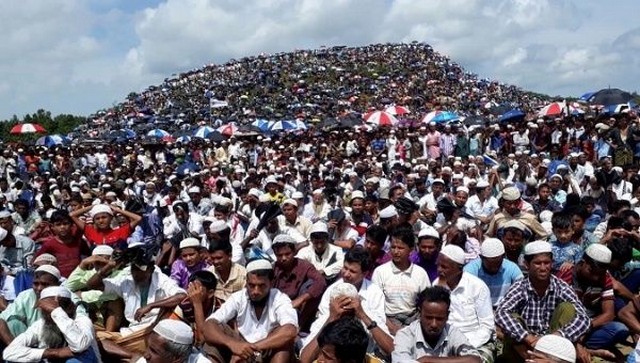
At least 100,000 Rohingya refugees rallied in camps in Bangladesh today, marking two years since the start of a brutal military crackdown in Myanmar that forced more than 730,000 to flee across the border.

Massive crowds gathered in the morning on a hillside for memorial prayers for relatives killed in the violence.

Others marched under the sweltering sun chanting, “We want justice” and “No more genocide”, some wearing white shirts bearing the words ‘Rohingya Genocide Remembrance’.

The commemorations took place amid heightened tensions in parts of the camps after security forces shot dead two Rohingya Saturday, saying they were involved in the murder of a ruling party official.

More than one million people live in the camps in southern Bangladesh in the world’s largest refugee settlement. The majority having fled violence in 2017 that the United Nations says was executed with “genocidal intent”.

Refugees say Myanmar’s security forces and Buddhist civilians carried out mass killings and gang rapes during weeks of “clearance operations”. Myanmar denies those accusations and says they were conducting legitimate operations against Rohingya insurgents who attacked police posts.

“We miss our home, our relatives, our beloved ones who were killed in Myanmar,” said Chekufa, the leader of the Rohingya Women’s Empowerment and Advocacy Network, which organized one of the demonstrations. “We miss them very much today.”

Efforts to begin repatriating 3,450 Rohingya cleared by Myanmar failed Thursday after none agreed to go.

In Myanmar, Rohingya are denigrated as illegal immigrants from Bangladesh, denied citizenship, and subjected to human rights violation.

Despite squalid conditions in the Bangladesh camps, refugees are fearful of returning home without assurances of citizenship and security.

“We are very grateful to the Bangladesh government, but we are living here not like humans but like animals, just eating and sleeping,” Chekufa said.

Iqbal Hossain, additional superintendent of police in Cox’s Bazar, told Reuters at least 100,000 Rohingya took part in the protests, which were peaceful.

But tensions were high in the southern part of the camp, where security forces have been hunting suspects in the murder of a youth wing official from the ruling Awami League.

Omar Faruk was killed in a settlement near Teknaf Thursday, police said. The death sparked riots the following day, with a mob of local people burning tires and destroying shops frequented by refugees.

“A tense situation is prevailing there,” Hossain said Sunday, adding that the two Rohingya shot were killed “in self-defense. We are continuing our drive to arrest others in connection with the killing,” he said.

Two refugees, who asked not to be named for fear of retribution, said most people from the camp had fled.

“We are very worried and afraid,” said a local mahji, or camp leader. “We don’t know what will happen.”

telesurenglish.net

2 September 2019

Source: www.transcend.org

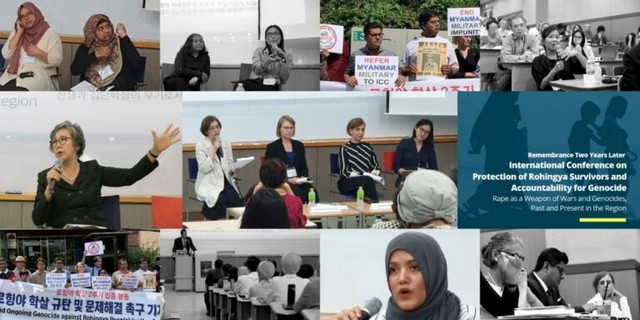
Report: Seoul International Conference on Protection of Rohingya Survivors and Accountability for Genocide

By Maung Zarni

Korean Civil Society in Solidarity and FORSEA.co co-organised a two-day International Conference at Sogang University in Seoul, S. Korea aimed at bringing Myanmar’s ongoing genocide of Rohingya people to the attention of the chop-stick civilisations of Far East Asia, namely Japan, S. Korea, Taiwan and, theoretically, China.

This is the region that continues to live the profound legacy of Japan’s ruthless militarism and occupation before and during the Second World War. The then unified Korea bore the brunt of Japan’s colonial rule which culminated into the genocidal fascism under PM General Togyo while China – particularly Manchuria – suffered the ‘rape of Nanking’. In those long, brutal years, Taiwan (formerly Formosa), Korea, China and the whole of what came to be known as South East Asia – so-named by the US Military – were subjected to the crimes against humanity, including summary execution, massacres, forced labour, and sexual slavery – “comfort women”.

The Seoul International Conference focused on the illegal and barbaric uses of sexual violence and rape of target victim population as a matter of strategy and policy by genocidal and militaristic regimes, past and present, in Asian region, from the WWII-era Fascist Japan, Suharto’s Indonesia and General Yaya Khan’s West Pakistan in the civil war in East Pakistan (Bangladesh) to Pol Pot’s Cambodia of the late 1970’s to present-day Myanmar.

The conference attracted 150 activists, engaged scholars and experts from 12 different countries, far and near. It also enjoyed the support of Euro-Burma Office, Canada, the Internet-based umbrella network of Rohingya activists and their international friends, and the Washington-based Human Rights Action Centre led by a famed human rights leader Jack Healey.

How To Move Forward. Yanghee Lee, UN Special Rapporteur on human rights in Myanmar

South Korean professor and UN Special Rapporteur, Yanghee Lee, delivered an inspirational opening keynote, calling Myanmar’s policies of persecution towards Rohingyas a classic genocide. She went on to exhort activists in the audience – and on YouTube – to “call a spade a spade”. She invoked the inter-state treaty known as the Convention on the Prevention and Punishment of the Crime of Genocide. Lee rightly slammed the United Nations, particularly the Security Council in its duties to discharge its founding charter, and she exposed the unconscionable presence of Myanmar solders among the UN Peacekeepers; things that destroy the credibility of the United Nations. During the Q&A session, the UN Special Rapporteur who is known for her signature fearless straight talk, referred to a bureaucracy of dinosaurs who are incapable of learning from the organization’s past grave mistakes.

One of the most crucial features of the Seoul Conference is the large presence of and participation by woman speakers from a richly diverse national and professional backgrounds – from reputable legal scholars and practitioners from S. Korea, France, and USA to peace negotiators and peace activists from Myanmar (formerly Burma), to Korean Catholic nuns and Jesuit priests, from international relations experts, legal documenters and genocide scholars from across Asia.

It was heart-warming – and inspirational – to see the packed lecture theatre filled by S. Korean Buddhists, Rohingya Muslims, Shan, Karen, Myanmar, Singaporean, Taiwanese feminists and activists. If national states and clusters of states such as the Association of South East Asian Nations (ASEAN) are in effect operating their “policies of indifference” in the face of yet another genocide – since the Nazi Genocide which ended with the Nazis’ military defeat in 1945 – the activists and engaged scholars and experts who were gathered at Sogang University for two days were the embodiment of what is good about We the People.

Human compassion and solidarity transcend faith, geography, national boundaries, professions and national identities.

Yasmin Ullah and Nay San Lwin, the two leading Rohingya activists from the Free Rohingya Coalition, delivered powerful testimonies for their compassionate audience. They shared heart-wrenching tales of persecution, discrimination and annihilation of Rohingya by Myanmar’s “Buddhist” people and their military-civilian coalition government.

As a point of departure, the conference also played the pre-recorded messages of solidarity from 3 young Rohigya refugee men based in New Delhi delivered in Rohingya, Burmese and English calling for Rohingya diaspora and communities in Bangladesh and Myanmar to confront intra-group sexism and gender discrimination and to embrace thousands of Rohingya woman rape victims with honour and compassion. The conference also disseminated two solidarity statements prepared by the Rohingya Youth Association and Rohingya Women’s Solidarity Network – based in refugee camps in Cox’s Bazar, Bangladesh, the world’s largest civil society or pocket of Rohingyas alive today.

Rohingyas fully endorsed the conference call for the comprehensive boycott of Myanmar which goes beyond the current push for “targeted sanctions” and investment boycott of companies with ties to Myanmar military.

The Seoul Conference also highlighted the continuing issue of Japan’s refusal to acknowledge, apologize and compensate for the women whom Japan’s Imperial Army forced into sexual slavery – known as “Comfort Women”. The crimes committed some 70 years ago continue to haunt present-day Japan, having triggered the escalating diplomatic row and trade war between Seoul and Tokyo. Lending their moral and intellectual support – both to the Korean civil society and Rohingya victims of Myanmar’s genocidal rape by command, the two leaders of Taipei Women;s Rescue Foundation namely Professor Theresa Der-Lan Yeh and Ansel shared their work in rehabilitating Taiwanese victims of sexual slavery during Japanese Fascist occupation.

Father Pak Sanghun of Jesuit Research Center for Advocacy and Solidarity not only delivered an eloquent message on the first day but he also opened the protest rally in front of Myanmar Embassy in Seoul, designed to coincide with the Genocide Remembrance Day commemoration attended by some 200,000 Rohingya survivors in Bangladesh’s sprawling and squalid refugee camps.

The conference also heard from Mr Thet Swe Win, the anti-racist resister and leader of the White Rose campaign – named after the short-lived but deeply inspirational anti-Nazi White Rose group in the Hitler’s stronghold of Munich: Thet talked about how Myanmar military and racist Buddhist organizations work hand in glove in his native country. Dr James Gomez of Asia Center shared his research finding from the comprehensive mapping of the spread of hate and racism across South East Asia.

Conference: Protection of Rohingya Survivors and Accountability for Genocide

Muan Zarni wraps up proceedings on the second day of the International Conference on Protection of Rohingya Survivors and Accountability for Genocide. The two-day International Conference was at at Sogang University in Seoul, S. Korea, August 23-24, 2019.

One of the most technically challenging but very educational session was populated by legal scholars and international human rights law practitioners Katherine Southwick who formerly was with the Prosecution’s Office at the International Criminal Tribunal on Yugoslavia, Doreen Chen who served as the chief international legal counsel at the Khmer Rouge Tribunal and the Algerian American lawyer Ddjaouida Siac. Their strategic conclusion: the International Court of Justice, which can adjudicate disputes among UN member states, has the potential to deliver justice for Rohingya people. That is, if any state and any coalition of states chose to discharge its (their) legal obligation to invoke the Genocide Convention in order to intervene in ending Myanmar’s ongoing genocide and to seek reparation and restitutions on behalf of Rohingya survivors.

Finally, the co-organizers, Kinam Kim of Asian Dignity Initiative of S. Korea and Dr Maung Zarni of FORSEA.co wrapped up their takes on the Seoul Conference while the Korean Civil Society organizations offered their pledges and solidarity to Rohingya people. The conference resolved to launch the Asia-wide cultural, sports, tourism and consumers’ boycott of Myanmar. In the words of FORSEA’s General Secretary, when the international governments and the UN are failing yet another group of genocide victims it is incumbent upon.

We the People of the World – and the people of Asia, in the case of another Asian genocide – to band together and intervene to end the ongoing genocide.

FORSEA will continue to help build a strong Asia-wide grassroots movement in solidarity with Rohingyas. And the activists at the Seoul Conference are already planning to confront the vital subject of Business, Human Rights Violations and Genocide in Myanmar and Southeast Asia. Watch this space.

Korean TV report (in English) on war crimes and Genocide in Burma:

로힝야를 향한 혐오발언 ‘깔라’를 아시나요?

A Buddhist humanist from Burma, Maung Zarni is a member of the TRANSCEND Network for Peace Development Environment, former Visiting Lecturer with Harvard Medical School, specializing in racism and violence in Burma and Sri Lanka, and Non-resident Scholar in Genocide Studies with Documentation Center – Cambodia.

2 September 2019

Source: www.transcend.org

Iran’s Foreign Minister Speaks at SIPRI – And the Media Don’t Get It

By Jan Oberg

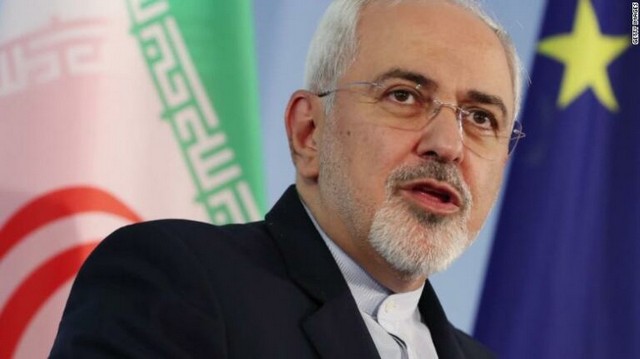
27 Aug 2019 – On August 21, 2019, Iran’s foreign minister, Dr. Javad Zarif, gave a speech at the Stockholm International Peace Research Institute, SIPRI.

Zarif spoke at length without a manuscript, in details and with references to facts and history of the region and the conflict’s history – based on a cohesive framework of theories, concepts and interpretation – which, taken together, places him in a category of his own among the world’s foreign ministers.

Lecture and discussion at SIPRI – Jan Eliasson to the left, Zarif to the right:

International Law and Unilateralism

The UN Security Council Resolution – 598 of 1987 – that Zarif refers to can be read here.

One should indeed be grateful to SIPRI for having invited him.

Politically Correct, Tired Routine Coverage by the Leading Swedish Media

Generally speaking, leading Swedish mainstream media have been promoting a negative view of Iran as well as Javad Zarif himself. The largest coverage has been about human rights in Iran, Iran as a threat and backer of terrorism, the death penalty, and the protests by a group of exile-Iranians who protested outside SIPRI’s building – about Iran being pressed economically and Mr. Zarif himself being in a weakened position. And about an Iranian journalist who defected during the delegation’s visit to Stockholm.

Media have also emphasized that Zarif is conducting a “tour of charming” and is himself a “very charming” and experienced diplomat – the subtle implication being that he can’t be trusted.

The Swedish Television’s point of departure is that he is a man under pressure trying to save the JCPOA – implying that he/Iran is negotiating from an underdog position – instead of saying that the US is the only one to have withdrawn from the deal, stepped up suffocating sanctions and that the EU has been unable to mobilize de facto support for the deal and stand up to its commitments – namely to step up its co-operation with Iran.

In this short podcast you can also hear the Swedish Radio’s Middle Eastern correspondent, Cecilia Uddén, say that Zarif is in Europe to collect support for Iran’s case and that, charming as he is, he even “does not at all look like the other aytollahs”… and that he never wears a tie or a turban… (!)

Here is Dagens Nyheter, Svenska Dagbladet – both emphasizing in the headlines that he criticized president Trump – the Swedish Broadcasting (Sveriges Radio) – for readers here who happen to read Swedish.

None that I have seen have had the intellectual capacity to convey the detailed, elaborated and well-presented points that the foreign minister delivered at SIPRI.

None have looked into the wider framework of the conflict between Iran and the US/West since 1953.

None have pointed out that the withdrawal from the nuclear deal, JCPOA, by the US is a violation of international law because the deal is embedded in UN Security Council Resolution 2231.

Neither has it been mentioned that Iran has accepted the most comprehensive and strict inspection regime ever and that numerous reports – also American – document that Iran has fulfilled its obligations according to the deal.

None have questioned whether it is acceptable that the Iranian people – some 80+ million – shall suffer the consequences of hard, suffocating sanctions.

None has taken up that the US applies extraterritorial sanctions on allies – i.e. that it insist on US laws being applied by others, or they will be punished.

And of course, none have mentioned that Israel – as the only country in the Middle East – is a nuclear weapons power with a comparatively much larger military budget than Iran, is not a member of the NPT (Non-Proliferation treaty) and accepts no inspections on its territory.

In summary, the media coverage of Mr. Zarif’s visit to Sweden was yet another illustration that free Western media today basically defines their freedom as a freedom to be as ignorant, selective and biased as they please – and that omission, at least as much as fake, is a huge problem for media consumers’ chances to understand international affairs.

The public were certainly not serviced in terms of relevant, fair and diverse information. Instead, other interests – such as those connected with Western dominating values and governments and, thereby, Sweden’s own pro-US foreign policy orientation – were.

TFF Director Prof. Jan Oberg is a member of the TRANSCEND Network for Peace Development Environment.

2 September 2019

Source: www.transcend.org

We Are in a War Situation with China!

By John Pilger

22 Aug 2019 – John Pilger describes the current state of global affairs as in a state of world war, warning that the ‘coming war on China’ he warned about has now arrived. He also discusses the Hong Kong protests and US involvement in the unrest, the collapse of the INF Treaty and the beginning of a new arms race with Russia in Washington’s goal to break up the Russian Federation under Putin. He slams sanctions on Venezuela and Iran and also updates us on the condition of WikiLeaks founder and publisher Julian Assange, after he visited him recently in UK’s Belmarsh prison.

John Pilger – We Are in a WAR SITUATION with China! (EP.788)

John Pilger has won an Emmy and a BAFTA for his documentaries, which have also won numerous US and European awards. His articles appear worldwide in newspapers such as The Guardian, The Independent, The New York Times, The Los Angeles Times, The Mail & Guardian (South Africa), Aftonbladet (Sweden), Il Manifesto (Italy).

26 August 2019

Source: www.transcend.org

Inside Israel’s Secret Program to Back Syrian Rebels

By Elizabeth Tsurkov

Israel secretly armed and funded at least 12 rebel groups in southern Syria that helped prevent Iran-backed fighters and militants of the Islamic State from taking up positions near the Israeli border in recent years, according to more than two dozen commanders and rank-and-file members of these groups.

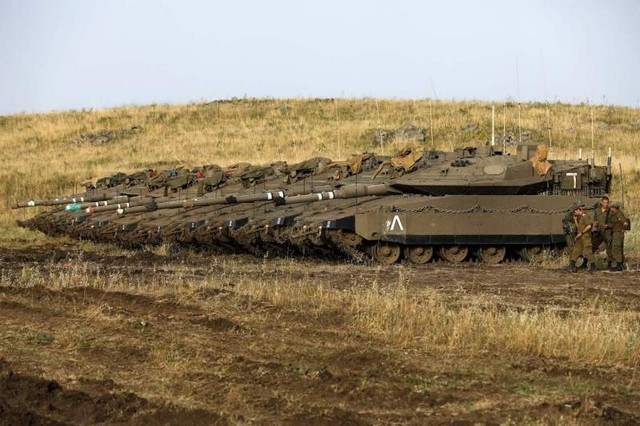
The military transfers, which ended in July of this year, included assault rifles, machine guns, mortar launchers and transport vehicles. Israeli security agencies delivered the weapons through three gates connecting the Israeli-occupied Golan Heights to Syria—the same crossings Israel used to deliver humanitarian aid to residents of southern Syria suffering from years of civil war.

Israel also provided salaries to rebel fighters, paying each one about $75 a month, and supplied additional money the groups used to buy arms on the Syrian black market, according to the rebels and local journalists.

The payments, along with the service Israel was getting in return, created an expectation among the rebels that Israel would intercede if troops loyal to President Bashar al-Assad tried to advance on southern Syria.

When regime forces backed by Russian air power did precisely that this past summer, Israel did not intervene, leaving the rebel groups feeling betrayed.

“This is a lesson we will not forget about Israel. It does not care about … the people. It does not care about humanity. All it cares about it its own interests,” said Y., a fighter from one of the groups, Forsan al-Jolan.

Israel has tried to keep its relationship with the groups a secret. Though some publications have reported on it, the interviews Foreign Policy conducted with militia members for this story provide the most detailed account yet of Israel’s support for the groups. All the fighters spoke on the condition that their names and factions not be revealed.

The quantity of arms and money Israel transferred to the groups—comprising thousands of fighters—is small compared to the amounts provided by other countries involved in the 7-year-old civil war, including Qatar, Saudi Arabia, Turkey, and the United States. Even at the height of the Israeli assistance program earlier this year, rebel commanders complained that it was insufficient.

But the assistance is significant for several reasons. It marks one more way Israel has been trying to prevent Iran from entrenching its position in Syria—alongside airstrikes on Iranian encampments and political pressure Israel brought to bear via Russia, the main power broker in Syria.

It also raises questions about the balance of power in Syria as the civil war there finally winds down. With the Iranian forces that helped Assad defeat the rebels showing no inclination to withdraw from Syria, the potential for the country to become a flash point between Israel and Iran looms large.

A spokesman for the Israeli Embassy in Washington declined to comment for this story.

Israel began arming rebel groups aligned with the Free Syrian Army in 2013, including factions in Quneitra, Daraa, and the southern areas of the Damascus countryside. The arms transferred at the time were mostly U.S.-manufactured M16 assault rifles. Later, Israel switched to providing the rebels with mostly non-American weapons—apparently to conceal the source of the assistance—including guns and ammunition originating in an Iranian shipment to the Lebanese Hezbollah group that Israel had seized in 2009.

The assistance to these groups remained steady for some time, but it expanded significantly last year. Israel went from supporting hundreds of fighters to reaching groups comprising thousands of rebels. The increase in assistance coincided with a broader shift in Israel’s policies in Syria. After appeals to the U.S. administration and the Kremlin failed to secure a deal that would ensure that Iranian-backed militias would be kept away from southern Syria, Israel adopted a more aggressive policy.

Its Air Force began striking deeper inside Syrian territory, targeting not just individual weapons shipments from Iran to Hezbollah but also Iranian bases across the country.

Two of the groups Israel supported have been publicly identified—Forsan al-Jolan (the Golan Knights), a faction based in the border town of Jubata al-Khashab in Quneitra, and Liwaa Omar bin al-Khattab, based in Beit Jinn, a town bordering Mount Hermon.

Unlike other foreign supporters of the Syrian opposition, Israel made little effort to organize and consolidate its aid program. Instead, it apparently relied on relationships it developed with individual commanders, funneling assistance directly to them.

According to rebels in southern Syria, these commanders would communicate with Israeli officials by phone and occasionally meet them face to face in the Israeli-occupied Golan. When commanders switched groups and locations, Israeli assistance followed them. On the other hand, when commanders were killed or removed from their position due to internal power struggles, Israeli assistance to their former factions was halted.

Forsan al-Jolan was Israel’s preferred group. Last year, it added several hundred fighters to its ranks due to an increase in Israeli financing, according to members of the faction. It also served as a distributor of weaponry supplied from Israel to other groups. This allowed the group to have an outsized influence both in Quneitra and the nearby Daraa governorate.

Israel also provided fire support to rebel factions fighting the local Islamic State affiliate in the Yarmouk Basin. According to local rebels, journalists, and residents, Israel carried out drone strikes targeting Islamic State commanders and precision-missile strikes against the group’s personnel, fortifications, and vehicles during battles with the rebels. Israel did not extend similar fire support for rebel assaults on regime forces.

As a result of Israel’s humanitarian and military assistance many residents of southern Syria came to perceive it as an ally. Israeli publicized its “Good Neighbor” program in Arabic, including humanitarian operations in southern Syria and treatment of some Syrians in Israeli hospitals.

Y., the Forsan al-Jolan fighter, told me a few months ago: “Israel is the only one with interests in the region and a little bit of humanity and [provides] assistance to civilians.”

But as troops loyal to Assad, aided by Russian and Iranian forces, reasserted control over more and more areas of Syria, Israel sought other ways to guarantee its interests along the border.

In July of this year, Israeli officials apparently reached an understanding with Russia that allowed for the return of regime forces to western Daraa and Quneitra, the areas adjacent to the Golan Heights. In exchange, Russia reportedly promised to keep Iran-backed militias 80 kilometers (about 50 miles) from the Golan Heights and not to start hindering Israeli strikes on Iranian targets across Syria.

Even after Assad’s offensive on southern Syria commenced, many Syrians in the area clung to hope that Israel would at least prevent the regime from recapturing the adjacent Quneitra governorate. Thousands of people fled to the area abutting the Golan Heights, but Israel did not intervene to protect them.

One local community leader from western Daraa who agreed to be identified only as Abu Khaled said he soon realized that relying on Israel had been a mistake.

“Trust me, Israel will regret its silence over what had happened in southern Syria. We in our town and neighboring towns grudgingly reconciled with the regime, but this reconciliation will affect Israel in the near future,” he said.

As the regime was closing in, some of the rebels reached out to their Israeli contacts and asked for asylum, fearing retribution from Assad’s forces. Israeli officials responded by allowing a small number of rebel commanders and their immediate family members to enter Israel on the night of July 22. Others were turned away.

The whereabouts of these commanders and their relatives remains unclear. According to people in Syria, some are rumored to be in Israel, others in Jordan. One former commander informed his subordinates that he had arrived in Turkey.

As for the rank-and-file fighters, most chose to remain in their homes and surrender to the regime rather than flee to Idlib, the last remaining enclave of the rebel forces. Some have been arrested, apparently for working with Israel, while others joined pro-regime militias or the Syrian Army itself as a way to avoid persecution by the regime.

Elizabeth Tsurkov is a research fellow at the Forum for Regional Thinking focusing on Syria and Iraq. Twitter: @Elizrael

6 September 2018

Source: foreignpolicy.com