Just International

UN Condemns Human Rights Abuses Against Myanmar’s Rohingya

By The Associated Press

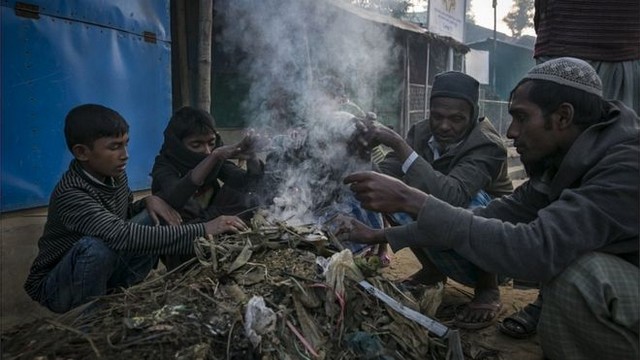
UNITED NATIONS — The U.N. General Assembly approved a resolution Friday strongly condemning human rights abuses against Myanmar’s Rohingya Muslims and other minorities, including arbitrary arrests, torture, rape and deaths in detention.

The 193-member world body voted 134-9 with 28 abstentions in favor of the resolution which also calls on Myanmar’s government to take urgent measures to combat incitement of hatred against the Rohingya and other minorities in Rakhine, Kachin and Shan states.

General Assembly resolutions are not legally binding but they do reflect world opinion.

Buddhist-majority Myanmar has long considered the Rohingya to be “Bengalis” from Bangladesh even though their families have lived in the country for generations. Nearly all have been denied citizenship since 1982, effectively rendering them stateless, and they are also denied freedom of movement and other basic rights.

The long-simmering Rohingya crisis exploded on Aug. 25, 2017, when Myanmar’s military launched what it called a clearance campaign in Rakhine in response to an attack by a Rohingya insurgent group. The campaign led to the mass Rohingya exodus to Bangladesh and to accusations that security forces committed mass rapes and killings and burned thousands of homes.

Myanmar’s U.N. ambassador, Hau Do Suan called the resolution “another classic example of double-standards (and) selective and discriminatory application of human rights norms”” designed “to exert unwanted political pressure on Myanmar.””

He said the resolution did not attempt to find a solution to the complex situation in Rakhine state and refused to recognize government efforts to address the challenges.

The resolution, the ambassador said, “will sow seeds of distrust and will create further polarization of different communities in the region.””

The resolution expresses alarm at the continuing influx of Rohingya Muslims to neighboring Bangladesh over the last four decades, now numbering 1.1 million including 744,000 who arrived since August 2017, “ïn the aftermath of atrocities committed by the security and armed forces of Myanmar.”

The assembly also expressed alarm at an independent international fact-finding mission’s findings “of gross human rights violations and abuses suffered by Rohingya Muslims and other minorities” by the security forces, which the mission said “undoubtedly amount to the gravest crimes under international law.”

The resolution called for an immediate cessation of fighting and hostilities.

It reiterated “deep distress at reports that unarmed individuals in Rakhine state have been and continue to be subjected to the excessive use of forces and violations of international human rights law, international humanitarian law by the military and security and armed forces.”

And it called for Myanmar’s forces to protect all people, and for urgent steps to ensure justice for all rights violations

The resolution also urged the government “to expedite efforts to eliminate statelessness and the systematic and institutionalized discrimination” against the Rohingya and other minorities, to dismantle camps for Rohingyas and others displaced in Rakhine, and “to create the conditions necessary for the safe, voluntary, dignified and sustainable return of all refugees, including Rohingya Muslim refugees.”

It noted that the Rohingya have twice refused to return to Myanmar from Bangladesh because of the absence of these conditions.

27 December 2019

Source: www.nytimes.com

How World Bank Arbitrators Mugged Pakistan

By Jeffrey D. Sachs

Thanks to the World Bank’s flawed and corrupt investment arbitration process, the rich are making a fortune at the expense of poor countries. The latest shakedown is a $5.9 billion award against Pakistan’s government in favor of two global mining companies for an illegal project that was never approved or carried out.

NEW YORK – Wall Street hedge funds and lawyers have turned an arcane procedure of international treaties into a money machine, at the cost of the world’s poorest people. The latest shakedown is a $5.9 billion award against Pakistan’s government in favor of two global mining companies – Antofagasta PLC of Chile and Barrick Gold Corporation of Canada – for a project that was never approved by Pakistan and never carried out.

Here are the facts.

In 1993, a US-incorporated mining company, BHP, entered into a joint venture (JV) with the Balochistan Development Authority (BDA), a public corporation in Pakistan’s impoverished Balochistan province. The JV was set up to prospect for gold and copper, and in the event of favorable discoveries, to seek a mining license. BHP was not optimistic about the project’s profitability and dragged its feet on exploration. In the early 2000s, it assigned the prospecting rights to an Australian company, which created Tethyan Copper Company (TCC) for the project.

In 2006, Antofagasta acquired TCC for $167 million, and sold half to Barrick Gold. Soon after the purchase, however, the original JV agreement with BHP was challenged in Pakistan’s courts. In 2013, the Pakistan Supreme Court found that the JV’s terms violated Pakistan’s mining and contract laws in several ways and declared the agreement – and thus the rights claimed by TCC – to be null and void.

Specifically, the Court ruled that the BDA did not have authority to bind Balochistan to the terms of the JV agreement; that it awarded the contract without competition or transparency; and that it had greatly exceeded its authority and violated the law by promising extensive deviations from the rules normally applicable to mining projects. Moreover, the JV failed to obtain, and even to pursue, many mandatory approvals from the state and federal governments, and BHP failed to undertake prospecting in a timely manner required under the mining law.

The Supreme Court’s decision came after years of public-interest litigation challenging the deal for violations of domestic law and the rights of the public. In the meantime, the BDA’s chairman was found to have conflicts of interest and to be living beyond the means afforded by his official salary, which in the Court’s words was tantamount to corruption.

In a normal world, the Court’s judgment would be respected absent proven evidence of corruption or other wrongdoing against the justices. But in the world we actually inhabit, the so-called international rule of law enables rich companies to exploit poor countries with impunity and disregard their laws and courts.

When TCC lost its case in Pakistan’s Supreme Court, it simply turned to the World Bank’s International Center for the Settlement of Investment Disputes (ICSID), in complete disregard of Pakistan’s laws and institutions. A panel of three arbitrators with no expertise in or respect for Pakistan’s legal system ruled that TCC deserved compensation for all future profits that it allegedly would have earned if the non-existent project, based on a voided agreement, had gone forward!

Because there was no actual project, and no agreement for one, the arbitrators had no basis to say what terms – royalties, corporate taxes, environmental standards, land area, and other basic provisions – the governments of Balochistan and Pakistan would have set. In fact, disagreement on many of those terms had stalled negotiations for years.

Nonetheless, the ICSID panel arbitrarily decided that TCC would have had the right to mine 1,000 square kilometers, though the mining law forbade licensing such a vast area. The arbitrators ruled that TCC would have received a tax holiday for 15 years, even though there is no evidence that such a tax holiday was in the offing – or even legal.

The arbitrators decided that TCC would have benefited from a royalty rate several percentage points below the mandatory statutory rate, though there is no reason why Pakistan would have set such a low rate.The arbitrators also ruled that TCC would have met all environmental standards, or that the government would have exempted TCC from relevant requirements, though the mining area is in a desert region subject to extreme water stress, and the mining project would have demanded vast amounts of water. And the arbitrators ruled that to obtain the land needed for TCC’s pipeline, the government would have taken it from its owners and inhabitants.

The arbitration ruling is utterly capricious. An illegal project, declared null and void by Pakistan’s Supreme Court and never pursued, was found by the World Bank’s arbitration panel to be worth more than $4 billion to TCC’s owners, who had paid $167 million for it in 2006. Moreover, the tribunal declared that Pakistan must compensate TCC in full, with back interest, and cover its legal fees, raising the bill to $5.9 billion, or roughly 2% of Pakistan’s GDP. It is more than twice Pakistan’s entire public spending on health care for 200 million people, in a country where 7% of children die before their fifth birthday. For many Pakistanis, the World Bank’s arbitration ruling is a death sentence.

The ICSID is not an honest broker. One of the tribunal members in the TCC case is using the same expert put forward by TCC for another case in which the arbitrator is acting as counsel! When challenged about this obvious conflict of interest, the arbitrator refused to step down and the ICSID proceeded as if all were normal.

Thanks to the World Bank’s arbitrators, the rich are making a fortune at the expense of poor countries. Multinational companies are feasting on unapproved, non-existent projects. Fixing the broken arbitration system should start with a reversal of the outrageous ruling against Pakistan and a thorough investigation of the flawed and corrupt process that made it possible.

Jeffrey D. Sachs, Professor of Sustainable Development and Professor of Health Policy and Management at Columbia University, is Director of Columbia’s Center for Sustainable Development and the UN Sustainable Development Solutions Network.

26 November 2019

Source: www.project-syndicate.org

Modi Has Awakened a Sleeping Giant

By Aijaz Zaka Syed

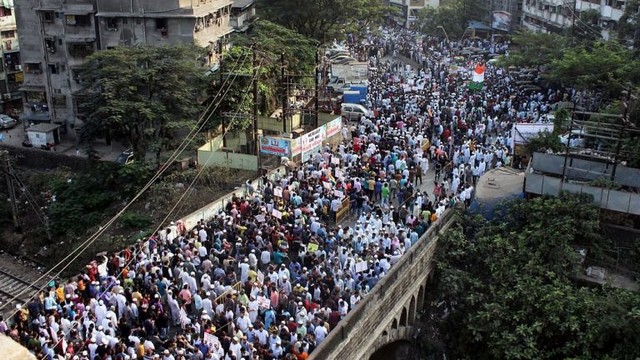
Indians are marching in millions to assert that they remain a united nation and are not prepared to be divided all over again as Hindus and Muslims

I have never felt so proud of my country in a long, long time. Led mostly by students and youth, Indians are marching in their millions across the length and breadth of the country to assert that India belongs to Muslims, as much as it does to anyone else.

Millions and millions of students from schools, colleges and university campuses as well as ordinary people across India have come out on the streets in solidarity with the students of Jamia Millia Islamia and Aligarh Muslim University. They are not just protesting against the brutal, unprecedented crackdown unleashed on the students of the two central universities earlier this week, they are also demonstrating against Narendra Modi’s new brazenly fascist and Islamophobic Citizenship law as well as the relentless targeting of Muslims under this order over the past few years.

The nationwide protests and demonstrations that rocked the country on Thursday, December 19, the Martyrs Day by the way, bringing out people on to the streets in every village and city of the country have not been seen in India in a long, long time — perhaps not since the 1974 Emergency. The protests see every section of society united in their opposition to the highhanded actions of the BJP government. As Yogendra Yadav put it, these protests are no longer about one religion or region.

It goes without saying that the majority of these students and protesters happens to be Hindu, naturally reflecting the demographic profile of the country. And they have firmly and resolutely rejected this government’s attempts to do to India’s 200 million Muslims what Hitler’s Nazis did in Germany to the Jewish minority. That is, politically isolate, disenfranchise and disempower the already marginalised Muslims, turning them into non-citizens, like Myanmar’s Rohingya, or worse, like the persecuted Jews in Nazi Germany.

After the stifling darkness and oppression of the past six years, Indians appear to be finally waking up to say enough is enough. They have been resisting and defying the tyranny of the BJP and its deadly duo.

In its hubris and sheer arrogance of power, the BJP has ended up uniting this country, reminding it of the lofty ideals and values that inspired the founding fathers of the nation and their hard-won freedom.

Modi and Shah have managed to awaken a sleeping giant of a nation, not to mention the long docile and voiceless Indian Muslims who have silently suffered over the past few years, taking every injustice and atrocity in their stride.

The BJP managed to ram through the Citizenship Amendment Bill — just as it had rammed through the Triple Talaq Bill, the dismemberment of Jammu and Kashmir — notwithstanding the fact that it does not have enough numbers in the upper house of Parliament. This was chiefly because of the coercive tactics of Modi and Shah and shameful disunity in the opposition ranks.

President Kovind dutifully signed on the dotted line, approving the legislation that openly discriminates against Muslims and strikes at the very heart of India’s secular and liberal Constitution. It appeared as if nothing stood in the way of the BJP’s agenda to turn the Gandhian democracy into a Hindu Rashtra.

Even though people in the Northeast began taking to streets in their thousands against the proposed law, viewing it as an existential threat, even as the bill was being debated in Parliament, for the rest of the country it had been business as usual.

Until our youthful heroes from Jamia Millia and Aligarh decided to rise up in defiance of this black law, provoking the now infamous and unimaginably cruel response from the thugs in uniform who report to Amit Shah.

From raining lathis and firing bullets on peacefully protesting students to molesting girls and destroying Jamia’s historical library, the Delhi Police did everything possible to terrorise and intimidate students.

Many of them sustained serious injuries and broken limbs. Across the world, students are viewed as a nation’s future. Their voices are heard by powers that be with the seriousness that they deserve.

Under this order though, everything is viewed through the twisted prism of fallacies that it has invented for itself. The Dear Leader chooses to see those protesting against the divisive policies and agenda of his government not as Indians but by the clothes they wear. In doing so, he is once again doing what the BJP does best – trying to divide this country by pitting Hindus and Muslims against each other.

The Home Minister is hardly joking when he says that by bringing in the Citizenship law and, its next logical stage, the NRC, which would cleanse India of “termites” (read Muslims) in his own words, the BJP is “correcting the historic wrongs of Partition.”

This is the real agenda of the BJP and its Parivar: 72 years after the catastrophe of Partition, divide the Hindus and Muslims all over again in the name of religion. The CAA-NRC is nothing but yet another shameless attempt to fracture this country along religious lines, portraying the BJP as the sole guardian of the Hindus.

Many of us including this writer had been under the impression that the Parivar has nearly succeeded in this mission. But, no, we couldn’t have been more wrong. The spontaneous protests in the length and breadth of this country against the Jamia and AMU crackdown and the whole injustice of the CAA and NRC prove that all is not lost. There is still hope for India.

The majority of this nation remains steadfast in its belief in the secular and plural ethos that we all inherited. It is beginning to see through the dangerous game that the BJP has been playing to perpetuate itself in power at the cost of the nation and its future and stability.

As Pavan Verma, who has revolted against his party and its president Nitish Kumar’s stand on the CAA, put it, ordinary Hindus in whose name the Parivar has been waging this relentless war on the Idea of India want no part of this perpetual strife created by the BJP. They want peace and stability and simply want to get on with their lives. This is what all Indians except the Parivar of course want. And they have clearly concluded that it is time to speak up. Enough of this regime’s perpetual fighting of phantoms at the cost of real challenges like a floundering economy and deepening unemployment crisis.

Enough of peddling hate and bigotry against minorities, Dalits and women. Enough of lynchings and rapes. Enough of the reign of terror that has brought so much shame and infamy to India. Newspapers around the world have been reporting on their front pages how the BJP is destroying the world’s largest democracy by ramming through its sectarian agenda.

The salutary act of defiance by the students of Jamia Millia, a university that was born out of India’s freedom struggle and founded by Maulana Mohammed Ali Johar, and AMU, has clearly set off a revolution, sparking a million mutinies throughout the land.

Young girls like Ayesha Renna and Ladeeda Farzana, the Jamia students who valiantly took on the might of the Orwellian state, have overnight become heroes or ‘sheroes’, as they are being called by the media, of a nation that desperately wants to return to its original noble self and its all-embracing spirit.

By rising in revolt in solidarity with JNU and AMU students, Indians have demonstrated that they remain a united nation and are not prepared to be divided as Hindus and Muslims all over again.

Aijaz Zaka Syed is a journalist. Aijaz.syed@hotmail.com

26 December 2019

Source: countercurrents.org

China detaining millions of Uyghurs? Serious problems with claims by US-backed NGO and far-right researcher ‘led by God’ against Beijing

By Ajit Singh and Max Blumenthal

The US House of Representatives passed the Uyghur Human Rights Policy Act on December 3, legislation which calls for the Donald Trump administration to impose sanctions against China over allegations that Beijing has detained millions of Muslim-majority Uyghurs in the western region of Xinjiang.

To drum up support for the sanctions bill, Western governments and media outlets have portrayed the People’s Republic as a human rights violator on par with Nazi Germany. Republican Rep. Chris Smith, for instance, denounced the Chinese government for what he called the “mass internment of millions on a scale not seen since the Holocaust,” in “modern-day concentration camps.”

The claim that China has detained millions of ethnic Uyghurs in its Xinjiang region is repeated with increasing frequency, but little scrutiny is ever applied. Yet a closer look at the figure and how it was obtained reveals a serious deficiency in data.

While this extraordinary claim is treated as unassailable in the West, it is, in fact, based on two highly dubious “studies.”

The first, by the US government-backed Network of Chinese Human Rights Defenders, formed its estimate by interviewing a grand total of eight people.

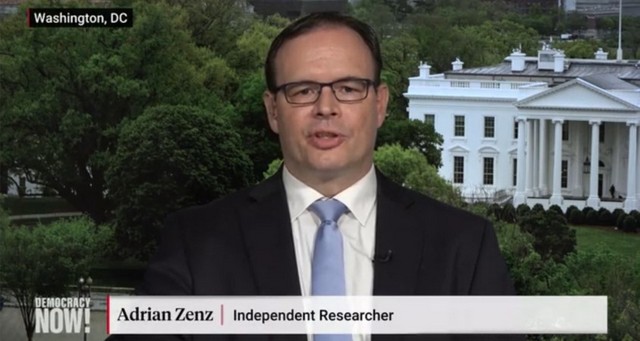
The second study relied on flimsy media reports and speculation. It was authored by Adrian Zenz, a far-right fundamentalist Christian who opposes homosexuality and gender equality, supports “scriptural spanking” of children, and believes he is “led by God” on a “mission” against China.

As Washington ratchets up pressure on China, Zenz has been lifted out of obscurity and transformed almost overnight into a go-to pundit on Xinjiang. He has testified before Congress, providing commentary in outlets from the Wall Street Journal to Democracy Now!, and delivering expert quotes in the International Consortium of Investigative Journalists’ recent “China Cables” report. His Twitter bio notes that he is “moving across the Atlantic” from his native Germany.

Before Grayzone editor Max Blumenthal questioned Zenz about his religious “mission,” at a recent event about Xinjiang inside the US Capitol, he had received almost entirely uncritical promotion from Western media.

The Network of Chinese Human Rights Defenders, which first popularized the “millions detained” figure, has also been able to operate without a hint of media scrutiny.
Washington-backed NGO claims millions detained after interviewing eight people

The “millions detained” figure was first popularized by a Washington, DC-based NGO that is backed by the US government, the Network of Chinese Human Rights Defenders (CHRD).

In a 2018 report submitted to the UN Committee on the Elimination of Racial Discrimination – often misrepresented in Western media as a UN-authored report – CHRD “estimate[d] that roughly one million members of ethnic Uyghurs have been sent to ‘re-education’ detention camps and roughly two million have been forced to attend ‘re-education’ programs in Xinjiang.” According to CHRD, this figure was “[b]ased on interviews and limited data.”

While CHRD states that it interviewed dozens of ethnic Uyghurs in the course of its study, their enormous estimate was ultimately based on interviews with exactly eight Uyghur individuals.

Based on this absurdly small sample of research subjects in an area whose total population is 20 million, CHRD “extrapolated estimates” that “at least 10% of villagers […] are being detained in re-education detention camps, and 20% are being forced to attend day/evening re-education camps in the villages or townships, totaling 30% in both types of camps.”

Applying these estimated rates to the entirety of Xinjiang, CHRD arrived at the figures submitted to the UN claiming that one million ethnic Uyghurs have been detained in “re-education detention camps” and two million more have been “forced to attend day/evening re-education sessions”.

Thanks to questionable sources like the CHRD, the United States government has accused China of “arbitrarily detain[ing] 800,000 to possibly more than two million Uighurs, ethnic Kazakhs, and other Muslims in internment camps designed to erase religious and ethnic identities.”

Testifying before the Senate Foreign Relations Committee in 2018, State Department official Scott Busby stated this this “is the U.S. government assessment, backed by our intelligence community and open source reporting.”

The Chinese government has rejected US allegations, and claims that it has in fact established “vocational education and training centers […] to prevent the breeding and spread of terrorism and religious extremism.” The Chinese Foreign Ministry has stated that “there [are] no so-called ‘re-education camps’ in Xinjiang at all. The vocational education and training centers legally operated in Xinjiang aim to help a small number of people affected by terrorist and extremist ideologies and equip them with skills, so that they can be self-reliant and re-integrate into society.”

In its mounting pressure campaign against China, the US is not only relying on CHRD for data; it is directly funding its operations. As Ben Norton and Ajit Singh previously reported for The Grayzone, CHRD receives significant financial support from Washington’s regime-change arm, the National Endowment for Democracy (NED).

The NGO has spent years campaigning on behalf of extreme right-wing opposition figures who celebrate colonialism and call for the “Westernization” of China.

‘Leading expert’ on Xinjiang relies on speculation and one questionable media report

The second key source for claims that China has detained millions of Uyghur Muslims is Adrian Zenz. He is a senior fellow in China studies at the far-right Victims of Communism Memorial Foundation, which was established by the US government in 1983.

The Victims of Communism Memorial Foundation is an outgrowth of the National Captive Nations Committee, a group founded by Ukrainian nationalist Lev Dobriansky to lobby against any effort for detente with the Soviet Union. Its co-chairman, Yaroslav Stetsko, was a top leader of the fascist OUN-B militia that fought alongside Nazi Germany during its occupation of Ukraine in World War Two. Together, the two helped found the World Anti-Communist League that was described by journalist Joe Conason as “the organizational haven for neo-Nazis, fascists, and anti-Semitic extremists from two dozen countries.”

Today, Dobriansky’s daughter, Paula, sits on the board of the Victims of Communism Memorial Foundation. A former Reagan and George HW Bush official and signatory of the original Project for a New American Century document, Paula Dobriansky has become a fixture in neoconservative circles on Capitol Hill.

From its office in Washington, the Victims of Communism Memorial Foundation agitates for regime change from Venezuela to the periphery of China, advancing the “double genocide” theory that rewrites the history of the Holocaust and posits communism as a deadly evil on par with Hitlerian fascism.

Zenz’s politicized research on Xinjiang and Tibet has proven one of this right-wing group’s most effective weapons.

In September of 2018, Zenz wrote an article published in the Central Asian Survey journal concluding that “Xinjiang’s total re-education internment figure may be estimated at just over one million.” (A condensed version of the article was initially published by the Jamestown Foundation, a neoconservative think tank founded during the height of the Cold War by Reagan administration personnel with the support of then-CIA Director William J. Casey).

Like the CHRD, Zenz arrived at his estimate “over 1 million” in a dubious manner. He based it on a single report by Istiqlal TV, a Uyghur exile media organization based in Turkey, which was republished by Newsweek Japan. Far from an impartial journalistic organization, Istiqlal TV advances the separatist cause while playing host to an assortment of extremist figures.

One such character who often appears on Istiqlal TV is Abdulkadir Yapuquan, a reported leader of the East Turkestan Islamic Movement (ETIM), a separatist group that aims to establish an independent homeland in Xinjiang called East Turkestan.

ETIM has been designated as a terrorist organization with ties to al-Qaeda by the US, European Union, and UN Security Council’s Al-Qaida Sanctions Committee. The Associated Press has reported that since “2013, thousands of Uighurs… have traveled to Syria to train with the Uighur militant group Turkistan Islamic Party and fight alongside al-Qaida,” with “several hundred join[ing] the Islamic State.”

The Turkistan Islamic Party (TIP) has been among the most recalcitrant forces operating in the Al Qaeda-controlled Idlib province, rejecting all ceasefire efforts while indoctrinating children into militancy. TIP leadership has called on foreign Muslims to wage jihad in Syria, publishing an online recruitment video in 2018 that celebrated the 9/11 attacks as holy retaliation against a decadent United States awash in homosexuality and sin.

According to the Los Angeles Times, Yapuquan is “a regular guest on Istiqlal TV… where his interviews often extended into hours-long emotional tirades against China.”

Turkish journalist Abdullah Bozkurt reported that Istiqlal TV has also hosted fanatical anti-Semites like Nureddin Yıldız, who in an interview on the network, “called for armed jihad not only in China’s autonomous Xinjiang region but all over the world and described China as a nation of savages, worse than the Jews.”

The Istiqlal TV report relied on by Zenz published an unverified table of “re-education detainee figures” allegedly “leaked” by Chinese authorities, totaling 892,000 individuals in 68 Xinjiang counties as of Spring 2018.

Zenz pads this data by citing reports from Radio Free Asia, a US-funded news agency created by the CIA during the Cold War to propagandize against China. (The Uyghur Human Rights Act recently passed by Congress mandates the US Agency for Global Media – the governmental parent of Radio Free Asia – to report on Xinjiang, including “assessments of Chinese propaganda strategies.”)

With his cobbling of questionable sources, Zenz extrapolates an extremely broad estimate “at anywhere between several hundred thousand and just over one million.”

While admitting that “there is no certainty” to his estimate, he has concluded that it is nevertheless “reasonable to speculate.” He attempted to evade personal responsibility for the figure’s questionable reliability, however, by stating “[t]he accuracy of this estimate is of course predicated on the supposed validity of the stated sources.”

As time goes on, Zenz continues to inflate his speculative estimate of Uyghur detainees. Speaking at an event organized by the US mission in Geneva in March 2019, Zenz stated, “Although it is speculative it seems appropriate to estimate that up to 1.5 million ethnic minorities [have been detained by China in Xinjiang].” Zenz bumped up his estimate again in a November 2019 interview with Radio Free Asia, claiming China was detaining 1.8 million people.

In an interview with Der Spiegel, Zenz claimed that China has effectively outlawed the practice of Islam in Xinjiang. “Anyone in Xinjiang who engages in any type of religious practice, anyone who even has a single Koran verse saved on their mobile phone, will be subjected to a brutal process of reeducation without trial,” he maintained.

These incendiary claims have vaulted Zenz to the status of international “expert” on Xinjiang, earned him invites to testify before US Congress and Canadian Parliament, and to deliver commentary in major US media outlets including The New York Times, The Washington Post, CNN, and Democracy Now!

Zenz has also been featured by the International Consortium of Investigative Journalists (ICIJ) as the leading authority legitimizing their recent “China Cables” investigation. The ICIJ report asserts that “[l]inguists, document and Xinjiang experts, including Zenz, who reviewed the documents have expressed confidence in their authenticity.”

Given Zenz’s habit of speculation and the questionable reliability of the lone Istiqlal TV media report he relies on for his estimates, it is troubling that Western governments and media have accepted and promoted his claims without a trace of skepticism.

A closer look at Zenz’s own biases should magnify these concerns, as he is a full-blown evangelical End Timer who appears to be believe that God has sent him on a holy crusade against the People’s Republic of China.
Fundamentalist Christian ‘led by God’ in mission against China, homosexuality, and gender equality

A born-again Christian who claims to preach at his local church, Adrian Zenz is a lecturer at the European School of Culture and Theology. This anodyne-sounding campus is actually the German base of Columbia International University, a US-based evangelical Christian seminary which considers the “Bible [to be] the ultimate foundation and the final truth in every aspect of our lives,” and whose mission is to “educate people from a biblical worldview to impact the nations with the message of Christ.”

Zenz’s work on China is inspired by this biblical worldview, as he recently explained in an interview with the Wall Street Journal. “I feel very clearly led by God to do this,” he said. “I can put it that way. I’m not afraid to say that. With Xinjiang, things really changed. It became like a mission, or a ministry.”

Along with his “mission” against China, heavenly guidance has apparently prompted Zenz to denounce homosexuality, gender equality, and the banning of physical punishment against children as threats to Christianity.

Zenz outlined these views in a book he co-authored in 2012, titled Worthy to Escape: Why All Believers Will Not Be Raptured Before the Tribulation. In the tome, Zenz discussed the return of Jesus Christ, the coming wrath of God, and the rise of the Antichrist.

Zenz predicted that the future fall of capitalism will bring to power the Antichrist within a “few decades.” He identified the force that “will usher the Antichrist into power” as “the economic and financial fall of ‘Babylon,’ with ‘Babylon’ symbolically representing the world’s global economic system (capitalism).”

Along with the fall of capitalism, Zenz also views “postmodern relativism and tolerance thinking” and their apparent promotion of homosexuality, gender equality, and non-violent parenting to be threats to Christianity and “[t]he deceptive, leopard-like power behind the Antichrist.”

“It is very likely that the global persecution of true believers will center on the charge that they promote ‘intolerant views,’” Zenz wrote, “especially related to preaching against homosexuality.”

Zenz argued that “[h]ate crime and anti-discrimination laws will likely play a major role in the suppression of biblical Christianity” and formed part of an “anti-Christian ‘tolerance’ campaign” because they “forbid employers to discriminate based on gender or sexual orientations.”

“The outcome of this process is open rebellion against both God and God-given human authority structures”, Zenz stated, decrying that “[r]ising numbers of countries are banning all forms of physical punishment of children, the primary scriptural method for instilling respect for authority in the young generation and protecting them from rebellious tendencies.” Zenz assures readers that “true scriptural spanking is loving discipline and not violence.”

“Another important God-given authority structure that Satan is attacking through the postmodern spirit is that of gender authority structures”, Zenz continued. “Through notions of gender equality […] the enemy is undermining God’s unique but different role assignments for men and women.”

Given these obscurantist right-wing views, it is not surprising that Zenz’s proclaimed concern for the condition of Muslims in China does not seem to extend to Muslims elsewhere.

A search of Zenz’s Twitter profile returns no tweets concerning the rise of Islamophobia in the West, nor US wars and drone strikes against Muslim-majority countries. The only Tweet by Zenz concerning Muslims that is unrelated to China is a denial that there is a double standard in how violence is judged when committed by white people compared to Muslims.

‘The End Times is a very fascinating topic’

In his December 10, 2019 testimony to the House Foreign Affairs Committee, Adrian Zenz took a victory lap of sorts for Congress’ passage of the Uyghur Human Rights Act the week before, which placed new sanctions on the Chinese government. Citing the bill’s success, he called for opening a new front against China with a US investigation into “involuntary labor in relation to Xinjiang.”

That same day, Zenz also appeared on a panel dedicated to Xinjiang that was hosted by the Victims of Communism Memorial Foundation in the US Capitol Visitor Center.

On hand were Republican heavyweights like Sam Brownback, the ferociously anti-LGBT, anti-abortion former governor of Kansas and current US ambassador-at-large for religious freedom, as well as top staffers of Sen. Marco Rubio, the sponsor of virtually every China sanctions bill to be rubber-stamped by Congress in recent weeks.

During a question-and-answer session, The Grayzone editor Max Blumenthal asked Zenz about his fundamentalist religious views and far-right politics.

Zenz did not distance himself from his past statements denouncing gender equality and “tolerance thinking,” or his advocacy for the “scriptural spanking” of children. Instead, he asserted that there was no inconsistency between those views and the quality of his research on China’s Xinjiang region.

“I do have a diverse background and I have personal connections which I do not believe are inconsistent with my research,” Zenz responded to Blumenthal. “I do not support China’s authoritarian methods in any way, and I do believe there’s a God who is bringing judgment in different forms. The End Times is a very fascinating topic, a very complex topic, and I think, very relevant. And I think it’s good to live aware of that.”

Moments later, a visibly upset young man rose from his seat to “condemn the tankie Max Blumenthal.” Unleashing a torrent of insults at Blumenthal, he made no attempt to refute the journalist’s line of questioning.

The rigorously enforced conviction on display in the politically hermetic chambers of the US Capitol also encompasses the whole of Western media, where even purportedly progressive outlets have provided Zenz with an uncritical platform.

From Washington’s halls of power to major newsrooms, few are willing to let inconvenient facts get in the way of a new, undeniably faith-based Cold War crusade.

Ajit Singh is a Canada-based writer and lawyer. He tweets at @ajitxsingh.

21 December 2019

Source: thegrayzone.com

The Hidden Military Use of 5G Technology

By Manlio Dinucci

At the London Summit, the 29 member countries of NATO agreed to “guarantee the security of our communications, including 5G”. Why is this fifth generation of mobile data transmission so important for NATO?

While the earlier technologies were perfected to create ever more advanced smartphones, 5G is designed not only to improve their performance, but mainly to link digital systems which need enormous quantities of data in order to work automatically. The most important 5G applications will not be intended for civil use, but for the military domain.

The possibilities offered by this new technology are explained by the Defense Applications of 5G Network Technology, published by the Defense Science Board, a federal committee which provides scientific advice for the Pentagon –

“The emergence of 5G technology, now commercially available, offers the Department of Defense the opportunity to take advantage, at minimal cost, of the benefits of this system for its own operational requirements”.

In other words, the 5G commercial network, built and activated by private companies, will be used by the US armed forces at a much lower expenditure than that necessary if the network were to be set up with an exclusively military goal. Military experts foresee that the 5G system will play an essential role for the use of hypersonic weapons – missiles, including those bearing nuclear warheads, which travel at a speed superior to Mach 5 (five times the speed of sound). In order to guide them on variable trajectories, changing direction in a fraction of a second to avoid interceptor missiles, it is necessary to gather, elaborate and transmit enormous quantities of data in a very short time. The same thing is necessary to activate defences in case of an attack with this type of weapon – since there is not enough time to take such decisions, the only possibility is to rely on 5G automatic systems.

This new technology will also play a key role in the battle network. With the capability of simultaneously linking millions of transceivers within a defined area, it will enable military personnel – departments and individuals – to transmit to one another, almost in real time, maps, photos and other information about the operation under way.

5G will also be extremely important for the secret services and special forces. It will enable control and espionnage systems which are far more efficient than those we use today. It will improve the lethality of killer drones and war robots by giving them the capacity of identifying, following and targeting people on the basis of facial recognition and other characteristics. The 5G network, as a weapon of high-tech capacity, will also become the target for cyber-attacks and war actions carried out with new generation weapons.

As well as the United States, this technology is under development by China and other countries. The international disagreement concerning 5G is therefore not only commercial. The military implications of 5G are almost entirely ignored, because the critics of this technology, including many scientists, are concentrating their attention on its toxic affects for health and the environement, due to exposure to very low-frequency electromagnetic fields. This engagement is of course of the greatest importance, but must be linked to research on the military use of this technology, financed indirectly by ordinary users. One of its greatest attractions, which favours the dissemination of 5G smartphones, will be the possibility of participating, by subscription, in war games of impressive realism in direct contact with players from all over the world. In this way, without realising it, the players will be financing the preparation for war – but this time it will be a real war.

*

Note to readers: please click the share buttons above or below. Forward this article to your email lists. Crosspost on your blog site, internet forums. etc.

This article appeared on Dec. 10 in the Italian web newspaper, Il Manifesto. Translation:Pete Kimberley

Manlio Dinucci is a Research Associate of the Centre for Research on Globalization.

16 December 2019

Source: www.globalresearch.ca

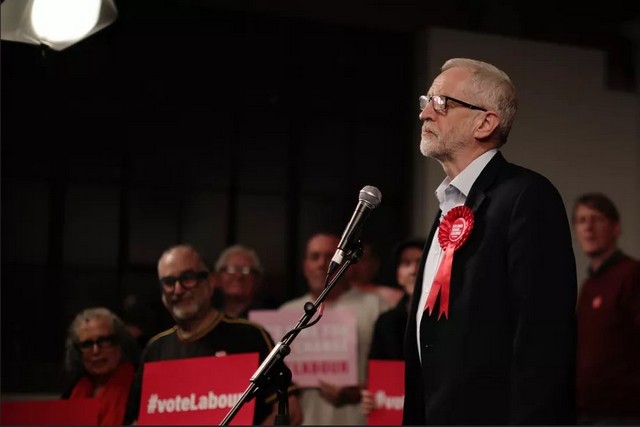
The Conservative Victory in Britain

By Zack Beauchamp

The British electorate voted Thursday in one of the most important elections in the country’s modern history. And the results show that they voted overwhelmingly for Conservative Prime Minister Boris Johnson and for Brexit: a 78-seat parliamentary majority for Johnson and the worst showing for the opposition, the left-wing Labour Party led by Jeremy Corbyn, in nearly 100 years.

This does not appear to be because Johnson was a particularly adept or well-liked political figure. His approval ratings were deeply in the negative, according to prelection data from YouGov. His central campaign promise, finally getting out of the European Union, divided the country in half. He has a reputation as an untrustworthy buffoon and an even more sinister history of racism: He has compared women in burkas to “letterboxes” and claimed that Muslim immigrants lack “loyalty to Britain” because of their religion: “Islam is the problem,” as he put it. He once penned a column describing Africans as “pickanninies” with “watermelon smiles.”

Johnson appears to have benefitted not from his own unique political talents, but from his opponent’s problems. Brexit put Corbyn in a much tougher position than Johnson, needing to appeal to both Leave and Remain voters while Johnson could focus on the former. But Corbyn was also profoundly unpopular personally: While Johnson was at minus 12 in the YouGov approval rating polling, Corbyn was at negative 40.

Corbyn’s attempt to straddle the line on the decisive issue of Brexit ended up with a wishy-washy and incoherent muddle that neither Remainers nor Leavers could believe in. Some of his leftist economic policies polled well, but Corbyn himself wasn’t viewed as a credible leader — even on issues like health care where his policy approach resonated with a lot of the public. He also presided over a significant rise in anti-Semitism in the party’s ranks; he had recently been condemned by the leading Jewish Labour organization for turning their party into “a welcoming refuge for anti-Semites.”

Corbyn is, in some ways, yesterday’s problem. He has already vowed to resign before the next UK election, his political ambitions in shambles.

But the question of how Labour can recover — and what this tells us about the global fight against parties like the Conservatives that embrace right-wing populism — is still very much unsettled.

What happened in the UK election results — and what it means

Historically, both British and European politics more broadly have been heavily determined by class divisions. Left-wing parties like Labour dominated among the industrial working class, while right-wing parties like the Tories did well among society’s upper crust.

But in the past several decades, this historical pattern became unglued. Educated urban professionals have drifted left and the working classes have tiled right, a shift that social scientists attribute to the rising importance of immigration and identity issues in European politics. In Britain, Brexit supercharged this long-running process, as highly educated city dwellers tended to oppose Brexit (making them more likely to vote Labour) while rural and less educated voters tended to support it (making them more likely to vote Conservative).

The 2019 election results reflected the post-Brexit realignment. Labour was absolutely devastated in its traditional working class constituencies (the UK equivalent to congressional districts), with the Conservatives — long caricatured as the parties of the rich — making historic inroads. “The resounding Conservative victory was driven by a dramatic swing of working-class support away from Labour,” as the Financial Times put it in a post-election data analysis.

“In seats with high shares of people in low-skilled jobs, the Conservative vote share increased by an average of six percentage points and the Labour share fell by 14 points. In seats with the lowest share of low-skilled jobs, the Tory vote share fell by four points and Labour’s fell by seven,” the FT said in its analysis. “The swing of working class areas from Labour to Conservative had the strongest statistical association of any explored by the FT.”

This is extremely preliminary: We don’t yet know which voters in these constituencies voted which way, so we can’t yet say whether class itself is the key. Indeed, another analysis by Will Jennings, a political scientist at the University of Southampton, suggested that education level — the percentage of college graduates in a constituency — was actually more important than income level or class per se, which would be consistent with long-term data on European political realignment.

But what’s clear is that Labour’s theory of the case — that its socialist policy manifesto would be able to win back Brexit voters in its traditional working-class heartland and secure the cities — was a failure. The question is why.

The debate among British analysts has largely polarized along pro- and anti-Corbyn lines.

The pro-Corbyn analysis is that Brexit was a unique event that swamped their otherwise popular economic agenda, creating an impossible task for Labour of appealing to both its Remain supporters in London and the Leavers in the north of England.

Anti-Corbyn analysts suggest that his attempt to have it both ways on Brexit — calling for a second referendum but not saying which side he would support — was a poor way of handling the dilemma, depressing Remain voters everywhere without winning over Leavers attracted to Johnson’s simple message. In this view, Corbyn was so incredibly unpopular, his socialism so out of touch with the British public, and his failure to tackle the anti-Semitism crisis so toxic, that he had doomed the party by leading it.

As is often the case in situations like this, the answer is somewhere in the middle. “In a shock move,” UK politics analyst Torsten Bell writes, “the ‘it was Brexit’ vs ‘it was Corbyn’ debate misses the blindingly obvious fact that it was both.”

It’s true that Labour was in a tough position on Brexit, needing to hold support in Leave constituencies and turn out Remain voters. The Tories, by contrast, figured out a way to win on a simple Leave message.

But it’s also clear that Labour did badly across the board: Jennings’s analysis finds that Labour lost support even in cities, a result that suggests that Corbyn’s personal unpopularity was depressing voters who should (on the Brexit theory) be supporting the more Remain-friendly party.

This early analysis suggests that Labour was simply unprepared to fight the battle on the terms the Tories were waging. Though Johnson was widely unpopular, his party also moved to the center on economic issues, a strategy that helped sideline Corbyn’s class-based appeal and emphasized the largely identity-based fight over Brexit. Brexit carried the day by appealing to British insularity and hostility to outsiders. Johnson mobilized voters who found this vision attractive, as well as those simply frustrated with the dragged-out Brexit process, and won a huge victory.

Due to a combination of legitimate strategic difficulty and the gross incompetence of its leader, Labour simply didn’t have an effective response. The question of how to fight back against the Tory embrace of right-wing populism, to mobilize a counter-movement in favor of a more inclusive British identity, is still an open one.

For those of us troubled by the illiberal drift among advanced democracies — not just Britain or Europe, but also the United States — these results cannot be taken as a good sign.

Zack Beauchamp is a senior correspondent at Vox, where he covers global politics and ideology, and a host of Worldly, Vox’s podcast on foreign policy and international relations.

13 December 2019

Source: www.vox.com

Non-Muslim states should be litigants against Myanmar

John Packer is Neuberger-Jesin Professor of International Conflict Resolution in the Faculty of Law and Director of the Human Rights Research and Education Centre at the University of Ottawa, Canada. He has followed the Rohingya issue since 1992 when he was a UN Human Rights officer and assistant to the first UN special rapporteur on human rights in Burma. He has investigated human rights violations in dozens of countries, specialising in international protection of minorities. In an e-mail interview with Prothom Alo, he speaks about the recent case against Myanmar at ICJ.

Prothom Alo: What could be the possible interim order of the International Court of Justice (ICJ)? How do you see Professor Sands’ pleading about an order within 4 months to have a new fact-finding mission to visit Rakhine?

John Packer: The Court should respond to the applicant’s request. It has the possibility to order what it believes is merited in line with the objectives of preserving rights and avoiding irreparable harm. The case, being about the most serious and urgent of matters – purportedly on-going genocide, is unusual compared with cases typically coming before the Court, so the Court could find merited the unusual (but arguably appropriate) request. Moreover, the Court has within its statute the possibility to order an enquiry, so this is not entirely beyond what might be envisioned and reasonably sought.

Prothom Alo: What about the double standard as shown by Burma’s lawyer? Do you think it has breached any ethical code?

John Packer: On substance, it may be that genocidal intent is not the only deducible conclusion, but at this stage of proceeding (seeking provisional measures) all that is required is to show a plausible connection between the risk and the protection sought (which includes the plausibility of genocidal intent). For example, the State may be motivated also by other reasons (e.g. to obtain land), but that, logically, does not in itself therefore negate the plausible intent at the same time to destroy the group as such at least in part (i.e. to commit genocide). Different violations may “co-exist” and one may even be a part of another. Of course, a motivation may be deduced from the full appreciation of the facts, in respect of which the inescapable and hugely disproportionate use of force, accompanied by egregious harms like mutilations, very substantially points to an intention to destroy; there can be little other rationale for it.

As for Professor Schabas deciding to act for Myanmar, it seems from reports that he is badly confused about the nature of the case – invoking, as reported, everyone’s “right of defense”. While Myanmar does possess that right at International Law, the case should not be confused with a criminal prosecution (which it is not at all) where the services of a highly competent lawyer may be justified on the noble basis of “service to the law” and defense against the power of prosecution given the risk of conviction (which is not at issue in this case). The State of Myanmar (with all its resources, powers, immunities and influential friends) faces no possibility of such risk. This case is a dispute between States – something closer to an international civil action. The best lawyers need feel no compulsion to act for a regime of the evident nature of Myanmar and assist it to avoid responsibility for its conduct – conduct which has self-evidently caused enormous harm to so many. Invoking a moral imperative to do so is entirely misplaced. I am saddened by Professor Schabas’ choice in the matter.

Prothom Alo: Schabas helped research a report in 2010 on systematic attacks against the Rohingya, which concluded that they met the international threshold of crimes against humanity, now he has retracted. Human Rights Watch says he is selling out the Rohingya.

John Packer: Self-evidently, the inconsistency of Professor Schabas’ previous public statements with positions he asserted before the Court could reasonably be expected to be observed and to undermine his credibility before the Court. Of course, he can also, reasonably, form a more definite opinion upon closer scrutiny of facts, or he may simply change his mind. But these possible explanations do not engender confidence within the Court or among others.

Prothom Alo: Aung San Suu Kyi has stated that genocidal intent is not the only hypothesis. She also confessed disproportionate use of force, etc. Do you find lapses on her part, legally speaking?

John Packer: In terms of the law, Aung San Suu Kyi and her lawyers seem to think that there exist permissible excuses for genocide – such as the existence of a purported terrorist threat (no matter how small or large) or some error in proportionate response, or perhaps even Burma’s stage of democratic development (e.g. seeking some leniency… to trust the Government NOW to punish some wrong-doers). None of these invoked reasons constitute, in law, permissible excuses. Indeed, there is no excuse in law for genocide. Rather, the positive duty is to prevent it!

Prothom Alo: Suu Kyi statement got into quite a bit of the factual, historical, and legal detail. She did not waste time honing in on what will be Myanmar’s central argument – that the patterns of conduct to which She did not utter the word ‘Rohingya’. I thought this omission –surely intentional – reflected poorly on her.

John Packer: Aung San Suu Kyi ‘s refusal – clearly her intention –not even to utter the word ‘Rohingya’ reveals a definite, deeply held position against the very existence of the group as such. Arguably, given her official position, that violates the human right of the group to exist and anyhow demonstrates the attitude of the government against the group for which the Genocide Convention is intended to afford essential protection. While it is not proof of genocide per se, it is proof of the attitude of the State which, combined with other facts, may reasonably lead the Court to conclude the existence of the ill intention.

Prothom Alo: Much of Aung San Suu Kyi’s presentation reframed the situation as an internal armed conflict between the military and a ‘rebellion’ or ‘separatist movement’. She mentioned a so-called independence movement and tacitly claimed that the part of present day Bangladesh was part of the ancient kingdom. Why did she venture so much into the pages of history?

John Packer: The arguments about history are strictly irrelevant to determination of breaches of the Genocide Convention. So, too, is the existence or not of an armed conflict (for which, of course, there was and is no armed conflict with the Rohingya); genocide may occur in time of peace or in war. Either Aung San Suu Kyi is simply lost in her misunderstanding of the Genocide Convention or is seeking to obfuscate and distract – or to reinforce narratives that play well for nationalist Burman politics back in Myanmar.

Prothom Alo: One expert said that she is blurring the idea of complementarity from the ICC context with a broader proposition that domestic justice mechanisms need to be allowed to work before a state can reasonably be accused of failing to meet its obligations. This sets up an argument about whether Myanmar’s domestic justice mechanisms are credible, probably an argument that Myanmar will have a hard time winning. It invites further scrutiny that may not be to Myanmar’s advantage.

John Packer: There is no principle of complementarity relating to the Genocide Convention. The argument might apply to the duty to punish individuals, but that is distinct from the State’s own obligations to prevent and not to commit genocide, as well as other obligations under the Genocide Convention which Myanmar has manifestly failed to fulfill and which raise questions about good faith and treaty law applicable between parties.

Prothom Alo: She has indicated that ‘resourceful countries’ are allowed to police and investigate themselves, but similar efforts by states such as Myanmar are never considered adequate. She even alluded to Trump’s pardoning of war criminals in the US. Comment please.

John Packer: The idea that Myanmar should be granted leniency –i.e. a lower standard of performance – raises obvious questions about equal sovereignty! Is she arguing that Myanmar is not reasonably to be expected to fulfill its obligations as an equally sovereign State (and not even a newly independent one)? As for the failures of others, that does not grant a right to breach obligations. These are extraordinarily weak arguments that indicate some grasping at straws. It is surprising her legal team would have concurred in the presentation of such arguments.

Prothom Alo: Do you agree that she has some constructive attitude to the distressed Rohingyas? Though strategic on genocidal intent, she emphasised that there are government programmes aimed at social cohesion, for people to go to school or university, etc. Her argument is that such programmes would be completely inconsistent with the presence of genocidal intent. She even showed a playground.

John Packer: This is utter nonsense. There is abundant and overwhelming evidence – inlarge part from Myanmar’s own policies and laws – that Myanmar overtly and badly discriminates against Rohingya and violates almost all their human rights. It is simply not credible that the Rohingya are well-served and happy people… with now some 85% of the entire population, over the last many years, having fled their homeland. In addition, it is not mutually exclusive that a few Rohingya may be provided some benefit (even one playground!) while the general position of the State is oppressive and genocidal. The Court will judge this, in the immediate in terms of the risks it must assess vis-à-vis the request for Provisional Measures.

Prothom Alo: Closer scrutiny may reveal that they add up to less than she has suggested, which will undermine the claim. Can the Court ask to provide a report? What would be the other means to go before the next hearing?

John Packer: The Court should adjudicate promptly on Provisional Measures, given that they must respond to urgency and the risks of irreparable harm. The rest of the (main) case will then unfold. Yes, the Court can order specific reporting notably on compliance with the Provisional Measures.

Prothom Alo: If Gambia is not happy with the Provisional Measures awarded then what options exist under the procedure?

John Packer: For The Gambia, this is a single opportunity. But, this does not preclude other states bringing their own applications – possibly for a broader or different case and seeking different Provisional Measures. This is, I believe, unlikely. However, it will depend in part on what the Court does – whether States believe the response is suitable. The Gambia followed its own belief and decided on its own application. 150 other States parties to the Genocide Convention are free to make the same decisions and act on their own rights.
There exists considerable scope in terms of the facts for such applications to be brought, alone or jointly, by States – notably since Myanmar has been a State Party to the Convention since 1956 and it has arguably committed or permitted breaches of the Convention for a long part of that period and also vis-à-vis other groups than the Rohingya (as some ethnic groups have long contended).

Prothom Alo: Why and how did The Gambia take the initiative?

John Packer: This is a result of a number of coincidences, linking the OIC’s long engagement and frustration, the change in politics and Government in The Gambia, the person of The Gambia’s Minister of Justice (as a prosecutor at the Rwanda Tribunal), connections with other international lawyers, the desire of others (including Sheikh Hasina) to see action taken, readiness of some to provide the required funding, etc. It is significant and unprecedented that The Gambia has taken forward the case purely on the basis of general public interest and as a State Party to the Genocide Convention. That is remarkable and laudable. It does beg the question why no other, more capable State was moved to act – including countries like Canada which declared genocide occurred but then choice not to act.

Prothom Alo: She came to the ICJ as Myanmar’s StateAgent, then on which basis has the Dutch Parliament afforded a State guest reception to her? Any breach?

John Packer: The case at the ICJ is against the STATE of Myanmar and not against any individual. Aung Sun Suu Kyi is de facto head of government (if not head of state) and is so far participating in presumed good faith in a legal process to which it is bound to participate. This is the proper unfolding of the rules-based order whereby a dispute is being peacefully litigated between equal States. As such, there is no reason, between States, not to accord usual courtesies. I presume Aung Sun Suu Kyi will have been subjected to some substantive questions in the Dutch Parliament. But until the Court would reach its conclusions, the process should not be overtaken by assumptions – indeed, the case is just beginning.

Prothom Alo: Her visit to the Dutch Parliament has been cancelled due to “unexpected changes” in her programme. How do the people of EU feel about Suu Kyi and her standing?

John Packer: From the news and from people – mainly scholars – I have spoken with, there is no doubt that the standing of both Suu Kyi and Myanmar have been diminished. The public process has revealed the poverty of their arguments in defense. This raises many questions about the character of existing and future relations.

Prothom Alo: What about the ICC proceedings? Will these continue?

John Packer: On the ICC investigation, that is entirely separate (as is the work of the new IIMM in Geneva) and will follow its own course. Both of these mechanisms (the ICC being judicial) focus on the responsibility and possible culpability of individuals. The ICJ case is against the State of Myanmar. While these are each distinct, there is evident overlap (e.g. regarding some events) and they may be viewed as complementary and potentially may inter-sect (e.g. evidence collected by ICC and IIMM may be brought into the case at the ICJ).

Prothom Alo: What role you do expect from Bangladesh and Myanmar? Do you think Dr Mahathir could direct Malaysia to join the case?

John Packer: There are certainly possible separate cases (or a joint case) to be brought at the ICJ by Bangladesh and/or Malaysia against Myanmar under the Genocide Convention. Indeed, it would be highly desirable because both Bangladesh and Malaysia have been directly and substantially affected, incurring costs and suffering other harms. Applications from them would have numerous advantages – notably what can be argued and requested especially in terms of substantial reparations. In addition, their participation would hold substantial political implications. There are procedural questions to be addressed, including with regard to reservations, but these could be fairly easily overcome (e.g. through withdrawal of the reservations which serve no good purpose).

Important, however, would be for other, non-Muslim States to join the proceedings as litigants and demonstrate that the issue is truly of general public interest and not motivated by religion or direct interest. Canada could well lead in this regard, perhaps accompanied by a handful of other States ideally from other parts of the world. That would also help when it comes to the eventual implementation of any judgment and order against Myanmar.

Prothom Alo: Did you notice that Articles 6, 7, and 8 of the Genocide Convention are ‘reserved’ by both Myanmar and Bangladesh. What can Bangladesh do? Do you think it would be detrimental to The Gambia case if Bangladesh develops good bilateral relations with the Burma leaders?

John Packer: The case will establish whether Myanmar has violated any of its obligations under the Genocide Convention. That does not preclude that Myanmar and Bangladesh cooperate in finding a solution. On the contrary, Myanmar must anyhow meet its obligations towards the Rohingya people and Bangladesh should be cooperative in regard to genuine and earnest efforts to that end. The ICJ case may help move Myanmar in that direction.

15 December 2019

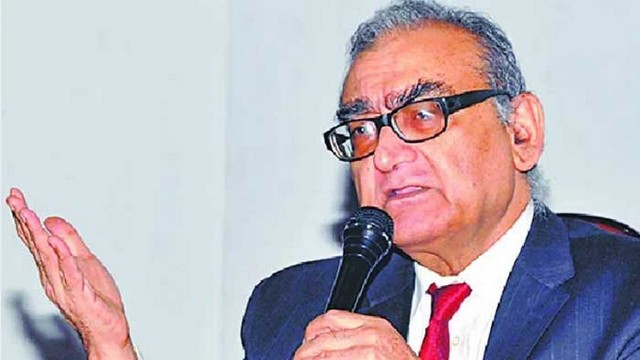
Justice Markandey Katju launches Ibaadatkhana movement to promote peace in South Asia

By Abdus Sattar Ghazali

Justice Markandey Katju, a retired judge at the Supreme Court of India, has launched Ibaadatkahna movement to promote peace in South Asia.

Ibaadatkahna, a non-partisan movement, was launched on December 8, 2019 at a unity dinner held at the Chandni Restaurant, Newark CA.

The Unity event was attended by people from various faiths.  Justice Markandey Katju was the key note speaker. Ibaadatkahna is the brainchild of Justice Markandey Katju.

Other speakers included Mr. Javed Ellahie, an accomplished attorney and the council member at Monte Sereno City Council; Dr. Jasbir Singh Kang, a medical doctor and a prominent community leader of  the Punjabi American community in Yuba City, CA and Prof. Randolph Langenbach, Prof. at the UC Berkeley. He has served as Senior Analyst for the Federal Emergency Management Agency (FEMA).

A lively question and answer session followed the main speeches. Popular Bay Area activist Maryam Turab and journalist Ritu Jha were the moderators.

The agenda of the event was to highlight growing communal intolerance in the region and to bring people of differing thoughts on one platform. From Kashmir to Kartarpur, lynching of minorities, and growing communal tensions.

Justice Markandey Katju explains Why Ibadatkhana movement was launched from outside India?

He says: “We have launched the Ibadatkhana Movement from outside India, although it relates to India. This is because in the present surcharged communal atmosphere in India there was no free space in India to launch it from there. Free speech has directly or indirectly been gagged in India, the media is largely sold out. So, the best space available is in the free atmosphere of America.”

The Ibadatkhana was a meeting house built in 1575 CE by the Mughal Emperor Akbar at Fatehpur Sikri to gather spiritual leaders of different religious grounds so as to conduct a discussion on the teachings of the respective religious leaders.

According to Justice Markandey, Ibadatkhana was very forward-looking idea, well ahead of its time but something that can be quite relevant today as it can help strengthen the secular backbone of our country. If there is a fabric for our nation with such diversity it is definitely woven by a set of threads that include religions, belief systems, culture, customs, and languages. Ibadatkhana could be a wonderful concept to keep that fabric intact in a country like India with such tremendous diversity, particularly at a time when that fabric is under threat of disruption by certain forces.

Justice Markandey Katju

In his speech and question answer session Justice Markandey Katju pointed out up to 1857, there were no communal problems in India; all communal riots and animosity began after 1857. He went on to say that no doubt even before 1857, there were differences between Hindus and Muslims, but there was no animosity as  the Hindus were going to temples and the Muslims going to mosques. In fact, the Hindus and Muslims used to help each other; Hindus used to participate in Eid celebrations and Muslims in Holi and Diwali.

According to Justice Katju, the British collector would secretly call the Hindu Pandit, pay him money, and tell him to speak against Muslims, and similarly, he would secretly call the Molvi, pay him money, and tell him to speak against Hindus.

In 1909, the ‘Minto-Morley Reforms’ introduced separate electorates for Hindus and Muslims. The idea was propagated that Hindi is the language of Hindus, while Urdu of Muslims, although Urdu was the common language of all educated people, whether Hindu, Muslim or Sikh up to 1947.

When the British left India, they divided us so that we may remain backward and weak, and not emerge as a modern powerful industrial state (for which we have all the potential). This was the real reason for creating Pakistan.

Justice Katju said this time of the year is a very interesting time as the next few months bring together four significant religious dates when we had Diwali on  October 27, the birthday of Prophet Mohammed (Eid un Nabi or Eid al Milad) on  November 10, Gurpurab, the birthday of Guru Nanak on November 12, and Christmas on 25th December.

In Dallas, Texas the NRI community is planning to celebrate Eid-Diwali Milan on November 9.

Some people in the Bay Area of California gathered in San Jose in October and decided to take the concept of inter-faith celebration a step further, and also celebrate Gurpurab and Christmas along with Diwali and Eid.

It was also decided to imbibe into it the concept of Ibadat Khana or House of Worship that Mughal Emperor Akbar started in Fatehpur Sikri in 1575 with an idea to bring the teachings of various religions in a commonplace to discuss and learn.

Indian Reunification Association

The story of Ibadatkhana will be incomplete without the mentioning Justice Markandey Katju’s ideas about the partition of India in 1947 which he considers a British conspiracy. He says: When the British left India, they divided us so that we may remain backward and weak, and not emerge as a modern powerful industrial state (for which we have all the potential). This was the real reason for creating Pakistan.

Justice Markandey Katju believes that India, Pakistan and Bangladesh must reunite for their mutual good. He first announced his idea about reunification in 2012.

He wrote an article titled “Pakistan is a fake country, will reunite with India one day”, in India Today on April 7, 2013 arguing: Pakistan is a fake country and one day India, Pakistan and Bangladesh will reunite. It may take 15-20 years. Those who have divided us will not easily allow us to reunite. They will still want us to keep fighting. But we will reunite in the next 15-20 years under a strong secular modern-minded government.”

Not surprisingly, in April 2017, in a Twitter exchange with senior journalist R Jagannathan, Justice Markandey Katju ended up calling Mahatma Gandhi a ‘rascal’ and a ‘British agent.’

In April 2017, Justice Markandey Katju announced formation of an organization called IPBRA (Indo-Pak-Bangladesh Reunification Association).

Earlier on December 8, 2015, Justice Markandey Katju  wrote: When I first mooted the idea of reunification, many people scoffed at me, and said I was day dreaming. But the same was said of Mazzini when he put forward the idea of Italian unification, something which was later achieved by Garibaldi and Cavour. German unification was achieved under Bismarck.

Some people object that much water has flown after 1947, and hence reunification of India now is not feasible. But German reunification was achieved in 1990 after a separation of 45 years. Vietnam was reunited in 1975 after 30 years. China has still not given up its claim over Taiwan.

Of course, reunification will not be achieved easily or immediately. It will take time, maybe 10-20 years. Those who divided us will not allow us to reunite easily.

On February 5, 2019, Justice Markandey Katju alongwith a little known person, Yuhunna Lakhnavi, founded the Indian Reunification Association (IRA). The object of this Association will be diametrically opposed to the ‘ Akhand Bharat ‘ concept of the RSS. Justice Markandey Katju says hhile the RSS wants a united Hindu India, this Association wants a united secular India, in which religious freedom is guaranteed, but religious bigotry and extremism is not tolerated and is crushed.

Unity Event Resolution

The Unity dinner participants passed a resolution saying “the Ibadatkhana movement is a response to the dark clouds of religious polarization and oppression of minorities in the Indian subcontinent that has amplified in recent years and threatens the very core secular fabric of the region and may engulf the entire region.”

“Ibaadatkhana movement will strive to transform and uplift the region from the ranks of the underdeveloped countries and bring the region to the ranks of the developed and highly industrialized countries. Without doing so the people of the subcontinent will remain condemned to massive poverty, hunger, unemployment, lack of healthcare, good education, farmers distress, and other ills of poverty,” the resolution said adding:

“Transformation and uplifting can only be achieved by creating strong unity among people and through sustained struggle of people. Stand united against forces that seek to destroy the unity amongst people by taking advantage of the diversity and creating hatred and animosity based on religion, caste, language, and race.”

To achieve its goal of unity, the resolution said that yhe path of suleh-e-kul, the secular path shown by the great Mughal Emperor Akbar is the correct path to maintain unity among the people of diverse ethnicity, culture and religion.

The Ibadatkhana resolution demanded immediate restoration of democratic rights of all minorities, Muslims, especially Kashmiri Muslims, Kashmiri Pandits, Sikhs, Dalits and Christians.

On the current siege of Kashmir, the resolution condemned “undemocratic revocation of Article 370 and suppression of 8 million Kashmiri’s who are under unconstitutional detention and curfew since August 5tth 2019.”

It demanded “immediate restoration in Kashmir of internet and pre-paid mobile services, immediate release of all political prisoners and innocent youth detained under preventive and sedition laws on false and fabricated charges, violating the fundamental right of liberty guaranteed by Article 21 of the Indian Constitution, immediate restoration of freedom of speech and of the media guaranteed by Article 19(1)(a), lifting of curfew and doing all else necessary to enable Kashmiris to lead a normal civilized lives.”

The resolution pointed out that Ibaadatkhana movement is the result of collective effort of conscious individuals inspired by humanity and secularism and is geared towards upholding dignity of the people of all religions and races.

The Unity Dinner House resolved that December 8th will be observed internationally as Ibaadatkhana Day every year. The House approved the appointment of Tasawar Jalali as the Chairman of the Ibaadatkhana Foundation.

Abdus Sattar Ghazali is the Chief Editor of the Journal of America (www.journalofamerica.net) email: asghazali 2011 (@) gmail.com

13 December 2019

Source: countercurrents.org

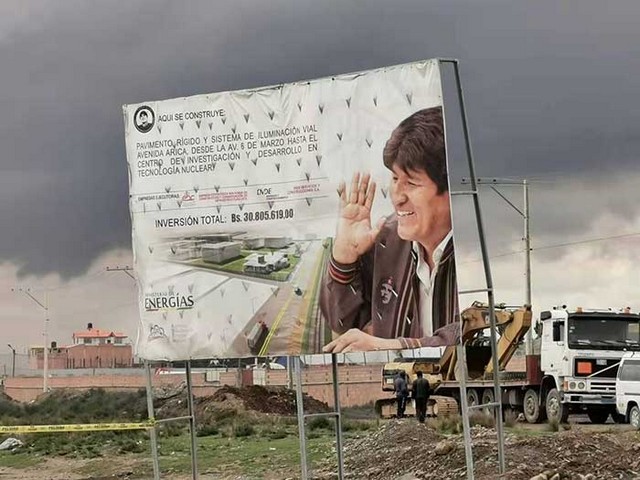
Indigenous Bolivia Ready To Go To War Against Fascism

By Andre Vltchek

Bolivia, December 2019, three weeks after the fascist coup. It is devilishly cold. My comrade’s car is carefully navigating through the deep mud tracks. Enormous snow-covered mountain peaks are clearly visible in the distance.

The Bolivian Altiplano; beloved, yet always somehow hostile, silent, impenetrable.

So many times, in the past I came close to death here. In Peru as well as in Bolivia. More often in Peru.

Now, what I do is totally mad. Being a supporter of President Evo Morales from the beginning until this very moment, I am not supposed to be here; in Bolivia, in the Altiplano. But I am, because these mud huts on the left and right, are so familiar and so dear to me.

My comrade is a Bolivian farmer, an indigenous man. His hands are red, rough.He usually does not talk much, but after the coup, he cannot stop speaking. This is his country; the country that he loves and which has been stolen from him, from his wife and from his children.

We can both get screwed here, but if we do, that’s life; we know the risk and we are happy to take it.

Carlos (not his real name), my driver and a friend, explained:

“I called them, the elders, and they said it is ok that you come. I sent them your essays. You know, people here now read, even in the deep villages. After 14 years of Evo’s government, the entire country is covered by the mobile phone network. They read your stuff translated into Spanish. They liked what they read. They agreed to give you a statement. But they said, ‘if he is not really a Russian-Chinese left-wing writer, but instead some Camacho crony, we will break his head with a stone.’”

Camacho; Luis Fernando Camacho, a member of the fascist, U.S.-backed Revolutionary Nationalist Movement, and the Chair of the Civic Committee of Santa Cruz since 2019. A major adversary of Evo Morales, a man who during the 2019 Bolivian general election, sided with the West, with the treasonous Bolivianmilitary (trained in the United States), and demanded Evo’s resignation, on 5 November 2019.

I am fine with what they say. We are going.

We drive up, and then, at approximately 4,100 meters above sea level, we level up.

A new, wide road is being constructed. Of course, it is a project from the days of Evo’s presidency.

But it is not only the road building that can be detected all around us. There are water towers and water pumps and faucets in every village. Water is free, for all. There are schools, medical centers as well as sport facilities, and carefully attended fields.

The drive is long, tough. But at one point, we see a few buses and cars parked on the top of a hill.

There is a small plateau, and a giant white speaker sitting in the middle of the field.

People in colorful outfits are scattered all around the site: men, women and children. A group of elders is seated in a closed circle. They are chanting, and their appeal is broadcasted through the speaker. They are addressing what is sacred to them: Mother Earth. They need strength in order to go on, to struggle, to defend themselves.

I am first ‘scanned’ by the people, and only then allowed to approach the elders. I explain who I am, and soon, the formalities are over.

“Please record but do not film our faces, for security,” I am told. “But later, you can film the gathering.”

Soon after, I sit down, and they begin to talk:

“The situation which we are living in these days in our country, in the communities up here, in the Andean communities is very difficult.In reality we feel frustrated, often abandoned because during the previous government led by President Evo Morales, we as farmers and indigenous people, felt very good. Even if, sometimes, we did not receive too much help, still, the government, the very President Evo Morales, is of our own blood, our own class. For that reason, we were supporting him. And we keep supporting him.”

“And this, what we have, now is a government – dictatorship. They say the contrary, but it is a fascist government. It is a government which is burning Wiphala, our symbol.It dishonors us. We feel humiliated, we feel discriminated against. For that reason, we realize that we cannot fail; we cannot stay here like this, we will continue fighting. There will be elections in our country, and we will continue supporting that one person who has elevated our name; the name of the native people, of workers, of working people, and of the poor.”

“First, we will go to the elections, if of course there are elections. We will go and support our people; our leaders. In case that they will produce electoral fraud, then yes, we will rise!”

I told them that I have known their country, and Altiplano, for more than 25 years. Everything has changed. The villages consisting of mud huts came to life. They woke up, began to bloom. Water for all began to run through the pipes provided by the government. Modern ambulances have been deployed, serving all corners of the nation. Health centers opened their doors to millions of students, and so did schools, and vocation centers. New roads have been built. The government encouraged ecological farming.

Bolivia, for decades and centuries living under monstrous apartheid has been exploited, humiliated and robbed of everything, but lately has begun rising to its feet.

I told them this. I told them how I used to come here, again and again, in the 1990’s, from Peru; a country devastated by the so-called “Dirty War” which I have described in my novel “Point of No Return”. Peru was terribly broken, but here, in Bolivia, people were half-alive. There was no hope, only silent, frightening misery.

Now Bolivia, once the poorest country in South America, has beenway ahead of Peru, a state which has been relentlessly cannibalized by the neo-liberal economic model, while still racially and socially divided to the extreme.

I asked the elders, whether they agreed. They did.

“Certainly. Because with our own eyes we have seen enormous economic changes and we have witnessed how Bolivia rose and after those 14 years, got ahead of this entire Latin American region.”

I filmed, photographed.

Before we left, an elderly woman approached the car, and screamed something in a local language.

Carlos translated:

“We will all fight those evil beings who declared themselves our rulers. If they don’t disappear, soon again we will close the roads between El Alto and La Paz, and they will have to eat their own excrement. Our people will never again be defeated. Say this wherever you go!”

I said that I will.

*

In 1971, the great Uruguayan writer, journalist and poet, Eduardo Galeano, published his book Open Veins of Latin America, which soon became the most important tome for the Latin American left-wing thinkers and revolutionaries.

Inside the book, which was regularly banned all over the continent, Galeano had written about those 500 years of monstrous plunder, deceit and cruelty, committed by the Europeans and the North Americans against the people of South and Central America. Some of the most terrible crimes were committed on the territory which is now Bolivia, particularly in the silver mines of the city of Potosi, which helped to make Europe rich, but whose tens of thousands of people died, while forced to live and work as slaves.

Not long before he passed away, I worked with Eduardo Galeano in his café, in the old city of Montevideo.

It was during the heady days of the “Pink Revolutions” wave. We were celebrating our victories, sharing hope for the future.

But at one point, Eduardo paused, and said, simply:

“You know, all of our comrades who are holding power now have to be very careful. They have to understand that the poor people who voted them in, or who supported them when they were taking power, have only one thing left in their life, and that is hope. You take away their hope, and they are left with nothing. Robbing them of hope is like killing them. That is why, whenever I encounter our left-wing leaders, and I do it very often, I always tell them: ‘Comrades, careful, Do not play with hope! Never promise to people what you cannot deliver. Always keep your word.”

Juan Evo Morales Ayma, the first Bolivian indigenous president, understood Galeano and his work perfectly well. He and his Movement for Socialism (MAS), never betrayed the trust of the poor people. That is why he was never forgiven by the West, and by many individuals coming from the treasonous Bolivian elites and the military.

*

After my meeting with the indigenous leaders, I asked Carlos to drive us around Altiplano, without any particular plan. I wanted to talk to people; to the poorest of the poor of Bolivia.

At one point, we arrived at a tiny hamlet. A dog with a broken leg welcomed us with loud but innocuous barking. There were two sheep near the entrance to the house. An elderly farmer, his blind wife and a daughter were working in the field.

They were not afraid to speak, even to be recorded and photographed, as long as I promised not to reveal their names.

The farmer had half of his teeth missing, and he was leaning to one side, but his thoughts and words were clear:

“Thanks to Evo for everything. There is his work, and it speaks for itself; that road, infrastructure. Even this little house that we have is because of him.”

“Here we don’t want that so-called President Añez. She wants to mislead us, she lies to us. We are with MAS; all of us up here are strongly supporting MAS. We are supporting our brother Evo. We have always been suffering here, but Evo came with excellent projects… but now all progress will stop.”

The daughter is perhaps 14 years old. She is a product of Evo’s government. Neatly dressed, with nice glasses, she speaks fluently. Her words are well formulated:

“Those coup leaders have no pity on us. They have been shooting at us, beating us, gassing us. They have been violating our women. Lately, our mothers, our fathers suffered tremendously in La Paz. People were injured, people died, and the military and the coup leaders have no mercy. We don’t want to be slaves, like before. After the coup, the new government said terrible things about our president; things that we don’t like at all. We don’t want to be slaves, nor to be dammed by that new lady-president and by her people. She is a racist. The truth is that she is too racist. They call us ‘Indios’, and say things about us that make us furious. They are discriminating against us in all possible ways.”

“But you don’t lose hope?” I asked.

“I don’t,” she smiled. “I am with MAS. And MAS is going to be victorious. We will defeat those who are behind the coup.”

We left, heading towards the main road.

“One more stop,” I asked Carlos.

We drove, randomly, towards a partially damaged dwelling.

“What happened here?” I asked.

The family members spoke over each other:

“In November, Camacho sent here several buses full of his supporters, from Potosi. They arrived, and began beating us up, insulting us, killing our animals and destroying our houses. They forced us to our knees, tying our hands behind our backs. They called us the most insulting names. They humiliated us. They said that it is over, that now we will know again where we belong.”

I asked Carlos whether he had heard these stories before. He replied, without thinking:

“Of course. You can ask anyone up here, and they will confirm what you just heard.”

Before descending to La Paz, in El Alto, I asked Carlos to stop at several places, where in November, dozens of people died, blocking the capital as the protest against the coup, and against forcing Evo Morales into exile.

The bullet holes that damaged the walls were still visible, and they were clearly marked. There were flowers there, where people had fallen. Soon, hopefully very soon, there will be monuments.

The graffiti all over El Alto, spoke clearly and loudly:

“Añez, we will fish you off – you coup-maker!”, “Añez – dictator!” and “Añez – killer!”.

*

Just half a year ago, I witnessed great fiestas in El Alto. I filmed colorful processions, people dancing, fireworks. I admired the new public spaces, super-modern cable cars, public swimming pools as well as the playgrounds constructed for children.

Now, the city felt like a cemetery. It was eerie, silent, gloomy.

The enormous Mount Illimani, the symbol of this ancient land, was covered by snow. It was beautiful now, but it is always stunning, in good times as well as during the disasters. La Paz, sitting in a tremendous crater, was clearly visible from above.

“The Yankees coming,” said Carlos. “You know, Añez has restored full diplomatic ties with Washington. And their spies and agents are flooding the embassy; all in civilian clothes, of course…”

“With their backs covered by the treasonous Bolivian military,” I uttered, sarcastically.

Carlos was quiet for some time. Then he decided to speak:

“When I was young, I was in the military myself. In Cochabamba, you know, during the water crises, and popular rebellion aimed at making water free. I never told you. Those were tough times. People stood up, and some died. Our unit consisted of mainly indigenous soldiers. The officers were white; almost all were. At one point, we let them know that we would not fire at our brothers and sisters. They shat their pants: captains, colonels; you should have seen them: they were running around, in barracks and outside, with no marks of their ranks. You know, at one point, if they were to have forced us to slaughter our people, we would have refused, and slaughtered them, instead.”

“They were trained in the West?” I asked.

“Many, yes.”

“And now Carlos? What about now?”

He began whispering, although no one seemed to be around:

“I have two relatives in the army. I talked to one of them, a few days ago. It is the same as when I was serving in Cochabamba.The upper ranks are with the Yanquis, but the troops, most of them, are with MAS; they are with Evo. You see, if there is a mutiny, and there very well may beone, soon, then Añez, Camacho and their gringo friends will all soon be fucked!”

*

I went to the luxury hotel Suites Camino Real in La Paz, for lunch. I had to see “them”, the other side. Those who import exquisite beef from Santa Cruz province, those who consume it here, those who are now celebrating.

And celebrating they were.

Several parties were taking place, simultaneously. People were jumping around, hugging each other, shouting like mad. All white, all “tall and beautiful”, all blonde, peroxide or real. Wine was flowing.

Most of the waiters were indigenous, dressed in Western clothes; hushed and uncertain.

I met a former top economist in Evo’s government, Ernesto Yañez, who at one point served as the vice-President of the Central Bank of Bolivia. It was safe to meet here. We found a quite corner where we could talk:

“I certainly call what happened here, a coup. There was no election fraud.”

“Without any doubt, Evo’s years in power were marked by great economic stability. Especially in the beginning, there were almost no economic problems. The poverty rate decreased from 55% to below 30%. Quality of life increased dramatically.”

“In relatively poor Bolivia, poverty rates are lower than in the richest country on the continent, Argentina, after the reign of the neo-liberal President Macri”, I could not help but mention.

“Yes, but after the coup, the economy here is collapsing,” Ernesto Yañez said.

Half a year ago, I was here, and there were violent strikes by doctors all over Bolivia. Many of them were educated for free, by the state, but after that, they were demanding a neo-liberal medical system, in which doctors and nurses would gain unrealistically high salaries. Many Cuban doctors have been deployed by the government, all over the country, in order to improve medical care.

Ernesto Yañez further clarified:

“During Evo’s government, millions of people moved from lower to middle class. Most of them were young. Which means, before the coup, and after 14 years of MAS rule, many young middle-class people had no idea what it is to live in misery. They took all the achievements of Evo and MAS for granted. Then, when certain hardships arrived, including the slowing down of the economy after 2014, they saw them as the failures of Evo’s government.”

“You know, for instance the doctors that you mentioned; they thought that if they brought down MAS, all their requests would be immediately fulfilled by the right-wing government. It never happened. Now they have no idea what to do.”

“The same as in Santa Cruz,” I agreed with him. “Fuel and utility prices are going up. Now the right-wingers will realize what it is to have their dream come true – a neo-liberal regime. They are getting wiped-out; desperate.”

Ernesto Yañez concluded:

“You, know, Evo made many Bolivian businessmen rich, too. The country and its economy were very stable, for years. Before he came to power, the big players were North Americans, Europeans and Chileans. During his mandate, Bolivian companies were given priority. Bolivian elites were always racist, for them, Evo was ‘un Indio mas’ (just another Indian). But they hid their feelings well. It is because Evo did things well. He changed this country for the better, almost for everybody.”

“But now, things have gone from bad to worse. The new president comes with the bible and cross, burns Wiphala, and people die. Now the Indigenous people want Evo back.”

And not only indigenous people, although almost all indigenous people that I met this time in Bolivia, do.

*

I walked to Plaza Murillo in La Paz, where the Presidential Palace and the National Congress of Bolivia are located.

The police and military were everywhere. During Evo’s government, this was a quiet, open space, full of green trees, children and pigeons.

In front of the National Congress, several ladies dressed in beautiful indigenous clothes, were gathering, talking to each other. These were deputies from MAS.

I pulled out my cameras and approached them. Immediately, security dudes in plainclothes, began approaching me, but the two lady-deputies made protective gestures with their arms, smiled at me, and rebuffed the security officers: “Leave him alone, he is with us.”

I knew we had no time, and I asked only one thing: “Are we standing, comrades?”

They did not hesitate:

“We are standing. They will not defeat us. MAS is the legitimate government of Bolivia.”

And so, this is what I am reporting from the Plurinational Republic of Bolivia:

The country is under attack from the United States and its allies. It has been injured by its treasonous cadres, both military and civilian. Blood has been spilled. The legitimate president and vice-president are in exile. According to Reuters, “Bolivian minister seeks Israel help in fighting alleged leftist ‘terrorism‘”. Meaning, the legitimate government.

But the country is standing. People are not on their knees. First there will be a vote, but if there are any tricks from Washington or from the Organization of American States (OAS), there will be a fight.

Evo Morales and MAS won the recent elections. There is absolutely no way that MAS will not win again. I spoke to people, and now, even more than before, they are closing ranks around the Movement towards Socialism which made Bolivia one of the greatest nations inthe Western Hemisphere.

The indigenous people of Bolivia and the rest of South America are not beggars or slaves. Long before the arrival of those brutal religious fundamentalists and badly brought-up looters –the Spanish conquerors – they were the owners of this beautiful land. Their civilization was much greater than that of their tormentors.

Evo’s government did much more than just improving the social situation in his country. He began reversing 500 years of cruel injustice on this continent. He gave power to the powerless. He returned pride to the people who had been robbed of everything.

Washington shows clearly where it stands. Despite its hypocritical “political correctness”, it is on the side of racism, colonialism and fascist oppression. Instead of defending freedom, it oppresses freedom. Instead of promoting democracy (which is “rule of the people”), it is raping democracy: here in Bolivia, and elsewhere.

Until Bolivia is free again, the entire freedom-loving world should be waving theWiphala.

The elders from the Altiplano sent a clear message to the world. Elections will take place, but if the people are robbed of their government, there will be an uprising and an epic battle.

Sadly, if there is a battle, some people will join the Earth. But also, the Earth will not stay idle – it will join her People.

Añez together with her colonialist symbols, is already being cursed by the majority of Bolivian people, and so are Camacho and several other traitors. But perhaps, technically, they are not “traitors”, after all. Their allegiances are to those nations which had attacked and have been looting this part of the world, for several long centuries.

After 500 years of being tormented and humiliated, the mother Earth, Pachamama, is embracing her children. Evo and MAS brought them together. This is a tremendous moment in history. People here realize it. European, racist elites realize it. Washington is well aware of it.

Right now, there is a moment of silence; a brief one.

If the fascist coup leaders do not back up, there will be huge thunder, and the people of Altiplano will rise, Wiphala in hand, supported by their ancient, sacred Earth.

*

[Originally published by 21WIRE]

Andre Vltchek is a philosopher, novelist, filmmaker and investigative journalist.

13 December 2019

Source: countercurrents.org

Kerala Will Not Implement Citizenship Amendment Bill; Joins Bengal And Punjab In Opposing It

By Countercurrents Collective

The Kerala government has decided not to implement the Citizenship (Amendment) Bill enacted by the Centre, calling it unconstitutional.

Kerala chief minister Pinarayi Vijayan told reporters in Thiruvananthapuram on Thursday that his government had taken the decision based on the “unconstitutional” nature of the bill.

Another opposition-ruled state, Punjab, too, decided to not implement the law. Chief Minister Captain Amarinder Singh said the Congress will use its two-thirds majority in the state assembly to block the “unconstitutional” Bill. West Bengal CM Mamata Banerjee was the first to refuse implementation of the Bill in her state on Wednesday.

Kerala has a high ratio of Muslims, who along with the Christians, constitute 45% of the state’s 3.25 crore population. The remaining 55% population in the state is Hindu.

In Thiruvananthapuram, chief minister and CPM leader Vijayan said: “Such an unconstitutional law will have no place in Kerala and such a law will not be implemented in Kerala.”

The state would inform the Centre of the decision and why it was taken.

“Our state cannot accept something that is unconstitutional and that would divide the people on the basis of religion,” the chief minister said.

Asked whether the state would be able to circumvent a law that is applicable to the whole country, the chief minister said there are ways to stop its enforcement.

He termed the bill a part of the RSS strategy which is similar to the ones adopted by the British in India and Hitler in Germany to divide people on the lines of religion. “But history has proved that such a strategy does not have much of a longevity,” Vijayan said.

“With the CAB, the centre is trying to fulfil the dream of (VD) Savarkar and (MS) Golwalkar to divide India on the basis of religion,” he said.

It is also a diversionary tactic to deflect people’s attention from the financial mess the government of Narendra Modi has landed the country in, he added.

“There are plenty of data that establishes the financial mess the economy is in. These communal forces are trying to divide the people and divert attention from these unpleasant realities,” said Vijayan.

He urged all those who believe in the Constitution and democracy to stand up and be counted.

Vijayan said the RSS and the BJP have set up very cruel political targets by passing the bill in Parliament.

“What is being staged is a conspiracy to make India a Hindu Rashtra by tearing up all values of secularism and unity to achieve total domination…. One wouldn’t be wrong in suspecting that this move is also to destroy the democratic nature of Indian nation,” he said.

“But I am sure this piece of law will not stand the scrutiny of the Supreme Court that has time and again insisted that secularism is the foundation of India,” Vijayan added.

“Ours is a rich society that has evolved over the years with the idea of unity in diversity. Communally dividing India is a move that will weaken the unity among the people,” he cautioned.

He pointed out that Muslims who chose India over Pakistan took that decision as they believed in secularism. “Those Muslims who joined India did so because they wanted to live in a secular society,” he added.

13 December 2019

Source: countercurrents.org