Just International

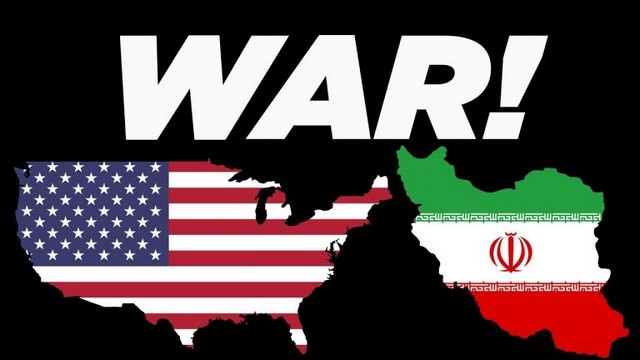
EU meeting on Iran ends with no agreement to prevent US war

By Alex Lantier

On Friday, diplomats from Germany, Britain, France, the European Union, China, Russia and Iran met in Vienna for talks on the 2015 Iranian nuclear treaty, a year after Washington unilaterally scrapped the agreement. No agreement emerged from the meeting on the central issue: the growing danger of a US war against Iran.

Last week, amid an ongoing US military build-up in the Persian Gulf, US President Donald Trump announced that he had pulled back from launching air strikes on Iran that would have caused hundreds of deaths only 10 minutes before they were to begin. On Friday, at the G20 summit in Osaka, he indicated that US war threats would escalate, declaring that “there’s no rush” to ease tensions with Iran.

“There’s absolutely no time pressure,” he added. “I think that in the end, hopefully, it’s going to work out. If it does, great. And if doesn’t, you’ll be hearing about it.”

It is clear that Washington’s unilateral scrapping of the 2015 treaty and its imposition of sanctions targeting Iranian exports were a prelude to a new US war drive. Prior to the Vienna summit between representatives of the remaining signatories to the 2015 treaty, Iranian officials warned that it was the “last chance.”

“I think this meeting can be the last chance for the remaining parties … to gather and see how they can meet their commitments towards Iran,” Foreign Ministry spokesman Abbas Mousavi told the Fars news agency. He added that US sanctions against Iran “lack any legal basis” and are a “desperate” measure.

On Friday, during the G20 summit in Osaka, Chinese President Xi Jinping starkly warned that the Persian Gulf, the center of the world’s oil supply, is “standing at a crossroads of war and peace.” According to China’s Xinhua news agency, Xi said, “China always stands on the side of peace and opposes war. All parties must remain calm and exercise restraint, strengthen dialogue and consultations, and jointly safeguard regional peace and stability.”

Xi’s statement came after his June 5 summit with Russian President Vladimir Putin in Moscow, where China and Russia vowed to “protect” their ties to Iran and “firmly oppose the imposition of unilateral sanctions” by anyone.

Nonetheless, despite the danger of all-out war across the Middle East, and potentially the entire world, under conditions where Iran and Russia are already engaged in a bloody eight-year proxy war against US-backed militias fighting for regime-change in Syria and Iraq, the Vienna summit failed to reach any deal.

“It was a step forward, but it is still not enough and not meeting Iran’s expectations,” Iran’s representative in Vienna, Deputy Foreign Minister Abbas Araqchi, said of the talks.

Araqchi said the sticking point was the EU’s refusal to defy crippling US sanctions on Iran’s oil exports that are strangling its economy. Araqchi criticized the Instex (Instrument to Support Trade Exchanges) institution set up in Paris by Germany, Britain and France to finance EU-Iran trade without using the US dollar. Up to now, the EU powers and European companies have refused to trade with Iran through Instex, citing fears of US retaliation.

“For Instex to be useful for Iran, Europeans need to buy oil or consider credit lines for this mechanism. Otherwise, Instex is not like they or we expect,” Araqchi said.

Even as it faces US trade war threats, China is defying US sanctions on Iranian oil and greeting Iranian oil tankers in its major ports. It is expected to import 200,000 barrels per day from Iran, according to industry estimates cited by the Financial Times.

Asked in Vienna whether China would obey Trump’s order to cut Iranian oil exports to “zero,” Chinese Foreign Ministry official Fu Cong said, “We reject the unilateral imposition of sanctions, and for us energy security is important … We do not accept this zero policy of the United States.”

The EU, Berlin, London and Paris are pursuing a different policy—capitulating to US threats and demanding that Iran take no action, even as Washington sends thousands of troops and an armada of warships to the Persian Gulf to threaten it.

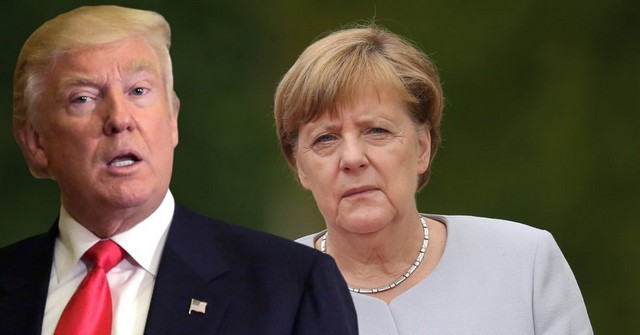
In Vienna, EU diplomat Helga Schmid merely confirmed that Instex is “operational” before demanding Iran’s “full and effective implementation” of the 2015 treaty. She thus echoed demands this week from EU Council President Donald Tusk, German Chancellor Angela Merkel and French President Emmanuel Macron that Tehran abide by the treaty, even after Washington has discarded it and threatened to bomb Iran.

Araqchi rebuffed these calls, warning that Iran could act on its threat to restart uranium enrichment and make more than the 300kg limit on uranium specified by the 2015 treaty. “I don’t think the progress made today will be enough to stop our process, but the decision will be made in Tehran,” he said.

This statement reflects growing anger with the EU in Iranian ruling circles. After German Foreign Minister Heiko Maas visited Tehran earlier this month to demand that Tehran observe the 2015 treaty, while warning that Europe “cannot work miracles” in foreign policy, the Iranian press mocked him. “The impotent cannot work miracles,” wrote the daily Resalat, while the daily Javancaricatured him as an officer doing a Nazi salute and asked, “What was the point of his visit?”

The Vienna talks underscore the failure of whatever hopes remained, after nearly 30 years of bloodletting after the first US war against Iraq in 1990-1991, that rival capitalist governments’ diplomatic maneuvers can avert a new imperialist war in the Middle East. Instead, even broader disasters are being prepared.

Amid its continuing economic decline compared to powers like China and Germany, Washington is resorting more aggressively to its military to try to restore its former global hegemony. Yet a US war with Iran, a country with three times the population and four times the size of Iraq, would dwarf even the horrific 2003-2011 US occupation of Iraq, which left a million dead. After a decade of bloody proxy wars in Iraq, Libya, Syria and Yemen, such a war would even more rapidly move toward a global war between the world’s major nuclear-armed powers, threatening the survival of humanity.

The EU powers’ attempts to whip Iran into line with US demands do not reflect agreement with Washington’s Iran policy. Behind the scenes, US-EU tensions are surging. At a NATO defense ministers’ meeting Thursday in Brussels, when newly installed acting US Defense Secretary Mark Esper said he would tolerate no further actions from Iran, his French counterpart, Florence Parly, reportedly replied by demanding that Washington not involve NATO in military action in the Persian Gulf.

The EU powers plan to spend hundreds of billions of euros on a future independent European army, and Washington has sent repeated diplomatic communications in recent weeks threatening to cut off military cooperation with the European Union. Plans for an EU army are more and more clearly bound up with the rivalry between the United States and Europe over the trillions of dollars in oil money, critical positions on world markets and control of military bases at stake in the new round of imperialist wars of plunder that are being prepared.

Nevertheless, amid growing opposition from workers across Europe to police state policies and austerity measures intended to finance Europe’s military build-up, EU politicians are downplaying US war threats against Iran. Macron declared Thursday that he shares the US “strategic objective” in Iran, namely, preventing “Iran from getting a nuclear weapon.” He decried any Iranian moves to abandon the nuclear treaty.

Macron also contested Russian reports, backed by radar data, that the US drone shot down by Iran over the Persian Gulf was hit over Iranian territorial waters. He said the information available to French authorities indicated it was “in the international zone,” as alleged by Washington.

London has already announced the dispatch of a hundred British commandos to the Persian Gulf to join the military build-up against Iran.

Originally published in WSWS.org

29 June 2019

Source: countercurrents.org

The Lie Of The Century

By Jafar M Ramini

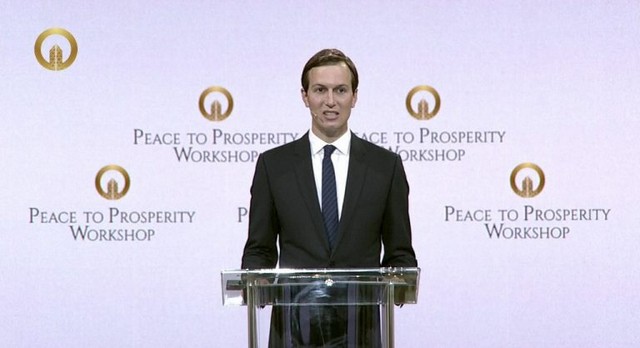
Well it’s happened. It’s real. Mr Jared Kushner, the son-in-law and Senior Advisor of President Trump has delivered 136 pages of lies, suppositions and conjuring tricks to seduce or compel us Palestinians to accept our fate and surrender our rights. What rights? As far as this document is concerned Palestinians have no rights whatsoever and as for a Palestinian perspective, what is that?

The Palestinians were not even invited to Manama, let alone considered. What about the Israelis? Were they there? Were they invited? On the face of it, no, but in reality they were amply represented. What is Jared Kushner if not the team captain for the Greater Israel Project? After all, he is Jewish, an ardent Zionist, an investor in the illegal settlements in Palestine and an advocate, par excellence, for Israeli survival and supremacy.

The Lie Of The Century, as I call it, is just that. A lie. From beginning to end, every word, every supposition of this long-winded deception is to ensure that the Greater Israel Project will advance unhindered and we, the Palestinians, are to accept the crumbs off the table of our land-lords. Or perish.

But, hang on a minute, how could an occupier who seized our land by brute force be made a legitimate land-lord over us? The answer is simple. In the Trumpian universe all that matters are power and Mammon. Isn’t this what the ‘Deal of The Century’ is all about? American/Israeli power exercised over us Palestinians without mercy? And what about the money? Oh yes, there is money, but it is not American nor Israeli money. It’s Arab money. To be extorted from despotic, Arabic regimes in the Gulf, as per usual. Trump demands and the Arab Regimes of the Gulf and Saudi Arabia oblige. If they don’t, as Mr Trump intimated, their shaky thrones wouldn’t last a week without US protection.

Mr Kushner promised $50 billion in Arab money to be divided between Palestine, Jordan and Egypt. Nowhere in the document was there any mention of Palestinian political rights, the right of return of the Palestinian refugees or even the Israeli occupation of Palestine. All was conveniently kicked into touch because it doesn’t matter, you see. What matters is Israeli survival and supremacy and the continued, rapid march of the Greater Israel Project.

I say ‘rapid march’ because who is to stop it? The Palestinians do not have an army, an airforce, a navy or even a coalition to stop this march. Jordan has already succumbed to American threats and promises of prosperity. The same goes for Egypt. Especially under the hand-picked President Abdul Fatah Alsisi, whose sole purpose is to neuter Egypt and serve as a facilitator for American and Israeli hegemony in our area.

Syria? Western powers, Israel and despotic Arab/Muslim states have made sure that Syria is taken out of the equation by embroiling it in a 7-year long devastating war.

The Gulf States? Saudi Arabia? Instead of stopping this advance of Greater Israel they are facilitating it by making a frantic rush towards normalisation with Israel and to form a coalition of the willing to combat a perceived threat from another Muslim country, Iran. The honourable exception is the State of Kuwait who refused to attend this farce and reaffirmed their total support of Palestinian rights and aspirations.

Let’s look closely at the word, ‘surrender’. Many of you might remember an article I wrote recently entitled, ‘Surrender Or Die’. It didn’t take too long for the Israelis to prove me right. There it is. From the Grand weasel’s mouth, none other than Danny Danon, the Israeli Ambassador to the UN. In an article entitled, ‘What’s Wrong With Palestinian Surrender”, published in the New York Times on June 24th, one day before the Manama ‘Workshop’. “Surrender”, he wrote,” is the recognition that in a contest, staying the course will prove costlier than submission.”

There you have it. To the victor the spoils.

And then comes the other Grand Weasel, Mr Jared Kushner, to deliver the message of surrender to a room full of weasels. All these aforementioned weasels, who have been gnawing at our heels for over a century omitted to consider one vital point. The Palestinian character and pride.

Surrender is not in our character. We’d rather die standing up, defending our rights than exist, kneeling at the feet of our self-appointed land-lords and benefactors.

Just in case any of those weasels calling for our surrender might have any interest in what we Palestinians want, here is how Executive Member of the PLO, Dr Hanan Ashrawi, put it.

Jafar M Ramini is a Palestinian writer and political analyst, based in London, presently in Perth, Western Australia.

29 June 2019

Source: countercurrents.org

Trump’s ‘deal of the century’: 17 things we learned

By Chloé Benoist

Middle East Eye looked at the plan – already unanimously rejected by the Palestinian leadership – to decipher its economics-heavy approach. As with all visions of the future, it is as notable for what it left out as for what it included.

1.No mention of the occupation…
The plan and its accompanying “programmes and projects” booklet run to 136 pages, detailing at length where the Palestinian economy needs a boost. But the White House fails to mention one issue, without which, according to the UN, the Palestinian economy would be more than double its current size: the Israeli occupation. As has been pointed out by several observers, Israel’s decades-long occupation of Palestinian lands isn’t mentioned once: the closest it gets is a reference to “higher-wage, high-growth occupations”, meaning jobs – which is far removed from how most people understand the term in the context of Palestine.

Similarly missing are related terms such as “siege”, “blockade” and “settlements”, as well as any acknowledgement as to how Areas A, B and C – the different parts of the West Bank under Israeli or Palestinian Authority (PA) control since 1995 – would be affected. One has to read between the lines to find any allusion to Israeli policies which negatively affect Palestinians, such as “protracted crisis”, “logistical challenges”, “impediments to growth”, “resource constraints” and “regulatory barriers to the movement of Palestinian goods and people”.

2. …or refugees
Another word absent from the document is “refugee”. More than two million refugees live in Gaza and the West Bank, yet the Kushner plan fails to address how they are affected by the drastic cuts in US aid to UNRWA, the UN agency for Palestinian refugees. Yes, the plan dedicates $13.7bn in prospective funding to Lebanon and Jordan, now home to an estimated 2.5m Palestinian refugees, but there is no mention as to whether any of the money will actually be for Palestinians.

3. Jerusalem is off the table
In January 2018, Trump promised to take Jerusalem “off the table”. The “Peace to Prosperity” document does just that, failing to mention the holy city. This is in line with the US decision to move its embassy to Israel from Tel Aviv to Jerusalem in May 2018, thereby recognising it as the capital of Israel in spite of long-standing Palestinian claims to East Jerusalem as the capital of a future Palestinian state. It remains unclear what, if anything, the White House thinks should be done with the estimated 300,000 Palestinians who currently live in East Jerusalem, annexed by Israel against international law in 1967.

4. Israel keeps a low profile
The document heavily downplays Israel’s role in regional tensions: when it is mentioned, it is usually tucked away amid a list of “neighbours” and “key trading partners” such as “Egypt, Israel and Jordan” rather than on its own. Some of the economic suggestions are set to benefit Israel financially, including the sale of water to Gaza, the West Bank and Jordan; the provision of gas and electricity to Gaza; the promotion of increased trade with Egypt and the occupied Palestinian territory; and the use of spyware tech by Jordan.

5. US still prioritizes arms for Israel
Kushner’s plan for Palestine says that it has the “potential to facilitate more than $50 billion in new investment over ten years”. But only $27.8bn of that will go directly to the occupied Palestinian territory, while the remainder will go to neighbouring states. That $27.8bn is around 27 percent less than the $38bn ten-year military aid deal that the US made with Israel in 2016.

6. US tells Palestine: It’s your fault
With no mention on Israel’s role in the conflict, the White House emphasizes that the Palestinians are responsible for their current predicament and that, should the “deal of the century” fail, it would be their own doing. “Ultimately, however, the power to unlock [this vision] lies in the hands of the Palestinian people,” the document reads at one point. While the Kushner plan promises to “unleash” Palestine’s potential, it never comes close to revealing who or what restrained this potential in the first place.

Elsewhere it states that “a lasting peace agreement will ensure a future of economic opportunity for all Palestinians”. A lasting peace with whom? The question is left unanswered. It also implies awareness that “peace for prosperity” is a futile exercise: several sweeping statements begin with conditional clauses, such as “If implemented” or “If the government realises its potential”.

7. Education questions are unanswered
The Trump administration’s oversight of what prevents Palestine from growing is demonstrated nowhere better than when it comes to education. Here, the document concedes that “Palestinians have among the highest graduation rates in the region”, but does not explain why many Palestinian schools “are stretched beyond their capacity”. It emphasizes the need to “focus on supporting schools operating in underserved communities”, but makes no mention of the numerous EU-funded schools in Area C of the West Bank that have been torn down by Israeli forces for failing to secure nearly impossible-to-obtain construction permits. Nor is there mention of the 500,000 Palestinian students affected by the US’s decision in 2018 to cut all funding to UNRWA.

The plan promises $300m in scholarships for Palestinian students to study abroad, but fails to address how Palestinians currently on such schemes struggle to obtain visas to leave the West Bank and Gaza. Sports, health care, agriculture and tourism are likewise assessed without context and assigned solutions with little regard for the reality on the ground.

8. ‘Jared, are we giving property rights to Palestinians?’
Kushner’s plan places a large emphasis on Palestinians’ “property rights” – the phrase is used 13 times throughout the document. “Land registration is a critical step in the transformation of the Palestinian economy” it states on page 32. It later adds: “Strong property rights are critical to realizing this future.” The plan fails, however, to mention the systematic expropriation of Palestinian land by Israel from 1948 until the present day.

Many refugees still hold the deeds and keys to the homes they left behind in historic Palestine, as do Palestinians whose lands and homes in the occupied West Bank have been seized by Israeli settlers. Is this what Kushner and Trump, who had an Israeli settlement named after him this month in the Golan Heights, have in mind? The detail is unclear.

9. Palestinians are customers, not citizens
“Peace to Prosperity” has clearly been authored by writers with a business background (Trump has long touted his experience as a businessman; Kushner is an investor and real estate promoter). The documents are full of management language that calls for a “business-friendly” approach to “unlocking human potential” through “investment-led growth” by fostering an “incubator ecosystem” and a “strong local start-up culture”.

Perhaps most telling is the line: “Good Palestinian governance requires commitment to its customers: the Palestinian people.” In the absence of a proper state, the plan implies that Palestinians are not citizens, but consumers whose political aspirations can be met by goods and services.

10. Let Palestinians eat cake – and 5G
The document’s business-like approach includes several ambitious high-end goals, like turning Gaza into a “modern metropolitan city”, a central online e-government system, and developing 5G access across the Palestinian territory. Such proposals seem out of touch compared to the basic necessities of which many Palestinians are still deprived. For example, 53 percent of residents of Gaza live in poverty today. On the technology side, Israel only lifted its ban on Palestinian telecom operators accessing 3G networks a year ago.

11. Setting the bar high
One of the plan’s goals is for Gaza and the West Bank to score 0.70 on the World Bank Human Capital Index, which measures the potential of a population’s labour. If Palestine were to achieve this, then it would put it ahead of some of the economies cited elsewhere in the plan as examples, including mainland China (0.67), the UAE (0.66), Bahrain (0.67) and Lebanon (0.54). Another suggested goal is that Palestinian governance scores 60 or above on Transparency International’s Corruption Index. That’s way above the 36 scored by Bahrain, host of this week’s conference, and more than double the 28 achieved by Lebanon. Even Israel, in existence for more than 70 years, only manages 61.

12. Gaza as the next Rio?
The plan also alludes to several visions for Palestine as a high-end touristic destination. At one point it suggests that the 40km of Gaza’s Mediterranean “could develop into a modern metropolitan city overlooking the beach, drawing from examples like Beirut, Hong Kong, Lisbon, Rio de Janeiro, Singapore, and Tel Aviv”.

No mention is made of the state of the coastline polluted as Gaza’s fragile infrastructure finds itself unable to process waste that ends up in the sea – or that Palestinians are currently prohibited by the Israeli navy from venturing more than a few miles from shore. The plan also suggests that one reason why the Palestinian tourism sector isn’t thriving is because Palestinians, well-known across the region for their hospitality, need to partner with “leading international hospitality schools” such as the United Arab Emirates Academy of Hospitality.

13. Palestine as the next Singapore?
Ambitious metrics aside, it is also revealing that some of the places cited as examples for any future Palestinian economy are not noted for their tolerance or freedom of speech.
The plan cites states like the UAE or Singapore, which have been accused by groups such as Human Rights Watch of trading political rights for the benefit of economic advancement – an accusation that Palestinians have levelled against the Trump administration’s “Peace to Prosperity” plan. Comparisons are also made with Beirut as an example of a seaside metropolis: these seem ill-thought out, given the Lebanese capital’s ongoing struggles with the privatisation of public spaces and its nonexistent urban planning.

14. Cultural faux pas
The report hails how “the West Bank and Gaza” have been cultural centres “from ancient to modern times”. It recognises Palestinian contributions to “the region’s most renowned artists and poets” – but fails to cite any examples. In defence of the White House, to describe the likes of Mahmoud Darwish, Ghassan Kanafani, Sliman Mansour or Annemarie Jacir as noteworthy would be to acknowledge how crucial politics and national aspirations have been to Palestinian culture during the past half-century.

Ironically, the report does mention the Nabi Musa festival as a “great cultural legacy should be celebrated and supported”. A core tradition of this religious event is an annual pilgrimage from Jerusalem to Jericho – a route that’s impossible for Palestinians to follow if one accepts the Trump administration’s view of Jerusalem as exclusively Israeli.

15. Cash for neighbours’ gas, power, tech
Several infrastructure projects in other countries are listed as potentially helpful to Palestinians, such as Egyptian electricity lines feeding into Gaza or upgraded Jordanian frontier crossings. But other proposals are more baffling and have no apparent direct benefit to Palestinians. The plan argues, for example, that tourism in neighbouring countries will have a trickle-down effect on Palestinian tourism. This ignores that the Rafah border crossing between Gaza and Egypt is regularly closed. Or that Lebanon officially refuses entry to individuals with Israeli stamps on their passports.

The plan earmarks $1.5bn for a natural gas hub off the Egyptian coast to “help coordinate energy development in the Eastern Mediterranean”; and $500m to provide Jordan with “national cybersecurity infrastructure and capacity building” to “open up opportunities for more international cyber collaboration”. While the benefits of these projects to Palestinians are unclear, Israel has long-standing interests in both Mediterranean gas reserves and cyber security and spyware technology.

16. Lebanon is not on board…
A total of $6.33bn is budgeted for Lebanon in the plan, including $200m to “support regional trade integration to incentivise exporters to become engaged in regional value chains to significantly reduce the cost of doing business in the region”.

This may come as a surprise to some observers for three reasons. First, Lebanon does not share a boundary with either Gaza or the West Bank. Second, it has not sent any representation to the Bahrain conference. Third, unlike Egypt and Jordan, it refuses to have any diplomatic or economic relations with neighbouring Israel. Is the Trump administration hoping to lure Beirut into better ties with Israel? Some in the Lebanese parliament believe so. Nabih Berri, parliament speaker, said on June 23 that “those who think that waving billions of dollars can lure Lebanon, […] into succumbing or bartering over its principles are mistaken”.

17. …and neither is the ‘Strawberry King’
The document of the plan is illustrated with photos of smiling people drinking water from a tap (a distant memory in Gaza), or hiking through countryside (much of which has been taken over by Israeli settlers). Especially prominent are images of strawberry farmer Osama Abu al-Rub, which seem to have repurposed from USAID brochures where he is described as the “Strawberry King”. Al-Rub, who lives in Qabatiya, south of Jenin, was also featured in a 2017 USAID video after receiving assistance – but he said this week he is unhappy with his appearance in “Peace to Prosperity” documentation. “I am very upset by the publication of my family photos and the US manipulation in promoting the ‘deal of the century’,” he told MEE. “We are ashamed of this project aimed at liquidating the Palestinian cause. It is impossible to accept it or to be one of its tools.”

Chloé Benoist is a French journalist who has been working in and on the Middle East since 2011.

28 June 2019

Source: www.opendemocracy.net

Germany vs. Iran – Has Germany Sold Out to the Devil?

By Peter Koenig

Madame Angela Merkel – the head of Europe’s strongest economy, of the leader of the European Union, said that there was strong evidence that Iran attacked the two tankers in the Gulf of Oman. Ten days ago, German Foreign Minister, Heiko Maas, travelled to Tehran, officially to “save” the Nuclear Deal (Joint Comprehensive Plan of Action – JCPoA), but in reality, to ‘negotiate’ with Tehran ways so Germany and by association other EU members, might still do business with Iran, against some “concessions” by Iran, in order to appease Washington.

Iran’s President Rouhani reacted quickly. FM Maas got the cold shoulder and was dismissed. And rightly so. Maas was not really representing Germany – but the United States. Iran gave the EU an “ultimatum” of 60 days to stick to their commitments on trading with Iran according to the Nuclear Deal – despite the US reneging on it – or else, Iran may bypass some of the conditions under the JCPOA accord. The EU – not being independent and her member countries having lost all sovereignty by submitting to the dictate first from Brussels, second from the tyranny of Washington, didn’t like the ultimatum, and said so in a joint statement. They added a weak and meek phrase, “We call on countries not party to the JCPOA to refrain from taking any actions that impede the remaining parties’ ability to fully perform their commitments;” not even daring calling the country by name, for whom the statement was destined, i.e. the US of A.

Germany’s position is as absurd as it has ever been since Merkel and the entire Bundestag accepted the sanctions imposed by Washington on Russia in 2014 – and replicated them along with the rest of the EU – even to their own detriment and to the detriment of the entire EU. Chancellor Merkel and apparently the entire Bundestag, again, go along with Washington’s equally absurd and false accusation that Iran has attacked the two tankers, one Japanese owned, the other Norwegian. The latter belonging to a close friend of Iran’s, and the Japanese one, hardest hit – exactly at the time when Japan’s PM Shinzō Abe, was visiting the Ayatollah in Tehran to discuss how to maintain the Nuclear Deal – trading – despite the sanctions and threats of Washington, hence, a friendly visit.

A blind person can see that these were two false flags – so thinly masked, with badly fabricated US ‘video evidence’ that even according to CIA and US military brass did not deliver conclusive evidence. In fact, none at all. Madame Merkel – why do you not first ask the obvious question “Cui bono?”— Who benefits? Certainly not Iran – but the aggressor, the US which has been planning and preparing for war with Iran for decades, ever since the first Iraq war under Father Bush, in 1991. At the 2003 invasion of Iraq – Bolton openly expressed his dreams to demolish Iran. He and Pompeo are liars and war criminals, who run the White House and pretend to run the Pentagon – and who act in impunity. Their power seems limitless. Trump – seems to be a mere puppet.

Getting Merkel on board of the flagrant US lie that Iran was attacking two tankers in the Gulf of Oman, is a strategic hit, enhancing the lies’ credibility and, thus, making a US attack on Iran more palatable to the rest of the world. Yet, apparently this was not enough. The Pentagon sent an unmanned high-altitude Global Hawk drone into Iranian airspace, a provocation Iran could not resist and shot the drone down, but not before sending warning signals, about which today nobody talks. The world shouldn’t know that Iran had the noblesse to warn the US about the drone being in their airspace. As can be expected the White House gnomes deny that the drone was invading Iranian airspace, but pretend it was in international air space, when it was shot down.

This raised the ante for Washington to launch an attack on Iran. All was planned to be carried from Thursday to Friday (20 to 21 June), and at last minute Trump stopped it. Is it true? – It could be, because somebody a bit ‘higher up’ than Trump and his warrior minions, must have realized the danger that such an attack may pose to the rest of the world – or actually that it could trigger a nuclear conflict. However, that the attack plan was stopped doesn’t mean it was canceled. Maybe it was just postponed.

In the meantime, the US Federal Aviation Administration (FAA) has ordered all US airlines to avoid the Gulf of Oman and the Gulf of Hormuz. And, as could be expected, the airlines of Washington’s “true” puppet allies have followed suit, i.e. Australia’s Qantas Airways Ltd, Singapore Airlines Ltd, Germany’s Lufthansa, British Airways, Air France and its Dutch KLM affiliate, as well as Malaysia Airlines, said they were re-routing flights to avoid the area. Others may follow under direct or tacit pressure of the US. The Japanese airline ANA said they were considering alternative routings. Effectively, the US was able to declare a no-fly zone over a significant area of Iran.

Let’s make no mistake, all the visible key figures at the helm of the White House – are run in the back by Israel, by Netanyahu and the Chosen People he represents, those who also run Wall Street and the western world’s banking and financial system. Israel would like to see Iran in rubbles, or better, in eternal chaos, the goal that was set for Iraq, Afghanistan and that the US was and still is dreaming for Syria. This bunch of evil elite pulls the strings and hopes to soon pull just ONE string for global hegemony, under a ONE World Order.

Back to Germany. Instead of jumping off the sinking ship of Washington and its faithful entourage of the willing, as rats would do, and as the vast majority of the German people would prefer, let alone German and European business, Madame Merkel and apparently all her circles, including Berlin’s Parliament, follow the US flagrant lie propaganda. Why? – Well, this is the deal: There are many ways to “buy” top politicians, with threats or with money or by outright inflicting fear through ‘proxy-assassinations’.

Once Germany is on board – the rest of Europe will follow suit. In that case, Washington – Trump and consortia – think they have Iran totally strangled, by blocking all trade and all financial transactions, plus confiscating Iranian assets abroad – on top of imposing stiff tariffs, so that Iran can no longer afford importing vital goods for manufacturing – or for sheer survival from the west. Once a country is weak, it can be taken over easily. So, the western, AngloZionist thinking goes.

Iran – her Fifth-Columnists aside – is strong and has already proven that it is detaching from the west. Even trying to adhere and fight for the Nuclear Deal which the west, i.e. Europe is incapable of respecting for lack of backbone, is a waste of time. To demonstrate that Iran has alternatives, Mr. Rouhani was attending the Shanghai Cooperation Organization (SCO) summit in Bishkek, Kyrgyzstan, on 13 and 14 June 2019, by invitation of China, the leader of the 8-member “club”.

SCO stands for promoting peace, trade and a non-aggressive defense strategy (the antidote to the NATO-type military aggression). As of now, Mr. Rouhani is an observer for his country, Iran which is in an advanced stage in the process of entering the SCO as a full member. This could happen later this year or in 2020. Iran would recover her sovereignty, her economic potential and would – and will – be able to detach from the west, pretty much as did Russia and China, the two super-powers under constant assaults of sanctions, denigration and false accusations.

Turkey – is in a similar situation. If Turkey is admitted by the SCO – also very likely – their NATO exit will be imminent. What that will mean for the rest of NATO, at this point we can only guess and dream of, especially since there is an ever-stronger people’s movement throughout Europe to exit NATO. It is particularly strong in Italy and paradoxically also in Germany. The vast majority of Germans want to exit NATO, but the government doesn’t listen. “So far” doesn’t listen. The German anti-NATO movement has been gaining strength ever since the anti-nuclear energy protests in the early seventies which were followed and intensified in the late 1970’s early 1980s against nuclear arms stockpiled in Germany by the US, particularly those stored at the US Air Force base of Ramstein, near Kaiserslautern.

The “so-far” is a precursor to a break with NATO, as the pressure against the USAF base Ramstein, against NATO, is mounting, and that, when Madame Merkel decides firmly to go with the sinking ship – risking to pull Germany and her people down the drain for sheer senseless and outdated obedience to the succumbing tyrant. How absurd!

While Iran is making smart moves, gradually away from western economics, from trading with the west – and moving eastwards – where the future is – Germany backtracks, literally into the orbit of a dying beast, into what is ever-more detectible – a decaying empire.

When will Germany wake up? When the first bombs fall on her cities – a WWI and WWII redux? Except this time, it may not be just the falling of conventional bombs. It may be nuclear meeting nuclear at Ramstein. Madame Merkel, your obligation to the people who apparently elected you is larger than you think and larger than yourself – and much larger than whatever goes on in your mind to follow a defeated warrior and rogue nation into hell.

*

Note to readers: please click the share buttons above or below. Forward this article to your email lists. Crosspost on your blog site, internet forums. etc.

This article was originally published on New Eastern Outlook.

Peter Koenig is an economist and geopolitical analyst.

23 June 2019

Source: www.globalresearch.ca

The Day After: What if Israel Annexes the West Bank?

By Dr Ramzy Baroud

Calls for the annexation of the Occupied West Bank are gaining momentum in both Tel Aviv and Washington. But Israel and its American allies should be careful what they wish for. Annexing the Occupied Palestinian Territories will only reinforce the current rethink of the Palestinian strategy, as opposed to solving Israel’s self-induced problems.

Encouraged by the Donald Trump administration’s decision to move the US Embassy from Tel Aviv to Jerusalem, Israeli government officials feel that the time for annexing the entirety of the West Bank is now.

In fact, “there is no better time than now” was the exact phrase used by former Israeli Justice Minister, Ayelet Shaked, as she promoted annexation at a recent New York conference.

Certainly, it is election season in Israel again, as Israeli Prime Minister, Benjamin Netanyahu, failed to form a government following the last elections in April. So much saber-rattling happens during such political campaigns, as candidates talk tough in the name of ‘security’, fighting terrorism, and so on.

But Shaked’s comments cannot be dismissed as fleeting election kerfuffle. They represent so much more, if understood within the larger political context.

Indeed, since Trump’s advent to the White House, Israel has never – and I mean, never – had it so easy. It is as if the rightwing government’s most radical agenda became a wish list for Israel’s allies in Washington. This list includes the US recognition of Israel’s illegal annexation of Occupied Palestinian East Jerusalem, of the Occupied Syrian Golan Heights, and the dismissal of the Palestinian refugees’ right of return altogether.

But that is not all. Statements made by influential US officials indicate initial interest in the outright annexation of the Occupied West Bank or, at least, large parts of it. The latest of such calls was made by US ambassador to Israel, David Friedman.

“Israel has the right to retain some … of the West Bank,” Friedman said in an interview, cited in the New York Times on June 8.

Friedman is deeply involved in the so-called ‘Deal of the Century’, a political gambit championed mostly by Trump’s top advisor and son-in-law, Jared Kushner. The apparent idea behind this ‘deal’ is to dismiss the core demands of the Palestinians, while reassuring Israel regarding its quest for demographic majority and ‘security’ concerns.

Other US officials behind Washington’s efforts on behalf of Israel include US Special Envoy to the Middle East, Jason Greenblatt, and former US Ambassador to the UN, Nicki Haley. In a recent interview with the Israeli rightwing newspaper, Israel Hayom, Haley said that the Israeli government “should not be worried” regarding the yet-to-be fully revealed details of the ‘Deal of the Century.’

Knowing Haley’s love-affair with – and brazen defense of – Israel at the United Nations, it should not be too difficult to fathom the subtle and obvious meaning of her words.

This is why Shaked’s call for the annexation of the West Bank cannot be dismissed as typical election season talk.

But can Israel annex the West Bank?

Practically speaking, yes, it can. True, it would be a flagrant violation of international law, but such a notion has never irked Israel, nor stopped it from annexing Palestinian or Arab territories. For example, it occupied East Jerusalem and the Golan Heights in 1980 and 1981 respectively.

Moreover, the political mood in Israel is increasingly receptive to such a step. A poll conducted by the Israeli newspaper, Haaretz, last March revealed that 42% of Israelis back West Bank annexation. This number is expected to rise in the following months as Israel continues to move to the right.

It is also important to note that several steps have already been taken in that direction, including the Israeli Knesset’s (parliament) decision to apply the same civil laws to illegal Jewish settlers in the West Bank as to those living in Israel.

But that is where Israel faces its greatest dilemma.

According to a joint poll conducted by Tel Aviv University and the Palestinian Center for Policy and Survey Research in August 2018, over 50% of Palestinians realize that a so-called two-state solution is no longer tenable. Moreover, a growing number of Palestinians also believe that co-existence in a single state, where Israeli Jews and Palestinian Arabs (Muslims and Christians, alike) live side by side, is the only possible formula for a better future.

The dichotomy for Israeli officials, who are keen on maintaining Jewish demographic majority and the marginalization of Palestinian rights, is that they no longer have good options.

First, they understand that the indefinite occupation of Palestinian territories cannot be sustained. Ongoing Palestinian resistance at home, and the rise of the Boycott, Divestment and Sanctions (BDS) Movement abroad is challenging Israel’s very political legitimacy across the world.

Second, they must also be aware of the fact that, from an Israeli Jewish leaders’ point of view, annexing the West Bank, along with millions of Palestinians, will multiply the very ‘demographic threat’ that they have been dreading for many years.

Third, the ethnic cleansing of whole Palestinian communities – the so-called ‘transfer’ option – as Israel has done upon its founding in 1948, and again, in 1967, is no longer possible. Neither will Arab countries open their borders for Israel’s convenient genocides, nor will Palestinians leave, however high the price. The fact that Gazans remained put, despite years of siege and brutal wars, is a case in point.

Political grandstanding aside, Israeli leaders understand that they are no longer in the driver’s seat and, despite their military and political advantage over Palestinians, it is becoming clear that firepower and Washington’s blind support are no longer enough to determine the future of the Palestinian people.

It is also clear that the Palestinian people are not, and never were, passive actors in their own fate. If Israel maintains its 52-year old Occupation, Palestinians will continue to resist. That resistance will not be weakened, or quelled, by any decision to annex the West Bank, in part or in full, the same way that Palestinian resistance in Jerusalem did not cease since its illegal annexation by Tel Aviv four decades ago.

Finally, the illegal annexation of the West Bank can only contribute to the irreversible awareness among Palestinians that their fight for freedom, human rights, justice and equality can be better served through a civil rights struggle within the borders of one single democratic state.

In her blind arrogance, Shaked and her rightwing ilk are only accelerating the demise of Israel as an ethnic, racist state, while opening up the stage for better possibilities than perpetual violence and apartheid.

– Ramzy Baroud is a journalist, author and editor of Palestine Chronicle.

25 June 2019

Source: countercurrents.org

As Conflict With Iran Escalates, Path To Peace Can Be Found

Co-Written by Kevin Zeese and Margaret Flowers

The recent escalation of conflict between the United States and Iran threatens another US military quagmire that would create crisis and chaos in Iran, the region and perhaps globally as well as costing the US trillions of dollars. The US needs to change course — a deeply wrong course it has been on regarding Iran since the 1950s, escalating since Iran declared its independence in their 1979 Revolution. There is a path out of this situation, but it requires leadership from President Trump, which will only come if the people of the United States mobilize to demand it.

The Trump Story Of Last Minute Decision Not To Attack Iran, Doubted

The story repeated in the corporate media, including the New York Times, Washington, Post, CNN, ABC News, and others is that President Trump called off a military attack on Iran at the last moment because he was told that 150 Iranians could be killed. It is evident this was the story being pushed by the White House. Initially, the story was that Trump stopped the bombing with ten minutes to spare, while the planes were already in the air. On Sunday, the story changed to Trump was asked for a decision by the Pentagon a half hour before the attack and said ‘no’ to the attack because he was told about civilian casualties.

This story is being doubted by many. Even on FOX News, two of its leading broadcasters, Shepard Smith and Chris Wallace, said Trump’s story of stopping the attack at the last moment, “does not hold water” and “something is wrong here.” They talked with former military officials and said it was highly unlikely that the president would not have been told of the likely casualties from the possible military scenarios.

Did President Trump really think the US could drop bombs on Iran and not kill people? Trump broke the record for bombs dropped in Afghanistan when in 2018 he dropped more than 5,200 bombs. The UN found that in 2019, the US and its allies were responsible for the majority of civilian deaths in Afghanistan. In 2017, President Trump loosened the rules on drone strikes causing a significant escalation in drone strikes. The US and its allies dropped more than 20,000 bombs in 2017 in Syria, reducing cities to literal rubble. With this record, how can anyone believe Trump was worried about a potential 150 deaths in Iran?

And, bombs are not the only way President Trump kills people. Economic coercive measures (aka sanctions) in Venezuela put in place by President Trump in August 2017 have resulted in 40,000 deaths. In Iran, Trump has escalated sanctions to choke the economy and create hardship for the Iranian people. Sanctions are as deadly as war but are worse because people find them to be more palatable than bombs.

If it was not a concern for the death of civilians, why did Trump not bomb Iran in response to the drone being shot down?

Iran Shows it can Defend Itself Against a US Military Attack

One concern about the destruction of the US drone is whether it was over Iranian airspace when it was destroyed. Iran maintains that it was in their airspace. The US claims it was in international air space, but the US lacks credibility when it makes such claims. Perhaps one reason Trump has not acted is he knows Iran was within its rights.

Iran reports that they did not shoot down the drone until after giving several warnings to the United States. Major General Hossein Salami of the Revolutionary Guard said, “The downing of the US drone had an explicit, decisive and clear message that defenders of the Islamic Iran’s borders will show decisive and knockout reactions to aggression against this territory by any alien.”

According to Reuters, Amirali Hajizadeh, the head of the Revolutionary Guard’s aerospace division, said that a manned US Boeing P-8 Poseidon surveillance plane was also in Iranian airspace at the same time as the drone. Iran decided not to shoot it down because there were 35 people on board. Hajizadeh said, the US “plane also entered our airspace and we could have shot it down, but we did not.”

Reuters also reported that Iran received a message from the United States through Oman that a military strike was imminent and that Trump was against any war with Iran but wanted to talk to Iran about various issues. Iran responded: “We made it clear that the leader is against any talks, but the message will be conveyed to him to make a decision … However, we told the Omani official that any attack against Iran will have regional and international consequences.”

Iran shot down the drone with a Surface to Air Missile that was an Iranian-produced defense system. This illustrates that a military conflict with the Islamic Republic would be very challenging for the United States. The Center for Strategic and International Studies reports that Iran has the largest and most diverse missile arsenal in the Middle East. Tehran views missile defense as vital against Washington’s aggression. The missile attack on the US drone shows Iran has aerial defense capability.

Military Times reports how difficult war with Iran would be writing, “Iranian coastal defenses would likely render the entire Persian Gulf off-limits to U.S. Navy warships. Iran’s advanced surface-to-air missile defenses would be a significant threat to U.S. pilots. And Iran’s arsenal of ballistic missiles and cruise missiles put U.S military installations across the U.S. Central Command region at risk. The cost in U.S. casualties could be high.”

The big problem for the United States is it simply does not have the military power to keep the Strait of Hormuz open, 30% of the world’s oil supply transits the Persian Gulf and the Strait of Hormuz. Chairman of the Chiefs of Staff of the Iranian Armed Forces, Major General Mohammad Baqeri, stated reality clearly: “If the Islamic Republic of Iran were determined to prevent export of oil from the Persian Gulf, that determination would be realized in full and announced in public, in view of the power of the country and its Armed Forces.”

Pepe Escobar explains the Iranian border of the Persian Gulf is lined up with anti-ship missiles and Iran’s ballistic missiles are capable of hitting “carriers in the sea” with precision. He explains that blocking the Strait would dramatically increase oil prices and detonate “the $1.2 quadrillion derivatives market; and that would collapse the world banking system, crushing the world’s $80 trillion GDP and causing an unprecedented depression.”

Iran’s allies in Lebanon, Syria, Iraq, Yemen, and Afghanistan are ready for joint operations in response to a US military war against Iran. According to Eliajah J.Magnier, they are prepared and on alert at the highest level. Joint operations will begin from the moment they are necessary. According to sources, Iran’s allies will open fire against already agreed on objectives in an organized, orchestrated, synchronized and graduated response, anticipating a war that may last many months. The US will face war on many fronts very quickly.

The US lacks international support for a military attack on Iran. Russia, China, the European Union, and other major powers have called for de-escalation. A military attack on Iran would lead to a quagmire that could take a decade or more and end in defeat for the United States, destruction in Iran and chaos in the region. The US has spent more than $7 trillion since the beginning of the Iraq War and Iran is larger in geography and population as well as having a better militarily. The United States cannot afford another $7+ trillion dollar war for another decade. It would be an economic and military disaster that would further isolate the United States.

Iran in Context and a Path Out of the US-Created Debacle

In our conversation on the Clearing the FOG podcast, which will air Monday, June 24, conflict resolution expert, Patrick Hiller, explained how sometimes to resolve a conflict, the conflict must be heightened. The US conflict with Iran is escalating in dangerous ways where perhaps both sides can see that the path to war will produce no winners and could be the greatest foreign policy error in US history.

President Trump can be the hero as the US heads into 2020 presidential elections but it will require him to stop listening to National Security Advisor, John Bolton and Secretary of State, Mike Pompeo, who both want war with Iran. Their advice is the opposite of President Trump’s criticism of war during his last campaign. They have teamed up to undermine Trump’s negotiations with North Korea, prevent the withdrawal of US troops from Syria, led him into a failed coup in Venezuela and now to the brink of war with Iran. Trump would be wise to replace both Bolton and Pompeo.

The idiocy of Pompeo was shown this week when he claimed Iran’s actions “should be understood in the context of 40 years of unprovoked aggression.” Is Pompeo really that ignorant of history?

Popular Resistance has often reported on the US overthrow of the democratically-elected government of Prime Minister Mohammed Mossadegh in August 1953. The CIA has confirmed its role in this coup as has the US State Department. This coup ended Iran’s brief experience with a secular democracy. If that democracy had been allowed to flourish, the story of the Middle East would have been very different than the war, chaos and brutal governments we have seen since that time. Mossadegh was followed by the US puppet, the Shah, who brutally ruled the country until the Iranian Revolution of 1979.

After the Iranian Revolution, the US encouraged and supported the eight-year Iraq War against Iran with money, naval assistance, and weapons. The US provided Iraq with the ingredients for chemical weapons as well as intelligence on where to use them. More than one million people were killed and more than 80,000 were injured by chemical weapons in the war.

The US also killed 290 Iranians, including 66 children, when a US missile shot down a commercial Iranian airliner in July 1988. The US has never apologized for this mass killing of civilians. The US has imposed aggressive economic sanctions against Iran since they declared their independence and has consistently escalated those sanctions in an attempt to destroy their economy. And, the US has spent millions of dollars to build opposition inside Iran to the Iranian government as well as working with the opposition, MEK, secretly trained by the US military, which is branded a terrorist group by Iran (and used to be designated a terrorist group by the US).

The US has imposed economic sanctions since 1980 when the US broke diplomatic relations with Iran. President Carter put in place sanctions including freezing $12 billion in Iranian assets and banning imports of Iranian oil. The economic war and the illegal unilateral coercive measures have been escalated by every president, including by President Trump when he violated the carefully negotiated nuclear agreement. Iran’s Foreign Minister Zarif painstakingly negotiated the 2015 Iran Nuclear Deal between China, France, Russia, the UK, Germany, and the European Union for more than a decade. Instead of abiding by the agreement, the US violated it and escalated sanctions against Iran.

The US is also fomenting rebellion. The Trump administration has been seeking regime change through various actions including violence. Trump created a Mission Center in the CIA focused on regime change in Iran and spends millions of dollars to encourage opposition in Iran, working to manipulate protests to support a US agenda.

The path out of this mess is for President Trump to lead. He needs to acknowledge this history and the mistakes of his advisors, Bolton and Pompeo, rejoin the nuclear agreement, abide by it by lifting the illegal US sanctions and promise to abide by international law. It will take positive actions by the United States to make up for decades of aggressive abuses against Iran to bring Iran to the table of diplomacy.

If these steps are taken, a positive relationship based on mutual respect can be developed between the US and Iran. It is the job of the peace movement and all those who seek stability and justice in the world to work toward this outcome.

Kevin Zeese and Margaret Flowers are directors of Popular Resistance where this article originally published

25 June 2019

Source: countercurrents.org

China: From Ethnic Diversity to Ethnic Mingling

By Gautam Navlakha

On June 16 China announced that it had reached a “broad consensus” about counter-terror work with United Nations, after UN’s chief for Counter-terrorism, Russian diplomat Vladimir Voronkov made a visit to Xinjiang from June 13-15. China’s handling of so called terror threat posed by Uighur extremists has been much talked about by western media and UN Secretary General Antonio Guterres raised the issue about the plight of Muslims in Xinjiang in April when he visited Beijing and met State Councillor Wang Yi. UN Human Rights chief Michelle Bachelet has been pushing China to allow UN access to investigate reports of disappearances and arbitrary detention of Uighur Muslims. Whether China encouraged the UN counter-terror chief to visit to circumvent the pressure it was coming under for its counter-terror measures is difficult to say but the visit certainly helped to ward off, for the time being, investigation by UNHRC team. Except it does not mean that China’s use of counter-terror approach towards Uighur Muslims and measures it has adopted for tackling it are above board.

Infact for years China denied existence of arbitrary detentions and enforced political re-eductaion bases. Then they claimed that these re-education camps were meant only against “minor criminals” and the idea was to “asist and educate” them. Its only since last year that China has begun to accept that “transformation through education” camps do exist in order to eliminate “religious extremism”. Indeed new rules enacted by the ruling Party allows “Governments at county level and above can set up education and trasnformation organisation and supervising departments” such as vocational training centres “to educate and transform people who have been infleunced by extremism” says a new clause in the Xinjiang Uigur Autonomous Region Regulation on Anti-Extremism.

These centres apart from teaching vocational skills are required to provide education on spoken and written Chinese (Mandarin), aspects of law and organise “ideological education to eliminate extremism”. They are also expected to carry out psychological treatment and behaviour correction to “help trainees to transform their thoughts and return to society and their families.”

In March 2017 a law was passed to ban acts deemed manifestation of extremism, including wearing veils, having “abnormal” beard, refusing to watch TV, listen to Radio and preventing children from national education.

Xinjiang situated on ancient silk route is a major logistical hub for China’s Belt and Road Initiative. Xinjiang is also rich in oil and other natural deposits. Starting around turn of the century investments in oil, gas and other mineral extraction industry have resulted in influx of Han Chinese settlers to Xinjiang. In 2009 riots had broken out in capital Urumqi since then repression increased. But it took a new turn in 2014 when in the name of combating terrorism and extremism Chinese authorities cracked down on Uighurs. Observers claim that the new Communist Party leader of Xinjiang Chen Quanguo, who was previously posted in restive Tibet and also a key player in the suppression of Falun Gong sect/religion across China, brought in a new grid system under which authorities divided city into squares of about 500 people with a police outpost to keep tab on people. In rural areas every village got a police outpost. The other change he brought in was banning certain names (such as Imam or Mohammed) and long beards and began targetting certain practices and beliefs of Muslims.

It is worth noting that in China there has been, what the Chinese describe, as two-line struggle within the Party on its stance on ethnic and religious minorities. The two lines, were “themes”, “ethnic mingling” versus “ethnic diversity”. Under cultural revolution, ethnic groups had suffered at the hands of Red Guards zealots, thereafter Party had moderated its stance towards minorities. Indeed as late as in 1999 Chinese Government adopted a policy “to preserve the traditional cultures of the ethnic minorities, the state formulated plans or organised specialists for work invloving the collecting, editing, translating and publishing of their cultural heritage and protecting their famous historical monuments, scenic spots, rare cultural relics and other important items of historical and cultural heritage”. However, this policy did not survive for long. This was the period when many Uigurs chose to migrate to Turkey and Pakistan as well as to Central Asian Republics. In particular, some Uighurs joined Al Qaida in Afghanistan or later joined Al Nusrat front in Syria.

While China’s fear of radicalised Uighurs posing a threat to its security and BRI which passes through Xinjiang can not be dismissed. It is equally, if not more true that the way China has gone about handling this challenge is deplorable. Although at Central Ethnic Workshop in September 2014 President Xi Jinping sought to bring the debate between those espousing end to ethnic autonomy and those espousing its expansion, in reality he lay emphasis on promoting collective belonging through Mandarin language instruction, patriotic education in Frontier region, stressed “equality before law of everyone” rather than group differentiated rights under China’s Constitution. Party began to stress residential integration, joint schooling, inter-ethnic mobility and migration as ways of getting around extremism.In the process there is demographic transformation taking place which, given Xinjiang’s strategic location, is a counter-productive move.

It is significant that ‘transformation through education” was first tried out against Falun Gong members, who were Han Chinese and millions of them spread all across China. The same leadership team which undertook this task is also reportedly engaged in the “transformation through education” project today in Xinjiang. Although westerm media and human rights group cite figures of a million, the exact number of people is difficult to verify. While numbers may be exaggerated the coercive nature of this re-education is not. What is disturbing about them is the fact that unlike draconian laws which target ethnic extremists/militants, or ruthless approach towards those using violence, the “transformation through education” targets ordinary Uighurs, or civilians. Even discounting for western media’s biasesd reportage of China and China related news, one cannot ignore the fact that there is mass detention of Uighurs who spend from several months to years in such camps. And these camps, it appears from reports, are not benign since the very idea of transforming people’s attitude is inherently coercive.

What is unfortunate is not just the fact that Chinese ruling Party has not been able to evolve a approach towards ethnic minorities which is accomodative and allows them elbow room to protect their cultural specifity. Instead the Party perceives cultural and political diversity as being a threat, rather than a source of strength. And as a result shows no scruple in practising suppression of ethnic diversity, unmindful of what damage it causes to the people. What is worse is that they are oblivious of enlightened self-interest because had they been alert to it the Party would realise that they are actually sowing seeds of a long drawn out conflict. Because, just as they are unable to stamp out Falun Gong, despite ban and its criminalisation. Uighurs with their ethnic kin in CAR and Afghanistan and Turkey, can nurture their rage and resentment.

Since Xinjiang shares border with India, Pakistan, Afghanistan, Russia, Kazakhstan, Kirghistan, Turkmenistan, trouble in Xinjiang is bound to spill over. Just as trouble in Afghanistan and Pakistan can spillover into Xinjiang. In other words, a wiser course would be for the Chinese Party to return to the Constitutional guarantees offered to minorities, and to policy of respect for “ethnic diversity” lest Xinjiang, strategic logistical hub remain turbulent putting a spoke in China’s BRI project, because ideas do not disappear.

Gautam Navlakha is a political commentator

25 June 2019

Source: countercurrents.org

2019 ITUC Global Rights Index finds 10 worst countries for workers’ rights

By Countercurrents Team

Democracy in crisis as brutal repression used to silence age of anger: 2019 ITUC Global Rights Index finds 10 worst countries for workers’ rights

The systematic dismantling of the foundations of workplace democracy and the violent repression of strikes and protests put peace and stability at risk, says a new report – 2019 ITUC Global Rights Index – on workers’ rights. The International Trade Union Confederation (ITUC) representing 207 million workers in 163 countries and territories across the globe has prepared the report.

The 2019 ITUC Global Rights Index ranks 145 countries against 97 internationally recognized indicators to assess where workers’ rights are best protected in law and in practice.

According to the 2019 Index, extreme violence against the defenders of workplace rights saw large-scale arrests and detentions in India, Turkey and Vietnam.

Pakistan

The report said:

In Pakistan, labour leader Abdul Khaliq Sher was killed after attending a meeting with the power-loom factory owner, Muhammad Jamil, on Gojra-Samundri Road on 8 March 2018. The police reported that Jamil and Khaliq exchanged harsh words after which the former, along with his accomplices Malik Amjad and Muhammad Tariq, shot dead Abdul Khaliq Sher. Investigations are still ongoing at the time of writing.

10 worst countries

The report ranks the ten worst countries for workers’ rights in 2019 as Algeria, Bangladesh, Brazil, Colombia, Guatemala, Kazakhstan, the Philippines, Saudi Arabia, Turkey and Zimbabwe. This is in no specific order.

Brazil and Zimbabwe entered the ten worst countries for the first time with the adoption of regressive laws, violent repression of strikes and protest, and threats and intimidation of union leaders.

Belgium, Brazil, Eswatini, Iraq, Sierra Leone, Thailand and Vietnam have seen their rankings worsen in 2019 with a rise in attacks on workers’ rights in law and practice.

The worst region

The report said:

The Middle East and North Africa was again the worst region for treatment of workers, with the kafala system continuing to exclude migrants, the overwhelming majority of the workforce, from any labor protection, leaving 90% of the workforce unable to access their rights to form or join a trade union.

The absolute denial of basic workers’ rights remained in place in Saudi Arabia where an Indonesian worker was secretly executed.

In a repressive context for civil liberties generally, most Gulf countries continue to exclude migrants, the overwhelming majority of their workforce, from any labour protection. The year was marked with the exposure of horrifying abuses from Saudi Arabia, where migrant workers are trapped in exploitation and forced labour. The exclusion of migrant workers from the labour law means nearly 90 per cent of the workforce is unable to have access to their rights to form or join a trade union.

In Iran, the authorities intensified their crackdown on labour protests by violently attacking workers and carrying out mass arrests. In October 2018, over 250 truck drivers were detained during a nationwide strike against low wages. Similarly, in May 2018, 15 employees of the Heavy Equipment Production Company (HEPCO) were arrested for taking part in a strike to protest wage arrears. In October 2018, the Criminal Court of Arak sentenced the HEPCO workers to between a year and two and a half years in prison and 74 lashes for “disrupting public order” and “instigating workers to demonstrate and riot”.

Asia-Pacific

The report said:

Conditions in Asia-Pacific deteriorated more than any other region with an increase in violence, criminalization of the right to the strike and violent attacks on workers. Ten trade unionists were murdered in the Philippines in 2018.

In November 2018, the State Railway of Thailand (SRT) began enforcing its claim for 24 million Baht (US$730,000) in damages against the State Railway Union of Thailand (SRUT) and seven of its officials. The claim, which began in 2011, arose out of 2009 industrial action by SRUT, where workers protested against a railway accident that had killed seven workers.

In China, Jasic Technology dismissed workers throughout the year when they tried to organize their own trade union. More than 40 workers were also arrested and accused of “gathering a crowd to disturb social order”

Africa

The report said:

In Africa, workers were arrested or detained in 49% of countries.

Attacks on workers reached unprecedented levels in Cameroon, Nigeria, Chad, Ghana, Eswatini and Zimbabwe as security forces fired live ammunition at protesting workers.

The Americas

The report said:

The Americas remain plagued by the pervasive climate of extreme violence and repression against workers and union members.

In Colombia alone, 34 trade unionists were murdered in 2018 – a dramatic rise from 15 in the previous year.

Colombia remains the deadliest for workers and union members. In Colombia, there were 10 attempted murders and 172 recorded cases of threats to life. Of the recorded murders, ten were members of the Unitary National Federation of Agricultural Trade Unions (the agricultural sector union) and 13 were teachers, a 126 percent increase from the 15 assassinations in 2017.

The country’s largest union the Unitary Central Union of Colombian Workers (CUT) said that under President Ivan Duque “Colombia continues its anti-union policy, violation of freedom of association, attacks on the peace process, breach of labor commitments demanded by the international community and the assassination of social leaders.”

The situation of workers in Brazil is no better off. Since far-right president Jair Bolsonaro rose to power the situation has dramatically worsened with the adoption of regressive laws that severely undermined collective rights.

Another Latin American country on the list is Guatemala, which remains affected by endemic violence against trade union leaders, compounded by a climate of impunity. In addition, many private companies, such as Bimbo, resorted to union-busting practices and anti-union dismissals.

Europe

The report said:

In Europe, workers were arrested and detained in 25% of countries. Trade union leaders were murdered in Turkey and Italy.

A number of strike actions were brutally dispersed by police forces, and protesting workers were prosecuted and sentenced for their participation in strikes.

In Belgium, 18 FGTB members were charged for blocking a road during a protest. The president of the FGTB Antwerp branch was sentenced but no penalty was imposed.

Similarly, in France, 5 CGT and FO members were summoned by the police for distributing flyers at a tollgate. The general secretary of CGT Lot was charged with “illegal occupation of public roads” and his trial scheduled for May 2019.

Trade unionists murdered

The report said:

Trade unionists were murdered in ten countries: Bangladesh, Brazil, Colombia, Guatemala, Honduras, Italy, Pakistan, the Philippines, Turkey and Zimbabwe.

Erosion of collective bargaining

The report said:

In many European countries, like the Netherlands, Estonia and Spain, companies often bypassed collective bargaining with unions and pushed for individual agreements directly with workers.

In Norway, after a 35-day strike and the conclusion of a collective agreement to end the dispute, the owners of Norse Production, a salmon producer, bankrupted the company and established a new subcontractor at the same place and with the same management. None of the unionized workers from Norse Production were hired in the new company and the collective agreement was not renewed.

Amazon

The report said:

Amazon has a long history of suppressing freedom of association: it has hired law firms, fired worker spokespersons and even shut down a call centre to suppress organizing efforts. Amazon workers took action over working conditions and collective bargaining rights urging customers to boycott Prime Day sales in July 2018. Workers at warehouses in England, France, Germany, Italy, Spain and Poland engaged in strike action. Concerns vary by country and included an increase in hours, lack of health benefits and difficulties in establishing collective bargaining agreements.

Uber and US, Europe

The report said:

Global ride-hailing company Uber is one of the world leaders for attacking workers’ rights. It cuts corners on employment standards and is under legal challenge in multiple jurisdictions. Workers face poverty wages, debt servitude, mental health issues, and health and safety due to long hours. Women and young drivers are disproportionately affected. Unions are demanding collective bargaining rights and the right to join a union; a living wage for all drivers, regardless of their employment status; decent, safe working conditions for all drivers, men and women. Uber is presently facing strikes and regulatory battles in Australia, Belgium, South Korea, London, Mumbai, New York, Seattle, San Francisco and many more cities across the world.

Key findings of the report:

  • 85% of countries have violated the right to strike.
  • 80% of countries deny some or all workers collective bargaining.
  • The number of countries which exclude workers from the right to establish or join a trade union increased from 92 in 2018 to 107 in 2019.
  • Workers had no or restricted access to justice in 72% of countries.
  • The number of countries where workers are arrested and detained increased from 59 in 2018 to 64 in 2019.
  • Out of 145 countries surveyed, 54 deny or constrain free speech and freedom of assembly.
  • Authorities impeded the registration of unions in 59% of countries.
  • Workers experienced violence in 52 countries.

Three global trends

The three global trends for workers’ rights identified in the 2019 Index show that

  • democracy is in crisis,
  • governments are attempting to silence the age of anger through brutal repression, and
  • legislative successes for workers’ rights are still being won.

The ITUC has been collecting data on violations of workers’ rights to trade union membership and collective bargaining around the world for more than 30 years. This is the sixth year the ITUC has presented its findings through the Global Rights Index, putting a unique and comprehensive spotlight on how government laws and business practices have deteriorated or improved in the last 12 months.

The ITUC Global Rights Index 2019 rates countries according to 97 indicators, with an overall score placing countries in rankings of one to five plus.

1. Sporadic violations of rights: 12 countries including Iceland and Sweden.

2. Repeated violations of rights: 24 countries including Belgium and Republic of Congo.

3. Regular violations of rights: 26 countries including Canada and Rwanda.

4. Systematic violations of rights: 39 countries including Chile and Nigeria.

5. No guarantee of rights: 35 countries including Brazil and Eritrea.

5+. No guarantee of rights due to breakdown of the rule of law: 9 countries including, Palestine, Sudan, Syria and Yemen.

Constrained freedom

Sharan Burrow, General Secretary, International Trade Union Confederation said, “From Hong Kong to Mauritania, the Philippines to Turkey, governments are attempting to silence the age of anger by constraining freedom of speech and assembly. In 72% of countries, workers had no or restricted access to justice, with severe cases reported in Cambodia, China, Iran and Zimbabwe.”

Attacks on the right to strike in 85% of countries and collective bargaining in 80% of countries undermine the role of trade unions. All strikes and demonstrations were banned in Chad while court orders were used to stop strike actions in Croatia, Georgia, Kenya and Nigeria. Europe, traditionally the mainstay of collective bargaining rights, saw companies in Estonia, the Netherlands, Norway and Spain undermine workers’ rights.

“The breakdown of the social contract between workers, governments and business has seen the number of countries which exclude workers from the right to establish or join a trade union increase from 92 in 2018 to 107 in 2019. The greatest increase took place in Europe where 50% of countries now exclude groups of workers from the law, up from 20% in 2018. Decent work is being affected and rights are being denied by companies avoiding rules and regulations.”

“No worker should be left behind because their employer chooses to adopt a business model that obscures employment responsibility or their government refuses legislation to enforce workers’ rights. More and more governments are complicit in facilitating labour exploitation because workers are forced to work in the informal sector of the economy,” said Sharan Burrow.

“Companies who have systematically attacked workers’ rights now face global protests. Uber is battling strikes and regulatory battles from Australia to South Korea, Mumbai to San Francisco. Workers in Amazon warehouses in Europe and the USA engaged in protest and strike actions and unions across Europe staged the biggest strike in Ryanair’s history. Corporate greed may be global, but workers’ actions are unified on a scale not seen before,” said Burrow.

“Trade unions are on the front lines in a struggle to claim democratic rights and freedoms from the corporate greed that has captured governments such that they act against workers’ rights. We need a New Social Contract between workers, governments and business to rebuild trust as people lose faith in democracies. It’s time to change the rules,” said Burrow.

“After four years of campaigning by Dunnes Stores workers and union activists, the Irish government brought in legislation to ban zero hours contracts and strengthen the regulation of precarious work. The New Zealand coalition government too, has continued to repeal regressive labour laws and restore protections for workers and strengthen the role of collective bargaining in the workplace,” said Burrow.

25 June 2019

Source: countercurrents.org

Strategic implications of the ‘deal of the century’ and the incremental establishment of Greater Israel

Aisling Byrne interviews Abdel Bari Atwan, discussing Donald Trump’s ‘deal of the century’

Donald Trump’s ‘Deal of the Century’ (DoC) – whether in its actual or conceptual form – is ushering in a new strategic era, providing cover for an imposed strategic realignment that lays the foundations for the establishment of Greater Israel. The components already been implemented by the USA and Israel, plus those expected to be implemented (annexation and cancelling the right of return with settlement of refugees in neighbouring states), aim to create a new strategic reality that will fundamentally change the question of Palestine and the geostrategic politics of the region.

Strategically, the DoC amounts to the construction of a ‘neo Sykes-Picot’ redrawing of the Middle East according to the shared ‘Likud-Republican’ agenda that, with Greater Israel at its epicentre, could well be as destabilising as its original 1916 then-secret counterpart.

The core components of ‘Palestine’ have already been taken off the table, and what will be left for ‘New Palestine’ will be nothing more than a collection of semi-autonomous mini-states on about twelve per cent of historic Palestine. These will be connected by a land route, but will effectively be statelets with little more than the impotency of a bantustan. Demilitarised with only a lightly-armed police force, these statelets would have to pay Israel for providing military security. Lacking any aspect of sovereignty, this ‘New Palestine’ will be no more than an aid-dependent humanitarian macro-project couched in the framework of ‘better standards of living’ for Palestinians. Trump’s son-in-law, Jared Kushner, and his colleagues have been explicit: the DoC addresses Israel’s security needs.

This new strategic architecture aims to strengthen the foundations of the Israel-Saudi Arabia-UAE axis. Largely paid for by the Gulf states (with the US and EU contributing), the UN would likely co-ordinate much of the funding (as it has done during the Oslo decades) – all of which will further cement Israel’s political control and its divide-and-rule objectives. The extent to which the DoC is actively resisted remains to be seen: Jordan, Hizbullah (Lebanon), Iran, Syria (to the extent it can) and Turkey will resist rhetorically; although Russia and China said they will not attend the upcoming Bahrain workshop, their position will likely be similar to their position on Oslo and the regime change interventions in the region since 2003 – strategic patience: waiting for these western-led initiatives to collapse.

Crucially, however, inthe wider context, regional strategic developments are not going Israel’s way, and it is likely that this macro-strategic context will determine the fate of the DoC more than the micro mini-wins. The Gulf states are weak; the northern tier in the region (Iran, Iraq, Syria and Hizbullah) is strengthening and has greater missile capabilities. Across the northern front, air defences are slowly being put in place that reduce Israel’s air superiority and its ability to operate. Strategically, these countries – as well as Russia and China – can afford to wait. So, while we might see a ‘twilight decade’ for Palestinians (perhaps not that different to the twenty-five-year Oslo period) at the micro level, the political landscape is changing rapidly in the region more widely.

The DoC reflects the excessive confidence of Netanyahu and the Israeli right, but it also, to an extent, reflects an acknowledgment of Israel’s greater vulnerability; hence this push to strengthen Israel’s strategic depth. It remains to be seen, however, whether the DoC results in and is reflective of overreach.

If a wider regional conflict erupts, this too would change the strategic circumstances for Palestinians, most likely with them being involved in wider resistance against the key DoC states (Israel, Saudi Arabia and the UAE). A wider regional conflict may also change Israel’s circumstances dramatically in Galilee and the northern parts of historic Palestine; Hizbullah has warned that the next war will be fought inside Israel.

I asked leading Arab political commentator, Abdel Bari Atwan, about the key strategic and geopolitical aspects and implications of the DoC.

The DoC appears to be more about cementing Israel into the regional polity and security architecture, and less about the micro context with the Palestinians. What are the key regional pillars underpinning this ‘Greater Israel’ project?

It remains unclear even to what extent the DoC will be officially unveiled as a coherent plan or to what extent it has even been formulated with any coherence. Nevertheless, the concept behind the DoC is to turn the Israeli status quo into a permanent fait accompli, and secure regional and international legitimacy and political acceptance of that reality, or at least resigned acquiescence. We have already seen the ground being prepared: with the US recognition of the annexation of Jerusalem and the Golan Heights; with the financial pressure exerted on the Palestinians to force them – and bribes offered to induce them – to accept the DoC; and with the new Israeli nationality law that rules out any Palestinian state or right to return.

Even if the deal is officially presented, there are no guarantees that any of its clauses will be implemented, even those related to so-called ‘economic peace’. Oslo was not implemented, nor the decisions of the Gaza reconstruction conference, nor even the Paris economic protocol. At best, the implementation of these agreements was partial and selective. Nor will anyone believe any funding pledges made by the Gulf states in support of the DoC. They have a long and consistent record of making promises of aid and investment to various countries or multilateral bodies and then failing to deliver.

The Gulf states – Saudi Arabia, the UAE, Qatar and Kuwait – are supposed to fund the economic side of the DoC in exchange for guarantees of American protection and support for their regimes. There are reports that a total of $70 billion is to be pledged at the upcoming Bahrain workshop. This is a paltry price to pay for Palestine; Trump managed to get $450 billion out of Saudi Arabia in a single visit that lasted barely 24 hours. Today, the US is demanding the Gulf states pay more and more for American military protection, and tomorrow Israel will be demanding the same as the price for safeguarding them against Iran and other threats.

The DoC not only targets the Palestinians as a people – it is an updated version of the Sykes-Picot Agreement, which, in conjunction with US policies elsewhere – Syria, Iraq, Yemen, Libya etc. – aims at redrawing the geopolitical map of the region, eliminating anything called Arab nationalism, and establishing the foundations for a Greater Israel. The Palestinians are to be softened up by being starved into submission and denied funding, jut as Iraq was before it was invaded, and the PLO was before Oslo. The same scenario is being played out here.

This ‘deal’ will be the prelude to further chaos. The Gulf regimes it depends on – Saudi Arabia and UAE – rule states that are more fragile than they seem. The idea was to also co-opt Arab countries that host Palestinian refugees – Jordan, Syria, Lebanon and Egypt – which are due to receive most of the funding to be pledged at the ‘prosperity workshop’ in Bahrain, in lieu of compensationfor Palestinian refugees and the complete renunciation of their right of return. It is noteworthy that all these countries are in severe financial difficulty and have astronomical levels of debt. Syria too – though out of the picture at present – is just emerging from a devastating civil war and has a massive job of reconstruction facing it.

A specific role is earmarked for Jordan: While Israel is to annex much of the West Bank, the perceived solution for the areas of high population density – Hebron, Nablus, Jenin, Tulkarem, etc. – is to annex them to Jordan, either directly or by means of a nominal confederation. Palestinian security forces are to be replaced by Jordanian forces, and we will be given a new version of the Village Leagues in the guise of municipal councils with lightly-armed local police. Israel trusts no-one but the Jordanian army and security forces to do the job of policing the Palestinians, while Israel’s own forces will be responsible for the 600-kilometre border with Jordan.

Having worked with Israel on security co-ordination (crushing resistance) for twenty years, the PA and the Fatah elite now find themselves in financial crisis and bankrupt. Do you see this as part of an intentional process of weakening and getting rid of the PA as a national political body altogether?

If the DoC is applied, the PA will have outlived its usefulness to Israel and the US as a means of sustaining the status quo under the guise of a token national entity engaged in an illusory peace process. But irrespective of the DoC, the PA is approaching the end of its shelf life, and the PLO has become increasingly debilitated and is virtually moribund. I foresee a period of turmoil in the West Bank, which will, in turn, generate new forms of spontaneous and organised resistance, including armed resistance using home-made weapons as in the Gaza Strip, South Lebanon and Yemen. In Gaza, the resistance-based model espoused by Hamas has been more successful; the model has stood fast in the face of a suffocating blockade, every coercive and punitive measure imaginable, and four wars.

Under the DoC, Hamas will effectively govern a mini-state. They will have to disarm; if not, they will face a full Israeli invasion, most likely with full US and Gulf backing. They are already dependent on Egyptian mediation and Israeli security gestures and humanitarian sweeteners (salaries for 36 000 Hamas civil servants, for example, are dependent on Israeli approval, each month, once and if Gulf donors – currently Qatar – agree to provide funds). Hamas and Gaza’s other factions are resisting tactically. We’ve seen the Return Marches, balloons, even Hamas’s improved military capabilities; but to what end? These are little more than a pinprick of resistance against Israel’s strategic hegemony. Hamas recently signed a ceasefire agreement with Israel, cemented by Qatari funds. Given these strategic realities, is Hamas too compromised to resist? Or will the Hamas enclave eventually effectively become an Egyptian ‘province’?

I was myself born in a refugee camp in the Gaza Strip. We were ten children and my father was ill, so we were dependent on UNRWA’s rations and went to its schools. Poverty and need did not diminish our commitment to our national aspirations for return and just peace at the time, and this has been demonstrated time and again by people in the Gaza Strip in the decades since then, including at present.

The West Bank-Gaza Strip separation and division is clear on the ground and appears intractable at present, but it could soon come to an end, even if geographical separation is maintained, especially with the impending collapse of the PA. There are simply no other national options or alternative solutions. That is the main reason for the policy of starving the Palestinian people into submission. But harsh and vicious as this starvation policy has been, it has not succeeded and has backfired in political terms: the besieged and bankrupt Hamas – for all its many faults and shortcomings – remains more popular than the donor- and aid-dependent PA.

Hamas will not abandon its weapons. It has developed an effective missile arsenal that gives it deterrent power, and it has learned from the mistakes of the PLO. The culture of resistance has deep roots, and Hamas has nurtured them. It has also created a generation of weapons-making experts. This know-how will survive. Gaza is different to the West Bank: eighty per cent of its inhabitants are refugees and only twenty per cent are Gazans – though all are equal in their crushing poverty, while the ratios are roughly reversed in the West Bank. But the direct reoccupation of either would generate fierce resistance. In both places the younger generation has shown that it has freed itself of fear of the occupying power.

How do you see the wider strategic context of an ascendant Resistance Axis impacting the DoC; this will presumably constitute the core of the strategic resistance to the DoC?Where do you think forceful resistance to the DoC will come from? Resistance from Iran and Hizbullah will be strong (perhaps this is one reason we are seeing the current US-Israeli offensive posturing towards Iran); Turkey and Jordan are clearly opposed; a much weakened and divided PA and Hamas are already skirmishing over who will lead the Palestinian opposition. Europe will likely be cautious in its response, unwilling to directly confront or contradict the US; it may highlight a few ‘positive aspects’ to the DoC, but coordinated collective opposition by the EU is unlikely (it has, after all, been the major funder of the outsourced occupation implemented during more than years of the Oslo period). Likewise, Russia and China will likely not intervene directly beyond reaffirmation of international law and existing UN resolutions. Ironically, some opposition is coming from a polarised US.

A key feature of this wider strategic context is the growing regional strength and influence of this Resistance Axis – thus far comprising Iran, Hizbullah, Syria, Iraq and Hamas and Islamic Jihad. The formidable military capability it has developed, especially in terms of missiles, has achieved a measure of strategic deterrence with Israel, and to a lesser extent the US, despite the latter’s hugely more sophisticated military hardware and prowess.

Gulf money destroyed the original Palestinian resistance. It came close to destroying the Hamas movement too. But the Saudi-UAE embrace of Israel will backfire; they are not capable of performing the task set for them. The interventions of Saudi Arabia and the UAE in Syria, Sudan, Libya and Yemen have united a large segment of the Arab public against them. You can see this everywhere in the Arab world, and this will negatively impact not only their regional and international image, but also their domestic security and stability.

Israel’s military and economic supremacy is being threatened. Its Gulf allies are in decline, both in terms of regional influence and domestic control, while the Resistance Axis is on the ascendance. This Axis has been bolstered by being joined by Iraq, by its deterrent missile capability, and by its military successes in Syria, Yemen and Gaza. All of this is relative, of course. But the resistance’s missile capacity – however ‘asymmetric’ – has overturned previous assumptions about air power being the decisive factor that Israel could rely on. Israel used to have military dominance both in the air and on land, but it has lost both. Its Iron Dome has proved to be a failure in facing Gaza’s rudimentary, but steadily improving, missiles, and the economies and cities of its allies in Saudi Arabia and the UAE have become vulnerable to Houthi drones (costing only a few hundred dollars each), and more recently, Houthi cruise missiles.

Israel’s ally and protector, the United States, is no longer the sole superpower. China and Russia are there and India is on its way. All are being subjected to economic warfare by the US, which may well intensify. The Europeans are the main financial donors to the Palestinians. It is they who encouraged the PLO to sign the Oslo accords, renounce armed resistance and agree to the two-state solution, on the grounds that this would bring peace and justice. But now the two-state solution is unattainable and justice and peace have never been more elusive. Europe will be a major loser if the PA and the peace process collapse.

So, the strategic outlook is changing to the advantage of the Palestinians and the Resistance Axis in the near term. It is Israel that is afraid and fretting about the prospect of being bombarded with missiles from north, south and east. The DoC could cause significant disturbances in Jordan, which Israel currently counts on as a reliable neighbour. The DoC effectively posits Jordan as an alternative homeland for the Palestinians, and all Jordanians – regardless of their other divisions – are united in opposing this.

War on Iran would open the gates of hell to Israel and its Arab allies, especially Saudi Arabia and the UAE. It could be the last all-out war in the region, just as World War II was in Europe. Every last missile left in the arsenals of Iran, Syria, Hizbullah, Hamas, Islamic Jihad and Iraq would be launched against Israel and these states. And if nuclear weapons were used, chemical weapons could be employed in retaliation, with Israel being the main target.

Trump’s team has been clear that this is a ‘take it or leave it deal’; if it is rejected, the US has said, it will ‘walk away’. Palestinian rejection of the deal is guaranteed, as is a tentative ‘Yes in principle, but…’ from Netanyahu. This will likely result in the selective unilateral implementation of aspects of the DoC by the US and Israel – as is currently happening – with little opposition other than rhetorical from Europe, Russia, China and others. In the event of the DoC’s ‘failure’ or its being ‘dead on arrival’, what do you see happening?

Israel cannot impose the DoC unilaterally. Its annexation of Palestinian and Arab land lacks any legal validity and does not strengthen its hand. Take the issue of the US endorsement of Israel’s annexation of the Golan Heights. This favours the Palestinians because it closes down any prospect of negotiations between Israel and Syria, whatever the future may hold for that country, and ensures that Syria remains a confrontation state forever.

The death of the DoC would mean the termination of the last major US political venture in the Middle East, the final demise of the two-state solution, the burial of the Arab Peace initiative, and the region’s return to square one: the pre-Oslo and pre-Camp David stage of resistance against occupation. Israel and the US, and not the Arabs or Palestinians, would be held responsible for this, for violating signed agreements that were heavily loaded in favour of Israel, not to mention UN resolutions and international law. The biggest winners from the collapse of the DoC will be the culture and policies of the Resistance Axis, and the biggest losers will be Israel, its Arab allies and US policy in the region.

Abdel Bari Atwan is editor of Al-Rai Al-Youm, former editor of Al-Quds Al-Arabi, a leading Arab political commentator, and author of numerous books, including Islamic State: The Digital Caliphate (2015) and The Secret History of Al-Qa’ida (2006).

Aisling Byrne is Director of Projects and Partnerships at Conflicts Forum. She was formerly a Social Policy Adviser with UNRWA in Syria, Jordan and the West Bank, and an organisational development consultant with a number of public bodies in the UK.

23 June 2019

Source: www.amec.org.za

U.S Role in Hong Kong Protests

U.S. imperialism is the greatest enemy of the world’s peoples struggling for a future with dignity, sovereignty and full human rights. Wall Street and finance capital maintains its dominance through the threat of over 800 foreign military bases, aircraft carriers, constant coups, targeted assassinations, drone attacks and starvation sanctions imposed on over 30 countries around the world.

Wall Street also uses the soft power National Endowment for Democracy (NED) to fund many thousands of NGOs, reactionary political parties, and alliances with corrupt dictators all over the world.

U.S. aid or interventions have never protected human rights or democracy.

Recent mass protests against a proposed modification of extradition laws have rattled Hong Kong. It is the natural response of all progressive forces to rally to the side of mass demonstrations. But it is the duty of revolutionaries to look deeper, to ask what forces are behind a movement, and who stands to benefit.

Background

Britain stole Hong Kong from China at the conclusion of the 1st Opium War in 1842. Through the Opium Wars, Britain and the U.S. military imposed the opium trade, unequal treaties and occupation. One hundred years of imperialist looting completely impoverished and underdeveloped China.

The victory of the Chinese Revolution in 1949 radically changed China and began the efforts to build socialism. But for 30 years, from 1949 to 1979 China was completely walled off, blockaded and sanctioned by the U.S. and western imperialist countries.

In 1979 under the ‘reform and opening up’ initiated under Deng Xiaoping China made the concession of capitalist market reforms. This finally gave China access to some technology and capital from the industrialized world but was a deal with the devil, strengthening the capitalist class in China.

The British colony of Hong Kong was returned to China in 1997 under the ‘one country, two systems’ principle that preserved much of the British colonial legal/judicial system in the former colony.

Hong Kong is a center of world finance capital. It is deeply hostile to the social measures that have lifted hundreds of millions of people in mainland China out of extreme poverty and provided high standards of health care, education and modern infrastructure.

Finance capital has made strong inroads into China. Hong Kong is the West’s base of operations, encouraging the growth of a capitalist class in China that threatens the foundations of socialism.

Today China is a deeply contradictory society, characterized by the struggle between a re-born capitalist class and the aspirations of Chinese workers and peasants to maintain and expand a planned economy.

It is in the context of this struggle, as well as the escalating U.S. military encirclement and trade war against China that the current protests in Hong Kong must be understood. The forces of finance capital in Hong Kong and their allies in the U.S. and Europe want to pull Hong Kong away from China so it can function as an economic and political outpost in the region. This means limiting legal and political integration with China as much as possible. To this end the U.S. has provided extensive political, financial and media support to the protests.

The vocabulary of protest is available to both the left and right. Through the NED the U.S. has financed coup attempts, often involving a component of mass protest in Honduras, Nicaragua, Venezuela, Haiti, Ukraine and Syria. Any movement has the potential to sweep into it many well-meaning progressive people, often with legitimate grievances whose interests are not those of the movement’s leadership.

FACTS about the Hong Kong protests.

Multiple member organizations of the Civil Human Rights Front, the coalition behind the recent protests receive or have received funding from the National Endowment for Democracy (NED) a U.S. funded soft-power organization that doles out money in the interests of U.S. imperialism. These include the: Hong Kong Institute of Human Resource Management, Hong Kong Confederation of Trade Unions, Hong Kong Journalists Association, Civic Party, Labor Party and Democratic Party.

Over 37,000 NGOs, with staff in the tens of thousands are registered in Hong Kong, many of which receive funding from the U.S. and Europe.

Martin Lee, founder of the Democratic Party, a member organization of the Civil Human Rights Front met with U.S. Secretary of State Mike Pompeo during the protests. Pompeo expressed support for the protests at the meeting. If the protests are in fact serving a progressive end, they would not be supported by the reactionary leadership of U.S. imperialism, the very force attempting to carry out a coup in Venezuela, threatening Peoples Korea and trying to start a war with Iran.

Hong Kong’s independent judicial/legal system is a relic British colonialism. Nowhere else in the world does a city have independent extradition laws, with authority above that of a sovereign country.

Despite decades of multi-million dollar western funding Hong Kong has a poverty rate of 20% (23.1% for children) compared to less than 1% in mainland China. In the past 20 years poverty in Hong Kong has remained high while mainland China has lifted hundreds of millions of people out of poverty. Recent protests, much like the ‘Occupy Central’ protests in Hong Kong in 2014 have not raised this issue. The protests have been directed at leadership connected to mainland China while ignoring the U.S. connected banks and ultra wealthy capitalists based in Hong Kong who clearly show no interest in addressing poverty or other desperate needs.

The U.S. claims to be concerned with free speech and politically motivated extraditions, while it aggressively pursues the extradition of Julian Assange for exposing the crimes of U.S. imperialism.

The corporate media in the U.S. and Europe have enthusiastically reported on Hong Kong protests, in stark contrast to the meager, often critical coverage of mass protests in Gaza, Honduras, Sudan, Yemen, France or the recent general strike in Brazil. The difference in coverage exposes a difference in the forces behind the protests, a difference in who stands to benefit from them.

U.S. imperialism has a long history of ‘color revolutions’ in which protests with a progressive, even revolutionary patina are used as cover for a reactionary, pro U.S. agenda.

The world finance capital forces in Hong Kong are allied with U.S. imperialism and opposed to socialist ownership and the leadership of China by the Chinese Communist Party.

U.S. Hands Off China!
Hong Kong is part of China!

International Action Center
IACenter.org
+1 212-633-6646