By Eric Zuesse
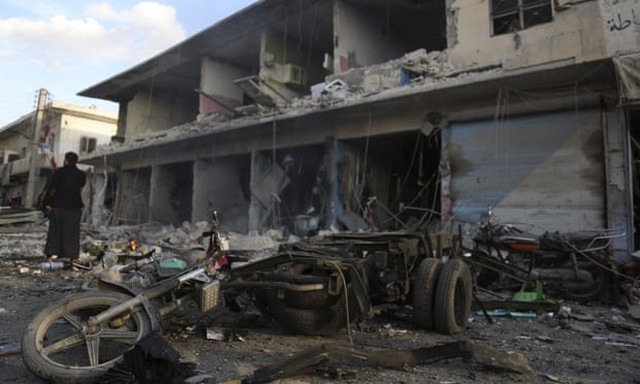
Only starting on 28 October 2019 — after seven years of the U.S. and its allies stealing Syria’s oil — did U.S. ‘news’-media start to apply the word “theft” or “steal” (or any equivalent term) to what was happening to Syria’s oil; and, even then, the blame for stealing it was focused only against U.S. President Donald Trump, who was bold about doing it, and never focused against his predecessor Barack Obama, who (along with America’s allies) had started doing it as early as 2012. The breakthrough news-report, which finally ended the U.S. propaganda-media’s embargo against calling it by such terms as “theft” or “stealing,” occurred when ABC News headlined on October 28th, ‘“‘We’re keeping the oil’ in Syria, Trump says, but it’s considered a war crime”, and finally reported that “seizing it would be pillaging, a technical term for theft during wartime that is illegal under U.S. and international law.” Among the hundreds of reader-comments to that news (after the seven-year-long embargo was, at last, lifted) the top-liked or “Best” was “So America has been reduced to thieves and pillagers? Truly a sad moment in American history.” Many of the reader-comments there were focused specifically against Trump, such as, “Gee Mr. Trump, maybe there’s some works of art we can confiscate too?” but not only did this news-report not mention anything about how long the theft had been going on, but it propagandistically and falsely alleged “Most of that oil is sold to the regime of Bashar al-Assad, the strongman who has waged a war against his own people and is opposed by the U.S.” That was thrown in so as to focus the blame against Syria’s Government (for these massive thefts FROM Syria’s Government), instead of against America and its allies, who had recruited and armed and brought into Syria tens of thousands of jihadists to serve as America’s proxy-forces there, in order to overthrow and replace that Government. The presumption in those propaganda-media has always been that Syria’s Government should simply have quit and let the royal Saud family, the owners of Saudi Arabia, appoint the ruler of Syria. This wasn’t news-reporting; it was instead propaganda-spreading.
For seven years, there has been not only a disinterest, by all of the U.S. mainstream news-media, in the ongoing systematic theft of Syria’s oil by the U.S. Government (and by its allies there, including especially ISIS, who were funded mainly by sales of this oil); but also a consistent refusal by the media to call it “theft” or “stealing” by the U.S. and by its allies. All of this theft has had the purpose of depriving Syria’s Government — the legal owner of that oil — of the income from Syria’s oil. The ultimate purpose of these thefts is the collapse of Syria’s Government, and its surrender to the U.S.-and-allied forces, so that the royal family of Saudi Arabia can select for Syrians a new leadership team, consisting of fundamentalist Sunnis. The Israeli regime has supported these efforts. America’s CIA has been trying for this objective, on and off, ever since 1949, but only after the CIA-encouraged “Arab Spring” in 2011, did the U.S. regime commit itself intensively to this invasion/occupation of Syria, and to the now long-ongoing theft of oil from Syria. It didn’t start with Donald Trump; it started with Barack Obama. And the U.S. news-media treat the entire matter far more as constituting, for them, a U.S. propaganda-operation, to justify the whole thing, than as constituting an authentic journalistic matter, to inform the American public honestly. The purpose of the following will be to make clear how this international war-crime has been ‘justified’ by the U.S. Government, and by its press.
Here’s the actual history about it, starting from now, and working backward to the beginnings:
On October 26th, the New York Times headlined “Keep the Oil’: Trump Revives Charged Slogan for New Syria Troop Mission” and opened by saying that “in recent days, Mr. Trump has settled on Syria’s oil reserves as a new rationale for appearing to reverse course and deploy hundreds of additional troops to the war-ravaged country.” They closed with a statement from Bruce Riedel, retired from the CIA: “‘Let’s say he does do it,’ Mr. Riedel said. ‘Let’s say we establish the precedent that we are in the Middle East to take the oil. The symbolism is really bad.’” The propaganda-value of a ‘news’-report is concentrated in its opening, and especially in what the ‘reporter’ (fulfilling the intentions of his editors) selected to be at the very end (such as Riedel’s statement). However, is what’s wrong with taking Syria’s oil actually the “symbolism,” as Riedel said, or is it instead the theft — the reality (and why did the NYT pretend that it’s the former)? Nowhere did that NYT article use the word “theft,” or anything like it, but that is the actual issue here — not mere ‘symbolism’.
Trump had been so lambasted by the Democratic Party’s ‘news’-media (such as the NYT) and by all the rest of the neoconservative (or pro-U.S.-imperialist) ‘news’-media (the Republican ones), for his trying to withdraw forces from Obama’s regime-change war against Syria, that he’s now switched to trying to ‘justify’ continuation of America’s invasion-occupation of Syria, by his promising to steal the oil there — but the ‘news’-media had never used that term (“theft”), or anything like it, to describe what the the U.S. regime now, for the first time publicly, says it is aiming to do there. They themselves have been propagandizing the American people to oppose American withdrawal from Syria, which would mean ending Obama’s invasion-occupation of Syria — something they’ve all supported. Publicly acknowledging that theft is the reason why we’re there is too shocking for them to report; and, so, Trump’s now saying this has caught them off guard. Both the Republican and the Democratic Parties, and their ‘news’-media, have been full-bore “Assad must step-down.” None of America’s ‘news’-media had stated, either, that America’s invasions-occupations of Afghanistan, Iraq, Libya, and Syria, have all been disasters (though they all were), and that all of them have been and are defeats for America (though they all were that, on all of America’s leaders’ lies about ‘protecting human rights’, and about ‘bringing democracy’, and about what would have been producing improved lives — instead of producing continued bloodshed and misery — for the residents in the countries that we had invaded and occupied). It’s all lies, nothing but that; and any ‘news’-media which operate this way will find themselves increasingly trapped in their lies, like the politicians themselves are. The only way ‘out’, for any of them (including for Trump, and for both the Republican and the Democratic press) is yet more lies — and all of these lies are cover-ups, by the press and by the politicians. (This is why they’re torturing Julian Assange to death: he has seriously challenged that ongoing deceit, in which they all participate.) Unless the public stop the media from doing it — by cancelling their subscriptions, and otherwise demonetizing the ones who have been doing it — the lies, and deceits, and invasions, and destructive U.S. national expenditures of tens of trillions of dollars (being paid to corporations such as Lockheed Martin, and not only to our soldiers) will continue. This enormous counterproductive expenditure will drain America’s abilities to fund health care, education, etc. It is bringing the U.S. economy down, and not merely bringing America to an ethically lower and lower point. The more that America’s leaders try to continue expanding the American empire, the more that they will both embarrass, and weaken, America. This is real. It is no propaganda, at all. It’s “the truth, the whole truth, and nothing but the truth.” It’s too true to report. It contradicts the propaganda. So: they didn’t report it.
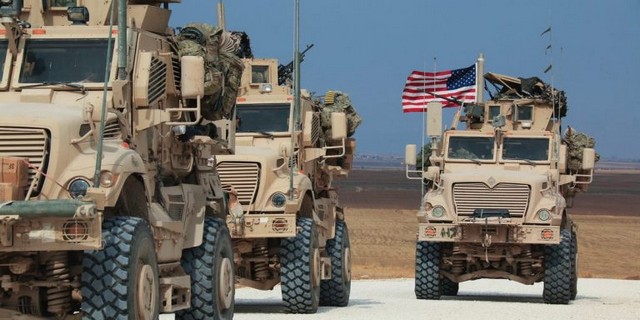
On October 24th, USA Today headlined “Pentagon planning to send tanks, armored vehicles to Syrian oil fields”, and stated that “The Pentagon is preparing to send tanks and armored vehicles to Syrian oil fields, according to a U.S. official – a stunning reversal of President Trump’s decision to withdraw U.S. forces from the war-torn country after he declared victory over ISIS.” Those oil fields don’t belong to the U.S., but to Syria’s Government, and their operation is vital to funding Syria’s reconstruction, which the U.S. regime is determined to prevent; but USA Today’s ‘news’-report says nothing about any of that. The U.S. Government is trying to steal Syria’s oil fields — but this USA Today article says nothing about that, either. American troops are invaders of Syria, unlike Russian troops, who are defenders of Syria, and who had been invited into Syria by Syria’s Government (the only government Syria has) in order to help defend Syria’s sovereignty, over Syria’s own land, including its oil wells, against the U.S.-and-allied invasion. All of that vital context is missing from this deceptive report.
That report said “Now, Russian troops, which are in Syria to bolster the regime of Bashar al-Assad, and Turkish forces, are operating in the region previously patrolled by U.S. and Kurdish forces.” It’s saying that, whereas the region had been “patrolled” — instead of invaded and now occupied — by U.S. and Kurdish forces, “Russian troops … and Turkish forces … are in Syria to bolster the regime of Bashar al-Assad,” though his ‘regime’ is actually the only legitimate Government of Syria. But the U.S. regime claims the right to force Assad to be overthrown.
This report stated that “The deployment of armor is aimed at Russia and Syria, not ISIS, said Nicholas Heras, an expert on Syria with the Center for a New American Security. … ‘Pure and simple,’ he said, ‘the Pentagon is making contingencies for a big fight with Russia for Syria’s oil.’” But Russia isn’t trying to seize Syria’s oil — the U.S. regime is doing that, actually. Russian forces are in Syria only in order to assist Syria to defend its oil, and its land. If the U.S. regime will go into World War III so as to steal Syria’s oil, then the likelihood of Russia’s letting this theft happen is slight: that would be Russia’s capitulation without a fight, and Russia has never given any indication it would do such a thing. (And Russian media DO refer to this as being “theft”; they’re not trying to hide the fact. Russia already is fighting the U.S. regime in Syria. For example, on October 26th, Russia’s Sputnik News headlined “The Russian military described the US scheme as nothing less than ‘international state banditism’,” and reported that, “According to Russian intelligence, the illegal US-supervised extraction of Syrian oil was being carried out by ‘leading American corporations’ and private military contractors, with US special forces and air power used for protection. Konashenkov said the estimated monthly revenue of this ‘private enterprise’ was over $30 million.”) This is the territory of Syria, which is a Russian ally. The thief here is clearly the U.S. regime, not Syria, and not Russia. It is no one else than the U.S. regime that is aiming to steal Syria’s oil by sending in tanks. Nowhere does the USA Today article even so much as hint that this is the case.
An October 21st Wall Street Journal article reported the U.S. Government’s theft of Syria’s oil, but it was instead headlined with the misleading, more innocuous, and less attention-grabbing “Trump Calls for Defense, Use of Syrian Oil Fields” — nothing about any “theft” — and it opened with the seemingly U.S.-or-Syria defense-related statement (as if U.S. troops were in Syria as defenders, instead of as attackers and thieves) that “President Trump said he is planning to keep a small number of troops in northeast Syria to protect the oil fields there and suggested that an American company might help the Syrian Kurds develop the oil for export.”
However, since when does a thief break into your residence in order to “protect” anything? And since when does such a thief have a right to sell your property, or to determine what people (such as “the Syrian Kurds”) will sell it?
Was that article news, or was it instead propaganda? It certainly misrepresents. What it reports, is reported as if this thieving operation were only being contemplated, and would be new, but the thieving is actually nothing new — it’s an already-existing, and longstanding, coordinated and international operation, by the U.S. regime and its allies, as will here be documented.
America’s mainstream media now (such as in USA Today, WSJ, and NYT) are normalizing this theft. This normalization is being done by their propaganda, which now is for a Republican Government, but formerly was for a Democratic Government. Previously, Democrats had done the same hiding of the regime’s evil, when their Democratic President Barack Obama was the person who was perpetrating it.
This theft — and the normalization of it — are actually bipartisan, and longstanding. When the ‘news’ presents false historical context, it lies; it is propaganda, and that’s what the American nation’s mainstream ‘news’-media now are. They are deceptive garbage, regime-propaganda.
On October 20th, Republican U.S. Senator Lindsey Graham, and Republican Maria Bartiromo of Fox News “Sunday Morning Futures,” discussed the Republican Trump’s plan to steal Syria’s oil, and they both agreed that it might turn out to be an excellent policy. This show was headlined “Sen. Lindsey Graham: I am increasingly optimistic we can have historic solutions in Syria.” It was a remarkably bold defense of the U.S. Government’s — and of its allies’ — thefts from Syria. Already, the U.S. Government had said that it won’t pay even a cent in order to provide restitution for the estimated $388 billion in damages to Syria from the invasion of Syria by the U.S. and by its allies such as Al Qaeda and the Sauds, but this show presented an endorsement by those two Republicans, backing the Republican U.S. President’s plan to steal Syria’s oil, which goes beyond merely supporting zero restitution to the invaded country. No mention was being made, by them, on this ‘news’-medium, that (as will be documented here) those thefts by the U.S. Government, and by its allies, have, in fact, been going on ever since the invasions of Syria by them and their proxies (or “agents” — such as Al Qaeda) had started in 2012. No mention was made by them that this was the policy of Democratic President Barack Obama and that it’s merely being continued further by Trump. To the exact contrary: Trump was being praised by these propagandists for starting this program, and, so, their praise was not just evil; it was actually entirely false.
Right before the interview, Bartiromo had been pretending to be a critical non-partisan journalist instead of the propagandist that she is, and so she stated that “my biggest issue here is the strength of Iran [as if Iran had ever invaded or even threatened to invade the United States, and as if Trump’s anti-Iran policies aren’t sufficiently stringent, or maybe even are vastly too stringent, or maybe even are altogether unjustified]. And I feel like the administration had the Iranians on their heels and ruining the economy through sanctions, through this pressure campaign. And now we give up and leave Syria.” The Senator disagreed with her make-pretend criticism of the Republican President, and he said that, instead,
The big thing for me is the oil fields. President Trump is thinking outside the box. I was so impressed with his thinking about the oil. Not only are we going to deny the oil fields falling into Iranian hands. I believe we’re on the verge of a joint venture between us and the Syrian Democratic Forces, who helped destroy ISIS and keep them destroyed, to modernize the oil fields and make sure they get the revenue, not the Iranians, not Assad. … That’s why what President Trump is proposing in Syria, a joint venture dealing with the southern oil fields in Syria, between our allies, the Kurds and the Arabs who helped us destroy ISIS, is a historic change that could pay dividends for the region. And, quite frankly, we could generate revenue to pay for our commitment in Syria. … I am increasingly optimistic that we can have some historic solutions in Syria that have eluded us for years, if we play our cards right.
Bartiromo replied “Wow. … You actually do see a way forward after you have spoken with the president on his plan to secure those oil fields.”
This theft is pushed by all of the U.S. mainstream media, and Trump knows that he will need at least some degree of support from them if he is to be able to win re-election. This is the reason why he keeps contradicting himself — trying to appeal to the “No More War” crowd, while still drawing donations from the “military-industrial complex” or owners of America’s ‘defense’ contractors. (There’s a lot of crossover between the controlling owners of those firms and the controlling owners of the ‘news’-media — and of the ‘non-profit’ foundations.) America’s major ‘news’ media have always buried the truth about this long-ongoing theft.
And not only was the theft of Syria’s oil the policy of Democratic U.S. President Barack Obama, but it was participated in by his coalition, which included both EU heads-of-state and Arab heads-of-state, and this policy began in 2011. Here’s how it, in fact, developed:
On 28 November 2012, Syria News headlined “Emir of Qatar & Prime Minister of Turkey Steal Syrian Oil Machinery in Broad Daylight” and accompanied it by video of the alleged event. (At that time, Qatar and Turkey were allies of the U.S. arming the ‘rebels’ in Syria to overthrow Syria’s Government; so, they were part of America’s broader operation, and were also profiting from it.) But that video is no longer active. A subsequent description of that video was posted under the headline “Emir of Qatar & Prime Minister of Turkey Steal Syrian Oil Excavators – No Translation”. Another posting of the video online has lasted from 6 October 2013 to the present time, under the headline “Emir of Qatar & Prime Minister of Turkey Steal Syrian Oil Excavators – BiffiSyrien”, where it still can be viewed.
By no later than 12 December 2012, U.S. President Barack Obama made the decision to hire Al Qaeda in Syria (called “Al Nusra”) to train and lead almost all of America’s proxy-forces on the ground in Syria to overthrow Syria’s Government. (Kurds were assigned to be America’s lead proxy-forces in far northeastern Syria.) (Obama was so determined to protect Al Qaeda in Syria as to sabotage on 17 September 2016 his own Secretary of State, John Kerry’s, just-signed Syrian ceasefire agreement with Russia, because that agreement allowed not only ISIS, but also Al Qaeda forces, to continue to be bombed in Syria by Russia. Obama was protecting Al Qaeda in Syria.)
On 22 April 2013, the AP headlined “EU lifts Syria oil embargo to bolster rebels” and reported that
The European Union on Monday lifted its oil embargo on Syria to provide more economic support to the forces fighting to oust President Bashar Assad’s regime. The decision will allow for crude exports from rebel-held territory. … The oil exports could open an important revenue stream for Syria’s opposition. …
While Syria was never one of the world’s major oil exporters, the sector was a pillar of Syria’s economy until the uprising, with the country producing about 380,000 barrels a day and exports — almost exclusively to Europe — bringing in more than $3 billion in 2010. Oil revenues provided around a quarter of the funds for the national budget. Being able to take advantage of the country’s oil resources will help the Syrian uprising “big time,” said Osama Kadi, a senior member of the Syrian opposition.
On 27 April 2013, the New York Times headlined “Islamist Rebels Create Dilemma on Syria Policy” and reported that
Nowhere in rebel-controlled Syria is there a secular fighting force to speak of. … The religious agenda of the combatants sets them apart from many civilian activists, protesters and aid workers who had hoped the uprising would create a civil, democratic Syria. … Of most concern to the United States is the Nusra Front, whose leader recently confirmed that the group cooperated with Al Qaeda in Iraq and pledged fealty to Al Qaeda’s top leader, Ayman al-Zawahri, Osama bin Laden’s longtime deputy. Nusra has claimed responsibility for a number of suicide bombings and is the group of choice for the foreign jihadis pouring into Syria.
Another prominent group, Ahrar al-Sham, shares much of Nusra’s extremist ideology but is made up mostly of Syrians. …
In the oil-rich provinces of Deir al-Zour and Hasaka, Nusra fighters have seized government oil fields, putting some under the control of tribal militias and running others themselves.
“They are the strongest military force in the area,” said the commander of a rebel brigade in Hasaka reached via Skype. “We can’t deny it.” …
“We all want an Islamic state and we want Shariah to be applied,” said Maawiya Hassan Agha, a rebel activist reached by Skype in the northern village of Sarmeen. He said a country’s laws should flow from its people’s beliefs and compared Syrians calling for Islamic law with the French banning Muslim women from wearing face veils.
On 1 May 2013, TIME bannered “Syria’s Opposition Hopes to Win the War by Selling Oil” and reported that
Without an embargo, European companies can now legally begin importing barrels of oil directly from rebel groups, which have seized several oil fields in recent months, mostly around the eastern area of Deir Ezzor. That would provide the opposition with its first reliable source of income since the revolt erupted in Feb. 2011, and in theory hasten the downfall of Bashar Assad’s regime, by giving rebels the means to run skeletal local governments and consolidate their control.
On 15 June 2013, Global Research headlined “Former French Foreign Minister: The War against Syria was Planned Two years before ‘The Arab Spring’” and Gearóid Ó Colmáin reported that
In an interview with the French TV station LCP, former French minister for Foreign Affairs Roland Dumas said:
“I’m going to tell you something. I was in England two years before the violence in Syria [in other words, in 2009] on other business. I met with top British officials, who confessed to me that they were preparing something in Syria.
This was in Britain not in America. Britain was organizing an invasion of rebels into Syria. They even asked me, although I was no longer minister for foreign affairs, if I would like to participate.
Naturally, I refused, I said I’m French, that doesn’t interest me.”
Dumas attributed it to Israel, not to the U.S., nor to the Sauds (who actually had always been the CIA’s choice to appoint the leaders of Syria), and he didn’t even so much as mention either of those, except to say that “this will enable it [Israel] to replace the United States as a global hegemon” (which is a crackpot idea). Though his interpretation was ridiculous, his allegation that in 2009 “top British officials … confessed to me that they were preparing something in Syria” is a factual matter, which is either true or false. (Back in 2009, there is actual evidence that American’s President Barack Obama was aiming to overthrow Assad. Furthermore, Obama’s team started by no later than 23 June 2011 to plan both the coup in Ukraine which succeeded and the coup in Syria, which failed. And as the great investigative journalist Gareth Porter reported on 5 January 2017, “In August 2011, national security officials began urging Obama to call on Assad to step down,” but at that time “He wasn’t willing to go along with anything except small arms,” until CIA Director David Petraeus — who soon thereafter became a member of the Bilderberg group — persuaded him to go all-out in arming the ‘rebels’. Furthermore, “when Obama was making crucial Syria policy decisions in September 2011,” his advisors assumed that both Russia and Iran would stay out of the matter and just let the U.S. and the Sauds take-over Syria. Obama respected his advisors. And, then, Porter headlined on 22 June 2017, “How America Armed Terrorists in Syria”. So: this theft-operation was extensively armed by the U.S. regime, and funded by the Sauds.)
In any case, the EU was certainly helping ISIS and other such groups to steal Syria’s oil, so as to help fund their overthrow-Assad operation. So, the participation also of UK was likely, even if not, at that time, proven.
On 14 October 2015, the Financial Times headlined ”Isis Inc: how oil fuels the jihadi terrorists” and reported that “Selling crude is Isis’ biggest single source of revenue. … While al-Qaeda, the global terrorist network, depended on donations from wealthy foreign sponsors, Isis has derived its financial strength from its status as monopoly producer of an essential commodity consumed in vast quantities throughout the area it controls.” (In other words, when TIME, on 1 May 2013, bannered “Syria’s Opposition Hopes to Win the War by Selling Oil” and said “That would provide the opposition with its first reliable source of income since the revolt erupted in Feb. 2011,” the “opposition” being referred to there was actually ISIS, not Al Qaeda. The EU was buying its black-market oil from ISIS.)
On 1 December 2015, another great investigative journalist, Nafeez Ahmed, bannered “Western firms primed to cash in on Syria’s oil and gas ‘frontier’” and he reported:
US, British, French, Israeli and other energy interests could be prime beneficiaries of military operations in Iraq and Syria designed to rollback the power of the ‘Islamic State’ (ISIS) and, potentially, the Bashar al-Assad regime.
A study for a global oil services company backed by the French government and linked to Britain’s Tory-led administration, published during the height of the Arab Spring, hailed the significant “hydrocarbon potential” of Syria’s offshore resources.
The 2011 study was printed in GeoArabia, a petroleum industry journal published by a Bahrain-based consultancy, GulfPetroLink, which is sponsored by some of the world’s biggest oil companies, including Chevron, ExxonMobil, Saudi Aramco, Shell, Total, and BP. GeoArabia’s content has no open subscription system and is exclusively distributed to transnational energy corporations, corporate sponsors and related organisations, as well as some universities.
On 28 August 2018, Abdel Bari Atwan, one of the Middle East’s most respected journalists, headlined “Carrots and Sticks” and reported that
Damascus has been inundated with secret offers in recent weeks as part of a carrot-and-stick policy, two of which are particularly significant.
The first, reported on Tuesday by the pro-Hezbollah Lebanese daily al-Akhbar and the semi-official Iranian Fars news agency, was conveyed by a senior US military officer accompanied by representatives of various intelligence agencies. They flew to Damascus on a private UAE jet, and were met by the head of the National Security Bureau Gen. Ali Mamlouk, intelligence chief Gen. Deeb Zaitoun, and deputy army chief-of-staff Gen. Muwaffaq Masoud. Their meeting lasted four hours. The Americans reportedly offered to withdraw all US forces from Syria in exchange for Damascus complying with three demands: to pull Iranian forces out of areas of southern Syria adjoining Israel; to guarantee US oil companies a share of Syria’s oil east of the Euphrates; and to hand over all information about terrorist groups and their members in Syria.
The second offer was revealed by Lebanese Hezbollah MP Nawwaf al-Mousawi in a discussion programme on the Lebanese TV channel al-Mayadeen, at which I was also a panellist. He said that Saudi Crown Prince Muhammad Bin-Salman sent an envoy to Asad offering to support him remaining president for life and provide generous Saudi support for Syria’s reconstruction in exchange for him severing ties with Iran and Hezbollah.
Both offers were categorically turned down by the Syrian leadership.
The American delegation was told that its troops in Syria were occupying forces which would be treated as such, that Syria could not abandon its strategic allies, and that issues such as US participation in the oil industry and exchanging intelligence could be discussed once political relations were re-established.
On 2 September 2018, the German intelligence analyst who blogs anonymously as “Moon of Alabama” headlined “Syria Sitrep – U.S. To Stay To ‘Create Quagmires’” and he reported:
The claim that the U.S. is there to fight ISIS is a lie. ISIS is still active in two places in Syria. Both are under U.S. control. …
The U.S. is not fighting ISIS in Syria. It is building semi-permanent bases, trains a large proxy force, and controls Syria’s oilfields. Its aim is still regime change, the same aim it had when it launched the war on Syria seven and a half years ago. To achieve that it will continue to sow as much chaos as possible.
As CIA and Pentagon mouthpiece David Ignatius wrote this week:
“[T]he administration has stopped the dithering and indecision of the past 18 months and signaled that the United States has enduring interests in Syria, beyond killing Islamic State terrorists — and that it isn’t planning to withdraw its Special Operations forces from northeastern Syria anytime soon.
‘Right now, our job is to help create quagmires [for Russia and the Syrian regime] until we get what we want,’ says one administration official, explaining the effort to resist an Idlib onslaught. This approach involves reassuring the three key U.S. allies on Syria’s border — Israel, Turkey and Jordan — of continued American involvement.”
But what seems ultimately to endure is: Steal the oil.
On 26 February 2019 the Syrian National News Agency reported that Syria’s Government accused the U.S. Government of having stolen from ISIS so much gold that ISIS had received as payment for oil that ISIS had stolen from Syria, so that the U.S. Federal Reserve was enriched by at least 40 tons of gold. The accusation is that this black-marketed oil produced that gold for the U.S. Government, and purchased “safe passage for the terrorists.”
So: Trump, and Fox News, and U.S. Senators, etc., are planning to continue the operation that Democratic U.S. President Barack Obama, and his Secretary of State Hillary Clinton, and the U.S. CIA, and Britain’s MI6, and the rest of the U.S. regime and its allies, were trying to do even before the “Arab Spring” began. As I have previously reported, Obama, even when he came into office in 2009, was aiming to take control of Syria, for it to become ruled by agents of the Saud family, and he started planning the ‘revolution’ in Syria by no later than 23 June 2011.
So: the faker Donald Trump is really just old hat, nothing at all new. He’s merely trying to do what Obama was trying to do, but using different tactics to do it.
And, so, what is the ‘justification’ for this theft? It is America’s alliances:
BARTIROMO: Why are we sending troops to Saudi Arabia then?
GRAHAM: Well, because Saudi Arabia is an ally and Iran is an enemy.
And Iran is the biggest state sponsor of terrorism on the planet. …
The official position of the U.S. Government is that Iran is the top state sponsor of terrorism and that the Sauds (whom in diplomatic cables and other internal communications the U.S. regime acknowledge to be the biggest financial backer of Al Qaeda) isn’t even a state sponsor of terrorism, at all, but is instead a U.S. ‘ally’.
So: that’s how they ‘justify’ it. They ‘justify’ it by the rest of the gang — the very same gang that the U.S. regime itself leads. Their ‘justification’, of themselves, is empty. It is only propaganda, for fools to believe. Nothing more, than that. On Friday, October 26th, the Washington Post headlined “Trump decided to leave troops in Syria after conversations about oil, officials say”, and — like all of the regime’s stenographic reporting of the regime’s ‘news’ — reported the regime’s more official ‘explanation’, which was: “Defense Secretary Mark T. Esper confirmed on Friday that troops would remain in eastern Syria to prevent the oil fields from being retaken by the Islamic State.” This is just more of the same: it’s just citing ‘ISIS’ as being the ‘enemy’, instead of citing “Syria” as being that. They are asserting that they can steal Syria’s oil so as to prevent ISIS from stealing it. First, ISIS and other U.S. allies stole it; and, then, the U.S. seized ISIS’s gold from those sales; and, now, the U.S. will be stealing Syria’s oil directly.
Similarly, in 2002 and 2003, the U.S. regime, and its stenographic press, kept shifting their ‘explanation’ as to why Iraq had to be immediately invaded. Americans believed it then, and they believe it now. The American public never learn. This is now 17 years later. There has been no change, except in whom the occupant of the White House is. But fortunately, this time, there is Russia that perhaps can say no to this plan. Only time will tell if it will. And, if it does, then will Trump pull his nuclear trigger — an invasion of Russia, WW III, an aggression against the other superpower? I doubt it, but it could happen. To overestimate the greed and the stupidity of the international Deep State is hard to do. These billionaires didn’t get to be billionaires by being intelligent or being good — cunning and ruthless, yes, but that’s very different. After all, the announced highest aspiration of Jeff Bezos, who owns the Washington Post, is to send a trillion people out into space, “getting humanity established in the solar system”. Even conquering the world wouldn’t be enough to satisfy some of these individuals.
On 20 August 2018, Russia’s RT News headlined “‘Secret directive’ bans UN agencies from helping rebuild Syria until ‘political transition’ – Lavrov” and reported that Russia’s Foreign Minister, Sergei Lavrov, said that the Executive branch of the U.N., the U.N. Secretariat, had issued in October 2017 a “secret directive” (violating two resolutions of the U.N. General Assembly — the U.N.’s Legislature), and that this secret directive ordered U.N. agencies to do nothing to help rebuild Syria unless the U.S. first had approved of a new person to replace Syria’s existing President, and unless that person had already become installed to lead Syria.
According to the anti-Russian Haaretz newspaper in anti-Russian Israel, on 31 August 2018,
One country that is likely going to stay out of the infighting over the reconstruction process is the United States. The Trump administration has no clear policy on the “day after” in Syria, except for one principle: No American money will be spent on it.
The American ambassador to the United Nations, Nikki Haley, made that point clear at a speech she gave on Tuesday in Washington, explaining that Russia and the Assad regime “own” Syria now. “You broke it, you own it,” Haley said at a summit organized by the Foundation for Defense of Democracies [an organization that zionist Jews had set up in the U.S.]. …
Ken Roth, executive director of Human Rights Watch, expressed a similar view, writing in the British newspaper The Independent: “Long before any talk of providing reconstruction assistance for Syria, which in any event would require lifting separate targeted sanctions, European governments should call out Russia’s complicity in Syria’s war crimes and vigorously press the Kremlin to end these atrocities and stop underwriting Syria’s repression.”
It was the deployment of the Russian air force three years ago that tilted the scales of the war in favor of Assad, who at that time controlled only a quarter of the country’s territory. Even today, Russia maintains its military presence in Syria to ensure the regime’s upper hand.
This is similar to the policy of imperial Rome toward Carthage — a resisting city-state — in 146 BC, when the Emperor ordered the resisting city-state destroyed at the end of the final, the Third, Punic War, except that, in the present instance, the imperial ruler is (on and off, depending on his whim of the day) quitting his efforts to conquer that land, and is instead (but this being consistent) commanding his agencies never to assist to restore Syria, unless and until it finally will surrender to the empire. In that sense, Syria may be considered to be today’s Carthage. (Another difference is that Syria, unlike Carthage at that time, is no expansionist — or “imperialist” — power.) So: Donald Trump, Lindsey Graham, Maria Bartiromo, Barack Obama, the U.S. Congress, Human Rights Watch, the United Nations, and the other agents and agencies of the U.S. empire, are in an imperial tradition that goes back thousands of years, if not longer.
However, though Syria is an ally of Iran, and of Russia; and so the U.S. regime want regime-change there, Donald Trump might have reached the limit of his regime-change aspirations when on 10 September 2019 he finally fired John Bolton, who (along with his predecessors) had failed against Iran, failed against Venezuela, failed against Russia, and failed against China. Trump’s most intensive regime-change effort has been against Iran (though Fox’s Maria Bartiromo thinks it’s not enough). On 5 July 2018, the excellent investigative journalist Sibel Edmonds headlined at her Newsbud site her 33-minute video “Breaking: Insiders Reveal Secret Deal to Topple Iran Government!” revealing (starting at 19:00) that ever since Trump entered office in 2017, his Administration was planning to execute an operation not only to terminate the Iran deal and re-institute sanctions but to enforce sactions so stringently against any country that would continue trading with Iran, so as to strangle Iran’s economy and thus impose such misery upon the Iranian population so that they would welcome a military coup in order to end their (U.S.-imposed) misery. This operation had a Plan A and a Plan B. In Plan A, Iran’s generals who would participate in the coup would institute an ‘anti-American’ ‘independent’ government which would buy U.S.-made weapons from EU countries and thus not be viewed by Iranians as a U.S.-stooge regime (though becoming a U.S. stooge regime); the sanctions would be lifted, and Iran’s economy would be restored. In Plan B, 3-3.5M Iranians would be killed by the bombing, and all of Iran’s generals would be among them. Plan A would be Iran’s generals ‘standing up for the Iranian people’, a ‘nationalistic’ (instead of capitulationist) coup, to remove the ‘dictatorship’. Plan B would be a much bigger slaughter of Iranians. Edmonds said (27:30) the coup “would take place, I would say, in less than six months.” (29:00) “There is a large, powerful military faction that have said Yes [to Plan A]. … How sure of this am I? 100%.” But she was wrong in this prediction; she hadn’t considered the bigger picture. What’s that? Trump was getting too close to his own re-election campaign. And not enough Iranian generals could be corrupted to become traitors; the coup didn’t occur. Bolton, etc., had been too rosy in their predictions that the threats would be enough and that the patriotism of enough of Iran’s generals could just be bought off. (Perhaps the corrupt Americans had expected Iranians to be as corrupt as they themselves were.) Plan B was thus supposed to become imposed — an outright U.S. invasion of Iran. But what would this invasion have done to Trump’s re-election chances? The Deep State had actually suckered him. That’s why Bolton (part of the Deep State) was fired. And, so, now, Congress and the U.S. media are finally out for Trump’s scalp, because he wouldn’t follow through with the Deep State’s plan. Maybe he’ll do it if he becomes re-elected, but they can’t trust him; they want President Mike Pence. That’s become their new Plan B: impeachment in the House, and forced removal in the Senate. His intensified effort, now, to steal Syria’s oil, isn’t enough to stop that.
The reason why Julian Assange, ever since 12 June 2012, has been under various forms of imprisonment — and now torture — without there having been any conviction for anything, and not even any trial being held in his case, is that the U.S. and its allied regimes need to keep their secrets, and therefore need to eliminate him. To publishers, and to journalists, throughout the U.S.-and-allied world, his case is the ultimate warning of what each one of them could face. This is how the real law actually operates, throughout the empire. Assange is simply the personification of it, for everyone. However, as might logically follow from this situation, the only country in the world where Assange — who is globally viewed more favorably than unfavorably — is widely despised, is the United States, where the handwriting against him is “on the wall,” almost everywhere. America’s ‘news’-media have been uniquely devoted to doing their job. But, of course, authentic news-media perform a different job. And Assange’s case is the most effective possible warning to whatever authentic news-media might still exist within the U.S. empire. To call this empire a ‘democracy’ anywhere, insults that noble term.
NOTE: This article was rejected (no explanation provided) by Columbia Journalism Review, which bills itself as “a media watchdog” in America. This is the type of ‘media watchdog’ that exists in this ‘democracy’.
PS (after all of the preceding was written and finalized): Five hours ago (as this is being written), Fox News headlined “Jeffrey Epstein’s autopsy more consistent with homicidal strangulation than suicide, Dr. Michael Baden reveals” and reported about a person who had known too much dirt on too many billionaires and top political leaders. Epstein had hidden blackmail cameras in every room; he was in the ideal position for a terrific plea-deal landing him a cushy sentence for testifying against those elite; but now the entire case against him is closed because the suspect is dead, so can’t even be tried, at all. What’s on those videos won’t become public. Who had a bigger motive to kill him: Epstein — or the individuals who were shown on those videos? And now there seems to be also physical evidence that it wasn’t Epstein. How reasonable, then, is it for the U.S. regime to pontificate against ‘America’s enemies’, about the need to impose there ‘democracy’ and ‘human rights’, and to assert this barbaric regime’s ‘responsibility to protect’ the people in those other countries, when it’s actually coming from such a dictatorship as this? Does any limit exist, at all, to the U.S. regime’s hypocrisies? And how much longer will it continue to be able to fool its public? The U.S. ‘news’-media have succeeded, thus far.
—————
Investigative historian Eric Zuesse is the author, most recently, of They’re Not Even Close: The Democratic vs. Republican Economic Records, 1910-2010, and of CHRIST’S VENTRILOQUISTS: The Event that Created Christianity.
31 October 2019
Source: countercurrents.org