Just International

Russia-China: The Summit That the Media Ignored

By Manlio Dinucci

12 Jun 2019 – On 5 June, the media projectors zeroed in on President Trump and the European leaders of NATO, who, for the anniversary of D-Day, auto-celebrated in Portsmouth “peace, freedom and democracy in Europe,” vowing to “defend them at any time, wherever they may be threatened”. The reference to Russia is clear.

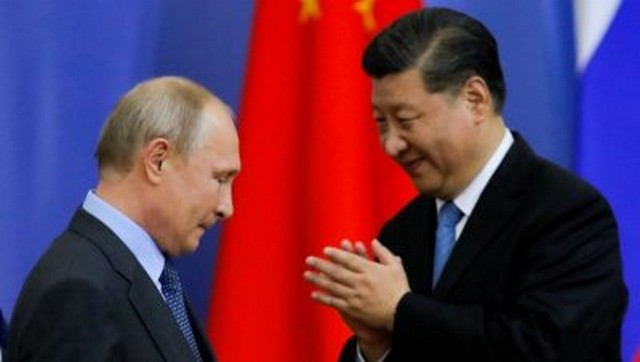
The major media have either ignored, or somewhat sarcastically relegated to a second plane, the meeting that took place on the same day in Moscow between the Presidents of Russia and China. Vladimir Putin and Xi Jinping, for their thirtieth meeting in six years, refrained from presenting rhetorical concepts, but noted a series of facts.

The exchanges between the two countries, which last year exceeded 100 billion dollars, are now extended by approximately 30 new Chinese projects for investment in Russia, particularly in the energy sector, for a total of 22 billion dollars.

Russia has become the largest oil exporter to China, and is preparing to do the same for natural gas: the largest Eastern gas pipeline will open in December, followed by another from Siberia, plus two huge sites for the export of liquefied natural gas.

The US plan to isolate Russia by means of sanctions, also applied by the EU, combined with the cessation of Russian energy exports to Europe, will therefore be rendered useless.

Russo-Chinese collaboration will not be limited to the energy sector. Joint projects have been launched in the aero-space and other high technology sectors. The communication routes between the two countries (railway, road, river and maritime) are being heavily developed. Cultural exchanges and tourist flows are also expanding rapidly.

This is wide-scale cooperation, whose strategic vision is indicated by two decisions announced at the end of the meeting:

– the signature of an intergovernmental agreement to extend the use of national currencies, (the rouble and the yan), to commercial exchanges and financial transactions, as an alternative to the still-dominant dollar ;

– the intensification of efforts to integrate the New Silk Road, promoted by China, and the Eurasian Economic Union (EAEU), promoted by Russia, with the “aim of creating a greater Eurasian partnership in the future.”

The fact that this aim is not simply economic is confirmed by the “Joint Declaration on the reinforcing of strategic world stability” signed at the end of the meeting. Russia and China share “identical or very similar positions”, which are de facto contrary to those of USA/NATO, concerning Syria, Iran, Venezuela and North Korea.

They are issuing a warning: the withdrawal by the USA from the INF Treaty (with the goal of deploying intermediate-range nuclear missiles around Russia and China) may accelerate the arms race and increase the possibility of nuclear conflict. They denounce the US refusal to endorse the total ban on nuclear testing.

They also deem “irresponsible” the fact that certain States, although they are signatories of the Non-Proliferation Treaty, practice “joint nuclear missions,” and request the “return to their national territories of all nuclear weapons deployed outside of their frontiers”.

This request directly concerns Italy and other European countries where, in violation of the Non-Proliferation Treaty, the United States have based nuclear weapons which may be used by the host countries under US command : B-61 nuclear bombs which will be replaced from 2020 by the even more dangerous B61-12’s.

The major media have said nothing about this, but were busy on 5 June describing the splendid costumes worn by First Lady Melania Trump for the D-Day ceremonies.

Manlio Dinucci, geographer and geopolitical scientist.

17 June 2019

Source: www.transcend.org

Pompeo’s Tanker Narrative

By Soraya Sepahpour-Ulrich

“I was the CIA director. We lied, We Cheated, We Stole”. – Mike Pompeo

It appears that Mike Pompeo has a hard time kicking his old habits. He appears to be as smug about lying as a CIA operative as he is as Secretary of State. Categorically blaming the Iranians for the recent oil attack tankers has left allies scratching their heads; and perhaps leaving foes thinking: “Thank God my enemy is so stupid”!

On June 13, 2019, as Ayatollah Khamenei was holding talks in Tehran with Japanese prime minister, Shinzo Abe, two oil tankers carrying oil to Japan were attacked. As investigations into the incident were just beginning, Pompeo had already concluded his assessment and had it ready for the press. Much to the audible surprise of the world, and without any proof or supporting documents, he laid the blame firmly at Iran’s feet citing “intelligence”.

To his relief, in no time at all, US officials claimed that they had managed to get their hands on videos and pictures. They presented a grainy video alleging to show an Iranian navy boat removing mines from the damaged Japanese ship. It is easy to understand why the grainy video’s existence was necessary.

Precisely a month prior, on May 13th, four oil tankers were damaged in the region. The United States blamed Iran without any evidence. Saudi Arabia followed suit. The rest of the world was skeptical and doubts floated about the about the accuracy of US claims. This time around, Pompeo was saved by the video – although not for long! The Japanese vessel owner disputed the presence of mines damaging his vessel (as suggested in the blurry video).

Even allies were skeptical. To enforce its position and allegations against Iran, the Trump administration made its argument based on misinterpreting what Iran had said about the oil embargo. Following Trump’s announcement on April 22nd that America would not renew US waivers for countries which imported oil from Iran, in essence, imposing an oil embargo, on April 25the Iranian government retorted by condemning America’s illegal demands and stated that no other country could take its share of the oil market.

The Trump team would like us to believe that what Iran meant was the sabotage of the oil tankers. This is far from true. Iran was referring to its legal right under the 1982 United Nations Convention on the Law of the Sea (UNCLOS) which legally allows it to impede the passage of oil shipments through its territorial waters – the Strait of Hormuz.

While UNCLOS stipulates that vessels can exercise the right of innocent passage, and coastal states should not impede their passage, under the UNCLOS framework, a coastal state [Iran] can block ships from entering its territorial waters if the passage of the ships harms “peace, good order or security” of said state, as the passage of such ships would no longer be deemed “innocent”[i].

Given Iran’s recourse to international law, American diplomacy at its all time low, and the rally behind Iran – if only verbally – it makes absolutely no sense for Iran to blow up oil tankers and turn the world opinion in favor of Trump and his the warmongering advisors – Pompeo and Bolton.

But tankers were blown up. What other motivation were there?

Perhaps NOPEC – No to Oil Producing and Exporting Cartels Act. In February, House passed a Bill that would cripple OPEC. The Bill would prohibit OPEC from coordinating production and influencing prices. While the Bill was said to provide a useful leverage for the White House, Persian Gulf Arab states sent their warnings to Wall Street.

On April 5th, Saudi Arabia even threatened to drop Dollar for oil trades in order to discourage US from passing the NOPEC Bill. The Saudi threat came on the heels of UAE cautions the prior month that if such bill passed, it would in effect, break up OPEC.

Perhaps this was the reason behind Saudi Arabia’s lack of cooperation. After Trump announced his Iran oil embargo, a senior US administration assured the world at large that Trump was confident Saudi Arabia and the United Arab Emirates would fill any gap left in the oil market. He was mistaken. On April 29th, the Saudi Energy Minister, Khaled el-Falih made it clear that Saudi Arabia would not “rush to boost oil supply to make up for a loss of Iranian crude”.

After the May 13th incident, apparently America’s accusations did not carry any weight around the world, but they did have an impact on the jittery Saudis. On June 3rd, Bloomberg reported that over the last month, the Saudis raised their oil production to replace lost Iranian oil. The oil market was satisfied and America could continue to put pressure on friend and foe to stop buying Iranian oil – there would be no shortages.

What then explains the second tanker incidents of June 13th?

Perhaps the motive is two-fold. Firstly, the United States would reinforce its unfounded allegations that Iran is a ‘bad actor’ and discourage and dissuade the international community from cooperation with Iran. And secondly, the hike in the price of oil as a result of the tanker attacks no doubt sent a sigh of relief to shale oil producers in the United States. A drop in oil prices would greatly harm or bankrupt US shale-focused, debt-dependent producers.

Not on Trump’s watch.

Although many states in the US and some countries in the world have banned shale oil production due to its adverse effects on the environment, specifically water, the United States’ goal is to be the biggest producer and supplier of oil depending on its shale oil production. Currently, according to the latest US Energy Information Administration (EIA), the United States is a net importer of oil. With low oil prices, a halt or slowing of shale, the trend would continue to be an importer.

Having Saudi Arabia cower to US demands, demonizing Iran, intimidating allies and non-allies with fear of conflict in the region in order to press further demands on Iran, increase in the price of oil, and the weapons that would be purchased by US allies in the nervous neighborhood, seems like a win-win situation for America. For now.

Soraya Sepahpour-Ulrich is an independent researcher and writer with a focus on U.S. foreign policy.

16 June 2019

Source: countercurrents.org

Trump doubles down on US lies about Iran

By Bill Van Auken

US President Donald Trump escalated the war threats against Iran Friday, insisting that Tehran was responsible for the damage done to two oil tankers in the Gulf of Oman the previous day and vowing US retaliation for any Iranian action to shut the strategic Strait of Hormuz.

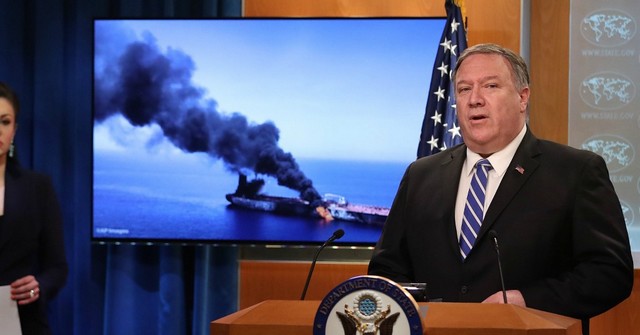
Trump based his ignorant and belligerent remarks on a grainy, black-and-white video released Thursday night by the US Central Command (CENTCOM), which directs US military interventions throughout the Middle East.

CENTCOM claimed that the video, apparently shot from a US spy plane, showed a small boat of the Islamic Revolutionary Guard Corps (IRGC) approaching one of the damaged tankers, the Japanese-owned Kokuka Courageous, and removing an unexploded limpet mine attached to its hull. The video was touted as proof that Iran carried out attacks on the vessels and had sent the IRGC boat to remove any incriminating evidence.

Fire and smoke billowing from Norwegian-owned Front Altair tanker said to have been attacked in the waters of the Gulf of Oman on June 13, 2019 [Credit: ISNA]

In a Fox News television interview Friday, Trump declared, “Well, Iran did do it, and you know they did it because you saw the boat.”

He continued: “I guess one of the mines didn’t explode, and it’s probably got essentially Iran written all over it. And you saw the boat at night, trying to take the mine off and successfully took the mine off the boat. And that was exposed. That was their boat. That was them, and they didn’t want the evidence left behind.”

He went on to denounce Iran as a “nation of terror”, adding that “they’re in deep, deep trouble.” He also told Fox News that if Iran shut down the Strait of Hormuz, “it’s not going to be closed for long.” The strait, which connects the Persian Gulf with the Gulf of Oman and the Arabian Sea, is a 21-mile-wide seaway through which 30 percent of all seaborne-traded liquid products pass, most of them petroleum-based.

The claims by Trump and the Pentagon that the CENTCOM video is some kind of smoking gun proving the culpability of the Iranian government in the apparent attack on the Kokuka Courageous and the second tanker, the Norwegian-owned Front Altair, is nothing of the kind.

Unsubstantiated is the claim that those depicted in the video were removing a limpet mine from the hull, not to mention that in supposedly doing so they were engaged in a coverup designed to conceal evidence of Iranian culpability.

The CENTCOM video recalls nothing so much as the incontrovertible “proof” presented by then Secretary of State Colin Powell to the UN Security Council in 2003 of Iraqi “weapons of mass destruction”.

The US claims ran in direct contradiction from the owners of the tanker shown in the video. Yutaka Katada, president of the Kokuka Sangyo shipping firm which owns the Kokuka Courageous tanker, told reporters Friday in Tokyo that the claim the ship had been damaged by limpet mines was “false”.

“The crew are saying it was hit with a flying object. They say something come flying toward them, then there was an explosion, then there was a hole in the vessel. Then some crew witnessed a second shot,” Katada said.

“To put a bomb on the side is not something we are thinking,” he added, noting that the damage to the ship “was above the water surface by quite a lot.”

As for Trump’s denunciation of Iran as a “terror nation”, the wholesale terror that has been inflicted upon the Middle East has the clear imprint of “Made in the USA”.

Successive US wars against Iraq, which culminated in the illegal invasion of the country and cost the deaths of well over a million people, have been followed by the wars for regime change in Libya and Syria in which Washington utilized, funded and armed Islamist militias tied to Al Qaeda for the purpose of overthrowing the government of Muammar Gaddafi and the attempt to overthrow that of Bashar al-Assad.

Now Washington is attempting to accomplish the same goal in relation to Iran a far larger and more powerful country, with four times the landmass and more than twice the population of Iraq.

It has implemented what Secretary of State Mike Pompeo Thursday boasted was a “campaign of maximum pressure” designed to starve the Iranian population into submission. Having abrogated last year the 2015 Iranian nuclear accord reached between Tehran and the five permanent member nations of the UN Security Council, plus Germany, Washington has reimposed and sharply intensified crushing economic sanctions that threaten not only Iran but any country or company doing business with it. The aim, as the US has made clear, is to reduce Iranian oil exports, which count for the overwhelming share of the country’s export earnings, to zero.

These measures, carried out unilaterally and in direct violation of UN resolutions, are the equivalent of a full-scale economic blockade, an act of war.

Iran responded to the latest threats from Trump and the Pentagon calling them “alarming and worrisome.”

Just before Trump gave his interview to Fox, Iranian Foreign Minister Mohammad Javad Zarif denounced Washington for having “immediately jumped to make allegations against Iran [without] a shred of factual or circumstantial evidence.”

On Thursday, Zarif called attention to the fact that the two tankers, one owned by a Japanese firm and the other carrying a Japanese-related cargo, had been struck precisely at the moment that Japanese Prime Minister Shinzo Abe was meeting with Iranian Supreme Leader Ayatollah Khamenei. “Suspicious doesn’t begin to describe what likely transpired,” he said.

Pompeo, in his bullying speech at the State Department Thursday afternoon, declared insultingly that Zarif was trying to be “funny”. On the contrary, the Iranian foreign minister was merely hinting at the conclusion drawn by many around the world that Tehran would hardly be motivated to strike the tankers just as Abe was in Tehran crediting the Iranian government with abiding by the nuclear accord and forswearing the development of nuclear weapons. While there, he declared that “major progress has been made toward securing peace and stability in this region.” Japan had been one of the major purchasers of Iranian oil before last month when the Trump administration abrogated waivers that had been granted to several importing countries.

In examining the crime from the standpoint of the age-old detective maxim of Cui bono?, or Who benefits?, the answer is obvious: those who want to prevent Iran from reaching accommodations allowing it to loosen the economic noose tied around its neck by US imperialism. This includes both Washington itself, as well as its principal regional allies, including Israel, Saudi Arabia and the United Arab Emirates, all of which are entirely capable of carrying out strikes on tankers in order to blame them on Tehran and set the stage for a catastrophic war.

The apparent attacks on the two tankers came just days after German Foreign Minister Heiko Maas traveled to Tehran with the aim of salvaging the nuclear accord repudiated by Washington and forestalling a region-wide war.

Maas promised Iran that Germany, the UK and France would soon put into operation a payment channel to sidestep US sanctions known as INSTEX, while warning that the European powers could not do “miracles” in the face of punishing US sanctions feared by companies who previously did business in Iran.

Germany and the other European powers–with the exception of London, which, as in the run-up to the 2003 Iraq invasion, is marching in lockstep with Washington–have voiced skepticism about the US charges of proof of Iran’s guilt in relation to the tankers and have called for de-escalation by both sides.

China, meanwhile, has rejected the US charges. Meeting on the sidelines of the Shanghai Cooperation Organization summit in Kyrgyzstan, with his Iranian counterpart Hassan Rouhani, Chinese President Xi Jinping vowed that Beijing would deepen its ties with Tehran no matter what the situation in the region. He and Rouhani both placed central responsibility for the tensions on Washington’s unilateral abrogation of the nuclear treaty.

Washington is determined to blow up any attempts to circumvent its sanctions regime and clear the way for direct military intervention in Iran. This is the most likely motive for the tanker attacks.

This conclusion is borne out by an editorial published in the Wall Street JournalThursday which stated: “Lately, some have doubted the importance of the U.S. role in the region. Two oil tankers in flames from torpedo attacks in the Gulf of Oman refute that view. The unavoidable fact is that Iran remains the primary threat to stability in the Middle East. The U.S. is right to be there, in force and prepared to defend the interests of itself and its allies.”

The Journal added that it was “all the more important that the West unite in opposition to Iran’s aggression, It would send the worst possible signal if in the aftermath of these attacks the Europeans buckled to Iran’s military pressure.”

Similarly, the Washington Post’s David Ignatius, a columnist with close ties to the US military and intelligence apparatus, wrote in a piece published Thursday titled “Is the Iran-U.S. tinderbox about to ignite?”: “Trump has a new opportunity to broaden international support for his Iran policy, after isolating the United States last year by abandoning the Iran nuclear agreement.”

What is being prepared with the provocations in and around the Persian Gulf is a war that could quickly claim the lives of tens of thousands. An outright US invasion of Iran would require the mobilization of hundreds of thousands of US troops, forcing the re-introduction of the draft and creating revolutionary conditions in the US itself.

At the same time, as the tensions with Europe and China signal, such a bloody conflict would pose the direct threat of triggering a third world war.

Bill Van Auken is a politician and activist for the Socialist Equality Party and was a presidential candidate in the U.S. presidential election of 2004, announcing his candidacy on January 27, 2004.

15 June 2019

Source: countercurrents.org

OPINION – Myanmar’s Suu Kyi is turning far-right

By Maung Zarni

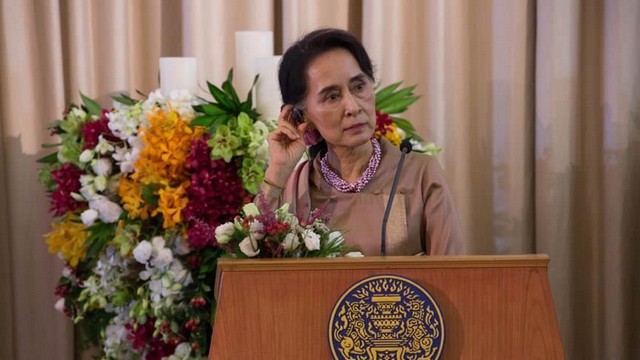
The wire pictures from Budapest of a smiling Nobel Peace Laureate and Myanmar State Counsellor Aung San Suu Kyi shaking hands with Viktor Orban, Hungary’s president, strikes fear down my spine.

That is, fear for my Muslim friends back home in Mandalay in particular and Myanmar’s Muslims in general, including the systematically persecuted Rohingya.

The two reportedly exchanged their unconcealed fear and loathing of Muslims and migrants.

In Suu Kyi’s Myanmar the military has very successfully misframed the country’s Rohingya people as illegal Bengali migrants from across the borders in Muslim Bangladesh. Myanmar’s icon of democratic transition has become the killers’ echo-chamber wittingly.

In my 30 years of political activism and scholarship about my country’s affairs, I have learned to read well the deeply racialised Burmese society, politicized Buddhist Order and the ultra-nationalist Tatmadaw or the military. And I had for years supported the woman the country’s Buddhist majority call, with undying affection, Mother Suu, and have very closely studied her words, deeds and even facial expressions over these last three decades.

I can tell that the pictures from Budapest weren’t simply about Myanmar state counsellor performing in accord with the diplomatic protocol of being polite to the host and looking pleasant for the camera. It was more like a meeting of two racist, xenophobic minds, which are typically indifferent to either the warnings of the Fascist histories of the two respective countries during the World War II, or the ugly facts on ground including the countries’ Islamophobic policies.

In a report by the Council of Europe’s commissioner for human rights, Orban’s administration has been accused of spreading “xenophobic attitudes, fear and hatred” while Orban himself is emerging as a pivotal figure among European and North American far-right leaders and demagogues, from Trump’s former right hand Steve Bannon to former U.K. Independence Party leader Nigel Farage.

In the case of Myanmar, the UN Independent International Fact-Finding Mission officially accuses her civilian leadership of being involved in the ongoing genocide against Muslim Rohingya.

According to the Orban government’s statement following their meeting, Suu Kyi and Orban “highlighted” “migration” and “the issue of co-existence with continuously growing Muslim populations” as the two “greatest challenges” to “South-East Asia and Europe”.

This is not the first-time when Myanmar’s state counsellor shared the limelight with a far-right leader and echoed unconcealed racist views about Muslims.

In September 2017, Suu Kyi shared the press podium with India’s Prime Minister Narendra Modi, the Hindu fundamentalist, from where both leaders openly misframed Myanmar’s mass persecution of Rohingya as a state’s legitimate response to “terror” — that is, “Muslim terror”. In her words: “I would like to thank India for taking a strong stand on the terror threat that Myanmar faced recently.”

I have noticed how the Burmese leader — whom I supported so actively for my first 15 years of international activism in the diaspora in the United States — keeps on shifting her justifications for the anti-Muslim racism which has infested Myanmar’s public opinions, government policies — and her own views.

As early as October 2013, on Britain’s domestic flagship BBC Four — Suu Kyi framed her own views of Muslims as a general Burmese popular perception.

Suu Kyi, then the country’s iconic opposition leader, said to the British interview host Mishal Husain, a British Muslim: “I think you will accept that there is a perception that the global Muslim power is very great. Certainly, this is a perception in many parts of the world — and in our country too.”

Six years since her shocking interview, Myanmar’s Suu Kyi, now in power as state counsellor and foreign minister, has come out of her closet of Islamophobia, making a common cause with one of Europe’s certifiably far-right national leaders.

Her concerns about the growing immigration and the problem of the ever-growing Muslim population at home in Myanmar are not supported by facts.

In 2012, the then serving Minister of Immigration and former chief of police Brig. Khin Yi put the Rohingya population at about 1.33 million, a conservative estimate, subsequent to the two bouts of organized violence against Muslims in Rakhine state. Similarly, his boss ex-General and President Thein Sein also told the Voice of America Burmese Language Service in July the same year that “we discovered that the great majority of ‘Bengali’ [i.e. official racist reference to Rohingya] were born in our country after our independence.” These facts make it impossible to frame Rohingya as “immigrants” from the neighboring Bangladesh.

Myanmar’s pervasive, grinding poverty — contrary to the misleading GDP statistics and mildly positive economic forecasts — and decades of political repression by the country’s security forces, Myanmar’s brain-drain and the out-migration of Burmese continue unabated. Today estimated 4-5 million Burmese of all ethnic and religious backgrounds, that is, at the ratio of 1 in 10 persons, have left the country as largely migrant laborers to South East Asia’s middle-income countries such as Thailand, Malaysia and, to a lesser extent, Singapore. After Syria, Myanmar is the world’s largest producer of refugees, the great majority of whom are Muslims.

Besides, Myanmar’s Muslim population of which the Rohingya are numerically the largest group — out of a total of 16 groups — is not growing. It is quite the opposite.

Seven years on, only about 0.33 million Rohingya remain in their country of origin — with 120,000 of them in the barbed-wired internally displaced camps from where they are not allowed to leave.

According to the UN fact-finding mission, Myanmar obliterated roughly 400 Rohingya villages during the Burmese military’s “security clearance operations” of 2017 and slaughtered thousands of Muslims including infants, children, women, men and elderly people. The actual death-toll may never be known, but the number of Rohingya slaughtered is certainly far greater than those Bosniaks massacred at Srebrenica in July 1995, which was judicially declared an act of genocide.

There is zero growth among Myanmar’s largest Muslim population within their own ancestral homeland of Rakhine. Quite the contrary, chronic waves of violent mass deportation via genocidal rape and slaughter and demolition and burning of Muslim villages since 1978 have more than halved the country’s largest pocket of Muslims – ethnically Rohingya – in Western Myanmar.

The remaining Rohingya Muslim population in Buthidaung township are in apartheid-like conditions, stricken with pervasive and constant fear of being slaughtered in the next round of Myanmar’s state-directed mass atrocities — like the ones the world watched on Facebook and Twitter in 2017 — or killed in the current crossfires between the (Buddhist) Arakan Army and Myanmar government troops.

Based on my first-hand professional experience of running numerous sessions on racism sensitivity and awareness to groups of Myanmar’s opinion-makers including nuns, monks, journalists and rights activists, I have learned one sordid thing: facts do not puncture racism or change racist minds. Suu Kyi is no exception.

One typically hears the lame explanation that Suu Kyi has no control over the Burmese military, hence her studied silence regarding the latter’s misdeeds.

Her crimes are no longer confined to her refusal to condemn her “father’s army”, or “the crime of omission” as the UN fact-finding mission’s 444-page report (released on 18 September 2018) states. Nor are they merely her widely repeated denials of Myanmar’s “ethnic cleaning” as she had done most infamously on BBC and Channel News Asia.

As a matter of fact, Myanmar state counsellor is proving herself to be a wilful accomplice in the racially motivated atrocity crimes being committed by the armed forces which her father founded under Japan’s fascist patronage.

Modern world history since Hitler’s mass-murderous days is full of populist regimes that come to power through ballot boxes, mobilizing a majoritarian racism of the electorates at the expenses of religious, ethnic, and racial minorities. Myanmar’s current transition under Suu Kyi’s leadership is not toward an inclusive, democratic society nor a liberal democracy; rather, it is toward a Buddhist nationalist, exclusionary political system where Muslims and other ethnic minorities are demonized and rendered without rights or state’s protection.

In light of these developments, the United States and the European Union should seriously review their policies of ostensibly supporting ‘the fragile transition” with Suu Kyi as the only capable and popular midwife for a Burmese democracy. The Lady, or the West’s “Democracy Queen” – as UN Special Rapporteur on the human rights situation in Myanmar Yanghee Lee put it to UK’s Channel Four News in 2018 – has been actively engaged in the articulation, justification and propagation of a venomous worldview which qualifies as “far right”, instead of promoting and defending civil liberties, press freedom, human rights and minority protection of all peoples and communities of faith within Myanmar.

Suu Kyi is Myanmar’s Marine Le Pen, not simply a pragmatic politician trying to juggle the demands, priorities and expectations placed on her leadership in a fragile transition. The sooner the world comes to terms with Suu Kyi’s metamorphosis the better for the Burmese activists who are engaged in community-level efforts to build an anti-racist, inclusive and democratic society.

*The author is a coordinator of the Free Rohingya Coalition and co-author, with Natalie Brinham, of Essays on Myanmar Genocide.

8 June 2019

Source: www.aa.com.tr

Postponed: Unveiling of Trump’s ‘deal of the century’ frozen as Israel heads to fresh polls

By Afro-Middle East Centre (AMEC)

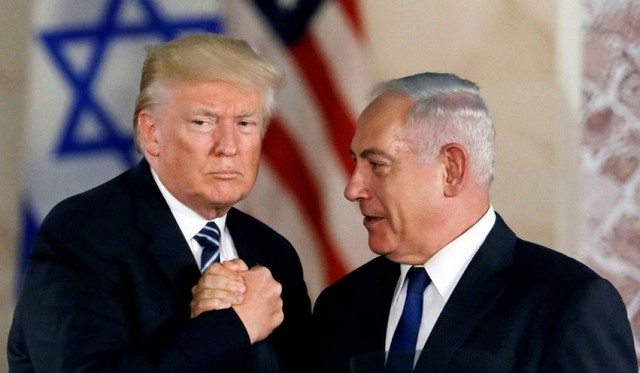
Touted by its architects as the ‘deal of the century’, US president Donald Trump’s plan for Palestine and Israel has had to again be kept hidden as Israel heads back to elections after a failure by its prime minister, Binyamin Netanyahu, to form a government. The decision for new elections (in September) followed a vote by the newly-inaugurated 120-member Israeli Knesset (parliament), hours after Netanyahu announced he could not form a coalition government, plunging Israel into political chaos. The news was hugely disappointing for Trump, who had been waiting for Netanyahu’s government to be appointed before unveiling his plan. Instead, it now sits in limbo as Netanyahu fights for his political survival and Palestinians reject the proposal outright, based on leaks about what it contains. Trump’s administration has resorted to revelations in small doses, evidenced by the announcement that the economic part of the deal will be unveiled at a 25-26 June summit in Bahrain. This strategy postpones the grand announcement while allowing Israeli occupation to continue unabated. Israel, meanwhile, is in political turmoil, with Netanyahu fighting corruption charges, and increasing tensions between right-wing Orthodox Jews and secular right-wing groups.

Failure forming government
The right-wing bloc, led by Netanyahu’s Likud party, secured major gains in the April election. He was elected prime minister after securing sixty-five votes from the 120-member parliament. The bloc is comprised of Likud (thirty-five seats); Kulanu (four seats); the Union of Right-wing Parties (URP) (five seats) that includes the Kahanist Jewish supremacist Jewish Power Party and Yisrael Beitenu; the ultra-orthodox Shas (eight seats) and United Torah Judaism (eight seats). It had hoped to form a coalition government similar to the one in 2015. Netanyahu, however, failed to get his partners to agree on critical issues, and to break a stand-off between the religious ultra-orthodox parties on the one hand and the racist leader of Yisrael Beiteinu, Avigdor Lieberman on the other. Lieberman’s disagreement with the religious parties rested mainly on his insistence on passing the Haredi draft law, a controversial document which seeks to conscript religious Jews into the army (orthodox Jews are currently largely exempt from conscription). The religious parties were unwilling to compromise on the exemption of their members from military service, despite Netanyahu’s efforts. And Lieberman refused to concede, eventually collapsing the coalition effort.

Lieberman has since used Netanyahu’s failure to form a government to garner support for his party, and lambasted the beleaguered prime minister for bowing to pressure from the religious parties. Lieberman hopes to win additional seats in the September elections, and thus wield more influence in coalition talks. If he succeeds, he could weaken Netanyahu by reducing the number of Likud seats. On the other hand, Netanyahu is also working tirelessly to shift the blame to Lieberman for forcing Israel into fresh elections. It seems, therefore, that Netanyahu’s biggest challenge for the September election will be from parties from his own right-wing bloc rather than from ‘centrist’ Blue and White party he battled against in April.

Despite the standoff between Lieberman and the religious parties, Netanyahu also faced several hurdles with other parties in his right-wing coalition. These included managing the demands of Kulanu leader Moshe Kahlon who insisted on being finance minister. URP leader Belazel Smotrich also demanded key portfolios for his members, specifically the justice and education ministries. The URP remained aggrieved even after the Knesset’s dissolution because Netanyahu appointed a senior Likud leader as justice minister. Smotrich has threatened to again push for that ministry, which is key for new legislation; he hopes to use it to introduce biblical laws in Israel. If this insistence persists, it would pose a major threat to Netanyahu if he wins the September election.

Bad timing for rerun election
The decision to hold new elections in September could not have come at a worse time for Trump’s long-awaited announcement of his ‘deal of the century’, engineered by his adviser and son-in-law Jared Kushner and US Middle East envoy Jason Greenblatt. The deal’s unveiling was to be after the Muslim fasting month of Ramadan. Trump and Kushner had hoped that by then a new Israeli government would be in place to receive a deal heavily biased towards Israel. With Israeli politics plunged into uncertainty, Kushner and Trump are concerned about their plan, which has already been rejectedby the Palestinians.

On a recent visit to Israel, Kushner sought reassurance from Netanyahu. He had travelled to the region as preparation for the25-26 June Economic Summit in Bahrain, where he is expected to announce plans for economic incentives for the Palestinians. He will ask that the financial proposals, which are regarded as the economic part of Trump’s deal, be funded by the Gulf states that will attend the summit – Saudi Arabia, the United Arab Emirates (UAE) and Qatar. Kushner also met leaders in Morocco and Jordan, in an ultimately successful attempt to convince the two kingdoms to attend the summit.

Israel’s political chaos is now posing problems for Kushner, who had been looking forward to revealing the plan he and his father-in-law had been working on since 2017. Nevertheless, both of them will happily allow Israel to quietly continue expanding the occupation of Palestinian territory as contained in the deal. Leaks suggest the deal will allow Israel to build and expand its illegal settlements in the West Bank (including in Jerusalem), will entrench Israeli control of Palestinian air, land and sea borders, will subject certain Palestinians to military rule, and will deny the right of return of Palestinian refugees. In the context of the current Israeli political reality, the new Kushner strategy is to release the plan in small doses starting with the economic plan to be announced in Bahrain. It will likely focus heavily on the besieged Gaza strip, and will involve economic incentives and plans for Gaza that will be operationalised by Egypt and Qatar. For the political part of the plan, Kushner’s recent comments that ‘Palestinians have no capacity to govern themselves’ hinted at what the spirit of the ‘deal’ might be. The plan will likely cement and legitimise the status quo of Israeli control of Palestinian lives, Israeli collection of Palestinian tax revenues and continued military rule for Palestinians in the occupied West Bank. Clearly, Netanyahu is on board with these aspects of the plan, but his current woes could mean he will be replaced by a prime minister who will not be as amenable to Trump and Kushner, thus raising questions about the plan’s future.

Conclusion
The April election provided an convincing victory for Netanyahu, who had hoped to form a strong right-wing government and to become Israel’s longest serving prime minister. His celebration halted abruptly after he failed to form a coalition government and was forced to announce new elections that will place on 17 September, two weeks before Netanyahu argues his case at a pre-trial hearing that seeks to indict him for bribery, corruption and fraud charges. These new political developments have thrown a spanner in the works and postponed the announcement of substantive parts of Trump’s plan for Israel and Palestine. A delay in announcing it, however, allows many aspects of the deal to be quietly implemented by the Israeli government anyway, with annexation of large portions of the West Bank and tying Gaza in economically to Arab governments already under way. This leaves the Palestinians with no real resolution in sight, and with no possibility, in the near future, of a Palestinian state.

Afro-Middle East Centre (AMEC),

14 June 2019

Source: www.amec.org.za

Iran was behind attacks on Oman Gulf tankers, US says

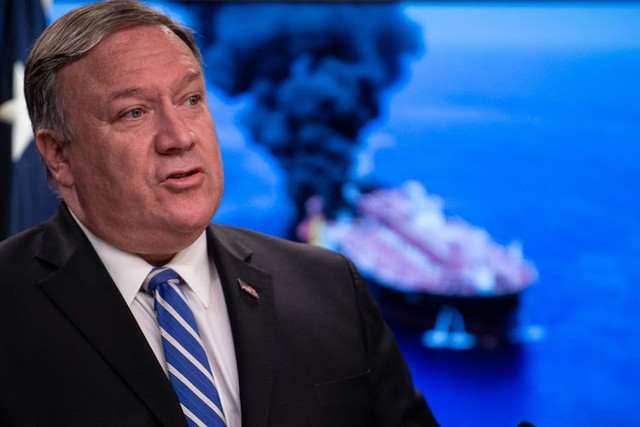
United States Secretary of State Mike Pompeo says America believes Iran is responsible for attacks on oil tankers in the Gulf of Oman, based on its intelligence of the type of weapons used and level of expertise needed to execute the strikes.

He offered no concrete evidence to back up the assertion, while the US military said the navy destroyer USS Mason was on its way to the scene of the attacks.

“It is the assessment of the United States Government that the Islamic Republic of Iran is responsible for the attacks that occurred in the Gulf of Oman today,” Mr Pompeo said.

“This assessment is based on intelligence, the weapons used, the level of expertise needed to execute the operation, recent similar Iranian attacks on shipping, and the fact that no proxy group operating in the area has the resources and proficiency to act with such a high degree of sophistication.”

Two oil tankers were attacked on Thursday and left adrift in the Gulf of Oman.

One operator said it suspected its ship had been hit by a torpedo, while another shipping firm said its vessel was on fire in the Gulf of Oman.

The White House said President Donald Trump had been briefed and the US Government would continue to assess the situation.

Washington accused Tehran of being behind a similar attack on May 12 on four tankers in the same area, a vital shipping route through which much of the world’s oil passes.

Tensions between Iran and the US, along with its allies including Saudi Arabia, have risen since Washington pulled out of a deal last year between Iran and global powers that aimed to curb Tehran’s nuclear ambitions.

Iran has repeatedly warned it would block the Strait of Hormuz, near where the attacks happened, if it cannot sell its oil due to US sanctions.

No-one has claimed Thursday’s attacks and no-one has specifically blamed them on any party.

World ‘cannot afford’ a Gulf conflict: Guterres

Oil prices surged by 4 per cent after the report, further stoking tensions following attacks last month on Gulf oil assets amid a dispute between Iran and the US over Tehran’s nuclear program.

The Gulf of Oman lies at the entrance to the Strait of Hormuz, a major strategic waterway through which a fifth of global oil consumption passes from Middle East producers.

There was no immediate confirmation from authorities in Oman or the United Arab Emirates, in whose territorial waters four tankers were hit last month.

US and Saudi officials blamed Iran for the May attack, a charge Tehran has denied.

UK Foreign Minister Jeremy Hunt said the tanker attacks were worrying and any Iranian involvement would be a “deeply unwise escalation”.

The “unfounded” US claim over the attacks has been rejected by Iran’s mission to the United Nations after Washington blamed Tehran.

“Iran … condemns it in the strongest possible terms,” the Iranian mission said in a statement.

Iranian Foreign Minister Mohammad Javad Zarif has described the incidents as “suspicious” and called for regional dialogue.

The Saudi-led military coalition, which is battling the Iran-aligned Houthis in Yemen, described Thursday’s events as a “major escalation”.

Russia, one of Iran’s main allies, was quick to urge caution, saying no-one should rush to conclusions about the incident or use it to put pressure on Tehran.

United Nations Secretary-General Antonio Guterres told a meeting of the UN Security Council on cooperation between the UN and the League of Arab States: “Facts must be established and responsibilities clarified.”

He warned that the world cannot afford “a major confrontation in the Gulf region”.

Council diplomats said the US told them it planned to raise the issue of “safety and freedom of navigation” in the Gulf during a closed-door meeting of the Security Council later on Thursday.

“It’s unacceptable for any party to attack commercial shipping and today’s attacks on ships in the Gulf of Oman raise very serious concerns,” acting US ambassador to the UN Jonathan Cohen told the UN meeting.

All shipping crews have been safely evacuated

Bernhard Schulte Shipmanagement said tanker Kokuka Courageous was damaged on Thursday while on passage from Saudi Arabia to Singapore in a “suspected attack” that breached the hull above the water line.

“The ship is safely afloat,” it said in a statement.

Japan’s Trade Ministry said the two vessels had “Japan-related cargo” as Prime Minister Shinzo Abe was wrapping up a high-stakes visit in Tehran that sought to ease tensions between Iran and the US.

Taiwan’s state-owned petroleum company CPC said tanker Front Altair, carrying 75,000 tonnes of petrochemical Naphtha, was “suspected of being hit by a torpedo” at about 4:00am.

Frontline, the Norwegian company that owns the vessel, said it was on fire in the Gulf of Oman.

Sources said crews from both vessels, which they had said had been struck in international waters, had been safely evacuated.

One shipping broker said there had been an explosion “suspected from an outside attack” that may have involved a magnetic mine on the Kokuka.

“All crew safely abandoned the vessel and was picked up by Vessel Coastal Ace. Kokuka Courageous is adrift without any crew on board,” the source said.

Another source said the Front Altair reported a fire caused by a “surface attack” and that the crew had been picked up by nearby vessel Hyundai Dubai.

Saudi Arabia and the UAE said the May attacks on oil assets in the Gulf posed a risk to global oil supplies and regional security.

13 June 2019

Source: www.abc.net.au

U.S. military, world’s single largest producer of GHG, says study

By Countercurrents Team

The U.S. military is the single largest producer of greenhouse gases (GHG) in the world, says a new study report.

The report – “Pentagon Fuel Use, Climate Change, and the Costs of War” – by Neta C. Crawford, Professor of Political Science at Boston University and Co-Director of the Costs of War project, has been prepared under Brown University’s Costs of War project, focuses specifically on “post-9/11 wars” and impact of these wars on emissions.

The report said: the U.S. Department of Defense (DOD) is the world’s largest institutional user of petroleum and correspondingly, the single largest producer of GHG in the world.

According to the report, the best estimate of U.S. military GHG emissions from 2001, when the wars began with the U.S. invasion of Afghanistan, through 2017, is that the US military has emitted 1,212 million metric tons of GHG (measured in CO2equivalent, or CO2e). And of these military operations, it is estimated that total war-related emissions including for the “overseas contingency operations” in the major war zones of Afghanistan, Pakistan, Iraq and Syria, are more than 400 Million Metric Tons of CO2e.

In 2017 alone, the report says, the Pentagon’s emissions were greater than all emissions from entire industrialized countries as Sweden and Denmark.

The reports said: In its quest for security, the U.S. spends more on the military than any other country in the world, certainly much more than the combined military spending of its major rivals, Russia and China. Authorized at over $700 billion in Fiscal Year 2019, and again over $700 billion requested for FY 2020, the DOD budget comprises more than half of all federal discretionary spending each year. With an armed force of more than two million people, 11 nuclear aircraft carriers, and the most advanced military aircraft, the US is more than capable of projecting power anywhere in the globe, and with “Space Command,” into outer-space. Further, the US has been continuously at war since late 2001, with the US military and State Department currently engaged in more than 80 countries in counterterror operations. All this capacity for and use of military force requires a great deal of energy, most of it in the form of fossil fuel.

It quoted General David Petraeus: “Energy is the lifeblood of our war fighting capabilities.” (General David Petraeus, quoted in Department of Energy, “Energy for the War fighter: The Department of Defense Operational Energy Strategy,” June 14, 2011, https://www.energy.gov/articles/energy-war-fighter-department-defense-operational-energy-strategy.)

The report said: Although the Pentagon has, in recent years, increasingly emphasized what it calls energy security — energy resilience and conservation — it is still a significant consumer of fossil fuel energy.

The report noted that the DOD does not report fuel consumption information to Congress in its annual budget requests. Indeed, although the Pentagon calculates fuel consumption for internal planning purposes, this information is explicitly withheld by the DOD in its reporting to Congress.

The new study report said: Global warming is the most certain and immediate of any of the threats that the U.S. faces in the next several decades. In fact, global warming has begun: drought, fire, flooding, and temperature extremes that will lead to displacement and death. The effects of climate change, including extremely powerful storms, famine and diminished access to fresh water, will likely make regions of the world unstable — feeding political tensions and fueling mass migrations and refugee crises. In response, the military has added the national security implications of climate change to its long list of national security concerns. Unlike some elements of the present US administration, which is in various modes of climate denial, the US military and intelligence community act as if the negative security consequences of a warming planet are inevitable. The DOD has studied the problem for decades and begun to adapt its plans, operations and installations to deal with climate change.

The effects of climate change will soon be “feeding political tensions and fueling mass migrations and refugee crises,” said the report.

Crawford has previously estimated that the budgetary costs of the post-9/11 wars, including Homeland Security and U.S. government’s future obligations to care for the veterans of these wars, are nearly $6 trillion dollars.

The report said: There are many sources of GHG related to war and preparation for it. Specifically, there are seven major sources of GHG emissions: overall military emissions for installations and non-war operations; war-related emissions by the U.S. military in overseas contingency operations; emissions caused by the U.S. military industry — for instance, for production of weapons and ammunition; emissions caused by the direct targeting of petroleum, namely the deliberate burning of oil wells and refineries by all parties; sources of emissions by other belligerents; energy consumed by reconstruction of damaged and destroyed infrastructure; emissions from other sources, such as fire suppression and extinguishing chemicals, including Halon, a GHG, and from explosions and fires due to the destruction of non-petroleum targets in war zones.

The study focused on the first two sources of military GHG emissions — overall military and war-related emissions — and briefly discuss military industrial emissions.

The report said: Domestic and overseas military installations account for about 40 percent of DOD greenhouse gas emissions. Jet fuel is a major component of U.S. military fuel use and therefore of GHG emissions. During each air mission, aircraft puts hundreds of tons of CO2 in the air, not to mention the support activities of naval and ground based assets for these air missions. The U.S. wars in Afghanistan and Iraq began with days of massive airstrikes. Moreover, in each case, material was flown to the war zones and bases were set up to prosecute the wars and occupations. Similarly, the U.S. war against ISIS in Syria and Iraq has entailed tens of thousands of aircraft sorties for various missions — from reconnaissance, to airlift, refueling, and weapons strikes. A B-2 Bomber on a mission from Whiteman Air Force Base in Missouri might be refueled many times. For example, on 18 January 2017, two B-2 B bombers, accompanied by 15 KC-135 and KC-10 aerial refueling tankers made a 30-hour round trip mission from Whiteman Air Force Base to Libya to drop bombs on ISIS targets in Libya.

While the military received praise for making some effort to decrease its energy consumption, including by gradually replacing some non-tactical fleet vehicles with hybrid, plug-in or alternative fuel vehicles, reducing idling, and developing solar installations at some bases, the report says there is “room for more reductions.”

The study questions whether the huge U.S. presence in the Persian Gulf is necessary, since the U.S. itself is less dependent on the region’s oil than in the past and does not necessarily need to “protect the global flow” of oil.

The study recommended that each military installation should draw up plans to reduce energy consumption by 10 percent by 2022, and advised increased use of alternative fuels, hybrid vehicles and renewable energy. The Pentagon should also identify which military and National Guard bases could be closed, whether due to climate change impacts or diminished threats.

The U.S. military must urgently “reduce their role” in creating GHG emissions as a matter of national security, the report urged.

13 June 2019

Source: countercurrents.org
Verdict in Asifa Bano case gives hope, but Indian nation has certainly let her down

By Gurpreet Singh

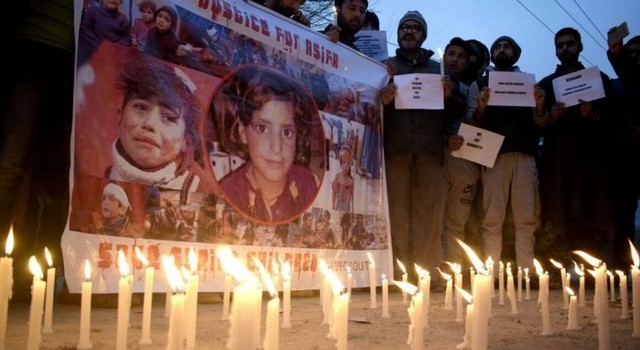
June 10 was a great day for those who have been fighting for justice to an eight-year-old victim of rape and murder.

This is especially true for the courageous Human Rights Lawyer, Deepika Singh Rajawat who stepped forward at personal risk to defend the family of Asifa Bano, a Muslim nomad girl who was kidnapped, sexually assaulted, and killed by Hindu fundamentalists in the northern Indian state of Jammu and Kashmir in January 2018.

The horrific crime attracted international attention.

Those involved in the conspiracy wanted to terrorize and humiliate Muslims in the area by using rape as a weapon.

On Monday, the special court in India convicted six people involved in the incident. Three of them have been given life imprisonment, while three police officers have been sentenced for five years each for destroying the evidence.

Rajawat faced threats and intimidation in the deeply polarized society of India. After all, the accused enjoyed the patronage of the ruling right-wing Hindu nationalist Bhartiya Janata Party (BJP), which holds power. Thanks to her advocacy, the case was transferred outside Jammu and Kashmir to ensure a fair trial.

While the verdict has certainly brought some relief, if one looks at the broader picture Bano has actually been let down by the Indian nation.

In the general election that concluded on May 19, the BJP came back to power with a brute majority. This time, the party that openly and shamelessly supported those involved in the gruesome act bagged 300 seats in the house of 543, more than the 282 it captured in 2014.

If the Indian electorate was honest, the BJP should have been punished in these elections. Rather the party got rewarded by the Hindu majority. Apparently, voters obsessed with the BJP’s outright sectarian agenda to transform the country into Hindu theocracy completely ignored the cries of Bano.

Not only that, the majority voters also overlooked the fact that Bano was confined in a temple that was used for such a sacrilegious act. It seems that they weren’t even outraged over BJP folks coming out in support of the accused with the national flag.

The people who raped and murdered Bano, and those who came out on streets to support them were merely a few, but by re-electing a party that claims to be a custodian of Hindu religion and national interest, the entire nation has deceived the soul of the little child.

Whatever may be the explanation, the May election results were in sharp contrast to the mandate of 2014 when Prime Minister Narendra Modi ascended to power against the backdrop of infamous Nirbhaya case.

In December 2012, a woman was gang raped and physically assaulted on a public bus in Delhi, the national capital. The victim later succumbed to her injuries. The death of Jyoti Singh Pandey, who came to be known as Nirbhaya, was followed by angry protests in the capital.

The whole episode became a matter of shame for those in power. People thought that the government lacked will and strength to stop sexual violence on the streets of Delhi.

Among the demonstrators were the supporters of Modi and his party. Those opposed to then-Congress government did not let the issue die until the next election.

Modi openly appealed to the voters not to forget what happened to Nirbhaya when they went to vote. He categorically asked them to keep in mind the victim of the Delhi rape before voting for Lotus – the electoral symbol of BJP. Thus, the Delhi rape and murder became one of the many issues when Modi was elected to power in May 2014 with a hope for a strong government.

Come 2019, such drive was missing. Maybe Asifa wasn’t even on anyone’s mind.

It is pertinent to mention that the conspirators had also incited communal hatred against Muslim nomads, accusing them of killing cows. Asifa had clearly become another victim of cow politics which has gripped the general mood of the nation ever since Modi first became the Prime Minister. Since Hindus consider the cow as a sacred animal, the self-styled cow vigilantes have intensified their hateful and violent campaign against Muslims and Christians all over the country. They continue to target these communities on suspicion of consuming beef.

Modi, who never missed an opportunity to rake up the issue of Nirbhaya before his 2014 election, remained silent on the sexual assault and murder of Asifa and did not find it necessary to reprimand his party men for supporting wrong people.

Even otherwise, Modi was complicit in the 2002 anti-Muslim pogrom of Gujarat during which many young Muslim girls were raped by Hindu fundamentalists. The massacre followed the burning of a train carrying Hindu pilgrims. More than 50 people died in the incident that was blamed on Islamic extremists by Modi, who was the Chief Minister of Gujarat back then. He wasn’t punished by the electorate at that time either, getting a heavy majority in the assembly election that followed the massacre.

It’s a shame to see that the entire nation was on its feet when a Hindu woman was raped in Delhi and kept the issue alive until Modi got elected to power in 2014, but the same nation looked the other way when Asifa was raped and murdered in 2018, and forgot her completely when they re-elected those who defended her killers.

This is despite the fact that many social justice activists continued to remind people of what happened to Asifa before the election started.

The election results, coming before the verdict that was the result of pure hard work of people like Rajawat and the prosecutors, have proved one thing – that India is a majoritarian democracy where winning elections by scapegoating non-Hindus has become a norm.

Gurpreet Singh is a Canada- based journalist who publishes Radical Desi- a monthly magazine that covers alternative politics.

11 June 2019

Source: countercurrents.org
Kushner as a Colonial Administrator: Let’s Talk About the ‘Israeli Model’

By Dr Ramzy Baroud

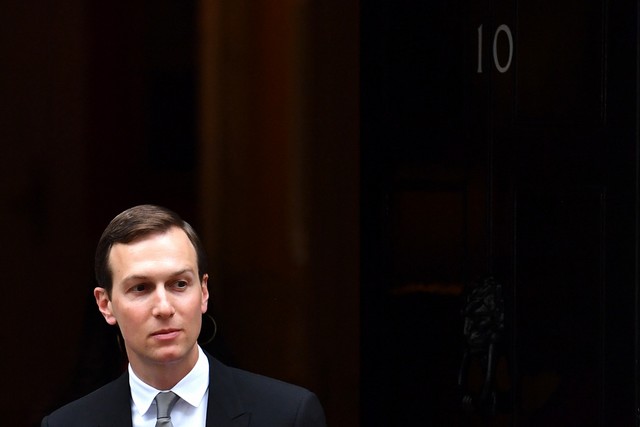
In a TV interview on June 2, on the news docuseries “Axios” on the HBO channel, Jared Kushner opened up regarding many issues, in which his ‘Deal of the Century’ was a prime focus.

The major revelation made by Kushner, President Donald Trump’s adviser and son-in-law, was least surprising. Kushner believes that Palestinians are not capable of governing themselves.

Not surprising, because Kushner thinks he is capable of arranging the future of the Palestinian people without the inclusion of the Palestinian leadership. He has been pushing his so-called ‘Deal of the Century’ relentlessly, while including in his various meets and conferences countries such as Poland, Brazil and Croatia, but not Palestine.

Indeed, this is what transpired at the Warsaw conference on ‘peace and security’ in the Middle East. The same charade, also led by Kushner, is expected to be rebooted in Bahrain on June 25.

Much has been said about the subtle racism in Kushner’s words, reeking with the stench of old colonial discourses where the natives were seen as lesser, incapable of rational thinking beings who needed the civilized ‘whites’ of the western hemisphere to help them cope with their backwardness and inherent incompetence.

Kushner, whose credentials are merely based on his familial connections to Trump and family friendship with Israeli Prime Minister, Benjamin Netanyahu, is now poised to be the colonial administrator of old, making and enforcing the law while the hapless natives have no other option but to either accommodate or receive their due punishment.

This is not an exaggeration. In fact, according to leaked information concerning Kushner’s ‘Deal of the Century,’ and published in the Israeli daily newspaper, ‘Israel Hayom’, if Palestinian groups refuse to accept the US-Israeli diktats, “the US will cancel all financial support to the Palestinians and ensure that no country transfers funds to them.”

In the HBO interview, Kushner offered the Palestinians a lifeline. They could be considered capable of governing themselves should they manage to achieve the following: “a fair judicial system … freedom of the press, freedom of expression, tolerance for all religions.”

The fact that Palestine is an occupied country, subject in every possible way to Israel’s military law, and that Israel has never been held accountable for its 52-year occupation seems to be of no relevance whatsoever, as far as Kushner is concerned.

On the contrary, the subtext in all of what Kushner has said in the interview is that Israel is the antithesis to the unquestionable Palestinian failure. Unlike Palestine, Israel needs to do little to demonstrate its ability to be a worthy peace partner.

While the term ‘US bias towards Israel’ is as old as the state of Israel itself, what is hardly discussed is the specific of that bias, the decidedly condescending, patronizing and, often, racist view that US political classes have of Palestinians – and all Arabs and Muslims, for that matter; and the utter infatuation with Israel, which is often cited as a model for democracy, judicial transparency and successful ‘anti-terror’ tactics.

According to Kushner a ‘fair judicial system’ is a conditio sine qua non to determine a country’s ability to govern itself. But is Israeli judicial system “fair” and “democratic”?

Israel does not have a single judicial system, but two. This duality has, in fact, defined Israeli courts from the very inception of Israel in 1948. This de facto apartheid system openly differentiates between Jews and Arabs, a fact that is true in both civil and criminal law.

“Criminal law is applied separately and unequally in the West Bank, based on nationality alone (Israeli versus Palestinian), inventively weaving its way around the contours of international law in order to preserve and develop its ‘(illegal Jewish) settlement enterprise’,” Israeli scholar, Emily Omer-Man, explained in her essay ‘Separate and Unequal’.

In practice, Palestinians and Israelis who commit the exact same crime will be judged according to two different systems, with two different procedures: “The settler will be processed according to the Israeli Penal Code (while) the Palestinian will be processed according to military order.”

This unfairness is constituent of a massively unjust judicial apparatus that has defined the Israeli legal system from the onset. Take the measure of administrative detention as an example. Palestinians can be held without trial and without any stated legal justification. Tens of thousands of Palestinians have been subjected to this undemocratic ‘law’ and hundreds of them are currently held in Israeli jails.

It is ironic that Kushner raised the issue of freedom of the press, in particular, as Israel is being derided for its dismal record in that regard. Israel has reportedly committed 811 violations against Palestinian journalists since the start of the ‘March of Return’ in Gaza in March 2018. Two journalists – Yaser Murtaja and Ahmed Abu Hussein – were killed and 155 were wounded by Israeli snipers.

Like the imbalanced Israeli judicial system, targeting the press is also a part of a protracted pattern. According to a press release issued by the Palestinian Journalists Union last May, Israel has killed 102 Palestinian journalists since 1972.

The fact that Palestinian intellectuals, poets and activists have been imprisoned for Facebook and other social media posts should tell us volumes about the limits of Israel’s freedom of press and expression.

It is also worth mentioning that in June 2018, the Israeli Knesset voted for a bill that prohibits the filming of Israeli soldiers as a way to mask their crimes and shelter them from any future legal accountability.

As for freedom of religion, despite its many shortcomings, the Palestinian Authority hardly discriminates against religious minorities. The same cannot be said about Israel.

Although discrimination against non-Jews in Israel has been the raison d’être of the very idea of Israel, the Nation-State Law of July 2018 further cemented the superiority of the Jews and inferior status of everyone else.

According to the new Basic Law, Israel is “the national home of the Jewish people” only and “the right to exercise national self-determination is unique to the Jewish people.”

Palestinians do not need to be lectured on how to meet Israeli and American expectations, nor should they ever aspire to imitate the undemocratic Israeli model. What they urgently need, instead, is international solidarity to help them win the fight against Israeli occupation, racism and apartheid.

Ramzy Baroud is a journalist, author and editor of Palestine Chronicle.

12 June 2019

Source: countercurrents.org
Commentary: PM Prayut faces huge challenges in getting Thailand’s house in order

By Pavin Chachavalpongpun

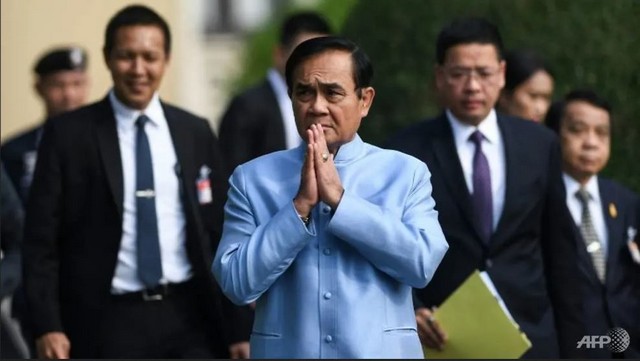
KYOTO: General Prayut Chan-o-cha was overwhelmingly voted in the Thai parliament to remain as prime minister on Wednesday (Jun 5).

Prayut has ruled Thailand for the past five years following a military coup he led that overthrew the elected government of Yingluck Shinawatra.

Though the voting session much-anticipated, the verdict was not unexpected. Prayut garnered 500 votes, 251 from the Senate and 249 from the Lower House.

Meanwhile, his rival, Thanathorn Juangroongruangkit, a billionaire-turned-politician from the Future Forward party, received only 244 votes, and will continue his fight in parliament as the opposition.

CAREFULLY PLANNED

The political triumph of Prayut, if anything, was carefully planned. The 2014 coup was staged so that the military could manage the royal succession against any interruption from its perceived enemies in the Shinawatra faction.

In this same mission, the military tasked itself to write a new constitution that would facilitate its entrenchment in politics.

Turning the Senate into its own instrument was a part of this preparation for Prayut’s homecoming.

So, Thailand will live under the Prayut regime for another four years. What must be top priorities for the Thai government?

POLITICAL RECONCILIATION SHOULD BE TOP PRIORITY

First, the government will need to focus on political reconciliation. It is the most difficult mission given that Thai society has long been deeply polarised along ideological lines.

Beneath the Thai colour-coded politics, between the yellows and the reds, is a set of two contrasting political platforms.

On the one hand, the yellows, mostly consisting conservative traditionalists and some large quarters of the Thai middle and upper classes, continue to desire a benevolent but strong leader.

They have invested in the monarchy and the military to defend their interests for decades. Occasionally they protected democracy, but this protection is conditional and highly self-centred.

On the other hands, the reds have demanded greater access to political and economic resources. As marginalised residents, made of ordinary Thais in the middle and lower-income brackets, they have been empowered by Thaksin’s populism.

When the two Shinawatras were toppled, the reds were furious and refused to reconcile with their selfish counterparts in the capital.

How Prayut will heal the political rift depends upon how much political and economic space can be granted to the reds. To what extent Prayut would be willing to share political power to achieve a new consensus will determine the stability of the new government.

The signs are not positive. The parliamentary votes that confirmed Prayut’s renewed premiership was already considered as a slap in the face for those who went out to support Thaksin-endorsed Pheu Thai party and the emerging anti-military Future Forward party.

The Thai Raksa Chart party, which was aligned with this group, was also dissolved after it nominated Princess Ubolratana for prime minister.

TACKLE THE ECONOMY

Second, Prayut has got to address Thailand’s urgent need to rescue a faltering economy and sinking investor confidence.

As the second-largest economy in Southeast Asia, Thailand’s growth stood at only 2.8 per cent in the first quarter from a year earlier, the weakest since 2014. Public investment, exports and tourism slowed amid rising global trade tensions and political risks at home.

Part of the problem is that Prayut’s military government failed to produce an inspiring economic policy. The military was never trained to run an economy.

The lack of political stability, possibly as a result of the government’s inability to accomplish reconciliation, could affect the legislative process and disrupt budget allocation and public spending on much-needed larger investment projects and keep investors away.

From keeping agricultural prices among poor farmers stable, supporting key manufacturing sectors, investing in major transport projects, to boosting the tourism industry, the new government treads a fine line.

It cannot afford to make a bad move when it comes to the economy. The failure could drive affected workforces onto the streets, with implications for public safety and order.

FOCUS ON ASEAN

Third, Thailand needs to pay more attention to its foreign policy. This year, Thailand chairs ASEAN.

For the longest time, Thailand has lost its interest in seriously engaging with ASEAN. Domestic political upheaval was responsible for the making of a lacklustre foreign policy.

ASEAN’s non-intervention rule also contributed towards Thailand becoming more inward looking. It is ironic that in the age of ASEAN-led economic integration and an outward-looking orientation for the group, Thailand is isolating itself.

Thailand is one of the founding fathers of ASEAN in 1967 in Bangkok. It played an active part in the promotion of this organisation, from proposing an ASEAN Free Trade Area to initiating the ASEAN Regional Forum.

It was Thailand that championed ASEAN’s approach of “constructive engagement” in engaging Myanmar in the early 1990s, eventually bringing it into the organisation.

The new Prayut government is expected to demonstrate leadership in Thailand’s year of chairing ASEAN, to advance an agenda of greater integration, and in particular, agreement on the Regional Comprehensive Economic Partnership.

Thailand is scheduled to hold the ASEAN Summit in late June 2019, against the backdrop of a brewing US- China trade war and just before the G20 in Osaka. All eyes will be on Thailand then.

Prayut must not let all of us, Southeast Asians, down.

Pavin Chachavalpongpun is associate professor at Kyoto University’s Center for Southeast Asian Studies.

9 Jun 2019

Source: www.channelnewsasia.com