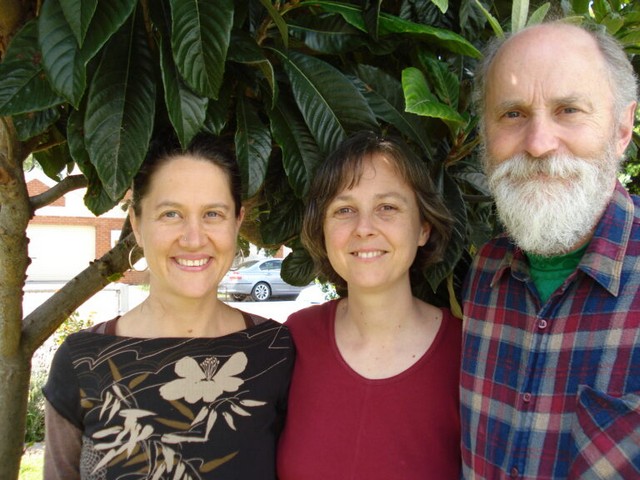
By Robert J. Burrowes
Dear fellow signatories of the Nonviolence Charter,
How are you all? And welcome to our most recent signatories and organizations!
This is the latest six-monthly report on progress in relation to ‘The People’s Charter to Create a Nonviolent World’ – with the Spanish translation, kindly done by Antonio Gutiérrez Rodero in Venezuela, here – together with a sample of news about Charter signatories and organizations.
Happily, our collective effort to build a worldwide consensus against the use of violence in all contexts continues to make progress.
Our last report on 30 April 2019 was kindly published by Antonio C.S. Rosa in the TRANSCEND Media Service Weekly Digest and by Karina L. Santillan at the Pressenza International Press Agency. Many thanks to you both!
At the time of today’s report, we have signatories in 105 countries. We also have 118 organizations/networks from 39 countries, with The Asia Institute the most recent endorsing organization. If you wish, you can see the list of organizational endorsements on the Charter website.
If you wish to see individual signatories, click on the ‘View signatures’ item in the sidebar. You can use the search facility if you want to look for a specific name.
The latest progress report article ‘Human Violence: Pervasive, Multi-dimensional and Extinction-threatening’, showcasing the efforts of several Charter signatories, was recently distributed to many progressive news editors: it has been published by a number of outlets in 11 countries so far, thanks to very supportive editors, several of whom are Charter signatories: special thanks to Antonio C.S. Rosa at TRANSCEND, Gifty Ayim-Korankye at Ghana web Online and Karina L. Santillan at Pressenza.
If you feel inclined to do so, you are welcome to help raise awareness of the Nonviolence Charter using whatever means are easiest for you.
And our usual invitation and reminder: You are most welcome to send us a report on your activities for inclusion in the next report. We would love to hear from you!
Anyway, here is another (inadequate) sample of reports of the activities of individuals and organizations who are your fellow Charter signatories:
To begin, our friends Hakim (Dr Teck Young Wee) and the Afghan Peace Volunteers, based in Kabul, continue their challenging work to build a peaceful future in Afghanistan and the world. In their latest distribution, ‘#We Want to Know You Too! Relational Learning Project’, they noted that ‘We human beings are disconnected from one another’s lives, and deaths. Despite our smart phones, the internet and Facebook, we don’t really know one another…. To us, this is a social emergency like the climate emergency. They share the same roots, that we’re disconnected from Nature and one another. So we wanted to do something together!… the Afghan Peace Volunteers have organized the Relational Learning Project and we need your help. We hope that as millions arise to care for our planet, we can also arise to care for one another. So join us!’ And, in the immediate instance, that means to check out the website immediately above and complete their survey. You are inspirational, as always, APVs! And if you want to listen to a song about the APVs, written by Anita McKone, you can do so here: ‘Nonviolence They Choose For Afghanistan’.
Kathy Kelly, a frequent international guest of the APVs, talks about her experience in Afghanistan and other war zones with World Beyond War Director, David Swanson. You can hear David’s recent interview of Kathy, and access all of his other weekly interviews, on ‘Talk Nation Radio’ here: ‘Kathy Kelly on Peace, Afghanistan, Yemen, Ireland, and the United States’. Subsequently and pondering a fall that led to Kathy breaking a hip, she also reflected comparatively on her plight and those in Afghanistan. See ‘The Wounds of War in Afghanistan’.
And if you would like to read a terrific book by Australian Mark Isaacs about ‘The Kabul Peace House: How a Group of Young Afghans are Daring to Dream in a Land of War’, which is (highly favourably) reviewed here – ‘The Struggle for Peace in Afghanistan: Is Community Engagement the Key?’ – you will be well rewarded with an inspiring story by a remarkable group of young people and their mentor.
Iona Conner can make a claim that few can match: ‘She has been active in the environmental movement for more than 50 years.’ Iona lives in the USA and, in one of her more recent initiatives, started The Go-Back Club in 2013 to educate readers about the climate crisis and encourage Americans to minimize their use of fossil fuels and preserve natural resources. The Go-Back Club is a simple-living/action brigade and, among other things, Iona is editor of its ‘Groundswell News’. But if you would like to read more about her long-standing commitment and efforts, you will get a taste from Iona’s CV. Sadly, too, Iona reports, ‘the world [has] lost a champion for justice’. John Bruce Conner ‘My amazing husband, who worked tirelessly for social, economic, and environmental justice, died in my arms August 18’. John spent his life working in various ways to benefit humanity and the environment. We share the sadness of your loss Iona. There are too few people like John in this world.
Emeritus Professor David Hardiman was born in Rawalpindi in Pakistan but grew up in the UK. As a historian, he specializes in the history of Modern India. He has taught at the University of Leicester, the School of Oriental and African Studies in London, the University of Newcastle upon Tyne, the University of Oxford, and from 1996 to 2013, the University of Warwick. He worked as a Research fellow at the Centre for Social Studies, Surat, India during the 1980s, and has held visiting fellowships at the Australian National University, the Institute of Commonwealth Studies in London, Princeton University and the University of Manchester. He is a Fellow of the Royal Historical Society. If you would like to know more about David, you can read about his research and publications here. His latest book is The Nonviolent Struggle for Indian Freedom, 1905-19 which is reviewed here: ‘Non-violent movements that preceded Gandhi’.
As you might guess, Ela Gandhi is the granddaughter of a famous peacemaker but is also a great leader herself. Ela was under house arrest for a decade while resisting apartheid in South Africa, worked on the transitional task force with Nelson Mandela following the liberation of South Africa from apartheid, and she served for a decade in the South African parliament. Long committed to resisting injustice, she is also committed to doing it through nonviolence. Like others, she is horrified by the atrocities of war and is concerned about the plight of the poor and the deprived of our world. ‘In my own life, I have found that peace does not only mean protesting and resisting injustice, but also living our everyday lives doing big and small things to bring greater harmony to the world. Helping sick and injured children, protecting the voiceless animals, preserving the plants and trees that are being eliminated by development, and contributing in little ways to save the world by conserving, reusing, recycling, and reducing both what we need and what we discard, in the hope that the already distended Mother Earth will absorb it. We need to appreciate the richness of our diverse heritage and begin to see the value of global citizenship, so that peace and social and political justice may prevail in the world…. We all have power and when we get together, we have more power.’
Activist journalist Abby Martin recently completed her debut feature film ‘Gaza Fights for Freedom’. Directed, written and narrated by Abby, the film had its origins while Abby was reporting in Palestine, where she was denied entry into Gaza by the Israeli government on the accusation she was a ‘propagandist’. Connecting with a team of journalists in Gaza to produce the film through the blockaded border, this collaboration shows you Gaza’s protest movement like you’ve never seen it before. Filmed during the height of the Great March Of Return protests, it features riveting footage of demonstrations and is a thorough indictment of the Israeli military for war crimes, and a stunning cinematic portrayal of the heroic resistance by Palestinians.
The film is currently being shown in a series of venues in the United States and Canada with Abby presenting the film in each location. If you would like to see the locations and dates for these film showings, you can do so here: ‘Nationwide Tour: New Film “Gaza Fights for Freedom” with Abby Martin!’
Better still, particularly for those not in Canada or the United States, you can watch a preview here: ‘Gaza Fights for Freedom preview’. And if you would like to buy or rent the film (and support Abby’s work in that way) you can do so here: ‘Gaza Fights for Freedom’. Fine work Abby in support of our Palestinian friends.
Continuing his lifetime commitment to expose hidden truths to the light of day, Professor Noam Chomsky was recently interviewed about the ongoing US threats against Iran. For his insightful commentary on the forces driving US actions in relation to Iran, this interview is quite compelling: ‘We Must Stop War with Iran Before It’s Too Late’. And in another interview, effectively asking him a series of questions to update his thoughts on the ‘manufacture of consent’ first systematically documented in his book with Edward Herman 30 years ago, Noam was clear in his reaffirmation that the corporate media, now including Google, Facebook and Twitter, is ‘Still Manufacturing Consent: An Interview With Noam Chomsky’. ‘I don’t think the internet and social media changes the propaganda model at all. The propaganda model was about the major media institutions and they remain, with all the social media and everything else, the primary source of news, information and commentary. The news that appears in social media is drawn from them. So, if you look at the news on Facebook, it comes straight from the major media. They don’t do their own investigations.’ Once again, in deep appreciation of your truth-telling, Noam.
Of course, in relation to Iran, Noam was not the only person concerned about US provocations of that country.
Professor Chandra Muzaffar, President of JUST International based in Malaysia, also wrote an insightful commentary. See ‘Iran: Neither Military Action nor Economic Sanctions’.
Based on her extensive experience of the impact of sanctions on the people of Iraq between 1991 and 2003, Kathy Kelly, co-convenor of Voices for Creative Nonviolence offers an evocative case for ‘An Honorable Course in Iran: End Sanctions, Resume Dialogue’.
And Professor René Wadlow, President of the Association of World Citizens headquartered in France, reflects thoughtfully on the ‘Iran Crisis: Dangers and Opportunities’ by drawing attention to opportunities for citizen engagement through NGOs to influence how the conflict plays out. ‘The dangers are real. We must make the most of the opportunities.’
René also continues to examine issues and throw light on subjects well outside the spotlight of the corporate media, such as conflicts in Africa. See, for example, his article ‘Sahel Instability Spreads’. And for an insightful look at an opportunity to deal creatively with the conflict in Yemen, this article is well worth reading: ‘Signs of Hope for Persian Gulf Conflicts: Serious Negotiations Needed’.
Of course, Iran has not been the only flashpoint threatening to explode. Venezuela continues to be a point of contention with ongoing US threats to the country’s democratically elected government. Canadian scholar Yves Engler is one of those who has been active in efforts to prevent a US-led military intervention in Venezuela. In this thoughtful article, ‘Canada Hires Hitman to Overthrow Venezuelan Government’, Yves explains that ‘Canadian taxpayers are paying a hardline pro-corporate, pro-Washington, former diplomat hundreds of thousands of dollars to coordinate the Liberal government’s bid to oust Venezuela’s government.’
Ella Polyakova and her colleagues at the Soldiers’ Mothers of Saint-Petersburg in Russia continue their fine work to defend the rights of servicemen and conscripts by making sure that individuals are equipped with knowledge of their rights, the law and all relevant circumstances to be able to take responsibility for defending themselves from abuse. ‘We clearly understood what a soldier in the Russian army was – a mere cog in the state machine, yet with an assault rifle. We felt how important hope, self-confidence and trust were for every person. At the beginning of our journey, we saw that people around us, as a rule, did not even know what it meant to feel free. It was obvious for us that the path towards freedom and the attainment of dignity was going through enlightenment. Therefore, our organization’s mission is to enlighten people around us. Social work is all about showing, explaining, proving things to people, it is about convincing them.’
Christophe Nyambatsi Mutaka is Director of the Martin Luther King Group in the Democratic Republic of the Congo. Christophe recently distributed a news release in celebration of the International Day of Nonviolence and 150th anniversary of the birth of Mohandas K. Gandhi. The Martin Luther King Group, which is based in Goma, North Kivu province in the east of the Democratic Republic of the Congo, is an association of Congolese people committed to active nonviolence, human rights, peace and reconciliation and remains convinced that active nonviolence is the only way that can lead humanity to lasting peace.
Noting that humanity is ‘immersed in a culture of violence’ and that many people have ‘positioned themselves in our communities through violence’ he points out that ‘young people miss models!’ Everywhere the talk is about assassinations, rapes, torture, recruitment of child soldiers, trafficking in human beings, embezzlement of public funds, non-payment of wages, poverty, kidnapping…. Indeed, it is violence that is in the news! Faced with the failure of violence around the world to achieve worthwhile goals, especially in Syria, Palestine, Israel, the United States, Ukraine, Democratic Republic of Congo, Iraq, Mali, CAR, Nigeria… ‘we strongly believe in active nonviolence’ and ask for the following:
- That active nonviolence – that is, respect for human dignity and creation – be taught from kindergarten to university;
- That all those who massacre in the province of North Kivu in the east of the Democratic Republic of Congo and all over the world stop doing this dirty work;
- That nations work to make law and justice work in order to contribute to building lasting peace through active nonviolence;
- That people do what they say and get out of their hypocritical rhetoric that poisons new generations; and
- That each and every one of us strives to achieve consistency between thoughts and feelings and our behaviour, thus modeling a coherent life and escaping the contradiction that generates the violence.
Jill Gough and our other friends at CND Cymru (Wales) continue their campaign with like-minded souls both in Wales and around the world ‘to rid Britain and the world of all weapons of mass destruction’. They also campaign for peace and justice for humanity and the environment, and against the arms trade. In the latest edition of their magazine ‘Heddwch’ (Welsh for ‘Peace’), the usual range of issues is discussed but you can access past issues from this link: ‘Heddwch Magazine’.
Professor Ammar Banni in Algeria is a retired professor of education, an author and researcher in pedagogical innovation and international development. He is also a member of the International Diplomatic Commission of the International Association of Educators for World Peace (IAEWP) – Africa. Ammar reports that since February 2019 and even following their successful removal from office of 20-year President Abdelaziz Bouteflika in April, Algerians continue to gather weekly in Algiers and other major cities to call for the removal of the country’s ruling elite and the establishment of a ‘free and democratic Algeria’. Angry at the corruption of the elderly elite unresponsive to the needs of ordinary people, activists have been protesting weekly in an attempt to force removal of all remnants of a secretive political and military establishment that has dominated the country for decades.
The problem, Ammar reports, is not so much the Algerian constitution. The problem lies in the institutions responsible for the application of it. The constitutional texts are manipulated and interpreted in accordance with the interests of the elite that governs.
Professor Richard Jackson reports that The National Centre for Peace and Conflict Studies at the University of Otago in New Zealand continues to work for peace in the academic arena. It teaches around 50 Masters and PhD students drawn from more than 20 countries, and its staff continue to do research and publish in the areas of conflict analysis, conflict resolution, pacifism, nonviolence and peacebuilding. Following the terrorist attack in March in Christchurch, the Centre responded with a public statement, extensive media engagement, a submission to the Commission on the attacks, a research project into and a variety of other local initiatives aimed at the promotion of anti-racism and strengthening multiculturalism. Recently, a group of students and staff traveled to the island of Rekohu to spend time with members of the Hokotehi Moriori Trust and develop a stronger relationship with them. The Hokotehi Trust represents the interests of the Moriori people, a group who maintain one of the oldest peace traditions in the world. In November 25-27, 2019, the Centre will be holding a special conference entitled ‘Peace in Aotearoa New Zealand: Past, present, future’ to commemorate the 10th anniversary of the Centre’s founding.
As a result of a conference on revolutionary nonviolence held in 2017, a forthcoming book Revolutionary Nonviolence: Concepts, Cases and Controversies, of which Richard is one of the authors and editors, is nearing publication. The next report will include a link to the book, which one reviewer endorsed with these words: ‘In this era of “endless” violence and interrelated political marginalization, economic inequality, social dislocation and ecological (including climate) breakdown, this book explains why revolutionary nonviolence is the most fruitful path for generating the grassroots, community-led structural change needed to transcend this complex and multi-faceted crisis. An insightful and compelling read.’
Ramesh Agrawal is a prominent social and environmental activist in India who has devoted many years to educating and organizing local village people, including adivasi communities, to defend their homes and lands from those corporations and governments that would deprive them of their rights, livelihoods, health and a clean environment for the sake of mining the abundant coal in the state of Chhattisgarh. However, because his ongoing efforts to access and share key information and his organization of Gandhian-inspired grassroots satyagrahas (nonviolent campaigns) have been so effective, he has also paid a high price for his activism, having been attacked on many occasions. In 2011, for example, he was arrested despite ill-health at the time and chained to a hospital bed. A year later he was shot in the leg, which required multiple operations. He still has difficulty walking with six metal rods inserted through his thigh.
The Jan Chetna (‘people’ awareness’) movement started by Ramesh has spread to several parts of Chhattisgarh as well as other states of India. For the latest account of his efforts including the recent ‘coal satyagrapha’ focused on coal blocks owned by state power companies but being developed and operated by Adani Enterprises, see ‘Thousands Hold “Coal Satyagraha”, Allege Manufacturing of Consent at Public Hearing’. For his nonviolent activism, Ramesh was awarded the Goldman Environmental Prize in 2014. See ‘Ramesh Agrawal: 2014 Goldman Prize Recipient Asia’ and ‘Chhattisgarh activist, Ramesh Agrawal, bags Goldman prize’.
Pakistani Canadian scholar Dr Mahboob A. Khawaja continues to cast his penetrating eye on world affairs. In this article, he exposes the superficiality of ‘world leaders’: ‘Global Peace and Security: World Leaders Betray the Canons of Truth, Wisdom and Humanity’.
Meanwhile, Mahboob’s son, Mohammad Momin Khawaja, unjustly imprisoned by a corrupt Canadian legal system, has outlined the circumstances of his predicament caught up in the hysteria of the war on terror. See ‘Canada’s War on Terrorism and Momin Khawaja’s Fight for Freedom’.
Since 2017 Dr Marthie Momberg in South Africa has been working with international colleagues to address Zionism amongst Christians. Dr. Mark Braverman (Executive Director, Kairos USA) and Marthie offered, for example, a seminar entitled ‘Christianity and the Shifting of Perceptions on Zionism’ at Stellenbosch University’s Beyers Naudé Centre. ‘With some other colleagues we are also in the midst of a research project at this Centre to understand how to sensitise Christians on the nature of Zionism and how it serves as an important lens on so many other struggles in our world. I am also in the process of writing a number of scholarly articles on ethics and religion in the context of Israel and the Palestinian struggle. Some of these are still in the process of being peer reviewed.’ One recently published article (in Marthie’s home language, Afrikaans), however, is titled ‘Israeliese en Suid-Afrikaanse burgers se redes vir toetrede tot die Palestynse stryd’.
Dr Marty Branagan at the University of New England in Australia reports as follows: ‘Peace Studies at UNE is hanging in despite constant threats by a more corporatized and under-resourced university sector. We have a large number of international PhD students from places like Rwanda, Kenya, Nigeria, Nepal, India and Bangladesh. We are holding a conference at our Parramatta Campus in Sydney on the theme Rethinking Peace, Conflict and Governance to reflect on peacebuilding issues in the 21st century’, from 12–14 February 2020.
And in an evocative reflection on the state of the world, Marty gave the keynote presentation at the 34th NSW Environmental Education Conference on 4 October, on the topic ‘Protest and Survive’.
Lily Thapa continues her key role as the inspirational founder and leader of Women for Human Rights, Single Women Group (WHR) in Nepal. With a mission to achieve ‘Empowered single women living dignified lives with a sustainable livelihood, social acceptance, recognized nationally and globally’ WHR has an enviable record of achievement, recognized by the long list of awards the network has won since its foundation, in its remarkable work to empower widowed women throughout Nepal, South Asia and around the world. If you would like to read a simple 8-line poem, that poignantly evokes what it means to be a widow in this social context, try ‘Broken Bangles, shattered dreams’. As always Lily, in sincere appreciation of your vision and commitment.
Vijay Mehta, Cofounder of Uniting for Peace in the UK was invited to speak at a seminar jointly hosted by the Nuclear Free Local Authority (NFLA) and Mayors for Peace at the Manchester Central Library. The title of the conference was ‘The Humanitarian Impacts, Costs and Dangers of Nuclear Weapons in the Wider Campaign for a more Peaceful World’ and Vijay spoke about this recently published book How not to go to War: Establishing Departments for Peace and Peace Centres Worldwide. You can see more about the conference on the UfP website.
Environmental journalist and freelance writer Robert Hunziker continues his tireless efforts to raise awareness of the full dimensions of our environmental crisis and, in this radio interview on 1 October, responds to questions about the ongoing climate and Fukushima disasters and the negative role of the corporate media from Professor Guy McPherson and Kevin Hester on the program ‘Nature Bats Last’ or at this audio link. Little of critical importance climatically or environmentally escapes Robert’s scrutiny. For his most recent article, which discusses the recently discovered methane leaks from the East Siberian Arctic Shelf, see ‘Methane SOS’. Is this a big deal? According to Robert the East Siberian Arctic Shelf is ‘jammed full of methane buried at sea beneath underwater permafrost. But, it’s starting to leak big time, and this could be one of the biggest problems of all time for civilization, with staggering consequences.’ Unfortunately, if you think that is bad, read the rest of the article. And weep for humanity.
Ina Curic in Romania is ‘both a Dragon Tamer and a Fire Spitting Dragon myself, knowing there is magic for hurt people that hurt others and the planet.’ Following extensive education-related work in the past twenty years, mainstreaming cross-cutting issues in development, facilitating training and group processes with teenagers and adults in different peacebuilding and post war contexts, Ina now focuses on writing her illustrated children’s books which teach vital lessons for life that you will not find in any mainstream education setting. Why? Ina answers:
‘I want to live in a world where:
- every child is told stories about war in past tense;
- every teenager realizes that slaying enemies is an inside job;
- and every adult leaves behind fighting – both in flesh and metaphor – to step into emotional maturity and recognition of everyone’s full humanity.’
You can read more about Ina on her website Imagine Creatively or on her formal CV.
In a reflection on the 150th birth anniversary of Mohandas K. Gandhi on 2 October, Professor Ram Puniyani discusses those, such as Hindu nationalists like the Rashtriya Swayamsevak Sangh (RSS) in India, who deliberately misrepresent Gandhi in support of their own communally divisive ends. For a thoughtful commentary on communalism in India today, see ‘Gandhi Anniversary: An Occasion to Gain legitimacy for Some’.
Palestinian, Professor Mazin Qumsiyeh, and his wife Jessie, will be visiting Australasia on a speaking tour for about three weeks in May-June 2020. Mazin teaches and undertakes research at Bethlehem and Birzeit Universities, Palestine. He has previously served on the faculties of Duke and Yale Universities, and the University of Tennessee, USA. He and his wife returned to Palestine in 2008, where they established a number of institutions and projects, including a clinical genetics laboratory that benefits cancer patients and others. They founded, and run as full-time volunteers, the Palestine Institute for Biodiversity and Sustainability (PIBS) at Bethlehem University.
Mazin has published over 140 scientific papers and several books on topics ranging from cultural heritage to biodiversity to cancer and the Palestinian struggle for liberation. Information about these and other documents can be accessed at his website. Mazin is an accomplished speaker and has given hundreds of talks in 45 countries around the world, on an expenses-only basis. As an activist, he has been harassed and arrested for his nonviolent actions, but has also received a number of prestigious awards for these same actions.
If any signatory in Australia or New Zealand would like to help organize Mazin and Jessie’s tour or host an event as part of it, your support will be sincerely appreciated. Please contact “Chris Faisandier” <cjfaisandier@hotmail.com> or Mazin himself: “Prof. Mazin Qumsiyeh” <mazin@qumsiyeh.org>
In Guatemala, Daniel Dalai continues his visionary role providing opportunities for girls to develop their leadership capacities at Earthgardens. If you haven’t previously been aware of their work, including in Bolivia and Nicaragua, you will find it fascinating to read how girls – including Carmen, Angelica, Reyna, Katiela, Yapanepet, Zenobia, Deysi, Rosalba, Charro, Katarina, Marleni – in this community changed their society.
The Asia Institute is the most recent organization to endorse the Nonviolence Charter. ‘The Asia Institute is the first truly pan-Asian think tank. A research institution that addresses global issues with a focus on Asia, the Asia Institute is committed to presenting a balanced perspective that takes into account the concerns of the entire region. The Asia Institute provides an objective space wherein a significant discussion on current trends in technology, international relations, the economy and the environment can be carried out.’ Focused on research, analysis and dialogue, and headed by president Emanuel Yi Pastreich, the Institute was originally founded in 2007 while Emanuel was working in Daejeon, South Korea. Emanuel writes extensively on culture, technology, the environment and international relations with a focus on Northeast Asia. He also serves as president of the Earth Management Institute, a global think tank dedicated to developing original approaches to global governance in this dangerous age. But for more on this remarkable organization, see the website above.
Annette Brownlie and The Independent and Peace Australia Network recognize that ‘a truly peaceful and independent Australia cannot be achieved without resolving the past cruel and unjust takeover of Aboriginal and Torres Strait Islander lands, and works to address these injustices, which began under British Law, and have continued under Australian Governments, since Federation’ in 1900). You can read more on this page of their website: ‘First People’.
Sami Awad and the The Holy Land Trust in Palestine build communities of resilience through grassroots movements of nonviolent resistance. Why is the Holy Land Trust unique? ‘We seek to practice and live a life motivated by unconditional love and not fear. We believe in the possibility of truth and goodness between all people and their ability to relate to each other with empathy and compassion.
‘We do not promote any political agenda. The land should not be divided and separated, and the peoples of the land must not be segregated from each other out of fear and racism.
‘While we realize that there has to be a political framework for justice to be materialized, we engage in understanding the core and deeper issues that prevent a real and just peace from being realized. While many want to build the house, we want to help in building the foundation.’
Dr Gary G. Kohls continues his investigations and writing on various topics of importance. A recent article drew particular attention to Donald Trump’s authoritarian friends: ‘Authoritarian Donald J. Trump, Bibi Netanyahu and a few of his other “Favorite Dictators/Authoritarians”‘.
Marianne Perez de Fransius maintains that peace is sexy, possible, profitable and fun. Based on her extensive experience and research, she teaches just this in a variety of fora. She aims to make ‘Peace is Sexy’ a ‘successful mainstream media production company, producing innovative, engaging and entertaining content for web, TV, film, whatever new medium emerges, and portrays values of peace, collaboration, community, communication, compassion.’ You can check out Marianne’s work at Peace is Sexy.
Steve Varatharajan, Vice President of the International Association of Educators for World Peace (IAEWP) was the driving force behind organization of the ‘Walk For World Peace 2019’ in Malaysia on 21 September. Engaging a number of community organizations including youth clubs and scouting groups, and producing simple video lessons on dealing creatively with conflict – see, for example, ‘Promo Video’ – you can read more about this event on the ‘Walk for World Peace’ website.
Bob Cable wrote an evocative reflection to commemorate the nuclear attack on Hiroshima. You can read his poetry here: ‘August 6, 1945 – For our children’.
Dr Sohan Lal Gandhi, the international president of Anuvrat Global Organization (ANUVIBHA) based in Jaipur, India, extends a warm invitation for signatories to attend the International Conference on Nonviolence Education and Training to be held in New Delhi from 17-20 Dec 2019. Why this conference?
‘The world today is mired in violence, hatred, fanaticism and religious intolerance. Moral and spiritual values have reached their nadir in all sections of society globally. What is most alarming and worrying is that many children and youth are being systematically indoctrinated to commit heinous crimes in the name of religion. You will agree that the children and youth of today are being deliberately exposed to a culture of violence and hatred and no attempt is being made to reverse this trend by educating and training them in a culture of ahimsa (nonviolence).’
If you would like further information or to book attendance, please contact “Dr S.L. Gandhi” <slgandhi@hotmail.com>
Tess Burrows in the UK has a mission ‘to focus on the potential for peace and environmental harmony on our planet, by carrying out climbs or treks, each one a pilgrimage to watch for the Earth; bringing together heart messages from thousands of individuals, making a difference both at an individual and a collective level.’ Despite having completed 15 ‘peace climbs’ since 1998 – see ‘Peace Climbs’ – including two this year, and raising vast amounts of money for many charities in the process, Tess notes that ‘my claim to fame is as the first and only grandmother to race to the South Pole!’ Tess is now in her 70s but, as you will no doubt agree, she is an awfully fit ‘peace adventurer’!
Jim Prues works in video production and earlier this year put together a video for World Beyond War: ‘Say No To NATO’. But Jim also reports a ‘new effort to help with our awakening’ called ‘First Monday’, the idea being that like-minded citizens get together on the first Monday of the month to ‘Fix Stuff in Cincinnati’ or, more accurately, to enable our new operating system: ‘World 5.0: Healing Our Life Together’.
If you would like to watch Margaret Flowers and Kevin Zeese report their experience as part of the (Venezuelan) Embassy Protection Collective in the USA, including while it was under threat from people supportive of the coup attempt in Venezuela, you can see an excellent interview here: ‘Despite Arrest, Embassy Protectors Say They Aren’t Backing Down’.
While still awaiting trial for their illegal eviction from the embassy by US authorities, Kevin and Margaret organized the People’s Mobilization to Stop The US War Machine – the People’s MOBE – which took place from 20-23 September while the United Nations General Assembly was meeting in New York.
Daniel Jakopovich – ‘a sociologist, philosopher, poet, and a campaigner for peace, human and animal liberation’ – who was formerly with the Stop the War Coalition and is now the Peace and Disarmament Programme Manager for the Quakers in Britain, has recently completed and had published a book titled Revolutionary Peacemaking: Writings for a Culture of Peace and Nonviolence. The book is a collection of interdisciplinary political and philosophical writings ‘which explore some of the key issues of peace research, including the character and roots of various major forms of structural and cultural violence in contemporary capitalist society… and political strategies for deep, transformative progressive change.’ The book also contains several pieces of Daniel’s peace poetry and contributes to formulating ‘the philosophical and strategic foundations of revolutionary peacemaking… to advance the ennoblement of human beings and the creation of a truly democratic, humane and peaceful society which would foster compassion and nonviolence towards all sentient beings.’ With some fine endorsements, the book represents years of consideration and commitment by Daniel.
Charles Johnson is a peace activist and adult educator in Chicago, U.S.A. A few years ago, he learned of a practice called Unarmed Civilian Protection (UCP), which brings protection and reconciliation to deadly conflicts. In 2017, Charles took a U.N. course on UCP. This led him to interact with a UCP provider named Nonviolent Peaceforce. He then joined others to form a Chicago chapter of Nonviolent Peaceforce in 2018.
Like dozens of UCP groups worldwide, Nonviolent Peaceforce’s work is nonviolent, nonpartisan, nonprofit, and led by local civilians. The peace it brings is empowering rather than belittling, sustainable rather than fleeting, and constructive rather than destructive. Nonviolent Peaceforce’s goal is to increase the use of unarmed methods and to raise awareness of their efficacy, so that armed forms of protection are questioned, and eventually discarded.
Kathie Malley-Morrison is professor of psychology at Boston University in the USA. Kathie specializes in ‘peace studies and in life-span human development’ and maintains her own website ‘Engaging Peace’. Like others in this report, Kathie is concerned about the renewed threat of nuclear war so is playing her part in exposing the risks and what we can do about it. See the brief article ‘Dr. Strangelove redux – still loving the bomb and scarier than ever!’ and the short video it features, that ‘packs a wallop’.
We are happy to report that Joám Evans Pim, director of the Center for Global Nonkilling, was successful in his defense of his PhD at Åbo Akademi University in Finland. The CGNK continues its work ‘to promote change toward the measurable goal of a killing-free world by means open to infinite human creativity’. You can read about their remarkable range of programs at their website. Congratulations Joám!
Professor Marc Pilisuk has had a lifetime preoccupation: ‘the role of ordinary people facing an unjust, often uncaring, global technological society.’ Professor Emeritus at Saybrook University, Marc has long worked to expose the truths hidden within and by violence. With a long academic career behind him, which involved teaching a great many subjects and having six books and 120 academic articles published (on topics such as community mental health, conflict resolution, military-industrial power, social action, globalization, torture, poverty and perceptions of a contaminated world), he is a clinical and social psychologist. Notably, in his jointly-authored book The Hidden Structure of Violence: Who Benefits from Global Violence and War he ‘marshals vast amounts of evidence to examine the costs of direct violence, including military preparedness and the social reverberations of war, alongside the costs of structural violence, expressed as poverty and chronic illness. It also documents the relatively small number of people and corporations responsible for facilitating the violent status quo, whether by setting the range of permissible discussion or benefiting directly as financiers and manufacturers. The result is a stunning indictment of our violent world and a powerful critique of the ways through which violence is reproduced on a daily basis, whether at the highest levels of the state or in the deepest recesses of the mind.’ You can read more about the book here: The Hidden Structure of Violence. In sincere appreciation of a lifetime of effort Marc.
David Polden in the UK continues to publish his highly informative ‘Non-Violent Resistance Newsletter’ reporting news on campaigns of nonviolent resistance in the UK and elsewhere, notably Europe and Palestine. The latest newsletter included updates on Ende Gelände’s anti-coal campaign in Germany, including their effort to mobilize 6,000 activists in June to block parts of Germany’s giant opencast coalmine at Garzweiler in the Rhineland. It also included an update on the actions, arrests and court processes by members of the climate organization Extinction Rebellion in the UK and several reports on anti-military and antinuclear nonviolent actions as well. If you would like to receive this valuable Newsletter, you can do so by contacting David at <davidtrpolden@gmail.com> and he will add you to his email list.
Under the leadership of Leon Simweragi of the AJVDC Youth Peace group & Green Brigade in the Democratic Republic of the Congo, the AJVDC aims for ‘the meaningful participation and sustainable involvement of young people in shared [decision-making] in matters which affect their lives and those of their community, including planning, decision-making and program delivery.’ To achieve this, the AJVDC engages in advocacy to promote youth engagement and protection of the environment, training to enhance innovative capacity and management by youth, networking to connect young entrepreneurs, mentoring to enhance capacity and volunteering for humanitarian and environmental actions. In essence, their work focuses on empowering disadvantaged groups – former child soldiers and women farmers – through environmental education and reforestation projects, hoping to plant one million trees in the Lake Kivu Basin in an effort to restore degraded lands adversely impacted by war, other conflicts and climate change. By doing this, the project will reduce poverty and fight climate change. You can see more of their wonderful work on their website: Association de Jeunes Visionnaires pour le Développement du Congo.
‘Environmentalists Against War’ is a network of environmental organizations and individuals that opposed the US attack on Iraq. ‘We continue to oppose the social and environmental impacts of war and militarism, in the US and internationally.’ You can check out the fine efforts of Gar Smith and his fellow activists on their website at Environmentalists Against War.
At the recently held World Beyond War conference in Ireland, Nobel Peace Laureate Mairead Maguire made a presentation titled ‘Pathways to Peace: Mairead Maguire’s remarks at #NoWar2019’. You can read a report on this international gathering here: ‘Report on NoWar2019 Pathways to Peace Conference, Limerick, Ireland’.
Bruce Gagnon, Dave Webb and other members of the Global Network Against Weapons & Nuclear Power in Space continue their efforts to prevent the militarization of Space. In this excellent one hour audio interview of Bruce, you can hear him critiquing current US moves on this issue: ‘STAR WARS Revisited: Trump’s Plans to Make Space the Ultimate Battleground: conversations with Tamara Lorincz and Bruce Gagnon’. If you like, you can also see a list of Bruce’s own broadcast interviews at Bruce Gagnon TV.
Joan McTeigue is another person focused on local, sustainable ways of living. ‘My goal is to help people who are on very low incomes (many here in Midland including myself and also many very rich who like to come up here to enjoy the beautiful Georgian Bay area). As a result, housing costs here have tripled in the past 10 years, starving out many. Many seniors have barely enough for food and have become prisoners in their homes because of poverty. It’s sad.
‘Therefore, I am trying to compile a strategy for food that is doable for these people (and anyone else interested). Most organic food is beyond reach of the many. However, there is always a way if we are determined enough and have that fire! Therefore, I am thinking in terms of a step by step, community strategy.’ So Joan seeks out simple recipes from people to share. ‘You see, I have many books, etc. but there is nothing quite like receiving a recipe from a person. In this manner, one recipe at a time, I hope to slowly compile a whole week’s worth. Then a month’s worth. Then, a shopping list and perhaps a get together…. In this manner, we are building community awareness through something basic and non-threatening – food. Plus, each person will surely have at least one favorite recipe. We can build on that.
‘You see, I did not feel right about starting the community groups on a political or environmental focus. So I have been looking for another way to bring small groups of people together. At this point, we need to try anything we can think of because the global situation really is dire!’ Good on you Joan!
In this illuminating interview on a subject that gets far less attention than it needs, Pat Elder talks about ‘Military Bases Poisoning Ground Water’. Pat is also the author of Military Recruiting in the United States, and the Director of the National Coalition to Protect Student Privacy (from where you can download Pat’s book) which works to counter the alarming militarization of United States’ high schools.
On another subject of critical importance that also gets far less attention that it deserves, Professor Peter Phillips has given us a wonderful explanation of how the world works in his book Giants: The Global Power Elite. And in this highly informative 23 minute interview by Abby Martin, Peter is asked about the essence of his book: ‘Abby Martin sits down with Peter Phillips’.
In this circumstance, reflecting on services to those with disabilities, John McKenna again offers an insightful look at this subject by interviewing two people heavily involved. Among other topics, the interview explored improving disability inclusion in the volunteering community sector and broader topics about the pros and cons for services and people with disabilities when considering volunteering. You can access this thoughtful interview from John’s website: ‘Inclusive Meaningful Volunteering, goes beyond stuffing envelopes’.
‘The Nuclear Resister’ coordinators Felice and Jack Cohen-Joppa worked with the Tucson, Arizona chapter of Physicians for Social Responsibility to introduce a resolution in support of the Treaty for the Prohibition of Nuclear Weapons to the Tucson City Council. It was unanimously approved by the Mayor and Council on 6 August, the 74th anniversary of the atomic bombing of Hiroshima and Nagasaki!
In October, Felice and Jack will be attending the trial of the Kings Bay Plowshares at the federal courthouse in Brunswick, Georgia. If convicted of all four charges – conspiracy, destruction of property, depredation of government property and trespass – the seven nuclear disarmament activists (of whom two – Elizabeth McAlister and Martha Hennessy – are Charter signatories) face up to 25 years in prison for their April 2018 action at the Kings Bay Trident nuclear submarine base.
Also in October, there will be a screening in Tucson of ‘The Nuns, The Priests and The Bombs’ to celebrate the 39th anniversary of the ‘Nuclear Resister’. The documentary film covers the actions of the Disarm Now Plowshares (2009) at the Bangor Trident nuclear submarine base and Transform Now Plowshares (2012) at the Y-12 nuclear weapons complex. There are also plans in the works for an international nuclear abolition gathering in Tennessee on 22-25 May 2020, including a demonstration at Y-12. It will be hosted by the Oak Ridge Environmental Peace Alliance and mark the 40th anniversaries of the ‘Nuclear Resister’, Nukewatch and the Plowshares movement.
Jonathan Power in Sweden continues his 40-plus years career as an international foreign affairs journalist and author. In yet another of his revealing brief biographies, Jonathan Power exposes another prominent national leader to scrutiny: ‘Who is president Xi of China?’
But for access to all of Jonathan’s research, writing and films, check out his website. And, on a more personal note, as we have flagged previously, you might be wise to angle for an invitation to Jonathan’s Christmas Eve party in Sweden this year. Offering coffee and home-made mince pies which he makes personally at 6am, based on an 800 year-old recipe, it is one of the most sought-after social engagements on the European calendar!
Pía Figueroa in Chile reports on ‘Pressenza’, the international news agency, which continues to develop and promote a journalism focused on peace and nonviolence, ‘to a world in which all human beings have a place and their rights are fully respected, in a framework of disarmed and demilitarized societies, capable of re-establishing the ecological balance through governments of real and participatory democracy.’
Since her last report, Pía has organized and, together with many grassroots and social organizations, participated in the Latinamerican Humanist Forum in Santiago, Chile, in an ongoing effort to ‘build convergences’ among more than twenty networks of nonviolence.
In June, Pía went to New York City where she presented ‘Pressenza’s’ documentary ‘The Beginning of the End of Nuclear Weapons’, a film that is being screened in several cities and is available for projection and further discussions in order to create consciousness of the urgent need for disarmament.
Currently ‘Pressenza’ is preparing new documentaries, television and radio programs, as well as maintaining its usual coverage given to all kinds of nonviolent actions and news around the world.
In Ghana, the Women’s International League for Peace and Freedom (WILPF), organized a two weeks training course on negotiation and mediation as a tool for conflict resolution for women in the Upper West region, particularly three districts: Lawra, Nadowli and Lambussie. The training was aimed at providing local NGOs, community elders, administrators and others with the skills and knowledge to further improve their capacity in the work they do. It is very important to deal with trust, identity and relationship building issues, handle passive and/or active resistance towards the mediator and develop a strategy on how to effectively manage the process of resolving conflicts. The key resource persons were professional mediators, including the President of WILPF Ghana and Charter signatory, Dr. Ayo Ayoola-Amale, a certified mediator and peacebuilder. Ayo stressed the importance of understanding parties’ interests and group dynamics in choosing the right interventions at the right time. She quoted Dr. Martin Luther King Jr. ‘Life and history give eloquent testimony to the fact that conflicts are never resolved without trustful give and take on both sides.’
WILPF Ghana was also happy for Ayo to continue her peace and active nonviolence education projects in rural Ghana such as the project at Okyereko Methodist Junior High School. It was a three day workshop on peacemaking and mediation skills for the teachers. The Peace Education Project of WILPF Ghana is derived from a strong belief in promoting peaceful behavior through the learning and practice of peace-related skills so it aims to teach peace building skills, the acquisition of positive values and attitudes, and understanding, while teaching mediation and negotiation techniques for conflict resolution in a simplified form for students and their teachers.
The method used to achieve this was through our skills acquisition program which includes skills such as communication (listening, speaking, silence), cooperation, trusting, empathy, responsibility, reconciliation and problem solving.
Ayo also used her story telling skills to convey an understanding of what it means to be a responsible person and how that puts us in charge of our lives. She reveals some of the personal benefits that come from being honest, reliable, and principled. She also conveys an understanding of how treating people with respect helps us get along with each other, avoid and resolve conflicts, and create a positive social climate. And, importantly, that trust is the basis of all good relationships and a cornerstone of good character and that they should understand what it takes to be a person others can trust. She talked about the need to respect and love humanity, be content, and honest saying ‘we become good people by doing good things’. She told the students that every choice they make helps define the kind of person they are choosing to be and their character is defined by what they do, not what they say or believe.
Leonard Eiger and our many other friends (including Cheryl Eiger, Mary Gleysteen, Mack Johnson and Elizabeth Murray) at the Ground Zero Center for Nonviolent Action in the US continue their longstanding efforts to end nuclear weapons. You can check out their latest Newsletter, detailing a series of activities including nonviolent actions, gatherings and speakers here: Ground Zero Newsletter. For a delightfully matter of fact but evocative court statement, try reading the one by Mack Johnson: ‘Someone’s Gotta Do It!’ on page 9. But Leonard and Mary offer compelling accounts of nonviolent actions and their consequences too.
Professor John Scales Avery continues his effort, among his many activities, to document ‘Lives in the Peace Movement’. For the book, which you can download, see Lives in the Peace Movement.
Alice Slater, who is a member of the Board of World Beyond War, UN NGO Representative of the Nuclear Age Peace Foundation, and a longtime member of CODEPINK, recently penned this thoughtful article reminding everyone that ‘The US has been driving the nuclear arms race with Russia from the dawn of the nuclear age’. See ‘Hiroshima Unlearned: Time to Tell the Truth About US-Russia Relations and Finally Ban the Bomb’. But if you would like to know more about Alice’s long-standing commitment as an activist, you can also hear a fine interview of Alice by David Swanson here: ‘An Interview with Alice Slater’.
In one of his regular columns, Philip Farruggio, ‘son and grandson of New York longshoremen’, describes the problems confronted by many who cannot afford their own housing in his thoughtful and entertaining article ‘The Nature of the (Absentee Landlord) Beast’. Really appreciate your entertaining way of conveying the truth Philip.
And in one of his regular articles, Graham Peebles, offers an insightful and sympathetic account of the ongoing struggle in Ethiopia to unite the 80 tribal groups and to forge a distinct and shared Ethiopian identity when tribal allegiance, particularly among the largest groups – Oromo, Amhara and Tigrinian – has been such a divisive factor historically. With a heavily-armed civilian population and the largest number of internally displaced persons (IDPs) in the world there are enormous challenges to tackle but, unfortunately, only a weak and indecisive government trying (not very well so far) to deal with it although it has made some progressive moves, compared to its predecessor, since coming to power in April 2018. The fear is that every eruption of ethnic violence could be the spark that ignites a wider conflagration, even civil war. Anyway, you can read Graham’s highly informative account in his recent article ‘The Need for Unity in Ethiopia’.
Rosie Jackson in Germany has been very busy lately with her book that deals with how to transition to a peaceful world. The book, titled ‘Seraphin’s Spirituality School. Your Divine Role: Creating an Era of Peace’, is based on the proposition that ‘our world requires a drastic makeover, and this will be fueled by a universal change of heart, by widening our perspectives, and by reconnecting to the divine core within us, which impels us to develop our skills in service to humanity. Seraphin is an angel who sends us messages of hope and inspiration, as well as advice and practical suggestions. His statements provide remarkable insights, provoke intense reflection, and challenge our limited viewpoint. With great clarity, he points out the necessity for radical change, while encouraging us that we have the power to implement it.’ The messages selected for this book were received telepathically by the artist and writer, Rosie Jackson between 2010 and 2019.
‘The FULL PANORAMA of your weaknesses will be mapped out before you with crystal clarity. And in this BRIGHTEST OF SHINING LIGHT which exposes everything, the OPPOSITE will also be very clearly defined – the TORCH BEARERS, the BRINGERS OF TRUTH, those who sacrificed their lives in their attempts to challenge the ruling iron fist cudgelling all people of all nations into obedience. You will see the REAL HEROES AND HEROINES who pierced the lies and tried to warn you. You will see the real COMPASSIONATE WORKERS who already caught a glimpse of the panorama, and who tried to direct your gaze towards it’.
In this thoughtful article, Bangladeshi Anwar A. Khan exposes what the CIA is really about with its straightforward and oft-repeated program to expand US elite interests at the expense of ordinary people everywhere. See ‘CIA – A disdainful killing squad’.
And in a touching tribute to a fellow Bangladeshi, Anwar writes wonderfully about the long-term contributions of the Gandhian social worker Jharna Dhara Chowdhury who died in June. You can read his lovely tribute to a remarkable woman here: ‘Bangladesh: Jharna Dhara Chowdhury: Her legacy is every life she has touched’.
In yet another evocative reflection on his own life playing a part in, and then resisting, the incredibly violent US empire, Brian Willson superbly exposes the deep character of the United States in his article ‘”USA Pretend” Unmasked’. ‘Traveling to a number of nations in Latin America, Asia, and the Middle East has exposed me to details of hundreds of US overt interventions, and thousands of covert destabilization actions. These policies have caused the murders of millions, 20 to 30 million alone since WWII during the so-called “Cold War”. Only five of these nearly 600 military interventions have been declared wars as required by the Constitution, clearly indicating our sacred document is not taken seriously. This also tells us the system has no interest in being accountable to its own Constitution, or international law. Speaking with peasants in these victim-countries invariably reveals the horrendous cruelty of US interveners and their surrogates. Does the US possess any intentions to be law-abiding? Does the US possess any feelings for others, or only selfish imperial ambitions? And does anyone care?’
Continuing his remarkable scholarly output on subjects of vital concern to the people of Nepal but also elsewhere, Professor Bishnu Pathak has published two substantial research reports in recent months. The first, titled ‘Generations of Transitional Justice in the World’ examines issues in relation to the role of transitional justice in various contexts including war crimes and people who are ‘disappeared’. The second report ‘Nepal Maoist Leaders: The Hague Journey!’ examines issues in relation to child soldiers in Nepal. Obviously, both reports deal with complex and emotionally-distressing subjects but provide plenty to engage those concerned about these issues. In appreciation Bishnu.
Gifty Ayim-Korankye reports the ongoing success of the two websites she edits: GhanaWeb Online, which reports news about Ghana and Africa, and Daughters of Africa, which showcases the success stories of African women.
Gifty reports that GhanaWeb Online will celebrate its seventh year this month, having attracted an increase from 400 likes the year it started, to 30,000, in just a span of six years. ‘I’m happy to announce our newest column, “Dear Yaw”, which deals with feelings in relationships. My colleague, Robert J. Burrowes, has contributed immensely to this project by helping our audience solve problems that weigh heavily on them. At first, I had a difficult time understanding his strategies for resolving certain situations. For instance, I’ve been taught to comfort my child when he or she cries, but Robert says to listen to them while allowing them to cry, as it is their way of expressing themselves. I wish I had known this sooner. My son started having temper-tantrums at the age of 2. As a baby, regularly, I would put a pacifier in his mouth to prevent him from crying, so I can finish the daily chores. Not only was I suppressing his feelings with the pacifier, but I was also creating anger in him, by not allowing him to express his feelings. After using the strategies Mr. Burrowes provided, my son had matured mentally and academically. In conclusion, his nonviolence strategies have helped my family, and I believe it could be the solution to the violence we see today in our society.’
Dr Jason MacLeod continues his work accompanying the nonviolent struggle for freedom in West Papua. Here is his report: ‘In August and September there was a nationwide uprising sparked by a racist attack on students. Predictably the media focused on violence by the Indonesian police-military-militia and spontaneous riots that saw parliament in Manokwari burnt to the ground and shops and banks torched. What has been missing from media accounts is a systematic analysis of some stunning nonviolent action, particularly from Pasifika’s alumni, the organisation my colleagues and I set up to resource nonviolent struggle. The militant mass-based civilian group KNPB, known in English as the West Papua National Committee, repeatedly emphasized that they were against a racist colonial occupation, not ordinary people. Despite KNPB’s own members being fatally shot or hacked to death by militia, they maintained nonviolent discipline. Not a single Indonesian person was physically harmed. Another Pasifika alumni, Sayang Mandabayan, organised mass noncooperation in Sorong. She and her colleagues ceremoniously lowered the Indonesian flag outside the parliament building in Sorong, folded it up and handed it back to representatives of the Indonesian government. Sayang was later arrested with 1500 banned Morning Star flags in her possession, the symbol of the West Papuan movement for self-determination. She has been charged with treason and faces the death penalty. Others charged with treason include my friends Buchtar Tabuni and Agus Kossay and many other Papuans. It is important to note that Indonesian allies also joined in the uprising. One of them is my friend and comrade Surya Anta. As I write this he is sitting in an Indonesian jail for his role as spokesperson of the Indonesian People’s Front for West Papua (FRI-WP). Papuan student dormitories across Java have emptied as thousands travel back to West Papua. Although journalists lack the vocabulary to describe and analyse it, this mass exodus is a form of nonviolent non-cooperation led by the Alliance of Papuan University Students (AMP). They are physically withdrawing their consent and cooperation from the Indonesian state. The students say they no longer feel safe in Indonesia. They are returning home to organise resistance.
‘Of course, the uprising was not perfect. It was largely spontaneous, lacked coordination at times, and was not guided by a strategy. However, it is clear the movement is also learning and growing. So too is Pasifika’s understanding of how to better support the struggle. West Papuans seized on a specific issue – racism – that was widely and deeply felt, to channel people’s aspirations for freedom. And although the state and their militia proxies are reasserting control in the only way they know how, through violence, something has changed. As Filep Karma said in a recent interview with The Guardian, West Papua may be controlled by the Indonesian government, but in our hearts we know it is ours. That knowledge fuels the kind of determination that erodes empires.’
Somehow in all this Jason also found time to continue strategy training with climate activists in Asia.
Kristin Christman has been heavily engaged in a larger writing project and has submitted the manuscript to a publisher. Despite this, she still found time to write an oped under the title ‘Exceptionally Insulated’ in which she offered a searing critique of US exceptionalism. It was published in her local newspaper: Albany’s Times Union. We look forward to news of the book in due course Kristin.
Gary Corseri has been working on some ‘bigger projects’ on which we will report in future. In the meantime, however, his evocative poem that ‘I hope will last 1,000 years’ appears here: ‘In a Time of Endless War’. And here is ‘an article in which I try to deal with some of the thorny questions of our present Zeitgeist, with some historical context and, hopefully, logical persuasiveness’: ‘The US Needs “Eureka!” Moments Re: “Vetting”; “Displacement”; “Discernment”; “Integration”!’
Ariel Ky in Mexico has been a peace activist online for many years, and she considers herself ‘a peace visionary. We cannot achieve a different future if we can’t envision taking a different direction. So I think my role is important in the world today, as I always endeavor to envision positive outcomes to what is happening. That is why I appreciate your work so much because you provide a roadmap to doing things differently in a way that will impact what happens.’
Ariel is 65, retired and free to finally devote herself to writing. She studied Spanish off and on for over 40 years, and she is now engaged in a ‘big push to finally master the language and get fluent enough to converse easily and also to write in Spanish’. Originally from the USA, she is very interested in learning more about the culture and history of Mexico, and to discover the important people in the arts. She has made a local friend who is Purupecha ‘and learning about these descendants of the ancient Tarascan empire has been fascinating’. She has also been taking a class in traditional medicine (using plants that grow locally), which has given her some experience with this tight-knit community.
‘Since I learned about capitalism as a teenager, I have had the understanding that it is an unfair economic system which exploits people and the planet. As I’ve seen it grow even worse over the decades of my life, I have done everything I can to understand how it could be changed….
‘I am a journalist and the ‘infotainment in the U.S. that passes as news today really staggers me. I spent three months over the holidays recently with my mother, who watches the news on TV nightly. I couldn’t believe how they’ve elevated mundane break-ins and minor accidents into major news for broadcast, the kind of stories that were once relegated to short sentences in the police blotter.
‘Any major stories were presented with such a twist to influence the minds of viewers that I was truly shocked. In the past, these kinds of stories would have been seen as public relations press releases, which never passed as news before. Of course, it’s been a lifetime of not watching the TV news for me, so I haven’t gotten used to it degree by degree the way people who have always gotten their news that way have done.
‘Most Americans don’t even know that they’ve been routinely cheated of real news and true facts. I consider Americans to be brain-washed, controlled, and heavily manipulated. It’s certainly not the land of the free, if it ever was. I can barely endure being in the U.S. any more. I doubt very much that I will ever live there again, not unless things change dramatically.
‘Oh, I also teach an English class to teenagers Friday evenings. I like spending time with young people, which my ESL career gave me the opportunity to do since I graduated with my master’s degree in TESOL (teaching English to speakers of other languages).
‘I did live in China for four years, during which time I studied Chinese, and have continued studying it in a desultory fashion until I decided to come to Mexico over a year ago…. I like to watch Chinese period dramas in the evening, and I can understand much of what I hear.
‘There are things that I both love and hate about China just like there are things that I love and hate about the U.S. I don’t like how working people are treated in the workplace in either country. And I don’t like how agribusiness has taken hold, and how it is destroying ancient practices that continually restored the soil.’
Nick Rogers reports his recent reflections on 9/11. ‘As the 18th anniversary of 9-11 came and passed, I found the day as nauseating and shameful as it ever was. No, not because of the gory images of that day, but because people (for the most part) still believe the lie. I have read Christopher Bollyn’s 9-11: The Deception that Changed the World. I highly recommend it. It lays out, in no uncertain terms, who is responsible for planning and carrying out the attacks. David Icke has recently come out with a book called Trigger. Apparently, he comes to the same conclusion as Bollyn. People love deriding Icke, calling him the ‘reptile guy’ because of his belief in Archons, a reptilian inter-dimensional race who have inverted our reality (the Matrix we live in). I’ve read another of Icke’s books, ‘Perception Deception’, and I can tell you that the Archon argument seems extremely plausible and backs it with evidence (certainly more plausible than any or all of the lies spewed to us from history books and the mainstream media propaganda machine).
‘As long as we believe the official lie of 9-11, and as long as we believe that wars are just and are, inherently, the reason that we’re “free”, (the greatest and darkest joke of them all) and as long as the dehumanization of brown people the world over is allowed to take place which allows for the genocide to take place unhindered, then we are doomed to continue on this treadmill of insanity. Accepting the truth about 9-11 is just about the hardest thing I can think of to stomach. I don’t enjoy it. It’s ugly truth. It’s disgusting truth. But it’s the truth. The fact that all war – yes ALL – is a racket, and has been since the concept was created, is also a tough pill to swallow. Tell that to the veteran whose legs were blown off, or the one who saw his friend get shot in the face, or to the family of any number of invaded countries whose children were slaughtered. Tell them that it was all just for bankers and leaders of secret (often Satanic) societies. Think they’ll take kindly to your “opinion”?
‘As Icke was told by a voice in a ayahuasca-induced vision in the Amazon, “Infinite Love is the only truth. Everything else is an illusion.” I can’t think of a greater truth than that.’
Cheryl Anne reports on her need to defend herself against the US medical system. ‘This year, I fell prey to a medical malaise that resulted in a first hand experience of what can only be called weaponized health care by a network run the same way as any other predatory corporate entity…. Silence, “letting it go”, was not an option; silence empowers evil. I filed a claim with the medical board; the health care network sent a letter threatening me with the police (whose help I had already sought) and kicked me out of their network, refusing to even refill a long-standing prescription. The trauma of the ordeal sent me into weeks of research, and my observations connecting a string of incidents over this last year or so in particular were confirmed.’
Questioning the psychology that was driving this behaviour, as well as the fact that ‘for far too long, too few have stood up to evil for fear of being clobbered’ Cheryl concludes that ‘If we don’t collectively figure out a way to fix broken psyches or at least stop rewarding them by letting them be in positions of authority – and especially parental authority – that demand we kneel to our undoing or be punished for disobedience’ then it ‘spells extinction for humanity’. ‘Deceit, exploitation, and destruction for fun and profit is the name of the game…. Punishment or not, we must all stand up to evil; what is there to lose?’
Well, as always in these reports, an inadequate summary but it gives you some idea of our shared efforts.
Finally, if you or someone you know has the means and inclination to do so, any financial support for Anita and Robert to help us do this work will be much appreciated. You can see how here.
In appreciation of all of your efforts (including all of those not mentioned above)…
And don’t forget to write to us with a report on what you do!
For a world without violence; Robert, Anita and Anahata
P.S. This Charter progress report is being emailed, in a sequence of emails, to all signatories of the Nonviolence Charter for whom we have a current email address. It will also be published in the next TRANSCEND Media Service Weekly Digest and by Pressenza too.
****************
Anita McKone, Anahata Giri and Robert J. Burrowes – Australia – Email: flametree@riseup.net
21 October 2019
Source: www.transcend.org