Just International

US steps up threats as Iran exceeds uranium enrichment cap

By Bill Van Auken

The International Atomic Energy Agency (IAEA) Monday confirmed that Iran has breached the limit imposed by the 2015 nuclear agreement on the level at which it is allowed to enrich uranium.

Iran had announced its breach of the limit on Sunday, a deliberate step aimed at pressuring the remaining signatories to the nuclear accord—particularly Germany, France and the UK—to take substantive steps to counter crippling US economic sanctions that are tantamount to a state of war.

Washington has taken a series of actions that have placed the threat of a war in the Persian Gulf on a hair trigger, raising the specter of a catastrophic military confrontation in a region that is the source of a third of the world’s natural gas and a fifth of its oil.

In May 2018, the Trump administration unilaterally abrogated the agreement, known as the Joint Comprehensive Plan of Action (JCPOA), that was reached between Tehran and six major world powers—the US, China, Russia, Britain, France and Germany. It not only reimposed nuclear sanctions that had been suspended with the agreement but implemented a series of even more punishing measures.

The increase in the enrichment level—which had been capped at 3.67 percent and has risen to 4.5 percent, according to Iranian authorities—follows last month’s announcement by Iran that it was deliberately exceeding the 300 kg cap imposed by the JCPOA on its enriched uranium stockpiles. The country is supposed to export any excess amounts, but even that option has been undermined by the US “maximum pressure” sanctions regime.

Tehran indicated that it will impose another 60-day deadline for the European powers to take concrete steps to ensure that Iran receives the sanctions relief that it was promised in return for its submission to drastic limits on its nuclear program.

Behrouz Kamalvandi, the spokesman for the Atomic Energy Organization of Iran (AEOI), told the official news agency ISNA Monday that if such relief is not forthcoming, Iran could take a third step of installing more centrifuges and enriching uranium to 20 percent.

While the increase from 3.67 to 4.5 percent is largely symbolic, the rise to 20 percent would place the Iranian nuclear program in a position to move more rapidly toward the 90 percent enrichment level needed to produce weapons-grade uranium.

Tehran has steadfastly denied, both before and after entering into the 2015 agreement, that it has ever sought nuclear weapons or utilized its nuclear program for anything other than peaceful purposes.

Iran’s latest actions provoked a flurry of new threats from top US officials. President Donald Trump told reporters on the White House lawn Monday that “Iran better be careful,” while suggesting that the minimal increase in its uranium enrichment was aimed at securing a nuclear weapon.

Similarly, US Secretary of State Mike Pompeo tweeted that “Iran’s latest expansion of its nuclear program will lead to further isolation and sanctions.”

And Vice President Mike Pence, speaking before a sympathetic audience of right-wing evangelicals at the Christians United For Israel conference in Washington Monday, said: “Iran should not confuse American restraint with a lack of American resolve … the United States of America and our military are prepared to protect our interests and protect our personnel and our citizens in the region.”

A prepared text released before the speech described the US administration as “willing to talk” with Tehran, but Pence dropped the line in his delivered remarks.

Last month, Trump called off air strikes that could have triggered a spiraling escalation into a full-scale war with only 10 minutes to spare before bombs and missiles were set to fly. The US bombardment had been ordered in response to Iran’s downing of a $200 million Golden Hawk spy drone that Tehran charged had violated Iranian airspace.

The threat of a military conflagration remains high, with Iran ringed by reinforced US garrisons containing tens of thousands of US troops, a naval armada that includes an amphibious assault group carrying a Marine expeditionary unit and a nuclear-capable B-52-led bombing strike force.

The response of the European powers to Iran’s latest action has been to call upon Tehran to reverse its breaches of the 2015 accord, while resisting demands from Washington that they respond with the immediate reimposition of sanctions.

French President Emmanuel Macron is sending his chief diplomatic adviser back to Tehran for talks on the nuclear accord. The Élysée Palace said Monday that Emmanuel Bonne would fly to Iran on Tuesday, his second trip in a matter of weeks.

Berlin, meanwhile, placed the onus on Tehran for the increasing crisis surrounding the nuclear deal. “The ball is clearly in Iran’s court,” a spokesman for the German Foreign Ministry told a news conference on Monday. “We want to preserve the deal. For this, parties must stick to it.”

The reality, however, is that Tehran has no reason to “stick to it” under conditions in which the US sanctions regime has robbed Iran of the promise of economic normalization that was made in return for its sweeping nuclear concessions.

While the European powers announced last month the activation of Instex (Instrument to Support Trade Exchanges), a trade mechanism meant to evade US sanctions and bypass the dollar-based financial system, there is no indication that the measure will lead to any significant increase in oil exports, which as a result of US sanctions have fallen to 300,000 barrels per day (bpd), compared to more than 2.5 million bpd in April.

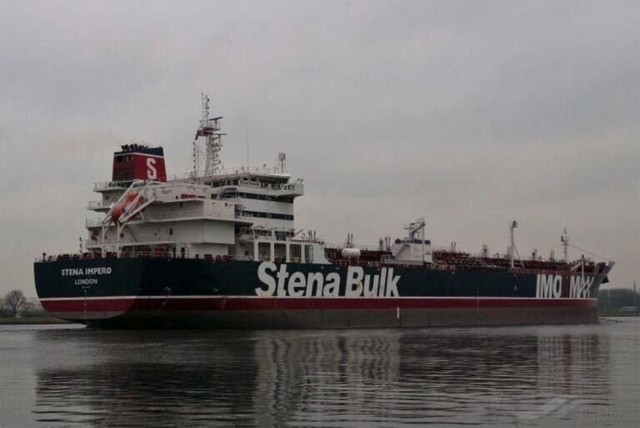
For its part, Britain remains embroiled in bitter conflict with Tehran over its act of state piracy and military aggression in its July 4 seizure of an Iranian supertanker loaded with oil in what Iran insists were international waters near the strait of Gibraltar. London made the preposterous claim that it acted at the behest of the Gibraltar police in furtherance of European Union economic sanctions seeking to curtail oil shipments to Syria.

It is obvious, however, that the action was undertaken on behalf of Washington with the aim of further ratcheting up the military confrontation with Iran.

Iranian officials have insisted that the tanker was not bound for Syria, whose terminal could not even accommodate a ship of its size. It has also charged that neither the UK nor any other European power has the legal right to enforce EU sanctions against non-EU members.

The head of Iran’s judiciary, Hojatoleslam Seyyed Ebrahim Raisi demanded that the UK “immediately release the oil tanker, otherwise, they’ll have to face the consequences.”

The threat that Iran may retaliate by seizing a British-flagged vessel has reportedly led the London-based BP energy conglomerate to halt the voyage of a UK-flagged oil tanker through the Persian Gulf on Monday. According to Bloomberg News, the tanker, the British Heritage, had been bound for Iraq’s Basra oil terminal, but turned back on Saturday, stopping off the coast of Saudi Arabia.

Meanwhile, both Beijing and Moscow responded to Iran’s latest breach of the terms of the JCPOA by indicting Washington for its unilateral abrogation of the treaty.

Chinese Foreign Ministry Geng Shuang told a press briefing in Beijing, “The maximum pressure exerted by the US on Iran is the root cause of the Iranian nuclear crisis.” He added that “it has been proven that unilateral bullying has become a worsening ‘tumor’ and is creating more problems and greater crises on a global scale.”

China is defying the US sanctions regime and is expected to import 200,000 barrels per day from Iran.

Similarly, Kremlin spokesman Dmitry Peskov declared Russia’s continuing support for the JCPOA and described Iran’s action on uranium enrichment as one of the “consequences” of the Trump administration’s tearing up of the agreement.

The Russian Foreign Ministry described as an “ironic quirk” Washington’s demand for a July 10 extraordinary meeting of the IAEA Board of Governors to discuss Iran’s violation of an agreement that the US itself has completely repudiated. Moscow pointed out that Tehran’s concessions under the JCPOA had nothing to do with its continuing compliance with nuclear non-proliferation agreements or other protocols it has signed with the international nuclear agency.

In another sign of the tensions provoked by Washington in its campaign against Iran, members of the Iranian men’s volleyball team were held and interrogated for four hours after landing at Chicago’s O’Hare International Airport on Saturday, as other national teams were waved through. Tehran filed a formal diplomatic protest over the incident Monday with the Swiss embassy in Iran, which represents US interests in the country. The Iranian foreign ministry said that the US should no longer host international sporting events if it cannot treat teams fairly.

9 July 2019

Source: countercurrents.org
A new cold war on Africa

By Mehari Taddele Maru

Increasing tensions between China and the US will be detrimental to African prosperity and peace.

Last month, the twelfth US-Africa Business Summit, a high-level event attended by eleven African heads of state and government and some 1 000 business leaders, was held in Maputo, Mozambique. During the three-day event, US officials unveiled a $60bn investment agency that will seek to invest in low and middle-income countries, with a focus on Africa.

The announcement came six months after US president Donald Trump’s National Security Advisor, John Bolton, presented the Trump administration’s ‘New Africa Strategy’. He asserts: ‘Great power competitors, namely China and Russia, are rapidly expanding their financial and political influence across Africa. They are deliberately and aggressively targeting their investments in the region to gain a competitive advantage over the United States.’

Although both China and Russia are mentioned, the US has demonstrated over the past few months that it is mainly concerned about the former. In fact, it already appears that Africa is set to become yet another battleground for the escalating trade war between Beijing and Washington. With increasing foreign military presence and growing diplomatic tensions, the continent is already witnessing the first signs of an emerging new cold war. And just as the previous one devastated Africa, fuelling wars and forcing African governments to make economic choices not in their best interests, this one will also be detrimental to African development and peace.
Economic war
China’s approach to Africa has always been trade oriented. The continent became one of the top destinations for Chinese investment after Beijing introduced its ‘Go Out’ policy in 1999, which encouraged private and state-owned business to seek economic opportunities abroad. As a result, Chinese trade with Africa has increased forty-fold over the past two decades; in 2017, it stood at $140bn. Between 2003 and 2017, Chinese foreign directed investment (FDI) flows have jumped close to sixty-fold to $4bn a year; FDI stocks stand at $43bn – a significant part of which has gone to infrastructure and energy projects.

China has significantly expanded African railways, investing in various projects in Kenya, Ethiopia, Djibouti, Angola and Nigeria; it is currently building a massive hydropower plant in Angola, and has built Africa’s longest railway connecting Ethiopia and Djibouti. It also built the headquarters of the African Union in Addis Ababa, and that of the West African regional bloc, ECOWAS, in Abuja.

By contrast, the USA has long viewed Africa as a battlefield where it can confront its enemies: the Soviets during the Cold War, ‘terrorists’ after 9/11, and now the Chinese. Washington has never really made a concerted effort to develop its economic relations with the continent. As a result, trade between the USA and Africa has decreased from $120bn in 2012 to just over $50bn today. US FDI flows have also slumped from $9.4bn in 2009 to around $330m in 2017. The new $60bn investment fund announced last month is a welcome initiative, but it will not be able to challenge Chinese economic presence on the continent. Just last year, Chinese president Xi Jinping pledged $60bn dedicated solely to investment in Africa.

The US has repeatedly accused China of using ‘debt to hold states in Africa captive to [its] wishes and demands’, and has warned African states to avoid Chinese ‘debt diplomacy’ that is supposedly incompatible with the independence of African nations and civil society, and poses ‘a significant threat to US national security interests’. Yet Africa is only the fourth-biggest recipient of Chinese FDI after Europe (mainly Germany, UK and Netherlands), the Americas (mainly the USA and Canada) and Asia. The USA has also borrowed heavily from China; its current debt to its rival stands at $1.12 trillion. By contrast, Africa owes China around $83bn.

Africans are fully aware of and concerned about high indebtedness, trade imbalances, the relatively poor quality of Chinese goods and services and Beijing’s application of lower standards of labour and environmental practices. But many do not share the American perspective that their economic relationship with China is detrimental to them, and rather see it as an opportunity that provides much-needed unconditional funding and that takes local priorities into account. As Djibouti’s President Ismail Omar Guelleh argued, ‘The reality is that no one but the Chinese offers a long-term partnership.’

The pressure the USA is currently exerting on African countries to move away from partnerships with China could hurt African economies. It could force African countries into making choices that are not in their best economic interests, and could cause them to miss out on important development projects or funding. Meanwhile, the USA-China trade war is already affecting the continent. According to the African Development Bank, it could cause as much as a 2.5 per cent decrease in GDP for resource-intensive African economies, and a 1.9 per cent dip for oil-exporting countries.
Militarisation
The escalating tensions between the USA and China could also threaten the security of the continent since both countries are militarily involved in Africa. Over the past fifteen years, the Chinese People’s Liberation Army has been engaged in a number of security missions across the continent, making modest auxiliary troop contributions to peacekeeping operations in Sudan, South Sudan, Liberia, Mali and the Democratic Republic of Congo. It has also contributed millions of dollars of peacekeeping equipment to the African Union Mission in Somalia (AMISOM), and provided significant funding to the Intergovernmental Authority on Development (IGAD) for its mediation efforts in South Sudan.

In 2017, the first Chinese overseas military base was opened in Djibouti. The facility, which hosts some 400 staff and troops, and has the capacity to accommodate 10 000, is officially supposed to provide support for the ongoing anti-piracy operations of the Chinese navy, but it also plays a role in securing maritime routes, part of Beijing’s Belt and Road Initiative. There has been speculation that this is the first of a number of planned bases meant to secure Chinese interests in Africa.

China’s military presence in Africa, however, pales in comparison to that of the USA. Over the past few years, the US Africa Command (AFRICOM) has run some thirty-six different military operations in thirteen African countries, including Burkina Faso, Cameroon, Central African Republic, Chad, Democratic Republic of Congo, Kenya, Libya, Mali, Mauritania, Niger, Somalia, South Sudan and Tunisia. It has more than 7 000 troops deployed on the continent. It maintains a massive military base in Djibouti – the biggest and only permanent US military base in Africa, but also runs at least thirty-four other military outposts scattered across the west, east and north of the continent where US troops are deployed and military operations (including drone attacks) are launched from. The US also directly supports the armies of Egypt, Nigeria, Ethiopia, Mali, Niger and others, as well as the G5 Sahel force tasked with counterterrorism.

While a direct confrontation between US and Chinese forces in Africa is unlikely, their growing presence is becoming increasingly destabilising. Already, Washington’s strategy to contain Chinese influence over Africa is playing out at different conflict and social upheaval hotspots across the continent. The fallout of the US-Chinese competition is particularly apparent in the strategic Red Sea region, through which passes one of the most important maritime routes. Countries in the region are not only feeling growing US and Chinese pressure to take one side or the other, but are also increasingly exposed to outside interference by various regional powers.
Growing regional tensions
Djibouti recently found itself at the centre of US-Chinese diplomatic confrontation. Being host to military bases of both superpowers, the small country has had to play a difficult balancing act. In 2018, Djibouti seized control of its Doraleh Container Terminal from the Emirati company DP World, claiming the company’s operation of the facility was threatening Djibouti’s sovereignty. The authorities had feared that the UAE’s investment in the nearby Port of Berbera in the autonomous Somali region of Somaliland could challenge its position as the main maritime hub for Ethiopia’s large economy. The decision to terminate the contract with DP World, however, triggered a sharp reaction from Washington, a close Emirati ally. The Trump administration fears that Djibouti could hand control of the terminal over to China.

Bolton warned: ‘Should this occur, the balance of power in the Horn of Africa – astride major arteries of maritime trade between Europe, the Middle East, and South Asia – would shift in favor of China. And, our U.S. military personnel at Camp Lemonnier could face even further challenges in their efforts to protect the American people.’

Djibouti was forced to publicly declare that it would not allow China to take control of the terminal, but that did not assuage US fears. Ever since, the USA has sought to secure a possible alternative location for its African military base: neighbouring Eritrea. It encouraged regional actors, including Saudi Arabia and the UAE, to pull Eritrea out of its decades-long isolation. In a matter of months, long-time enemies Ethiopia and Eritrea concluded a peace agreement to end their twenty-year-old cold conflict, while the UN lifted sanctions on Asmara. As a result, Eritrea was able to emerge as a strategic rival to Djibouti, offering its coast for foreign military and economic facilities. The UAE has already set up a military base near the Eritrean port of Assab.

Sudan, to the north, has also been a battleground of the ongoing superpower turf war. China had long been a supporter of Sudan’s president, Omar al-Bashir. Under his rule, Beijing came to dominate its oil industry, buying some eighty per cent of Sudanese oil, and thus providing Khartoum with much-needed cash to wage war against various rebel groups. It was also one of the few countries, along with Russia, that broke the UN arms embargo and sold weapons to Bashir’s regime. After South Sudan gained independence in 2011, China continued to be a close partner of the Sudanese regime, remaining its main trading partner. Sudan, in fact, became the biggest beneficiary of the $60bn Africa investment package that China had pledged in 2018, having some $10bn in Chinese debt written off. The Chinese government also made plans to develop facilities in Port Sudan, where it already operates an oil terminal. Qatar and Turkey also signed deals with Bashir for various facilities in the port city. When mass protests erupted on the streets of Sudan in December 2018, Beijing stood by Bashir, who it saw as the main guarantor of stability in the country, which lies on strategic routes, inlcudes China’s Belt and Road Initiative.

Meanwhile, the USA had repeatedly demonstrated that it did not want Bashir running for another term. His removal was approved in Washington, which has since appeared to back the interests of Saudi Arabia and the UAE in Sudan. The two Gulf states hope to install another strongman sympathetic to their regional politics, who would maintain Sudan’s participation in the war in Yemen and curb Turkish and Qatari influence. At this point, it seems China is at risk of being sidelined by the significant sway the UAE and Saudi Arabia have with Sudan’s Transitional Military Council (TMC).
Apart from Djibouti and Sudan, various other countries in the region have also felt the consequences of the US bid to contain China. This political confrontation has added to the already-rising tensions between other players in the region, including Egypt, the Gulf countries, Iran and Turkey. The Trump administration has particularly favoured Emirati, Saudi and Egyptian interests, which have emboldened these three countries in their efforts to shape regional dynamics to their advantage.

Thus, in the long-term, given the pre-existing faultlines and conflicts in the region, the US-China cold war could have a detrimental effect, not only on its economy but also on its security. At this stage, to preserve its interests and its peace, Africa has only one option: to reject pressures for it to swear allegiance to either of the two powers. African countries should uphold their sovereignty in policy and decision making, and pursue the course that is in the best interests of their nations.
If the USA wants to compete with China on the continent, it should do so in good faith. It can gain a competitive advantage by offering African countries better, more credible and principled alternatives to those put forward by China. But that can only happen if the USA develops a strategy that focuses on Africa itself, not on containing and undermining the business of a third party.

Mehari Taddele Maru is an independent consultant on matters of peace and security in Africa.

8 July 2019

Source: www.amec.org.za

A Major Conventional War Against Iran Is an Impossibility. Crisis within the US Command Structure

By Prof Michel Chossudovsky

In this article, we examine America’s war strategies, including its ability to launch an all out theater war against the Islamic Republic on Iran.

A follow-up article will focus on the History of US War Plans against Iran as well as the complexities underlying the Structure of Military Alliances.

**

Under present conditions, an Iraq style all out Blitzkrieg involving the simultaneous deployment of ground, air and naval forces is an impossibility.

For several reasons. US hegemony in the Middle East has been weakened largely as a result of the evolving structure of military alliances.

The US does not have the ability to carry out such a project.

There are two main factors which determine America’s military agenda in relation to the Islamic Republic of Iran.

1. Iran’s Military

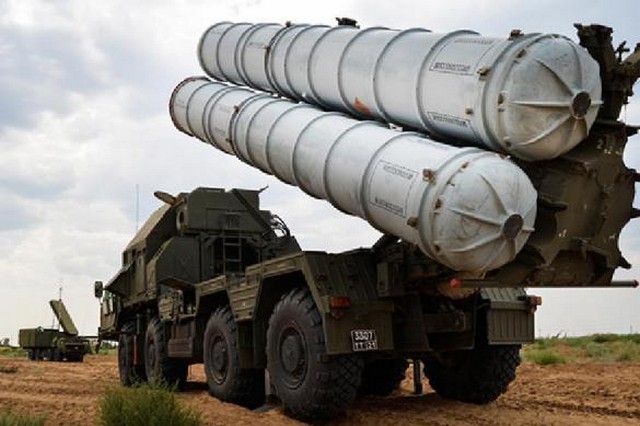
There is the issue of Iran’s military capabilities (ground forces, navy, air force, missile defense), namely its ability to effectively resist and respond to an all out conventional war involving the deployment of US and Allied forces. Within the realm of conventional warfare, Iran has sizeable military capabilities. Iran is to acquire Russia’s S400 state of the art air defense system.

Iran is ranked as “a major military power” in the Middle East, with an estimated 534,000 active personnel in the army, navy, air force and the Islamic Revolutionary Guard Corps (IRGC). It has advanced ballistic missile capabilities as well as national defense industry. In the case of a US air attack, Iran would target US military facilities in the Persian Gulf.

2. Evolving Structure of Military Alliances

The second consideration has to do with the evolving structure of military alliances (2003-2019) which is largely to the detriment of the United States.

Several of America’s staunchest allies are sleeping with the enemy.

Countries which have borders with Iran including Turkey and Pakistan have military cooperation agreements with Iran. While this in itself excludes the possibility of a ground war, it also affects the planning of US and allied naval and air operations.

Until recently both Turkey (NATO heavyweight) and Pakistan were among America’s faithful allies, hosting US military bases.

From a broader military standpoint, Turkey is actively cooperating with both Iran and Russia. Moreover, Ankara will be acquiring in 2020 Russia’s state of the art S-400 air defense system while de facto opting out from the integrated US-NATO-Israel air defense system.

Needless to say the North Atlantic Treaty Organization is in crisis. Turkey’s exit from NATO is almost de facto. America can no longer rely on its staunchest allies. Moreover, US and Turkish supported militia are fighting one another in Syria.

Iraq has also indicated that it will not cooperate with the US in the case of a ground war against Iran.

Under present conditions, none of Iran’s neigbouring states including Turkey, Pakistan, Afghanistan, Iraq, Turkmenistan, Azerbaijan, and Armenia would allow US-Allied ground forces to transit through their territory.

In recent developments, Azerbaijan which in the wake of the Cold War became a US ally as well as a member of NATO’s partnership for peace has changed sides. The earlier US-Azeri military cooperation agreements are virtually defunct including the post-Soviet GUAM military alliance (Georgia, Ukraine, Azerbaijan and Moldova).

Bilateral military and intelligence agreements between Iran and Azerbaijan were signed in December 2018. In turn, Iran collaborates extensively with Turkmenistan. With regard to Afghanistan, the internal situation with the Taliban controlling a large part of Afghan territory, would not favor a large scale deployment of US and allied ground forces on the Iran-Afghan border.

The Gulf of Oman

With the 2017 split up of the Gulf Cooperation Council (GCC), Oman appears to be aligned with Iran. Under these circumstances, the transit of US war ships to the headquarters of the US Fifth fleet in Bahrain not to mention the conduct of naval operations in the Persian Gulf are potentially in jeopardy.

Visibly, the policy of strategic encirclement against Iran formulated in the wake of the Iraq war (2003) is no longer functional. Iran has friendly relations with neighbouring countries, which previously were within the US sphere of influence.

Under these conditions, a major conventional theater war by the US involving the deployment of ground forces would be suicide.

This does not mean, however, that war will not take place. In some regards, with the advances in military technologies, an Iraq-style war is obsolete.

We are nonetheless at a dangerous crossroads. Other diabolical forms of military intervention directed against Iran are currently on the drawing board of the Pentagon. These include:

  • various forms of “limited warfare”, ie. targeted missile attacks,
  • US and Allied support of terrorist paramilitary groups
  • so-called “bloody nose operations” (including the use of tactical nuclear weapons),
  • acts of political destabilization and color revolutions
  • false flag attacks and military threats,
  • sabotage, confiscation of financial assets, extensive economic sanctions,
  • electromagnetic and climatic warfare, environmental modification techniques (ENMOD)
  • cyberwarfare
  • chemical and biological warfare.

US Central Command Forward Headquarters Located in Enemy Territory

Another consideration has to do with the crisis within the US Command structure.

USCENTCOM is the theater-level Combatant Command for all operations in the broader Middle East region extending from Afghanistan to North Africa. It is the most important Combat Command of the Unified Command structure. It has led and coordinated several major Middle East war theaters including Afghanistan (2001), Iraq (2003). It is also involved in Syria.

In the case of a war with Iran, operations in the Middle East would be coordinated by US Central Command with headquarters in Tampa, Florida in permanent liaison with its forward command headquarters in Qatar.

In late June 2019, after Iran shot down a U.S. drone President Trump “called off the swiftly planned military strikes on Iran” while intimating in his tweet that “any attack by Iran on anything American will be met with great and overwhelming force.”

US Central Command (CENTCOM), confirmed the deployment of the US Air Force F-22 stealth fighters to the al-Udeid airbase in Qatar, intended to “defend American forces and interests” in the region against Iran. (See Michael Welch, Persian Peril, Global Research, June 30, 2019). Sounds scary?

“The base is technically Qatari property playing host to the forward headquarters of U.S. Central Command.” With 11,000 US military personnel, it is described as “one of the U.S. military’s most enduring and most strategically positioned operations on the planet” (Washington Times). Al-Udeid also hosts the US Air Force’s 379th Air Expeditionary Wing, considered to be “America’s most vital overseas air command”.

What both the media and military analysts fail to acknowledge is that US CENTCOM’s forward Middle East headquarters at the al-Udeid military base close to Doha de facto “lies in enemy territory”

Since the May 2017 split of the Gulf Cooperation Council (GCC) Qatar has become a staunch ally of both Iran and Turkey (which is also an ally of Iran). While they have no “official” military cooperation agreement with Iran, they share in joint ownership with Iran the largest Worldwide maritime gas fields.

The split of the GCC has led to a shift in military alliances: In May 2017 Saudi Arabia blocked Qatar’s only land border. In turn Saudi Arabia as well as the UAE have blocked air transportation as well as commercial maritime shipments to Doha.

What is unfolding since May 2017 is a shift in Qatar’s trade routes with the establishment of bilateral agreements with Iran, Turkey as well as Pakistan. In this regard, Russia, Iran, and Qatar provide over half of the world’s known gas reserves.

The Al-Udeid base near Doha is America’s largest military base in the Middle East. In turn, Turkey has now established its own military facility in Qatar. Turkey is no longer an ally of the US. Their proxy forces in Syria are fighting US supported militia. Turkey is now aligned with Russia and Iran. Ankara has now confirmed that it will be acquiring Russia’s S-400 missile air defense system which requires military cooperation with Moscow.

Qatar is swarming with Iranian businessmen, security personnel and experts in the oil and gas industry (with possible links to Iran intelligence?), not to mention the presence of Russian and Chinese personnel.

Question. How on earth can you launch a war on Iran from the territory of a close ally of Iran?

From a strategic point of view it does not make sense. And this is but the tip of the iceberg.

Notwithstanding the rhetoric underlying the official US-Qatar military relationship, The Atlantic Council, a think tank with close ties to both the Pentagon and NATO, confirms that Qatar is now a firm ally of both Iran and Turkey:

Put simply, for Qatar to maintain its independence, Doha will have essentially no choice but to maintain its strong partnership with Turkey, which has been an important ally from the perspective of military support and food security, as well as Iran. The odds are good that Iranian-Qatari ties will continue to strengthen even if Tehran and Doha agree to disagree on certain issues … On June 15 [2019], President Hassan Rouhani emphasizedthat improving relations with Qatar is a high priority for Iranian policymakers. … Rouhani told the Qatari emir that “stability and security of regional countries are intertwined” and Qatar’s head of state, in turn, stressed that Doha seeks a stronger partnership with the Islamic Republic. (Atlantic Council, June 2019, emphasis added)

What this latest statement by the Atlantic Council suggests is while Qatar hosts USCENTCOM’s forward headquarters, Iran and Qatar are (unofficially) collaborating in the area of “security” (i e. intelligence and military cooperation).

Sloppy military planning, sloppy US foreign policy? sloppy intelligence?

Trump’s statement confirms that they are planning to launch the war against Iran from their forward US Centcom headquarters at the Al Udeid military base, located in enemy territory. Is it rhetoric or sheer stupidity?

The Split of the GCC

The split of the GCC has resulted in the creation of a so-called Iran-Turkey-Qatar axis which has contributed to weakening US hegemony in the Middle East. While Turkey has entered into a military cooperation with Russia, Pakistan is allied with China. And Pakistan has become a major partner of Qatar.

Following the rift between Qatar and Saudi Arabia, the Gulf Cooperation Council (GCC) is in disarray with Qatar siding with Iran and Turkey against Saudi Arabia and the UAE.

Qatar is of utmost strategic significance because it shares with Iran the world’s largest maritime gas fields in the Persian Gulf. (see map above). Moreover, since the GCC split-up Kuwait is no longer aligned Saudi Arabia. It nonetheless maintains a close relationship with Washington. Kuwait hosts seven active US military facilities, the most important of which is Camp Doha.

Needless to say, the May 2017 split of the GCC has undermined Trump’s resolve to create an “Arab NATO” (overseen by Saudi Arabia) directed against Iran. This project is virtually defunct, following Egypt’s withdrawal in April 2019.

The Gulf of Oman

In the case of a war with Iran, naval operations would in part be conducted by the US Fifth Fleet out of Bahrain. The Fifth Fleet is under the command of US Naval Forces Central Command (NAVCENT). (NAVCENT’s area of responsibility consists of the Red Sea, the Gulf of Oman, the Persian Gulf and the Arabian Sea).

With the split up of the GCC, Oman is now firmly aligned with Iran. Under these circumstances, the transit of US war ships to the headquarters of the US Fifth fleet in Bahrain not to mention the conduct of naval operations in the Persian Gulf would potentially be in jeopardy.

The strait of Hormuz which constitutes the entry point to the Persian Gulf from the Gulf of Oman is controlled by Iran and the Sultanate of Oman. The width of the strait at one point is of the order of 39km. All major vessels must transit through Iran and/or Oman territorial waters, under so-called customary transit passage provisions of the United Nations Convention on the Law of the Sea.

More generally, the structure of alliances is in jeopardy. The US cannot reasonably wage a full-fledged conventional theatre war on Iran without the support of its longstanding allies which are now “sleeping with the enemy”.

Trump’s Fractured “Arab NATO”. History of the Split up of the GCC.

Amidst the collapse of America’s sphere of influence in the Middle East, Trump’s Make America Great Again (MAGA) consisted at the outset of his presidency in an improvised attempt to rebuild the structure of military alliances. What the Trump administration had in mind was the formation of a Middle East Strategic Alliance (MESA), or “Arab NATO”. This US-sponsored blueprint was slated to include Egypt and Jordan together with the six member states of the GCC.

The draft of the MESA Alliance had been prepared in Washington prior to Trump’s historic May 2017 visit to Saudi Arabia, meeting up with King Salman, leaders of the GCC as well as “more than 50 high-ranking officials from the Arab and Islamic worlds in an unprecedented US-Islamic summit.”

The Riyadh Declaration, issued at the conclusion of the summit on May 21, 2017, announced the intention to establish MESA in Riyadh.” (Arab News, February 19, 2019). The stated mandate of the “Arab NATO” was to “to combat Iranian hegemony” in the Middle East.

Two days later on May 23, 2017 following this historic meeting, Saudi Arabia ordered the blockade of Qatar, called for an embargo and suspension of diplomatic relations with Doha, on the grounds that The Emir of Qatar was allegedly collaborating with Tehran.

What was the hidden agenda? No doubt it had already been decided upon in Riyadh on April 21 with the tacit approval of US officials.

The plan was to exclude Qatar from the proposed MESA Alliance and the GCC, while maintaining the GCC intact.

What happened was that the Saudi embargo imposed on Qatar (with the unofficial approval of Washington) was conducive to the fracture of the GCC with Oman and Kuwait siding with Qatar. In other words, the GCC was split down the middle. Saudi Arabia was weakened and the “Arab NATO” blueprint was defunct from the very outset.

_______________________________________________________________________________________________________________

May 21, 2017: US-Islamic Summit in Riyadh

May 23, 2017: The blockade and embargo of Qatar

June 5, 2019: Saudi Arabia, the UAE, Bahrain, and Egypt sever diplomatic relations, cut off land, air and sea transportation with Qatar accusing it of supporting Iran.
_______________________________________________________________________________________________________________

Flash forward to mid-April 2019: Trump is back in Riyadh: This time the Saudi Monarchy was entrusted by Washington to formally launching the Middle East Strategic Alliance (MESA) (first formulated in 2017) despite the fact that three of the invited GCC member states, namely Kuwait, Oman and Qatar are committed to the normalization of relations with Iran. In turn, the Egyptian government of President Sisi decided to boycott the Riyadh summit and withdraw from the “Arab NATO” proposal. Cairo also clarified its position vis a vis Iran. Egypt firmly objected to Trump’s plan because it “would increase tensions with Iran”.

Trump’s objective was to create an “Arab Block”. What he got in return was a truncated MESA “Arab Block” made up of a fractured GCC with Saudi Arabia, UAE, Bahrain and Jordan, without Egypt. Kuwait and Oman officially took a neutral stance, whereas Qatar sided with the enemy, thereby further jeopardizing America’s sphere of influence in the Persian Gulf.

An utter geopolitical failure. What kind of alliance is that.

And US Central Command’s Forward headquarters is still located in Qatar despite the fact that two years earlier on May 23, 2017, the Emir of Qatar Sheikh Tamim bin Hamad Al Thani, was accused of collaborating with Iran.

It is unclear who gave the order to impose the embargo on Qatar. Saudi Arabia would not have taken that decision without consulting Washington. Visibly, Washington’s intent was to create an Arab NATO Alliance (An Arab Block) directed against Iran to do the dirty work for us.

Trump and the Emir of Qatar, UN General Assembly, October 2017, White House photo

The rest is history, the Pentagon decided to maintain US Central Command’s forward headquarters in Qatar, which happens to be Iran’s closest ally and partner.

A foreign policy blunder? Establishing your “official” headquarters in enemy territory, while “unofficially” redeploying part of the war planes, military personnel and command functions to other locations (e.g. in Saudi Arabia).

No press reports, no questions in the US Congress. Nobody seemed to have noticed that Trump’s war on Iran, if it were to be carried out, would be conducted from the territory of Iran’s closest ally.

An impossibility?

***

Part II of this essay focuses on the history and contradictions of US war preparations directed against Iran starting in 1995 as well as the evolution of military alliances.

8 July 2019

Source: www.globalresearch.ca

What Comes after Bahrain?

By Richard Falk

6 Jul 2019 – Is There an ‘After’ after the Kushner Show in Bahrain?

This interview was published by Tasmin New Agency on 2 Jul 2019 conducted by Mohammad Hassani. The text below has been somewhat modified.

Q1: Bahrain hosted the so-called “Peace to Prosperity” conference to discuss what the US has described as the economic part of President Donald Trump’s “deal of the century”, a plan which aims to consign the Palestinian cause to oblivion. The Palestinian leadership boycotted the meeting on June 25 and 26 in Manama, leading critics to question the credibility of the event. In your opinion, what goals are the US and Israel pursuing by holding the conference? Would they reach their goals?

The ‘workshop’ in Bahrain should never have been evaluated without considering the overall approach taken by the Trump presidency to Israel and Palestine. The relationship to Israel pre-Trump had been one of leaning toward Israel while purporting to be ‘an honest broker,’ a thinly disguised partisanship. Since Trump became president the U.S. has dispensed with thin disguise, and become the avowed partner of Israel and adversary of Palestinian goals. It manifested this shift in several concrete unprovoked policy shifts that were deliberately punitive toward the Palestinians. Such behavior was a strange prelude to a proclaimed ‘diplomatic’ initiative hyperbolically called ‘the deal of the century.’ Washington’s behavior clearly signaled an end to diplomacy based on agreement and consent of the parties, substituting coercion on behalf of the favored party and seeking submission by its adversary.

From such a perspective it should be understood that the purpose of ‘Peace to Prosperity’ is neither peace nor prosperity, but securing an Israeli ‘victory’ and a Palestinian surrender with respect to the political agenda of achieving basic national rights, especially the right of self-determination. Thus, the Manama meeting is a success to the extent it made the proposed bargain of economic normalization in exchange for political defeat seem of material benefit to the governments of the region and had some attraction for the Palestinian Authority and segments of the Palestinian people. The reactions to the event seem very subdued suggesting that the Kushner/Trump initiative has had very little, if any, political impact so far. The secondary objective is one of public relations, being able to blame the anticipated failure to achieve ‘the deal of the century’ on the Palestinians. I fear the Western mainstream media will lend some support to this outrageous claim, which confuses the rejection of American ultimatum, preceded by a series of pro-Israel policy moves (Jerusalem, settlements, UNRWA funding, closing the PLO information office Washington, endorsing Golan and West Bank annexations) hostile to the Palestinians as signaling this Trump shift from pro-Israeli partisanship of the Obama era to pro-Israeli coercive diplomacy currently practices by Washington.

Against this background, it is disingenuous for Israeli apologists such as Dershowitz and others to urge the Palestinians to listen with an open mind to what the Trump ‘peace initiative’ is proposing. To lend legitimacy to such coercive diplomacy would be a sign of weakness and an expression of illegitimacy by representatives of the Palestinian people. It would have been seen as an expression of Palestinian hopelessness. Instead, if their refusal to participate in such a macabre charade is linked to the resistance struggle in Gaza embodied in the Great March of Return, it is a moment for those of us in solidarity with the Palestinian struggle to lend greater support to nonviolent initiatives, including the BDS campaign.

Q2: Some analysts say that the Trump administration’s focus on an economic plan, led by his son-in-law and senior adviser Jared Kushner, is a strategic mistake that could stymie the peace negotiations even before they begin. What is your assessment of the US approach to the conflict and the future of the plan? Is it practical at all?

The Trump/Kushner ‘plan’ is not looking toward genuine diplomatic negotiations. It is trying to impose a one-sided Israeli victory, and treat the conflict as resolved. This overlooks the robustness of Palestinian resistance, dramatized by the Great March of Return in Gaza, and by the growing global solidarity movement, as featuring the BDS (Boycott, Divestment, and Sanctions) Campaign. It should be appreciated that such a campaign managed over time delegitimized South Africa’s apartheid regime to such an extent that it collapsed. Such a soft power Palestinian victory can still be expected if this combination of resistance, solidarity, and patience persist in a manner that imposes sufficient costs on Israel for its reliance on an apartheid structure to achieve its ‘security’ at the expense of Palestinian basic rights. The hope of most activists is that Israeli leaders and citizens will recalculate their interests so as to accept a political compromise based on the equality of rights of the two peoples coexisting with mutual respect in historic Palestine. Remember that all of the anti-colonial victories of the 20th century were achieved by the weaker side militarily and geopolitically.

Q3: Israeli occupation forces have killed 84 Palestinians during the first half of 2019, including eight women and 19 children, according to local media reports. On Friday, Israeli forces once again opened fire on Palestinians taking part in the peaceful “Great March of Return” protests, along the separation fence between the besieged Gaza Strip and occupied territories. According to media reports, more than 270 people, including 52 children, have been killed since the demonstrations began in March 2018. Most of the dead and the thousands wounded were unarmed civilians against whom Israel was using excessive force. Why has the international community, particularly the Western mainstream media, made a muted response to the Tel Aviv regime’s crimes against Palestinians so far?

Israel reliance on excessive force and collective punishment to deal with the Great March of Return, and its grievances and lawful demands, should be treated as violations of international humanitarian law of a severity that amounts to crimes against humanity. It is a shocking reflection of media bias that it accords massive attention to human rights violations in Turkey of a relatively lesser character, while ignoring and even rationalizing much more serious violations by Israel. Although Western liberals have counseled Palestinians to rely on nonviolence in their opposition to Israel, such reliance as in the Great March has been consistently met with brutal force by Israel and by virtual silence in the world media, by the governments of the world, and even by the United Nations. It is a case of geopolitics eclipsing moral and legal accountability exposing the lack of political will to protect the innocent and vulnerable from abuse by the vindictive and militarily powerful.

The growing movement of global solidarity as reinforced by Palestinian acts of resistance to apartheid structures of oppression is the sole basis for a peaceful future for both peoples, Palestinians and Israeli Jews.

Richard Falk is a member of the TRANSCEND Network, an international relations scholar, professor emeritus of international law at Princeton University, Distinguished Research Fellow, Orfalea Center of Global Studies, UCSB, author, co-author or editor of 40 books, and a speaker and activist on world affairs.

8 July 2019

Source: www.transcend.org

Burying the Nakba: How Israel Systematically Hides Evidence of 1948 Expulsion of Arabs

By Hagar Shezaf

5 Jul 2019 – Since early last decade, Defense Ministry teams have scoured local archives and removed troves of historic documents to conceal proof of the Nakba.

Four years ago, historian Tamar Novick was jolted by a document she found in the file of Yosef Vashitz, from the Arab Department of the left-wing Mapam Party, in the Yad Yaari archive at Givat Haviva. The document, which seemed to describe events that took place during the 1948 war, began:

“Safsaf [former Palestinian village near Safed] – 52 men were caught, tied them to one another, dug a pit and shot them. 10 were still twitching. Women came, begged for mercy. Found bodies of 6 elderly men. There were 61 bodies. 3 cases of rape, one east of from Safed, girl of 14, 4 men shot and killed. From one they cut off his fingers with a knife to take the ring.”

The writer goes on to describe additional massacres, looting and abuse perpetrated by Israeli forces in Israel’s War of Independence. “There’s no name on the document and it’s not clear who’s behind it,” Dr. Novick tells Haaretz. “It also breaks off in the middle. I found it very disturbing. I knew that finding a document like this made me responsible for clarifying what happened.”

The Upper Galilee village of Safsaf was captured by the Israel Defense Forces in Operation Hiram toward the end of 1948. Moshav Safsufa was established on its ruins. Allegations were made over the years that the Seventh Brigade committed war crimes in the village. Those charges are supported by the document Novick found, which was not previously known to scholars. It could also constitute additional evidence that the Israeli top brass knew about what was going on in real time.

Novick decided to consult with other historians about the document. Benny Morris, whose books are basic texts in the study of the Nakba – the “calamity,” as the Palestinians refer to the mass emigration of Arabs from the country during the 1948 war – told her that he, too, had come across similar documentation in the past. He was referring to notes made by Mapam Central Committee member Aharon Cohen on the basis of a briefing given in November 1948 by Israel Galili, the former chief of staff of the Haganah militia, which became the IDF. Cohen’s notes in this instance, which Morris published, stated: “Safsaf 52 men tied with a rope. Dropped into a pit and shot. 10 were killed. Women pleaded for mercy. [There were] 3 cases of rape. Caught and released. A girl of 14 was raped. Another 4 were killed. Rings of knives.”

Morris’ footnote (in his seminal “The Birth of the Palestinian Refugee Problem, 1947-1949”) states that this document was also found in the Yad Yaari Archive. But when Novick returned to examine the document, she was surprised to discover that it was no longer there.

“At first I thought that maybe Morris hadn’t been accurate in his footnote, that perhaps he had made a mistake,” Novick recalls. “It took me time to consider the possibility that the document had simply disappeared.” When she asked those in charge where the document was, she was told that it had been placed behind lock and key at Yad Yaari – by order of the Ministry of Defense.

Since the start of the last decade, Defense Ministry teams have been scouring Israel’s archives and removing historic documents. But it’s not just papers relating to Israel’s nuclear project or to the country’s foreign relations that are being transferred to vaults: Hundreds of documents have been concealed as part of a systematic effort to hide evidence of the Nakba.

The phenomenon was first detected by the Akevot Institute for Israeli-Palestinian Conflict Research. According to a report drawn up by the institute, the operation is being spearheaded by Malmab, the Defense Ministry’s secretive security department (the name is a Hebrew acronym for “director of security of the defense establishment”), whose activities and budget are classified. The report asserts that Malmab removed historical documentation illegally and with no authority, and at least in some cases has sealed documents that had previously been cleared for publication by the military censor. Some of the documents that were placed in vaults had already been published.

An investigative report by Haaretz found that Malmab has concealed testimony from IDF generals about the killing of civilians and the demolition of villages, as well as documentation of the expulsion of Bedouin during the first decade of statehood. Conversations conducted by Haaretz with directors of public and private archives alike revealed that staff of the security department had treated the archives as their property, in some cases threatening the directors themselves.

Yehiel Horev, who headed Malmab for two decades, until 2007, acknowledged to Haaretz that he launched the project, which is still ongoing. He maintains that it makes sense to conceal the events of 1948, because uncovering them could generate unrest among the country’s Arab population. Asked what the point is of removing documents that have already been published, he explained that the objective is to undermine the credibility of studies about the history of the refugee problem. In Horev’s view, an allegation made by a researcher that’s backed up by an original document is not the same as an allegation that cannot be proved or refuted.

The document Novick was looking for might have reinforced Morris’ work. During the investigation, Haaretz was in fact able to find the Aharon Cohen memo, which sums up a meeting of Mapam’s Political Committee on the subject of massacres and expulsions in 1948. Participants in the meeting called for cooperation with a commission of inquiry that would investigate the events. One case the committee discussed concerned “grave actions” carried out in the village of Al-Dawayima, east of Kiryat Gat. One participant mentioned the then-disbanded Lehi underground militia in this connection. Acts of looting were also reported: “Lod and Ramle, Be’er Sheva, there isn’t [an Arab] store that hasn’t been broken into. 9th Brigade says 7, 7th Brigade says 8.”

“The party,” the document states near the end, “is against expulsion if there is no military necessity for it. There are different approaches concerning the evaluation of necessity. And further clarification is best. What happened in Galilee – those are Nazi acts! Every one of our members must report what he knows.”

The Israeli version

One of the most fascinating documents about the origin of the Palestinian refugee problem was written by an officer in Shai, the precursor to the Shin Bet security service. It discusses why the country was emptied of so many of its Arab inhabitants, dwelling on the circumstances of each village. Compiled in late June 1948, it was titled “The Emigration of the Arabs of Palestine.”

Read a translation of the document here

This document was the basis for an article that Benny Morris published in 1986. After the article appeared, the document was removed from the archive and rendered inaccessible to researchers. Years later, the Malmab team reexamined the document, and ordered that it remain classified. They could not have known that a few years later researchers from Akevot would find a copy of the text and run it past the military censors – who authorized its publication unconditionally. Now, after years of concealment, the gist of the document is being revealed here.

The 25-page document begins with an introduction that unabashedly approves of the evacuation of the Arab villages. According to the author, the month of April “excelled in an increase of emigration,” while May “was blessed with the evacuation of maximum places.” The report then addresses “the causes of the Arab emigration.” According to the Israeli narrative that was disseminated over the years, responsibility for the exodus from Israel rests with Arab politicians who encouraged the population to leave. However, according to the document, 70 percent of the Arabs left as a result of Jewish military operations.

The unnamed author of the text ranks the reasons for the Arabs’ departure in order of importance. The first reason: “Direct Jewish acts of hostility against Arab places of settlement.” The second reason was the impact of those actions on neighboring villages. Third in importance came “operations by the breakaways,” namely the Irgun and Lehi undergrounds. The fourth reason for the Arab exodus was orders issued by Arab institutions and “gangs” (as the document refers to all Arab fighting groups); fifth was “Jewish ‘whispering operations’ to induce the Arab inhabitants to flee”; and the sixth factor was “evacuation ultimatums.”

The author asserts that, “without a doubt, the hostile operations were the main cause of the movement of the population.” In addition, “Loudspeakers in the Arabic language proved their effectiveness on the occasions when they were utilized properly.” As for Irgun and Lehi operations, the report observes that “many in the villages of central Galilee started to flee following the abduction of the notables of Sheikh Muwannis [a village north of Tel Aviv]. The Arab learned that it is not enough to forge an agreement with the Haganah and that there are other Jews [i.e., the breakaway militias] to beware of.”

The author notes that ultimatums to leave were especially employed in central Galilee, less so in the Mount Gilboa region. “Naturally, the act of this ultimatum, like the effect of the ‘friendly advice,’ came after a certain preparing of the ground by means of hostile actions in the area.”

An appendix to the document describes the specific causes of the exodus from each of scores of Arab locales: Ein Zeitun – “our destruction of the village”; Qeitiya – “harassment, threat of action”; Almaniya – “our action, many killed”; Tira – “friendly Jewish advice”; Al’Amarir – “after robbery and murder carried out by the breakaways”; Sumsum – “our ultimatum”; Bir Salim – “attack on the orphanage”; and Zarnuga – “conquest and expulsion.”

Short fuse

In the early 2000s, the Yitzhak Rabin Center conducted a series of interviews with former public and military figures as part of a project to document their activity in the service of the state. The long arm of Malmab seized on these interviews, too. Haaretz, which obtained the original texts of several of the interviews, compared them to the versions that are now available to the public, after large swaths of them were declared classified.

These included, for example, sections of the testimony of Brig. Gen. (res.) Aryeh Shalev about the expulsion across the border of the residents of a village he called “Sabra.” Later in the interview, the following sentences were deleted: “There was a very serious problem in the valley. There were refugees who wanted to return to the valley, to the Triangle [a concentration of Arab towns and villages in eastern Israel]. We expelled them. I met with them to persuade them not to want that. I have papers about it.”

In another case, Malmab decided to conceal the following segment from an interview that historian Boaz Lev Tov conducted with Maj. Gen. (res.) Elad Peled:

Lev Tov: “We’re talking about a population – women and children?”

Peled: “All, all. Yes.”

Lev Tov: “Don’t you distinguish between them?”

Peled: “The problem is very simple. The war is between two populations. They come out of their home.”

Lev Tov: “If the home exists, they have somewhere to return to?”

Peled: “It’s not armies yet, it’s gangs. We’re also actually gangs. We come out of the house and return to the house. They come out of the house and return to the house. It’s either their house or our house.”

Lev Tov: “Qualms belong to the more recent generation?”

Peled: “Yes, today. When I sit in an armchair here and think about what happened, all kinds of thoughts come to mind.”

Lev Tov: “Wasn’t that the case then?”

Peled: “Look, let me tell you something even less nice and cruel, about the big raid in Sasa [Palestinian village in Upper Galilee]. The goal was actually to deter them, to tell them, ‘Dear friends, the Palmach [the Haganah “shock troops”] can reach every place, you are not immune.’ That was the heart of the Arab settlement. But what did we do? My platoon blew up 20 homes with everything that was there.”

Lev Tov: “While people were sleeping there?”

Peled: “I suppose so. What happened there, we came, we entered the village, planted a bomb next to every house, and afterward Homesh blew on a trumpet, because we didn’t have radios, and that was the signal [for our forces] to leave. We’re running in reverse, the sappers stay, they pull, it’s all primitive. They light the fuse or pull the detonator and all those houses are gone.”

Another passage that the Defense Ministry wanted to keep from the public came from Dr. Lev Tov’s conversation with Maj. Gen. Avraham Tamir:

Tamir: “I was under Chera [Maj. Gen. Tzvi Tzur, later IDF chief of staff], and I had excellent working relations with him. He gave me freedom of action – don’t ask – and I happened to be in charge of staff and operations work during two developments deriving from [Prime Minister David] Ben-Gurion’s policy. One development was when reports arrived about marches of refugees from Jordan toward the abandoned villages [in Israel]. And then Ben-Gurion lays down as policy that we have to demolish [the villages] so they won’t have anywhere to return to. That is, all the Arab villages, most of which were in [the area covered by] Central Command, most of them.”

Lev Tov: “The ones that were still standing?”

Tamir: “The ones that weren’t yet inhabited by Israelis. There were places where we had already settled Israelis, like Zakariyya and others. But most of them were still abandoned villages.”

Lev Tov: “That were standing?”

Tamir: “Standing. It was necessary for there to be no place for them to return to, so I mobilized all the engineering battalions of Central Command, and within 48 hours I knocked all those villages to the ground. Period. There’s no place to return to.”

Lev Tov: “Without hesitation, I imagine.”

Tamir: “Without hesitation. That was the policy. I mobilized, I carried it out and I did it.”

Crates in vaults

The vault of the Yad Yaari Research and Documentation Center is one floor below ground level. In the vault, which is actually a small, well-secured room, are stacks of crates containing classified documents. The archive houses the materials of the Hashomer Hatzair movement, the Kibbutz Ha’artzi kibbutz movement, Mapam, Meretz and other bodies, such as Peace Now.

The archive’s director is Dudu Amitai, who is also chairman of the Association of Israel Archivists. According to Amitai, Malmab personnel visited the archive regularly between 2009 and 2011. Staff of the archive relate that security department teams – two Defense Ministry retirees with no archival training – would show up two or three times a week. They searched for documents according to such keywords as “nuclear,” “security” and “censorship,” and also devoted considerable time to the War of Independence and the fate of the pre-1948 Arab villages.

“In the end, they submitted a summary to us, saying that they had located a few dozen sensitive documents,” Amitai says. “We don’t usually take apart files, so dozens of files, in their entirety, found their way into our vault and were removed from the public catalog.” A file might contain more than 100 documents.

One of the files that was sealed deals with the military government that controlled the lives of Israel’s Arab citizens from 1948 until 1966. For years, the documents were stored in the same vault, inaccessible to scholars. Recently, in the wake of a request by Prof. Gadi Algazi, a historian from Tel Aviv University, Amitai examined the file himself and ruled that there was no reason not to unseal it, Malmab’s opinion notwithstanding.

According to Algazi, there could be several reasons for Malmab’s decision to keep the file classified. One of them has to do with a secret annex it contains to a report by a committee that examined the operation of the military government. The report deals almost entirely with land-ownership battles between the state and Arab citizens, and barely touches on security matters.

Another possibility is a 1958 report by the ministerial committee that oversaw the military government. In one of the report’s secret appendixes, Col. Mishael Shaham, a senior officer in the military government, explains that one reason for not dismantling the martial law apparatus is the need to restrict Arab citizens’ access to the labor market and to prevent the reestablishment of destroyed villages.

A third possible explanation for hiding the file concerns previously unpublished historical testimony about the expulsion of Bedouin. On the eve of Israel’s establishment, nearly 100,000 Bedouin lived in the Negev. Three years later, their number was down to 13,000. In the years during and after the independence war, a number of expulsion operations were carried out in the country’s south. In one case, United Nations observers reported that Israel had expelled 400 Bedouin from the Azazma tribe and cited testimonies of tents being burned. The letter that appears in the classified file describes a similar expulsion carried out as late as 1956, as related by geologist Avraham Parnes:

“A month ago we toured Ramon [crater]. The Bedouin in the Mohila area came to us with their flocks and their families and asked us to break bread with them. I replied that we had a great deal of work to do and didn’t have time. In our visit this week, we headed toward Mohila again. Instead of the Bedouin and their flocks, there was deathly silence. Scores of camel carcasses were scattered in the area. We learned that three days earlier the IDF had ‘screwed’ the Bedouin, and their flocks were destroyed – the camels by shooting, the sheep with grenades. One of the Bedouin, who started to complain, was killed, the rest fled.”

The testimony continued, “Two weeks earlier, they’d been ordered to stay where they were for the time being, afterward they were ordered to leave, and to speed things up 500 head were slaughtered…. The expulsion was executed ‘efficiently.’” The letter goes on to quote what one of the soldiers said to Parnes, according to his testimony: “They won’t go unless we’ve screwed their flocks. A young girl of about 16 approached us. She had a beaded necklace of brass snakes. We tore the necklace and each of us took a bead for a souvenir.”

The letter was originally sent to MK Yaakov Uri, from Mapai (forerunner of Labor), who passed it on to Development Minister Mordechai Bentov (Mapam). “His letter shocked me,” Uri wrote Bentov. The latter circulated the letter among all the cabinet ministers, writing, “It is my opinion that the government cannot simply ignore the facts related in the letter.” Bentov added that, in light of the appalling contents of the letter, he asked security experts to check its credibility. They had confirmed that the contents “do in fact generally conform to the truth.”

Nuclear excuse

It was during the tenure of historian Tuvia Friling as Israel’s chief archivist, from 2001 to 2004, that Malmab carried out its first archival incursions. What began as an operation to prevent the leakage of nuclear secrets, he says, became, in time, a large-scale censorship project.

“I resigned after three years, and that was one of the reasons,” Prof. Friling says. “The classification placed on the document about the Arabs’ emigration in 1948 is precisely an example of what I was apprehensive about. The storage and archival system is not an arm of the state’s public relations. If there’s something you don’t like – well, that’s life. A healthy society also learns from its mistakes.”

Why did Friling allow the Defense Ministry to have access the archives? The reason, he says, was the intention to give the public access to archival material via the internet. In discussions about the implications of digitizing the material, concern was expressed that references in the documents to a “certain topic” would be made public by mistake. The topic, of course, is Israel’s nuclear project. Friling insists that the only authorization Malmab received was to search for documents on that subject.

But Malmab’s activity is only one example of a broader problem, Friling notes: “In 1998, the confidentiality of the [oldest documents in the] Shin Bet and Mossad archives expired. For years those two institutions disdained the chief archivist. When I took over, they requested that the confidentiality of all the material be extended [from 50] to 70 years, which is ridiculous – most of the material can be opened.”

In 2010, the confidentiality period was extended to 70 years; last February it was extended again, to 90 years, despite the opposition of the Supreme Council of Archives. “The state may impose confidentiality on some of its documentation,” Friling says. “The question is whether the issue of security doesn’t act as a kind of cover. In many cases, it’s already become a joke.”

In the view of Yad Yaari’s Dudu Amitai, the confidentiality imposed by the Defense Ministry must be challenged. In his period at the helm, he says, one of the documents placed in the vault was an order issued by an IDF general, during a truce in the War of Independence, for his troops to refrain from rape and looting. Amitai now intends to go over the documents that were deposited in the vault, especially 1948 documents, and open whatever is possible. “We’ll do it cautiously and responsibly, but recognizing that the State of Israel has to learn how to cope with the less pleasant aspects of its history.”

In contrast to Yad Yaari, where ministry personnel no longer visit, they are continuing to peruse documents at Yad Tabenkin, the research and documentation center of the United Kibbutz Movement. The director, Aharon Azati, reached an agreement with the Malmab teams under which documents will be transferred to the vault only if he is convinced that this is justified. But in Yad Tabenkin, too, Malmab has broadened its searches beyond the realm of nuclear project to encompass interviews conducted by archival staff with former members of the Palmach, and has even perused material about the history of the settlements in the occupied territories.

Malmab has, for example, shown interest in the Hebrew-language book “A Decade of Discretion: Settlement Policy in the Territories 1967-1977,” published by Yad Tabenkin in 1992, and written by Yehiel Admoni, director of the Jewish Agency’s Settlement Department during the decade he writes about. The book mentions a plan to settle Palestinian refugees in the Jordan Valley and to the uprooting of 1,540 Bedouin families from the Rafah area of the Gaza Strip in 1972, including an operation that included the sealing of wells by the IDF. Ironically, in the case of the Bedouin, Admoni quotes former Justice Minister Yaakov Shimshon Shapira as saying, “It is not necessary to stretch the security rationale too far. The whole Bedouin episode is not a glorious chapter of the State of Israel.”

According to Azati, “We are moving increasingly to a tightening of the ranks. Although this is an era of openness and transparency, there are apparently forces that are pulling in the opposite direction.”

Unauthorized secrecy

About a year ago, the legal adviser to the State Archives, attorney Naomi Aldouby, wrote an opinion titled “Files Closed Without Authorization in Public Archives.” According to her, the accessibility policy of public archives is the exclusive purview of the director of each institution.

Despite Aldouby’s opinion, however, in the vast majority of cases, archivists who encountered unreasonable decisions by Malmab did not raise objections – that is, until 2014, when Defense Ministry personnel arrived at the archive of the Harry S. Truman Research Institute at the Hebrew University of Jerusalem. To the visitors’ surprise, their request to examine the archive – which contains collections of former minister and diplomat Abba Eban and Maj. Gen. (res.) Shlomo Gazit – was turned down by its then director, Menahem Blondheim.

According to Blondheim, “I told them that the documents in question were decades old, and that I could not imagine that there was any security problem that would warrant restricting their access to researchers. In response, they said, ‘And let’s say there is testimony here that wells were poisoned in the War of Independence?’ I replied, ‘Fine, those people should be brought to trial.’”

Blondheim’s refusal led to a meeting with a more senior ministry official, only this time the attitude he encountered was different and explicit threats were made. Finally the two sides reached an accommodation.

Benny Morris is not surprised at Malmab’s activity. “I knew about it,” he says “Not officially, no one informed me, but I encountered it when I discovered that documents I had seen in the past are now sealed. There were documents from the IDF Archive that I used for an article about Deir Yassin, and which are now sealed. When I came to the archive, I was no longer allowed to see the original, so I pointed out in a footnote [in the article] that the State Archive had denied access to documents that I had published 15 years earlier.”

The Malmab case is only one example of the battle being waged for access to archives in Israel. According to the executive director of the Akevot Institute, Lior Yavne, “The IDF Archive, which is the largest archive in Israel, is sealed almost hermetically. About 1 percent of the material is open. The Shin Bet archive, which contains materials of immense importance [to scholars], is totally closed apart from a handful of documents.”

A report written by Yaacov Lozowick, the previous chief archivist at the State Archives, upon his retirement, refers to the defense establishment’s grip on the country’s archival materials. In it, he writes, “A democracy must not conceal information because it is liable to embarrass the state. In practice, the security establishment in Israel, and to a certain extent that of foreign relations as well, are interfering with the [public] discussion.”

Advocates of concealment put forward several arguments, Lozowick notes: “The uncovering of the facts could provide our enemies with a battering ram against us and weaken the determination of our friends; it’s liable to stir up the Arab population; it could enfeeble the state’s arguments in courts of law; and what is revealed could be interpreted as Israeli war crimes.” However, he says, “All these arguments must be rejected. This is an attempt to hide part of the historical truth in order to construct a more convenient version.”

What Malmab says

Yehiel Horev was the keeper of the security establishment’s secrets for more than two decades. He headed the Defense Ministry’s security department from 1986 until 2007 and naturally kept out of the limelight. To his credit, he now agreed to talk forthrightly to Haaretz about the archives project.

“I don’t remember when it began,” Horev says, “but I do know that I started it. If I’m not mistaken, it started when people wanted to publish documents from the archives. We had to set up teams to examine all outgoing material.”

From conversations with archive directors, it’s clear that a good deal of the documents on which confidentiality was imposed relate to the War of Independence. Is concealing the events of 1948 part of the purpose of Malmab?

“What does ‘part of the purpose’ mean? The subject is examined based on an approach of whether it could harm Israel’s foreign relations and the defense establishment. Those are the criteria. I think it’s still relevant. There has not been peace since 1948. I may be wrong, but to the best of my knowledge the Arab-Israeli conflict has not been resolved. So yes, it could be that problematic subjects remain.”

Asked in what way such documents might be problematic, Horev speaks of the possibility of agitation among the country’s Arab citizens. From his point of view, every document must be perused and every case decided on its merits.

If the events of 1948 weren’t known, we could argue about whether this approach is the right one. That is not the case. Many testimonies and studies have appeared about the history of the refugee problem. What’s the point of hiding things?

“The question is whether it can do harm or not. It’s a very sensitive matter. Not everything has been published about the refugee issue, and there are all kinds of narratives. Some say there was no flight at all, only expulsion. Others say there was flight. It’s not black-and-white. There’s a difference between flight and those who say they were forcibly expelled. It’s a different picture. I can’t say now if it merits total confidentiality, but it’s a subject that definitely has to be discussed before a decision is made about what to publish.”

For years, the Defense Ministry has imposed confidentiality on a detailed document that describes the reasons for the departure of those who became refugees. Benny Morris has already written about the document, so what’s the logic of keeping it hidden?

“I don’t remember the document you’re referring to, but if he quoted from it and the document itself is not there [i.e., where Morris says it is], then his facts aren’t strong. If he says, ‘Yes, I have the document,’ I can’t argue with that. But if he says that it’s written there, that could be right and it could be wrong. If the document were already outside and were sealed in the archive, I would say that that’s folly. But if someone quoted from it – there’s a difference of day and night in terms of the validity of the evidence he cited.”

In this case, we’re talking about the most quoted scholar when it comes to the Palestinian refugees.

“The fact that you say ‘scholar’ makes no impression on me. I know people in academia who spout nonsense about subjects that I know from A to Z. When the state imposes confidentiality, the published work is weakened, because he doesn’t have the document.”

But isn’t concealing documents based on footnotes in books an attempt to lock the barn door after the horses have bolted?

“I gave you an example that this needn’t be the case. If someone writes that the horse is black, if the horse isn’t outside the barn, you can’t prove that it’s really black.”

There are legal opinions stating that Malmab’s activity in the archives is illegal and unauthorized.

“If I know that an archive contains classified material, I am empowered to tell the police to go there and confiscate the material. I can also utilize the courts. I don’t need the archivist’s authorization. If there is classified material, I have the authority to act. Look, there’s policy. Documents aren’t sealed for no reason. And despite it all, I won’t say to you that everything that’s sealed is 100 percent justified [in being sealed].”

The Defense Ministry refused to respond to specific questions regarding the findings of this investigative report and made do with the following response: “The director of security of the defense establishment operates by virtue of his responsibility to protect the state’s secrets and its security assets. The Malmab does not provide details about its mode of activity or its missions.”

Lee Rotbart assisted in providing visual research for this article.

8 July 2019

Source: www.transcend.org

The Little Known Story/History of the Chernobyl Children Cured in Cuba

By Miguel Faure Polloni

8 Jun 2019 – While the new four part HBO documentary about the 1986 nuclear power plant meltdown in Chernobyl is being viewed by millions a related story of human dignity and solidarity that was omitted also needs to be told.

The disaster that started on April 26, 1986, at reactor No. 4 of the Vladimir Ilyich Lenin nuclear power station in Ukraine, resulted in a wide array of painful radioactive related conditions to thousands of children living in the area where the nuclear disaster took place.

In 1990, the Cuban Government headed by Fidel Castro decided to aid the victims by taking the town of Tarara, an ex seaside resort for the country’s bourgeoisie and military elite during the Batista dictatorship, in eastern Havana and turning it into a real hospital and treatment city. In addition to the clinical facilities for those affected – which included two hospitals and some 20 medical branches in the professional category – the small city had a theatre, several schools and recreational areas stretching out over almost two kilometres of crystal-clear beaches.

The Tarará pediatric hospital treated more than 25,000 children, accompanied by their families, who were victims of the tragedy from Ukraine, Russia and Belarus, most of them had thyroid cancer and leukemia since they had been exposed to iodine-131 or caesium-137. They also suffered from deformities, muscular atrophy, skin disease, and stomach problems. Along with all that most of the children suffered from post traumatic stress caused by experiencing the nuclear horror.

Cuban doctors Julio Medina, who coordinated the program for years, and Omar Garcia, researcher at the Center for Radiation Protection and Hygiene, divided the patients into four groups. It entailed staying on the Island between 45 days and several months depending on the seriousness of their condition. Cuban doctors, teachers and social workers took care of the Chernobyl children at the facility from 1990 to 2011.

Cuban consul Sergio Lopez said in the documentary Chernobyl in Us. “Fidel made it clear to me, I don’t want you to go to the press or the press to go to the Consulate. This is a basic duty we are meeting with the Soviet people, with a sister nation. We are not doing this for publicity.”

Three months before the first aircraft arrived from Ukraine with 139 children, Fidel had informed the Cuban population that hard times were coming, since the fall of the Berlin Wall was the beginning of an economic crisis and that would include serious scarcity. But continuing with the plan to support the Chernobyl victims was never called into question. “Though Cuba endured difficult economic times during the Special Period our country continued providing specialized healthcare for those children, fulfilling a commitment of solidarity,” Dr. Medina told Telesur in 2017.

A few weeks ago, Cuba announced that they will resume the program for the sons and daughters of the victims, who are showing ailments similar to those of their parents. This time, they are going to be treated at Siboney International Clinic, in western Havana. The HBO television series has come to an end, but Cuba’s solidarity will never end.

Source: Revista de Frente

Translation: Resumen Latinoamericano, North America bureau

8 July 2019

Source: www.transcend.org

Monsters Walk the Earth. Why These Three Countries Are the Real Troika of Evil

By Philip Giraldi

Americans, Saudis and Israelis have become monsters in the eyes of the rest of the world even if in their own minds they are endowed with special privilege due to their being “Exceptional,” “Chosen by God” or “Guardians of Mecca and Medina.” All three countries share a dishonest sense of entitlement that supports the fiction that their oppressive and illegal behavior is somehow perfectly legitimate.

27 Jun 2019 – There are monsters among us. Every day I read about an American “plan” to either invade some place new or to otherwise inflict pain to convince a “non-compliant” foreign government how to behave. Last week it was Iran but next week it could just as easily again be Lebanon, Syria or Venezuela. Or even Russia or China, both of whom are seen as “threats” even though American soldiers, sailors and marines sit on their borders and not vice versa. The United States is perhaps unique in the history of the world in that it sees threats everywhere even though it is not, in fact, threatened by anyone.

Just as often, one learns about a new atrocity by Israelis inflicted on the defenseless Arabs just because they have the power to do so. Last Friday in Gaza the Israeli army shot and killed four unarmed demonstrators and injured 300 more while the Jewish state’s police invaded a Palestinian orphanage school in occupied Jerusalem and shut it down because the students were celebrating a “Yes to peace, no to war” poetry festival. Peace is not in the Israeli authorized curriculum.

And then there are the Saudis, publicly chopping the heads off of 37 “dissidents” in a mass display of barbarity, and also murdering and dismembering a hapless journalist. And let’s not forget the bombing and deliberate starving of hundreds of thousands innocent civilians in Yemen.

It is truly a troika of evil, an expression favored by US National Security Advisor John Bolton, though he was applying it to Cuba, Venezuela and Nicaragua, all “socialist” nations currently on Washington’s “hit list.” Americans, Saudis and Israelis have become monsters in the eyes of the rest of the world even if in their own minds they are endowed with special privilege due to their being “Exceptional,” “Chosen by God” or “Guardians of Mecca and Medina.” All three countries share a dishonest sense of entitlement that supports the fiction that their oppressive and often illegal behavior is somehow perfectly legitimate.

To be sure not all Americans, Saudis or Israelis are individually monsters. Many are decent people who are appalled by what their respective governments are doing. Saudi citizens live under a despotism and have little to say about their government, but there is a formidable though fragmented peace movement in slightly less totalitarian Israel and in the United States there is growing anti-war sentiment. The discomfort in America is driven by a sense that the post 9/11 conflicts have only embroiled the country more deeply in wars that have no exit and no end. Unfortunately, the peace movement in Israel will never have any real power while the anti-war activists in America are leaderless and disorganized, waiting for someone to step up and take charge.

The current foreign policy debate centers around what Washington’s next moves in the Middle East might be. The decision-making will inevitably involve the US and its “close allies” Israel and Saudi Arabia, which should not surprise anyone. While it is clear that President Donald Trump ordered an attack on Iran before canceling the action at the last minute, exactly how that played out continues to be unclear. One theory, promoted by the president himself, is that the attack would have been disproportionate, killing possibly hundreds of Iranian military personnel in exchange for one admittedly very expensive surveillance drone. Killing the Iranians would have guaranteed an immediate escalation by Iran, which has both the will and the capability to hit high value targets in and around the Persian Gulf region, a factor that may also have figured into the presidential calculus.

Trump’s cancellation of the attack immediately produced cries of rage from the usual neoconservative chickenhawk crowd in Washington as well as a more subdued reiteration of the Israeli and Saudi demands that Iran be punished, though both are also concerned that a massive Iranian retaliation would hit them hard. They are both hoping that Washington’s immensely powerful strategic armaments will succeed in knocking Iran out quickly and decisively, but they have also both learned not to completely trust the White House.

To assuage the beast, the president has initiated a package of “major” new sanctions on Iran which will no doubt hurt the Iranian people while not changing government decision making one iota. There has also been a leak of a story relating to US cyber-attacks on Iranian military and infrastructure targets, yet another attempt to act aggressive to mitigate the sounds being emitted by the neocon chorus.

To understand the stop-and-go behavior by Trump requires application of the Occam’s Razor principle, i.e. that the simplest explanation is most likely correct. For some odd reason, Donald Trump wants to be reelected president in 2020 in spite of the fact that he appears to be uncomfortable in office. A quick, successful war would enhance his chances for a second term, which is probably what Pompeo promised, but any military action that is not immediately decisive would hurt his prospects, quite possibly inflicting fatal damage. Trump apparently had an intercession by Fox news analyst Tucker Carlson, who may have explained that reality to him shortly before he decided to cancel the attack. Tucker is, for what it’s worth, a highly respected critic coming from the political right who is skeptical of wars of choice, democracy building and the global liberal order.

The truth is that all of American foreign policy during the upcoming year will be designed to pander to certain constituencies that will be crucial to the 2020 presidential election. One can bank on even more concessions being granted to Israel and its murderous thug prime minister Benjamin Netanyahu to bring in Jewish votes and, more importantly, money. John Bolton was already in Israel getting his marching orders from Netanyahu on the weekend and Pence was effusive in his praise of Israel when he spoke at the meeting in Orlando earlier in the week launching the Trump 2020 campaign, so the game is already afoot. It is an interesting process to observe how Jewish oligarchs like Sheldon Adelson contribute tens of millions of dollars to the politicians who then in turn give the Jewish state taxpayer generated tens of billions of dollars in return. Bribing corrupt politicians is one of the best investments that one can make in today’s America.

Trump will also go easy on Saudi Arabia because he wants to sell them billions of dollars’ worth of weapons which will make the key constituency of the Military Industrial Complex (MIC) happy. And he will continue to exert “maximum pressure” on Iran and Venezuela to show how tough he can be for his Make America Great audience, though avoiding war if he possibly can just in case any of the hapless victims tries to fight back and embarrass him.

So, there it is folks. War with Iran is for the moment on hold, but tune in again next week as the collective White House memory span runs to only three or four days. By next week we Americans might be at war with Mongolia.

Philip M. Giraldi, Ph.D., is Executive Director of the Council for the National Interest www.councilforthenationalinterest.org – email: inform@cnionline.org

8 July 2019

Source: www.transcend.org

Thumbs Down to Facebook’s Cryptocurrency

By Joseph E. Stiglitz

Only a fool would trust Facebook with his or her financial wellbeing. But maybe that’s the point: with so much personal data on some 2.4 billion monthly active users, who knows better than Facebook just how many suckers are born every minute?

2 Jul 2019 – Facebook and some of its corporate allies have decided that what the world really needs is another cryptocurrency, and that launching one is the best way to use the vast talents at their disposal. The fact that Facebook thinks so reveals much about what is wrong with twenty-first-century American capitalism.

In some ways, it’s a curious time to be launching an alternative currency. In the past, the main complaint about traditional currencies was their instability, with rapid and uncertain inflation making them a poor store of value. But the dollar, the euro, the yen, and the renminbi have all been remarkably stable. If anything, the worry today is about deflation, not inflation.

The world has also made progress on financial transparency, making it more difficult for the banking system to be used to launder money and for other nefarious activities. And technology has enabled us to complete transactions efficiently, moving money from customers’ accounts into those of retailers in nanoseconds, with remarkably good fraud protection. The last thing we need is a new vehicle for nurturing illicit activities and laundering the proceeds, which another cryptocurrency will almost certainly turn out to be.

The real problem with our existing currencies and financial arrangements, which serve as a means of payment as well as a store of value, is the lack of competition among and regulation of the companies that control transactions. As a result, consumers – especially in the United States – pay a multiple of what payments should cost, lining the pockets of Visa, Mastercard, American Express, and banks with tens of billions of dollars of “rents” – excessive profits – every year. The Durbin Amendment to the 2010 Dodd-Frank financial-reform legislation curbs the excessive fees charged for debit cards only to a very limited extent, and it did nothing about the much bigger problem of excessive fees associated with credit cards.

Other countries, like Australia, have done a much better job, including by forbidding credit card companies from using contractual provisions to restrain competition, whereas the US Supreme Court, in another of its 5-4 decisions, seemed to turn a blind eye to such provisions’ anti-competitive effects. But even if the US decides to have a non-competitive second-rate financial system, Europe and the rest of the world should say no: it is not anti-American to be pro-competition, as Trump seems to have recently suggested in his criticism of European Commissioner for Competition Margrethe Vestager.

One might well ask: What is Facebook’s business model, and why do so many seem so interested in its new venture? It could be that they want a cut of the rents accruing to the platforms through which transactions are processed. The fact that they believe that more competition won’t drive down profits to near zero attests to the corporate sector’s confidence in its ability to wield market power – and in its political power to ensure that government won’t intervene to curb these excesses.

With the US Supreme Court’s renewed commitment to undermining American democracy, Facebook and its friends might think they have little to fear. But regulators, entrusted not just with maintaining stability, but also with ensuring competition in the financial sector, should step in. And elsewhere in the world, there is less enthusiasm for America’s tech dominance with its anticompetitive practices.

Supposedly, the new Libra currency’s value will be fixed in terms of a global basket of currencies and 100% backed – presumably by a mix of government treasuries. So here’s another possible source of revenue: paying no interest on “deposits” (traditional currencies exchanged for Libra), Facebook can reap an arbitrage profit from the interest it receives on those “deposits.” But why would anyone give Facebook a zero-interest deposit, when they could put their money in an even safer US Treasury bill, or in a money-market fund? (The recording of capital gains and losses each time a transaction occurs, as the Libra is converted back into local currency, and the taxes due seem to be an important impediment, unless Facebook believes it can ride roughshod over our tax system, as it has over privacy and competition concerns.)

There are two obvious answers to the question of the business model: one is that people who engage in nefarious activities (possibly including America’s current president) are willing to pay a pretty penny to have their nefarious activities – corruption, tax avoidance, drug dealing, or terrorism – go undetected. But, having made so much progress in impeding the use of the financial system to facilitate crime, why would anyone – let alone the government or financial regulators – condone such a tool simply because it bears the label “tech”?

If this is Libra’s business model, governments should shut it down immediately. At the very least, Libra should be subject to the same transparency regulations that apply to the rest of the financial sector. But then it wouldn’t be a cryptocurrency.

Alternatively, the data Libra transactions provide could be mined, like all the other data that’s come into Facebook’s possession – reinforcing its market power and profits, and further undermining our security and privacy. Facebook (or Libra) might promise not to do that, but who would believe it?

Then there is the broader question of trust. Every currency is based on confidence that the hard-earned dollars “deposited” into it will be redeemable on demand. The private banking sector has long shown that it is untrustworthy in this respect, which is why new prudential regulations have been necessary.

But, in just a few short years, Facebook has earned a level of distrust that took the banking sector much longer to achieve. Time and again, Facebook’s leaders, faced with a choice between money and honoring their promises, have grabbed the money. And nothing could be more about money than creating a new currency. Only a fool would trust Facebook with his or her financial wellbeing. But maybe that’s the point: with so much personal data on some 2.4 billion monthly active users, who knows better than Facebook just how many suckers are born every minute?

Joseph Eugene Stiglitz is an American economist and a professor at Columbia University.

8 July 2019

Source: www.transcend.org

Royal Marines seize Iranian tanker under orders from US

By Chris Marsden

Britain’s seizure of an Iranian supertanker carrying 2 million barrels of oil is an act of piracy and a major escalation in tensions that threaten to spiral out of control. It was carried out at the behest of the United States as part of the campaign of military provocations and economic sabotage against Tehran.

A detachment of nearly 30 British troops including Marines from 42 Commando raided the tanker, Grace 1, together with police from Gibraltar, the rocky outcrop seized by Britain following the War of the Spanish Succession under the 1713 Peace of Utrecht that is strategically placed to control access to the Mediterranean Sea.

The UK said it had seized the ship to prevent Iran breaching sanctions against Syria.

Royal Marines during live fire drills in 2012 [Credit: LA(Phot) Jason Ballard/MOD]

The military operation in the early hours of Thursday morning involved a descent by ropes from a Wildcat helicopter and boarding from a speedboat. Grace 1 was travelling through the strait of Gibraltar. It was identified by Lloyd’s List as having begun its journey from Iran and was controlled by Russian Titan Shipping, a subsidiary of TNC Gulf in Dubai. Iran has since declared ownership.

The 28 crew members were mostly Indian nationals.

Lloyds List says it is the first tanker carrying Iranian oil to head for Europe this year. It represents a significant loss to a country hit by comprehensive US sanctions and more targeted economic penalties by the European Union. In April 2018, Iran shipped 2.5 million barrels per day, which fell to around 300,000 barrels per day in June this year, according to Al Jazeera. Other sources claim that Iran is now exporting only 200,000 bpd and needs to ship at least 600,000 to avoid economic meltdown.

Tehran responded by summoning Britain’s ambassador to its foreign ministry to explain what it described as an “illegal seizure.” An Iranian statement “called for the immediate release of the oil tanker, given that it has been seized at the request of the US, based on the information currently available.”

The most significant comment came from Mohsen Rezai, a former head of Iran’s Revolutionary Guard and a member of a council that advises the Supreme Leader, Ayatollah Khamenei. He said Iran would respond to bullies “without hesitation.” He warned in a tweet, “If Britain does not release the Iranian oil tanker, it is the authorities’ duty to seize a British oil tanker.”

UK Ambassador Rob Macaire reiterated the British position that the vessel had been seized at the request of the “Gibraltarian authorities to enforce sanctions against the regime of Bashar al-Assad.” The Ministry of Defence also insisted that British troops acted under the direction of the Gibraltar police.

Fabian Picardo, Gibraltar’s chief minister, added that “we have reason to believe that the Grace 1 was carrying its shipment of crude oil to the Banyas refinery in Syria … the property of an entity that is subject to European Union sanctions against Syria.”

This is both a transparent and stupid lie. Gibraltar, population 30,000 plus, is as capable of acting independently as a mouse in a cage.

Spain’s acting foreign minister, Josep Borrell, said Gibraltar had seized Grace 1 in response to a request from the US to Britain. El Pais reported that Borrell, from the Socialist Party (PSOE) said the US intelligence implied that the supertanker was in British territorial waters. Madrid will now formally complain of a British incursion into Spanish waters, with Borrell, the EU’s nominee for High Representative for Foreign Affairs and Security Policy, stating, “We are analysing the circumstances and seeing how they affect our sovereignty.”

Donald Trump’s national security adviser, John Bolton, tweeted, “Excellent news: UK has detained the supertanker Grace I laden with Iranian oil bound for Syria in violation of EU sanctions. America & our allies will continue to prevent regimes in Tehran & Damascus from profiting off this illicit trade.”

It is difficult to gauge how significant the UK/Spanish row is, given the constant tensions over Gibraltar and the degree to which Spain would ever wish to clash with the US. Moreover, a Spanish diplomatic source said, “Spain didn’t want to interfere because the issue was compliance with European Union sanctions.”

Nevertheless, Britain is acting in its chosen role as America’s most loyal imperialist military ally—a stance made more imperative by the deadline for the UK exiting the EU in October.

This is certainly the first time that any EU member state has seized an Iranian tanker at sea and the EU has thus far been seeking to keep alive the 2015 Joint Comprehensive Plan of Action (JCPOA), reached between Tehran, the US, China, Russia, Britain, France and Germany, limiting the country’s uranium stockpile to 300 kilograms, after Trump withdrew US backing last year.

The deal is in grave difficulties, with Iranian President Hassan Rouhani warning Wednesday that Tehran would respond to US aggression pushing the Middle East to the brink of war by boosting its uranium enrichment to “any amount that we want” after July 7.

Rouhani said that Iran had removed the core of the Arak reactor and filled it with cement in January 2016, but if the remaining signatories to the 2015 accord did not defy the US and operate according to “the programme and timeframe of all the commitments you’ve given us, we will return the Arak reactor to its previous condition.”

Iran would reduce its stockpile of enriched uranium only if Britain, France, Germany, Russia and China honoured their pledges.

The UK is clearly seeking to stiffen EU resolve to confront Iran on behalf of Washington. Gibraltar’s Picardo stated that he had “written this morning to the Presidents of the European Commission and Council, setting out the details of the sanctions which we have enforced,” while British diplomatic sources told El Pais that they are convinced Madrid and London are working towards the same goal of ensuring that EU sanctions against Syria are respected: “It was done in observance of international law, and we have no doubt whatsoever that the government of Spain also supports the sanctions regime, even though we admit that both governments still have a pending dispute over the territory of Gibraltar.”

The EU’s executive declined to comment Thursday, saying that implementing sanctions was a matter for the member states.

Whatever the level of disagreements between the US and Europe, the danger of war continues to grow. And no imperialist power can be entrusted with the task of opposing it. Europe’s “caution” is nothing more than a reflection of its military weakness against the US and fear that it will be side-lined in the oil-rich Middle East. But its response will be to seek to strengthen its hand against Washington and Wall Street—ultimately by rearmament and the creation of an EU army. A catastrophic war in the Middle East brings with it the danger of world war. It can be stopped only by the independent social and political intervention of the working class.

Originally published by WSWS.org

6 July 2019

Source: countercurrents.org
UN official likens Rohingya living conditions to Nazi concentration camps

By Karen McVeigh and Hannah Ellis-Petersen

Hundreds of thousands of Rohingya muslims in Myanmar are living in concentration camps and urban ghettos like those in Nazi-occupied Europe, a UN investigator has said.

Christopher Sidoti, a member of the UN fact-finding mission into crimes against the Rohingya that last year accused Myanmar’s military of genocide, warned the crisis is far from over for the persecuted minority.

Sidoti said 128,000 people forced from their homes by violence are now in camps in central Rakhine and urban ghettos, living in conditions that he likened to those endured by Jewish people under the Nazis.

Rohingya people remaining in Myanmar live in villages where their movements are severely curtailed and their rights to get married and have children are strictly controlled, he said.

“There are concentration camps – let’s call it what it is – with 128,000 internally displaced people in central Rakhine, outside Sittwe,” said Sidoti. “In Sittwe, there are three areas where Rohingya people live and they have become urban ghettos like those Jews lived in under Nazi-occupied Europe.”

Sidoti, a keynote speaker at a conference on the Rohingya crisis at University College London on Thursday, added: “The mass expulsions and shootings may have stopped, the military may have achieved their purpose – the makeup of the Rakhine state has changed – but the crisis is not over.”

There are only an estimated 400,000 to 500,000 Rohingya left in Myanmar, he said, compared with 2 or 3 million in 2012.

“We said a year ago there were circumstances to give rise to an inference of genocidal intent,” Sidoti said.

“What has happened in the past two years has strengthened the genocidal intent. Villagers are still isolated, and their movement restricted; fishermen can’t go to fish and kids can’t go to school. They need written permission from the authorities to travel any distances, and permission to marry and have children. You might need six different written approvals, from six different authorities, to go to hospital. The whole thing has been calculated to watch them fade away.”

Sidoti said he expected the panel’s new report, which will be published in the next few months, to say that the inference of genocide has “strengthened”.

His comments came as the UN warned that civilians in Rakhine and Chin states may be suffering fresh war crimes and human rights violations as fighting between military and rebel groups intensified.

Speaking to the UN human rights council (UNHRC), Yanghee Lee, the UN special rapporteur on Myanmar, detailed accounts of abduction and torture of civilians by both the Myanmar army and the rebel insurgent group the Arakan Army, which is fighting for greater autonomy in the region.

“The conflict with the Arakan Army in northern Rakhine state and parts of southern Chin state has continued over the past few months and the impact on civilians is devastating,” Lee told the UNHRC on Tuesday. “Many acts of the Tatmadaw [Myanmar armed forces] and the Arakan Army violate international humanitarian law and may amount to war crimes, as well as violating human rights.”

Speaking to the Guardian after her address to the council, Lee said the situation was worsening by the day and that the UN security council needed to draw up a resolution swiftly condemning the actions of the Myanmar military.

It was in Rakhine state that the Myanmar military carried out its violent clampdown on the Muslim Rohingya community in August 2017, razing villages, killing thousands and sending almost 800,000 Rohingya over the border to Bangladesh in attacks that the UN has since described as ethnic cleansing and having “genocidal intent”.

The fresh wave of violence in the state is now between security forces and the rebel army of ethnic Rakhine Buddhist fighters, which has been escalating since January, resulting in more than 35,000 people fleeing their homes.

With media and humanitarian organisations barred from entering the conflict areas, accurate information is hard to verify, though it is thought that the Tatmadaw have now posted about 35,000 troops in the area, with more arriving in recent days.

Lee recounted numerous incidents of human rights violations, including reports of the Myanmar military opening fire from a helicopter on civilians collecting bamboo, forced labour, looting of houses and attacks on monasteries suspected of housing those fleeing violence.

There have also been multiple deaths of civilians taken into custody by the Tatmadaw, most recently Zaw Win Hlaing, who was detained in mid-June and died from injuries on Monday, which his mother told local media had been caused by him being beaten by rocks.

The Arakan Army was also culpable for abuses, added Lee, including the abduction of 12 construction workers in the village of Paletwa and another 52 villagers living near the Bangladesh border.

In an unprecedented move, in June the Myanmar military ordered a telecommunications blackout across eight townships in Rakhine state and one in neighbouring Chin state, cutting access to phones and internet, which is still in place. Lee and other human rights groups such as Human Rights Watch and Fortify Rights said the blackout was being used to cover up the abuses being carried out in the region.

It is thought the internet blackout is also being used by the Myanmar military to prevent financial transactions going through to the Arakan Army.

Lee, who has been banned from visiting Myanmar by the government, repeated her previous call for Myanmar to be referred to the international criminal court (ICC) for war crimes. Myanmar is not a signatory to the Rome statute and is not under the jurisdiction of the ICC, but the court ruled last year that it could prosecute Myanmar for alleged crimes against humanity against the Rohingya people.

Lee said: “So long as impunity for alleged atrocity crimes prevails, we will continue to bear witness to flagrant violations of rights perpetrated against ethnic minority populations in the name of counterinsurgency, entrenching grievances and prolonging insecurity and instability.”

On Thursday, Fatou Bensouda, the international criminal court prosecutor, filed a request to open a formal investigation of crimes against humanity allegedly committed against the Rohingya.

Bensouda said she wants to investigate crimes of deportation, inhumane acts and persecution allegedly committed as the Rohingya fled Myanmar – which is not a member of the global court – into Bangladesh, which is an ICC member.

4 July 2019

Source: www.theguardian.com