Just International

Big lie technique alive and well on CBC’s Power and Politics…or at least a lot of ignorance is

By Jim Miles

Canada’s CBC talk show, Power and Politics, hosted by Vassy Kapelos, demonstrated today (Friday, February 01, 2019) the usage of the big lie technique for disseminating news about Venezuela. At the same time some of it could be simple ignorance, stating an supposed ‘fact’ when that simply is not the case. The Power and Politics panel are mostly frequent pundits on the show, but are not necessarily experts on anything but their own opinions,.

It started with comments rather interestingly concerning Canada’s Foreign Minister, Chrystia Freeland, wanting to “legitimate an American stance”. This was combined with comments about an “emerging international” consensus against Maduro. Also included in the discussion were the usual comments about a “barely functioning democracy” and how the Chavistas have “Drive this country into the ground.” Further it was noted that anyone against government change was not “on the side of democracy.”

All well and good except for a full lack of context and some outright lies, mainly by dissimulation. The missing context includes the several decades of U.S. interference in Venezuela’s affairs. An attempted and sort of successful coup against Chavez in 2002 was backed by the U.S. with its contacts with the right wing backers of the coup. Sanctions placed on Venezuela have restricted its ability to work through the U.S. dominated and controlled global financial network.

The U.S.’ main interest is not the people of Venezuela nor democracy. It is, as per John Bolton, access to Venezuela’s oil and other mineral riches currently denied to U.S.corporations. If the U.S. was truly interested in democracy, the Saudi tribal theocracy would have gone long ago – but in reference to oil, it is Saudi oil supporting the U.S. petrodollar so no need to worry about democracy.

Another big lie technique is the argument an “emerging international consensus” or as stated even more unequivocally by PM Trudeau last night, Maduro was illegitimate “in the eyes of the world.” Perhaps the ‘Five Eyes’ but not Italy, or Greece, or Turkey – all EU and NATO compatriots – nor in the eyes of China, Russia, India, Mexico, Uruguay (the latter being the most democratic South American country) and many others, comprising more than half the world’s population. But what’s a few billion people statistically speaking….

Later in the show, Kapelos hosted Eric Farnsworth, a former U.S. State Department employee, currently Vice President of the Council of the Americas. This council is comprised of ex-politicos and many business men and women from the financial, energy, mining, manufacturing, media, technology and transportations corporations. Included among its notables is John D. Negroponte, the Honduran ambassador who ignored Honduras’ human rights abuses while targeting the Guatemalan government with the Contras.

To his credit, Farnsworth did not beat the drums by advocating military action, but did reiterate the “all options” mantra of the U.S. government, and then qualifying that by saying he thought military action was “unlikely”. However, when questioned about U.S.history in the region – and as any well read person knows the CIA, covert operators, and militaries and paramilitaries trained at WHINSEC, have attacked in different ways just about every country in Latin America – he acknowledged that yes “we do have a history” without specifying any of it. He then backtracked and said we “must separate from history” due to the nature of the problems in Venezuela.

Unfortunately that “history” gives full lie to the democracy arguments as indicated immediately above, all democratic governments in Latin America that have worked to have an independent foreign policy and to control their own resources, and to use them to benefit the people and not the corporations, have been overthrown by the U.S.. Greg Grandin’s “Empire’s Workshop – Latin America, the United States, and the Rise of the New Imperialism.” Metropolitan (Henry Holt & Co.), New York, 2006, is a good starter reference for this along with most material from the late William Blum, but especially “Killing Hope – U.S. Military and CIA Interventions Since World War II.” Common Courage Press, Monroe, Maine, 1995.

Farnsworth’s final comments concerned the Lima Group – a group of nations all having recently been turned over by U.S. actions of some sort, except Columbia which has been a long standing war base for U.S. operations in the region. Canada was lightly praised as it “plays an important role” in actions against Venezuela, which is to say it supports the U.S.empire in its quest to control the oil resources of the world (among other resources) in order to sustain the highly indebted U.S. petrodollar.

Thus the CBC continues its editorial policy of supporting the U.S. in its global desires. Every now and then it advertises itself, a recent spot saying, “when there are multiple sides to a story, we cover them all.” Only in Edwin Abbott’s “Flatland”.

Jim Miles is a Canadian educator and a regular contributor/columnist of opinion pieces and book reviews for The Palestine Chronicle. Miles’ work is also presented globally through other alternative websites and news publications.

2 February 2019

Source: countercurrents.org

An open letter to Justin Trudeau, Prime Minister of Canada

By The Global Afrikan Congress

  • declaring opposition to his agreement with intervention in the internal affairs of the Bolivarian Republic of Venezuela (República Bolivariana de Venezuela); and
  • urging him to facilitate negotiations between the Venezuelan government and its opponents that will allow Venezuela to continue on its visionary path of genuine peace fostered by social and economic justice.

29 January 2019

The Right Honourable Justin Trudeau, P.C., M.P.
Prime Minister of Canada
justin.trudeau@parl.gc.ca

Dear Prime Minister,

What would your Daddy say?

Your father, the late Pierre Elliott Trudeau, was known as a friend and supporter of Fidel Castro and his revolutionary vision of transforming Cuba into a democracy led by and for the people, where informed citizens could live lives of political and social self-determination.

Canada stood in firm opposition to the U.S. led sanctions on Cuba. We are sure that your father supported that opposition.

We acknowledge that, to its credit and consistent with its history, Canada has been working with Peru, Colombia, Brazil, Argentina and Chile to resolve the current crisis in Venezuela. However, stating support for a person who declares himself to be President of Venezuela is not consistent with Canada’s history of supporting democratic action, in general and its commitment to the Charter of the Organization of American States (OAS) which requires the “pacific settlement of disputes between members”.

Prime Minister, we wonder what your Daddy would say if he knew what you have done.

What would your “Gramma” say?

You have been quoted as saying that you “loved your grandmother – the late Kathleen Sinclair – immensely.” Her husband was a Cabinet colleague of the then-Secretary of State for External Affairs, Lester B. Pearson. As you know, Pearson was awarded the Nobel Peace Prize for his actions in getting a United Nations Emergency Force sent to Egypt to avert a major war in the region.

We believe your grandmother would have been supportive of Pearson’s actions. Those actions stand in stark contrast to your implied support of Trump-style (U.S. led) military intervention into Venezuela.

The Raging Grannies are peace activists who formed their first group in BC, the beloved home of your grandmother. While it is unlikely that your grandmother was one of the Raging Grannies, we’d like to believe that she would have been with them in spirit.

We wonder what the Raging Grannies and your grandmother would say to you now.

What would Paul Martin and other past PMs say?

One similarity between you and former PM Paul Martin, Jr. that stands out is the passion that both of you bring to indigenous issues; attempting to redress a long and dishonourable history in North America with respect to indigenous peoples.

Prime Minister, you appear to be committed to achieving negotiated settlements with indigenous peoples that allow for self-determination. Your actions parallel Mr. Martin’s success in negotiating the Kelowna Accord, for example. An accord that was reversed by the succeeding Harper government.

The principle of support for self-determination seems to have abandoned you with respect to the Venezuelan people, many of whom are indigenous. The double standard puzzles us. We think Mr. Martin would be similarly puzzled.

U.S. President Kennedy informed PM John Diefenbaker about photographs of construction of several nuclear missile sites in Cuba and requested that Canada join the U.S. in raising its military status to crisis level. Diefenbaker doubted the intelligence that he was provided and recommended that independent United Nations inspectors survey the Cuban missile sites. Kennedy was angry that Diefenbaker did not immediately go along with the U.S. position.

Similarly, PM Jean Chretien demonstrated that Canada was not the 51st state of America. He refused to commit to military action in Iraq without a resolution from the UN Security Council in part because he was not persuaded that Iraq had weapons of mass destruction, as U.S. President Bush was asserting.

Prime Minister, Canada is not the 51st state. Diefenbaker knew it. Chretien knew it. Both acted after careful consideration of the facts and in a way that demonstrated respect for Canada’s recognition of the UN as the agency to lead action in potential international conflicts.

What are the women around you saying?

Over 70 academics, political scientists, historians, filmmakers, civil society leaders, and other experts published an open letter condemning intervention by the United States in Venezuela. Code Pink co-founder, Medea Benjamin, was one of the 70 people, along with several other highly respected women.

The corporate media – left and right – have been spectacularly silent connecting your response on Venezuela to the December agreement allowing Russia to mine Venezuelan gold. They have been spectacularly silent about the history of the U.S. to gain control of Venezuelan oil. They have been spectacularly silent about the U.S. failed attempt to depose Venezuelan President Hugo Chavez in 2002 or that the attempted coup was managed by Elliott Abrams, who has now been appointed by Trump as U.S. Special Envoy for Venezuela.

Prime Minister, you have been a supporter of women and have called yourself a feminist. You have appointed a remarkable number of women to senior posts in your government.

The horrendously negative impact of the crisis in Venezuela, as happens in virtually all similar crises throughout history, falls disproportionately on women and children.

We have no way of knowing what you think of the position taken in opposition to yours by brilliant women like Ms. Benjamin. We wonder about what the women around you are saying.

What were you thinking?

Some years ago, U.S. President Barack Obama mused out loud about the possibility of taking military action to oust Syrian President Assad. Donald Trump – still some years away from becoming President and Commander-in-Chief of the United States – tweeted “TO OUR VERY FOOLISH LEADER, DO NOT ATTACK SYRIA – IF YOU DO MANY VERY BAD THINGS WILL HAPPEN & FROM THAT FIGHT THE U.S. GETS NOTHING!” Wise counsel from the Donald. President Obama eventually decided against such intervention.

Now when he is in power, President Trump is speaking out of the other side of his mouth with respect to Venezuela.

William Faulkner wrote: “I know now that what makes a fool is an inability to take even his own good advice.” Trump gave good advice to President Obama, although written disrespectfully. He should take his own earlier advice about Syria and apply it to Venezuela. Prime Minister, so should you.

We wonder what you are thinking when you adopt Trump’s position today.

Prime Minister, we were shocked to learn that you endorsed Juan Guaido as president of Venezuela. Señor Guaido declared himself to be president. Señor Guaido did not even run in the election at which millions chose Nicolas Maduro from a competitive field of four. Prime Minister, you are endorsing a coup. Have you given a moment’s thought to how you would have responded if someone had declared himself Liberal Party Leader after your landslide victory in 2015?

Prime Minister, you have been very clear that Canada should have a robust working and middle class. Many of Canada’s people were affected by the sanctions – ‘economic aggression’ is a better term – imposed on Canada by Donald Trump. The continuing crisis in Venezuela is the direct result of various forms of trade barriers, tariffs and restrictions on essentials like food, health care products and medicine. Prime Minister, we cannot believe you do not see the parallels. Prime Minister, what are you thinking when you adopt Trump’s position on Venezuela?

Here’s what we say!

Prime Minister, we urge you to return to Canada’s long-established policy and practice of facilitating negotiated settlements in international crisis situations. In particular, we urge you to facilitate negotiations between the Venezuelan government and its opponents that will allow Venezuela to continue on its visionary path of genuine peace fostered by social and economic justice.

Respectfully,

Cikiah Thomas
Chair
Global Afrikan Congress (North America)

The Global Afrikan Congress is an international network of Pan-Afrikanist and Afrikan-centred organizations and individuals who are committed to building linkages and genuine and permanent relationships across the Afrikan world. We aim to mobilize the human, economic, political, spiritual and cultural resources of Afrika and the Afrikan Diaspora in the interests and to the benefit, of Afrika and her scattered daughters and sons. The International Working Committee is the governing body of the GAC and comprises representatives from throughout the Afrikan world.

The GAC recognizes that Afrikans and Afrikan descendants continue to suffer post-traumatic slavery syndrome, internalized oppression, inter-generational trauma, racism, captivity, slavery, wage slavery, prison slavery, and other forms of dehumanization, and have proclaimed a profound determination to achieve their absolute freedom.

The GAC Constitution and By-Laws were adopted in October, 2004, at the GAC Constitutional Conference and Family Gathering held in Paramaribo, Suriname.

31 January 2019

Source: countercurrents.org

Trump Cranks up the Miseries of the People of Venezuela

By Jesse Jackson

It is a time for diplomacy and for restraint, not another intervention that unleashes violence that we surely will come to regret

President Trump apparently has decided that intervention in Venezuela’s agonies can help repair an image scarred by the government shutdown debacle.

In recent days, he recognized an obscure, right-wing opposition leader when he declared himself acting president. Trump has blustered that “I am not going to rule out a military option.” Mike Pompeo, his secretary of state told the world’s nations to “pick a side” in the internal Venezuelan standoff.

Trump is ratcheting up sanctions, increasing the miseries inflicted on the Venezuelan people. And most recently, he named as point person for Venezuela the notorious Elliott Abrams, ardent advocate of dictators and war criminals, a cheerleader for virtually every catastrophic U.S. intervention from Reagan’s covert war on Nicaragua to the Bush’s invasion of Iraq, and a convicted perjurer (withholding information about the Iran-Contra scandal).

This is like putting Al Capone in charge of enforcing law and order.

Venezuela is in deep crisis. Inflation is soaring, the currency is in free fall, corruption is crippling. Oil—it has the largest known reserves in the world—is its blessing and curse. For decades, the rapacious elite pocketed the wealth, leaving the vast majority in poverty.

When a popularly elected president, Hugo Chavez, took over oil production, redistributed land and provided greater resources for health care, food and housing for the poor, the elites sought to overthrow him in a 2002 failed coup — one the U.S. shamefully supported (including Abrams as a member of the Bush National Security Council).

When the price of oil plummeted, the economy went into crisis; government mismanagement and corruption made things worse. Millions have fled the country. The opposition exacerbated the situation by refusing to recognize the 2013 electoral victory of Nicolas Maduro, sponsoring violent attacks, boycotting future elections and calling for military and foreign interventions. The agonies were worsened by U.S. economic sanctions, illegal under treaties of the Organization of American States and the UN.

Now, the U.S., joined by a significant number of Latin American countries as well as an increasing number of European allies, is calling for Maduro to resign and for new elections.

Abrams’ appointment signals that the pressure will be ramped up even more. Most likely, Trump will follow the textbook used in the overthrow of Chile’s democratically elected leader, Salvador Allende. Then U.S. sanctions were tightened to “make the economy scream.” Covert efforts were made to enlist generals to overthrow the president.

The CIA helped fuel strikes and demonstrations from the opposition. The result was the Augusto Pinochet dictatorship that consolidated itself with savage brutality.

The U.S. has a long sordid history of regime change—military and covert interventions aimed at overthrowing governments — in Latin America, a record that belies our proclamations about international law and a rule based global order. We would do well to avoid adding to that regrettable record.

Last week, an open letter signed by 70 scholars and other experts on Latin America called on the Trump administration to “cease interfering in Venezuela’s internal politics, especially for the purpose of overthrowing the country’s government.” Given how polarized the country is, the experts argued, “the only solution is a negotiated settlement.”

They called on the U.S. and outside countries to support negotiations between the government and its opponents, rather than to risk fostering a coup that might plunge the country into further violence.

It is a time for diplomacy and for restraint, not another intervention that unleashes violence that we surely will come to regret.

Jesse Jackson is an African-American civil rights activist and Baptist minister.

31 January 2019

Source: countercurrents.org

Your Complete Guide to the N.Y. Times’ Support of U.S.-Backed Coups in Latin America

By Adam Johnson

A survey of The New York Times archives shows the Times editorial board has supported 10 out of 12 American-backed coups in Latin America

On Friday, The New York Times continued its long, predictable tradition of backing U.S. coups in Latin America by publishing an editorial praising Donald Trump’s attempt to overthrow Venezuelan President Nicolas Maduro. This will be the 10th such coup the paper has backed since the creation of the CIA over 70 years ago.

A survey of The New York Times archives shows the Times editorial board has supported 10 out of 12 American-backed coups in Latin America, with two editorials—those involving the 1983 Grenada invasion and the 2009 Honduras coup—ranging from ambiguous to reluctant opposition. The survey can be viewed here.

Covert involvement of the United States, by the CIA or other intelligence services, isn’t mentioned in any of the Times’ editorials on any of the coups. Absent an open, undeniable U.S. military invasion (as in the Dominican Republic, Panama and Grenada), things seem to happen in Latin American countries entirely on their own, with outside forces rarely, if ever, mentioned in the Times. Obviously, there are limits to what is “provable” in the immediate aftermath of such events (covert intervention is, by definition, covert), but the idea that the U.S. or other imperial actors could have stirred the pot, funded a junta or run weapons in any of the conflicts under the table is never entertained.

More often than not, what one is left with, reading Times editorials on these coups, are racist, paternalistic “cycle of violence” cliches. Sigh, it’s just the way of things Over There. When reading these quotes, keep in mind the CIA supplied and funded the groups that ultimately killed these leaders:

  • Brazil 1964: “They have, throughout their history, suffered from a lack of first class rulers.”
  • Chile 1973: “No Chilean party or faction can escape some responsibility for the disaster, but a heavy share must be assigned to the unfortunate Dr. Allende himself.”
  • Argentina 1976: “It was typical of the cynicism with which many Argentines view their country’s politics that most people in Buenos Aires seemed more interested in a soccer telecast Tuesday night than in the ouster of President Isabel Martinez de Perlin by the armed forces. The script was familiar for this long‐anticipated coup.”

See, it didn’t matter! It’s worth pointing out the military junta put in power by the CIA-contrived coup killed 10,000 to 30,000 Argentines from 1976 to 1983.

There’s a familiar script: The CIA and its U.S. corporate partners come in, wage economic warfare, fund and arm the opposition, then the target of this operation is blamed. This, of course, isn’t to say there isn’t merit to some of the objections being raised by The New York Times—whether it be Chile in 1973 or Venezuela in 2019. But that’s not really the point. The reason the CIA and U.S. military and its corporate partisans historically target governments in Latin America is because those governments are hostile to U.S. capital and strategic interests, not because they are undemocratic. So while the points the Times makes about illiberalism may sometimes be true, they’re mostly a non sequitur when analyzing the reality of what’s unfolding.

Did Allende, as the Times alleged in 1973 when backing his violent overthrow, “persist in pushing a program of pervasive socialism” without a “popular mandate”? Did, as the Times alleged, Allende “pursue this goal by dubious means, including attempts to bypass both Congress and the courts”? Possibly. But Allende’s supposed authoritarianism isn’t why the CIA sought his ouster. It wasn’t his means of pursuing redistributive policies that offended the CIA and U.S. corporate partners; it was the redistributive policies themselves.

Hand-wringing over the anti-democratic nature of how Allende carried out his agenda without noting that it was the agenda itself—not the means by which it was carried out—that animated his opponents is butting into a conversation no one in power is really having. Why, historically, has The New York Times taken for granted the liberal pretexts for U.S. involvement, rather than analyzing whether there were possibly other, more cynical forces at work?

The answer is that rank ideology is baked into the premise. The idea that the U.S. is motivated by human rights and democracy is taken for granted by The New York Times editorial board and has been since its inception. This does all the heavy lifting without most people—even liberals vaguely skeptical of American motives in Latin America—noticing that a sleight of hand has taken place. “In recent decades,” a 2017 Times editorial scolding Russia asserted, “American presidents who took military action have been driven by the desire to promote freedom and democracy, sometimes with extraordinary results.” Oh, well, good then.

What should be a conversation about American military and its covert apparatus unduly meddling in other countries quickly becomes a referendum on the moral properties of those countries. Theoretically a good conversation to have (and one certainly ongoing among people and institutions in these countries), but absent a discussion of the merits of the initial axiom—that U.S. talking heads and the Washington national security apparatus have a birthright to determine which regimes are good and bad—it serves little practical purpose stateside beyond posturing. And often, as a practical matter, it works to cement the broader narrative justifying the meddling itself.

Do the U.S. and its allies have a moral or ethical right to determine the political future of Venezuela? This question is breezed past, and we move on to the question of how this self-evident authority is best exercised. This is the scope of debate in The New York Times—and among virtually all U.S. media outlets. To ante up in the poker game of Serious People Discussing Foreign Policy Seriously, one is obligated to register an Official Condemnation of the Official Bad Regime. This is so everyone knows you accept the core premises of U.S. regime change but oppose it on pragmatic or legalistic grounds. It’s a tedious, extortive exercise designed to shift the conversation away from the United States’ history of arbitrary and violent overthrows and into an exchange about how best to oppose the Official Bad Regime in question. U.S. liberals are to keep a real-time report card on these Official Bad Regimes, and if these regimes—due to an ill-defined rubric of un-democraticness and human rights—fall below a score of say, “60,” they become illegitimate and unworthy of defense as such.

While obviously not in Latin America, it’s also worth noting that the Times cheerledthe CIA-sponsored coup against Iran’s President, Mohammad Mossadegh, in 1953. Its editorial, written two days after his ouster, engaged in the Times’ patented combination of victim-blaming and “oh dear” bloviating:

  • “The now-deposed Premier Mossadegh was flirting with Russia. He had won his phony plebiscite to dissolve the Majlis, or lower House of Parliament, with the aid of the Tudeh Communists.”
  • “Mossadegh is out, a prisoner awaiting trial. It is a credit to the Shah, to whom he was so disloyal, and to Premier Zahedi, that this rabid, self-seeking nationalist would have been protected at a time when his life would not have been worth the wager of a plugged nickel.”
  • “The Shah … deserves praise in this crisis. … He was always true to the parliamentary institutions of his country, he was a moderating influence in the wild fanaticism exhibited by the nationalists under Mossadegh, and he was socially progressive.”

Again, no mention of CIA involvement (which the agency now openly acknowledges), which the Times wouldn’t necessarily have had any way of knowing at the time. (This is part of the point of covert operations.) Mossadegh is summarily demonized, and it’s not until decades later the public learns of the extent of U.S. involvement. The Times even gets in an orientalist description of Iranians, implying why a strong Shah is necessary:

[The average Iranian] has nothing to lose. He is a man of infinite patience, of great charm and gentleness, but he is also—as we have been seeing—a volatile character, highly emotional, and violent when sufficiently aroused.

Needless to say, there are major difference between these cases: Mossadegh, Allende, Chavez and Maduro all lived in radically different times and championed different policies, with varying degrees of liberalism and corruption. But the one thing they all had in common is that the U.S. government, and a compliant U.S. media, decided they “needed to go” and did everything to achieve this end. The fundamental arrogance of this assumption, one would think, is what ought to be discussed in the U.S. media—as typified by the Times’ editorial board—but time and again, this assumption is either taken for granted or hand-waved away, and we all move on to how and when we can best overthrow the Bad Regime.

For those earnestly concerned about Maduro’s efforts to undermine the democratic institutions of Venezuela (he’s been accused of jailing opponents, stacking the courts and holding Potemkin elections), it’s worth pointing out that even when the liberal democratic properties of Venezuela were at their height in 2002 (they were internationally sanctioned and overseen by the Carter Center for years, and no serious observer considers Hugo Chavez’s rule illegitimate), the CIA still greenlit a military coup against Chavez, and the New York Times still profusely praised the act. As it wrote at the time:

With yesterday’s resignation of President Hugo Chávez, Venezuelan democracy is no longer threatened by a would-be dictator. Mr. Chávez, a ruinous demagogue, stepped down after the military intervened and handed power to a respected business leader, Pedro Carmona.

Chavez would soon be restored to power after millions took to the streets to protest his removal from office, but the question remains: If The New York Times was willing to ignore the undisputed will of the Venezuelan people in 2002, what makes anyone think the newspaper is earnestly concerned about it in 2019? Again, the thing that’s being objected to by the White House, the State Department and their U.S. imperial apparatchiks is the redistributive policies and opposition to the United States’ will, not the means by which they do so. Perhaps the Times and other U.S. media—living in the heart of, and presumably having influence over, this empire—could try centering this reality rather than, for the millionth time, adjudicating the moral properties of the countries subject to its violent, illegitimate whims.

Originally published by Truthdig

Adam Johnson is a New York-based journalist, a contributing analyst for FAIR.org,and co-host of the Citations Needed podcast.

31 January 2019

Source: countercurrents.org

Venezuela’s oil and the geopolitics of the US-backed coup

By Gabriel Black

The United States has steadily escalated its regime change operation in Venezuela, seeking to remove Venezuelan president Nicolas Maduro by means of a coup d’état driven by crippling economic sanctions tantamount to a state of war and the continuous threat of outright US military intervention.

The aim is to install the US puppet, Juan Guaidó, who in December traveledto the United States to discuss the operation with the Trump Administration.

Guaidó, an operative of Voluntad Popular, a right-wing party funded by the USAID and National Endowment for Democracy (NED) has bipartisan support from Democrats and the Republicans. He been presented in the media as a kind of freedom fighter and champion of democracy against Maduro, a dictator and force of evil. As Secretary of State Mike Pompeo stated in a speech last Saturday, warning other governments at the United Nations, “Either you stand with the forces of freedom, or you’re in league with Maduro and his mayhem.”

Beneath Washington’s tired and hypocritical invocation of “freedom” and “democracy” lies the real motives for a coup that could quickly spiral into civil war and armed intervention.

Venezuela has the largest proven oil reserves of any country in the world—several billion barrels more than Saudi Arabia. This valuable prize is not simply a source of profit, but a critical geopolitical piece in the growing conflict between the US and China—especially in light of growing fears that the oil markets could soon tighten.

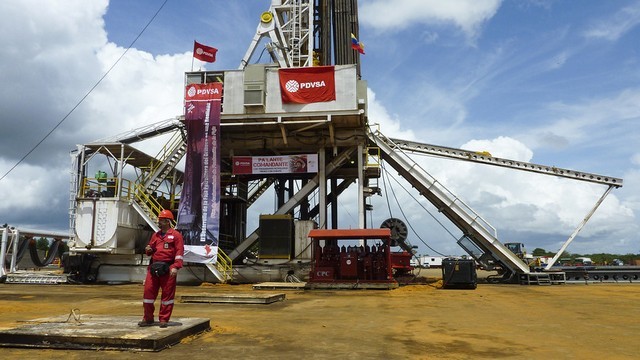
On Monday, the Trump Administration tried to stop the flow of oil revenues to the Maduro government by halting all US payments to the state-owned oil company, Petróleos de Venezuela (PDVSA). Venezuela sends 41 percent of its oil exports to the US and is heavily reliant on this trade for its revenue.

Washington’s aims were nakedly expressed by National Security Adviser John Bolton who told Fox News on Monday that, with a successful coup, “It will make a big difference to the United States economically if we could have American oil companies really invest in and produce the oil capabilities in Venezuela.”

For that to happen would require the reversal of Venezuela’s nationalization of its oil industry, which took place more than four decades ago—long before the advent of Maduro or his predecessor, Hugo Chávez—and the transformation of the country into an open semi-colony of US imperialism and Big Oil.

The latest US bid to strangle the flow of Venezuelan oil revenue—described by some economic analysts as the “nuclear option”—follows several years of collapse in the Venezuelan oil industry. Crude production fell from almost 3 million barrels per day (mb/d) to 1.5 mb/d late last year—with some predicting it will plummet to 800,000 b/d this year.

Venezuela’s extra-heavy crude oil, located in the Orinoco Belt, while voluminous, is extremely expensive to produce. Similar to Canada’s tar sands, it can only be profitably produced at a relatively low rate of extraction. In order to turn extra heavy oil, or tar sands, into usable crude, Venezuela must import a large volume of light oil from the United States to blend with its crude in an energy-intensive refining process.

These underlying geophysical realities complicate and intensify the economic crisis facing the national-bourgeois regime of Maduro. Like Chavez before him, Maduro relies on these oil revenues for the limited social-programs that has allowed his regime to falsely posture as the proponent of “Bolivarian Socialism,” while guaranteeing the property and profits of both domestic and foreign capital.

Venezuela, like many other oil-producing countries suffers from over reliance on the commodity. When a country relies heavily on a valuable export-oriented resource, the influx of foreign currency can lead to general inflation and prioritize investment in that extractive resource over all other sections of the economy. This inevitably leads to the slowing down of other sections of the economy, especially industry and manufacturing, unless radical measures are taken to halt the process.

Venezuela has experienced several spiraling economic crises due to this process, as far back as the 1920’s. This time, the insufficient capital of the Venezuelan regime and the volatile price of oil has prevented the government from making the necessary and costly investments in its heavy-oil fields to keep production stable.

The prospect of a protracted regime-change operation leading to the temporary withdrawal of Venezuelan crude from global oil markets does not bother the United States and its allies because US crude oil production, along with the steady growth of tight-oil and shale gas, will make up for any shortfall. However, Venezuela’s reserves are still seen as critical for the long-term economic and geopolitical stability of the United States for two reasons.

The first is that Venezuela has recently undertaken plans to intensify its collaboration with the Chinese state and Chinese oil companies. Venezuela owes around $20 billion to China—making the country one of its largest creditors—and it has already paid $40 billion of another loan back to China using oil exports as the method of payment. Chinese petroleum companies have taken large shares in various ventures in Venezuela as well with the intention of halting the downward spiral of the industry and sending oil back to China.

China’s oil production amounts to 3.5 mb/d and does not begin to meet its nearly 15 mb/d in consumption of petroleum. Unlike the United States, China has no significant shale formations. This lack of oil has pressured the Chinese ruling class to desperately seek oil abroad. On the other side, the United States understands that strategically holding—either through alliance or direct ownership—the world’s major oil fields would cripple the Chinese economy in the event of conflict. Thus, oil rich countries like Venezuela and Gadaffi’s Libya, both of which entertained Chinese and Russian oil investment, are seen by the US as major targets.

A second reason why Venezuela’s oil is of particular importance is that, though it is expensive, it could help meet an expected supply-demand gap that will emerge later this decade. The International Energy Agency believes that the world needs to spend at least $640 billion every year to keep production at adequate levels; however, spending in the industry is well below that, at $430 billion.

Currently, hydraulic fracturing, or fracking, in the United States has been able to supply markets —however, even if there is a significant economic recession in the coming years, new oil, like Venezuela’s, needs heavy investments to fill the gap. Should the US-backed coup succeed, companies like Exxon, which have historically controlled Venezuela’s oil, would be brought back in to invest and control the resource.

There is nothing new about the United States’ desire to control the flow of Venezuelan oil. Prior to nationalization in the 1970s, various Western companies dominated Venezuela’s oil wealth. Beginning with Royal Dutch Shell (an Anglo-Dutch venture) in the early part of the 20th century and ending with the antecedents of modern-day Exxon Mobil (Standard Oil, Exxon, and Mobil) prior to nationalization, Venezuela’s oil has long been dominated by foreign capital.

In the early 1970’s, Venezuela was a close ally of the United States in Latin America. In 1976, under the presidency of Carlos Andrés Pérez, the country’s oil was officially nationalized and Petróleos de Venezuela (PDVSA) was created as the state oil company. Venezuela’s oil nationalization gave much more generous terms to Western oil relative to other OPEC members.

In the late 1980s and early 1990s, a second major economic downturn occurred, again bound up with the economy’s over-reliance on oil and the resultant economic woes. It was out of this economic crisis, and the mass popular revolt against austerity measures known as the Caracazo, that former Venezuelan president Hugo Chavez first emerged as a national figure, leading an abortive coup in 1992 and being elected as president in 1998.

Chavez pursued social reforms that improved the standard of living, at first, of a section of the working class—largely funded by oil revenues. However, Chavez, a bourgeois nationalist, did not in any way represent the working class or advance its struggle for control over production and society. On the contrary, he spoke for a layer of businessmen who thought their situation could be improved by achieving greater independence from foreign capital while using oil revenues to ease class tensions.

In the end, as in the economic crisis of the 1990s, the global forces of capital acting on a national economy dependent on an extractive resource disturbed a very temporary equilibrium. In the years leading to Chavez’s death in 2013, the economic situation deteriorated, and the Venezuelan regime found itself confronting an increasingly hostile and disillusioned working class.

US imperialism is now seeking to exploit this crisis for its own purposes. Under the phony banners of “freedom” and “democracy” it is seeking to carry through a naked imperialist intervention that would install a dictatorship dedicated to suppressing the working class and assuring the unfettered control of the Venezuelan economy by Big Oil and Wall Street.

Originally published by WSWS.org

31 January 2019

Source: countercurrents.org

International Criminal Court judge resigns, citing ‘shocking’ US interference

By Countercurrents.org

Christoph Flügge, a senior judge with the UN International Criminal Court (ICC) in The Hague, has resigned from the ICC, after the US threatened judges investigating alleged US war crimes in Afghanistan.

Flügge, a German judge, has worked with the ICC and the International Criminal Tribunal for the Former Yugoslavia (ICTY) since 2008. Recently, he got involved with a preliminary investigation into claims that US military service members and CIA operatives tortured prisoners in Afghanistan.

Flügge told German newspaper Die Zeit that he handed in his resignation after open threats from US officials, including a speech by hawkish national security adviser John Bolton last September, where Bolton “wished death” on the Court.

“If these judges ever interfere in the domestic concerns of the US or investigate an American citizen, he said the American government would do all it could to ensure that these judges would no longer be allowed to travel to the United States – and that they would perhaps even be criminally prosecuted,” Flügge told Die Zeit, in an interview. The Guardian has translated the interview.

“The American security adviser held his speech at a time when The Hague was planning preliminary investigations into American soldiers who had been accused of torturing people in Afghanistan,” Flügge said. “The American threats against international judges clearly show the new political climate. It is shocking. I had never heard such a threat.”

Bolton’s speech was delivered in September to the conservative Federalist Society in Washington, DC. It came a year after the ICC began investigating claims that at least 61 detained persons in Afghanistan had been tortured by the US troops and another 27 by the CIA at secret prisons in Afghanistan and abroad, according to prosecutor Fatou Bensouda.

Bolton called the investigation “utterly unfounded” and “unjustifiable,” and promised to “protect our citizens and those of our allies from unjust prosecution by this illegitimate court.”

The senior US official also vowed to defend Israeli citizens from the court. US “friend and ally” Israel was at the time accused of perpetrating war crimes against Palestinian civilians. He warned that the US would disregard arrest warrants, ban judges and prosecutors from entering the country, and even try them in the US courts.

Flügge said his colleagues were “stunned” that “the US would roll out such heavy artillery,” but added “it is consistent with the new American line: ‘We are No 1 and we stand above the law’.”

The US disregard for the ICC is not a new phenomenon. After much debate, US President Bill Clinton signed the Rome Treaty that established the ICC, but the Congress never ratified it. George W. Bush symbolically ‘un-signed’ the treaty in 2002, when the war in Afghanistan was in full swing.

Later that year, the US Congress passed the American Service Members’ Protection Act, which obliged the president to prevent any ICC prosecution of US armed forces “to the maximum extent possible,” and even authorized military force to free any US service members from ICC custody. Bolton was Bush’s under-secretary of state at the time.

The court has come under fire from more countries than just the US. Russia withdrew its signature from the Rome Treaty in 2016, after the court criticized the reunification of Crimea. China, India, Saudi Arabia, and Turkey are among the other nations that never signed the treaty.

Flügge told Die Zeit that he had concluded in the wake of the developments that the “diplomatic world” saw no value in an independent judiciary.

“Every incident in which judicial independence is breached is one too many,” he said. “Now there is this case, and everyone can invoke it in the future. Everyone can say: ‘But you let Turkey get its way.’ This is an original sin. It can’t be fixed.”

Flügge said the attitude of the US administration to the ICC highlighted the danger.

31 January 2019

Source: Countercurrents.org

Now Chad, then Mali: Why African Countries Are Normalizing with Israel

By Dr Ramzy Baroud

Forget the hype. Israel’s ‘security technology’ has nothing to do with why some African countries are eager to normalize relations with Israel.

What is it that Israel is able to offer in the technology sector to Chad, Mali and others that the United States, the European Union, China, Russia, India, Brazil, South Africa and others cannot?

The answer is ‘nil’, and the moment we accept such a truth is the moment we start to truly understand why Chad, a Muslim-majority country, has just renewed its diplomatic ties with Israel. And, by extension, the same logic applies to Mali, another Muslim-majority country that is ready to normalize with Israel.

Chadian President, Idriss Deby, was in Israel last November, a trip that was touted as another Benjamin Netanyahu-engineered breakthrough by the Israeli government and its allied media.

In return, Israeli Prime Minister, Netanyahu, paid Deby a visit to N’djamena where they agreed to resume diplomatic ties. In their joint press conference, Deby spoke of ‘deals’ signed between Chad and Israel, but failed to provide more details.

Israel may try to present itself as the savior of Africa, but no matter how comparatively strong the Israeli economy is, Tel Aviv will hardly have the keys to solving the woes of Chad, Mali or any other country on the African continent.

Israeli media is actively contributing to the fanfare that has accompanied Netanyahu’s ‘scramble for Africa’, and is now turning its focus to preparations under way for another ‘historic visit”, that of Malian President, Soumeylou Boubeye Maiga, to Israel in the “coming weeks”.

Netanyahu is keen to schedule Maiga’s trip just before the April 9 date, when Israelis go to the polls to vote in the country’s early general elections.

Israel’s motives to normalize with Africa are inspired by the same reasoning behind Netanyahu’s international outreach to South America and other regions in the global South.

Despite the Trump-Netanyahu love affair at the moment, Israel has no faith in the future of the US in the Middle East region. The current Donald Trump administration, as the previous Barack Obama administration, has made clear and calculated moves to slowly deploy out of the region and ‘pivot’ elsewhere.

This has alerted Netanyahu to the fact that Israel would have to diversify its alliances as an American veto at the United Nations Security Council is no longer a guarantor to Israel’s regional dominance.

For years, Netanyahu has pursued an alternative course, which has become the only path for Israel to escape its international isolation. Unfortunately for Palestinians, Israel’s new strategy, of seeking separate alliances with UN General Assembly members seems to be paying dividends. Israel now hopes that other countries that have historically stood on the side of Palestinians – voting for Palestinian rights as a bloc at the UN – will follow the Chad and Mali examples.

The struggle between Israel and Arab countries in Africa, according to Dan Avni – a top Israeli Foreign Ministry official during the 1950s and ‘60s – is “a fight of life and death for us.” That statement was made during a time that the US had not fully and ardently committed to the Israeli colonial project, and Israel was in a desperate need to break away from its isolation.

Following the expansion of the Israeli colonial project in Palestine and other Arab countries after the 1967 war, the US unconditional political, economic and military support for Israel has addressed many of Israel’s perceived vulnerabilities, empowering it to become the uncontested bully of the whole region. At the time, neither Africa mattered, nor did the rest of the international community.

But now, a new Great Game is changing the rules once more. Not only is the US losing its grip in the Middle East and Africa – thanks to the rise of Russian and Chinese influences, respectively – Washington is also busy elsewhere, desperate to sustain its dwindling global hegemony for a bit longer.

Although ties between Washington and Tel Aviv are still strong, Israeli leaders are aware of a vastly changing political landscape. According to Israeli calculation, the ‘fight of life and death’ is drawing near, once again.

The answer? Enticing poor countries, in Africa and elsewhere, with political support and economic promises so that they would deny Palestinians a vote at the UN.

It is no surprise that the governments of Chad and Mali are struggling, not only economically, but also in terms of political legitimacy as well. Torn in the global struggle for dominance between the US and China, they feel pressed to make significant choices that could make the difference between their survival or demise in future upheavals.

For these countries, an alliance with Israel is a sure ticket to the Washington political club. Such membership could prove significant in terms of economic aid, political validation and, more importantly, an immunity against pesky military coups.

Considering this, those who are stuck discussing the Israeli ‘charm offensive’ in Africa based on the claim of Israel’s technological advancement and hyped water technology are missing the forest for the trees.

It is important to note that it is not the road to Tel Aviv that N’Djamena and Bamako are seeking, but rather the road to Washington itself. In Africa, as in other parts of the global South, it is often the US, not the UN that bestows and denies political legitimacy. For African leaders who enjoy no democratic credence, a handshake with Netanyahu could be equivalent to a political life insurance.

So, for now, Israel will continue to walk this fine line, usurping American resources and political support as always, while learning how to walk on its own, by developing a foreign policy that it hopes will spare it further isolation in the future.

It is yet to dawn on Israeli leaders that, perhaps, a shortcut to breaking its isolation can be achieved through respecting international law, the rights of the Palestinian people and the territorial sovereignty of its neighbors.

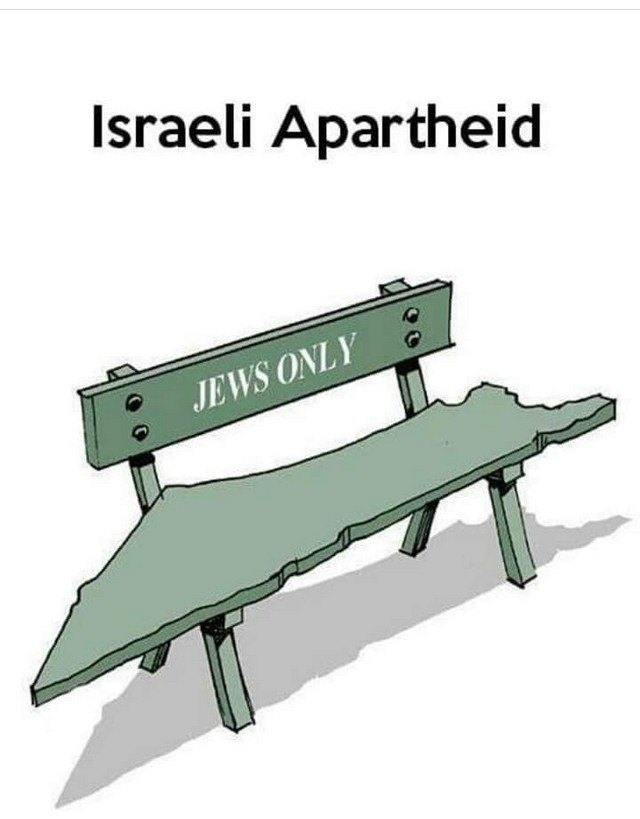
Diplomatic ties with Chad and Mali may garner Netanyahu a few more votes next April, but they will also contribute to the Israeli illusion that it can be an international darling and an Apartheid regime, simultaneously.

Ramzy Baroud is a journalist, author and editor of Palestine Chronicle.

30 January 2019

Source: countercurrents.org

Defying War and Defining Peace in Afghanistan

By Kathy Kelly

On January 27th, 2019, the Taliban and the U.S. government each publicly stated acceptance, in principle, of a draft framework for ongoing negotiations that could culminate in a peace deal to end a two-decade war in Afghanistan.

As we learn more about the negotiations, it’s important to remember others working toward dialogue and negotiation in Afghanistan. Troublingly, women’s rights leaders have not, thus far, been invited to the negotiating table. But several have braved potential persecution to assert the importance of including women in any framework aiming to create peace and respect human rights.

A young medical graduate student told me she was deprived of schooling during the Taliban era. “If government doesn’t protect women’s basic rights,” she said, “we could lose access to health care and education.”

“The war was started by men, the war will be ended by men,” an aide to Rula Ghani, the wife of President Ashraf Ghani, recently told a Reuters reporter. “But it’s the women and children who suffer the most and they have a right to define peace.” In 2018, the UN expressed alarm at the increased use of airstrikes by U.S. and Afghan forces which caused a rising death toll among women and children. In the run-up to the past week of negotiations and even during the negotiations, attacks and counter attacks between the warring parties killed dozens of civilians, including women and children. Both the Taliban and the U.S. seemed intent on showing strength and leverage by demonstrating their willingness to slaughter the innocent.

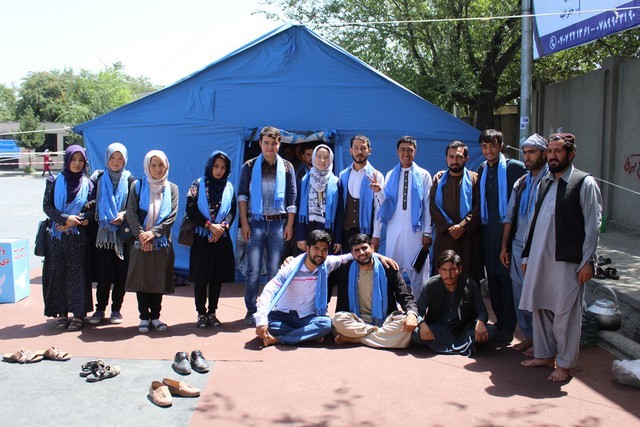
Another group not represented at the negotiating table is the “People’s Peace Movement,” Beginning in May of 2018, they chose a path which pointedly eschews attacks, revenge or retaliation. Following deadly attacks in their home province of Helmand, initiators of this movement humbly walked, sometimes even barefoot, hundreds of miles, asking people to reject the entire institution of war. They’ve urged an end to revenge and retaliation and called on all warring parties to support a peace process. Their journeys throughout the country have become venues for informal hearings, allowing opportunity for people to collectively imagine abolishing war.

We in the U.S. have much to learn from Afghan women human rights advocates and the People’s Peace Movement regarding the futility of war.

Since 2001, and at a cost of 800 billion dollars, the U.S. military has caused irreparable and horrific losses in Afghanistan. Afghan civilians have endured invasion, occupation, aerial bombings, ground attacks, drone warfare, extensive surveillance, internal displacement, soaring refugee populations, environmental degradation and the practice of indefinite detention and torture. How would U.S. citizens bear up under even a fraction of this misery?

It stands to reason this litany of suffering would leadto increased insurgent resistance, to rising support for the Taliban, and to spiraling violence.

By late 2018, even a top military commander, Army General Scott Miller, told CNN the U.S. had no chance of a military victory in Afghanistan. He stated the fight will continue until there is a political settlement,

Danny Sjursen, an exceptionally honest Major General and author, wrote in December 2018 the only thing left for the U.S. military to do in Afghanistan was to lose.

Major General Sjursen was correct to concede inevitable U.S. military defeat in Afghanistan, but there is something more U.S. people can and should do. Namely, pay reparations for 17years of suffering we’ve caused in Afghanistan. This is, as Professor Noam Chomsky once said, “what any civilized country would do.”

Some might counter the U.S. has already provided over $132 billion dollars for reconstruction in Afghanistan. But, did that sum make a significant difference in the lives of Afghan people impoverished by displacement and war? I think not.

Since 2008, John Sopko, the Special Inspector General for Afghan Reconstruction, has submitted quadrennial reports to the U.S. Congress detailing ways waste, embezzlement, fraud and abuse have consistently resulted in failed reconstruction efforts. Sopko and his teams of researchers and analysts offered a chance for people in the U.S. to see ourselves as we’re often seen by an increasingly cynical Afghan public. But we seldom even hear of the SIGAR reports. In fact, when President Trump heard of these watchdog reports during his first Cabinet meeting of 2019, he was infuriated and said they should be locked up!

It’s telling that SIGAR was preceded by SIGIR, (the Special Inspector General for Iraq Reconstruction) which filed similarly critical yet largely unnoticed reports.

U.S. citizens often regard their country as a civilized nation that goes to war against demonic tyrants. Dr. Martin Luther King held forth a different vision. He urged us to see the humanity of other so-called enemies, to ask how we’re seen by other people, and to thereby gain a needed understanding of our own weaknesses. If we could hear from other people menaced by militarism, including ours, if we could see how our wars have contributed to terrorism, corruption and authoritarianism that has turned the U.S. into a permanent warfare state, we might find the same courage that inspires brave people in Afghanistan to speak up and resist the all-encompassing tyranny of war.

We might find ourselves guided by an essential ethical question: how can we learn to live together without killing one another? If we finally grasp the terrible and ever-increasing urgency of this lesson, then we might yearn to be trusted global neighbors who humbly pay reparations rather than righteously bankroll endless wars.

Kathy Kelly co-coordinates Voices for Creative Nonviolence (www.vcnv.org).

29 January 2019

Source: countercurrents.org

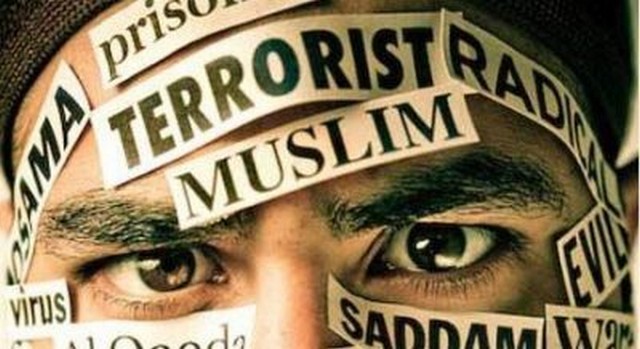
Tolerance and Spirituality: Debunking the Islamophobic View of an “Intolerant Islam”

By Prof. Henry Francis B. Espiritu

This incisive article by Professor Henry Espiritu was first published by Global Research in November 2017

“And thou wilt find the nearest in friendship to the believers to be those who say, ‘We are Christians’. That is because there are priests and monks among them and because they are not proud.” (Al-Qur-an, Surah Maidah: 82)

Introduction: Context and Commitment

The current expansion in mass media and communications reveal more evidently that our world contains variety of cultures, races, religions, and ideologies. Despite globalization and its attendant efforts towards homogeneity, ours is still a pluralist world. As such, tolerance is a foundational notion and a very relevant conceptual and practical prerequisite in establishing a pluralistic society. In pluralism’s point of view, people living in a society with varied religious, cultural, and ideological commitments should enjoy equal rights and should not sacrifice their beliefs at the mercy of the hegemonic ideology of a particular State or of the dominant religion of the majority community.

In our highly globalized world, tolerance and amity are all the more needed for the survival, cohesion, and progress of its citizens.

The contemporary mass media portray Islamic societies to be intolerant of other’s religious and ideological persuasions. The purpose of this paper is not to examine whether the contemporary media is right or wrong in perceiving Islamic societies as intolerant. My aim in this essay is to show that authentic Islam—as contained in the pristine revelation of the Qur-an—promotes tolerance, harmony, and goodwill of all peoples despite their differences.

Professor Henry Espiritu (right)

In this paper, I want to reflect straight from the original source of Islamic tenets (i.e., the Qur-an) the tolerant attitude of Islam vis-à-vis religious, cultural, and ideological diversities found in human societies. Likewise, I will endeavor to show various thematic perspectives found in selected passages of the Qur-an that encourage tolerance and societal concord. Side by side with my exposition of authentic Islam’s framework of tolerance, I will likewise provide several historical instantiations of this “spirituality of tolerance” in the lives of selected Muslim savants and revered Islamic personalities of various epochs in their encounter with Christians.

I sincerely hope that by showing the tolerant and pluralistic pronouncements of the Qur-an, and the historical instantiations of tolerance manifested in the exemplary lives of these prominent Muslims as they relate with Christians, I will be able to encourage Muslims to fully practice and live-out the Islamic mandates of amity and inter-religious understanding in their daily lives. Moreover, I further hope that in this essay, I will be able to inform non-Muslims that genuine Islam—as contained in the Qur-anic revelation, in the model conduct of the Prophet, and in the exemplary lives of pious Muslim personages—is a very tolerant religion that acknowledges and respects the divergent beliefs and ideological views of others.

The Dynamics of Tolerance: Philosophical, Metaphysical, and Mystical Presuppositions

Firstly, let me briefly explicate my own conceptual framework and philosophical presuppositions in understanding tolerance. Tolerance presupposes plurality and diversity of identities. Pluralism further presupposes alterity or otherness, since diversity entails variety of identities and plurality of existing values. The opposite of pluralism is hegemony where one particular value is imposed and where there is an enforced totalization of expressions of life to make human values comply to a uniformed worldview and a set praxis. Now, tolerance can only exist in a pluralistic framework since pluralism celebrates in the difference of the “other”. Tolerance is a very important ethical value in the face of the alterity of the “other”. Tolerance therefore presupposes an “other” since without an “other”, there is nothing to tolerate at all. In hegemony, however, the “other” is swallowed and annihilated by the sheer imposition of uniformity and forcible totalization. Thus with the absence of the “other” in a hegemony, tolerance will also be non-existent—this is why all totalitarian and hegemonic societies are most intolerant of differences and dissenting views.

Secondly, I consider tolerance as spirituality. A person who can tolerate the “other” is able to see the unitive Source Who permits and wills these various differences and diversities as found in the world. This unitive Bond that permeates all diverse phenomena of creation and transcends multiplicities—the mystics termed, “the One God”. In the words of the Holy Qur-an:

“And your God and our God is One God. There is no god but He, the Beneficent, the Merciful… There is no contention between us and you. Allah will gather us together, and to Him is our eventual coming.” (Surah Baqara:163 and Surah Shuraa:15)

Therefore—for the Qur-an—God is both the Ultimate Source of these diversities and the Essential End of all varied cosmic entities. Spirituality or mysticism acknowledges God as the unifying Connectivity that deeply binds the whole of creation to Himself despite their apparent differences and multiplicities. Muslim and Christian mystics are well able to tolerate religious differences because in their inner beings, these mystics see the vision of the One, and this unitive vision enabled them to go beyond creedal and dogmatic differences. It is by this divine grace of an all-inclusive vision of the One that enables saints and mystics to tolerate the “otherness” of the other (See Frithjof Schuon, Understanding Islam. London: Mandala Books, 1964; pp. 13-18.).

Tolerance in dealing with others, particularly the religious “other” is spirituality because by tolerating differences, one acknowledges the divine Wisdom of God who wills that these differences be made manifest. By reflecting on this ineffable theological tension regarding the plurality or diversity of God’s creation and the essential oneness of creation in the Being of God, mystics of all religious traditions appreciate the mystery and spirituality of tolerance; an unfathomable and sympathetic understanding that is holistically related to a consciousness of divine unity manifesting in and through diversity. Tolerance permits us to experience the sympathetic feeling of divine inter-connectedness among diverse creatures in the divine immanence of the Creator who permits these differences.

My own prayerful reflections evidently reveal to me that authentic Islam, i.e., the Islam as expressed in the pristine pages of the Qur-an and in the exemplary conduct set forth by Prophet Muhammad—in contrast with the rigid and hegemonic “Islam” as interpreted by “extremist” exegeses or “fundamentalist” hermeneutics—clearly advocates pluralism and encourages tolerance in its relationship with the religious “other”. In the next subsections, we will examine how the Qur-anic understanding of pluralism is intimately connected to the spirituality of tolerance. We will also see how the Qur-anic discourse of tolerance is practically exemplified in the lives of selected Muslim saints in their encounter and dialogue with Christians.

The Qur-anic View of Pluralism and Its Relevance to an Islamic Understanding of Tolerance

The Qur-an is fully conscious of the pluralistic nature of human societies. Many Qur-anic passages describe the diverse expressions of life as found in human communities. Pluralism is therefore a fact, which the Qur-an accepts as the basic reality of our human existence. The Qur-an says:

“For every one of you We appointed a law and a way. And if Allah had pleased, He would have made you a single people, but that He might try you in what He gave you. So vie with one another in virtuous deeds. To Allah will all return, so He will inform you of that wherein you differed.” (Surah Maida:48; The Holy Qur-an: Maulana Muhammad Ali Translation)

The above passage is a very decisive proclamation supporting tolerance. The verse fully points out the pluralistic condition of humankind. The passage admits to the existence of societal and religious diversity characterizing human communities when it declares; “for everyone of you, We appointed a law and a way”. Notice that this verse says that our pluralistic situation is willed and permitted by God so as to test human communities so that each community will vie with each other in doing good deeds. It further says:

“And if Allah had pleased, He would have made you a single people, but that He might try you in what He gave you. So vie with one another in virtuous deeds”.

Surah Maida:48 is likewise a very relevant verse in understanding the nature of the Islamic understanding of tolerance. If God willed that this world contains socio-cultural and religious diversities (when He could have made the world a “single people”), and if God himself has a divine reason for allowing these diversities (so that each society will “vie with one another in virtuous deeds”); then humankind should strive to accept, tolerate, and appreciate the fact of our pluralistic world.

Good Will, Courtesy, and Mutual Respect: The Basic Ethical Pillars of Qur-anic Tolerance

Maulana Muhammad Ali Lahori (circa 1879-1951), was an eminent Pakistani scholar of Qur-anic and Hadith exegesis. He authored exhaustive and authoritative books of Qur-anicexegesis, collectively known in Urdu as Bayan-e Qur-an (Qur-anic Lectures) and a comprehensive commentary of the Prophetic Traditions, entitled The Manual of Hadith. Maulana Muhammad Ali Lahori strove to present Islam as a rational, tolerant, and forward-looking religion during the era of the British rule of then undivided India.

In this period of the British Raj, various Christian missionary groups representing different denominations compete for the conversion of Indians to Christianity. Seeing the zeal of these missionaries, Maulana Muhammad Ali began to reflect on the state of the Muslims in India. He re-evaluated the Indian appropriation of Islamic tenets and found out that the Muslims in India were enveloped with customs which were thought to be Islamic, but in reality, were products of obscurantism, and therefore devoid of Islamic significance.

Maulana Muhammad Ali likewise engaged the Christian missionaries in friendly dialogues to clarify common misconceptions of Islam. His scholarly book, The Religion of Islam, which was the result of these dialogic exchanges, show a very rational explication of Islam; at the same time fully cognizant of the Christian missionaries’ objections against Islam by responding to these objections using the Qur-an and Sunnah as bases of clarification. In all his writings, one can admire the profound respect that Maulana Muhammad Ali accorded to his interlocutors, both Christians and Muslims.

I will quote from his Urdu commentary of the Holy Qur-an on the necessity of courtesy (adab), good will (ahsan), and respect or honor (izzat) in dialoguing with others. Commenting on the Qur-anicayah (verse): “Call to the way of thy Lord with wisdom and goodly exhortation, and argue with them in the best manner” (Surah Nahl:125), Maulana Muhammad Ali had this to say:

“If we desire to establish communication with other religions and their followers, the first pre-requisite is good will (ahsan). We need good will because we have to be reminded that followers of other religions desire for our own good when they want to convert us. And we too, desire for their own good when we invite them to Islam. Everyone sincerely believes that his or her respective tenet is the truth. Thus, keeping in mind that every religion desires salvation, the Holy Book requires us to conduct our concourse with others in the best manner of etiquette (adab). In his inner heart, the other person who communicates to us his religion thinks that he is doing an act of piety.

Similarly, in Surah Ankabut:46, the Word of Allah reiterates its exhortation to concourse with the People of the Book, in the attitude of respect and courtesy, when it says: ‘And argue not with the People of the Book except by what is best… And say: We believe in that which has been revealed to us and revealed to you and our God and your God is One, and to Him we submit’. It is therefore with this innate intention of good will that our Holy Book requires us to establish friendly concourse with the followers of other faiths, in the spirit of courtesy and profound respect.” (See Mawlana Muhammad Ali’s subsequent commentary of Surah Nahl 125 and Surah Ankabut 46.)

Maulana Muhammad Ali, in his encounters with Christian missionaries, was able to articulate and apply the ethical principles of dialogue and tolerance, which were already laid down by the Holy Qur-an (namely in Surah Nahl:125 and in Surah Ankabut:46). Maulana Muhammad Ali understood tolerance as something inherent in our being persons of good will; and that this divine awareness of good intention leads us to respect the viewpoint of the other person even if we do not subscribe to his creedal tenets. The verse in Surah Nahl:125 encourages Muslims to dialogue with the religious “other” in the spirit of sincere courtesy, profound sensitivity, and deep respect for each other’s differences, by granting a concordant presumption that the other’s intention in striving to convert another person is due to good will (i.e., for the “other’s” spiritual salvation).

Surah Maida: 48 as Potent Islamic Manifesto Supporting Tolerance

Maulana Muhammad Ali asserts that Surah Maida:48 is an explicit endorsement of pluralism and its attendant duty of tolerating the various diversities of humankind. I quote from Maulana Muhammad Ali’s exhaustive Qur-anic commentary to this particular passage:

“The appointment of a law and a way for everyone refers to the giving of different laws to different nations… Thus, the Holy Qur’an here recognizes the principle to which it refers frequently, that prophets were raised among every people (see Holy Qur’an 10:47; 13:7; and 35:24)… Man [sic] is placed above the whole of creation in that he has been granted discretionary powers so that he can choose to follow one path or another, as against the rest of creation, which must necessarily follow the laws to which it is subject. Hence led by that [God-given] discretion, men follow different ways, adopting different sects, whereas if man’s very nature had been so made as to make him unable to use his discretionary powers, all men [sic] would have been a single people, but then man’s better qualities, would not have been manifested.” (Maulana Muhammad Ali Commentary of the Holy Qur-an.Columbus, Ohio: Ahmadiyya Anjuman Ishaat Islam Lahore, 1998; pp.256.)

As commented by Maulana Muhammad Ali, Surah Maida:48 explicitly declares that Almighty God sent his messengers to diverse groups of people and gave these communities their respective commandments in keeping with the different circumstances of each community. The laws prescribed by God to the different communities ensure the holistic development of their respective people. The verse continues, “And if Allah had pleased, He would have made you a single people, but that He might try you in what He gave you. So vie with one another in virtuous deeds”. This verse clearly pointed out that if God so willed it, He can create a single community out of varied groups of people. Nevertheless, God planned that humankind be varied in its communitarian expressions.

God’s endowment of a pluralistic world is His grace to humanity. Our differences provide venues for existential celebration of life and of living: variety and diversity being the potent antidote to our humdrum existence. Each community has its own unique way of life, its own customs and traditions, its own laws. Nevertheless, no matter how diverse these ways of life are, it should be understood in the light of the Almighty’s life-affirming purpose in allowing such diversities, i.e., human flourishing. It is therefore clear from Surah Maidah:48 that although God can produce a uniformed world of totalities by imposing a single law for all communities, yet He prefers to create pluralistic communities so that humankind will learn the values of tolerance, amity, harmony, and fraternity.

Another aim of God in creating varied communities is to test human beings in the conduct of virtuous deeds. He tests the various societies if they can live amicably and cordially with each other despite their differences. The divergence in each society’s ways of life should not be a cause of disharmony and differences; instead, societal divergences should prod each community to vie with one another in the performance of virtuous conduct (Cf., Reza Shah Kazemi, The Metaphysics of Interreligious Dialogue. London: Institute of Isma’ili Studies, 2001; pp.5-7.).

The Qur-an insists that the best way of putting an end to religious, cultural, and ideological conflicts is to tolerate differences with openness and good faith. Each religious community should do righteous deeds according to their tenets; leaving to God the judgment as to which community is the best. The final section of the passage states:

“To Allah will all return, so He will inform you of that wherein you differed”.

The verse is very precise in stating that it should be left to God (and to God alone) in deciding the truth of the matters that peoples dispute. It is not for humans to pontificate which view is true and which is wrong. Vain and fruitless arguments as to which religious, ethical, and ideological point of view is right or wrong will only lead to communal fracas and infringement of societal concord. Likewise, the verse firmly admonishes human beings to contend with one another in good deeds by utilizing their own respective laws as bases of their righteous conduct.

God as the Ultimate Source of Divine Revelation: A Central Tenet in the Qur-anic Understanding of Tolerance

The prologue of Surah Maida:48 states, “And We have revealed to thee the Book [i.e., the Qur-an] with the truth verifying that which is before it [i.e., the previous scriptures]…and a guardian over it”. This verse is a strong proclamation in favor of tolerance and pluralism. The Qur-an is referred to as “guardian” of the truths revealed by earlier scriptures. Likewise, one of the roles of the Qur-an is “a verifier” of previous scriptures. According to Ustaz Abu Ya’qub Sijistani, a Fatimid theologian and philosopher of the tenth century AD, this verse implies that the scriptures of various religions may be different, but the Ultimate Source of all revealed scriptures is the One and Only God. Thus, scriptures of different faiths are based on Divine revelation.

The tolerant nature of Islam as a religion can be seen in this verse in that, the Qur-an takes it upon itself to be the confirmer, verifier, and guardian of truths revealed in earlier scriptures (Paul Walker, Abu Ya’qub al-Sijistani: Intellectual Missionary. London: I.B. Tauris Publishers, 1996; pp. 26-32, 58.).

Before elaborating further on Ustaz Abu Ya’qub al-Sijistani’s view of the Qur-an as the guardian and verifier of previous divinely revealed books and the implications of this Qur-anic guardianship to an Islamic framework of tolerance, a brief historical background of Ustaz Sijistani’s life is in order. Ustaz Abu Ya’qub Sijistani—although himself an Isma’ili Shi’a—maintained amicable relations with the orthodox Sunni majority during the period of the Fatimid Caliphate (i.e., 10th-11th century A.D.). To the dismay of the rabid Shi’as, Ustaz Sijistani forbade his disciples to curse the first three Caliphs of Islam (Khulafa-ar-Rashidin); warning them, that Prophet Muhammad lavished praise on these three Caliphs, and therefore, it is never right and against Islamic prudence to curse whom the Prophet had abundantly praised.

His endeavor to establish Sunni-Shi’a rapprochement was also matched by his spiritual and intellectual relationship with the Coptic Christians of Egypt, the Arab Orthodox Christians of Iraq, the Byzantine Christians of Anatolia, and the Jews. He studied the Torah in Hebrew and the New Testament in the Syro-Aramaic text. He often consulted Jewish rabbis and Orthodox Christian hermits and enquired from them regarding their interpretation of some obscure passages of the Bible. His encounters with Christianity and Judaism were indeed intellectually stimulating since Ustaz Sijistani wrote six (6) religio-philosophical treatises reflecting on his relations with Christianity and Judaism, not to mention the orthodox Sunni Islam. Sijistani’s main books, The Wellspring of Wisdom (Yanbu-al-Hikmat) and Proofs of Prophecy (Ithbat-un-Nubuwwat) were written to show that God is the ultimate Source of Revelation and that this divine Revelation is progressive, i.e., it is sent according to the measure of the spiritual preparedness of humankind to receive divine guidance. Ustaz Sijistani was therefore a perfect example of an “ecumenical Muslim”—if I may be permitted to coin such a term.

Let us now explicate on Sijistani’s understanding of progressive revelation and its implication to an Islamic perspective of tolerance. As per Ustaz Sijistani, the inclusive nature of the Islamic faith can be clearly observed in the Qur-an’s numerous narrations regarding the ministries of Jewish, Christians, and other pre-Islamic prophets. The Qur-an’s inclusion of the prophets of other religions preceding Islam is meant to illustrate the pluralistic and tolerant dimension of the Qur-anic Revelation. The list of prophets as found in the Qur-an was never meant to be exhaustive; it was meant to illustrate the extent of the universal chain of prophethood. Thus, we can safely assume that other religious communities that were not mentioned in the Qur-an are likewise included in the all-inclusive Qur-anic guardianship (Walker, Ibid, pp. 45-58, 110-112.).

Furthermore, Sijistani opined that the Qur-an fully acknowledges the different expressions of worship undertaken by different religions, while at the same time firmly holding to the Islamic expressions of worship (i.e., the five-times-a-day liturgical prayers, prescribed pilgrimage, Ramadhan fasting, etc.). In Surah Baqara:148 it is stated: “And everyone has a goal to which he turns (himself), so vie with one another in good works”. Abu Ya’qub al-Sijistani, interpreted the phrase, “everyone has a goal to which he turns” to signify the diverse spiritual communities and their different approaches of worship (Ibid, pp. 49-51.). Ustaz Sijistani, also pointed out that Surah Baqara:148 is very much related to the phrase in Surah Maida:48, viz; “For everyone of you We appointed a law and a way”.

The Qur-an on the Oneness of Humankind and Diverse Expressions of Human Cultures

The Qur-an, in many numerous passages explicitly proclaims the oneness of humankind. Humanity was “created from a single being” (Surah Nisah:1). All humans came from a single ancestry and living in the same homeland, earth (Surah Hujurat:13). Furthermore, Surah Baqara:213 says that the whole of humankind is essentially one in origin—from God, humankind’s Creator. God sent various messengers with their respective scriptures to guide the peoples of the world to righteous living. These prophets were sent to different places of the world and their revelations were suited to the varying milieus, mentalities, contextualities, situations, and circumstances of the peoples and societies in which they were being sent. However, instead of respecting other societies’ contextualities, people began to be divided and incessantly fight against each other. Surah Baqara:213 further states that God in giving His revelation to different communities did not intend that they fight each other; but that each communities respect each other’s differences.

The Qur-an balances its affirmation of the ontological oneness of humankind by equally highlighting on the divergent racial, linguistic, ideological, religious, and national identities of each society. God wills these identities; as the Qur-an plainly states, “And of His signs is the creation of the heavens and the earth and the diversity of your tongues and colors. Surely, there are signs in these for the learned” (Surah Rum:2). This passage acknowledges cultural differences as “signs” of God and must be duly appreciated as these “signs” serve as venues for each society’s expression of identity. Cultural differences are essential for establishing a community’s identity and these divergences should prompt peoples to celebrate each other’s cultural and national identities (See, Maulana Muhammad Ali’s commentary of Surah Baqara:213, Hujurat:13 and Maida:48; op.cit.). Therefore, the Qur-an undoubtedly recognizes cultural, religious, and societal diversities as being willed by Divine Providence; even as it equally affirms the essential unity and oneness of humankind.

Tolerance and the Diverse Liturgical Expressions of Worship Found in Other Faiths

As of this juncture, it is noteworthy to quote some Qur-anic passages that illustrate the practical dimensions of Islamic tolerance with respect to the different worship expressions of other faith-traditions. The Qur-an says:

“It is not righteousness that you turn your faces towards East or West; but righteous is the one who believes in Allah and the Last Day, and the angels, and the Book, and the prophets, and gives away wealth out of love for Him, to the near of kin, and the orphans, and the needy, and the wayfarer, and to those who ask, and to set the slaves free; and keeps up prayer, and pays the poor-rate [i.e., charity]: and the performers of their promise when they make a promise, and the patient in distress and affliction and in the time of conflict [adversities]. These are they who are truthful; and these are they who keep their duty.” (Surah Baqara:177; Maulana Muhammad Ali Translation.)

The great master of Islamic mysticism, Hazrat Shaykh-al-Akbar Muhaiyuddin Ibn Arabi (circa 1164-1240 AD), in his Sufi treatise, Bezels of Wisdom (Fusus al-Hikam) provided a very universal and inclusive interpretation of the above passage, showing the tolerant nature of Islamic Sufism that Ibn Arabi espoused. Before discussing Ibn Arabi’s explanation of the above-mentioned passage, I feel that it is beneficial for our understanding to describe briefly his historical contextuality. Ibn Arabi’s tolerant and pluralistic approach to Islamic spirituality can best be gleaned in his oft-quoted pronouncement:

“My heart is open to every form: it is a pasture for ecstatics, and a cloister for Christian monks, a temple for idols, the Mecca for the monotheists, the tablet for the Torah and the bookstand of the Qur-an. I embrace the religion called ‘Love’; I go where my Beloved’s caravan asks me to go. My religion is the creed of Love.” (Shahabuddin Maliki, Light from the Sayings of Shaykh Ibn Arabi. Decca, Bangladesh: Markaz Towheedi, 1977; p.63.)

Arabi’s frequent discussions and meetings with Jewish and Christian philosophers and mystics may have influenced his all-inclusive and panentheistic approach to understanding Ultimate Reality (wahdat-ul-wujud). Ibn Arabi’s homeland, Andalusia, a cosmopolitan region in Spain was ruled during Ibn Arabi’s time by the extremely tolerant Umayyad sultans. The emirs of Andalusia encouraged learning and supported all educational institutions, whether Muslim, Christian or Jewish. It was during this period that Christians all over Europe flocked to Muslim Spain to study Greek philosophy as mediated by the Arabic textual sources. Likewise, it was in Muslim Spain where Jews from all parts of Europe and the Mediterranean took refuge from pogroms that greatly diminished their ranks. Ibn Arabi’s Islamic Andalusia ruled by the enlightened Umayyads offered an atmosphere of intellectual freedom—an atmosphere that was so different from the rest of Europe where inquisitions and religious persecutions were the order of the day (See Oliver Leaman, A Brief Introduction to Islamic Philosophy. Oxford: Polity Press, 1999; pp. 158-164.). This historical context contributed to Ibn Arabi’s universal and all embracing approach to Islamic mysticism.

Now let us come to Ibn Arabi’s inclusivist exegesis of Surah Baqara:177 and how this exegesis conduces to an Islamic spirituality of tolerance. Commenting on the above-mentioned verse, Ibn Arabi says:

“Beware of being bound up by a particular creed and rejecting others as unbelief. Try to make yourself a prime matter for all forms of religious beliefs. God is greater and wider than to be confined to one particular creed to the exclusion of others. For He Himself says: ‘To whichever direction you turn, there is the Face of God’. God is much greater, wider and deeper than our religious conceptions.” (See Oliver Leaman, A Brief Introduction to Islamic Philosophy. Oxford: Polity Press, 1999; pp. 158-164. )

Ibn Arabi admits that although in Islam, there exists a specific direction and prescribed liturgical postures by which a Muslim faces when praying, yet for him, the Qur-an equally acknowledges with respect the various directions and gestures of prayer adopted by other religions in their worship. More importantly, for Ibn Arabi, Surah Baqara:177 encourages religious pluralism and tolerance by going beyond (i.e., transcending) the ritual demands of different ceremonial expressions of worship and focusing instead on the importance of humane character, viz, compassion towards others and persevering faith in the midst of trials and difficulties (See, Henry Bayman, The Station of No Station: Open Secrets of the Sufis. Berkeley, California: North Atlantic Books, 2001; pp. 166, 206.). Ibn Arabi explained that the divine purpose of the various prescribed acts of worship is for the spiritual education of humankind, aside from the avowed aim of glorifying God. For him, more than the outward manifestations of piety, the crucial intention of the Qur-an is for the Islamic Ummah(community) to produce proper human beings who are sensitive to the needs of others. The Qur-an endeavors to create compassionate and “humane” persons who act with benevolence and equanimity to everybody with no regard whatsoever to racial, cultural, religious, or ideological differences (Ibid, pp. 97-98, 103.).

Instantiations of Tolerance from the Life of the Prophet of Islam and His Companions

The Qur-an clearly reveals that, “all the children of Adam are equally honored” by God (See, Surah Bani-Israil:70). The Qur-an also takes an all-inclusive humanistic view in its understanding of justice and equality among all peoples. When it comes to judging actions that either benefit or harm humanity, the Qur-an does not distinguish between Muslims and non-Muslims. As pointed out in Surah Nisah:123-124,

“It will not be in accordance with your vain desires [i.e., Muslims], nor the vain desires of the People of the Book [i.e., Jews and Christians] that can prevail. Whoever does evil will be requited for it… And whoever does good deeds, whether male or female—these will enter the Garden and they will not be dealt with a whit unjustly.” (Maulana Muhammad Ali Translation.)

The Qur-an further affirms; “so he who does an atom’s weight of good will see it. And he who does an atom’s weight of evil will see it” (Surah Zilzal:7-8.). According to the Qur-an, God does not consider a person’s dogmatic or creedal commitment when rendering judgment of an action. Everyone will be given their just recompense based on one’s deeds and not because of one’s religious adherence.

Furthermore, the Qur-an exhorts Muslims to respect places of worship of other faith-traditions and to ensure that these will be protected and safe from acts of vandalism and destruction. Surah al-Hajj:40 says; “And if Allah did not repel some people by others, cloisters, and churches, and synagogues, and mosques in which the name of Allah is much remembered would have been pulled down” (Maulana Muhammad Ali Translation.).

The abovementioned verse is very explicit in enjoining Muslims to sacrifice even their very own lives to defend the sanctity of churches and synagogues, and not just mosques. Interestingly, this particular passage avers that whether in church, synagogue or mosque, God’s name is “commemorated in abundant measure” in all these places of worship (Cf., Muhammad Hamidullah, Islam: An Introduction. Lahore: Kitab Islami Wakf, 1979; pp.34-35. See also Kazemi, op.cit., p.12.). Here, we can find that the Qur-an did not make any distinction between shrines of worship—it acknowledges the sacredness of places of worship where God’s name is celebrated with reverence; no matter what faith-tradition these shrines belong.

The Qur-an solemnly affirms, “there is no compulsion in religion” (Surah Baqara:256). The Qur-an is very keen in preserving freedom of conscience and freedom of belief—two crucial elements which are at the heart of tolerance. In this connection, a narration of two episodes in the life of the Prophet Muhammad is very pertinent in order to show that Islam fully respects the freedom of peoples to practice their own faith. When the people of Medina accepted the Prophet as their lawmaker and chief governmental executive, the Prophet himself immediately asked his scribes to write a declaration assuring the freedom of Jews and Christian residents of Medina and Najran to practice their faith. Likewise, when Christian monks and priests from Abyssinia came to Medina to see the Prophet, they inquired where they can hold their Eucharistic service (since they were still in Medina on a Sunday), the Prophet Muhammad gladly offered half of the space of his masjid (i.e., the first masjid built by the Prophet’s own hands) to the Christian priests for their liturgy. The priests tearfully thanked the Prophet for his hospitality, munificence, and cordial act of tolerance by offering and allowing them to hold their Divine Liturgy in his masjid (See, Maulana Muhammad Ali, The Religion of Islam. Columbus, Ohio: Ahmadiyya Anjuman Isha’at Islam Lahore, 1990; pp.281-291. For numerous instances showing the Prophet Muhammad’s tolerance and concordant treatment to non-Muslims particularly Christians and Jews, see also, Mumtaz Ahmad Faruqui, Anecdotes from the Life of Prophet Muhammad. Columbus Ohio: Ahmadiyya Anjuman Ishaat Islam Lahore, 1997; pp.18-19, 35-37, 40-43.).

In keeping with the example of the Prophet Muhammad, the second Caliph of Islam, Hazrat Umar al-Farooq, assured the delegation of Coptic and Orthodox Christians that their churches, convents, and monasteries were to be protected and to be held inviolable by the Islamic State. The same Caliph Umar climbed by foot to Mount Sinai, Egypt to sign a treaty guaranteeing the safety of the monks and nuns of St. Catherine’s monastery. During this visit, the Caliph gave five thousand dirhams for the repair of the monks’ convent and chapel. The trustworthy Arab historian, At-Tabari narrated that the call for the noon prayer once overtook Caliph Umar while he was having consultations with the Orthodox Christian patriarch of Jerusalem at the Church of the Holy Sepulchre. The kind patriarch offered Caliph Umar to pray inside the church premises. The Caliph gently declined the patriarch’s offer saying that he was afraid that future Muslims might claim the church for themselves on account of the fact that the second Caliph of Islam prayed his noon prayer inside it. Caliph Umar then went out of the church and prayed at a vacant yard nearby (Cf., Hafsah Dawud Zikri, The Exemplary Precedents of our Righteous Sunni Ancestors. Pakpattan, Pakistan: Daawat-e Irshad, 1963; pp.68-85.). These historical instances and many others show the extent of amity, tolerance, and concordance that the Companions of the Prophet Muhammad afford to Christians. The continued existence of Arab, Coptic, Armenian, Greek, and Kurdish Christian communities in the Middle East and the marked presence of churches and convents in these Islamic realms give witness to the tolerant attitude of authentic Islam to the religious “other”.

Epilogue: Acceptance of “the Other” as Foundational Basis of an Islamic Spirituality of Tolerance

The Qur-an is very explicit in its pronouncement that non-Muslims should be given the right to worship based on the prescriptions of their own scriptures. As already mentioned in this paper, non-Muslims were given their civil, political, and religious rights during the time of the Prophet Muhammad. After the Prophet’s demise, the Holy Companions and the immediate Caliphs of the Prophet made numerous provisions so that the rights of Jews and Christians will be acknowledged and respected. Tolerance towards non-Muslims were also implemented by various Islamic monarchs like the pious Umayyad Caliph, Umar ibn Abdul Aziz; the Abbasid Caliph, Harun-al-Rashid; the just Sultan of Palestine, Saladdin Ayyubi; the Mughal Sultan Akbar; the Ottoman emperors, Fatih Mehmet and Kanooni Suleyman; and the emirs of the Moorish courts of Cordova and Grenada. These Islamic monarchs not only tolerated non-Muslims, much more, they employed Jews, Christians, and even Hindus in their administration, supported their respective places of worship, clergies, and educational institutions. These non-Muslims were accepted with dignity and treated with respect and at par with the Muslim citizens.

Authentic Islam based on the Qur-an and as practiced by the Prophet and his companions are not against the promotion of a pluralist egalitarian society that guarantees tolerance and respect to all religious communities within the society. The Qur-an recognizes religious diversity not only as a basic reality of human existence but also as a venue for humanity’s spiritual development (Cf., Surah Maida:48.). It is indeed very regrettable that in our contemporary times, most of the so-called Muslim nations are perceived as lagging behind in fulfilling the spirit of tolerance as plainly expressed in the Qur-an and the Tradition (Sunnah) of the Prophet. It is equally lamentable that political and religious extremism failed to see the pluralistic, concordant, and tolerant dimension of Islam as found in the Qur-anictexts and in the conduct of the Prophet.

As amply shown in history, it cannot be denied that there were many instances of bloody conflicts between Christians and Muslims and that atrocities and violence can be equally attributed to both sides. The era of the Crusades during the Middle Ages and the more recent phenomenon of Western colonization of Muslim lands painted a different picture of Christianity in the perceptions of Muslims—a grim and greedy “Christianity” which is far from the peace-loving Christianity of Christ and of the Gospels. Similarly, basing their perceptions on the Western media’s skewed descriptions of Muslims and the intolerance of some Islamic movements, Christians perceived a rigid and inflexible Islam—an “Islam” very different from the tolerant and inclusive Islam of the Holy Qur-an. It is high-time now for both Muslims and Christians to move past these historical contingencies—contingencies that were political, economic, and pragmatic in nature; which had little or even nothing to do with the essential spiritual and religious contents of both faiths as expressed in their respective Scriptures (Jean Rene Milot, Muslims and Christians: Enemies or Brothers? New York: Alba House, 1997; pp. 31.). Indeed, it is high time now for both Muslims and Christians to go back to their respective Scriptures and be nourished by the precepts of tolerance, understanding, and amity enjoined by both the Bible and the Qur-an. In so doing, both the largest and the second largest religions of the world will be able to contribute actively towards achieving world peace.

It is likewise imperative for academicians engaged in Muslim-Christian dialogue and researchers of Islamic political philosophy to work out theoretic and praxis in pursuance to the Qur-anic vision of tolerance and amity, by taking into consideration present realities of our pluralistic world. There is no contradiction in accepting the truth of ones’ own religious and ideological perspective and in tolerating or respecting the beliefs of others. Similarly, the Qur-anic belief in the ontological oneness of humanity does not contradict the pragmatic reality that humankind’s expressions of culture, spirituality, and political ideology are varied and diverse. Authentic Islam as found in the Qur-an respects the freedom of conscience of every individual; which includes the right to practice one’s own religious, cultural, ethnic, and ideological commitments. By paying careful and prayerful reflection to what the Qur-an says regarding tolerance, coupled with the faithful adherence to the Qur-anic values of amity and harmony amidst differences, Muslims and non-Muslims will be able to live a tranquil, serene, and secure life—a life of dignity and justice by accepting with openness and good faith each other’s differences. May this hope become a Reality for all Muslims and non-Muslims alike. Insha-Allah (God willing)!

References

Ali, Abdullah Yusuf. The Holy Qur-an: Text, Translation and Commentary (3rd ed.). Kashmiri Bazar, Lahore: Shaikh Muhammad Ashraf, 1978.

Ali, Maulana Muhammad. The Holy Qur-an: Translation and Commentary. Columbus, Ohio: Ahmadiyyah Anjuman Ishaat Islam Lahore, 1998.

_______. The Religion of Islam. Columbus, Ohio: Ahmadiyyah Anjuman Ishaat Islam Lahore, 1990.

Bayman, Henry. The Station of No Station: Open Secrets of the Sufis. Berkeley, California: North Atlantic Books, 2001.

Ghulam-Ahmad, Hazrat Mirza. Paigham-e-Sulh: Letters of Peace. Suva, Fiji: Ahmadiyya Anjuman Isha’at Islam Lahore-Fiji, 1972.

Hamidullah, Muhammad. Islam: An Introduction. Lahore: Kitab Islami Wakf, 1979.

Kazemi, Reza Shah. The Metaphysics of Interreligious Dialogue. London: Institute of Isma’ili Studies, 2001.

Leaman, Oliver. A Brief Introduction to Islamic Philosophy. Oxford: Polity Press, 1999.

Maliki, Shahabuddin. Light from the Sayings of Shaykh Ibn Arabi. Decca, Bangladesh: Markaz Towheedi, 1977.

Milot, Jean Rene. Muslims and Christians: Enemies or Brothers? New York: Alba House, 1997.

Schuon, Frithjof. Understanding Islam. London: Mandala Books, 1964.

Walker, Paul. Abu Ya’qub al-Sijistani: Intellectual Missionary. London: I. B.Tauris Publishers, 1996.

Zikri, Hafsah Dawood. The Exemplary Precedents of our Righteous Sunni Ancestors. Pakpattan, Pakistan: Daawat-e Irshad, 1963.

***

Prof. Henry Francis B. Espiritu is Associate Professor-VI of Philosophy and Asian Studies at the University of the Philippines (UP), Cebu City.

29 January 2019

Source: globalresearch.ca

“Islamic Fundamentalism”: Unraveling a Vague and Ambiguous Term Used by Western Mainstream Media Against Islam and Muslims

By Prof. Henry Francis B. Espiritu

Islamic Fundamentalism: A Misnomer

The term “Islamic fundamentalism” is definitely a misnomer. The term “Islamic fundamentalism” has not been derived from Islamic Scriptures, nor does any group of Muslims utilize this appellation of ‘Islamic fundamentalists.’ This term is just a misappropriation of the modern Western religious term “fundamentalism” to Muslims. The term “fundamentalist” was used by American religious sociologists to refer to Christians who believe in the literalist interpretation of the Bible—and as such in its original contextuality cannot be used for Islam or to Muslims.

From the definition of religious sociology, the term “fundamentalism” means giving emphasis on strict adherence to the fundamental or essential principles of any belief system. The term was originally applied to some ultra-conservatist Protestant Christian theologians in the United States in the early 1900s. They published a series of monographs between 1909 and 1915 called The Fundamentals of Faith: Testimony to the Biblical Truth. In these monographs, they defined what they believed to be the absolute “fundamental” or essential doctrines of Christianity. The core of these doctrines was the literal interpretation of the Bible. Those who supported these beliefs during the so-called Anti-Modernist debates among American Protestants in the 1920s came to be popularly called “fundamentalists” (See Dwight L. Moody Handbook of Theology, under the entry “Fundamentalism”. Chicago, Illinois: Moody Publishers, 1996.).

Academically speaking; for the sake of clarity and in order not to put Islam in a derogatory and pejorative manner, it is preferable to use “violent extremism” rather than “Islamic fundamentalism”. There are certain religious academics and sociologists within Islamic Studies who take the word “fundamentalist” in its literal sense of laying emphasis on the basic and essential teachings of Islam.

Thus, attaching importance to the basic or fundamental teachings of Islam is to fulfill the very demands of the Islamic faith. That is, if one takes fundamentalism in its strict literal linguistic sense, then it should be the same basic teachings of Islam as emphasized in the Islamic scriptures themselves. The essential teaching and ultimate concern of Islamic faith is monotheism.

The central focus of Islam is submission to the One God (tawhid). This is to believe in One God; loving and worshiping Him alone. The next fundamental teaching of Islam is adhering strictly to justice in one’s dealings with fellow human beings (huquq-ul-ibadh), returning good for evil, being kind and compassionate to one-and-all, taking care of God’s creation are essentially the very fundamentals of Islam and anyone who holds to these set of beliefs and praxis of Islam are fundamentalists in the literal linguistic sense of the word “fundamentalist”; and they are peace-loving not as what the Western mainstream media would like to portray fundamentalism as essentially violent and terroristic (See Maulana Wahiduddin Khan. Non-Violence and Peace-Building in Islam. New Delhi: Good Word Books, 2017; pp. 7-15.).

Two Typologies of So-called “Islamic Fundamentalisms” Which the Western Mainstream Media Failed to Distinguish in Their Reportage

It is indeed unfortunate that the term “Islamic fundamentalism” was applied by sociologists of religion to Islamic movements beginning in the 1960s. However this term was not used for Muslims in exactly the same sense as it was applied to Christians. The term “Islamic fundamentalism” is applied to two different kinds of movements. One is the type which is essentially religious, one that advocates a return to the pristine fundamentals or essentials of the Islamic faith, for instance, those defined by the revivalist Muslim jurist and theologian, Hazrat Ibn Taimiyyah in the fourteenth century CE at Hijaz Province in the Arabian Peninsula. The other kind is essentially political and militant like that of the Muslim Brotherhood in Egypt (Ikhwanul Muslimun fi Misr), with an avowed goal of bringing about political revolution in Muslim countries (See Maulana Wahiduddin Khan, What Is “Islamic Fundamentalism”. New Delhi: Good Word Books, 2004; pp. 14-15.).

The aim of the first form of Islamic fundamentalism, e.g., that of the Muslim revivalist theologian Hazrat Ibn Taimiyyah is to put an end to non-Islamic accretions and innovations (bid‘ah) in religious matters and to replace them with the Sunnah (or practices of the Prophet Muhammad), which is the fountainhead of the Islamic Shariah (Divine Law). The aim of the second form of fundamentalism is basically political and militaristic thereby striving to form a quasi-political movement, like the Muslim Brotherhood in Egypt (Ikhwanul Muslimun fi Misr), which aims to put an end to non-Islamic political government in Egypt and replace it with an Islamic State ruled by its own interpretation of the Shariah(Maulana Wahiduddin Khan, What Is Islamic Fundamentalism. Op.cit, p.17.).

According to Maulana Wahiduddin Khan, Western sociologists of religion and Western mainstream media were not able to make clear distinctions with respect to the avowed goals of these two entirely different types of so-called “Islamic fundamentalisms”. Deeper analysis will show that both forms or types of so-called “Islamic fundamentalisms” are totally different from one another in terms of utilizing violence and armed militancy to further their aims.

For the first form or type of Islamic fundamentalism which is the revival of and return to the pristine tenets of Islamic faith, the sphere of the struggle against un-Islamic innovation (bid’ah) is confined only to matters of Islamic belief and worship. Violence does not, as matter of necessity, accompany movements of the first type of fundamentalism. Furthermore, it is aimed at and concerned with the internal reform and spiritual revival of Muslims. Thus, in their activities, the possibility of coming into conflict with non-Muslims is nil in the first type of the so-called “Islamic fundamentalism.

However as far as fundamentalism of the second kind is concerned, which virulently aims to topple secular regimes and set-up Shariah compliant ones, it has been directed from the very outset against political rulers in Muslim dominated countries, and whether the inevitable confrontations have been with Muslim or non-Muslim rulers, by its very nature such a movement has demanded the use of armed conflict and violence (See Maulana Wahiduddin Khan, The Political Interpretation of Islam. New Delhi: Good Word Books, 2015; pp. 14-25.). It is here within the second type of so-called “Islamic fundamentalism” where self-serving and skewed interpretations of jihad have been utilized by the fundamentalists who justified violent extremism to further their political intents and agenda.

Understanding Authentic Jihad in the Context of the Qur-an

At the very beginning of the Qur-an, the first statement reads: “In the name of Allah, the Most Merciful, the Most Compassionate.” Throughout the whole Qur-an, this verse is repeated for no less than 113 times right at the beginning of every chapter, except one. Even one of God’s names is As-Salam (Peace). Moreover, the Qur-an states that the Prophet Muhammad was sent to the world as a “mercy to humankind” (21:107). The Qur-an as the holy scripture of Islam is imbued with the spirit of peace, harmony and tolerance. Its culture is not that of war but of understanding, mercy, tolerance, love and compassion (See Maulana Muhammad Ali, Islam: The Religion of Peace. Lahore: Ahmadiyya Anjuman Isha’at Islam Lahore, 1971; pp. 24-45.).

The word ‘jihad’ is nowhere used in the Qur-an to mean war in the sense of launching an offensive warfare of aggression. It is used rather to mean “struggle”. The action most consistently exhorted in the Qur-an is the exercise of patience (amal-as-sabr). The Prophet Muhammad, in fact did battle only three times in his entire life, and the period of his involvement in these battles did not total more than one and a half days. He fought solely in self-defence, when hemmed-in by aggressors, where he simply had no option (Cf. Maulana Wahiduddin Khan, The Prophet of Peace: Teachings of the Prophet Muhammad. Gurgaon: Penguin Books-India, 2014; pp. 26-36.).
The Prophet Muhammad was born at a time when an atmosphere of incessant warfare prevailed in the Arab society. But the Prophet always opted for avoidance of conflict. For instance, in the campaign of Ahzab, the Prophet advised his Companions to dig a trench between them and the enemies, thus preventing a head-on clash. Another instance of the Prophet’s dislike for hostilities is the Hudaibiyyah Peace Treaty made by accepting, unilaterally, all the conditions of the enemy. In the case of the conquest of Mecca, he avoided a battle altogether by making a rapid entry into the city with ten thousand Muslims—a number large enough to awe his enemies to surrender. In this way, on all occasions, the Prophet endeavored to achieve his objectives by peaceful and diplomatic rather than by war-like means (Maulana Wahiduddin Khan. The True Jihad: The Concepts of Peace, Tolerance and Non-Violence in Islam. 2006; pp.17-28.).

Ideological Hatred and the Hijacking of Islam by Violent Religious Extremism

Ideological hatred is a crime against humanity; and any kind of terrorism in the name of ideology, be it religious, racial, political or social, if judged by its result, is a crime against the entire humankind.

It is very hard to obliterate the hatred brought about by an ideology utilizing religion as its basis of legitimation. Ideological hatred generates unnecessary violence and unlimited suffering for both sides. It can murder people without any feelings of remorse at all (Michael Jordan. In the Name of God: Violence and Destruction in the World’s Religions. Gloucestershire, UK: Sutton Publishing, 2006; pp. 121-129.). This is why authentic religion must stir away from any acts of terrorism since the avowed message of all religions—universal understanding—is the very opposite of bigotry, and the power of religion if utilized for wrongful purposes can escalate into massive destruction in the same way that positive impact of religion can also produce innumerable good effects in society.

The true goal of any authentic faith-tradition is ultimately based on tolerance, amity and harmony. Authentic religion awakens in its adherents the feelings of well-wishing towards other human beings. Its exponents strive peacefully to pass on the truth that they have discovered for the benefit of their fellow humans. Such religion, far from causing harm to society, becomes a driving force towards ethical and social development of all humanity if utilized for beneficial ends (Cf. Maulana Wahiduddin Khan, The Age of Peace. New Delhi: Good Word Books, 2015; pp.1-26.).

However, when a particular faith-tradition is hijacked into becoming a violent movement based on pure animosity and hatred, the adherents of this movement would consider those who are not like-minded to be enemies. They have an overpowering desire to exterminate the religious “other”. They hold that the “others” are the obstacles to their avowed goal of global hegemony and seeks to destroy religious “otherness” so that they can put their own belief-system as replacement. As a result of this negative thinking they divide humanity into two camps: one consisting of their enemies, and the other of their friends. The moment they have made this distinction between “us-and-them”, thereafter, they permit their avowed hatred for the “other” to conflagrate into virulent and bloody violence against the religious “other” (See Marc H. Ellis. Unholy Alliance: Religion and Atrocity in our Time. Minneapolis: Fortress Press, 1997; pp. xi-xvii.).

To make matters worse, the hatred felt by religious militancy or violent extremism has become inseparable from its theology and ideology. They hate others who think differently from themselves because they hold them to be ideologically in error and theologically heretical. Experience shows that of all kinds of hatred that is based on an ideology, more particularly those that are based on religious dogmatism or fanaticism are the most destructive—and its target is the total annihilation of enemies.

Not until this end is achieved will it ever die down. This is the reason that ideological hatred takes no time in assuming the shape of violence. When it is found that peaceful means of persuasion are showing no results, arms are then resorted to, so that all enemies may be removed from its path. (Maulana Wahiduddin Khan, What Is Islamic Fundamentalism. Op.cit, pp.19-20.).

In the present time, religious extremism are responsible for actions marked by violence taking place in the name of Islam, thus hijacking the beautiful teachings of Islam into an ideology of hate and violence. They hold that the aim of Islam is to establish an ideal society and an ideal State. But since from their perspective, this task cannot be performed without political strength, armed struggle, and violent militancy, they feel justified in fighting against those in State power. Violent movements with this aim were launched on a large scale during the second half of the twentieth century as reaction to colonization of Muslim lands by Western imperialist powers. The targets of violent actions by Muslim extremists were either the non-Muslim rulers or the secular Muslim rulers. However, despite great losses in terms of life, wealth and resources, these movements failed to produce any beneficial results either to global Islam or to the international community of nations (See Raamish Siddiqui (ed.). The True Face of Islam: Essays of Maulana Wahiduddin Khan. Noida: Harper Collins Publishers India, 2015; pp. 207-212.).

While the goal of any authentic religion is based on love and goodwill to humanity; the goal of any group supporting violent extremism is based on hate, enmity, and annihilation of those whom they consider to be enemies. Owing to this life-denying intentionality on the part of violent extremists, all their actions take on the direction of terrorism and carnage. On the other hand, well-known examples of peaceful persuasion and peaceful coexistence can be found in the movements launched by the Sufi saints of Islam across the ages, the target of which was not State confrontation but individual spiritual reformation and social transformation.

The task of these Sufi luminaries and saints in Islam involved the spiritual reformation of people’s hearts and minds, so that they might lead their lives as new, transformed, and exemplary human beings in the midst of the society in which they lived in. Owing to their adherence to this pacifist policy, the Sufi saints of Islam did not need to resort to violence and armed conflict. A fine example in our times is provided by the spiritual reformist Sunni organization Tabligh-i-Jamaat, which has been working peaceably on a large scale in the sphere of individual reform and peaceful societal transformation particularly in India, in South Asia, as well as in Southeast Asia in general (Maulana Wahiduddin Khan. Tabligh Movement. New Delhi: Good Word Books and the Islamic Centre Press, 2003; pp. 45-68.).

Since Islamic fundamentalists target the Islamization of the State rather than the reform of individuals, their only plan of action is to continually launch themselves at war with the rulers who hold sway over the institution of the State. In this way, their movement takes the path of violence from the very beginning of the movement’s founding (See Bernard Lewis, The Crisis of Islam: Holy War and Unholy Terror. London: Phoenix Publishing Ltd., 2004; pp. 117-140.).

Then all the other negative things creep-in which are the direct or indirect result of violence: for instance, mutual hatred and disruption of the peace, waste of precious human and economic resources of the country, etc. It would be right and proper to say that Islam is a name for peaceful struggle, while the so-called “Islamic extremism” is the reverse of the avowed goal of the former. Basing on contemporary news reportage, it is quite clear that violence, far from having its origin in the fundamental or essential teachings of Islam, is a direct product of militant extremism by simply name-dropping “Islam” in order for this violent extremists to gain legitimacy among Muslims (Cf. Maulana Wahiduddin Khan. Islam and World Peace. New Delhi: Good Word Books, 2015; pp. 90-95.).

Violent Religious Extremism Being Supported by Western Colonizers and Neo-colonizers of Muslim Lands

With reference to the Muslims in the contemporary times, the news mostly highlighted in the Western mainstream media relate to violent extremism. Experience has shown that there is nothing more destructive than fanaticism—the driving force of religious violent extremism.

It is indeed very regrettable that Islamic extremism, launched in the name of Islam has been dealing a fatal blow to the genuine image of Islam as a religion of peace, love and mercy. For it is this violent extremism launched by so-called Islamic fundamentalists of the second type that has converted the beautiful image of Islam into an ugly one tarnished by hatred, terrorism, and bloodshed.

According to Maulana Wahiduddin Khan, foremost contemporary Muslim peace-advocate in the Indian Subcontinent, this form of religious extremism utilizing politics as a means to its end can be understood from a historical perspective. At the time of the emergence of modern Western civilization, the greater part of the world was politically dominated by Muslim political powers.

The Ottoman Empire in the West and the Mughal Empire on the East had become symbols of glory for the Muslim Ummah (community). These Muslim empires came into direct conflict with the Western powers and, in the long run, the Muslim empires were vanquished by Western imperialism. This brought to an end the more than 1600 years of global Islamic political hegemony. Thus, Muslims all over the world came to hold that, in the break-up of their empires, the Western powers were the oppressors, while the Muslims were the oppressed. The result of this decline of Islamic world political supremacy was that the entire Muslim world became inimical to Western nations (See Maulana Wahiduddin Khan, What Is Islamic Fundamentalism?”. New Delhi, India: Good Word Books, 2004; pp.21-ff. See also Bernard Lewis, The Crisis of Islam: Holy War and Unholy Terror. Op. cit., pp. 41-54.).

For Maulana Wahiduddin Khan, the main reason for Islamic extremism mutating itself into violent movements has its roots in a certain defeatist mentality which has, unfortunately, been developing among certain sections of Muslim societies since the loss of their empires. A “besieged mentality” inevitably opts for a negative course of action. The possessors of such a mentality consider themselves as the oppressed, and thus they began setting themselves up against their perceived oppressors.

Having this frame of mind, they are willing to engage themselves in any type activity to fight their perceived oppressors, no matter how damaging to the larger humanity or contrary to religion this may be. And as a corollary result of this negative reactionary attitude came the leadership of some Muslim protagonists in the first half of the twentieth century, who utilized Islam from a political and militaristic point of view, according to which Islam was a complete system of State and Muslims had been appointed by God to fulfil the mission of establishing this Islamic State throughout the world (See Maulana Wahiduddin Khan, The Political Interpretation of Islam. Op.cit.; pp. 65-72.).

This political and radicalized view of Islam, in spite of being a grave misunderstanding of Islam, spread rapidly among Muslims. Given the circumstances of their past history, this political interpretation of Islam was in total consonance with their psychological condition of “besieged mentality” or “fortress outlook”. Thus, due to their negative frame-of-mind, that is neither due to Islamic reasoning nor coming from Islamic teachings, this politicized extremist interpretation soon gained popularity among some sectors within the discontented among Muslims. However, the activities which were an offshoot from this negative psychology, as example, the Taliban mujahidin, ironically, were backed by the military funding from the American government, particularly from the CIA, in a bid to stem the rising tide of the former Soviet Union’s encroachment in North and Central Asia, particularly in Afghanistan (Cf. Michel Chossudovsky. War and Globalization: The Truth Behind September 11. Quezon City: Ibon Books, 2002; pp.18-27, under the heading “Who is Osama bin Laden: Background of the Soviet-Afghan War”. See also Peter Marsden. The Taliban: War and Religion in Afghanistan. London: Zed Books Ltd., 2002; pp. 57-66.).

Before the 1990s, when the former Soviet Union had assumed the position of a hegemonic power in North and Central Asia, and posed a continuing threat to the United States of America, one of the strategies adopted by the United States was to pit the Afghani Muslim fundamentalists (of the second type) called Taliban (Islamic students in a seminary called madrassas) against the Soviet Union, because these fundamentalists were persistently writing and speaking against Communism as being the enemy of Islam.

The United States likewise gave all possible sorts of assistance to the Taliban by establishing more CIA-backed radicalized madrassas throughout Afghanistan and Pakistan. The CIA provided them with weapons to set themselves up against the former Soviet Union and actively assisted the Taliban mujahidin (holy warriors) in the dissemination of their literature proclaiming their fatwa of jihad against Communism all over the world (See Peter Marsden. The Taliban: War and Religion in Afghanistan. Op. cit., pp. 124-152. See also Michel Chossudovsky. America’s War on Terrorism. Montreal: Global Research Publishers, 2005; pp. 17-62.).

However, this “enemy-of-my-enemy-is-my-friend” formula among radicalized violent extremists ultimately proved counterproductive for them, in that it virtually amounted to replacing one enemy with another set of enemy. Those who at a later stage felt the impact of religious extremism took this to be a case of violence against them. So they opted for a policy of an “eye-for-an-eye and a-tooth-for-a-tooth”: for instance, the Taliban mujahidins whom the United States had effectively utilized against the former Soviet Union are now the avowed mortal enemies of the United States’ political and economic interests in Central Asia after the Russians were driven from Afghan lands (See See Peter Marsden. The Taliban: War and Religion in Afghanistan. Op. cit., pp. 153-156. Cf. Michel Chossudovsky. Towards A World War III Scenario: The Dangers of Nuclear War. Quebec: Global Research Publishers, 2012; pp. 35-40.).

However, subsequent events proved this policy to be a total failure, the reason being that the issue was not that of conducting a purely physical struggle, but of exposing and rebutting the fallacies of a flawed ideology: to defeat an ideology, a counter-discourse critiquing another ideology is of great necessity—and not simply countering it with another violent armed response. Nothing can be achieved without this rational ideological discourse and reasoned dialogue that can effectively counter violent extremism with sound logic, rational persuasion and impeccable reasoning (See Maulana Wahiduddin Khan. The Ideology of Peace: Towards a Culture of Peace. New Delhi: Good Word Books, 2004; pp. 7-29.).

Independent News Media and Its Role in Countering Violent Religious Extremism and Islamophobic Portrayal of Islam and Muslims

According to the contemporary renowned Islamic pacifist of India, Maulana Wahiduddin Khan, any religious extremism is a threat to peace since due to religious fanaticism; its proponents do not stop short of resorting to destructive activity both to others and to themselves such as suicide attacks and indiscriminate bombings of civilian areas. While it is a fact that in these violent activities only a small group is involved, however this small group has indirect or “quasi-support” of the majority, who remained silent and did not raise any outcry against such inhumanities in the name of Islam. Peace-loving Muslims must therefore disown these violent people who simply utilized and hijacked Islam to further hatred and political-religious extremism. If the majority of peace-loving Muslims will withdraw their indirect support and outrightly condemn Islamic militancy, these fringe groups will lose their mass base of indirect or “quasi-support”. Consequently, this will be the starting point when religious extremists who are directly involved in violent activities will hopefully begin to abandon the path of violence altogether (Cf. Maulana Wahiduddin Khan. Islam and Peace. New Delhi: Good Word Books, pp.164-168.).

It is therefore a very urgent task for the Islamic World and for global Muslims to undertake a proper information campaign as to the real teachings of Islam by making use of the independent media on a full scale in order to make people aware of the fact that this political interpretation of Islam—as capitalized by both violent extremist groups and by Western mainstream media in describing the terroristic activities of so-called Islamic extremists—is absolutely devoid of basis either in the Qur-anor in the examples (As-Sunnah) set by the Prophet Muhammad. As opposed to this misinterpretation, the true values of authentic Islam, based on global peace, universal fraternity, and sincere well-wishing for one-and-all should be presented to the general public by the international independent media, the academe, and international peace advocates.

If this authentic interpretation of Islam can be brought to the attention of general masses through responsible international independent media news outfits in cooperation with peace-loving Muslims and authentic Islamic groups all over the world, then there is great hope that those who have been espousing extremist ideology in the name of Islam will eventually abandon the path of hatred and violence and come back to the genuine Islam—“to the home of peace” (See Qur-an 6:127 and 10:25) as described in the Qur-an and the practice of the Prophet Muhammad.

*

Note to readers: please click the share buttons above. Forward this article to your email lists. Crosspost on your blog site, internet forums. etc.

Prof. Henry Francis B. Espiritu is Associate Professor-VI of Philosophy and Asian Studies at the University of the Philippines (UP), Cebu City.

23 January 2019

Source: globalresearch.ca