Just International

Nonviolence Charter: Progress Report 14 (April 2019)

By Robert Burrowes

Authored by Robert J Burrowes, Anita McKone and Anahata Giri

Dear Fellow Signatories of the Nonviolence Charter,

How are you all? And welcome to our most recent signatories and organizations!

This is the latest six-monthly report on progress in relation to ‘The People’s Charter to Create a Nonviolent World’ – with the Spanish translation, kindly done by Antonio Gutiérrez Rodero in Venezuela, here – together with a sample of news about Charter signatories and organizations.

Our collective effort to build a worldwide consensus against the use of violence in all contexts continues to make progress, even against rather overwhelming odds!

Our last report on 14 October 2018 was kindly published by Antonio C.S. Rosa in the TRANSCEND Media Service Weekly Digest and by Pía Figueroa at the Pressenza International Press Agency. Many thanks to both of you!

At the time of today’s report, we have signatories in 105 countries. We also have 117 organizations/networks from 37 countries, with the ‘Pressenza International Press Agency’, the most recent endorsing network. If you wish, you can see the list of organizational endorsements on the Charter website.

If you wish to see individual signatories, click on the ‘View signatures’ item in the sidebar. You can use the search facility if you want to look for a specific name.

The latest progress report article ‘Tackling the “Impossible”: Ending Violence’, showcasing the efforts of several Charter signatories, was recently distributed to many progressive news websites: it was published by a number of outlets in 13 countries, thanks to very supportive editors (several of whom are Charter signatories: special thanks to Antonio Rosa at ‘TRANSCEND’, Gifty Ayim-Korankye at ‘Ghana web Online’ and Pía Figueroa at the ‘Pressenza International Press Agency’ ). Apart from these sites, where you can read the article in English, thanks to its translation into Spanish by María Cristina Sánchez, you can read it in that language here: ‘Hacer frente a lo “imposible”: poner fin a la violencia’.

If you feel inclined to do so, you are welcome to help raise awareness of the Nonviolence Charter using whatever means are easiest for you.

And our usual invitation and reminder: You are most welcome to send us a report on your activities for inclusion in the next report. We would love to hear from you!

Anyway, here is another (inadequate) sample of reports of the activities of individuals and organizations who are your fellow Charter signatories.

To begin, we are deeply saddened to report the passing of Tom Shea, a long-time stalwart in the struggle for a better world and one of the original team of individuals who launched the Nonviolence Charter on 11 November 2011. As in the article above, at the end of this report we have included the full tribute to Tom Shea by his great friend and fellow nonviolent activist, Leonard Eiger at the Ground Zero Center for Nonviolent Action.

With much attention on Venezuela recently as it struggles to grapple with the onerous and illegal sanctions imposed on it as well as the threat of US military intervention, several Charter signatories have been acting in solidarity.

Following the 13-member peace and solidarity delegation, including Charter signatories Margaret Flowers and Kevin Zeese, that visited Venezuela in March – with an account of this delegation’s findings in Kevin and Margaret’s highly informative report ‘Venezuela: US Imperialism Is Based On Lies And Threats’ – Margaret and Kevin are now part of the Embassy Protection Collective (Colectivos Por La Paz) defending the Venezuelan Embassy in Washington DC from illegal takeover by the US government. If interested, you can sign the solidarity declaration and find out how to join the Embassy Protection Collective in this article: ‘Action: 24/7 Protection of DC Venezuelan Embassy’.

Another initiative to support our friends in Venezuela was outlined in the article ‘A Nonviolent Strategy to Defeat a US Military Invasion of Venezuela’.

Activist and eminent progressive journalist Abby Martin, creator and presenter of ‘The Empire Files’ on TeleSUR (based in Venezuela), continues her fearless telecasting of the truth in relation to vital world issues. Her recent telecasts have included this one on the situation in Venezuela, sharply contrasting the garbage published by the corporate media: ‘An Ocean of Lies on Venezuela’ which involved her interview of UN Human Rights Rapporteur Alfred de Zayas who recently wrote a report on Venezuela for the UN Human Rights Council – ‘Report of the Independent Expert on the promotion of a democratic and equitable international order on his mission to the Bolivarian Republic of Venezuela and Ecuador’ – identifying the crisis that the US ‘economic warfare’ against that country was precipitating.

Abby also interviewed Peter Phillips, professor of political sociology at Sonoma State University in the USA and another Charter signatory, about his recent book Giants: The Global Power Elite. But before giving this interview, Peter had written an article which highlighted key aspects of his book. Titled ‘Wealth Concentration Drives a New Global Imperialism’, the article will give you a superb introduction to the book, which identifies the world’s top seventeen asset management firms, such as BlackRock and J.P Morgan Chase, each with more than one trillion dollars of investment capital under management, as the ‘Giants’ of world capitalism. As of 2019, the seventeen firms collectively manage more than $US50 trillion in a self-invested network of interlocking capital that spans the globe. An invaluable book for understanding how our world works, Peter!

So if you want to watch Abby’s excellent interview of Peter, allowing him to focus on key issues, you can do so on her website: ‘Giants: Who Really Rules The World?’ Great stuff Abby and Peter.

Environmental journalist Robert Hunziker continues to fearlessly research and truthfully document the ongoing assaults that humans are inflicting on Earth’s biosphere. In two recent articles, focused on ice, Robert points out that ‘Arctic Permafrost No Longer Freezes… Even in Winter’ and discusses ‘The Blue Ocean Event and Collapsing Ecosystems’.

If you really want to grapple with climate reality, this second article of Robert’s is beyond sobering. The article outlines the content of a recent interview of Dr. Peter Wadhams, the world’s leading Arctic scientist. Robert notes that ‘Currently, the Arctic is heating up about 4 times faster than the rest of the planet… the temp difference between the Arctic and the tropics is dropping precipitously… thus, driving the jet streams less… creating meandering jet streams… in turn, producing extreme weather events throughout the Northern Hemisphere, especially in mid-latitudes where most of the world’s food is grown.’ Robert also notes that the study of ancient ice cores by a team from the British Antarctic Survey, University of Cambridge and University of Birmingham found ‘major reductions in sea ice in the Arctic’ which will crank up (via temperature amplification as a result of no Arctic sea ice) Greenland regional temperatures ‘by 16° C in less than a decade’. Thank you, Robert, for reporting what the corporate media won’t touch and even many activists find too terrifying to seriously contemplate.

In one of many older articles, Robert spelled out what is happening to the world’s rainforests and fresh water supply: ‘The world’s rainforests are under attack at a rate of 2.5 acres per second. Global warming and clear-cutting for growing palm oil and raising cattle are some of the biggest annihilators. The repercussions are devastating. For example, one of the consequences is harmful alteration of hydrological cycles for major grain-growing regions of the planet. But, that’s just the start of trouble.’ See ‘Drought-Laden Rainforests’.

Antonio Gutiérrez Rodero in Venezuela has kindly translated into Spanish two articles designed to assist parents to understand what their children need to reach their full potential: ‘Mi promesa a los niños y las niñas’ and ‘Nisteling: El arte de la escucha profunda’.

Charter signatory Tarak Kauff can’t seem to keep out of trouble! Tarak and six other members of US Veterans for Peace entered the US military base at Shannon Airport, Ireland on 17 March 2019 ‘to inspect and investigate an OMNI Air International plane on contract to the U.S. military’. Tarak and fellow veteran Ken Mayers were arrested for trespassing, despite the far greater international law violation of transiting U.S. military flights through Shannon to take troops and weapons to the illegal U.S. wars in North Africa and West Asia that have already killed up to a million children, and displaced millions of refugees. Tarak’s next court date is 8 May. You can read more about Tarak’s actions and his court, bail and jail experiences so far, along with that of fellow veteran Ken Mayers, in this article: ‘Antiwar Protesters, Tarak Kauff & Ken Mayers, Out Of Jail, Still In Ireland’.

Anyway, not one to ‘sit around’, Tarak has been actively supporting, from a distance, the ongoing activism of fellow activists in the USA, such as those involved in the Embassy Protection Collective who are staying in the Venezuelan embassy in Washington, DC to defend it against takeover by US authorities.

Dean Walker was deeply affected by watching the television program ‘The Undersea World of Jacques Cousteau’ as a child in the late 1960s and early 1970s. In his book ‘The Impossible Conversation’ he notes that ‘watching this series with its particular focus on how our human activity was impacting the planet’s oceans set a foundation for me’. He subsequently went on to a career in ‘transformation-based training’ which involved ‘the integration of very powerful curriculum with some form of engaging activity in the classroom or risk-perceived activities outside’. He worked with a wide range of audiences: corporate executives, gang kids, couples desiring more intimacy and spiritual students seeking greater peace and grace. But then, in 2014, he attended a life-changing event: a lecture by Professor Guy McPherson on ‘Abrupt Climate Change’ which outlined the range of self-reinforcing feedback loops that now have the Earth heading for a 4-10 degree Celsius temperature increase by 2026. Dean goes on to thoughtfully explain what is needed to engage meaningfully with this information. You can obtain his book on his website above.

Among her many activist commitments, Mairead Maguire continues her solidarity work in support of WikiLeaks editor Julian Assange, recently arrested and jailed by UK authorities after the corrupt ‘new’ president of Ecuador illegally rescinded Julian’s asylum. See ‘Mairead Maguire Requests Permission to Visit Assange’. Really appreciate your support for Julian, Mairead.

Professor Noam Chomsky continues, indefatigably, to present the truth about the US empire and its costs to all of us, including US citizens. You can see a compelling video on this subject here: ‘Requiem for the American Dream’.

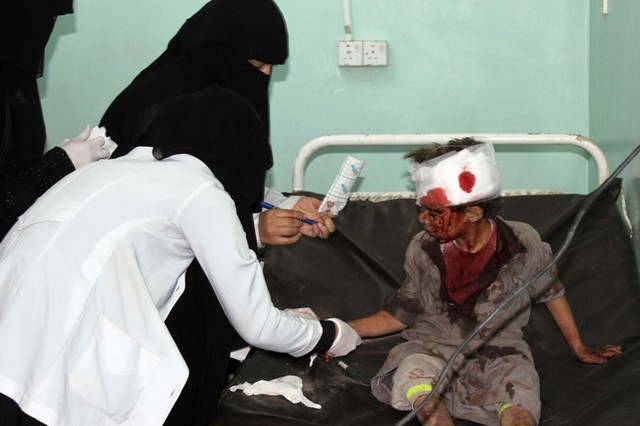
In a recent article, Kathy Kelly points out that ‘Every War Is a War against Children’ and she evocatively documents examples of what this means for those children living in the war zones we call Yemen and Afghanistan. In an earlier article, Kathy questioned the morality of those corporations – such as Lockheed Martin, Boeing, General Dynamics and Raytheon – that profit from the killing their weapons make possible. See ‘Can We Divest from Weapons Dealers?’

Under the leadership of its Vice President, Dr. Steve Rajan, the International Association of Educators for World Peace recently made a preliminary announcement for its latest initiative ‘I Walk for Peace’, a Peace Walkathon in support of the UN International Day of Peace on 21 September 2019. Steve advises that ‘We are planning to mobilize about a million people in all the 14 states in Malaysia to take part in their own locality in celebration of the above event. If we can get the other national Chancellors to do the same, then we could create a global event. Then athletes in their respective countries could be appointed as IAEWP Peace Walkathon Ambassadors. We would be engaging the police, Armed Forces, Scouts Federation of Malaysia, The Red Cross/Crescent as well as the other uniformed enforcement agencies and public universities to participate, in the Peace Walkathon, at their own locations and states.’ Steve also continues to seek out and recruit suitable personnel for key roles in the IAEWP, recently announcing the new National Chancellor of Indonesia.

Remarkable journalist Jonathan Power continues to report what you won’t find in the corporate media. A recent article reviews a forthcoming book that exposes the underside of US foreign policy. You can read about this book in his article ‘The CIA: Surprise, Kill, Vanish’.

A 28-member US peace delegation to Iran from 25 February to 6 March 2019 included Margaret Flowers, Kevin Zeese and David Hartsough. Unfortunately, for Quaker and lifetime peace activist David, author of Waging Peace: Global Adventures of a Lifelong Activist and director of Peaceworkers, his trip didn’t go as planned. If you would like to read a compelling account of his time in Iran with some wonderful Iranians, while learning something about what it means to be on the wrong end of US sanctions, you will find it here: ‘An American Casualty of U.S. Economic Sanctions on Iran’. Glad you got the vital treatment you needed David. Plenty of work for you in this violent world of ours yet, we are sorry to remind you.

On 29 January 2019, the Supreme Court of Pakistan upheld its decision to acquit Ms. Asia Bibi, a Christian mother of five imprisoned and held in solitary confinement on death row for most of the past eight years, after she was convicted of blasphemy and sentenced to death in 2010. Two signatories have reported engagement with this shocking case. René Wadlow, President of the Association of World Citizens based in France, circulated a summary of the facts of the case with a relevant brief history of the issue of religious freedom in Pakistan. He also reported the very negative reaction to the decision within Pakistan where Ms. Bibi originally remained in prison after her acquittal on 29 October 2018 while her lawyer was forced to flee the country for his safety after demonstrations against the Supreme Court decision in the larger cities of Pakistan, with Islamist groups detrimentally focusing on the case. René called those who believe in liberty of conscience and belief to be active on the issue by sending expressions of concern to the authorities in Pakistan as well as strong statements concerning religious liberty and the need to abolish outdated laws on blasphemy. See ‘Pakistan Blasphemy Death Sentence Overturned: A One-time Event or a Trend Toward Justice?’ Pakistani High Court Advocate and Chairman of the Child Rights Committee of the Lahore Bar Association, Waheed Ahmad, also circulated the Supreme Court judgment in the case.

In another evocative reflection, Bob Koehler discusses the difference between what it means to feel (and be) connected and what it means to feel (and be) separated. He considers this question in the context of different issues that confront humanity today: the climate catastrophe, white supremacy, war. You can read Bob’s delightful account in ‘Our Wounded Planet’.

Angie Zelter reports the activities of Trident Ploughshares in the UK. A major action took place on 24 October 2018 when the Burghfield Atomic Weapons Establishment was blockaded by a group of Trident Ploughshares activists from across the UK who blocked the approach roads preventing workers from entering. Hidden in the leafy lanes of Berkshire, Burghfield A.W.E. and it’s partner facility Aldermaston are where the UK’s nuclear warheads are planned and produced before being loaded onto lorries for trucking up public roads to the Trident submarine fleet in Scotland. The Mearings which is a private road with access to the Main gate of AWE Burghfield was blocked at both ends by a car with two people locked to it. The construction gate had a line of five people locked across it with their arms in ‘lock-on’ tubes. 24 October marked 73 years since the birth of the United Nations. ‘The UK government has totally failed to have anything to do with the ground-breaking U.N. Treaty on the Prohibition of Nuclear Weapons.’ The trials for the above actions took place from 22 to 24 April 2019. ‘Trident Ploughshares continues to organize direct action against the nuclear weapons in the UK. This is increasingly important as Trump’s withdrawal from the INF Treaty puts us all in danger.’ You can read more on their website: Trident Ploughshares.

Professor Tarcisio Praciano-Pereira reports grim news from Brazil where, as he expressed it, ‘We didn’t lose the election, it was violated.’ The personal safety of those resisting the dictatorship is clearly far from guaranteed. In solidarity Tarcisio!

Daniel Dalai happily reports his return to his visionary initiative Earthgardens in Guatemala where their programs have proceeded in his absence. Providing opportunities for girls to realize and practice their inherent leadership potential, Earthgardens focuses on the preservation of natural biodiversity and the sustainable satisfaction of local needs. The Sembradores’ model of Girl Power is gaining acceptance as people realize that girls are more efficient, more concerned, and less corruptible in solving the simple problems of local needs. If you haven’t seen the beautiful Earthgardens website, with its stunning photos, you can see what these remarkable girls are doing here: Earthgardens.

In grappling with the struggle to get the core message of Earthgardens out to a wider audience, Daniel reflectively observes as follows: ‘The decision by the Russian Duma to completely separate Russia’s Web from the worldwide Internet is hugely significant. I cannot predict what result it will have in Russia, but we have found here in Guatemala that our efforts to protect biodiversity are squashed and nullified by the persistent SELL SELL SELL of international corporations. Example, Guatemala’s chief import is gasoline-powered automobiles, even as all the roads are rendered useless for hours each day by traffic jams. (Not because of conscious decisions by authorities, but because of the pressure exerted on weak-minded leaders by persistent media-based propaganda and advertising). We have found that the first absolutely necessary requirement of a new green culture is to TURN OFF the yammering blaring errors of the outgoing culture in all the media. Russia has shown it’s possible. A start. A good start, in my opinion.’

Ghanaweb Online News has evolved under the leadership of Gifty Ayim-Korankye who launched a new, bigger and mobile-friendly website to educate her audience on human rights, nonviolent strategies on war, parenting without violence, and ending violence against women and children. In addition, however: ‘I got so sick with violence against women in the news I started “Daughters Of Africa” to empower and educate women in entrepreneurship.’ The latest statistics show that 51% of African women report that being beaten by their husbands is justified if they either go out without permission, neglect the children, argue back, refuse to have sex, or burn the food. ‘Our cultural and social norms encourage these forms of violence. Poverty plays a major role as most of these women who were abused are young girls forced into early marriage without education or skills to stand on their own. As a result, they and their offspring are fully dependent on their abusers and it’s difficult for them to report any incident to their family, let alone report the abuser to authorities because, at the end of the day, they have to go back home and it can only get worse. That is why we empower these women in various types of skills to earn money to be able to care for their children and at the same time end the circle of poverty which leads to domestic violence. You can’t empower without inspiring stories of other women who have made it through difficult times so we share stories to encourage others that no matter how hard your situation is, you can make it through life without violence, in peace, unity and strength.’

Gifty also set up the Twitter feed ‘End it [violence] Now’ which continues to attract significant interest from a diverse range of people around the world. Really appreciate your commitment Gifty!

Karina Lagdameo-Santillan is from Manila in the Philippines and is currently a freelance writer and a volunteer editor for Pressenza International News Agency in Asia. A retired Creative Director and Adperson, she was also a member of the Community for Human Development for many years, a socio-cultural organization of the Humanist Movement dedicated to helping build a culture of peace, non-discrimination, and nonviolence. Karina is a longtime advocate of New Humanism and has helped organize community groups interested in addressing different forms of violence at the grassroots level, facilitated personal and social development workshops to strengthen volunteers, organized different fora and launched campaigns to raise awareness of the need to end all forms of violence.

Pía Figueroa in Chile reports progress in relation to the ‘Pressenza International Press Agency’, the latest organization to endorse the Nonviolence Charter. Pressenza continues to advance its contribution, with a journalism focused on peace and nonviolence, to a world in which all human beings have a place and their rights are fully respected, in a framework of disarmed and demilitarized societies, capable of re-establishing the ecological balance through governments of real and participatory democracy.

Since the last edition of the Nonviolence Charter Progress Report, Pía has been busy organizing the upcoming Latinamerican Humanist Forum in Santiago with the objective of ‘Building Convergences’, as its slogan points out. It will be held on 10-12 May with the participation of many grassroots and social organizations configured on more than twenty nets of NonViolent actions, inspired by the European Humanist Forum that took place in Madrid, Spain, in May 2018, in which Figueroa took place participating in the Media and Social Movements.

Last November, Pressenza celebrated 10 years, a milestone that gave us the occasion to celebrate in more than 40 places of the world.

Before that, during last October, as part of the ‘Pressenza’ team, Pía attended the Media Forum organized in the city of Chongqing, China, by CCTV+ and CGTN. After that, she stopped at New York City, establishing contact with different media partners that, like ‘Pressenza’, contribute every day with news related to the creation of a worldwide atmosphere favorable to Peace and Nonviolence.

Pakistani Canadian scholar Mahboob A. Khawaja, offered this update on the status of his son M. Momin Khawaja, a prisoner of conscience in Canada since 2004. Momin, a computer science graduate and IT entrepreneur, is an inmate at the Bath Medium Security Prison to which he was transferred from high-security last December. This enabled him to resume his interrupted university education. Recently, he was one of the major speakers at the celebration of Black History Month in the prison: the only speaker representing the Bath Institution and its multicultural population of several hundred. He highlighted the power of moral and intellectual freedom as sustainable forces to articulate One People and One Humanity without distinction.

Why was Momin imprisoned? He remains an innocent victim of the politically geared crime of ‘terrorism’, a crime he did not commit, nor was he even charged with it by the government. Yet, the judges sentenced him to a sentence of 10.5 years, which was later increased by the supreme court to Life and 24 years! We continue to appeal to human conscience for justice. During his ten years at the high-security prison, he was kept in solitary confinement continuously for three years, a clear violation of Canadian and international laws. Once in early 2012, he was attacked by another inmate with boiling water causing physical harm to almost 60-70% of his body. The scars of that tormenting experience remain fresh on his body and in his mind. Even so, Momin is true to his spirit of forgiveness, peace and human brotherhood and shares an enlightened vision of the future. Once he is allowed to leave the prison, he will serve the society with his best skills and abilities as before. You can read a fuller account of Momin’s story on his website, add comments and join illustrious individuals such as Noam Chomsky in signing the petition requesting his freedom.

Mahboob’s latest article can be read here: ‘Global Peace and Security: Why Wars on Humanity?’

Ayo Ayoola-Amale in Ghana reports the ongoing fine work of the Women’s International League for Peace and Freedom, Ghana. ‘WILPF Ghana is a member of the Campaign to Stop Killer Robots, the global coalition working to preemptively ban fully autonomous weapons. These weapons systems would lack meaningful human control over the critical functions of selecting and engaging targets. They would cross a moral frontier, create accounting gaps and trigger a host of other serious concerns.

‘WILPF Ghana recognizes how the rapid speed of technological development in the fields of artificial intelligence, life sciences and digital technology is driving the development of new military applications that could result in weapons systems that select and attack targets without further human intervention. Such lethal autonomous weapons systems raise multiple serious ethical, legal, technical, proliferation, and international security concerns. As concerns mount, we are intensifying the work to prohibit killer robots by urging Ghana to actively participate in the negotiation of a new, binding international treaty banning weapon systems that can select and attack targets without human control. Through our letters and meetings with government officials and stakeholders, we have been able to create awareness regarding the urgent need to stop killer robots. We have held Roundtable meetings / Sensitization workshops, seminars and press briefings and rallies on the future of arms control and looming threats such as killer robots.

‘WILPF Ghana was also one of the members of the global coalition of Campaign to Stop Killer Robots that participated in the conference held in March on arms control in Berlin during which Germany, Sweden and the Netherlands signed a declaration at the conference vowing to work to prevent weapons proliferation.’ The conference speakers included Jody Williams, Nobel Peace Prize Laureate, Mary Wareham, Campaign Coordinator of Human Rights Watch, Noel Sharkey, Professor of Artificial Intelligence and Robotics, and Thomas Küchenmeister, Managing Director of Facing Finance (which promotes ‘a more responsible and sustainable financial system’).

West Papuan Akouboo Amatus Douw reports that military conflict in the highlands of West Papua between the West Papua Liberation Army, the military wing of the Free West Papua Movement (OPM), and the occupying military forces of Indonesia has intensified since last year. Nevertheless, as its coordinator for negotiation, he reports that the OPM is willing to negotiate a peaceful settlement of the conflict and has called on the international community to mediate negotiations with Indonesia’s government to achieve that end. He stresses, however, that the OPM would only negotiate with the government of Indonesia through an internationally mediated process, rejecting other forms of internal ‘dialogue’ or ‘consultation’ with Jakarta, citing the farcical Act of Free Choice in 1969, involving just 1025 West Papuan men and women selected by the Indonesian military who were threatened to accept incorporation into Indonesia, and which culminated in that end. ‘That process, orchestrated by Indonesia with the support of the United States and the Netherlands via the United Nations, violated all internationally recognized principles of self-determination and was hence illegitimate.’

Apart from military operations, the humanitarian situation in West Papua continues to deteriorate with the ongoing arrival of thousands of colonial settlers (‘transmigrants’) to occupy traditional lands and marginalize Papuan owners, poor health facilities and limited educational opportunities. With demands for improvement ignored, the Indonesian government has put infrastructure, including road construction, as its priority to mainly benefit its military operations and colonial settlements.

Needless to say, the ongoing Indonesian military and police violence in West Papua results in deaths and significant numbers of displaced people as people flee their villages for the forest. Details of this humanitarian crisis are sporadic, however, because the Indonesian government has banned virtually all media and humanitarian organizations from West Papua.

Amatus has also initiated a petition, which you are invited to consider signing, titled ‘Global Campaign for United Nations Peacekeeping Mission to West Papua’.

In a recent reflection ‘Animating freedom’, Dr.Jason MacLeod has pondered what it means to ‘accompany… Indigenous struggles for decolonization’ based on his nearly 30 years of solidarity work with the people of West Papua, under Indonesian occupation, as they struggle to achieve their right to self-determination. Denied this right by three successive colonizing powers – The Netherlands, Japan and Indonesia – Jason reflects deeply on the traditional Melanesian culture of West Papua – which predates the influence of the cultures of the occupying powers by millennia – noting that whatever damage colonization has inflicted, it has not erased indigenous culture. ‘Papuan ways of knowing, being, and doing, continue.’ And so does Papuan resistance, in many forms, both violent and nonviolent.

Because Jason is not Papuan, he reflects on the importance of five principles – invitation, accountability, non-partisanship, non-interference and nonviolence – in guiding his engagement as a solidarity activist with the people of West Papua.

Separately from this recent reflection to be shared with Friends who have supported his journey, Jason reports ‘that we are developing a nonviolent campaign to disrupt and ultimately stop foreign government support for the Indonesian police and military. We are calling it #MakeWestPapuaSafe. One hope is that this [campaign] will become a vehicle for learning strategy skills.’ Hopefully, we will hear more about Jason’s deepening journey of engagement with West Papuans and this campaign in the next report.

In Afghanistan, the Afghan Peace Volunteers, mentored by Dr. Teck Young Wee (Dr. Hakim), continue their inspirational work in extraordinarily difficult circumstances to bring a green, equal and nonviolent future to Afghanistan and the world. One of Hakim’s recent articles ‘Love Letter 9: From Afghanistan, the Outrageous Abolition of War’ written to 15 year-old Inaam, drew attention to the links between those young people in Afghanistan who struggle to survive in their war-torn country and those Japanese activists, including those in Okinawa, resisting the machinery of war in that country: ‘No to US military bases in Okinawa and Afghanistan!’. Hakim’s grandfather was killed in World War II when the Japanese invaded Singapore.

Kathie Malley-Morrison, professor of psychology at Boston University who specializes in ‘peace studies and in life-span human development’ maintains her own ‘Engaging Peace’ website on which she recently posted her poignant article ‘Honor Thy Children (to save humanity)’.

John McKenna, a leading advocate of disability rights in Australia, has recently ventured into making podcasts as part of his work. To check out his initial efforts, choose from those listed here. Good on you John! Appreciate your thoughtful and fearless advocacy.

David Polden’s ‘Non-Violent Resistance Newsletter’ is published every couple of months and reports news on campaigns of nonviolent resistance in the UK and elsewhere, notably Europe and Palestine. If you would like to receive this valuable Newsletter, you can do so by contacting David at <davidtrpolden@gmail.com> and he will add you to his email list.

The International Movement for a JUST World (JUST), based in Malaysia, continues its high level of insightful engagement in world affairs. The JUST Executive Director, Askiah Adam, reports the following:

‘Given the approach we take, JUST’s struggle for peace has been to focus on imperialism and hegemony. For, without an entity that aims to dominate all of the world, peace would not be as elusive.

‘JUST, therefore, focuses on regions already in chaos and those where the empire looks to throw them into chaos, prevent growth and prosperity and, most all, disrupt national unity so that the state is unable to ward off the chaos that the empire thrives on. Our last year has included talks on the dangers of nuclear wars of any kind. Our speaker for the forum, roundtable and FB Live was Professor Dr.Michel Chossudovsky, chief editor of “Global Research”. And more recently we have been actively doing as much as we can to resist the blatant attempt at regime change in Venezuela.

‘Our President, Dr.Chandra Muzaffar, was speaker at several fora, including a recent one on Yemen and the war that has starved to death some 85,000 children. He spoke, too, of China’s alleged Uyghur problem on FB Live urging China to be more open allowing civil society groups to help prove or disprove the allegations of a million Uyghurs in concentration camps. Throughout the past year, he has remained prodigious in his observations on contemporary issues. His media statements have included comments on “The Significance of Human Duties and Responsibilities” on the occasion of the 70th anniversary of the adoption and proclamation of the Universal Declaration of Human Rights (UDHR). In another JUST press statement he asked a very pertinent question for our times, is China “A New Imperial Power”?

‘When not organizing events on peace and justice on its own, JUST works with other civil society organizations. This practice has been ongoing as in the case of the online Free Tariq Ramadan Asia Campaign, which sought the freedom of a scholar incarcerated in Paris on the basis of accusations that have proven flimsy, at best. His freedom on bail has been very satisfying for JUST as a part of a global campaign.’

Over the past 18 months, Maria Santelli and her colleagues at the Center on Conscience and War in the USA, have been engaging with the activities of The National Commission on Military, National, and Public Service to study whether ‘there continues to be a continuous or potential need for a military selective service process… and if so, whether such a system should include mandatory registration by all citizens and residents, regardless of sex.’ They will make recommendations to Congress next year. You can read more about the CCW’s relentless efforts to end the draft for everyone in the USA on their website: CCW. A long struggle hey Maria?

Joám Evans Pim, Director of the Center for Global Nonkilling (CGNK), recently defended his doctoral thesis titled ‘Verbal and Non-verbal Communication as Evolutionary Restraint Mechanisms for Nonkilling Conflict Management’ at the Åbo Akademi University in Finland. He has kindly made the Introduction to his thesis and three academic articles, including ‘Preventing violence through hip hop: an evolutionary perspective’ available to read from here: ‘Doctoral thesis on nonkilling restraint mechanisms defended in Åbo Akademi University’. We appreciate your fine scholarship Joám and look forward to hearing the final outcome of your thesis.

Commenting on the current project that she is organizing with friends, Lori Lightning outlines the rationale behind ‘Bear Bones Parenting’:

‘There’s no course or exam to pass to become a parent, and most try to figure this out once a parent, and usually in an exhausted overwhelmed state. Bedtimes, meals, chores, and healthy open communication all become a task without a trusted framework in place.

‘Based on 51 years of combined wisdom as educators, counselors, health practitioners, moms, stepmoms and foster moms, Bear Bones Parenting offers an intuitive formula to demystify the basics of parenting and a workbook with tools for reflection and wellness practices to take you actively through day to day living no matter where you are at in your life. You dedicate 15 minutes a day and in trade, top being overwhelmed. A “do it yourself” workbook filled with tools to turn life into what you envision for yourself and your family.

‘Our cast of puppets help to inspire playful reflection on our children’s temperaments and our own. The eventual creation of short videos will be easily accessible for busy parents and provide some examples of how things typically play out with temperaments and inspiration of the Bear way, which is curious, intuitive, firm and loving.

‘We hope that BBP can help reduce parental stress and frustration so there is time to connect in joy and curiosity with our children and foster their independence.’

For more information, you can contact Lori at this email address: <BearBonesParenting@gmail.com>

Anwar A. Khan was born into ‘a liberal Muslim family in Bangladesh’. As a 16-year-old college student, he participated in the ‘Bangladesh Liberation War of 1971, which resulted in the horrendous loss of life, genocide against Bangladesh’s intelligentsia and systematic rapes.’ This experience taught him the nature of the US establishment as he was ‘on the battlefield along with so many friends of mine and Indian soldiers to fight back the obnoxious nexus of the Pakistani military regime and the Whitehouse establishment’ to establish Bangladesh. Khan Bhai went on to complete a post-graduate education, before embarking on a 43-year (so far) business career, involving many different levels of corporate engagement and which took him to many countries of the world, including Venezuela in 2010 where he met both Hugo Chavez and Nicholas Maduro. He also writes regularly in his spare time and recently penned these words in solidarity with the people of Venezuela: ‘The chronicle and fulsomeness of US Meddling in Venezuela’.

But, among many other subjects, Khan Bhai has also recently written about the lax law enforcement that allowed an inferno to occur when a building in suburban Dhaka was illegally used to store chemicals that caught fire killing about 100 people and injuring many as well: ‘After Nimtali, now Chawkbazar inferno hell, a crisis of humanity’.

Once again throwing light on a conflict in a part of the world readily ignored, René Wadlow carefully explains what is taking place in the conflict between pastoralists and (settled) agriculturalists in Mali, which is reflective of such conflicts in other parts of Africa. You can see his informative article here: ‘Dogon-Peul Conflict in Mali Draws U.N. Attention to Broader Settled Agriculturalist-Pastoralists Tensions in Africa’.

Professor John Scales Avery of Denmark recently announced the publication of a new book titled We Need an Ecological Revolution which can be freely downloaded and circulated from that link. In the announcement with the same title, John outlined some basic points of his argument noting that ‘Our present crisis of civilization is unique’ and that ‘Fundamental changes are needed’ if we are to preserve life. He also notes the important learning we can do and the inspiration we can receive by studying the lives of ‘many famous nonviolent revolutionaries’ such as Gandhi. See ‘We Need an Ecological Revolution’. We continue to appreciate the enormous energy you put into this struggle, John.

In this thoughtful debunking of the fallacy that the use of atomic weapons on Japan in World War II saved lives, Professor Timothy Braatz discusses a hypothetical alternative to the use of these weapons if the US had been led by a humane President Harry Truman who abandoned the ‘unconditional surrender’ doctrine and called instead for a ceasefire in the Pacific and peace negotiations based on the notion of ‘positive peace’: the ‘nonviolent resolution of underlying conflicts that otherwise lead to war.’ You can read more about this highly credible and visionary alternative in ‘Atomic Bombs Are Not Lifesavers’.

In an insightful article explaining why hunger in India cannot be addressed simply by reducing waste in the national food system, Professor George Kent writes that ‘One has to pay attention to how the political economy of a place determines who gets what benefits and who gets what harms. This is important in understanding how countries work and also how the world as a whole work.’ You can read more in his fine article: ‘Hunger, Universal Health Care, and the Right to Food in India’.

Lily Thapa, the inspirational founder and leader of Women for Human Rights, Single Women Group (WHR) in Nepal continues her remarkable work to empower widowed women throughout Nepal, South Asia and around the world. Given that WHR focuses on Advocacy and Social Mobilization, Economic Empowerment for Sustainable Livelihood, Sustainable Peace for Human Rights and Justice, Local Governance and Institutional Development, as well as Regional and International Networking to enhance its impact, Lily’s impact is, indeed, far-reaching. For some insight into this, an article published recently will tell you much more. See ‘Nepal’s widows aren’t settling for subjugation any more’. In appreciation Lily!

Professor Richard Jackson, Director of the National Centre for Peace and Conflict Studies at the University of Otago in New Zealand, continues his work teaching, researching, writing and supervising (graduate students) in a range of disciplines including pacifism, nonviolent resistance, peace research and critical terrorism studies. You can learn more about Richard’s remarkable work at his academic website and also his personal website.

Taking up a struggle that afflicts many nations, however, see Richard’s superb account of ‘The Need to Diversify New Zealand’s War Narratives’, written in response to the four-year commemoration of World War I that concluded last November. Richard wrote: ‘In particular, historic and recent commemorations of WWI have largely failed to give a voice to, or adequately acknowledge the narratives of, the thousands of war resisters and conscientious objectors (COs), including many Māori.’ He goes on to argue that ‘The problem with the dominant war-based national identity narrative is that it excludes important voices and distorts the historical record. Aotearoa New Zealand and its people are also home to many long-standing and historic peace traditions, both indigenous and settler, which have also shaped the nation’s character and identity in important ways. Anti-militaristic, nonviolent peace traditions can be seen in the history of Moriori, Waitaha, Parihaka and other indigenous groups, as well as in conscientious objectors and war resisters, the anti-nuclear movement, local activism and many other peace groups operating today. As frequently as ordinary New Zealanders have volunteered to fight, just as many have mobilized to oppose war and violence. Arguably, Aotearoa New Zealand’s national identity today is as much defined by its pacifist and anti-nuclear traditions as it is by its involvement in past wars.’ Richard, fellow Charter signatory Professor Kevin Clements, and a group of others with the same concern established, in 2013, The Archibald Baxter Memorial Trust ‘to build a national memorial to conscientious objectors and undertake educational activities about their role in WWI and beyond.’ Despite ‘official disinterest and continuing attitudes of derision and hostility towards COs… In late 2018, the Trust has secured a site, a design and some initial funding to build the memorial which will commemorate the bravery, sacrifices, stories and voices of those who stood against the tide of war and refused, on the grounds of conscience, to fight and kill.’ Good on you Richard! A tough fight, in itself, as you well know.

Cheryl Anne in the USA continues to reflect on the state of our world, as she astutely observes what is happening around her. ‘If a tree falls in a forest and there’s no human to hear it, does it make a sound? If a million baby cows drown in a flood in Nebraska and the media doesn’t cover it, did it happen? If no one knows about Fukushima, is it real? If we feed our children highly addictive genetically modified high fructose corn syrup and heavily pesticided artificially colored chemically enriched bleached white flour from endocrine disrupting plastic bowls looking the other way, does believing the illusion that such normalcy shared by millions of consumers must be right and good make it right and good? Such is the nature of evil, invisible and long loose in the world, that its ever faithful minions, those that aspire to power and rise to claim leadership, have made the world a playground for psychopaths and narcissists instead of giraffes and toddlers. Trained to neither think nor question, consumers and human resources, once citizens and personnel, obediently believe the illusion that extinct animals will come back and children will find a way to restore the planet we were placed on by God, His serpent cast amidst us testing us for integrity, mettle, and character but instead, off we went shopping to find a good sale on stuff at the mall as advertised on screen. Does sheer willful ignorance or believing the illusion we had to trash the planet absolve us from being responsible for the consequences we collectively bequeathed on the children? Does believing it’s not our fault or there’s nothing we can do mean we don’t have to even try to refrain from buying more stuff or feed the children real food?’

Paul Buchheit continues to draw attention to the grotesque maldistribution of wealth in society by writing articles that, for example, provide some of the detail of how large corporations fail any test that might give them credibility as ‘good corporate citizens’. In this recent article, for instance, he explains how major corporations manage to not only evade tax but to actually secure tax refunds! ‘The big cheat of 2018: Corporations make billions in profits, demand tax refunds from the American public’. Not content with exposing this corporate ripoff, he also explains one way to ameliorate this grotesque inequality as he did in his book Disposable Americans: Extreme Capitalism and the Case for a Guaranteed Income.

Reflecting on John Lennon’s song ‘Gimme Some Truth’, Phillip Farruggio asks why most people these days seem to have so little interest in it. See ‘Gimme Some Truth’.

Dr.Marty Branagan at the University of New England reports that their annual Nonviolence Film Festival runs from 6-10 May at UNE’s Oorala Centre. It will feature films such as Shadow World, Prison Songs and A Simpler Way. On a lighter note, Marty’s latest novel was published recently: ‘Ever wondered what it’s like to feel so strongly about an issue that you’ll go to jail for it? This novel, based on real-life environmental blockades but set within a humorous sci-fi universe, is a journey to the center of nonviolent civil disobedience by an author who has been there repeatedly over decades. In a hilarious romp through the universe, e meet eco-pirates, space heroines, Indigenous people and farmers united against corporate greed, corrupt governments and environmental destruction.’ So check out Marty Branagan’s Locked On.

Jill Gough and our other friends at CND Cymru http://www.cndcymru.org/ continue their campaign with like-minded souls both in Wales and around the world ‘to rid Britain and the world of all weapons of mass destruction’. In the latest edition of their magazine ‘Heddwch’, which is full of news of their activities, one item highlights ‘the health risks of inhaling plutonium and uranium particles from the mud’ that is dumped from Hinkley Point nuclear power station in Cardiff Grounds, less than 2 kilometers from the capital! Unbelievable.

David Buller played the key role in establishing the ‘Australian Living Peace Museum’. While it is a work in progress, the ALPM includes galleries such as ‘Resisting Australia’s Wars’, ‘Peacemakers’, ‘Practicing Peace’ and ‘Reflections on Peace Campaigns’. Given that much of peace movement history is lost, among other benefits this initiative will help to stem the losses by allowing records to be compiled and retained as campaigns and events happen.

Leon Simweragi of the AJVDC Youth Peace group & Green Brigade in the Democratic Republic of the Congo reports as follows: ‘Indeed, we are struggling to empower disadvantaged groups – former child soldiers and women farmers – through environmental education and reforestation projects. We are calling for support for our tree-planting project in Lake Kivu Basin, Eastern DRC. We expect to plant one million trees by 2020 and we are calling for interested people to restore degraded lands in this region, which has been adversely impacted by war, other conflicts and climate change. This project will reduce poverty and fight against climate change.’ You can see more on their website: Association de Jeunes Visionnaires pour le Développement du Congo.

Vijay Mehta in the UK advises the ongoing efforts and progress of Uniting for Peace, of which he is Chair. Vijay is an author and long-time peace activist whose books include The Economics of Killing and Peace Beyond Borders. His latest book, How Not To Go To War: Establishing Departments for Peace and Peace Centres Worldwide – described in the last report – has now been published and is stirring up considerable interest keeping Vijay busy with book talks, interviews and other engagements. The book was endorsed by such luminaries as Jeremy Corbyn, Leader of the Labour Party in the UK, and His Holiness the Dalai Lama, Nobel Peace Prize Laureate in 1989, and can be accessed here: How Not To Go To War. Vijay was also interviewed about this book by fellow signatory David Swanson on ‘Talk Nation Radio’ in the USA where David noted that The Sunday Times, in its edition of 1 February 2009 described Vijay as a ‘longstanding activist for peace, development, human rights and the environment, who along with his daughter Renu Mehta has set a precedent for striving to change the world’. We appreciate your inspirational example, Vijay.

Ina Curic in Romania spent some time in Zambia recently and continues her work to create beautiful illustrated children’s books that focus on empowering children with the learning to live healthily and meaningfully, and to deal effectively with conflict in their lives. Following the publication in 2018 of Queen Rain, King Wind: The Practice of Heart Gardening and Anagrania’s Challenge: Turning Conflict into Opportunity, her most recent book due for publication shortly is Uniconn(ed). You can read more about Ina and access all of her superb books at ‘Imagine Creatively’.

Graham Peebles in the UK reflects thoughtfully on ‘A World Divided by Ideologies’ in his recent article and suggests steps that might be taken ‘to create a unified harmonious world’. Good on you Graham!

Ella Polyakova and her colleagues at the Soldiers’ Mothers of Saint-Petersburg in Russia continue their fine work to defend the rights of servicemen and conscripts by making sure that individuals are equipped with knowledge of their rights, the law and all relevant circumstances to be able to take responsibility for defending themselves from abuse.

In Hawai’i, Jim Albertini and fellow activists and associates of the Malu ‘Aina Center for Non-violent Education & Action, which organizes the weekly Hilo Peace Vigil, now in its 920th week, at the downtown post office from 3:30-5pm on Fridays, recently handed out a leaflet titled ‘War with Russia?’ explaining some of the extraordinary damage, including the heightened risk of ‘catastrophic nuclear confrontation with Russia’, caused by the whole ‘Russiagate’ episode: ‘Former CIA Director John Brennan and former Director of National Intelligence James Clapper are key figures, along with mainstream media parrots, in fueling the new demonization of Russia on behalf of the U.S. Military Industrial Complex.’ Deeply appreciate your perseverance Jim and that of your fellow activists at the Malu ‘Aina Center. As a matter of interest, has any other individual or group also undertaken a weekly event of significant length? We would love to report it next time!

Bruce Gagnon and the Global Network Against Weapons & Nuclear Power in Space is conducting another ‘bridge-building mission’ to Russia from 25 April to 10 May 2019. Bruce, who is the GN Coordinator, explained the purpose of the visit: ‘Our primary goal is to stand against the constant demonization of Russia, which is being used to justify U.S.-NATO military expansion up to Russian borders.’ GN Chair Dave Webb (of CND-UK) adds: ‘We want to see and hear for ourselves what Russia is really like. We want to meet with Russian citizens, teachers, students, political leaders, journalists and others in order to listen and ask questions, so we get unfiltered information.’ Also helping to facilitate this understanding, in a recent edition of ‘This Issue’, Bruce interviewed Russian Tanya Burkharina on the subject ‘What’s Going On In Crimea?’ If you like, you can also see a list of Bruce’s broadcast interviews at Bruce Gagnon TV.

Displaying his usual doggedness, Dr Gary G. Kohls has been relentless in his efforts to alert ‘everyone’ (from so-called ‘authorities’ to media personnel to ‘ordinary’ people) to the ongoing dangers of Big Pharma’s excessive and highly profitable promotion of over-vaccination to the staggering health cost of vast numbers of people because the risks are simply not widely or well known among those unfortunate enough to fall victim to their doctor’s scare-mongering inducement to over-vaccinate children, particularly in many western countries. In just one of his well-researched and documented but highly readable articles, Gary offers ‘A Comprehensive List of Vaccine-Associated Toxic Reactions’. In another, Gary explains ‘Why Children that Have Been Recently Vaccinated with Live Virus Vaccines Should be the Ones that Are Isolated (Rather than the Healthy Unvaccinated Ones)’. Despite the critically adverse health impacts of these vaccines, you won’t find mention of it in any corporate news outlet. Fortunately, Gary and others who work in this field are nevertheless gaining traction in the struggle to remove this health and life-threatening scourge to our children. If you would like to receive Gary’s distributions on this and other equally important health issues, you can contact him here: “Gary G. Kohls, MD” <ggkohls@mydutytowarn.org> Genuinely appreciate your commitment and tenacity, Gary.

Annette Brownlie has advised that the Independent and Peaceful Australia Network (IPAN) will conduct their annual national conference on the subject ‘Australia at the crossroads: Time for an independent foreign policy’ in Darwin from 2-4 August 2019. The subjects to be considered include why Australia needs an independent foreign policy, the extent of foreign military facilities in Australia, the impact of militarism on the environment and the costs of militarism to Australians. Among other speakers, there will be a video link with fellow signatory Abby Martin of ‘The Empire Files’.

While this interview is from a couple of years ago, it provides considerable insight into the shaping of the mind of Gary Corseri and, like many personal histories, is entertaining too! See ‘Not only neocons but “neo-liberals” see no space between the interests of the US and Israel!’ Enjoyed the read, Gary!

Professor Mazin Qumsiyeh is volunteer Director of The Palestine Institute for Biodiversity and Sustainability (PIBS) and the Palestine Museum of Natural History (PMNH) but he is also actively engaged in the Palestinian struggle for liberation from Israeli occupation. As he evocatively noted in a recent Easter reflection: ‘This is the tenth Easter I celebrate after returning to Palestine in 2008. When we native Christian Palestinians have a few moments to meditate and reflect in this season, we reflect that some 2.5 billion human beings believe in a message that originated with a Palestinian baby born in a manger here and was crucified for being the first revolutionary Palestinian to push for caring for the sick and the poor.

‘We reflect on the real message of Jesus, a message of love and coexistence. The harsh reality on the ground reminds us of our responsibility to shape a better future.

‘We are hopeful because we take a long view of history. Some 150,000 years ago, humans migrated from Africa using Palestine as the passageway to Western Asia and then the rest of the world. 12,000 years ago, this area became the center of development for agriculture (the Fertile Crescent). This was where we humans first domesticated animals like goats and donkeys and plants like wheat, barley, chickpeas, and lentils. This transformation allowed our ancestors time to evolve what we now call “civilization”. Hence, the first writings, the first music, and art, and the first thoughts of deities. From our Aramaic alphabet came the Latin, Arabic, Syriac, and Hebrew alphabets. Aramaic was the language of Jesus and much of our current Palestinian Arabic is still Aramaic words.’

Mazin continues to travel regularly, lecturing about initiatives of the museum but also about the political reality in Palestine. If you would like to volunteer to assist the museum’s projects or to donate money, books, natural history items or anything else that would be useful, you are welcome to contact Mazin and his colleagues at <info@palestinenature.org>

In March, ‘Nuclear Resister’ coordinators Felice and Jack Cohen-Joppa were at the Pacific Life Community (PLC) gathering, which concluded with the arrest of 11 activists during a blockade of Lockheed Martin in Sunnyvale, California. PLC is a network of spiritually motivated activists from the U.S. Pacific coast and other western states who are committed to nonviolent action for a nuclear-free future. In Tucson, the ‘Nuclear Resister’ continues to join with activists from Veterans for Peace and other groups for two monthly peace vigils at Raytheon Missile Systems and Davis Monthan Air Force Base.

Felice and Jack are working on issue #191 of the ‘Nuclear Resister’ newsletter, which has had the same focus since 1980: to report on anti-nuclear and anti-war resistance actions and support people who are incarcerated as a result of these acts of conscience. You can read more at Nuclear Resister and for a free sample copy send your name and postal address to “Felice & Jack Cohen-Joppa” <nukeresister@igc.org> Among those currently behind bars are U.S. Army whistleblower Chelsea Manning, who was recently sent to prison again after refusing to cooperate with a grand jury investigation into WikiLeaks; Salvatore “Turi” Vaccaro, who was sentenced to nearly a year for damaging a U.S. MUOS satellite communication station in Sicily; and Fr. Steve Kelly, SJ, Charter signatory Elizabeth McAlister and Mark Colville, who have been in jail for the past year after their nuclear disarmament action at the Trident nuclear submarine base in Kings Bay, Georgia along with the other four Kings Bay Plowshares activists who are out on bond with ankle bracelets. All seven await court decisions on pre-trial motions. You can join several Nobel peace laureates in signing a petition calling for the dismissal of charges against the Kings Bay Plowshares and for a renewal of the movement to abolish nuclear weapons: ‘The Kings Bay Plowshares 7 petition’.

Gar Smith and his fellow activists at ‘Environmentalists Against War’ continue their efforts to ‘Stop the war against the planet and all its peoples’. Making the clearcut link between war and destruction of the environment, Gar works to mobilize environmentalists to see war as a key threat to the biosphere and its inhabitants. You can see their website at Environmentalists Against War.

Tess Burrows in the UK continues her efforts to use adventure to inspire activism. Tess is ‘dedicated to the pursuit of World Peace and the healing of the Earth. I passionately believe that we are making a difference by collecting thousands of Pledges for the Environment and Messages of Peace to carry to the far corners of our planet. This is in the long-held tradition of Himalayan prayer flags which are flown high to help bring peace and harmony to all beings.’ Tess has a degree in ecological science from Edinburgh University but her early working life was as a forester growing trees on a farm in Australia. Tess returned to the UK as a single mother devoted to her three boys and experienced a life-changing moment when she knew it was time to ‘work for the Earth’. Tess has subsequently undertaken many events for charity. These have included hanging a ‘Save Antarctica from mining’ banner on the Old Man of Hoy, an intercontinental U.N. climb on the Eiger and a protest climb on Rio’s Sugar Loaf to stop street children being murdered. But so that she doesn’t get bored just climbing, Tess also cycles, runs, walks and parachutes as fundraisers for environmental, animal and educational projects. ‘I enjoy being a healer in the White Eagle tradition, an inspirational speaker and a best-selling author.’ Tess has been ‘featured in the national press as a 50 yr old living the life of a 20 yr old. Now in my 60s and blessed with four beautiful grandchildren, my claim to fame is as the first and only grandmother to race to the South Pole!’ For more, if you are not exhausted already, see her website: Tess Burrows.

Dr Maung Zarni of Burma/Myanmar perseveres in his relentless efforts to draw attention to the plight of the Rohingya in Burma as they continue to suffer the genocidal assault of the Tatmadaw, the Burmese military, with the active support of prominent Buddhist monks and the silent complicity of Aung San Suu Kyi and the local Catholic clergy, among others. In this thoughtful article, Zarni explains why the recent decision by the UN to conduct an investigation into the evidence of international crimes committed by Myanmar against the Rohingya is fatally flawed and ‘will NOT end Myanmar genocide nor will it deliver what Rohingyas as a community need’. See ‘KEY FACTS ABOUT the newly established UN-mandated International Independent Mechanism, ICC or ad hoc tribunal on Myanmar’.

Sami Awad, who is Director of the Holy Land Trust based in Bethlehem, Palestine, and many colleagues, associates and friends continue their exceptional work to create a just and peaceful Middle East. Based on principles of empathy and compassion, nonviolence, community and individuality, equality and justice, trust and respect, and spirituality, the Holy Land Trust encourages people to travel to bear witness and meet those who are marginalized, teaches in order to help build communities where love, peace, justice and equality are at their core, opens space for the healing of the historic wounds and narratives that have shaped us to live in fear, and opens up space for new visions of the future to become possible. Sami makes it clear that you are most welcome to be part of these initiatives.

Finally, as promised, here is the full tribute to Tom Shea by his great friend and fellow nonviolent activist, Leonard Eiger:

‘For Tom Shea, Peace WAS the Way

‘My dear friend and fellow Ground Zero member Tom Shea passed away peacefully in the early morning hours of April 3rd surrounding by his family.

‘Earlier in his life Tom had been a Jesuit, a high school teacher, and had started an alternative high school and Jesuit Volunteer Corp: Midwest. He had also been involved in social justice issues on the national level with the Jesuits. Ground Zero member Bernie Meyer remembers Tom with great fondness, from being a student at St. Ignatius High School in Cleveland where Tom was teaching, to resisting together at Ground Zero many years later.

‘Tom was 47 when he left Cleveland for Traverse City, Michigan in 1977. There he met his partner Darylene, and they were inseparable from then on. Together, they participated in the Nuclear Freeze movement and were part of the Michigan Peace Team. They traveled to New York for the second Conference on Disarmament in 1982. They protested both the first Gulf War and the war in Iraq. They also engaged in war tax resistance.

‘At Darylene’s suggestion, they attended a course in conflict mediation in the early ’80s at a time when there was little written on the subject. That experience led them to a course taught by Quakers at Swarthmore College in 1986. In 1990 Tom and Darylene founded the five-county Conflict Resolution Service in Northern Michigan and trained the first group of volunteer mediators. Their mission was to promote peace and civility in the community through the use of mediator guided dialogue. In the early days of the program, volunteers met in church basements and around kitchen tables to train, role play and share experiences. The would travel to the homes of people needing mediation, focusing on resolving family and neighborhood conflicts.

‘Tom and Darylene moved to Snoqualmie, Washington in 2007 to spend more time with Darylene’s children. Tom got involved in community issues and continued his war tax resistance work. You could find him every April 15th, in front of the local post office, offering tax resistance information.

‘I was still leading a social justice ministry at the Snoqualmie United Methodist Church when one day Tom called the church office and asked who was doing social justice work in the area. We connected immediately due to common work and friends. Soon, Tom and I were making the pilgrimage together across the water to Ground Zero Center for Nonviolent Action, and the rest (as they say) is history.

‘I have spent countless hours with Tom and Darylene, discussing world affairs and working together on strategies and tactics for our work with Ground Zero. Tom and Darylene have been inseparable as both life partners and co-conspirators for peace. Tom once said that Darylene is like a Jesuit herself: “Jesuits are taken as very scholarly people and she’s very scholarly.”

‘In addition to working on media and communications for Ground Zero, and planning vigils and nonviolent direct actions at the Bangor Trident nuclear submarine base, Tom put himself on the line many times, often entering the roadway blocking traffic, both on the County and Federal sides, symbolically closing the base and risking arrest. Tom also created street theatre scripts that have been used during vigils at the submarine base to entertain and educate people.

‘Robert Burrowes, who co-founded “The People’s Charter to Create a Nonviolent World”, said that, “Tom was one of the true legends in my life. A long-standing symbol of, and nonviolent fighter for, everything that could be in our world.” When all is said and done, Tom’s life can be summed by A.J Muste: “There is no way to peace. Peace is the way.”

‘We will be scattering some of Tom’s ashes (per his wishes) at Ground Zero Center during our August Hiroshima-Nagasaki weekend of remembrance and action.

‘I invite you to honor Tom’s memory by supporting the work of the National War Tax Resistance Coordinating Committee. There are many ways we can engage in war tax resistance in the context of a broad range of nonviolent strategies for social change.’

While diminished by the passing of Tom, the Ground Zero Center for Nonviolent Action continues ‘to explore the meaning and practice of nonviolence from a perspective of deep spiritual reflection, providing a means for witnessing to and resisting all nuclear weapons, especially Trident. We seek to go to the root of violence and injustice in our world and experience the transforming power of love through nonviolent direct action.’ You can read about their ongoing efforts on their website, Ground Zero, which also features a ‘Current Action Alert: Stop the “Low-Yield” Trident Warhead!’

We have no doubt that all Charter signatories will mourn the loss of a great nonviolent activist. Vale Tom Shea.

Well, as indicated above, an inadequate summary but it gives you some idea of our shared efforts.

Finally, if you or someone you know has the means and inclination to do so, any financial support for Anita and Robert to help us do this work will be much appreciated. You can see how here.

In appreciation of all of your efforts (including all of those not mentioned above)…

And don’t forget to write to us with a report on what you do!

For a world without violence; Robert, Anita and Anahata

P.S. This Charter progress report is being emailed, in a sequence of emails, to all signatories of the Nonviolence Charter for whom we have a current email address. It will also be published in the next TRANSCEND Media Service Weekly Digest.

Anita McKone, Anahata Giri and Robert J. Burrowes

Australia

Email: flametree@riseup.net

2 May 2019

Source: www.pressenza.com

Guaidó launches abortive military coup in Venezuela | Bill Van Auken

By Bill Van Auken

A coup attempt launched Tuesday morning in Venezuela, distinguished by the brazen criminality of the US government in supporting and orchestrating it, appeared to have failed miserably by nightfall.

The attempt was launched with the posting of a video by the US-backed right-wing puppet Juan Guaidó, backed by a few dozen men in military uniform outside the La Carlota air base in Caracas, calling for the military to rise up against the government of President Nicolás Maduro. While the attempt led to violent street clashes and rival demonstrations by supporters and opponents of Maduro, it provoked no significant military revolt.

Coming more than three months after Guaidó, on January 23, proclaimed himself the country’s “interim president,” an action directly coordinated with and immediately supported by Washington, Tuesday’s coup attempt took place amid flagging popular support for the right-wing opposition that has served as the political base for the US regime-change operation.

By late Tuesday, no military base had been taken by the opposition and no major figure in the Venezuelan armed forces had declared support for Guaidó. While the “interim president” had picked the La Carlota air base as the backdrop for his video, there was no indication that any personnel there were supporting his provocation. The choice of the base was determined, rather, by its proximity to the wealthiest districts of eastern Caracas, the traditional base of the right-wing opposition.

The most significant development in the launching of what Guaidó termed “Operation Liberty” was the presence by his side of Leopoldo López, the leader of the extreme right-wing political party Voluntad Popular (Popular Will) of which Guaidó is a member.

López, a scion of one of Venezuela’s most aristocratic families, has been under house arrest since 2017 after being convicted on charges of organizing a violent campaign in 2014 known as “La Salida,” or the exit, aimed at overthrowing the Maduro government. In 2002, he was one of the leaders of the abortive CIA-backed coup attempt against then-President Hugo Chávez.

The overthrow of Maduro, while ostensibly transferring the government to Guaidó, who before his self-swearing-in as “interim president” last January was virtually unknown in Venezuela, would in reality place the reins of power in the hands of López, an arch-reactionary and long-time CIA asset.

By late Tuesday afternoon, however, López and his family had sought asylum in the Chilean embassy in Caracas. Similarly, some 25 Venezuelan military personnel who had joined Guaidó’s coup attempt sought refuge in the embassy of Brazil.

Dozens of other Venezuelan soldiers told the country’s news media that they had been tricked into participating in the provocation staged outside the La Carlota air base, awakened at three in the morning and told to grab their rifles and turn out for an important event where they would receive medals.

Guaidó’s provocation triggered a Twitter storm from the top echelons of the US government signaling support for the coup on Tuesday morning.

“I am monitoring the situation in Venezuela very closely,” President Trump tweeted. “The United States stands with the People of Venezuela and their Freedom!”

Secretary of State Mike Pompeo tweeted that the United States “fully supports” the protests. Vice President Mike Pence tweeted a message to “all the freedom-loving people of Venezuela who are taking to the streets today in #operacionlibertad—Estamos con ustedes! We are with you! America will stand with you until freedom & democracy are restored.”

Right-wing governments in Latin America, including those of Jair Bolsonaro in Brazil, Iván Duque in Colombia and Mauricio Macri in Argentina, also issued statements of enthusiastic support for the coup attempt.

By Tuesday afternoon, however, Brazil’s minister of institutional security, the retired general Augusto Heleno, issued a frank assessment of the day’s actions, declaring that, while there had been “certain support from the armed forces… this didn’t reach a high level.” He added that Brazil did not see any solution to the Venezuelan crisis “in the short term.”

One clear signal of Washington’s direction of the abortive coup attempt was a meeting the day before in Washington between Pompeo and Ernesto Araújo, the foreign minister of the government of Brazil’s fascistic President Bolsonaro, the strongest Latin American ally in the US regime-change operation in Venezuela. A State Department press release said that the two had discussed “defending human rights and democracy in Venezuela.” Early on Tuesday, Araújo issued a statement declaring that it was “positive that there is a movement of the military that recognizes the constitutionality of President Juan Guaidó.”

Washington’s response to the faltering coup attempt in Venezuela was delivered by Trump’s right-wing national security adviser John Bolton in a press conference outside the White House Tuesday afternoon. He described the situation as “very delicate” and insisted, despite all evidence to the contrary, that what was taking place in Caracas was “clearly not a coup.”

Oddly, he mentioned three times the names of three high-ranking Venezuelan officials, whom he claimed had made “commitments to achieve the peaceful transfer of power” to the US puppet Guaidó, insisting that they had to “act this afternoon or this evening to bring other military forces to the side of the interim president.”

One of those named was Vladimir Padrino, Venezuela’s defense minister. In the course of the day, however, Padrino issued a statement in front of massed officers denouncing Guaidó’s action as “a cowardly terrorist act and a coup attempt on a very small scale.” Padrino declared that “80 percent of the troops who responded to this call were tricked,” adding, “We hold responsible for any bloodshed the fascist, anti-patriotic leadership.”

The second official named by Bolton was the head of Venezuela’s Supreme Court (TSJ), Maikel Moreno. During the day, the TSJ issued a statement condemning the “attempted coup against the Constitution and the laws of Venezuela on the part of a group of military deserters acting together with elements of the national right wing.”

The third official was the commander of the presidential guard, Iván Rafael Hernández Dala, who was still in the Miraflores presidential palace, which was surrounded by thousands of demonstrators opposing the coup attempt.

Bolton addressed a tweet to the three men saying it was their “last chance” to be absolved of US sanctions or “go down with the ship.” Bolton suggested that the three officials had been prevented from keeping their “commitment” by Cuba and Russia.

“The Cubans, we believe, have played a very significant role in propping Maduro up today, possibly with help from the Russians,” Bolton said.

Similarly, Secretary of State Mike Pompeo made the claim, repeated as fact by the US corporate media, that Maduro had been on the verge of fleeing to Havana on Tuesday, but had been dissuaded from going only by the Russians.

Bolton repeated the incessant threat of the Trump administration: “I will say again, as the president has said from the outset, and Nicolás Maduro and those supporting him—particularly those who are not Venezuelans—should know is, all options are on the table.”

Trump, meanwhile, stepped up US threats against Cuba, threatening to impose a “total embargo” on the island.

Washington’s regime-change operation is aimed not only at asserting unrestricted exploitation of Venezuela’s oil reserves—the largest on the planet—by US-based energy conglomerates, but also at reasserting US hegemony over all of Latin America and countering the growing challenge particularly from China, the continent’s largest source of investment, but also from Russia.

The “all options on the table” threats are increasingly directed at not just the Maduro government in Caracas, but also against US imperialism’s nuclear-armed rivals.

As for US plans in Venezuela, one indication of an escalation came with a report that Erik Prince, the billionaire head of the military contractor formerly known as Blackwater and brother of Trump’s Education Secretary Betsy DeVos, had floated a plan for sending 5,000 mercenaries recruited from among former Latin American soldiers into Venezuela to support Guaidó’s coup attempt.

While the initial coup attempt on Tuesday appears to have failed, the dangers confronting the Venezuelan working class remain intense. It cannot rely on the Maduro government, which represents one faction of Venezuela’s financial and corporate elite, having its principal pillar in the Venezuelan military and enjoying the backing of the so-called boliburguesía, a layer of corrupt officials and capitalists who have fattened off of financial speculation and government contracts.

These layers are hardly immune to the immense pressure being placed upon Caracas by US imperialism.

Should the so-called “democratic transition” promoted by Washington prove successful, it will result in the imposition of an extreme right-wing US puppet regime that will carry out a ruthless and bloody campaign of repression against the working class in the interests of Big Oil and international finance capital.

The working class in the US must oppose US intervention and reject the “democratic” pretensions of the likes of Trump, Pence, Pompeo and Bolton with the contempt they deserve. It is up to the working class of Venezuela to settle accounts with Maduro and the corrupt capitalist elements he represents, not the US military and intelligence apparatus and its right-wing puppets.

Originally published in WSWS.org

1 May 2019

Source: countercurrents.org
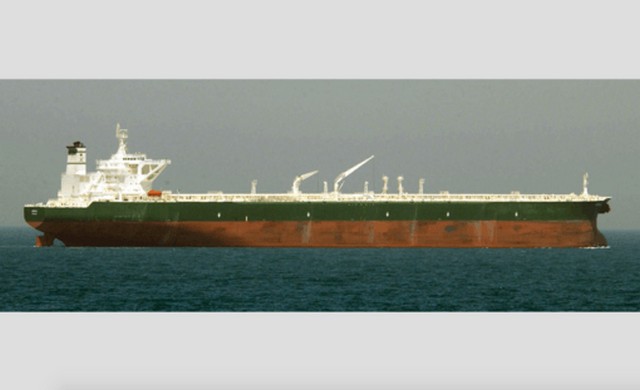
Venezuela – Another Failed Coup Attempt – What’s Next? | Peter Koenig

By Peter Koenig

In the early morning hours of 30 April, 2019, the self-declare “Interim President”, Juan Guaidó, launched what at first sight appeared to be a military coup – Guaidó calls it “Operation Freedom” (sounds very much like a Washington-invented title) – against the democratically elected, legitimate government of Nicolas Maduro. With two dozen of defected armed military from the Carlota military base east of Caracas (not hundreds, or even thousands, as reported by the mainstream media), Guaidó went to free Leopoldo Lopez, the opposition leader, who was under house arrest, after his 13-year prison sentence for his role in the deadly 2014 anti-government protests, was commuted. They first called for a full military insurrection – which failed bitterly, as the vast majority of the armed forces are backing President Maduro and his government.

As reported straight from Caracas by geopolitical analyst, Dario Azzelli, Guaidó and López rallied from the Plaza Altamira, for the people of Venezuela to rise up and take to the streets to oust President Maduro. According to them, this was the ‘last phase’ of a peaceful coup to bring freedom and democracy back to Venezuela. The nefarious pair issued a video of their “battle cry” which they broadcast over the social media.

They mobilized a few hundred – again not thousands as pers SMS – right-wing middle to upper class protestors and marched towards the Presidential Palace. On the way, they were confronted by the Venezuelan Civil Guard with tear gas – not even the military had to intervene – and only few protestors reached Miraflores which was protectively surrounded by thousands of Chavistas. And that was basically the end of yet another failed coup.

Leopoldo López was seeking asylum in the Chilean Embassy which rejected him, and now, it looks like he found his refuge in the Spanish Embassy. This is a huge embarrassment and outright shame for Spain, especially after the Socialist Party, PSOE, just won the elections with 29%, though not enough to form a government by its own, but largely sufficient to call the shots as to whom should be granted asylum on their territory. Looks like fascism is still alive in Spain,if Pedro Sanchez is not able to reject a right-wing fascist opposition and illegal coup leader of Venezuela to gain refuge on Spain’s territory.
As to Guaidó, rumors have it that he found refuge in the Brazilian Embassy, though some reports say he is being protected by his Colombian friends. Both is possible, Bolsonaro and Duque are of same fascist kind, certainly ready to grant criminals – what Guaidó is – asylum.

What is important to know, though, is that throughout the day of the attempted coup, 30 April, the US State Department, in the person of the pompous Pompeo, accompanied by the National Security Advisor, John Bolton, kept threatening President Maduro in a press round. Pompeo directly menaced President Maduro, saying – “If they ask me if the US is prepared to consider military action [in Venezuela], if this is what is necessary to restore democracy in Venezuela, the President [Donald Trump] has been coherent and clear: The military option is available, if this is what we have to do.” – These threats are repeated throughout May 1 – day after the Venezuelan attempted coup defeat by both Pompeo and warrior Bolton.

Pompeo’s audacity didn’t stop there. He went as far as suggesting to President Maduro to flee to Cuba and leave his country to those that will bring back (sic) freedom and democracy.

Let’s be clear. Although this has been said before – it cannot be repeated enough for the world to understand. These outright war criminals in Washington are in flagrant violation of the UN Charter to which the US is – for good or for bad – a signatory.

UN Charter – Chapter I, Article 2 (4), says:
All Members shall refrain in their international relations from the threat or use of force against the territorial integrity or political independence of any state, or in any other manner inconsistent with the Purposes of the United Nations.

We know that the White House, Pentagon and State Department have zero respect for the UN, and, in fact, use the international body for their purposes, manipulating and blackmailing its members into doing the bidding for the US. That is all known and has been documented. What is perhaps newer is that this is now happening, especially in the cases of Venezuela and Iran, openly, in unveiled flagrant disrespect of any international law, against bodies and sovereign countries that do not bend to the whims and will of the United States.

As a result of this open violation of the UN Charter by the world’s only rogue state, some 60 UN member nations, including Russia and China, have formed a solid shield against Washington’s aggressions. The group was created especially in defense of Venezuela, but is also there for Iran and other countries being aggressed and threatened by the US. Hence, the blatant blackmailing and manipulation of weaker UN member countries becomes more difficult.

To be sure, the Russian Foreign Ministry has immediately condemned the coup as illegal and warned the US of any military intervention. This is of course not the first time, but just to be sure –Russia is there, standing by her partner and friend, Venezuela.

This Guaidó–Lopez attempted coup was most certainly following instructions from Washington. Super-puppet Guaidó, US-groomed and trained, then self-declared “presidenteinterino”, would not dare doing anything on his own initiative which might raise the wrath of his masters. But would the US – with all her secret services capacity – seriously launch a coup so ill-prepared that it is defeated in just a few hours with minimal intervention of Venezuelan forces? – I doubt it.

What is it then, other than a planned failure? – A new propaganda instrument, for the corporate MSM to run amok and tell all kinds of lies, convincing its complacent western public of the atrocities produced by the Maduro regime, the misery Venezuelan people must live, famine, disease without medication, oppression by dictatorship, torture, murder – whatever they can come up with. You meet any mainstream-groomed people in Europe and elsewhere, even well-educated people, people who call themselves ‘socialists’ and are leading figures in European socialist parties, they would tell you these same lies about misery caused by the Maduro regime.

How could that be – if the Maduro Government doesn’t even arrest Juan Guaidó for his multiple crimes committed since January, when he self-proclaimed being the ‘interim president’ of Venezuela. Arresting him, for the coup attempts he initiated or was party to since his auto coronation to president. That’s what a dictator would do. That’s what the United States of America, would have done a long time ago. Washington and its internal security apparatus would certainly not tolerate such illegal acts – and to top it off – foreign manipulated political illegality.

Why for example, would the media not point out the real crimes of the US vassals of South America, like Colombia, where over 6 million people are internal and external refugees, where at least 240,000 peasants and human rights activists were massacred and many were burned by US-funded paramilitary groups, atrocities that are ongoing as of this day, despite the November 2016 signed “Peace Agreement” between the then Santos Government and the FARC – for which President Manuel Santos received the Nobel Peace Prize. – Can you imagine!

What world are we living in? A world of everyday deceit and lies and highly paid lie-propaganda, paid with fake money – fake as in indiscriminately printed US-dollars – of which every new dollar is debt that will never be paid back (as openly admitted by former FEDs Chairman, Alan Greenspan); dollars that can be indiscriminately spent to produce the deadliest weapons, as well as for corporate media-propaganda lies – also a deadly weapon – to indoctrinate people around the globe into believing that evil is good, and that war is peace.

I have lost many friends by telling them off, by telling them the truth, the truth about Venezuela, Cuba, Iran, Syria – mostly to no avail. It’s actually no loss; it’s merely a repeated confirmation of how far the western society has been veered off the path of conscience into a comfort zone, where believing the propaganda lies of reputed media like The Guardian, NYT, WashPost, BBC, FAZ, Spiegel, Le Monde, Figaro, el País, ABC — and so on, is edifying. They are so convincing. They are so well-reputed and well-known. How could they lie? – No loss, indeed.

Let’s stay on track, comrades. Venceremos!

Peter Koenig is an economist and geopolitical analyst.

2 May 2019

Source: countercurrents.org
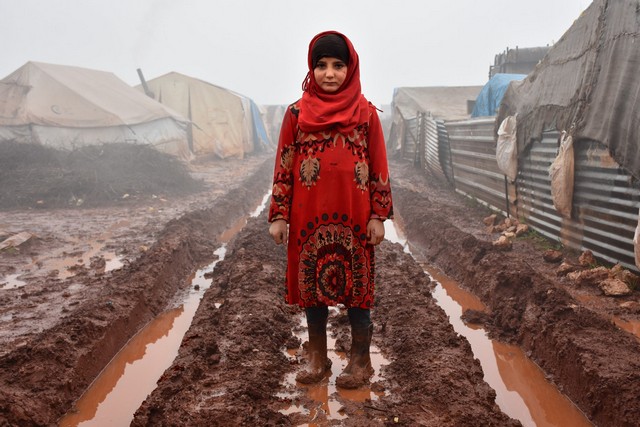
Reporter Sharmine Narwani on the Secret History of America’s Defeat in Syria

By Patrick Lawrence

21 Apr 2019 – After years covering the “main battlefield in World War III,” Narwani says everything you think you know is wrong.

When the war in Syria was recently declared decisively over, there were few correspondents or witnesses to turn to for a credible look at exactly what happened during eight years of conflict. The questions were many, but I could count on one hand those worth putting them to. Among these was Sharmine Narwani, whose work I have long counted distinctly thorough and honest amid coverage that — in her view as well as mine — hit a new low by way of collapsed professional standards and abandoned ethics. Narwani’s pieces, written for a variety of publications, consistently reflect her hard work on the ground — work nearly no one else did. She is eyes wide open and beholden to no national interest or media slant.

Narwani brings impressive credentials to the craft. After earning a masters in journalism from Columbia, she was for four years (2010–14) a senior associate at St. Antony’s College, Oxford. It was during those years that she began to make her mark covering the Middle East from her bureau-of-one in Beirut. Her accounts of the war as it truly unfolded have opened many eyes over the years, mine included.

Having witnessed the Syrian war from start to finish, she now casts it in a usefully broad context. “The Syrian conflict constitutes the main battlefield in a kind of World War III,” she said during our lengthy exchange. “The world wars were, in essence, great-power wars, after which the global order reshuffled a bit and new global institutions were established.” This, in outline, is what Narwani sees out in front of us, now that the Western powers’ latest “regime change” operation has failed.

Narwani and I conducted our exchange via email, Skype and WhatsApp over a period of several weeks in late March and early April. In this, the first of two parts, Narwani dissects the role of various constituencies — radical jihadists and the nations that backed them, the Western press, the NGOs — in prolonging a war that, in her view, could have ended far sooner than it did. I have edited the transcript solely for length. Part 2 will follow.

You returned from Syria just last week — this after going in several times last year. The intervening months were important, given the war has just ended. What have you been seeing on the ground?

My trips last year took place in May and June, in the weeks before the battle for the south of Syria began. I visited Daraa, Suweida and Quneitra, the three southern governorates most critical to the upcoming battle. It was fascinating. It dispelled a number of myths about the conflict for me. One of these was the discovery that al–Qaida was smack in the middle of the fight in Daraa, indistinguishable from Western-supported militant groups in all the main theaters. Another shocker was when I interviewed former al–Nusra and FSA [Free Syrian Army] fighters near the Lebanese border: They told me their salaries had been paid by the Israelis for the entire year before they surrendered, around $200,000 per month from Israel to militants in the town of Beit Jinn alone.

The southern battle was very swift, and since then all focus has moved to the north — to Idlib, where the most extreme militants have amassed in their final stronghold, and in the northeast, where U.S. troops have begun a slow withdrawal, without having yet ceded those territories back to the Syrian state…. Last week, I visited Idlib to see what I could glean about the timing of the upcoming battle, but nothing much has changed. There has to be a political decision first; some hope this will come after Russia, Iran and Turkey meet in late April. Idlib is different from Daraa because the militancy there is probably around 80 percent al–Qaida, and the rest, its allies. But Turkey and the Western powers — including the U.S. — continue to protect it for the moment.

What is the latest you have on reconstruction efforts, plans for a new constitution, and a political settlement? Russia, Iran and Turkey are said to be trying to establish a constitutional mechanism of some kind at the U.N. Russia and Turkey have summited with Germany and France on reconstruction plans — not that we’ve seen a word about it in the American press. Where is all this headed, in your estimation?

We need to put what is commonly called the Syrian “political process” into perspective. Syria, Russia and Iran won. Turkey is crippled by its Syria losses and is desperately seeking a new geopolitical equilibrium. France and Germany are very worried about more refugees — and extremists — flooding their borders, and they are willing to break with the U.S.’ goals in Syria over this issue.

In short, the “political process” is whatever Syria, Russia and Iran want it to be. Their meetings in Astana [the Kazakh capital, where a series of peace talks have taken place] demilitarized the hotspots in Syria and placed them back under government control. And their meetings in Sochi [the Russian resort city] managed to get Syrians of all walks together, in a room talking. So these three countries will figure out the constitutional process. Just expect it to be mostly under the victor’s terms. Major concessions to Western interests — in exchange for reconstruction funds — will be unlikely because the whole Middle East now knows the U.S. doesn’t stick to its agreements. Syria isn’t betting on Western funds anyway, contrary to what media reports suggest.

I predict that the endgame will take Syria back to where it was in 2011, right after Assad passed unprecedented reforms that the international community decided to ignore.

That’s a very interesting observation. In your writing, you previously suggested that the 2016 peace talks in Geneva would lead to the same thing. Very few people in the West know that Assad proposed numerous reforms in response to the initial unrest in 2011. Some of them are strikingly liberal by any standard. Please tell us about these, and why you think Assad’s 2011 proposals are where things will finish up now.

When the Syrian government introduced reforms in 2011 and 2012, the only thing we ever really heard about them was “it’s too late” and “they’re window-dressing.” But these reforms were far-reaching and significant. So much carnage could have been avoided had they been given the time and space to take hold.

Starting in 2011, Assad issued decrees suspending almost five decades of emergency law that prohibited public gatherings. This was a big deal, as other Arab leaders were doing the opposite in response to their “uprisings.” Other decrees included the establishment of a multi-party political system, term limits for the presidency, the suspension of state security courts, prisoner releases, amnesty agreements, decentralizing down to local authorities, sacking controversial political figures, introducing new media laws that prohibited the arrest of journalists and provided for more freedom of expression, investment in infrastructure, housing, pension funds, establishing direct dialogue between populations and governing authorities, setting up a committee to dialogue with the opposition — many of whom turned down the offer.

You could feel these reforms unfolding in Damascus by early 2012. I would drive into the city from Beirut, call up opposition figures on their mobile phones, go to their homes, talk to regular folks about politics. I could even access Twitter and Facebook in Syria — platforms that had been banned for years.

What was the reaction among Syrians? Mixed, I gather. You’ve written that some Syrian dissidents were also critical of these reforms.

Many people were skeptical about reforms initially. The narratives against the Syrian state were very pervasive, and folks were confused with all the competing information. Most domestic opposition figures were certain that Assad was going to be gone within a few weeks, so that impacted their readiness to dialogue with his government or support reforms publicly. At the same time, these figures — many of whom had languished in Syrian prisons for years — rejected foreign intervention, the imposition of sanctions, and the militarization of the conflict. In early 2012, the dissidents I met mostly scoffed at reforms, but when massive bombs tore apart Damascus that summer, I saw a marked shift in their positions.

In terms of the general population, I think sentiments were split — not so much on the reforms themselves, but on whether they would actually be implemented. One way to gauge public support would be to look at how many Syrians turned out for the constitutional referendum. Many boycotted it, but the participation rate was just under 60 percent, so I would argue that a modest majority of Syrians were willing to put their trust in the reforms.

What is your assessment of the U.S. plan to withdraw from Syria? I think you suggested in one piece you wrote some time ago that the U.S. effectively ceded Syria to Russia as far back as the first Russian air sorties in September 2015.

Yes, in September 2015 the U.S. lost the conflict to Russia and its allies. The reason is very simple. The Russian intervention provided the Syrian army and its ground allies with the necessary cover to do their jobs effectively. He who dominates the air and the ground wins the war.

To be fair, it also seemed highly unlikely that Obama was prepared to turn this into a full-on U.S. air war. He was happy to do “regime change” in that passive-aggressive way Democrats do it: all “humanitarian intervention” and marketing spin and tragic soundbites. But the Nobel Peace Prize winner was not going to put U.S.–piloted planes in Russian-dominated airspace over Syria in any significant way — not after Iraq and Afghanistan, certainly, and not after the Russians and Chinese blocked Obama’s U.N. Security Council route to war by vetoing all resolutions that might legitimize intervention.

To what extent do you think Syria changed the U.S. position in the Middle East as a whole? It seems as if we are coming out of an important passage in the long story of American involvement in the region.

The U.S. was already exiting the Middle East before the so-called “Arab uprisings” kicked off. Whoever in the U.S. national security apparatus made the decision to stick around and redirect these uprisings against regional adversaries made a colossal mistake. I want to write about this one day because it’s important. I believe the Syrian conflict constitutes the main battlefield in a kind of World War III. The world wars were, in essence, great-power wars, after which the global order reshuffled a bit and new global institutions were established.

Look around you now. We have had a reshuffle in the balance of power in recent years, with Russia, China, Iran in ascendance and Europe and North America in decline. That’s not to say that Washington, London or Paris don’t have levers left to pull: They do. But it is on the back of the Syrian conflict that a great-power battle was fought, and in its wake, new international institutions for finance, defense and policymaking have been born or transformed.

I’m not just talking about the strengthening of the BRICS [Brazil, Russia, India, China, South Africa], the Shanghai Cooperation Organization, the Asian Infrastructure Investment Bank, the Eurasian Union, etc. I mean the world’s networks are shifting hands, too. What will happen to Western-controlled shipping routes now that Asia has started to build faster, cheaper land routes? Will the SWIFT [bank messaging] system survive when an alternative is agreed upon to bypass U.S. sanctions everywhere? There are so many examples of these shifts. It’s not to say that they are due to events in Syria, but rather that Syria triggered the great-power battle that unleashed the potential of this new order much more quickly and efficiently.

Keep in mind that World War III was never going to be like the other two conventionally fought wars…. It was always going to be an irregular war that would escalate on multiple fronts — not just regime change events, but financial pressures, sanctions, propaganda, political subversion activities, destabilization, increased terrorism, proxy fights and so on. The battle for global hegemony really began to unfold over Syria, though, when the Russians, Iranians and Chinese decided to draw a line and put up a fight. The world changed after that.

As you’ve just suggested, Syria has long seemed to be a different kind of war, a new kind — a war fought with images, information and disinformation, true and false portrayals of events, people, organizations, and so on. Based on what you’ve written over many years — and from inside Syria, on the ground — I would think you agree with this.

In some ways, Syria wasn’t that different. All modern Western wars have been fought with manipulated imagery and disinformation. We call it propaganda and accuse the Nazis and Soviets of doing it, but the U.S. does it better than anyone. It’s literally the main tool in America’s military kit: Otherwise, Americans would never accept the never-ending wars. There used to be laws forbidding the U.S. government from propagandizing the American people. The Obama administration undid many of those legal barriers. If you ever have a chance to read the U.S. Special Forces’ Unconventional Warfare manual, you will see how fundamental propaganda is to U.S. efforts to maintain hegemony. Everything starts and ends with “scene-setting” and “swaying perceptions” to prepare a population to support invasion, occupation, drone wars, “humanitarian interventions,” rebellion, regime change.

It was no different in Syria. The U.S. government imposed key narratives from day one — that Assad was indiscriminately killing civilians in a popular, peaceful revolution. Was this true? Not particularly. Eighty-eight soldiers were killed across Syria in the first month of protests. You never heard that in the Western media. That information would have altered your perception of the conflict, wouldn’t it?

The Syrian opposition used to burn tires on the tops of buildings to simulate shelling for TV cameras. Did you see that footage here? The only reason Syria seems like a “different kind of war” is because we had Twitter and Facebook and alternative media punching holes in Washington’s storyline every day — and because Syrians had the audacity to resist for eight years. You can’t keep up an act for eight years. People catch on.

Let’s focus on a few topics that you’ve argued very effectively were key factors in prolonging and, as you say, “weaponizing” the conflict. The first of these is the question of casualty counts — “the casualty count circus,” I think you called it in one of your pieces. Can you summarize what you found and how you came to be so at odds with mainstream reporting?

I first investigated the Syrian death toll 10 months into the conflict. In that month, January 2012, the U.N.’s figure for casualties in Syria was around 5,000 dead. The U.N.’s Independent International Commission of Inquiry on Syria issued its first report two months later, in March, stating that 2,569 Syrian security forces had been killed in the first year. Right there we know that half of the dead were neither civilians nor with the opposition. Half of the Syrian dead were security forces, which also informed us that the opposition was, in fact, armed, organized, and very, very lethal.

How about the other half of the death toll — the remaining 2,431 casualties? I found that they were a mixture of pro-government civilians, pro-opposition civilians, and opposition gunmen in civilian clothing. The “rebels” were not wearing military gear, so they were indistinguishable from civilians. Mainstream media just didn’t want to know this obvious stuff. They asked no questions, they investigated nothing.

A year later, one of the main opposition casualty counters, the Syrian Observatory for Human Rights, which the Western media quote all the time, told me it was hard to differentiate rebels from civilians because “everybody hides it.” By then, in year two, the Syrian death toll had increased tenfold and the U.N. released a casualty analysis that included the information that 92.5 percent of the dead were male. That is not a death toll representative of a “civilian population.”

The point is, why wasn’t there a single other journalist out there asking the question, “Who is killing and who is dying?” If they had asked that elementary question, the way we view this conflict would have been very, very different. There was, at the very least, parity in the killing, which also means the Syrian government’s response to opponents was not at all disproportionate.

Another area of interest is the question of when and how the opposition — supposedly unarmed at the start — came to be armed. The question of proportionate responses to violence comes into this, as you’ve just suggested.

Elements of the opposition were armed from the very start of the conflict. We have visual and anecdotal evidence of weapons caches, armed gunmen infiltrating the Lebanese border, and “foreign” gunmen appearing in Daraa, the city [in southern Syria] where protests first manifested. In the early days, it was hard to prove this because efforts were made to hide evidence that the opposition had weapons — and anyone claiming so was instantly marginalized. But then the Arab League (which had suspended Syria and was therefore viewed as an impartial body) sent in an observer team that produced a stunning report — one you did not read about in the Western press. The observer mission detailed the opposition’s bombings and terrorism and attacks on infrastructure and civilians.

I also know the opposition was armed from the start [March 2011] because of my own investigation and discovery that 88 Syrian soldiers were ambushed and killed across Syria in the first month of the conflict…. I have their names, ages, ranks, birthplaces — everything. Then in June 2011, over 100 Syrian soldiers were murdered in Jisr Shughour, in Idlib Province, many with their heads cut off, and nobody could dispute this anymore. Yet we continued to hear “the opposition is unarmed and peaceful” in the media for a good long while.

But you asked about proportionality, and to that I would simply ask: What if there were armed men in Washington who killed a few cops in the last week of December? In January, these unknown shooters began a campaign of ambushing American servicemen coming and going from their bases in Fairfax, Newport News, Arlington, killing 88 in total. Then, in March, over 100 U.S. soldiers are killed in a single day, half with their heads cut off. What is a “proportionate” response for you…? That answer about proportionality will be different for different people, I can assure you.

The next question is obvious. Who armed the opposition? Are we able to say?

We know today the U.S., U.K., France, Qatar, Saudi Arabia, the U.A.E. and Turkey are the main countries that armed, trained, financed and equipped the militants, and that they found intricate ways to avoid detection, especially at the beginning. Weapons came into Syria from all five border countries at different parts of this conflict — Lebanon, Jordan, Turkey, Iraq, Israel — but I would say the most weapons probably arrived via Turkey, arms transfers that were very much coordinated with its NATO partners.

When, why, and how did groups such as al–Nusra become involved? What were or are their relations with the Free Syrian Army and the Syrian Democratic Forces?

The Nusra Front is the Syrian franchise of al–Qaida. Bombings in Damascus in December 2011 and January 2012 were the first actions publicly attributed to al–Qaida, and these were shortly followed by a viral video of AQ chief Ayman al–Zawahiri urging fellow jihadists to flood into the Syrian theater. I don’t know if you’ve heard of the declassified 2012 Defense Intelligence Agency document on AQ? This paper shows that the U.S. and its allies had identified AQ as the strongest, most capable fighting force in Syria against the Assad government, that these extremists had intent to create a “Salafist principality” on the Syrian–Iraqi border, and that the U.S. and its allies basically supported this. Many tried to play down this document, but then Obama sacked Michael Flynn as head of the DIA [Defense Intelligence Agency], and Flynn came out and said the document was correct, that the U.S. had “willfully” supported this whole mess.

The FSA was a shitshow from the start — no central authority, no chain of command, no cohesion, etc. “FSA” became the whitewashed moniker for any militant fighting the Syrian army. Many FSA fighters joined AQ and ISIS during this conflict. The FSA often gave or sold its U.S.–provided weapons to al–Qaida — and the Pentagon knew about this all along. When I asked a CENTCOM [U.S. Central Command] spokesman in 2015 why so many U.S. weapons supplied to their trainee fighters were showing up in al–Qaida’s hands, he actually said: “We don’t ‘command and control’ these forces. We just ‘train and equip’ them.”

Here’s the bottom line. During my trip to Daraa last year, just before the battle to oust militants from Syria’s south, I discovered that al–Qaida was in every major strategic area alongside the 54 Western-backed militant factions preparing to fight the Syrian army. If you looked at any U.S. think tank map before the big battle for the south, you would have seen three colors: red for the Syrian army, green for the “rebels,” and black for ISIS. So where was al–Qaeda? They were smack right alongside the green “rebels.” That’s how indistinguishable AQ has been from U.S.–backed forces in this conflict.

You made an effort at one point to get the State Department to name even a single “moderate rebel” group. They couldn’t or wouldn’t, as you reported it. Please tell us about that episode.

I used to ask the State Department to name the so-called “moderate rebels” they supported in the Syrian conflict. They always refused to answer, claiming that info could compromise the security of rebel groups.

Here’s my takeaway: The reason the U.S. won’t name the militant groups they funded and armed is because the moment they do, we will find atrocity videos and snuff films made by that group. The liability issues are huge. But mostly the issue is that the U.S. basically armed extremist groups in the Syrian conflict, and they don’t need the public knowing who these people are.

What degree of support for the Assad government did you find? And from which sectors of the Syrian population?

First of all, let me say that Syria is not Tunisia or Egypt — those populations had pretty much zero connection to their leaders, not on the domestic front, not in terms of worldview. The Syrian state is not wealthy, yet it provided basic services, plus education, health care, food staples for its population. And it very much shared a worldview with its population — anti-imperialist, anti–Zionist, resistance against interventionist powers, independence, etc.

In a nutshell, Assad always maintained support from some very key constituencies. These are the major urban hubs of Aleppo and Damascus, the business class and elites, the armed forces (very significant), the minority groups (Alawites, Christians, Druze, Shia, etc.), and the secular Sunnis. The [governing] Baath Party has around 3 million members, and they’re mostly Sunni. That’s a big chunk of core support right there. And then, as living conditions deteriorated and political violence escalated, many opponents fled to government-controlled areas and gave up on the fight.

Let’s stay with Syria a little longer before dilating the lens. There were two factors in the war that played decisive roles in constructing and maintaining the narrative, as you say. At a certain point they intersected, but let’s take them one at a time.

First, please describe your impressions of how the Western media performed. You’ve called them “ridiculously sycophantic” in one of your pieces. I’d like to hear from you on this. Were they, for example, purposely complicit in “perception management,” as they say, or simply dupes? Maybe professional standards have just plain collapsed since my years in the field.

Mainstream Western media were absolutely complicit in disseminating disinformation about the Syrian conflict to serve the political agendas of their respective governments…. We are living through an era of full-on information warfare, and what is interesting is that populations recognize this at some gut level, because people are turning off their media and searching for alternative sources of information.

Journalists were not dupes in this conflict. Western journalists covering Syria were, for the most part, believers in the liberal order, U.S. exceptionalism, interventionism — these people are hired because they think that way. They quote their governments’ statements unquestioningly, despite the lies of Iraq, Libya, Vietnam, etc. They are fundamentally uninterested in the legalities of warfare — the U.S. and U.K. bombardment of Syria, the establishment of military bases there, the funding and arming of terrorist groups — all of it illegal under international law.

A number of Western journalists who dared to probe deeper were sacked, silenced or smeared. I know a couple of journalists who lost their jobs. The Huffington Post stopped publishing my work once I started reporting from inside Syria — and then a year or so later, they quietly removed my entire archive from their site. Other mainstream journalists who questioned the Syria narratives were badly smeared — by their colleagues, quite shockingly — which made more than a few of them back down, write less, tweet differently. The intimidation tactics by our peers have been relentless in the coverage of Syria.

In short, Western media helped to stage and grow this conflict. I no longer think journalists should be treated with a special kind of immunity when they get a story this wrong, repeatedly, and people die in the process. I prefer to call them “media combatants,” and I think that is a fair and accurate description of the part they play in wars today.

Now let’s go to the Western NGOs — Human Rights Watch and the like — or the Syrian Observatory, for that matter. What was their role? Was it principled, as most Westerners assume? They were primary sources for the Western press while, as Patrick Cockburn pointed out [in The London Review of Books], they were staffed by anti–Assad activists. Not exactly “reliable sources,” I’d say.

It’s actually quite interesting the role NGOs played in the spinning of this conflict. You’re right, they were entirely one-sided and pro-opposition. They would put out statements and reports based on the loosest definition of sourcing I’ve ever seen, their Western journalist pals would then bullhorn this rubbish across the world media, and then governments would react in outrage and cite the NGO and press reports as fact.

Most of their interviews of Syrians on the ground were coordinated by liaisons connected with the militant opposition — many were conducted via Skype. How do you know who you’re speaking to? How do you know if they’re telling the truth? Who introduced you to this “source?” Do they have a motive? NGOs — local and international — were the source of most of the information we learned about chemical weapons attacks, cluster munitions, massacres, civilian casualties of air attacks, etc.

The most ubiquitous of these is, of course, the Western-funded White Helmets “rescue team,” who worked only in areas with the most extreme militant groups and played witness to so many of the alleged chemical attacks in Syria. But troll Facebook for a while and you will find photos of dozens of these White Helmets guys flaunting weapons and posing next to al–Qaida and ISIS fighters. Despite this kind of evidence from their own pages and websites, media consistently used this group as a source, and still do.

In this line, you wrote a piece following the alleged gas attack in Eastern Ghouta — in the spring of last year, I think — that was especially fine. I was pleased to cite it at length in one of my Salon columns. You actually found and photographed a jihadist-held farmhouse filled with U.S.–supplied chemical weapons equipment. Nobody else had it.

Can you talk about that experience? How, generally, do you manage to get so much closer to the ground than other correspondents, especially the Beirut-dwelling Westerners? And as that story demonstrates, closer to the truth.

I have no particular advantage over other foreign journalists traveling to Syria. I have to wait just as long to receive a visa, and each visit is limited to four days, though that can be extended in-country with permission from the Ministry of Information.

When I was in Damascus last March, the ministry put out a call to reporters about a laboratory they’d discovered the day before while liberating some Ghouta farmlands…. It turns out the facility was not that secure and we had to duck and weave through some very bumpy fields on foot, with mortars and gunfire going off just meters away. I’m not a war reporter and I have no training whatsoever in that very specialized, madman’s niche, so it wasn’t pleasant in the least. The facility itself was a laboratory of sorts run by a militant, Saudi-backed faction called Jaysh al–Islam. It was clear that something was being produced there that had military applications, but since the lab had only just been discovered, it wasn’t yet clear what that was.

I never wrote that it was a chemical weapons lab, by the way. You could see in the photos the level of sophistication of the equipment, the large compression units, the pipes going from the laboratory upstairs to the heavier devices below. The one thing I did conclude from this discovery is that Syrian militants clearly had the means to access sanctioned, foreign — even American — equipment with dual-use technologies, that they were able to create production lines in the middle of war zones, that they were able to procure toxic substances. Chlorine was found in rows of containers at the front of the facility. Before this, the narrative was that the “rebels” couldn’t possibly be responsible for chemical weapons attacks because they couldn’t make or buy them. This facility showed they could make them….

Interesting. Your account prompts another question. I take it you were led to the site by Syrian officials. Were you able to conclude with confidence it wasn’t a put-up job on the government’s part?

Yes, two other media crews — TV outlets — and I were taken to the location by Syrian soldiers, with permission from the defense ministry. There are several things that made me fairly confident I wasn’t walking into a set-up. The facility had been shelled fairly extensively — there was debris and dust covering most of the equipment, so this stuff wasn’t “brought in” the day before for staging. There was so much gunfire and shelling still going on in the area that I still can’t believe the army had the gall to call this “liberated land.” With war still raging mere meters away, one could not reasonably believe the Syrian army moved in equipment for staging, carried it across the furrowed fields to this lab, then dusted it just-so with realistic looking debris from mortar hits.

Finally, the militant group that occupied this lab, the Saudi-backed Jaysh al-Islam: Not only didn’t they deny they ran this lab; they have previously admitted to using toxic agents in the Syrian conflict — against Kurds in the Sheikh Maqsood neighborhood of Aleppo.

To me the episode in Ghouta, which ended in U.S., British and French missile bombardments of Damascus, was the second-clumsiest of them all. First place goes to the August 2013 incident, when U.N. chemical weapons inspectors had just settled in their Damascus hotels — at Assad’s invitation — and there’s a gas attack in, once again, Ghouta. On cue, the U.S. instantly blamed Assad. Preposterous. False-flag and “psy-ops” just aren’t what they used to be. Or maybe in our media-saturated age, we can simply see more.

Were all these incidents in Syria faked or staged? Are you in a position to judge this conclusively?

I am not in a position to judge anything conclusively, but based on my experience I do have some opinions on this subject. In the early days, it seemed that on the eve of every U.N. Security Council meeting on Syria — or before an “international team” was about to arrive in the country — something violent and horrific would happen. You could almost time these massacres and chemical weapons attacks according to the politically significant event that was about to take place in a Western capital. It was hard not to notice this pattern and even harder not to get cynical about “massacres.” …

I did some early deep dives on the chemical weapons attacks, including the 2013 Ghouta incident. I can’t tell you exactly what happened, but here’s what I do know about that incident. A Jordanian journalist was on the ground in Ghouta the next day and he interviewed residents, militants and their families. He wrote a piece with an AP reporter explaining that militants had taken shipment of some new and unknown container weapons from the Saudis that they had mishandled and which caused the deaths. Then, we had one of the most senior U.N. officials on Syria tell us, off the record: “Saudi intelligence was behind the attacks and unfortunately nobody will dare say that.” This official, we know, gave the same information to at least two other Western reporters — who did not report it….

This is a pattern you see in most of the other attacks — evidence manipulated, unknown chain of custody, controlled and limited access for investigators. Most of the attacks happen in militant-controlled areas, so the opposition is in complete control over access and flow of information. I do not believe you could prosecute the Syrian government in an impartial court and win convictions in any of these cases. Logically, the Syrian state is the entity that least benefits from any of these CW or massacre incidents. It had no motive to launch these attacks. Why use highly controversial chemical munitions when you can do more damage with conventional ones — and escape censure?

As I hinted a moment ago, your reporting is very distinctive for its granular detail. In Syria you’re more or less in a class by yourself in this respect. One of your sources especially intrigued me, Father Frans van der Lugt, the Dutch priest who lived many years in Homs. Tell us about him. I should mention for readers’ sake, he was killed in Homs in the spring of 2014.

I never interviewed Father Frans, though I did go to his church gravesite during a visit to Homs shortly after he was killed. Through his writings, this Dutch priest gave us some rare, objective insights into what took place in the early days of the crisis — events he witnessed first-hand.

In September 2011 he wrote: “From the start there has been the problem of the armed groups, which are also part of the opposition… The opposition of the street is much stronger than any other opposition. And this opposition is armed and frequently employs brutality and violence, only in order then to blame the government.”

And then in January 2012 he expanded: “From the start, the protest movements were not purely peaceful. From the start I saw armed demonstrators marching along in the protests, who began to shoot at the police first. Very often the violence of the security forces has been a reaction to the brutal violence of the armed rebels.”

The 75-year-old Father Frans was shot at point-blank range by a gunman while sitting in a church garden in the rebel-occupied part of Homs….

____________________________________________________

Patrick Lawrence is Salon’s foreign affairs columnist.

29 April 2019

Source: www.transcend.org

Notre Dame of Gaza: Our Mosques and Churches Are Also Burning

By Ramzy Baroud

24 Apr 2019 – As the 300-foot spire of the Notre Dame Cathedral in Paris tragically came tumbling down on live television, my thoughts ventured to Nuseirat Refugee Camp, my childhood home in the Gaza Strip.

Then, also on television, I watched as a small bulldozer hopelessly clawed through the rubble of my neighborhood mosque. I grew up around that mosque. I spent many hours there with my grandfather, Mohammed, a refugee from historic Palestine. Before grandpa became a refugee, he was a young Imam in a small mosque in his long-destroyed village of Beit Daras.

Mohammed and many in his generation took solace in erecting their mosque in the refugee camp as soon as they arrived in the Gaza Strip in late 1948. The new mosque was first made of hardened mud but was eventually remade with bricks, and later concrete. He spent much of his time there, and when he died, his old, frail body was taken to the same mosque for a final prayer, before being buried in the adjacent Martyrs Graveyard. When I was still a child, he used to hold my hand as we walked together to the mosque during prayer times. When he aged, and could barely walk, I, in turn, held his hand.

But Al-Masjid al-Kabir – the Great Mosque, later renamed Al-Qassam Mosque – was pulverized entirely by Israeli missiles during the summer war on Gaza, starting July 8, 2014.

The Israeli military targeted hundreds of Palestinian houses of worship in previous wars, most notably in 2008-9 and 2012. But the 2014 war was the most brutal and most destructive yet. Thousands were killed and more injured. Nothing was immune to Israeli bombs. According to Palestine Liberation Organization records, 63 mosques were destroyed and 150 damaged in that war alone, often with people seeking shelter inside. In the case of my mosque, two bodies were recovered after a long, agonizing search. They had no chance of being rescued. If they survived the deadly explosives, they were crushed by the massive slabs of concrete.

In truth, concrete, cement, bricks and physical structures don’t carry much meaning on their own. We give them meaning. Our collective experiences, our pains, joys, hopes and faith make a house of worship what it is.

Many generations of French Catholics have assigned the Notre Dame Cathedral with its layered meanings and symbolism since the 12th century.

While the fire consumed the oak roof and much of the structure, French citizens and many around the world watched in awe. It is as if the memories, prayers and hopes of a nation that is rooted in time were suddenly revealed, rising, all at once, with the pillars of smoke and fire.

But the very media that covered the news of the Notre Dame fire seemed oblivious to the obliteration of everything we hold sacred in Palestine as, day after day, Israeli war machinery continues to blow up, bulldoze and desecrate.

It is as if our religions are not worthy of respect, even though Christianity was born in Palestine. It was there that Jesus roamed the hills and valleys of our historic homeland teaching people about peace, love and justice. Palestine is also central to Islam. Haram al-Sharif, where al-Aqsa Mosque and The Dome of the Rock are kept, is the third holiest site for Muslims everywhere. Christian and Muslim religious sites are besieged, often raided and shut down per military diktats. Moreover, the Israeli army-protected messianic Jewish extremists want to demolish Al-Aqsa, and the Israeli government has been digging underneath its foundation for many years.

Although none of this is done in secret; international outrage remains muted. Many find Israel’s actions justified. Some have bought into the ridiculous explanation offered by the Israeli military that bombing mosques are a necessary security measure. Others are motivated by dark religious prophecies of their own.

Palestine, though, is only a microcosm of the whole region. Many of us are familiar with the horrific destruction carried out by fringe militant groups against world cultural heritage in Syria, Iraq and Afghanistan. Most memorable among these are the destruction of Palmyra in Syria, Buddhas of Bamyan in Afghanistan and the Great Mosque of al-Nuri in Mosul.

Nothing, however, can be compared to what the invading US army has done to Iraq. Not only did the invaders desecrate a sovereign country and brutalize her people, but they also devastated her culture that goes back to the start of human civilization. Just the immediate aftermath of the invasion alone resulted in the looting of over 15,000 Iraqi antiquities, including the Lady of Warka, also known as the Mona Lisa of Mesopotamia, a Sumerian artifact whose history goes back to 3100 BC.

I had the privilege of seeing many of these artifacts in a visit to the Iraq Museum only a few years before US soldiers looted it. At the time, Iraqi curators had all precious pieces hidden in a fortified basement in anticipation of a US bombing campaign. But nothing could prepare the museum for the savagery unleashed by the ground invasion. Since then, Iraqi culture has mostly been reduced to items on the black market of the very western invaders that have torn that country apart. The courageous work of Iraqi cultural warriors and their colleagues around the world has managed to restore some of that stolen dignity, but it will take many years for the cradle of human civilization to redeem its vanquished honor.

Every mosque, every church, every graveyard, every piece of art and every artifact is significant because it is laden with meaning, the meaning bestowed on them by those who have built or sought in them an escape, a moment of solace, hope, faith and peace.

On August 2, 2014, the Israeli army bombed the historic Al-Omari Mosque in northern Gaza. The ancient mosque dates back to the 7th century and has since served as a symbol of resilience and faith for the people of Gaza.

As Notre Dame burned, I thought of Al-Omari too. While the fire at the French cathedral was likely accidental, destroyed Palestinian houses of worship were intentionally targeted. The Israeli culprits are yet to be held accountable.

I also thought of my grandfather, Mohammed, the kindly Imam with the handsome, small white beard. His mosque served as his only escape from a problematic existence, an exile that only ended with his death.

___________________________________________

Ramzy Baroud is a journalist, author and editor of Palestine Chronicle.

29 April 2019

Source: www.transcend.org

Planning Can Save the Planet: China Chooses Renewable Energy

By Sara Flounders

23 Apr 2019 – The very corporations that are responsible for the problem are denying global warming, with immediate consequences for the whole world.

Carbon emissions from the burning of oil, gas and methane are heating the planet, creating a crisis of rising sea levels, droughts, extreme weather, poisoned ground water and polluted air that puts all life at risk.

Is that problem reversible?

The United States and China are the largest consumers of coal and oil. The choices made by the leaders of the two largest industrialized economies are having an impact on climate and on air quality for everyone.

But the decisions being made in these two countries are going in totally different directions. Their choices reveal a lot about the different social and political bases of each country.

In China, dramatic changes in major population centers show that it is possible, if decisive actions are taken, to restore the environment and dramatically improve the quality of life.

The Trump administration, on the other hand, is not only ignoring the consequences of global warming, but actively and aggressively denying it. Meanwhile, he’s pushing forward with coal mining, fracking and other methods of oil extraction, doing away with Environmental Protection Act clean air regulations and opening up drilling in pristine areas of Alaska’s Arctic preserves.

While this is immediately profitable for a few, it has dangerous consequences for the planet and all life forms. Regardless of who is president, U.S. policy is set by the needs of the largest oil, gas and industrial corporations to maximize profit. U.S. policies are set by the relentless drive for wars to defend their empire. The Pentagon is the world’s biggest polluter, the largest user of oil and many more dangerous chemicals. Their wars have created the worst environmental devastation and humanitarian disasters.

Trump’s actions embolden other arrogant climate deniers. The extreme right-wing president of Brazil, Jair Bolsonaro, has decided to more forward with massive clear-cutting of trees in the Amazon region, the world’s largest tropical rainforest.

Capitalist media on China’s choices

It is especially noteworthy that major capitalist business publications are concerned with the implications of China’s drive for sustainable energy.

Their worry is not about the survival of the planet. It is whether China will get an economic advantage over Wall Street.

As a Jan. 11 headline in Forbes business magazine put it, “China is set to become the world’s renewable energy superpower.” Journalist Dominic Dudley cited a report issued that day by the Global Commission on the Geopolitics of Energy Transformation, which laid out the geopolitical implications of the changing energy landscape.

The commission’s report, said Dudley, showed that China had become “the world’s largest producer, exporter and installer of solar panels, wind turbines, batteries and electric vehicles.”

“The report argues that the geopolitical and economic consequences of the rapid growth of renewable energy could be as profound as those that accompanied the shift from biomass to fossil fuels two centuries ago,” wrote Dudley. It will “change patterns of trade and the development of new alliances. It could also spark instability in some countries that have grown dependent on oil and gas revenue.”

However, Olaf Grimsson, chair of the commission that wrote the report, added that this shift is also bringing “energy independence to countries around the world.”

An article in the Economist magazine of March 15, 2018, had already reported that China,

“[T]hrough a combination of subsidies, policy targets and manufacturing incentives” had “spent more on cleaning up its energy system than America and the EU combined.”

Back on Jan. 5, 2017, an article in the London-based Financial Times titled “Wave of spending tightens China’s grip on renewable energy” quoted Tim Buckley, director of the U.S.-based Institute for Energy Economics and Financial Analysis, who cautioned Wall Street: “As the U.S. owned the advent of the oil age, so China is shaping up to be unrivalled in clean power leadership today.”

A report from the same institute released a year later confirmed yet again that China continues to lead the world in clean energy investment.

China’s socialist revolution made the difference

Learning more about what China is doing to clean the environment and understanding why it is structurally and politically able to do so should open the eyes of environmental activists about what is possible.

To evaluate the historic significance of these gains, it is first important to understand that China is coming from a position of great poverty and semicolonial underdevelopment.

The revolution in China, led by Mao Zedong and the Communist Party, triumphed in 1949 after a generation of armed struggle. It ended 150 years of foreign occupation and civil war, which had produced uncontrollable droughts and famines.

U.S. corporate power had sided with the corrupt landlord and military grouping around Gen. Chiang Kai-shek as their best option for continued Western domination of China. After its defeat on the mainland, this grouping, with U.S. assistance, militarily occupied the island of Taiwan.

After 1949 the U.S., in an effort to economically strangle the revolutionary determination of the People’s Republic of China, imposed a total embargo on all trade and investment. This blockade lasted until the 1972 visit of President Richard Nixon to China, which normalized political relations — but China was still cut off from world trade and economic development.

Special economic zones: a compromise

In 1979, in an effort to gain access to modern technology and world markets, the Chinese government, then led by Deng Xiaoping, created four Special Economic Zones to attract Western corporations dominating the world economy to invest in China.

Western corporations surged into these zones. Their goal was to set up assembly factories and maximize profits through cheap labor costs by employing what had been a largely peasant population in zones with few regulatory restrictions. They also dreamed of overturning the Chinese government.

These corporations gave little thought or planning to their impact on the environment.

The British-controlled colony of Hong Kong sits at the tip of the Pearl River Delta just south of China. Especially attractive to foreign investors was a Special Economic Zone established in a rural area of China north of Hong Kong, where land was easily available and close to a world-class seaport.

These investors used the same tactics in China that had been used a century or two earlier when building thousands of capitalist factories created the crowded, polluted, industrial cities of London, Manchester, Chicago and Buffalo.

After opening up to foreign investment in the 1980s, China surged through 35 years of uneven rapid industrialization. Tens of millions of Chinese peasants, a floating migrant population, flooded into the newly created economic zones. They worked incredibly long hours for six months to two years and were then sent home when orders declined.

Even as capitalist private enterprises flourished in socialist China, state-owned industries in essential economic areas also gained strength through joint ventures and government investments. The contradictions and dangers were enormous.

This compromise policy of opening up to foreign capital, allowing the growth of Chinese capitalists and modernizing state-owned industries, is called “building socialism with Chinese characteristics.”

North of Hong Kong, the primarily agricultural area of the Pearl River Delta and Guangdong Province careened through an unprecedented growth spurt. In 30 years, it became the largest contiguous urban region in the world, according to the World Bank.

Its population in the 2015 census was 108 million. The zone had a staggering growth rate of 40 percent a year from 1981 to 1993. The Pearl River Delta is now the biggest economic hub in the country.

The city of Shenzhen in the Delta grew from a population of 30,000 in 1979 to a megacity today of 20 million, with the largest migrant population in China. It became a polluted factory town of sweatshops spewing out clouds of dark toxic smoke.

Shenzhen’s economic output ranks third, after Beijing and Shanghai, among 659 Chinese cities. It has the second-busiest container terminal in mainland China and the third busiest in the world.

Just north of Shenzhen, the city of Guangzhou, formerly known by its European name of Canton, became China’s most polluted city.

Over the years, factory production in the megacities of the Pearl River Delta went from predominantly labor-intensive consumer goods like toys and clothing to light industry, then heavy industry like machinery, chemical products and autos. Now it is focused on producing high-tech electronic equipment.

While the hundreds of factories and power plants drove economic growth forward, they also polluted the air, water and soil to the tipping point.

Turning point

Five years ago, on March 4, 2014, China made a serious national decision. The 3,000 delegates to the National People’s Congress voted to reassert greater national control over development through conscious plans to reduce poverty, increase social programs and benefits, combat extreme pollution and build a sustainable environment.

This was a break from China’s 35-year policy of stressing economic growth ahead of the environment and of health and social benefits for the working class.

An article titled “Four years after declaring war on pollution, China is winning” ran in the March 12, 2018, New York Times: “To reach these targets, China prohibited new coal-fired power plants in the country’s most polluted regions, including the Beijing area. Existing plants were told to reduce their emissions. If they didn’t, coal was replaced with natural gas. Large cities, including Beijing, Shanghai and Guangzhou, restricted the number of cars on the road. The country also reduced its iron- and steel-making capacity and shut down coal mines.”

Shenzhen and Guangzhou: cities reimagined

Today, some of the most interesting and radical changes undertaken through environmental experiments are in the Pearl River Delta, which has become a new model of urbanization due to extensive state planning and spending.

“Science is so important,” says Tonny Xie of the Clean Air Alliance of China. “If you have better planning, you will have better air.” (BBC World News, March 7, 2017)

Shenzhen in five years’ time has become one of the most livable cities in China, with extensive parks, tree-lined streets and the largest fleet of electric buses in the world (16,000), along with all-electric cabs. The city aims to have 80 percent of its new buildings green certified by 2020. It is now full of apartment blocks, office towers and modern factories with advanced equipment manufacturing, robotics, automation and giant tech startups.

Once-smoggy Guangzhou, after extensive clean up and rebuilding, is now considered China’s most livable city. The Guangzhou-Shenzhen Science and Technology Innovation Corridor is a creative plan for future development.

All the cities of the Pearl River Delta are well connected by high-speed trains and modern highways. The world’s longest bridge-tunnel sea crossing connects Shenzhen, Macau and Hong Kong.

Even the World Economic Forum says the world can learn from China’s example. Some 90 percent of the world’s estimated 385,000 electric buses are in China today. Only 1.6 percent of the world’s electric city buses are in Europe, and less than 1 percent are in the U.S.

In just four years since the launch of its war on pollution, Chinese cities by 2018 had already cut concentrations of fine particulates in the air on average by 32 percent.

150 coal plants eliminated

Other decisions in the war on pollution included the dramatic decision to stop or delay work on over 150 planned or under-construction coal plants.

A newly formed Ministry for Ecology and Environment has broad powers and responsibilities to oversee all water-related policies, from ocean water to groundwater. It oversees policies on climate change that were once scattered among different departments.

It is important in a crisis to understand the problem and evaluate the direction in which developments are going. The changes happening in major population centers of China show that it is possible, if decisive actions are taken, to restore the environment.

The problem in the U.S. that holds back and even reverses programs to mitigate pollution and climate change is that this highly developed country is dominated by a decaying capitalist system and ruling class desperate to maximize its quarterly profits at the expense of any long-term planning.

_________________________________________________

Sara Flounders has traveled twice to Syria in solidarity delegations during the U.S. war against that country. She is co-director of the International Action Center and helps coordinate the United National Antiwar Coalition, the Hands Off Syria Campaign, and the Coalition Against U.S. Foreign Military Bases.

29 April 2019

Source: www.transcend.org

Tibet , Dalai Lama and USA | Ramakrishnan

By Ramakrishnan

It is 60 years since a so-called Government-in-Exile, also called as Central Tibetan Administration (CTA), was founded on April 28, 1959, with its Headquarters in McLeod Ganj, Dharamshala, India. The 14th Dalai Lama (born as Lhamo Thondup on 6 July 1935), then aged 24, had just arrived in NEFA a month earlier on March 30, 1959, and soon became CTA’s defacto leader. Hundreds of stories appeared during the last few weeks in the Indian media, as also in the West, as part of an orchestrated campaign, to mark the event with a view to use Tibet as a stick to beat China with, and to keep the issue burning to perpetuate turmoil in Eastern Asia. Already West Asia has been in turmoil created by US and NATO for long. Certain basic facts were totally suppressed in all the stories on Tibet and Dalai Lama. We seek to briefly recall some of those events in this series. But before that we shall see the context in which these things need to be re-viewed.

*** ***

At a time when there is need to pursue peace in the world, more so in South Asia, there are jingoistic advocates in India who once again prescribe using the so-called Tibet card . Typical is the case of Brahma Chellaney, a right-wing geostrategist, who wrote :

“ India’s ASAT test should not obscure the fact that March 31 marked the 60th anniversary of the Dalai Lama’s entry into India …. He entered India as tens of thousands died in China’s brutal suppression of an uprising against its occupation of Tibet….Today, Tibet remains at the centre of the India-China divide, fuelling territorial disputes, diplomatic tensions and riparian feuds.

“ The Dalai Lama is a strategic asset for India, yet current Indian policy doesn’t reflect that….

“ …If Tibet is at the heart of the China-India divide, water is at the centre of the Tibet-India bond. To help curb China’s territorial and riparian revisionism, India must subtly reopen Tibet as an outstanding issue. By recalibrating its Tibet policy, India could elevate Tibet as a broader strategic and environmental issue that impinges on international security and climatic and hydrological stability. More than ASAT ( anti-satellite weapon ) and other weapons, India needs political will and clarity to deter China.” (The Hindustan Times, April 1, 2019)

Even so-called Leftwing Liberals are no different. For instance, Ramachandra Guha recently wrote :

“ But what should India do in the meanwhile? I think our love and regard for the Dalai Lama should be affirmed not merely by the Indian public but by the Indian government as well. For one thing, he should be awarded the Bharat Ratna, which he deserves more — far more — than many past recipients. For another, on this, the 60th anniversary of his arrival in India, the president of the republic should host an official reception in his honour, with the prime minister as well as leaders of Opposition parties in attendance.

“ I made this second suggestion on Twitter a couple of weeks ago, and passed it on to someone who works with the president as well as to someone who is close to the prime minister. …For the Government of India to publicly honour the Dalai Lama would be proper and just. It would also be strategically astute. …The time for such (China ) appeasement has now passed. China’s continuing support for Pakistan’s terrorist actions against India surely calls for firmer action on our part…. ( Ramachandra Guha for The Telegraph India, March 30, 2019)

The above views need a separate discussion, but that is later on. In one word, what both prescribed above would only help to further strain India-China ties. It is in this context the question of Tibet and Dalai Lama assumes importance.

*** ***

The young Dalai Lama fled Tibet in 1959 and had arrived at a place in the North-East Frontier Agency (NEFA) that has been a centre of a territorial dispute between India and China, and was one of the political divisions in British India and later the Republic of India. It was much later on 20 January 1972 that NEFA was named as the Union Territory of Arunachal Pradesh, later given the status of State on as late as 20 February 1987. It was all as per a script written and executed by the notorious CIA: The Indian government immediately took measures to welcome and ensure the protection of Dalai Lama and his party. PN Menon (who had served as India’s Consul General in Lhasa) was also sent along with Assistant Political Officer (APO) to Chuthangmu, a tiny Assam Rifles outpost near Tawang, to do the same. See photo below .

The CTA claims to represent the people of the entire Tibet Autonomous Region (TAR) and Qinghai province, as well as two Tibetan Autonomous Prefectures and one Tibetan Autonomous County in Sichuan Province, one Tibetan Autonomous Prefecture and one Tibetan Autonomous County in Gansu Province and one Tibetan Autonomous Prefecture in Yunnan Province – all of which is termed “Historic Tibet” by the CTA. The media in India and across the Western world is full of news stories and commentaries pouring out sympathy for the Tibetans allegedly oppressed by People’s Republic of China (PRC). Mark the prefix ‘autonomous’ for all the regions. Already they are all autonomous, at least formally.

The foundational truth of US meddling and manipulation, allowed and joined by Indian state, is lost in the flood of information on Tibet, to be precise disinformation. Tibet and Dalai Lama have been a major stumbling bloc between India and China, and need to be re-viewed.

It is a brazen violation of international law, and of Panch Sheel, that India hosts and sustains a so-called Government in Exile, CTA, for 60 years and media is full of stories based on falsehood. This is a case of post-truth that began 60 years ago. It is formally claimed that Dalai Lama the monk etc are given asylum on condition that they should not indulge in any political activity. However, the CTA is complete with a Cabinet including Lobsang Sangay – Sikyong , President, and Ministers for Home, Finance, Education, Security, Information & International Relations, Health etc. They have their official print and electronic media. All this, brazenly operating from Indian soil, even while mouthing Panch Sheel.

Despite all the orchestrated sympathy across the media world, the fact is not a single country recognizes the CAT. Not USA, nor any power in the West, nor India. Not only now, but never was it recognized by any country, nor by UNO. Thus it is not love for Tibetans but meant to harass China.

*** ***

Who runs this show, and who funds this fraud?

The funding is huge as acknowledged by pro-CTA agencies. Tsewang Namgyal, who currently serves on the Board of The Tibet Fund writes:

“ Central Tibetan Administration serves as the backbone of the Tibet movement. Tibet’s freedom is dependent on the financial viability of the institution. CTA is currently heavily dependent on foreign aid. If we assume that since 1959 CTA received financial assistance from foreign governments, NGOs and individuals to the amount of US$10 million annually that would be approximately US$530 million for the last 53 years. The numbers are huge even in Western standards. Considering that we are heavily dependent on outside financial support… I believe the solution lies in the development of our private sector while also incorporating operational and strategic considerations….”

http://www.phayul.com/news/article.aspx?id=33499

Of course, it was not $ 10 million per annum, but much more. Like in other matters, Trump originally proposed to cut down Tibet funding, but did not do that. See this latest Report of February 20, 2019:

President Trump “ signed the ‘Consolidated Appropriations Act, 2019’ on 15 February which sanctioned the fiscal year 2019 funding for several government departments through September 30, 2019. The Appropriation bill included (not less than) $8 million for the TAR and other Tibetan communities in China; $6 million for Tibetan community in India and Nepal; and $3 million to strengthen the capacity of Tibetan institutions and governance in exile. In addition to the total $17 million listed here, there are also other Tibetan programs from the US government.

“…President Dr Lobsang Sangay of the CTA said: “We remain grateful to the US government and the Congress for their generous and continued financial assistance…”

The funding specifies : “ not less than $8,000,000” for NGOs to support activities like education, and environmental conservation in TAR etc. And “not less than $6,000,000” for the resilience of Tibetan communities in India and Nepal … and to assist in education and development of the next generation of Tibetan leaders from such communities: Provided, that such funds are in addition to amounts made available in subparagraph (A) for programs inside Tibet.”

(https://tibet.net/2019/02/us-government-approves-usd-17-million-in-funding-for-tibetans-in-exile-and-tibet-2019/)

See this earlier report by PTI Washington dated May 26, 2017. It mentions decades-old American policy of providing financial assistance to the community for safeguarding their distinct identity: “The Trump administration now wants other countries to jump in. … Leaders of the Tibetan community in the US …observed that majority of the assistance to the Tibetan people, including for Tibet, so far have been Congressionally driven. Democratic Leader Nancy Pelosi expressed concern over the Trump proposal to cut down funding,” Drew Hammill, spokesman for Pelosi, told PTI.”

Why this Tibetan cause? See the next sentence : “We will continue to engage diplomatically with allies and partners to advance our US national interests and shared policy priorities,” the official said.

It is a bipartisan policy. It tells of “Pelosi, who early this month led a high powered Congressional delegation to Dharamshala to meet the Dalai Lama,” in Dharamshala, having said : “ if the US does not speak out for human rights in China, we lose all moral authority to talk about it elsewhere in the world,” Hammill told PTI: “That includes critical funding through the State Department for important efforts, like those in support of a genuinely autonomous Tibet, that advance and protect America’s interests in the world.”

It is not a new program: “The move to abolish Tibet fund is expected to be widely opposed in the Congress. The US policy towards Tibet is currently driven by the Tibetan Policy Act of 2002 which was signed by the last Republican President George W Bush.”

The Act, among other things, includes US government assistance for NGOs , Voice of America and Radio Free Asia Tibetan-language broadcasting into Tibet; and assistance for Tibetan refugees in South Asia. It also calls for a scholarship program for Tibetans living outside Tibet; and the National Endowment for Democracy (NED) human rights and democracy programmes relating to Tibet. (PTI dated May 26, 2017)

https://www.firstpost.com/world/trump-administration-makes-tough-choices-proposes-zero-aid-to-tibetans-wants-other-countries-to-follow-suit-3482781.html

The above were all instruments used earlier to topple USSR. Before this Act of 2002, as we shall see below, it was CIA that funded CTA etc. In addition to this, the USAID manages provision of this support out of its India office. According to a 2015 CRS (USA) report, in 2014, the total financial assistance to the Tibetan cause was more than $24 million. The funding originates with the US government and is being routed through USAID. This level of aid was officially and openly extended every year for decades. This is apart from official as well as clandestine funding by governments and several agencies including NGOs of USA , Europe, Australia etc. It is an under-statement as per Wikipedia : “However, according to Michael Backman, these sums are “remarkably low” for what the organisation claims to do, and it probably receives millions more in donations. The CTA does not acknowledge such donations or their sources.” It is not a small sum, given that the Tibetan exile community is small in numbers. Besides USA and West, India provides bulk of funding, besides logistical and infrastructural support to CTA, which not a single country recognizes.

Obviously it is meant only to harass China , PRC. See how CTA is linked up with the interests of imperialists and their India compradors: “…it will be still critical to align our interests with our foreign government supporters like India and the United States. ” (Tsewang Namgyal, cited above)

USA which butchered millions of people for decades across the world through perpetual wars seeks to work for human rights in China! And NATO and India forces join forces in these crimes.

*** ***

Wikileaks about The Dalai Lama

Wikileaks brought out many skeletons in the US cup-board, and sections of Indian media reported them too. But little was published with respect to Tibet-Dalai lama-CIA-India nexus. A rare report is : The curious case of Establishment 22 , published in the Hindustan Times dated Nov 15, 2009. In it journalist Amitava Sanyal revealed that although Establishment 22 was ‘supposed to be a group of volunteers’, in practice the Tibetan children weren’t given a choice. How the Indian state worked with CIA , from the days of progressive, secular Jawaharlal Nehru and Indira Gandhi to Rightist Hindutva vadis Vajpayee and Modi can be understood from the Report. Also can be seen how the Indian state used these dubious armed forces to suppress domestic dissent in India. Given below are extracts from it :

For 47 years, India has kept secret an elite regiment of Tibetan commandos. They fought gallantly in the big wars, but their valour cannot be openly recognized.

It’s not easy to find Radug Ngawang’s house among the maze of narrow lanes in Majnu ka Tilla, the bustling Tibetan settlement by the Yamuna in north Delhi. As we get closer, some people offer us directions. After all, the 83-year-old Ngawang is known within the community as one of the handful of bodyguards who accompanied the Dalai Lama when he fled to India in 1959. What they probably don’t know is that he was also an elite commando trained and armed by the CIA. And that for a decade and a half he was first a soldier and then leader of a top-secret Indian regiment that was raised exactly 47 years ago yesterday. Ngawang was a founding member of what, in grand government euphemism, is known as Establishment 22.

The story of this still-secret regiment, however, reads like a set of Catch 22 situations. Though it was raised to fight the Chinese army in Tibet, it has fought in several theatres of war except that one. It’s so classified a set-up that even the army may not know what it’s up to — it reports directly to the prime minister via the directorate general of security in the cabinet secretariat…all school-passing Tibetan children not making a certain grade are still expected to join it.

Jawaharlal Nehru took the decision to raise the force on his birthday in 1962. It was also the day the war with China resumed on the eastern front after a brief lull. On the advice of Intelligence Bureau founder-director Bhola Nath Mullick and World War II veteran Biju Patnaik, Nehru ordered the raising of a Tibetan guerrilla force that could engage the Chinese in the uber-tough terrains of the Himalayas.

Sitting in his house on the Yamuna, Ngawang says that it was early 1963 when the first batch of about 12,000 Tibetans was brought to Chakrata, 100 km from Dehradun. Former armyman Sujan Singh Uban was the first inspector-general tasked with turning these rugged highlanders into fierce fighters — with substantial help from the CIA. The group took its intriguing name after the 22 Mountain Regiment that Uban had fought for during WWII.

Since then, the regiment — also called the Special Frontier Force (SFF) — has participated with exemplary skill in Operation Eagle (securing Chittagong hills during the Bangladesh War of 1971…Operation Bluestar (clearing Amritsar’s Golden Temple in 1984), Operation Meghdoot (securing the Siachen glacier in 1984) and Operation Vijay (war with Pakistan at Kargil in 1999). Some reports later claimed that SFF’s mandate had been changed to include anti-terrorist operations. ( though officially denied.)

The total number of soldiers, though, has changed — swelling to about 20,000 around 1970 and then whittling down to below 10,000. It’s difficult to know the exact count at present because of the tight lid of secrecy. The lid was, however, blown in 1978. Indian newspapers reported that an electronic intelligence machine passed on by the CIA and mounted atop Nanda Devi in 1965 to track Chinese missile tests had gone missing. The bigger worry was over the plutonium generator that powered the machine. As Prime Minister Morarji Desai assured a worried Parliament on nuclear safety, the mention of SFF, that had mostly manned the operation, slipped out.

(Hindustan Times dated Nov 15, 2009)

Child conscripts

For a more personal sense of how it feels for a Tibetan orphan to be forced into conscription we can read Tashi Dhundup’s account on the Tibetan blog ‘Where Tibetans Write’:

“While at school at the Central School for Tibetans in Mussoorie, my classmates and I used to sing a song that went, “Chocho mangmi la madro, haapen bholo yoki rae”, which translates to “O brother don’t go to the army, they will make you wear those loose half-pants”. Although we sang this song in every grade, it was only years later that the true meaning of those words finally dawned on me. Each year as the seniors graduated, we would see trucks waiting at the school gate – Indian Army trucks, all set to cart many of the graduating students off to the barracks for training. At the time I was confused, and wondered why these new graduates were not simply going home.” It is clear that for the Tibetan Children, particularly the orphans entrusted to the Tibetan Children’s Village schools, graduation was not a time of celebration. Having been sent to the army, these orphans were then sent into war with the Dalai Lama’s consent. In the 1971 war in East Pakistan,190 of these Tibetan ‘soldiers’ were injured and 56 were killed. Funding for schools meets this purpose !

A document which is a MUST-READ for anyone who thinks they know, or would like to know, the truth about the Dalai Lama is the US State Department publication ‘Foreign Relations of the United States 1964 – 1968 Volume XXX’. Part of it is document 342, a memorandum from the CIA to the 303 committee from 26 January 1968 (See image below). Following are a few glimpses of the same. Below is an image of a document about CIA links. There are such reports aplenty, brought out by Wikileaks, and those de-classified by USA.

The document clearly states that:

The Tibetan paramilitary unit, a remnant of the 1959 resistance force, is dispersed in 15 camps. The Tibetan leadership views the force as the paramilitary arm of its “government-in-exile”. The CIA, together with its Indian equivalent the RAW, and the Tibetan Resistence fighters Chushi Gangdruk, formed ‘Establishment 22’ in 1962. There can be no doubt that it is ‘Establishment 22’ that the CIA are here referring to as the ‘paramilitary arm of the Tibetan Government in Exile’.

Furthermore, although nominally part of the Indian army, history shows who really commands Establishment 22. In 1971, when a war with Pakistan loomed, Indira Gandhi, the PM, sent a letter asking if Establishment 22 would go to war for India: “We cannot compel you to fight a war for us… It would be appreciated if you could help us fight the war for liberating the people of Bangladesh.” It was only when the Dalai Lama gave his consent that the force was mobilised and began operations against Pakistan… Clearly, Establishment 22 is the Dalai Lama’s secret army, supplied with fresh recruits from the Tibetan orphans as revealed in the Wikileaks cables.

See Michael Backman’s excellent article on the Dalai Lama’s Nepotism, and also his book ‘The Asian Insider’: the Dalai Lama appointed his elder sister, Tsering Dolma, to manage the funds donated for the welfare of the Tibetans orphans. A western visitor to the orphanage described the conditions she found there:

‘Some one thousand refugees, mainly children, lived there. Two hundred boys slept in one room, arranged with bunk beds all around the walls and with mattresses covering the floor…The girls slept in smaller rooms in similar conditions. Overcrowding was rife and of course infections spread like wildfire. Tibetan children were used to the relatively germ-free conditions of the Tibetan plateau and were vulnerable to the diseases of the Indian plains especially while travelling across them to reach Dharamsala. They had no immunity to the diseases of a hot climate. Many children died during a measles outbreak and from hepatitis from infected water. Most children suffered from scabies, eye and ear infections, worms, dysentery. Many got pneumonia and other respiratory infections.’

She found Dalai Lama’s sister’s attitude to the orphans heartbreaking: ‘Mrs Tsering Dolma was most concerned lest Westerners who occasionally visited showed too much affection to the children.’

See this on his Nazi Connections:

“Throughout his life the Dalai Lama has had close associations with many Nazis, including Bruno Beger, who was convicted for his ‘scientific research’ at Auschwitz; and Miguel Serrano, head of the Nazi Party in Chile and the author of several books that elevate Hitler to a god-like status. As a child he was under the tutelage of Heinrich Harrer – a former sergeant in the SS, Hitler’s most loyal soldiers – who for some years in Tibet before the Chinese occupation taught the young Dalai Lama about the outside world….Heinrich Harrer … became the Western guru of Tibet’s young 14th Dalai Lama … The 85 year old Austrian has been confronted with a terrible secret from his past: that he was a member of Hitler’s SS.”

(http://transmissionsmedia.com/the-dark-side-of-dalai-lama/)

Wikileaks on Shift in Dalai Lama’s strategy

See this report by Jason Burke in Delhi, dated 16 Dec 2010 in theguardian.com titled : WikiLeaks cables: Dalai Lama called for focus on climate, not politics, in Tibet. How environmental issues, like human rights, are made part of imperialist global strategy can also be seen in this.

“ The Dalai Lama told US diplomats last year that the international community should focus on climate change rather than politics in Tibet because environmental problems were more urgent, secret American cables reveal. The exiled Tibetan Buddhist spiritual leader told Timothy Roemer, the US ambassador to India, that the “political agenda should be sidelined for five to 10 years and the international community should shift its focus to climate change on the Tibetan plateau” during a meeting in Delhi last August…

“ Roemer speculated, in his cable to Washington reporting the meeting, that “the Dalai Lama’s message may signal a broader shift in strategy to reframe the Tibet issue as an environmental concern”. In their meeting, the ambassador reported, the Dalai Lama criticised China’s energy policy, saying dam construction in Tibet had displaced thousands of people and left temples and monasteries underwater….

“ The cables also reveal the desperate appeals made by the Dalai Lama for intervention by the US during unrest in Tibet during spring 2008. As a heavy crackdown followed demonstrations and rioting, he pleaded with US officials to take action that would “make an impact” in Beijing. At the end of one 30-minute meeting, a cable reports that the Dalai Lama embraced the embassy’s officials and “made a final plea”…..

The US officials concluded that “while the [government of India] will never admit it”, New Delhi’s “balancing act with India’s Tibetans [would] continue for the foreseeable future, with the caveat that a rise in violence – either by Tibetans here or by the Chinese security forces in Tibet – could quickly tip the balance in favour of the side with greater public support”.

(https://www.theguardian.com/world/2010/dec/16/wikileaks-dalai-lama-climate-change)

**** ****

Anti-China political activities are common

It is claimed that Dalai Lama is not an official of CTA and that he relinquished all political activities since a few years. He was however defacto in-charge of CTA althrough, with proxies. For instance : Notable past members of the Cabinet include Gyalo Thondup, the Dalai Lama’s eldest brother (see photo below), who served as Chairman of the Cabinet and as Minister of Security, and Jetsun Pema, the Dalai Lama’s younger sister, who served variously as Minister of Health and of Education.

See this Report of Times of India, 31 March 2017, how brazenly anti-China political activity is carried on in India :

“ DEHRADUN: Lobsang Sangay, prime minister of the Tibetan government-in-exile, who is in Dehradun on a five-day official visit, interacted with members of the substantial Tibetan community in the region, and visited schools run by the community on Friday. Sangay, who is referred to as Sikyong (political head) of the community…explained the Tibetan Kashag’s (cabinet’s) flagship, five-fifty strategy to resolve the Tibet issue.

“The five-fifty is a win-win strategy as it calls for renewed efforts to seek genuine autonomy for the Tibetan people in the next five years while strategising to strengthen and sustain the Tibetan movement over the next fifty years,” Sangay said.”

The activity is there in South India too as can be seen here :

“ In early December 2012, I had an opportunity to visit the Tibetan settlements of Bylakuppe and Mundgod in south India (both in Karnataka). I had a day-long meeting with Mr. Pema Delek (Chairman of FTCI), Mr. Tashi Wangdu (CEO of FTCI) and few of their colleagues in Byllakuppe. I was impressed by their dedication. However, it appears that their structure did not encourage accountability, irrespective of how well and poorly the management performed. ” (Tsewang Namgyal, cited above)

Dalai Lama has been claiming he is not working for independence from china but only wanted some form of autonomy. The anti-China strategic objectives, however, can be seen in this Report :

“ From a pure financial standpoint, I believe with all our efforts, it is likely that CTA will still be dependent on foreign aid and support. Our exile population is relatively small with a large segment made up by monks and nuns… CTA by itself will find it extremely challenging to generate enough income to support itself. Nor should it try, as then CTA would lose focus from its core mission. While remaining grateful to outside support for their generosity, I believe we Tibetans should also feel confident that our contribution to the world, especially in the promotion of peace is priceless. In other words, the US$500 million + investment in CTA has paid off many, many times.

“ Finally, for CTA to achieve her strategic goal to bring freedom to Tibet, it is critical that our interests are aligned with the Chinese people as much as possible. Here, I give much credit to His Holiness the Dalai Lama, Sikyong Lobsang Sangay and the current leadership for their efforts….Unless we are able to garner greater understanding and support from the Chinese people, it will be extremely difficult to achieve our goal whether genuine autonomy within China or independence. We should always remember that finally our goal is not for CTA to become financially sustainable or increase the number of supporters but to bring freedom to Tibet at the earliest.”

(Tsewang Namgyal, cited above. He is an MBA graduate from the Thunderbird School of Global Management and holds a BA from Dickinson College. He currently serves on the Board of The Tibet Fund.)

**** ****

This is a continuation of CIA’s decades-old program to destabilize China.

Those well versed with USA’s regime change policy across the world can see its real import. CIA’s role is well known to Indians but they do not speak of its role within India. Dalai Lama’s arrival in India was a fall-out of such a conspiracy against PRC. It was not a non-violent Buddhist monk who arrived in India. See this extract from a Wikipedia article :

CIA’s Tibetan program was a nearly two decades long covert operation consisting of “political action, propaganda, paramilitary and intelligence operations” based on U.S. Government arrangements made with brothers of the Dalai Lama, who himself was not initially aware of them. The goal of the program was “to keep the political concept of an autonomous Tibet alive within Tibet and among several foreign nations”.

“ Although it was formally assigned to the CIA alone, it was nevertheless closely coordinated with several other U.S. government agencies such as the Department of State and the Department of Defense.

“ Previous operations had aimed to strengthen various isolated Tibetan resistance groups, which eventually led to the creation of a paramilitary force on the Nepalese border consisting of approximately 2,000 men. By February 1964, the projected annual cost for all CIA Tibetan operations had exceeded US$1.7 million.

“ The program ended after President Nixon visited China to establish closer relations in 1972. The Dalai Lama criticized this decision, saying it proved wholeheartedly that the US never did it to help the people of Tibet.” (https://en.wikipedia.org/wiki/CIA_Tibetan_program)

Did the program really come to an end? We have seen above Trump’s Tibet funding; that it had not ended as mentioned by Wikipedia here but continued also in OTHER ways and forms. The objective was not to help Tibet, but to make use of that issue to counter China and communism. India was roped into the world strategy of USA. And the means were not non-violent.

“ Chinese-Indian relations also played an important role in framing the CIA’s operations. Due to Tibet’s geographic location between the two countries, it was strategically important. The CIA released numerous reports assessing relations…. Following the month-long Sino-Indian War of 1962, the CIA developed a close relationship with Indian foreign intelligence services in both training and supplying agents in Tibet.

“ The CIA worked to strengthen the Tibetans against the Chinese communist efforts. To do so, the United States planned to issue asylum to the Dalai Lama and his supporters. Some resistance fighters took their own lives when captured by the Chinese to avoid torture. The Tibetan resistance was promised weaponry and resources from the West to continue their resistance against the Chinese. …” (same source)

*** ***

Thus dalai Lama’s arrival in India was very much a part of US global Strategy.

The Dalai Lama was part of a CIA-backed armed revolt against PRC. China tried to go slow on reforms, but CIA was bent on precipitating the crisis. The Wikipedia in a well-annotated article says:

“ In a memorandum from July 1958, the CIA described the growing resistance to the Chinese in Tibet. The memo noted, “During the past two and one half years, resistance has hardened and grown despite Chinese countermeasures that include military force as well as partial withdrawal of Chinese cadres and postponement of ‘reforms’ and other programs leading toward socialization” In the early 1950s, the CIA inserted paramilitary teams from the Special Activities Division (SAD) to train and lead Tibetan resistance fighters against the People’s Liberation Army of China….

“ With the help of Gyalo Thondup, the Dalai Lama’s brother was exiled to India and initiated contact with the Americans. Gyalo reached out to the Americans who were intrigued with the opportunity to create a ‘running sore for the reds,’ as a part of its global anti-communist campaign. These contacts made by the Dalai’s brother eventually led to a more than two decade long campaign against the Chinese government supported by the CIA. His American contacts enabled Tibetans to go over first to Saipan and then to the U.S. for training. They were trained for five months on combat maneuvers. These teams selected and then trained Tibetan soldiers in the Rocky Mountains of the United States; as well as at Camp Hale in Colorado. The SAD teams then advised and led these commandos against the Chinese, both from Nepal and India. In addition, (CIA-linked) SAD Paramilitary Officers were responsible for the Dalai Lama‘s clandestine escape to India, narrowly escaping capture by the Chinese government….”

“India had provided a link for United States’ support to the Tibetan resistance.”

**** ****

The CIA had helped an armed revolt against China .

“ In 1955, a group of local Tibetan leaders secretly plotted an armed uprising, and rebellion broke out in 1956, with the rebels besieging several Chinese government agencies, killing hundreds of Chinese government staff, and killing many Han Chinese people. In May 1957, a rebel organization and rebel fighting force were established and began exterminating communist officials, discombobulating communication lines, and bombarding institutions and Chinese army troops deployed in the region. … It was in the shared interest of both Tibet and the United States to limit the power of the Chinese within Tibet’s borders. Americans thought that this would be a great opportunity to prevent the spread of Communism throughout Southeast Asia. Starting in 1956, the CIA initiated a large scale clandestine operation against the communist Chinese. During December 1956, the Dalai Lama had left Tibet to attend a Buddhist celebration in India.

“…Because they viewed Chinese as a direct threat to their religion, they viewed animal life as more sacred than the life of the Chinese communists against whom they rebelled. In late 1958… the CIA trained more Tibetans at Camp Hale with a total of 259 Tibetans trained over five years in tactics representative of guerrilla warfare. The CIA established a secret military training camp called Camp Hale, located near Leadville, Colorado, where the Tibetans were trained to sabotage operations against the Communist Chinese. One of the reasons for the location of Camp Hale was its elevation–10,000 feet above sea level. The altitude preference was thought to mimic the terrain and climate of the Himalayas. The camp shut down in 1966, despite the conclusion of program training occurring already in 1961.” (Same source)

(The author is a political commentator. He contributed a few articles to countercurrents.org)

30 April 2019

Source: countercurrents.org
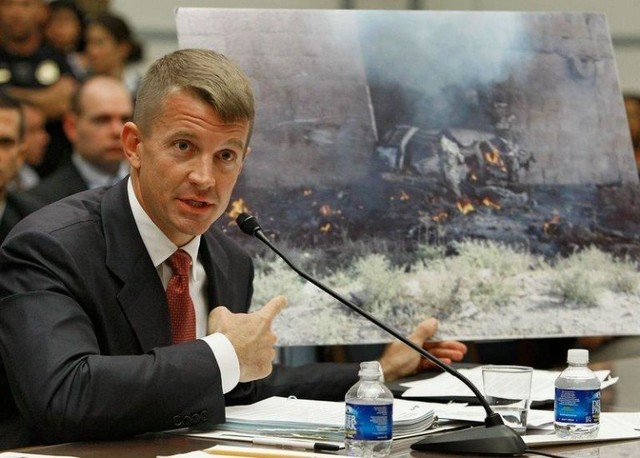
Sri Lanka’s Sacred Games | Satya Sagar

By Satya Sagar

In the times we live in, where smoke and mirrors are the world’s two chief weapons of war, fiction is a better guide to contemporary events than ‘facts’ presented by governments and media. A case in point are the horrific Easter Sunday bombings in Sri Lanka, that killed over 250 and maimed scores of people, and has sparked fears of the dreaded Islamic State’s growing presence in the region.

If you really want to know what the story is, forget searching the mainstream narrative. It is far better to watch the popular Netflix serial Sacred Games – which depicts a deadly mix of the Mumbai mafia, ambitious ‘patriotic’ politicians and religious extremists causing violence and mayhem.

For, as details emerge and reactions from key players follow, the terrorist attacks in Sri Lanka follow a pattern from several other similar operations over the last couple of decades. Yes, a handful of fanatics do carry out the actual attacks, but they are pawns in the hands of other very powerful forces, who monitor and even aid their actions, for various political and strategic purposes.

As of now, evidence in the public domain seems to show that the Easter Sunday attacks, were the work of a handful of home-grown Islamic radicals belonging to the National Thowheeth Jama’ath. Their claimed motive for the attack, which targeted churches and hotels frequented by foreign visitors, was to ‘avenge’ the massacre of Muslims at a mosque in Christchurch, New Zealand by a white supremacist.

However, it is difficult to believe this tiny group acted entirely on their own, unnoticed by those in authority or power and were not manipulated for goals that had nothing to do with what they themselves had in mind.

To begin with, given the fact that the Christchurch killings took place on 15 March,how likely is that within a month, a group of Muslim religious extremists in faraway Sri Lanka had put together enough explosives, scouted target locations, convinced eight people to become suicide bombers and carried out the well-coordinated attacks? Obviously preparations for the Sri Lanka bombings must have been done over several years if not more, as also pointed out in parliament by the former Sri Lankan Army Chief turned politician Field Marshal Sarath Fonseka.

If the plan was hatched several years ago the question arises, whether at that time, the original target would still have been churches? Why would they be a target for Muslim extremists, given there was hardly any history of animosity between the Muslim and Christian communities in Sri Lanka? If at all the two religious minorities would have had many reasons to be supportive of each other, as both have been battling hate campaigns and violence from Sinhala chauvinists and Buddhist extremist organizations since 2009, when Sri Lanka’s four decade long civil war against the Tamil separatist group LTTE ended.

So, was it then a target chosen by the terrorists or their handlers only in the last month or so – as a reaction to the Christchurch massacre in mid-March? That is of course possible and if true would indicate their willingness to be part of an abstract ‘global jihad’ and the extent of brainwashing the suicide bombers, mostly educated and from well-off families, had undergone.

Or was it the case that those handlingthe bombers were not aiming any message at the world in general but trying to shape politics in South Asia itself – in particular Sri Lanka and neighbouring India – both countries where ‘national security’ and ‘anti-terrorism’ have become key issues determining who will win or lose national elections? It is the timing of these bombings makes them quite suspicious.

The blasts happened bang in the middle of the Indian elections – where incumbent Prime Minister Narendra Modi is busy mobilizing votes for reelection, whipping up fear of terrorism and promising tougher security measures as his major planks. Modi has already used the Easter Sunday bombings repeatedly in his election speeches, citing them as an example of why India needs a ‘strong leadership’ to provide security to ordinary citizens. Since 22nd April the Indian media too has been awash with stories of how a bunch of Islamic terrorists are threatening peace all over South Asia, further feeding into the ruling BJP’s propaganda about India being under siege from Muslim ‘infiltrators and extremists’.

Sri Lanka itself is scheduled for a general election before end of 2019 – one in which Gothabaya Rajapaksa, former Defence Minister is likely to be a frontrunning candidate. He and his brother, former President Mahinda Rajapaksa, are both venerated by Sinhala nationalists for their ‘tough on terrorism’ position and for leading the country to victory against the LTTE.

Not surprisingly within a week of the Easter Sunday bombings Gothabaya has already announced that, if elected President, he would stop the spread of Islamist extremism by rebuilding the intelligence service and increasing surveillance of citizens. Several Sri Lankan commentators have noted Gothabaya as the biggest beneficiary of the terrorist attack – in political terms- as they have hugely boosted his chances of becoming the next President.

One does not have to be a crazy conspiracy theorist to suspect the mainstream narrative of what the Easter Sunday bombings were all about. A very obvious reason suspicion is the truly strange fact that Sri Lanka’s topmost political leaders and security officials did nothing to stop the bombings despite having very detailed information about these Islamist radicals, their identities, intentions and targets.

Not only did Sri Lanka’s Muslim community leaders repeatedly warn national authorities about the extremist activities of National Thowheeth Jama’ath and its leader Zahran Hashim, but Indian and other intelligence agencies tipped off top security officials in Colombo about the group’s plans along with specific sites they were targeting. Indian intelligence itself is believed to have got their information after interrogating alleged Islamic State sympathisers in September 2018 arrested from Coimbatore.

Though, they need not have interrogated anyone at all and instead just followed the incendiary YouTube videos that Zahran Hasmim, the leader of the suicide squad, was posting – many of them while based in different parts of southern India. Very strangely he was never apprehended by Indian intelligence at all and later when they tipped off their Sri Lankan counterparts about possible terrorist attacks– there was no follow up either. They could have easily gone public with the information they had, when there was no obvious action being taken. So, what exactly were they waiting for – the bombs to go off?

Another explanation for the terrible security lapse is that it was just sheer incompetence on the part of Sri Lanka’s security forces lulled into complacency after successful wiping out of the LTTE, once the world’s most deadly armed movement anywhere, a decade ago.It has also been suggested by several commentators, was the security screw-up due to infighting between Sri Lanka’s top politicians – President Maithripala Sirisena and Prime Minister Ranil Wickremesinghe.

Since October 2018 Sirisena and Wickremesinghe, former political rivals who became allies in 2015 to win the national elections, have turned foes again and engaged in a bitter battle for control over the government. Sirisena sought to replace Wickremesinghe as PM by former President Mahinda Rajapaksa, someone he had publicly broken away from back in 2014. The coup was however foiled by the Sri Lankan Supreme Court, which ruled Wickremesinghe was the legitimate PM, as per the country’s Constitution.

For the last six months the President and PM of the country have been ostensibly working at cross purposes and plotting their strategy for the next general elections. After the Easter Sunday bombings Wickremesinghe claimed that intelligence information about possible terrorist attacks, that was given to Sirisena in early April this year, was hidden from him.

Was the Sri Lankan PM suggesting that the Sri Lankan President knew about the terrorist plot but allowed it to go ahead? What would be Sirisena’s possible motive to do that – unless he was trying to help his mentors Mahinda and Gothabaya Rajapaksa in their bid to return to power through elections later this year?[1]

All this may sound very diabolical, but one should remember that we are talking about people who conducted one of the most brutal wars against their own citizens in recent history anywhere – one which saw thousands killed, journalists and dissidents abducted, tortured and murdered. Over 40,000 Tamils taking refuge in government-sponsored ‘No Fire Zone’ at Mullaivaikal in northern Sri Lanka, were deliberately shelled and killed by Sri Lankan armed forces just in the last few weeks of the war in 2009. After the defeat of the LTTE, many thousand Tamil youth also disappeared without trace while scores of prisoners of war were summarily executed.

Significantly, just a day after the Easter Sunday bombings Mahinda Rajapaksa blamed the security failure on the Sri Lankan government ‘succumbing’ to global pressure to ensure accountability for the 2009 war crimes.

“From the moment this government came into power in January 2015, they have been persecuting the members of the armed forces and the intelligence services that ended that war” said Rajapaksa claiming the incumbent government was paying a heavy price for running the country ‘according to the dictates coming from foreign countries’.

The ‘global pressure’ he was referring to was of course Resolution 30/1 of the United Nations Human Rights Council passed in March 2015, following a UN investigation, calling upon the Sri Lankan government to set up a transitional justice mechanism to address allegations of various atrocities and human rights abuses committed by both the Government of Sri Lanka and the LTTE. At that time, the newly elected President Sirisena, supported the UNHRC Resolution and pledged cooperation – facing strong criticism from the Rajapaksa brothers and Sinhala chauvinist groups.

Four years down the line it is clear that Sirisena was basically warding off international scrutiny by pretending to play along, while stalling for time. As of date virtually none of the measures sought as part of the transitional justice mechanism have been implemented. Instead, Sri Lanka has brazenly refused to comply with Resolution 30/1, which required Sri Lanka to appoint international judges, defence lawyers, prosecutors and investigators to ensure the credibility of the justice process apart from establishing a Truth Commission, an Office of Missing Persons as also an Office for Reparations.

What is important to note here is that – despite their political rivalry – both President Sirisena and PM Wickremesinghe have been completely united in their resolve to block all international effort to punish any Sri Lankans involved in war crimes or crimes against humanity. Since 2009, many of the top army and naval officers involved in the Mullaivaikal massacre- venerated as war heroes by Sinhala chauvinists- have been rewarded with plum diplomatic and other postings.

Incidentally, on 7 April, just two weeks prior to the Easter Sunday bombings Gothabaya Rajapaksa, a dual US-Sri Lanka citizen, was served notices charging him in two cases of torture and murder during war time. Gothbaya was in Pasadena, California and on his way to attend an event organized to “Meet the future president” by former Sri Lankan consul in Los Angeles Malraj de Silva.

While the first case was filed by International Truth and Justice Project (ITJP), an NGO, on behalf of a Tamil torture victim the other was by Ahimsa Wickrematunge, daughter of well-known Sri Lankan journalist Lasantha Wickrematunge, who was shot in broad daylight by gunmen in January 2009. It is widely believed that Lasantha was killed after he exposed a controversial fighter aircraft deal implicating Gotabhaya Rajapaksa in a kickback scheme.

The two notices were, an indication of how the noose is tightening around the Rajapaksas for their past crimes. The terrorist attacks took place just two weeks later on 22 April, changing both the national and global discourse on Sri Lanka.Overnight, the story was nolonger about a country run by war criminals who need to brought to justice but one of a beleaguered nation threatened by global jihadists –none less than the biggest villain of them all – the Islamic State or Daesh itself.

The sheer number of long-term objectives that have been achieved with the Easter Sunday bombings on behalf of Sri Lanka’s nationalists and Buddhist chauvinists – who believe the entire country belongs only to them, all others being second-class citizens – is staggering. If one stone can be used to kill two birds as the saying goes, then a few terrorist bombs seem to have knocked off an entire flock of winged creatures.

Firstly the country’s Christians – harassed for long by Buddhist extremists- have been directly hit. Their churches destroyed and many community members killed and they are not likely to raise their heads to demand any of their rights for a long time to come.

The blame for these attacks has been squarely put on extremist Muslims (which is factually correct, as per information we have now) making it easier to put the entire community under permanent siege. Already the Sri Lankan government has ordered a house-to-house search for terrorists – no prizes for guessing whose houses- and banned the wearing of the veil in public by Muslim women. The fate of Sri Lanka’s Muslims as second-class citizens, a status accorded to the country’s Tamil population for long, seems to firmly sealed now.

At the latest UNHRC meeting in March 2019 Sri Lanka was censured for its failure to take any effective steps towards providing justice to the victims of the 2009 massacre but still managed to find enough international support to extend its deadline for compliance by another two years. The 22nd April attacks are now likely to be used by Sri Lanka to scuttle the entire transitional justice process imposed on it by the UN and the international community – all in the name of ‘ensuring national security’.

And the great, crowning glory of this entire, sordid episode of Sri Lanka’s Sacred Games, will be when elections happenend of the year and Gothabaya Rajapaksa is finally elected President.

The only hope now, is the possibility that he will not be greeted on this occasion by his Indian counterpart Narendra Modi, who may not be the Prime Minister of India anymore by that time.

Satya Sagar is a journalist and public health worker who can be reached at sagarnama@gmail.com

[1]Incidentally, a December 2016 report in the Sri Lanka Mirror, that claimed both the National Thowheeth Jamaa’th and the Buddhist extremist group Bodu Bala Sena were funded from the same account set up by Sri Lankan intelligence when Mahinda was President has completely disappeared from the net. https://srilankamirror.com/news/796-thowheed-jamath-bbs-both-funded-by-single-secret-account

30 April 2019

Source: countercurrents.org
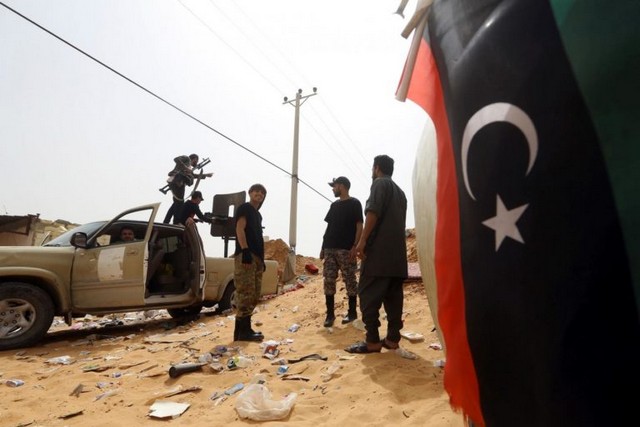
World military expenditure at 3-decade high, grows to $1.8 trillion in 2018, biggest spender US

By Countercurrents Team

The past year has been immensely successful for the war industry.

The world has spent $1.8 trillion on its military in 2018. The US is leading the charge, while some of its NATO allies are also buffing their war budgets citing the Russian threat despite Moscow decreasing its military spending.

The driving force behind this increase is the growing appetite of the US military-industrial complex rather than real threats, analysts say. Washington’s close friend Saudi Arabia is the third largest military spender, coming ahead of India.

New data from the Stockholm International Peace Research Institute (SIPRI) said on April 29, 2019:

Total world military expenditure rose to $1822 billion in 2018. It represents an increase of 2.6 per cent from 2017.

The five biggest spenders in 2018 were the U.S., China, Saudi Arabia, India and France. These five biggest spenders together accounted for 60 per cent of global military spending.

Military spending by the USA increased for the first time since 2010, while spending by China grew for the 24th consecutive year.

Total global military spending rose for the second consecutive year in 2018, to the highest level since 1988 — the first year for which consistent global data is available.

World military spending is now 76 per cent higher than the post-cold war low in 1998. World military spending in 2018 represented 2.1 per cent of global gross domestic product (GDP) or $239 per person.

According to Dr Nan Tian, a researcher with the SIPRI Arms and Military Expenditure (AMEX) program, in 2018 the USA and China accounted for half of the world’s military spending. The higher level of world military expenditure in 2018 is mainly the result of significant increases in spending by these two countries.

USA and China lead increase in world military expenditure

US military spending grew — for the first time since 2010 — by 4.6 per cent, to reach $649 billion in 2018. The USA remained by far the largest spender in the world, and spent almost as much on its military in 2018 as the next eight largest-spending countries combined.

Dr Aude Fleurant, the director of the SIPRI AMEX program, said: “The increase in US spending was driven by the implementation from 2017 of new arms procurement programs under the Trump administration.”

China, the second-largest spender in the world, increased its military expenditure by 5.0 per cent to $250 billion in 2018. This was the 24th consecutive year of increase in Chinese military expenditure. Its spending in 2018 was almost 10 times higher than in 1994, and accounted for 14 per cent of world military spending.

“Growth in Chinese military spending tracks the country’s overall economic growth,” says Tian. “China has allocated 1.9 per cent of its GDP to the military every year since 2013.”

Three decades of growth in military spending in Asia and Oceania

Military expenditure in Asia and Oceania has risen every year since 1988. At $507 billion, military spending in the region accounted for 28 per cent of the global total in 2018, compared with just 9.0 per cent in 1988.

India Pakistan S Korea

In 2018, India increased its military spending by 3.1 per cent to $66.5 billion.

Military expenditure by Pakistan grew by 11 per cent (the same level of growth as in 2017), to reach $11.4 billion in 2018.

South Korean military expenditure was $43.1 billion in 2018 — an increase of 5.1 per cent compared with 2017 and the highest annual increase since 2005.

Siemon Wezeman, a senior researcher with the SIPRI AMEX program, said: “The tensions between countries in Asia as well as between China and the USA are major drivers for the continuing growth of military spending in the region.”

Increases in Central and East European countries

Several countries in Central and Eastern Europe made large increases in their military expenditure in 2018.

Spending by Poland rose by 8.9 per cent in 2018 to $11.6 billion, while Ukraine’s spending was up by 21 per cent to $4.8 billion.

Spending by Bulgaria, Latvia, Lithuania and Romania also grew (ranging from 18 per cent to 24 per cent) in 2018.

Pieter Wezeman, a senior researcher with the SIPRI AMEX program, said: “The increases in Central and Eastern Europe are largely due to growing perceptions of a threat from Russia. This is despite the fact that Russian military spending has fallen for the past two years.”

Russia

Russia slipped two places to claim sixth spot by spending some $61.4 billion on the military in 2018, 3.5 percent less than in 2017.

South America

Military spending in South America rose by 3.1 per cent in 2018. This was mainly due to the increase in Brazilian spending (by 5.1 per cent), the second increase in as many years.

Africa

Military expenditure in Africa fell by 8.4 per cent in 2018, the fourth consecutive annual decrease since the peak in spending in 2014. There were major decreases in spending by Algeria (–6.1 per cent), Angola (–18 per cent) and Sudan (–49 per cent).

Middle East

Military spending by states in the Middle East for which data is available fell by 1.9 per cent in 2018. Total military expenditure by all 29 North Atlantic Treaty Organization members was $963 billion in 2018, which accounted for 53 per cent of world spending.

Largest absolute increase

The largest absolute increase in spending in 2018 was by the USA ($27.8 billion), while the biggest decrease was by Saudi Arabia (–$4.6 billion).

Turkey

Military spending in Turkey increased by 24 per cent in 2018 to $19.0 billion, the highest annual percentage increase among the world’s top 15 military spenders.

Highest military burden

Six of the 10 countries with the highest military burden (military spending as a proportion of GDP) in the world in 2018 are in the Middle East: Saudi Arabia (8.8 per cent of GDP), Oman (8.2 per cent), Kuwait (5.1 per cent), Lebanon (5.0 per cent), Jordan (4.7 per cent) and Israel (4.3 per cent).

[All percentage changes are expressed in real terms (constant 2017 prices).]

SIPRI said:

SIPRI monitors developments in military expenditure worldwide and maintains the most comprehensive, consistent and extensive data source available on military expenditure.

Military expenditure refers to all government spending on current military forces and activities, including salaries and benefits, operational expenses, arms and equipment purchases, military construction, research and development, and central administration, command and support.

SIPRI therefore discourages the use of terms such as ‘arms spending’ when referring to military expenditure, as spending on armaments is usually only a minority of the total.

SIPRI tracks the data since 1988.

If the world were to spend this money on something else, the amount in question would constitute 2.1 percent of global gross domestic product (GDP) or $239 per person, according to the SIPRI report.

Washington’s NATO allies

Washington’s NATO allies have seen pressure from the US related to their military spending ever since Donald Trump came to power in the White House. It has less to do with security of the alliance and more with the interests of the US arms manufacturers.

Hawks in the U.S. typically justify the need for ever-increasing military expenditures with some perceived threats from Russia or China, portraying them as warmongers.

The US and its allies grossly outspend all the nations they perceive as alleged threats. The US expenditures alone accounted for 36 percent of global defense spending while exceeding the expenditures of the next eight largest-spending countries combined in 2018.

NATO’s total military spending accounted for 53 percent of the global defense expenditures.

China’s defense budget amounted to only a fraction of the US one and accounted for 14 percent of the global military spending.

However, these facts do not stop the biggest military spender in the world – U.S. – to accuse Moscow of somehow initiating an “arms race.”

30 April 2019

Source: countercurrents.org
‘Land means life’:Palestinians vow to battle illegal Israeli confiscations

Palestinians pledge to continue the dream of passing land to their children and grandchildren amid accelerating seizures

By Shatha Hammad

Tayseer Ataya stands, leaning on his cane and gazing at his plot of land on Risan hill, west of Ramallah. The 65-year-old man has been forbidden from accessing his property for close to a year. In August 2018, Israeli settlers built homes for themselves on parts of Ataya’s 25-acre (104 dunum) land in the village of Ras Karkar. He says from that moment onwards, he knew his dreams of passing on the land to his children and grandchildren were crushed. ‘It is this struggle that I’ll be passing on to my children, who will never give up’

His plot is just one parcel of close to 250 acres (1,000 dunum) of land that Israel first laid its hand on in 1983. A military court had frozen a land confiscation order, and that remained the case for the past 35 years. Over the past year, however, settlement construction intensified. On 16 August, a new agricultural settler outpost was built, in just two days. Livestock and water tanks were brought, a new road was paved to serve the Jewish-only community, and Israeli army reinforcements arrived to provide protection.

Speaking to Middle East Eye, Ataya says that the confiscation order is not limited to the 247 acres, but will extend further than that under the pretext of security. “I’ve tried to access my land several times, but every time I approach it, soldiers surrounded me and prevent me from walking over to it,” he says. Ataya inherited his land through his paternal grandfather. “I will not give up on my land. Even though I have difficulty walking, I try to access my land every week, and I will not stop trying to retrieve it,” he says.

Ottoman law
Next to Ataya stands 52-year-old lawyer Wadi’ Nofal. He holds a stack of papers that proves the ownership of 75 heirs within his family over close to nine acres (40 dunums) of land on Risan hill. “Many Israeli judges live in the settlements built on our private land, so we do not expect He explained that the land was seized based on the 1858 Ottoman law which Israel has been using since 1980 to expropriate private Palestinian land in the occupied West Bank.

In 1968, a year after Israel occupied the West Bank, East Jerusalem and the Gaza Strip; it stopped the land registration process in the newly occupied territories. Until 1980, Israel had been using military orders to confiscate private Palestinian land and build settlements on them, while claiming security needs.

In 1979, however, Palestinians whose land was confiscated petitioned Israel’s High Court of Justice (HCJ), arguing a violation of international law, and won. But the case was rare; the court could not rule that the establishment of the settlement would serve military needs, because settlers testified they intended to live there for religious and political reasons.

Facts on the ground
Following the court’s ruling, Israel began rewriting provisions within the Ottoman Land Code and applying its own interpretation, to declare private Palestinian property as state land. Between 1979 and 2002, Israel declared more than 220 acres (90,000 hectares) of land as state land. The latter now makes up 22 percent of the entire West Bank. “They are creating facts on the ground, by taking over land and expanding into the surrounding territories,” says Wadi’.

He explained that the 247 acres of land (1,000 dunum) are owned by Palestinians from surrounding villages of Ras Karkar, Khirbetha Bani Hareth, and Kufr Ni’ma. Wadi’ arranges the stack of paper in his hands and grips it tightly lest the papers are blown away by the wind. “It’s extremely painful, that I am standing here, just a few metres away from my land, and not able to reach it. It is painful for me to be a lawyer and not have the ability to defend my rights.”

‘Consequences for the entire region’
Abdullah Abu Rahma, from the Palestinian Authority’s National Committee to Resist the Wall and Settlements, tells MEE that the outpost is merely a prelude to the establishment of a large settlement on Risan hill – under Area C of the occupied West Bank. Abu Rahma explains that the goal, aside from taking over land, is to link the nearby settlements west of Ramallah with one of the major settlements in the area – Modi’in Ilit – where some 70,000 Israelis live.

The latter has been built on lands belonging to the Palestinian villages Nilin, Safa, Deir Qaddis and Khirbetha Bani Hareth. “This plan won’t only affect landowners, it will have consequences for the entire region of the West Bank and Jerusalem,” he continues, explaining that it will obstruct the territorial contiguity of Palestinian villages and their natural expansion.

‘Land means life’
Naser Nofal, 63, owns 10 dunums on the Risan hill, which he inherited from his great grandfather. “Anyone who comes to this area, and sees it, will know very well that Israel’s claims are false,” says Naser. “Our lands are cultivated and rich with 400-year-old trees. We have always tended to our lands.”

He knows that it is a strategic area for Israeli settlers. The hill has a view of the country’s coastline, as well as the Jordanian hills, and the holy city, Jerusalem. “By using false claims and forced laws they are taking over the hilltops, and stealing Palestinian lands, which are a source of daily sustenance,” continues Naser. “Land means life. I will continue to defend my land until I die, and I will not let Israelis take it over.”

Settler assaults
Radi Abu Fakhida, head of the Karkar village council, tells MEE that another petition was filed against the confiscation decision, but that Israeli courts had rejected the appeal. It did, however, issue a ruling in favour of land owned by one of the residents, Ibrahim Abu Fakhida, upon which a 700-metre long road was built to serve the Israeli settlement.

“If we succeed in retrieving [Ibrahim’s] land, we would be able to block the road to the new settlement and halt the movement of settlers into this area,” says Radi. “The Israeli army has prevented us from doing this so far, and claims there are no alternative road to the settlement.” Ras Karkar village lies about 15km west of Ramallah city, and has a total area of about 7,000 dunum (1,730 acres). It is surrounded by six Israeli settlements built on parts of the village’s land. Radi, the head of the council, says that some 2,000 dunums of property (close to 500 acres), have been confiscated so far for the building of settlements and settlement infrastructure.

Settler attacks against the village, he continues, have escalated intensively since August 2018. At least 130 ancient Roman olive trees have been cut down, anti-Palestinian, racist slogans have been graphitized on vehicles, and famers are continuously prevented from reaching their lands. “The families of Ras Karkar have not surrendered in the face of settler assaults. They go to their lands and farms on a daily basis and harvest their crops,” says Radi.

Defending the land
Israeli confiscation orders have also hit the nearby village of Kufr Ni’ma, which extends onto Risan hill. Khaldoun al-Dik, head of Kufr Ni’ma’s village council, explains that Israeli authorities confiscated more than 160 acres (650 dunum) of property belonging to families of the village.
A road serving the settlement took up some an additional 60 acres (250 dunum) of village land. Families who had their land stolen tried all available, non-violent methods, to retrieve their lands, says al-Dik. They petitioned Israeli courts and held sit-ins on their properties.

“This is Palestinian land and we have the documents to prove it,” says al-Dik. “Confiscating these lands and building settlements on them means that the security of the area will be greatly affected, and the colonial policies will extend onto more village land.”

Since August 2018, Risan hill has been a hotspot for confrontations between Palestinians hailing from the various surrounding villages attempting to reach their lands, and Israeli occupation soldiers, in rejection of colonial policies. The families tend to hold Friday prayers on the hill as an act of protest. Israeli soldiers respond with a flurry of tear gas bombs and rubber-coated steel bullets.

Back in Ras Karkar, Ataya says that more Palestinians need to protest against discriminatory Israeli policies. “We need thousands of Palestinians to come here and defend this land with us,” says.

28 April 2019

Source: palestineupdates.com