Just International

MEETING OF THE INTERNATIONAL FORUM ON MUSLIM-BUDDHIST RELATIONS @ 9 JULY 2018, BANGKOK, THAILAND

SUMMARY OF DISCUSSION POINTS

1. BMF structure & organisation
A key strength of the BMF is precisely its loose network, which allows each member organisation to pursue different methods and approaCh different parties for collaboration. That arrangement can be retained to afford flexibility in the project while at the same time, a wider spectrum of alliance should also be forged.

To that end, the BMF will be structured along three concentric levels:
(i) the nucleus or core group – consisting of the principal organisations viz. INEB, Religions for Peace, Muhammadiyah and JUST. This group will undertake major decisions and constitute the back bone of the forum.
(ii) the country focus – comprising organisations from countries with both Buddhist and Muslim populations (mainly from SE Asia, but also Sri Lanka, India, China, Bangladesh)
(iii) the wider network – comprising organisations from other parts of the world, which may include Muslim or Buddhist countries, or those with none but are dedicated to dialogue between the two faith groups. It was also noted that some organisations in Europe for example, are very dedicated to the Rohingya cause even with minority Muslim/Buddhist population.

In that connection, member groups may employ different strategies that may take into account sensitivities of the parties they engage with.

2. Member activities

(i) JUST – JUST has two updates: firstly, the Permanent People’s Tribunal on Rohingya, which was held in September 2017. The tribunal found liability for genocide on the part of Myanmar but registered reservation on the term ‘ethnic cleansing’ partly because there is no legal definition but also because the term itself is laden with moral objectionability implying the ‘impurity’ of the group in question. On inquiry it was explained that evidence of the crime came from various sources, including testimonies at the trial among others by authors of reports documenting atrocities and figures like Maung Zarni and Kyaw Win, and also interviews with victims themselves. There is also a dedicated website to the tribunal containing all the relevant information.
Currently JUST is working with Universiti Malaya’s Law Faculty to publish the findings and related documents from the tribunal. The university has agreed to publish them as a special issue in one of its academic law journals.
Secondly, JUST has also been collaborating with a regional civil society initiative for the restoration of the rights of the rohingya people, currently still at the incipient stages.
(ii) Muhammadiyyah – hitherto the key figure for interfaith dialogue had been Din Syamsuddin and thus with his departure, Muhammadiyya had been relatively less vigorous. On a positive note, it has received warm response to crowdfunding exercise though the funds were generally channelled to humanitarian relief causes than peace building initiatives. Muhammadiya also welcomes assistance in the form of knowledge input & resources.
(iii) Religions for Peace – RfP has been engaged with several key figures including Aung San Suu Kyi and the Supreme Patriarchs of Sri Lanka and Cambodia. An important take away from these projects is the need for diplomacy to straddle difficult dialogues, eg in Myanmar, Rohingyas should be referred to as “Muslims in Myanmar”. RfP also has been in touch with prominent monks (eg Sitagu Sayadaw) and has expressed strong objections when they express anti-Muslim practices.
(iv) INEB – for the past two years INEB has engaged with Buddhist leaders including monks affiliated with MaBaTha (hard to dialogue directly with the latter). The process includes community & environmental projects and other activities bringing Muslims and Buddhists together. According to INEB’s findings, the project has shown positive results. Currently, INEB is planning for dialogue activities in anticipation of upcoming 2020 elections in Myanmar, which is likely to witness exploitation of ethno-religious sentiments. Next month INEB will invite Myanmar political leaders as part of such engagement, plus other activists and intellectuals such Filipino scholar Walden Bello.

3. Activities

Several activities have been planned:
(i) Advocacy
(ii) Public education & outreach
(iii) Community projects, services & groundwork activities
(iv) Media awareness campaign
(v) Art as medium of dialogue

It was also proposed that we pick one concrete area from present conflict areas to focus: some identified include (a) changing demographics, (b) conversion, (c) halal certification issue, (d) economic and business monopoly. The suggestion was that these issues were addressed head on. However, as these were where the tensions arise, it was decided that emphasis should be on building common grounds and nurturing trusts first, through other activities.

4. Fundraising

Funds have been solicited from such agencies as the European Instrument for Democracy and Human Rights (EIDHR) and the United States Institute of Peace (USIP). On inquiry it was explained that funds were solicited from various channels so that no one body exercises dominant influence. Furthermore, the loose structure of BMF as aforementioned should also translate into flexibility in fundraising by different member organisations.

End of report.
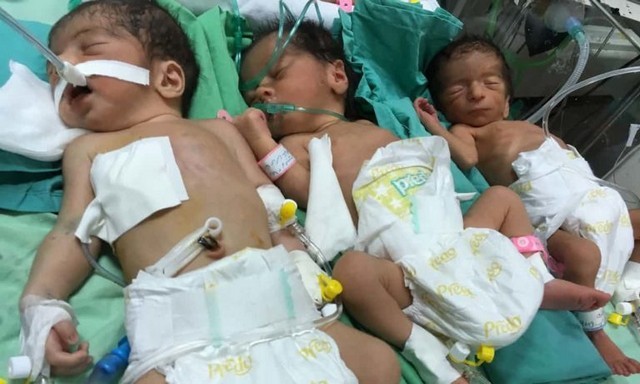
 

Trump Cuts US$25 Million Aid for Palestinians in Hospitals

By teleSUR

Trump called for a review of U.S. assistance to Palestinians earlier this year to ensure the funds were being spent in accordance with ‘national interests.’

8 Sep 2018 – U.S. President Donald Trump has ordered that US$25 million earmarked for the care of Palestinians in East Jerusalem hospitals be directed elsewhere as part of a review of aid, a State Department official said on Saturday.

Trump called for a review of U.S. assistance to the Palestinians earlier this year to ensure that the funds were being spent in accordance with national interests and were providing value to taxpayers.

“As a result of that review, at the direction of the president, we will be redirecting approximately US$25 million originally planned for the East Jerusalem Hospital Network,” the State Department official said. “Those funds will go to high-priority projects elsewhere.”

The aid cut is the latest in a number of actions by the Trump administration that have alienated the Palestinians, including the recognition of Jerusalem as Israel’s capital and moving the U.S. embassy to Jerusalem from Tel Aviv.

That move reversed longtime U.S. policy and led Palestinian leadership to boycott Washington peace efforts led by Jared Kushner, Trump’s senior adviser and son-in-law.

Last month, the Trump administration said it would redirect US$200 million in Palestinian economic support funds for programs in the West Bank and Gaza.

And at the end of August, the Trump administration halted all funding to the United Nations Relief and Works Agency for Palestine Refugees (UNRWA), a decision that further heightened tensions with the Palestinian leadership.

Palestinian refugees have reacted with dismay to the funding cuts, warning they would lead to more poverty, anger and instability in the Middle East.

A statement from the Palestinian Foreign Ministry said the latest aid cut was part of a U.S. attempt “to liquidate the Palestinian cause” and said it would threaten the lives of thousands of Palestinians and the livelihoods of thousands of hospital employees.

“This dangerous and unjustified American escalation has crossed all red lines and is considered a direct aggression against the Palestinian people,” it said.

At the gates of two of the East Jerusalem hospitals affected, medical staff were aware of the decision but refused to comment, Reuters reports.

One of the centers, Al Makassed Islamic Charitable Society Hospital, said in statement the U.S. aid cuts come as the “hospital is going through a suffocating crisis as a result of the lack of flow of financial aid, and the piling up of debts and funds held back by the Palestinian government.”

It said it had received US$12.5 million of the U.S. money to treat patients from the West Bank, Gaza and East Jerusalem. In the statement hospital CEO Dr. Bassam Abu Libdeh “questioned the justification behind mixing political issues with medical and humanitarian issues.”

The last round of U.S.-brokered Palestinian-Israeli peace talks collapsed in 2014.

10 September 2018

Source: https://www.transcend.org/tms/2018/09/trump-cuts-us25-million-aid-for-palestinians-in-hospitals/

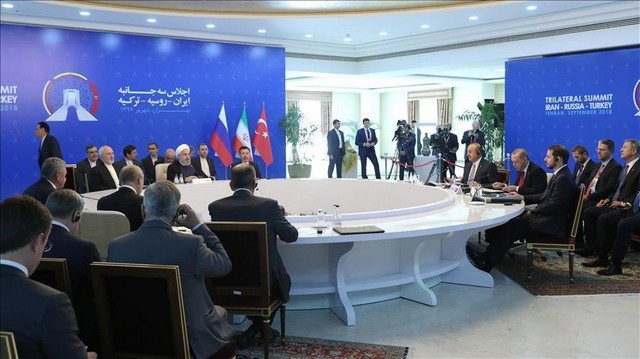
Tehran Summit Calls for Political Solution in Syria

By Middle East Monitor – TRANSCEND Media Service

7 Sep 2018 – “There could be no military solution to the Syrian conflict and it can only end through a negotiated political process.

“[They] reaffirmed their determination to continue active cooperation with a view to advancing the political process consistent with the decisions of the Syrian National Dialogue Congress in Sochi and the UN Security Council Resolution 2254,” the statement said.

The leaders expressed their “satisfaction with the achievements” of the Astana format since January 2017, in particular, the progress made in “reducing violence across the Syrian Arab Republic and contributing to peace, security, and stability in the country.”

Iran, Turkey and Russia “emphasized strong and continued the commitment to the sovereignty, independence, unity and territorial integrity of Syria, as well as to the purposes and principles of the UN Charter and highlighted that they should be respected by all.”

The leaders “rejected all attempts to create new realities on the ground under the pretext of combating terrorism,” while expressing determination to stand against separatist agendas aimed at undermining the sovereignty and territorial integrity of Syria and national security of neighboring countries.

The joint statement said the leaders highlighted the “need to create conditions for the safe and voluntary return of refugees and internally displaced persons (IDPs) to their original places of residence in Syria.”

Russia, Iran, and Turkey also called for the United Nations and its humanitarian agencies to help Syria by providing additional humanitarian aid.

The joint statement also welcomed the progress in the work of the Working Group on the release of detainees and abductees, and handover of the bodies as well as the identification of the missing persons, as undertaken with the participation of the UN and ICRC experts.

The next tripartite meeting will be held in Russia, upon the invitation of President Putin.

10 September 2018

Source: https://www.transcend.org/tms/2018/09/tehran-summit-calls-for-political-solution-in-syria/

Libya in Chaos Seven Years after NATO’s ‘Liberation’, but Who Cares?

By Neil Clark – RT

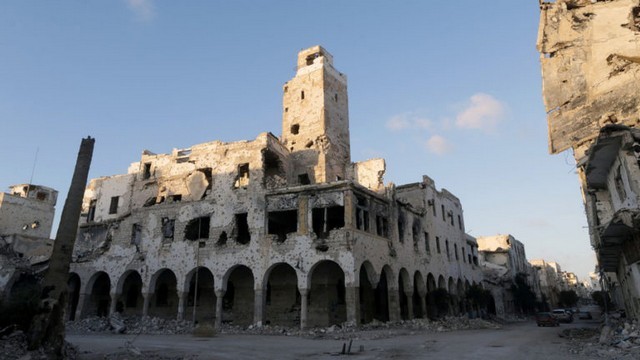
7 Sep 2018 – Libya remains a lawless land, with rival militias fighting battles in the streets of Tripoli and over 1 million people in need of aid. But the West’s ‘liberal interventionists’ aren’t interested in the catastrophe they created.

“Hundreds escape prison amid deadly clashes in Tripoli,” a headline on the BBC News website declared this week.

Over 60 people have died in the current fighting with many more injured and hundreds of ordinary citizens displaced. The latest disturbances began after the Tarhuna’s 7th Infantry ”Kaniat‘ Brigade made advances into the capital from the south and clashed with a coalition of Tripoli militias.

It’s really hard to keep up with who’s fighting who. If you think the situation in Syria is complicated, you haven’t been paying much attention to Libya. As the BBC article acknowledged: “Libya has faced continuing chaos since NATO-backed militia forces, some of them rivals, overthrew long-serving ruler Colonel Gaddafi in October 2011.”

Libya has rival governments but even they don’t control the majority of the country. There is no ‘rule of law’, only the rule of the gun. Libya’s regression from the country with the highest Human Development Index figure in the whole of Africa just ten years ago, to a fragmented and very dangerous failed state, is hard to take in. Last year, the UN Agency IOM reported that slave markets had returned to the country.

Economic and societal collapse has had a devastating impact on the life of ordinary Libyans.

Take health care. A 2017 Service Availability and Readiness Assessment survey, conducted by the World Health Organisation (WHO) and the Ministry of Health, found that 17 out of 97 hospitals are closed and only four hospitals were functional between 75-80% of their capacity. Over 20% primary health care facilities are closed and the rest are not “well ready for service delivery“.

In May 2016, the WHO also expressed ‘great concern’ over the deaths of 12 newborns in the Sabah Medical Centre neonatal intensive care unit in Sabha, southern Libya. It records: “The deaths occurred as a result of a bacterial infection and lack of specialized health staff to provide medical care.”

The education system is also in a state of collapse or near-collapse. In 2016, it was reported that the start of the school year was postponed because of a “lack of books, lack of security and many other factors.”

It was noted that the Libyan school year had not been regular since the fall of Gaddafi. This year, UNICEF said that 489 schools were affected by the conflict and that around 26,000 students had been forced to change schools due to closures.

UNICEF also says that 378,000 children in Libya are in need of humanitarian assistance, 268,000 are in need of safe water, sanitation and hygiene and 300,000 are in need of education in emergency support. Overall 1.1m people in Libya are in need of humanitarian assistance.

Given the dire situation it is no surprise that so many Libyans have left, or are leaving. In 2014, it was reported that between 600,000 and 1m had fled to Tunisia.

If we add those who went to Egypt and elsewhere, the figure is likely to be in excess of 2 million, quite staggering when you consider that the 2011 population of Libya was around 6 million.

As I argued in a previous op-ed, the Western assault on Libya was an even worse crime than the invasion of Iraq because it came later. There was really no excuse for anyone, seeing how the ‘regime change’ operation of 2003 had turned out, supporting a similar venture in North Africa.

Yet, those responsible for what happened have faced no comeback. The UK Prime Minister at the time, David Cameron, is blamed for Brexit (by Remainers), but not for what he did to Libya and the claims he made to justify the military action. This is despite a House of Commons Foreign Affairs Committee report concluding, five years later, that “the proposition that Muammar Gaddafi would have ordered the massacre of civilians in Benghazi was not supported by the available evidence.”

Nicolas Sarkozy, the French President in 2011, faces a trial (or trials) in relation to three different investigations, including accepting money from Gaddafi to help his election campaign, but he has not yet been prosecuted for his role in the war.

Bernard-Henri Levy, the philosopher considered by some to be the intellectual godfather of the Western intervention – and who boasted “we are the first to say that Qaddafi is no longer the legal representative,” is performing a one-man anti-Brexit play, as the country he helped ‘liberate’ burns.

Stateside and in ‘liberal’ circles across the West, Barack Obama and Hillary Clinton are lionised for not being Donald Trump, but what the duo did to Libya is far worse than anything Trump has done up to now.

And the British Home Secretary under whose watch control orders on members of the anti-Gaddafi Libyan Islamic Fighting Group were lifted, one Theresa May, is now Prime Minister, and trying to take the moral high ground against Russia. To add insult to injury, it is a politician who opposed the NATO action in 2011, Jeremy Corbyn, who is under constant media attack and painted as beyond the pale. Just how wrong is that?

Returning to the current violence, a UN-brokered ceasefire to end the fighting in south Tripoli is reported at time of writing to be holding, but bearing in mind how previous ceasefires have collapsed, we can’t be optimistic. Part of the problem is that the country is awash with arms. The sad truth is that Libya is broken and probably will never be put back together again. A great crime has been committed, but you would never think it, judging by the lack of media coverage.

We’ve had a lot of debate this summer in Britain about Israel’s ‘right to exist’- and whether challenging this makes one ‘anti-Semitic’ but the reality is that Libya – as a modern, functioning state – has ceased to exist. And no one in elite, establishment circles seems the least bit bothered. Consider how many column inches were devoted to ‘saving’ Libya in the build up to NATO’s ‘humanitarian’ intervention seven and a half years ago, with the lack of opinion pieces about the country today.

Try googling the names of some of the leading media war hawks and ‘Libya’ and you see they tend to go as silent after 2011 – shifting their attention to propagandising for ‘regime change’ in Syria. The only conclusion one can draw is their sole interest in the country was seeing Muammar Gaddafi toppled. After that was achieved, who cares?

Neil Clark is a journalist, writer, broadcaster and blogger.

10 September 2018

Source: https://www.transcend.org/tms/2018/09/libya-in-chaos-seven-years-after-natos-liberation-but-who-cares/

Trump, Venezuela and the prospect of a coup

By Ishaan Tharoor

In April 2002, then-Venezuelan President Hugo Chávez was briefly deposed in a coup attempt launched by mutinous army officers. But within 48 hours, Chávez surged back to power with the aid of loyalist generals and masses of supporters who marched in the streets in his defense.

It emerged later that the CIA had knowledge of the coup plot, despite the George W. Bush administration’s vociferous denials at the time. There were documented links between Washington and anti-government figures involved in the botched ouster. The specter of yanqui imperialism loomed once more.

Chávez, a fiery demagogue, made hay of those revelations, linking his own ordeal to a wider American legacy of dirty wars, election interference and military interventions. “Having a government of this type in the United States is a threat to the world,” he declared.

Sixteen years later, it can be plausibly argued that the government Chávez bequeathed to Venezuela is a threat to the world. Years of mismanagement and cronyism have hollowed out the Venezuelan economy, triggering mind-boggling hyperinflation and devastating food and medicine shortages. A hemispheric humanitarian calamity is now straining Venezuela’s neighbors, who are struggling to cope with the vast influx of refugees fleeing hunger and depredation.

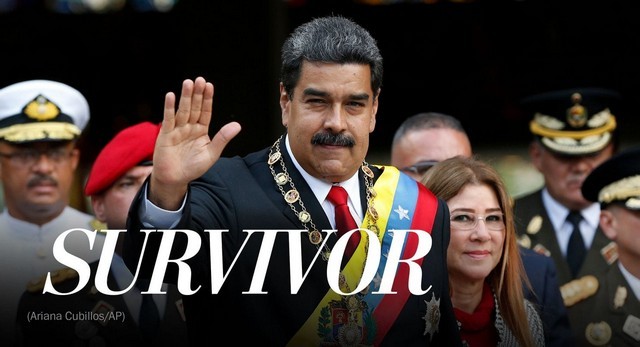
For more than a year, analysts have suggested that Chávez’s successor, Nicolás Maduro, could be vulnerable to a coup. Maduro and his allies have withstood several murky attacks from renegade soldiers, including an apparent assassination attempt with an explosive-laden drone during a military parade last month. But rather than losing his grip on power, Maduro has only tightened it, purging the military’s ranks of potential threats and winning reelection in votes largely considered fraudulent by the international community.

All the while, he keeps blaming outside actors — chiefly, the United States — for his nation’s woes. And this weekend, he got even more fuel for his paranoia.

According to my colleagues, officials from the Trump administration met several times with Venezuelan military officers who claimed to be coup-plotting dissenters. The Venezuelans’ requests for covert aid were ultimately rebuffed, not least because the Americans were hardly convinced by their entreaties.

“We had very little confidence in the ability of these people to do anything, no idea at all about who they represented, and to what extent they had not exposed themselves already,” one official told my colleagues. But the new details, reported first by the New York Times, were more than enough for Maduro’s government.

“We denounce before the world the United States’ intervention plans and help to military conspirators against Venezuela,” tweeted Jorge Arreaza, Venezuela’s foreign minister.

The White House rushed to subdue speculation that it wants to intervene. In a statement, National Security Council spokesman Garrett Marquis said that “the United States government hears daily the concerns of Venezuelans from all walks of life — be they members of the ruling party, the security services, elements of civil society or from among the millions of citizens forced by the regime to flee abroad.”

The statement added: “U.S. policy preference for a peaceful, orderly return to democracy in Venezuela remains unchanged.”

Of course, such a return is nowhere in sight. President Trump, meanwhile, has played the part of the hectoring American hegemon rather well. His administration included Venezuela among the mostly Muslim-majority countries targeted by Trump’s travel ban, shutting the door to a nation in desperate need. He has touted the “military option” for Venezuela — rhetoric that sent sirens ringing on a continent all too familiar with American interventions. And reports indicate that Trump floated the possibility of an invasion not only to his top advisers, but to leaders of other Latin American countries.

But even were such an adventure now in the works, the new revelations suggest that Washington’s allies on the ground would be woefully out of their depth. “The main request of the military plotters was encrypted radios, which they planned to use to communicate among themselves in order to capture Mr. Maduro and his lieutenants,” noted the Times. “But the United States never granted the request, and after multiple meetings, the Venezuelans became frustrated. Mr. Maduro’s government has since jailed dozens of the conspirators, though many remain at large.”

In an era of smartphones and encrypted apps, the request for radios struck other Venezuelan observers as absurd. “It’s just another reminder that the guys atop the military—our putative saviors—are not only very, very criminal: they’re also painfully stupid,” wrote Francisco Toro of the Caracas Chronicles blog. “A plot that relies on people operating on this level of sophistication will only fail. Which, obviously, the Americans saw right away.”

“It makes no sense to support a military coup in Latin America. They always end badly, but it’s worth listening to these people,” said Adam Isacson, of the Washington Office on Latin America, to The Post. “What is their level of discontent? Do they have broad-based support among the population or are they just a bunch of renegades? Do they have an honest plan to start elections? The military is a black box.”

The irony of the moment is that Trump himself is careening down a dark path even as his administration puzzles over how to confront a destructive and destabilizing regime in Venezuela. Trump fulminated over threats to his rule posed, in part, by an anonymous insider who penned an astonishing op-ed on how Trump aides are protecting the country from the president’s consistently bad instincts.

“He’s remarkable in his lack of appreciation for democratic values and institutions. And I think that’s where some of the greatest damage is being done,” Sen. Bob Corker (R-Tenn.) told CNN’s Manu Raju last week. “Left to his own accord, our country would look somewhat like Venezuela.”

Ishaan Tharoor writes about foreign affairs for The Washington Post.

10 September 2018

Source: https://www.washingtonpost.com/world/2018/09/10/trump-venezuela-prospect-coup/?utm_term=.63252402b32b

Judges rule ICC has jurisdiction over Rohingya deportations

By Mike Corder | AP

THE HAGUE, Netherlands — Judges at the International Criminal Court ruled Thursday that the court has jurisdiction to investigate widespread allegations that Myanmar forces have driven hundreds of thousands of Rohingya Muslims from their homes.

The decision opens up the possibility of crimes against Rohingya people being prosecuted at the Hague-based court, even though Myanmar is not a member of the court.

The court said in a statement that Prosecutor Fatou Bensouda must take the jurisdiction ruling into account “as she continues with her preliminary examination concerning the crimes allegedly committed against the Rohingya people.”

It said the probe, which aims to establish whether there is sufficient evidence to launch a full-blown investigation, “must be concluded within a reasonable time.”

Bensouda has not formally announced a preliminary examination, but the judges in their ruling said that prosecutors’ work so far studying the Rohingya issue serves that purpose.

Richard Dicker, international justice director for Human Rights Watch, told the AP: “This is a crucial step for accountability for crimes against the Rohingya and will rock a lot of boats.”

Bensouda asked earlier this year for a ruling on jurisdiction, arguing that while the Rohingya were forced from their homes in Myanmar, part of the crime involved them being driven across the border into neighboring Bangladesh, which is a member of the court.

There have been widespread reports of atrocities committed against the Rohingya minority in Myanmar.

Last week, investigators working for the U.N.’s top human rights body said that Myanmar military leaders should be prosecuted for genocide against Rohingya Muslims, taking the unusual step of identifying by name six of those it says were behind systematic crimes targeting the ethnic minority.

The call amounted to some of the strongest language yet from U.N. officials who have denounced alleged human rights violations in Myanmar since a bloody crackdown began last August.

The three-member “fact-finding mission” and their team, working under a mandate from the U.N.-backed Human Rights Council, meticulously assembled hundreds of accounts from expatriate Rohingya, as well as satellite footage and other information for the report.

Such reports will likely be closely studied now by prosecutors at the ICC.

Thursday’s ruling said that the court also can exercise jurisdiction over other crimes, “such as the crimes against humanity of persecution and/or other inhumane acts.”

Myanmar declined to file a formal response to the court as it considered the jurisdiction issue.

The Rohingya have long been treated as outsiders in Buddhist-majority Myanmar, even though their families have lived in the country for generations. Nearly all have been denied citizenship since 1982, effectively rendering them stateless, and they are also denied freedom of movement and other basic rights.

The latest crisis began with attacks by an underground Rohingya insurgent group on Myanmar security personnel last August in northern Rakhine State.

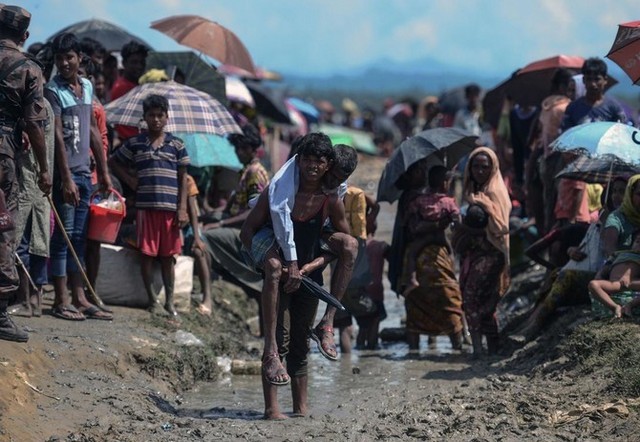
Myanmar’s military responded with counterinsurgency sweeps and has been accused of widespread rights violations, including rape, murder, torture and the burning of Rohingya homes and villages — leading about 700,000 Rohingya to flee to neighboring Bangladesh.

Copyright 2018 The Associated Press. All rights reserved. This material may not be published, broadcast, rewritten or redistributed.

World news email alerts

6 September 2018

Source: https://www.washingtonpost.com/world/asia_pacific/judges-rule-icc-has-jurisdiction-over-rohingya-deportations/2018/09/06/0b3698e2-b1e3-11e8-8b53-50116768e499_story.html?noredirect=on&utm_term=.37a574db1681

Joint Statement condemning arrest of activists and public intellectuals

By Press Release

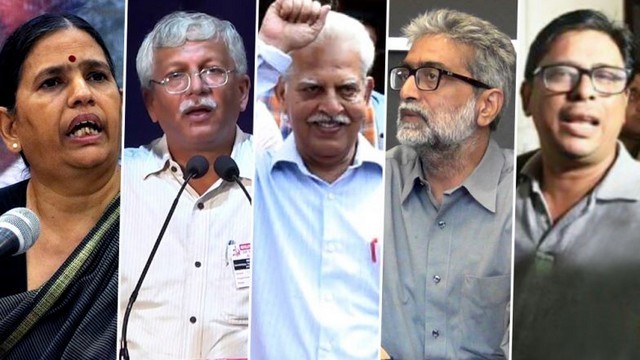
We, the undersigned, are shocked by the serial raids across the country on the homes of activists and public intellectuals who are critical of the government and the ruling party at the Centre. The arrests of prominent activists and intellectuals Sudha Bharadwaj, Vernon Gonsalves, Gautam Navlakha, Varavara Rao, Arun Ferreira, Kranthi Tekula and others, are nothing but an attempt by the government to strike terror among those who are fighting for justice for the marginalised. This is also an attempt by the BJP to invent a false enemy and engage in scaremongering in order to polarise the 2019 elections in its favour. Already, the government and the media houses close to the BJP have been trying to spin a false narrative of a Maoist conspiracy since June, 2018. Terms like “urban naxals” are invented in order to stifle any criticism of the government. We have learnt that the Delhi Police, after having arrested Sudha Bharadwaj, waited for Republic TV to arrive before taking her to the court. This simply shows that the arrests are incomplete without the accompanying sensationalist media propaganda to demonise activists, human rights defenders and intellectuals.

The so-called raids carried out on the houses of these activists are aimed at creating a spectacle, as the writings and views of these intellectuals are already publicly known and are well documented. This seems like a conspiracy to divert attention from the gravity of the Sanatan Sanstha conspiracy to carry out serial bomb attacks on Eid and Ganesh Chaturthi! The same Sanatan Sanstha was also involved in the murder of Gauri Lankesh, as per the ongoing investigations by Karnataka police. Today’s arrests have been carried out in order to give cover to the murderers of Gauri Lankesh. People like Sudha Bharadwaj, Gautam Navlakha and others who have been arrested are friends of the people who have dedicated their entire lives to the betterment of the Indian public. By arresting them, the BJP is only exposing its insecurities and its intolerance to any dissent or criticism of its policies.

The arrests should be seen in continuation with the recent attacks on pro-justice voices such as Swami Agnivesh, Umar Khalid and many other student activists from Delhi to Lucknow. A BJP lawmaker from Karnataka even advocated the murder of “intellectuals.” Both the arrests and the physical attacks on justice loving people must be seen in a series of attempts to stifle dissent and deny social justice.

We demand immediate release of the arrested individuals, dropping of all false and malicious charges, as these arrests are politically motivated and unjustified.

Shehla Rashid Shora, former Vice-President, JNU Students’ Union.

Mohit Pandey, former President, JNU Students’ Union.

Paranjoy Guha Thakurta, Author, Journalist, Publisher.

Neha Dixit, Journalist.

Jignesh Mevani, MLA Vadgam, Gujarat.

Sanam Sutirath Wazir, Human Rights Activist.

Nakul Singh Sawhney, Documentary Filmmaker.

Teesta Setalvad, Journalist and Social Activist.

Harish Iyer, Equal Rights Activist.

Swami Agnivesh, Arya Samaj, Social Activist.

Admiral L Ramdas

Lalita Ramdas

Shabnam Hashmi

Mirza Saaib Bég, lawyer, former President, NALSAR Student Bar Council

Kamal shukla, Chattisgarh

Hussain Indorewala, Mumbai

Shinzani Jain, Student, Ambedkar University Delhi

Geeta Seshu, Independent Journalist, Mumbai

Shraddha Pandya, Researcher, People’s Science Institute, Dehradun

Jagadish G Chandra, New Socialist Alternative (CWI-India)

30 August 2018

Source: https://countercurrents.org/2018/08/30/joint-statement-condemning-arrest-of-activists-and-public-intellectuals/

Europe’s prisons breed terrorism. Can anything be done?

By Amanda Erickson

When Benjamin Herman went to prison for assault and robbery in 2003, he was a Catholic teen from the Dutch suburbs. By the time he was given a two-day home leave this May, he was an avowed Islamist. Within hours of his temporary release, he murdered two female police officers and used their stolen weapons to kill a passing motorist.

Herman’s transformation is not an anomaly. Europe’s prisons have become a hotbed of Islamic radicalization, particularly as 1,500 Islamic State fighters have returned from the Middle East and faced prosecution. “Never have so many people been arrested on charges related to terrorism, and never have we seen so many of these guys in prison together,” Thomas Renard, a Belgian terrorism expert and researcher at the Egmont Royal Institute for International Relations in Brussels, told my colleagues. “In bringing them together, we are facilitating their ability to recruit. And that is something that will stay with us for a long time.”

Two of my colleagues, Souad Mekhennet and Joby Warrick, spent months visiting prisons across Europe to understand how people become radicalized — and what countries on the continent are trying to do to stop this from happening. Their article includes looks inside prison cells in Belgium and Germany, two countries that have adopted sharply divergent strategies. Today’s WorldView spoke with Warrick about his and Mekhennet’s reporting.

Today’s WorldView: You write that prisons have become the latest battleground in the evolving fight against Islamist-inspired terrorism. Why are jails particularly conducive to radicalization?

Joby Warrick: Throughout the history of the modern Islamist movement, prisons have served as incubators for terrorist groups. Radicalized individuals, when cut off from family and other moderating influences and subjected to what they see as unjust punishment, often become more angry and more radical. Inside prisons, they find themselves surrounded by troubled young men who are looking for an identity and a cause. For extremists, prison becomes an opportunity to deepen their own ideological commitment while also helping to train and recruit the next generation.

Radicalization is nothing new, and rehabilitation efforts have been going on for years. What’s new or important about either subject in 2018?

JW: It’s partly a matter of scale. The current population of inmates in Europe includes hundreds who traveled to Syria to fight for the Islamic State or al-Qaeda, or to be part of the caliphate. Many who returned home were immediately imprisoned, and there’s a high risk that some of those will seek to recruit others, or try to carry out attacks after their release. In addition, the strain of Islamist ideology embraced by some of these returnees is more extreme and more violent, compared with what we’ve seen in the past.

In your story, you focus on prisons in Belgium and Germany. What does the problem look like in other parts of Europe?

JW: We focused on Belgium and Germany because both countries saw large numbers of their citizens travel to Syria and Iraq. Belgium, for example, had the highest number of Islamic State emigres per capita in Europe. But numerous other countries are grappling with the same problem and experimenting with different solutions. France, for example, has developed an intelligence service that works inside its prisons to try to penetrate and disrupt terrorist cells. Other countries are seeking to block would-be returnees from coming home at all. Each country is acutely aware of the potential political fallout if a former Islamic State member leaves prison and then commits a terrorist act.

How have European officials tried to fight radicalization?

JW: What we discovered is that countries don’t have ready solutions, so they are inventing new approaches and methods for dealing with the problem in real time. Often, the solutions differ dramatically from one country or region to another.

For example, Belgium has developed a program known as DeRadex, which isolates the most radicalized inmates from the rest of the prison population and allows them only limited contact with one another. Belgium’s approach doesn’t seek “deradicalization” per se — they argue that prisons aren’t really equipped to change an individual’s ideology and can only hope to discourage violence.

Germany, by contrast, rejects the idea of isolating inmates who embrace radical ideologies, opting instead for a program of intense monitoring and intervention to prevent radicalization from occurring. Officials in both countries say they don’t yet have enough data to know which approaches truly work.

Over the course of your reporting, you found that European officials had become much more aggressive about imprisoning people with links to terrorism. In the near future though, almost all of those men and women will be getting out of prison. If deradicalization tactics don’t work, what are the biggest risks as those people are freed?

JW: That’s what keeps European counterterrorism officials awake at night. Across Europe, there are about 1,500 returnees — women and children as well as men. Some are already back in their neighborhoods, and those who are in prison are serving sentences averaging between three and five years in cases where there is no hard evidence of violent behavior. Experts say there’s a high likelihood that at least a few of those inmates will remain just as committed to the Islamic State and its ideals at the time of their release.

What stance have European politicians taken?

JW: European countries were profoundly shaken by the terrorist attacks of 2015 and 2016, and also by the refugee crisis. The political imperative to stop terrorism at all costs was behind many of the tough new laws passed by European parliaments over the last three years. They essentially ensure that anyone who joined the jihad in Iraq or Syria will be charged with a crime and placed in jail. Those laws are highly popular but do little to address the long-term challenge of radicalization that many of these countries face. The solution will involve years of investment in areas such as economic development and education — and so far no political consensus has emerged for those kinds of reforms.

26 July 2018

Source: https://www.washingtonpost.com/news/worldviews/wp/2018/07/26/europes-prisons-breed-terrorism-can-anything-be-done/?utm_term=.63d9996ce55e

Statementof the Libyan National Popular Movement on the Sentences Issued against the Highway – Case – Libyan – Prisoners

On August 15, 2018 the Tripoli Court of Appeal issued unmerited sentences against 124 citizens accused of killing anti-Gaddafi demonstrators on August  21, 2011. 45 defendants were sentenced to death by firing squad, 54 to five years in prison and 22 to acquittal, while three had died during imprisonment.

The Libyan National Popular Movement (The Movement) has been following the development of the so-called Highway Case against prisoners of war who were defending their local community in Tripoli in the face of invaders assisted by NATO Apaches in 2011. As such, it is the belief of the Movement’s legal experts that the case lies within the provisions of Prisoners of War, covered by the third Geneva Convention of 1949. The harsh sentences given in this case is further proof that certain elements in the Libyan judicial system have become hostage to the de facto power of militias and their bloody cycle of violence and terrorism.
As a result, the Movement declares its categorical rejection of the policy of settling political accounts by tampering with laws and regulations and by exploiting some judicial platforms that are hostage to the interests of the militias and subject to the dictates of some countries involved in the Libyan bloodshed. On the other hand, it bemoans the dangerous stage reached by the usurpers of power in Libya, and their immoral rivalry and disregard for laws and societal civil peace, which represents the last bastion we can rely on to save Libya from destruction and the imminent threats endangering our homeland on all levels from all directions.

In this regard, the Movement would like to inform the Libyan and world-wide public opinion of its stance vis a vis this dreadful negative manipulation of the law and the need to put an end to it. Thus, the Movement believes that:

1. This type of trial is a political trial that has nothing to do with the domain of law.It  lacks legitimacy because it functions under a sham government, that has no authority over the land and is being looked at by many Libyans as a power usurper. Everyone knows its true nature as an externally imposed government that neither the Libyans nor parliament has the power to change or hold accountable.

2. The trial and its prior procedures, including arrest, investigation and interrogation are absolutely null and void. The procedures of arrest were not taken in the legal form because the suspects were kidnapped by militias and criminal gangs, not through specialized law enforcement agencies and judicial institutions that assume the status of judicial control. Some of these militias have been classified, locally and internationally, as terrorist groups known for adopting the most horrendous methods of torture to extract information and using it in a manner contrary to morality and incompatible with the law.

3. In addition to the false procedures of arrest and interrogation, this mock trial suffers from weakness of sustenance, and lack of substantiation and evidence regarding an incident that took place during a global war, launched by major countries on Tripoli, Libya’s capital, from the air and land, to enable Libyan terrorist groups to take control of the capital and convert it from a safe complacent city to one of the most dangerous, unlivable cities in the world, under their control.

4. Many international and national human rights organizations such as Human Rights Watch and the Libyan Human Rights Committee have confirmed with regard to more than one incident, and on more than one occasion, their denunciation of the human rights’ situation in the current February period, their condemnation of the various incidents of violation committed in prisons and, the legal imbalance that necessarily results from these violations. Such legal imbalance has been confirmed by correspondence, statements and procedures taken by the parallel judicial authority of the Ministry of Justice of the Libyan Interim Government, which has repeatedly declared that the judiciary in the capital is under the control of terrorist militias, leading it to inform Interpol to suspend its warrants of Wanted Persons relating to Libya until the stabilization of the situation in the capital, activation of the judicial system on sound legal and legislative foundations and, putting an end to the political conflict and the presence of more than one government claiming legitimacy in the country.

5. The seriousness of this type of judgment transcends the issue of legal flaw and its multiple manifestations, as clearly displayed in this incident. Rather it constitutes a direct threat to civil peace and undermines confidence in, and impartiality of, the Libyan judiciary, which has been recognized for neutrality and impartiality throughout the years. This, in turn, will be negatively reflected on the projects of national reconciliation, which the Libyans see as the last hope to stop the shedding of Libyan blood and to restore Libya from the risks of being turned into a quagmire of terrorism, a place for the resettlement of illegal immigrants and, a failed state threatened by disintegration and extinction.

Based on these facts, and to effect justice and preserve the human rights of these young Libyans, the Movement:

1. Urges all the great Libyan people to work to widen the circle of rejection of these violations that place the Libyan judiciary in the kiln of political mercenaries who perished during the attacks on our Tripoli and who are falsely described by the court as Libyan demonstrators. The question here arises: who will be able on that given day to go on a demonstration under NATO’s heavy shelling? The answer is unequivocally clear. Nobody. There were no demonstrators on the highway. What happened in that place were the most intense combat operations between fighters defending their communities and foreign and local aggressors.

2. Appeals to the Libyan lofty Judicial Institution to renounce this clique of hell-fire judges and to act with a courage that we know they do not lack to invalidate these corrupt rulings and to disown them, so that the Libyan judiciary will continue to be a safe haven and the fortified fortress at the hands of which collapse all attempts of weak souls or criminals and terrorists to deflect or control it.

3. Calls upon local and international legal entities and human rights organizations to support the sons of Libyan people who had been abducted by the militias and subjected to such unmerited judiciary rulings under the power of these militias by calling for and working to stop and abolish these false verdicts against these prisoners of war, whose rights and the safety of their lives are guaranteed by international laws and regulations.

Glory to Libya. Glory to the Martyrs of the Homeland. May Allah free our heroes in captivity sooner rather than later.
Freedom to the Homeland and Sovereignty to the People

The Libyan National Popular Movement
Issued in Benghazi 19/08/2018

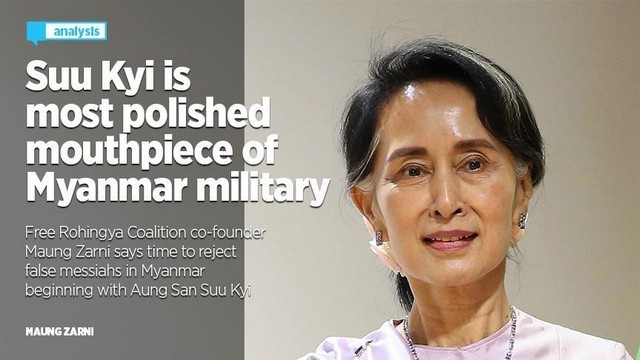
Suu Kyi is most polished mouthpiece of Myanmar military

By Maung Zarni

Watching YouTube Myanmar State Counsellor’s 43rd Singapore lecture — 1-hour lecture including the questions and answers – entitled, “Democratic Transition in Myanmar: Challenges and the Way Forward,” left me deeply disturbed, pained and outraged.

The degree of her delusions, distortions and concoctions made me realize that my fellow Burmese dissident has become nothing more than the most polished mouth piece for her former captors, namely the murderous military regime.

Aung San Suu Kyi wasn’t simply one dissident leader among several potential leaders of significance that I, like millions of other Burmese Buddhists, supported in those long years of vibrant anti-dictatorship opposition after the nationwide uprisings of 1988.

My sentimental ties to Aung San family is more personal and goes far deeper.

One late great uncle of mine was her father’s next-door neighbor, class mate and a friend at Pegu Hall (dormitory) when both were young undergraduates who hailed together from the Buddhist heartland of the then Upper Burma to study Pali, literature, law, etc. at the colonial Rangoon University in the early 1930’s.

Through my relative’s first-hand accounts of Aung San, the anti-colonial revolutionary and founder of Burma Independence Army under WWII Japan’s fascist patronage, as well as my own study of the slain national hero’s voluminous speeches and writings, I have developed a lifelong admiration for the man’s strength of character, integrity, Marxist-influenced non-racialism and unwavering sense of service to the oppressed of colonial Burma, not just Buddhists nor the majority Burmans or Bama, but all people who considered Burma their home.

In fact, in my high school days in Mandalay of 1970’s I learned the worthy English phrase “love of truth” from one of his writings wherein he pointedly said as a father he wanted to instill the love of truth in his three children.

So, when I watched Suu Kyi’s speech act performed at the Grand Hyatt in Singapore, available on YouTube, I noted with deep pains and rage that my hero’s world famous, or infamous, daughter packed lie after lie – all verifiable – in her prepared lecture, which she proceeded to deliver with a straight face.

Suu Kyi’s Singapore lecture August 22 was a speech her own martyred father would most definitely feel so ashamed about.

Two years since Suu Kyi’s assumption of her self-declared ‘Above-the-President’ office as State Counsellor with her reportedly autocratic control over all ministries save the security-related ministries such as Home Affairs, Defense and Border Affairs, her leadership is noted only for serial failures.

The commissions she has formed to address the country’s defining problem — crimes against Rohingyas — have become a butt of international jokes. As the country’s most revered politician since her father’s murder in 1947, Suu Kyi has been unable to deliver on every one of the party’s official major priorities: “rule of law, peace, development, amendments to the Constitution”.

And yet in the lecture, the NLD leader served up the typically democracy-indifferent and docile Singaporean audience a rose-tinted view of her leadership and governmental performance, which the official hosts on the panel dutifully clapped and heaped praise on.

For someone who grew up under General Ne Win’s “Burmese Way to Socialism” (1962-1988), Suu Kyi’s speech sounded more like a typical party General Secretary’s report to the Socialist Polit Bureau presided over by Chairman (despot) Ne Win in the 1960’s and 1970’s.

The State Counsellor in her own words: “In each of the three panglong (peace) meetings held over the last two years, we made valuable progress. in the First Union Peace Conference, a seven-step roadmap for peace and national reconciliation was achieved. In the Second Conference, 37 principles were adopted. Before the Third Conference, two more ethnic armed groups signed the ceasefire agreement and during the Conference itself, 1“4 more principles were adopted.”

Not only her words are unpersuasive and uncorroborated by the harsh realities of Myanmar ethnic minorities, particularly more than 100,000 Kachin war refugees in the country’s eastern and northern border regions but the world of Myanmar watchers who actually set their foot in these conflict zones offer an assessment radically different from Ms. Suu Kyi’s. Virtually all news reports and field studies about the Burmese military’s internal colonial war of pacification note not only the regression of the country’s peace process under Suu Kyi’s incompetent and failing leadership, typically rich in rhetoric and empty of substance, but also the disappearance of the so-called democratic space even for the ethnically dominant Burman Buddhist public.

That “democratic space” was deliberately allowed by the quasi-democratic regime former General Thein Sein in 2010 designed to tango with the Barack Obama-Hillary Clinton administration as the generals sought to rebalance the military’s overreliance on the increasingly aggressive and invasive China in the Burmese affairs.

The emerging, if belated wisdom in Washington is that the Obama’s Myanmar embracement policy, once held up as one of his signature achievements emboldened, sped up and facilitated the genocidal destruction of Rohingya people.

Under Suu Kyi’s leadership, Myanmar now faces a growing chorus of international calls for the Security Council for the International Criminal Court referral for international crimes in Western Myanmar state of Rakhine, irrespective of whether such calls will bear fruit. Suu Kyi stands accused, with good reasons, of culpability and complicity in the military’s crimes against humanity and even genocide against Rohingya people.

It is matters pertaining to Rohingya persecution — which my researcher colleague Natalie Brinham and I call “the slow burning genocide,” because of its decades-long nature — on which Suu Kyi’s speech act morphed from detectable delusions into deliberate distortions.

With no basis in reality, Suu Kyi boasted of having implemented most of the Kofi Annan Commission recommendations, thus: “(t)he recommendations of Dr. Kofi Annan’s Commission, 88 in all, of which we have to date implemented 81, aim at the establishment of lasting peace and stability in Rakhine.”

Kofi Annan is no more to do the fact-checking. But former ambassador Laetitia van den Assum, one of his fellow Rakhine Commission members, is still alive to know the untruths, nah, outright lies of Ms. Suu Kyi. Van den Assum tweeted “The underlying reasons for their (Rohingyas’) flight remain unaddressed”. The tweet, which can be seen at https://twitter.com/lvandenassum/status/1032527791303139328, came on the eve of the one year anniversary of Myanmar’s large scale military attacks on the unarmed and peaceful Rohingyas in more than 300 villages across northern Rakhine region.

As a researcher who has spent the last six years concentrating on my own country’s decades-long, state-directed persecution of Rohingyas, I find it morally repugnant and empirically false Suu Kyi’s disingenuous framing of the largest refugee crisis her military partners in power have created as initially “terror”-related.

She in effect added insult to the collective injury of the nearly 2 million Rohingya survivors, internally displaced inside Myanmar, internationally deported across the border to Bangladesh, or the diaspora, when she said, “the danger of terrorist activities, which was the initial cause of events leading to the humanitarian crisis in Rakhine, remains real and present today. Unless this security challenge is addressed, the risk of inter-communal violence will remain.”

Suu Kyi words echo how Myanmar military has long framed the Rohingyas — a threat to security — and justified their institutionalized killings of the latter.

For the first 15 years since the country’s popular uprisings in 1988, I had been one of the most hard-working and effective foot soldiers for Suu Kyi in her international campaigns to ostracize and punish Myanmar military leaders.

I have studied closely Suu Kyi’s leadership and poured over every speech of hers, over the last 30 years since she first parachuted onto the Burmese political stage as “the daughter of General Aung San,” as she put it.

Painfully, I have concluded that the daughter of my nationalist hero is no longer part of Myanmar’s solution. For she has for all intents and purposes morphed into the most polished mouthpiece of the military perpetrators.

Suu Kyi even had the audacity to call three generals in her Cabinet “rather sweet” amidst international calls to haul Myanmar generals to the International Criminal Court.

On Aug. 25, 700,000-plus Rohingya survivors of Myanmar genocide in 35 camps in Kutupalong meet to mourn, memorialize and honor loved ones who were senselessly maimed, mass-raped, slaughtered and burned alive a year ago. The least the world, both grassroots communities and governments, could do is to drop the decades-old policy delusions, globally, that Suu Kyi represents hope, liberty and liberalism.

As a Burmese, a dominant Bama, Buddhist from an extended military family at that, I will say for the record Myanmar’s State Counsellor no longer speaks for me.

Nor does she represent the humanistic values which I learned to embrace through her father’s writings. I know for a fact that there are fellow dissidents inside Myanmar, however small their numbers, who share my categorical rejection of Suu Kyi and her military partners in crimes.

Let’s remember Rohingya victims today. And let’s reject false messiahs of Myanmar, starting with Aung San Suu Kyi.

*Opinions expressed in this article are the author’s own and do not necessarily reflect the views of Anadolu Agency.

25 August 2018