Just International

What Everyone Should Know about Israel’s Siege of the Gaza Strip

By Rebecca Stead

10 Aug 2018 – For 11 years, Israel has imposed an unforgiving siege on the Gaza Strip. With severely restricted access in and out of the enclave — via land, air and, notoriously, sea — Gaza has effectively been sealed off from the world. The Strip is only 360 square kilometres in size, about the same as Las Vegas in the US or one-quarter the size of London. It is now home to almost two million Palestinians, making it one of the most densely populated areas in the world and leading some to dub Gaza “the world’s largest open-air prison.”

According to UNRWA, the UN body responsible for Palestinian refugees, 1.3 million of Gaza’s 1.9 million inhabitants are refugees. Most were expelled from their homes in 1948 when the State of Israel was created, and many were uprooted again when Israel occupied the West Bank, Gaza Strip, Golan Heights, Sinai Peninsula and Jerusalem during the 1967 Six Day War. A further 23,500 people continue to be internally displaced following Israel’s “Operation Protective Edge” military offensive against Gaza in 2014.

So what does the daily reality of the siege look like? Here are 11 aspects, one for each year that the siege has been imposed by Israel.

Movement of people is heavily restricted

Under the siege, the Palestinian residents of Gaza are required to obtain a permit to leave. Israel repeatedly refuses to issue such permits for exit via the Erez/Beit Hanoun Crossing. In the first quarter of 2018 alone, Israel denied 833 exit permit applications “on grounds of having family ties to Hamas,” the group which has ruled the Strip since winning the last Palestinian elections held in 2006. Compare this with 2017, when 21 applications were refused on such grounds throughout the whole year.

These restrictions also prevent those in need of medical attention from leaving Gaza via Israel. According to Al Jazeera, “Israel was responsible for at least 54 Palestinian deaths in 2017,” having rejected hundreds of medical permit applications by people needing treatment in the Israeli-occupied West Bank, Israel itself or abroad. A report by the United Nations Office for Coordination of Humanitarian Affairs for the occupied Palestinian territories (OCHA OPT) found that the rate of denied or delayed permit applications to access health care outside Gaza reached 45 per cent in October 2017.

Crossings into and out of Gaza are closed

Israel has closed almost all of the Gaza Strip’s entry and exit points. There were formerly six crossings in and out of Gaza: Erez/Beit Hanoun, Nahal Oz, Karni, Sufa, Kerem Shalom/Karm Abu Salem and Rafah.

Until recently, only one commercial route into and out of Gaza remained: Kerem Shalom. However, in July, Israel also closed this crossing, citing incendiary kites and balloons flown into Israel from inside Gaza as part of the Great March of Return protests. Whereas previously 300-400 trucks would pass through the crossing every day, only 150 trucks of essential medical and humanitarian supplies were being allowed to pass. Only a week later, cooking gas distribution companies in the besieged Strip announced that they had “run out of backup”.

In the south of the Strip is Rafah, the only pedestrian crossing open to Palestinians (Erez crossing, in the north, is reserved for journalists, medical staff, international diplomats and those in need of medical attention). An almost complete closure of the Rafah crossing has been imposed by Egypt since 2013, for “security” reasons but almost certainly at Israel’s behest. In 2017, the Rafah crossing was closed for 337 days.

Gaza’s access to the sea is restricted

On top of the restrictions Israel enforces on land, it also restricts access to the sea. According to an OCHA map (included in UNRWA’s report “Gaza in 2020”), since Israel’s three-week assault on Gaza in 2009 it has imposed a limit of three nautical miles on fishermen working out of the territory. This has been tightened consistently, even though a limit of 20 nautical miles was recommended by the Oslo Accords in the early 1990s. A no-entry zone of one and one and a half nautical miles, in the south and north respectively, has also been imposed, extending out from each of Gaza’s frontiers with Israel and Egypt.

In 2017, OCHA estimated that over 35,000 Palestinians still depended on the fishing industry for their livelihoods, but Israeli restrictions have all but destroyed Gaza’s once thriving fishing industry. Israel also targets Gazan fishermen, with international charity Oxfam noting that “in the first half of 2014, there were at least 177 incidents of naval fire against fishermen.” Many have been killed or wounded, and had their boats destroyed or seized by the Israeli navy.

Some have speculated that Israel’s restrictions are motivated by the presence of gas reserves in the Mediterranean Sea. In 2015, Israel’s Prime Minister Benjamin Netanyahu signed a deal to allow companies to begin extraction from the gas field. Thought to contain some 22 trillion cubic feet of gas, the discovery was hailed as a “gift from God” which could turn Israel into a “regional energy powerhouse.” Most of the gas fields are situated off Gaza’s shore, meaning that the gas reserves and their revenue would belong to Gaza were it not for Israel’s occupation, naval restrictions and blockade.

Israel imposes a strict naval blockade

Israel’s naval siege also includes blockading vessels seeking to enter or leave Gaza. In July 2018, an international convoy carrying humanitarian and medical supplies, dubbed the Freedom Flotilla, tried to break Israel’s siege of Gaza. Consisting of two ships – Al-Awda and Freedom – the flotilla was intercepted by Israeli naval forces in international waters amid accusations of violence by the troops involved.

This is not the first time that such flotillas have been hijacked in what have been called acts of piracy on the high seas. Infamously, in 2010 Israeli commandos boarded the Mavi Marmara taking humanitarian aid to Gaza and killed nine Turkish citizens; a tenth died later of his wounds.

Earlier this month (August 2018), images were revealed showing the construction of an underwater barrier stretching some 200 metres into the Mediterranean, separating Palestinian and Israeli territorial waters. Consisting of an underwater structure, an armoured stone base and a six-metre-high barbed wire fence, and at an estimated to cost the Israeli government of $6.7 million, the barrier adds to the land and sea restrictions already imposed on Gaza under the siege.

A strangled economy means high unemployment

A recent report by the World Bank revealed a drop in Gaza’s growth, from eight per cent in 2016 to 0.5 per cent in 2017. Much of this has been caused by Israel’s prohibition on goods and raw materials being allowed into Gaza, which has prevented the reconstruction necessary after three major Israeli military offensives waged on the enclave over the past decade. The World Bank also noted that the cuts to UNRWA funding announced early in 2018 have further hampered the chances for economic recovery.

Unemployment in the Gaza Strip is therefore one of the highest in the world; Israeli human rights organisation B’Tselem notes that the unemployment rate in Gaza reached 46.6 per cent in the third quarter of 2017. Among those aged 20 to 24, unemployment reached 67.8 per cent, and among women the rate was 71 per cent. Overcrowding and a predominantly young population have contributed further to this problem.

Gaza’s agricultural potential is stifled

Gaza has huge agricultural potential, but much of this is stifled by the siege. Highly-fertile land means that fresh fruit including strawberries, tomatoes, peppers, as well as herbs, used to be huge contributors to Gaza’s economy.

In his book Gaza: Preparing for Dawn, former Jerusalem bureau chief for the Independent Donald Macintyre noted that even before the siege began officially, intensive Israeli security inspections often meant fresh produce “had rotted by the time [it] left Gaza.” With commercial crossings now closed; the lack of any potential for exporting via sea routes; and the lack of fresh water for irrigation purposes, much of this industry has failed.

Israeli herbicides kill Palestinian crops

Compounding the problem is Israel’s practice of spraying herbicides near the Gaza fence, which kills crops inside the territory. OCHAopt quotes the Palestinian Ministry of Agriculture as saying, “A spraying operation in January 2018 affected some 550 acres of agricultural lands belonging to 212 farmers, with an estimated loss of $1.3 million.” Israel insists the spraying is done on the Israeli side of the boundary, but has refused to consider claims made by Palestinian farmers for damage to their farmland.

Gaza receives only four to six hours’ electricity per day

Gaza receives just four to six hours of electricity per day because repairs have not been allowed to the territory’s only power plant, damaged by successive Israeli offensives. Fuel for the plant and emergency generators is also subject to tight import restrictions imposed by the Israeli siege. In 2017, OCHAopt reported that electricity shortages were directly affecting 14 hospitals and more than 140 health clinics in the Strip. In July 2018, patients from across Gaza’s hospitals staged a sit-in in front of the Erez crossing to highlight the shortages in medical equipment and resources, which prevent patients from receiving adequate care. These electricity shortages also impact schools’ capacity to provide education to Palestinian children, families’ ability to store food at home and employment opportunities in Gaza.

96% of Gaza’s water is undrinkable

According to OCHA OPT, 40 per cent of Gaza’s population receives just three to five hours of water supply every five days. In addition, over 96 per cent of water extracted from Gaza’s aquifers is unfit for human consumption; the aquifers have been contaminated by sea water as well as chemicals from fertilisers washed down by rainfall from Israeli settlements. This means that 90 per cent of Gazans have to buy desalinated or bottled water, imposing an additional cost burden on families already living under the poverty line. The water problem has been compounded by outages in electricity, which have led to sanitation difficulties and left untreated sewage to flow into the sea, contaminating 73 per cent of the shoreline.

Education is strained and graduates are jobless

Education has come under strain during the siege, with the United Nations Development Programme (UNDP) reporting that to cope with ever-increasing demand, 70 per cent of public and UNRWA schools teach in double shifts, where one group of students attends in the morning and another in the afternoon. Yet despite the challenges facing Gaza’s students, literacy rates remain among the highest across the Middle East-North Africa (MENA) region.

However, unemployment is particularly acute among those with college and university education, with B’Tselem noting that among residents of Gaza with post-secondary education, unemployment in late 2017 was 52.3 per cent.

Israel didn’t ‘disengage’ from Gaza

The official Israeli narrative states that Israel disengaged from Gaza in 2005, when it forced almost 8,000 illegal settlers to leave 21 settlements. Many settler families were given generous compensation packages in exchange, some amounting to almost $200,000, but others had to be removed by force.

However, the extent to which Israel disengaged from Gaza has been undermined by its implementation of the siege since 2007. Some have suggested that Israel simply replaced its direct control of Gaza with a remote control occupation, squeezing the economy, natural resources and movement of people all without maintaining boots on the ground.

With its complete control of Gaza’s air, land and sea borders, Israel remains technically and legally an occupying power in the territory. The occupation is still very much in place. This means, among other things, that Israel cannot claim that its military offensives are simply acts of self-defence; there is no such claim under international law for states involved in a military occupation, which those living under occupation have every right to resist.

Rebecca Stead – An MA student at SOAS University of London studying Middle Eastern Studies with Arabic, Stead focuses on the history, culture and politics of Israel-Palestine specifically and the Levant more broadly.

13 August 2018

Source: https://www.transcend.org/tms/2018/08/what-everyone-should-know-about-israels-siege-of-the-gaza-strip/

Israel Is Arming Neo-Nazis in Ukraine

By Asa Winstanley

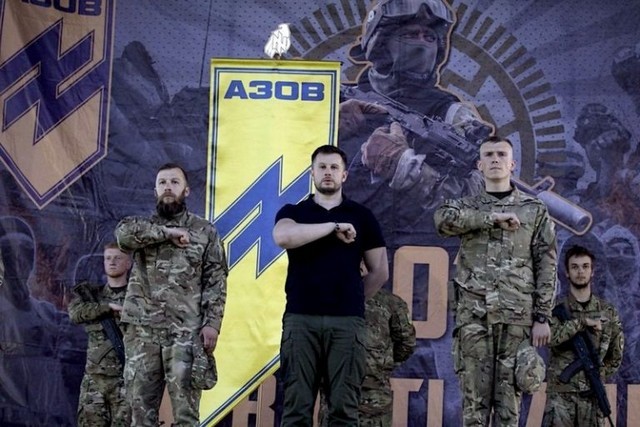
4 Jul 2018 – Israeli arms are being sent to a heavily armed neo-Nazi militia in Ukraine, The Electronic Intifada has learned.

Azov Battalion online propaganda shows Israeli-licensed Tavor rifles in the fascist group’s hands, while Israeli human rights activists have protested arms sales to Ukraine on the basis that weapons might end up with anti-Semitic militias.

In a letter “about licenses for Ukraine” obtained by The Electronic Intifada, the Israeli defense ministry’s arms export agency says they are “careful to grant licenses” to arms exporters “in full coordination with the Ministry of Foreign Affairs and other government entities.”

The 26 June letter was sent in reply to Israeli lawyer Eitay Mack who had written a detailed request demanding Israel end all military aid to the country.

Azov’s official status in the Ukrainian armed forces means it cannot be verified that “Israeli weapons and training” are not being used “by anti-Semitic or neo-Nazi soldiers,” Mack and 35 other human rights activists wrote.

They had written that Ukrainian armed forces use rifles made in Israel “and are trained by Israelis,” according to reports in the country.

The head of the Israeli arms export agency declined to deny the reports, or to even discuss cancellation of the weapons licenses, citing “security” concerns.

But Racheli Chen, the head of the agency, confirmed to Mack she had “carefully read your letter,” which detailed the fascist nature of Azov and the reports of Israeli arms and training.

Both the defense ministry letter and Mack’s original request can be read in the original Hebrew below.

Israeli rifles in Ukraine

The fact that Israeli arms are going to Ukrainian neo-Nazis is supported by Azov’s own online propaganda.

A photo on Azov’s website also shows a Tavor in the hands of one of the militia’s officers.

The rifles are produced under licence from Israel Weapon Industries, and as such would have been authorized by the Israeli government.

IWI markets the Tavor as the “primary weapon” of the Israeli special forces.

It has been used in recent massacres of unarmed Palestinians taking part in Great March of Return protests in Gaza.

Fort, the Ukrainian state-owned arms company that produces the rifles under license, has a page about the Tavor on its website.

The Israel Weapon Industries logo also appears on its website, including on the “Our Partners” page.

Starting as a gang of fascist street thugs, the Azov Battalion is one of several far-right militias that have now been integrated as units of Ukraine’s National Guard.

Staunchly anti-Russian, Azov fought riot police during the 2013 US and EU-supported “Euromaidan” protests in the capital Kiev.

The protests and riots laid the ground for the 2014 coup which removed the pro-Russian president Viktor Yanukovych.

When the civil war began in eastern Ukraine against Russian-backed separatists, the new western-backed government began to arm Azov. The militia soon fell under the jurisdiction of the Ukrainian interior ministry, and saw some of the most intense frontline combat against the separatists.

The group stands accused in United Nations and Human Rights Watch reports of committing war crimes against pro-Russian separatists during the ongoing civil war in the eastern Donbass region, including torture, sexual violence and targeting of civilian homes.

Today, Azov is run by Arsen Avakov, Ukraine’s interior minister. According to the BBC, he pays its fighters, and has appointed one of its military commanders, Vadym Troyan, as his deputy – with control over the police.

Avakov last year met with the Israeli interior minister Aryeh Deri to discuss “fruitful cooperation.”

Azov’s young founder and first military commander Andriy Biletsky is today a lawmaker in the Ukrainian parliament.

As journalist Max Blumenthal explained on The Real News in February, Biletsky has “pledged to restore the honor of the white race” and has advanced laws forbidding “race mixing.”

According to The Telegraph, Biletsky in 2014 wrote that “the historic mission of our nation in this critical moment is to lead the white races of the world in a final crusade for their survival. A crusade against the Semite-led untermenschen.”

At a military training camp for children last year, The Guardian noticed that several Azov instructors had Nazi and other racist tattoos, including a swastika, the SS skull symbol and one that read “White Pride.”

One Azov soldier explained to The Guardian that he fights Russia because “Putin’s a Jew.”

Speaking to The Telegraph, another praised Adolf Hitler, said homosexuality is a “mental illness” and that the scale of the Holocaust “is a big question.”

An Azov drill sergeant once told USA Today “with a laugh” that “no more than half his comrades are fellow Nazis.”

An Azov spokesperson played that down, claiming that “only 10-20 percent” of the group’s members were Nazis.

Nonetheless, the sergeant “vowed that when the war ends, his comrades will march on the capital, Kiev, to oust a government they consider corrupt.”

After Azov’s founder Andriy Biletsky entered parliament, he threatened to dissolve it. “Take my word for it,” he said, “we have gathered here to begin the fight for power.”

Those promises were made in 2014, but there are early signs of them being fulfilled today.

httpv://www.youtube.com/watch?time_continue=444&v=hE6b4ao8gAQ

This year the battalion has founded a new “National Militia” to bring the war home.

This well-organized gang is at the forefront of a growing wave of racist and anti-Semitic violence in Ukraine.

Led by its military veterans, it specializes in pogroms and thuggish enforcement of its political agenda.

Earlier this month, clad in balaclavas and wielding axes and baseball bats, members of the group destroyed a Romany camp in Kiev. In a YouTube video, apparently shot by the Azov thugs themselves, police turn up towards the end of the camp’s destruction.

They look on doing nothing, while the thugs cry, “Glory to the nation! Death to enemies!”

Israel’s military aid to Ukraine and its neo-Nazis emulates similar programs by the United States and other NATO countries including the UK and Canada.

So obsessed are they with defeating a perceived threat from Russia that they seem happy to aid even openly Nazi militias – as long as they fight on their side.

This is also a throwback to the early Cold War, when the CIA supported fascists and Hitlerites to infiltrate from Austria into Hungary in 1956, where they began slaughtering Hungarian communist Jews and Hungarian Jews as “communists.”

Recent postings on Azov websites document a June meeting with the Canadian military attaché, Colonel Brian Irwin.

According to Azov, the Canadians concluded the briefing by expressing “their hopes for further fruitful cooperation.”

Irwin acknowledged receipt of an email from The Electronic Intifada, but did not answer questions about his meeting with the fascist militia.

A spokesperson for the Canadian defense department later sent a statement claiming that their “training of Ukrainian Armed Forces through Operation Unifier incorporates strong human rights elements.”

They said Canada is “strongly opposed to the glorification of Nazism and all forms of racism” but that “every country must come to grips with difficult periods in its past.”

The spokesperson, who did not provide a name, wrote that Canadian training “includes ongoing dialogue on the development of a diverse, and inclusive Ukraine.”

The statement said nothing about how alleged Canadian diversity training goes down with the Azov Battalion.

Also part of Colonel Irwin’s meeting was the head of Azov’s officer training academy, an institution named after right-wing Ukrainian nationalist Yevhen Konovalets.

Konovalets is one of the group’s idols, whose portrait frequently adorns its military iconography.

Konovalets was the founder of the Organization of Ukrainian Nationalists (OUN), which later allied itself to Nazi Germany during its invasion of the Soviet Union.

The OUN took part in the notorious 1941 Lviv massacre, when the Nazis invaded Soviet territory.

During the pogrom, thousands of Jews were massacred in the now-Ukrainian city.

US aid to Nazis

Canada is of course not the only NATO “ally” to be sending arms to Ukraine.

As Max Blumenthal has extensively reported, US weapons, including rocket-propelled grenades, and training have been provided to Azov.

Under pressure from the Pentagon, a clause in the annually renewed defense bill banning US aid to Ukraine from going to the Azov Battalion was repeatedly stripped out.

This went on for three straight years before Democratic lawmaker Ro Khanna and others pushed it through earlier this year.

For his trouble Khanna was smeared in Washington as a “K Street sellout” who was “holding Putin’s dirty laundry.”

Despite the ban finally passing, Azov’s status as an official unit of the Ukrainian armed forces leaves it unclear how US aid can be separated out.

In 2014, the Israel lobby groups ADL and the Simon Wiesenthal Center refused to help a previous attempt to bar US aid to neo-Nazi groups in Ukraine.

The ADL argued that “the focus should be on Russia,” while the Wiesenthal Center pointed to the fact that other far-right leaders had met at the Israeli embassy in Ukraine – as if that somehow absolved their anti-Semitic views.

Attempts by some in Congress to bar US military aid to Nazis in Ukraine may explain military aid from Israel.

Israel’s “deepening military-technical cooperation” with Ukraine and its fascist militias is likely a way to help its partner in the White House, and is another facet of the growing Zionist-White Supremacist alliance.

Israel has historically acted as a useful route through which US presidents and the CIA can circumvent congressional restrictions on aid to various unsavory groups and governments around the world.

In 1980s Latin America, these included the Contras, who were fighting a war against the left-wing revolutionary government of Nicaragua, as well as a host of other Latin American fascist death squads and military dictatorships.

It also included the South African apartheid regime, which Israeli governments of both the “Zionist left” and Likudnik right armed for decades.

As quoted in Andrew and Leslie Cockburn’s book Dangerous Liaison, one former member of the Israeli parliament, General Mattityahu Peled, put it succinctly: “In Central America, Israel is the ‘dirty work’ contractor for the US administration. Israel is acting as an accomplice and an arm of the United States.”

Amid an alarming rise in anti-Semitism and neo-Nazism, Israel now appears to be reprising this role in Eastern Europe.

With translation from Hebrew by Dena Shunra.

Asa Winstanley is an associate editor with The Electronic Intifada.

13 August 2018

Source: https://www.transcend.org/tms/2018/08/israel-is-arming-neo-nazis-in-ukraine/

The Useful Idiocy of Donald Trump

By Chris Hedges

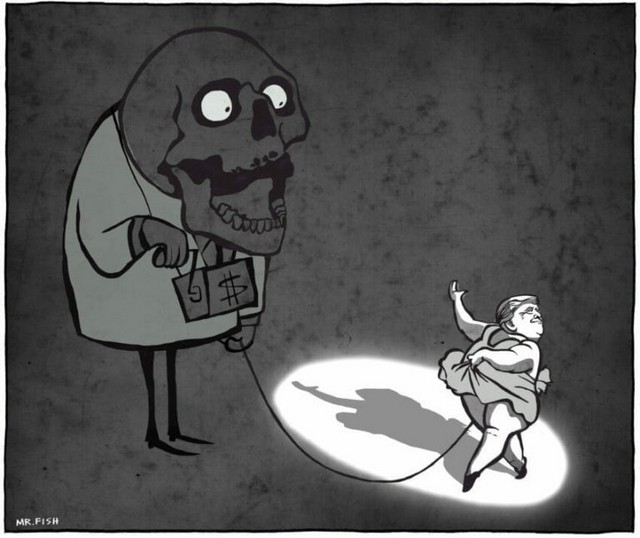
5 Aug 2018 – The problem with Donald Trump is not that he is imbecilic and inept—it is that he has surrendered total power to the oligarchic and military elites. They get what they want. They do what they want. Although the president is a one-man wrecking crew aimed at democratic norms and institutions, although he has turned the United States into a laughingstock around the globe, our national crisis is embodied not in Trump but the corporate state’s now unfettered pillage.

Trump, who has no inclination or ability to govern, has handed the machinery of government over to the bankers, corporate executives, right-wing think tanks, intelligence chiefs and generals. They are eradicating the few regulations and laws that inhibited a naked kleptocracy. They are dynamiting the institutions, including the State Department, that served interests other than corporate profit and are stacking the courts with right-wing, corporate-controlled ideologues. Trump provides the daily entertainment; the elites handle the business of looting, exploiting and destroying.

Once democratic institutions are hollowed out, a process begun before the election of Trump, despotism is inevitable. The press is shackled. Corruption and theft take place on a massive scale. The rights and needs of citizens are irrelevant. Dissent is criminalized. Militarized police monitor, seize and detain Americans without probable cause. The rituals of democracy become farce. This is the road we are traveling. It is a road that leads to internal collapse and tyranny, and we are very far down it.

The elites’ moral and intellectual vacuum produced Trump. They too are con artists. They are slicker than he at selling the lies and more adept at disguising their greed through absurd ideologies such as neoliberalism and globalization, but they belong to the same criminal class and share many of the pathologies that characterize Trump. The grotesque visage of Trump is the true face of politicians such as George W. Bush, Bill and Hillary Clinton and Barack Obama. The Clintons and Obama, unlike Bush and Trump, are self-aware and therefore cynical, but all lack a moral compass. As Michael Wolff writes in “Fire and Fury: Inside the Trump White House,” the president has “no scruples.” He lives “outside the rules” and is “contemptuous of them.” And this makes him identical to those he has replaced, not different. “A close Trump friend who was also a good Bill Clinton friend found them eerily similar—except that Clinton had a respectable front and Trump did not,” Wolff writes.

Trump, backed by the most retrograde elements of corporate capitalism, including Robert and Rebekah Mercer, Sheldon Adelson and Carl Icahn, is the fool who prances at the front of our death march. As natural resources become scarce and the wealth of the empire evaporates, a shackled population will be forced to work harder for less. State revenues will be squandered in grandiose projects and futile wars in an attempt to return the empire to a mythical golden age. The decision to slash corporate tax rates for the rich while increasing an already bloated military budget by $54 billion is typical of decayed civilizations. Empires expand beyond their capacity to sustain themselves and then go bankrupt. The Sumerian, Egyptian, Greek, Roman, Mayan, Khmer, Ottoman and Austro-Hungarian empires all imploded in a similar fashion. The lessons of history are clear. But the illiterate charlatans who seize power in the dying days of empire know nothing of history. They are driven by a primal and inchoate lust for wealth, one that is never satisfied no matter how many billions they possess.

The elites in dying cultures turn everything into a commodity. Human beings are commodities. The natural world is a commodity. Government and democratic institutions are commodities. All are mined and wrecked for profit. Nothing has an intrinsic value. Nothing is sacred. The relentless and suicidal drive to accumulate greater and greater wealth by destroying the systems that sustain life is idolatry. It ignores the biblical injunction that idols always begin by demanding human sacrifice and end by demanding self-sacrifice. The elites are not only building our funeral pyre, they are building their own.

The elites, lacking a vision beyond satiating their own greed, revel in the intoxicating power to destroy. They confuse destruction with creation. They are agents of what Sigmund Freud calls the death instinct. They find in acts of national self-immolation a godlike power. They denigrate empathy, intellectual curiosity, artistic expression and the common good, virtues that sustain life. They celebrate a hyper-individualism embodied in celebrity, wealth, hedonism, manipulation and the ability to dominate others. They know nothing of the past. They do not think about the future. Those around them are temporarily useful to their aims and must be flattered and rewarded but in the end are ruthlessly cast aside. There is no human connection. This emotional numbness lies at the core of Trump’s personality.

“[Stephen] Bannon described Trump as a simple machine,” Wolff writes. “The On switch was full of flattery, the Off switch full of calumny. The flattery was dripping, slavish, cast in ultimate superlatives, and entirely disconnected from reality: so-and-so was the best, the most incredible, the ne plus ultra, the eternal. The calumny was angry, bitter, resentful, ever a casting out and closing of the iron door.”

The elites in a dying culture confuse what the economist Karl Polanyi calls “real” and “fictitious” commodities. A commodity is a product manufactured for sale. The ecosystem, labor and money, therefore, are not commodities. Once these fictitious commodities are treated as real ones for exploitation and manipulation, Polanyi writes, human society devours itself. Workers become dehumanized cogs. Currency and trade are manipulated by speculators, wreaking havoc with the economy and leading to financial collapse. The natural world is turned into a toxic wasteland. The elites, as the society breaks down, retreat into protected enclaves where they have access to security and services denied to the wider population. They last longer than those outside their gates, but the tsunami of destruction they orchestrate does not spare them.

As long as Trump serves the interests of the elites he will remain president. If, for some reason, he is unable to serve these interests he will disappear. Wolff notes in the book that after his election there was “a surprising and sudden business and Wall Street affinity for Trump.” He went on: “An antiregulatory White House and the promise of tax reform outweighed the prospect of disruptive tweeting and other forms of Trump chaos; besides, the market had not stopped climbing since November 9, the day after the election.”

The Russia investigation—launched when Robert Mueller became special counsel in May and which appears to be focused on money laundering, fraud and shady business practices, things that have always characterized Trump’s financial empire—is unlikely to unseat the president. He will not be impeached for mental incompetence, over the emoluments clause or for obstruction of justice, although he is guilty on all these counts. He is useful to those who hold real power in the corporate state, however much they would like to domesticate him.

Trump’s bizarre ramblings and behavior also serve a useful purpose. They are a colorful diversion from the razing of democratic institutions. As cable news networks feed us stories of his trysts with a porn actress and outlandish tweets, the real work of the elites is being carried out largely away from public view. The courts are stacked with Federalist Society judges, the fossil fuel industry is plundering public lands and the coastlines and ripping up regulations that protected us from its poisons, and the Pentagon, given carte blanche, is engaged in an orgy of militarism with a trillion-dollar-a-year budget and about 800 military bases in scores of countries around the world.

Trump, as Wolff describes him in the book, is clueless about what he has unleashed. He is uninterested in and bored by the complexities of governance and policy. The faster Trump finds a member of the oligarchy or the military to take a job off his hands the happier he becomes. This suits his desires. It suits the desires of those who manage the corporate state. For the president there is only one real concern, the tumultuous Trump White House reality show and how it plays out on television. He is a creature solely concerned with image, or more exactly his image. Nothing else matters.

“For each of his enemies—and, actually, for each of his friends—the issue for him came down, in many ways, to their personal press plan,” Wolff writes of the president. “Trump assumed everybody wanted his or her fifteen minutes and that everybody had a press strategy for when they got them. If you couldn’t get press directly for yourself, you became a leaker. There was no happenstance news, in Trump’s view. All news was manipulated and designed, planned and planted. All news was to some extent fake—he understood that very well, because he himself had faked it so many times in his career. This was why he had so naturally cottoned to the ‘fake news’ label. ‘I’ve made stuff up forever, and they always print it,’ he bragged.”

Yes, the elites wish Trump would act more presidential. It would help the brand. But all attempts by the elites to make Trump conform to the outward norms embraced by most public officials have failed. Trump will not be reformed by criticism from the establishment. Republican Sens. Jeff Flake of Arizona and Bob Corker of Tennessee, who denounced Trump, saw their approval ratings plummet and have decided not to run for re-election. Trump may have public approval of only 39 percent overall, but among Republicans the figure is 78 percent. And I don’t think those numbers will decrease.

The inability of the political establishment and the press to moderate or reform Trump’s egregious behavior is rooted in their loss of credibility. The press, along with political and intellectual elites, spent decades championing economic and political policies that solidified corporate power and betrayed and impoverished American workers. The hypocrisy and mendacity of the elites left them despised and distrusted by the victims of deindustrialization and austerity programs. The attempt to restore civility to public discourse and competency to political office is, therefore, fruitless. Liberal and establishment institutions, including the leadership of the two main political parties, academia and the press, squandered their moral authority. And the dogged refusal by the elites to address the engine of discontent—social inequality—ensures that they will remain ineffectual. They lay down the asphalt for the buffoonery of Trump and the coming tyranny.

Chris Hedges spent nearly two decades as a foreign correspondent in Central America, the Middle East, Africa and the Balkans.

13 August 2018

Source: https://www.transcend.org/tms/2018/08/the-useful-idiocy-of-donald-trump/

The Future of NATO: An Interview

By Richard Falk

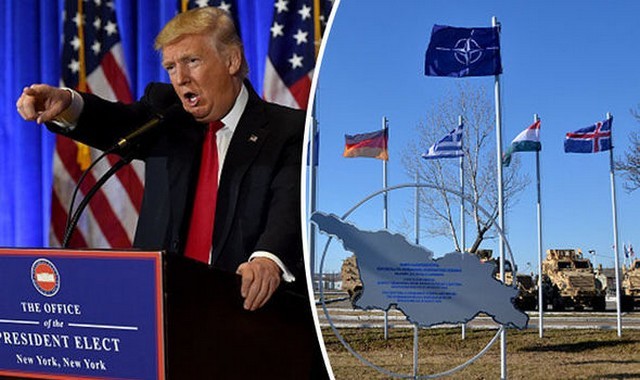
11 Aug 2018 – An interview with Daniel Falcone on the future of NATO that considers Trump’s brazen challenges and the tepid responses of European political leaders, and what this interplay signifies for the future of world order. At least, Trump’s approach has so far avoided the drift toward Cold War 2 that might have happened had Hillary Clinton become president, but Trump’s trade war mentality may hasten the advent of a different kind of second Cold War, with China and Europe at its epicenter, that is, if the Trump presidency is not undermined in the November elections or otherwise. We should be puzzled by the seeming passivity of the deep state in the U.S. Does it not exist after all?

*********

QUESTION: What are the reasons for Trump’s insistence that NATO is just another extension of corruption and an institutional burden for the United States?

It is difficult to evaluate Trump’s particular moves from coherent rational perspectives. He seems driven by narcissistic motivations of various sorts that have little to do with any overall grand strategy, and a diplomatic style that he has managed to impose on the conduct of American foreign policy that consists of provocative bluster and insults of respected foreign leaders, a continuation of the sort of vulgar irreverence that brought him unexpected success on the presidential campaign trail in 2016 and earlier celebrity in the deal-making world of real estate, gambling casinos, beauty pageants, professional boxing, and reality TV (“The Apprentice”). Explaining Trump’s recent confrontational focus on financial contributions by NATO members seems as simple as this at first glance, but of course, such assessments based on personality never tell the whole story in the complex unfolding political narrative. Undoubtedly, another part of the story can be associated with the insistence during a Trump’s interview that Europe is a trade rival of the United States. A further conjecture may be a geopolitical ‘peace’ framework based on Russia, China, and the U.S..

With regard to NATO, Trump has a clear target related to two things he seems to love, and admittedly such affections were not alien to the foreign policy he inherited from his predecessors: money and weapons. By showing that he can gain what Obama failed to achieve with respect to meeting the agreed 2% of GDP goal set for NATO members, he can, and certainly will, boast of his greater effectiveness in protecting America’s material interests than prior presidents. As suggested he measures foreign policy success by reference to monetary returns and America, First (and Me, First) criteria, and tends to put to one side the solidarities of friendship among countries sharing a common cultural identity and mutual respect that have been at the core of the alliance ethos over the decades, especially in relations with Western Europe since World War II. For Trump it appears that alliances, including even NATO, are to be treated as nothing more than business arrangements that are only worthwhile so long as their profit margins hold up. This means that financial contributions become the clearest test of whether cooperative frameworks makes sense in present settings. Interests and values are put to one side while the bundles of cash are counted. In such a process, the circumstances that brought the alliance into being, or justify its continuation, are ignored. Actually, Trump could make a credible case for withdrawing from or greatly downsizing the alliance, given present world conditions, which would help reduce the U.S. fiscal deficit, as well as easing the burdens of security that fall to Washington.

In the end, Trump could credibly claim a narrow victory for himself at this recent NATO summit in the transactional sense of gaining assurances from the European governments that they will be increasing their defense budgets.In return Trump reaffirmed continuing U.S. support for the NATO alliance. Like a Mafioso family gathering when the cash flow is restored, friendship between European governments and Trump’s America becomes again possible, providing foreign leaders are prepared to continue absorbing the insults Trump delivers along the way, and then when they create awkward moments, as with Teresa May in Helsinki, are curtly dismissed as his own ‘fake news.’ When ‘fake’ is used to discredit the truth, trust vanishes, and one of the pillars of a healthy democracy is destroyed. We gradually lose our understanding of what is truth, and worse, no longer care or hold leaders accountable by reference to reality.

There is no indication of any attention given by Trump to the crucial question: whether NATO serves sufficient useful purposes in the post-Cold War world to be worth the economic costs, let alone the political costs associated with spending on weapons rather than the wellbeing of people and their natural surroundings. Would not the long overdue transition to a real peacetime security posture have many positive advantages for the U.S. and Europe, including exploring prospects for a mutually beneficial cooperative relationships with Russia and China? We have reached a stage in world history where we should be asking whether NATO might be abandoned altogether or drastically redesigned in light of the current agenda of actual global policy challenges. If NATO were converted into a vehicle for the realization of humansecurity, setting its new agenda by reference to the wellbeing of people, it would be a genuine triumph for Trump and the global public interest, but such an orientations seems well outside the boundaries of his political imagination. In fairness, no American leader has dared to adopt the discourse of human security, or questioned the continued viability of Cold War alliances and accompanying strategic doctrine, and it would be pure wishful thinking to expect such demilitarizing words to issue from the lips or mind  of Donald Trump. At least those of us who watch the Trump spectacle in bemused fear should more than ever put forward our own hopes and beliefs in broad gauged cooperation between North America and Europe based on a commitment to  peace, justice, and security, and demand that discussion of the future of the relationship between Europe and North America not be reduced to a demeaning debate about how to raise the level of military spending or keep obsolete alliances in being by the artifice of worrying only about whether particular governments are meeting the 2% goal, which seems like an arbitrary number that is unrelated to the actuality of security challenges..

How do you forecast the European reaction to the Trump commentary on NATO and could you explain how this might impact key portions of US foreign affairs?

Europe’s governmental response to the Trump onslaught so far has been very disappointing, while recent civil society responses in Europe has been generally encouraging. On the one side, NATO leaders seem to pout like aggrieved children, angered and humiliated, but too frightened of the uncertainties associated with confronting Trump to raise their objections above the level of a whisper. On the other side, their acquiescence to the Trump insistence that NATO viability is to be measured in dollars or maybe Euros, unaccompanied by even a pretense of putting forward a relevant substantive rationale for Cold War levesl of spending. Such passive aggressive behavior by European leaders is likely best understood as a sullen endorsement of Trumpism. In effect, the Europeans are muttering “yes, we in Europe should be allocating more of our resources to the defense budget and begin to live up to our 2% commitment” so as to keep a renewed watchful eye on Russia and go along with the slouch toward a Second Cold War. There is no justification given for supposing that Europe will be safer if more heavily invested in military equipment, and my view is that Europe would be far safer, more secure, and more serene if it instead invested these additional funds in helping alleviate the refugee challenge at both the asylum end and at its various sources where combat and climate change have made some national habitats virtually unlivable. It might be emphasized that these habitants from which people are escaping to Europe most commonly at great risk to themselves, have been rendered uninhabitable partly by industrialization in the West and by the bloody aftermath of European colonialism that left behind arbitrary borders that did not correspond to natural communities.

Responding to the root causes of refugee and migration pressures should be seen as a matter of long deferred collective responsibility, and not as charity or as exercises of discretion. Furthermore, if NATO were responsive to real threats to the security of Europe, including to its democratic way of life, it would focus its attention with a sense of urgency on these issues instead of implicitly preparing the continent for a new Cold War that an anti-Russian weaponized foreign policy will, ironically, help bring about, initially no doubt in the form of a destablizing arms race, and calls for raising defense spending to even higher levels.

Here Trump seems to have his priorities confused. At times, for instance in supporting Brexit, and now endorsing a hard Brexit and the Boris Johnson approach, Trump seems to be furthering Moscow’s prime aim of weakening the unity of Europe, while at the same time by rallying NATO members to increase military spending Trump seems to be lending credibility to Russian worries of a new Cold War.

Whether for personal reasons associated with his shady financial dealings and his vulnerability to blackmail or a sense that the way to bring stability to the world is to have strong leaders work together, and establish a grand alliance of autocrats, Trump’s soft spot for Putin may be preferable to what a hard-edged, NATO enthusiast like Hilary Clinton would have brought to the White House had she won the election. A Clinton presidency would almost certainly have gone easy on NATO when it comes to the economics and politics of burden-sharing while insisting on the adoption of a hardline on such geopolitical issues as Crimea and eastern Ukraine. Given the recent show of timidity by NATO leaders scared to cut the umbilical cord that has tied their security policies to the diktats of Washington ever since 1945 (with the notable exception of DeGaulle’s ‘France, First’/. leadership). We sometimes forget that aspiring to the role of global leader has always come with a high price tag, but the expense involved is more than offset by the benefits of status, heightened influence in global arenas, and a favorable positioning in the world economy, or so it seemed to the political elites of both parties until Trump through handfuls of sand into the intricate machinery of the national security state..

In the past US led and authorized NATO bombings are criticized rather easily and justifiably from the left, but what is the danger of the Trump mentality to foster a disregard for global order from the reactionary right wing? And does resistance to Trump cynicism put NATO skeptics on the left in a difficult position in your view?

I think that the ideological discourse has definitely been altered by Trump’s  alt-right approach to NATO. The left, such as it is, has refocused its energies on resisting what it believes to be a slide toward fascism at home arising from its correct perceptions of the Trump presidency as racist, ultra-nationalist, chauvinist, Islamophobic, subverting constitutionalism, and haunted by demagogic leadership. Those most upset with the attacks on the alliance underpinnings of NATO are not the left, but rather the more centrist liberalconstituencies encompassing moderate Republicans as well as mainstream Democrats. These are persons likely as upset by the challenge mounted by the mildly insurgent left-leaning politics of Bernie Sanders as by Trump, perhaps more so. Trump is ardently pro-business, pushed through Congress tax reform that mainly benefits those, like himself, who are part of a tiny billionaire class. What remains of the liberal establishment, whether on Wall Street or situated in the dark inner and hidden recesses of the deep state, is on the verge of tears in the aftermath of Trump’s assault on the NATO anchoring of the Atlanticist approach to American foreign policy that became so iconic for the political classes comprising the bipartisan American establishment ever since 1945.

Trump was elected partly because of what amounts to his “Me First” Doctrine as well as his “Make America Great Again” slogan. Does he in your estimation fully intend to utilize NATO in the background while appeasing his rabid anti institution base?

Trump and his fanatical base in the U.S. never seem far apart. Even in pursuing trade wars around the world, especially with China, that harm many of those who voted for him, his rationalizations, invoking the ‘America, First’ language and jobs rhetoric whether or not the evidence supports such claims. Apparently, so far, a relentless demagogue can fool many of the people all the time, especially by the rants of a populist politic that takes delight in scapegoating outsiders and arousing rage against the insiders who are portrayed as reaping the benefits of the international liberalism that gave us both the Cold War world economy and produced a neoliberal predatory aftermath identified in the 1990s as ‘globalization’, a view of political legitimacy that combines a private sector economy with some minimal form of democracy.

How NATO will eventuallu fit within this Trump scheme is not yet clear, and may never be so. It seems a blustery sideshow at this point as NATO does not seem to have clear missions in post-Cold War Europe except to be a rallying center for counterterrorist tactics, which operationally depend on national policing and paramilitary capabilities. It seems that Europe is willing to pay up to sustain the NATO status quo, allowing Trump to laugh his way to the bank. NATO’s leading members are most worried these days about keeping the EU together in the face of various stresses associated with Brexit, refugees, a far right anti-immigration resurgence, and some loss of confidence in the EURO and austerity fiscal discipline. Handling Trump is an unpleasant additional chore for European leaders, but it is so far treated more in the spirit of the London protesters’ giant baby balloon, a matter of parenting, lacking real substantive weight, or so it seems. Aside from Turkey no European government seems to be considering alternative alignments now.

On the broader posture of anti-institutionalism and anti-multilateralism, Trump has kept faith with his pre-Fascist base by bullying tactics at the UN, repudiating the Nuclear Agreement with Iran, and withdrawing from the Paris Climate Change Agreement. These are big ticket items that represent extremely serious setbacks for responsible efforts to address challenges of regional and global scale that pose severe threats to peace and ecological stability.

Trump likes to portray himself as a populist alternative to the Bushes and Clintons and their reckless foreign policy while questioning our “exceptionalism.” In reality however we have broadened and expanded our presence around the world under Trump. Can you talk about the Trump foreign policy and how’d you categorize it?

Trump foreign policy, such as it is, seeks to diminish engagement with international institutions, including treaty regimes, and retain greater freedom of maneuver for the U.S. Government in international relations. It seems also to deny the reality of such global challenges as climate change, global migrations, genocidal behavior, and extreme poverty. It is definitely statist in outlook, both because of a belief in nationalism as the best guide to policymaking and problem solving, and because the United States as the richest and most powerful of states can supposedly gain greater advantages for itself by reliance on its superior bargaining leverage in any bilateral bargaining process. Borrowing from his deal-making past, Trump seems convinced that the U.S. will get more of what it wants when it deals bilaterally than in hemmed in my multilateral frameworks as in trade relations or environmental protection.

Beyond this kind of transactional search for material advantages, oblivious to substantive realities that make cooperative approaches more likely to achieve beneficial results, Trump has been consistent in promoting reactionary issues at home and abroad whenever given the chance, whether by tweeting or issuing executive orders. While in Europe he gave public voice via TV to an anti-immigration screed, telling Europeans that immigrants were ruining Europe, bringing to the continent crime and terrorism, a malicious argument similar to the slander of undocumented Hispanic immigrants present in the United States, some long in the country, and making laudable contributions.

Trump’s silences are also important. He seems determined to ignore crimes against humanity if committed by states against people subject to its authority, whether the Rohingya in Myanmar or Palestinians in Gaza. American support for human rights, always subject to geopolitical manipulation, is now a thing of the past so long as Trump hangs around, although such considerations may be cynically invoked when helpful to strengthen arguments for sanctions and uses of force against adversery states.

Whether wittingly or not, Trump seems determined to shatter the legacy of the Bushes and Clinton built around an American led liberal international order, but without any real alternative conception of global governance to put in its place. So far this has produced an ad hoc approach, beset by contradiction, which one day can veer in the direction of confrontation as with Iran or North Korea, or on another day seem to seek some sort of long-term accommodation with Russia and North Korea, and sometimes even China. Also evident is the extent to which Trump’s foreign policy initiatives are designed to please Israel, as with the move of the American Embassy to Jerusalem announced last December, or the heightened tensions with Iran, or have no justification other than to uphold the expectations of billionaire domestic donors of his presidential campaign. And finally, there is the search for the grandiose, ‘the deal of the century,’ a breakthrough that will make Trump great for once and for many, but when more closely considered the deal, as the one in the offing to end the Israel/Palestine struggle turns out to be a house of cards, so one-sided that it effectively collapses before its absurdly pro-Israeli contents have been officially disclosed.

Whether by his blunt actions sowing discord or his silent acquiescence in the face of atrocities, we have reason to fear the trajectory of the Trump presidency. In this sense, the NATO performance was just a tip of a dangerous iceberg imperiling world order, but also the future of responsible and responsive governance in a period of grave danger and intense turmoil. As with the weak response of European governments to Trumpism, there is reason for disappointment about the resilience of republican institutions within the United States, including such stalwarts as separation of powers and the constitutional integrity of political parties. Alarm bells should be ringing through the night at maximum volume, but so far the silences outweigh the noise as the world slouches toward catastrophe, chaos, and cruelty.

Richard Falk is a member of the TRANSCEND Network, an international relations scholar, professor emeritus of international law at Princeton University, author, co-author or editor of 40 books, and a speaker and activist on world affairs.

13 August 2018

Source: https://www.transcend.org/tms/2018/08/the-future-of-nato-an-interview/

Why Trump Cancelled the Iran Deal

By Eric Zuesse

The following is entirely from open online sources that I have been finding to be trustworthy on these matters in the past. These sources will be linked-to here; none of this information is secret, even though some details in my resulting analysis of it will be entirely new.

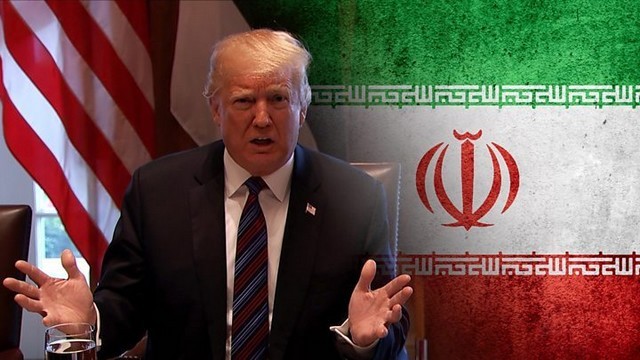
It explains how and why the bottom-line difference between Donald Trump and Barack Obama, regarding U.S. national security policies, turns out to be their different respective estimations of the biggest danger threatening the maintenance of the U.S. dollar as the world’s leading or reserve currency. This has been the overriding foreign-policy concern for both Presidents.

Obama placed as being the top threat to the dollar, a breakaway of the EU (America’s largest market both for exports and for imports) from alliance with the United States. He was internationally a Europhile. Trump, however, places as being the top threat to the dollar, a breakaway of Saudi Arabia and of the other Gulf Arab oil monarchies from the United States. Trump is internationally a Sunni-phile: specifically a protector of fundamentalist Sunni monarchs — but especially of the Sauds themselves — and they hate Shia and especially the main Shia nation, Iran.

Here’s how that change, to Saudi Arabia as being America’s main ally, has happened — actually it’s a culmination of decades. Trump is merely the latest part of that process of change. Here is from the U.S. State Department’s official historian, regarding this history:

By the 1960s, a surplus of U.S. dollars caused by foreign aid, military spending, and foreign investment threatened this system [the FDR-established 1944 Bretton Woods gold-based U.S. dollar as the world’s reserve currency], as the United States did not have enough gold to cover the volume of dollars in worldwide circulation at the rate of $35 per ounce; as a result, the dollar was overvalued. Presidents John F. Kennedy and Lyndon B. Johnson adopted a series of measures to support the dollar and sustain Bretton Woods: foreign investment disincentives; restrictions on foreign lending; efforts to stem the official outflow of dollars; international monetary reform; and cooperation with other countries. Nothing worked. Meanwhile, traders in foreign exchange markets, believing that the dollar’s overvaluation would one day compel the U.S. government to devalue it, proved increasingly inclined to sell dollars. This resulted in periodic runs on the dollar.

It was just such a run on the dollar, along with mounting evidence that the overvalued dollar was undermining the nation’s foreign trading position, which prompted President Richard M. Nixon to act, on August 13, 1971 [to end the convertibility of dollars to gold].

When Nixon ended the gold-basis of the dollar and then in 1974 secretly switched to the current oil-basis, this transformation of the dollar’s backing, from gold to oil, was intended to enable the debt-financing (as opposed to the tax-financing, which is less acceptable to voters) of whatever military expenditure would be necessary in order to satisfy the profit-needs of Lockheed Corporation and of the other U.S. manufacturers whose only markets are the U.S. Government and its allied governments, as well as of U.S. extractive industries such as oil and mining firms, which rely heavily upon access to foreign natural resources, as well as of Wall Street and its need for selling debt and keeping interest-rates down (and stock-prices — and therefore aristocrats’ wealth — high and rising). This 1974 secret agreement between Nixon and King Saud lasts to the present day, and has worked well for both aristocracies. It met the needs of the very same “military-industrial complex” (the big U.S. Government contractors) that the prior Republican President, Dwight Eisenhower, had warned might take control of U.S. foreign policies. As Bloomberg’s Andrea Wong on 30 May 2016 explained the Nixon system that replaced the FDR system, “The basic framework was strikingly simple. The U.S. would buy oil from Saudi Arabia and provide the kingdom military aid and equipment. In return, the Saudis would plow billions of their petrodollar revenue back into Treasuries and finance America’s spending.”

This new system didn’t only supply a constant flow of Saudi tax-money to the U.S. Government; it supplied a constant flow of new sales-orders and profits to the military firms that were increasingly coming to control the U.S. Government — for the benefit of both aristocracies: the Sauds, and America’s billionaires.

That was near the end of the FDR-produced 37-year period of U.S. democratic leadership of the world, the era that had started at Bretton Woods in 1944. It came crashing to an end not in 1974 (which was step two after the 1971 step one had ended the 1944 system) but on the day when Ronald Reagan entered the White House in 1981. The shockingly sudden ascent, from that moment on, of U.S. federal Government debt (to be paid-off by future generations instead of by current taxpayers) is shown, right here, in a graph of “U.S. Federal Debt as Percent of GDP, 1940-2015”, where you can see that the debt had peaked above 90% of GDP late in WW II between 1944-1948, and then plunged during Bretton Woods, but in 1981 it started ascending yet again, until reaching that WW II peak for a second time, as it has been ever since 2010, when Obama bailed-out the mega-banks and their mega-clients, but didn’t bail out the American public, whose finances had been destroyed by those banksters’ frauds, which Obama refused to prosecute; and, so, economic inequality in America got even more extreme after the 2008 George W. Bush crash, instead of less extreme afterward (as had always happened in the past).

Above 90% debt/GDP during and immediately following WW II was sound policy, but America’s going again above 90% since 2010 has reflected simply an aristocratic heist of America, for only the aristocracy’s benefit — all of the benefits going only to the super-rich.

Another, and more-current U.S. graph shows that, as of the first quarter of 2018, this percentage (debt/GDP) is, yet again, back now to its previous all-time record high of 105-120%%, which had been reached only in 1945-1947 (when it was justified by the war).

Currently, companies such as Lockheed Martin are thriving as they had done during WW II, but the sheer corruption in America’s military spending is this time the reason, no World War (yet); so, this time, America is spending like in an all-out-war situation, even before the Congress has issued any declaration of war at all. Everybody except the American public knows that the intense corruptness of the U.S. military is the reason for this restoration of astronomical ‘defense’ spending, even during peace-time. A major poll even showed that ‘defense’ spending was the only spending by the federal Government which Americans in 2017 wanted increased; they wanted all other federal spending to be reduced (though there was actually vastly more corruption in military spending than in any other type — the public have simply been hoodwinked).

But can the U.S. Government’s extreme misallocation of wealth, from the public to the insiders, continue without turning this country into a much bigger version of today’s Greece? More and more people around the world are worrying about that. Of course, Greece didn’t have the world’s reserve currency, but what would happen to the net worths of America’s billionaires if billionaires worldwide were to lose faith in the dollar? Consequently, there’s intensified Presidential worrying about how much longer foreign investors will continue to trust the oil-based dollar.

America’s political class now have two competing ideas to deal with this danger, Obama’s versus Trump’s, both being about how to preserve the dollar in a way that best serves the needs of ‘defense’ contractors, extractive firms, and Wall Street. Obama chose Europe (America’s largest market) as America’s chief ally (he was Euro-centric against Russia); Trump chose the owner of Saudi Arabia (he’s Saudi-Israeli centric against Iran) — that’s the world’s largest weapons-purchaser, as well as the world’s largest producer of oil (as well as the largest lobbies).

The Saudi King owns Saudi Arabia, including the world’s largest and most valuable oil company, Aramco, whose oil is the “sweetest” — the least expensive to extract and refine — and is also the most abundant, in all of the world, and so he can sell petroleum at a profit even when his competitors cannot. Oil-prices that are so low as to cause economic losses for other oil companies, can still be generating profits — albeit lowered ones — for King Saud; and this is the reason why his decisions determine how much the global oil-spigot will be turned on, and how low the global oil-price will be, at any given time. He controls the value of the U.S. dollar. He controls it far more directly, and far more effectively, than the EU can. It would be like, under the old FDR-era Bretton Woods system, controlling the exchange-rates of the dollar, by raising or lowering the amount of gold produced. But this is liquid gold, and King Saud determines its price.

Furthermore, King Saud also leads the Gulf Cooperation Council of all other Arab oil monarchs, such as those who own UAE — all of them are likewise U.S. allies and major weapons-buyers.

In an extraordinarily fine recent article by Pepe Escobar at Asia Times, “Oil and gas geopolitics: no shelter from the storm”, he quotes from his not-for-attribution interviews with “EU diplomats,” and reports:

After the Trump administration’s unilateral pull-out from the Iran nuclear deal, known as the Joint Comprehensive Plan of Action (JCPOA), European Union diplomats in Brussels, off the record, and still in shock, admit that they blundered by not “configuring the eurozone as distinct and separate to the dollar hegemony”. Now they may be made to pay the price of their impotence via their “outlawed” trade with Iran. …

As admitted, never on the record, by experts in Brussels; the EU has got to reevaluate its strategic alliance with an essentially energy independent US, as “we are risking all our energy resources over their Halford Mackinder geopolitical analysis that they must break up [the alliance between] Russia and China.”

That’s a direct reference to the late Mackinder epigone Zbigniew “Grand Chessboard” Brzezinski, who died dreaming of turning China against Russia.

In Brussels, there’s increased recognition that US pressure on Iran, Russia and China is out of geopolitical fear the entire Eurasian land mass, organized as a super-trading bloc via the Belt and Road Initiative (BRI), the Eurasia Economic Union (EAEU), the Shanghai Cooperation Organization (SCO), [and] the Asia Infrastructure Investment Bank (AIIB), is slipping away from Washington’s influence.

This analysis gets closer to how the three key nodes of 21st century Eurasia integration – Russia, China and Iran – have identified the key issue; both the euro and the yuan must bypass the petrodollar, the ideal means, as the Chinese stress, to “end the oscillation between strong and weak dollar cycles, which has been so profitable for US financial institutions, but lethal to emerging markets.” …

It’s also no secret among Persian Gulf traders that in the – hopefully unlikely – event of a US-Saudi-Israeli war in Southwest Asia against Iran, a real scenario war-gamed by the Pentagon would be “the destruction of oil wells in the GCC [Gulf Cooperation Council]. The Strait of Hormuz does not have to be blocked, as destroying the oil wells would be far more effective.”

And what the potential loss of over 20% of the world’s oil supply would mean is terrifying; the implosion, with unforeseen consequences, of the quadrillion derivatives pyramid, and consequentially [consequently] of the entire Western financial casino superstructure

In other words: it’s not the ‘threat’ that perhaps, some day, Iran will have nuclear warheads, that is actually driving Trump’s concern here (despite what Israel’s concerns are about that matter), but instead, it is his concerns about Iran’s missiles, which constitute the delivery-system for any Iranian warheads: that their flight-range be short enough so that the Sauds will be outside their range. (The main way Iran intends to respond to an invasion backed by the U.S., is to attack Saudi Arabia — Iran’s leaders know that the U.S. Government is more dependent upon the Sauds than upon Israel — so, Iran’s top targets would be Saudi capital Riyadh, and also the Ghawar oil field, which holds over half of Saudi oil. If U.S. bases have been used in the invasion, then all U.S. bases in the Middle East are also be within the range of Iran’s missiles and therefore would also probably be targeted.)

Obama’s deal with Iran had focused solely upon preventing Iran from developing nuclear warheads — which Obama perhaps thought (mistakenly) would dampen Israel’s (and its billionaire U.S. financial backers’) ardor for the U.S. to conquer Iran. Israel had publicly said that their concern was Iran’s possibility to become a nuclear power like Israel became; those possible future warheads were supposed to be the issue; but, apparently, that wasn’t actually the issue which really drove Israel. Obama seems to have thought that it was, but it wasn’t, actually. Israel, like the Sauds, want Iran conquered. Simple. The nuclear matter was more an excuse than an explanation.

With Trump now in the White House, overwhelmingly by money from the Israel lobbies (proxies also for the Sauds) — and with no equivalently organized Jewish opposition to the pro-Israel lobbies (and so in the United States, for a person to be anti-Israel is viewed as being anti-Semitic, which is not at all true, but Israel’s lies say it’s true and many Americans unfortunately believe it) — Trump has not only the Sauds and their allies requiring him to be against Iran and its allies, but he has also got this pressure coming from Israel: both the Big-Oil and the Jewish lobbies drive him. Unlike Obama, who wasn’t as indebted to the Jewish lobbies, Trump needs to walk the plank for both the Sauds and Israel.

In other words: Trump aims to keep the dollar as the reserve currency by suppressing not only China but also the two main competitors of King Saud: Iran and Russia. That’s why America’s main ‘enemies’ now are those three countries and their respective allies.

Obama was likewise targeting them, but in a different priority-order, with Russia being the main one (thus Obama’s takeover of Ukraine in February 2014 turning it against Russia, next door); and that difference was due to Obama’s desire to be favorably viewed by the residents in America’s biggest export and import market, the EU, and so his bringing another member (Ukraine) into the EU (which still hasn’t yet been culminated).

Trump is instead building on his alliance with King Saud and the other GCC monarchs, a group who can more directly cooperate to control the value of the U.S. dollar than the EU can. Furthermore, both conservative (including Orthodox) Jews in the United States, and also white evangelical Protestants in the U.S., are strongly supportive of Israel, which likewise sides with the Arab oil monarchs against Iran and its allies. Trump needs these people’s votes.

Trump also sides with the Sauds against Canada. That’s a matter which the theorists who assert that Israel controls the U.S., instead of that the Sauds (allied with America’s and Israel’s billionaires) control the U.S., ignore; they ignore whatever doesn’t fit their theory. Of course, a lot doesn’t fit their theory (which equates “Jews” with “Israelis” and alleges that “they” control the world), but people whose prejudices are that deep-seated, can’t be reached by any facts which contradict their self-defining prejudice. Since it defines themselves, it’s a part of them, and they can never deny it, because to do so would be to deny who and what they are, and they refuse to change that. The Sauds control the dollar; Israel does not, but Israel does the lobbying, and both the Sauds and Israel want Iran destroyed. Trump gets this pressure not only from the billionaires but from his voters.

And, of course, Democratic Party billionaires push the narrative that Russia controls America. It used to be the Republican Joseph R. McCarthy’s accusation, that the “commies” had “infiltrated”, especially at the State Department. So: Trump kicked out Russia’s diplomats, to satisfy those neocons— the neoconservatives of all Parties and persuasions, both conservative and liberal.

To satisfy the Sauds, despite the EU, Trump has dumped the Iran deal. And he did it also to satisfy Israel, the main U.S. lobbyists for the Sauds. (Americans are far more sympathetic to Jews than to Arabs; the Sauds are aware of this; Israel handles their front-office.) For Trump, the Sauds are higher priority than Europe; even Israel (who are an expense instead of a moneybag for the U.S. Government) are higher priority than Europe. Both the Sauds and Israel together are vastly higher. And the Sauds alone are higher priority for Trump than are even Canada and Europe combined. Under Trump, anything will be done in order to keep the Sauds and their proxy-lobbyists (Israel) ‘on America’s side’.

Consequently, Trump’s political base is mainly against Iran and for Israel, but Obama’s was mainly against Russia and for the EU. Obama’s Democratic Party still are controlled by the same billionaires as before; and, so, Democrats continue demonizing Russia, and are trying to make as impossible as they can, any rapprochement with Russia — and, therefore, they smear Trump for anything he might try to do along those lines.

Both Obama and Trump have been aiming to extend America’s aristocracy’s dominance around the world, but they employ different strategies toward that politically bipartisan American-aristocratic objective: the U.S. Government’s global control, for the benefit of the U.S. aristocracy, at everyone else’s expense. Obama and Trump were placed into the White House by different groups of U.S. billionaires, and each nominee serves his/her respective sponsors, no public anywhere — not even their voters’ welfare.

An analogous example is that, whereas Fox News, Forbes, National Review, The Weekly Standard, American Spectator, Wall Street Journal, Investors Business Daily, Breitbart News, InfoWars, Reuters, and AP, are propagandists for the Republican Party; NPR, CNN, NBC, CBS, ABC, Mother Jones, The Atlantic, The New Republic, New Yorker, New York Magazine, New York Times, Washington Post, USA Today, Huffington Post, The Daily Beast, and Salon, are propagandists for the Democratic Party; but, they all draw their chief sponsors from the same small list of donors who are America’s billionaires, since these few people control the top advertisers, investors, and charities, and thus control nearly all of the nation’s propaganda. The same people who control the Government control the public; but, America isn’t a one-Party dictatorship. America is, instead, a multi-Party dictatorship. And this is how it functions.

Trump cancelled the Iran deal because a different group of billionaires are now in control of the White House, and of the rest of the U.S. Government. Trump’s group demonize especially Iran; Obama’s group demonize especially Russia. That’s it, short. That’s America’s aristocratic tug-of-war; but both sides of it are for invasion, and for war.  Thus, we’re in the condition of ‘permanent war for permanent peace’ — to satisfy the military contractors and the billionaires who control them. Any U.S. President who would resist that, would invite assassination; but, perhaps in Trump’s case, impeachment, or other removal-from-office, would be likelier. In any case, the sponsors need to be satisfied — or else — and Trump knows this.

Trump is doing what he thinks he has to be doing, for his own safety. He’s just a figurehead for a different faction of the U.S. aristocracy, than Obama was. He’s doing what he thinks he needs to be doing, for his survival. Political leadership is an extremely dangerous business. Trump is playing a slightly different game of it than Obama did, because he represents a different faction than Obama did. These two factions of the U.S. aristocracy are also now battling each other for political control over Europe.

—————

Investigative historian Eric Zuesse is the author, most recently, of  They’re Not Even Close: The Democratic vs. Republican Economic Records, 1910-2010, and of  CHRIST’S VENTRILOQUISTS: The Event that Created Christianity.

12 August 2018

Source: http://theduran.com/why-trump-cancelled-the-iran-deal/

Human Extinction by 2026? A Last Ditch Strategy to Fight for Human Survival

By Robert J. Burrowes

There is almost unanimous agreement among climate scientists and organizations – that is, 97% of over 10,000 climate scientists and the various scientific organizations engaged in climate science research – that human beings have caused a dramatic increase in the amount of carbon dioxide, methane and nitrous oxide released into Earth’s atmosphere since the pre-industrial era and that this is driving the climate catastrophe that continues to unfold. For the documentary evidence on this point see, for example, ‘Quantifying the consensus on anthropogenic global warming in the scientific literature’, ‘Consensus on consensus: a synthesis of consensus estimates on human-caused global warming’ and ‘Scientists Agree: Global Warming is Happening and Humans are the Primary Cause’.

However, there is no consensus regarding the timeframe in which this climate catastrophe will cause human extinction. This lack of consensus is primarily due to the global elite controlling the public perception of this timeframe with frequent talk of ‘the end of the century’ designed to allow ongoing profit maximization through ‘business as usual’ for as long as possible. Why has this happened?

When evidence of the climate catastrophe (including the pivotal role of burning fossil fuels) became incontrovertible, which meant that the fossil fuel industry’s long-standing efforts to prevent action on the climate catastrophe had finally ended, the industry shifted its focus to arguing that the timeframe, which it presented as ‘end of the century’, meant that we could defer action (and thus profit-maximization through business as usual could continue indefinitely). Consequently, like the tobacco, sugar and junk food industries, the fossil fuel industry has employed a range of tactics to deflect attention from their primary responsibility for a problem and to delay action on it.

These well-worn tactics include suggesting that the research is incomplete and more research needs to be done, funding ‘research’ to come up with ‘evidence’ to counter the climate science, employing scholars to present this ‘research’, discrediting honest climate scientists, infiltrating regulatory bodies to water down (or reverse) decisions and recommendations that would adversely impact profits, setting up ‘concerned’ groups to act as ‘fronts’ for the industry, making generous political donations to individuals and political parties as well as employing lobbyists.

As a result of its enormous power too, the global elite has been able to control much of the funding available for climate science research and a great deal of the information about it that is made widely available to the public, particularly through its corporate media. For this reason, the elite wields enormous power to shape the dialogue in relation to both the climate science and the timeframe.

Therefore, and despite the overwhelming consensus noted above, many climate scientists are reluctant to be fully truthful about the state of the world’s climate or they are just conservative in their assessments of the climate catastrophe. For example, eminent climate scientist Professor James Hansen referred to ‘scientific reticence’ in his article ‘Scientific reticence and sea level rise’, scientists might be conservative in their research – for example, dependence upon historical records leads to missing about one-fifth of global warming since the 1860s as explained in ‘Reconciled climate response estimates from climate models and the energy budget of Earth’ – and, in some cases, governments muzzle scientists outright. See ‘Scientist silencing continues for federally-funded research’. But many of the forces working against full exposure of the truth are explained in Professor Guy McPherson’s article ‘Climate-Change Summary and Update’.

However, in contrast to the elite-managed mainstream narrative regarding the climate timeframe, there is a group of courageous and prominent climate scientists who offer compelling climate science evidence that human beings, along with millions of other species, will be extinct by 2026 (and perhaps as early as 2021) in response to a projected 10 degree celsius increase in global temperatures above the pre-industrial level by that date. See ‘Will humans be extinct by 2026?’

Before outlining the essence of this article, it is worth noting that the website on which it is posted is ‘Arctic News’ and the editors of this site post vital articles on the world’s climate by highly prominent climate scientists, such as Professor Peter Wadhams (Emeritus Professor of Polar Ocean Physics at Cambridge University and author of A Farewell to Ice: A Report from the Arctic), Dr Andrew Glikson (an Earth and paleoclimate scientist who is a visiting fellow at the Australian National University), Professor Guy McPherson who has written extensively and lectures all over the world on the subject, and ‘Sam Carana’, the pseudonym used by a group of climate scientists concerned to avoid too many adverse impacts on their research, careers and funding by declaring themselves publicly but nevertheless committed to making the truth available for those who seek it.

So, in a few brief points, let me summarize the evidence and argument outlined in the article ‘Will humans be extinct by 2026?’

The Climate Science of Destruction of the Biosphere

In the Arctic, there is a vast amount of carbon stored in soils that are now still largely frozen; this frozen soil is called permafrost. But as Arctic temperatures continue to rise and the permafrost thaws, in response to the warming that has occurred already (and is ongoing) by burning fossil fuels and farming animals for human consumption, much of this carbon will be converted into carbon dioxide or methane and released into the atmosphere. There is also a vast amount of methane – in the form of methane hydrates and free gas – stored in sediments under the Arctic Ocean seafloor. As temperatures rise, these sediments are being destabilized and will soon result in massive eruptions of methane from the ocean floor. ‘Due to the abrupt character of such releases and the fact that many seas in the Arctic Ocean are shallow, much of the methane will then enter the atmosphere without getting broken down in the water.’

Adversely impacting this circumstance is that the sea ice continues to retreat as the polar ice cap melts in response to the ongoing temperature increases. Because sea ice reflects sunlight back into Space, as the ice retreats more sunlight hits the (dark-colored) ocean (which absorbs the sunlight) and warms the ocean even more. This causes even more ice melt in what becomes an ongoing self-reinforcing feedback loop that ultimately impacts worldwide, such as triggering huge firestorms in forests and peatlands in North America and Russia.

More importantly, however, without sea ice, storms develop more easily and because they mix warm surface waters with the colder water at the bottom of shallow seas, reaching cracks in sediments filled with ice which acts as a glue holding the sediment together, the ice melt destabilizes the sediments, which are vulnerable to even small differences in temperature and pressure that are triggered by earthquakes, undersea landslides or changes in ocean currents.

As a result, huge amounts of methane can erupt from the seafloor of the Arctic Ocean and once this occurs, it will further raise temperatures, especially over the Arctic, thus acting as another self-reinforcing feedback loop that again makes the situation even worse in the Arctic, with higher temperatures causing even further methane releases, contributing to the vicious cycle that precipitates ‘runaway global warming’.

‘These developments can take place at such a speed that adaptation will be futile. More extreme weather events can hit the same area with a succession of droughts, cold snaps, floods, heat waves and wildfires that follow each other up rapidly. Within just one decade [from 2016], the combined impact of extreme weather, falls in soil quality and air quality, habitat loss and shortages of food, water, shelter and just about all the basic things needed to sustain life can threaten most, if not all life on Earth with extinction.’

The article goes on to outline how the 10 degree increase (above the pre-industrial level) by 2026 is likely to occur. It will involve further carbon dioxide and methane releases from human activity (particularly driving cars and other vehicles, flying in aircraft and eating animal products, as well as military violence), ongoing reduction of snow and ice cover around the world (thus reflecting less sunlight back into Space), an increase in the amount of water vapor (a greenhouse gas) in the atmosphere, a falling away of ‘aerosol masking’ (which has helped reduce the impact of emissions so far) as emissions decline, as well as methane eruptions from the ocean floor. If you would like to read more about this and see the graphs and substantial documentation, you can do so in the article cited above: ‘Will humans be extinct by 2026?’

The Ecology of Destruction of the Biosphere

Not that these scientists, who focus on the climate, discuss it but there are other human activities adversely impacting Earth’s biosphere which also threaten near-term extinction for humans, particularly given their synergistic impacts.

For example, recent research has drawn attention to the fact that the ‘alarming loss of insects will likely take down humanity before global warming hits maximum velocity…. The worldwide loss of insects is simply staggering with some reports of 75% up to 90%, happening much faster than the paleoclimate record rate of the past five major extinction events’. Without insects ‘burrowing, forming new soil, aerating soil, pollinating food crops…’ and providing food for many bird species, the biosphere simply collapses. See ‘Insect Decimation Upstages Global Warming’.

Moreover, apart from ongoing destruction of other vital components of Earth’s life support system such as the rainforests – currently being destroyed at the rate of 80,000 acres each day: see ‘Measuring the Daily Destruction of the World’s Rainforests’ – and oceans – see ‘The state of our oceans in 2018 (It’s not looking good!)’ – which is generating an extinction rate of 200 species (plants, birds, animals, fish, amphibians, insects and reptiles) each day with another 26,000 species already identified as ‘under threat’ – see ‘Red list research finds 26,000 global species under extinction threat – some prominent scholars have explained how even these figures mask a vital component of the rapidly accelerating catastrophe of species extinctions: the demise of local populations of a species. See ‘Biological annihilation via the ongoing sixth mass extinction signaled by vertebrate population losses and declines’.

In addition, relying on our ignorance and our complicity, elites kill vast areas of Earth’s biosphere through war and other military violence – see, for example, the Toxic Remnants of War Project and the film ‘Scarred Lands & Wounded Lives’ – subject it to uncontrolled releases of radioactive contamination – see ‘Fukushima Radiation Has Contaminated The Entire Pacific Ocean – And It’s Going To Get Worse’ – and use geoengineering to wage war on Earth’s climate, environment and ultimately ourselves. See, for example, ‘Engineered Climate Cataclysm: Hurricane Harvey’ and ‘The Ultimate Weapon of Mass Destruction: “Owning the Weather” for Military Use’.

Separately from all of this, we live under the unending threat of nuclear war.

This is because insane political and corporate elites are still authorizing and manufacturing more of these highly profitable weapons rather than dismantling them all (as well as conventional weapons) and redirecting the vast resources devoted to ongoing military killing (US$1.7 trillion annually: see ‘Global military spending remains high at $1.7 trillion’) to environmental restoration and programs of social uplift.

By the way, if you think the risk of nuclear war can be ignored, you might find this recent observation sobering. In a review of (former US nuclear war planner) Daniel Ellsberg’s recent book The Doomsday Machine: Confessions of a Nuclear War Planner, Earth and paleoclimate scientist Dr Andrew Glikson summarized the book as follows: ‘This, then, is the doomsday machine. Not simply the existence of fission weapons or unspeakably destructive hydrogen bombs, but the whole network rigged together: thousands of them on hair-trigger alert, command and control equipment built in the 1970s and ’80s, millions of lines of antique code sitting on reels of magnetic tape or shuffled around on floppy discs even now. An architecture tended by fallible and deeply institutionalized human beings.’ See ‘Two Minutes To Mid-Night: The Global Nuclear Suicide Machine’.

So, irrespective of whether elites or their agents or even we acknowledge it, Earth’s biosphere is under siege on many fronts and, very soon now, Earth will not support life. Any honest news source routinely reports one or another aspect of the way in which humans are destroying the Earth and perhaps suggests courses of action to respond powerfully to it. This, of course, does not include the insane global elite’s corporate media, which functions to distract us from any semblance of the truth.

How did all this happen?

How did human beings end up in a situation that human extinction is likely to occur within eight years (even assuming we can avert nuclear war)? And is there any prospect of doing enough about it now to avert this extinction?

To answer the first question briefly: We arrived at this juncture in our history because of a long sequence of decisions, essentially made by elites to expand their profit, power and privilege, and which they then imposed on us and which we did not resist powerfully enough. For a fuller explanation, see ‘Strategy and Conscience: Subverting Elite Power So We End Human Violence’.

In any case, the key questions now are simply these: Is it too late to avert our own extinction? And, if not, what must we do?

Well, I am not going to dwell on it but some scientists believe it is too late: we have already passed the point of no return. Professor Guy McPherson is one of these scientists, with a comprehensive explanation and a great deal of evidence to support it in his long and heavily documented article ‘Climate-Change Summary and Update’.

So, the fundamental question is this: If we assume (highly problematically I acknowledge) that it is possible to avert our own extinction by 2026, what must we do?

Because we need to address, in a strategic manner, the interrelated underlying causes that are driving the rush to extinction, let me first identify one important symptom of these underlying causes and then the underlying structural and behavioral causes themselves. Finally, let me invite your participation in (one or more aspects of) a comprehensive strategy designed to address all of this.

As in the past, at least initially, the vast bulk of the human population is not going to respond to this crisis in any way. We need to be aware of this but not let it get in our way. There is a straightforward explanation for it.

Fear or, far more accurately, unconscious terror will ensure that the bulk of the human population will not investigate or seriously consider the scientific evidence in relation to the ongoing climate catastrophe, despite its implications for them personally and humanity generally (not to mention other species and the biosphere). Moreover, given that climate science is not an easy subject with which to grapple, elite control of most media in relation to it (including, most of the time, by simply excluding mention of key learning from the climate scientists) ensures that public awareness, while reasonably high, is not matched by knowledge, which is negligible.

As a result, most people will fearfully, unintelligently and powerlessly accept the delusions, distractions and denial that are promulgated by the insane global elite through its various propaganda channels including the corporate media, public relations and entertainment industries, as well as educational institutions. This propaganda always includes the implicit message that people can’t (and shouldn’t) do anything in response to the climate catastrophe (invariably and inaccurately, benignly described as ‘climate change’).

A primary way in which the corporate media reports the issue but frames it for a powerless response is to simply distribute ‘news’ about each climate-related event without connecting it either with other climate-related events or even mentioning it as yet another symptom of the climate catastrophe. Even if they do mention these connections, they reliably mention distant dates for phenomena like ‘heatwaves’ repeating themselves and an overall ‘end of century’ timeframe to preclude the likelihood that any sense of urgency will arise.

The net outcome of all this, as I stated above, is that the bulk of the human population will not respond to the crisis in the short term (as it hasn’t so far) with most of what limited response there is confined to powerlessly lobbying elite-controlled governments.

However, as long as you consider responding – and by responding, I mean responding strategically – and then do respond, you become a powerful agent of change, including by recruiting others through your example.

But before I present the strategy, let me identify the major structural and behavioral causes that are driving the climate catastrophe and destruction of the biosphere, and explain why some key elements of this strategy are focused on tackling these underlying causes.

The Political Economy of Destruction of the Biosphere

The global elite ensures that it has political control of the biosphere as well as Space by using various systems, structures and processes that it largely created (over the past few centuries) and now controls, including the major institutions of governance in the world such as national governments and key international organizations like the United Nations. For further information, see ‘Strategy and Conscience: Subverting Elite Power So We End Human Violence’.

It does this, for example, so that it can economically utilize, via the exploitative mechanisms of capitalism and its corporations (which the elite also created), domains of the biosphere rich in resources, particularly fossil fuels, strategic minerals and fresh water. The elite will use any means – including psychological manipulation, propaganda issued by its corporate media, national educational institutions, legal systems and extraordinary military violence – to achieve this outcome whatever the cost to life on Earth. See ‘Profit Maximization Is Easy: Invest In Violence’.

In short, the global elite is so insane that its members believe that killing and exploiting fellow human beings and destroying the biosphere are simply good ways to make a profit. Of course, they do not perceive us as fellow human beings; they perceive and treat us as a great deal less. This is why, for example, the elite routinely uses its military forces to attack impoverished and militarily primitive countries so that they can steal their resources. See ‘The Global Elite is Insane Revisited’.

But they are happy to steal from those of us living in western economies too, with Professor Barbara G. Ellis issuing the latest warning about yet another way this could easily happen. See ‘Depositors – Not Taxpayers – Will Take the Hit for the Next “2008” Crash Because Major Banks May Use the “Bail-In” System’.

Anyway, because of elite control of governments, it is a waste of time lobbying politicians if we want action on virtually all issues that concern us, particularly the ‘big issues’ that threaten extinction, such as the climate catastrophe, environmental destruction and war (especially the threat of nuclear war). While in very limited (and usually social) contexts (such as issues in relation to the right of women to abortions or rights for the LGBTQIA communities), when it doesn’t significantly adversely impact elite priorities, gains are sometimes made (at least temporarily) by mobilizing sufficient people to pressure politicians. This has two beneficial outcomes for elites: it keeps many people busy on ‘secondary issues’ (from the elite perspective) that do not impact elite profit, power and privilege; and it reinforces the delusion that democracy ‘works’.

However, in the contexts that directly impact elite concerns (such as their unbridled exploitation of the biosphere for profit), politicians serve their elite masters, even to the extent that any laws that might appear to have been designed to impede elite excesses (such as pollution generated by their activities) are readily ignored if necessary, with legal penalties too insignificant to deter phenomenally wealthy corporations. See ‘The Rule of Law: Unjust and Violent’.

Of course, if any government does not obey elite directives, it is overthrown. Just ask any independently-minded government over the past century. For a list of governments overthrown by the global elite using its military and ‘intelligence’ agencies since World War II, see William Blum’s book Killing Hope: U.S. Military and CIA Interventions Since World War II or, for just the list, see ‘Overthrowing other people’s governments: The Master List’.

How does the elite maintain this control over political, economic, military, legal and social structures and processes?

The Sociology of Destruction of the Biosphere

As explained in the literature on the sociology of knowledge, reality is socially constructed. See the classic work The Social Construction of Reality: A Treatise in the Sociology of Knowledge. That is, if an individual is born or introduced into a society in which particular institutions are in control and behaviors such as chronic over-consumption, unlimited profit-making, rampant exploitation of the environment and grotesque violence against (at least some) people are practiced, then the typical individual will accept the existence of these institutions and adopt the behaviors of the people around them even though the institutions and behaviors are dysfunctional and violent.

But while the sociology of knowledge literature recognizes that children ‘must be “taught to behave” and, once taught, must be “kept in line”’ to maintain the institutional order, this literature clearly has no understanding of the nature and extent of the violence to which each child is actually subjected in order to achieve the desired ‘socialization’. This terrorization, as I label it, is so comprehensive that the typical child quickly becomes incapable of using their own intellectual and emotional capacities, including conscience and courage, to actually evaluate any institution or behavior before accepting/adopting it themselves. Obviously then, they quickly become too terrified to overtly challenge dysfunctional institutions and behaviors as well.

Moreover, as a result of this ongoing terrorization, inflicted by the significant adults (and particularly the parents) in the child’s life, the child soon becomes too (unconsciously) afraid to resist the behavioral violence that is inflicted on them personally in many forms, as outlined briefly in the next section, so that they are ‘taught to behave’ and are ‘kept in line’.

In response to elite-driven imperatives then, such as ‘you are what you own’ to encourage very profitable over-consumption, most people are delusionarily ‘happy’ while utterly trapped behaving exactly as elites manipulate them – they are devoid of the psychological capacity to critique and resist – and the elite-preferred behavior quickly acquires the status of being ‘the only and the right way to behave’, irrespective of its dysfunctionality.

In essence: virtually all humans fearfully adopt dysfunctional social behaviors such as over-consumption and profit-making at the expense of the biosphere, rather than intelligently, conscientiously and courageously analyzing the total situation (including the moral and ecological dimensions of it) and behaving appropriately in the context.

Given the pervasiveness and power of elite institutions, ranging from those mentioned above to the corporate media and psychiatry – see ‘Defeating the Violence of Psychiatry’ – resistance to violent socialization (of both children and adults) requires considerable awareness, not to mention courage.

And so our fear makes virtually all of us succumb to the socialization pressure (that is, violence) to accept existing institutions and participate in widespread social behaviors (such as over-consumption) that are dysfunctional and violent.

The Psychology of Destruction of the Biosphere

This happens because each child, from birth, is terrorized (again: what we like to call ‘socialized’) until they become a slave willing to work and, in industrialized countries at least, to over-consume as directed.

Under an unrelenting regime of ‘visible’, ‘invisible’ and ‘utterly invisible’ violence, each child unconsciously surrenders their search in pursuit of their own unique and powerful destiny and succumbs to the obedience that every adult demands. Why do adults demand this? Because the idea of a powerful child who courageously follows their own Self-will terrifies adults. So how does this happen?

Unfortunately, far too easily and, strange though it may seem, it is not just the ‘visible’ violence (such as hitting, screaming at and sexually abusing) that we normally label ‘violence’ that causes the main damage, although this is extremely damaging. The largest component of damage arises from the ‘invisible’ and ‘utterly invisible’ violence that we adults unconsciously inflict on children during the ordinary course of the day. Tragically, the bulk of this violence occurs in the family home and at school. See ‘Why Violence?’ and ‘Fearless Psychology and Fearful Psychology: Principles and Practice’.

So what is ‘invisible’ violence? It is the ‘little things’ we do every day, partly because we are just ‘too busy’. For example, when we do not allow time to listen to, and value, a child’s thoughts and feelings, the child learns to not listen to themSelf thus destroying their internal communication system. When we do not let a child say what they want (or ignore them when they do), the child develops communication and behavioral dysfunctionalities as they keep trying to meet their own needs (which, as a basic survival strategy, they are genetically programmed to do).

When we blame, condemn, insult, mock, embarrass, shame, humiliate, taunt, goad, guilt-trip, deceive, lie to, bribe, blackmail, moralize with and/or judge a child, we both undermine their sense of Self-worth and teach them to blame, condemn, insult, mock, embarrass, shame, humiliate, taunt, goad, guilt-trip, deceive, lie, bribe, blackmail, moralize and/or judge.

The fundamental outcome of being bombarded throughout their childhood by this ‘invisible’ violence is that the child is utterly overwhelmed by feelings of fear, pain, anger and sadness (among many others). However, mothers, fathers, teachers, religious figures and other adults also actively interfere with the expression of these feelings and the behavioral responses that are naturally generated by them and it is this ‘utterly invisible’ violence that explains why the dysfunctional behavioral outcomes actually occur.

For example, by ignoring a child when they express their feelings, by comforting, reassuring or distracting a child when they express their feelings, by laughing at or ridiculing their feelings, by terrorizing a child into not expressing their feelings (for instance, by screaming at them when they cry or get angry), and/or by violently controlling a behavior that is generated by their feelings (for example, by hitting them, restraining them or locking them into a room), the child has no choice but to unconsciously suppress their awareness of these feelings.

However, once a child has been terrorized into suppressing their awareness of their feelings (rather than being allowed to have their feelings and to act on them) the child has also unconsciously suppressed their awareness of the reality that caused these feelings. This has many outcomes that are disastrous for the individual, for society and for the biosphere because the individual will now easily suppress their awareness of the feelings that would tell them how to act most functionally in any given circumstance and they will progressively acquire a phenomenal variety of dysfunctional behaviors, including some that are violent towards themself, others and/or the Earth.

Moreover, terrorizing the child has many flow-on effects. For example, once you terrorise a child into accepting certain information about themself, other people or the state of the world, the child becomes unconsciously fearful of dealing with new information, especially if this information is contradictory to what they have been terrorized into believing. As a result, the child will unconsciously dismiss new information out of hand.

In short, the child has been terrorized in such a way that they are no longer capable of learning (or their learning capacity is seriously diminished by excluding any information that is not a simple extension of what they already ‘know’). This is one important explanation why some people are ‘climate deniers’ and most others do nothing in response to the climate catastrophe. See ‘The Psychology of Denial’.

Consequently, under this onslaught of terror and violence, the child surrenders their own unique Self and takes on their socially constructed delusional identity which gives them relief from being terrorized while securing the approval they crave to survive.

So if we want to end violence against the biosphere, we must tackle this fundamental cause. Primarily, this means giving everyone, child and adult alike, all of the space they need to feel, deeply, what they want to do, and to then let them do it (or to have the emotional responses they naturally have if they are prevented from doing so).

For some insight into the critical role that school plays in reducing virtually all children to wage slaves for employment in some menial or ‘professional’ role or as ‘cannon fodder’ for the military, while stripping them of the capacity to ask penetrating questions about the very nature of society and their own role in it, see ‘Do We Want School or Education?’

In summary, given that human society is so dysfunctional, beginning with the fact that human beings do not know how to parent or educate their children to nurture their unique and extraordinary potential, humans face a monumental challenge, in an incredibly short timeframe, to have any chance of survival.

And we are going to have to fix a lot more things than just our destruction of the biosphere if we are to succeed, given that ecologically destructive behavior and institutions have their origin in dysfunctional psychology, societies and political economy.

To reiterate however, it is our (often unconscious) fear that underpins every problem. Whether it is the fear getting in the way of our capacity to intelligently analyze the various structures and behaviors that generate the interrelated crises in which we now find ourselves or the fear undermining our courage to act powerfully in response to these crises, acknowledging and dealing with our fear is the core of any strategy for survival.

So what’s the plan?

Let’s start with you. If you consider the evidence in relation to destruction of our biosphere, essentially one of two things will happen. Either you will be powerful enough, both emotionally and intellectually, to grapple with this evidence and you will take strategic action that has ongoing positive impact on the crisis or your (unconscious) fear will simply use one of its lifelong mechanisms to remove awareness of what you have just read from your mind or otherwise delude you, such as by making you believe you are powerless to act differently or that you are ‘doing enough already’. This immobilizing fear, whether or not you experience it consciously, is a primary outcome of the terrorization to which you were subjected as a child.

So, if you sense that improving your own functionality – so that you can fully access your emotional responses, conscience and courage – is a priority, try ‘Putting Feelings First’.

If you already feel able to act powerfully in response to this multi-faceted crisis, in a way that will have strategic impact, you are invited to consider joining those participating in ‘The Flame Tree Project to Save Life on Earth’, which outlines a simple plan for people to systematically reduce their consumption, by at least 80%, involving both energy and resources of every kind – water, household energy, transport fuels, metals, meat, paper and plastic – while dramatically expanding their individual and community self-reliance in 16 areas, so that all environmental concerns are effectively addressed. You might also consider signing the online pledge of ‘The People’s Charter to Create a Nonviolent World’.

If you are interested in nurturing children to live by their conscience and to gain the courage necessary to resist elite violence fearlessly, while living sustainably despite the entreaties of capitalism to over-consume, then you are welcome to make ‘My Promise to Children’. To reiterate: capitalism and other dysfunctional political, economic, military, legal and social structures only thrive because our dysfunctional parenting robs children of their conscience and courage, among many other qualities, while actively teaching them to over-consume as compensation for having vital emotional needs denied. See ‘Love Denied: The Psychology of Materialism, Violence and War’.

If you are interested in conducting or participating in a campaign to halt our destruction of the biosphere (or any other manifestation of violence for that matter) you are welcome to consider acting strategically in the way that the extraordinary activist Mohandas K. Gandhi did. Whether you are engaged in a peace, climate, environment or social justice campaign, the 12-point strategic framework and principles are the same. See Nonviolent Campaign Strategy.

The two strategic aims and a core list of strategic goals to end war and to end the climate catastrophe, for example, are identified in ‘Campaign Strategic Aims’ and, using these examples, it is a straightforward task to identify an appropriate set of strategic goals for your local environment campaign. As an aside, the strategic framework to defend against a foreign invading power or a political/military coup, to liberate your country from a dictatorship or a foreign occupation, or to defeat a genocidal assault is explained in ‘Nonviolent Defense/Liberation Strategy’.

If you would like a straightforward explanation of ‘Nonviolent Action: Why and How it Works’ and an introduction to what it means to think strategically, try reading about the difference between ‘The Political Objective and Strategic Goal of Nonviolent Actions’.

If you anticipate violent repression by a ruthless opponent, consider planning and implementing any nonviolent action according to the explanation in ‘Nonviolent Action: Minimizing the Risk of Violent Repression’.

Finally, if you are going to do nothing in response to this crisis, make it a conscious decision to do nothing. This is far preferable to unconsciously and powerlessly doing nothing by never even considering the evidence or by simply deluding yourself. It also allows you to consciously revise your decision at some point in future if you so wish.

Conclusion

The evidence in relation to destruction of the Earth’s biosphere, leading to ongoing and rapid degradation of all ecosystems and their services, is readily available and overwhelming. The many and varied forms of destruction are having synergistic impact. An insignificant amount of the vast evidence in relation to this destruction is sampled above.

There is a notable group of prominent climate scientists who present compelling evidence that human extinction will occur by 2026 as a result of a projected 10 degree celsius increase in global temperatures above the pre-industrial level by this date. The primary document for this is noted above and this document, together with the evidence it cites, is readily available to be read and analyzed by anyone.

Largely separately from the climate catastrophe (although now increasingly complicated by it), Earth’s sixth mass extinction is already advancing rapidly as we destroy habitat and, on our current trajectory, all species will soon enter the fossil record.

Why? Because we live in a world in which the political, economic, military, legal and social structures and processes of human society are utterly incapable of producing either functional human beings or governance mechanisms that take into account, and respect, the ecological realities of Earth’s biosphere.

So, to reiterate: We are on the fast-track to extinction. On the current trajectory, assuming we can avert nuclear war, some time between 2021 and 2026 the last human will take their final breath.

Our only prospect of survival, and it still has only a remote chance of succeeding, is that a great number of us respond powerfully now and keep mobilizing more people to do so.

If you do absolutely nothing else, consider rearranging your life to exclude all meat from your diet, stop traveling by car and aircraft, substantially reduce your water consumption by scaling down your ownership of electronic devices (which require massive amounts of water to manufacture), and only eat biodynamically or organically grown whole food.

And tell people why you are doing so.

This might give those of us who fight strategically, which can include you if you so choose, a little more time to overturn the structural and remaining behavioral drivers of extinction which will require a profound change in the very nature of human society, including all of its major political, economic, military, legal and social institutions and processes (most of which will need to be abolished).

If this sounds ‘radical’, remember that they are about to vanish anyway. Our strategy must be to replace them with functional equivalents, all of which are readily available (with some briefly outlined in the various documents mentioned in the plan above).

‘It won’t happen’, you might say? And, to be candid, I sincerely believe that you are highly probably right. I have spent a lifetime observing, analyzing, writing about and acting to heal dysfunctional and violent human behavior and, for that reason, I am not going to delude myself that anything less than what I have outlined above will achieve the outcome that I seek: to avert human extinction. But I am realistic.

The insane individuals who control the institutions that are driving extinction will never act to avert it. If they were sane enough to do so, they would have been directing and coordinating these institutions in taking action for the past 40 years. This is why we must resist them strategically. Moreover, I am only too well aware that the bulk of the human population has been terrorized into powerlessness and won’t even act. But our best chance lies in offering them our personal example, and giving them simple and various options for responding effectively.

It is going to be a tough fight for human survival, particularly this late in the ‘game’. Nevertheless, I intend to fight until my last breath. I hope that you will too.

14 August 2018

Robert J. Burrowes has a lifetime commitment to understanding and ending human violence. He has done extensive research since 1966 in an effort to understand why human beings are violent and has been a nonviolent activist since 1981. He is the author of ‘Why Violence?’ His email address is flametree@riseup.net and his website is here.

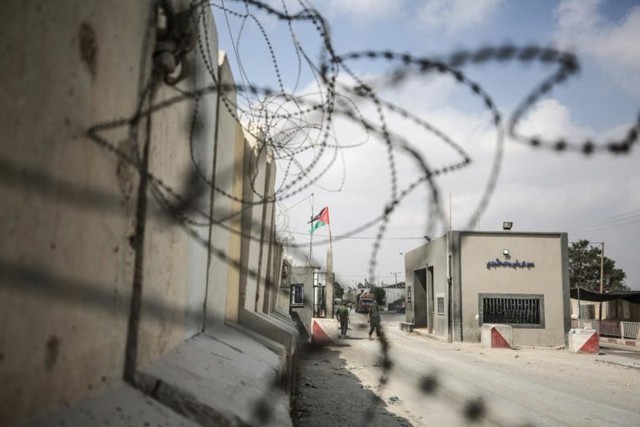
The Politics of Food in Venezuela

Co-Written by Ana Felicien, Christina M. Schiavoni & Liccia Romero

Few countries and political processes have been subject to such scrutiny, yet so generally misunderstood, as Venezuela and the Bolivarian Revolution.1 This is particularly true today, as the international media paints an image of absolute devastation in the country, wrought by failed policies and government mismanagement. At the same time, the three national elections of 2017 demonstrated a strong show of support for the continuation of the revolution under its current leadership. This seeming paradox, we are told, can only be attributed to government tendencies of co-optation and clientelism, along with a closing of democratic space. Such messages are reproduced many times over, both in the media and in certain intellectual circles.2

A benefit of the intense attention paid to Venezuela is that a recurring narrative can be identified, which goes basically as follows. The central character is Hugo Chávez Frías, a strong-armed political leader who enjoyed the double advantage of personal charisma and high oil prices over the course of his presidency from 1999 through 2012. In 2013, Chávez died, and the following year global oil prices plunged. Amid the perfect storm of the loss of Chávez, the collapse in oil prices, and the government’s misguided policies, Venezuela has steadily slid into a state of economic and political disintegration, with food and other necessities growing scarce, in turn sparking social unrest as people take to the streets. The government, headed by Chávez’s less charismatic successor, Nicolás Maduro, is going to desperate lengths to hang onto power, becoming increasingly authoritarian in the process, while maintaining the populist rhetoric of Chávez’s Bolivarian Revolution.

However, this dominant narrative does not capture the complexities of what is happening in Venezuela today. There are significant holes in the account, which raise important questions: who are “the people” at the center of this analysis? What, if any, are the different impacts of present challenges on various sectors of society? How should the Venezuelan state be understood, and where and how does the role of capital figure? By focusing on the politics of food as a key area in which the country’s broader politics are playing out—particularly by looking at recent shortages and food lines, as well as what have been presented as “food riots”—a multitude of issues can be better understood. Often-ignored matters of race, class, gender, and geography demand special attention.

We will begin by looking to the past to situate present trends in their proper context. By homing in on the dynamics around Venezuela’s most highly consumed staple foods, we can gain insight into the current conjuncture, particularly the recent food shortages. Some of the main drivers of the shortages come from forces opposing the Bolivarian Revolution, which are increasingly gaining ground within the state. We will then discuss responses to the shortages by the government and popular forces.

Historical Continuities of Extraction

A nuanced understanding of contemporary Venezuela requires going back not to Chávez’s election in 1999, but centuries earlier, to the period of colonization and the inception of interrelated patterns of extraction and social differentiation that continue today. While much has been written on “extractivism” as a key feature of Latin America’s “pink tide” countries, including Venezuela, it is imperative to understand present patterns of extraction as part of a much longer historical continuity dating back to Spanish colonization from the sixteenth into the nineteenth centuries. During this period, a “tropical plantation economy based on slave labor” gave rise to a powerful agroexportation complex, through which cacao and later coffee were supplied to Europe and Mexico.3 A key feature of this complex was the two-part plantation-conuco system, in which the enslaved and, later, low-wage labor forces of the colonial haciendas depended on family and communal plots (conucos) for subsistence.

Venezuela was among the first countries in the region to achieve independence, but in the early nineteenth century, most social and economic structures established under colonization were little altered. These included patterns of food consumption, extending from the plantation-conuco system to the culinary habits that the colonial elite brought over from Europe. This dietary differentiation was intricately linked with issues of identity and domination, serving to maintain European descendants’ sense of superiority over the indigenous, Afro-descendent, and mestizo majority. One Spanish general remarked that he could “handle anything on this earth except for those wretched corn cakes they call arepas, that have only been made for stomachs of blacks and ostriches.”4 But even as they disdained indigenous foodways, European elites depended on them, as indigenous knowledge proved essential for the adaptation of European crops to tropical agroecosystems, and food from conucos served as a vital source of sustenance, particularly during war. The plantation economy and the hacienda system lasted for another century after independence.

In 1929, the U.S. stock market crash and the associated collapse in agricultural commodity prices, together with the rise of oil in Venezuela as an export commodity, spelled the end of the agroexportation period, as several new patterns rapidly emerged. One was a flight of capital from agriculture to the emerging petroleum industry, with oil concessions going mostly to the same wealthy families that had dominated the agroexport complex.5 This was accompanied by mass migration out of rural areas, through mutually reinforcing processes of proletarianization and urbanization, and a subsequent surge in urban poverty, with insufficient employment and infrastructure to absorb these new urban workers. The development of the petroleum sector thus further concentrated wealth among the elite while fostering a “surplus population” of urban poor, but also gave rise to a middle class of professional workers. In response to these changes, owners of the former agroexport complex were able to take advantage of its existing infrastructure, an influx of oil dollars, and the new purchasing power of Venezuela’s emerging middle class to shift from exporting to importing food. Over time, these practices developed into a powerful agro-food import and distribution complex.6

Petroleum also broke the plantation-conuco system, rupturing existing patterns of production and consumption. To fill this void, the government in 1936 initiated an agricultural modernization program, funded by petroleum dollars and designed to replace imports of highly consumed foods in the growing urban centers. The push for modernization was part and parcel of the Green Revolution then sweeping much of the global South, part of an anticommunist Cold War strategy among the United States and allies. In Venezuela, the process was ushered in by U.S. “missionary capitalist” to Latin America and godfather to the Green Revolution, Nelson Rockefeller. As the home of Standard Oil’s most profitable regional affiliate, the country held a special significance for Rockefeller, who made Venezuela his home away from home, even establishing his own hacienda.7

Venezuela’s agricultural modernization program melded industrial production and white supremacy, manifested in efforts aimed at blanqueamiento, or “whitening.” This was reflected, for instance, in the Law of Immigration and Colonization of 1936, which facilitated the entrance of white Europeans into Venezuela, intended, in the words of agricultural minister Alberto Adriani, to help Venezuela “diversify its agriculture; develop new industries and perfect existing ones; and contribute to the improvement of its race and the elevation of its culture.”8 Towards these ends, the law supported the formation of aptly named colonias agrícolas (agricultural colonies) of European immigrants on some of the country’s most productive agricultural land, several of which still exist today.

The modernization agenda also introduced another kind of colonization in the form of Venezuela’s first chain of supermarkets, CADA, founded in 1948 and spearheaded by Rockefeller, together with the Venezuelan government. Further solidifying the connections between food consumption, identity, and social status, supermarkets allowed the emerging middle class to enjoy a taste of food elitism, literally and figuratively. This was part of a broader program of modern state-building designed to turn Venezuela into a “reliable US ally with…a solid middle-class electorate.”9 By many accounts, these efforts succeeded, and Venezuela by the late twentieth century was commonly regarded as “one of the developing world’s success stories, an oil-rich democracy that was seen as a model for economic growth and political stability in the region.”10 However, “oil never fully transformed Venezuela, but rather it created the illusion of modernity in a country where high levels of inequality persisted.”11 Indeed, the predominant narratives routinely fail to mention that at the start of the Bolivarian Revolution, more than half of the population was living in poverty, with hunger levels higher than those of today.12

Another Side of History

A glance at recent history challenges the depiction of pre-Chávez Venezuela as a model democracy and bastion of stability in a tumultuous region. One particularly revealing episode occurred in 1989, when IMF-prescribed structural adjustment policies proved the final straw for an increasingly fed-up population, sparking the Caracazo, or “explosion of Caracas,” in which hundreds of thousands of people from the hillside barrios flooded the center of the capital in a massive popular uprising that rapidly spread across the country.13 The military was ordered to open fire on civilians, yielding a death toll officially in the hundreds but believed to be in the thousands—yet the social revolt unleashed by the Caracazo would not be contained.

This brings us to another side of history: every event described above occurred amid tension, and sometimes open conflict, between the elite and the “others” whom they attempted to subjugate and exploit, while never fully succeeding. As recognized by numerous historical accounts, the indigenous peoples, African descendants, and mestizos who make up the majority of Venezuelans have long been a defiant lot, from Afro-descendent rebellions and indigenous uprisings to more covert forms of resistance. Such resistance from below was pivotal to the fall of colonization, once independence leader Simon Bolivar understood the importance of enslaved and indigenous peoples to the struggle for independence, and continued into peasant struggles over land post-independence, and later through the struggles of guerillas, students, workers, and women, among other “others,” during the period of democratization. The rise of Chávez and the Bolivarian Revolution can be understood as a direct continuation of the Caracazo and the rebellions before it, through which “the popular sectors…came to assume their own political representation.”14

Inequities around food were among the immediate causes of the Caracazo, as the poor endured long lines to access basic goods, while middle-class merchants hoarded these goods to speculate on rising prices in the face of inflation, and the elite carried on with their day-to-day food habits largely unaffected—all striking parallels with the present situation. Just before and after the Caracazo, headlines such as “Prices of Sugar, Cereals, and Oils Go Up” and “Distressed Multitudes in Search of Food” abounded in the national press, while the New York Times reported “shortages of items like coffee, salt, flour, cooking oil and other basic products.”15 This reflected growing tensions around food access, disproportionately impacting the poor and showing that Venezuela’s “modernized” food system, based on importation, industrial agriculture, and supermarkets, as championed by Rockefeller, did not in fact serve the interests of the majority. This in turn implied the dual, if at times divergent, tasks at the start of the Bolivarian Revolution: addressing the immediate material needs of the more than half of the population living in poverty, while working to shift the historical patterns that had caused deep disparities in Venezuela’s food system.

The importance of food and agriculture was reflected in Venezuela’s new national constitution, drafted through a participatory constituent assembly process and passed by popular referendum in 1999. The constitution guarantees food security for all citizens, “through the promotion of sustainable agriculture as a strategic basis for integrated rural development.”16 In response to this popular mandate, a variety of state-sponsored initiatives have been established, in tandem with citizen efforts, under the banner of “food sovereignty.” Fundamental to these have been processes of agrarian reform, which have combined land redistribution with a wide variety of rural development programs, including in education, housing, health care, and media and communications. Fishing communities have benefited from similar programs, and from the banning of industrial trawling off the Venezuelan coast.17These rural initiatives have been complemented by a range of largely urban food access programs, reaching schools, workplaces, and households.18 Equally important to food sovereignty efforts are diverse forms of popular organization, from local communal councils and regional comunas to farmers’ and fishers’ councils, that have helped to broaden popular participation in the food system.19

Such programs have seen both important gains and limitations. Perhaps most notably, Venezuela surpassed the first Millennium Development Goal of cutting hunger in half by 2015, as recognized by the United Nations Food and Agriculture Organization.20 From 2008 to 2011, hunger was dramatically reduced, affecting an average of 3.1 percent of the population.21 Yet such advances, sponsored by oil revenues from Venezuela’s nationalized petroleum industry, came largely from a reinforcement of the agroimport complex, not from alternative systems. In addition, efforts toward agrarian reform in the countryside also received significant investment, but remained largely separate from food security programs. While some important inroads were made in connecting the two initiatives, the Chávez years saw no lasting rupture in the historic power of those who controlled the agrifood system. Thus, more food programs for the poor meant more food imports, which further consolidated the import complex, reinforced through multiple mechanisms of the state. Among these mechanisms was the granting of dollars from oil revenues to private enterprises, at highly subsidized rates, for imports of food and other goods deemed essential. This means that over the course of the Bolivarian Revolution, state funds, while going toward many social programs, have also flowed into the private food import complex, amounting to major subsidies for the most powerful companies.22 The direct and indirect beneficiaries of this system have little incentive to alter it.

Power in the Food System: The Maíz-Harina-Arepa Complex

These processes of accumulation and differentiation in Venezuela’s agrifood system can be clearly seen in the case of the country’s most widely consumed food, the arepa, a corn patty made from precooked corn flour. By focusing on what we call the maíz-harina-arepa (corn-flour-arepa) complex, we can trace the history of food politics in Venezuela.

The complex dates back to precolonial times, when corn, inextricably linked with the conuco, figured prominently in indigenous traditions, from cosmologies to foodways. With the colonial invasion, the Spanish grain of preference, wheat, together with corn and cassava, another Indigenous staple, helped sustain the Triangle Trade of the colonization project.23

Patterns of production, processing, and consumption of corn remained largely unaltered for many years after independence. This changed in the 1960s with the introduction of precooked corn flour, which drove profound changes across the agrifood system. On the production end, corn cultivation moved from the conuco into industrial monoculture production, dependent on certified commercial seed varieties. No less dramatic were changes in the processing of corn for precooked corn flour, in which the kernel is “dehulled, degermed, precooked, dried, flaked, and milled.”24 In the process, its more nutritious outer layers are removed, yielding a nutritionally poor substance lacking in vitamins and minerals that then requires fortification to meet basic dietary standards. Inevitably, most precooked corn flour was used for arepas, dramatically reducing their preparation time. The food quickly became the principal staple of Venezuela’s poor working class, and within four decades, pre-cooked corn flour came to represent 88 percent of all corn consumed in the country.25

Ever since the first commercialization of precooked corn flour, one brand, Harina PAN, has become synonymous with the product—to the point that its name is used interchangeably with the generic term harina precocida. PAN stands for Productos Alimenticios Nacionales, National Food Products, and is a homonym of pan, bread. Despite the humble origins portrayed in the company’s marketing campaigns, its owners, the Mendoza Fleury family, come from a long lineage traceable back to the colonial elite, and have held key posts in both government and business for generations.26 Today they are among the most powerful families in the country and best known as the owners of Empresas Polar, the conglomerate that supplies the most widely consumed foods and beverages in Venezuela, particularly arepas and beer. Polar, a Venezuelan subsidiary of PepsiCo, is the largest private company in the country, with products reaching global markets, and it controls an estimated 50 to 60 percent of Venezuela’s supply of precooked corn flour.27 Such a degree of control is only possible through a combination of vertical integration and concentration, strategic links with the state, and well-crafted marketing in both public and private spaces, including the most intimate spaces of everyday life. On the production side, Polar’s Fundación Danac, with more than 600 proprietary corn varieties, has come to control much of the genetic base of Venezuela’s certified corn seeds, influencing research and seed certification.28 On the distribution end, Polar is a key shareholder in the Cada supermarket chain, and in 1992 partnered with the Dutch firm SHV to launch Venezuela’s largest hypermarket chain, Makro.

Polar’s involvement in the retail sector has secured important distribution channels, but its primary aim was to secure the market. Among its earliest marketing strategies was to target Venezuelan housewives, including training thousands of women to go into their neighborhoods and teach other women how to make arepas from Harina PAN. From there, Polar has employed a wide range of tactics reaching multiple segments of society, from billboards, television, and print media, to sponsorship of key cultural events, to research and publishing (through its Fundación Polar), to a prestigious award for scientists (the Premio Polar) to forms of “corporate social responsibility” that have garnered international attention.29Through these and other means, Polar has positioned Harina PAN as “the brand of birth of all Venezuelans.”30 Given the product’s ubiquity in Venezuelan households, this claim is less outlandish than it sounds. Perhaps most telling of the sheer extent of Polar’s penetration into the everyday life of Venezuelans is the common equation of its products, most of all Harina PAN, with food itself—the idea that without Polar, there is no food. This phenomenon has not been lost on the company, which retains the ability to keep its products off the shelves just as readily as its ability to keep them on—a point to which we will return.

Since its emergence in 1999, the Bolivarian Revolution has had a complex and often tense relationship with Polar, even while forging alternatives within the maíz-harina-arepa complex, particularly through partnerships between state institutions and farming communities. These projects center on nationwide planning and coordination of corn production, coupled with public financing, and primarily involve cooperatives on former latifundio lands recovered through the agrarian reform process. Efforts at reform have also been made in the processing of corn products, though these have yet to reach a significant scale of production.

Polar thus maintains relative hegemony over corn flour production, and beyond its physical control, the company wields enormous cultural and symbolic power as the brand of preference of most Venezuelans. But if relations between Polar and the government have been fraught over the course of the Bolivarian Revolution, they have nevertheless not been entirely oppositional, and deep ties still bind the two across the maíz-harina-arepa complex. This includes the previously mentioned provision of money for food importation at highly subsidized rates, of which Polar is among the top recipients.31 Today such linkages are being further solidified.

Food Lines and Fault Lines

As we have seen, the Venezuelan food system has long been shaped by the pushes and pulls of capital, society, and the state, in a delicate balance of forces characterized by both deep tensions and deep ties, with repercussions felt throughout everyday life. The fragility of this balance has come to the fore in recent years, particularly since 2013, with the persistence of long food lines that are by now emblematic of present-day Venezuela, images of which are endlessly reproduced by the international press. The next set of images to reach international audiences, first in 2014 and much more intensely in 2017, were of “the people” taking to the streets. The story was one of spontaneous “food riots” that over time combined with more organized “pro-democracy” protests, as part of a global surge of popular uprisings against authoritarian regimes. The riots, according to the prevailing narrative, were sparked by the lines, which were themselves the result of scarcity brought about by the drop in oil prices, combined with government mismanagement. This combination of factors has come to mark what is widely regarded as the current crisis of Venezuela’s food system, part of a broader political and economic emergency facing the nation. However, a closer look at the current situation and its defining features provides a fuller and more nuanced understanding of events.

First, it is important to look carefully at the food lines: their composition, their location, and what products are being sought. The people waiting in these lines have overwhelmingly been poor working-class women—an attack on both everyday life at the household level, as well as on the popular organization of the Bolivarian Revolution, in which women have played a key role. The lines have also largely formed outside supermarkets, where consumers wait to access certain specific items that have mostly gone missing from the shelves. These consist of the most consumed industrially processed products in the Venezuelan food basket, particularly precooked corn flour. The specific selection of these missing items—those deemed most essential to the population—tends not to make the headlines, and this points to a wider gap in media narratives. For while precooked corn flour has gone missing, corn-based porridge has remained available; milk powder disappeared from the shelves, but fresh dairy products like cheeses can still be found, and so on.

Several other important factors point to holes in the dominant scarcity narrative. First, the same items missing from shelves have continued to be found in restaurants. Second, by their own accounting, private food companies, including Polar, continued to maintain steady production levels at least through 2015.32 In a 2016 interview, in fact, a representative from Polar spoke of the recent addition of new products such as teas and gelatins to their Venezuelan lines.33 Third, even before the government mounted a widespread response to the shortages (as described below), corn flour consumption levels among both higher- and lower-income sectors of the population remained steady from 2012 to 2015.34 Thus, while the shortages have undoubtedly caused tremendous anxiety and insecurity, and while accessing certain goods has become more time-consuming and complicated, Venezuelans have indeed found ways to obtain them.35 In addition to enduring the lines, another channel has been the underground economy, through which goods such as corn flour are sold at a steep markup. While individuals have turned such practices into business opportunities, private enterprises have done so as well, both by hoarding goods for speculative purposes and by smuggling them across the Colombian border. The regular discovery of stockpiles further suggests that goods have been intentionally diverted from supermarket shelves.36

There are direct parallels between present-day Venezuela and Chile in the 1970s under Salvador Allende, where the U.S. strategy, in the words of Richard Nixon, was to “make the economy scream.”37 The United States employed the same methods of destabilization, including a financial blockade, and supported the right-wing counterrevolution, likewise manifested in shortages, lines, and street protests, among other forms of disruption. The depressed prices of Chile’s main source of foreign exchange, copper, parallels declining oil prices Venezuela. While the extent of U.S. involvement in Chile’s counterrevolution would not be fully understood until years later, when key documents were declassified, overt U.S. aggression toward Venezuela is already evident in the intensifying economic sanctions imposed by the Obama and Trump administrations, as well as an all-out economic blockade that has made it extremely difficult for the government to make payments on food imports and manage its debt.38 As one State Department representative put it:

The pressure campaign is working. The financial sanctions we have placed on the Venezuelan Government has forced it to begin becoming in default, both on sovereign and PDVSA, its oil company’s debt. And what we are seeing because of the bad choices of the Maduro regime is a total economic collapse in Venezuela. So our policy is working, our strategy is working and we’re going to keep it on the Venezuelans.39

In Venezuela today, as in Chile in the 1970s, U.S. intervention relies on an ongoing counterrevolutionary effort, with elites using the revolutionary potential of the masses to frighten the middle class.40 This brings us to another key feature of the present conjuncture: the class dynamics of the street protests, characterized as “food riots” in the dominant narrative, particularly in the latest and most intense round in 2017. While the food lines began to appear in 2013, they grew over time, and are widely considered a key factor in the transfer of control of the National Assembly from the chavistas to an opposition majority under the Democratic Unity Roundtable (MUD) at the end of 2015. Among MUD’s campaign strategies had been its “La Ultima Cola” (The Last Line) commercial, depicting dissatisfied people standing in the “last line” they would have to endure, should they vote for the MUD, which once in power would do away with the lines forever.41 Of particular note was the working-class slant of the commercial, with the demographic composition of the people in the line reflective of the majority of the population, in contrast to the party’s wealthier, whiter base. It did not take long for the MUD to return to this base, however, upon its electoral ascent, with the Second Vice President of the new National Assembly, Freddy Guevara, openly calling for “the people” (that is, MUD supporters) to take to the streets, “until the only option of the dictatorship would be to accept the less traumatic solution.”42

An array of demonstrations ensued, from peaceful resistance to acts of violence. Though portrayed in the media as nationwide, the actions were largely limited to the wealthiest areas of a few cities, and ranged from street barricades and vandalism to picnics and barbecues to candlelight vigils to physical assaults to the hurling of “poopootovs” of human feces.43 But among this seemingly disparate set of tactics, protesters took precise aim on certain fronts, including a systematic attack on state-run social programs, such as the burning of buses providing subsidized public transportation and vandalism of public health facilities.44 Especially hard hit was the state agrifood apparatus, as the National Institute of Nutrition was set ablaze, laboratories for the production of ecological farming inputs were vandalized, and supplies destined for government food programs were burned—including one on the order of 40 tons of food—along with vehicles associated with these programs.45 Also among the targets, tragically, were people, specifically those seen as typical chavistas—i.e., poor and brown-skinned. The most visible of these was the attack on Orlando Figuera, a young Afro-Venezuelan supermarket worker, whose gruesome burning alive, as countless onlookers did nothing to intervene, was captured on video.46 While Figuera did not survive his attack, another victim from a similar background, Carlos Ramirez, did, albeit with severe burns covering his body. Ramirez later recalled pleading for his life, shouting “Don’t kill me! I’m not chavista! Please don’t kill me!” as street protesters brutally beat him and set him ablaze.47

The racial motivations of these attacks associated with violent street protests, known as guarimbas, are apparent, and speak to what has been described as a “class/race fusion” with “deep roots in the country’s history.”48 The protesters are mostly the grandchildren of the middle class that emerged in the period of modernization and “whitening,” with important links to the country’s elite, forming a middle class-elite alliance known as sifrinaje. The international media has largely ignored these nuances, but a rare and telling exception is a 2017 article in Bloomberg Businessweek on nightlife among young protesters, whose gathering spots include upscale rooftop shisha bars, with one protester quoted as saying “You protest in the morning, but that doesn’t mean you stop living.”49 While the protesters are not homogenous, those featured in the article challenge the narratives of repressed masses, while also highlighting the differentiated impacts of the protests, as some maintain their everyday lives in relative comfort, while others struggle to survive. The violent protests disproportionately affected people in the poorest sectors, who could not afford to skip work and for whom basic activities became daily struggles, between transportation shutdowns caused by roadblocks and fear of physical violence. Particularly disadvantaged were the domestic and service-sector workers who had to travel each day to and from the wealthier areas where the guarimbas were concentrated. The same areas are also the sites of most supermarkets, further impeding food access for the poor and working class, already strained by shortages, lines, and attacks on government food programs.

The image promoted by the international press has been one of “the people” rising in response to a “humanitarian crisis” wrought by an “authoritarian regime.” In reality, however, the combination of peaceful resistance and blatant acts of guarimba violence has only served to further isolate the popular sectors from the opposition. A look behind the headlines and images shows some glaring contradictions, particularly in the description of guarimbas as “food riots,” given the class and racial composition of the protesters crying hambre (hunger), described above. Furthermore, a quick glance at social media, such as posts by Freddy Guevara and others, dispels any illusion that the protests arose spontaneously. Finally, both the targets and tactics of the guarimbas—including burning food instead of redistributing it (indeed, food designated for the poor), along with violent assaults on the poor and dark-skinned—put the lie to any narrative of the guarimbas as “food riots” of the hungry.

An event far more aptly described as a “food riot” or “food rebellion” was the Caracazo of 1989, mentioned above. At the time, reports in the New York Times and other outlets made few criticisms of the government of President Andrés Pérez, but did include graphic accounts of mass graves, people lined up at morgues in search of loved ones, imposition of curfews, curtailing of civil liberties and press freedom, and death estimates upwards of 600 people, with one doctor quoted as saying “no country is prepared for what we have confronted this week.”50Today, in contrast, while government repression is regularly denounced in the Times and elsewhere, a total of fourteen deaths associated with the 2017 guarimbas have been directly traced to government security forces, while twenty-three have been attributed to opposition violence.51 While any government-sanctioned violence merits concern, attention, and investigation, it nevertheless bears asking why the international outcry has been so much greater than during the Caracazo, and, why, as one media watchdog group has noted, “the imperfect state of democracy in Venezuela” attracts singular attention, even as many atrocities in the world today go underreported.52

This brings us back to oil. Petroleum is central to the dominant narrative, which claims that the Chávez government won its popularity on the strength of high oil prices and personal charisma, while Maduro’s relative unpopularity is attributable to the plunge in prices and political ineptitude. Once again, this familiar story distorts the facts in key ways. First, as economist Luis Salas has shown, although oil prices did indeed rise for much of Chávez’s presidency, its peak at or around $100 per barrel was an aberration that occurred in the last stage of Chávez’s presidency, between 2010 and 2012, whereas the average price per barrel over the course of his presidency was closer to $55 per barrel.53 (This happens to be right around the price at the time of writing.) Second, the shortages that have attracted such interest are in fact part of a broader trend seen over the course of the Bolivarian Revolution, through both periods of high and low oil prices, and particularly at politically heightened moments such as the lead-up to elections.54 Furthermore, the most recent shortages did not begin in 2014, when oil prices dropped, but before, in 2013, while prices were still high.

All of this complicates simplistic narratives around present conditions and events in Venezuela. But perhaps the most significant gap in such analyses, which tend to center on the government and state, is the key role of capital and its relations with the state. Bearing in mind the revolution-counterrevolution dialectic, it is imperative to look at the role of the elite, whose power extends throughout much of the agrifood system, and who have exploited the current “crisis” to further consolidate their power while simultaneously seeking to dismantle redistributive agrifood policies. These forces have launched a material assault on much of the population, disproportionately impacting the poor and working class while further provoking an already frustrated middle class. They are also attacking the legitimacy of the government, both internally and externally, particularly by discrediting Venezuela’s reputation for exemplary achievements in the fight against hunger and toward food sovereignty.

Resistance: ‘En Guerra Hay Que Comer’

As one Venezuelan food sovereignty activist commented on the present situation: “In war, one must eat.” Responses to the challenges have taken many forms, and while a full discussion is beyond the scope of this article, we will give a broad overview. First, if everyday life is the main battleground on which present problems are playing out, it is also the frontline of resistance. When the shortages began, among the first lines of defense to be activated was a kind of parallel solidarity economy, involving the sharing and bartering of food and other essentials among neighbors as well as a reactivation of survival techniques from the past. These have included a reclaiming of traditional food preparation techniques—by necessity, as the foods missing from supermarket shelves were substituted with foods that remained locally available, thanks to prior public efforts toward food sovereignty: plantains, cassava, and sweet potatoes for processed starches, fresh sugarcane for refined sugar, and so on. Perhaps most emblematic of the early days of the shortages was the substitution of freshly ground corn for processed (precooked) corn flour in the preparation of arepas, as many dusted off their grandmothers’ grinders and put them to use. Simultaneously, unprecedented numbers of urban dwellers began growing what they could on windowsills, patios, and in community spaces, enlivening a nascent urban agriculture movement.

In the countryside, food shortages coupled with diminished access to industrial inputs have prompted farmers to shift from commercial crop varieties to traditional staple food crops, and from agrichemicals toward agroecological practices, with certain parallels to Cuba’s “special period.” Rural people who had not been directly engaged in agriculture have been returning to food production, and are increasingly joined by their urban counterparts. The surge in interest in alternatives to industrially produced foods and the revaluing of the countryside have provided openings for social movements already working toward such transformations, helping forge connections between emerging grassroots responses and prior efforts toward food sovereignty under the Bolivarian Revolution. As one longtime activist and government official reflected: “We had the vision, and had many things in place, but what we lacked was urgency.… Now we have the urgency, we know what we need to do, and have what we need to do it.”55 One example is the rural comuna in the northwestern state of El Maízal in Lara, a product of both the above-mentioned agrarian reform process and the construction of comunas. When the shortages struck, the members of El Maízal had already been working hard toward food sovereignty since 2009, particularly in corn and livestock production, and were able to help meet the food needs of up to 15,000 families in surrounding communities.56Another grassroots effort, Plan Pueblo a Pueblo (People to People Plan), has built on the preexisting organization of the comunas to forge direct links between rural producers and urban inhabitants. Formed in 2015, it already reaches over 60,000 urban working-class families with regular distributions of affordable fresh food. Other grassroots initiatives include the Feria Conuquera (Conuco Fair), a large monthly alternative market in Caracas featuring agroecologically produced fresh foods and artisanal versions of many of the products missing from supermarket shelves, the Mano a Mano Intercambio Agroecologico (Hand to Hand Agroecological Exchange) bridging the urban-rural divide in the Andes, and the Plan Popular de Semillas (People’s Seed Plan), an offshoot of the new national Seed Law passed through a bottom-up policy-making process in 2015.57

There has also been a host of government responses to the shortages. Among the first was a reorganization of public management to prioritize food sovereignty, including the creation of three separate ministries out of the Ministry of Agriculture and Land in early 2016: the Ministry of Urban Agriculture (believed to be the first of its kind globally); the Ministry of Fisheries and Aquaculture; and the Ministry of Agricultural Production. This was followed by the creation of the Great Sovereign Supply Mission, an umbrella body focused on securing national supplies of food, medicine, and other basic goods. Among the government responses to the shortages, those most intimately linked with popular organizing are the Comités Locales de Abastecimiento y Producción (Local Provisioning and Production Committees), known as CLAPs. CLAPs were rapidly rolled out in 2016, initially targeting the poorest fifth of the population, and now reach well over half. Through the CLAPs, the government purchases food directly from suppliers, both private and public, and coordinates with community organizations to distribute mixed food packages to individual households. Communities are responsible for organizing themselves into CLAPs, conducting local censuses, and running regular distributions, in which the food is sold at subsidized prices in units of twelve to fifteen kilograms. Through a massive coordinated push from both above and below, CLAPs reached an estimated two million families in their first year, and today there are more than thirty thousand CLAPs throughout the country, with the aim of reaching six million families—nearly three-quarters of the population—with regular distributions by the end of 2018.58

CLAPs have had a mixed reception among food sovereignty activists, who note their dependence on industrialized foods, half of which come through the above-mentioned food importation complex. At the same time, CLAPs have played a key role in mitigating the worst effects of the shortages, and have become important vehicles for citizen organizing around food, with 50 percent of CLAPs also directly involved in food production. Food sovereignty activists (including those of Pueblo a Pueblo and El Maízal) are thus increasingly opting to partner with the CLAPs and attempting to push them in more transformative directions, as part of a long-term vision of agricultura cero divisas, or “zero-dollar agriculture.”

Conclusion

The situation confronting Venezuela today is far more complex than that portrayed in the dominant narrative, and it demands more thorough analysis. Through the lens of food and a focus on questions of power related to race, class, gender, and geography, new elements emerge that are key to understanding the present conjuncture. These include (1) food as a vehicle for social differentiation over time, most fundamentally in the creation and maintenance of an elite, an elite-aligned middle class, and a class of “others”; (2) the concentration and consolidation of power in the agrifood system, maintained through elite alliances, both within and outside of the state structure, and through both overt and hidden forms of power; (3) increasing homogenization, uniformity, and controllability of the agrifood system, from production and importation to consumption, through highly racialized notions of science and modernity; (4) marketing strategies that forge intimate relationships with the public so that specific industrially processed foods pervade everyday life; (5) dependency on monopolized supply channels and on supermarkets for access to such products; (6) the disappearance of such products, constituting an attack on everyday life, particularly that of the “others,” especially women; (7) the implication of the state in the products’ disappearance, while the role of private capital remains largely hidden; (8) the attempted consolidation of power by the elite through proposals for the restoration of the missing products (and of “order” more generally), in opposition to state programs and policies, with appeals to the working class “others”; (9) a rallying of the middle class in the name of “the people,” against the government and its alliance with the “others,” by coopting social justice imagery while committing racialized acts of violence; and, all the while, (10) a further strengthening of state-capital relations, constituting a further concentration and consolidation of power in the agrifood system.

While far from a comprehensive list, these elements reflect emerging trends in Venezuela today, stemming from elite alliances long in the making. Of particular note are the invisible—or so ubiquitous as to effectively be invisible—mechanisms of control in the realm of everyday life that facilitate the exertion of dominance over the population, especially the working poor. This is particularly true of everyday practices around food. Through processes of colonization, modernization, and today, globalization, the entire structure of the modern industrial food system—i.e., offering foods appealing to the tastes of the masses (tastes conditioned over time), but in a highly controlled and controlling way—can readily be made into a tool of control and domination, as in Venezuela today. However, as we have seen, food is also being used as a means of resistance.

The dominant narrative tends to obscure not only the main drivers of the current crisis, but also the many responses coming from the grassroots. This phenomenon is linked to the common portrayal of the Venezuelan working class as passive victims rather than active agents. The same stereotypes and “othering” that led to the common perception that most Venezuelans were blindly following Chávez, with his petrodollars and charisma, are today leading international media to ignore, among other things, the unprecedented popular advances toward food sovereignty manifesting at present. Such stereotypes of the poor and poverty are so pervasive that few questions were asked when a New York Times article on starvation in Venezuela featured a picture of people eating one of the country’s most popular dishes, or when an article in the Guardian entitled “Hunger Eats Away at Venezuela’s Soul as Its People Struggle to Survive” reported that in the fishing village of Chuao, “diets have shifted back to patterns more familiar to parents and grandparents, to fish, root vegetables and bananas”—the type of dish for which many foodies would pay dearly.59

While these contradictions might be painfully, even laughably apparent to the average Venezuelan, such stories serve as powerful mechanisms reinforcing the dominant narrative on Venezuela and shaping international opinion. While we might expect as much from the Western mainstream media, it bears asking why the same narrative is reproduced so seemingly uncritically in intellectual and academic circles, including those of the left. Could it be that we do not always leave our own biases at the door, either?

This is where the importance of reflexivity comes in, as well as that of praxis-based partnerships among scholars and grassroots movements, to ensure that events and experiences we might not directly encounter ourselves, from our own places of power and privilege, do not become invisible, and that we question narratives that too comfortably fit our own realities. As scholars and activists, we are faced with a choice, as each day brings new forms of aggression against the government, people, and process in Venezuela by the United States and its allies. We can wait and offer post-mortem analyses of what could have been, or we can join now with Venezuelan grassroots movements—not uncritically, as constructive critique is needed more now than ever, but unequivocal in our solidarity with their struggles. We can make pronouncements about the “end of the cycle” of the rising left in Latin America, or we can stand with those who see no place for themselves at “the end of the cycle”: those for whom—and by whom—history is still being written, and for whom giving up is not an option.

Ana Felicien is a researcher at the Venezuelan Institute of Scientific Research and a founding member of the Semillas del Pueblo (Seeds of the People) movement.

Christina M. Schiavoni is a food sovereignty activist and doctoral researcher at the International Institute of Social Studies in The Hague.

Liccia Romero is a professor of ecology at the University of the Andes in Mérida, Venezuela, and a founding member of Mano a Mano–Intercambio Agroecológico (Hand to Hand–Agroecological Exchange).

11 August 2018

Source: https://countercurrents.org/2018/08/11/the-politics-of-food-in-venezuela/

U.S. Is Complicit in Child Slaughter in Yemen

By Kathy Kelly

On August 9, a U.S.-supported Saudi airstrike bombed a bus carrying schoolchildren in Sa’ada, a city in northern Yemen. The New York Times reported that the students were on a recreational trip. According to the Sa’ada health department, the attack killed at least forty-three people.

According to the International Committee of the Red Cross, at least twenty-nine of those killed were children under the age of fifteen, and forty-eight people were wounded, including thirty children.

CNN aired horrifying, heartbreaking footage of children who survived the attack being treated in an emergency room. One of the children, carrying his UNICEF issued blue backpack, is covered with blood and badly burned.

Commenting on the tragedy, CNN’s senior correspondent Nima Elbagir emphasized that she had seen unaired video which was even worse than what the CNN segment showed. She then noted that conditions could worsen because Yemen’s vital port of Hodeidah, the only port currently functioning in Yemen, has been under attack for weeks of protracted Saudi coalition-led airstrikes. Ms. Elbagir described the port of Hodeidah as “the only lifeline to bring in supplies to Yemen.”

“This conflict is backed by the U.S. and the U.K.,” Elbagir said, concluding her report with, “They are in full support of the Saudi-led activities in Yemen today.”

U.S. companies such as Raytheon, General Dynamics, Boeing, and Lockheed Martin have sold billions of dollars’ worth of weapons to Saudi Arabia, the United Arab Emirates and other countries in the Saudi-Emirati-led coalition which is attacking Yemen.

The U.S. military refuels Saudi and Emirati warplanes through midair exercises. And, the United States helps the Saudi coalition warmakers choose their targets.

Isa Blumi, an associate professor at Stockholm University and author of the book Destroying Yemen, has said the United States is “front and center responsible” for the Saudi coalition attacks.

Looking for a helpful way to describe U.S. support for the Saudi-Emirati operation in Yemen, journalist Samuel Oakford recently offered this comparison: “If an airstrike was a drive-by and killed someone, the U.S. provided the car, the wheels, the servicing and repair, the gun, the bullets, help with maintenance of those—and the gas.”

The August 9 attack against children and other civilians follows a tragic and sordid list of Saudi-Emirati attacks causing carnage and extreme affliction in Yemen. On June 12, Doctors Without Borders reported an airstrike which destroyed its newly constructed facility for treatment of cholera, in the town of Abs, built in anticipation of a third epidemic outbreak of cholera in Yemen.

Scores of people were killed and wounded in an August 3 attack near the entrance to the port of Hodeidah’s Al Thawra hospital. Analysts examining the munitions used in the attack believe the killing and destruction was caused when United Arab Emirates forces situated near the Hodeidah airport fired mortars into the area.

Why have the Saudis and Emiratis led a coalition attacking Yemen, the poorest country in the Arab peninsula, since March of 2015?

Professor Isa Blumi believes the goal is to bludgeon Yemenis into complete submission and exert control over  “a gold mine” of resources, including oil reserves, natural gas, minerals, and a strategic location. Blumi notes that the war against Yemen costs the Kingdom of Saudi Arabia 200 million dollars per day, yet Saudi Arabia’s Crown Prince Mohammed bin Salman, who commented that a prolonged war is in the interests of Saudi Arabia, seems to believe the cost is worth it, considering potential future gains.

Business profits seem to also motivate U.S. weapon companies that continue benefiting from weapon sales to the Saudi-Emirati led coalition.

The United States is deeply implicated in the appalling carnage in Yemen. It is our responsibility as citizens to do what we can to demand an end to this complicity.

Kathy Kelly (kathy@vcnv.org) co-coordinates Voices for Creative Nonviolence (www.vcnv.org).

11 August 2018

Source: https://countercurrents.org/2018/08/11/u-s-is-complicit-in-child-slaughter-in-yemen/

PRESS ALERT: Coinciding with Women’s Month, South African women honour murdered 21 year old nurse

By bdssouthafrica.com

As part of women’s month (August), South African women have awarded (posthumously) the 21 year old Palestinian nurse, Razan Najjar, who was murdered earlier this year by Israel . An Israeli sniper shot Najjar even though she was wearing a clearly identifiable medical vest. (Click here for a CNN article)

Najjar was conferred the Bravery Award at the annual gala dinner of Women of Wonder (WOW). BDS South Africa received the award on behalf of the family of Razan and read out a letter by her parents, Ashraf and Sabreen Najjar. Below is a part of that letter:

“We as the Al Najjar family are humbled by the Women of Wonder Bravery award being granted posthumously to our dear daughter, Razan Al Najjar. Razan, a humanitarian at heart, was the personification of the gentleness yet fierceness of, both, Palestinian women and men.

We Palestinians fought, sacrificed and contributed to your struggle against Apartheid with no expectation of anything in return – we gave of ourselves because of the gross apartheid that you lived under and that we viewed as an abomination to any peace loving people. The killing of our angel, Razan, is a massive loss to us as a family. However, we Palestinians are not charity cases in need of handouts and that is why we respect the solidarity (not sympathy) that we receive from the streets of South Africa.

We are proud of your achievements and successes, for example, in terms of the BDS movement and its growth in South Africa. The South African government should be implementing sanctions against Israel starting with the implementation of the downgrade of the SA Embassy in Tel Aviv followed by more stringent actions as was carried out by other governments during the 1980s against Apartheid South Africa.

We are inspired by you and we hope to see stronger action and solidarity coming from the beloved land of Albertina Sisulu, Winnie Mandela, Sophie De Bruyn, Fatima Meer, Shamima Shaik, Zuliaka Mayet and the various other women who contributed and made unimaginable sacrifices for your liberation. Click here for the full letter from the parents of Razan Najjar.

This year alone, in the last 5 months, Israel has killed over 150 Palestinians (including 2 medics, 2 journalists and 50 children). Following Israel’s recent killings and its 14th of May massacre (where Israel killed over 50 Palestinian in one day), South Africa withdrew its Ambassador from Tel Aviv and SA’s governing party’s NEC urged the SA Minister of International Relations to implement the party’s resolution for the “unconditional” downgrade of the SA Embassy in Israel to a liaison office until Israel abides to international law. Minister Sisulu has, to date, not implemented the ruling party’s unambiguous resolution that was due to be enforced with “immediate” effect.

In celebrating Women’s Day (9 August) and Women’s month, the human rights and Palestine solidarity organisation BDS South Africa, beyond our contribution to internationalism, commits itself to the struggle against patriarchy and the all pervasive violence against women. We recognise that the freedom of all oppressed people including the Palestinians, Saharawis and Cubans … must be accompanied by the liberation of women in particular. As Thomas Sankara put it: “Women hold up the other half of the sky.”

Wa thintha bafazi (noma e Mzansi Afrika, noma kuse Palestina, ngisho noma kuphi), wa thintha imbokodo! You strike a woman (in South Africa, Palestine or anywhere), you strike a rock!

ISSUED BY KWARA KEKANA ON BEHALF OF BDS SOUTH AFRICA
0740543826

10 August 2018

Source: http://www.bdssouthafrica.com/post/south-africa-honours-murdered-nurse/

The U.N. should not remain passive in the face of human wrongs in Kashmir: Dr. Fai

By Dr. Ghulam Nabi Fai

Kashmir is one of the most idyllic setting in the world. A picturesque valley located between Pakistan, India, Afghanistan, China and with a small strip of 27 miles with Tajikistan and Kyrgyzstan. Kashmir is a natural paradise.

The history of the freedom of Kashmir dates back 1931 when the people of Kashmir, both Hindus and Muslims initiated a freedom movement against the then Maharaja (Ruler) to have their own indigenous rule in Kashmir. The resentment of the people led to the ‘Quit Kashmir’ campaign against the Maharaja in 1946. Faced with the insurgency of his people, the Maharaja fled the capitol, Srinagar, on October 25, 1947 and  arranged that India send its army to help him crush the rebellion. India, coveting the territory, set the condition that Maharaja must sign an ‘Instrument of Accession’ to India. At the same time, India had to attach another condition that accession was made subject to ‘reference to the people.’ On India’s showing, therefore, the accession has a provisional character.

Then India brought the dispute to the United Nations where the Security Council discussed the question exhaustively from January to April 1948. It was agreed upon by the Governments of India and Pakistan and approved by the international community that the dispute over the status of Jammu & Kashmir can be settled only in accordance with the will of the people which can be ascertained through the democratic method of a free and impartial plebiscite

By adopting a number of resolutions from 1948 to 1962 reaffirming the principle of free choice for the people of  Kashmir, the Security Council – and, therefore the United Nations – has assumed a moral responsibility to ensure that conditions in Kashmir will permit the exercise of that choice. To disown that responsibility would expose the world organization to the charge of making hollow promises and, indeed, deceiving a population which is larger than that of many Members of the United Nations individually.

The people of Kashmir never lost hope either in the United Nations as the custodian of human rights, or in their demand to exercise the right of self-determination. The scale of the popular backing of the uprising in Kashmir can be judged from the established fact, that on many occasions during the month of July-August 2018, virtually the entire population of Srinagar and major towns in the Valley came out on the streets in an unparalleled demonstrations to protest the attempt by the Government of India to scrap the Article 35 A of the Indian constitution which gives the special rights and privileges to the state subject of Jammu and Kashmir. Article 35 A also bars foreigners to buy the land or to acquire immovable property, etc. in the State. The Joint Resistance Leadership and other legal, religious and business fraternities believe that the abrogation of this constitutional provision is a conspiracy to change the demographic composition of the state. However, the Supreme Court of India adjourned the hearting of Article 35-A till August 27, 2018.
In response to the peaceful and massive demonstrations, much inhumanity, continuous violations of basic rights, frequent massacres, constant fear, hunger and misery – these are the gifts of Indian occupation to the people of Kashmir. For the populous South Asian subcontinent, the Kashmir situation entails recurrent possibility of disaster and nuclear war. There is a way to bring these atrocities to an end. The way is that the Secretary General of the United Nations uses its moral and legal authority to reinvoke peaceful dialogue between the Governments of India & Pakistan along with the legitimate representatives of the people of Kashmir for the final settlement of the dispute.

The Charter of the United Nations empowers the Secretary General of the United Nations to bring any matter which may threaten the maintenance of internal peace and security to the attention of the Security Council. In consistence with the universally accepted principle that no situation should be allowed to escalate to a point of no return and that the United Nations should not remain passive in the face of human wrongs being committed on a vast scale, the people of Kashmir expect the Secretary General will not hesitate to exercise his discretion and put the Kashmir issue on the active international agenda.

Should the Secretary General feel that the factual data at his disposal does not justify the use of his power under Article 99 of the UN Charter, we respectfully propose that the Secretary General urgently dispatch a special representative of high international standing to India and Pakistan who should visit both parts of Kashmir and report back to the Security Council the facts of the situation. In fact, ‘United Nations High Commissioner on Human Rights’ has also recommended to send a fact-finding mission to Kashmir to assess the situation there. If India feels that it has nothing to hide, it should welcome such action.

We feel confident that the Secretary General of the United Nations will not encourage any party to an international dispute which has been taken cognizance of by the United Nations to circumvent and rebuff the world organization. It should be one thing for the United Nations to remain inactive if an alternative and credible peace process were in motion. It is another when not even the beginning of an effort towards arriving at a settlement bilaterally between the parties or through mediation by friendly governments is visible. To put it plainly, the present situation is that the United Nations is allowing its resolutions to be dishonored and the people of Kashmir to be condemned to systematic destruction. The people of Kashmir deserve better.

Dr. Fai is the Secretary General of World Kashmir Awareness Forum and can be reached at : 1-202-607-6435   or  gnfai2003@yahoo.com

9 August 2018