Just International

Settling The Khashoggi Case Is A Difficult Matter

By moonofalabama.org

The negotiation over the Khashoggi case will be extremely difficult. The protagonists are headstrong and dangerous people. The issue could easily escalate.

The Ottoman empire ruled over much of the Arab world. The neo-Ottoman wannabe-Sultan Recep Tayyip Erdogan would like to regain that historic position for Turkey. His main competition in this are the al-Sauds. They have much more money and are strategically aligned with Israel and the United States, while Turkey under Erdogan is more or less isolated. The religious-political element of the competition is represented on one side by the Muslim Brotherhood, ‘democratic’ Islamists to which Erdogan belongs, and the Wahhabi absolutists on the other side.

There are more tactical aspects to this historic conflict. When the Saudis cut ties with Qatar it was Turkey that sent its military to prevent a Saudi invasion of the tiny but extremely rich country. This gave Erdogan the financial backing he urgently needs. In response to that the Saudis offered several $100 millions to prop up the YPK/PKK proxy force the U.S. uses to occupy north-east Syria. These Kurdish groups fight a guerrilla war within Turkey and are a threat to its unity.

The effective Saudi ruler, clown prince Mohammad bin Sultan, made a huge mistake when he ordered the abduction (or murder) of the Saudi journalist Khashoggi in Istanbul. The botched operation gave Erdogan a tool to cut the Saudis to size.

But he needs U.S. support to achieve that. The recent release of the U.S. pastor (and CIA asset) Andrew Brunson is supposed to buy him good will with U.S. President Donald Trump. But Trump build his Middle East policy on his Saudi relations. He can not go berserk on them. Some solution must be found.
Khashoggi was a rather shady guy. A ‘journalist’ who was also an operator for Saudi and U.S. intelligence services. He was an early recruit of the Muslim Brotherhood:

Khashoggi’s intellectual interests were shaped in his early 20s when he studied in the United States and was also a passionate member of the Muslim Brotherhood. The brotherhood was a secret underground fraternity that wanted to purge the Arab world of the corruption and autocratic rule it saw as a legacy of Western colonialism.

Khashoggi helped in the U.S./Saudi/Pakistani project to destabilize Afghanistan. He met and interviewed Osama bin Laden in Afghanistan and Sudan. The man with the RPG in the upper left picture is Jamal Khashoggi himself.

Khashoggi became a protege of the longtime head of Saudi intelligence, Turki Faisal Al-Saud. He was engaged in several ‘projects’ in Afghanistan, Sudan and Algeria. Khashoggi followed Turki as ‘media advisor’ when he became ambassador in London and later in Washington DC.

Jamal Khashoggi supported the Muslim Brotherhood during the ‘Arab Spring’. This was in line with Hillary Clinton/Barack Obama supported regime change program for most of the Middle East. After the fall of president Mubarak in Egypt and the election win by the Brotherhood the Saudi rulers feared to be the next in line. They started to finance counter revolutions in Egypt and elsewhere. Under the reign of King Salman and his son the suppression of all aspects of Brotherhood influence intensified. Having lost his protection Khashoggi decided to leave Saudi Arabia:

Friends helped Khashoggi obtain a visa that allowed him to stay in the United States as a permanent resident.

Fred Hiatt, the neo-conservative editor of the Washington Post, hired him. The Post published his columns against the Saudi rulers in English and Arabic.

Recently Khashoggi started a number of projects that reek of preparations for a CIA controlled color-revolution in Saudi Arabia:

Jamal Khashoggi, a prolific writer and commentator, was working quietly with intellectuals, reformists and Islamists to launch a group called Democracy for the Arab World Now. He wanted to set up a media watch organization to keep track of press freedom.

He also planned to launch an economic-focused website to translate international reports into Arabic to bring sobering realities to a population often hungry for real news, not propaganda.

Part of Khashoggi’s approach was to include political Islamists in what he saw as democracy building.

Khashoggi had incorporated his democracy advocacy group, DAWN, in January in Delaware, said Khaled Saffuri, another friend. .. The project was expected to reach out to journalists and lobby for change, representing both Islamists and liberals, said another friend, Azzam Tamimi, a prominent Palestinian-British activist and TV presenter.

Tamimi said he and Khashoggi had set up a similar pro-democracy project together in 1992 when they first met. It was called Friends of Democracy in Algeria, he said, and followed the botched elections in Algeria, which the government annulled to avert an imminent Islamist victory.

Khashoggi has an enormous number of friends in Washington DC. Mainstream journalists see him as of one of their own. Like them he does not deserve such ghastly fate. The neo-liberals as well as the neo-conservatives liked his ‘regime change’ Arab Spring support and his efforts against Saudi Arabia. Many people in Congress know him personally. They activated procedures under the Global Magnitsky Human Rights Accountability Act that will lead to sanctions against Saudi figures. Media, banks and well known personalities pulled out of a three-day financial conference in Riyadh dubbed “Davos in the Desert”.

Trump is under pressure to ‘do something’, to punish the Saudis and especially MbS.

But Trumps Middle East policy depends on Saudi Arabia and on Mohammad bin Salman personally. MbS finances the U.S. occupation in Syria. Trump’s son in law Jared Kushner build his ‘peace plan’ for Netanyahoo on Saudi endorsement. The sanctions against Iran can only be sustained if Saudi oil replaces the loss of Iranian output. Trump’s ‘Make America Great Again’ program needs the Saudi demand for U.S. weapons. He alsoneeds the Saudis to avoid utter defeat in Afghanistan. Last but not least Trump will perceive the Kashoogi issue as part of the anti-Trump campaign.

Former CIA director Brennan, an avid anti-Trumper, lobbies to dethrone Muhammad bin Salman over the case:

As someone who worked closely with the Saudis for many years, and who lived and worked as a U.S. official for five years in Saudi Arabia, I am certain that if such an operation occurred inside a Saudi diplomatic mission against a high-profile journalist working for a U.S. newspaper, it would have needed the direct authorization of Saudi Arabia’s top leadership — the crown prince.

I am confident that U.S. intelligence agencies have the capability to determine, with a high degree of certainty, what happened to Khashoggi. If he is found to be dead at the hands of the Saudi government, his demise cannot go unanswered — by the Trump administration, by Congress or by the world community. Ideally, King Salman would take immediate action against those responsible, but if he doesn’t have the will or the ability, the United States would have to act. That would include immediate sanctions on all Saudis involved; a freeze on U.S. military sales to Saudi Arabia; suspension of all routine intelligence cooperation with Saudi security services; and a U.S.-sponsored U.N. Security Council resolution condemning the murder.

The Saudis know what is coming and they are not without defenses. In response to the sanction threats they released a ‘f*** you’ statement and openly threaten that any sanctions will be responded to with some 30 painful measures:

Riyadh is the capital of its oil, and touching this would affect oil production before any other vital commodity. It would lead to Saudi Arabia’s failure to commit to producing 7.5 million barrels. If the price of oil reaching $80 angered President Trump, no one should rule out the price jumping to $100, or $200, or even double that figure.

An oil barrel may be priced in a different currency, Chinese yuan, perhaps, instead of the dollar. And oil is the most important commodity traded by the dollar today.

All of this will throw the Middle East, the entire Muslim world, into the arms of Iran, which will become closer to Riyadh than Washington.

The US will also be deprived of the Saudi market which is considered one of the top 20 economies in the world.

These are simple procedures that are part of over 30 others that Riyadh will implement directly, without flinching an eye if sanctions are imposed on it, according to Saudi sources who are close to the decision-makers.

The truth is that if Washington imposes sanctions on Riyadh, it will stab its own economy to death, even though it thinks that it is stabbing only Riyadh!

The U.S. dollar depends on the secret deal arranged in 1974 that recycles Saudi petro-dollars into U.S. treasuries. If the al-Sauds start to touch that corner stone of the relation, the U.S. will have to invade and smash their shitty country to smithereens. Mecca and Medina would be given back to the Hashemites now ruling Jordan, the Gulf coast line, which holds the oil and oil industry and is mostly inhabited by Shia, would become a state of its own. Yemen would regain its two northern provinces. The plans to do this have long been drawn.

Some solution must be found. The easiest one would be if King Salman fires the son and reinstate Muhammad bin Nayef, who MbS had dethroned, as crown prince. Nayef is the CIA’s man. But if Salman is unwilling or unable to do this, an excuse must be found for whatever happened to Khashoggi.

The Saudis asked Erdogan to accept a “joint investigation” of the Khashoggi case. This was a request to come to some solution over the issue. Rumors speak of an opening offer of $5 billion as compensation. The Saudi King dispatched the respected governor of Makkah province, Prince Khalid_bin_Faisal_Al_Saud, to Ankara to arrange a deal. The EU3, UK, France and Germany, urge both sides to use this mechanism.

The process to close the case, if both sides wish to do so, is pretty clear:

In statements [..] President Recep Tayyip Erdogan has stopped short of directly accusing the Saudis. Turkish officials have said their president has held his fire in part because he hopes that Washington will help push Saudi Arabia to acknowledge what happened to Mr. Khashoggi.

Some of Saudi Arabia’s allies in Washington acknowledge that pressure from the United States could force the kingdom to offer some account of Mr. Khashoggi’s fate — even if it is a modified version that shields the kingdom’s day-to-day ruler, Crown Prince Mohammed, from any responsibility.

Some rogue element of the Saudi state could admit to have killed Khashoggi. MbS would deny any knowledge. But fifteen of his most trusted men, those who were seen in Istanbul, would have to be punished. How would the rest of his body guard react to that?

The real problem is that both sides, Erdogan and MbS, are extremely headstrong. For both men the issue is much bigger than the Khashoggi case. The conflict has historic, strategic and very personal dimensions. That makes it difficult to find a deal.

Erdogan knows that he is extremely lucky that MbS committed this stupid act under the nose of his secret service. It gives him a tool to cut the Saudis to size. He will introduce new evidence bit by bit to increase the outrage over the case and the pressure on Saudi Arabia.

MbS on the other side will do his utmost to keep his position. He might even let his father die a sudden death should King Salman decide to fire him. Khashoggi was clearly a danger to the throne. MbS probably feels that he did the right thing and does not deserve any criticism over it. After all, abduction and, if needed, murder of dissidents in foreign countries are a long standing Saudi policy that never cause any serious uproar.

Mohammad bin Salman has one mighty ally that may help him to decrease the noise in Congress and the ‘do something’ pressure on Trump.

The Zionists already recognize that helping MbS is in their interest:

Khashoggi and the Jewish question

Eran Lerman, the vice president of the Jerusalem Institute for Strategic Studies and a former deputy national security council head, said: “It is certainly not in our interests to see the status of the Saudi government diminished in Washington.”

Lerman envisions a scenario where Jewish political organizations in Washington – such as the American Jewish Committee, which he once worked for as head of its Israel office – may actually go to Capitol Hill, as they have done in the past, and discreetly lobby for the Saudis, something that could paradoxically bring the two countries even closer together.

None of the protagonists of this geopolitical drama deserve any pity. Erdogan, Trump and MbS are thugs. Khashoggi was a willing tool in the destruction of many lives. Seeing these people at each others throat is highly entertaining.

But the conflict is also dangerous. It could escalate into something much bigger that could be painful for many people. Unfortunately there seems to be no one who could talk sense to these people and get them to bury the case. While I earlier thought that the case would be settled rather sooner than later, I now expect the conflict to go on for weeks or months while collateral damage will accumulate around it.

14 October 2018

Source: https://www.moonofalabama.org/2018/10/settling-the-khashoggi-case-will-be-a-difficult-process.html

The CIA Finger in Brazil’s Elections

By Marcelo Zero

5 Oct 2018 – The growth of Bolsonarian fascism in the final stretch of the election campaign, turbo charged by an avalanche of fake news disseminated on the internet, is not surprising. It is an old tactic developed by American and British intelligence agencies, with the goal of manipulating public opinion and influencing political processes and elections. It was used in the Ukraine, in the Arab Spring and in Brazil in 2013.

There is science behind this manipulation.

Some people think that elections are won or lost only in rigorously rational debates about policies and proposals. But things don’t really work that way. In reality, as Emory University Psychology Professor Drew Weston says in his book “The Political Brain: The Role of Emotion in Deciding the Fate of the Nation”, feelings are commonly more decisive in defining the vote.

Weston says that, based on recent studies in neuroscience on the theme, contrary to what is commonly understood, the human brain makes decisions mainly based on emotions. The voters strongly base their choices on emotional perceptions about parties and candidates. Rational analysis and empirical data normally plays a secondary role in this process.

This is why there is great manipulative power in the production of information with strong emotional content and fake news.

The documents revealed by Edward Snowden prove that the US and UK intelligence services have specialized and sophisticated departments that are dedicated to manipulating information that circulates on the internet to change the direction of public opinion. For example, the Joint Threat Research Intelligence Group of the Government Communications Headquarters (GCHQ), a British intelligence agency, has a mission and scope that includes the use of “dirty tricks” to destroy, negate, degrade and run over its enemies.

The tactics are, in short:

1. To disseminate all kinds of false information on the internet to destroy the reputation of its targets; and

2. Use social sciences and other psycho-social techniques to manipulate the online discourse and activism, with the goal of generating desirable results.

But this isn’t just any type of information. The information is chosen to cause great emotional impact, not to promote debate or rebut concrete information. One of the most common techniques is the manipulation of photos and videos, which has a strong and immediate emotional effect and tends to quickly go viral. Vice Presidential candidate Manuela D’Àvila, for example, has been the constant target of these manipulations. Fernando Haddad has also been a constant victim of absolutely false declarations and manipulated images and discourse.

The abject manipulation of images of “erotic baby bottles” that were supposedly distributed to toddlers in the São Paulo public pre-school system by the PT, is an example of how low a campaign of the kind of dirty tricks recommended by the North American and British intelligence agencies can sink.

Although this manipulation can seem very low and, to the eyes of a rational person, unbelievable, its has a great and strong penetration of the emotional political brain of vast segments of the population.

Nothing is done by accident. Before they are produced and disseminated, these crude manipulations are studied in order to provoke the greatest damage possible. They are specifically directed to internet groups which, in having little or no fact checking apparatus and strong conservatism, tend to be shocked by and believe in these grotesque manipulations.

The truth is that what is happening in Brazil today reveals a sophisticated level of manipulation, which requires training and larges sums of money. Where did all of this come from? National capital? Or could there be financial, technical and logistical resources also coming from abroad?

It is obvious that this issue requires a serious investigation that will, apparently, not happen.

National and international financial capital, as well as sectors of the productive business class, have already sided with Bolsonaro in the second round. A large part of the media oligarchies have backed him as well. The poorly denominated “center”, which is, in truth, a group of angry, coup-mongering conservatives faced with the threat of political disappearance have also started to partially adhere to Brazilian fascism, trying to survive from the political crumbs it can obtain if Bolsonaro, or “the Thing” as he is known, and Mourão, the “Aryan”, win the election.

This can be viewed as the definitive suicide of Brazilian democracy and a bet on conflict, confrontation, authoritarianism and fascism, which will cause a profound deepening of the Brazilian political and economic crises.

However, the aggravation of the political-institutional and economic crisis, which will inevitably be brought about by the victory of the proto-fascist Bolsonaro, could be useful for those who want to take over Brazil’s strategic resources and companies.

Chaos and insurgency can be useful, mainly to those who are from the outside. We see this frequently in the Middle East. Taken to its farthest extension the coup can be deepened to a “solution of power”, supported by the military and the judiciary. In this manner the door will be opened for much greater rollbacks than those achieved by Michel Temer, mainly from the point of view of national sovereignty.

From the point of view of geopolitical strategy, the promoted automatic alignment between Bolsonaro and Trump would be of great interest to the USA in the region. As we know, one current strategic priority of the USA is a great power game against China and Russia. Bolsonaro, who has already promised to donate the Alacantara rocket launching base to the Americans and to privatize everything, could serve as a focal point of US interests in the region, intervening in Venezuela and countering Russian and Chinese interests in South America.

For this reason, it seems obvious that there is a finger – or an entire hand – of foreign intelligence agencies at work, mainly North American, in the Brazilian elections. The modus operandi shown in this final stretch is identical to that used in other countries and requires technical and financial resources and a level of manipulative sophistication that the Bolsonaro campaign does not seem to have on its own.

The CIA and other agencies are here, acting in an extensive manner.

The progressive forces have to now coordinate to counter this manipulative process. The response cannot merely be to use rational argument to counter manipulative hatred. The response in the dispute for the political brain has to also be emotional.

The anti-PT, anti-left, anti-democratic, anti-human rights, and anti-equality that drives Bolsonaro and was created by coup agents and their fake media, has to be fought through a project of antagonistic feelings like hope, love, solidarity and happiness.

They are projecting a past of exclusion, violence and suffering. We have to project a future of security and realization.

Faced with a sordid campaign of defamation and manipulation, guided from abroad, our strategy should be the same as Adlai Stevenson, the great Democratic politician of the US, who said to the Republicans, “you stop lying about the Democrats and I’ll stop telling the truth about you.”

Bolsonaro, his running mate and his followers communicate through shocking statements and hate speech. This is not fake news, its easy to confirm. Therefore, all we have to do is expose them for what they are and they will melt like vampires in sunlight.

Marcelo Zero is a sociologist, international relations specialist and technical advisor to the PT Senatorial leadership.

15 October 2018

Source: https://www.transcend.org/tms/2018/10/the-cia-finger-in-brazils-elections/

My grandfather Nelson Mandela fought apartheid. I see the parallels with Israel

By Nkosi Zwelivelile

My grandfather, Nelson Rolihlahla Mandela, would have turned 100 this year. The world is marking the centenary of his birth and celebrating his leadership in the struggle to end apartheid in South Africa. But while my country has long been free from racist minority rule, the world is not yet free of the crime of apartheid.

Like Madiba and Desmond Tutu before me, I see the eerie similarities between Israel’s racial laws and policies towards Palestinians, and the architecture of apartheid in South Africa. We South Africans know apartheid when we see it. In fact, many recognise that, in some respects, Israel’s regime of oppression is even worse.

Apartheid is defined in international law as an “institutionalised regime of systematic oppression and domination by one racial group over any other”. It is about unequal racial power relations upheld by unjust laws that are intended to deny oppressed groups their rights.

The nation state law made that reality undeniable. Apartheid is the context for a litany of state crimes. Take most recently, for example, Israel’s decision to demolish the Palestinian Bedouin village of Khan al-Ahmar and evict its residents. The aim of this ethnic cleansing is to make way for illegal settlements on occupied Palestinian land.

Yet despite seven decades of apartheid, ongoing theft of Palestinian land, military occupation and massacres of unarmed protesters in Gaza – rightly called the “Palestinian Sharpeville”, after the mass killing in Transvaal in 1960 – each new generation of Palestinians continues the liberation struggle.

Young Ahed Tamimi turned 17 in prison this year, illegally incarcerated for confronting occupying soldiers in her backyard. But just as my grandfather spent 27 years in prison only to become a global icon of freedom, Ahed has become a powerful symbol of Palestinians’ resolute determination to resist. She and her family represent the courageous spirit of Palestinians everywhere who stand defiant in the face of immense brutality. I salute their bravery.

Although Ahed is now free, thousands of Palestinians – including hundreds of children – still languish in apartheid Israel’s jails. In this Nelson Mandela centennial celebration year, we should recall his avowal that “our freedom is incomplete without the freedom of the Palestinian people” and work relentlessly to demand that all Palestinians – whether living in exile, as citizens of Israel or in the occupied territories – are accorded their inalienable human rights.

For we South Africans also know that effective resistance to apartheid requires international solidarity. Just as allies around the world were vital in our struggle for freedom, the spirit of internationalism lives on in the non-violent boycott, divestment and sanctions (BDS) movement supporting the Palestinian liberation struggle.

It gave me hope to see the Labour party call for an end to UK arms sales to Israel two weeks ago. We hope that South Africa will use its standing among the Brics countries to call for an arms embargo too. This important sanction is a minimal requirement to end complicity in maintaining Israeli apartheid. It is not charitable to end complicity in crime, but a profound moral obligation.

These positive and concrete steps continue the struggle that was Mandela’s life’s work. They stand in stark contrast to the shameful attempts to erase Palestinian history (including the Nakba) – a history in which the UK, as in apartheid South Africa, was deeply complicit. They are also a powerful retort to efforts to demonise, if not criminalise, the BDS movement.

All people of conscience have not only the right but also the responsibility to express their disagreement with any state that violates human rights and international law. They have a right to freedom of expression, to speak truth to power, and to stand in solidarity with the oppressed.

History will judge the governments that fail to stand by human rights and international law or, worse, that are complicit in entrenching the denial of those rights. During her recent trip to South Africa, Theresa May tried to erase the UK government’s history of supporting apartheid. She celebrates my grandfather now that he is dead, but has not accounted for the fact that members of her own political party called for him to be hanged and labelled him a terrorist when he was alive.

International pressure was a vital component of the struggle to end apartheid in South Africa. We know it is effective in the case of Israel too, not least because of the vast sums its government spends waging a global campaign to undermine BDS.

Non-violent resistance tactics such as boycotts and ethical divestment, and applying pressure on corporations and governments, including local authorities, to end their involvement in grave human rights violations, are all time-honoured methods for supporting justice movements.

Madiba once called the question of Palestine the “greatest moral issue of our time”, yet the world remains silent. It is incumbent upon us all to do whatever we can to contribute to Palestinian freedom, justice and equality, and to fight against apartheid everywhere.

Nkosi Zwelivelile Mandela is an African National Congress MP and grandson of Nelson Mandela.

11 October 2018

Source: https://www.theguardian.com/commentisfree/2018/oct/11/grandfather-nelson-mandela-apartheid-parallels-israel-palestinian?CMP=fb_gu

That Single Line of Blood: Nassir al-Mosabeh and Mohammed al-Durrah

By Dr Ramzy Baroud

As the frail body of 12-year-old Nassir Al-Mosabeh fell to the ground on Friday, September 28, history was repeating itself in a most tragic way.

Little Nassir was not just another number, a ‘martyr’ to be exalted by equally poor refugees in Gaza, or vilified by Israel and its tireless hasbara machine. He was much more than that.

The stream of blood that poured out from his head wound on that terrible afternoon drew a line in time that travelled back 18 years.

Almost 18-years to the day separates Nassir’s recent murder and the Israeli army killing of Mohammed Al-Durrah, also 12, on September 30, 2000. Between these dates, hundreds of Palestinian children have perished in similar ways.

Reports by the rights’ group, B’tselem, are rife with statistics: 954 Palestinian children were killed between the Second Intifada in 2000 and Israel’s war on Gaza, the so-called Operation Cast Lead in 2008. In the latter war alone, 345 child were reportedly killed, in addition to another 367 child fatalities reported in Israel’s latest war, ‘Protective Edge’ of 2014.

But Mohammed and Nassir – and thousands like them – are not mere numbers; they have more in common than simply being the ill-fated victims of trigger-happy Israeli soldiers.

In that single line of blood that links Nassir al-Mosabeh and Mohammed al-Durrah, there is a narrative so compelling, yet often neglected. The two 12-year-old boys looked so much alike – small, handsome, dark skinned refugees, whose families were driven from villages that were destroyed in 1948 to make room for today’s Israel.

Young as they were, both were victims of that reality. Mohammed, died while crouching by the side of his father, Jamal, as he beseeched the Israelis to stop shooting. 18 years later, Nassir walked with thousands of his peers to the fence separating besieged Gaza from Israel, stared at the face of the snipers and chanted for a free Palestine.

Between the two boys, the entire history of Palestine can be written, not only that of victimization and violence, but also of steadfastness and honor, passed from one generation to the next.

“Who will carry on with the dream,” were the words Nassir’s mother repeated, as she held a photograph of her son and wept. In the photo, Nassir is seen carrying his school bag, and a small bottle of rubbing alcohol near the fence separating Gaza and Israel.

“The dream” is a reference to the fact that Nassir wanted to be a doctor, thus his enthusiasm to help his two sisters, Dua’a and Islam, two medical volunteers at the fence.

His job was to carry the alcohol bottle and, sometimes, oxygen masks, as his sisters would rush to help the wounded, many of them Nassir’s age or even younger.

In a recent video message, the young boy – who had just celebrated the achievement of memorizing the entire Holy Quran – demonstrated in impeccable classical Arabic why a smile can be considered an act of charity.

Protesting the Israeli siege and the injustice of life in Gaza was a family affair, and Nassir played his role. His innovation of taping raw onions to his own face to counter the tears induced by the Israeli army tear gas garnered him much recognition among the protesters, who have been rallying against the siege since March 30.

So far, nearly 200 unarmed protesters have been killed while demanding an end to the 11-year long blockade and also to call for the ‘Right of Return’ for Palestinian refugees.

Nassir was the 34th child to be killed in cold-blood since the protests commenced, and will unlikely be the last to die.

When Mohammed al-Durrah was killed 18 years ago, the images of his father trying to shield his son’s body from Israeli bullets with his bare hands, left millions around the world speechless. The video, which was aired by France 2, left many with a sense of helplessness but, perhaps, the hope that the publicity that Mohammed’s televised murder had received could possibly shame Israel into ending its policy of targeting children.

Alas, that was never the case. After initially taking responsibility for killing Mohammed, a bogus Israeli army investigation concluded that the killing of Mohammed was a hoax, that Palestinians were to blame, that the France 2 journalist who shot the video was part of a conspiracy to ‘delegitimize Israel’.

Many were shocked by the degree of Israeli hubris, and the brazenness of their mouth- pieces around the western world who repeated such falsehood without any regard for morality or, even, common sense. But the Israeli discourse itself has been part of an ongoing war on Palestinian children.

Israeli and Zionist propagandists have long claimed that Palestinians teach their children to hate Jews.

The likes of Elliott Abrahms raged against Palestinian textbooks for “teaching children to value terrorism.” “That is not the way to prepare children for peace,” he wrote last year.

In July the Israeli army claimed that Palestinian children deliberately “lure IDF troops”, by staging fake riots, thus forcing them into violent confrontations.

The US-Israeli propaganda has not just targeted Palestinian fighters or factions, but has done its utmost to dehumanize, thus justify, the murder of Palestinian children as well.

“Children as young as 8 turned into bombers, shooters, stabbers,” reported one Adam Kredo in the Washington Free Beacon, citing a “new report on child terrorists and their enablers.”

This is not simply bad journalism, but part of a calculated Israeli campaign aimed at preemptively justifying the killing of children such as Nassir and Mohammed, and thousands like them.

It is that same ominous discourse that resulted in the call for genocide made by none other than Israel’s Justice Minister, Ayelet Shaked, where she also called on the slaughter of Palestinian mothers who give birth to “little snakes.”

The killing of Nassir and Mohammed should not then be viewed in the context of military operations gone awry, but in the inhuman official and media discourses that do not differentiate between a resistance fighter carrying a gun or a child carrying an onion and an oxygen mask.

Nor should we forget that Nassir al-Mosabeh and Mohammed al-Durrah are chapters in the same book, with an overlapping narrative that makes their story, although 18 years apart, one and the same.

– Ramzy Baroud is a journalist, author and editor of Palestine Chronicle.

11 October 2018

Source: https://countercurrents.org/2018/10/11/that-single-line-of-blood-nassir-al-mosabeh-and-mohammed-al-durrah/

Remodelling the Belt and Road: Pakistan picks up the torch

By Dr James M Dorsey

Pakistan, following in the footsteps of Malaysia and Myanmar, is the latest country to balk at the China and infrastructure focus of Beijing’s Belt and Road-related investments.

Preparing for his first visit to China as Pakistan’s prime minister, Imran Khan is insisting that the focus of the China Pakistan Economic Corridor (CPEC), a US$60 billion plus crown jewel of the Belt and Road, shift from infrastructure to agriculture, job creation and foreign investment.

“Earlier, the CPEC was only aimed at construction of motorways and highways, but now the prime minister decided that it will be used to support the agriculture sector, create more jobs and attract other foreign countries like Saudi Arabia to invest in the country,” said information minister Fawad Chaudhry.

Mr. Khan’s determination to ensure that more benefits accrue to Pakistan from Chinese investment comes at a time that various Asian and African countries worry that Belt and Road-related investments in infrastructure risk trapping them in debt and forcing them to surrender control of critical national infrastructure, and in some cases media assets.

Preceding Mr. Khan’s move, protests against the forced resettlement of eight Nepali villages persuaded CWE Investment Corporation, a subsidiary of China Three Gorges, to consider pulling out of a 750MW hydropower project.

Malaysia has suspended or cancelled US$26 billion in Chinese-funded projects while Myanmar is negotiating a significant scaling back of a Chinese-funded port project on the Bay of Bengal from one that would cost US$ 7.3 billion to a more modest development that would cost US$1.3 billion in a bid to avoid shouldering an unsustainable debt.

Fears of a debt trap started late last year when unsustainable debt forced Sri Lanka to hand China an 80% stake in Hambantota port.

Mr. Khan’s move takes on added significance given that Pakistan appears to have decided to ask the International Monetary Fund (IMF) to help it avert a financial crisis with a loan of up to US$12 billion and discussions with Saudi Arabia that could produce up to US$10 billion in investments that would be separate but associated with CPEC.

Pakistani finance minister Asad Umar is expected later this week to initiate discussions with the IMF during the fund’s annual meeting in Bali. The decision was taken after Saudi Arabia refused to delay Pakistani payments for oil imports, opting instead to build a refinery and strategic oil reserve in the CPEC port of Gwadar.

Pakistani officials see investment by Saudi Arabia as one possible way of facilitating a Pakistani request to the IMF for help. They hope that even an informal association with CPEC of Saudi Arabia, one of the United States’ closest allies in the greater Middle East, may alleviate Washington’s concern that IMF money could be used to repay Chinese debt.

Yet, even that is unlikely to prevent the IMF, backed by the United States, from demanding that the veil of secrecy be lifted that shrouds the commercial and financial terms of many CPEC-related, Chinese-funded projects, as a pre-condition for assistance from the fund.

Apparently concerned about Pakistan’s intentions, China’s deputy chief of mission in Islamabad, Lijian Zhao, insisted in an interview as well as a series of tweets that China welcomed Saudi investment and “always supported& stood behind @ Pakistan, helping #develop it’s #infrastructure& raise #living standards while creating #job.”

Mr. Lijian’s comments followed a statement last month by Chinese foreign minister Wang Ji after talks with Mr. Khan in Islamabad that appeared to indicate that China, while acknowledging Pakistani demands, would not address them immediately. Mr. Wang suggested that CPEC would only “gradually shift to industrial cooperation.”

Indications suggest further that China may be looking to Pakistan’s military to shave off the rough ends of the government’s determination to effectively renegotiate CPEC.

Pakistan’s army chief General Qamar Javed Bajwa visited Beijing in August days after commerce minister Abdul Razak Dawood suggested that the government may suspend CPEC projects for a year.

Making his comments shortly after Mr. Wang’s departure from Islamabad, Mr. Dawood also asserted that the previous government had negotiated terms that were favourable to China rather than Pakistan.

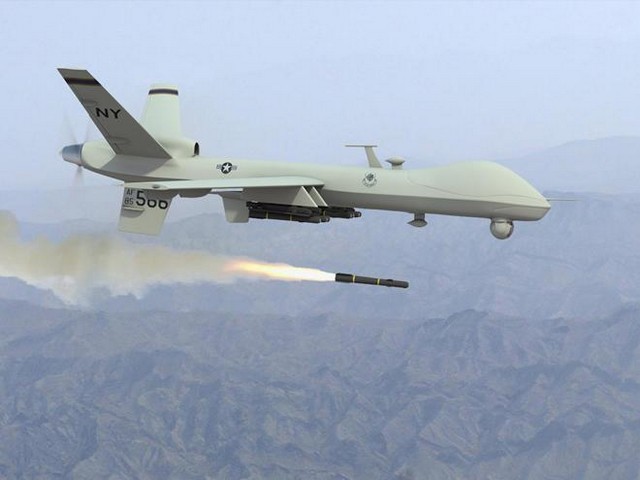
China this week, in a move likely designed as much to strengthen Pakistani counter-terrorism capabilities as a gesture towards the country’s politically influential armed forces, made Pakistan the second country after Saudi Arabia to receive killer drones and the associated technology.

The US has refused to sell its more advanced killer drones to either Saudi Arabia or Pakistan.

The Khan government’s desire to refocus CPEC tackles key issues raised by critics of the project that potentially could impact China’s plan to pacify its troubled north-western province of Xinjiang through a combination of economic development and brutal repression and re-education of its Turkic Muslim population.

The initial plan for CPEC appeared to position Pakistan as a raw materials supplier for China, an export market for Chinese products and labour, and an experimental ground for the export of the surveillance state China is rolling out in Xinjiang.

The plan envisioned Chinese state-owned companies leasing thousands of hectares of agricultural land to set up “demonstration projects” in areas ranging from seed varieties to irrigation technology. Chinese agricultural companies would be offered “free capital and loans” from various Chinese ministries as well as the China Development Bank.

The plan envisaged the Xinjiang Production and Construction Corps introducing mechanization as well as new technologies in Pakistani livestock breeding, development of hybrid varieties, and precision irrigation. Pakistan effectively would become a raw materials supplier rather than an added-value producer, a prerequisite for a sustainable textiles industry.

The plan saw the Pakistani textile sector as a supplier of materials such as yarn and coarse cloth to textile manufacturers in Xinjiang. “China can make the most of the Pakistani market in cheap raw materials to develop the textiles & garments industry and help soak up surplus labour forces in (Xinjiang’s) Kashgar,” the plan said. Chinese companies would be offered preferential treatment with regard to “land, tax, logistics and services” as well as “enterprise income tax, tariff reduction and exemption and sales tax rate” incentives.

For Mr. Khan to ensure that Pakistani agriculture benefits, the very concept of Chinese investment in Pakistani agriculture would have to renegotiated.

Similarly, Mr. Khan has yet to express an opinion on the plan’s incorporation of a full system of monitoring and surveillance that would be built in Pakistani cities to ensure law and order. The system would involve deployment of explosive detectors and scanners to “cover major roads, case-prone areas and crowded places…in urban areas to conduct real-time monitoring and 24-hour video recording.”

The surveillance aspect of the plan that identifies Pakistani politics, such as competing parties, religion, tribes, terrorists, and Western intervention” as well as security as the greatest risk to CPEC could, if unaddressed, transform Pakistani society in ways that go far beyond economic and infrastructure development.

Dr. James M. Dorsey is a senior fellow at the S. Rajaratnam School of International Studies, co-director of the University of Würzburg’s Institute for Fan Culture, and co-host of the New Books in Middle Eastern Studies podcast.

10 October 2018

Source: https://countercurrents.org/2018/10/10/remodelling-the-belt-and-road-pakistan-picks-up-the-torch/

A journalist’s disappearance may rev up a Middle East rivalry

By Ishaan Tharoor

We still do not know what has happened to Jamal Khashoggi. The Saudi journalist, who has contributed numerous articles to The Washington Post’s Global Opinions section, has not been seen since he entered the Saudi consulate in Istanbul on Tuesday afternoon to finalize papers regarding a divorce. Khashoggi is a prominent commentator, familiar to a generation of Middle East correspondents seeking insight into the intrigues of Riyadh. In recent years, he had turned into a critic of the kingdom’s leadership and relocated to Washington in a kind of self-imposed exile.

Turkish authorities insist that Khashoggi, 59, is being held in the consulate, as do his friends. “We have talked with some Turkish authorities and the police,” Turan Kislakci, an associate of Khashoggi, told my colleagues. “I think 100 percent that he is inside.”

But Saudi officials deny they have detained the journalist, claiming in an emailed statement to my colleagues that Khashoggi is not in the building.

“We were going to marry this week,” said Khashoggi’s fiancee, who spoke on the condition of anonymity, to my colleagues in Istanbul on Wednesday. She added that her spouse-to-be had been concerned about going to the consulate. “Of course he was worried. How comfortable can one be if he is not liked by his country?”

“We have been unable to reach Jamal today and are very concerned about where he may be,” said The Post’s international opinions editor, Eli Lopez, in a statement Thursday. “We are monitoring the situation closely, trying to gather more information. It would be unfair and outrageous if he has been detained for his work as a journalist and commentator.”

In Washington, analysts and former diplomats who are generally supportive of Saudi Arabia expressed their disquiet. “The only logical explanations are that the Saudi government is either keeping him in the consulate building or has kidnapped him and taken him to Saudi Arabia,” wrote Elliott Abrams, a former official in the George W. Bush administration. He warned that “the reputation of the current Saudi government will be harmed irreparably.”

Such detentions have become more conspicuous under the kingdom’s young crown prince, Mohammed bin Salman. Since taking de facto power in a shake-up last year, Mohammed has detained feminist activists and billionaire magnates alike. Saudi authorities even briefly held the sitting Lebanese prime minister in a Riyadh hotel last year. All of this came as Mohammed promised to open up Saudi Arabia’s conservative society and wean itself off of oil dependence.

Post columnist Jason Rezaian, a journalist who spent many months in unjust Iranian detention, puzzled over the nature of Mohammed bin Salman’s reforms. “Troubling developments from the community of activists inside the country, however, tell a vastly different story. Those pushing for change — whether they are women’s rights activists, journalists or ethnic minorities — report being systematically harassed by the authorities,” Rezaian wrote. “With every supposed reform comes a wave of fresh arrests, prison sentences and increasingly repressive behavior.”

The crown prince, Rezaian noted, is a frequent target of Khashoggi’s columns. “At each turning point . . . Jamal has offered readers of The Post insightful commentary and sharp criticism about the seemingly impenetrable country,” he wrote.

The geopolitical backdrop to Khashoggi’s disappearance is worth considering. Turkish President Recep Tayyip Erdogan has presided over a sweeping purge of the country’s civil society and government ever since a botched coup attempt in 2016. Yet Turkey has also become something of a sanctuary for Arab dissidents of various stripes.

In 2013, after a military coup unseated Egyptian President Mohamed Morsi and brutally crushed his Muslim Brotherhood, a host of Egyptian dissidents and Islamist politicians took up residence in Istanbul. Erdogan remains a staunch critic of Egyptian President Abdel Fattah al-Sissi, the former army officer who ousted Morsi.

Sissi has counted on the support of Saudi Arabia and the United Arab Emirates, two Gulf monarchies that have actively worked against Islamist political parties across the Arab world. In a column for The Post, Khashoggi rebuked the “intolerant hatred” shown by the Saudis and Emiratis “for any form of political Islam.” He argued “there can be no political reform and democracy in any Arab country without accepting that political Islam is a part of it.”

That’s a position welcomed by Erdogan, who once hoped his brand of religiously tinged democratic politics would be embraced by the Arab world. Instead, his rule has grown more autocratic, and the Middle East has been consumed by a series of wars and bitter geopolitical disputes. That includes the standoff between the Saudis, Emiratis and their allies on one side and Qatar on the other.

Turkey flew troops and food supplies into Qatar last year and still maintains a military base in Doha. Meanwhile, the Qataris pledged to inject some $15 billion worth of investment in Turkey’s flagging economy in August. Some analysts read Ankara’s moves — coupled with Erdogan’s overtures to Iran over the past year — as a riposte to the emergence of a U.S.-backed Middle East bloc including the Saudis, Emiratis and even Israel.

Amid the chaos of the region’s politics, Khashoggi urged the kingdom conduct itself with “ethics” and “dignity” — and therefore called on Saudi Arabia to draw down its war in Yemen.

Khashoggi also wrote about the pain of seeing friends arrested or otherwise forced into silence. “I have left my home, my family and my job, and I am raising my voice,” he wrote in his first column for The Post, where he openly worried about facing arrest if he returned. “To do otherwise would betray those who languish in prison. I can speak when so many cannot. I want you to know that Saudi Arabia has not always been as it is now. We Saudis deserve better.”

Ishaan Tharoor writes about foreign affairs for The Washington Post.

5 October 2018

Source: https://s2.washingtonpost.com/camp-rw/?e=a2hhbG1hcnhAeWFob28uY29t&s=5bb6efd6fe1ff67504b79d17

International Court of Justice strikes down US sanctions against Iran

By Alex Lantier

Rebuking US moves to scrap the 2015 Iranian nuclear accord, the International Court of Justice (ICJ) in The Hague unanimously ruled yesterday that Washington must let Iran use international financial payments systems to buy humanitarian supplies.

When the Obama administration imposed sanctions on Iran in 2012-2015, it tried to strangle Iran’s economy by freezing it out of all financial transactions denominated in US dollars. At its request, the Brussels-based Society for Worldwide Inter-bank Financial Telecommunication (SWIFT) network expelled Iranian banks, ending Iran’s ability to use US dollars for international purchases. Since unilaterally repudiating the 2015 accord this May, the Trump administration has made clear it plans to re-impose sanctions as part of its preparations for war with Iran.

The ICJ ruling demands that Washington not block trade in critical goods, and makes clear that the US war drive against Iran—including calls by US officials such as White House national security adviser John Bolton to re-impose SWIFT sanctions on Iran—violate international law.

Pending final adjudication of US claims against Iran, the ICJ has ordered Washington to “remove, by means of its choosing, any impediments … to the free exportation to the territory of Iran of goods required for humanitarian needs, such as (i) medicines and medical devices; and (ii) foodstuffs and agricultural commodities; as well as goods and services required for the safety of civil aviation, such as (iii) spare parts, equipment and associated services … necessary for civil aircraft.”

The ICJ adds: “To this end, the United States must ensure that licences and necessary authorizations are granted, and that payments and other transfers of funds are not subject to any restriction insofar as they relate to the goods and services referred to above.”

The Iranian foreign ministry applauded the ICJ decision, stating that it “vindicates the Islamic Republic of Iran and confirms the illegitimacy and oppressiveness” of US sanctions.

The ICJ has no mechanism or power to enforce its decision, however, and US officials immediately made clear they will defy the ICJ ruling. Calling Iranian requests “baseless,” US Secretary of State Mike Pompeo announced the termination of the 1955 Treaty of Amity between the United States and Iran, on which the ICJ ruling relied. “That is a decision that is, frankly, 39 years overdue,” Pompeo said, referring to the 39 years since the 1979 Revolution toppled the bloodstained CIA-backed regime of the Shah of Iran.

Pompeo then cynically tried to imply that the ICJ ruling is irrelevant, as Washington already makes exceptions for humanitarian goods in its sanctions. He said, “With regard to the aspects of the court’s order focusing on potential humanitarian issues, we have been clear. … Existing exceptions, authorisations and licensing policies for humanitarian-related transactions and safety of flight will remain in effect. The United States has been actively engaged on these issues without regard to any proceeding before the ICJ.”

US sanctions on Iran have had devastating humanitarian consequences, and Pompeo’s argument is a repugnant political lie. Over a span of decades, economic sanctions have been a key foreign policy tool allowing US imperialism to inflict untold suffering on innocent people in an attempt to bully and bludgeon various countries it targeted for regime change into line.

US officials have applauded sanctions against Iraq, Cuba and the former Yugoslavia even as they caused horrific losses. The UN embargo Washington imposed on Iraq after the 1991 Gulf War cut off Iraq’s access to health supplies, leading to an estimated 500,000 deaths of Iraqi children. Asked about this number on television in 1996, then-US Secretary of State Madeleine Albright infamously defended the sanctions: “A hard choice, but the price, we think the price is worth it.”

The relentless campaign by Washington to isolate Iran since the 1979 Revolution, and in particular the 2012-2015 sanctions, have taken a terrible toll.

Between 2012 and 2016, Iran’s critical oil and gas exports fell from over $9 billion to under $3 billion, shattering its economy and its access to critical food, pharmaceutical and industrial supplies.

A 2014 article on the US National Institutes of Health’s (NIH) National Center for Biotechnology Information website, titled “Sanctions against Iran: The Impact on Health Services,” explains: “Although medicine is not included in the list of the sanctions, the difficulties in holding license for export of medicine, financial transaction, and shipment as well as fear of possible US sanction by pharmaceutical companies and international banks, led to the shortage of specific drugs and medical facilities in last months. A sudden fifty percent rise in the price of drugs is another contributing factor … The impact is being felt by more than six million patients suffering from complex diseases such as hemophilia, multiple sclerosis, thalassemia, epilepsy, and various immunological disorders, as well as transplant and kidney dialysis patients and those being treated for cancer.”

And after Aseman flight 3705 crashed in Iran in February, killing all 65 aboard, the Guardian noted that at least 1,985 people have died in Iranian plane crashes since 1979: “There have been scores of plane crashes in Iran since the 1979 Islamic Revolution, mainly because western sanctions for decades limited its ability to purchase spare parts or buy new planes.”

Washington’s new sanctions have already resulted in a cut-off of vital medicines to Iran. According to Mohammad-Naeem Aminifard, a member of the Iranian parliament’s health commission, 80 important drugs are no longer available under the Iranian state’s drug insurance scheme.

An Iranian doctor working with low-income Iranians recently told the British-based Guardian, “It’s no more only about shortages in drugs for cancer or special diseases such as haemophilia or thalassemia. [N]ormal drugs … like Warfarin, which stops blood clotting, (are) becoming difficult to find, which means patients’ lives are at risk.”

The ICJ ruling undoubtedly reflects growing opposition in ruling circles internationally to US policy—including its war drive against Iran, and threats of trade war and military attack against nuclear-armed Russia and China. It came a day after US ambassador to NATO Kay Bailey Hutchison issued an unprecedented threat to bomb Russia in order to destroy cruise missiles Washington says violate the 1987 Intermediate-Range Nuclear Forces (INF) Treaty. Such an attack would set the stage for global nuclear war that could annihilate humanity.

Significantly, opposition to US policy increasingly comes from America’s imperialist “allies” in Europe and Asia. Germany, Britain and France have consistently defended the 2015 Iranian accord and, last month, signed an agreement with China, Russia and Iran to set up a so-called Special Purpose Vehicle (SPV) funding scheme, to circumvent the use of the US dollar in the Iranian oil trade. Pompeo condemned the SPV scheme, saying he was “disturbed” and “deeply disappointed” by the “counterproductive” measure.

On Tuesday, moreover, reports emerged of high-level talks on Iran between Japan’s Ministry of Foreign Affairs (MOFA) and US State Department officials in Tokyo. The MOFA stated that “both sides actively discussed the US’ re-imposition of sanctions against Iran,” and that it had reiterated its “basic principle” that Japanese corporations should not be affected by the US sanctions.

Nonetheless, the only progressive opposition to the US-led war drive comes from the millions of working people around the globe who are opposed to war, not Washington’s imperialist rivals. After a quarter century of spreading imperialist war from Iraq to Afghanistan, Libya and Syria, there can be no doubt that this growing inter-imperialist rivalry for access to oil and strategic advantage will only accelerate the drive toward all-out war across the Middle East.

Even those imperialist governments critical of US sanctions are, for their own reasons, stoking a confrontation with Iran. As France participates in the US-led proxy war for regime change in its former colony, Syria, it has already targeted Iran, a key military backer of Syrian President Bashar al-Assad. Paris has postponed sending a new ambassador to Tehran and has advised its diplomats to postpone visits to Iran.

Yesterday, the French government charged Iran’s ministry of intelligence for preparing a foiled bombing plot against a June meeting between the exiled Iranian Mujahedin-e-Khalq (MEK) and top US officials including Donald Trump’s attorney, Rudy Giuliani, in Villepinte, near Paris. In a joint statement, the French interior, economic and foreign affairs ministries said: “A planned bomb attack was foiled at Villepinte on June 30. This extremely serious attack that was to take place on our territory cannot go without a response.”

It remains unclear what evidence Paris has connecting Iranian intelligence to those it is charging: Iranian diplomat Assadollah Assadi, who was arrested in July in Germany on terror charges, a Belgian couple of Iranian origin, and three others.

It came after French police launched a major “antiterrorist operation” to shut down the Shiite Islamic Zahra-France association, which works near the Grande Synthe refugee camp. Media reported that Paris wanted to “send a message” to Iran with the crackdown.

Tehran rejected accusations they were planning a terror bombing in Villepinte and demanded the Iranian diplomat’s release. An Iranian government spokesman warned of “the evil hands of ill-wishers who seek to ruin deep-rooted ties between Iran and France as well as other influential European countries.”

Alex Lantier has written extensively for www.wsws.org, a forum for socialist views & the website for the International Committee of the Fourth International (ICFI).

4 October 2018

Source: https://countercurrents.org/2018/10/04/international-court-of-justice-strikes-down-us-sanctions-against-iran/

Israel Sold Advanced Weapons to Myanmar During anti-Rohingya Ethnic Cleansing Campaign

By Gili Cohen

“Welcome to the Myanmar Navy,” said the caption on the Myanmar Navy’s Facebook page, in honor of the arrival of an Israeli patrol boat to Myanmar’s shore. “The Super-Dvora MK III is moving forward at 45 knots on Myanmar waters,” the post continued. The post is from April, only half a year ago, when the Myanmar (Burmese) army was already being accused of war crimes.

Although the persecution of the Muslim minority in Myanmar, the Rohingya people, has become more intense in recent months, back in November 2016 the army was already being accused of brutality against them and of torching their villages. During that period tens of thousands of Rohingyans were expelled from their homes.

The representative of the UN High Commission for Refugees in the region said then that the ultimate purpose of Myanmar’s government is “ethnic cleansing of the Muslim minority.” Since last August more than half a million Rohingyan refugees have fled to Bangladesh, and some of them have testified to methodical rape and murder by the Myanmar military.

The pictures of the two boats on the Facebook page also reveal the weapons that have been installed on them, all blue-and-white products. There’s a remote weapon station, made by Elbit Systems, which allows the firing of a heavy machine gun or cannon of up to 30 millimeters. The new patrol boats are only part of a larger transaction signed between Israel and Myanmar. The Ramta division of Israel Aerospace Industries, which manufactures the Super Dvora, is meant to transfer at least two more boats to the local military. According to some reports on the deal, these boats will be built in Myanmar with the help of Israeli technology. IAI refused to comment.

The total value of the arms deal, according to sources in the Israeli weapons industry, is estimated at tens of millions of dollars. An officer involved in the matter told Haaretz that the Myanmar naval commander visited Israel in the past year, “was impressed and wanted to learn.” It was the second visit to Israel by the naval commander in the past five years.

Israeli weapons are being sold to Myanmar despite the restrictions on weapons sales to that country. Only last month Israel refused to announce that it would stop selling weapons to Myanmar despite the UN declaration about ethnic cleansing. The Rohingya minority is now considered the most persecuted people in the world.

Israel is careful not to officially confirm that it is granting permits to Israeli weapons firms to sell weapons to Myanmar. But the visit two years ago by Myanmar’s chief of the armed forces, Gen. Min Aung Hlaing, who met with Israel’s entire top military brass, was an indication of the cooperation between the two armies. During his visit, Hlaing announced that he had purchased the Super Dvora patrol boat, and he visited the Palmahim Air Force Base and the Gaza Division. A year-and-a-half ago, a reciprocal visit to Myanmar was made by Brig. Gen. Michel Ben-Baruch, head of the Defense Ministries International Defense Cooperation Directorate. In the past, Myanmar purchased Israeli air-to-air missiles and cannons, while an Israeli company, TAR Ideal Concepts, has noted on its website that it has trained Myanmar military forces. Now the site makes no specific reference to Myanmar, referring only to Asia.

The two countries in recent years have signed a memorandum of understanding clarifying the bilateral cooperation and transfer of relevant information and intelligence. According to official reports in Myanmar, the agreement includes military training and improving security cooperation between the two countries. There is, however, no known instance of Myanmar military personnel being trained in Israel, or of Israeli officers who were involved in training Myanmar military forces.

The efforts to fully expose the Israel-Myanmar connection by attorney Eitay Mack, who is active in increasing transparency of Israeli arms exports to countries that violate human rights, have so far been unsuccessful. Last month the High Court of Justice issued a ruling in response to a petition he filed with other human rights activists against the sales, but the ruling was kept classified at the state’s request.

The Defense Ministry said in response, “In general, the Defense Ministry doesn’t typically address security export issues.”

According to a source familiar with the issue, there is currently no relationship between the Israel Defense Forces and the Myanmar army, and no uniformed personnel are involved in any cooperative venture with the Myanmar security establishment.

Gili Cohen is Haaretz newspaper’s military correspondent. Cohen, who was born in 1989, has been writing for Haaretz since 2010.

24 October 2017

Source: https://www.haaretz.com/israel-news/israel-sold-arms-to-myanmar-during-ethnic-cleansing-campaign-1.5459614

Bolsonaro’s rise is a new blow for liberal democracy

By Ishaan Tharoor

The once-unthinkable nearly became reality Sunday. Jair Bolsonaro, a far-right politician sometimes likened to President Trump, nearly won an outright majority of the vote in the first round of Brazil’s presidential election. Had he succeeded, he would have clinched the presidency. Instead, he is the clear favorite in the runoff scheduled for Oct. 28.

It wasn’t long ago that the bruising and divisive Bolsonaro, a 59-year-old ex-paratrooper, was a fringe figure with little hope of winning power in Brasilia. Even in the weeks running up to Sunday’s vote, experts suggested that the country’s political process would curb his ascent. A second round would see voters rally behind a more mainstream challenger; a national legislature stacked with opponents would force Bolsonaro to moderate his hard-line positions.

But a surge in support for Bolsonaro’s angry, anti-establishment politics also upended Brazil’s Congress, with his once-obscure Social Liberal Party running a close second to the leftist Workers’ Party of jailed former president Lula Inácio da Silva. A host of veteran politicians — two-thirds of incumbents — were swept out, while a new, upstart generation that includes celebrity YouTubers is poised to enter the country’s lower house.

Lula’s anointed successor, former Sao Paulo mayor Fernando Haddad, will struggle to close the yawning gap between him and Bolsonaro ahead of the second round. Supporters of the front-runner envision him taking the reins with solid backing from a host of centrist and right-wing parties and plenty of legislative support. “What comes out from this election is a Congress more favorable to pass Bolsonaro’s reforms,” Juliano Griebeler, a political analyst at Barral M Jorge, a business consultancy, said to Bloomberg News.

Bolsonaro got to this moment on the back of years of incendiary politicking. As we’ve already detailed, he is notorious for his outbursts of bigotry, launching diatribes against minorities, immigrants, women and LGBT Brazilians. He cast himself as the law-and-order candidate, declaring that he would give police greater license to kill criminals with impunity and make it easier for ordinary Brazilians to acquire their own firearms. As an evangelical Christian, he courted religious voters and pandered to conservative culture warriors. And he benefited from widespread anger at the country’s political class, which is engulfed in a vast corruption scandal.

“I voted for Bolsonaro because I’m tired of politicians being the same,” Maria Aparecida de Oliveira, a 63-year-old housekeeper casting her ballot in an upper-middle-class district of Sao Paulo, said to my colleagues. “Even if he is a little crazy, someone needs to bring change.”

“Brazil 2018 is an epic tale of establishment that failed to listen, ignored the issues that engaged voters most (namely crime & corruption), and didn’t take the insurgent seriously,” tweeted Brian Winter, the editor in chief of Americas Quarterly. “It’s a global story, but especially pronounced here.”

The implications of Bolsonaro’s success are huge — and, to many observers, grim. Bolsonaro has talked nostalgically of the decades when Brazil was ruled by a murderous right-wing dictatorship and hailed former military officers implicated in the torture of leftist political prisoners. He once said that the dictatorship’s greatest failing was not killing more of them.

A leading Mexican cartoonist offered a stark reaction to the Brazilian election results on Monday:

That a critical mass of Brazilians backs Bolsonaro anyway is a sign of how polarized and venomous the country’s political climate has become — a phenomenon increasingly apparent in democracies throughout the world. “It is an event of global significance, the latest chapter in an unfolding story about the destruction of liberal norms and the rise of populism,” wrote Financial Times columnist Gideon Rachman.

“If we are to take seriously the things that Bolsonaro has said in the campaign, in my opinion Brazil’s democracy is in grave peril,” Lilia Schwarcz, a prominent Brazilian historian, said to the New York Times. She added: “We used to think that rights that have been conquered were rights that had been consolidated. I’ve concluded that we were being foolish. We must continue fighting for them.”

To many Brazilians, Haddad, Bolsonaro’s opponent, seems unlikely to lead that fight. His left-wing Workers’ Party, particularly under Lula’s wildly popular administration, presided over a huge economic boom that lifted millions of Brazilians out of poverty. But key figures in its leadership were later implicated, alongside most of Brazil’s establishment, in the country’s endemic graft.

“I think Bolsonaro will carry on doing what he’s doing. I don’t think he has to change much,” Glauco Peres, a political scientist at the University of Sao Paolo, said to the Guardian. “He’ll keep hammering away at this idea of fear … that the [Workers’ Party] represents a step backwards into corruption scandals and having criminals in government.”

Unlike the larger-than-life Lula, who is still a left-wing icon, Haddad “is a shy, pragmatic economist,” wrote my colleagues Anthony Faiola and Marina Lopes. They noted that “he has tried to reassure investors that he would not pursue radical leftist policies, but many still worry he would not pass the tough reforms seen as necessary to avoid another economic crisis here.”

There is no such doubt about his opposite number. “Bolsonaro is a strange phenomenon,” Lucas de Aragao, director of Arko Advice, a political risk company in Brasilia, said to The Post. “It doesn’t have any precedent in Brazil. Even some Lula voters are turning to him. It’s happened because Brazil loves this idea of a savior, of a hero. And Bolsonaro now represents this image of a savior as much as Lula does.”

But his critics warn that such an image is only a mirage. “Brazilians can embrace the politics of division and the seductive appeal of simplistic solutions, following the path of populist authoritarians in Hungary, Poland and the Philippines,” wrote Robert Muggah, co-founder of a Rio de Janeiro-based think tank. “Alternatively, they can preserve and renew their young democracy.”

Ishaan Tharoor writes about foreign affairs for The Washington Post.

9 October 2018

Source: https://s2.washingtonpost.com/camp-rw/?e=a2hhbG1hcnhAeWFob28uY29t&s=5bbc35d6fe1ff67504b86039

Everyone washes their hands as Gaza’s economy goes into freefall

By Jonathan Cook

Nazareth: The moment long feared is fast approaching in Gaza, according to a new report by the World Bank. After a decade-long Israeli blockade and a series of large-scale military assaults, the economy of the tiny coastal enclave is in “freefall”.

At a meeting of international donors in New York on Thursday, coinciding with the annual meeting of the United Nations General Assembly, the World Bank painted an alarming picture of Gaza’s crisis. Unemployment now stands at close to 70 per cent and the economy is contracting at an ever faster rate.

While the West Bank’s plight is not yet as severe, it is not far behind, countries attending the Ad Hoc Liaison Committee were told. Gaza’s collapse could bring down the entire Palestinian banking sector.

In response, Europe hurriedly put together a €40 million aid package, but that will chiefly address Gaza’s separate humanitarian crisis – not the economic one – by improving supplies of electricity and potable water.

No one doubts the inevitable fallout from the economic and humanitarian crises gripping Gaza. The four parties to the Quartet charged with overseeing negotiations between Israel and the Palestinians – the United States, Russia, the European Union and the UN – issued a statement warning that it was vital to prevent what they termed “further escalation” in Gaza.

The Israeli military shares these concerns. It has reported growing unrest among the enclave’s two million inhabitants and believes Hamas will be forced into a confrontation to break out of the straightjacket imposed by the blockade.

In recent weeks, mass protests along Gaza’s perimeter fence have been revived and expanded after a summer lull. On Friday, seven Palestinian demonstrators, including two children, were killed by Israeli sniper fire. Hundreds more were wounded.

Nonetheless, the political will to remedy the situation looks as atrophied as ever. No one is prepared to take meaningful responsibility for the time-bomb that is Gaza.

In fact, the main parties that could make a difference appear intent on allowing the deterioration to continue.

Israeli Prime Minister Benjamin Netanyahu has ignored repeated warnings of a threatened explosion in Gaza from his own military.

Instead, Israel is upholding the blockade as tightly as ever, preventing the flow of goods in and out of the enclave. Fishing is limited to three miles off the coast rather than the 20-mile zone agreed in the Oslo accords. Hundreds of companies are reported to have folded over the summer.

Intensifying the enclave’s troubles is the Trump administration’s recent decision to cut aid to the Palestinians, including to the United Nation’s refugee agency, UNRWA. It plays a critical role in Gaza, providing food, education and health services to nearly two-thirds of the population.

The food budget is due to run out in December, and the schools budget by the end of this month. Hundreds of thousands of hungry children with nowhere to spend their days can only fuel the protests – and the deaths.

The Palestinian Authority of Mahmoud Abbas, headquartered in the West Bank, has no incentive to help. Gaza’s slowly unfolding catastrophe is his leverage to make Hamas submit to his rule. That is why the Palestinian Authority has cut transfers to Gaza by $30 million a month.

But even if Abbas wished to help, he largely lacks the means. The US cuts were imposed primarily to punish him for refusing to play ball with US President Donald Trump’s supposed “deal of the century” peace plan.

Israel, the World Bank notes, has added to Abbas’s difficulties by refusing to transfer taxes and customs duties it collects on the PA’s behalf.

And the final implicated party, Egypt, is reticent to loosen its own chokehold on its short border with Gaza. President Abdel Fattah El Sisi opposes giving any succour either to his domestic Islamist opponents or to Hamas.

The impasse is possible only because none of the parties is prepared to make a priority of Gaza’s welfare.

That was starkly illustrated earlier in the summer when Cairo, supported by the UN, opened a back channel between Israel and Hamas in the hope of ending their mounting friction.

Hamas wanted the blockade lifted to reverse Gaza’s economic decline, while Israel wanted an end to the weekly protests and the damaging images of snipers killing unarmed demonstrators.

In addition, Netanyahu has an interest in keeping Hamas in power in Gaza, if barely, as a way to cement the geographic split with the West Bank and an ideological one with Abbas.

The talks, however, collapsed quietly in early September after Abbas objected to the Egyptians. He insisted that the Palestinian Authority be the only address for discussions of Gaza’s future. So, Cairo is yet again channelling its energies into a futile attempt at reconciling Abbas and Hamas.

At the UN General Assembly, Trump promised his peace plan would be unveiled in the next two to three months, and made explicit for the first time his support for a two-state solution, saying it would “work best”.

Netanyahu vaguely concurred, while pointing out: “Everyone defines the term ‘state’ differently.” His definition, he added, required that not one of the illegal Jewish settlements in the West Bank be removed and that any future Palestinian state be under complete Israeli security control.

Abbas is widely reported to have conceded over the summer that a Palestinian state – should it ever come into being – would be demilitarised. In other words, it would not be recognisable as a sovereign state.

Hamas has made notable compromises to its original doctrine of military resistance to secure all of historic Palestine. But it is hard to imagine it agreeing to peace on those terms. This makes a reconciliation between Hamas and Abbas currently inconceivable – and respite for the people of Gaza as far off as ever.

Jonathan Cook won the Martha Gellhorn Special Prize for Journalism.

2 October 2018

Source: https://countercurrents.org/2018/10/02/everyone-washes-their-hands-as-gazas-economy-goes-into-freefall/