Just International

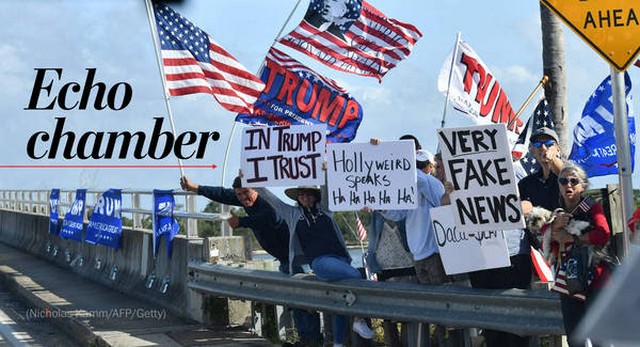
‘Fake news’ and the Trumpian threat to democracy

By Ishaan Tharoor

When President Trump addressed the World Economic Forum in Davos last month, his jabs at the “nasty,” “vicious,” “fake” media earned him audible groans and hisses — even from some non-American reporters in the room. It may have been a new experience for them, but journalists in the United States have become rather depressingly inured to Trump’s diatribes.

That wasn’t always the case.

“At the end of 2016, ‘fake news’ had a clear meaning. It referred to stories that were fabrications — the Clinton Foundation paying for Chelsea Clinton’s wedding or a child sex ring run out of a D.C. pizza shop,” noted The Washington Post’s Fact Checker. “The phrase was popularized after Google, Facebook and Twitter vowed to eliminate the phony content that some have speculated helped tilt the 2016 election in Donald Trump’s favor.”

But, starting early in his presidency, Trump seized upon the words “fake news” and shaped them into a cudgel he incessantly wields. He has routinely tweeted against the “fake news” media when it has the temerity to fact-check a multitude of erroneous claims he has made; doled out “fake news” awards to outlets whose coverage he thinks is helplessly biased against him; and looked on as a series of autocrats and strongmen abroad aped his rhetoric, invoking “fake news” to argue away documented reports of ethnic cleansing, torture and war crimes.

A new study, though, restores a bit of clarity to what “fake news” actually represents. Researchers at Oxford University’s Internet Institute spent 18 months identifying 91 sources of propaganda from across the political spectrum on social media, which spread what they deemed “junk news” that was deliberately misleading or masquerading as authentic reporting. They then did a deep analysis of three months of social media activity in the United States, studying 13,477 Twitter users and 47,719 public Facebook pages that consumed or shared this fake news between November 2017 and January 2018.

What they found was a profound imbalance.

“Analysis showed that the distribution of junk news content was unevenly spread across the ideological spectrum,” the institute said in a news release. “On Twitter, a network of Trump supporters shared the widest range of junk news sources and accounted for the highest volume of junk news sharing in the sample, closely followed by the conservative media group. On Facebook, extreme hard right pages shared more junk news than all the other audience groups put together.”

Right-wing critics of mainstream media in the United States would likely recoil at this characterization and point to what they see as anti-Trump hysteria in mainstream or liberal outlets. But the study shows there is no symmetrical equivalence.

“We find that the political landscape is strikingly divided across ideological lines when it comes to who is sharing junk news,” said Oxford researcher Lisa-Maria Neudert in a statement. “We find that Trump supporters, hard conservatives and right-wing groups are circulating more junk news than other groups.”

The phenomenon is not limited to the United States. Late last year, a team of German researchers at Hoffenheim University created a fake far-right news site that shared fabricated, sensationalist stories on Facebook about refugees and immigrants. These pieces reached thousands of far-right supporters in Germany, many of whom recirculated the stories. It reflected the willingness of people in ideological echo chambers to believe what they want to believe rather than check or evaluate sources.

It also exposed a problem with social-media sites such as Facebook and Twitter, which critics have lambasted as not doing enough to curb the scourge of fraudulent content and “bots” that amplify fake news. “It was striking that our Facebook profile was never questioned — not by Facebook, that is, the institution itself, nor by other users,” said Wolfgang Schweiger, the lead researcher in the project, to the BBC.

Studies like this and the Oxford Internet Institute investigation may add to the pressure on tech companies to do better at fighting misinformation spread through their platforms. Facebook and other companies are working to better identify fake accounts and stem the damage they might cause. In Italy, Facebook has contracted a team of independent fact checkers to monitor and debunk fake news ahead of elections next month. On Tuesday, Facebook agreed to a similar arrangement with Mexico’s National Electoral Institute.

But while social media may help reinforce tribal divisions, the “fake news” moment reflects a deeper, intensifying polarization in the United States and elsewhere, one that predates Trump’s political rise or even the era of social media as a prime vehicle for delivering information. As Vox’s Matt Yglesias writes in a gloomy essay on the prospect of a looming crisis in American democracy, the country’s political system is being fundamentally weakened by intensifying ideological divisions. Those gaps have made compromise more difficult and emboldened presidents to expand their executive powers.

“Over the past 25 years, it’s set America on a course of paralysis and crisis — government shutdowns, impeachment, debt ceiling crises, and constitutional hardball,” Yglesias wrote. “Voters, understandably, are increasingly dissatisfied with the results and confidence in American institutions has been generally low and falling. But rather than leading to change, the dissatisfaction has tended to yield wild electoral swings that exacerbate the sense of permanent crisis.”

In this climate, the proliferation of “fake news” — and the arguments over it — are a mark of a dangerous political degradation. For Trump, it serves as an extension of the same demagogic mind-set that saw him labeling Democrats who did not clap during his speech as “un-American” and “treasonous.” Analysts point to how such unravelings led to coups and chaos in countries as disparate as Chile and Turkey.

“Some polarization is healthy, even necessary, for democracy. But extreme polarization can kill it. When societies divide into partisan camps with profoundly different worldviews, and when those differences are viewed as existential and irreconcilable, political rivalry can devolve into partisan hatred,” wrote Harvard political scientists Steven Levitsky and Daniel Ziblatt, authors of the new book “How Democracies Die.” “Parties come to view each other not as legitimate rivals but as dangerous enemies. Losing ceases to be an accepted part of the political process and instead becomes a catastrophe.”

Ishaan Tharoor writes about foreign affairs for The Washington Post.

7 February 2018

Source: https://www.washingtonpost.com/news/worldviews/wp/2018/02/07/fake-news-and-the-trumpian-threat-to-democracy/?utm_term=.8f8b4ae413c1

Israel’s growing ties with former Arab foes

By Ishaan Tharoor

A number of recent reports have appeared to confirm one of the worst-kept secrets in the Middle East. In coordination with Egyptian authorities, Israel has for months been conducting clandestine airstrikes against jihadist groups operating in northern Sinai. The Israelis used unmarked drones, helicopters and jets to launch at least 100 strikes on the peninsula, all with the apparent blessing of Egyptian President Abdel Fatah al-Sissi.

Both the New York Times and The Washington Post on Saturday ran stories, sourced to former U.S. and British officials, that confirmed the Israeli strikes. They come as Egypt is struggling to control a devastating insurgency in Sinai, and they mark a striking secret alliance between two countries that have fought three wars against each other and then presided over a fragile peace.

“The covert alliance between Egypt and Israel on counter­terrorism shows how the rise of the Islamic State and other Islamist militant groups has helped forge quiet partnerships between Israel and its longtime Arab adversaries,” wrote my colleague Greg Jaffe. But it’s not just about the Islamic State.

“Behind the scenes, Egypt’s top generals have grown steadily closer to their Israeli counterparts since the signing of the Camp David accords 40 years ago, in 1978,” noted the Times. “Egyptian security forces have helped Israel enforce restrictions on the flow of goods in and out of the Gaza Strip, the Palestinian territory bordering Egypt controlled by the militant group Hamas. And Egyptian and Israeli intelligence agencies have long shared information about militants on both sides of the border.

Authorities in both countries are not publicly admitting to the strikes. As part of its sweeping counterinsurgency in Sinai, Egypt has blocked journalists from reporting in the peninsula. Israel’s military imposes its own form of censorship on local journalists covering matters of national security. One analyst likened Israel’s treatment of the affair to its perennial silence over the existence of its covert nuclear weapons program.

“The Israeli strikes inside of Egypt are almost at the same level,” said Zak Gold, an expert on Sinai affairs, to the Times. “Every time anyone says anything about the nuclear program, they have to jokingly add ‘according to the foreign press.’ Israel’s main strategic interest in Egypt is stability, and they believe that open disclosure would threaten that stability.”

The violence in northern Sinai, stoked by years of Egyptian misrule and the emergence of radical extremist groups in the region, shows little sign of waning. In November, militants linked to the Islamic State attacked a mosque there, killing more than 300 people. Israeli air power and technical know-how may be increasingly necessary for Sissi’s government to keep pace.

“It’s a symptom of how close the two countries have become in security cooperation,” a former U.S. official familiar with the campaign told The Post. “But it illustrates how poorly the Egyptians have done dealing with the terrorist threat. Both Israel and the United States have complained about the fact the Egyptians have not taken advice and recommendations the United States have been offering for some time.”

Egypt, of course, is not alone in finding common cause with a former nemesis. Most conspicuously, the Israelis and Saudis have been deepening their security ties and contacts, joined by their mutual antipathy for Iran. But their growing cooperation is still officially covert; tightening bonds with the country that still holds millions of Palestinians under military occupation would be politically problematic for any Arab country.

“Palestine is not an easy issue,” a senior Saudi official recently told the Wall Street Journal. “Saudi Arabia is expecting to hold Islamic leadership and will not let it go easily. And, if you need Israel in anything, you can do it anyway, without having a relationship.”

It’s clear also that Palestine is not the all-encompassing, emotive issue it once was. The Times published reports of secret calls between Egyptian military intelligence officials and prominent broadcasters that took place in the wake of President Trump’s decision to recognize Jerusalem as Israel’s capital, a move Egypt had publicly warned against.

In the phone calls, an Egyptian officer urges the journalists to not stir outrage over Trump’s decision and even advises them to find a way to convince the Egyptian public that the Palestinians should let go of their claim to East Jerusalem.

“How is Jerusalem different from Ramallah, really?” the officer says on the taped call, referring to the West Bank town where the beleaguered Palestinian Authority is headquartered. Moreover, according to the Times, Saudi Crown Prince Mohammed bin Salman has pressed Palestinian officials to accept an extremely curtailed version of statehood with a capital in East Jerusalem. (Though sourced to Western and Palestinian officials, the Saudis deny these reports.)

Arab leaders, of course, still voice their disquiet over Israel’s expansion of settlements in the Palestinian territories. At an interview at the World Economic Forum last month, King Abdullah II of Jordan said Palestinians no longer see the United States as an honest broker in the moribund peace process. He also made a polite attack on Israeli Prime Minister Benjamin Netanyahu.

“I reserve my judgment,” he said, when asked whether Netanyahu is committed to the establishment of an independent Palestinian state. “I have my skepticism.”

“The Israeli-Palestinian conflict is not as important for them as it was before, but they are afraid of making official relations with Israel without any major movement on the Israeli-Palestinian issue,” said Israeli Brig. Gen. Udi Dekel, referring to other Sunni Arab states in the region. He was speaking at a recent security conference in Jerusalem where he also described Israel’s “strategic situation” as “almost the best” since the founding of the state.

“Without that movement, the people on the street will ask them, ‘for so many years you told us that the Israeli-Palestinian conflict is the most important problem,” Dekel said. “How can you accept that Israel is controlling the West Bank and is not giving Palestinians any rights?’”

But as attention shifts even further away from the Palestinian plight, the Israelis are possibly banking on the Egyptians, Saudis and others finding new ways to live with that status quo.

Ishaan Tharoor writes about foreign affairs for The Washington Post.

5 February 2018

Source: https://www.washingtonpost.com/news/worldviews/wp/2018/02/05/israels-growing-ties-with-former-arab-foes/?utm_term=.9c82b205f7c7

Turkey’s Erdogan wages a dangerous war on many fronts

By Ishaan Tharoor

Without a trace of irony, Turkey has dubbed the military offensive it is waging across its southern border with Syria “Operation Olive Branch.” It’s hardly an apt name, given both the bloody nature of the offensive and the wide-reaching geopolitical havoc it has caused.

Since Jan. 20, Turkish forces and Turkish-backed militias have been engaged in battles with Syrian Kurds holding an enclave called Afrin, northwest of the Syrian city of Aleppo. Turkish authorities say they are fighting units that are an extension of the PKK, a violent Kurdish separatist group in Turkey that’s seen by both Ankara and Washington as a terrorist organization.

Reports suggest Turkish air and artillery strikes have damaged villages and killed civilians there, in addition to killing dozens of Syrian Kurdish fighters. Images are circulating online of the destruction wrought by a Turkish airstrike on an ancient temple complex dating back to the first millennium B.C.

“Step by step, we will clean our entire border,” Turkish President Recep Tayyip Erdogan declared over the weekend. But the operation has created an international mess.

The Turkish campaign followed an announcement by Secretary of State Rex Tillerson that the United States would commit to an open-ended troop presence in Syria and endorse the creation of a permanent Kurdish-dominated border force in northeastern Syria. (Turkish officials described such a force as a “terrorist” entity.) Both the Obama and Trump administrations have leaned heavily on Syrian Kurdish factions in waging the ground war against the Islamic State, despite Turkish objections.

While Washington says it does not back the Kurdish factions in Afrin, it is much more involved further to the east, where it has helped arm and train Syrian Kurdish units that are part of a coalition known as the Syrian Democratic Forces, or SDF — and sometimes fought along with them. U.S. Special Forces have been conducting patrols in the most bitterly contested areas in a bid to keep the SDF and Turkish-backed forces from clashing, but that may soon become a much harder task.

With Erdogan “intensifying his threats to extend the Turkish offensive to the areas farther east, where the U.S. military maintains troops, a larger conflict looms,” my colleagues wrote, “A Turkish attack on Manbij [a strategic border town] would present the United States with a major dilemma,” forced to pick a side between their allies on the ground and a historic NATO partner.

The U.S.-Turkey relationship has been in free fall over the course of the Syrian war. Erdogan grew furious with the Obama administration for not doing enough to challenge the regime of Syrian President Bashar al-Assad while also emboldening Kurdish factions on Turkey’s doorstep. President Trump’s arrival offered hope for a reset, but that, too, quickly faded.

A phone call last week between Erdogan and Trump did nothing to resolve the simmering grievances. Turkish officials challenged a White House readout of the conversation, denying that Trump had “expressed concern” about anti-U.S. propaganda coming out of Ankara or the escalation of violence in Afrin.

In Turkey, the offensive has let loose a new tide of nationalist feeling. Erdogan once championed a historic opening with Turkey’s long-suppressed minority Kurdish population. Now he casts himself as the merciless enemy of Kurdish separatism, rallying right-wing Turks to his banner. Pro-Erdogan media outlets belt out a steady stream of vitriol against both Kurdish separatists and their supposed puppet masters in the West. Meanwhile, Turkish authorities have clamped down on dissent or opposition to the military offensive.

“At least 300 people have been detained for social media posts opposing Operation Olive Branch, deemed by authorities ‘terrorist propaganda,'” noted Al-Monitor’s Amberin Zaman. On Tuesday, a Turkish prosecutor order the detention of 11 senior members of the Turkish Medical Association, including its chairman, after the organization denounced the cross-border raid and called for “peace immediately.”

It’s the latest indication of the deepening authoritarianism of Erdogan’s rule, which indeed extends beyond Turkish borders. As Nate Schenkkan of Freedom House noted, Turkish officials have pursued an astonishing “global purge” in the wake of a failed anti-Erdogan coup attempt in 2016, revoking thousands of Turkish passports, while achieving “the arrest, deportation, or rendition of hundreds of Turkish citizens from at least 16 countries.” Thousands of ordinary Turks languish in prison in vague connection to the coup plot, including many figures from human rights organizations and other civil society groups.

“Despite his best efforts to build a stable majority as the foundation of his new regime, his policies of demonizing the opposition have created a deeply polarized society. Half of Turkey despises him and will never accept him as its leader,” wrote Soner Cagaptay, a senior fellow at the Washington Institute for Near East Policy, for The Washington Post. “But Erdogan has failed to grasp this fact, becoming even more authoritarian since the 2017 referendum that granted him sweeping presidential powers. Erdogan’s current trajectory will deepen Turkey’s crisis, potentially even triggering civil conflict.”

Cagaptay said NATO allies like the United States need to walk Erdogan back from his hysteria by slowing support for the Syrian Kurds and siding more clearly with Turkey’s geopolitical interests in Syria over those of Russia and Iran.

But that’s not an easy sell. Foreign-policy and national-security elites in Washington have soured on Erdogan, while the Kurds command a great deal of affection. The Trump administration seems to have no choice but to grapple with the growing contradictions underlying its Syria policy.

“We are asking the Western powers to act on their principles. Why are you not condemning a flagrant and unprovoked assault on the very men and women who stood shoulder to shoulder with you against the darkness of the Islamic State?” wrote Nujin Derik, a female Kurdish commander in Afrin, in the New York Times. “Now a different evil, that of Mr. Erdogan’s increasingly undemocratic Turkey, aims to destroy our fledgling democracy. And this time, it’s claiming to act in your name.”

Ishaan Tharoor writes about foreign affairs for The Washington Post.

31 January 2018

Source: https://www.washingtonpost.com/news/worldviews/wp/2018/01/31/turkeys-erdogan-wages-a-dangerous-war-on-many-fronts/?utm_term=.b07988d7d228

The Bitcoin Threat

By Harold James

Unless a currency has been authenticated by a government, it is unlikely to be fully trusted. But that does not mean that it cannot become a plaything for the naïve and gullible, or a weapon of financial mass destruction for political belligerents around the world.

LONDON – The extraordinary volatility of Bitcoin and other cryptocurrencies has become a threat not just to the international financial system, but also to political order. The blockchain technology upon which cryptocurrencies are based promises a better and more secure payment method than anything seen before, and some believe that cryptocurrencies will replace electronic currency in traditional bank accounts, just as electronic transfers replaced paper money, which succeeded gold and silver.

But others are rightly suspicious that this new technology might be manipulated or abused. Money is part of the social fabric. For most of the history of human civilization, it has provided a basis for trust between people and governments, and between individuals through exchange. It has almost always been an expression of sovereignty as well, and private currencies have been very rare.

In the case of metallic money, coins typically bore emblems of state identity, one of the earliest examples being the owl symbolizing the city of Athens. Usually, however, there was some confusion about whether the emblems on coins represented sovereignty or divinity. Whose head is on this coin? Is it Philip of Macedon or Alexander the Great, or is it Hercules? Later, Roman emperors would exploit this ambiguity, by stamping coins with their own “divine” visage. And even today, British coins have embossed words linking the monarchy to God.

Whatever the case, there is a clear pattern throughout history: bad states produce bad money, and bad money leads to failed states. During periods of inflation or hyperinflation, radical currency devaluation would destroy the basis of political order. For example, the Thirty Years’ War in Central Europe during the seventeenth century was fueled in large part by social disintegration following a period of monetary instability.

Similarly, during the French Revolution, speculation in a paper currency pegged to “national” property that had been confiscated from aristocrats and the church undermined the Jacobins’ legitimacy. In the twentieth century, periods of inflation during and after the two world wars destroyed Europe’s political institutions and fanned the flames of radicalism. In fact, Vladimir Lenin regarded the currency press as the “simplest way to exterminate the very spirit of capitalism” and bourgeois democracy.

In addition to being one of the main factors behind the disintegration of states, bad money has also been a key feature of interstate conflicts. For belligerent states, creating or exploiting monetary turmoil has historically been a cheap way to destroy opponents. Even in peacetime, some states have responded to deteriorating relations by planting fake money to sow discord beyond their borders.

The best-known example of such monetary warfare is Nazi Germany’s scheme to print the banknotes of Allied powers during World War II. Counterfeit notes could of course be used to purchase scarce resources or pay spies. But Germany also envisioned using long-range bombers to drop forged banknotes over Britain. Just imagine the demoralization and chaos that would have followed. Anyone with a large amount of money would automatically be suspect, and public trust would quickly erode. Dropping money could very well be more devastating than dropping bombs.

Money is even easier to manipulate when it is internationalized. In the modern era, rogue states such as North Korea have regularly forged banknotes, particularly those of the United States. And cross-border electronic transfers between banks are often used for malign and criminal purposes. So far, though, there have not been any globally devastating monetary attacks outside the realm of cinematic fantasy.

Of course, there have long been political efforts to undermine or replace the dollar as the dominant global currency. The most seductive alternative seems to have been gold. Russian theorists of “Eurasia” often tout traditional Russian iconography’s use of the fine metal. In 2001, then-Malaysian Prime Minister Mahathir Mohamad tried to introduce a “gold dinar” as an answer to the US-based currency system. And in 2005, al-Qaeda’s security chief, Saif al-Adl, suggested using gold to topple the dollar.

Bitcoin looks like a twenty-first-century version of gold, and its creators have even embraced that analogy. It is produced – or “mined” – through effort. And just as the price of gold once reflected the human exertion needed to extract it from the ground in remote locations, creating Bitcoins takes an exorbitant amount of computing power, driven by cheap energy in remote areas of Asia or Iceland.

But the rise of Bitcoin represents a shift in how society perceives fundamental value. Whereas pre-modern metallic currencies served as a basis for the labor theory of value – whereby goods and services are worth the amount of human labor put into them – blockchain technology assigns value to a combination of computing power and stored energy, none of it human.

At the same time, cryptocurrencies like Bitcoin have made it all but impossible to distinguish between state and private-sector criminality. North Korea has been suspected of continuing its attempts at monetary manipulation by mining and creating Bitcoin, which has led China and South Korea to start closing down Bitcoin exchanges. Major cryptocurrency platforms such as Coincheck in Japan have also put a halt to trading.

And yet we have already reached the point where a Bitcoin crash could have serious global implications. Financial institutions’ current exposure to the cryptocurrency is unclear, and probably would not be fully revealed until after a financial disaster. It is eerily reminiscent of 2007 and 2008, when no one really knew where the exposure to subprime-mortgage debt ultimately lay. Until the crash, it was anyone’s guess which institutions might be insolvent.

Just as one cannot instantly tell whether a news report is “fake news,” nor can one immediately discern the validity of new monetary forms. Unless a currency has been authenticated by a government, it is unlikely to be fully trusted. But that does not mean that it cannot become a plaything for the naïve and gullible, or a weapon of financial mass destruction for political belligerents around the world.

Harold James is Professor of History and International Affairs at Princeton University and a senior fellow at the Center for International Governance Innovation.

2 February 2018

Source: https://www.project-syndicate.org/commentary/bitcoin-threat-to-political-stability-by-harold-james-2018-02?utm_source=Project+Syndicate+Newsletter&utm_campaign=4bf9c5d8e0-sunday_newsletter_4_2_2018&utm_medium=email&utm_term=0_73bad5b7d8-4bf9c5d8e0-104996581

Are Oil Prices Heading for Another Spike?

By Carmen M. Reinhart ,  Vincent Reinhart

The decline in the dollar’s exchange rate seems to have gathered momentum, in part because the person who has his signature on US currency, Treasury Secretary Steve Mnuchin, seems unperturbed by its weakness. If it continues, will energy costs spiral upward?

CAMBRIDGE – The price at the pump for premium gasoline topped $3 per gallon in much of the United States over the past few weeks, which is surprising to consumers but not to analysts of the world’s oil markets. From its local low two years ago, the price of oil has more than doubled. As with any market, where you stand on this price increase depends on where you sit.

Higher oil prices buttress the fortunes of producers abroad and at home. The International Monetary Fund upgraded the GDP growth outlook of all six of the top ten oil producers that were shown separately in its 2018 forecast update, and the projected growth of world trade volumes was raised half a percentage point this year and next. Increased oil revenues improve the fiscal positions of most producing economies, and some have taken advantage of global investors’ hardier appetite to issue sovereign debt.

In the US, the five states with the largest gains in oil production this decade recorded employment growth of 2.75% in 2017, double the national average. Meanwhile, the number of oil rigs nationwide increased by roughly 50%.

At the same time, a doubling of energy costs takes a significant bite out of US households’ budgets, with energy costs directly accounting for about 6.5% of consumer spending. Even more problematic, this is a regressive tax, disproportionately draining lower-income households’ discretionary spending power. Last year, energy represented 8.7% of spending by the bottom 20% of households, compared to 4.9% for the top quintile. Moreover, the bottom group lacks net assets to tide them over bad outcomes.

This tax effect partly underlies the robust association between spikes in world oil prices and US economic downturns documented by James Hamilton of the University of California San Diego. Hamilton’s sobering results show that, over the long sweep of history, every recession but one was preceded by an increase in oil prices, and every oil market disruption but one was followed by a recession.

But that does not mean that we should hunker down and await a downturn. As already noted, the oil price rise has been associated with an uptick in growth, and, whereas the events Hamilton examined related more to supply disruptions, the story of the past two years represents a combination of supply and demand forces.

Most important, over the course of this energy-price run-up, the dollar’s exchange rate depreciated by about 10% on a trade-weighted basis. With oil priced in dollars on a world market, this has had a material effect on the incentives of market participants on both blades of the supply-demand scissors.

A weaker dollar increases the purchasing power of US trading partners (the so-called Dornbusch effect, named for the late MIT economist Rudi Dornbusch), some of which spills over to increased demand for energy. Non-US oil producers sell a good denominated in dollars but consume a basket of dollar and non-dollar items. For them, a weaker US dollar lowers the price of exports relative to imports, and so they restrict supply. The scissors close with more demand and less supply, implying a higher dollar price of oil.

The decline in the dollar’s exchange rate seems to have gathered momentum, in part because the person who has his signature on US currency, Treasury Secretary Steve Mnuchin, seems unperturbed by its weakness. If it continues, could the result be a spike in energy costs? Our tentative answer is no, for three reasons.

First, the dollar has depreciated against most currencies, but less so against those of important emerging-market partners, such as China.

Second, some of the increase in oil prices is apparently due to supply restraint by the members of the Organization of the Petroleum Exporting Countries and their friends of convenience (particularly Russia). Not accidently, oil prices started their ascent with the production curtailment by “OPEC+” at the end of 2016, and now seem high compared to other industrial commodities.

Further dollar depreciation eroding supply and enhancing demand might just change that. Saudi Arabia dearly wants a stable, balanced market for petroleum in advance of the sale of a 5% stake in Saudi Aramco, the national oil company. For a healthy market consistent with longer-run capital investment, an oil price that is too high can be as challenging as one that is too low. In such circumstances, officials in OPEC+ may well jump on the chance to expand supply while maintaining prices in their current channel.

Third, when it comes to supply, do not look exclusively abroad. The increase in US production, thanks to technological advances in shale oil production, has been breathtaking.

The US is on track to pump more oil this year than at any time in its history. Nonetheless, domestic producers have been moderate thus far in ramping up supply, reportedly owing to their equity owners’ desire for more profit and less capital spending. But production technology advances, and higher prices beckon.

On balance, it is likely that the economy-wide effects of the energy shock, though unpleasant, will not derail growth. We are tentative, however, because commodity markets are volatile. In recent work with Christoph Trebesch of the Kiel Institute, we counted more than twice as many boom-bust cycles in commodity prices than in capital flows since 1820. The global economy looks to be riding a roller coaster.

The views expressed here are the authors’ own.

Carmen M. Reinhart is Professor of the International Financial System at Harvard University’s Kennedy School of Government.

Vincent Reinhart is Chief Economist and Investment Strategist at BNY Mellon Asset Management North America Corporation.

31 January 2018

Source: https://www.project-syndicate.org/commentary/oil-prices-rise-as-dollar-depreciates-by-carmen-reinhart-and-vincent-reinhart-2018-01?utm_source=Project+Syndicate+Newsletter&utm_campaign=4bf9c5d8e0-sunday_newsletter_4_2_2018&utm_medium=email&utm_term=0_73bad5b7d8-4bf9c5d8e0-104996581

The Right Question About Inequality and Growth

By  Jason Furman

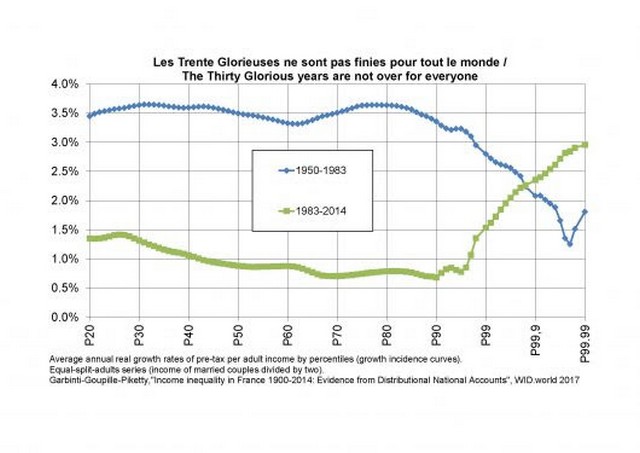
The relationship between inequality and growth has become a hot topic for economists, with new research challenging the conventional view that greater inequality is the price that must be paid for higher output. But for policymakers, this debate is a distraction; the real question is how to assess outcomes and improve modes of distribution.

CAMBRIDGE – The belief that inequality hurts economic growth is gaining currency among policymakers. Some argue forcefully that high levels of inequality can make sustained growth impossible, and may even contribute to recessions. This view stands in stark contrast to the traditional view that there is a tradeoff between equality and growth, and that greater inequality is a price that must be paid for higher output.

Lost in the discussion, however, is whether any of this is actually germane to economic policymaking. I don’t believe it is. Whether inequality is good or bad for growth should and will continue to concern social scientists. But those guiding an economy should focus on assessing outcomes and modes of distribution rather than on a puzzle that will never fully be solved.

Three developments make this refocusing necessary. For starters, while recent studies have concluded that higher levels of inequality produce lower long-term growth, other data have challenged this assumption, making definitive claims that are impossible to support, partly because different sources and types of inequality likely have different impacts on growth.

Second, most research focuses on the impact of inequality on growth, rather than on how specific policies affect growth. The former is of interest to social scientists and historians, but it is the latter that is relevant for policymakers.

And, finally, politicians generally defend their policies in terms of how they affect the middle class or the poor, not the arithmetic average of incomes across an economy – which gives equal weight to a $1 increase in the income of a poor person and that of a billionaire. So, even if reducing inequality was bad for overall growth, it might still be good for social welfare in the relevant sense, if it made many households in the middle better off.

The fact is, economic policies in the real world are nuanced and site-specific, making the search for a single answer to the question of how – and how much – inequality affects growth a Sisyphean task. Rather than concerning themselves with how to balance growth and inequality, policymakers would do better to focus on how policies impact average incomes and other welfare indicators.

Win-win policies – defined as distribution mechanisms that produce growth and reduce inequality simultaneously – are the easiest to evaluate, and the most advantageous to adopt. Education is a classic example. Reforms that cost little or no money, such as improving the quality of primary and secondary education, have been shown to encourage growth while ameliorating inequality. Even reforms that cost more – like expanding preschool education in the United States – generate economic benefits that far exceed the tax losses associated with funding them.

These types of approaches – what I call “all good things go together” policies – could be applied to other sectors of the economy that are being squeezed by imperfect competition. More vigorous antitrust policies, or increased consumer ownership of data, could strengthen competition and, in the process, boost efficiency and improve income distribution.

Any policy that promotes growth or lowers inequality without negatively affecting the other variable can also be classified as a win-win. A revenue-neutral reform of business taxes, for example, could raise the level of output with no meaningful impact on the distribution of income.

It is far more difficult to evaluate policies that involve a tradeoff between growth and inequality. For the sake of illustration, consider the effects of a hypothetical 10% reduction in labor taxes paid for by a lump-sum tax modeled using a neo-classical Ramsey growth model – a scenario that I detailed in a recent paper for the Olivier Blanchard and Lawrence Summers series on Rethinking Macroeconomics. This plan is good for growth, with average output increasing by 1%. But to understand how this policy would actually play out for taxpayers, I applied the scenario to the real distribution of US household incomes in 2010.

Nearly all households in the model experienced an increase in pre-tax income. But taxes increased for two-thirds of households. For middle-income households, the increased taxation was offset by earnings, but leisure also fell. As a result, the tax change left around 60% of households worse off, even as average household income grew, driven by gains at the top.

This analysis does not answer the question of whether this illustrative tax policy is a good idea. But most policymakers would likely object if they understood that growth would be achieved by higher taxes on two-thirds of households, leaving the median household working harder to earn the same after-tax income.

Social scientists should continue to ask whether inequality is good or bad for economic growth. More research is needed on the variables that affect growth, such as median income. Economists should also pay less attention to inequality in the aggregate, and more on the specific policies that might increase or reduce inequality.

But policymakers have different priorities than economists do. Rather than rethinking macroeconomics, policymakers must consider whether specific goals for social welfare and distribution can be achieved through win-win measures or through policies that make worthwhile tradeoffs. The answer may be to obsess less over aggregate data, and to focus more on how policy decisions impact real people.

Jason Furman, Professor of the Practice of Economic Policy at the Harvard Kennedy School and Senior Fellow at the Peterson Institute for International Economics, was Chairman of President Barack Obama’s Council of Economic Advisers from 2013-2017.

19 January 2018

Source: https://www.project-syndicate.org/commentary/growth-inequality-wealth-distribution-by-jason-furman-2018-01?utm_source=Project+Syndicate+Newsletter&utm_campaign=256eaf5654-sunday_newsletter_21_1_2018&utm_medium=email&utm_term=0_73bad5b7d8-256eaf5654-104996581

Why Is Japan Populist-Free?

By Ian Buruma

Contemporary Japan may have its flaws, but it is now much more egalitarian than the United States, India, or many countries in Europe. By remaining a country of, by, and for the middle class, where the most affluent tend to be discreet, Japan has avoided the dangerous politics roiling developed and developing countries alike.

TOKYO – Even as a wave of right-wing populism is sweeping Europe, the United States, India, and parts of Southeast Asia, Japan has so far appeared to be immune. There are no Japanese demagogues, like Geert Wilders, Marine Le Pen, Donald Trump, Narendra Modi, or Rodrigo Duterte, who have exploited pent-up resentments against cultural or political elites. Why?

Perhaps the closest Japan has come was the former mayor of Osaka, Toru Hashimoto, who first made his name as a television personality and then disgraced himself in recent years by commending the use of wartime sex slaves by the Imperial Japanese Army. His ultra-nationalist views and loathing of liberal media were a familiar version of right-wing populism. But he never managed to break into national politics.

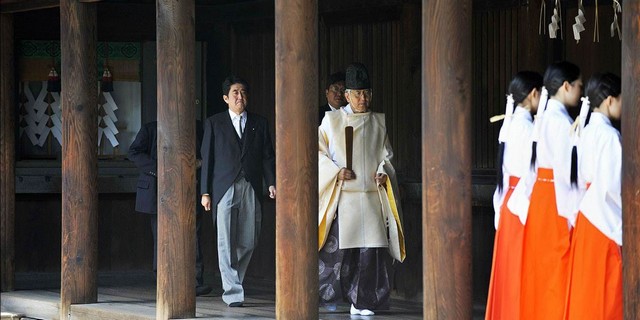
Hashimoto now gives Prime Minister Shinzo Abe free advice on tightening national-security laws. And therein lies one explanation for the apparent lack of right-wing populism in Japan. No one could be more identified with the political elite than Abe, the grandson of a wartime cabinet minister and later prime minister, and son of a foreign minister. And yet, he shares right-wing populists’ hostility to liberal academics, journalists, and intellectuals.

Postwar Japanese democracy was influenced in the 1950 and 1960s by an intellectual elite that consciously sought to distance Japan from its wartime nationalism. Abe and his allies are trying to quash that influence. His efforts to revise Japan’s pacifist constitution, restore pride in its wartime record, and discredit “elitist” mainstream media, such as the left-of-center newspaper Asahi Shimbun, have earned him the praise of Donald Trump’s former strategist, Stephen Bannon, who called Abe a “Trump before Trump.”

In some ways, Bannon was right to think so. In November 2016, Abe told Trump: “I’ve been successful in taming the Asahi Shimbun. I hope you will likewise be successful in taming The New York Times.” Even as a joke between two supposedly democratic leaders, this was disgraceful.

So one might say that elements of right-wing populism are at the heart of the Japanese government, embodied by a scion of one of the country’s most elite families. This paradox, however, is not the only explanation for the absence of a Japanese Le Pen, Modi, or Wilders.

For demagogues to be able to stir up popular resentments against foreigners, cosmopolitans, intellectuals, and liberals, there must be wide and obvious financial, cultural, and educational disparities. This was the case in Japan in the mid-1930s, when military hotheads staged a failed coup aimed at bankers, businessmen, and politicians who in their view were corrupting the Japanese polity.

The coup was supported by soldiers who had often grown up in poor rural areas. Their sisters sometimes had to be sold to big city brothels for their families to survive. The Westernized cosmopolitan urban elites were the enemy. And public opinion was largely on the side of the rebels.

Contemporary Japan may have its flaws, but it is now much more egalitarian than the US, India, or many countries in Europe. High taxes make it hard to pass on inherited wealth. And, unlike in the US, where material prosperity is flaunted, not least by Trump himself, the most affluent Japanese tend to be discreet. Japan has surpassed the US as a country of the middle class.

Resentment feeds off a sense of humiliation, a loss of pride. In a society where human worth is measured by individual success, symbolized by celebrity and money, it is easy to feel humiliated by a relative lack of it, of being just another face in the crowd. In extreme cases, desperate individuals will assassinate a president or a rock star just to get into the news. Populists find support among those resentful faces in the crowd, people who feel that elites have betrayed them, by taking away their sense of pride in their class, their culture, or their race.

This has not happened in Japan yet. Culture may have something to do with it. Self-promotion, in the American style, is frowned upon. To be sure, Japan has a celebrity culture, driven by mass media. But self-worth is defined less by individual fame or wealth than by having a place in a collective enterprise, and doing the job one is assigned as well as one can.

People in department stores seem to take genuine pride in wrapping merchandise beautifully. Some jobs – think of those uniformed middle-aged men who smile and bow at customers entering a bank – appear to be entirely superfluous. It would be naive to assume that these tasks give huge satisfaction, but they offer people a sense of place, a role in society, however humble.

Meanwhile, the domestic Japanese economy remains one of the most protected and least globalized in the developed world. There are several reasons why Japanese governments have resisted the neoliberalism promoted in the West since the Reagan/Thatcher years: corporate interests, bureaucratic privileges, and pork-barrel politics of various kinds. But preserving pride in employment, at the cost of efficiency, is one of them. If this stifles individual enterprise, then so be it.

Thatcherism has probably made the British economy more efficient. But by crushing trade unions and other established institutions of working-class culture, governments have also taken away sources of pride for people who often do unpleasant jobs. Efficiency does not create a sense of community. Those who now feel adrift blame their predicament on elites who are better educated and sometimes more talented – and thus better able to thrive in a global economy.

One of the more ironic consequences is that many such people in the US have chosen as their president a narcissistic billionaire who brags about his wealth, personal success, and genius. Nothing like that is likely to happen in Japan. We might learn something valuable from reflecting on the reasons why.

Ian Buruma, Editor of The New York Review of Books, is the author of numerous books, including Murder in Amsterdam: The Death of Theo Van Gogh and the Limits of Tolerance and Year Zero: A History of 1945.

10 January 2018

Source: https://www.project-syndicate.org/commentary/japan-no-populism-reasons-by-ian-buruma-2018-01?utm_source=Project+Syndicate+Newsletter&utm_campaign=bf05d082c0-sunday_newsletter_14_1_2018&utm_medium=email&utm_term=0_73bad5b7d8-bf05d082c0-104996581

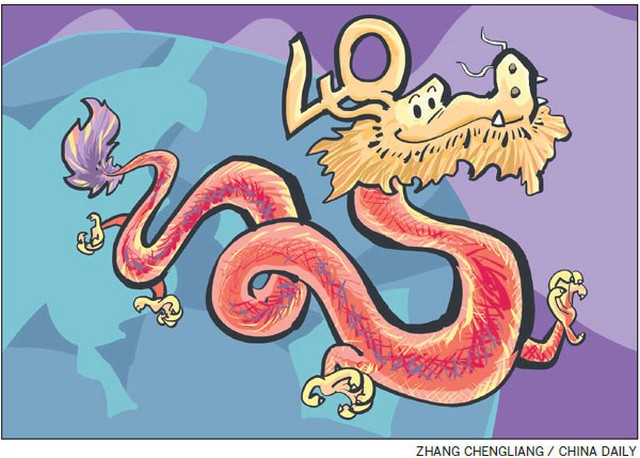
Let’s celebrate reform’s 40th anniversary

By Martin Jacques | China Daily

As momentous historic events go, China’s reform period was relatively unheralded. Little did anyone realize at the time -probably no one, in fact – that 1978 would enter the history books as one of the most important years in modern history.

We should not be surprised. At the time, the Chinese economy was a mere 5 percent of the size of the US economy, with a per capita GDP roughly on a par with that of Zambia, lower than half of the Asian average and lower than two­thirds of the African average. China’s impact on the world was very limited.

Although its growth rate had averaged a little more than 5 percent from 1960 to 1978, it compared rather unfavorably with economies such as Japan and the Republic of Korea. For the majority of the world’s population, China was largely forgotten or ignored, usually both. Even in China, there was little anticipation that the country stood on the eve of a remarkable transformation. When Chairman Mao Zedong died in 1976, China was relatively isolated. The”cultural revolution” (1966­76) continued to cast a long shadow, the leadership was divided, and Deng Xiaoping had only begun to emerge as China’s key leader. Notwithstanding the unquestioned achievements made since 1949, the future did not look particularly promising.

How wrong almost everyone was. Think of what have hitherto been regarded as some of the defining moments of the late 19th and 20th centuries: the rise of the United States between 1870 and 1914; the October Revolution; colonial liberation after World War II; and the fall of the Berlin Wall and the disintegration of the Soviet Union.

The reform period that began in 1978, and continues to this day, is at least as historically significant as all of these, if not more so. China’s economic transformation since 1978 has been on a far greater scale than that of the US between 1870 and 1914. The October Revolution, historically profound as it was, ultimately failed. The reform period, in contrast, has succeeded in transforming not only China but the whole world.

If China’s economic performance between 1960 and 1978 was overshadowed by the early “Asian tigers”, since 1978 the roles have been reversed, with China growing much faster than any of its neighbors between 1978 and the present. China experienced an average GDP growth of close to 10 percent annually until 2014, raising per capita GDP almost 49­-fold, from $155 at today’s prices in 1978 to $7,590 in 2014, thereby lifting more than 700 million people out of poverty. Between 1990 and 2005, China was responsible for three­-quarters of the world’s poverty reduction. Since 1978, China’s GDP has overtaken that of countless countries, including Britain, France, Germany and Japan, such that today it is second only to the US and closing rapidly.

But numbers alone cannot explain the historical magnitude and novelty of what China has achieved. Since the late 18th century and the beginning of Britain’s Industrial Revolution, the global economy has been dominated by the advanced Western economies together with Japan, which, unlike all other non­Western countries, began its industrialization in the 19th century. China is the first developing country (which, like a majority of the world’s countries, had been colonized or partly colonized by the Western powers and Japan) to crash the party of the historically privileged and become recognized as one of the two most powerful countries in the world. China has not only transformed itself and the world, it has overturned more than 200 years of history in the process.

Without question, the reform period -which never would have been possible without 1949 and the victory of the Communist Party of China under Mao Zedong -is one of the most important historical events of the past two centuries. It has been responsible for the most remarkable economic transformation in modern history, arguably, indeed, in all of history.

Yet the 40th anniversary of the reform period’s birth will be marked, if at all, in a relatively perfunctory way in Western countries. Part of the reason for this is that economic periods such as this generally receive less attention than their political or military equivalents: they are more protracted and less dramatic than the latter. But it is also because the West feels challenged by China’s transformation.

The West has generally veered toward a negative interpretation of China’s economic rise, for long predicting its unsustainability and ultimate demise. This is hardly surprising; as we can now all see, China’s rise, in reconfiguring the world, is at the same time diminishing the West’s place in that world. The causes of this can hardly be expected to be a reason for celebration in the West.

There is a further reason that the significance of the reform period has been underestimated, and this belongs rather closer to home: its relationship to the socialist tradition. The sheer novelty of Deng Xiaoping’s thinking and approach has never been given the recognition it deserves. While the West for long belittled the reform period for political reasons, many on the left tended to believe that it represented a turn to the right in an era when neo­liberalism was increasingly ascendant; they regarded it, in some degree or another, as a retreat from socialist principles. But this was a crude and simplistic response. Deng was, indeed, prepared to question some of the previously largely unquestioned assumptions of socialist thought, but he did this because he believed they no longer had a sufficient purchase on reality.

Prior to Deng, the communist movement, together with wider sections of the left, was for the most part committed to two key propositions. First, that socialism meant central planning and the public ownership of most of the economy. Second, the idea of socialism in one country, which first took root in the Soviet Union in the 1920s, came to enjoy widespread influence: it was based on the view that the world was bifurcated between socialist countries and capitalist countries, and never the twain shall meet.

Deng challenged both propositions. He embraced the idea of the market as a necessary part of a socialist economy. And he believed that it was essential for China, rather than being part of an autarchic socialist bloc, to seek to become part of and interdependent with the whole world, including the major capitalist countries.

The idea of socialism in one country emerged in the Soviet Union after the failure of the long-­awaited revolutions in the major capitalist countries in the 1920s: as such, it represented a retreat into a defensive bunker. Deng’s embrace of interdependence was based on the recognition that the capitalist world in the post-­1945 period had proved rather more dynamic than the socialist world, and that China should not be afraid to extend its horizons and compete with them on a wider global stage.

Deng’s approach was extraordinarily brave and bold. He recognized that the old ways of thinking were no longer working: in Mao’s time­-honored phrase, it was necessary to “seek truth from facts”. Rather than choosing to remain a prisoner of one’s own ideological dogma, he reached beyond in order to find a new way.

The consequences could not have been more profound or far-­reaching. The turn to pragmatism, or seeking truth from facts, was intellectually enormously stimulating and liberating. Much of the Marxist tradition had become bogged down in the idea that it was invariably right, that history was on its side, that it was simply a matter of time before it triumphed. A mindset based on the “guarantees of history” led to ossified and mechanical thinking, a hardening of the intellectual arteries, and an inability to move with the times.

The dynamism that Deng’s intellectual revolution unleashed has become a continuing and fundamental feature of China over the past 40 years. Or, to put it in another way, while the Soviet Union was trapped in its own dogmatic mindset and increasingly turned inward, exactly the opposite happened in China, which reached outward both within China itself and at the same time toward the rest of the world.

While the Soviet Union became ever more timid and defensive, China displayed growing confidence in its attitude toward the world.

There is much that the left around the world can learn from China: its expansive view, its pragmatism, its intellectual courage and ambition, its willingness to learn from anywhere and anyone, and its emphasis on doing and achieving rather than dogma and assertion.

The 40th anniversary of the beginning of the reform period is a cause for celebration and reflection, not only in China but around the world. It has so much to offer us all.

The writer is a senior fellow at the Department of Politics and International Studies, Cambridge University, a visiting professor at the Institute of Modern International Relations, Tsinghua University, and the author of When China Rules the World.

The views do not necessarily reflect those of China Daily.

20 January 2018

Source: http://www.chinadaily.com.cn/a/201801/20/WS5a629b89a3106e7dcc13571c.html

North Korea Catalog of US Human Rights Violations Makes Convincing Case

By Jake Johnson | Common Dreams

US “can never camouflage its true identity as the gross violator of human rights,” Pyongyang says

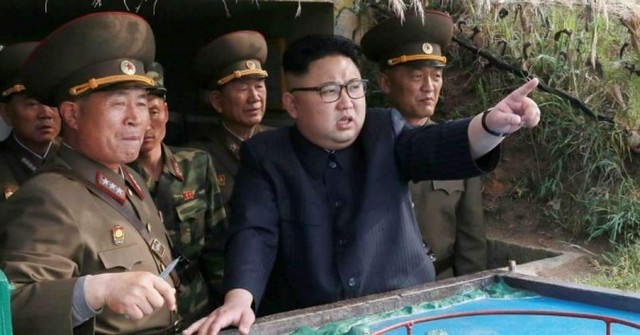
Just as U.S. President Donald Trump was preparing to lambast North Korea as “a menace that threatens our world” in his State of the Union address Tuesday night, Pyongyang attempted to undercut Trump’s “ominous” rhetoric by releasing a white paper that highlights America’s “gross” human rights violations and deep inequities, from its failure to “embrace paid maternity leave” to its exorbitant healthcare costs.

“In the U.S. the absolute majority of the working masses, deprived of elementary rights to survival, are hovering in the abyss of nightmare,” the report declares, according to the state-run Korean Central News Agency (KCNA).Officially titled the “White Paper on Human Rights Violations in the U.S. in 2017,” the report also highlights other major American social and economic issues, including:

“Soaring school expenses,” which “are plunging the students into the hell of loans”;
The number of deaths caused by the “flu, lung diseases, and asthma”;
Pay disparities between men and women;
Rampant sexual abuse; and
Homelessness and “number of the poor families living in rented rooms devoid of elementary facilities for living.”

In addition to slamming the broader and long-standing facts of American life that consistently put the U.S. behind other wealthy nations, Pyongyang also took aim at the Trump administration, which it characterized as a collection of racist “billionaires” and “their mouthpieces” who only serve the “interests of a handful of the rich circles.”

“Racial discrimination and misanthropy are serious maladies inherent to the social system of the U.S., and they have been aggravated since Trump took office,” the paper declares. “The racial violence that took place in Charlottesville, Virginia on August 12 is a typical example of the acme of the current administration’s policy of racism.”

The report goes on to spotlight what it calls the Trump administration’s “crackdown on the press,” which has “intensified” over the past year.

“Genuine freedom of the press and expression does not exist” in the U.S., the paper argues.

Pyongyang concludes by ridiculing the U.S. for lecturing other nations about human rights while continuing to commit violations of its own, both at home and abroad.

“The U.S., ‘guardian of democracy’ and ‘human rights champion,’ is kicking up the human rights racket but it can never camouflage its true identity as the gross violator of human rights,” the white paper states.

Jake Johnson is a staff writer for Common Dreams.

2 February 2018

Source: https://cuba-networkdefenseofhumanity.blogspot.my/2018/02/north-korea-catalog-of-us-human-rights.html

Resisting US Military Bases and Pentagon Strategies in Latin America

By James Patric Jordan

The anti-bases movement in Latin America is strong and a manifestation of the people’s will.

“The United States appear to be destined by Providence to plague America with misery in the name of liberty.” Those words were written by Simón Bolivar, 189 years ago. The Great Liberator understood that liberation and the U.S.’ concept of liberty are not the same. When imperialists talk about liberty, they mean access to land, water, and other natural resources for private development and profit.

Six years before Bolivar penned his prescient words, the Monroe Doctrine said to European governments that any attempt to interfere in Latin America would be deemed “dangerous to our peace and safety….. we could not view any interposition…by any European power in any other light than as the manifestation of an unfriendly disposition toward the United States.”Ana Esther Ceceña, in a piece published by the Ecuadorian Ministry of Defense in 2013, describes the objectives of the United States in Latin America and the world. She says the U.S. has “two general objectives: to guarantee the maintenance of capitalism and within it, the primacy of the United States; and to guarantee the availability of all the riches of the world as the material base for the functioning of the system, assuring that its hierarchies and dynamics of power are maintained.”By emphasizing this interference as “an unfriendly disposition toward the United States,” the Monroe Doctrine portrayed Latin American independence within a context of U.S. interests and influence. Since the establishment of the Monroe Doctrine, U.S. history in Latin America has been marked by invasions and occupations and proxy wars and outright theft of land such as occurred in the War against Mexico. This has made it difficult for the U.S. to establish full-on military bases in Latin America. The Mexican public especially maintains an aversion to U.S. military presence within its borders. Unfortunately, the country’s oligarchy ignores this aversion and betrays the people’s national pride.

Nevertheless, the U.S. has been successful in establishing bases in several countries throughout Latin America, with formally recognized bases in El Salvador, occupied Cuba, Aruba, Curacao, Antigua and Barbuda, Andros Island in the Bahamas, Puerto Rico, and even a micro-base, or “Lily Pad” in Costa Rica that the Costa Rican government officially denies.

However, until recently, the momentum had been against U.S. bases. Starting in 1999, when the U.S. lost the Howard Air Base in Panama, the number of U.S. bases had steadily declined. In 2008 the Colombian government had agreed to grant U.S. access to seven bases, but this was struck down by the constitutional court in 2010. The reality is that the U.S. continues to access and use these bases based on other agreements. The court decision was against a permanent foreign presence, but “permanency” is a somewhat amorphous concept open to interpretation. It is safe to say that U.S. access to these bases is relatively unfettered and continuous. And in 2008 the government of Ecuador booted the U.S. from its Manta base. Ernesto Samper, head of Unasur (the Union of South American Nations) has said that U.S. military bases should “leave the continent”.

Now the pendulum is swinging the other way, which is one reason we need this anti-bases movement. The coup in Honduras in 2009 occurred shortly after the elected president Manuel Zelaya had proposed converting the Palmerola (or Soto Cano) Air Force Base into a civilian airport. The U.S. and Honduras had both used the base since the 80s when it was an important component of the Contra war against the Sandinista government in Nicaragua. Since the coup, the U.S. has undertaken new construction on the base and increased the number of troops, including stationing some 250 U.S. Marines there. Today there are more than 1,300 U.S. military and civilian employees, dwarfing the population of 300 persons at the Honduran Air Force Academy. Also since the coup, the U.S. military has built a base at Catarasca in Honduras’ Mosquitia region, and in Guanaja, the U.S. Navy has built a facility for the Honduran Navy that reportedly hosts both US and Honduran aircraft.

And that is just Honduras. At the end of 2016, Peru’s regional government in Amazonas approved a partnership with SouthCom, the U.S. military’s Southern Command, and Pentagon Contratistas to build a new base in that country. With the legislative coup against the government of Dilma Rousseff in Brazil and the right wing electoral victory in Argentina, both those countries are growing closer to the U.S. military, showing an openness to new U.S. military bases. Brazilian President Michel Temer has invited the U.S. to use the Alcantara missile and rocket launching base. (Samuel Pinheiro Guimaraes, Brazil’s former General Secretary of Foreign Affairs and Minister of Strategic Affairs, posits that “The Americans’ main objective is to have a military base in Brazilian territory with which it can exercise its sovereignty outside the laws of the Brazilian authorities…. The location of Alcantara in the Brazilian northeast facing West Africa is ideal for the United States for its political and military operations in South America and Africa.”) In Argentina, neoliberal President Mauricio Macri reached an agreement with the U.S. in May, 2016, to let the U.S. build two bases, one in Tierra del Fuego and the other, the Guaraní base, on the triple border of Argentina, Brazil, and Paraguay, in the area of the world’s largest reservoir of drinkable, fresh water.

Speaking of water and natural resources, if we look at how the bases and military activities and presences are spread throughout Latin America, we can see that they are located in and around concentrations of mineral and oil deposits, big agribusiness centers, and large reservoirs of water. The combined water resources of Brazil, Colombia, and Peru dwarf the resources of the next most water-rich countries and regions.

Despite these setbacks, the anti-bases movement in Latin America is strong and a manifestation of the people’s will. Furthermore, these bases not only threaten Latin America and especially Venezuela, Cuba, Bolivia, and the ALBA countries that form a bulwark against U.S. interventionism. They threaten the world. From the Palenquero base in Colombia – one of the seven Colombia bases where the U.S. is constantly… but not “permanently”… present, with no or just one refueling stop, jets can reach any country in Latin America, as well as Africa and the Middle East.

The presence of U.S. military bases is only one component of the infrastructure of Empire. We know that U.S. military invasions, occupations, base constructions and accords are almost always followed by the passage of laws undermining traditional farming, the diversion of water resources, the exploitation of mineral and oil wealth, the militarization of police and borders, and the construction of and redesign of penitentiary systems on a U.S. mass incarceration model.

In terms of U.S. military activities in Latin America, the issue of the bases is really the tip of the iceberg. We must also consider the reactivation of the 4th Fleet in the Caribbean, the rapid increase in joint military exercises throughout the hemisphere which often result in the deployment of temporary, and therefore mobile, bases, and the constant flow of military advisors. One of the most effective methods to get around the anti-bases movement is via what might be called a puppet sovereignty, wherein nations pursue activities, policies, and accords that appear independent of the U.S. but in reality further U.S. strategies and designs.

Ana Cecena writes about how the Pentagon’s global command system guarantees “… a more detailed supervision of the lands, seas, glaciers, and populations that make up the Earth in its entirety.” These commands effectively put the militaries and security apparatuses of most other nations under the coordination of the Pentagon.

These “Commands” only represent one aspect of this phenomenon. As is so often the case, Colombia is the testing ground for this puppet sovereignty. For instance, in 2012, the U.S. and Colombia signed an agreement of military cooperation that has had Colombia undertaking joint patrols with the U.S. in Central America and West Africa. The U.S. has promoted a partnership between NATO and Colombia. Colombia has become heavily involved in the training of military, police, court, and prison personnel around the world. Over the last decade, Colombia has trained well over 25,000 persons in other countries. Half have been in Mexico, with the other leading recipients being Honduras, Guatemala, and Panama. It must be added that when we speak of “puppet sovereignty,” this is not meant to imply that the Colombian military is less capable or less professional than their U.S. military colleagues. Clearly, Colombian military personnel are quite educated and experienced in their craft and equal to their U.S. counterparts. In fact, the U.S. has spent billions of dollars in tax monies precisely to ensure the development of the Colombian military as a highly effective stand-in for U.S. objectives.

General John Kelly is President Donald Trump’s current Chief of Staff and was formerly head of Homeland Security. Before that, he was the commander of Southcom. Testifying before the U.S. Congress on April 29, 2014, Kelly made a startlingly honest and revealing statement: “The beauty of having a Colombia – they’re such good partners, particularly in the military realm…. When we ask them to go somewhere else and train the Mexicans, the Hondurans, the Guatemalans, the Panamanians, they will do it almost without asking. And they’ll do it on their own… That’s why it’s important for them to go because I’m–at least on the military side–restricted from working with some of these countries because of limitations that are, that are really based on past sins. And I’ll let it go at that.”

The U.S.-Colombia relationship has been so successful, it has become a model for U.S. relations with Mexico. This includes the development of Plan Mexico and the North American Alliance for Security and Prosperity, a military accord that binds Canada and Mexico more closely to the Pentagon.

The Mexican military has a history of nonintervention internationally. But at a conference in October 2016, Rebecca Chavez, Deputy Secretary of Defense for Western Hemisphere Affairs during the Obama administration and a member of the Council on Foreign Relations, revealed that “Both the United States and Mexico…have taken steps that have resulted in a transformation of the strategic relationship.” Chavez explained that Mexico as the 15th largest economy in the world, has a growing role in world affairs, including the military sphere. She noted that Mexico has expanded its military mission with attaches in Indonesia, Iran, Egypt, South Africa, and several other countries and that it participated in peacekeeping missions in Haiti and Lebanon. Chavez sites Mexican President Enrique Peña Nieto for reevaluating the role of the Mexican military, saying, “Even before the shift, Mexico engaged in approximately 40 external activities to support around 25 different partners…. Our first step has been to expand the dialogue and relationship from just a narrow internal security focus… Other potential areas of cooperation are Central America and working together to strengthen the Inter-American Defense System.”

It is a very good idea for us to participate in the global movement against foreign U.S. and NATO military bases. But any victories we win will be short-sighted if we don’t connect to the larger movement against imperialism and for liberation. The designs of the Pentagon are adaptable. Military agreements, joint exercises, coordinated commands, are among the ways to augment and even replace the expansion of foreign bases.

Ultimately, our struggle against foreign bases must be part of an even larger and overarching struggle, the struggle for liberation from Empire. If we get rid of the bases, but not the Empire, we are merely changing its forms. In the final analysis, the only answer is to shake off the yoke of U.S./capitalist domination and put something better in its place, that is with participatory democracy and socialism.
Whenever we raise the cry of No More Bases, then let us answer that cry with a shout of solidarity with Venezuela, solidarity with Cuba, solidarity with Bolivia, solidarity with the people of Puerto Rico and every occupied territory – solidarity with every popular movement and government that stands in the way of the forward march of Empire until that Empire is utterly and completely dismantled.

James Patrick Jordan is the National Co-Coordinator, Alliance for Global Justice and member of the People’s Human Rights Observatory-PHRO.

30 January 2018

Source: https://cuba-networkdefenseofhumanity.blogspot.my/2018/01/resisting-us-military-bases-and.html