Just International

Why U.S. and Saudi Arabia Back Rohingya in Myanmar

By Sara Flounders

Featured image: British colonial forces in Myanmar, known at the time as Burma.

Demonstrations, protests and online petitions have appeared worldwide to defend the struggle of the Rohingya people who have been driven from Myanmar into exile. What is of concern is that political forces with no history of or interest in defending the rights of these oppressed people, including the U.S. and Saudi regimes, have joined this effort.

While he was threatening People’s Korea, Iran and Venezuela in his United Nations speech, U.S. President Donald Trump also demanded that the U.N. Security Council take “strong and swift action” to end violence against Myanmar’s Rohingya population.

U.S. government officials, including U.S. Ambassador to the U.N. Nikki Haley, Secretary of State Rex Tillerson and Vice President Mike Pence, have called for immediate action and delivery of humanitarian aid to the Rohingya.

Since Washington and Riyadh are inflicting a murderous war on millions of people in Yemen, not to mention in other parts of the world, working-class movements and anti-imperialist forces around the globe are asking what is behind their sudden concern for a small ethnic group in Southeast Asia. Could it have something to do with geopolitical maneuvering in Myanmar between China and the U.S.?

As a huge developing economy with central planning, significant state ownership and cash reserves, China is in a position to offer extensive infrastructure development. China’s One Belt One Road project and other economic plans are attracting great interest.

U.S. policy is increasingly geared toward disrupting these development plans with vastly expanded militarization and regional wars. This is the strategy behind the Pentagon’s “Pivot to Asia.” A Western network of nongovernmental organizations and Saudi-backed extremists are part of the disruption.

Myanmar and the Rohingya

Myanmar, earlier called Burma, is a formerly colonized, underdeveloped and extremely diverse nation of 51 million people. It has 135 distinct ethnic groups among its eight nationalities.

Myanmar is a resource-rich, strategically important country bordering China, Bangladesh, India, Thailand and Laos. It’s important to Wall Street banks and U.S. policy makers as a major exporter of natural gas, and there are plans to make it a conduit for oil.

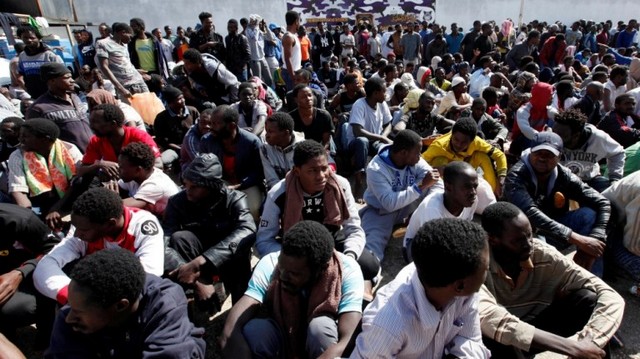
Within Myanmar, the Rohingya people are an oppressed ethnic group of approximately 1 million people. A majority of Rohingya are Muslim, though they make up less than half of Myanmar’s Muslim population, which is scattered throughout the mostly Buddhist country.

The Rohingya are considered stateless. They live in the state of Rakhine, on the Bay of Bengal, and share a long border with Bangladesh.

In articles on Myanmar and the Rohingya, Reuters News (Dec. 16, 2016), Chicago Tribune (Aug. 31), Wall Street Journal (Sept. 13) and the think tank Center for Strategic and International Studies (Sept. 7), all reported Saudi support for the Rohingya struggle.

The group carrying out armed resistance in Myanmar, known as Harakah al-Yaqin (HaY, Faith Movement in Arabic) and now called the Arakan Rohingya Salvation Army, is headquartered in Mecca, Saudi Arabia. Ataullah abu Ammar Junjuni, a Pakistani national who lived in Saudi Arabia, is the leader of ARSA. This group led a coordinated attack on 30 Myanmar military posts on Aug. 25.

The Myanmar military responded with a wave of repressive attacks on the Rohingya that drove tens of thousands of people over the border.

U.S./Saudi crimes in Yemen

Meanwhile, the Saudi kingdom is carrying out a genocidal war on Yemen, enforcing a blockade of food and aid against the poorest country in Southwest Asia. This war is only possible using U.S.-made jet aircraft and bombs. The Saudi military cannot fly its own jet aircraft or carry out bombing runs without direct U.S. assistance and in-air refueling. In addition, the Pentagon is now carrying out at least one covert strike every two days in Yemen.

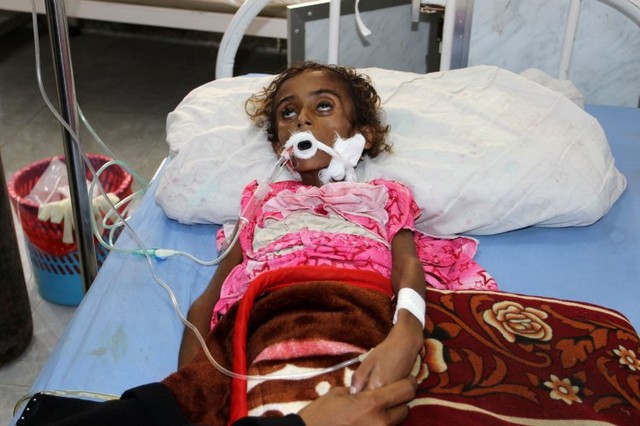
Yemen is caught in “the world’s largest hunger crisis,” which is “man-made” and is starving “an entire generation.” (Washington Post, May 19)  According to U.N. figures, more than 7 million Yemenis are close to famine.

The World Health Organization has warned of “the worst cholera outbreak in the world” in Yemen. (CNN, Oct. 4) The U.N. counted 777,229 cholera cases as of Oct. 2, many of them in children.

Saudi bombing of sanitation and sewage infrastructure in this impoverished country is a major cause of the deadly epidemic. Yet this desperate crisis was not on the U.N.’s agenda, and is barely mentioned in the media as world leaders met in New York in September. The media focus was on Trump’s talk of aiding the Rohingya.

The U.S. State Department has pledged to provide “emergency shelter, food security, nutritional assistance, health assistance, psychosocial support, water, sanitation and hygiene, livelihoods, social inclusion, non-food items, disaster and crisis risk reduction, restoring family links, and protection to over 400,000 displaced persons in Burma and in Bangladesh.”

Remember that the U.S. military is engaged in bombing, drone attacks, targeted assassinations and starvation sanctions against at least eight Muslim countries on any given day: Syria, Libya, Yemen, Iraq, Afghanistan, Pakistan, Somalia and Sudan.

The Kingdom of Saudi Arabia provides no rights for any of the peoples living within its borders. Minority religious communities and millions of immigrant workers, even after living there for generations, are not counted as citizens. Its vast oil wealth is owned by one family: the House of Saud.

Saudi Arabia has played its reactionary role by funding extremist groups, often with the quiet support of the U.S., in Afghanistan, Syria and across the Middle East. Increasingly in South Asia, Saudi-influenced political and religious extremism is having an impact.

Saudi Arabia spends over $1 billion to fund 560 Wahhabi mosques and Islamic centers in Bangladesh, which borders  Myanmar. This means a new center of reaction in almost every village and town in Bangladesh. Similar funding has been long underway in India and Pakistan.

U.S. pivot to Asia

U.S. and Saudi support for the Muslim Rohingya is based on the U.S. declared “pivot to Asia.” For U.S. strategists, it is a way to block Chinese influence in a strategic region.

Eighty percent of China’s needed oil and much of its trade passes through the Malacca Straits — a narrow choke-point between Indonesia and Singapore — and into the increasingly tense South China Sea. U.S. aircraft carrier battle groups stationed there could easily blockade this movement of needed resources.

To counter U.S. aggressive moves, China’s development programs are aimed at diversifying and finding ways around a direct confrontation with U.S. military power.

China is building a deep-sea port, industrial park, and gas and oil pipelines at Kyauk Pyu in Myanmar on the Bay of Bengal. This would provide China with an alternative route for energy imports from the Middle East that avoids the Malacca Straits. The multibillion-dollar construction project is also enormously beneficial to Myanmar’s economy, aiding development of its gas fields. U.S. and Saudi intervention in the escalating Rahingya struggle threatens this development project.

There is no region in the developing world, whether in Asia, Africa or Latin America, where U.S. imperialism, in its present stage of decay, plans to assist desperately needed economic development. The U.S. economy is geared to super-profits through war, weapons sales and onerous debt. U.S. imperialism can only continue its domination by disrupting the development of any potential competitors or economic bloc of competitors.

Divide-and-rule tactics

By consciously supporting and inflaming both sides of a national struggle, the cynical Western imperialist powers are employing a longtime divide-and-rule tactic meant to dominate a whole region by becoming the outside arbiter.

U.S. imperialists have done this in many international crises. In Iraq, the U.S. built bases in the Kurdish region while claiming to support the unity of the Iraqi state. Playing on this division has strengthened the ruinous involvement of the Pentagon in the region.

In the Philippines a sudden insurgency of a minority Muslim population on the island of Mindanao has become the latest excuse for the U.S. to offer joint training and stationing of its troops there.

Myanmar refugee camps in Bangladesh may become recruitment areas for the Islamic State group (ISIS) and staging grounds for future interventions, said Forbes, a magazine about corporate finance, last July 11.

Pentagon plans for expanded intervention, coordinated with Saudi organization and funding, can be seen in this warning by the Center for Strategic and International Studies:

“There is legitimate concern that the violence will attract outside forces. Now that thousands of battle-hardened, ISIS-affiliated foreign fighters are seeking new missions beyond a shrinking Islamic State in Syria and Iraq, new opportunities to defend Muslims will inevitably appeal to them.” (Sept. 7)

All the countries of the region, including Bangladesh, Myanmar and China, have every interest in a peaceful reconciliation for the Rohingya people. The region needs coordinated development, not the enormous disruption of war.

This article was originally published by Workers World.

Source: https://www.globalresearch.ca/why-u-s-and-saudi-arabia-back-rohingya-in-myanmar/5613015

The Las Vegas Massacre: The Media Narrative is Deceptive

By Edward Curtin

“Cram them full of non-combustible data, chock them so damned full of ‘facts’ they feel stuffed, but absolutely brilliant with information. Then they’ll feel they’re thinking, they’ll get a sense of motion without moving.” –
Ray Bradbury, Fahrenheit 451, 1951

“It is not only information that they need-in the age of Fact, information often dominates their attention and overwhelms their capacities to assimilate it….What they need , and what they feel they need , is a quality of mind that will help them to use information and to develop reason in order to achieve lucid summations of what is going on in the world and of what may be happening within themselves.” – C. Wright Mills, The Sociological Imagination, 1959

The main stream media’s (MSM) ongoing narrative of the massacre in Las Vegas is clearly deceptive. This is nothing new. That is their modus operandi. Overwhelm people with a glut of information about a terrible tragedy and all becomes clear to people sick-at-heart over the deaths and injuries to innocent people. But it’s a false clarity engendered to confuse. Tell the story big and loud, and tell it repetitively from different angles, and it becomes hard to think straight, especially with the addition of all the sad stories of the innocent victims’ deaths and injuries. Who can forget the false official narrative that was spun amid the grief for all the innocent victims of the attacks of September 11, 2001. Few could think straight at the time.

The MSM tells us in detail about Stephen Paddock’s gambling life, his houses and real estate dealings, how much he paid for them, his gun collection numbering 47, including all those in his hotel room (23), the alleged exact number of rounds he had in his car (1,600), how he shot from his hotel room windows, etc. We are told what his brother and girlfriend say about him: they are shocked; he was just a regular guy; they can’t explain it. We are told how he got the room gratis, how long he stayed there, and that he was planning to escape (they say this with a straight face). Told how many people died (59) and how many were injured (527), we remember these numbers vaguely, especially the latter. A regular person just feels overwhelmed by all the information, the numbers; saddened and depressed for all the victims, and more afraid.

What the media do not say is that there is video and witness evidence that there were at least two more shooters, maybe more, one from a lower floor and another at the Bellagio Hotel that was locked down. This means that there was a conspiracy involved. They don’t mention this so that someone like me can do so and be branded a “conspiracy theorist,” the term created by the CIA to besmirch anyone questioning the official narrative of the JFK assassination.  You will notice that I am not – purposefully – linking to this evidence that I assert exists, nor am I raising more of the many questions surrounding this case. I am hoping that readers will research these matters themselves, and if they discover that there is evidence proving that there was more than one shooter, then, just as with the magic bullet absurdity in the JFK case, they will conclude, ipso facto, that the MSM are involved in a cover-up of a conspiracy, which is itself a conspiracy – a  factual conspiracy, not a conspiracy theory. And if that is so, they will ask why, and who is being protected. Cui bono? Why would the MSM push this narrative of the lonely crazed gunman?

People need to realize that they must be immediately skeptical of such official narratives and do their own research, and they will learn that there are excellent alternative websites that are doing real journalism and are seeking truth for truth’s sake.

While this brief article is not a “lucid summation,” as Mills suggested we need, I offer it as a concise provocation to anyone reading this to develop their own sociological imaginations to achieve such lucidity at a time when propaganda is king and the pawns are being swept off the devil’s chessboard.

One might end up asking: Who’s the devil? And answering their own question?

Edward Curtin is a writer whose work has appeared widely.  He teaches sociology at Massachusetts College of Liberal Arts. His website is http://edwardcurtin.com

Source: https://www.globalresearch.ca/the-las-vegas-massacre-the-media-narrative-is-deceptive/5612247

The Psychology of Mass Killers: What Causes It? How Can You Prevent It?

By Robert J. Burrowes

In Las Vegas on 1 October 2017, it appears that one man (although it might have been more) killed 59 people and shot and injured another 241 (with almost 300 more injured while fleeing). The incident got a lot of publicity, partly because the man managed to kill more people than most mass killers. However, because the killer was a white American and had a Christian name, he was not immediately labeled a terrorist, even though his death toll considerably exceeded that achieved in many ‘terrorist attacks’, including those that occur in war zones (such as US drone murders of innocent people attending weddings)

According to the Gun Violence Archive, there is now an average of one mass shooting (arbitrarily defined by the FBI as a shooting in which at least four victims are shot) each day in the USA. By any measure, this is a national crisis.

However, while there has been a flood of commentary on the incident, including suggestions about what might be done in response based on a variety of analyses of the cause, none that I have read explain the underlying cause of all these mass killings. And if we do not understand this, then any other suggestions, whatever their apparent merits, can have little impact.

The suggestions made so far in response to this massacre include the following:

1. Making it much more difficult, perhaps even illegal, to own a gun. See ‘Guns’.

2. Drastically reducing the prescription of pharmaceutical drugs (which are almost invariably being consumed by the killer). See ‘Drugs and Guns Don’t Mix: Medication Madness, Military Madness and the Las Vegas Mass Shooting’.

3. Recognising and addressing the sociological factors implicated in causing the violence. See ‘violence is driven by socioeconomic factors, not access to firearms’ argued in ‘Another Mass Shooting, Another Grab for Guns: 6 Gun Facts’ and ‘a deep sickness in American society’ argued in ‘The social pathology of the Las Vegas Massacre’.

4. Identifying whether or not the killer had ideological/religious links to a terrorist group (in this case ISIS, as claimed by some). See, for example, ‘ISIS Releases Infographic Claiming Las Vegas Gunman Converted 6 Months Ago’.

5. Identifying and remedying the ways in which constitutional provisions and laws facilitate such massacres. See ‘Las Vegas Massacre Proves 2nd Amendment Must be Abolished’.

6. Recognizing the way in which these incidents are encouraged by national elites and are sometimes, in fact, false flag attacks used as a means to justify the consolidation of elite social control (through such measures as increased state surveillance and new restrictions on human rights).

7. Limiting the ways in which violence, especially military violence, is used as entertainment and education, and thus culturally glorified in ways that encourage imitation. See ‘People Don’t Kill People, Americans Kill People’.

However, as indicated above, while these and other suggestions, including certain educational initiatives, sound attractive as options for possibly preventing/mitigating some incidents in future, they do not address the cause of violence in this or any other context and so widespread violence both in the United States and around the world will continue.

So why does someone become a mass killer?

Human socialization is essentially a process of inflicting phenomenal violence on children until they think and behave as the key adults – particularly their parents, teachers and religious figures – around them want, irrespective of the functionality of this thought and behavior in evolutionary terms. This is because virtually all adults prioritize obedience over all other possible behaviors and they delusionarily believe that they ‘know better’ than the child.

The idea that each child is the only one of their kind in all of living creation in Earth’s history and, therefore, has a unique destiny to fulfill, never even enters their mind. So, instead of nurturing that unique destiny so that the child fully becomes the unique Self that evolution created, adults terrorize each child into becoming just another more-or-less identical cog in the giant machine called ‘human society’.

Before I go any further, you might wonder if the expression ‘phenomenal violence?’ isn’t too strong. So let me explain.

From the moment of birth, human adults inflict violence on the child. This violence occurs in three categories: visible, ‘invisible’ and ‘utterly invisible’. Visible violence is readily identified: it is the (usually) physical violence that occurs when someone is hit (with a hand or weapon), kicked, shaken, held down or punished in any other way. See ‘Punishment is Violent and Counterproductive’.

But what is this ‘invisible’ and ‘utterly invisible’ violence that is inflicted on us mercilessly, and has a profoundly damaging impact, from the day we are born?

In essence, ‘invisible’ violence is the ‘little things’ we do every day, partly because we are just ‘too busy’. For example, when we do not allow time to listen to, and value, a child’s thoughts and feelings, the child learns to not listen to themselves thus destroying their internal communication system. When we do not let a child say what they want (or ignore them when they do), the child develops communication and behavioural dysfunctionalities as they keep trying to meet their own needs (which, as a basic survival strategy, they are genetically programmed to do).

When we blame, condemn, insult, mock, embarrass, shame, humiliate, taunt, goad, guilt-trip, deceive, lie to, bribe, blackmail, moralize with and/or judge a child, we both undermine their sense of Self-worth and teach them to blame, condemn, insult, mock, embarrass, shame, humiliate, taunt, goad, guilt-trip, deceive, lie, bribe, blackmail, moralize and/or judge.

The fundamental outcome of being bombarded throughout their childhood by this ‘invisible’ violence is that the child is utterly overwhelmed by feelings of fear, pain, anger and sadness (among many others). However, parents, teachers and other adults also actively interfere with the expression of these feelings and the behavioural responses that are naturally generated by them and it is this ‘utterly invisible’ violence that explains why the dysfunctional behavioural outcomes actually occur.

For example, by ignoring a child when they express their feelings, by comforting, reassuring or distracting a child when they express their feelings, by laughing at or ridiculing their feelings, by terrorizing a child into not expressing their feelings (e.g. by screaming at them when they cry or get angry), and/or by violently controlling a behaviour that is generated by their feelings (e.g. by hitting them, restraining them or locking them into a room), the child has no choice but to unconsciously suppress their awareness of these feelings.

However, once a child has been terrorized into suppressing their awareness of their feelings (rather than being allowed to have their feelings and to act on them) the child has also unconsciously suppressed their awareness of the reality that caused these feelings. This has many outcomes that are disastrous for the individual, for society and for nature because the individual will now easily suppress their awareness of the feelings that would tell them how to act most functionally in any given circumstance and they will progressively acquire a phenomenal variety of dysfunctional behaviours, including many that are violent towards themselves, others and/or the Earth.

Moreover, this emotional (or psychological) damage will lead to a unique combination of violent behaviours in each case and, depending on the precise combination of violence to which they are subjected, some of them will become what I call ‘archetype perpetrators of violence’; that is, people so emotionally damaged that they end up completely devoid of a Self and with a psychological profile similar to Hitler’s.

These archetype perpetrators of violence are all terrified, self-hating and powerless but, in fact, they have 23 identifiable psychological characteristics constituting their ‘personality’.For a full explanation of this particular psychological profile, see ‘Why Violence?’and ‘Fearless Psychology and Fearful Psychology: Principles and Practice’.Of course, few perpetrators of violence fit the archetype, but all perpetrators are full of (suppressed) terror, self-hatred and powerlessness and this is fundamental to understanding their violence as explained in ‘Why Violence?’

Rather than elaborate further in this article why these perpetrators behave as they do (which you can read on the documents just mentioned), let me explain why the suggestions made by others above in relation to gun and drug control, socioeconomic factors, ideological/religious connections, constitutional and legal shortcomings, resisting efforts to consolidate elite social control, and revised education and entertainment programs can have little impact if undertaken in isolation from the primary suggestion I will make below.

Once someone is so emotionally damaged that they are effectively devoid of the Self that should have defined their unique personality, then they will be the endless victim of whatever violence is directed at them. This simply means that they will have negligible capacity to deal powerfully with any difficult life circumstances and personal problems (and, for example, to resist doctors prescribing pharmaceutical drugs), they will be gullibly influenced by violent ideologies, education and entertainment, and they will have virtually no capacity to work creatively to resolve the conflicts (both personal and structural) in their life but will do what was modeled to them as a child in any effort to do so: use violence.

And by now you have probably realized that I am not just talking about the mass killers that I started discussing at the beginning of this article. I am also talking about the real mass killers: those politicians, military leaders and weapons corporation executives, and all those other corporate executives, who inflict mass violence on life itself, as well as those others, such as academics and those working in corporate media outlets, that support and justify this violence. This includes, to specify just one obvious example, all of those US Senators and Congresspeople who resist implementing gun control laws. See ‘Thoughts and Prayers and N.R.A. Funding’.

In essence then, if the child suffers enough of this visible, invisible and utterly invisible violence, they will grow up devoid of the Selfhood – including the love, compassion, empathy, morality and integrity – that is their birthright and the foundation of their capacity to behave powerfully in all contexts without the use of violence.

Instead, they will become a perpetrator of violence, to a greater or lesser extent, and may even seek employment in those positions that encourage them to support and/or inflict violence legally, such as a police or prison officer, a lawyer or judge – see ‘The Rule of Law: Unjust and Violent’– a soldier who fights in war or a Congressperson who supports it, or even an employee in a corporation that profits from violence and exploitation. See ‘Profit Maximization is Easy: Invest in Violence’.

In addition, most individuals will inflict violence on the climate and environment, all will inflict violence on children, and some will inflict violence in those few ways that are actually defined as ‘illegal’, such as mass killings.

But if we don’t see the mass killers as the logical, if occasional, outcome of (unconsciously) violent parenting, then we will never even begin to address the problem at its source. And we are condemned to suffer violence, in all of its manifestations, until we inevitably drive ourselves to extinction through nuclear war or climate/environmental collapse.

If you are looking for a lead on this from political leaders, you are wasting your time. Similarly, there are precious few professionals, particularly in the medical and psychiatric industries – see ‘Defeating the Violence of Psychiatry’ – who have any idea how to respond meaningfully (assuming they even have an interest in doing so). So why not be your own judge and consider making ‘My Promise to Children’?

In addition, if further reducing the violence in our world appeals to you, then you are also welcome to consider participating in the creation of communities that do not have violence built into them – see ‘The Flame Tree Project to Save Life on Earth’– signing the online pledge of ‘The People’s Charter to Create a Nonviolent World’ and/or consider using the strategic framework on one or the other of these two websites for your campaign to end violence in one context or another: Nonviolent Campaign Strategy and Nonviolent Defense/Liberation Strategy.

In summary then: For the typical human adult, it is better to endlessly inflict violence on a child to coerce them to obey. Of course, once the child has been terrorized into this unthinking obedience, they won’t just obey the parents and teachers (secular and religious) who terrorized them: they will also obey anyone else who orders them to do something. This will include governments, military officers and terrorist leaders who order them to kill (or pay taxes to kill) people they do not know in foreign countries, employers who order them to submit to the exploitation of themselves and others, not to mention a vast array of other influences (particularly corporations) who will have little trouble manipulating them into behaving unethically and without question (even regarding consumer purchases).

Or, to put it another way: For the typical human adult, it is better to endlessly inflict violence on a child to coerce them to obey and to then watch the end-products of this violence – obedient, submissive children who are powerless to question their parents and teachers, resist the entreaties of drug pushers, and critique the propaganda of governments, corporations and the military as well as the media, education and entertainment industries – spiral endlessly out of control: wars, massive exploitation, ecological destruction, slavery, mass killings…. And to then wonder ‘Why?’

For these terrorized humans, cowardly powerlessness is the state they have been trained to accept, while taking whatever material distractions are thrown their way as compensation. So they pass on this state to their children by terrorizing them into submission too. Powerfully accepting responsibility to fulfill their own unique destiny, and serve society by doing so, is beyond them.

The great tragedy of human life is that virtually no-one values the awesome power of the individual Self with an integrated mind (that is, a mind in which memory, thoughts, feelings, sensing, conscience and other functions work together in an integrated way) because this individual will be decisive in choosing life-enhancing behavioural options (including those at variance with social laws and norms) and will fearlessly resist all efforts to control or coerce them with violence.

Robert J. Burrowes has a lifetime commitment to understanding and ending human violence. He has done extensive research since 1966 in an effort to understand why human beings are violent and has been a nonviolent activist since 1981. He is the author of ‘Why Violence?’ His email address is flametree@riseup.net and his website is here.

Source: https://www.globalresearch.ca/the-psychology-of-mass-killers-what-causes-it-how-can-you-prevent-it/5612861

The Balfour Declaration Destroyed Palestine, Not The Palestinian People

By Dr Ramzy Baroud

Some promises are made and kept; others disavowed. But the ‘promise’ made by Arthur James Balfour in what became known as the ‘Balfour Declaration’ to the leaders of the Zionist Jewish community in Britain one hundred years ago, was only honored in part: it established a state for the Jews and attempted to destroy the Palestinian nation.

In fact, Balfour, the foreign Secretary of Britain at the time his declaration of 84 words was pronounced on November 2, 1917, was, like many of his peers, anti-Semitic. He cared little about the fate of Jewish communities. His commitment to establishing a Jewish state in a land that was already populated by a thriving and historically-rooted nation was only meant to enlist the support of wealthy Zionist leaders in Britain’s massive military buildup during World War I.

Whether Balfour knew it or not, the extent to which his short statement to the leader of the Jewish community in Britain, Walter Rothschild, would uproot a whole nation from their ancestral homes and continue to devastate several generations of Palestinians decades later, is moot. In fact, judging by the strong support his descendants continue to exhibit towards Israel, one would guess that he, too, would have been ‘proud’ of Israel, oblivious to the tragic fate of the Palestinians.

This is what he penned down a century ago:

“His Majesty’s government views with favor the establishment in Palestine of a national home for the Jewish people, and will use their best endeavors to facilitate the achievement of this object, it being clearly understood that nothing shall be done which may prejudice the civil and religious rights of existing non-Jewish communities in Palestine, or the rights and political status enjoyed by Jews in any other country. I should be grateful if you would bring this declaration to the knowledge of the Zionist Federation.”

Speaking recently at New York University, Palestinian professor Rashid Khalidi described the British commitment, then, as an event that “marked the beginning of a century-long colonial war in Palestine, supported by an array of outside powers which continues to this day.”

But oftentimes, generalized, academic language and refined political analysis, even if accurate, masks the true extent of tragedies as expressed in the lives of ordinary people.

As Balfour finished writing down his infamous words, he must have been consumed with how effective his political tactic would be in enlisting Zionists to join Britain’s military adventures, in exchange for a piece of land that was still under the control of the Ottoman Empire.

Yet, he clearly had no genuine regard for the millions of Palestinian Arabs – Muslims and Christians alike – who were to suffer the cruelty of war, ethnic cleansing, racism and humiliation over the course of a century.

The Balfour Declaration was equivalent to a decree calling for the annihilation of the Palestinian people. Not one Palestinian, anywhere, remained completely immune from the harm invited by Balfour and his government.

Tamam Nassar, now 75 years old, was one of millions of Palestinians whose life Balfour scarred forever. She was uprooted from her village of Joulis in southern Palestine, in 1948. She was only five.

Tamam, now lives with her children and grandchildren in the Nuseirat Refugee Camp in Gaza. Ailing under the weight of harsh years, and weary by a never-ending episode of war, siege and poverty, she holds on to a few hazy memories of a past that can never be redeemed.

Little does she know that a man by the name of Arthur James Balfour had sealed the fate of the Nassar family for many generations, condemning them to a life of perpetual desolation.

I spoke to Tamam, also known as Umm Marwan (mother of Marwan), as part of an attempt to document the Palestinian past through the personal memories of ordinary people.

By the time she was born, the British had already colonized Palestine for decades, starting only months after Balfour signed his declaration.

The few memories peeking through the naïveté of her innocence were largely about racing after British military convoys, pleading for candy.

Back then, Tamam did not encounter Jews or, perhaps, she did. But since many Palestinian Jews looked just like Palestinian Arabs, she could not tell the difference or even care to make the distinction. People were just people. Jews were their neighbors in Joulis, and that was all that mattered.

Although the Palestinian Jews lived behind walls, fences and trenches, for a while they walked freely among the fellahin (peasants), shopped in their markets and sought their help, for only the fellahin knew how to speak the language of the land and decode the signs of the seasons.

Tamam’s house was made of hardened mud, and had a small front yard, where the little girl and her brothers were often confined when the military convoys roamed their village. Soon, this would happen more and more frequently and the candy that once sweetened the lives of the children, was no longer offered.

Then, there was the war that changed everything. That was in 1948. The battle around Joulis crept up all too quickly and showed little mercy. Some of the fellahin, who ventured out beyond the borders of the village, were never seen again.

The battle of Joulis was short-lived. Poor peasants with kitchen knives and a few old rifles were no match for advanced armies. British soldiers pulled out from the outskirts of Joulis to allow Zionist militias to stage their attack, and the villagers were chased out after a brief but bloody battle.

Tamam, her brothers and parents were chased out of Joulis, as well, never to see their beloved village again. They moved about in refugee camps around Gaza, before settling permanently in Nuseirat. Their tent was eventually replaced by a mud house.

In Gaza, Tamam experienced many wars, bombing campaigns, sieges and every warfare tactic Israel could possibly muster. Her resolve is only weakened by the frailty of her aging body, and the entrenched sadness over the untimely deaths of her brother, Salim, and her young son, Kamal.

Salim was killed by the Israeli army as he attempted to escape Gaza following the war and brief Israeli invasion of the Strip in 1956, and Kamal died as a result of health complications resulting from torture in Israeli prisons.

If Balfour was keen to ensure “nothing shall be done which may prejudice the civil and religious rights of existing non-Jewish communities in Palestine,” why is it, then, that the British government remains committed to Israel after all of these years?

Isn’t a century since that declaration was made, 70 years of Palestinian exile, 50 years of Israeli military occupation all sufficient proof that Israel has no respect for international law and Palestinian human, civil and religious rights?

As she grew older, Tamam began returning to Joulis in her mind, more often seeking a fleetingly happy memory, and a moment of solace. Life under siege in Gaza is too hard, especially for old people like her, struggling with multiple ailments and broken hearts.

The attitude of the current British government, which is gearing up for a massive celebration to commemorate the centennial of the Balfour Declaration suggests that nothing has changed and that no lessons were ever learned in the 100 years since Balfour made his ominous promise to establish a Jewish state at the expense of Palestinians.

But this also rings true for the Palestinian people. Their commitment to fight for freedom, also remains unchanged and, neither Balfour nor all of Britain’s foreign secretaries since then, have managed to break the will of the Palestinian nation.

That, too, is worth pondering upon.

– Ramzy Baroud is a journalist, author and editor of Palestine Chronicle. His forthcoming book is ‘The Last Earth: A Palestinian Story’ (Pluto Press, London). Baroud has a Ph.D. in Palestine Studies from the University of Exeter and is a Non-Resident Scholar at Orfalea Center for Global and International Studies, University of California Santa Barbara. His website is www.ramzybaroud.net.

Source: http://www.countercurrents.org/2017/10/10/the-balfour-declaration-destroyed-palestine-not-the-palestinian-people/

Yasmeen: A Dead Kashmiri Embroiderer!!

By Basharat Shameem

Her name was Yasmeen which in Persian is the name of a famous flower known for its beauty and fragrance. She indeed was beautiful or maybe still is; her long dark hair as smooth as a heavenly fabric, her eyes beautifully dark and her face as fair as Jasmine which her name alluded to. And she was just a twenty one years old girl. In the small township of DH Pora where she lived, besides her beauty and amiable disposition, she was also noted for her deft tila kaem(needle work or embroidery) on pherans. She would often help out her family in apple orchards and paddy fields like the young girls of peasant families do in rural Kashmir. But what stood apart in her was her fascination for tila kaem. It was more than a hobby for her; it was something in which she had immersed herself fully and dedicated her life to it. She had produced magnificent embroidery work on pherans which women would wear with so much of enthusiasm. Not only from DH Pora, women of different age groups from neighboring localities would prefer her tila kaem on their pherans. The dextrity of her delicate fingers had just become some talking point among the women of her area. She had also a younger brother named Burhan whom she loved very much. In fact, her life, one could say, alternated between her love for tila kaem and her younger brother. Burhan was some eight years younger to her.

In her own compressed world, Yasmeen had dreams, desires and aspirations like anyone else, but none knows if she still carries them in the world where she now resides. Her dream was to become the most famous embroiderer of her valley which is indeed renowned for its crafts. She wanted to go ahead in her life pursuing her dreams and translating them into the reality of tomorrow. She wanted to make her family proud. But little did she know that something else was stored for her. In her complacent but happy life, she knew little that destiny would dash her dreams with its cruel arrows.

Often she would be so innured to her work that she had hardly an idea of what was happening outside—in the turbulent politics of her state, in the streets of valley, in India or in Pakistan. She had not idea about what a freedom struggle is like. But sometimes, many things strike you for the first time and you are forced to respond so fast and abrupt even to your own surprise. Something terrible had happened on the evening of the 8th July, 2017 in valley and a state of commotion had been unleashed. She left her usual work and began curiously enquiring about what had transpired. And once she came to know through her friends and neighbours, she was enraged, shocked and scared like them. Because things were really getting bad; the news of more dead boys started coming.

Till that fateful day, she had absolutely no idea about one certain Burhan Wani. For the first time in her life, she began to have fears. Yasmeen couldn’t believe that all this was happening so fast, but as was the case, it was indeed happening so fast in the real time. She had never heard of Burhan Wani before. She had never watched his videos on Facebook. But now when she had heard about him, she was moved by his story in how he had been forced to become what he was.
But soon her thoughts and feelings diverted to her sudden new found fears. Something very terrible lurked in her heart and mind as the tragic news started coming one after one of dead and blinded youth. Like everyone else in her family, her Mohalla, her town and her valley, that night she could not sleep. Suddenly, she began to fear about her compressed world. In the dreadful gust that had suddenly overtaken valley, she feared for herself, her dreams, her embroidery, her brother, her family and everyone else she could think of.

When that long and dreary night passed, she had hoped for the dawn to bring with it some peace, some relief and some end to the bloodshed which had blotted the previous moonlit midsummer evening and night. She prayed early to her Lord for peace and well being of all:

“O God, O our Master!
You Have eternal life and Everlasting peace by your essence and attributes.
The everlasting peace is from you And it returns to you, O our Sustainer!
Grant us the life of True peace and usher us into The abode of peace.
O Glorious and Bounteous One!
You are blessed and sublime!!”

She hoped and prayed for peace, but deep down inside her heart, she couldn’t do away with a certain uneasiness which had troubled her throughout the night. She simply couldn’t unburden it. She closed her eyes and hoped for the best.

Some couple of hours later, she heard intense sloganeering on the street which was some fifty metres away from her house. But in the midst of the echoes of loud slogans, she also heard of something very dreadful–which she had hoped and prayed should never happen–intense tear gas shelling followed by non-stop firing of live bullets.

She heard cries and slogans getting shriller and shriller with each bullets as the terrible sounds of live bullet firing subdued every other sound around. Suddenly, she found her brother Burhan was not around. She feared if he was among the slogan shouting crowd. Amidst the ongoing firing on the street, she went out of her house running and screaming loudly, “Burhan, where are you? Come back, mother is waiting for you, she is worried!! ” She found no response from any of the corners in the alley outside her house. She shouted, shouted and shouted, but again there was no response. She started beating her chest and again ran towards the street screaming, “Burhan, lagya balai maiyne baya, cze kati chukh (Love you my brother, where are you??), Burhan, come back, we are waiting for you?? ” She kept screaming until she reached on the edge of the street where she saw few young boys lying in a pool of blood, breathing their last and perhaps, crying for a few drops of water!! Seeing all this and thinking of her brother, like a lunatic, she screamed and screamed with a high pitch until one loud scream and bang brought her down into the drain just next to the street where she was standing and shouting for her brother. She had just been hit by a volley of bullets and her head had been smashed to smithereens along with her dreams, hopes, prayers and her deft tila kaem. That afternoon the brother did come back only to find her sister in a white shroud with her broken skull but still with the Jasmine like beauty and fragrance reflecting from her face. The brother was left to scream, ” Thrath ha peyi ho(Horror has struck us)… Yasmeen, my beloved sister, where did you go? Please, come back, mother is waiting for you!!
Thrath ha peyi ho(Horror has struck us!!) ”

And horror it was indeed!! And horror it is indeed!!
Basharat Shameem, Youth activist, writer, Kulgam, J & K

Source; http://www.countercurrents.org/2017/10/08/yasmeen-a-dead-kashmiri-embroiderer/

Why Are Washington’s Allies Getting Cozy To Moscow?

By Nauman Sadiq

Turkey, which has the second largest army in NATO, has been cooperating with Russia in Syria against Washington’s interests since last year and has recently placed an order for the Russian-made S-400 missile system.

Similarly, the Saudi King Salman, who is on a landmark state visit to Moscow, has signed several cooperation agreements with Kremlin and has also expressed his willingness to buy S-400 missile system.

Another traditional ally of Washington in the region, Pakistan, has agreed to build a 600 mega-watt power project with Moscow’s assistance, has bought Russian helicopters and defense equipment and has held joint military exercises with Kremlin.

All three countries have been steadfast US allies since the times of the Cold War, or rather, to put it bluntly, the political establishments of these countries have acted as virtual proxies of Washington in the region and had played an important role in the collapse of the former Soviet Union in 1991.

In order to understand the significance of relationship between Washington and Ankara, which is a NATO member, bear in mind that the United States has been conducting air strikes against targets in Syria from the Incirlik airbase and around fifty American B-61 hydrogen bombs have also been deployed there, whose safety became a matter of real concern during the failed July 2016 coup plot against the Erdogan administration; when the commander of the Incirlik airbase, General Bekir Ercan Van, along with nine other officers were arrested for supporting the coup; movement in and out of the base was denied, power supply was cut off and the security threat level was raised to the highest state of alert, according to a report [1] by Eric Schlosser for the New Yorker.

Similarly, in order to grasp the nature of principal-agent relationship between the United States on the one hand and Saudi Arabia and Pakistan on the other, keep in mind that Washington used Gulf’s petro-dollars and Islamabad’s intelligence agencies to nurture jihadists against the former Soviet Union during the Cold War.

It is an irrefutable fact that the United States sponsors militants, but only for a limited period of time in order to achieve certain policy objectives. For instance: the United States nurtured the Afghan jihadists during the Cold War against the former Soviet Union from 1979 to 1988, but after the signing of the Geneva Accords and consequent withdrawal of Soviet troops from Afghanistan, the United States withdrew its support to the Afghan jihadists.

Similarly, the United States lent its support to the militants during the Libyan and Syrian civil wars, but after achieving the policy objectives of toppling the Arab nationalist Gaddafi regime in Libya and weakening the anti-Israel Assad regime in Syria, the United States relinquished its blanket support to the militants and eventually declared a war against a faction of Sunni militants battling the Syrian government, the Islamic State, when the latter transgressed its mandate in Syria and dared to occupy Mosul and Anbar in Iraq in early 2014.

The United States regional allies in the Middle East, however, are not as subtle and experienced in Machiavellian geopolitics. Under the misconception that alliances and enmities in international politics are permanent, the Middle Eastern autocrats keep on pursuing the same belligerent policy indefinitely as laid down by the hawks in Washington for a brief period of time in order to achieve certain strategic objectives.

For example: the security establishment of Pakistan kept pursuing the policy of training and arming the Afghan and Kashmiri jihadists throughout the eighties and nineties and right up to September 2001, even after the United States withdrew its support to the jihadists’ cause in Afghanistan during the nineties after the collapse of its erstwhile archrival, the Soviet Union.

Similarly, the Muslim Brotherhood-led government of Turkey has made the same mistake of lending indiscriminate support to the Syrian militants even after the United States partial reversal of policy in Syria and the declaration of war against the Islamic State in August 2014 in order to placate the international public opinion when the graphic images and videos of Islamic State’s brutality surfaced on the social media.

Keeping up appearances in order to maintain the façade of justice and morality is indispensable in international politics and the Western powers strictly abide by this code of conduct. Their medieval client states in the Middle East, however, are not as experienced and they often keep on pursuing the same militarist policies of training and arming the militants against their regional rivals, which are untenable in the long run in a world where pacifism has generally been accepted as one of the fundamental axioms of the modern worldview.

Regarding the recent cooperation between Moscow and Ankara in the Syrian civil war, although the proximate cause of this détente seems to be the attempted coup plot against the Erdogan administration in July last year by the supporters of the US-based preacher, Fethullah Gulen, but this surprising development also sheds light on the deeper divisions between the United States and Turkey over their respective Syria policy.

After the United States reversal of “regime change” policy in Syria in August 2014 when the Islamic State overran Mosul and Anbar in Iraq in early 2014 and threatened the capital of another steadfast American ally, Masoud Barzani’s Erbil in the oil-rich Iraqi Kurdistan, Washington has made the Kurds the centerpiece of its policy in Syria and Iraq.

Bear in mind that the conflict in Syria and Iraq is actually a three-way conflict between the Sunni Arabs, the Shi’a Arabs and the Sunni Kurds. Although after the declaration of war against a faction of Sunni Arab militants, the Islamic State, Washington has also lent its support to the Shi’a-led government in Iraq, but the Shi’a Arabs of Iraq are not the trustworthy allies of the United States because they are under the influence of Iran.

Therefore, Washington was left with no other choice than to make the Kurds the centerpiece of its policy in Syria and Iraq after a group of Sunni Arab jihadists transgressed its mandate in Syria and overran Mosul and Anbar in Iraq in early 2014 from where the United States had withdrawn its troops only a couple of years ago in December 2011.

The US-backed Syrian Democratic Forces, which are on the verge of liberating the Islamic State’s de facto capital, Raqqa, and are currently battling the jihadist group in a small pocket of the city between the stadium and a hospital, are nothing more than the Kurdish militias with a symbolic presence of mercenary Arab tribesmen in order to make them appear more representative and inclusive in outlook.

As far as the regional parties to the Syrian civil war are concerned, Saudi Arabia, Jordan and the rest of the Gulf Arab States may not have serious reservations against this close cooperation between the United States and the Kurds in Syria and Iraq, because the Gulf Arab States tend to look at the regional conflicts from the lens of the Iranian Shi’a threat.

Turkey, on the other hand, has been more wary of the separatist Kurdish tendencies in its southeast than the Iranian Shi’a threat, and particularly now after the Kurds have held a referendum for independence in Iraq despite the international pressure against such an ill-advised move.

Finally, any radical departure from the longstanding policy of providing unequivocal support to Washington’s policy in the region by the political establishment of Turkey since the times of Mustafa Kemal Ataturk is highly unlikely. But after this perfidy by Washington of lending its support to the Kurds against the Turkish proxies in Syria, it is quite plausible that the Muslim Brotherhood-led government in Turkey might try to strike a balance in its relations with the Cold War-era rivals.
Sources and links:

[1] The H Bombs in Turkey by Eric Schlosser:

http://www.newyorker.com/news/news-desk/the-h-bombs-in-turkey

Nauman Sadiq is an Islamabad-based attorney, columnist and geopolitical analyst focused on the politics of Af-Pak and Middle East regions, neocolonialism and petro-imperialism.

Source: http://www.countercurrents.org/2017/10/06/why-are-washingtons-allies-getting-cozy-to-moscow/

Living Life: But for What Purpose?

By Yoginder S. Sikand

For what purpose were you created and brought into the world?

(Sri Guru Granth Sahib 970)

************

This human body has been given to you.

This is your chance to meet the Lord of the Universe.

Nothing else will work.

Join the Company of the Holy; vibrate and meditate on the Jewel of the Divine Name.

Make every effort to cross over this terrifying world-ocean.

You are squandering this life uselessly in the love of Maya.

(Sri Guru Granth Sahib 12)

From the moment we get up in the morning till we go to sleep at night, everything we do, we do with a certain purpose in mind. We get out of bed even if we’d rather not because we don’t want to miss office or skip school. We brush our teeth because we want to keep them in good shape and we don’t like bad breath. We have our breakfast because we need the energy to work and because we don’t want to feel hungry. We smile at a friend because we want to express our warm feelings for him. We wish our boss because we want to be in her good books or because we are genuinely pleased to see her. We snap at someone because we want to express our irritation with him.  We prepare for an examination because we want to get good marks so that we can get admission in a good college. And so on. From morning to night, each one of us is busy, at every single moment, doing something or the other, and for one or more purposes. Even ‘doing nothing’—lying down in bed and staring at the ceiling, for instance—is a sort of doing, and it, too, is for a certain purpose: in order to relax and unwind or simply to experience ‘non-doing’ for a few moments for a change.

Our everyday lives can thus be seen as a vast collection of actions or doings that we engage in from moment to moment, and all of these for some purpose or the other. We could call these purposes as ‘micro-purposes’ or ‘immediate purposes’. It doesn’t require much effort for us to understand the micro-purposes behind the many actions that fill our daily existence. Often, we engage in certain actions fully aware of the purpose(s) for which we do so. If sometimes we are not sure about why we have performed a particular action, a few moments of reflection can help give us greater clarity about the issue. And sometimes when we do something for reasons that seem beyond our control and which we cannot understand, psychological counselling can help to make us aware of their underlying causes.

But besides and beyond these micro-purposes of the myriad actions of our everyday lives is something much larger—the overall or overarching purpose of our life as such. Generally speaking, while most of us are generally clear as to our purpose in engaging in a particular action in our everyday lives (for instance, reading a book in order to gain knowledge or simply to amuse ourselves), few of us have a clear idea of the macro-purpose of human life in general and our own life in particular.  Not many of us know what the grand purpose of our short stay on this planet is, especially in the backdrop of the fact that we have to die one day (this being the only thing about the future that we can be absolutely sure of).

This issue, of the macro-purpose of human life (which becomes starker when seen in the context of our inevitable death), is undoubtedly most important existential question that we could ask ourselves. And yet, how many of us ever care to think about it deeply? Many of us are so deeply engrossed in our innumerable immediate, micro-purposes of our day-to-day existence that we refuse to let our minds turn to the subject.  For some, the issue seems so baffling, forbidding and even frightening that they just don’t want to think about it. Others believe the question of the ultimate purpose of human life is simply unanswerable and hence not worth bothering about at all. And so, they waste their lives drifting from one immediate purpose to another, sometimes just to keep themselves busy and thereby maintain a semblance of sanity, till they finally drop dead.

How many parents ever discuss the issue of the macro-purpose of life with their children? Mine never did. How many of our teachers talk about the overall purpose of life with their students? Mine never did—and I happened to study at some of the supposedly best educational institutions in India and abroad. I can’t recall my ‘elders’—be it at home or at school or in the several universities I studied in—ever once broaching the subject. I think the same is true for the vast majority of the people I have known—such is the deafening silence on what is the most important question of life.

A basic prerequisite for successfully engaging in a particular action is to be clear as to the purpose for which one is doing it. If one lacks this clarity one is bound to make a mess of things. If we aren’t aware of the ultimate purpose of our life, we are likely to fritter it away on purposes other than this one, keeping ourselves busy with all sorts of things that take us away from our real purpose—so that, ultimately, our lives end in waste and failure. It is like using a book to drive away mosquitoes or to fan oneself with instead of reading it for passing an examination. But if, on the other hand, we have clarity about the overall purpose of human life, the reason why God has created us and has sent us to spend a brief time on earth—which we can derive only from authentic religious scriptures—we are more likely to spend it in the right manner, and in this way, successfully pass the examination of life, the only examination that truly matters.

6 October 2017

Buddhist community cuts festival expense to aid Rohingya refugees

By Fazlur Rahman Raju

They will donate the expenditure of the lantern festival to the Rohingya refugees

The Buddhist community in Bangladesh has declared that they will forgo parts of their festivities for Probarona Purnima, their second biggest religious festival, and donate the cost of a major event for the Rohingya refugees who have recently arrived in Bangladesh.

Community leaders announced this decision at a meeting with senior Awami League leaders at the party president’s Dhanmondi political office on Wednesday morning.

Bangladesh United Buddhists’ Forum Chief Convener Ashokh Barua said: “We will not celebrate the lantern festival this year during Probarona Purnima. The expenditure of the festival will be given to Prime Minister Sheikh Hasina to aid the refugees.”

Probarona Purnima festival, marking the end of Vassa, a three-month retreat, will be observed on October 5. Traditionally, the Buddhists celebrate the day by flying numerous paper lanterns or Fanush, among other rituals.

Earlier, the Buddhist community had announced that it will refrain from the lantern festival to protest the violence against the Rohingya in Myanmar’s Rakhine State.

The Rohingya, who are mostly Muslims, have been facing persecution in Myanmar for decades. In late August, the Myanmar military began a violent crackdown on the ethnic group, leading almost half a million to cross the border into Bangladesh.

“The government will ensure all kinds of security for the Buddhist community,” said Awami League General Secretary and Road Transport Minister Obaidul Quader, urging them not to consider themselves as a minority group in the country.

Awami League joint secretaries Mahbubul Alam Hanif, Dipu Moni, Abdur Rahman, General Secretary of the Bangladesher Samyabadi Dal Dilip Barua, and others were present at the meeting.

Source: http://www.dhakatribune.com/bangladesh/2017/10/04/buddhist-community-cuts-festival-expense-aid-rohingya-refugees/

The Mossad’s role in the Kurdish Independence movement

By Eliezer Tsafrir, Kurds

Israeli strategists have long wished to balkanize the Middle East to make it easier for Israel to dominate the region. These efforts to break up the surrounding nations into smaller units were described by Moshe Sharett in the 1950s, by Yinon Oded in the 1980s, and more recently by the neocons in the Clean Break document. (See this article for more details.)

Since dismembering Iraq has long been desired, it is no surprise to learn of Israel’s role in assisting the Kurdish independence movement.

Michael Goldfarb reports on this in the The Forward; below are excerpts:

We have no friends but the mountains,” is an old Kurdish saying.

No friends but the mountains — and Israel — is the reality. There is a deep affinity between Israel and the Kurds. Israeli Prime Minister Benjamin Netanyahu was alone among world leaders when he endorsed Kurds preparing to vote in an independence referendum.

But it was a rare public declaration of this secret closeness. Israeli-Kurdish friendship is the geopolitical love that dares not speak its name, for the Kurds would prefer it be kept quiet. Open alliance with the Jewish State remains a taboo for most countries in the Middle East. It makes it all the more ironic that Kurdistan is commonly referred to as “Yehudistan”.

….. Israel has long held a slightly different view of the Kurdish struggle for independence. In some ways, Israel’s view is pragmatic. The Middle East could do with another secular democracy.

….. Eliezer Gheizi Safrir [usually spelled Tsafrir], Mossad’s station chief in Kurdistan in the mid-1970’s [said]:

“They called me Kak Gheizi,” he said proudly. Kak or kaka means brother. It is a term of friendship. “These are good people,” says Gheizi. “They share the same values as Jews.”

But the relationship between the Kurds and Jews has a historical aspect, too. Gheizi was there at the beginning, in the mid-60’s, when Mullah Mustafa Barzani, the first leader of the modern Kurdish independence movement, flew to Israel to ask David Ben Gurion for support.

“They asked us for three machine guns and one broadcasting station,” Gheizi laughs. “That was the beginning.”

Ben-Gurion knew the relationship had to be secret. The regional sensitivities were too great; Israel’s Arab neighbors would have seen overt help to Kurds trying to break away from an Arab country as an act of aggression.

For these reasons, Ben Gurion assigned the Mossad to handle it.

Next came training of the Kurdish guerillas, the peshmerga. “We gave them a whole line of training, from small group commander to battalion commander,” Gheizi explained. “We supplied them with field cannons thanks to the generosity of Arab Armies who left us this equipment in the wars.”

But the main thing Mullah Mustafa wanted from Ben Gurion was an introduction. According to Gheizi, Barzani would tell Ben-Gurion, “Amrika, please bring Amrika to help us more.” When Barzani heard Henry Kissinger was in Israel, he called Gheizi and said, “Tell Yitzhak [Rabin] to bring him by the ear to meet us here.” But Israel was unable to deliver America.

But the history goes back much further than Ben Gurion. Jews lived in Kurdistan from the time of the destruction of the First Temple. Not all those dispersed during that catastrophe were taken to Babylon, and some ended up due north a few hundred miles in the Kurdish mountains. They remained there until the early 1950’s, when they were airlifted to Israel as post-colonial Iraq took on a determined anti-Semitic color. [This “anti-Semitic color” was helped when the Mossad bombed synagogues and made it look like this was done by Iraqi Muslims.]

….. Kurdish independence won’t happen soon, and relations with Israel will continue to be opaque. Mullah Mustafa’s son, Massoud Barzani, runs the Kurdistan Regional Government. Open acknowledgement of friendship with Israel will not help him.

Nor did it help when, two weeks ago, Turkish President Recep Tayyip Erdogan expressed his displeasure with the referendum and Netanyahu’s endorsement of it. This week, Bibi changed tactics and issued a cease and desist order to his cabinet, saying no one was to discuss the result publicly.

The love that dare not speak its name, the love that everyone in the region knows about, will continue to be pledged behind closed doors.

Source: israelpalestinenews.org

Yes, the Israel Lobby drives U.S. policies

By Jeffrey Blankfort

Excerpted from “Yes, Blame the Lobby,” published by Dissident Voice, April 11, 2006

In March 2006, the London Review of Books published “Israel Lobby and US Foreign Policy,” an article by Professors John Mearsheimer of the University of Chicago and Steven Walt, Academic Dean of the Kennedy Center at Harvard University, two nationally known academic figures with impeccable credentials. (The authors afterward wrote an even more thorough book on the same topic.)

This article, critical of the Israel lobby in the US, propelled into the mainstream an issue that had long been confined to the margins. This issue had been avoided not only by the efforts of the Israel lobby itself, but also by those on the Left who prefer to view US foreign policy as being determined by corporate elites and who had long worked to prevent public awareness of the Israel lobby and its role in driving U.S. policies.

Jeffrey Blankfort provided a detailed response to claims minimizing the role of the Israel lobby. Below are some of the facts that he provided:

Israel lobby critics do not deny US imperialism

Critics of the Israel lobby have no illusions about the evils of US imperialism that have and will continue to exist, irrespective of the lobby… Serious critics of the Israel lobby do not in any way exonerate the US from responsibility for its actions; however Middle East policies were formed under immense Israeli pressure. Israel and its lobby have pushed the US to launch policies that not in its own interest; US support for Israel has generated serious problems in the region, and has been costly in lives and money.

All presidents told Israel to end the occupation

Every US president since Richard Nixon, with the Rogers Plan in 1969, has made an effort to get Israel to withdraw from the territories it occupied in 1967, not out of any love for the Palestinians, but because Israel’s continuing occupation of those lands, from the Sinai to the Golan Heights, was creating unnecessary problems in a region where maintaining stability of the regions’ oil resources was and remains a necessity. Every one of those plans was undermined by the lobby.

Gerald Ford

In 1975, Gerald Ford, upset because Israel was refusing to disengage from areas it had taken in the Sinai during the 1973 war, halted aid to Israel and publicly let it be known that he was going to make a major speech that would call for a downsizing of US-Israel relations and demanding that Israel to return to its 1967 borders. Within three weeks, AIPAC presented Ford with a letter signed by 76 senators, from liberal Democrats to extreme right wing Republicans, warning him not to take any steps that would jeopardize Israel’s security. Ford did not make the speech.

Jimmy Carter

Ford’s successor, Jimmy Carter, was repeatedly in conflict with both Israel and the lobby. Neither wanted the Camp David treaty but Carter doggedly pushed it through, although it required a multi-billion dollar bribe to get Begin’s signature. In 1978, before the treaty went into effect, Begin invaded Lebanon, hoping, some speculated, that Egypt would react and the treaty would be nullified since Israel did not want to give up the Sinai. Carter further angered Israel and the lobby by demanding that Begin withdraw Israeli troops from Lebanon three months later.

Andrew Young – When he told Begin, publicly, to halt settlement building, the Israeli prime minister responded by announcing the start of 10 new settlements while the lobby criticized Carter for bringing up the subject. When UN Ambassador Andrew Young violated an Israeli demand and a lobby-enforced rule that prohibited US officials from meeting with the PLO, (much like the lobby imposed rule about US officials meeting with Hamas officials today), he was forced to resign. When Carter, like Ford, was considering giving a televised speech in 1979 in which he planned to outline the divergence of interests between the US and Israel and denounce Israeli intransigence on the Palestinian issue, he was warned by the lobby, as one Jewish leader put it, that he would be the first president to “risk opening the gates of anti-Semitism in America.” Carter decided not to give the speech.

Donald McHenry – There was an exception to all those US vetoes and it came during the Carter administration. In March 1980, Young’s successor, Donald McHenry, also an African-American, voted to censure Israel for its settlement policy, including Jerusalem. The lobby was outraged and Carter was forced to apologize. The last straw for the lobby was when Carter called for an international conference in Geneva to settle the Israel-Palestine question that would include the Soviet Union. It didn’t matter that he was forced to apologize for that, too. In 1980, he received 48% of the Jewish vote, the poorest showing of any Democrat since they began counting such things.

Ronald Reagan

When Israel invaded Lebanon in June 1982, both houses of Congress roared their approval, it being, after all, an election year. When the reports of the siege of Beirut were becoming too much to ignore, Reagan asked Sharon to call a halt. Sharon’s response was to bomb the city at 2:42 and 3:38 the next afternoon, those hours, coincidentally, being the numbers of the two UN resolutions calling on Israel to withdraw from the Occupied Territories. When Reagan, like Carter, also publicly called on Begin to halt settlement building, the Israeli prime minister announced the building of new settlements and sent the president a “Dear Ronnie,” letter letting him know who was making those decisions.

In Reagan’s second term, he tried again to resolve the Israel-Palestine conflict with what came to be known as the Shultz Plan, named after his Secretary of State, George Shultz. It called for an international conference to resolve the Israeli-Palestinian issue. Israeli Prime Minister Yitzhak Shamir, who had replaced Begin, was having none of it. One cartoon of the day depicted Shamir sitting in a chair, cutting up pieces of paper while Reagan and Shultz looked on. “How cute,” said Reagan, “he’s cutting up paper dolls.” “Those aren’t paper dolls,” responded Shultz. “That’s our peace plan.” Another showed Reagan and Shamir sitting in armchairs across from one another with Shamir holding a smoking gun in his hand while a dove falls from the sky. Reagan says, “You didn’t have to do that.” Shamir’s intransigence finally provoked 30 senators, including some of Israel’s biggest supporters, into sending him a letter asking him to be more cooperative. They were hardly prepared for the firestorm from the lobby that followed that sent each of them stumbling to apologize. The Shultz Plan was effectively dead.

George Bush Senior

When George H. W. Bush succeeded Reagan, he made it clear that he wanted a halt to the settlements and for Israel to get out of the OT, as well. He arranged for the Madrid Peace Conference over the objections of the obstinate Shamir, making concessions as to the composition of the Palestinian delegation to appease both Israel and the lobby. Was this conference, like the one called for by Carter, like the one planned by Reagan just a charade? Before the conference took place, Shamir asked the US for $10 billion in loan guarantees. Bush made compliance with that request contingent on Israel agreeing to halt all settlement building, its agreement not to settle any Russian immigrants in the West Bank, and to wait 120 days, to see if the first two requests had been complied with. An enraged Shamir decided to go over his head to the lobby-controlled Congress.

After receiving a letter signed by 242 members of Congress urging the swift passage of the loan guarantees, Bush realized that the Lobby had enough votes to override his threatened veto of the request. This led him to take the unprecedented step of calling a national press conference on the day when an estimated thousand Jewish lobbyists were on Capitol Hill pushing for a swift passage of Israel’s request. In the press conference, Bush denounced the arrogance of the lobby and told the American people how much aid each Israeli man, woman and child was getting from the US Treasury. The polls the next day showed that 85% of the American public was with him and a month and a half later only 44% of the public supported giving any aid to Israel at all while over 70% supported giving aid to the former Soviet Union.

AIPAC, in the face of Bush’s attack, pulled back, but then launched a steady attack against him which began to be reflected in the US media where even old friends like the NY Times columnist William Safire would eventually desert him for Bill Clinton. Under tremendous pressure and with the election approaching, Bush finally consented to the loan guarantees, but it was too late. The Lobby blamed him for Shamir having been defeated by Rabin and his goose was cooked.

Pro-Israel Neocons

It is no secret that pro-Israel Jewish neocons have been heavily involved in creating the structural adjustment policies of the World Bank and the IMF. Indeed, Paul Wolfowitz, one of the architects of the Gulf War, is now the head of the World Bank.

Starving and then invading Iraq, threatening to invade Syria, raiding and then sanctioning Libya and Iran, besieging the Palestinians and their leaders must also be blamed on the Israeli lobby and not the US government.

While it was not well known, but no secret, that the Lobby played a key role in getting the votes for the first Gulf War, the reporting of which resulted in the firing of the Washington Jewish Week’s Larry Cohler at the behest of AIPAC inductee Steve Rosen, the orchestration of the current war by a handful of Jewish Likud-connected neocons with the support of the Israel Lobby was widely reported in the mainstream press. If there was a question as to who was the chief architect, it was a choice between Richard Perle, Paul Wolfowitz, Douglas Feith, and Scooter Libby.

The “Clean Break” paper that Perle, Feith, and Meyrav Wurmser wrote for Netanyahu in 1996 called for the overthrow of Iraq, Syria and Iran, which Mearsheimer and Walt mention. The “Project for a New American Century,”  was another document drawn up by pro-Israel Jewish neocons. The Office of Special Plans, set up by Feith and run by another Jewish neocon, Abe Shulsky, was directed to provide the phony intelligence that would justify the invasion when the CIA staff was not prepared to do it. Philip Zelikow, executive director of the 9-11 commission, admitted that the war in Iraq was for “the security of Israel”: but that would have been a “hard sell” to the American people. And, as for implementing and maintaining the sanctions, the advocacy of the lobby was equally evident.

Lebanon, Iraq, Syria

In 1958, Pres. Eisenhower sent the Marines to Lebanon to prevent what was thought to be a radical nationalist move against the status quo, but the US has only invaded Arab countries twice, Kuwait in 1991, to oust the Iraqis and in 2003. The first required the assistance of the Israel lobby capped by the phony incubator story that was orchestrated by Rep. Tom Lantos, an author or co-sponsor of numerous Iraqi and Syria sanction bills and anti-Palestinian legislation. (According to the Jerusalem Post, Lantos represents Israel in countries where it has no diplomatic recognition.)

Israel and the lobby had anticipated that the Senior Bush would remove Saddam as called for in the Clean Break and when he didn’t they started criticizing him and planning for a future administration that would do the job and the record on that is very clear. AIPAC took credit for writing the anti-Syrian legislation that led to the withdrawal from Lebanon of the relatively small number of Syrian forces that were in the country and more recently the Lobby has been the only sector of US society actively calling for what is unmistakably an armed confrontation with Iran.

Weapons industry does not drive the policy

The Middle East is the only region where a stable environment is required to maintain the oil that fuels much of the world’s economy, including our own. The Middle East is also the only region where there is continued instability. The US has sought political stability, the kind of stability that provides a ready source of raw materials and an outlet for US products.

From the end of the Vietnam War to the beginning of the first Gulf War, the profits of the weapons industry continued to soar, proving that an actual shooting war was not necessary for the arms manufacturers to make windfall profits or the capitalist system to survive. Given that both US political parties are committed to what is euphemistically called “national defense,” there is no debate in Congress over the size of the military budget.

Other countries too prioritize national defense, and buy US-made weaponry, some of which may be used to quiet domestic rebellions, and some, like fighter jets, for national pride and kickbacks on both sides. It is only in the Middle East where a stable environment is required to maintain the oil that fuels much of the world’s economy, including our own, where there is continued instability, and this is the fault of Israel and its lobby.

Cuban Lobby

The Cuba lobby which is, in fact, more properly called the anti-Cuba lobby, not coincidentally, has a strong working relationship with AIPAC for their mutual benefit, but it doesn’t begin to compare with the Israel Lobby’s power although it has seen to it that Florida will stay in the Republican column. Of course, if Israel was a communist or anti-imperialist country, the Jews in the US would no doubt be like the anti-Castro Cubans, calling on the US to liberate it.

Support for Israel endangers Americans

Regarding the families of the marines, soldiers and sailors killed in the bombing of the marine barracks in Beirut in 1983, as well as American diplomats who have been targeted in the region over the years: Had Israel not invaded Lebanon, these American servicemen killed in their barracks might still be alive, as well the members of the CIA who were wiped out in an earlier bombing of the US embassy in Beirut. Furthermore, without getting into the serious questions that remain unanswered about the 9-11 attack, it has been accepted by those who believe the official narrative that US support for Israel was one of the reasons behind the attacks on the World Trade Center and the Pentagon. If the authors and others, including this writer have argued are correct, a significant portion of the responsibility for the dead and wounded on both sides in Iraq can be laid at the feet of Israel and the Israel Lobby, but the latter, in particular.

The US, as a country, is not loved or well liked anywhere except, perhaps, Israel. Much depends, of course, on an individual’s political consciousness, but most of the peoples of the world have had a love-hate relationship with the US, despising its policies but colonized by its materialism. The war on Iraq and the US voters’ re-election of Bush have put more weight in the “hate” column, and in Latin America, Bush has proved to be the most unpopular US president since they started taking polls. It is not unlikely that as the war continues and the US continues to make threats against Iran, again pressured by the Lobby, the degree of antagonism towards the US and US products is certain to increase.

Egypt

Israel has never seen the US as its master. Not a single Israeli soldier has shed a drop of blood for US interests and as Ariel Sharon said on Israeli army radio several years ago, the US knows that no Israeli soldier ever will. At the time of Israel’s attack on Egypt in 1967, France was the major arms supplier and the certain sectors of the US government were engaged with members of Egypt’s military. To describe the defeat of Nasser as a service done by Israel for the benefit of the US, is a both an oversimplification as well as a distortion of history. In fact, it wasn’t until the 1973 war, when Israel, under attack by Egypt and Syria, threatened to use its nuclear weapons unless the US came through with a massive conventional arms airlift, that US support for Israel really took off. So did the oil prices as an Arab oil boycott was implemented in response. Was the very real threat of a nuclear war, which would have brought in the Soviet Union, in the US interest? Was the Arab oil embargo?

Latin America and South Africa

Israel’s arms sales in Latin America and South Africa were done to benefit Israel’s arms industry and that they were useful to the US was a secondary factor. What the Lobby was able to do was keep members of the Congressional Black Caucus, including the notable Ron Dellums, from publicly condemning Israel’s arms sales to South Africa in violation of international sanctions, and to silence those members of Congress who were quick to condemn US actions in Central America but afraid to do so when Israel was the malefactor. That fear is no less prevalent in Congress today where any member can get up to criticize George Bush but none dare say a negative word about the Israeli prime minister, irrespective of who holds that office.

Jordan & Syria

Israel’s role in the Jordanian-Palestinian conflict in 1970 is always raised by those who argue for Israel’s usefulness. We are told that Israel was acting at the behest of the US when it threatened to intervene if Syrian tanks moved south to defend the Palestinians under attack by Jordan’s King Hussein and that this prevented the possible overthrow of the US-friendly Hashemite regime. This fits neatly fits into the client state scenario, except it is missing a key element. What was crucial in that situation was the refusal of Hafez Al-Assad, then head of the Syrian air force, and not a supporter of the PLO, to back up the Syrian tank force that had entered Northern Jordan. Shortly thereafter, Al-Assad staged a coup against the pro-Palestinian president Atassi and proceeded to throw hundreds of Palestinians and pro-Palestinian Syrians in prison and break up the radical Syrian-supported militia group, Al-Saika. This bit of history has apparently now been written out of history.

When Israel neutralized the PLO in 1982, it was appreciated in the beginning by many Lebanese, particularly in the south who found some elements of the PLO heavy-handed and were tired of having a liberation war fought on their soil – until they began to experience Israeli occupation for themselves and began to resist. The Israeli attack violated an 11-month cease-fire that had been negotiated by Ambassador Philip Habib and to which the PLO had strictly adhered. The Senior Bush, then vice-president, opposed the Israeli invasion and wanted Israel to be censured and was overruled by Reagan and Alexander Haig. A year before Bush Sr. was angered by Israel’s attack on Iraq’s Osirak reactor and wanted Israel censured at that time, but was again overruled.

Israel did provide training to US troops on the techniques used to occupy and repress a hostile Arab population, only too pleased to have the US join it as the only foreign occupier of Arab soil which may have been one of the reasons the Israeli government (as well as the lobby) wanted the US to invade Iraq. With the US taking the same kind of harsh measures to repress the Iraqis, it would be less likely to complain about Israel’s treatment of the Palestinians and this has proved to be the case. Israel has been called by Chomsky America’s “cop on the beat” in the Middle East, but when military intervention has been thought necessary it has always been American soldiers that have done the fighting. In fact, US soldiers were sent to Israel during the first Gulf War to operate the Patriot missile batteries to defend the Israelis.

AIPAC

Read our history and see what has befallen those politicians who have challenged the lobby and were subsequently targeted and defeated beginning with Sen. J William Fulbright who in the early 60s sought to restrict the lobby’s growing power. There are several books written by both supporters of the lobby and its critics that clearly demonstrate its influence as well as the tales of former members of Congress who were its victims.

Edward Said on the Israel lobby

Every two years, one hears or reads, regarding some issue that deals with Israel, that “the president” or “Congress” “is not likely to act [against Israel] due to domestic political considerations in an election year.” To a great extent, the Israel-Palestinian conflict is a domestic US issue. That the Palestine solidarity movement has ignored that fact is a primary reason that to this point in time it has been an utter failure. This should be a source of embarrassment and reflection, but it so far there is no sign of it.

There was another Columbia professor who had a more profound understanding of the situation who is sorely missed and, perhaps, never more so than at this moment. I refer to the late Edward Said. In his contribution to The New Intifada, entitled, appropriately, “America’s Last Taboo,” he did not mince words:

What explains this [present] state of affairs? The answer lies in the power of Zionist organizations in American politics, whose role throughout the “peace process” has never been sufficiently addressed — a neglect that is absolutely astonishing, given the policy of the PLO has been in essence to throw our fate as a people into the lap of the United States, without any strategic awareness of how American policy is dominated by a small minority whose views about the Middle East are in some ways more extreme than those of Likud itself. (Emphasis added)

And on the subject of AIPAC, Said wrote:

[T]he American Israel Public Affairs Committee – AIPAC — has for years been the most powerful single lobby in Washington. Drawing on a well-organized, well-connected, highly visible and wealthy Jewish population, AIPAC inspires an awed fear and respect across the political spectrum. Who is going to stand up to this Moloch in behalf of the Palestinians, when they can offer nothing, and AIPAC can destroy a professional career at the drop of a checkbook? In the past, one or two members of Congress did resist AIPAC openly, but the many political action committees controlled by AIPAC made sure they were never re-elected… If such is the material of the legislature, what can be expected of the executive?

Although it is trying, the Israel Lobby does not yet control our academics. On the critical issue of the lobby’s power, it is time they stop acting like it does.

Jeffrey Blankfort is former editor of the Middle East Labor Bulletin, long-time photographer, and has written extensively on the Israel-Palestine conflict. He can be reached at: jblankfort@earthlink.net.

https://israelpalestinenews.org

27 September 2017