Just International

114 Army Veterans Condemn The Targeting of Muslim, Dalits In An Open Letter To PM

By countercurrents.org

To: The Prime Minister of India, Chief Ministers of the States, and Lieutenant-Governors of the Union Territories.

30 July, 2017

We are a group of Veterans of the Indian Armed Forces who have spent our careers working for the security of our country. Collectively, our group holds no affiliation with any single political party, our only common commitment being to the Constitution of India.

It saddens us to write this letter, but current events in India have compelled us to register our dismay at the divisiveness that is gripping our country. We stand with the ‘Not in My Name’ campaign that mobilised thousands of citizens across the country to protest against the current climate of fear, intimidation, hate and suspicion.

The Armed Forces stand for “Unity in Diversity”. Differences in religion, language, caste, culture or any other marker of belonging have not mattered to the cohesion of the Armed Forces, and servicemen of different backgrounds have fought shoulder to shoulder in the defence of our nation, as they continue to do today. Throughout our service, a sense of openness, justice and fair play guided our actions. We are one family. Our heritage is like the multi-coloured quilt that is India, and we cherish this vibrant diversity.

However, what is happening in our country today strikes at all that the Armed Forces, and indeed our Constitution, stand for. We are witness to unprecedented attacks on society at large by the relentless vigilantism of self-appointed protectors of Hinduism. We condemn the targeting of Muslims and Dalits. We condemn the clampdowns on free speech by attacks on media outlets, civil society groups, universities, journalists and scholars, through a campaign of branding them anti-national and unleashing violence against them while the State looks away.

We can no longer look away. We would be doing a disservice to our country if we do not stand up and speak for the liberal and secular values that our Constitution espouses. Our diversity is our greatest strength. Dissent is not treason; in fact, it is the essence of democracy.

We urge the powers that be at the Centre and in the States to take note of our concerns and urgently act to uphold our Constitution, both in letter and in spirit.

Signatories (in alphabetical order of last name)

1. Lt Col EN Ambre

2. Brig VKS Antony

3. Maj MK Apte

4. Col CT Arasu

5. Lt Col Israr Asghar

6. Cdr CR Babu

7. Lt Cdr PS Bal

8. Lt Cdr Rakeh Bali

9. Maj Gen Dipankar Banerjee

10 Lt Gen CA Barretto

11. Brig Noel Barretto

12. Col TS Bedi

13. Surg Cdr P Bellubi

14. Petty Off Gajanan Bhat IN

15. Cdr PG Bhat

16. Gp Capt AV Bhagwat

17. Col V Bopiah

18. Maj Gen PR Bose

19. Vice Adm A Britto

20. Col RT Chacko

21. Lt Col M Chandrasekhar

22. Cdre R Clarke

23. Col KS Choudhry

24. Brig TPS Chowdhury

25. Brig Dileep Deore

26. Col Samuel Dhar

27. Lt Gen FT Dias

28. Lt Col AP Durai

29. Gp Capt MP Elangovan

30. Maj Gen Shyamal Ghosh

31. Col V Nanda Gopal

32. Cdre EC Govindan

33. Col V Govindarajan

34. Col RP Grover

35. Cdre PC Gulati

36. Cdr M Hari

37. Lt Col Muzaffar Hasan

38. Brig Prem Hejmadi

39. AVM Kapil Kak

40. Col AT Kalghatgi

41. Maj Gen MPS Kandal

42. Col MS Kapoor

43. Maj Gen TK Kaul

44. Lt Col PB Keskar

45. Lt Col V Kharkar

46. Wg Cdr R Khosla

47. Brig Anil Malhotra

48. Col Arun Malhotra

49. Lt Col RC Malhotra

50. Brig GK Malik

51. Cdre G Menezes

52. Wg Cdr SN Metrani

53. Maj GN Misra

54. AVM RP Misra

55. Col Biman Mistry

56. Col RB Mistry

57. Col AK Mitra

58. Col Pradip Mitra

59. Maj Gen H Mukherji

60. Maj Gen RPRC Naidu

61. Col Pavan Nair

62. Lt Col VK Nair

63. Col RLV Nath

64. Cdr M Nirmal

65. Lt Gen Vijay Oberoi

66. Rear Adm Alan O’Leary

67. Air Cdre Tanpat Pannu

68. Lt Col Niraj Pant

69. Col RC Patial

70. Cdr Hector Poppen

71. Capt Subbarao Prabhala IN

72. Brig Ranjit Prasad

73. Brig VHM Prasad

74. Wg Cdr KV Raghuram

75. Brig RS Rajan

76. Col SS Rajan

77. Cdr SM Rajeshwar

78. Air Marshal Philip Rajkumar

79. Col TN Raman

80. Admiral L Ramdas

81. Vice Adm IC Rao

82. Col TK Ravindranath

83. Air Marshal DS Sabhikhi

84. Lt Col Nagaraj Sastry

85. Lt Gen KM Seth

86. Col PD Shah

87. Brig Baqir Shameem

88. Lt Gen YN Sharma

89. Lt Col HD Shirmane

90. Vice Adm MR Schunker

91. Cdr MA Somana

92. Brig Amardeep Singh

93. Gp Capt DR Singh

94. Brig Joginder Singh

95. Brig Mastinder Singh

96. Cdr Rajiv Singh

97. Col Salam K Singh

98. Col S Srikantha

99. Brig M Sudandiram

100. Flt Lt R Suresh

101. Sgt MN Subramani

102. Lt Cdr P Subramanyam

103. Maj Gen L Tahliani

104. Cdr SP Taneja

105. Cdr TP Tharian

106. Lt Col JK Thomas

107. Cdr M Thomas

108. Cdr N Tripathy

109. Air Marshal NV Tyagi

110. Capt AK Varma

111. Wg Cdr BJ Vaz

112. Maj Rajah Velu

113. Lt Col R Venugopal

114. Maj Gen SG Vombatkere
______________

31 July 2017

Trump’s Fossil-Fueled Foreign Policy

By Michael T Klare

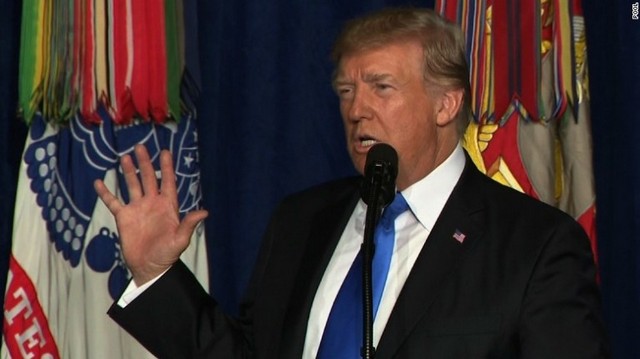
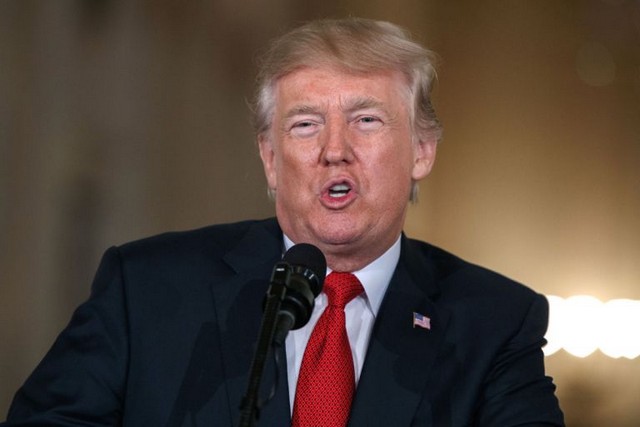
Who says President Trump doesn’t have a coherent foreign policy?  Pundits and critics across the political spectrum have chided him for failing to articulate and implement a clear international agenda. Look closely at his overseas endeavors, though, and one all-too-consistent pattern emerges: Donald Trump will do whatever it takes to prolong the reign of fossil fuels by sabotaging efforts to curb carbon emissions and promoting the global consumption of U.S. oil, coal, and natural gas.  Whenever he meets with foreign leaders, it seems, his first impulse is to ply them with American fossil fuels.

His decision to withdraw from the Paris Climate Agreement, which obliged this country to reduce its coal consumption and take other steps to curb its carbon emissions, was widely covered by the American mainstream news media.  On the other hand, the president’s efforts to promote greater fossil fuel consumption abroad — just as significant in terms of potential harm to the planet — have received remarkably little attention.

Bear in mind that while Trump’s drive to sabotage international efforts to curb carbon emissions will undoubtedly slow progress in that area, it will hardly stop it.  At the recent G-20 summit in Hamburg, Germany, 19 of the leaders of the world’s 20 largest economies reaffirmed their commitment to the Paris accord and pledged to “mitigate greenhouse gas emissions through, among other [initiatives], increased innovation on sustainable and clean energies.”  This means that whatever Trump does, continuing innovation in the energy field will indeed help reduce global greenhouse gas emissions and so slow the advance of climate change.  Unfortunately, Trump’s relentless drive to promote fossil-fuel consumption abroad could ensure that carbon emissions continue to rise anyway, neutralizing whatever progress might be made elsewhere and dooming humanity to a climate-ravaged future.

How the two sides of the ledger — green energy progress versus Trump’s drive to boost carbon exports — will balance out in the years ahead cannot be foreseen. Every boost in carbon emissions, however, pushes us closer to the moment when global temperatures will exceed the two degrees Celsius rise from pre-industrial levels that scientists say is the maximum the planet can absorb without suffering catastrophic consequences. Those would include rising sea levels that could drown New York, Miami, Shanghai, London, and many other coastal cities, as well as a sharp drop in global food production that could devastate entire populations.

Spreading the Cult of Carbon

President Trump’s pursuit of increased global carbon consumption is proving to be a two-front campaign.  He’s working in every way imaginable to increase the production of fossil fuels domestically, even as he engages in a diplomatic blitzkreig to open doors to American fossil-fuel exports abroad.

At home, he’s already reversed numerous Obama-era restrictions on fossil fuel extraction, including curbs on mountaintop removal — an environmentally hazardous form of coal mining — and on oil and gas drillingin Arctic waters off Alaska.  He’s also ordered the administrator of the Environmental Protection Agency (EPA), Scott Pruitt — a notorious enemy of environmental regulations opposed by the energy industry — to dismantle the Clean Power Plan, President Obama’s program to sharply reduce the use of coal in domestic electricity generation.

These and similar initiatives have gotten a fair amount of media attention already, but it’s no less important to focus on another key aspect of Trump’s pro-carbon global initiative which has gone largely unnoticed.  While, under the Paris climate accord, the other industrial powers are still obliged to help developing countries install carbon-free energy technologies, Trump has freed himself to sell American fossil fuels everywhere to his heart’s content.  At that G-20 meeting, for example, he forced his peers to insert a clause in their final communiqué stating, “The United States of America states it will endeavor to work closely with other countries to help them access and use fossil fuels more cleanly and efficiently.” (The “more cleanly and efficiently” was undoubtedly his modest concession to the other 19 leaders.)

To spread the mantra of fossil fuels, Trump has become the nation’s carbon-pusher in chief.  He’s already personally engaged in energy diplomacy, while demanding that various cabinet officials make oil, gas, and coal exports a priority.  On June 29th, for instance, he publicly ordered the Treasury Department to do away with “barriers to the financing of highly efficient overseas coal energy plants.”  In the same speech, he spoke of his desire to supply American coal to Ukraine, currently cut off from Russian natural gas thanks to its ongoing conflict with that country.  “Ukraine already tells us they need millions and millions of metric tons [of coal] right now,” Trump said, pointing out that there are many other countries in a similar state, “and we want to sell it to them, and to everyone else all over the globe who needs it.”

He added, “We are a top producer of petroleum and the number-one producer of natural gas.  We have so much more than we ever thought possible, and we’re going to be an exporter… We will export American energy all over the world, all around the globe.”

In his urge to preserve the reign of fossil fuels, President Trump has already taken on a unique personal role, meeting with foreign officials and promoting cooperation with key American energy firms.  Take the June 26th White House visit of Indian Prime Minister Narendra Modi.  While the media reported on how the two of them took up the subject of future arms sales to India, it made no mention of energy deals.  Yet Secretary of Energy Rick Perry revealed that this topic was crucial to their encounter.  At a Trump-hosted dinner for Modi at the White House, Perry reported, “we talked about the three areas of which there will be great back-and-forth cooperation — deal-making, if you will.  One of those is in LNG [liquefied natural gas].  The other side of that is in clean coal.  Thirdly is on the nuclear side. So there is great opportunity for India and the United States to become even stronger allies, stronger partners — energy being the glue that will hold that partnership together for a long, long time.”

To put this in context, making deals to sell coal to India is like selling OxyContin to an opioid addict.  After all, in 2015, that country overtook the United States to become the world’s second-biggest consumer of coal (after China).  To keep up the pace of its rapid economic growth, India had plans to increase its reliance on coal yet more, which would mean a steady increase in carbon emissions.  India now trails only China and the United States as an emitter of carbon dioxide and its share is expected to grow.  However, it is also likely to suffer disproportionately from climate change, which its emissions will only accelerate.  Given that future extreme heat events are expected to periodically destroy crops on which a large part of its population depends, Modi’s government has recently begun seeking ways to reduce the country’s long-term reliance on fossil fuels, in part by becoming a solar superpower.  In other words, in pitching coal to India — a true case of bringing coals to Newcastle (or at least Mumbai) — Trump is functionally working to sabotage India’s struggle to free itself from the scourge of carbon addiction.

He similarly pushed fossil-fuel exports in his first encounter with newly elected South Korean President Moon Jae-in.  Not surprisingly, press coverage of the event highlighted their discussions about the nuclear threat posed by North Korea.  Some reports also noted that trade issues came up, but none mentioned energy matters.  Yet, shortly before his state dinner with Moon, Trump announced that a U.S. company, Sempra Energy, had just that day signed an agreement to sell more American natural gas to South Korea.  “And, as you know,” he added, “the leaders of South Korea are coming to the White House today, and we’ve got a lot of discussion to do, but we will also be talking about them buying energy from the United States of America, and I’m sure they’ll like to do it.”  In other words, the president has made it eminently clear how foreign leaders in need of American support can please him.

His first overseas trips have also featured versions of such pitchmanship.  During his visit to Saudi Arabia in May, he evidently sought to promotecooperation between U.S. and Saudi energy firms.  Again, press coverage of his meeting with Saudi King Salman highlighted other topics, notably the war on terror, the regional divide between Sunnis and Shiites, and new Crown Prince Mohammed bin Salman’s hard line on Iran.  But the two of them did, in fact, issue a statement affirming “the importance of investment in energy by companies in both countries, and the importance of coordinating policies that ensure the stability of markets and an abundance of supplies.”  Where this might lead is anyone’s guess, but presumably to a commitment to the continued dominance of petroleum in the world’s future energy markets.

On the subject of his two meetings with Russian President Vladimir Putin at the G-20 summit (at the second of these without even an American translator), we obviously know far less.  It is, however, reasonable to assume that his interest in improving ties with Russia is at least partially energy-focused. During the first of those conversations, Trump was accompaniedonly by a translator and Secretary of State Rex Tillerson who, as CEO of ExxonMobil, had inked energy deals with Rosneft, the Russian state-owned oil giant, and lobbied against the imposition of sanctions on Russia’s energy sector.  (Those deals are now being investigated by the Treasury Department as possible violations of government-mandated sanctions then in effect.)  Five days later, while flying to Paris on Air Force One, Trump told reporters that he would like to meet again with Putin, once that became politically feasible, adding, “and, by the way, I only want to make great deals with Russia.”

To further boost the export of U.S. fossil fuels abroad, Trump has also leaned on various government agencies to facilitate such efforts.  In a talk he gave on June 29th to energy company officials at the Department of Energy, for example, the president hailed its approval of two long-term projects to promote U.S. energy abroad: the export of additional natural gas from a terminal in Lake Charles, Louisiana, and plans to construct a new oil pipeline to Mexico — about which, he assured listeners, “It will go right under the wall, right?… You know, a little like this [gesticulating].  Right under the wall.”

And keep in mind that we are undoubtedly catching no more than a glimpse of Trump’s efforts to promote the sale of American oil, coal, and natural gas abroad.  From what little has been reported on the subject in his meetings with Prime Minister Modi, President Moon, and King Salman, it’s reasonable to assume that the topic has come up in most of his conversations with foreign leaders and represents a far more significant aspect of his international policymaking than generally realized.

American Energy Dominance

Don’t imagine, however, that Trump’s fossil-fueled salesmanship is primarily driven by a desire to enrich American energy firms (though he would undoubtedly consider that a plus).  It’s clearly motivated by a deeper, more visceral set of urges.  Still trapped in his memories of his 1950s childhood when gas-guzzling American cars were a prominent symbol of national wealth and power, he has a deep belief in the capacity of fossil fuels to propel and sustain the country’s global dominance.  He often recalls that formativeperiod in his musings, describing it as a golden age when America won all its wars and was dominant on the world stage.  For him, oil equals vigor equals national ascendancy, and no other countries — least of all an international community united behind the Paris climate accord — should be able to deprive the U.S. of its carbon fix.

All this was implicit in that Energy Department speech, which offered a genuine window into his thinking on the subject.  Here’s the crucial passage, delivered in his usual extemporaneous style:

“Our country is blessed with extraordinary energy abundance… We have nearly 100 years’ worth of natural gas and more than 250 years’ worth of clean, beautiful coal… We have so much more than we ever thought possible.  We are really in the driving seat.  And you know what?  We don’t want to let other countries take away our sovereignty and tell us what to do and how to do it.  With these incredible resources, my administration will seek not only American energy independence that we’ve been looking for so long, but American energy dominance.”

Trump’s personal fascination with symbols of excess — think of those giant golden letters over his properties — is evident in that monologue.  It’s clear that he’s been especially taken with breakthroughs in the enhancement of American energy abundance, especially the success of hydraulic fracturing, or fracking.  That process has liberated vast quantities of oil and natural gas from previously unusable shale formations.  Prior to the introduction of fracking, oil and gas production in the United States had been in decline, but thanks to what’s been termed the “shale revolution,” production has soared.  In July 2017, at 9.4 million barrels per day, U.S. crude oil output was up 68%over six years earlier, when production was running at just 5.6 million barrels per day.  Natural gas has registered a similar leap.  All this, in turn, generated — at least for a time — a feeling of euphoria in the oil and gas industry, with some pundits even dubbing this country “Saudi America” and portraying it as a new energy El Dorado.

As this sense of euphoria took hold, American energy analysts began viewing the explosion of domestic hydrocarbon output as a crucial source of geopolitical clout.  The immense flood of cheap natural gas has “boosted U.S. economic competitiveness,” said Robert Manning of the Atlantic Council typically enough, “and by extension, U.S. comprehensive national power, and U.S. capacity for global leadership.” Think of it as Viagra for Washington policymakers.

Recently, however, some of this euphoria has dissipated as bargain-basement oil and gas prices, the inevitable consequence of overproduction, have been eating into corporate profits and forcing some over-exposed energy companies to declare bankruptcy.  Trump’s belief in the ability of petroleum to enhance America’s global clout has, however, clearly been unshaken.  “We’ve got underneath us more oil than anybody,” he declared in a conversation with journalists aboard Air Force One on July 12th.  “And I want to use it.”

Whatever the sources of his fascination with fossil fuels, six months into his presidency one thing is clear: he’s determined to spread the cult of American carbon internationally and this urge has already become a defining theme of his foreign policy, even if the mainstream media, despite its deluge of Trump-centered coverage, has hardly noticed.

A New American Legacy

Previous American presidents have sought fame through the promotion of freedom, democracy, and human rights abroad.  In fact, virtually every formal presidential expression of foreign policy in the post-Cold War era has ritualistically identified those values as America’s greatest exports (whatever values Washington was actually exporting). Not so for Donald Trump, however.  What he seeks to export are habit-forming, climate-altering hydrocarbons.

It remains to be seen how successful his drive to spread the cult of carbon will be.  As time goes on and the effects of climate change intensify in a warming world, more countries will undoubtedly begin to focus on easing or even ending their reliance on fossil fuels and promoting carbon-free alternatives.  Market forces will play a crucial role in this process, since the price of renewable energy — especially solar — has been dropping quickly and is already, in certain circumstances, a cheaper way to go than using coal to generate electricity.

Even if Trump’s fossil-fueled scheming doesn’t succeed in the long run, he will undoubtedly ensure that more greenhouse gases enter the planet’s atmosphere, meaning that temperatures will continue to climb and punishing droughts and heat waves will become ever more the new global norm.

It’s time to give his snake-oil-style energy salesmanship and the future environmental destruction that will accompany it the attention they deserve.  If humanity is to have any chance to survive the planetary warming to come in reasonable shape, all the American carbon Trump hopes to sell to foreigners has to stay in the ground.

Michael T. Klare, a TomDispatch regular, is a professor of peace and world security studies at Hampshire College and the author.

31 July 2017

MEMORANDUM FOR: The President

FROM: Veteran Intelligence Professionals for Sanity (VIPS)

SUBJECT: Was the “Russian Hack” an Inside Job?

Executive Summary:

Forensic studies of “Russian hacking” into Democratic National Committee computers last year reveal that on July 5, 2016, data was leaked (not hacked) by a person with physical access to DNC computers, and then doctored to incriminate Russia.

After examining metadata from the “Guccifer 2.0” July 5, 2016 intrusion into the DNC server, independent cyber investigators have concluded that an insider copied DNC data onto an external storage device, and that “telltale signs” implicating Russia were then inserted.

Key among the findings of the independent forensic investigations is the conclusion that the DNC data was copied onto a storage device at a speed that far exceeds an Internet capability for a remote hack. Of equal importance, the forensics show that the copying and doctoring were performed on the East coast of the U.S. Thus far, mainstream media have ignored the findings of these independent studies [see here and here].

Independent analyst Skip Folden, a retired IBM Program Manager for Information Technology US, who examined the recent forensic findings, is a co-author of this Memorandum. He has drafted a more detailed technical report titled “Cyber-Forensic Investigation of ‘Russian Hack’ and Missing Intelligence Community Dis­claimers,” and sent it to the offices of the Special Counsel and the Attorney General. VIPS member William Binney, a former Technical Director at the National Security Agency, and other senior NSA “alumni” in VIPS attest to the professionalism of the independent forensic findings.

The recent forensic studies fill in a critical gap. Why the FBI neglected to perform any independent forensics on the original “Guccifer 2.0” material remains a mystery—as does the lack of any sign that the “hand-picked analysts” from the FBI, CIA, and NSA, who wrote the “Intelligence Community Assessment” dated January 6, 2017, gave any attention to forensics.
NOTE: There has been so much conflation of charges about hacking that we wish to make very clear the primary focus of this Memorandum. We focus specifically on the July 5, 2016 alleged Guccifer 2.0 “hack” of the DNC server. In earlier VIPS memoranda we addressed the lack of any evidence connecting the Guccifer 2.0 alleged hacks and WikiLeaks, and we asked President Obama specifically to disclose any evidence that WikiLeaks received DNC data from the Russians [see here and here].

Addressing this point at his last press conference (January 18), he described “the conclusions of the intelligence community” as “not conclusive,” even though the Intelligence Community Assessment of January 6 expressed “high confidence” that Russian intelligence “relayed material it acquired from the DNC . . . to WikiLeaks.”

Obama’s admission came as no surprise to us. It has long been clear to us that the reason the U.S. government lacks conclusive evidence of a transfer of a “Russian hack” to WikiLeaks is because there was no such transfer. Based mostly on the cumulatively unique technical experience of our ex-NSA colleagues, we have been saying for almost a year that the DNC data reached WikiLeaks via a copy/leak by a DNC insider (but almost certainly not the same person who copied DNC data on July 5, 2016).

From the information available, we conclude that the same inside-DNC, copy/leak process was used at two different times, by two different entities, for two distinctly different purposes:

(1) an inside leak to WikiLeaks before Julian Assange announced on June 12, 2016, that he had DNC documents and planned to publish them (which he did on July 22)—the presumed objective being to expose strong DNC bias toward the Clinton candidacy; and

(2) a separate leak on July 5, 2016, to pre-emptively taint anything WikiLeaks might later publish by “showing” it came from a “Russian hack.”

* * *

Mr. President:

This is our first VIPS Memorandum for you, but we have a history of letting U.S. Presidents know when we think our former intelligence colleagues have gotten something important wrong, and why. For example, our first such memorandum, a same-day commentary for President George W. Bush on Colin Powell’s U.N. speech on February 5, 2003, warned that the “unintended consequences were likely to be catastrophic,” should the U.S. attack Iraq and “justfy” the war on intelligence that we retired intelligence officers could readily see as fraudulent and driven by a war agenda.
The January 6 “Intelligence Community Assessment” by “hand-picked” analysts from the FBI, CIA, and NSA seems to fit into the same agenda-driven category. It is largely based on an “assessment,” not supported by any apparent evidence, that a shadowy entity with the moniker “Guccifer 2.0” hacked the DNC on behalf of Russian intelligence and gave DNC emails to WikiLeaks.

The recent forensic findings mentioned above have put a huge dent in that assessment and cast serious doubt on the underpinnings of the extraordinarily successful campaign to blame the Russian government for hacking. The pundits and politicians who have led the charge against Russian “meddling” in the U.S. election can be expected to try to cast doubt on the forensic findings, if they ever do bubble up into the mainstream media. But the principles of physics don’t lie; and the technical limitations of today’s Internet are widely understood. We are prepared to answer any substantive challenges on their merits.

You may wish to ask CIA Director Mike Pompeo what he knows about this. Our own lengthy intelligence community experience suggests that it is possible that neither former CIA Director John Brennan, nor the cyber-warriors who worked for him, have been completely candid with their new director regarding how this all went down.

Copied, Not Hacked

As indicated above, the independent forensic work just completed focused on data copied (not hacked) by a shadowy persona named “Guccifer 2.0.” The forensics reflect what seems to have been a desperate effort to “blame the Russians” for publishing highly embarrassing DNC emails three days before the Democratic convention last July. Since the content of the DNC emails reeked of pro-Clinton bias, her campaign saw an overriding need to divert attention from content to provenance—as in, who “hacked” those DNC emails? The campaign was enthusiastically supported by a compliant “mainstream” media; they are still on a roll.
“The Russians” were the ideal culprit. And, after WikiLeaks editor Julian Assange announced on June 12, 2016, “We have emails related to Hillary Clinton which are pending publication,” her campaign had more than a month before the convention to insert its own “forensic facts” and prime the media pump to put the blame on “Russian meddling.” Mrs. Clinton’s PR chief Jennifer Palmieri has explained how she used golf carts to make the rounds at the convention. She wrote that her “mission was to get the press to focus on something even we found difficult to process: the prospect that Russia had not only hacked and stolen emails from the DNC, but that it had done so to help Donald Trump and hurt Hillary Clinton.”

Independent cyber-investigators have now completed the kind of forensic work that the intelligence assessment did not do. Oddly, the “hand-picked” intelligence analysts contented themselves with “assessing” this and “assessing” that. In contrast, the investigators dug deep and came up with verifiable evidence from metadata found in the record of the alleged Russian hack.

They found that the purported “hack” of the DNC by Guccifer 2.0 was not a hack, by Russia or anyone else. Rather it originated with a copy (onto an external storage device—a thumb drive, for example) by an insider. The data was leaked after being doctored with a cut-and-paste job to implicate Russia. We do not know who or what the murky Guccifer 2.0 is. You may wish to ask the FBI.

The Time Sequence

June 12, 2016: Assange announces WikiLeaks is about to publish “emails related to Hillary Clinton.”

June 15, 2016: DNC contractor CrowdStrike, (with a dubious professional record and multiple conflicts of interest) announces that malware has been found on the DNC server and claims there is evidence it was injected by Russians.

June 15, 2016: On the same day, “Guccifer 2.0” affirms the DNC statement; claims responsibility for the “hack”; claims to be a WikiLeaks source; and posts a document that the forensics show was synthetically tainted with “Russian fingerprints.”

We do not think that the June 12 & 15 timing was pure coincidence. Rather, it suggests the start of a pre-emptive move to associate Russia with anything WikiLeaks might have been about to publish and to “show” that it came from a Russian hack.

The Key Event

July 5, 2016: In the early evening, Eastern Daylight Time, someone working in the EDT time zone with a computer directly connected to the DNC server or DNC Local Area Network, copied 1,976 MegaBytes of data in 87 seconds onto an external storage device. That speed is many times faster than what is physically possible with a hack.

It thus appears that the purported “hack” of the DNC by Guccifer 2.0 (the self-proclaimed WikiLeaks source) was not a hack by Russia or anyone else, but was rather a copy of DNC data onto an external storage device. Moreover, the forensics performed on the metadata reveal there was a subsequent synthetic insertion—a cut-and-paste job using a Russian template, with the clear aim of attributing the data to a “Russian hack.” This was all performed in the East Coast time zone.

‘Obfuscation & De-obfuscation’

Mr. President, the disclosure described below may be related. Even if it is not, it is something we think you should be made aware of in this general connection. On March 7, 2017, WikiLeaks began to publish a trove of original CIA documents that WikiLeaks labeled “Vault 7.” WikiLeaks said it got the trove from a current or former CIA contractor and described it as comparable in scale and significance to the information Edward Snowden gave to reporters in 2013.

No one has challenged the authenticity of the original documents of Vault 7, which disclosed a vast array of cyber warfare tools developed, probably with help from NSA, by CIA’s Engineering Development Group. That Group was part of the sprawling CIA Directorate of Digital Innovation—a growth industry established by John Brennan in 2015.

Scarcely imaginable digital tools—that can take control of your car and make it race over 100 mph, for example, or can enable remote spying through a TV—were described and duly reported in the New York Times and other media throughout March. But the Vault 7, part 3 release on March 31 that exposed the “Marble Framework” program apparently was judged too delicate to qualify as “news fit to print” and was kept out of the Times.

The Washington Post’s Ellen Nakashima, it seems, “did not get the memo” in time. Her March 31 article bore the catching (and accurate) headline: WikiLeaks’ latest release of CIA cyber-tools could blow the cover on agency hacking operations.

The WikiLeaks release indicated that Marble was designed for flexible and easy-to-use “obfuscation,” and that Marble source code includes a “deobfuscator” to reverse CIA text obfuscation.

More important, the CIA reportedly used Marble during 2016. In her Washington Post report, Nakashima left that out, but did include another significant point made by WikiLeaks; namely, that the obfuscation tool could be used to conduct a “forensic attribution double game” or false-flag operation because it included test samples in Chinese, Russian, Korean, Arabic and Farsi.

The CIA’s reaction was neuralgic. Director Mike Pompeo lashed out two weeks later, calling Assange and his associates “demons,” and insisting, “It’s time to call out WikiLeaks for what it really is, a non-state hostile intelligence service, often abetted by state actors like Russia.”

Mr. President, we do not know if CIA’s Marble Framework, or tools like it, played some kind of role in the campaign to blame Russia for hacking the DNC. Nor do we know how candid the denizens of CIA’s Digital Innovation Directorate have been with you and with Director Pompeo. These are areas that might profit from early White House review.

Putin and the Technology

We also do not know if you have discussed cyber issues in any detail with President Putin. In his interview with NBC’s Megyn Kelly, he seemed quite willing—perhaps even eager—to address issues related to the kind of cyber tools revealed in the Vault 7 disclosures, if only to indicate he has been briefed on them. Putin pointed out that today’s technology enables hacking to be “masked and camouflaged to an extent that no one can understand the origin” [of the hack]. And, vice versa, it is possible to set up any entity or any individual that everyone will think that they are the exact source of that attack.”
kremlin.ru
President Vladimir Putin answers questions from NBC anchor Megyn Kelly on the sidelines of the St. Petersburg International Economic Forum, June 5, 2017.
“Hackers may be anywhere,” he said. “There may be hackers, by the way, in the United States who very craftily and professionally passed the buck to Russia. Can’t you imagine such a scenario? . . . I can.”

Full Disclosure: Over recent decades the ethos of our intelligence profession has eroded in the public mind to the point that agenda-free analysis is deemed well nigh impossible. Thus, we add this disclaimer, which applies to everything we in VIPS say and do: We have no political agenda; our sole purpose is to spread truth around and, when necessary, hold to account our former intelligence colleagues.

We speak and write without fear or favor. Consequently, any resemblance between what we say and what presidents, politicians and pundits say is purely coincidental. The fact we find it is necessary to include that reminder speaks volumes about these highly politicized times. This is our 50th VIPS Memorandum since the afternoon of Powell’s speech at the UN. Live links to the 49 past memos can be found at https://consortiumnews.com/vips-memos/.

FOR THE STEERING GROUP, VETERAN INTELLIGENCE PROFESSIONALS FOR SANITY

William Binney, former NSA Technical Director for World Geopolitical & Military Analysis; Co-founder of NSA’s Signals Intelligence Automation Research Center

Skip Folden, independent analyst, retired IBM Program Manager for Information Technology US (Associate VIPS)

Matthew Hoh, former Capt., USMC, Iraq & Foreign Service Officer, Afghanistan (associate VIPS)

Larry C Johnson, CIA & State Department (ret.)

Michael S. Kearns, Air Force Intelligence Officer (Ret.), Master SERE Resistance to Interrogation Instructor

John Kiriakou, Former CIA Counterterrorism Officer and former Senior Investigator, Senate Foreign Relations Committee

Linda Lewis, WMD preparedness policy analyst, USDA (ret.)

Lisa Ling, TSgt USAF (ret.) (associate VIPS)

Edward Loomis, Jr., former NSA Technical Director for the Office of Signals Processing

David MacMichael, National Intelligence Council (ret.)

Ray McGovern, former U.S. Army Infantry/Intelligence officer and CIA analyst

Elizabeth Murray, former Deputy National Intelligence Officer for Middle East, CIA

Coleen Rowley, FBI Special Agent and former Minneapolis Division Legal Counsel (ret.)

Cian Westmoreland, former USAF Radio Frequency Transmission Systems Technician and Unmanned Aircraft Systems whistleblower (Associate VIPS)

Kirk Wiebe, former Senior Analyst, SIGINT Automation Research Center, NSA

Sarah G. Wilton, Intelligence Officer, DIA (ret.); Commander, US Naval Reserve (ret.)

Ann Wright, U.S. Army Reserve Colonel (ret) and former U.S. Diplomat


Fear And Trepidation In Tel Aviv: Is Israel Losing The Syria War?

By Dr Ramzy Baroud

Israel, which has played a precarious role in the Syrian war since 2011, is furious to learn that the future of the conflict is not to its liking.

The six-year-old Syria war is moving to a new stage, perhaps its final. The Syrian regime is consolidating its control over most of the populated centers, while ISIS is losing ground fast – and everywhere.

Areas evacuated by the rapidly disintegrated militant group are up for grabs. There are many hotly contested regions sought over by the government of Bashar al-Assad in Damascus and its allies, on the one hand, and the various anti-Assad opposition groups and their supporters, on the other.

With ISIS largely vanquished in Iraq – at an extremely high death toll of 40,000 people in Mosel alone –  – warring parties there are moving west. Shia militias, emboldened by the Iraq victory, have been pushing westward as far as the Iraq-Syria border, converging with forces loyal to the Syrian government on the other side.

Concurrently, first steps at a permanent ceasefire are bearing fruit, compared to many failed attempts in the past.

Following a ceasefire agreementbetween the United States and Russia on July 7 at the G-20 meeting in Hamburg, Germany, three provinces in southwestern Syria – bordering Jordan and Israeli-occupied Golan Heights – are now relatively quiet. The agreement is likely to be extended elsewhere.

The Israeli government has made it clear to the US that it is displeased with the agreement, and Israeli Prime Minister, Benjamin Netanyahu, has been leading strong efforts to undermine the ceasefire.

Netanyahu’s worst fears are, perhaps, actualizing: a solution in Syria that would allow for a permanent Iranian and Hezbollah presence in the country.

In the early phases of the war, such a possibility seemed remote; the constantly changing fortunes in Syria’s brutal combat made the discussion altogether irrelevant.

But things have now changed.

Despite assurances to the contrary, Israel has always been involved in the Syria conflict. Israel’s repeated claims that “it maintains a policy of non-intervention in Syria’s civil war,” only fools US mainstream media.

Not only was Israel involved in the war, it also played no role in the aid efforts, nor did it ever extend a helping hand to Syrian refugees.

Hundreds of thousands of Syrians have perished in the merciless war; many cities and villages were totally destroyed and millions of Syrians become refugees.

While tiny and poor Lebanon has hosted over a million Syrian refugees, every country in the region and many nations around the world have hosted Syrian refugees, as well. Except Israel.

Even a symbolic government proposal to host 100 Syrian orphans was eventually dropped.

However, the nature of the Israeli involvement in Syria is starting to change. The ceasefire, the growing Russian clout and the inconsistent US position has forced Israel to redefine its role.

A sign of the times has been Netanyahu’s frequent visits to Moscow, to persuade the emboldened Russian President, Vladimir Putin, of Israel’s interests.

While Moscow is treading carefully, unlike Washington it hardly perceives Israeli interests as paramount. When Israel shot down a Syrian missile using an arrow missile last March, the Israeli ambassador to Moscow was summoned for reprimand.

The chastising of Israel took place only days after Netanyahu visited Moscow and “made it clear” to Putin that he wants to “prevent any Syrian settlement from leaving ‘Iran and its proxies with a military presence’ in Syria.”

Since the start of the conflict, Israel wanted to appear as if in control of the situation, at least regarding the conflict in southwestern Syria. It bombed targets in Syria as it saw fit, and casually spoke of maintaining regular contacts with certain opposition groups.

In recent comments before European officials, Netanyahu admittedto striking Iranian convoys in Syria ‘dozens of times.”

But without a joint Israeli-US plan, Israel is now emerging as a weak party. Making that realization quite belatedly, Israel is become increasingly frustrated. After years of lobbying, the Obama Administration refused to regard Israel’s objectives in Syria as the driving force behind his government’s policies.

Failing to obtain such support from newly-elected President Donald Trump as well, Israel is now attempting to develop its own independent strategy.

On June 18, the Wall Street Journal reported that Israel has been giving “secret aid” to Syrian rebels, in the form of “cash and humanitarian aid.”

The New York Times reported on July 20 of large shipments of Israeli aid that is “expected to (give) ‘glimmer of hope’ for Syrians.”

Needless to say, giving hope to Syrians is not an Israeli priority. Aside from the frequent bombing and refusal to host any refugees, Israel has occupied the Syrian Golan Heights in 1967 and illegally annexed the territory in 1981.

Instead, Israel’s aim is to infiltrate southern Syria to create a buffer against Iranian, Hezbollah and other hostile forces.

Termed “Operation Good Neighbor,” Israel is working diligently to build ties with various heads of tribes and influential groups in that region.

Yet, the Israeli plan appears to be a flimsy attempt at catching up, as Russia and the US, in addition to their regional allies, seem to be converging on an agreement independent from Israel’s own objectives or even security concerns.

Israeli officials are angry, and feel particularly betrayed by Washington. If things continue to move in this direction, Iran could soon have a secured pathway connecting Tehran to Damascus and Beirut,

Israeli National Security Council head, Yaakov Amidror, threatened in a recent press conference that his country is prepared to move against Iran in Syria, alone.

Vehemently rejecting the ceasefire, Amidror said that the Israeli army will “intervene and destroy every attempt to build (permanent Iranian) infrastructure in Syria.”

Netanyahu’s equally charged statements during his European visit also point at the growing frustration in Tel Aviv.

This stands in sharp contrast from the days when the neoconservatives in Washington managed the Middle East through a vision that was largely, if not fully, consistent with Israeli impulses.

The famed strategy paper prepared by a US study group led by Richard Perle in 1996 is of little use now, as the region is no longer shaped by a country or two.

The paper entitled: “A Clean Break: A New Strategy for Securing the Realm”, saw a hostile Arab world masterfully managed by US and Israel.

For a fleeting moment, Tel Aviv hoped that Trump would bring about change to the US attitude.

Indeed, there was that euphoric movement in Israel when the Trump administration struck Syria. But the limited nature of the strike made it clear that the US had no plans for massive military deployment similar to that of Iraq in 2003.

The initial excitement was eventually replaced by cynicism as expressed by this headline in the Monitor: “Netanyahu puts Trump on notice over Syria.”

In 1982, taking advantage of sectarian conflicts, Israel invaded Lebanon and installed a government led by its allies. Those days are long gone.

While Israel remains militarily strong, the region itself has changed and Israel is not the only power holding all the cards.

Moreover, the receding global leadership of the US under Trump makes the Israeli-American duo less effective.

With no alternative allies influential enough to fill the gap, Israel is left, for the first time, with very limited options.

With Russia’s determined return to the Middle East, and the decided retreat by the US, the outcome of the Syria war is almost a foregone conclusion. Surely, this is not the ‘new Syria’ that Israel had hoped for.

Dr. Ramzy Baroud has been writing about the Middle East for over 20 years.

27 July 2017

The Disinformation Campaign On Venezuela

By Farooque Chowdhury

Venezuela, it seems, is a riddle to the audience of the mainstream media. Yet the riddle conceals a fact. A conflict between opposing interests is roaring in Venezuela, and attempts to stoke that conflict are being intensified by the imperialist-interventionist quarter as the day for a vote on the proposed Constituent Assembly—July 30—is nearing.

Every day the mainstream media showers its viewers with news reports that are partial and biased. Here are some examples from the past several weeks:

1. A Venezuelan diplomat to the UN has decided to break with the government and resigned. The diplomat called on president Nicolas Maduro to resign immediately.

2. Recent protests have led to the deaths of more than 100 persons.

3. Venezuela’s chief prosecutor has confirmed a second death in Thursday’s protests. The chief prosecutor said she was investigating the death.

4. Maduro has decried the general strike called by the opposition as a crude attempt to sabotage the country’s economy.

5. Maduro has also denounced an opposition attack outside the offices of VTV, Venezuelan state TV.

6. Opposition protesters and pro-government forces threw rocks at one another while the Venezuelan National Guard launched tear gas and rubber bullets.

7. Streets in opposition-friendly neighborhoods in eastern Caracas were almost entirely void of activity during the strike. Some businesses remained open in parts of the capital traditionally loyal to the ruling party but foot and vehicle traffic was significantly reduced.

8. More than 7 million Venezuelans cast ballots in an opposition-led “consultation” on July 16. Nearly 700,000 of those votes came from Venezuelans abroad.

Other news

Yet there are a significant number of other news stories on Venezuela that the mainstream media chose not to report:

1. Citing the Proletarian Agency of Information, a grassroots media group, on July 20, 2017 Venezuela Analysis reported: In the industrial city of Barquisimeto, many workers have made efforts to maintain production despite several cases of sabotage by business owners, administrators, and protestors. In the case of DISICA, a private company that supplies state oil firm Petróleos de Venezuela, S.A. (PdVSA) with iron construction material, the workers “continue working and have not stopped operations.”

2. The same news-report said: State owned Lacteos Los Andes, a diary company, has alleged that since early hours of the afternoon, they have been under attack by opposition groups armed with home-made mortars and Molotov cocktails. The groups “tried to set […] fire to an industrial gas tank.”

3. Workers complained of delays caused by opposition barricades.

4. Opposition mayors supported the strike.

5. Working class neighborhoods have largely been unaffected by the strike.

6. Maduro told VTV: “The 700 largest companies in the country are working at 100 percent of their capacity.”

7. The government said: Almost all 2.8 million public employees including employees of PdVSA turned up to work. The PdVSA management said it was not affected by the strike. (Ryan Mallett-Outtrim and Katrina Kozarek, “Venezuela Divided Over Opposition’s General Strike,” Venezuela Analysis, July 20, 2017.)

8. Any change to the constitution by the proposed constituent assembly, once elected, will need to be put to a referendum.

9. The death of Hector Anuel, a citizen, assaulted by opposition protesters in Anzoategui state. Anuel’s death sparked a social media outrage, after footage went viral that seemed to show his charred corpse being beaten by opposition protesters. According to news outlet La Tabla, Anuel was killed after being hit by a home-made mortar used by opposition protesters. The shot itself was allegedly caught on camera. Anuel was burned, before being pummelled with stones and other debris. In the footage alleged to show his death, Anuel appeared unarmed. (Ryan Mallett-Outtrim, “Venezuela Shocked by Graphic Footage of Alleged Mortar Killing,” Venezuela Analysis, July 19, 2017.)

10. The Bolivarian government made no attempt to stop the opposition-organized “vote taking” even though it had no legal standing (and therefore was no more than a circus). Initially, the show was described as a “referendum” and a “plebiscite”. It had the logistical support of the National Assembly, the regional governors and opposition mayors. The propertied classes and imperialist camp also extended full support to the so-called referendum, which should be seen as part of attempts to organize a parallel government. Five rightist former presidents from Latin American countries were allowed to observe the proceedings. They made fiery speeches demanding Maduro’s exit. All these leaders are entangled in corruption cases, and they have not hesitated to use repressive power against workers and peasants in their respective countries. (Jorge Martin, “Venezuela: July 16 opposition ‘consultation’ countered by a Chavista show of strength,” In Defense of Marxism, July 20, 2017)

11. The opposition-organized show mobilized a large number of people. However, long queues at “polling stations” in some areas of the capital city were due to less number of “polling stations.” For example, in Catia, there was one polling station for 90,000 people. Moreover, the opposition leaders have admitted: people could vote more than once. There is already a video showing a person voting three times in one hour in the right-wing stronghold of Chacao. Furthermore, at the end of the day, they burnt the ballots and the registers, which demolishes all scopes to check the opposition announced result. This is the political force, “which has been accusing the Bolivarian revolution of election fraud for the last 15 years!” (ibid.)

12. There was an official dry run of the proposed Constituent Assembly (CA) elections—a presence of Chavismo’s strength—on the same day the so-called referendum was organized by the opposition. The dry run of the Constituent Assembly vote had very high turnout, as evidenced by long queues in front of official National Electoral Council polling stations throughout the country. Even in big cities, where opposition support is greatest, long queues were common. Local councils of a number of these cities are controlled by the opposition. In many neighborhoods the queues were so long that the polling stations had to keep open until 8pm (four hours later than the scheduled time). There was even significant voter presence in Petare parish, which supported the opposition in recent elections. In Merida, many people waited in queues for hours and finally had to return home without participating in the dry run. (ibid.)

13. In a poll by Hinterlaces of over 1,500 Venezuelans the majority of said they support a socialist economy, with the caveat that state-run enterprises need to improve their efficiency. The poll asked participants if “the best thing for Venezuela is a socialist economic model of production, where various forms of private property exist.” Three out of four Venezuelans agreed with this statement and only 1 percent was unsure. The results were released in a speech by Oscar Schemel (a pollster with Hinterlaces) to local business leaders in Caracas. Schemel said data shows Venezuelans want a socialist state with private investment and a “mixed economy.”: “61 percent of the population affirms that the economy must be led by the state, 86 percent think that the government should promote private investment, 78 percent consider that the government’s dialogue with businesspeople is more important than with the opposition, and 63 percent distrust the opposition.” While the majority of Venezuelans said they support socialism, 63 percent of the respondents said the government needs to become “more productive and efficient”, 32 percent said the current model should “change”, 74 percent said they would oppose any proposal to privatize PdVSA. When asked whether the electricity grid should be privatized, 67 percent opposed the suggestion while 69 percent opposed suggestion for privatizing state telecommunications giant CANTV. (Ryan Mallett-Outtrim, “POLL: 75% of Venezuelans support socialism, 63% distrust opposition,” MR Online, July 23, 2017)

The mainstream has failed to cover nearly all of these stories; when they have, the message has been distorted to fit the viewpoint of the US ruling class.

Deaths

Since the mainstream media incessantly flaunts its “objectivity” we can reasonably ask: how objective has their reporting been on deaths and killings over the last four months? Is there any mention of opposition-induced violence? Any reasonable assessment would conclude that opposition has played little if any role—other than to protest; whereas most if not all have been murdered by Maduro and his security machine.

So far, the opposition organized unrest has left 105 persons dead (date last updated: July 18). There is confusion over the causes of and parties responsible for these deaths. An in-depth account by Venezuelanalysis (“In detail: The deaths so far”, July 11, 2017) showed the following:

Deaths caused by authorities: 13

Direct victims of opposition political violence: 20

Deaths indirectly linked to opposition barricades: 8

Deaths still unaccounted for/disputed: 44

Accidental deaths: 3

Persons died during lootings: 14

Deaths attributed to pro-government civilians: 2.

The mainstream media not only avoid giving any such breakdown, they completely ignore who murdered who. They also ignore other pertinent details about the opposition protests:

  1. Any details on the tactics most commonly used in opposition demonstrations.
  2. How opposition protestors target day-to-day civilian activities, and attempt to create a sense of terror.
  3. Any investigation into the class affiliation of participants in opposition demonstrations.
  4. The extent to which vandalism, arson, bombings are used; or the routine targeting of public institutions (such as clinics).
  5. The assassination of Chavista supporters.

Any honest coverage would compel one to ask: are these opposition “crusaders” genuinely interested in “democracy,” or do they simply want the right to plunder and terrorize until they get their way by force? We simply cannot rely on the mainstream media to provide any insight into such pertinent questions.

Voting mathematics

The voting tabulations given by the mainstream media more often than not conform to the viewpoint of the Venezuelan opposition leaders and their supporters. A look into their very own figures on voting in the much touted “consultation” (or “referendum”) is a sterling example. Following are a few key points:

1. The opposition has stated that they had 2,000 polling stations and a total of 14,000 polling booths, which remained open for 9 hours, from 7am until 4pm. A few of stations remained opened later, but most closed much earlier. They report a total of 7,186,170 votes. When we divide that figure by 14000 booths over 9 hours we get rough estimate of 57 votes per hour per booth. In other words, just over 1 vote every minute in each and every one of the polling booths: 9 hours straight! In one minute and 5 seconds every voter had to go to the table, show identification documents, have their details written down in the electoral register, receive a paper ballot, go into the booth and fill out the ballot, fold it and put it into the ballot box. Surely a “believable” estimate commented Jorge Martin: “massive achievement for the opposition, one which breaks all election records and a few laws of physics”! (“Venezuela: July 16 opposition ‘consultation’ countered by a Chavista show of strength”, In Defence of Marxism, July 20, 2017)

2. In Spain, there are 63,000 Venezuelans according to the census taken on January 2017. Of these 9,000 are below the voting age, leaving 54,000. The opposition claims that 91,981 participated in the consultation. Now, there may be some discrepancies between the census and the real figures, but is it reasonable to accept that there are 38,000 more people than are actually registered officially? Are we not justified to doubt these figures? (ibid.)

3. The opposition officially declared that 7,186,170 people had participated. Let’s assume that the figure is true. That would fall short of the 14 million they themselves had announced would take part, just days before July 16, and also short of the more conservative figure announced by Capriles as a litmus test for the day. The opposition also announced that “with this result Maduro would have lost a recall referendum.” This refers to the Constitution, which states that for a recall referendum to be binding on the sitting president, more people would have to vote for his recall than he actually won in the election. Unfortunately for the opposition, Maduro was elected with 7,587,579 votes in 2013, and thus would not have been recalled. More confusing yet, the figure they apparently plucked out of thin air is less even than the opposition candidate won in that presidential election, which was 7,363,980. (ibid.)

As one might expect, the mainstream media have totally misrepresented the news of the official dry run process of the Constituent Assembly, most claiming poor voter turnout. The Spanish El País informed its readers that in Caracas there was “little influx to some polling stations […]” where a few “looked empty.” Yet the four photographs published by El Pais were of very long Chavista queues, with a false caption saying the cues were of Chavistas going “to participate in the opposition consultation”! (ibid.)

Interventionist propaganda

The upper classes of Venezuela are trying to regain their lost fiefdom. The program of violence they are implementing, which has rocked Venezuela since April 4, 2017, is part of that effort.

Venezuelan bonds have crashed as result of the sustained unrest, with five-year debt yielding 36 percent. Economic problems and corruption are wearing down the Bolivarian revolution’s social base; as leaders are forced into a policy of class conciliation, revolutionary mobilization are weakened; and, thus, creating conditions favorable to the upper classes. The disturbances the wealthy elite are creating is part of the imperialists’ intervention plan in Venezuela. The disinformation campaign carried out by the mainstream media is a key component of that effort. So, we should not be surprised by the profusion of Orwellian statements and the incessant vilification of Maduro, in mainstream coverage of Venezuela:

  • “The proposed Constituent Assembly would disenfranchise millions of Venezuelans.”
  • “If the Maduro regime imposes its Constituent Assembly on July 30, the US will take strong and swift economic actions.”
  • Mercosur has asked Maduro to suspend his plan to rewrite the country’s constitution.
  • A group of US lawmakers has warned of a new Cuba as Venezuela is trying to transform the country to serve its own people. Senator Marco Rubio of Florida said of Venezuela: “This is a dysfunctional narco-state.” Rubio also said: “How truly tragic would it be for […] one of the most democratic societies in the hemisphere to become Cuba.” Senator Bob Menendez of New Jersey said: “We are talking about a nearly failed state in our own hemisphere.” Venezuela is a “nearly-failed”, “narco-state,” and yet is “one of the most democratic societies”?! Which statement to believe?
  • Maduro is just another Fidel. [Yes, they say this.] Cuban-American Republicans and Democrats agree: Maduro must be stopped.
  • Rubio brought the wife of Mr. Leopoldo López, one of Venezuela’s opposition leaders, to the White House in February.

The US would obviously prefer to restore its allies to the throne in Venezuela so that they can go on plundering the country; so that surplus labor of the toiling people of Venezuela can be appropriated.

It might be argued that while most of the facts presented above are objective, some are biased. But that would miss the point, which is the wildly divergent narrative presented by the mainstream media. The interests of capitalists and imperialists are stated and restated incessantly; while those of millions of people of Venezuela are downplayed, distorted or ignored.

We cannot remain silent. We must recognize that many other countries may face (or are already facing) the same situation. Would an imperialist state allow some other state to decide/define:

  1. The imperialist state’s constitution?
  2. Who runs the imperialist state or who should be the president?
  3. Its domestic politics?
  4. Type of constitution, form of democracy and form of government?

Shouldn’t people of respective country be allowed to decide the issues? These questions must be answered by those who support or downplay imperialist intervention in Venezuela and elsewhere.

No intervention should go unchallenged, whether in Venezuela or elsewhere. Piercing the edifice of mainstream media manipulation is a key part of exposing imperialist intervention, not least because it contributes to the political education of those fighting similar battles, leading to more effective organization and resistance.

Farooque Chowdhury, writing from Dhaka, has not authored/edited any book in English other than Micro Credit, Myth Manufactured (ed.), The Age of Crisis and What Next, The Great Financial Crisis (ed.), and he doesn’t operate any blog/web site.

27 July 2017

Philippines: Western Media Is Distorting Reality, People And Army Unite To Battle “ISIS”

By Andre Vltchek

Covering the recent battle for the city of Marawi on Mindanao Island in the Southern Philippines, the Western media has been grossly exaggerating unconfirmed reports and rumors. It has been spreading twisted information and ‘facts’.

At the beginning of July, I visited Mindanao as one of only a few foreigners allowed inside the besieged city of Marawi and to its surrounding area.

I spoke to local people, to the IDPs – those who managed to escape the city taken over by the jihadists. I also managed to discuss the situation with the highest commanders of the military in charge of the combat, including General Ramiro Rey and Lt. Colonel Jo-Ar Herrera. I encountered many soldiers, civil servants, and relief workers.

My contacts in the capital informed me via text messages that I had been “red-flagged,” clearly, by the pro-US faction in the Philippine military. So before my presence was finally cleared from Manila, I was detained and held in a provisional military base in the city of Saguiaran. Here I was “softly” interrogated by military intelligence. A few steps away, a howitzer was firing artillery toward ISIS positions in Marawi, some 10 kilometers distant.

“So you believe the United States is responsible for spreading terrorism all over the world,” I was asked late at night by one of the officers, point blank, while local starlet was imitating old Chuck Berry’s hit “Johnny B. Goode” on TV, sound blasted all over the barracks. It was clear that someone ‘behind the scenes’ was busy studying my published work.

The Western establishment media and various servile NGOs (including those which are “defending human rights” in several rebellious and independent-minded countries) consistently demonize President Duterte, an anti-imperialist, progressive leader who enjoys well over 80 percent approval rating. It is no secret in the Philippines there are two distinct factions inside the military – one supports the president and his drive for independence from the West. The other, which is trained and often corrupted by Washington and other Western capitals, would love to see him go.

The pro-Western fraction obviously wanted me out, detained, perhaps even disappeared. The other one that stands by its president wanted me to see the truth, even to be allowed into Marawi.

A final decision was made late at night in Manila. I was released and granted permission to work in the besieged city. But even when the top commanders personally called the camp, there was, at least for a while, apparent reluctance to let me go.

My first reaction after visiting the Marawi front was one of shock and outrage. What I witnessed was fundamentally different from what has repeatedly been said by most of the Western mass media outlets, as well as pro-Western local news channels broadcasting from Manila.

It is evident, right from the start, that Marawi is not “totally destroyed,” as has been reported. Most of it is standing and standing firm. I would estimate that only between 20 and 30 percent of the houses and buildings, (most of them in the wealthy core center of the city) have sustained heavy damage.

It was explained to me during the presentation by top army commanders that the ISIS-related jihadists began their offensive on May 23rd 2017 and their plan was to take full control of the town by the time Ramadan was to begin (May 26th). The military spoiled their plans; it counter-attacked and managed to contain the terrorists in just one neighborhood, retaining or regaining control of all the other ‘barangays.’

Undoubtedly there were heavy losses, and, because of the palpable sense of fear after tremendous brutality unleashed by the terrorists, a substantial movement of IDPs (Internally Displaced  Persons). But it was never 400,000 people escaping the area, as reported in the West, but approximately 200,000 (the number once peaked at about 300,000 for a short time).

There has been no “indiscriminate bombing” of the civilians. I witnessed both incoming and outgoing howitzer fire and also very limited bombing from the air; it was all targeted and mostly precise, aiming at the position of the terrorists. As in all other war zones where I have been working, I refused any protection, including helmets and bulletproof vests. That allowed me to remain more mobile. I did manage to come ‘very close’ to the front. It was clear the fighting and bombing were strictly contained to one area, no more than one-kilometer square. Even there, the mosques and almost all other buildings and houses were still standing, as is demonstrated on my photographs.

Anti-Duterte NGOs and many Western governments claim that they ‘worry’ about the martial law imposed on Mindanao Island. I was told that in and around Marawi (or anywhere else on the Island), the martial law carried no brutal consequences. Even the curfew (9PM-5AM) is laxly implemented.

Brigadier General Ramiro Rey (head of the Joint Task Force Group, Ranao) explained to me in Marawi City:

“The difference between this martial law and those that were imposed during the reign of Ferdinand Marcos is that now the military is mainly doing real fighting while providing assistance to the civilians. I absolutely don’t interfere with the work of local elected government officials. I’m actually encouraging them to do their job as before, asking them to contact me only when my assistance is needed. I never took, and I don’t intend to take, control of the area.”

Local government officials and volunteers working for various relief agencies and NGO’s operating in the area have confirmed what General Rey said.

During my work in the conflict zone, I detected no fear among the residents. The relationship between the army and civilians was clearly friendly and cordial. As the military convoys were moving between the cities of Illigan and Marawi, both children and adults were smiling, waving, some cheering the soldiers.

In the camps housing the IDPs, there was almost unanimous consensus: while many citizens of Mindanao Island in general and the Marawi area in particular would most likely welcome more autonomy from Manila, during this ongoing and brutal conflict almost all local people have been supportive of the military and government efforts.

“We hope that both Filipino and foreign jihadi cadres would soon be crushed,” was an almost unanimous statement coming from the local people.

The Military Perspective

In the cities of Illigan and Marawi I was shown detailed maps clearly indicating positions of the ISIS and the military.

Both Lt. Colonel Jun Abad from Ranao Camp and the commanding officer, General Rey, gave me a clear and detailed briefing. As of July 3rd, the Agus River represented the ‘borderline’ between the ISIS-held area and the zone liberated and controlled by the army.

General Rey explained during our meeting in the Municipality of Marawi City (now the complex is also serving as the headquarters of the war theatre):

“The ISIS wants to establish their state on the island of Mindanao – an Islamic caliphate – right here in the Province of Lanao del Sur.”

But that’s not what the majority of local people want. Before President Duterte came to power little over one year ago, social situation in many parts of Mindanao was desperate and therefore there was at least some support for radical ‘solutions’. Since then, however, things changed dramatically. Healthcare, education and public housing are improving. Indiscriminate mining by multi-national companies has been deterred. People here; as well as in almost all other parts of the Philippines finally feel hopeful and optimistic about their future.

This converts into great support for both the government and the military.

There is no doubt the entire city will be freed, soon, most likely in July or August. The only reason why it did not happen yet is that the terrorists are using hostages, both Christians and Muslims, as human shields. President Duterte, General Rey, and other civilian and military officials are trying to avoid unnecessary human losses.

Cultural topography’ of the area is also very complex. Near the front line I was told by one of the top commanding army officers:

“We could take the city in just one day, but there would be great civilian casualties. The houses in this area are very sturdy; they are 2-3 stories high and fortified, as there are constant and brutal family feuds, called’ rido’, raging here, and have been for centuries.”

But to delay the liberation of Marawi is also very dangerous.

“The terrorists began using captured women as sex slaves,” explained Major Malvin Ligutan, standing in front of a temporary military base in Saguiaran.

Despite all the horrors of the Marawi war, the army refused to use brutal tactics, even after it found out that various local citizens clearly miscalculated and before the conflict began, offered substantial support to the ISIS-related terrorists.

Captain John Mark Silva Onipig clarified:

“These people belonging to the ISIS are not only terrorists, but they are also criminals. They were dealing in drugs… And some local people knew that… Actually, locals knew quite a lot; they knew about the presence of the terrorists in the area long before all this started, but they never reported it to the authorities.”

“How did the terrorists get hold of so many weapons?” I wanted to know.

“In the Philippines, those who have money can buy as many weapons as they want on the black market.”

The situation is extremely sensitive as there is clearly the involvement of foreign fighters. On June 30th, in Saguiaran, Major Malvin Ligutan admitted, hesitantly:

“In one of the safe houses, we found passports issued in Indonesia, Malaysia and several Arab countries.”

A month ago I wrote an essay exposing the complex network of Western-sponsored terrorism in Asia (“Washington Jihad Express: Indonesia, Afghanistan, Syria and Philippines”). I argued that in the 1980’s, Indonesian and Malaysian jihadists, indoctrinated by the Southeast Asian brand of extreme anti-Communism, went to fight in Afghanistan against the socialist governments of Karmal, and then Mohammad Najibullah, with the ultimate goal of destroying the Soviet Union.

Hardened and further brainwashed, they returned home to Southeast Asia, participated in several ethnic strives and pogroms (including those in Ambon and Poso), and then, in order to ‘bridge the generational gap’, embarked on the coaching of a young generation of terrorists, who eventually ended up fighting in Syria and recently in the Philippines.

My essay was full of facts, and I put into it various testimonies of Southeast Asian academics, thinkers, and even of one active and prominent ‘jihadi cadre’ who is now living in Jakarta.

In the Indonesian city of Bandung, Prof. Iman Soleh, a professor at the Faculty of Social and Political Science (University of Padjadjaran- UNPAD) offered his take on why the West is now so obsessed with destabilizing and smearing the Philippines and its current rebellious administration:

“Since World War Two, the U.S. was afraid of so-called ‘domino effects’. Among other things that are now happening in the Philippines under president Duterte, the government is curbing activities of the multi-national mining conglomerates, and the West cannot accept that. Philippines are putting its environmental concerns above the short-term profits! For the millions of left-wing activists here in Indonesia and all over Southeast Asia, President Duterte is a role model.”

It is no secret that the West punishes such ‘bad paradigms’ brutally and decisively.

Prof. Soleh continued:

“I think all that is happening is not just to ‘destabilize’ the Philippines, but also because the country has conflict areas that could be ‘nurtured’. The best example is the predominantly Muslim island of Mindanao, vs. the rest of the Philippines, which is predominantly a Catholic country…”

The West is regularly using ‘jihad,’ directly and indirectly, to destabilize socialist, anti-imperialist, and just patriotic countries and governments. In the past, it managed to ruin countries like Afghanistan, Indonesia (1965) and Syria. Many believe that the Philippines is the latest addition to the ‘hit-list.’

The China & Russia Connection

As Drei Toledo, a prominent Philippine journalist, educator and pro-Duterte activist, originally from Mindanao, explained:

“The reason why the West is hostile toward President Duterte is simple: he is working hard to reach a peace agreement with China, a country that is seen by Washington as its arch-enemy. Another ‘adversary of the West,’ Russia, is admired by Duterte and increasingly by his people. Recently, Russia and the Philippines signed a defense agreement. The president is also forging close ties with Cuba, particularly in the area of health… Before Duterte became our President, poverty by design in Philippines was restored and perpetuated by the U.S. and Malaysia-controlled Cojuangco-Aquino clan.

Foreign and local entities that have long benefited financially from Philippines being a weak state are now threatened overwhelmingly by President Duterte’s unifying agenda to create a socialist system in the Philippines.”

Ms. Toledo pointed her accusative finger at Malaysia:

“Malaysia benefits from Mindanao being in a perpetual state of chaos and conflict because this means we can never reclaim oil-rich Sabah.”

She also doesn’t spare Indonesia and its sinister political (anti-socialist and anti-Communist) as well as economic interests:

“As exposed by Rigoberto D. Tiglao, a Filipino diplomat and writer, Indonesian magnate Anthoni Salim, not only does have total control or substantial stakes in local mainstream media papers and networks, his conglomerate in Philippines is also based on telecoms, power, water distribution, and other public utilities.”

Or more precisely: it is based on making sure that ‘public utilities’ will never become truly ‘public’, remaining in private hands. Salim’s ‘empire’ already brought great damage to India, particularly to West Bengal where, some argue, because of allowing it to operate and to implement its brutal feudal-capitalist practices, the CPI (M) (Communist Party of India – Marxist) managed to thoroughly disgust local voters and to lose power.

The Human Cost

Nobody could deny the gravity of the situation.

I witnessed exhausted glances of the people from Marawi, now living in a rescue center built on the land of the town hall of Saguiaran.

“Yesterday two infants died,” I’m told by Amer Hassan, a student volunteer from Mindanao State University (MSU).

The reason was “different water, malnutrition, exhaustion…”

I wanted to know more, and Amer continues:

“People are still in shock… They can’t believe what is happening. Especially those whose houses were destroyed; those who lost their relatives, everything…”

While the West is constantly criticizing, does it provide help? Amer just shrugs his shoulders:

“There is no foreign help coming… Almost all that we have here comes from Manila, either from the government or local agencies. Duterte is working very hard, helping our people.”

A family of three, Camal Mimbalawag, his wife Ima and one-month-old baby Mohammad, is squeezed into a tiny space at the center. Their memories are bleak. Ima gives her account almost mechanically:

“We were in Marawi during the first stage of the attack. I was pregnant, ready to give birth. We were in the city hall when ISIS attacked… They erected checkpoints; divided people into groups… they pointed guns at us… They asked: ‘Muslim or not?’…and ‘If Muslim, then recite ‘Shahadat.’ If cannot, you get killed or taken as a hostage… We saw corpses of those killed, eaten by dogs under the burning sun…”

The battle for the city of Marawi is raging. I face it from the highest floor of the building, destroyed by ISIS snipers, a place where an Australian reporter was hit just two days earlier.

It is not Aleppo, but it could have been, if not for the heroic counter-attack of the army.

Marawi is just one new chapter in the already long book of horrors of brutal religious terrorist acts, most of them directly or indirectly triggered by Western imperialism. In the first wave of its fight again the secular socialist Muslim governments, the West destabilized Iran, Egypt and Indonesia. Then came the Afghanistan ‘gambit’, followed by the arch-brutal destruction of Iraq and Libya. Then it was Syria’s turn.

‘Jihad’ is consistently used against Russia, China as well as the former Central Asian Soviet republics.

All this I described in my 840-page book: “Exposing Lies Of The Empire”, but one can never write fast enough and fully catch up with the crimes committed by the West.

It is often easy to pinpoint Western involvement in the religious conflicts, particularly in such places as Afghanistan and Syria. In the Philippines, the link is still indirect, well concealed, but it certainly exists.

To rebel against the Western Empire is always a costly and bloody affair. It often leads to coups sponsored by Washington, London or Paris, and even to direct military conflicts, interventions and full-scale wars.

But by now, the people of the Philippines have had it ‘up to here’. They had enough of being submissive; enough of being plundered while remaining silent. They are assembling behind their president. Duterte’s popularity is still around 75%. The army is clearly winning the war against the hardened local and foreign jihadists. Relief operations are effective and well organized. Things are just fine.

In only one year, the country has diametrically changed. To break the spirit of the liberated masses, to force people back onto their knees would be difficult, perhaps almost impossible, even if jihadi terror is unleashed brutally.

Almost 100 soldiers already lost their lives. Just one day before I encounter General Rey, six of his men were injured. It is said that 800 or more civilians died. Nobody knows exactly how many terrorists were killed. It is real war: tough and merciless as all wars are, but in this case, the ‘newly independent’ country is clearly winning.

It is an incredible sight: some soldiers, patriotic and determined, are still wearing those helmets with the US flags engraved into them, or some old Israeli bulletproof vests. But have no doubts: this is real, new country! Totally different Philippines and Marawi is one of the first and toughest tests it will have to endure.

The war united people and the army. No matter what the West and local corporate media are saying, most Filipinos know: this is their struggle; this is their president and their military fighting against something extremely foreign, violent and dreadful.

An previous version of this story was published on July 18, 2017.

Andre Vltchek is a philosopher, novelist, filmmaker and investigative journalist.

27 July 2017

Ten Myths About Israel

By Dr Ludwig Watzal

Particularly, in the US and some European States, the Israeli and Zionist versions of history are wide-spread. Israel’s narrative relies on a collection of myths aimed at bringing the moral right and the ethical behavior of the Palestinians into twilight and making their claim to their country appear as illegitimate. Israel’s negation of Palestinian existence in the Land of Palestine is, however, a falsification of history.

“Ten Myths About Israel” came out in Germany in 2016 under the title ” What’s wrong with Israel? The Ten Main Myths of Zionism”. The mainstream media ignored it, which could also be the case in the US. It’s sad but that how media power works in favor of Israel.

Israeli historian Ilan Pappe, who lives in exile in Britain, deals in this book with the myths of Zionism and exposes them as legends consisting of half-truths and fabrications of history. The Zionist narrative has only little to do with historical reality and truth.

The “Running Gag” of the Zionist historical narrative is the story of the “empty land” of Palestine, into which people without a land had finally returned after 2000 years of exile. The slogan of a country without a people, for people without a country, is the most prominent expression of the Zionist mythology. For Pappe, it’s less important whether the Jews existed as a people, rather than that the Zionists deny the existence of a Palestinian population but simultaneously claim that the State of Israel represents all the Jews of the world and does everything for their benefit and acts for them. Such a claim is just as daring as the identification of Zionism with Judaism because it takes Jews hostage for Israel’s despising policy.

The Zionists presented the colonization of Palestine with biblical rhetoric; this served only as a means to an end. The highest prophet of Zionism, Theodor Herzl, even considered Uganda and other places instead of the Zionist Promised Land. Finally, they found their roots in Palestine. “From then on, the Bible became both the justification and the guideline of the Zionist colonization of Palestine,” writes Pappe. He describes Zionism as a “colonial settler movement” and Israel as a “Settler Colonial State.”

The author points out that the expulsion of the Palestinians in 1947/48 was “ethnic cleansing.” Likewise, the 1967 June war, which is also called the Sixth Day War, was not an act of self-defense of the “little David” against an overpowering “Goliath,” but an Israeli attack on which the Israeli security establishment has minutely prepared for years.

The claim of being the “only democracy in the Middle East” is put in the right perspective. Israel resembles rather an “ethnocracy” than a democracy in the classical sense of the meaning. The “peace process,” which was highly praised by the Western political establishment ended in the acceleration of the colonization of Palestine and in the establishment of Palestinian regime that has to do the dirty work for Israeli occupier.

In his book, Ilan Pappe gives his backing for the historical truth that the Israeli political establishment must face if it is interested in peace. Israel’s security establishment abuses Judaism because it equates its Zionist expansionist and oppressive policy with Judaism. Enlightenment is, therefore, more than a necessity, which the book does excellently by deconstructing the mythological web that surrounds the history of the State of Israel.

This book is an absolute must for an interested public, the political and the media class to understand what Israel is all about.

Ilan Pappe, Ten Myths About Israel, Verso, London 2017.

Dr. Ludwig Watzal works as a journalist and editor in Bonn, Germany.

22 July 2017

“If Israel Placed Roses Instead Of Metal Detectors In Al-Aqsa, We Would Still Reject Them”

By Rima Najjar

As usual, commentary on the latest stand-off between Israel’s forces and Palestinian Muslims due to the closure of al-Aqsa mosque compound to Friday prayers on July 21, 2017 was confusing.

One commentary goes like this: Yes, these are Muslims being killed, gassed and pushed around, but the “clashes” are not really about the encroachment on al-Aqsa by the so-called Temple movement – a messianic Jewish extremist movement supported by the Israeli government that aims to replace Al-Aqsa with a Jewish temple; that’s just a pretext, a provocation designed to allow Israel to perfect its Jewish nationalist goals in Jerusalem or to cloak colonialism.

Yes, Israel has been vigorously judaizing illegally annexed and occupied East Jerusalem, but the thousands of devout Jews colonizing the city have nothing to do with Judaism – they are there simply as a front for the settler colonial state – and a provocation to push Palestinian Arabs out, who just happen to be mostly Muslim.

Well, it looks like Muslims in Palestine on either side of the Green Line, not to mention in the Gaza enclave, believe deeply Israel is all about Judaism – as much or even more so than about nationalism – especially in al-Quds (Jerusalem).

Since Palestinians on the street are praying, speaking and shouting in Arabic, much of what they are saying goes over the heads of the non-Arabic speaking TV viewer, and that includes the majority of Israeli Jews.

The following is a translation of a speech, captured on video and posted on Facebook.  The setting is Salah-al-Din Street close to one of the gates of the Old City (Bab al-Amoud).  The speaker is addressing a crowd of worshippers who had been prevented by Israeli police from accessing al-Aqsa mosque for Friday prayer.

These crowds standing here are sending one message to the whole world that al-Quds is Arabic, Islamic and Palestinian, a city that raises the heads of al umma up high everywhere – this is how al-Quds was; this is how al-Aqsa was and so it will be. (Chants of Allahuakbar). We repeat, these crowds of people come here to pray and nobody can put a stop to them or the freedom of worship. The majority of Muslims in this homeland are unable to reach al-Aqsa mosque. That’s why the occupation is responsible. We refuse the gates because they are coming from the occupation; if they place roses in al-Aqsa, we will refuse it because it is coming from the occupation … we are for life, not death, but a life with dignity. Life needs a stand for dignity and as we said in the past and say and repeat now al-Aqsa mosque is a place of worship for Muslims period. During the time of the Crusades and foreign invasions the gates of the al-Aqsa mosque were closed for 90 years. The foreigners left and al-Aqsa mosque remained and that is what must be. Be certain that the stand you are taking now is one that has moved the world – the stand of the youth with whom we stood in solidarity all week is what has moved the world and that is what will impose justice and truth that al-Aqsa is for Muslims (chants) You are chanting here that al-Aqsa mosque is sorrowful. You are here to make a stand for the dignity and authenticity of al-Aqsa whether they like it or not. Say it along with me – al-Aqsa mosque is a place of worship for Muslims. May the blessing and mercy of God be upon you (assalmu alaikum wa rahmatu allahu wa barakatoh).
The attitude reflected by Jewish youth who have been parading through the Old City on Jerusalem Day since May 12, 1968, shouting racist chants against Arabs (a euphemism for Muslim), has much to do with Judaism and the role that the city plays in its ancient traditions.

Unfortunately for the Zionist project, it is Palestinian Arabs – Jews, Christians and Muslims – who are the true heirs of that tradition and not immigrant or colonizing Jews.  The Palestinian speaker above claims the heritage of Al-Aqsa for all the Muslim “umma”, but he understands it as a spiritual heritage, not as a nationalist one.  It’s the same for Christians worldwide; the Holy Land has not been turned into a real-estate bargain for Christians worldwide despite their historic connection to the land.  But by claiming Palestine for all Jews worldwide, Zionist nationalism as a “homeland for Jews” does not make any distinctions.

In The Zionist Idea: A Historical Analysis and Reader, Arthur Hertzberg writes:

Zionism cannot be typed, and therefore easily explained, as a ‘normal’ kind of national risorgimento. To mention only one important difference, all of the other 19th-century nationalisms based their struggle for political sovereignty on an already existing national land or language (generally there were both). Zionism alone chose to acquire both of these usual conditions of national identity by the elan of its nationalist will. It is therefore a maverick in the history of modern nationalism, and it simplifies the task of general historians to regard it, at least by implication, as belonging only on the more parochial stage of the inner history of the Jewish community.

The “right” to establish Israel in Palestine is predicated on the powerful mythical idea of Palestine as the religious homeland of the Jews and both secular Zionists as well as religious Zionists are wedded to this notion.  It is a mistake to believe that the religious war brewing now in Palestine is not part and parcel of the Zionist project in a fundamental way, and not simply as a political strategy.

Rima Najjar is a Palestinian whose father’s side of the family comes from the forcibly depopulated village of Lifta on the western outskirts of Jerusalem. She is an activist, researcher and retired professor of English literature, Al-Quds University, occupied West Bank.

22 July 2017

Lynching To Power

By Irfan Engineer

Mashal Khan, a 23 year old journalism student was seized from his dorm room by a mob that stripped and beat him, then shot him dead on 13 April 2017 in Mardan in North West Pakistan. Khan was accused of offending Islam (Rasmussen and Baloch 2017). In the month of May 2017, a mob attacked a police station demanding that Prakash Kumar, a 34 year old Hindu, arrested under blasphemy laws of Pakistan, be handed over to the mob (AFP 2017). Just over a week later, a mob attacked a mentally ill man who claimed to be a prophet at his local mosque in north-western Chitral (Pakistan). He was rescued by police. The spate of incidents followed government of Pakistan’s drive against blasphemy. Unproven allegations of “insult to Islam” led to dozens of mob attacks or murders since 1990 in Pakistan.

India is trying to catch up with Pakistan with spate of mob lynching after the BJP Govt. was elected to power in May 2014, different only with regards to minor details. Replace the allegation of “insult to Islam” with “cow slaughter” and you get same lawlessness and lynch mentality on this side of the border. The similarities between Pakistani – jihadi if you prefer the term – and Hindu supremacist lynch mobs are many – on both sides of the border the blood thirsty lynch mobs were encouraged by specific legislations – blasphemy laws in case of Pakistan and anti-cow slaughter laws in case of India.

The lynch mobs on both sides of the border target their respective minorities with the state law and order machinery laid back and taking little action against the members of lynch mob. They target the economically poor, politically weak and socially marginalized within the minorities. Not the elite within the minorities. The lynch mobs do not target owners of the beef packaging and exporting industry and large slaughter houses. Slaughter of large number of cows and progeny would come to a near halt if fear of God was put in the owners of beef exporting industry.

Instead of taking strict punitive action under law against the members of lynch mob, the machinery mandated to uphold law and order investigate the allegations made by the mob against their victims. Booking the victims of the lynch mob is meant as a measure to appease the blood thirsty mob. The Pakistani police registered offence against Prakash Kumar. In case of Mashal Khan, Abdul Wali Khan University launched an inquiry whether Khan insulted Islam. In the case of Dadri lynching, the police sent sample of meat to laboratory for testing whether it was beef.

In both countries, the lynch mob enjoy patronage of politicians from the ruling party and dominant religio-political organisation – Hindu supremacist in India and Islamic fundamentalist organisations in Pakistan. In both the Countries, law abiding citizens were horrified by the violence invoking religious issues. Protestors in India protested in various cities and towns under #NotInMyName campaign after lynching of a teenage boy Junaid in Haryana. Protesters gathered across Pakistan, calling for justice after lynching of Mashal Khan. Prime Minister of Pakistan Mr. Nawaz Sharif condemned the murder – although it took him two days. Prime Minister Modi too condemned the so called gau rakshaks for records more than nudging the police to act against them effectively.

Indian Constitution is democratic, whereas Pakistan is believed to be dominated by “jihadi” ideology. While there have been only about a dozen lynching in Pakistan since 1990, in India, media reported 33 incidents of mob lynching since the year 2015 beginning with Dadri. Some say there were 67 incidents since 2015. 18 persons, including one Hindu, were killed and 71 persons were injured. 7 of the 71 injured in the lynching have been Hindus and 14 dalits. Two incidents of lynching took place in Karnataka and one each in Kerala, Tamil Nadu, Orissa, Assam, West Bengal and Bihar. Whereas 26 lynching incidents have taken place in BJP ruled states, including Rajasthan, Haryana, Gujarat, Maharashtra, UP, MP, Jharkhand and Jammu & Kashmir.

We are made to believe by the lynch mobs in Pakistan that they are protecting Islam and the lynch mobs in India that they are protecting cows. Wrong. Neither Islam needs protection of lynch mobs nor are the cows protected by them. In fact their actions endanger both – cow and Islam. Pakistani lynch mobs are in fact defaming Islam by their violent actions. Experts have pointed out that the peasant would not be able to bear the burden to maintain a cow beyond its lactation period and they may opt for other milch animals and the number of cows in the country may drastically go down. The animators and leaders of lynch mobs have other objectives which we would like inquire into a little later.

Silence of the majority

Lynching is possible in a context wherein a social group is demonized and stigmatized for years, particularly the minorities in Pakistan and India. Minorities are demonized so frequently and so widely using media and social media platforms that they are perceived as anti-nationals and loyal to the “enemy” state. Just because a few Muslim women wear veils and a few Muslim men wear skull cap and grow beard, they are stigmatized as fanatics whereas Hindus applying tilaks on their foreheads women wearing mangalsutra or Sikhs wearing their headgear and carrying kirpan are not perceived as religious fanatics.

Such perceptions do not emerge from nowhere. Differences of way of life are politicised. PM Modi when he was Chief Minister of Gujarat had demonized Muslims to be breading like rabbits in relief camps and denied any material support to hapless displaced of riots in 2002. The then PM Vajpayee had to remind the CM of Gujarat of his raj dharma. Maneka Gandhi, Minister for women and child welfare without any evidence said that the profits from cow slaughter are funding terrorism in the country. The Jains and Hindus are owners of largest slaughter houses and have substantial stake in beef export market earning huge profits. Why would they fund terrorism? Sakshi Maharaj, a BJP MP said madrasas are training grounds of terrorists. Amit Shah, BJP President during campaign in Bihar state elections said that Pakistan would celebrate the defeat of BJP! He had earlier during the General election campaign called upon his Hindu audience to take revenge of Muzaffarnagar communal violence. These are just a few examples of demonization of Muslim and Christian minorities by Hindu supremacists for many years and now they have become conventional wisdom.

State functionaries ignore these hate crimes and remain silent. They shirk their Constitutional mandate and duty to bring those committing hate crimes to justice. This strengthens the assumption within the people that the averments may be true. People then come to believe that the law of the land and criminal justice system is not effective to tackle these criminal, unpatriotic and anti-national traitors that the minorities are.

Lynching receives silent approval of the majority in this backdrop. Mere allegation is enough to believe that a Muslim driver transporting cattle or meat in spite of all necessary permits is a “cow smuggler” or a co-conspirator in cow slaughter. Similarly, in Pakistan, mere allegation that a Hindu or a Christian has insulted Islam or Prophet is sufficient to be convinced of their guilt. This assumption of guilt gives rise to silence of the majority. Large majority of populace of the country is converted into believing the allegations of animator of the lynch mobs without any question. Mashal was lynched in Pakistan, the other students were silent spectators as no one even asked what did Mashal Khan do or say! 16 year old Junaid Khan could be stabbed to death and thrown out of the train as all the passengers were silent spectators. Media reports suggest that even on the railway platform on which Junaid bled to death, no one came forward to speak to the police. The credentials of the animators and members of the lynch mobs do not matter. They may be bullies or extortionists or even criminals often having political ambition.

The lynch squads pretending to be gau rakshaks have been functioning Gujarat since at least over a decade. There are over three scores of them in Ahmedabad alone and many more in other towns of Gujarat. The lynch squads are well networked under patronage of a politician and they cultivate informers all over the place. The squad receives information of vehicles transporting animals from one place to another and whose driver or owner is a Muslim. On receiving such information, their animator/leader assembles the members, sets up unauthorised blockades on road. After the vehicle is stopped, the first thing they do is snatch all the permits that the driver of the vehicle may show (Engineer 2014). At times they extort money and allow the vehicle to carry on and at times they start lynching, they may video graph the whole lynching, summon the police and hand them over. The video is uploaded on social media to exhibit the prowess of the lynch squad. The police would then charge the victims of the lynch squad under anti-cow slaughter legislations and other laws. If a lynch squad is able to mount several such operations, their leader establishes himself as a local bully and has an accelerated political career in the party wherein Hindu supremacist seek opportunities. Hate crimes create silent spectators which enables lynching and which in turn is used as an instrument to deepen demonization of the minorities.

Objectives of lynch mobs

The lynch mobs have a political objective rather than religious one they pretend to have. If the Pakistani lynch mobs wanted to serve or “save” Islam, they should be saying their prayers, observing fast, serving the orphans and the needy through charity and treading the straight path in accordance with Qur’anic guidance, as many pious Muslims do. The lynch mob masquerading as gau rakshaks would not ignore the stray cows and hungry suffering cows in the gaushalas across the country receiving grants from tax payer’s funds. The lynch mobs and their patronisers desire an accelerated political career. Having legally and politically survived lynching operations, their participants have a sense of empowerment and above law. The lynch mobs establish their hegemony not only over the state machinery, but also over politically and socio-economically marginalized sections of the society, including minorities, dalits and other backward classes.

They enforce through coercion the will and way of life of socially hegemonic and privileged upper castes. The Pakistani lynch mobs establish their hegemony not only over the Hindu and Christian minorities but also over Ahmediya, Shias and rationalists. Lynching is leading to Wahabisation of Islam in Pakistan and reinforcing caste based hierarchies, and traditional upper caste and Khap panchayat morality in India. The lynchers trigger off political processes that strengthen patriarchy and control over women’s body, mind and movements. They politically push for more authoritarian state enforcing cultural norms and will of the upper caste. They undermine the concept of citizenship and push the society towards mental ghettoization and acceptance of hegemony of community over the individual.

Resisting lynch mobs and speaking against them is not only in the interest of minorities directly threatened but also in the interest of society in general and democracy in particular. The majority will have to break their silence and be vocal against all forms of violence.

Irfan Engineer, Director, Centre for Study of Society and Secularism

20 July 2017

The Story Behind The Jerusalem Attack

By Dr Ramzy Baroud

Early October 2016, Misbah Abu Sbeih left his wife and five children at home and then drove to an Israeli police station in Occupied Palestinian East Jerusalem.

The 39-year-old Jerusalemite was scheduled to hand himself over to serve a term of 4 months in jail for, allegedly, trumped up charges of ‘trying to hit an Israeli soldier’.

Misbah is familiar with Israeli prisons, having been held there before on political charges, including an attempt to sneak into and pray at Al-Aqsa Mosque.

Al-Aqsa Mosque is part of a large compound known as Haram al-Sharif, which includes – aside from Al-Aqsa – the famed Dome of the Rock and other Palestinian Muslim sites, revered by Muslims everywhere.

Al-Aqsa is believed to be the second mosque ever to be built, the first being Masjid al-Haram in Mecca. The Holy Quran mentions it as the place from which Prophet Mohammed ascended to heaven, journeying from Mecca to Jerusalem.

For Palestinians, Muslims and Christians alike, the Mosque took on a new meaning following the Israeli occupation of the Palestinian city of al-Quds (East Jerusalem) in 1967.

Scenes of Israeli soldiers raising the Israeli flag over Muslim and Christian shrines in the city fifty years ago, is burnt into the collective memory of several generations.

Unsurprisingly, therefore, that the Al-Aqsa Mosque compound has been the focal point of clashes between Palestinian worshipers and the Israeli army.

Daily visitors to the Muslim holy shrines in Jerusalem include non-Muslims tourists. They are often welcomed by the Al-Waqf administration, which is the Islamic religious trust that manages the holy shrines, a practice dating back 500 years.

Even after the Israeli occupation of the Arab city, al-Waqf has continued to be the caretaker of the Muslim site, as arranged between the Jordanian government and Israel.

Israeli design in the occupied city, however, is far greater than the Mosque itself. Last April, the Israeli government announced plans to build 15,000 new housing units in Occupied Jerusalem, contrary to international law.

The international community recognizes East Jerusalem as a Palestinian city. The United States, too, accepts international consensus on Jerusalem, and attempts by the US Congress to challenge the White House on this understanding have all failed. That is, until Donald Trump came to power.

Prior to his inauguration in January, Trump had promised to relocate the American embassy from Tel Aviv to Jerusalem. The announcement was welcomed by Israeli rightwing politicians and extremists alike. Many of Israel’s supporters in the US saw this as a good sign of the Trump presidency.

While the US embassy is yet to officially move to Jerusalem, the new administration is sending a message that it is no longer bound by international law with regard to the Occupied Territories.

Not only is the US abandoning its self-tailored role as a ‘peace broker’ between Israel and the Palestinian leadership, but it is sending a clear signal to Israel that there can be no pressure on Israel regarding the status of Jerusalem.

In response, the United Nations and its various institutions have moved quickly to reassure Palestinians.

The UN cultural agency, UNESCO, has been the most active in this regard. Despite US-Israeli pressure, several resolutions have been passed by UNESCO and the UN General Assembly in recent months, which have reaffirmed Palestinian rights in the city.

Israel and the US moved to punish Palestinians for UNESCO’s decisions.

It began when the Israeli Knesset began pushing laws that make life even more difficult for Palestinian Jerusalemites, including a law that limits the Muslim call for prayer. The law, which passed its second reading last March, was championed by Israeli Prime Minister, Benjamin Netanyahu.

Israeli police expanded the ever-growing list of Palestinians who are not allowed to reach their houses of worship. The list included Misbah Abu Sbeih, who was repeatedly arrested, beaten and incarcerated by the Israeli police.

The Israeli government then opened up the flood gates of settlement expansion in the occupied city, after being partially limited during the presidency of Barack Obama. In part, that was Netanyahu’s response to UN Resolution 2334, which demanded an immediate halt to Israeli settlement construction in Jerusalem and the Occupied Territories.

Concurrently, the new US ambassador to the UN, Nikki Haley, took on the task of silencing any international criticism of the Israeli occupation, calling international attempts to end the occupation a form of ‘bullying.’

Assured by the unconditional US support, Netanyahu moved to new extremes. He severed his country’s ties with UNESCO and called for the dismantlement of UN headquarters in the occupied Palestinian city.

East Jerusalem was already illegally annexed by Israeli in 1981, but without international acceptance of such a measure, the Israeli move seemed pointless.

Now, Israel feels that times are changing, as the Trump administration offers Israel a window of opportunity to normalize its illegal occupation and annexation of the city.

In recent months, Palestinians have responded in myriad ways. They have worked with various countries across the globe to challenge the Israeli-US plans.

Most Palestinian efforts, although successful to some extent, have failed to sway Israel in any way.

The political upheaval has translated on the ground to more violence, as thousands of Israeli occupation soldiers and police were rushed to the city to restrict Palestinian movement and to block thousands of worshipers from reaching Al-Aqsa. Hundreds were detained in a massive security campaign.

In the absence of a strong leadership, Palestinians are growingly increasingly desperate and angry. The Palestinian Authority is largely busy in its own pitiful power struggles and appears to have no time for Palestinians, who are left with little hope for a political horizon and no clear sense of direction.

While thousands of Palestinians have resisted through constantly attempting to reach Al-Aqsa or demonstrated in protest, others are “reaching the breaking point”. One is Misbah Abu Sbeih.

Once he arrived at the Israeli military police station, Mishbah did not give himself up. Instead, he opened fire, killing an Israeli army office from the ‘Yassam’ unit and another Israeli. He was killed instantly.

Other attacks followed. On Friday, July 14, the holiest day of the week in the Muslim calendar, three Palestinian men attacked Israeli soldiers and police officers stationed near one of the Haram’s gates.

They killed two Israeli officers, and were killed by occupation soldiers, soon after. This is the first time that an attack of this nature has been recorded inside the Al-Aqsa compound. Since 1967, only Israelis have used arms in violent clashes with Palestinians. Hundreds of Palestinians have been killed in or around this holy shrine throughout the years.

Last June in Jerusalem, speaking to a crowd celebrating the 50th anniversary of the Israeli military occupation of the city, Israeli Prime Minister, Netanyahu declared that the al-Aqsa Mosque compound would “forever remain under Israeli sovereignty.”

Empowered by the Trump administration and assured by Haley’s tactics at the UN, Netanyahu feels that his dream of subduing East Jerusalem is being realized. The price of Netanyahu’s dream, however, is likely to be costly.

On the day of the attack, several Palestinians were killed in various parts of the West Bank and a 3-year-old child from Gaza died while awaiting a permit to cross from the besieged region to the West Bank for treatment. None of this registered in international media. The armed Palestinian attack on Israeli soldiers, however, made headlines around the world.

More violence is likely to follow. Palestinians, who are dying without much media coverage, are desperate and angry as their holy city is crumbling under the heavy boots of soldiers, amid international silence and unconditional US support for the Israeli government.

Dr. Ramzy Baroud has been writing about the Middle East for over 20 years. He is an internationally-syndicated columnist, a media consultant, an author of several books and the founder of PalestineChronicle.com.

20 July 2017