Just International

America’s Deceitful Secret Support of Al Qaeda

By Eric Zuesse

In a recent article, I documented that “U.S. Again Supports Al Qaeda in Syria”.

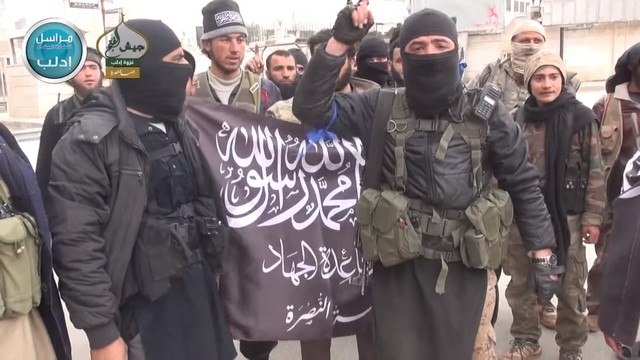
In a prior article, I had documented that since 2012 the U.S. Government has cooperated with the Sauds’ plan to install in Syria a fundamentalist-Sunni government to replace Syria’s existing secular Government, and that the fundamentalist-Sunni organization Al Qaeda has been the U.S. Government’s chief organization on the ground in Syria providing the leadership to that Saudi-U.S. effort. Part One of that report is especially important in order to understand the continuity between the policies of the current U.S. President Donald Trump and the prior U.S. President Barack Obama, in Syria.

The present article will provide the broader historical documentation behind this, starting in 1949, when the U.S. CIA, under President Harry S. Truman, did its second coup d’etat, overthrowing a democratically elected progressive Government (the first having been Thailand 1948, where the CIA had installed an extremely barbaric dictator replacing the democratically elected government that had been headed by a staunch anti-fascist, and simultaneously set up the CIA’s off-the-books supplementary funding mechanism from the international narcotics-trade — a CIA practice which has continued till perhaps the present; and, furthermore, the infamous Nugan-Hand affair, which involved Thailand, definitely involved the CIA’s Michael Hand and William Colby; so, clearly, the CIA is funded off-the-books from the narcotics business, and America’s anti-narcotics laws thus are actually keeping drug-prices and resultant burglaries and CIA profits artificially high, funneling that illicit money into CIA coffers; and any method to defund the CIA down to its core intelligence-gathering function and to eliminate its coup-function, which is the function that took control in Thailand and Syria and then Iran and many more, would need to regulate — instead of to continue outlawing — drugs, which might be the main reason why it hasn’t yet been done: illegal drugs provide wealth to the CIA and other gang-lords, including some U.S. Government officials).

The 1949 coup in Syria overthrew the democratically elected Syrian Government, which had blocked construction of a U.S.-Saudi oil pipeline through Syria into Europe. The CIA imposed upon Syrians a military dictatorship which was so bad, Syria’s military decided that their being stooges of the U.S. wouldn’t really work for them, after all; so, the generals allowed the democratically elected President to run again in 1955, and he won again. In 1957, the CIA tried to overthrow him yet a second time, but failed. The generals wouldn’t cooperate this second time around. In 1958, that democratic Syrian President merged Syria into Egyptian President Gamel Abdel Nasser’s United Arab Republic, which ended in 1960. Thereafter, a series of frequently replaced Syrian leaders ended in 1970, when the popular head of the institutionally secular Arab Socialist Ba’ath Party – Syria Region, Hafez al-Assad, came to power, and he included, in his Government, leaders from the Sunni, Shiite, and Christian, communities, in order to achieve a national Government that would be acceptable to all three of those communities, as well as to Syria’s many seculars. The CIA’s consistent plan has been to break Syria into religiously warring sub-states so that the Sunni one would allow the Sauds’ pipeline; and this plan became placed on-hold until the CIA’s plan for the “Arab Spring” rebellions succeeded in 2011 and seemed to make possible the U.S. regime’s ’democracy’ in Syria, this time meaning a breakup of Syria into Kurdish, versus fundamentalist-Sunni (Saudi-controlled), versus Shiite (pro-Iranian) nations. This also would please another U.S. and Saud ally, Israel, because then the Golan Heights part of Syria which Israel stole in 1967 would be able to become legally Israeli territory.

That 1949 coup in Syria was to enable America’s Bechtel Corporation to construct through Syria the proposed Trans-Arabian Pipeline for the Sauds’ and Rockefellers’ oil from Saudi Arabia to supply European countries and thus to crowd out oil from Russia. The EU is the world’s biggest energy-importer, and by far the largest energy-supplier to the EU is Russia. As Robert F. Kennedy Jr. recently headlined, regarding all of the Saudi-U.S. aristocracies’ grabs for Syria, “Syria: Another Pipeline War”. Syria has important (to the oil and gas industries) real estate. And the destruction of Syria by these foreign thugs has unfortunately resulted from this fact.

Syria is the most secular of all governments in the Middle East, and is the only government that’s committed, both in philosophy and in practice, to separation between church (or clergy) and state (government). I documented in that previous article America’s determination to overthrow the decidedly secular Ba’athist-Party Syrian Government, which is headed by Bashar al-Assad, whom both Riyadh and Washington demand to become “regime-changed” — replaced by a regime that’s acceptable to the rulers of Saudi Arabia (the royal Saud family) and of those rulers’ vassal-nation, the United States. In the present article I shall document that the Sauds have even been allowed by the U.S. regime to select the people who supposedly represent the Syrian public at the U.N.-sponsored Syrian peace talks — those are actually ‘peace’ talks not between the Syrian people and the Syrian Government (to settle a civil war, like the U.S. and its allies claim it is), but instead between the Saud family and the Syrian Government (to stop a foreign invasion, which it really is); this is what the U.S. regime actually supports: the Sauds, against Syria — the invader and its allies, against the victim and its allies. It’s the reality, even if all the ‘news’media are portraying it to be anything but a foreign invasion of the sovereign nation of Syria (which they, of course, are).

Europe — the EU — gets the refugees from America’s invasions and coups (including not only from the Middle East but also from America’s 2014 coup in Ukraine), but still allies itself with the U.S. Government, which nominally represents the American people, though actually representing only the billionaires in three countries: Saudi Arabia, Israel, and the United States. (What’s especially key to understanding U.S. foreign policies is that whereas the U.S. aristocracy is primarily focused against Russia, the Saudi-Israeli alliance is primarily focused against Iran.) Europe subordinates itself to that group of billionaires, but especially to the American ones, since the American ones control the NATO alliance and basically created the EU. (Whether America ever wears-out its welcome amongst European publics will be shown by the extent to which those publics repudiate both NATO and the existing EU, since those two organizations are the immediate agencies of U.S. control there; and the IMF and other U.S.-created entities are global, not merely European entities of these billionaires’ empire.)

Also documented in the prior article was an important part of the back-story to the present one, that:

The U.S., and the royal family of Saudi Arabia, had created Al Qaeda back in 1979, to be their “boots on the ground” against the Soviet Union, and used them not only in Afghanistan but also in Russia’s own Chechnya region, to weaken, first the Soviet Union itself, helping to break it up, and then, after the Cold War ended on the Russian side in 1991 when the Soviet Union and its communism and its Warsaw Pact military alliance all ended, America and the Sauds continued arming and funding Al Qaeda, so as to create terror in Russia, and to overthrow Russia’s allies abroad, such as Assad.

This U.S.-Saudi support of jihadists, in order to topple allies of Russia’s Government, and ultimately even to overthrow Russia’s Government itself, continues till the present day, under U.S. President Donald Trump.

What’s most important to make clear up-front, in order to show that America is waging the Sauds’ war against Syria — that the Sauds aren’t waging America’s war there — is that the U.S.-supported U.N.-managed peace talks in Geneva on the Syrian war are between the Syrian Government and the Saud family; the U.S. ceded to the Sauds the right to select the individuals who represent “the Syrian opposition” at those ongoing ‘peace talks’:

On 9 December 2015, as was reported to Europeans by AFP, the Saud family held an international conference in the Saudi capital, Riyadh, which AFP said was “Saudi-organized talks.” AFP said that these “talks” aimed “to go some way towards establishing an opposition negotiating team” against the Syrian Government. The Saud family had selected this conference’s invitees, in order to consider their applications to become the leaders, or even merely members, of this negotiating team under U.N. auspices, which would be called by the U.N. the “High Negotiations Committee” or “HNC” supposedly representing the people of Syria. However, no one was invited to this two-day Riyadh conference who “argues that Assad’s fate should be decided by the Syrian people.” The U.S. Government and the royal Saud family who own Saudi Arabia, and the royal Thani family who own Qatar, had previously established something they had called the “National Coalition.” Its deputy head was Hisham Marwa, who utterly rejected the idea that “Assad’s fate should be decided by the Syrian people.” AFP’s report said that Marwa was delighted at being surrounded at this conference by “the presence of military and political figures. This is the real opposition.” To him, the Syrian people were not. He was pleased that the Syrian people “will not affect the equation.” And they didn’t — but the royal Saud family did: they actually ran the HNC. Assad’s Government has been ‘negotiating’ against King Saud. That’s the reality, in the U.N.’s ‘peace talks.’

On 20 January 2016, the BBC headlined “Syria conflict: Islamist rebel named opposition chief negotiator” and reported that “A Syrian opposition committee has named an Islamist rebel as its chief negotiator at peace talks that the UN hopes to convene in Geneva on Monday. Mohammed Alloush is the political leader of the powerful, Saudi-backed group Jaysh al-Islam (Army of Islam).”

On 3 February 2016, the Saud-affiliated UAE’s The National newspaper bannered, “Why Jaish Al Islam and Ahrar Al Sham are at the heart of Geneva squabbles: While the groups both oppose ISIL [otherwise called ISIS], they are allies of Al Qaeda’s Syrian affiliate Jabhat Al Nusra,” and reported that “Jaish Al Islam … already has a central role in the discussions, with its leader Mohammed Alloush acting as chief negotiator for the opposition’s High Negotiations Committee team in Geneva. … Jaish Al Islam’s former leader Zahran Alloush spoke of Alawites and Shiites in derogatory terms and at times advocated that they be cleansed from parts of Syria.” The Alloushes, who had always been jihadists and pro-Saud Syrians, hated Shia just like the Sauds have hated Shia for hundreds of years (since 1744).

So: that’s how the U.S. Government ended up supporting, as constituting the supposed ‘representatives of the Syrian people’ ‘negotiating’ against Syria’s Government, in these U.N.-sponsored ‘peace’ talks, a team consisting of, and even being led by, agents who had been selected by the Saud family, who were determined to impose Sharia Law upon Syria.

It continues a lengthy U.S.-and-Saudi history of trying to replace Syria’s secular Government.

Here are key passages from historian Douglas Little’s excellent “1949-1958, Syria: Early Experiments in Covert Action”:

Declassified records confirm that beginning in November 1948, [CIA operative Stephen] Meade met secretly with Syrian Army Chief of Staff Col. Husni Zaim at least six times to discuss the “possibility [of an] army supported dictatorship.” U.S. officials realized that Zaim was a “‘Banana Republic’ dictator type” with a “strong anti-Soviet attitude.”

Building the Arabian American Oil Company’s Trans-Arabian Pipe Line from Saudi Arabia to Syria.

Meade and Zaim completed plans for the coup in early 1949. On 14 March, Zaim “requested U.S. agents [to] provoke and abet internal disturbances ‘essential for coup d’ etat’ or that U.S. funds be given him [for] this purpose.” Nine days later, Zaim “promised a ‘surprise’ within several days” if Meade could secure U.S. help. As rumors of a military coup grew stronger, Assistant Secretary of State George McGhee arrived in Damascus, ostensibly to discuss resettling Palestinian refugees but possibly to authorize U.S. support for Zaim. Shortly thereafter, … Meade reported on 15 April that “over 400 Commies [in] all parts of Syria have been arrested. … On 16 May, Zaim approved ARAMCO’s TAPLINE. … However, on 14 August, Zaim was overthrown and executed by Col. Sami Hinnawi. … On December 19, 1949, Col. Adib Shishakli ousted Hinnawi in Syria’s third coup in nine months. … Shishakli had a “cordial 2 hour discussion” with the CIA’s Miles Copeland and others at the U.S. embassy on November 23, 195l. When Ma’aruf Dawalibi, long regarded by U.S. observers as pro-Soviet, announced a week later that he would head Syria’s eighth cabinet in less than two years, Shishakli dissolved parliament and set up a military dictatorship. [This was the CIA’s 2nd Syrian coup; and it, too, established a dictatorship there.] … In short order, Syria initiated mutual defense talks with Turkey and renewed the TAPLINE concession. Shishakli was willing to consider a peace treaty with Israel and the resettlement of Palestinian refugees in Syria provided substantial U.S. financial and military aid was forthcoming. In 1952, the Truman administration pressed the World Bank to expedite Syria’s request for a $200 million loan. … CIA director Allen Dulles agreed that “the situation in that country is the worst of all the countries in that area.”  … U.S. Ambassador Moose suggested on 8 January [1955] that “thought be given to other methods,” including an “anti-Communist coup” engineered by the SSNP. In March, Allen Dulles and CIA Middle East chief Kermit Roosevelt flew to London, where they worked out the details for the [third CIA Syrian] coup with Britain’s Secret Intelligence Service (SIS). …

During an unprecedented New Year’s  [1957] Day meeting with key legislative leaders, Eisenhower requested congressional authorization to use U.S. troops to counter Soviet subversion in the Middle East. He “cited Syrian developments as evidence of Russian intent.” The House approved, 355 to 61 on January 30, 1957, and the Eisenhower Doctrine went into effect.

In August, Washington apparently gave authorization for Operation Wappen, the code name for the new U.S. covert operation against Syria. Howard Stone, a CIA political action specialist with experience in Iran and Sudan, had been planning a coup with dissidents inside the Syrian army for three months. Meanwhile, Shishakli assured Kermit Roosevelt [author of the CIA’s plan] that he was ready to reassume power in Syria. …

Syrian counterintelligence chief Sarraj reacted swiftly on August 12, expelling Stone and other CIA agents, arresting their accomplices and placing the U.S. embassy under surveillance. Left-wing Colonel Bizri used the fiasco as an excuse to wrest control of the army from his moderate rivals.

The U.S. encouraged Turkey and Iraq to mass troops along their borders with Syria. …

Eisenhower gradually edged away from the provocative scheme but the Turks refused to demobilize the 50,000 troops they had massed along the Syrian frontier. …

On July 15, Eisenhower pondered U.S. problems in the Arab world. “The trouble is we have a campaign of hatred against us, not by the governments but by the people.”

The U.S. regime’s enemies here were not any government, but instead “the people.” These people had good reason for hating America’s Government. Syrians didn’t want American thugs to control their lives. Already, the U.S. had become a dictatorship; and not only was it that: it became a dictatorship which is determined to be dictators to the entire world. The U.S. aristocracy demanded this, and still does.

The U.S. gang (the U.S. Government) weren’t dealing with a sufficiently psychopathic military in Syria; so, America’s rule over that country didn’t last long. But, finally, the born CIA asset Barack Obama tried his best to conquer Syria, and he too failed; and, now, the businessman Trump is settling for controlling merely portions of Syria, which the Sauds and the billionaires in Israel and in the U.S. still are demanding.

Thus, Syria hasn’t been sufficiently corrupt to satisfy the U.S.-Israeli-Saudi gang. Syria’s Government still represents the Syrian people. (Even Western polls of Syrians confirm it. And 72% of Syrians are opposed to the U.S. regime’s demand that Assad be removed from power prior to the next Syrian election and not be allowed to run again for the Presidency. And yet the U.S. says it supports democracy — even while trying to block it in Syria.) America’s aristocrats have tried mightily in Syria, many times, but have failed, each time.

What brought down the Soviet Union — Al Qaeda, supported by the aristocracies of the U.S. and Saudi Arabia — has consistently failed to bring down Syria, except to destroy it — and the perpetrators of that destruction (not only America’s dictators, but the Sauds, plus the Thanis who own Qatar, plus Turkey’s Erdogan) even have the gall now to blame their victims, for that $250-billion-plus reconstruction expense. That’s the perfection of conservatism: it’s the epitomization of the blame-the-victim ideology. It is fascism.

Investigative historian Eric Zuesse is the author, most recently, of  They’re Not Even Close: The Democratic vs. Republican Economic Records, 1910-2010, and of  CHRIST’S VENTRILOQUISTS: The Event that Created Christianity.

22 January 2018

Source: https://countercurrents.org/2018/01/22/americas-deceitful-secret-support-al-qaeda/

Redrawing The Map Of Syria

By Abdus Sattar Ghazali

Russian Foreign Minister Sergey Lavrov has said the United States “does not want to keep Syria as a state in its current borders”, accusing Washington of seeking to establish a Kurdish-controlled entity along Turkish and Iraqi border zones.

Speaking at an annual press conference in Moscow to review the past year’s diplomatic activities on Monday Jan 13, Lavrov said:

“The [US’] actions that we have been observing indicate that the US does not want to keep Syria as a state in its current borders … The US wants to help the Syrian Democratic Forces to set up some border security zones,” he said, referring to a US-backed rebel alliance dominated by Syrian Kurds, known as the SDF. What it would mean is that vast swaths of territory along the border of Turkey and Iraq would be isolated, it’s to the east of the Euphrates river. There are difficult relations between Kurds and Arabs there. If you say that this zone will be controlled by the forces supported by the US, there will be a force of 30,000 people.”

Erdogan: US trying to form ‘terror army’ in Syria

Commenting on reports of the US plan to establish a 30,000-strong new border security force with the involvement of Kurdish fighters in northern Syria, Turkish President Recep Tayyip Erdogan said that the US was working to form a “terror army” on his country’s southern border by training a new force in Syria that includes Kurdish fighters.

“What we are supposed to do is to drown this terror army before in comes into being,” he said in an address in the capital Ankara on Jan 15, calling the Kurdish fighters “backstabbers” who will point their weapons to the US in the future.

According to media reports quoting US officials, the US-led coalition fighting the Islamic State of Iraq and the Levant (ISIL also known as ISIS) will recruit around half of the new force from the Syrian Defense Forces (SDF), an umbrella group of fighters dominated by the People’s Protection Units (YPG).

Ankara considers Kurdish YPG fighters as a “terrorist” organization with links to to the banned Kurdistan Workers’ Party (PKK), which has waged a decades-long fight inside the country. PKK is blacklisted as a terrorist organisation by Turkey and its Western allies. The US views the YPG as a highly effective fighting force against ISIL.

Erdogan said that Turkey’s armed forces had completed preparations for an operation against the Kurdish-controlled region of Afrin in northwest Syria and the town of Manbij.

He warned Turkey’s allies against helping “terrorists” in Syria and said: “We won’t be responsible for consequences.”

“The establishment of the so-called Syria Border Protection Force was not consulted with Turkey, which is a member of the coalition,” the Turkish foreign ministry said.

US backtracks on Syrian ‘border guard’

The United States continues to train local security forces linked to the Kurdish-led Syrian Democratic Forces in Syria, but will not create a ‘border guard force’ and understands the concerns of Turkey, the U.S. Department of Defense said in a statement on Wednesday Jan 17.

“The training is designed to enhance security for displaced persons returning to their devastated communities,” the Pentagon said. “It is also essential so that ISIS cannot reemerge in liberated and ungoverned areas. This is not a new “army” or conventional ‘border guard’ force.”

The statement added that the U.S. was “keenly aware of the security concerns of Turkey, our Coalition partner and NATO ally.”

Noting that Turkey’s security concerns are legitimate, the Pentagon said it would continue to be transparent with Ankara about its efforts to defeat ISIS in Syria, “and stand by our NATO ally in its counter-terrorism efforts.”

“The military campaign against ISIS in Syria is not over and heavy fighting is still underway in the Middle Euphrates River Valley,” the Pentagon said adding:

“These security forces are internally-focused to prevent ISIS fighters from fleeing Syria and augment local security in liberated areas. These forces will protect the local population and help prevent ISIS from launching new attacks against the U.S. and its allies and partners, pending a longer-term political solution to the Syrian civil war in Geneva.”

Will Syria’s conflict redraw the map of the Middle East?

Fabrice Balanche, associate professor and research director at the University of Lyon 2, wrote in June 2017: “The global resonance of the Syrian war has a precedent from some four centuries ago: the conflict in Bohemia (1618–23), which initiated the Thirty Years’ War. Today, world powers such as Russia, China, the United States, and Europe are assessing their regional interests and the measures they will take to achieve them. The conflict itself, meanwhile, can only grow, as the Yemen example shows, given the freeing up of local actors. But amid the great instability, a new Westphalian order is emerging in the Middle East. Rather than erasing the mistakes of the past a new territorial division could end up being superimposed upon the Sykes-Picot line by which the departing colonial powers split the region.”

Not surprisingly, Michael Hayden, a former director of America’s Central Intelligence Agency told CNN in February 2016, that the international agreements made after World War Two are starting to fall apart, and may change the borders of some countries in the Middle East.

“What we see here is a fundamental melting down of the international order,” Michael Hayden said adding:

“We are seeing a melting down of the post-WWII Bretton Woods American liberal order. We are certainly seeing a melting down of the borders drawn at the time of Versailles and Sykes-Picot. I am very fond of saying Iraq no longer exists, Syria no longer exists; they aren’t coming back. Lebanon is teetering and Libya is long gone.”

Hayden described the current situation as a “tectonic” moment. “Within that we then have the war against terrorism; it is an incredibly complex time.”

Argument for greater Kurdistan

Lt. Col. Ralph Peters wrote in June 2006, the most arbitrary and distorted borders in the world are in Africa and the Middle East. Drawn by self-interested Europeans (who have had sufficient trouble defining their own frontiers), Africa’s borders continue to provoke the deaths of millions of local inhabitants. But the unjust borders in the Middle East — to borrow from Churchill — generate more trouble than can be consumed locally.

Yet, for all the injustices the borders re-imagined here leave unaddressed, without such major boundary revisions, we shall never see a more peaceful Middle East, Peters argued and added:

“The most glaring injustice in the notoriously unjust lands between the Balkan Mountains and the Himalayas is the absence of an independent Kurdish state. There are between 27 million and 36 million Kurds living in contiguous regions in the Middle East (the figures are imprecise because no state has ever allowed an honest census). Greater than the population of present-day Iraq, even the lower figure makes the Kurds the world’s largest ethnic group without a state of its own. Worse, Kurds have been oppressed by every government controlling the hills and mountains where they’ve lived since Xenophon’s day.

“The U.S. and its coalition partners missed a glorious chance to begin to correct this injustice after Baghdad’s fall. A Frankenstein’s monster of a state sewn together from ill-fitting parts, Iraq should have been divided into three smaller states immediately. We failed from cowardice and lack of vision, bullying Iraq’s Kurds into supporting the new Iraqi government — which they do wistfully as a quid pro quo for our good will. But were a free plebiscite to be held, make no mistake: Nearly 100 percent of Iraq’s Kurds would vote for independence.

“As would the long-suffering Kurds of Turkey, who have endured decades of violent military oppression and a decades-long demotion to “mountain Turks” in an effort to eradicate their identity. While the Kurdish plight at Ankara’s hands has eased somewhat over the past decade, the repression recently intensified again and the eastern fifth of Turkey should be viewed as occupied territory. As for the Kurds of Syria and Iran, they, too, would rush to join an independent Kurdistan if they could. The refusal by the world’s legitimate democracies to champion Kurdish independence is a human-rights sin of omission far worse than the clumsy, minor sins of commission that routinely excite our media. And by the way: A Free Kurdistan, stretching from Diyarbakir through Tabriz, would be the most pro-Western state between Bulgaria and Japan.”

Lt. Col. Ralph Peters further argued: “A just alignment in the region would leave Iraq’s three Sunni-majority provinces as a truncated state that might eventually choose to unify with a Syria that loses its littoral to a Mediterranean-oriented Greater Lebanon: Phoenecia reborn. The Shia south of old Iraq would form the basis of an Arab Shia State rimming much of the Persian Gulf. Jordan would retain its current territory, with some southward expansion at Saudi expense. For its part, the unnatural state of Saudi Arabia would suffer as great a dismantling as Pakistan.”

His article was published in the Armed Forces Journal under the title: Blood borders: How a better Middle East would look.

Abdus Sattar Ghazali is the Chief Editor of the Journal of America (www.journalofamerica.net).

22 January 2018

Source: https://countercurrents.org/2018/01/22/redrawing-map-syria/

The US Syria “Strategy” – Recipe for Continued Disaster Even for the US

By Jan Oberg

19 Jan 2018 – Most media covering the speech that US Secretary of State, Rex Tillerson, gave at the Hoover Institution on January 17, 2018 merely points out that he said that the United States would stay in Syria – open-ended – in the future and until President Bashar al-Assad has left the scene. Read the full speech here.

Reuters even twists it all to mean that the US is now more patient about Assad’s removal.

Before I continue, it is a significant sign of the Western crisis, including moral and legal decay, that it raises few eyebrows – and none in NATO circles – that a top official of the leader of the Western world:

1. expresses no regrets about anything done so far in this conflict or in the larger Middle East,

2. states clearly that it will continue what must in legal terms be characterized as foreign military aggression and presence on the territory of a legal state member of the UN,

3. that it will work for regime change (there too) and

4. will make various kinds of aid dependent on Assad’s demise. Remember it is one of the largest post-1945 humanitarian crises – in the category of, say, Vietnam, Cambodia, Iraq and Yemen – all of which have, by no coincidence, US and allied warfare as their main feature.

Irrespective of what we may think of Syria, this is little but a full-scale assault on international law and the normative system embedded in the UN Charter that has taken decades of hard work to build, a fundamental cornerstone of the management and civilizational development of the world order system.

Seen in comparison with the other attempts at undermining the UN – which began in the 1990s in Bosnia-Herzegovina – this should be a cause of deep concern among people in the truly civilizational corners of our world.

And it can’t be sold to the world under the headline of a Responsibility to Protect. But it does provoke the question: Shouldn’t there be a Responsibility to Protest – even among those allies that Tillerson seems to take for granted are all lining up behind the US (and perhaps they are)?

If there is anyone who can talk the US to some sense these days, it must be allies and friends predominantly in NATO and the EU. But will they?

Although held at Stanford University – and therefore supposed to contain some kind of decent academic-intellectual analysis – Tillerson’s presentation is from such perspectives incredibly poor.

Although he says that he will give “a broad historical and political context”, there is neither broadness, nor history nor context. Indeed, just a few words later he starts out in this manner which offers the framework for the rest of what he says:

For nearly 50 years, the Syrian people have suffered under the dictatorship of Hafez al-Assad and his son Bashar al-Assad. The nature of the Assad regime, like that of its sponsor Iran, is malignant. It has promoted state terror. It has empowered groups that kill American soldiers, such as al-Qaida. It has backed Hizballah and Hamas. And it has violently suppressed political opposition…

and on an on it goes.

If this is the best history, context and analysis of what the underlying conflicts and the reasons for all the violence in Syria are that the United States of America’s top foreign policy official can muster you may ask at least two questions: What is so terribly deficient, narrow-minded and self-serving about US academia in this field? Or is that academic world actually excellent but not listened to at all in decision-making circles and why did he make that speech at a university?

I don’t know what the answer is, perhaps it is a combination of the two? But as a professor in peace and conflict studies I would ask an undergraduate student making writing such a piece of history and conflict analysis to read a couple of books more and come back to me with a revised paper. I would not let that student pass the exam.

Interestingly, the transcript of the speech reveals that the audience had no chance to ask questions or otherwise debate with the speaker. After Tillerson’s speech there is only a conversation between him and former foreign secretary,  Condoleezza Rice. That’s unusual at a university where free debate should reign.

Secondly, there is nothing that indicates that Tillerson has a grasp on how his “strategy” for Syria relates to a more comprehensive policy for the Middle East region as a whole.

He doesn’t mention – for understandable reasons, you may say – that the US also has some other policies and goals for its future presence in Syria such as building permanent bases – in a kind of base race with Russia – and supporting Kurdish forces in the Syrian side of the border to Turkey – the second largest military power in NATO that is of course furious and calls it a terrorist army that it is ready to fight.

It will only push Turkey closer to Russia and eventually and predictably Turkey will turn its back completely on Europe and leave NATO.

We’ve of course seen it all before. It’s about bases (like, say, Kosovo), about control of resources (like, say, Iraq), about regime change (like, say Saddam Hussein and Moamar Khadafi) and it’s about the exceptionalist belief that God’s own country has God’s mandate to create US Imperial peace everywhere – no matter how many times it has already gone madly wrong and no matter how many innocent people are killed and wounded in the process.

He also does not mention that the US under the Trump administration has chosen to promote and support the new fundamentalist Islamist-Zionist team, Saudi-Arabia and Israel, supported by the Gulf States, to gang up against the Iran that is seen as a huge threat to the US, the world and the region. But which – unfortunately for that view – isn’t.

It is conspicuous in that this otherwise totally split and in-fighting administration/Deep State is united in basically in one thing: hating Iran. Iran is also about the only issue where President Trump holds the same views while he was in the campaign as he does now he is in the White House.

Furthermore, the Trump administration is doing nothing but undermining the welfare of the Iranian people (and supporting the hardliners and corrupt sectors) by means of the sanctions that are still in function through financial mechanisms. And coming up repeatedly with nonsensical perceptions of the country and permanent threat à la all options are on the table.

That is going to go madly wrong too, sooner or later.

Much can be said about Tillerson’s speech. If it wasn’t coming out of the world’s strongest military power – but now losing on all other power scales – nobody would bother to read it. But you should! (Or see it below on video which also reveals how ritualistic the whole event is from the intro by the Hoover president and onwards).

Heartbreakingly, it spells prolonged hell for fellow human beings in Syria and – open-ended – troubles for Iran and its people.

Its peace-and-military stability philosophy is a fake as fake can be. Peace means war, open-ended war.

Can anything good be said about it?

Probably only that this type of policy will eventually become the famous nail in the US Empire’s coffin. Thereafter, both the US Republic and the world will be a much better place.

But wouldn’t it be so much better for all of us if that piece of history could unfold in a peaceful, intellectually honest and moral manner instead of open-ended warfare to the end?

TFF Director Prof. Jan Oberg is a member of the TRANSCEND Network for Peace Development Environment.

22 January 2018

Source: https://www.transcend.org/tms/2018/01/the-us-syria-strategy-recipe-for-continued-disaster-even-for-the-us/

Why the United Nations Matters (even for the Palestinians)

By Richard Falk

There are many reasons for persons with very different worldviews to feel disillusioned by, if not angry at, the United Nations. These negative feelings arise usually because the UN stands idly by the sidelines while terrible national and human tragedies unfold as the world media visually narrates horrific events in real time. At other times the hostile feelings toward the UN arise because the Organization is seen as a plaything of geopolitics, as bowing to crude leverage wielded by major funding governments, and in the process violating the letter and spirit of the UN Charter. Such behavior undermines the UN’s constitutional foundations and casts doubt on the central claim that the Organization is dedicated to the cause of war prevention.

No people have more reason to be disappointed with the UN, international law, and the precepts of international morality than do the people of Palestine. From the moment the UN was established up until the present moment, the Palestinians have been victimized either by the use of the UN to pursue geopolitical goals or by the inability of the UN to implement its own decisions and assessments that are responsive to Palestinian grievances or supportive of Palestinian aspirations.

Obviously, there is present a world order puzzle that needs solving. Many believe, especially here in the United States, that it is Israel that is the victim of UN bashing and bias, being singled out at the UN for continuous censure and criticism, and it is the Palestinians that have over the years received aid and comfort in the halls of the UN for their contentions, however inflammatory. For our dualistic Western minds, incapable of reconciling opposites, something must be wrong. It seems impossible for both the Palestinians and Israelis to be both victimized at the UN.

Yet this is precisely the case. The Palestinians are victimized because the UN doesn’t mean what is says, at least not on the plane of action. The UN gives the Palestinians the pabulum of words, while refraining from the reality of deeds, which over time gives rise to resentment and cynicism summarized by the sentiment: ‘what good are words, if nothing happens, and the situation on the ground even deteriorates.

At the same time, partly in reaction to this sense of impotence when it comes to imposing its views effectively on behavior, the UN slaps, sometimes strongly, the defiant Israelis. And the Israelis, never above playing the anti-Semitic card, keep telling the world that they are singled out for bashing even though their wrongs are far less bad than that of others. Of course, never far in the background is the weight of geopolitics, with the United States wielding a punitive stick on Israel’s behalf.

History needs to be taken into account in sifting through the complexities of argument and counter-argument carried on now for decades about the performance of the UN in relation to Palestinians and Israelis. With respect to the geopolitical explanation of Palestinian disillusionment, the UN already in 1946 accepted the responsibility to supersede the United Kingdom, which had been administering Palestine on behalf of the international community since the fall of the Ottoman Empire after World War I., in working out a solution on behalf of the two peoples. Yet instead of consulting the resident population of Palestine on its wishes with respect to the implementation of the right of self-determination, the UN on its own initiative proposed an Orientalizing solution that gave Israel 55% of Palestine despite less than 33% of the population being Jewish. This demographic disparity existed despite several decades of Jewish immigration spurred by energetic Zionist efforts around the world as well as by the British, eager for strategic reasons of their own to carry out the Balfour pledge of 1917. Jewish immigration was also greatly encouraged by the rise of Nazism, which intensified the search for a sanctuary that could protect Jews, especially those fleeing Hitler’s Germany.

Then to compound this imposition of a settler colonialist outcome, repugnant from the outset to the majority Arab population, the UN proceeded in 1948 to accept Israel as a member of the UN without first making obligatory provision to ensure an equitable future for the Palestinian people. This flawed UN response to the end of the British mandate has been compounded by years of Israeli expansionism, especially since 1967. Such an internationally tilted outcome reflected intense liberal guilt toward Jews in the aftermath of the Holocaust combined with the skill and tactics of the Zionist movement in influencing the Jewish diaspora as well as government policy in Europe and North America. It was an early demonstration of geopolitics triumphing over international law and global justice within the UN. It should not be forgotten that the UN was established in ways that gave leading states a geopolitical comfort zone, more familiarly known as ‘the veto,’ a blunt instrument for opting out of responsibilities, and useful to protect friends and batter enemies.

Turning to the impotence of the UN when it comes to its resolutions and decisions that encounter geopolitical resistance, the pattern has been evident all along. After the outcome of the 1967 War, the international community by way of the UN acquiesced with hardly a whimper to the extension of Israeli territorial claims from 55% to 78% of mandate Palestine. Ever since, this enlargement of Israeli territorial expectations has formed the basis for the two-state consensus, and was even accepted by the Palestinians as the realistic territorial baseline for a compromise solution.

Beyond this central issue of territorial allocation, the UN General Assembly affirmed the right of return of Palestinians forced to leave their homes in the 1947-48 War in General Assembly Resolution 194, and a second wave dispossessed in the 1967 War. The resolution has been pointedly rejected by Israel without any adverse consequences.

In similar fashion, the expansion and annexation of Jerusalem has been strongly condemned, most canonically, by the UN Security Council in Resolution 478 (1980), a unanimous vote except for the U.S. abstention. Finally, despite this, and the periodic Security Council denunciations of Israeli settlements on occupied Palestine territory, Israel has continued year upon year to build and increase the settler population. Against this background, it is to be expected that the Palestinians feel that having their rights affirmed at the UN is a worthless exercise, if not a feeble way to obscure UN impotence, given that the Palestinian ordeal has worsened year after year, decade after decade.

And yet despite all this the Jerusalem resolution of last December (passed by a vote of 128-9 with 35 abstentions and 21 absences) repudiating the Trump initiative is significant, partly because symbols are of great, if indirect, importance in international life. Symbolic victories at the UN do on occasion have subtle, yet real, behavioral impacts. The UN for all its weaknesses has long been the primary source for authoritative determinations of the legitimacy and illegitimacy of internationally recognized claims and grievances. This resolution is illustrative, supported by every important country in the world including the closest allies of the United States, with the symbolic and unequivocal rejection of the Trump diplomatic gesture of recognition being clear and consequential.

The Jerusalem resolution seems likely to produce a series of consequences: it greatly weakens, if not terminates, the central role that the United States has played as the only recognized third party mediator between Israelis and Palestinians, thereby creating an opportunity for the EU and individual European states to fill the diplomatic vacuum that seems to have formed; besides this, demonstrations around the world opposing the U.S. recognition initiative are translating support throughout the world for the Palestinian global solidarity movement that is likely to be expressed in several ways, especially by way of a more robust Boycott, Divestment, and Sanctions (BDS) Campaign. And at least for the moment, the Palestinian Authority, and its leadership, has moved away from adopting a quasi-collaborative stance in its relations with Israel, insisting that Trump’s move caused a damaging rupture. In effect, if diplomacy is to go forward in the future, it will have to proceed under new auspices, possibly Europe, maybe even China or the UN. Such radical expectations, while expressing a welcome refusal to be coopted by the Tel Aviv/Washington charade carried on for so long within the Oslo framework, is totally unrealistic in the near term. Israel would much rather be a pariah state than to submit its fate to Chinese or UN diplomacy, or for that matter, any intermediary that would seem fair to the Palestinians rather than partisan as in the past in favor of Israel. For so long Israel has been coddled by American leaders that it became a hardened expectation with little wiggle room as Barack Obama found out early in his presidency when he dared to take baby steps in search of a middle ground.

It is worth recalling the anti-apartheid campaign against the South African racist regime that achieved prominence in the decades after 1945. The UN played a crucial role by its authoritative condemnation of apartheid as a crime against humanity and by its indirect encouragement of nonviolent resistance to South Africa racism throughout the world. This anti-apartheid experience is an instructive precedent, raising hope for the eventual success of the Palestinian national struggle, although the South African leadership had been far less creative and effective than the Israelis in insulating their governing process from external pressures.

What is analyzed with reference to Palestine and the Jerusalem resolution can be understood as a template for a general appreciation of both what the UN can and cannot do. The UN has this central role to play in either confirming or dismissing symbolic claims associated with the grievances and rights of subjugated peoples in the world. It is for this reason that governments fight so hard to have their policies accepted at the UN, or at least not criticized, censured, or punished, none more so than the government of Israel. Israel’s vicious attacks on the UN should be understood as disclosing the Israeli appreciation that, despite everything, the UN is a crucial site of struggle in the contemporary world order. Its findings of legitimacy and illegitimacy, especially if they resonate with feelings of justice around the world, impact strongly on civil society and often exert a strong influence on international public opinion and media coverage.

At the same time even if there is intense support for a symbolic outcome, it will rarely be self-enforcing, and it will be almost impossible to enforce at all absent a rare supportive geopolitical consensus. For instance, with respect to imposing sanctions on North Korea given its provocative nuclear program and accompanying diplomacy, it has been possible for all 15 members of the Security Council to agree sometimes on a common course of action, although as worried by Trump’s blustering belligerence that increases the danger of a universally unwanted and feared war. The geopolitical divergencies that were present at the UN were temporarily overcome by compromises. In this instance, the shared goal of avoiding a war on the Korean Peninsula encouraged governments to find some common ground.

The role of the UN in the Middle East has been particularly lamentable; first, the legacies of colonialism have left artificial political communities throughout the region. The Middle East also suffered from the geopolitical ambitions of the U.S., including its Cold War containment policy, strategic priorities accorded Gulf oil reserves and the security of Israel, and since the Iranian Revolution of 1979, its resolve to limit the spread of Islamic influence and political extremism. In effect, when the geopolitical stakes are high and associated with the policy priorities of dominant states, then the UN becomes marginalized, playing only trivial roles as in the long international civil wars that have caused such massive suffering in Syria and Yemen.

The conclusion to be reached is to view the UN realistically, affirming its central role with regard to symbols of legitimacy and its relative impotence if geopolitical forces are mobilized against any UN calls for action. Sometimes, arguably, the UN can be too effective, as when geopolitical forces turn a blind eye to issues of sovereignty and justice in a weaker country. This happened when in 2011 the Security Council was hoodwinked into endorsing a NATO regime-changing intervention in Libya undertaken in the name of freedom and democracy, but resulting in chaos, violent strife, and ethnic tensions.

The prospects for a stronger UN presence in international life involve tethering geopolitics by taking steps that now seem politically impractical: abolishing the veto power of the five permanent members of the Security Council, making resolutions of the General Assembly binding if supported by ¾ of UN members, basing UN funding on an independent tax base tied to international civil aviation or transnational financial transactions, and removing the selection of the Secretary General from the filter of P-5 approval. These steps have been long advocated by those seeking a more effective UN, but have been blocked by states that do not want to diminish their international status or their geopolitical leverage.

Until the international system experiences a shock or intense stress, it is hard to imagine such steps being taken. In fact, given Trump’s regressive approach to global policy and thinly disguised hostility to the UN, it is more likely that the UN will be even more constrained in the near future as to what it can do to make the world more peaceful, prosperous, sustainable, and just. The diplomatic rebuff of the UN after its irresponsible Jerusalem unilateralism, including the failure of its bullying tactics, has undoubtedly made the Trump presidency realize that the UN will not be a venue in which to push its regressive version of ultra-nationalist militarism.

Despite understandable degrees of disillusionment, people of good will dedicated to UN ideals should not give up on the Organization or its potentiality, but work harder to make the UN come closer to fulfilling its original promise, needed now more than ever. Justice for the Palestinian people, however long deferred, remains the defining moral prism by which to assess the shifting balance between achieving global justice and bowing to the whims of geopolitics at the UN and elsewhere.

Richard Falk is a member of the TRANSCEND Network, an international relations scholar, professor emeritus of international law at Princeton University, author, co-author or editor of 40 books, and a speaker and activist on world affairs.

22 January 2018

Source: https://www.transcend.org/tms/2018/01/why-the-united-nations-matters-even-for-the-palestinians/

Yes We Can – Feed 9 Billion With Organic Agriculture

By Gunnar Rundgren

It is possible to feed more than 9 billion people with organic production methods with a small increase in the required crop acreage and with decreased greenhouse gas emission. But this assumes considerable reduction in food wastage and in the quantities of feed grown to animals.

That is the conclusion in the paper Strategies for feeding the world more sustainably with organic agriculture in Nature Communications by researchers from the Research Institute of Organic Agriculture in Switzerland, the Institute of Environmental Decisions in Switzerland, Food and Agriculture Organization of the United Nations (FAO) in Italy, Institute of Social Ecology Vienna in Austria and the Institute of Biological and Environmental Sciences in the UK.

The research builds on assumptions of a 25% reduction in yield with organic methods, the continued increase in global population up to more than 9 billion 2050 as well as different scenarios of impact of climate change on agriculture yields. The model doesn’t assume any change in the area used for grazing. The researchers acknowledge that different research show big variation in the ”yield gap” between organic and conventional. It is primarily research from Europe that shows big yield gaps, while other studies show much smaller gaps, if any. In general their assumptions are conservative and could hardly be accused of being biased in favour of organic.

Obviously, if consumption patterns are equal and yields are lower and population increases, more land would be needed with a large-scale conversion to organic agriculture. But if food waste is reduced with 50% and this is combined with a 50% reduction in the use of human-edible crops as animal feed, less land would be used compared to a reference scenario (the assumed population, consumption and production as per 2050 in FAO:s analysis) – still more than today though.

The biggest agronomic challenge for such a large scale conversion to organic would be the supply of nitrogen. On the up-side of that, the reactive nitrogen overload of the whole biosphere, one of the biggest changes in local and global biological cycles, would be reduced and gradually disappear. The researchers acknowledge that recycling of human waste and food waste into the agriculture system could reduce the nitrogen deficiency in agriculture, but they have not included that in the model.

The exclusion of synthetic fertilizers leads to big reductions of greenhouse gas emissions, as both the use and production of Nitrogen fertilizers are major causes for emissions. Emissions from ruminants (cows, sheep and goats) will increase somewhat as their total numbers will increase (but less than the increase of population). Similarly, the greenhouse gas emissions from rice cultivation will increase because of more rice being produced.

The combination of the lower yields and the increase of leguminous plants (beans etc) in order to fix nitrogen makes the availability of animal feed lower. So the decreased use of human-edible crops as feed for animals is rather a production necessity than something triggered by consumption changes. The reduction of animals will mainly be for monogastric animals such as pigs and chicken as they are the ones that mainly eat human-edible crops.

The results of the study coincides with similar results on a national and regional level. For instance, researchers from the Nordic countries concluded that it would be possible to feed between 31 and 37 million people (compared to the current 26 million) in the Nordic countries, with organically produced food assuming substantial reduction in meat consumption.

One can claim that the results also show that you can’t convert the agriculture system to organic without increasing the cultivated lands considerably. Because, despite the conclusions of the authors, that is also a result from their scenarios. If nothing else is changed land demand will increase with 33%.

Ultimately, all this modelling and scenario-building has limited value and the results are very much fixed by the assumptions and input data. The food system is a dynamic system where you can’t change just one or two parameters and keep the rest the same. But models and scenarios can still help us to identify certain critical conditions.

The choice of the authors to change food wastage and the proportion of food fed to animals is a rather reasonable choice and not taken out of the blue. One can assume that food will become more expensive with a large-scale conversion to organic and that will reduce waste considerably. Similarly, using human-edible food as feed for animals will be less interesting from a commercial perspective when they become more expensive. The dramatic increase of consumption of pig and chicken meat is as much a result of cheap grains and soy beans as of consumer demand.  The increased consumption of pulses to compensate for the reduction of meat coincide with a need to increase the cultivation of such crops to adjust to nitrogen shortages.

There are also other assumptions that could be included in models. The total calories produced under the scenarios are far above what people need to eat and as obesity is now a big global problem, one could have reduced calories available and thus be able to show even better results AND an improved health status of the world’s population. Improvements in the utilization of grasslands could also have been a parameter to consider.

Finally, the economic feedback loops are very important. There are several ways to increase yields in agriculture, of which the use of chemical fertilizers and pesticides are just two. They are admittedly important, but one can increase productivity by deploying more work, other nature resources (e.g. water), by switching crops or taking more crops per year. What is done is mainly determined by economic factors. Very few farms, organic or non-organic, produce at their maximum, but they produce what is optimal given prices of factors of production and output prices. In most cases, production per person has been much more important that production per unit of land. But in a world with limited land resources and 9 billion people, this will sooner or later change.

So yes, we can. If we want to.

Gunnar Rundgren has worked with most parts of the organic farmer sector – from farming to policy – since 1977, starting on the pioneer organic farm, Torfolk.

21 January 2018

Source: https://countercurrents.org/2018/01/21/yes-can-feed-9-billion-organic-agriculture/

Commentary: Killing the Iran nuclear deal will be bad for the U.S.

By Seyed Hossein Mousavian

After months of threatening to undo the Iran nuclear deal, formally known as the Joint Comprehensive Plan of Action (JCPOA), Donald Trump once again opted to extend the deal by waiving economic sanctions on Iran. This was the “last chance,” he declared in a Jan. 12 statement, “to either fix the deal’s disastrous flaws, or the United States will withdraw.”

The U.S. president provided four conditions for a “supplemental agreement” to the JCPOA and called on Congress to ordain them into law. These include: Iran allowing “immediate” inspections of “all sites requested by international inspectors,” Iran never coming “close to possessing a nuclear weapon,” that there be “no expiration date” for these provisions, and finally, that the legislation explicitly state that Iran’s “long-range missile and nuclear weapons programs are inseparable.”

In the event that Congress or American allies in Europe fail to support the so-called supplemental agreement, Trump proclaimed, he would unilaterally “terminate” the JCPOA. This is a shocking attitude towards the European Union member countries, among others.

The reality is that the JCPOA’s text stipulates the highest standards on nuclear transparency and inspections ever negotiated and provides verifiable assurances that Iran’s nuclear program cannot be diverted towards developing nuclear weapons. These measures already meet the first two of Trump’s conditions and surpass anything agreed to by a member of the nuclear non-proliferation treaty (NPT).

Furthermore, while the JCPOA’s major restrictions are temporary, with expiration dates ranging from eight to 25 years, after the deal expires, Iran returns to monitoring under the International Atomic Energy Agency’s “Additional Protocol” safeguards. As noted by more than 90 nuclear scientists in an October 2017 letter supporting the JCPOA, these represent the “strongest set of generally applicable safeguards implemented by the IAEA.”

Trump’s conditions seemingly seek to make permanent the JCPOA’s major restrictions on Iran’s nuclear program and connect the Iranian nuclear program to its missile program, despite the opposition of other world powers to any renegotiation of the deal and the conditions representing an egregious violation of the NPT. Indeed, Iran has a sovereign right to enrich uranium for peaceful purposes under the treaty, which states that there should be no discrimination in the right of signatories to benefit from peaceful nuclear technologies and in no way limits states’ abilities to develop conventional weapons.

Iran also has a sovereign right to possess missiles to defend itself. There are no international treaties banning conventional missiles. “President Trump has no right to dictate limits or restrictions over and beyond those just described,” said Peter Jenkins, a former UK ambassador to the IAEA.

If Trump follows through with his ultimatum and chooses to leave the JCPOA, his decision will have long-term consequences not only for the United States but also for global attempts to control nuclear proliferation.

First, in the domestic arena, all vital political organs from Congress to Trump’s own national security agencies, including the National Security Council, Pentagon, State Department, and Department of Energy, oppose unilateral American withdrawal because they believe the agreement prevents Iran from developing nuclear weapons and that withdrawal will isolate the United States internationally.

Second, scuttling the JCPOA will increase global mistrust of the United States and remove any incentive for North Korea to negotiate a deal to curtail its own nuclear program. Washington could also find it harder to win support for any military campaign it may launch against Pyongyang if U.S. allies hold it responsible for re-igniting the Iranian nuclear crisis.

Third, the JCPOA was endorsed by the UN Security Council – which includes the United States — and its other members continue to support the deal. Based on the UN charter, it is the obligation of all members to enact Security Council resolutions. Outright U.S. violation of UNSC Resolution 2231 will damage the credibility of other Security Council resolutions and be seen by other member states as hurting its consensus-driven model.

Fourth, the IAEA has on numerous occasions confirmed Iran’s adherence to the deal and has emphasized that U.S. withdrawal will foment a crisis in the agency’s ability to carry out its inspection duties. The JCPOA represents a major achievement for the IAEA because it is the most comprehensive non-proliferation agreement in history. It is a new standard for resolving nuclear crises and its tenets may even have prevented countries such as North Korea from developing nuclear weapons in the first place.

Fifth, the majority of Washington’s allies, including the EU, Japan, Australia, Canada, and South Korea, strongly oppose the United States abandoning the JCPOA. This represents a significant break in America’s alliance system and, going forward, could affect future collaboration on issues such as Russia’s annexation of Crimea.

These factors are presumably the reason Trump has again waived sanctions on Iran. But they will still exist in mid-May – the next deadline for Trump’s sanctions decision – and for every 120 days after that.

Trump’s quest to sabotage the Iran deal is in line with his broader antipathy for Barack Obama’s policies. However, rather than challenging his predecessor’s legacy Trump should endeavor to use it as a model to bolster multilateral diplomacy and resolve crises in places such as Yemen, Syria, and Afghanistan. Today more than ever, the world needs a balanced and rational White House to promote peace and security rather than to flout international norms.

If Trump’s mantra of “America first” means undermining the rules and will of the international community, it will ultimately result in American interests being taken into account last in global decision-making bodies. On the other hand, Trump still has the opportunity to recognize that facilitating the JCPOA is a chance to help burnish his own legacy too.

Seyed Hossein Mousavian is a Middle East security and nuclear policy specialist at Princeton University.

19 January 2018

Source: https://www.reuters.com/article/us-mousavian-iran-commentary/commentary-killing-the-iran-nuclear-deal-will-be-bad-for-the-u-s-idUSKBN1F735D

Alan Hart

Alan Hart has been engaged with events in the Middle East and their global consequences and terrifying implications – the possibility of a Clash of Civilisations, Judeo-Christian v Islamic, and, along the way, another great turning against the Jews – for nearly 40 years…

  • As a correspondent for ITN’s News At Ten and the BBC’s Panorama programme (covering wars and conflicts wherever they were taking place in the world).
  • As a researcher and author.
  • As a participant at leadership level, working to a Security Council background briefing, in the covert diplomacy of the search for peace.

He’s been to war with the Israelis and the Arabs, but the learning experience he values most, and which he believes gave him rare insight, came from his one-to-one private
conversations over the years with many leaders on both sides of the conflict. With, for example, Golda Meir, Mother Israel,
and Yasser Arafat, Father Palestine. The significance of these private conversations was that they enabled him to be aware of the truth of what leaders really believed and feared as opposed to what they said in public for propaganda and myth-sustaining purposes.

It was because of his special relationships with leaders on both sides that, in 1980, he found himself sucked into the covert diplomacy of conflict resolution…

President Carter had been prevented by Prime Minister Begin from involving
the PLO in the peace process, an opening made possible because Arafat had signalled, secretly and seriously, that he was ready to make peace with an Israel inside more or less its pre-1967 borders. Carter was in despair and said, in private, that events had once again proved that it was impossible to advance the peace process by institutional diplomacy (because of the pork-barrel nature of American politics and the Zionist lobby’s awesome influence). It was then suggested to Alan that he should undertake an unofficial, covert diplomatic mission to get an exploratory dialogue going between Arafat and Peres, with himself initially the linkman. The assumption at the time was that Peres would win Israel’s next election and deny Begin a second term. The initiative was funded by a small number of wealthy British Jews led by Marcus Sieff (the Chairman of Marks and Spencer) with the approval of Lord Victor Rothschild…. It happened and enough progress was made to get Peres and Arafat into public dialogue in the event of Peres winning the 1981 election. Unfortunately, and against all expectations, he did not.

In the course of this mission, Alan learned two things. The first was the truth about
the miracle of Arafat’s leadership – his success in persuading his side (most of it) to be ready for unthinkable compromise with Israel for peace. (Which was why Alan wrote his first book Arafat: Terrorist or Peacemaker). The second was why it is difficult to impossible for any Israeli prime minister, even a rational, well-motivated one, to make peace on any terms the Palestinians can accept.

A decade later, this initiative became the Oslo process, which might have delivered peace if Prime Minister Rabin had not been assassinated by a gut-Zionist.

Alan has long believed that what peacemaking needs above all else is some TRUTH-TELLING, about many things but, especially, the difference between Zionist mythology and real history, and, the difference between Jews and Judaism on the one hand and Zionists and Zionism on the other. (The Zionism of the title and substance of Alan’s latest book is, of course, political Zionism or Jewish nationalism as the creating and sustaining force of the Zionist state, not what could be called the spiritual Zionism of Judaism).

Alan is also credited with having played a leading role in getting the ‘North-South’ issue onto the agenda for political and public debate throughout the Western world and beyond. In 1973, frustrated by the mainstream media’s refusal to come to grips with issues that really matter, he set up his own independent production company (World Focus) to research, film, edit and promote the first ever documentary on the full and true dimensions of global poverty and its implications for all.

The end product, a two-hour film titled FIVE MINUTES TO MIDNIGHT, had its world premiere, hosted by Secretary General Kurt Waldheim, at the formal opening of the 7th Special session of the UN General Assembly, (called to discuss the need for a New World Economic Order); was screened on television in most countries of the North; was versioned for schools in many countries; and became something of a standard work of reference. (The visual impact of the production was supplemented by statistics then new to the world including, for example, the estimate that, in the South, 15 million children under five were dying each year from a combination of malnutrition and easily preventable diseases – in a word, poverty).

To make the project work, Alan, on the strength of his international reputation, raised £1 million in grants from international development institutions and governments and put together a think-tank of world leaders to advise him.

Alan is a fiercely independent thinker. He hates all labels and isms and has never been a member of any political party or group. He prefers to judge issues on their merits. When asked what drives him, he used to say: “I have three children and, when the world falls apart, I want to be able to look them in the eye and say, ‘Don’t blame me. I tried.’” Today he gives an improved answer, one borrowed from a conversation with Dr. Hajo Meyer, a Nazi holocaust survivor and a passionate anti-Zionist. When Alan asked him why he was still campaigning at the age of 82 even though he was being reviled by Zionism, he replied: “The first person I see when I get up in the morning is me.” Alan, too, has to be able to live with himself. He believes that heaven and hell are states of mind. Hell, he says, “is when you know that the end of your life is approaching and that you have not used your talents and resources as well as you could have done to make a difference – i.e. when you realise upon reflection that you have wasted your life. Heaven is contemplation of the approach of death without fear because you know that, on balance, you’ve done your best to make a difference.”

Source: http://www.alanhart.net/about-alan-hart/

DECLARATION OF THE PEOPLE OF THE CARIBBEAN

(A Declaration that was authored by the Pan-Africanist and Socialist popular forces of
the Caribbean nation of Barbados at Bridgetown, Barbados on Saturday 13th January 2018, and
submitted to the people and civil society organizations of the Caribbean for their endorsement and adoption)

U S PRESIDENT DONALD TRUMP HAS BEEN DECLARED
“PERSONA NON GRATA” IN THE CARIBBEAN

We, the under-signed representatives of the sovereign people of the Caribbean, hereby declare that President Donald Trump of the United States of America is “Persona Non Grata” in our Caribbean region!

We further declare that as a “Persona Non Grata” President Donald Trump is NOT welcome in any territory of the Caribbean, and we hereby confirm that we – the Caribbean people – will petition our Governments, vehemently protest against any Trump visit, and engage in popular demonstrations designed to prevent President Donald Trump’s entry into any portion of the sovereign territory of our Caribbean region.

As sons and daughters of the Caribbean, we hereby affirm that the continent of Africa is the revered Motherland of a sizable majority of our people and that the Republic of Haiti — the seminal architect of the destruction of the system of chattel slavery that held our ancestors in bondage — is the foundational cornerstone of our Caribbean Civilization, and we therefore consider that any insult or attack that is directed at the African continent or at the Republic of Haiti is intrinsically an insult and attack that is directed at us as well.

We further affirm that we Caribbean people — in light of our history of experiencing, resisting, and surviving the most horrendous forms of enslavement and colonialism — consciously regard ourselves as champions and defenders of the dignity and fundamental human rights of all Black or African people, and that we are guided by an over-arching and non-negotiable principle of zero tolerance of any manifestation of anti-Black or anti-African racism or discrimination.

It is against this background that we, the people of the Caribbean, have determined that by describing the nations of Africa, the Republic of Haiti and the Central American nation of El Salvador as “shithole” countries, U S President Donald Trump has committed a despicable and unpardonable act of anti-Black, anti-African, anti-Brown racism that has served to further energize and fortify the vile White supremacy system that the said President Trump has self-consciously sought to champion and lead.

We — the sovereign people of the Caribbean– hereby declare to the entire world that we vehemently and unreservedly denounce President Donald Trump and the evil and inhuman White supremacy value system that he represents!

ENDORSED AND SUPPORTED BY THE FOLLOWING ORGANIZATIONS AND INDIVIDUALS:

1. Clement Payne Movement of Barbados

2. Pan-African Coalition of Organizations (PACO)

3. Israel Lovell Foundation of Barbados.

4. Caribbean Movement for Peace and Integration (CMPI)

5. Caribbean Chapter of the International Network in Defense of Humanity

6. Global Afrikan Congress

7. Caribbean Pan-African Network (CPAN)

8. Peoples Empowerment Party (Barbados)

9. Pan-African Federalist Movement–Caribbean Region Committee

9. International Committee of Black Peoples (Guadeloupe)

10. Jamaica/Cuba Friendship Association

11. Jamaica LANDS

12. SRDC Guadeloupe / Martinique Chapter

13. Ijahnya Christian (St. Kitts and Nevis)

14. Dorbrene O’Marde (Antigua and Barbuda)

15. NswtMwt Chenzira Davis Kahina (Ay Ay Virgin Islands-US)

16. Ivana Cardinale (Venezuela)

17. Emancipation Support Committee of Trinidad & Tobago

18. Organization for the Victory of the People (Guyana)

19. Gerald Perreira (Guyana)

20 Black Consciousness Movement of Guyana

21. Conscious Lyrics Foundation (St. Martin)

22. Myrtha Delsume (Haiti)

23 Anthony “Gabby” Carter (Barbados)

24. Cuban /Barbadian Friendship Association

25. Friends of Venezuela Solidarity Committee (Barbados)

26. Maxi Baldeo (Barbados)

27. Dr. Nancy Fergusson Jacobs (Barbados)

28. Ayo Moore (Barbados)

29. Haiti / Jamaica Society

30. Anthony Reid (Barbados)

31.Cheryl Hunte (Barbados)

32. Hamilton Lashley (former Barbados Minister of Government)

33. Erica Williams (Guyana)

34. Kilanji Bangarah (Namibia / Jamaica)

35. International Movement for Reparations (Martinique)

36. Alex Sujah Reiph (St Martin)

37. Thelma Gill-Barnett (Barbados)

38. Khafra Kambon (Trinidad and Tobago)

39. Margaret Harris (Barbados)

40. Jacqueline Jacqueray (Guadeloupe)

41. Garcin Malsa (Martinique)

42. National Committee for Reparations (Martinique)

43. Officers and Members of the Global Afrikan Congressuk (GACuk)

44. Jamaica Peace Council

45. Ingrid Blackwood (Jamaica)

46. Glenroy Watson (President, RMT’s London Transport Regional Council / Jamaica)

47. Paul Works (Jamaica)

48. Abu Akil (United Kingdom / Jamaica)

49. Kwame Howell (Barbados)

50. Ian Marshall (Barbados)

51. Michael Heslop (Jamaica)

52. Andrea King (Barbados)

54. Cikiah Thomas (Canada / Jamaica)

55. Bobby Clarke (Barbados)

56. Trevor Prescod, Member of Parliament (Barbados)

57. David Denny (Barbados)

58. John Howell (Barbados)

59. Lalu Hanuman (Barbados / Guyana)

60. Onkphra Wells (Barbados)

61. Rahmat Jean-Pierre (Barbados)

62. Philip Springer (Barbados)

63. Cedric Jones (Guyana)

64. David Comissiong (Barbados)

65. Selrach Belfield (Guyana)

66. Kathy “Ife” Harris (Barbados)

67. Andrea Quintyne (Barbados)

68. Felipe Noguera (Trinidad & Tobago)

69. Suzanne Laurent (Martinique)

70. Line Hilgros Makeda Kandake (Guadeloupe)

71. Kerin Davis (Jamaica)

72. Delvina E. Bernard (Africentric Learning Institute, Nova Scotia, Canada)

73. Muhammad Nassar (Barbados)

74. Anthony Fraser (Guyana)

75. Troy Pontin (Guyana)

76. Nigel Cadogan (Barbados)

77. Ras Iral Jabari (Barbados)

78. Nicole Cage (Martinique)

79. Robert Romney (St Martin / Guadeloupe)

80. Anne Braithwaite (Guyana)

81. Icil Phillips (Barbados)

82. Marie Jose Ferjule (Martinique)

83. Errol Paul (Guyana)

84. Erskine Bayne (Barbados)

85. Robert Gibson (Barbados)

86. Alister Alexander (Barbados)

87. Mark Adamson (Barbados)

88. Junior Jervis (Guyana)

89. Lee Bing (Guyana)

90. Akram Sabree (Guyana)

The Empire’s “Lefty Intellectuals” Call for Regime Change. The Role of “Progressives” and the Antiwar Movement

By Michel Chossudovsky

9 Jan 2018 – What is now unfolding in both North America and Western Europe is fake social activism, controlled and funded by the corporate establishment. This manipulated process precludes the formation of a real mass movement against war, racism and social injustice.

The anti-war movement is dead. The war on Syria is tagged as “a civil war”.

The war on Yemen is also portrayed as a civil war.  While the bombing is by Saudi Arabia, the insidious role of the US is downplayed or casually ignored. “The US is not directly involved so there is no need for us to wage an anti-war campaign”. (paraphrase)

War and neoliberalism are no longer at the forefront of civil society activism. Funded by corporate charities, via a network of non-governmental organizations, social activism tends to be piecemeal. There is no integrated anti-globalization anti-war movement. The economic crisis is not seen as having a relationship to US led wars.

In turn, dissent has become compartmentalized. Separate “issue oriented” protest movements (e.g. environment, anti-globalization, peace, women’s rights, LGBT) are encouraged and generously funded as opposed to a cohesive mass movement against global capitalism.

This mosaic was already prevalent in the counter G7 summits and People’s Summits of the 1990s and also from the inception of the World Social Forum in 2000, which rarely adopted a meaningful anti-war stance.

Through staged protest events sponsored by NGOs and generously funded by corporate foundations, the unspoken objective is to create profound divisions within Western society, which serve to uphold the existing social order as well as the military agenda.

Syria

It is worth underscoring the role of so-called “progressive” intellectuals in paying lip service to the US-NATO military agenda. This is nothing new.

Segments of the anti-war movement which opposed the 2003 invasion of Iraq are tacitly supportive of  Trump’s punitive airstrikes directed against Syria’s “Assad regime” allegedly involved in “killing their own people”, gassing them to death in a premeditated chemical weapons attack. According to Trump “Assad choked out the lives of helpless men women and children”.

America’s Noam Chomsky in  an April 5 2017 interview with “Democracy Now” (aired two days before Trump’s April 2017 punitive airstrikes against Syria) favors “regime change”, intimating that a negotiated “removal” of Bashar al Assad could lead to a peaceful settlement.

According to Chomsky: “The Assad regime is a moral disgrace. They’re carrying out horrendous acts, the Russians with them.” (emphasis added) Strong statement with no supporting evidence and documentation provided. Apology for Trump’s war crimes? The victims of imperialism are casually blamed for the crimes of imperialism:

…You know, you can’t tell them, “We’re going to murder you. Please negotiate.”That’s not going to work. But some system in which, in the course of negotiations …[with the Russians], … he [Bashar al-Assad] would be removed, and some kind of settlement would be made. The West would not accept it, …  At the time, they believed they could overthrow Assad, so they didn’t want to do this, so the war went on. Could it have worked? You never know for sure. But it could have been pursued. Meanwhile, Qatar and Saudi Arabia are supporting jihadi groups, which are not all that different from ISIS. So you have a horror story on all sides. The Syrian people are being decimated.

(Noam Chomsky on Democracy Now, April 5, 2017, See the

video of the Democracy Now interview with Chomsky here

Update, Scan of Chomsky Interview Democracy Now, April 26, 2017

Similarly in Britain, Tariq Ali,  tagged by the U.K. media as the Left’s  prime leader of Britain’s anti-war movement going back to the Vietnam war,  has also called for the removal of president Bashar al Assad. His discourse is not dissimilar from that of  the Washington war hawks:

“He [Assad] has to be pushed out,… [ for which] the Syrian people are doing their best… The fact is that the overwhelming majority of people in Syria want the Assad family out – and that is the key thing that we have to understand and he [Assad] should understand…

Syria needs a non-sectarian national government to prepare a new constitution… If the Assad clan refuses to relinquish their stronghold on the country, sooner or later something disastrous will happen…That is the future that stares them in the face, there is no other future,” ” RT 2012 interview

Tariq Ali, who is a spokesperson for Britain’s Stop the War Coalition, fails to mention that US-NATO and their allies are actively involved in the recruitment, training and arming of a (largely foreign) terrorist mercenary army.

Under the “progressive” mantle of Britain’s anti-war movement, Ali tacitly provides legitimacy to Western military intervention on humanitarian grounds under the banner of the “War on Terrorism” and the so-called “Responsibilty to Protect”(R2P). The fact that both Al Qaeda and ISIS-Daesh are supported (covertly) by US-NATO is not mentioned.

According to British author William Bowles, Tariq Ali is one among many of the Empire’s Lefty intellectuals who has served to distort anti-war activism in both North America and Western Europe:

It exemplifies the contradiction of being an alleged socialist at home and enjoying the privilege of being part of the Empire’s intellectual elite and paid very well thank you very much, whilst dictating to Syria what it should and shouldn’t do. I fail to see the distinction between Ali’s arrogance and that of the West, that called for exactly the same thing! Assad has to go!

Global capitalism finances anti-capitalism: an absurd and contradictory relationship.

There can be no meaningful anti-war movement when dissent is generously funded by those same corporate interests which are the target of the protest movement. In the words of McGeorge Bundy, president of the Ford Foundation (1966-1979),“Everything the [Ford] Foundation did could be regarded as ‘making the World safe for capitalism’”. And several “Lefty intellectuals” serve the role of “making the World safe” for the warmongers.

Today’s antiwar protest does not question the legitimacy of those to whom the protest is addressed. At this juncture, “progressives” –funded by major foundations and endorsed by the mainstream media– are an obstacle to the formation of a meaningful and articulate grassroots antiwar movement acting both nationally and internationally.

A consistent antiwar movement must also confront various forms of cooption within its ranks, namely the fact that a significant sector of so-called “progressive” opinion tacitly supports US foreign policy including “humanitarian interventions” under UN/NATO auspices.

An antiwar movement funded by major corporate foundations is the cause rather than the solution. A coherent antiwar movement cannot be funded by warmongers.

The Road Ahead

What is required is the development of a broad based grassroots network which seeks to disable patterns of authority and decision making pertaining to war.

This network would be established at all levels in society, towns and villages, work places, parishes. Trade unions, farmers organizations, professional associations, business associations, student unions, veterans associations, church groups would be called upon to integrate the antiwar organizational structure. Of crucial importance, this movement should extend into the Armed Forces as a means to breaking the legitimacy of war among service men and women.

The first task would be to disable war propaganda through an effective campaign against media disinformation.

The corporate media would be directly challenged, leading to boycotts of major news outlets, which are responsible for channelling disinformation into the news chain.  This endeavor would require a parallel process at the grass roots level, of sensitizing and educating fellow citizens on the nature of  the war and the global crisis, as well as effectively “spreading the word” through advanced networking, through alternative media outlets on the internet, etc. In recent developments, the independent online media has been the target of manipulation and censorship, precisely with a view to undermining anti-war activism on the internet.

The creation of such a movement, which forcefully challenges the legitimacy of the structures of political authority, is no easy task. It would require a degree of solidarity, unity and commitment unparalleled in World history. It would require breaking down political and ideological barriers within society and acting with a single voice. It would also require eventually unseating the war criminals, and indicting them for war crimes.

Michel Chossudovsky is an award-winning author, Professor of Economics (emeritus) at the University of Ottawa.

15 January 2018

Source: https://www.transcend.org/tms/2018/01/the-empires-lefty-intellectuals-call-for-regime-change-the-role-of-progressives-and-the-antiwar-movement/

MLK: The Year of “Nonviolence or Non-Existence”

By Rev. John Dear

It was early 1968.  Since the previous spring Martin Luther King, Jr. had been pursuing a course that for many was unthinkable.  He had deliberately connected the dots between the  movement  for civil rights and the struggle to end the war in Vietnam, and had paid the price.  He was roundly criticized by the Johnson administration and the media, as well as people in his own movement.   From the right he was attacked for having the gall to question US foreign policy.  From the left he was lambasted for losing focus and not keeping his eyes on the prize.

He even got it from a childhood friend who stopped by the house one afternoon to vent.

“Why are you speaking out against the Vietnam War?” he carped.

King put aside his customary oratory. “When I speak about nonviolence,” he patiently explained, “I mean nonviolent all the way.”

As David Garrow’s classic biography of King, Bearing the Cross, reports, he went on to say, “Never could I advocate nonviolence in this country and not advocate nonviolence for the whole world.  That’s my philosophy. I don’t believe in death and killing on any side, no matter who’s heading it up—whether it be America or any other country. Nonviolence is my stand and I’ll die for that stand.”

A few months later King was dead, but not before making one last, indelible declaration of  the  existential importance of nonviolence.

Standing before the jammed crowd at the Mason Temple in Memphis the night before his death, King linked his life wisdom with a pithy and resounding appraisal of our global predicament: “The choice before us is no longer violence or nonviolence,” he said. “It’s nonviolence or non-existence.”

This April marks the 50th anniversary of King’s assassination—and of King’s clear warning.  This is a moment not simply for remembering a great leader cut down in his prime but also  for seriously  contemplating the acute clarity of his assessment and what it means for us today.

Sadly, in the same way that warnings of climate change have mostly been dismissed for decades, Dr. King’s stark framing of the pivotal choice before us—nonviolence or nonexistence—was steadfastly  ignored over the past half-century as the United States lurched from another seven years of the Vietnam War to decades of war in Central America, Iraq, Afghanistan, and many other places, even as the violence of racial injustice, economic inequality, environmental destruction, nuclear proliferation, gun deaths, armed drones, and many other forms of violence spiraled out of control.  Indeed, over these decades we have consistently opted for violence even as we have shunned the word “nonviolence,” as if it were the most dangerous word in the English language.

Now, 50 years on, King’s words take on more weight with each passing hour.

Fifty years after the watershed year of 1968, we are at another watershed, and Dr. King has put the fundamental choice before us. This is the Year of “Nonviolence or Nonexistence.”

Like his childhood friend, all of us must learn his wisdom of active nonviolence and rise to the occasion as Dr. King did and choose active nonviolence if we are to not to go over the brink.

Kingian nonviolence calls for active, universal love toward all human beings, all creatures, and all creation, that refuses to kill or be silent in the face of killing. It is a way of life, a spiritual path, and a political methodology toward peaceful conflict resolution and global justice.

It means striving to be nonviolent to ourselves and to those around us, trying to be nonviolent toward all the creatures and the environment, and doing our part to build up the global grassroots movements of active nonviolence for a new culture of justice, equality, and peace.

“A culture of nonviolence is not an impossible dream,” Pope Francis said recently, following up on his 2017 World Day of Peace message, “Nonviolence—A New Style of Politics,” the first statement on nonviolence in the history of the Catholic Church.

But our culture of violence begs to differ.  “No, Pope Francis,” it says, “a culture of nonviolence is an impossible dream. No, Dr. King, there is no choice; non-existence is inevitable.” Deep down, that’s what we think, isn’t it? That’s what the culture of violence, the voice of despair, tells us.

If we give in to such despair, then our fate is sealed. But this need not be how things turn out.

The ironic good news is that never before have so many nonviolent movements existed in this country and around the globe.  The world is on the march for the nonviolent option, and we, too, can opt for active, creative and powerful nonviolence—and not for the trajectory of nonexistence—by joining them in this critical year.  It’s our most important choice ever.

In 2018, may we, like Martin Luther King, Jr., “mean nonviolent all the way.”

Rev. John Dear, syndicated by PeaceVoice, is the author of the forth-coming book, They Will Inherit the Earth: Peace and Nonviolence in a Time of Climate Change.

15 January 2018

Source: https://www.transcend.org/tms/2018/01/mlk-the-year-of-nonviolence-or-non-existence/