Just International

You Can’t Understand ISIS If You Don’t Know the History of Wahhabism in Saudi Arabia (Part 1)

By Alastair Crooke

BEIRUT — The dramatic arrival of Da’ish (ISIS) on the stage of Iraq has shocked many in the West. Many have been perplexed — and horrified — by its violence and its evident magnetism for Sunni youth. But more than this, they find Saudi Arabia’s ambivalence in the face of this manifestation both troubling and inexplicable, wondering, “Don’t the Saudis understand that ISIS threatens them, too?”

It appears — even now — that Saudi Arabia’s ruling elite is divided. Some applaud that ISIS is fighting Iranian Shiite “fire” with Sunni “fire”; that a new Sunni state is taking shape at the very heart of what they regard as a historical Sunni patrimony; and they are drawn by Da’ish’s strict Salafist ideology.

Other Saudis are more fearful, and recall the history of the revolt against Abd-al Aziz by the Wahhabist Ikhwan (Disclaimer: this Ikhwan has nothing to do with the Muslim Brotherhood Ikhwan — please note, all further references hereafter are to the Wahhabist Ikhwan, and not to the Muslim Brotherhood Ikhwan), but which nearly imploded Wahhabism and the al-Saud in the late 1920s.

Many Saudis are deeply disturbed by the radical doctrines of Da’ish (ISIS) — and are beginning to question some aspects of Saudi Arabia’s direction and discourse.

THE SAUDI DUALITY

Saudi Arabia’s internal discord and tensions over ISIS can only be understood by grasping the inherent (and persisting) duality that lies at the core of the Kingdom’s doctrinal makeup and its historical origins.

One dominant strand to the Saudi identity pertains directly to Muhammad ibn ʿAbd al-Wahhab (the founder of Wahhabism), and the use to which his radical, exclusionist puritanism was put by Ibn Saud. (The latter was then no more than a minor leader — amongst many — of continually sparring and raiding Bedouin tribes in the baking and desperately poor deserts of the Nejd.)

The second strand to this perplexing duality, relates precisely to King Abd-al Aziz’s subsequent shift towards statehood in the 1920s: his curbing of Ikhwani violence (in order to have diplomatic standing as a nation-state with Britain and America); his institutionalization of the original Wahhabist impulse — and the subsequent seizing of the opportunely surging petrodollar spigot in the 1970s, to channel the volatile Ikhwani current away from home towards export — by diffusing a cultural revolution, rather than violent revolution throughout the Muslim world.

But this “cultural revolution” was no docile reformism. It was a revolution based on Abd al-Wahhab’s Jacobin-like hatred for the putrescence and deviationism that he perceived all about him — hence his call to purge Islam of all its heresies and idolatries.

MUSLIM IMPOSTORS

The American author and journalist, Steven Coll, has written how this austere and censorious disciple of the 14th century scholar Ibn Taymiyyah, Abd al-Wahhab, despised “the decorous, arty, tobacco smoking, hashish imbibing, drum pounding Egyptian and Ottoman nobility who travelled across Arabia to pray at Mecca.”

In Abd al-Wahhab’s view, these were not Muslims; they were imposters masquerading as Muslims. Nor, indeed, did he find the behavior of local Bedouin Arabs much better. They aggravated Abd al-Wahhab by their honoring of saints, by their erecting of tombstones, and their “superstition” (e.g. revering graves or places that were deemed particularly imbued with the divine).

All this behavior, Abd al-Wahhab denounced as bida — forbidden by God.

Like Taymiyyah before him, Abd al-Wahhab believed that the period of the Prophet Muhammad’s stay in Medina was the ideal of Muslim society (the “best of times”), to which all Muslims should aspire to emulate (this, essentially, is Salafism).

Taymiyyah had declared war on Shi’ism, Sufism and Greek philosophy. He spoke out, too against visiting the grave of the prophet and the celebration of his birthday, declaring that all such behavior represented mere imitation of the Christian worship of Jesus as God (i.e. idolatry). Abd al-Wahhab assimilated all this earlier teaching, stating that “any doubt or hesitation” on the part of a believer in respect to his or her acknowledging this particular interpretation of Islam should “deprive a man of immunity of his property and his life.”

One of the main tenets of Abd al-Wahhab’s doctrine has become the key idea of takfir. Under the takfiri doctrine, Abd al-Wahhab and his followers could deem fellow Muslims infidels should they engage in activities that in any way could be said to encroach on the sovereignty of the absolute Authority (that is, the King). Abd al-Wahhab denounced all Muslims who honored the dead, saints, or angels. He held that such sentiments detracted from the complete subservience one must feel towards God, and only God. Wahhabi Islam thus bans any prayer to saints and dead loved ones, pilgrimages to tombs and special mosques, religious festivals celebrating saints, the honoring of the Muslim Prophet Muhammad’s birthday, and even prohibits the use of gravestones when burying the dead.

Those who would not conform to this view should be killed, their wives and daughters violated, and their possessions confiscated, he wrote.

Abd al-Wahhab demanded conformity — a conformity that was to be demonstrated in physical and tangible ways. He argued that all Muslims must individually pledge their allegiance to a single Muslim leader (a Caliph, if there were one). Those who would not conform to this view should be killed, their wives and daughters violated, and their possessions confiscated, he wrote. The list of apostates meriting death included the Shiite, Sufis and other Muslim denominations, whom Abd al-Wahhab did not consider to be Muslim at all.

There is nothing here that separates Wahhabism from ISIS. The rift would emerge only later: from the subsequent institutionalization of Muhammad ibn ʿAbd al-Wahhab’s doctrine of “One Ruler, One Authority, One Mosque” — these three pillars being taken respectively to refer to the Saudi king, the absolute authority of official Wahhabism, and its control of “the word” (i.e. the mosque).

It is this rift — the ISIS denial of these three pillars on which the whole of Sunni authority presently rests — makes ISIS, which in all other respects conforms to Wahhabism, a deep threat to Saudi Arabia.

BRIEF HISTORY 1741- 1818

Abd al-Wahhab’s advocacy of these ultra radical views inevitably led to his expulsion from his own town — and in 1741, after some wanderings, he found refuge under the protection of Ibn Saud and his tribe. What Ibn Saud perceived in Abd al-Wahhab’s novel teaching was the means to overturn Arab tradition and convention. It was a path to seizing power.

Their strategy — like that of ISIS today — was to bring the peoples whom they conquered into submission. They aimed to instill fear.

Ibn Saud’s clan, seizing on Abd al-Wahhab’s doctrine, now could do what they always did, which was raiding neighboring villages and robbing them of their possessions. Only now they were doing it not within the ambit of Arab tradition, but rather under the banner of jihad. Ibn Saud and Abd al-Wahhab also reintroduced the idea of martyrdom in the name of jihad, as it granted those martyred immediate entry into paradise.

In the beginning, they conquered a few local communities and imposed their rule over them. (The conquered inhabitants were given a limited choice: conversion to Wahhabism or death.) By 1790, the Alliance controlled most of the Arabian Peninsula and repeatedly raided Medina, Syria and Iraq.

Their strategy — like that of ISIS today — was to bring the peoples whom they conquered into submission. They aimed to instill fear. In 1801, the Allies attacked the Holy City of Karbala in Iraq. They massacred thousands of Shiites, including women and children. Many Shiite shrines were destroyed, including the shrine of Imam Hussein, the murdered grandson of Prophet Muhammad.

A British official, Lieutenant Francis Warden, observing the situation at the time, wrote: “They pillaged the whole of it [Karbala], and plundered the Tomb of Hussein… slaying in the course of the day, with circumstances of peculiar cruelty, above five thousand of the inhabitants …”

Osman Ibn Bishr Najdi, the historian of the first Saudi state, wrote that Ibn Saud committed a massacre in Karbala in 1801. He proudly documented that massacre saying, “we took Karbala and slaughtered and took its people (as slaves), then praise be to Allah, Lord of the Worlds, and we do not apologize for that and say: ‘And to the unbelievers: the same treatment.’”

In 1803, Abdul Aziz then entered the Holy City of Mecca, which surrendered under the impact of terror and panic (the same fate was to befall Medina, too). Abd al-Wahhab’s followers demolished historical monuments and all the tombs and shrines in their midst. By the end, they had destroyed centuries of Islamic architecture near the Grand Mosque.

But in November of 1803, a Shiite assassin killed King Abdul Aziz (taking revenge for the massacre at Karbala). His son, Saud bin Abd al Aziz, succeeded him and continued the conquest of Arabia. Ottoman rulers, however, could no longer just sit back and watch as their empire was devoured piece by piece. In 1812, the Ottoman army, composed of Egyptians, pushed the Alliance out from Medina, Jeddah and Mecca. In 1814, Saud bin Abd al Aziz died of fever. His unfortunate son Abdullah bin Saud, however, was taken by the Ottomans to Istanbul, where he was gruesomely executed (a visitor to Istanbul reported seeing him having been humiliated in the streets of Istanbul for three days, then hanged and beheaded, his severed head fired from a canon, and his heart cut out and impaled on his body).

In 1815, Wahhabi forces were crushed by the Egyptians (acting on the Ottoman’s behalf) in a decisive battle. In 1818, the Ottomans captured and destroyed the Wahhabi capital of Dariyah. The first Saudi state was no more. The few remaining Wahhabis withdrew into the desert to regroup, and there they remained, quiescent for most of the 19th century.

HISTORY RETURNS WITH ISIS

It is not hard to understand how the founding of the Islamic State by ISIS in contemporary Iraq might resonate amongst those who recall this history. Indeed, the ethos of 18th century Wahhabism did not just wither in Nejd, but it roared back into life when the Ottoman Empire collapsed amongst the chaos of World War I.

The Al Saud — in this 20th century renaissance — were led by the laconic and politically astute Abd-al Aziz, who, on uniting the fractious Bedouin tribes, launched the Saudi “Ikhwan” in the spirit of Abd-al Wahhab’s and Ibn Saud’s earlier fighting proselytisers.

The Ikhwan was a reincarnation of the early, fierce, semi-independent vanguard movement of committed armed Wahhabist “moralists” who almost had succeeded in seizing Arabia by the early 1800s. In the same manner as earlier, the Ikhwan again succeeded in capturing Mecca, Medina and Jeddah between 1914 and 1926. Abd-al Aziz, however, began to feel his wider interests to be threatened by the revolutionary “Jacobinism” exhibited by the Ikhwan. The Ikhwan revolted — leading to a civil war that lasted until the 1930s, when the King had them put down: he machine-gunned them.

For this king, (Abd-al Aziz), the simple verities of previous decades were eroding. Oil was being discovered in the peninsular. Britain and America were courting Abd-al Aziz, but still were inclined to support Sharif Husain as the only legitimate ruler of Arabia. The Saudis needed to develop a more sophisticated diplomatic posture.

So Wahhabism was forcefully changed from a movement of revolutionary jihad and theological takfiri purification, to a movement of conservative social, political, theological, and religious da’wa (Islamic call) and to justifying the institution that upholds loyalty to the royal Saudi family and the King’s absolute power.

OIL WEALTH SPREAD WAHHABISM

With the advent of the oil bonanza — as the French scholar, Giles Kepel writes, Saudi goals were to “reach out and spread Wahhabism across the Muslim world … to “Wahhabise” Islam, thereby reducing the “multitude of voices within the religion” to a “single creed” — a movement which would transcend national divisions. Billions of dollars were — and continue to be — invested in this manifestation of soft power.

It was this heady mix of billion dollar soft power projection — and the Saudi willingness to manage Sunni Islam both to further America’s interests, as it concomitantly embedded Wahhabism educationally, socially and culturally throughout the lands of Islam — that brought into being a western policy dependency on Saudi Arabia, a dependency that has endured since Abd-al Aziz’s meeting with Roosevelt on a U.S. warship (returning the president from the Yalta Conference) until today.

Westerners looked at the Kingdom and their gaze was taken by the wealth; by the apparent modernization; by the professed leadership of the Islamic world. They chose to presume that the Kingdom was bending to the imperatives of modern life — and that the management of Sunni Islam would bend the Kingdom, too, to modern life.

On the one hand, ISIS is deeply Wahhabist. On the other hand, it is ultra radical in a different way. It could be seen essentially as a corrective movement to contemporary Wahhabism.

But the Saudi Ikhwan approach to Islam did not die in the 1930s. It retreated, but it maintained its hold over parts of the system — hence the duality that we observe today in the Saudi attitude towards ISIS.

On the one hand, ISIS is deeply Wahhabist. On the other hand, it is ultra radical in a different way. It could be seen essentially as a corrective movement to contemporary Wahhabism.

ISIS is a “post-Medina” movement: it looks to the actions of the first two Caliphs, rather than the Prophet Muhammad himself, as a source of emulation, and it forcefully denies the Saudis’ claim of authority to rule.

As the Saudi monarchy blossomed in the oil age into an ever more inflated institution, the appeal of the Ikhwan message gained ground (despite King Faisal’s modernization campaign). The “Ikhwan approach” enjoyed — and still enjoys — the support of many prominent men and women and sheikhs. In a sense, Osama bin Laden was precisely the representative of a late flowering of this Ikhwani approach.

Today, ISIS’ undermining of the legitimacy of the King’s legitimacy is not seen to be problematic, but rather a return to the true origins of the Saudi-Wahhab project.

In the collaborative management of the region by the Saudis and the West in pursuit of the many western projects (countering socialism, Ba’athism, Nasserism, Soviet and Iranian influence), western politicians have highlighted their chosen reading of Saudi Arabia (wealth, modernization and influence), but they chose to ignore the Wahhabist impulse.

After all, the more radical Islamist movements were perceived by Western intelligence services as being more effective in toppling the USSR in Afghanistan — and in combatting out-of-favor Middle Eastern leaders and states.

Why should we be surprised then, that from Prince Bandar’s Saudi-Western mandate to manage the insurgency in Syria against President Assad should have emerged a neo-Ikhwan type of violent, fear-inducing vanguard movement: ISIS? And why should we be surprised — knowing a little about Wahhabism — that “moderate” insurgents in Syria would become rarer than a mythical unicorn? Why should we have imagined that radical Wahhabism would create moderates? Or why could we imagine that a doctrine of “One leader, One authority, One mosque: submit to it, or be killed” could ever ultimately lead to moderation or tolerance?

Or, perhaps, we never imagined.

Alastair Crooke, a former top British MI-6 agent in the Middle East, is author of Resistance: The Essence of Islamic Revolution. This article is Part I of Alastair Crooke’s historical analysis of the roots of ISIS and its impact on the future of the Middle East.

17 April 2017

Australia Beckons a War with China

By John Pilger

Australia is sleep-walking into a confrontation with China, not realizing that wars can happen suddenly in an atmosphere of mistrust and provocation, especially if a minor power, like Australia, abandons its independence for an “alliance” with an unstable superpower.

12 Apr 2017 – The United States is at a critical moment. Having exported its all-powerful manufacturing base, run down its industry and reduced millions of its once-hopeful people to poverty, principal American power today is brute force. When Donald Trump launched his missile attack on Syria — following his bombing of a mosque and a school — he was having dinner in Florida with the President of China, Xi Jinping.

Trump’s attack on Syria had little to do with chemical weapons. It was, above all, to show his detractors and doubters in Washington’s war-making institutions — the Pentagon, the CIA, the Congress — how tough he was and prepared to risk a war with Russia. He had spilled blood in Syria, a Russian protectorate; he was surely now on the team. The attack was also meant to say directly to President Xi, his dinner guest: this is how we deal with those who challenge the top dog.

China has long received this message. In its rise as the world’s biggest trader and manufacturer, China has been encircled by 400 U.S. military bases — a provocation described by a former Pentagon strategist as “a perfect noose.”

This is not Trump’s doing. In 2011, President Barack Obama flew to Australia to declare, in an address to parliament, what became known as the “pivot to Asia”: the biggest build-up of U.S. air and naval forces in the Asia Pacific region since the Second World War. The target was China. America had a new and entirely unnecessary enemy. Today, low-draft U.S. warships, missiles, bombers, drones operate on China’s doorstep.

In July, one of the biggest U.S.-led naval exercises ever staged, the biennial Operation Talisman Sabre, will rehearse a blockade of the sea lanes through which run China’s commercial lifelines. Based on an Air-Sea Battle Plan for war with China, which prescribes a preemptive “blinding” attack, this “war game” will be played by Australia.

This is not urgent news. Rather, the news is the “threat” that China poses to “freedom of navigation” in the South China Sea by building airstrips on disputed reefs and islets. The reason why — the “noose” — is almost never mentioned.

Inventing Enemies

Australia in the Twenty-first Century has no enemies. Not even a melancholy colonial imagination that conjured Asia falling down on us as if by the force of gravity can conjure a single contemporary enemy. No one wants to bomb or occupy Australia. Well, not yet.

As Australian political, military and intelligence establishments are integrated into the war plans of a growing American obsession — the shift of trading, banking and development power to the east — Australia is making an enemy it never bargained for. A frontline has already been marked at Pine Gap, the spy base the CIA set up near Alice Springs in the 1960s, which targets America’s enemies, beckoning, of course, massive retaliation.

Last October, the opposition Labor Party’s defense spokesman, Richard Marles, delighted the U.S. admirals and generals at a conference in Hawaii by demanding that Australian naval commanders should have the authority to provoke nuclear-armed China in the disputed South China Sea. What is it about some Australian politicians whose obsequiousness takes charge of their senses?

While the coalition government of Malcolm Turnbull has resisted such a clear and present danger, at least for now, it is building a $195 billion war arsenal, one of the biggest on earth — including more than $15 billion to be spent on American F-35 fighters already distinguished as hi-tech turkeys. Clearly, this is aimed at China.

This view of Australia’s region is shrouded by silence. Dissenters are few, or frightened. Anti-China witchhunts are not uncommon. Indeed, who, apart from former Prime Minister Paul Keating, speaks out with an unambiguous warning? Who tells Australians that, in response to the “noose” around it, China has almost certainly increased its nuclear weapons posture from low alert to high alert?

And who utters the heresy that Australians should not have to “choose” between America and China: that we should, for the first time in our history, be truly modern and independent of all great power: that we should play a thoughtful, imaginative, non-provocative, diplomatic role to help prevent a catastrophe and so protect “our interests”, which are the lives of people.

John Pilger has won an Emmy and a BAFTA for his documentaries, which have also won numerous US and European awards. His articles appear worldwide in newspapers such as The Guardian, The Independent, The New York Times, The Los Angeles Times, The Mail & Guardian (South Africa), Aftonbladet (Sweden), Il Manifesto (Italy).

17 April 2017

Trump – In North Korea You Will Be Murdering Human Beings!

By Andre Vltchek

When I think about North Korea, what first comes to my mind is a mist over the calm and majestic surface of the Taedong River near Pyongyang. Next I always recall two lovers, locked in a tender and almost desperate embrace, sitting side by side on the shore. I saw them every day, while taking brisk walks at dawn. Now I don’t know for sure whether they were real or just a product of my fantasy; a sad and gentle reminder of all that has been already lost, as well as of all that should have happened but never really materialized.

Currently, as Donald Trump’s “armada” is speeding towards China and DPRK, I keep recalling those moments: the cliff, the lovers and a lone fisherman with his long rod at the other side of the river. Everything in my memory connected to those dawns is now motionless, serene.

Sometimes I wonder whether words still have the power they once used to have. In the past, a beautiful poem, a confession, or a declaration of love, were capable of changing one’sentire life, and sometimes even theentire destiny of a nation. But is this still the case, in this time and age? As a writer I often feel futility, even despair. Still, as an internationalist, I refuse to succumb to pessimism, and I try to use words as my weapons, again and again.

I have already said a lot about North Korea. I have shown images. I have spoken about the unimaginable pain this country has had to endure. I have spoken broadly about its tremendous gesture – of helping to liberate and then to educate so many parts of the world, including the enormous and devastated continent of Africa.

Still the propaganda against the people of DPRK rules.

Let me try again; let me try again and again and again:

North Korea is a beautiful country, inhabited by human beings, with blood circulating through their veins. Despite what you are directly and indirectly told, these people feel pain and they are capable of experiencing great joy. Like others, they often dream, fall in love, and suffer when being insulted or betrayed or abandoned. They laugh and cry, they hold hands, get angry, even desperate. They have great hopes for a better life and they work very hard trying to build their future.

So listen well, manager, or supervisor of what you yourself call the “free world”. Or how should I call you, President? Ok, fine, President… If you shoot your Tomahawk missiles at them, at DPRK, (as you recently did at Syria), or if you drop your bloody “Mother of All Bombs” on them (as you just did on some god-forsaken hamlet in Afghanistan, just in order to demonstrate your spite and destructive force), their bodies will be torn to pieces, people will die in tremendous agony; wives will be howling in despair burying their husbands, grandparents will be forced to cover thedead bodies of their tiny grandchildrenwith white sheets, entire neighborhoods and villages will cease to exist.

Of course you people do it everywhere; you think that you are the masters of the world, so used to spreading agony and desolation all over the world, but let me remind you one more time and put it on the record: it may all look like some fun-to-play computer game or a TV show, but it is not; it is all real, when your shit hits the targets, it’s damn real! I have seen plenty of it, and I have had really enough!

I know this is not what you have been told, and this is not what you tell the others.

North Koreans are supposed to look and behave like a nation of brainless robots, lacking all basic emotions and individuality, staring forward without seeing much, unable to feel pain, compassion or love.

You don’t want to see the truth, the reality, and you want others to be blind as well.

Even if you’ll blow the entire DPRK to pieces, you’ll actually not see much anyway, you’ll see almost nothing: just your own missiles shooting from battleships and submarines, your own airplanes taking-off from aircraft carriers, as well as some computer-generated images of powerful explosions. No pain, no reality, and no agony: nothing will get to you; nothing will reach you and your citizens.

It is you who is blind; it is not they.

You actually like it, don’t you? Admit you do. Let’s have it all in the open. And many citizens in the West like it as well – new titillating experiences, free ‘entertainment’, and a welcome break from the dire and empty, grey, loveless and meaningless routine of daily life in both North America and Europe. Hundreds of millions glued to their TV screens. Your popularity is going down, lately, isn’t it? The more missiles you shoot, the more bombs you drop, and the more countries you intimidate and confront, the broader your ‘support base’ gets.

You are a businessman, after all. The trade, the deal is simple, easy to grasp: you give to the majority of your people what they desire, and they give you support and admiration. True, isn’t it, if stripped of all that ‘political correctness’.

The psychologist Jung called this culture ‘pathological’. It has already destroyed basically all continents on Earth. It is now, perhaps, attempting to finish what is left of the world.

Still, you oughtto know and understand and should be fully aware of the following: you might now get some generous endorsement from your fellow mentally ill citizens, but if you blow up the DPRK or any other country on Earth, sky-high, and if we as the planet Earth still somehow manage to survive, you and your ‘culture’ will be cursed for centuries and millennia to come! Think about it. Is it really worth it?

Perhaps you don’t give a damn. Most likely you don’t. Still, give it a try, try to think, and try to imagine: you will go down in history as a degenerate mass murderer and a bigot!

Three years ago, this is how I described the 60th anniversary of the Victory Day in the DPRK:

“The brass band begins to play yet another military tune. I zoom on an old lady, her chest decorated with medals. As I get ready to press the shutter, two large tears begin rolling down her cheeks. And suddenly I realize that I cannot photograph her. I really cannot. Her face is all wrinkled, and yet it is both youthful and endlessly tender. Here is my face, I think, the face I was looking for all those days. And yet I cannot even press the shutter of my Leica.

Then something squeezes my throat and I have to search in my equipment bag for some tissue, as my glasses get foggy, and for a short time I cannot see anything at all. I sob loudly, just once. Nobody can hear, because of the loud playing of the band.

Later I get closer to her, and I bow, and she reciprocates. We make our separate peace in the middle of the boiling-hot main square. I am suddenly happy to be here. We have both lost something. She lost more. I was certain she lost at least half of her loved-ones in the carnage of those bygone years. I lost something too, and now I also lost all respect and belonging, to the culture that is still ruling the world; the culture that was once mine, but a culture that is still robbing people of their faces, and then burns their bodies with napalm and flames.

It is the 60th Anniversary of Victory Day in the DPRK. An anniversary marked by tears, grey hair, tremendous fireworks, parades, and by the ‘memories of fire’.

That evening, after returning to the capital, I finally made it to the river. It was covered by a gentle but impenetrable fog. There were two lovers sitting by the shore, motionless, in silent embrace. The woman’s hair was gently falling on her lover’s shoulder. He was holding her hand, reverently. I was going to lift my big professional camera, but then I stopped, abruptly, all of a sudden too afraid that what my eyes were seeing or my brain imagining, would not be reflected in the viewfinder.”

This is how I still remember the event.

The West has already killed millions of North Koreans. How many more have to vanish, just for not surrendering? What is the price of not agreeing to serve the Empire? Would it be one million more, or ten million? The number, please: you are a businessman;so do define the price truthfully!

The DPRK has never attacked anybody. The United States which claims it now ‘feels threatened’, has attacked dozens and dozens of countries, robbed millions of people of life, and raped freedom, democracy and cultures all over the world.

There is one image inside my head, which I want to share with all my readers, even if I will be risking that this time my writing will be bordering on sentimentality. I don’t give a fuck, for once; this is no time for ‘polished and elegant style’. So here it is:

At one point I managed to break free from our delegation. It was in the capital, Pyongyang. I just walked and walked, along the mighty river, through an enormous park alongside ancient fortifications.

I spotted a girl, tiny, with a big ribbon in her hair. She was wearing white shoes. It was sunset. Her mother, a simple but beautiful lady, was talking to her. It was so obvious how much she loved and cherished her daughter. The two of them could not see me; I was observing them from some distance. There was so much tenderness, so much serenity between these two human beings. The mother was caressing her daughter’s face, explaining something, pointing at the trees. Their faces were totally relaxed, no fear, no tension, just love.

I walked further, and still in the park, I saw a couple surrounded by a group of people. It was a family photo session. A man and a woman were obviously getting married; he was wearing a formal suit, she was dressed in a wedding gown. Then I noticed that large black sunglasseswere hiding a large part of the man’s face. He was blind. Most likely, he was badly burned behind the dark spectacles. His future wife was younger, and she was attractive. She was happy! She kept chatting, laughing cheerfully. I was stunned. In the West, people have been betraying each other, abandoning one another over the tiniest inconveniences or doubts, for the most egotistic reasons. And here, a young attractive woman was joining, happily, her badly injured man, so they could walk together, side-by-side, for the rest of their life journey.

I saw a lot of North Korea after those few hours in the park. I was faced with the most fortified border on Earth. I met and discussed philosophy and how the West tries to de-humanize its enemies, with Yang Hyong Sob, the Vice President of the Standing Committee of the Supreme People’s Committee. I discussed philosophy and existentialism with thegreat theologian and philosopher John Cobb, on board a bus that was taking us from Pyongyang to the borderline.

There were ‘big moments’ during that trip, great celebrationsall around me. There were elaborate performances and speeches, marches and music. Yet, nothing touched me so deeply as those moments in the park. There, I observed enormous tenderness given to a child by her mother.And I witnessed that natural and beautiful, simplicity and joy of love, mixed with serenity and dignity radiating from a young woman marrying her blind and injured partner.

That is North Korea, which I have been privileged enough to have observed with my own eyes. That is North Korea which the manager wants to ‘take care of’, which means ‘to destroy’. And that is North Korea where I realized, as on so many other occasions, in so many countries, that there is still so much love that resides on this Earth, and that no barbarity, no cruelty, would ever be able to defeat it.

This essay is not my ‘usual stuff’. It is not a philosophy, or reportage. I don’t know what it is. I don’t care what it is. I just wanted to share something with my readers: something that is inside me right now, something that is breaking and shouting and rebelling against the state of things.

What I am certain of is that at this moment, I want to be there, in Pyongyang. I want to go back, although no one has invited me to return, yet.

If the supervisor, the manager, decides to attack, I want to be on my feet and alert and ready, facing his ships and missiles. Just like that, as always, without any cover or bulletproof vest, just with my cameras, and a pen and a simple notepad, as well as a tiny Asian dragon – a good luck charm – in my pocket.

I will not be afraid. I don’t think most of the people of North Korea would be afraid. Only those who are ready to commit mass murder, over and over again, in all corners of the world, are now most likely scared; at least subconsciously, at least in their own essence as well as of their own insanity.

Andre Vltchek is a philosopher, novelist, filmmaker and investigative journalist. He has covered wars and conflicts in dozens of countries. Three of his latest books are revolutionary novel “Aurora” and two bestselling works of political non-fiction: “Exposing Lies Of The Empire” and  “Fighting Against Western Imperialism”.

20 April 2017

MIT expert claims latest chemical weapons attack in Syria was staged

By Tareq Haddad

A leading weapons academic has claimed that the Khan Sheikhoun nerve agent attack in Syria was staged, raising questions about who was responsible.

Theodore Postol, a professor emeritus at the Massachusetts Institute of Technology (MIT), issued a series of three reports in response to the White House’s finding that Syrian President Bashar Al-Assad perpetrated the attack on 4 April.

He concluded that the US government’s report does not provide any “concrete” evidence that Assad was responsible, adding it was more likely that the attack was perpetrated by players on the ground.

Postol said: “I have reviewed the [White House’s] document carefully, and I believe it can be shown, without doubt, that the document does not provide any evidence whatsoever that the US government has concrete knowledge that the government of Syria was the source of the chemical attack in Khan Sheikhoun, Syria at roughly 6am to 7am on 4 April, 2017.

“In fact, a main piece of evidence that is cited in the document point to an attack that was executed by individuals on the ground, not from an aircraft, on the morning of 4 April.

“This conclusion is based on an assumption made by the White House when it cited the source of the sarin release and the photographs of that source. My own assessment is that the source was very likely tampered with or staged, so no serious conclusion could be made from the photographs cited by the White House.”

The image Postol refers to is that of a crater containing a shell inside, which is said to have contained the sarin gas.

His analysis of the shell suggests that it could not have been dropped from an airplane as the damage of the casing is inconsistent from an aerial explosion. Instead, Postol said it was more likely that an explosive charge was laid upon the shell containing sarin, before being detonated.

“The explosive acted on the pipe as a blunt crushing mallet,” Postol said. “It drove the pipe into the ground while at the same time creating the crater.

“Since the pipe was filled with sarin, which is an incompressible fluid, as the pipe was flattened, the sarin acted on the walls and ends of the pipe causing a crack along the length of the pipe and also the failure of the cap on the back end.”

The implication of Postol’s analysis is that it was carried out by anti-government insurgents as Khan Sheikhoun is in militant-controlled territory of Syria.

Postol, formerly a scientific advisor at the Department of Defense (DoD), has previously outlined similar inconsistencies with US intelligence reports. Following the 2013 chemical weapons attack in eastern Ghouta, Postol again said the evidence did not suggest Assad was responsible – a finding that was later corroborated by the United Nations.

In his latest reports, Postol hit out at what he says is a “politicisation” of intelligence findings.

Postol said: “No competent analyst would miss the fact that the alleged sarin canister was forcefully crushed from above, rather than exploded by a munition within it.

“All of these highly amateurish mistakes indicate that this White House report, like the earlier Obama White House Report [from Ghouta in 2013], was not properly vetted by the intelligence community as claimed.

“I have worked with the intelligence community in the past, and I have grave concerns about the politicisation of intelligence that seems to be occurring with more frequency in recent times – but I know that the intelligence community has highly capable analysts in it.

“And if those analysts were properly consulted about the claims in the White House document they would have not approved the document going forward.”

17 April 2017

Al-Azhar Declaration on Citizenship and Coexistence Issued by His Eminence the Grand Imam of Al-Azhar

By Al-Azhar

In the Name of Allah, Most Gracious, Most Merciful

In response to the persisting needs which our Arab communities seek to fulfill,

As part of our efforts to overcome the challenges facing religion, the society, and the patriotic countries,

Being cognizant of the substantial dangers facing the unique experience of religious diversity of our societies and march of civilization,

Pursuant  to the individual and joint efforts, documents, and, initiatives launched by Al-Azhar as well as other civil and religious institutions in the Arab World over the recent years,

Out of  the Muslim-Christian common firm will to achieve peaceful coexistence, to reject extremism, and to condemn the violent acts and the crimes perpetrated in the name of religion which has nothing to do with them and as declared in the final communiqué of “Al-Azhar’s Conference  on Countering Extremism and Terrorism”  of 2014 and the subsequent conferences and joint forums,

Al-Azhar Al-Sharif and the Muslim Council of Elders (MCE) have decided to organize this conference titled, “Freedom, Citizenship, Diversity, and Integration” which has received more than 200 participants  representing the religious,  civil, cultural, and political elites  of  sixty countries, from both the Arab Nation and the whole world. A great number of Egyptian religious men, politicians, intellectuals, and journalists also attended it.

The conference lasted for two days (28 February–1st March 2017) where lectures and discussions have been held about the issues of citizenship and diversity along with a review of the experiences, challenges, initiatives, and contributions put forward in this regard.

The participants in the conference agreed to issue Al-Azhar Declaration containing the following provisions:

First, the concept of ‘Citizenship’ has its origin in Islam as it was perfectly applied in the constitutional document of Madinah and the subsequent covenants and treaties in which Prophet Muhammad, peace and blessings be upon him, defined the relationships between Muslim and non-Muslims. The Declaration stresses that citizenship is not just a desirable solution but rather a necessary recalling of the first Islamic application of the fairest system of governance to the first Muslim community in the state of Madinah. The prophet’s application of citizenship was totally free of any discrimination against any category of the society at that time; it featured policies based on religious, racial, and social pluralism. Such pluralism could only prosper in an environment of full citizenship and equality under the constitutional document of Madinah. The document stated clearly that all citizens of Madinah must be treated equally in terms of their rights and responsibilities, that they together constitute one nation, regardless of their different races and religions, and that non-Muslims have  the same rights given to Muslims and are required to fulfill the same obligations imposed on Muslims.

Further to this practical model, Muslim and Arab communities have a rich heritage that features the practice of peaceful coexistence within the society based on diversity and mutual recognition.

Since these principles of tolerance  and peaceful values are still facing internal and external challenges, Al-Azhar Al-Sharif, the MCE, and the figures of the leading Christian communities have met today to reaffirm the importance of equality between Muslims and Christians in terms of the rights and responsibilities defined by the state. Indeed, both Muslims and Christians are considered one nation in which both religions are freely practiced and this goes in line with the provisions stated in the Constitution of Madinah which was ratified by Prophet Muhammad, peace and blessings be upon him.

Therefore, the national responsibilities must be shared by all the members of societies regardless of their religion.

Second, the adoption of citizenship and equality requires the denouncement of any practices that contradict the principle of citizenships. Such practices which the Islamic Law totally rejects are often based on discrimination against either Muslim or Christians and inevitably result in contempt behaviors, marginalization, and double standard policies, not to mention the forced displacement of civilians and the killing of innocent lives, etc. All such practices are totally rejected by Islam, the divine religions, and the international norms.

The most important factor of strengthening the national unity and the common will is the patriotic, constitutional state which is established in accordance with the principles of citizenship, equality, and the rule of law. Therefore, excluding the concept of citizenship as a sort of contract between citizens and communities will inevitably lead to the failure of the whole state, its religious institutions, and the political and cultural organizations. As a consequence, the comprehensive development and the march of progress will be impeded and the enemies will find their opportunity to destabilize our countries, steal our wealth, and control our future.

Moreover, turning our back to the concept of citizenship and its requirements will give rise to pro-minorities calls and the demands for minority rights. Based on this understanding, we hope, in this Declaration, that the intellectuals and thinkers will show awareness of the bad consequences of the excessive use of the term ‘minorities’. That is because this term has implications of discrimination and separation under the pretext of protecting minorities’ rights. Over the recent years, we have witnessed a rise in the use of the term ‘minorities’ which we thought had disappeared with the end of colonialism age. Now, it is being re-used to promote division between Muslims and Christians, even between Muslims themselves, because it leads to having loyalties and affiliations to external hostile policies.

Third,  due to the rise in the wave of extremism, violence, and terrorism, over the past decade, in the name of religion and the resulting serious repercussions on the followers of other religions in our societies in terms the pressures, intimidation, forced displacement, and kidnapping, both Muslim and Christian participants in Al-Azhar Conference declare that all divine religions have nothing to do with terrorism in any form. They further strongly denounce it.

The participants ask those who accuse Islam or any other divine religion of having any link to terrorism to immediately stop leveling such false accusations that many have taken them as true because of such deliberate and non-deliberate mistakes and false statements.

The participants, assembled at this conference, believe that holding Islam accountable for the actions of those who claim to be Muslims will open the door to accuse all the divine religions of terrorism. This will give an excuse to the pro-modernity fanatics who claim that religions must be totally eliminated to guarantee stability for human communities.

Fourth, it is the top duty of the state now to protect the citizens’ lives, freedom, properties, as well as their right to citizenship and human dignity. The state can never be absolved of such duty for the protection of its people and their rights. However, no other party whatsoever should intervene in the state’s efforts towards fulfilling such duty.  History is full of clear examples confirming the fact that the weakness of the state results in the violation of its citizens’ rights. The cultural and national elites concerned with the public interest of all the Arab nations share their states’ responsibilities towards countering mass violence regardless of its racial, cultural, or social motives.

Since we share the same destiny, we all are required to show solidarity and to work together to preserve our human, social, and religious existence. We share the same grieves and the same interests. Therefore, we have to take a joint action in order to translate our feelings into a positive practice in all the religious, social, cultural, and national aspects of our life.

Fifth, over the recent years, all of us have exerted great efforts for revision, correction, and rehabilitation at both the individual and institutional levels. Indeed, we Muslims and Christians alike are constantly in need of renewal and development of our culture and the practices of our institutions. As part of these efforts, we have enhanced the communication between the religious institutions in the Arab World and the whole globe; we established close ties with the Vatican, Canterbury Cathedral, the World Council of Churches, etc.

We also look forward to establishing more cooperation between all the religious, cultural, and, media institutions in the Arab World to work together in the areas of raising religious guidance, promoting ethical and patriotic values, and developing mutual relationships based on a common understanding between the Arab and the international religious institutions. In so doing, we can achieve the goal of establishing Muslim-Christian cross-culture dialogue.

Sixth, Al-Azhar Al-Sharif and the MCE hopes that this conference will be the start for establishing a renewable partnership or a contract between all Arab citizens, Muslims and Christians as well as those who have other religious affiliations, based on the values of common understanding, mutual recognition, citizenship, and freedom. What we aspire for is no longer an optimal choice but rather an indispensable solution to our crises and for the development of  our countries, human societies and the generations to come. Indeed, Prophet Muhammad, peace and blessings be upon him, set a wonderful example for such community partnership by “the people who get on a ship after casting lots. Some of them are on its lower deck and some of them in its upper (deck). Those who are in its lower (deck), when they require water, go to the occupants of the upper deck, and say to them, ‘If we make a hole in the bottom of the ship, we shall not harm you.'” Commenting on their attitude, the Prophet, peace and blessings be upon him, said, “If the occupants of the upper deck leave them to carry out their plan they all will be drowned. But if they do not let them go ahead (with their plan), all of them will remain safe”.

Now, we are in the same boat since we constitute one society; we face serious dangers that threaten our lives, countries, and religions. Therefore, we want to work hard together to save our societies and countries and to correct our relationship with the whole world by virtue of our common will and the fact that we share the same destiny. Only by doing this we shall provide bright future and a better life for our children.

All Muslims and Christians, assembled at this conference, reiterate their brotherliness and their rejection of any attempts to divide them by claiming that Christians are targeted in their homelands. They further confirm that whatever terrorism does, it will never succeed in ending our joint experience of peaceful coexistence or undermining our common will for the protection of our societies as well as the promotion of citizenship, in both  theory and practice.

May God grant us success in our endeavors. Indeed, God Almighty is Sufficient for us, and He is the Best Disposer of affairs.

Peace be upon all of you!

28 March 2017

Kashmir On Boil Again As Student Protests Spread

By Mir Suhail

Protests against the Pulwama raids by police have escalated to other towns outside Srinagar. While Srinagar police is battling students in SP College, reports about similar protests came from Shopian, Sopore, Pattan, Gaderbal and now from Kashmir University. Police reportedly used force at almost all places.

The students of various colleges boycotted their classes and staged protests inside their college premises, Chanting slogans against alleged high-handedness of forces against the students of Degree College Pulwama, the students assembled in the college and staged protests. The joint call was given By KUSU and AJKSU in solidarity with GDC Pulwama .

At least 17 boys, all students, were injured when police and CRPF on Saturday came to arrest some students at Government Degree College, Pulwama. The police had come to arrest the students who had objected to the entry of an armoured vehicle into the college last week. That incident had led to the closure of the college.

While protesting against the Pulwama raids by police, more than 1000 students of Degree College Sopore and State run Higher Secondary School assembled in the college premises. They later moved out of the college as well.

As the police sealed the college exits, the students started demonstrating within the premises. Since the college is just a wall away from the police headquarters, they started pelting stones on it. It triggered clashes between the two sides. Police used tear smoke shells and various students are reportedly injured. The situation is tense but is under control.

Students across Kashmir are restive over the daring police raids on the Pulwama College. More than 65 students were injured in that college on Saturday. Interestingly, no investigations have been launched in the Pulwama raids.

Reports said dozen odd students are injured in the SP College Srinagar where intense clashes are going on. Students from Women’s College have also entered the SP College and the situation is reported to be grim. The police are using tear smoke, stunt grenades and PAVA shells. Police is getting into the classes.

A magistrate on duty is reported to have told police to offer some passage to the students to move out which will pave way for some normalcy.

Reports from Shopian said the police fired projectiles into the college premises at a time when the students were assembling to protest. “We had not moved out that they started shelling us,” one students rang up and told me in a choked, coughing voice. “They are pushing us to the wall, he further added ,Pity the intellect of those who instead of challenging the state’s muscularity, violence perpetrated by the armed forces gone berserk across Kashmir and political failure are shifting the blame on the young students. Students are not mannequins,They do not act like robots. They think, feel and act on their own.

Just now, reports said students of Kashmir University have came out in a procession. It was within the premises so far. Colleges in Pattan and Khanabal are also on boil.

Mir Suhail is a Srinagar based journalist

17 April 2017

Erdogan Clinches Victory In Turkish Constitutional Referendum

By Abdus Sattar Ghazali

The Turkish president, Recep Tayyip Erdogan, Sunday (April 16) achieved victory in a historic referendum on a package of constitutional amendments that will introduce presidential form of government like France and the United States.

In a press conference in Istanbul following his party’s declaration of victory, Erdoğan said that unofficial results showed there were about 25m yes votes, 1.3m more than no.

Erdoğan said foreign powers should respect the referendum’s outcome. “For the first time in the history of the Republic, we are changing our ruling system through civil politics,” Erdogan said, referring to the military coups which marred Turkish politics for decades. “That is why it is very significant.”

Under the changes, most of which will only come into effect after the next elections due in 2019, the president will appoint the cabinet and an undefined number of vice-presidents, and be able to select and remove senior civil servants without parliamentary approval.

Supreme Electoral Council President Sadi Guven also confirmed that the “yes” votes had prevailed, according to unofficial results. He said official results would arrive in about 10 days, after any objections had been considered. The yes campaign won 1.25m more votes than the no campaign, with only about 600,000 votes still to be counted, Güven told reporters in Ankara.

Results carried by the state-run Anadolu news agency showed the yes vote had about 51.3% compared with 48.7% for the no vote, with nearly 99% of the vote counted. Turnout exceeded 80%.

The country’s three largest cities – Istanbul, Ankara and Izmir – voted against the changes, and so did the vast majority of Kurdish voters and many of the coastal cities, indicating a general decline in the ruling party’s support.

Constitutional Reforms

The package of 18 amendments would abolish the office of prime minister and give the president the authority to draft the budget, declare a state of emergency and issue decrees overseeing ministries without parliamentary approval. The draft states: 1.The next presidential and parliamentary elections will be held on November 3, 2019. 2.The president would have a five-year tenure, for a maximum of two terms. 3.The president would be able to directly appoint top public officials, including ministers. 4. He would also be able to assign one or several vice-presidents 5.The office of prime minister, currently held by Binali Yildirim, would be scrapped. 6. The president would decide whether or not impose a state of emergency.

The current constitution, written by generals following a 1980 military coup.

President Erdogan says the changes are needed to address Turkey’s security challenges nine months after an attempted coup, and to avoid the fragile coalition governments of the past. The new system, he argues, will resemble those in France and the US and will bring calm in a time of turmoil marked by a Kurdish insurgency, Islamist militancy and conflict in neighboring Syria, which has led to a huge refugee influx. Speaking at one of his final rallies in Istanbul’s Tuzla district, President Erdogan told supporters the new constitution would “bring stability and trust that is needed for our country to develop and grow”.

Critics of the proposed changes fear the move would make the president’s position too powerful, arguing that it would amount to one-man rule, without the checks and balances of other presidential systems.

Opponents say it is a step towards greater authoritarianism in a country where around 40,000 people have been arrested and 120,000 sacked or suspended from their jobs in a crackdown following a failed coup last July, drawing criticism from Turkey’s Western allies and rights groups.

Cautious Western Reaction

The West offered cautious reaction to President Erdogan’s referendum victory

The European Union (EU) urged the Turkish government to seek the broadest possible national consensus. “In view of the close referendum result and the far-reaching implications of the constitutional amendments, we also call on the Turkish authorities to seek the broadest possible national consensus in their implementation,” said a statement issued by European Commission head Jean-Claude Juncker, EU foreign affairs chief Federica Mogherini and EU Enlargement Commissioner Johannes Hahn.

Thorbjorn Jagland, secretary general of the Council of Europe, said that “in view of the close result” – 51.3 per cent voted with Erdogan according to near total unofficial results – “the Turkish leadership should consider the next steps carefully”. It is of the utmost importance, said Jagland, “to secure the independence of the judiciary in line with the principle of rule of law enshrined in the European Convention on Human Rights”. Turkey is a full member of the Council of Europe, which “stands ready to support the country in this process”, Jagland added.

Austrian Foreign Minister Sebastian Kurz, said on Twitter that “it shows how divided the country is; Collaboration with the EU will be even more complex”. “Strange to see democracy restrict democracy. The majority has the right to decide, but I’m quite concerned about new Turkish constitution,” Danish Prime Minister Lars Lokke Rasmussen said Twitter. A NATO official was quoted as saying that the constitutional referendum in alliance member Turkey “is a matter for the Turkish people”.

Relations between Turkey and Europe hit a low during the referendum campaign when EU countries, including Germany and the Netherlands, barred Turkish ministers from holding rallies in support of the changes. Erdogan called the moves “Nazi acts” and said Turkey could reconsider ties with the European Union after many years of seeking EU membership. Just ahead of the final results, German Foreign Minister Sigmar Gabriel said: “We’d be well advised to keep calm and to proceed in a level-headed way.” About 1.4m Turks living in Germany were eligible to vote.

Turkish opposition

According to CNN, The Turkish opposition took issue with the results, saying the country’s electoral authority had decided to “change the rules in the middle of the game.” The High Electoral Board announced it would not accept ballots that were missing ballot commission stamps. But the board changed course after voting was underway, saying it would accept unstamped ballots “unless they are proven to have been brought from outside.”

The opposition said this would affect the legitimacy of the vote and called for a partial recount of about 37% of the votes, said Erdal Aksunger of the Republican People’s Party, or CHP. He left the door open to challenging a higher percentage of the ballots.

“The High Electoral Board has changed the rules after the voting started. There is a clear clause in electoral law saying unstamped ballots will be invalid and the High Electoral Board issued its notice in compliance with this law,” the Republican People’s Party (CHP) deputy chairman Bulent Tezcan said.

Later, CHP leader Kemal Kılıcdaroglu said in a news conference, “On what grounds do you declare these valid? … You should not change the rules in the middle of the game. … This is not right. We will never accept this.”

Sadi Guvel, President of the Supreme Electoral Council, said the board has made similar decisions in the past. He said the board made the decision before results began coming in.

Abdus Sattar Ghazali is the Chief Editor of the Journal of America (www.journalofamerica.net) email: asghazali2011 (@) gmail.com

17 April 2017

USA Moves Toward Major Intervention In Yemen

By Thomas C Mountain

The USA, according to Defense Secretary “Mad Dog” Mattis, he who ordered the use of chemical weapons in Fallujah, Iraq, is about to take a major step towards direct intervention in support of the Saudi Arabia war on the Yemeni people.

According to Jeffrey St. Clair, Editor of Counterpunch, this war has already seen 90,000 Saudi airstrikes on Yemen, or one every 12 minutes, 123 a day for two years now. With direct US military involvement it will only get worse for the USA has been limiting its involvement to fueling, arming and target selection for the Saudi military.

The UN and the international media claim only 12,000 or so deaths in Yemen but this just doesn’t add up. If there have been 90,000 airstrikes that means that only one Yemeni is killed for every 8 strikes? They must take us for idiots, or more likely, just to ignorant and brainwashed to know better.

One airstrike is a big deal, for it involves the use of several thousand kilograms of high explosives, enough to incinerate an entire village. And then there are the cluster bombs in their thousands, and the hundreds of markets bombed…so if only 3 Yemenis have been killed per air strike then we are talking upwards of 250,000 dead Yemenis and counting.

Doesn’t this match the toll for the first two years of the US invasion of Iraq in 2003 and isn’t just going to get worse with US involvement? There is a huge crime being committed in Yemen and the UN and its cronies in the so called “human rights movement” are helping cover it up with their ridiculous death statistics.

Never mind the tens of thousands of Yemeni children already dead and buried from the US backed Saudi enforced starvation blockade of food and medicine to the Houthi homeland.

The US has to protect its national interests in controlling the Bab Al Mandab chokepoint between the Red Sea and Indian Ocean through which passes the trade of the two biggest international partners, Europe and Asia.

The US may have become a second tier trading partner but militarily “Mad Dog” Mattis is not going to sit by and lose control of the region. The US has a airbase in near by Djibouti and most likely planning permanent bases in Yemen to aid the incoming onslaught of US military might.

Already moves are underway to increase direct US military involvement in Somalia, the other key link in controlling the “Gate of Tears”. First comes Mad Dog Mattis calling for an increase in airstrikes, then on the ground coordinators, “training officers” and in the end, direct military intervention by the US, as Somalia itself continues to be rocked by insurgency and famine. What possible good can come from an aerial onslaught on the Somali people by the American Luftwaffe, whose so called “smart bombs” seem to inevitably find targets containing Somali women and children.

Famine to the left of Bad Al Mandab, famine to the right of Bad Al Mandab, it seems a famine policy is being enacted by Pax Americana and its lackeys at the UN when it comes to the Horn of Africa.

So expect no mercy when it comes to the US military directly involving itself in Yemen. Drone strikes will continue, with some most likely based directly in Yemen, though does Pax Americana really want to give ISIS and Al Qaeda an available target by putting American boots on the ground in Yemen?

And always off shore lurks the the US Navy’s Indian Ocean Fleet supported by its base at Diego Garcia, striking without warning anywhere they choose in Yemen, never mind the dead women and children by now in the hundreds of thousands. Many tens of thousands of new airstrikes, so many that the munition makers in the US are putting on 24 hour shifts. The US airbase at Camp Lemonierre in Djibouti will be ramping up operations and the US will be taking out of mothballs their bases in Saudi Arabia. It is as if the War on Iraq is being fought all over again, except this time against the poorest, hungriest of the Arab peoples, the Yemenis.

Saudi Arabia is stuck in a quagmire in Yemen, easy to get into and very difficult to get out of, just as Egypt did in the 1960’s, what President Nasser was to call “Egypts Vietnam”. The US recognizes the fact that the Saudi war is going nowhere, with out a single major objective recaptured since the start of the war. Al Qaeda and ISIS are growing in strength, taking advantage of the vacuum of power existing in the Sunni communities in Southern Yemen who are actually fighting for independence. The so called “Government” of Yemen, if you can call a government based in a foreign country any such thing, is little more that a mouthpiece, with no effective fighting forces on the ground in southern Yemen thanks to the Saudis failing to provide the salaries of its fighters. No pay, no way, their families have to eat so its back to doing whatever it takes to buy food for their wives and kids and that was the end of “Governments” army.

So its South American mercenaries guarding the UAE facilities, Saudi troops and a handful of Sudanese troops caught between the battle hardened Houthi fighters and their allies in the Yemeni army loyal to former President Saleh and Al Qaeda and ISIS with all hell to pay.

What is the US going to do, sit back and watch their strategic partner in West Asia, or asset really, the Saudi’s, stuck in a swamp of their own making with no apparent way out?

The USA seems intent on going where history has proven only catastrophe awaits, into the tribal conflict in Yemen. As a result the world should expect half a million or more dead Yemenis in this war against the Houthi tribes and their supporters as well as untold starvation deaths of Yemeni children.

But no matter the unimaginable suffering the Yemen people suffer, their tribal differences must be put aside, as in reunification in 1990, and lift themselves out of the failed state they exist in today. There are those who do not want this to happen, for crisis management is the policy of the USA when it comes to the Horn of Africa, as in help create a crisis the better to manage control of such an international critical choke point, the Bab Al Mandab. As in Somalia, the USA prefers chaos to a strong, independent Yemen able to interfere in Pax Americana’s control of the Gate of Tears.

Thomas C. Mountain is an independent journalist in Eritrea, living and reporting from here since 2006. See thomascmountain on Facebook or best contact him at thomascmountain at g mail dot com

18 April 2017

Trump’s ‘mother of all bombs’ kills 36 suspected ISIS militants – Afghanistan

By Rt.com

In President Trump’s latest military move since striking Syria, the US’ most powerful conventional bomb was dropped on a suspected Islamic State hideout in Afghanistan. The GBU-43/B killed up to 36 presumed terrorists, the Afghan Defense Ministry said.

The 10-ton bomb, dubbed ‘mother of all bombs’, was dropped from a MC-130 aircraft in the Achin district of Afghanistan’s eastern Nangarhar province, which borders Pakistan. According to the Pentagon, it targeted a network of caves and tunnels where Islamic State (IS, Daesh, formerly ISIS/ISIL) fighters were hiding.

“No civilian has been hurt and only the base, which Daesh used to launch attacks in other parts of the province, was destroyed,” Dawlat Waziri, a spokesman for the Afghan ministry, said.

The Afghan report could not be independently verified, Reuters noted.

IS took to the internet on Friday, denying it had suffered any casualties from the giant bomb dropped by the Americans, AFP reported.

The GBU-43/B Massive Ordinance Air Blast bomb (MOAB) was deployed in combat for the first time ever as US President Donald Trump dispatches his first high-level delegation to Kabul. The visit comes amid uncertainty over the presence of some 9,000 US troops stationed in Afghanistan to guard American facilities and train local troops.

The delegation will be headed by National Security Adviser H.R. McMaster, but the exact timing of its arrival is yet to be confirmed by US or Afghan officials. The Americans are going to “find out how we can make progress alongside our Afghan partners and NATO allies,” Trump said on Wednesday.

Afghan security forces have been struggling to fend off militant groups since US troops withdrew from combat operations on the ground. The Taliban controls many of Afghanistan’s rural areas and has been targeting some larger cities, which are better guarded by Kabul troops.

The Afghan government said the oversized bomb was dropped as part of a joint operation being conducted by its army and international troops.

Former Afghan President Hamid Karzai condemned the use of the MOAB on his country’s soil.

“This is not the war on terror, but the inhuman and most brutal misuse of our country as a testing ground for new and dangerous weapons,” he said in a tweet.

Earlier this month, President Trump ordered the launch of a barrage of 59 Tomahawk cruise missiles that targeted a Syrian airbase in response to what he called a chemical weapons attack, which he claimed had been carried out by the Syrian army. He also ordered a US Navy aircraft carrier group to the Korean Peninsula in a surprise diversion apparently threatening military action against Pyongyang.

14 April 2017

Trump’s Syria Strike Puts America At The Precipice Of Another Middle East War

By Seyed Hossein Mousavian

A week after the Trump administration made the decision to launch a cruise missile strike against Syria’s Shayrat air base, it is no surprise that the attack dangerously increased tensions in the Syrian civil war and emboldened forces that aim to maintain a state of chaos in the country. But what remains to be seen is what happens after the dust settles and the real impacts of the attack come to a head, especially in the country and surrounding region. So far, all signs point to more instability and less diplomacy in the months and years ahead, with the potential for an all-out Middle East war seeming increasingly likely.

The strike came at a sensitive time, when U.S. regional allies were pressing for greater U.S. intervention to confront perceived Iranian influence, Iranians were gearing up for a fast-approaching presidential election where centrist President Hassan Rouhani may be challenged by conservatives as he seeks a second term and continuing investigations into Trump’s alleged illicit dealings with Russia were still hanging in the air ahead of U.S. Secretary of State Rex Tillerson’s visit to Moscow. Meanwhile, the Syrian war had entered its seventh year, and Syrian government and opposition representatives had sat down for face-to-face talks for the first time, spurring hope that a political resolution to the crisis was within grasp.

Trump’s strike changed the dynamic and put us on a path toward confrontation. His actions in Syria will herald the following 10 consequences and side effects, which, when taken together, could unleash an imbroglio the likes of which could be worse than what followed the Iraq War.

1. The strike destroys the hope of a U.S.-Russia reset, putting global security at risk.

U.S. President Donald Trump’s election ushered in hope that the battered U.S.-Russia relationship could be improved and with it, the crises in Syria, Afghanistan and Yemen. The bitter tensions between these two global powers have only served to exacerbate regional conflicts in recent years, so collaboration on issues such as terrorism would in all likelihood increase the prospects of bringing about more lasting and positive change. However, the domestic controversy surrounding Trump’s alleged ties to Russia has proved a significant obstacle to U.S.-Russia détente.

Viewed in this context, Trump’s Syria strike may in part have been an attempt to weaken these allegations. Trump’s son Eric has supported this theory, stating: “If there was anything that Syria did, it was to validate the fact that there is no Russia tie.” With Tillerson in Moscow now, the precise effect this one-off strike will have on U.S.-Russia relations will have to be seen, but the situation is much colder than both may have hoped. In fact, Russian President Vladimir Putin has already indicated that trust had “deteriorated” between the two powers ahead of his meeting with the secretary of state this week and Trump has added that the relationship “may be at an all-time low.” If strikes such as these continue, they will eliminate any chance for U.S.-Russia cooperation and greatly endanger regional and international stability.

2. By immediately blaming Assad, Trump sets a dangerous precedent for U.S. intervention.

Like Trump, former U.S. President Barack Obama faced stringent domestic and foreign pressure to attack Syria and overthrow Syrian President Bashar Assad after the 2013 Ghouta chemical attack. However, Obama withstood the pressures, amidst doubt of the certainty of the Syrian government’s role in the attack from Director of National Intelligence James Clapper, later also expressed by independent investigators and the United Nations. Today, similar doubt is being cast on the Syrian government’s link to the Khan Sheikhoun chemical attack, not only from Russia and Iran but also figures such as former U.N. weapons inspector Scott Ritter, who led criticism that Iraq did not have weapons of mass destruction in the run-up to the Iraq War.

However, unlike Obama, Trump immediately accused Assad without extensive deliberation within the U.S. government and much less an independent investigation. If it turns out Assad was not the assailant, the real perpetrators who seek Assad’s overthrow will feel emboldened to repeat the same atrocity in order to trigger U.S. intervention. Putin has already warned that new attempts to “frame” Assad are underway. If this ends up being the case and the U.S. buys into the ploy, it will find itself fighting a war on behalf of truly nefarious actors capable of committing heinous acts and covering them up at the expense of others.

3. Trump’s strikes will lack legitimacy as long as Washington avoids an independent investigation.

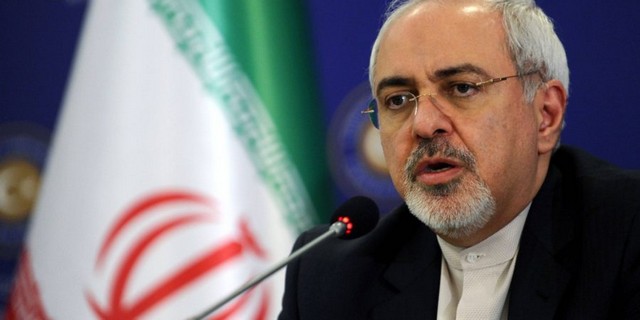
In phone conversations with the foreign ministers of Russia, Algeria, European Union foreign policy chief Federica Mogherini and other world leaders, Iranian Foreign Minister Javad Zarif called for an international committee to investigate the attack, certify who the culprits were and allow them to be held responsible and punished appropriately.

Iran’s aim is to establish the details of the chemical attack and have America answer for its attack on another U.N. member state. Moscow has similarly described the missile strike as an “act of aggression” and is united with Iran in this goal. Russia has called for a thorough and unbiased investigation initiated by the Organization for the Prohibition of Chemical Weapons. If America stands against this, it will bolster Tehran and Moscow’s position that Washington has no hard evidence linking Assad to the chemical attack and that the missile strike had no legitimate basis.

4. Trump reverting to traditional U.S. unilateralist foreign policy will fail.

Unilateral American actions in Afghanistan, Iraq and the American-spearheaded NATO attack on Libya have cost trillions in U.S. wealth, destabilized entire regions, led to deaths of thousands of U.S. troops, killed or displaced millions of civilians and strengthened terrorist groups across the world. Trump himself acknowledged this during his presidential campaign. Obama was also cognizant of these failures and favored multilateral over unilateral policies, the chief major achievement of which was the Iran nuclear deal. Trump’s strikes on Syria represent a return to a unilateral approach, which promises to have the same disastrous outcomes for the region, America and the world.

5. Advocating for regime change will only lead to more chaos as history has shown.

America has a history of carrying out interventionist policies in many countries across the globe. A major reason for the hostile U.S.-Iran relationship today is America’s long-standing regime change policy towards Iran. Obama was the first American president to announce that he was abandoning the regime change approach on Iran and even expressed regret about the Libyan intervention.

Meanwhile, Trump was fairly unique in disavowing regime change policies earlier. However, with his strike in Syria, he has ignited concerns that America is returning to regime change strategies. The track record of U.S. regime change policies ― in places like Afghanistan, Libya and Iraq ― shows they have increased instability. To continue this approach will only ensure more chaos for the region and beyond.

6. America is putting Russia in a tricky spot with no good solution for either side.

While America has many allies and military bases in the Middle East, Syria, where Moscow has an established military presence, is Russia’s main ally in the region. Turning on the Syrian government at such a crucial time will thus damage the reputation Putin has created for Moscow in the Middle East and beyond. The Kremlin has focused on increasing its global influence, and the moves it makes now are critical to its global standing. Losing Assad as an ally will most certainly tarnish Russia’s alliance credibility, even in the face of such immense international pressure to turn on him.

Further, comments by the White House that Russia is trying to “cover up” what happened at Khan Sheikhoun will only be perceived by Russia as insulting pressure from Trump to push Putin’s hand. If Trump decides to carry out additional strikes on Syria, Russia may decide its reputation is at stake and feel compelled to activate its Syrian missile defense systems, especially if its personnel and equipment are not given enough time to get out of harm’s way as they were with the Shayrat strike. Trump has in effect created a situation where both sides are left with no decision but to escalate, with potential nightmarish consequences.

7. The U.S. double standard on WMDs is only going to increase their presence globally.

America’s political and selective approach towards weapons of mass destructions, or WMDs, continues to have negative consequences for global peace and security. During the Iran-Iraq War, the West supplied the late Iraqi dictator Saddam Hussein with material, logistical and political support to launch chemical weapons attacks against Iran and his own people.

All told, about 100,000 Iranians were killed or injured, including countless civilians and children. In Halabja alone, some 5,000 Iraqis were killed, including hundreds of children. America’s false WMD reasoning for the 2003 invasion of Iraq of course also hangs over any new U.S. allegations concerning WMDs.

For America to now use the deaths of some 70 Syrian civilians to launch a missile strike on Syria reflects a double standard. America using the issue of chemical weapons to achieve its own ends and playing politics with civilian lives will only eliminate hopes to achieve a world free from WMDs and make their use more likely.

8. America’s selectivity toward the value of civilian lives will only cause more civilian deaths.

In the weeks prior to the Khan Sheikhoun tragedy, about 200 Iraqi civilians were killed in a single U.S. airstrike in Mosul. The so-called Islamic State also recently beheaded 33 Syrians in one incident and 12 in another. According to the nonprofit Airwars, in March alone, U.S.-led coalition airstrikes have led to deaths of as many as 1,000 Iraqi and Syrian civilians.

The Trump administration has taken no action to redress these humanitarian calamities, but at the same time has launched military strikes for the deaths of these 70 Syrians. This demonstrates that America selectively uses the deaths of civilians to advance its political aims. This approach can only lead to the loss of more civilian life.

9. Trump’s use of Arab allies and confrontation of Iran will only provoke Tehran.

Today, it is commonly acknowledged in Washington that the Arab Persian Gulf states are putting immense pressure on Trump to confront alleged malign Iranian influence in the region. Voices from these states have been pushing the line that if the U.S. finds it “difficult to cut off the head of the snake, than the second best option is start cutting off the tail of snake.” Trump’s phone call with Saudi King Salman immediately after the strike strongly suggests the move was in part meant to satisfy regional U.S. allies.

This idea of “U.S. wars with Arab money” promises not only to worsen regional conflicts, but to also put lives of American servicemen at unnecessary risk. Iran for its part will not sit silently in the face of aggression and will use its regional capabilities ― including its battle-hardened allies on the ground in Syria and Iraq ― to raise the cost of actions against it.

10. The strike’s violation of the UN charter makes it more likely others will cross international peace lines.

Based on the United Nations charter, the U.N. Security Council is the only international organ that can identify threats to international peace and decide on punishments. Unilateral U.S. actions are a blatant violation of the U.N. charter and serve to discredit the U.N. as a meaningful body. Such actions are thus a major blow to international peace and encourage other powers to take unilateral action, one of the reasons that likely led to Russia vetoing the U.N. resolution on the Syria attack. Meanwhile, in America, many are also declaring that the U.S. president’s actions violated the U.S. Constitution.

Trump has taken the United States on an extremely risky path with the Shayrat strikes. America now stands at the precipice of another Middle Eastern war, one that promises to be even more of a quagmire than Iraq and will only serve to elongate the suffering of the Syrian people. The reality is that for Syria, there is no military solution ― only a political one. And Trump has sadly decided to pursue military action before giving diplomacy a chance.

13 April 2017