Just International

Yasmeen: A Dead Kashmiri Embroiderer!!

By Basharat Shameem

Her name was Yasmeen which in Persian is the name of a famous flower known for its beauty and fragrance. She indeed was beautiful or maybe still is; her long dark hair as smooth as a heavenly fabric, her eyes beautifully dark and her face as fair as Jasmine which her name alluded to. And she was just a twenty one years old girl. In the small township of DH Pora where she lived, besides her beauty and amiable disposition, she was also noted for her deft tila kaem(needle work or embroidery) on pherans. She would often help out her family in apple orchards and paddy fields like the young girls of peasant families do in rural Kashmir. But what stood apart in her was her fascination for tila kaem. It was more than a hobby for her; it was something in which she had immersed herself fully and dedicated her life to it. She had produced magnificent embroidery work on pherans which women would wear with so much of enthusiasm. Not only from DH Pora, women of different age groups from neighboring localities would prefer her tila kaem on their pherans. The dextrity of her delicate fingers had just become some talking point among the women of her area. She had also a younger brother named Burhan whom she loved very much. In fact, her life, one could say, alternated between her love for tila kaem and her younger brother. Burhan was some eight years younger to her.

In her own compressed world, Yasmeen had dreams, desires and aspirations like anyone else, but none knows if she still carries them in the world where she now resides. Her dream was to become the most famous embroiderer of her valley which is indeed renowned for its crafts. She wanted to go ahead in her life pursuing her dreams and translating them into the reality of tomorrow. She wanted to make her family proud. But little did she know that something else was stored for her. In her complacent but happy life, she knew little that destiny would dash her dreams with its cruel arrows.

Often she would be so innured to her work that she had hardly an idea of what was happening outside—in the turbulent politics of her state, in the streets of valley, in India or in Pakistan. She had not idea about what a freedom struggle is like. But sometimes, many things strike you for the first time and you are forced to respond so fast and abrupt even to your own surprise. Something terrible had happened on the evening of the 8th July, 2017 in valley and a state of commotion had been unleashed. She left her usual work and began curiously enquiring about what had transpired. And once she came to know through her friends and neighbours, she was enraged, shocked and scared like them. Because things were really getting bad; the news of more dead boys started coming.

Till that fateful day, she had absolutely no idea about one certain Burhan Wani. For the first time in her life, she began to have fears. Yasmeen couldn’t believe that all this was happening so fast, but as was the case, it was indeed happening so fast in the real time. She had never heard of Burhan Wani before. She had never watched his videos on Facebook. But now when she had heard about him, she was moved by his story in how he had been forced to become what he was.
But soon her thoughts and feelings diverted to her sudden new found fears. Something very terrible lurked in her heart and mind as the tragic news started coming one after one of dead and blinded youth. Like everyone else in her family, her Mohalla, her town and her valley, that night she could not sleep. Suddenly, she began to fear about her compressed world. In the dreadful gust that had suddenly overtaken valley, she feared for herself, her dreams, her embroidery, her brother, her family and everyone else she could think of.

When that long and dreary night passed, she had hoped for the dawn to bring with it some peace, some relief and some end to the bloodshed which had blotted the previous moonlit midsummer evening and night. She prayed early to her Lord for peace and well being of all:

“O God, O our Master!
You Have eternal life and Everlasting peace by your essence and attributes.
The everlasting peace is from you And it returns to you, O our Sustainer!
Grant us the life of True peace and usher us into The abode of peace.
O Glorious and Bounteous One!
You are blessed and sublime!!”

She hoped and prayed for peace, but deep down inside her heart, she couldn’t do away with a certain uneasiness which had troubled her throughout the night. She simply couldn’t unburden it. She closed her eyes and hoped for the best.

Some couple of hours later, she heard intense sloganeering on the street which was some fifty metres away from her house. But in the midst of the echoes of loud slogans, she also heard of something very dreadful–which she had hoped and prayed should never happen–intense tear gas shelling followed by non-stop firing of live bullets.

She heard cries and slogans getting shriller and shriller with each bullets as the terrible sounds of live bullet firing subdued every other sound around. Suddenly, she found her brother Burhan was not around. She feared if he was among the slogan shouting crowd. Amidst the ongoing firing on the street, she went out of her house running and screaming loudly, “Burhan, where are you? Come back, mother is waiting for you, she is worried!! ” She found no response from any of the corners in the alley outside her house. She shouted, shouted and shouted, but again there was no response. She started beating her chest and again ran towards the street screaming, “Burhan, lagya balai maiyne baya, cze kati chukh (Love you my brother, where are you??), Burhan, come back, we are waiting for you?? ” She kept screaming until she reached on the edge of the street where she saw few young boys lying in a pool of blood, breathing their last and perhaps, crying for a few drops of water!! Seeing all this and thinking of her brother, like a lunatic, she screamed and screamed with a high pitch until one loud scream and bang brought her down into the drain just next to the street where she was standing and shouting for her brother. She had just been hit by a volley of bullets and her head had been smashed to smithereens along with her dreams, hopes, prayers and her deft tila kaem. That afternoon the brother did come back only to find her sister in a white shroud with her broken skull but still with the Jasmine like beauty and fragrance reflecting from her face. The brother was left to scream, ” Thrath ha peyi ho(Horror has struck us)… Yasmeen, my beloved sister, where did you go? Please, come back, mother is waiting for you!!
Thrath ha peyi ho(Horror has struck us!!) ”

And horror it was indeed!! And horror it is indeed!!
Basharat Shameem, Youth activist, writer, Kulgam, J & K

Source; http://www.countercurrents.org/2017/10/08/yasmeen-a-dead-kashmiri-embroiderer/

Why Are Washington’s Allies Getting Cozy To Moscow?

By Nauman Sadiq

Turkey, which has the second largest army in NATO, has been cooperating with Russia in Syria against Washington’s interests since last year and has recently placed an order for the Russian-made S-400 missile system.

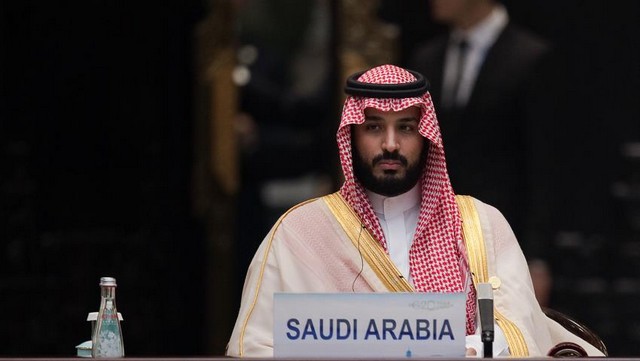
Similarly, the Saudi King Salman, who is on a landmark state visit to Moscow, has signed several cooperation agreements with Kremlin and has also expressed his willingness to buy S-400 missile system.

Another traditional ally of Washington in the region, Pakistan, has agreed to build a 600 mega-watt power project with Moscow’s assistance, has bought Russian helicopters and defense equipment and has held joint military exercises with Kremlin.

All three countries have been steadfast US allies since the times of the Cold War, or rather, to put it bluntly, the political establishments of these countries have acted as virtual proxies of Washington in the region and had played an important role in the collapse of the former Soviet Union in 1991.

In order to understand the significance of relationship between Washington and Ankara, which is a NATO member, bear in mind that the United States has been conducting air strikes against targets in Syria from the Incirlik airbase and around fifty American B-61 hydrogen bombs have also been deployed there, whose safety became a matter of real concern during the failed July 2016 coup plot against the Erdogan administration; when the commander of the Incirlik airbase, General Bekir Ercan Van, along with nine other officers were arrested for supporting the coup; movement in and out of the base was denied, power supply was cut off and the security threat level was raised to the highest state of alert, according to a report [1] by Eric Schlosser for the New Yorker.

Similarly, in order to grasp the nature of principal-agent relationship between the United States on the one hand and Saudi Arabia and Pakistan on the other, keep in mind that Washington used Gulf’s petro-dollars and Islamabad’s intelligence agencies to nurture jihadists against the former Soviet Union during the Cold War.

It is an irrefutable fact that the United States sponsors militants, but only for a limited period of time in order to achieve certain policy objectives. For instance: the United States nurtured the Afghan jihadists during the Cold War against the former Soviet Union from 1979 to 1988, but after the signing of the Geneva Accords and consequent withdrawal of Soviet troops from Afghanistan, the United States withdrew its support to the Afghan jihadists.

Similarly, the United States lent its support to the militants during the Libyan and Syrian civil wars, but after achieving the policy objectives of toppling the Arab nationalist Gaddafi regime in Libya and weakening the anti-Israel Assad regime in Syria, the United States relinquished its blanket support to the militants and eventually declared a war against a faction of Sunni militants battling the Syrian government, the Islamic State, when the latter transgressed its mandate in Syria and dared to occupy Mosul and Anbar in Iraq in early 2014.

The United States regional allies in the Middle East, however, are not as subtle and experienced in Machiavellian geopolitics. Under the misconception that alliances and enmities in international politics are permanent, the Middle Eastern autocrats keep on pursuing the same belligerent policy indefinitely as laid down by the hawks in Washington for a brief period of time in order to achieve certain strategic objectives.

For example: the security establishment of Pakistan kept pursuing the policy of training and arming the Afghan and Kashmiri jihadists throughout the eighties and nineties and right up to September 2001, even after the United States withdrew its support to the jihadists’ cause in Afghanistan during the nineties after the collapse of its erstwhile archrival, the Soviet Union.

Similarly, the Muslim Brotherhood-led government of Turkey has made the same mistake of lending indiscriminate support to the Syrian militants even after the United States partial reversal of policy in Syria and the declaration of war against the Islamic State in August 2014 in order to placate the international public opinion when the graphic images and videos of Islamic State’s brutality surfaced on the social media.

Keeping up appearances in order to maintain the façade of justice and morality is indispensable in international politics and the Western powers strictly abide by this code of conduct. Their medieval client states in the Middle East, however, are not as experienced and they often keep on pursuing the same militarist policies of training and arming the militants against their regional rivals, which are untenable in the long run in a world where pacifism has generally been accepted as one of the fundamental axioms of the modern worldview.

Regarding the recent cooperation between Moscow and Ankara in the Syrian civil war, although the proximate cause of this détente seems to be the attempted coup plot against the Erdogan administration in July last year by the supporters of the US-based preacher, Fethullah Gulen, but this surprising development also sheds light on the deeper divisions between the United States and Turkey over their respective Syria policy.

After the United States reversal of “regime change” policy in Syria in August 2014 when the Islamic State overran Mosul and Anbar in Iraq in early 2014 and threatened the capital of another steadfast American ally, Masoud Barzani’s Erbil in the oil-rich Iraqi Kurdistan, Washington has made the Kurds the centerpiece of its policy in Syria and Iraq.

Bear in mind that the conflict in Syria and Iraq is actually a three-way conflict between the Sunni Arabs, the Shi’a Arabs and the Sunni Kurds. Although after the declaration of war against a faction of Sunni Arab militants, the Islamic State, Washington has also lent its support to the Shi’a-led government in Iraq, but the Shi’a Arabs of Iraq are not the trustworthy allies of the United States because they are under the influence of Iran.

Therefore, Washington was left with no other choice than to make the Kurds the centerpiece of its policy in Syria and Iraq after a group of Sunni Arab jihadists transgressed its mandate in Syria and overran Mosul and Anbar in Iraq in early 2014 from where the United States had withdrawn its troops only a couple of years ago in December 2011.

The US-backed Syrian Democratic Forces, which are on the verge of liberating the Islamic State’s de facto capital, Raqqa, and are currently battling the jihadist group in a small pocket of the city between the stadium and a hospital, are nothing more than the Kurdish militias with a symbolic presence of mercenary Arab tribesmen in order to make them appear more representative and inclusive in outlook.

As far as the regional parties to the Syrian civil war are concerned, Saudi Arabia, Jordan and the rest of the Gulf Arab States may not have serious reservations against this close cooperation between the United States and the Kurds in Syria and Iraq, because the Gulf Arab States tend to look at the regional conflicts from the lens of the Iranian Shi’a threat.

Turkey, on the other hand, has been more wary of the separatist Kurdish tendencies in its southeast than the Iranian Shi’a threat, and particularly now after the Kurds have held a referendum for independence in Iraq despite the international pressure against such an ill-advised move.

Finally, any radical departure from the longstanding policy of providing unequivocal support to Washington’s policy in the region by the political establishment of Turkey since the times of Mustafa Kemal Ataturk is highly unlikely. But after this perfidy by Washington of lending its support to the Kurds against the Turkish proxies in Syria, it is quite plausible that the Muslim Brotherhood-led government in Turkey might try to strike a balance in its relations with the Cold War-era rivals.
Sources and links:

[1] The H Bombs in Turkey by Eric Schlosser:

http://www.newyorker.com/news/news-desk/the-h-bombs-in-turkey

Nauman Sadiq is an Islamabad-based attorney, columnist and geopolitical analyst focused on the politics of Af-Pak and Middle East regions, neocolonialism and petro-imperialism.

Source: http://www.countercurrents.org/2017/10/06/why-are-washingtons-allies-getting-cozy-to-moscow/

Living Life: But for What Purpose?

By Yoginder S. Sikand

For what purpose were you created and brought into the world?

(Sri Guru Granth Sahib 970)

************

This human body has been given to you.

This is your chance to meet the Lord of the Universe.

Nothing else will work.

Join the Company of the Holy; vibrate and meditate on the Jewel of the Divine Name.

Make every effort to cross over this terrifying world-ocean.

You are squandering this life uselessly in the love of Maya.

(Sri Guru Granth Sahib 12)

From the moment we get up in the morning till we go to sleep at night, everything we do, we do with a certain purpose in mind. We get out of bed even if we’d rather not because we don’t want to miss office or skip school. We brush our teeth because we want to keep them in good shape and we don’t like bad breath. We have our breakfast because we need the energy to work and because we don’t want to feel hungry. We smile at a friend because we want to express our warm feelings for him. We wish our boss because we want to be in her good books or because we are genuinely pleased to see her. We snap at someone because we want to express our irritation with him.  We prepare for an examination because we want to get good marks so that we can get admission in a good college. And so on. From morning to night, each one of us is busy, at every single moment, doing something or the other, and for one or more purposes. Even ‘doing nothing’—lying down in bed and staring at the ceiling, for instance—is a sort of doing, and it, too, is for a certain purpose: in order to relax and unwind or simply to experience ‘non-doing’ for a few moments for a change.

Our everyday lives can thus be seen as a vast collection of actions or doings that we engage in from moment to moment, and all of these for some purpose or the other. We could call these purposes as ‘micro-purposes’ or ‘immediate purposes’. It doesn’t require much effort for us to understand the micro-purposes behind the many actions that fill our daily existence. Often, we engage in certain actions fully aware of the purpose(s) for which we do so. If sometimes we are not sure about why we have performed a particular action, a few moments of reflection can help give us greater clarity about the issue. And sometimes when we do something for reasons that seem beyond our control and which we cannot understand, psychological counselling can help to make us aware of their underlying causes.

But besides and beyond these micro-purposes of the myriad actions of our everyday lives is something much larger—the overall or overarching purpose of our life as such. Generally speaking, while most of us are generally clear as to our purpose in engaging in a particular action in our everyday lives (for instance, reading a book in order to gain knowledge or simply to amuse ourselves), few of us have a clear idea of the macro-purpose of human life in general and our own life in particular.  Not many of us know what the grand purpose of our short stay on this planet is, especially in the backdrop of the fact that we have to die one day (this being the only thing about the future that we can be absolutely sure of).

This issue, of the macro-purpose of human life (which becomes starker when seen in the context of our inevitable death), is undoubtedly most important existential question that we could ask ourselves. And yet, how many of us ever care to think about it deeply? Many of us are so deeply engrossed in our innumerable immediate, micro-purposes of our day-to-day existence that we refuse to let our minds turn to the subject.  For some, the issue seems so baffling, forbidding and even frightening that they just don’t want to think about it. Others believe the question of the ultimate purpose of human life is simply unanswerable and hence not worth bothering about at all. And so, they waste their lives drifting from one immediate purpose to another, sometimes just to keep themselves busy and thereby maintain a semblance of sanity, till they finally drop dead.

How many parents ever discuss the issue of the macro-purpose of life with their children? Mine never did. How many of our teachers talk about the overall purpose of life with their students? Mine never did—and I happened to study at some of the supposedly best educational institutions in India and abroad. I can’t recall my ‘elders’—be it at home or at school or in the several universities I studied in—ever once broaching the subject. I think the same is true for the vast majority of the people I have known—such is the deafening silence on what is the most important question of life.

A basic prerequisite for successfully engaging in a particular action is to be clear as to the purpose for which one is doing it. If one lacks this clarity one is bound to make a mess of things. If we aren’t aware of the ultimate purpose of our life, we are likely to fritter it away on purposes other than this one, keeping ourselves busy with all sorts of things that take us away from our real purpose—so that, ultimately, our lives end in waste and failure. It is like using a book to drive away mosquitoes or to fan oneself with instead of reading it for passing an examination. But if, on the other hand, we have clarity about the overall purpose of human life, the reason why God has created us and has sent us to spend a brief time on earth—which we can derive only from authentic religious scriptures—we are more likely to spend it in the right manner, and in this way, successfully pass the examination of life, the only examination that truly matters.

6 October 2017

Buddhist community cuts festival expense to aid Rohingya refugees

By Fazlur Rahman Raju

They will donate the expenditure of the lantern festival to the Rohingya refugees

The Buddhist community in Bangladesh has declared that they will forgo parts of their festivities for Probarona Purnima, their second biggest religious festival, and donate the cost of a major event for the Rohingya refugees who have recently arrived in Bangladesh.

Community leaders announced this decision at a meeting with senior Awami League leaders at the party president’s Dhanmondi political office on Wednesday morning.

Bangladesh United Buddhists’ Forum Chief Convener Ashokh Barua said: “We will not celebrate the lantern festival this year during Probarona Purnima. The expenditure of the festival will be given to Prime Minister Sheikh Hasina to aid the refugees.”

Probarona Purnima festival, marking the end of Vassa, a three-month retreat, will be observed on October 5. Traditionally, the Buddhists celebrate the day by flying numerous paper lanterns or Fanush, among other rituals.

Earlier, the Buddhist community had announced that it will refrain from the lantern festival to protest the violence against the Rohingya in Myanmar’s Rakhine State.

The Rohingya, who are mostly Muslims, have been facing persecution in Myanmar for decades. In late August, the Myanmar military began a violent crackdown on the ethnic group, leading almost half a million to cross the border into Bangladesh.

“The government will ensure all kinds of security for the Buddhist community,” said Awami League General Secretary and Road Transport Minister Obaidul Quader, urging them not to consider themselves as a minority group in the country.

Awami League joint secretaries Mahbubul Alam Hanif, Dipu Moni, Abdur Rahman, General Secretary of the Bangladesher Samyabadi Dal Dilip Barua, and others were present at the meeting.

Source: http://www.dhakatribune.com/bangladesh/2017/10/04/buddhist-community-cuts-festival-expense-aid-rohingya-refugees/

The Mossad’s role in the Kurdish Independence movement

By Eliezer Tsafrir, Kurds

Israeli strategists have long wished to balkanize the Middle East to make it easier for Israel to dominate the region. These efforts to break up the surrounding nations into smaller units were described by Moshe Sharett in the 1950s, by Yinon Oded in the 1980s, and more recently by the neocons in the Clean Break document. (See this article for more details.)

Since dismembering Iraq has long been desired, it is no surprise to learn of Israel’s role in assisting the Kurdish independence movement.

Michael Goldfarb reports on this in the The Forward; below are excerpts:

We have no friends but the mountains,” is an old Kurdish saying.

No friends but the mountains — and Israel — is the reality. There is a deep affinity between Israel and the Kurds. Israeli Prime Minister Benjamin Netanyahu was alone among world leaders when he endorsed Kurds preparing to vote in an independence referendum.

But it was a rare public declaration of this secret closeness. Israeli-Kurdish friendship is the geopolitical love that dares not speak its name, for the Kurds would prefer it be kept quiet. Open alliance with the Jewish State remains a taboo for most countries in the Middle East. It makes it all the more ironic that Kurdistan is commonly referred to as “Yehudistan”.

….. Israel has long held a slightly different view of the Kurdish struggle for independence. In some ways, Israel’s view is pragmatic. The Middle East could do with another secular democracy.

….. Eliezer Gheizi Safrir [usually spelled Tsafrir], Mossad’s station chief in Kurdistan in the mid-1970’s [said]:

“They called me Kak Gheizi,” he said proudly. Kak or kaka means brother. It is a term of friendship. “These are good people,” says Gheizi. “They share the same values as Jews.”

But the relationship between the Kurds and Jews has a historical aspect, too. Gheizi was there at the beginning, in the mid-60’s, when Mullah Mustafa Barzani, the first leader of the modern Kurdish independence movement, flew to Israel to ask David Ben Gurion for support.

“They asked us for three machine guns and one broadcasting station,” Gheizi laughs. “That was the beginning.”

Ben-Gurion knew the relationship had to be secret. The regional sensitivities were too great; Israel’s Arab neighbors would have seen overt help to Kurds trying to break away from an Arab country as an act of aggression.

For these reasons, Ben Gurion assigned the Mossad to handle it.

Next came training of the Kurdish guerillas, the peshmerga. “We gave them a whole line of training, from small group commander to battalion commander,” Gheizi explained. “We supplied them with field cannons thanks to the generosity of Arab Armies who left us this equipment in the wars.”

But the main thing Mullah Mustafa wanted from Ben Gurion was an introduction. According to Gheizi, Barzani would tell Ben-Gurion, “Amrika, please bring Amrika to help us more.” When Barzani heard Henry Kissinger was in Israel, he called Gheizi and said, “Tell Yitzhak [Rabin] to bring him by the ear to meet us here.” But Israel was unable to deliver America.

But the history goes back much further than Ben Gurion. Jews lived in Kurdistan from the time of the destruction of the First Temple. Not all those dispersed during that catastrophe were taken to Babylon, and some ended up due north a few hundred miles in the Kurdish mountains. They remained there until the early 1950’s, when they were airlifted to Israel as post-colonial Iraq took on a determined anti-Semitic color. [This “anti-Semitic color” was helped when the Mossad bombed synagogues and made it look like this was done by Iraqi Muslims.]

….. Kurdish independence won’t happen soon, and relations with Israel will continue to be opaque. Mullah Mustafa’s son, Massoud Barzani, runs the Kurdistan Regional Government. Open acknowledgement of friendship with Israel will not help him.

Nor did it help when, two weeks ago, Turkish President Recep Tayyip Erdogan expressed his displeasure with the referendum and Netanyahu’s endorsement of it. This week, Bibi changed tactics and issued a cease and desist order to his cabinet, saying no one was to discuss the result publicly.

The love that dare not speak its name, the love that everyone in the region knows about, will continue to be pledged behind closed doors.

Source: israelpalestinenews.org

Yes, the Israel Lobby drives U.S. policies

By Jeffrey Blankfort

Excerpted from “Yes, Blame the Lobby,” published by Dissident Voice, April 11, 2006

In March 2006, the London Review of Books published “Israel Lobby and US Foreign Policy,” an article by Professors John Mearsheimer of the University of Chicago and Steven Walt, Academic Dean of the Kennedy Center at Harvard University, two nationally known academic figures with impeccable credentials. (The authors afterward wrote an even more thorough book on the same topic.)

This article, critical of the Israel lobby in the US, propelled into the mainstream an issue that had long been confined to the margins. This issue had been avoided not only by the efforts of the Israel lobby itself, but also by those on the Left who prefer to view US foreign policy as being determined by corporate elites and who had long worked to prevent public awareness of the Israel lobby and its role in driving U.S. policies.

Jeffrey Blankfort provided a detailed response to claims minimizing the role of the Israel lobby. Below are some of the facts that he provided:

Israel lobby critics do not deny US imperialism

Critics of the Israel lobby have no illusions about the evils of US imperialism that have and will continue to exist, irrespective of the lobby… Serious critics of the Israel lobby do not in any way exonerate the US from responsibility for its actions; however Middle East policies were formed under immense Israeli pressure. Israel and its lobby have pushed the US to launch policies that not in its own interest; US support for Israel has generated serious problems in the region, and has been costly in lives and money.

All presidents told Israel to end the occupation

Every US president since Richard Nixon, with the Rogers Plan in 1969, has made an effort to get Israel to withdraw from the territories it occupied in 1967, not out of any love for the Palestinians, but because Israel’s continuing occupation of those lands, from the Sinai to the Golan Heights, was creating unnecessary problems in a region where maintaining stability of the regions’ oil resources was and remains a necessity. Every one of those plans was undermined by the lobby.

Gerald Ford

In 1975, Gerald Ford, upset because Israel was refusing to disengage from areas it had taken in the Sinai during the 1973 war, halted aid to Israel and publicly let it be known that he was going to make a major speech that would call for a downsizing of US-Israel relations and demanding that Israel to return to its 1967 borders. Within three weeks, AIPAC presented Ford with a letter signed by 76 senators, from liberal Democrats to extreme right wing Republicans, warning him not to take any steps that would jeopardize Israel’s security. Ford did not make the speech.

Jimmy Carter

Ford’s successor, Jimmy Carter, was repeatedly in conflict with both Israel and the lobby. Neither wanted the Camp David treaty but Carter doggedly pushed it through, although it required a multi-billion dollar bribe to get Begin’s signature. In 1978, before the treaty went into effect, Begin invaded Lebanon, hoping, some speculated, that Egypt would react and the treaty would be nullified since Israel did not want to give up the Sinai. Carter further angered Israel and the lobby by demanding that Begin withdraw Israeli troops from Lebanon three months later.

Andrew Young – When he told Begin, publicly, to halt settlement building, the Israeli prime minister responded by announcing the start of 10 new settlements while the lobby criticized Carter for bringing up the subject. When UN Ambassador Andrew Young violated an Israeli demand and a lobby-enforced rule that prohibited US officials from meeting with the PLO, (much like the lobby imposed rule about US officials meeting with Hamas officials today), he was forced to resign. When Carter, like Ford, was considering giving a televised speech in 1979 in which he planned to outline the divergence of interests between the US and Israel and denounce Israeli intransigence on the Palestinian issue, he was warned by the lobby, as one Jewish leader put it, that he would be the first president to “risk opening the gates of anti-Semitism in America.” Carter decided not to give the speech.

Donald McHenry – There was an exception to all those US vetoes and it came during the Carter administration. In March 1980, Young’s successor, Donald McHenry, also an African-American, voted to censure Israel for its settlement policy, including Jerusalem. The lobby was outraged and Carter was forced to apologize. The last straw for the lobby was when Carter called for an international conference in Geneva to settle the Israel-Palestine question that would include the Soviet Union. It didn’t matter that he was forced to apologize for that, too. In 1980, he received 48% of the Jewish vote, the poorest showing of any Democrat since they began counting such things.

Ronald Reagan

When Israel invaded Lebanon in June 1982, both houses of Congress roared their approval, it being, after all, an election year. When the reports of the siege of Beirut were becoming too much to ignore, Reagan asked Sharon to call a halt. Sharon’s response was to bomb the city at 2:42 and 3:38 the next afternoon, those hours, coincidentally, being the numbers of the two UN resolutions calling on Israel to withdraw from the Occupied Territories. When Reagan, like Carter, also publicly called on Begin to halt settlement building, the Israeli prime minister announced the building of new settlements and sent the president a “Dear Ronnie,” letter letting him know who was making those decisions.

In Reagan’s second term, he tried again to resolve the Israel-Palestine conflict with what came to be known as the Shultz Plan, named after his Secretary of State, George Shultz. It called for an international conference to resolve the Israeli-Palestinian issue. Israeli Prime Minister Yitzhak Shamir, who had replaced Begin, was having none of it. One cartoon of the day depicted Shamir sitting in a chair, cutting up pieces of paper while Reagan and Shultz looked on. “How cute,” said Reagan, “he’s cutting up paper dolls.” “Those aren’t paper dolls,” responded Shultz. “That’s our peace plan.” Another showed Reagan and Shamir sitting in armchairs across from one another with Shamir holding a smoking gun in his hand while a dove falls from the sky. Reagan says, “You didn’t have to do that.” Shamir’s intransigence finally provoked 30 senators, including some of Israel’s biggest supporters, into sending him a letter asking him to be more cooperative. They were hardly prepared for the firestorm from the lobby that followed that sent each of them stumbling to apologize. The Shultz Plan was effectively dead.

George Bush Senior

When George H. W. Bush succeeded Reagan, he made it clear that he wanted a halt to the settlements and for Israel to get out of the OT, as well. He arranged for the Madrid Peace Conference over the objections of the obstinate Shamir, making concessions as to the composition of the Palestinian delegation to appease both Israel and the lobby. Was this conference, like the one called for by Carter, like the one planned by Reagan just a charade? Before the conference took place, Shamir asked the US for $10 billion in loan guarantees. Bush made compliance with that request contingent on Israel agreeing to halt all settlement building, its agreement not to settle any Russian immigrants in the West Bank, and to wait 120 days, to see if the first two requests had been complied with. An enraged Shamir decided to go over his head to the lobby-controlled Congress.

After receiving a letter signed by 242 members of Congress urging the swift passage of the loan guarantees, Bush realized that the Lobby had enough votes to override his threatened veto of the request. This led him to take the unprecedented step of calling a national press conference on the day when an estimated thousand Jewish lobbyists were on Capitol Hill pushing for a swift passage of Israel’s request. In the press conference, Bush denounced the arrogance of the lobby and told the American people how much aid each Israeli man, woman and child was getting from the US Treasury. The polls the next day showed that 85% of the American public was with him and a month and a half later only 44% of the public supported giving any aid to Israel at all while over 70% supported giving aid to the former Soviet Union.

AIPAC, in the face of Bush’s attack, pulled back, but then launched a steady attack against him which began to be reflected in the US media where even old friends like the NY Times columnist William Safire would eventually desert him for Bill Clinton. Under tremendous pressure and with the election approaching, Bush finally consented to the loan guarantees, but it was too late. The Lobby blamed him for Shamir having been defeated by Rabin and his goose was cooked.

Pro-Israel Neocons

It is no secret that pro-Israel Jewish neocons have been heavily involved in creating the structural adjustment policies of the World Bank and the IMF. Indeed, Paul Wolfowitz, one of the architects of the Gulf War, is now the head of the World Bank.

Starving and then invading Iraq, threatening to invade Syria, raiding and then sanctioning Libya and Iran, besieging the Palestinians and their leaders must also be blamed on the Israeli lobby and not the US government.

While it was not well known, but no secret, that the Lobby played a key role in getting the votes for the first Gulf War, the reporting of which resulted in the firing of the Washington Jewish Week’s Larry Cohler at the behest of AIPAC inductee Steve Rosen, the orchestration of the current war by a handful of Jewish Likud-connected neocons with the support of the Israel Lobby was widely reported in the mainstream press. If there was a question as to who was the chief architect, it was a choice between Richard Perle, Paul Wolfowitz, Douglas Feith, and Scooter Libby.

The “Clean Break” paper that Perle, Feith, and Meyrav Wurmser wrote for Netanyahu in 1996 called for the overthrow of Iraq, Syria and Iran, which Mearsheimer and Walt mention. The “Project for a New American Century,”  was another document drawn up by pro-Israel Jewish neocons. The Office of Special Plans, set up by Feith and run by another Jewish neocon, Abe Shulsky, was directed to provide the phony intelligence that would justify the invasion when the CIA staff was not prepared to do it. Philip Zelikow, executive director of the 9-11 commission, admitted that the war in Iraq was for “the security of Israel”: but that would have been a “hard sell” to the American people. And, as for implementing and maintaining the sanctions, the advocacy of the lobby was equally evident.

Lebanon, Iraq, Syria

In 1958, Pres. Eisenhower sent the Marines to Lebanon to prevent what was thought to be a radical nationalist move against the status quo, but the US has only invaded Arab countries twice, Kuwait in 1991, to oust the Iraqis and in 2003. The first required the assistance of the Israel lobby capped by the phony incubator story that was orchestrated by Rep. Tom Lantos, an author or co-sponsor of numerous Iraqi and Syria sanction bills and anti-Palestinian legislation. (According to the Jerusalem Post, Lantos represents Israel in countries where it has no diplomatic recognition.)

Israel and the lobby had anticipated that the Senior Bush would remove Saddam as called for in the Clean Break and when he didn’t they started criticizing him and planning for a future administration that would do the job and the record on that is very clear. AIPAC took credit for writing the anti-Syrian legislation that led to the withdrawal from Lebanon of the relatively small number of Syrian forces that were in the country and more recently the Lobby has been the only sector of US society actively calling for what is unmistakably an armed confrontation with Iran.

Weapons industry does not drive the policy

The Middle East is the only region where a stable environment is required to maintain the oil that fuels much of the world’s economy, including our own. The Middle East is also the only region where there is continued instability. The US has sought political stability, the kind of stability that provides a ready source of raw materials and an outlet for US products.

From the end of the Vietnam War to the beginning of the first Gulf War, the profits of the weapons industry continued to soar, proving that an actual shooting war was not necessary for the arms manufacturers to make windfall profits or the capitalist system to survive. Given that both US political parties are committed to what is euphemistically called “national defense,” there is no debate in Congress over the size of the military budget.

Other countries too prioritize national defense, and buy US-made weaponry, some of which may be used to quiet domestic rebellions, and some, like fighter jets, for national pride and kickbacks on both sides. It is only in the Middle East where a stable environment is required to maintain the oil that fuels much of the world’s economy, including our own, where there is continued instability, and this is the fault of Israel and its lobby.

Cuban Lobby

The Cuba lobby which is, in fact, more properly called the anti-Cuba lobby, not coincidentally, has a strong working relationship with AIPAC for their mutual benefit, but it doesn’t begin to compare with the Israel Lobby’s power although it has seen to it that Florida will stay in the Republican column. Of course, if Israel was a communist or anti-imperialist country, the Jews in the US would no doubt be like the anti-Castro Cubans, calling on the US to liberate it.

Support for Israel endangers Americans

Regarding the families of the marines, soldiers and sailors killed in the bombing of the marine barracks in Beirut in 1983, as well as American diplomats who have been targeted in the region over the years: Had Israel not invaded Lebanon, these American servicemen killed in their barracks might still be alive, as well the members of the CIA who were wiped out in an earlier bombing of the US embassy in Beirut. Furthermore, without getting into the serious questions that remain unanswered about the 9-11 attack, it has been accepted by those who believe the official narrative that US support for Israel was one of the reasons behind the attacks on the World Trade Center and the Pentagon. If the authors and others, including this writer have argued are correct, a significant portion of the responsibility for the dead and wounded on both sides in Iraq can be laid at the feet of Israel and the Israel Lobby, but the latter, in particular.

The US, as a country, is not loved or well liked anywhere except, perhaps, Israel. Much depends, of course, on an individual’s political consciousness, but most of the peoples of the world have had a love-hate relationship with the US, despising its policies but colonized by its materialism. The war on Iraq and the US voters’ re-election of Bush have put more weight in the “hate” column, and in Latin America, Bush has proved to be the most unpopular US president since they started taking polls. It is not unlikely that as the war continues and the US continues to make threats against Iran, again pressured by the Lobby, the degree of antagonism towards the US and US products is certain to increase.

Egypt

Israel has never seen the US as its master. Not a single Israeli soldier has shed a drop of blood for US interests and as Ariel Sharon said on Israeli army radio several years ago, the US knows that no Israeli soldier ever will. At the time of Israel’s attack on Egypt in 1967, France was the major arms supplier and the certain sectors of the US government were engaged with members of Egypt’s military. To describe the defeat of Nasser as a service done by Israel for the benefit of the US, is a both an oversimplification as well as a distortion of history. In fact, it wasn’t until the 1973 war, when Israel, under attack by Egypt and Syria, threatened to use its nuclear weapons unless the US came through with a massive conventional arms airlift, that US support for Israel really took off. So did the oil prices as an Arab oil boycott was implemented in response. Was the very real threat of a nuclear war, which would have brought in the Soviet Union, in the US interest? Was the Arab oil embargo?

Latin America and South Africa

Israel’s arms sales in Latin America and South Africa were done to benefit Israel’s arms industry and that they were useful to the US was a secondary factor. What the Lobby was able to do was keep members of the Congressional Black Caucus, including the notable Ron Dellums, from publicly condemning Israel’s arms sales to South Africa in violation of international sanctions, and to silence those members of Congress who were quick to condemn US actions in Central America but afraid to do so when Israel was the malefactor. That fear is no less prevalent in Congress today where any member can get up to criticize George Bush but none dare say a negative word about the Israeli prime minister, irrespective of who holds that office.

Jordan & Syria

Israel’s role in the Jordanian-Palestinian conflict in 1970 is always raised by those who argue for Israel’s usefulness. We are told that Israel was acting at the behest of the US when it threatened to intervene if Syrian tanks moved south to defend the Palestinians under attack by Jordan’s King Hussein and that this prevented the possible overthrow of the US-friendly Hashemite regime. This fits neatly fits into the client state scenario, except it is missing a key element. What was crucial in that situation was the refusal of Hafez Al-Assad, then head of the Syrian air force, and not a supporter of the PLO, to back up the Syrian tank force that had entered Northern Jordan. Shortly thereafter, Al-Assad staged a coup against the pro-Palestinian president Atassi and proceeded to throw hundreds of Palestinians and pro-Palestinian Syrians in prison and break up the radical Syrian-supported militia group, Al-Saika. This bit of history has apparently now been written out of history.

When Israel neutralized the PLO in 1982, it was appreciated in the beginning by many Lebanese, particularly in the south who found some elements of the PLO heavy-handed and were tired of having a liberation war fought on their soil – until they began to experience Israeli occupation for themselves and began to resist. The Israeli attack violated an 11-month cease-fire that had been negotiated by Ambassador Philip Habib and to which the PLO had strictly adhered. The Senior Bush, then vice-president, opposed the Israeli invasion and wanted Israel to be censured and was overruled by Reagan and Alexander Haig. A year before Bush Sr. was angered by Israel’s attack on Iraq’s Osirak reactor and wanted Israel censured at that time, but was again overruled.

Israel did provide training to US troops on the techniques used to occupy and repress a hostile Arab population, only too pleased to have the US join it as the only foreign occupier of Arab soil which may have been one of the reasons the Israeli government (as well as the lobby) wanted the US to invade Iraq. With the US taking the same kind of harsh measures to repress the Iraqis, it would be less likely to complain about Israel’s treatment of the Palestinians and this has proved to be the case. Israel has been called by Chomsky America’s “cop on the beat” in the Middle East, but when military intervention has been thought necessary it has always been American soldiers that have done the fighting. In fact, US soldiers were sent to Israel during the first Gulf War to operate the Patriot missile batteries to defend the Israelis.

AIPAC

Read our history and see what has befallen those politicians who have challenged the lobby and were subsequently targeted and defeated beginning with Sen. J William Fulbright who in the early 60s sought to restrict the lobby’s growing power. There are several books written by both supporters of the lobby and its critics that clearly demonstrate its influence as well as the tales of former members of Congress who were its victims.

Edward Said on the Israel lobby

Every two years, one hears or reads, regarding some issue that deals with Israel, that “the president” or “Congress” “is not likely to act [against Israel] due to domestic political considerations in an election year.” To a great extent, the Israel-Palestinian conflict is a domestic US issue. That the Palestine solidarity movement has ignored that fact is a primary reason that to this point in time it has been an utter failure. This should be a source of embarrassment and reflection, but it so far there is no sign of it.

There was another Columbia professor who had a more profound understanding of the situation who is sorely missed and, perhaps, never more so than at this moment. I refer to the late Edward Said. In his contribution to The New Intifada, entitled, appropriately, “America’s Last Taboo,” he did not mince words:

What explains this [present] state of affairs? The answer lies in the power of Zionist organizations in American politics, whose role throughout the “peace process” has never been sufficiently addressed — a neglect that is absolutely astonishing, given the policy of the PLO has been in essence to throw our fate as a people into the lap of the United States, without any strategic awareness of how American policy is dominated by a small minority whose views about the Middle East are in some ways more extreme than those of Likud itself. (Emphasis added)

And on the subject of AIPAC, Said wrote:

[T]he American Israel Public Affairs Committee – AIPAC — has for years been the most powerful single lobby in Washington. Drawing on a well-organized, well-connected, highly visible and wealthy Jewish population, AIPAC inspires an awed fear and respect across the political spectrum. Who is going to stand up to this Moloch in behalf of the Palestinians, when they can offer nothing, and AIPAC can destroy a professional career at the drop of a checkbook? In the past, one or two members of Congress did resist AIPAC openly, but the many political action committees controlled by AIPAC made sure they were never re-elected… If such is the material of the legislature, what can be expected of the executive?

Although it is trying, the Israel Lobby does not yet control our academics. On the critical issue of the lobby’s power, it is time they stop acting like it does.

Jeffrey Blankfort is former editor of the Middle East Labor Bulletin, long-time photographer, and has written extensively on the Israel-Palestine conflict. He can be reached at: jblankfort@earthlink.net.

https://israelpalestinenews.org

27 September 2017

Renowned Israeli doctor and activist backs BDS in fight against apartheid

By middleeastmonitor.com

A renowned Israeli doctor and human rights activist has issued an impassioned defence of the Palestinian-led Boycott, Divestment and Sanctions (BDS) campaign, saying a boycott is essential for confronting “occupation and apartheid”.

Writing in Israeli newspaper Haaretz on Tuesday, Dr. Ruchama Marton, the founder and president of Physicians for Human Rights-Israel, rebutted criticisms of BDS, which she defended as “the only nonviolent lever that can cause Jewish-Israeli society to feel the yoke and pain of the occupation”.

Rather than paying “lip service” to “peace” – something no one opposes – Marton argues that the “present question is the question of occupation and apartheid”, and “the correct struggle…is the anti-colonial and anti-apartheid struggle”.

She adds: “Whoever deludes themselves that they can win this battle without help from the outside holds a mistaken, dangerous illusion, based on Zionist-Israeli macho pride”.

Read: Rabbi denied entry to Israel over support for BDS

Marton compared Jewish Israelis who oppose BDS and “think it is possible to change from within” to “the parable of the rabbit who wanted to change the lion from within. So the lion ate him”.

“To change from within today is an illusion, the radical left cannot think and act in such a way”.

In answer to the claim that boycotting Israel would “drive the entire Israeli public into the arms of the settlers”, Marton suggested a different analysis.

“If the occupation and apartheid lead to economic, cultural and diplomatic suffering because of an international boycott, it is very possible that a change will occur in Israel’s worldview, which is based on one hand on the enormous benefit to the country and its Jewish citizens from the occupation and separation, and on the other hand the cowardice of what is called the Israeli left, or peace camp”.

Marton served in the Israeli army’s Givati Brigade during the 1956 Sinai War, before going on to attend medical school. In her professional life, Marton has worked as a senior psychiatrist and taught at Tel Aviv University.

In 1988, Marton co-founded the Association of Israeli-Palestinian Physicians for Human Rights, now known as Physicians for Human Rights-Israel. She is also a co-founder of The Public Committee Against Torture in Israel, as well as having been active in a number of other issues.

www.middleeastmonitor.com

27 September 2017

The White Privilege of the “Lone Wolf” Shooter

By Shaun King

Last night, the United States experienced the deadliest mass shooting in modern American history. At least 58 people are dead and over 500 more wounded. No, that’s not a typo: More than 500 people were injured in one single incident.

As tens of thousands enjoyed a music festival on the streets of Las Vegas, 64-year-old Stephen Paddock of Mesquite, Nevada, was perched 32 floors above them in his Mandalay Bay hotel room. Paddock had 19 rifles and hundreds of rounds of ammo — supplies that are plentiful in a nation that has more guns than people. A few minutes after 10 p.m., Paddock opened fire on the unsuspecting crowd. They were sitting ducks.

No expensive wall along the Mexican border would’ve prevented this. No Muslim ban stopping immigrants and refugees from a few randomly selected countries from reaching our shores would’ve slowed this down.

Paddock, like the majority of mass shooters in this country, was a white American. And that simple fact changes absolutely everything about the way this horrible moment gets discussed in the media and the national discourse: Whiteness, somehow, protects men from being labeled terrorists.

The privilege here is that the ultimate conclusion about shootings committed by people from commonly nonwhite groups often leads to determinations about the corrosive or destructive nature of the group itself. When an individual claiming to be Muslim commits a horrible act, many on the right will tell us Islam is the problem. For centuries, when an act of violence has been committed by an African-American, racist tropes follow — and eventually, the criminalization and dehumanization of an entire ethnic group.

Privilege always stands in contrast to how others are treated, and it’s true in this case, too: White men who resort to mass violence are consistently characterized primarily as isolated “lone wolves” — in no way connected to one another — while the most problematic aspects of being white in America are given a pass that nobody else receives.

Stephen Paddock’s whiteness has already afforded him many outrageous protections in the media.

While the blood was still congealing on the streets of Las Vegas, USA Today declared in a headline that Paddock was a “lone wolf.” And yet an investigation into his motivations and background had only just started. Police were only beginning to move to search his home and computers. His travel history had not yet been evaluated. No one had yet thoroughly scrutinized his family, friends, and social networks.

Paddock was declared a “lone wolf” before analysts even started their day, not because an exhaustive investigation produced such a conclusion, but because it is the only available conclusion for a white man in America who commits a mass shooting.

“Lone wolf” is how Americans designate many white suspects in mass shootings. James Holmes was called a “lone wolf” when he shot and killed 12 people at a movie theater in Aurora, Colorado. And Dylann Roof, the white supremacist who walked into a church in Charleston, South Carolina, and shot and killed the pastor and eight other parishioners, was quickly declared a “lone wolf.”

For people of color, and especially for Muslims, the treatment is often different. Muslims often get labeled as “terrorists” before all the facts have come out.

Just consider President Donald Trump. This morning, Trump tweeted, “My warmest condolences and sympathies to the victims and families of the terrible Las Vegas shooting. God bless you!” That’s fine, but Trump doesn’t even seem angry. It’s peculiar that he didn’t call the shooter a “son of a bitch,” like he did the NFL players who took a knee during the national anthem. He didn’t create an insulting nickname for Paddock or make an immediate push for a policy proposal.

Compare that to how Trump treats incidents where he believes the assailants are Muslims. After a bomb exploded in the London subway, Trump tweeted that the attackers were “loser terrorists” — before British authorities had even named a suspect. He went on to immediately use the attack to push his Muslim ban.

We must ask ourselves: Why do certain acts of violence absolutely incense Trump and his base while others only elicit warm thoughts and prayers? This is the deadliest mass shooting in American history! Where is the outrage? Where are the policy proposals?

What we are witnessing is the blatant fact that white privilege protects even Stephen Paddock, an alleged mass murderer, not just from being called a terrorist, but from the anger, rage, hellfire, and fury that would surely rain down if he were almost anyone other than a white man. His skin protects him. It also prevents our nation from having an honest conversation about why so many white men do what he did, and why this nation seems absolutely determined to do next to nothing about it.

I spoke to two people this morning, one black and the other Muslim. Both of them said that, when they heard about this awful shooting in Las Vegas, they immediately began hoping that the shooter was not black or Muslim. Why? Because they knew that the blowback on all African-Americans or Muslims would be fierce if the shooter hailed from one of those communities.

Something is deeply wrong when people feel a sense of relief that the shooter is white because they know that means they won’t suffer as a result. White people, on the other hand, had no such feeling this morning, because 400 years of American history tells them that no such consequences will exist for them today as a result of Paddock’s actions.

It is an exemplar of white privilege: not just being given a headstart in society, but also the freedom from certain consequences of individual and group actions.

theintercept.com

3 October 2017

Globocop, gambling, fake news and security morons: Eight issues emerging from the Las Vegas tragedy

By Imtiaz Muqbil

Apparently unnoticed by any mainstream media, the tragic Las Vegas shooting occurred on the UN International Day of Non-Violence, the birthday of Mahatma Gandhi. Going right to the heart of multiple challenges threatening the future of travel & tourism, it should force some heavy-duty, industry-wide soul-searching about how to deal with them. A deeper debate is now unavoidable. Sweeping the emerging issues under the carpet will be like denying the presence of a cancerous tumour. The travel & tourism industry risks doing that at its peril.

I am raising these issues from a position of unmatched strength. I claim to be the only journalist in Asia to have warned explicitly over the years that America’s love-affair with violence will never end, NEVER. This assertion was repeatedly made in a former column called Soul-Searching which I wrote for the Bangkok Post for 15 years. The Bangkok Post gagged the column in July 2012. In protest, I uploaded the last unpublished column on my website here (along with many other earlier columns which can be read by clicking here):

Here are eight issues that must be put on the table of the travel & tourism industry:

1. The end of Globocop

America’s days as a global judge, jury and executioner are now effectively over. This is one physician who cannot heal himself. A country incapable of curbing such a long-standing and deep-rooted problem as its home-grown gun violence can NEVER establish global peace and order, and should NEVER be relied upon to do so. Indeed, the role of America’s industry of violence is worthy of much deeper introspection. While the U.S. gun lobby faces at least some kind of check-and-balance scrutiny at home, its international equivalent, the U.S. military-industrial complex, faces no scrutiny abroad as the world’s biggest arms exporter. A clear nexus exists between the internal and external violence resulting from U.S. weaponry, and goes a long way towards explaining the presence of so much global mayhem.

2. Disastrous side effects of gambling

What does this mean for the so-called “gaming” industry? Just as promoters and advocates of gay travel sweep issues related to the spread of HIV/AIDS under the carpet, so too do promoters of casinos only wish to portray sunny-side-up images of how much they contribute to jobs, economic growth and GDP. The negative side of gambling — addictions, debts, domestic violence, and now this — has never been publicly discussed at travel industry forums. Perhaps it is time to balance that.

3. Fake News

Media coverage of this tragedy has raised even more questions about the fake-news industry and journalistic professionalism. The so-called “ISIS” supposedly claimed responsibility. The Indian Express fell into the trap and unquestioningly ran the headline. The headline stayed on the Indian Express website for nearly 7 hours before being replaced.

A few months ago, I was in the Philippines, where “ISIS” also claimed responsibility for a similar deranged-gambler shooting at a Manila casino. That, too, turned out to be a fraud. As these ISIS claims are pretty much a work of fiction, it paves the way for deeper investigation of all its past claims, as well as the entire ISIS network. Indeed, there appeared to be a desperate spin attempt to link the shooting to Muslims, even though authorities said they hadn’t found any evidence of a connection.

4. The useless security apparatus

In spite of Las Vegas having one of the world’s most elaborate security networks, including omnipresent CCTV monitoring, this domestic terrorist managed to evade detection, haul a whole stash of guns into the hotel, find a birds-eye location, unload his formidable weapons and open fire. That makes the entire security apparatus look like a bunch of morons. Instead of accepting responsibility for this monstrous failure to protect, and hold itself accountable, the conniving security contractors will seek to convert a crisis into an opportunity by convincing the travel & tourism to throw more good money after bad. Travel & tourism would be even more moronic to dance to this tune.

The rush to pin the blame on “ISIS” makes the security apparatus look even more stupid. According to the Indian Express website, “ISIS” released a statement via its news agency Aamaq, naming the purported attacker as “Abu Abd el-Bar al-Amriki (the American),” saying he responded to calls by the group’s top leader Abu Bakr al-Baghdadi to “target the countries of the Crusader coalition” battling the extremist group in Iraq and Syria. Really? How did they communicate with each other? By postcard? If the shooter could evade the entire communications monitoring and surveillance apparatus of the U.S. government, backed by the Israelis, it must be run by a bunch of morons.

5. Curbs on American travellers

Home-grown, white American gunmen are clearly proving to be as dangerous as terrorists of all ilks. Various media outlets compiled extensive figures on the string of American mass shootings over the years. If they had passports, all these American shooters could walk into most countries in the world, without a visa. Why should this continue to be the case? The Donald Trump administration has just put placed strict entry curbs on citizens of six Muslim-majority countries, purportedly on the grounds of security. Why shouldn’t all Americans now face the same curbs worldwide?

6. Double standards on travel advisories

Why aren’t countries around the world putting travel advisories on the United States? If this shooting had taken place in any other city in Asia, Africa or the Arab world, travel advisories would have flowed thick and fast, accompanied by visa restrictions, condemnations and more security. Again, why the weak-kneed reaction and double standards?

7. Brand image of America

The less said the better. The tourism marketing and promotion organisations US Travel and Brand USA, have got some heavy-duty soul-searching ahead of them. This commentary below appeared in June 2017 in an effort to stop the Trump Administration’s effort to disband Brand USA. With the major trade show season now starting worldwide, including ITB Asia and World Travel Mart, American tourism branding gurus have got their work cut out for them explaining how visitors can stay safe in their country.

8. Nomenclature of terrorism

Finally, this collection of media headlines below shows the stark differences in the way mainstream media labels acts of violence. If it’s a Muslim, it’s terrorism. Anyone else is a gunman, a shooter, a lone-wolf, a militant, everything but a terrorist. The Islamic world has now every reason to turn the tables and level the playing field. They are ALL terrorists, regardless of caste, colour, creed, nationality, religion or ethnicity.

www.travel-impact-newswire.com

3 October 2017

Why are people so vulnerable to frauds who masquerade as godmen?

By Swami Agnivesh and Valson Thampu

What should worry us is the readiness of the masses to embrace slavery. The denizens of the dens of ‘godmanity’ – the perversion of divinity – are voluntary slaves. Why, in an age that has deified freedom, do millions of human beings freely embrace slavery in the name of spirituality?

The pestilence of ‘godmanity’ will not subside with putting one Gurmeet behind bars. The antidote to this perversion is the education of the people and their all-round development as human beings.(AP)

So-called godmen like Gurmeet Singh and Asaram Bapu among others are meant to deliver the truth and tenets about spirituality to followers. But this begs the question, do we need an angel from heaven to tell us that spirituality and covetousness cannot co-exist? Can we think of a single instance of an authentic spiritual being who became opulent in his lifetime, on account of his work? How is it then, that our hyper-modern godmen and godwomen are rolling in wealth?

Second, is there any precedent in any spiritual tradition of anyone who is godly creating a fortress of secrecy around himself? We associate spirituality with light. Are not dens akin to darkness, rather than light? Do we know of a single instance in which what is good or lawful ever needed iron curtains of secrecy?

Third, who doesn’t know that wherever there is lust for money there will surely be (a) sexual depravity and (b) crime of diverse kinds? It is simply impossible that the sort and scale of crime that Gurmeet and wolves of his ilk perpetrate can be done with assured impunity even in the underworld. Are we to tolerate a situation in which the mask of godliness becomes a cover up for unspeakable depravity?

What should worry us, besides the above, is the readiness of the masses to embrace slavery. The denizens of the dens of ‘godmanity’ – a perversion of divinity – are voluntary slaves. Why, in an age that has deified freedom, do millions of human beings freely embrace slavery in the name of spirituality?

Choice is driven by taste. Taste is a matter of personal development. This puts the spotlight on our growth, on who we are. An animal grows as an animal should; a bird, likewise. So, a human being should grow as a human being. From time immemorial members of our species have known that we are a body-mind-spirit combine. To ‘grow’ humanly, therefore, is to grow in terms of all three dimensions. Fraud godmen thrive on the detritus of rotten religiosity that, by refusing to empower human beings with the light of reason, keeps them vulnerable to the predator that prowls in the darkness of blind faith.

A society that abdicates the duty to propagate a scientific temper and rational outlook abandons people, willy-nilly, to wolves in sheep’s clothing. Mistaking spirituality for psychological dependence, they become like creepers that need something to climb on. They fall short of discernment. This is an open invitation to the Gurmeet Singhs of this world! They are ready with their package of tricks, illusions and delusions to mesmerise even the educated.

We no longer have any excuse for not knowing that our godmen are not a religious phenomenon at all. They are the counterparts of hunters in the wild. Every animal adapts itself to its environment. Our godman predator is no exception to this law of nature. He is an expert in knowing and plying the ropes of society and in donning the attire that serves to deceive his prospective victims and to mask his perverse nature.

The nexus between godmen and what purports to be the secular State is not an accident, but a natural outcome. Godmen need the secular State as a camouflaging device. The public obeisance that ministers and officers of the State proffer to godmen is precisely the camouflage they need. This makes their criminal face inconspicuous to public. Those who provide political cover to these predators prowling with impunity in the society are as culpable as the godmen are. They are partners-in-crime with our fraud-men.

The pestilence of ‘godmanity’ will not subside with putting one Gurmeet behind bars. The antidote to this perversion is the education of the people and their all-round development as human beings. It is certain that no one with even minimal mental and spiritual discernment will succumb to the wiles of these wolves, with their mouths dripping with blood for those who have eyes to see. It is only the territory that the State abandons via quid pro quo that godmen annex. And that is where remedial action needs to begin.

Swami Agnivesh is an Arya Samaj scholar and social activist

Valson Thampu is a Christian theologian and former principal of St Stephen’s College, University of Delhi

www.hindustantimes.com

28 September 2017