Just International

Fifteen Years After The 2002 Gujarat Pogrom,The Fight For Accountability And Justice Continues

By Priti Gulati Cox

Salim Khan, a Muslim driver was burnt alive after a message was passed on the police wireless that a Muslim driver was coming that way. On the night of February 28, when people were attacked in Vatwa, all they could see was heads and more heads. Swords were being waved in the air, shots were fired by privately owned guns. “Tab hame malum pada ki hamara Allah ke seva koi nahin” [“Then we realized that none but Allah is on our side”], one witness said. The crowd had only one intention: Musalmanon ko khatam karo! [Finish off the Muslims!] And throughout, innocent people were killed.

— From an inquiry into the carnage in Gujarat by Citizens for Justice and Peace (CJP) fighting for justice for the victims of the violence in Gujarat.

If someone else is driving a car and we’re sitting behind, even then if a puppy comes under the wheel, will it be painful or not? Of course it is. If I’m a chief minister or not, I’m a human being. If something bad happens anywhere, it is natural to be sad.

— Narendra Modi, then Gujarat Chief Minister, in response to a Reuters interview eleven years after the carnage, when asked whether he regretted the violence.

It’s 15 years now and justice to some extent has been done compared to other communal and targeted pogroms. Some of the powerful perpetrators have been punished and the struggle to establish command responsibility continues.

— Teesta Setalvad, human rights activist, secretary of CJP and author of “Foot Soldier of the Constitution – A Memoir,” in response to my question regarding justice for the victims of the carnage in Gujarat and their surviving families and friends.

February 27-28, 2017 marked the fifteenth anniversary of the 2002 Gujarat genocidal pogrom in which, according to CJP’s tally, as many as 1926 people lost their lives in violence that erupted after the Godhra train tragedy in which 59 people—mostly kar sevaks (right-wing nationalist volunteers)—were burnt alive. They were among commuters on the Sabarmati Express returning from the Ram temple site in Ayodhya in Uttar Pradesh. That site had been controversial ever since December 6, 1992, when the Babri Masjid, a 16th century mosque, was demolished by a mob of Hindus to make way for the temple.

Since then, that site has become a focal point for the riling-up of right-wing Hindu nationalism. And the pogrom that followed the 2002 train attack was a release of pent-up hate that was looking for an excuse to explode.

The bid for power by the right-wing had begun long before, in the 1920s. The BJP (the current ruling party) is an affiliate of a cultural guild known as the Rashtriya Swayamsevak Sangh (RSS), which was established in 1925.The Vishwa Hindu Parishad (VHP) and the Bajrang Dal (the youth wing of the VHP) are also affiliated with the RSS and along with the BJP itself were responsible for unleashing the carnage in Gujarat in 2002. The VHP have been trailblazers in the campaign to construct a temple dedicated to Rama on the site of the demolished Babri mosque. And a construction of a “grand” temple remains very much part of the BJP agenda today.

Gujarat, the state that birthed and raised the guru of non-violence, M. K. Gandhi—who himself was assassinated by a Hindu extremist—is not new to communal violence. The state’s history is steeped in it. For example, an incident during a 1969 pogrom “brings out the depth of animosity against the Muslims,” according toCJP: “A young Muslim, enraged by the destruction of his property said he would take revenge. Upon this the crowd seized him, showered blows on him, and tried to force him to shout Jai Jagannath (a Hindu slogan). Staying firm, the youth refused even if that meant death. To this, someone in the crowd responded that he might indeed be done away with. Wood from broken shops was collected, a pyre prepared in the middle of the road, petrol sprinkled on the pyre as well as on the youth, and he was set alight with ruthless efficiency. What is remarkable is that there was no resistance from any Hindu. The wails of the Muslim inhabitants of the area were drowned in the celebration of the incident by the Hindus.”

Between 1961 and 1971, 799 incidents of communal violence were recorded in Gujarat, with 1969 shouldering the biggest toll of riots. And since then, communal violence has erupted in the state many times. In just the years 1987 to 1991, 106 incidents were recorded. For most of that time Modi was serving as the general secretary of the BJP, and it was around then that the Ram Janmabhoomi(Rama’s birthplace) campaign took center stage in Gujarat, aiming to to construct theMandir (temple) at the site. It is believed that the largest contingent of men, women, and youth responsible for the demolition of the Babri Masjid in Ayodhya had come from Gujarat.

The ideology of Hindutva (Hinduness) is at the core of the RSS and its actions. And thanks to RSS and the other fanatical organizations that surround it, this ideology has penetrated every sphere of society—women, education, slums, youth, tribals, farmers, publishing, and more.

Narendra Modi, himself an RSS pracharak (volunteer) was the Chief Minister of Gujarat from 2001 to 2014. The BlP first came to power in Gujarat in the mid-nineties, amid a campaign of hate against the state’s minority communities. Literature included fliers proclaiming, “India is a country of Hindus…. Our religion of Rama and Krishna is pious”; anti-Christian propaganda; penetration into tribal areas; and training camps espousing hatred, distribution of Trishuls, swords and other weapons at religious functions.

According to CJP,“Sustained and systematic efforts were made by organizations like the BJP and its Sangh Parivar[RSS family of organizations] affiliates to communalize Gujarati society, through large-scale distribution of hate literature and other means. Hinduism was given more and more aggressive interpretations with a conscious design to promote a feeling among Hindus that they, the majority community, were being treated unjustly through appeasement of Muslims by various vested interests. The view that Muslims were fundamentalist, anti-national, and pro-Pakistan was systematically promoted. In some cases, Hindus were even exhorted to take up arms to defend their interests.”

The Hindutva campaign reached its zenith with the 2002 pogrom. Between February 28 and March 2, sixteen of Gujarat’s twenty-four districts were engulfed in unspeakable mob violence unleashed upon Muslims—children, babies, women, men, and elderly alike. Mobs of five to ten thousand people armed with swords, trishuls, lathis, agricultural implements, stones, acid bulbs, bottles, petrol bombs, and burning cloth balls were let loose on helpless residents. In tearful testimonies to the eight-member Concerned Citizen’s Tribunal, riot survivors recounted incidents such as these:

Nahi, aaj to upar se order aaya ke aaj tumhari jaan bachane ki nahi hai [No, today we have orders from above that you are not to be saved], one witness testified that a policeman, KK Mysorewala, clearly told her.

Many witnesses testified that when out of distress they screamed, Allah! Allah! they were taunted by the attackers, who said, “No, say Jai Sri Ram!”

The mob had started breaking windows. They threw burning tires inside and the women inside would catch them and throw them out. In fact the witness’ hands were singed.

They caught hold of innocent children and sliced them up. They were pulled out of their mothers arms.

Most of the dead bodies were charred or mutilated beyond recognition and an overwhelming majority of the survivors did not manage to have access to the bodies of their relatives in order to perform the last rites in a dignified manner.

Between 5 and 6 p.m., when the mob was at the height of its frenzy, many of our women were first raped and then doused in kerosene and petrol and burnt. I saw them doing this.

Ehsan Jafri, [a parliamentarian] who was clearly a specific target, allowed himself to be dragged out of his own house…for 45 minutes, he was brutally dismembered and then finally decapitated. He was stripped, paraded naked, and asked to say, Vande Mataram! and Jai Shri Ram! He refused. His fingers were chopped off and he was paraded around in the locality, badly injured.

So, where does justice and accountability stand today, exactly fifteen years later?

Teesta Setalvad forwarded me a conviction sheet put together for the anniversary by CJP, titled Accounting for the Dead – A Battle Half Won. Here’s part of what it said:

CJP’s Major exercise to Commemorate the 15th anniversary of the Gujarat genocide has been to Account for the Dead and Missing to end for once and for all the Falsification of Figures by the State. Once Compiled we shall seek through Opposition Members of Parliament that the Figures on the Record of Parliament are also Corrected. Our Tally shows that as many as 1926 Lives were Lost in the Reprisal Violence that broke out after the Godhra Tragedy from February 28, 2002 onwards.

There is a calculated design to deny every aspect of the Violence, the Facts behind the Crimes, the Conspiracy, Planning etc.

The Zakia Jafri [wife of slain parliamentarian Ehsan Jafri] Case that seeks, for the first time in criminal jurisprudence to establish criminal and administrative culpability for the mass crimes that broke up in Gujarat is still pending having charted an arduous course from the Police, to the Gujarat High Court, down to the Magistrate’s Court and now is being heard in the Gujarat High Court. The perverse attack of State Agencies on CJP and it’s office bearers Teesta Setalvad and Javed Anand have been [in] direct proportion to the furtherance of this judicial exercise: an attempt to establish for the first time in Indian History a Chain of Command Responsibility for the Mass Crimes that broke out in the state from February 28, 2002 and were not contained until May 5-6, 2002 when KPS Gill was sent by then prime minister Atal Behari Vajpayee to oversee the law and order situation.

The Gulberg Massacre Verdict dated June 17, 2016 delivered by Judge PB Desai however discards that the Gulberg Massacre was part of any conspiracy. As stated by Tanvirbhai Jafri it was as if12-15,000 strong mob had gathered “to have chai and smaosa” that day!

They [the victims and witnesses] are threatened and induced to retract testimonies by perpetrators and the henchmen of the state machinery that has been thrice elected to power with perpetrators now also holding sway in Delhi.

The Perpetrators in the face of those in Power or those part of allied/sister organisations of the Hindutva Right who enjoy Political Patronage have even used, and continue to use the Criminal Underworld to issue threats and offer inducements.

An estimated 400 girls and women were subject to brute gender violence; even the state of Gujarat has been forced to admit to 176 women being brutally assaulted. No reparation has been offered to women and girls or their families. Over 428 persons are officially admitted as missing since the 2002 carnage, the remains of 226 not yet traced and thus denied a dignified burial and last rites. At least 270 places of cultural and religious importance for the Muslim minority were destroyed: barely 40 have been since rebuilt, not by a repentant state, but by the community itself.

Police witnesses have stated in their testimonies that the mob was huge enough, nearing 4,500-5,000. Injured and traumatised eye-witnesses have said that it was closer 15,000 strong.  That the mob was also shouting slogans like ‘Miyaon ne kapo, maro,” [Cut and kill the Muslims] is also part of the record.

The panchnamas of the site reveal how the embers were allowed to burn, undoused at Gulberg society for three days after the attack, ensuring that any forensic evidence behind the killings is properly destroyed. When survivors buried the charred remains of their loved ones at the Kalandari Masjid Kabrastan on March 3, 2002, these bodies had been reduced to ashes.

Citizens for Justice and Peace’s single most significant achievement has been the convictions, at the first stage of as many as 157 perpetrators (of which 142 were to Life Imprisonment) in over a dozen major criminal trials related to the Gujarat Genocidal pogrom of 2002. In appeal at the High Court, 19 of these have been since acquitted. CJP plans to challenge these further in the Supreme Court.

There has been no expression of Remorse for the Perpetrated Violence of 2002 either by the State Government or the Party it represents, Nationally.

In the last 10 months, the Gujarat police and administration has made several attempts to threaten, humiliate, and implicate Teesta Setalvad in a number of cooked up cases and even held out threats of impending arrest.The attempt is to divert the CJP secretary’s attention from her legal aid work to enforced self-defence. A price that human rights defenders must be prepared to pay.

Many thanks to Teesta Setalvad and CJP for their unwavering struggle for justice and reparations for the victims and the survivors of the cowardly attack on the Muslim communities of Gujarat in 2002. Please visit CJP, Sabrang and Khoj to learn more about Teesta and Javed’s work.

Priti Gulati Cox (@PritiGCox) is an interdisciplinary artist and a local coordinator for the peace and justice organization CODEPINK. She lives in Salina, Kansas, and can be reached at p.g@cox.net.

1 March 201

Issues At Stake In Syria’s Peace Talks

By Eric Zuesse

Syria’s peace-talks are about settling a horrific six-year-long war, but this is more of an international war that’s being waged on the battlefields of Syria, than it is a civil war within Syria itself. This fact is often ignored by the press, but the peace-talks are really more between the foreign powers than between their proxies who are killing each other (and Syria’s civilians) within Syria. These peace-talks are international because the principals in this war are international. And, because the principals are international, the principles that are being fought over are, too — they are so basic that the end-result from these talks will be not only some sort of new peace, but some sort of new Constitution for Syria: really a new nation of Syria.

The main issues which are being negotiated at the Syrian Peace Talks that resumed on February 23rd in Geneva, are constitutional in nature: whether Syria is to be governed under Sharia (or Quran-based) law, or whether instead it is to be a multi-ethnic democracy. The Sharia-law side is supported by the United States, Turkey, and the Arabic royal families, who own Saudi Arabia, Qatar, Bahrain, United Arab Emirates, Kuwait and Oman, all of which royal families are fundamentalist Sunnis. The multi-ethnic democracy side is supported by Bashar al-Assad (Syria’s current leader), Russia, and Iran.

Some proponents of the Sharia-law side are advocating that Syria be broken up into at least three separate ethnically-defined nations, which then would be Kurdish, Sunni, and Shiite, each of which would be ruled only by its majority ethnicity, just as Israel is ruled by its majority ethnicity, which in Israel’s case is Jewish. (Another prominent recent example was apartheid South Africa, except that in that particular case, it was the White minority who ruled over the Black majority. Of course, those racial laws ended when Blacks there became allowed to vote.)

In essence, the contested polarity is between whether the future of Syria will be as a religious-ethnic dictatorship, versus as a multi-ethnic (including multi-religious) democracy.

All polling of the Syrian people, even during the current war and even performed by Western polling firms, shows a strong preference by the Syrians for a multi-ethnic, entirely non-sectarian, democracy. Moreover, when questioned as to whether they believe this still to be possible for Syria, solid majorities of the Syrian people respond in the affirmative. Generally speaking, they blame, above all, the United States government, as being behind the influx of tens of thousands of jihadists from around the world into Syria to overthrow and replace the Assad government. (Perhaps they don’t so much blame America’s Islamist allies for this invasion by jihadists, because the Sauds etc. are Muslims and mainly Arabs, as Syrians themselves are.)

(In recent years, those findings by the main polling-firm, WIN/Gallup, can be seen here:

2014: http://www.orb-international.com/perch/resources/syriadatatablesjuly2014.pdf

2015: https://www.orb-international.com/perch/resources/syriadata.pdf

2016: https://www.orb-international.com/perch/resources/2016-syria-tabs-weighted.pdf.)

Syrians are the most secular nation in the entire Middle East. The effort by the U.S. and its allies to impose a jihadist government there is not popular with the Syrian people.

In preparation for the current round of U.N.-sponsored Syrian Peace Talks, there was a preliminary peace conference in Astana Kazakhstan, in which the participants were Russia, Iran, Turkey, and Syria; and it produced a strong statement in favor of a multi-ethic, multi-religious, democracy in Syria. Russia also produced there, for future consideration by the Syrian people, a draft Constitution of that type, to be discussed and ultimately voted on by the Syrians.

Agence France Presse reported, on February 12th, that (boldfaces and links here are by me):

Syria’s opposition on Sunday announced its 21-member delegation, including 10 rebel representatives, for a new round of UN-sponsored peace talks in Geneva scheduled for February 20 [subsequently rescheduled for the 23rd].

The delegation will be headed by Nasr al-Hariri (pictured), a member of the National Coalition, replacing Assad al-Zoabi, who led the opposition at several previous rounds of talks in Geneva last year.

The delegation’s chief negotiator was named as Mohamed Sabra, a lawyer who was part of the opposition’s technical team during negotiations in Geneva in 2014.

He replaces Mohamad Alloush, a rebel from the powerful Army of Islam faction.

Alloush served as negotiator during three rounds of peace talks in Geneva as well as negotiations in the Kazakh capital Astana in January organised by Turkey and Russia.

Neither Alloush nor the Army of Islam were listed as members of the delegation to Geneva, though it was unclear if the group was boycotting the talks or would be represented by other delegates.

No reason was given for the decision to replace either Zoabi or Alloush.

Alloush had been selected by the Saud family, and so was rejected by Russia, Iran and Syria, at the Astana conference. Turkey at that conference proposed and the others accepted Sabra, who heads the Syrian Republican Party, which was created in 2008 simply to criticize Assad, and didn’t even become active until it received major funding from Turkey and became publicly “founded” in Istanbul in 2014, by members of Turkey’s ruling Justice and Development Party. So: now, instead of Assad negotiating with an agent of the Saud family (Alloush), as had been the case when the U.S. ran the preparations for the peace-process (the process that U.S. President Barack Obama sabotaged on 17 September 2016 and thus brought to an end), Assad is negotiating this time with an agent of the Erdogan family (Sabra), and Russia instead of the U.S. has been running the preparations for the peace-process, which is currently under way at the U.N. in Geneva.

The National Coalition was created on 12 November 2012 by the Saud family and their Gulf Cooperation Council of all of Arabia’s royal families, who own (other than the Sauds’ Saudi Arabia), Qatar, Bahrain, United Arab Emirates, Kuwait and Oman. Nasr al-Hariri, who thus represents those families, heads the delegation of ‘Syrian opposition groups’ that Turkey’s Mohamed Sabra will be negotiating on behalf of. So, actually, Assad will be negotiating against representatives of, and who are negotiating on behalf of, all of the Middle East’s leaders of Sunni-run nations.

Furthermore, “Nasr al-Hariri selected 21 opposition delegates during a meeting of the Syrian opposition in Riyadh in preparation for the talks,” and so the entire selection-process for those ’Syrian opposition’ members was done under the Sauds’ watchful eyes (and money).

Magnanimously, a representative of the National Coalition, who spoke about Russia’s allowing ‘the Syrian opposition groups’ to be selected by Turkey, the Sauds, and the other Middle-Eastern Sunni powers, “called it a ‘sacrifice’ that Russia, which backs the Syrian regime, has offered to Turkey in the hope that in return it would win concessions to make room for the so-called Moscow platform, named after the Syrian parties that are under the political influence of the Kremlin.” (Those are generally the strongest supporters of a secular democratic unified Syria.)

However, on February 24th was reported that, “Hariri repeated in his news conference that the opposition’s priority was to begin negotiations on a political transition with a transitional governing body, suggesting it would not back down on its demands that Syrian regime leader Bashar al-Assad step down.” The U.S.-Saudi alliance refused for the person whom all polls showed to be overwhelmingly the top choice by Syrians to lead their country — the only person who was wanted by over 50% of the Syrian public to be Syria’s leader — Bashar al-Assad, to be allowed onto the electoral ballot for Syria’s Presidency; they refused to allow democracy in Syria. So, the Sunni powers (which also includes the U.S. as their core military arm) are as steadfast as always, about overthrowing and replacing Syria’s non-sectarian government. And they all blame the main Shiite nation, Iran, for all problems: “‘Iran is the main obstacle to any kind of political deal,’ Hariri said.” To them, this is really a war to conquer Iran; it’s like Christianity’s 30 Years’ War had been in Europe, back in the 1600s. But, of course, it is also what RFK Jr. has appropriately called it — “Syria: Another Pipeline War.” It’s rooted both in religion and in economics.

On January 24th, at the close of the preparatory talks, in Astana, for the current peace talks in Geneva to end Syria’s war, was issued a “Joint Statement by Iran, Russia, Turkey” asserting that they all:

Reaffirm their commitment to the sovereignty, independence, unity and territorial integrity of the Syrian Arab Republic as a multi-ethnic, multi-religious, non-sectarian and democratic State, as confirmed by the UN Security Council.

Russia was the only one of those three nations that also proposed then a specific draft Constitution for postwar Syria. Perhaps that’s because Russia is the only one of these three whose own government and Constitution is entirely secular. Thus, too, Turkey’s key agent at the current Geneva talks, Mohamed Sabra, was reported, back on 17 November 2016 (two months after the U.S. had ended its participation in Syria’s peace process) to have — as Egypt’s Al-Ahram put it — especially criticized Russia’s proposals for “trying to isolate Islamic groups that disagree with the principles of a democratic and secular state, and thus exclude them from the political process. ‘This will lead to a realignment of forces, change the essence of the military conflict in Syria, and sow the seeds of civil war in the country,’ Sabra remarked.” Assuming that Egypt’s main newspaper was accurately paraphrasing and translating what the chief negotiator for the U.S.-and-Sunni alliance actually said, Russia was being criticized there for insisting that what follows after Syria’s war must be controlled entirely by the people of Syria, and not by anyone outside the country — Sabra, the chief negotiator for the U.S.-Sunni alliance, actually was speaking publicly there, against commitment to “the principles of a democratic and secular state.” It’s actually fitting: twice in one day, the Secretary General of the U.N. had criticized the U.S. position for its opposition to democracy in Syria.

1 March 2017

Are We Witnessing a Coup Operation Against the Trump White House?

Our intelligence apparatus is doing far more than stoking paranoia about the Russian bogeyman — it’s threatening democracy.

By Patrick Lawrence

A couple of books come to mind amid the relentless leaks emanating from the spooks on either side of the Potomac and, not to be missed, their high approval ratings among our patriots of liberal persuasion.

One is The Devil’s Chessboard: Allen Dulles, the CIA, and the Rise of America’s Secret Government, published two summers ago. This is David Talbot’s history of the infamous CIA director’s quite successful effort to turn Langley, Virginia, into a state within a state, perfectly capable of taking on the one whose leaders Americans elect. We now call this “the Deep State,” and Glenn Greenwald put the debate on this point to bed in 140 characters a few days ago: “To summarize journalistic orthodoxy: only fringe conspiracists think a Deep State exists, but all sane people know Kremlin controls US Govt.”

(What exactly is the “Deep State,” anyway? Here’s a rundown of the basics.)

President Kennedy fired the Deep State’s godfather in 1961, after the Bay of Pigs calamity and Dulles’s never-acknowledged support for a failed coup against de Gaulle (believe it, the French president). Taking this to the ultimate, Talbot, who founded Salon 20-odd years ago, makes a persuasive case that Dulles retreated to Georgetown, gathered his loyalists, and probably architected JFK’s assassination two years later. Talbot’s book does not include this incident, but I have it from a former spook of great integrity, now noted for blowing whistles: A few years into Barack Obama’s presidency supporters asked at a fundraiser, “Where’s our progressive foreign policy, Mr. President?” Obama’s reply: “Do you want me to end up another JFK?”

The other book is I.F. Stone’s The Haunted Fifties, 1953–1963. The great Izzy’s commentary in I.F. Stone’s Weekly during those egregious years was among the few available sources of sanity in a nation of anti-Russian zombies. “To have kept his head in the hurricane of corrupted speech, ritualized patriotism, paranoid terror, and sudden conversions to acceptability,” Arthur Miller wrote in a foreword to the collection, “required something more than his wits and investigative talent and a gift for language.” It did—and does, so let us take a lesson. Stone endured, Miller observed, because he had faith that “a confident, tolerant America” would eventually come back to life.

I propose staying with this thought. But it is no good looking for help among the corrupted, the paranoid, and the suddenly converted.

One finds little confidence and less tolerance among Americans now. One finds instead, a president who has more bad ideas than you’ve had hot dinners—a man with an antidemocratic streak that appears to result from his failure to understand the principles of democratic government. There is only one thing worse than this president. I refer to the liberal reaction to his election. It had been bad but short of dangerous for some time after the night of last November 8. As of last week, I count it a disgrace: It is full of danger now.

I know it is a long time ago, but cast your mind back to those autumn days when mainstream Democrats considered “President Hillary Clinton” a shoo-in. There was going to be a big problem come November 8, they direly warned: All the Trumpets and Trumpettes will not accept the result. They will refuse Clinton her legitimacy. They will deny and resist and rampage. They will be in the streets. They will put our great republic’s political process, our very glory, at risk.

Striking it has been to watch liberals as they commit these very sins. One opinion-page inhabitant predicted “a perpetual fever swamp” after Clinton took the White House. Are we not sloshing through one now? Here is what these people utterly refuse to grasp, from what one can make out because it is too embarrassing: Donald Trump is a consequence. He is not the cause of anything.

To be clear: Given that the Supreme Court broke the democratic process decisively with its Citizens United decision seven years ago, the street is a perfectly logical place to be, in my view. But there is no point in being there unless one is for something and not merely contra. Having failed to think things through, the implicit argument among many of those taking it to the street these days is that things were copacetic before Trump came along and ruined them. Obama now goes down as the Mighty Quinn. The self-delusion is astonishing, and the historians will fix it, one hopes. But in the meantime, this error turns consequential: It lands us with the kind of problem that David Talbot suggests killed Kennedy in Dallas, if you care to entertain the thesis.

Read the histories. The Ivy League culture that still suffuses the CIA has from the first been far more liberal than conservative. The Democratic Party’s Clintonian era is perfectly exemplary on this point. As a smart friend said the other day, John Brennan, who served Bill Clinton and then Obama at the CIA and wanted to serve in an HRC administration, had a lot of trouble sorting out his role in Langley and his relations with the Democrats.

Now look.

It is one thing to tar Donald Trump with a groundless campaign, Nixon-style, so as to insinuate without evidence that he entertains objectionable ties to Russia. That is mere politics. (And I like Reince Priebus’s term for this last Sunday on Fox News. Citing top officials in the IC, which stands for intelligence cabal, Priebus asserted, “They have made it very clear that the story is complete garbage.”)

It is another matter altogether when the descendants of Dulles (whom Priebus suggests are not united on this one) mount what looks awfully like a coup operation against the president of our republic. That is a strong phrase, but it belongs on the table far more than the “complete garbage” you can read in any day’s edition of The New York Times. There I will put it for now, awaiting a historically informed argument for taking it off.

Leaks have the wonderful advantage of requiring no substantiation. With Michael Flynn’s resignation as Trump’s national-security adviser, they have already claimed one prominent victim. Who or what is next? Priebus? Trump himself? Or maybe just crippling the Trump White House’s determination to forge a saner relationship with Moscow will do.

I have seen a few naked emperors in my day, but this one is positively obese (and wears a Speedo at the beach). This is a perception-management campaign quite similar to those mounted decades ago in Iran, Guatemala, and elsewhere. The media are thoroughly complicit, and the objective is perfectly plain but nowhere mentioned. We have an intelligence apparatus that has accreted autonomous power such that no president dares try to control it: This much lies beyond debate. Now we watch as it counters a president who proposes to scrub the single most important passage in the narrative of fear and animosity on which this apparatus depends.

You have two potential casualties here, readers. It is very dangerous to suffer either.

One, this looks like the most serious threat to (what remains of) American democracy since… since the Kennedy assassination, if you accept David Talbot’s case. It comes from the very people everyone from Pat Moynihan to Edward Snowden warned us about—those who abide in the culture of secrecy, the Deep State. Set aside all thought of “it can’t happen here.” At the very least you are watching the threat that it is going to happen.

You want to get Trump out of office? Good idea. Do the work. We all want to see your plan.

Two, if the spooks, the seething mainstream of the Democratic Party, and the neoconservative warmongers succeed in taking down Trump’s détente policy and who knows whom among its advocates, the already distorted role of intelligence agencies in the foreign-policy process will be further consolidated. More immediately, Americans will be condemned to live with Russophobic fear more or less indefinitely. I have only one question on this point, and maybe some (more) elderly fellow can answer it: Was the anti-Communist case that haunted the 1950s so impossibly flimsy as this? Hard to believe, given all the damage it did, but maybe we are about to learn something very awful.

Another question, actually. How did it come to be that what we witness daily now is to be cheered? My own answer runs to an old confusion characteristic of Americans. Most of us are entirely taken up with means. This has been so for a long time. We say we have ideals, ends, but in truth these are museum curiosities now. Our only purpose is merely to sustain the present—which by definition is not an ideal. If it takes a CIA operation to get this done—in this case to kneecap Donald Trump—well, one is all for it.

“Bring on the special prosecutor” was the headline on an editorial in the Times a few days after Flynn resigned. All the banners of liberal outrage were aloft by then. At first Flynn’s sin was talking to Russian officials before Trump’s inauguration. When the idiocy of this position finally dawned, it was, as it is now, that Flynn had lied to Trump and Vice President Pence. Unless Flynn broke a law, and he did not by any untainted judgment, this is a matter strictly between Trump and Pence and Flynn, if I am not mistaken. It is the latest peg for the anti-Trump people to hang their hats on, but as grounds for a special prosecutor, it is ridiculous. The proposal is less for a special investigation than for a fishing expedition, and given how the non-evidence of a mail hack was conjured into the “highest confidence” of Russian meddling, it is impossible to say what “evidence” or “conclusions” would be drawn from it.

One cannot figure, in the case of the Times, what the object of the exercise might be. On the one hand, it is a brimming chalice of liberal anger, and so an expression of the Democratic Party’s elites. Recall, the Times confessed on page one last summer that it had abandoned all efforts to report about Trump objectively. On the other, it is full tilt these days finding Russians under every bed: Having subverted our democracy, they are subverting elections in France. They are subverting elections in Holland. They are subverting something or other in Kosovo, I cannot make out quite what. This is typical CIA stuff. Does the Times carry the agency’s ball, then?

Maybe both. Or, as earlier suggested, between the Democrats and Langley, maybe there is only one ball: It is the same for the two of them.

Long, long ago, Tom Wicker, the much-noted Timesreporter and later columnist, called the CIA “a Frankenstein monster no one can fully control.” That was in the edition of April 27, 1966, when the Times published the third in a running series of influential exposés of the CIA’s limitlessly crazy doings. People were outraged, as I suppose it is necessary to explain. This was five years after Arthur Hays Sulzberger stepped down as publisher. Sulzberger served the CIA and had signed a secrecy agreement with the agency, so Wicker could not know of this connection, and it was not in his piece.

To conclude where I began, think for a moment about I.F. Stone during his haunted 1950s. While he was well-regarded by a lot of rank-and-file reporters, few would say so openly. He was PNG among people such as Sulzberger—an outcast. (Among my favorites of Stone’s many good lines: “It’s always fun reading the Washington Postbecause you never know where you’ll find a page one story.”) Now think of all the good Stone did. “I know that in the fifties,” Arthur Miller wrote in recollection, “to find his Weekly in the mail was to feel a breath of hope for mankind.”

Now think about now.

A few reporters and commentators advise us that the name of the game these days is to sink the single most constructive policy the Trump administration has announced. The rest is subterfuge, rubbish. This is prima facie the case, though you can read it nowhere in the Times or any of the other corporate media. A few have asserted that we may now be witnessing a coup operation against the Trump White House. This is a possibility, in my view. We cannot flick it off the table. With the utmost purpose, I post here one of these pieces. “A Win for the Deep State” came out just after Flynn was forced from office. It is by a writer named Justin Raimondo and appeared in a wholly out-of-bounds web publication called Antiwar.com. I know nothing about either, but it is a thought-provoking piece.

My point here is simple. You have studied the Enlightenment? Good: You know what I mean when I say we are headed into the Endarkenment. The lights upon us are dimming. We have been more or less abandoned by a press that proves incapable of informing us in anything approaching a disinterested fashion. As suggested, either the media are Clintonian liberals before they are newspapers and broadcasters, or they are servants of power before they serve us.

This is the media’s disgrace, but our problem. It imposes a couple of new burdens. We, readers and viewers, must discriminate among all that is put before us so as to make the best judgments we can and, not least, protect our minds. The other side of the coin, what we customarily call “alternative media,” assumes an important responsibility. They must get done, as best they can, what better-endowed media now shirk. To put this simply and briefly, they and we must learn that they are not “alternative” to anything. In the end there is no such thing as “alternative media,” as I often argue. There are only media, and most of ours have turned irretrievably bad.

And now they are doing much to land us in very grave trouble.

22 February 2017

Trump’s Speech Outlines Plans For Class War At Home And War Abroad

By Andre Damon

Speaking before a joint session of Congress on Tuesday, US President Donald Trump reaffirmed the core pillars of his presidency: vastly expanding military spending, slashing taxes on corporations, scapegoating immigrants for the crisis of American capitalism, and promoting economic nationalist trade policies.

In contrast to his inaugural speech, Trump couched his extreme right-wing policies in the traditional conventions of American politics. The media, as if on cue, praised Trump’s speech for “reaching across the aisle” and taking a bipartisan approach.

CNN, which last week was included by Trump as part of the “enemies of the people,” headlined its article on the speech, “New Tone, Ambitious Vision.” In praising his remarks, various media talking heads ignored the fact that the administration, packed with fascistic figures such as Steve Bannon, is in the midst of a massive crackdown on millions of undocumented immigrants.

The official response to Trump’s speech by Democrats was given by former Kentucky Governor Steve Beshear, who currently does not hold any elected office, and who is generally unknown to the public. Beshear devoted his brief rebuttal to a defense of Obamacare, the broadly despised pro-corporate health care program, while denouncing Trump for “ignoring serious threats to our national security from Russia.”

Despite their tactical differences centering on foreign policy, the generally warm response by the media and half-hearted rebuttal from the Democrats points to the fact that, within the ruling class, there is broad and bipartisan support for the essential goals of the Trump administration: Expanding military spending, strengthening the repressive apparatus of the state, slashing corporate taxes, and eliminating social spending.

The day before his speech, Trump announced plans to increase the military budget by 10 percent, to be paid for by an equal reduction of discretionary social spending. But beyond pledging to provide “the men and women of the United States military with the tools they need,” Trump largely ignored the implications of his military expansion and foreign policy in general.

Trump’s budget directive was criticized by both congressional Republicans and pro-Democratic publications, such as the Washington Post, for not going far enough in proposing to slash spending on social entitlements such as Medicare, Medicaid, and Social Security.

In his speech, Trump indicated that he would work with Congress to cut these programs, including by turning Medicaid, the insurance program for the poor, into a block grant system, which could be cut by state governments. “We should give our great state governors the resources and flexibility they need with Medicaid,” he declared.

He also proposed a massive attack on public education, in line with the perspective of his new education secretary, Betsy DeVos. “Families should be free to choose the public, private, charter, magnet, religious or home school that is right for them,” Trump said.

At the heart of Trump’s speech was his program of economic nationalism. Trump called for subsidies for US companies to help them penetrate foreign markets, declaring that his administration is “developing historic tax reform that will reduce the tax rate on our companies so they can compete and thrive anywhere and with anyone.” He complained that “when foreign companies ship their products into America, we charge them almost nothing.”

Notably, when Trump declared that his administration will make “it easier for companies to do business in the United States, and much harder for companies to leave,” former Democratic presidential nominee Bernie Sanders applauded. Sanders, together with other Democrats, stated his willingness to cooperate with Trump on nationalist economic policies.

While Trump’s speech was couched in the language of defending “American jobs,” his economic program is, in fact, centered on slashing corporate taxes, eliminating regulations and increasing the exploitation of workers in the United States.

Trump gave a full-throated defense of his vicious crackdown on undocumented immigrants, which has sparked broad popular opposition and demonstrations throughout the country. “As we speak, we are removing gang members, drug dealers and criminals that threaten our communities and prey on our citizens. Bad ones are going out as I speak tonight and as I have promised.”

Trump’s speech included a modification to his earlier immigration proposals, calling for a switch “away from this current system of lower-skilled immigration, and instead adopting a merit-based system.” Such a policy would continue all the cruelty and violence of his ongoing immigration crackdown, while seeking to ensure a steady supply of skilled labor for American companies.

He likewise reiterated his support for his so-called Muslim ban, declaring, “It is not compassionate, but reckless, to allow uncontrolled entry from places where proper vetting cannot occur…. We cannot allow a beachhead of terrorism to form inside America.”

Toward the end of his speech, Trump exploited the presence of Carryn Owens, the widow of a US Navy SEAL William “Ryan” Owens, who died in a raid in Yemen last month. Ignoring the denunciations of the operation by Owens’ father, Trump described the mission as a “highly successful raid.”

Trump’s invocation of this murderous rampage, which led to the killing of 25 Yemeni civilians and eight children, was greeted with the longest standing ovation of the entire speech, from both Democrats and Republicans.

Perhaps the most characteristic aspect of the address was its utterly delusional character. Trump declared, “Everything that is broken in our country can be fixed. Every problem can be solved.” He added that, as a result of his presidency, “Dying industries will come roaring back to life… Crumbling infrastructure will be replaced with new roads, bridges, tunnels, airports and railways gleaming across our beautiful land.”

All of this is a ridiculous pipe dream. The very fact that Trump, a con-man and scam artist, has been promoted to the highest political office in the state is proof of the deeply decayed state of bourgeois rule in the United States.

1 March 2017

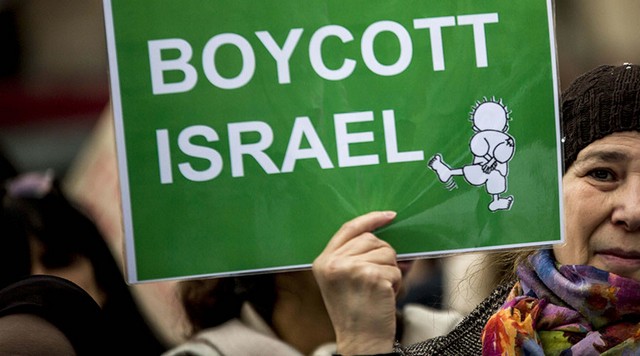
Israel’s intolerance is growing – so too the isolation

By Ranjan Solomon

his has been yet another of those horrific weeks in Palestine. Israel’s intolerance is growing. Far away in Australia, Netanyahu is getting a mixed reception – the government which welcomes him with a red carpet regardless of the fact that he heads the worst form of government there is anywhere in the world right now. Civil society, churches, trade unions, academics, students, and even the opposition protested and held wide-spread protests where he was labeled a war criminal.

Around the world, Israel is viewed as a criminal state. Its judicial system has just allowed a blatant murderous soldier to get away with a lenient sentence. The courts made a mockery of justice. The Arab League called the sentence itself an act of ‘racism’. A large number of human rights groups and activists joined the chorus of condemnation of the sentence. But Israel is unfazed and it will be no surprise if the criminal is let off the hook earlier than the term of the sentence and given back his position in the army.

69% of Israeli’s want that punishment to be either repealed or further reduced. Contrast that with the way Israel handles so-called crimes (and non-crimes) of the Palestinians. Even the innocent are picked up, arrested, thrown into prison without valid charges under the provision of Israel’s administrative law – a law that allows Israel to imprison a person without charges for six months and extend that by a further six months – an arrangement that often runs into years. They further rationalize their legal and administrative error by torturing prisoners and using the confessions obtained under torture as evidence to even decades of prison sentences. Democracy and the law in Israel are a strange species, a breed of their own. Both these instruments are twisted and warped in total regard for all civilized norms.

Israel won’t even allow itself to be scrutinized when it is accused of serious war crimes or other actions that render it in violation rights law and standards. It probably finds itself in the Guinness book of records for the number of independent investigations it has turned down. Just today, there is a report of why it won’t allow an American investigator from Human Rights Watch into the country, saying that Human Rights Watch is ­“systematically anti-Israel” and works as a tool of ‘pro-Palestinian propaganda’ while ‘falsely raising the banner of ­human rights.’

Nahshon, a top spokesman for Israel’s Foreign Ministry, confirmed that Israel rejected the visa request Human Rights Watch personnel basing its decision not on the individual but on its low opinion of Human Rights Watch. “We said no. It’s very simple. We consider the group to be biased, systemically hostile toward Israel. In a way, we consider them absolutely hopeless.”

Iain Levine, program director at Human Rights Watch, reacted: “This decision and the spurious rationale should worry anyone concerned about Israel’s commitment to basic democratic values,” Bashi said that in the past year, Human Rights Watch has not only reported on alleged violations by the Israeli government but also investigated and condemned the arbitrary detention of journalists and activists by the Palestinian Authority in the West Bank and executions by Hamas authorities in Gaza. Israel.

Israel has no tolerance for human rights and even less for being investigated when it commits those violations. The HRW report says: “Israel’s right-wing government has recently targeted Israeli human rights groups for extra scrutiny and warned European governments to stop funding them. Members of anti-occupation groups, such as ‘Breaking the Silence’ which is composed of Israeli army veterans, have been called “traitors.”

News- be it mainstream or alternative- highlights ascending intolerance and the resistance to listen to the voice of reason. They also show the emergent global rejection of Israel’s occupation. Israel’s down fall may be a matter of time. It may behave like a cornered tiger when that happens. The preferred option is that dialogue will light up the pathway to a peaceful, just, and lasting settlement.

The news items we share below highlight the intolerance and the resistance. They also show the emergent global rejection of Israel’s occupation. Israel’s down fall may be a matter of time. It may behave like a cornered tiger when that happens. The preferred option is that dialogue will light up the pathway to a peaceful, just, and lasting settlement.

24 February 2017

‘White Helmets’ — pawns for U.S. militarism

By Sara Flounders

The dangerous U.S. military escalation of its 5-year war to overturn Syria’s government can be seen in the Sept. 17 bombing, which killed 62 Syrian Army soldiers and aided the position of the Islamic State group. The attack sabotaged a U.S.-Russian brokered ceasefire and led Russia to call for an emergency U.N. Security Council meeting.

At the same time, there has been a heavy barrage of U.S. war propaganda. “White Helmets,” a new film, is part of the sophisticated disinformation campaign.

War propaganda is always more insidious on the home front, but it is an essential ingredient of imperialist wars. Charging the enemy with genocide, baby killing, mass rapes, mass graves and weapons of mass destruction have all been debunked after a U.S. war. But they saturate the media before a war and seem indisputable.

Samantha Powers, U.S. ambassador to the U.N., has denounced both Russia and Syria. She labels U.S. wars “humanitarian interventions,” and has used unsubstantiated war propaganda to justify wars in West Asia, North Africa and the Balkans that have decimated countries, killed hundreds of thousands of people and displaced millions.

Social media hype

The film praising White Helmets, a U.S.-British-funded group embedded with U.S.-funded reactionary opposition forces, is trending on Netflix. The documentary’s well-publicized launch is calculated to help it win awards and convey the call for deeper U.S. military involvement in Syria. It premiered the Sept. 17-18 weekend at the Toronto International Film Festival.

NBC News praised the featured group as “Angels on the Front Line.” The Washington Post, New York Times and Wall Street Journal sang the movie’s praises and White Helmets’ “selfless, humanitarian role.”

The White Helmets defines itself as unpaid, unarmed first responders in Syria, claims 3,000 members and alleges it is a Syrian Civil Defense group. It claims to have saved 40,000, even 60,000 lives in Syria, by rescuing survivors from bombsites.

Most claims about the White Helmets are unverified self-promotion on social media. Interviews with and media coverage of the grouping show desperate appeals for an increase in U.S./NATO military action in Syria — not peace and reconciliation. New York Times columnist Nicholas Kristof and other journalists have quoted its calls for a no-fly zone as a “humanitarian” option.

The much-hyped White Helmets is not a Syrian organization, nor was it created by Syrians, nor is it educational. It is a U.S.-British creation. Former British Army officer James Le Mesurier, self-described as a British “security” specialist, founded it. He previously worked for Blackwater, the mercenary organization universally condemned for its murderous brutality in Iraq.

U.S. AID funding

The White Helmets’ website declares the group is “unfunded, independent and neutral.” At an April 27 press conference, U.S. State Department Deputy Spokesperson Mark Toner acknowledged the organization has received $23 million from the U.S. Agency for International Development. That agency’s website explains, “Our work … advances U.S. foreign policy objectives.”

Additionally, the White Helmets receives millions of dollars from billionaire financier George Soros, the Netherlands and the British Foreign Office. Equipment and vehicles come through Turkey.

The White Helmets has never functioned as a neutral force. While attacking the Syrian government and calling for more U.S., British and NATO bombing, the group functions exclusively in Syrian areas held by the Nusra Front, a terrorist organization linked to al-Qaida. This well-funded group operates on the ground with U.S.-, British-, Israeli- and Saudi-funded militias committed to destroying Syria’s government.

While claiming to be “unarmed,” the White Helmets appears in videos with weapons, surrounded by armed militias.

The U.S. brought White Helmets’ leader Raed Saleh to the U.N. Security Council in 2014 to testify against the Syrian government and to lobby for a U.N. resolution approving a U.S.-enforced no-fly zone — meaning direct U.S. intervention. Saleh promotes bombing to “save” the people of Syria and is hardly “neutral.”

Washington later barred Saleh from the U.S. when he tried to attend a gala dinner honoring White Helmets with a keynote speech from USAID. The State Department deported him, citing his connections to “extremist organizations.”

The White Helmets is the latest of a series of front groups, designed to give a “humanitarian” gloss to Washington’s latest war of regime change in the Middle East.

White Helmets was established as a social media presence of the Syria Campaign, AVAAZ and Purpose — interlinked campaigns that push for U.S. destruction of Syria. They quote each others’ material and create the illusion of a democratic, independent opposition in Syria.

These forces are also pushing for a Nobel Peace Prize nomination for White Helmets to further legitimatize their calls for an expanded war. They also campaigned for Washington to bomb Libya under the guise of a “humanitarian” no-fly zone.

Resources that tell the truth

While the corporate media and TV entertainment channels seem to be taken in by this slick film, it takes little effort to expose who White Helmets is and reveal its role in the ugly U.S.-funded war in Syria. Information is available online in various formats. But this has not stopped the constant, orchestrated promotion of White Helmet.

“The White Helmets — al Qaeda with a Facelift” is a 4-minute video on Youtube which reveals the truth about the grouping. (tinyurl.com/zojokn3) The Syria Solidarity Movement, including Eva Bartlett, Vanessa Beeley, Ken Stone and Hands Off Syria, which made the video, has extensively researched White Helmets’ funding and role.

Change.org’s petition opposes the Nobel Peace Prize nomination, concluding that the White Helmets is “terrorism and neocolonialism under the umbrella of Humanitarianism.” (tinyurl.com/z52cttu)

21 September 2016

Integration key to quelling fear of migrants, Pope Francis says

By Elise Harris

Vatican City, Feb 17, 2017 / 08:20 am (CNA/EWTN News).- On Friday Pope Francis paid a visit to Rome’s “Roma Tre” university, stressing to students the importance of dialogue, listening and integration in putting an end to the fear that can at times be generated in the face of welcoming new migrants.

“Migrations are not a danger, they are a challenge to grow,” the Pope said Feb. 17, adding that “it’s important to think well about the problem of migrants today, because there’s a migratory phenomenon that’s so strong.”

“How must migrants be received? How must they be welcomed?” he asked, stressing that first, they must be viewed “as human brothers and sisters. They are men and women like us.”

Second, “every country must see how many they are able to welcome,” he said, noting that while it’s true that a country shouldn’t take on more than they have the capacity to handle, each one must play their part.

However, part of welcoming, he said, means “to integrate. That is, to receive these people and try to integrate them so they can learn the language, look for a job, a house, integration.”

Pope Francis spoke to students during a morning visit to Rome’s “Roma Tre” University, which has a school for Economics and Business Studies, with departments for architecture, economics, philosophy, communications, law, engineering, language and culture, math and physics, political science, business and humanities.

After arriving and greeting the rector of the university, Professor Mario Panizza, as well as the university’s General Director and Vice Rector, the Pope listened to questions posed by four students at studying in different fields, and responded with a lengthy, off-the-cuff speech.

One of the questions was posed by Nour Essa, a Syrian refugee who fled to Lesbos with her husband and young son. After spending a month in a refugee camp, they were selected to be among the 12 refugees who flew back to Rome with Pope Francis after his April 16, 2016, visit to the island.

Now, almost a year later, Essa has learned Italian and is completing her studies in Agriculture and Microbiology. She asked the Pope how to overcome the fear that welcoming so many migrants into Europe will destroy its cultural identity.

In his response to Essa’s question, the Pope stressed the importance of accompanying new migrants in a process of integration, and pointed to the fact that within three days of arriving in Italy, the children who came back with him from Lesbos were already in school.

When three months later he invited 21 Syrian children to join him for lunch at the Vatican, they all “spoke Italian,” Francis said. “The older ones a bit less, but they all spoke it. They went to school and learned it. This is integration.”

He noted that the majority of migrants who came back that day have both a job and a person to help them integrate into the culture by providing “open doors” to find work, school and housing, voicing his desire for more organizations dedicated to helping in the process of integration.

On the point of the fear of losing one’s cultural identity by welcoming so many migrants, the Pope said he often asks himself “how many invasions has Europe had since the beginning? Europe was made from invasions, migrants…it was made like this in an artisanal way.”

Migrants, he said, bring their own culture which is “a richness for us,” but must also receive part of the culture they come to so that a real “exchange of cultures” takes place.

“Yes, there is fear, but the fear is not only of migrants,” but of those who commit crimes, he said, and, pointing to the bombing of an airport and subway in Belgium last year, noted that the persons who carried out the attacks “were Belgians, born in Belgium.”

They were the children of migrants, but migrants that had been “ghettoized,” rather than integrated, he said, explaining that fostering respect for one another can “take away” this fear of different cultures.

In addition to responding to Essa’s question, Pope Francis also took questions from three other students studying in different fields at the university.

The students were Roman-born Niccolo Romano, who asked about how universities can work maintain their “communis patria,” or “common homeland” for all; Giulia Trifilio, who asked the Pope what “medicine” is needed in order to combat violent acts in the world; and Riccardo Zucchetti, who asked how students can work to constructively build society in an increasingly changing and globalized world.

In response to Trifilio’s question on how to put an end to the violent acts humanity at times seems prone to throughout the world, the Pope spoke about the importance of language and “the tone” that’s frequently used, even in casual conversations.

Whether at home or on the street, many people today “yell,” he said, explaining that unfortunately “there is also violence” in the way people express themselves.

He also pointed to the arbitrary greetings between even family members, who in a morning rush pass by with a quick, yet meaningless “hey” while on the way out the door. Even these seemingly small things, he said, “make violence” because they make the other person “anonymous,” taking away their name.

“There’s a person in front of us with a name, but I greet you like you are a thing,” he said, noting that this starts at the interpersonal level, but “grows and grows and grows and becomes global.”

“No one can deny that we are at war. This is a third world war in pieces,” Francis said, adding that “we need to lower the tone a bit; to speak less and listen more.”

As a remedy, the Pope suggested the ability to listen and receive what the other person is saying as the first “medicine” to take, with dialogue as a second.

“Dialogue draws near, not only to the person, but hearts. It makes friendship. It makes social friendship,” he said, adding that where there is no dialogue, “there is violence.”

“I spoke of war. It’s true, we are at war, but wars don’t start there, they start in your heart, in our hearts, when I am not able to open myself to others, to respect others, to speak with others, to dialogue with others, war starts there.”

This must also be practiced at the university level, he said, explaining that a university must be a place where discussion takes place among students, professors and groups. If this doesn’t happen, “it isn’t a university.”

Pope Francis cautioned against what he termed as “university of the elite,” or the so-called “ideological universities” where students go, are taught one line of thinking, and then prepared “to make an agenda of this ideology” in society.

“That is not a university,” he said. “I go to university to learn, yes, but to learn to live the truth, to seek the truth, to seek goodness, to live beauty and seek beauty. This is done together on a university path that never finishes.”

In response to the question about building up society amid rapid changes and increasing globalization, the Pope said an important lesson that has to be learned is to “take like as it comes.”

With so many changes mean there is a great need for flexibility, he said, using the example of being ready to catch a ball from whatever direction it comes in.

He also emphasized the importance of unity, which is “totally different than uniformity.” Unity, he said, means “to be one among differences. Unity in diversity.”

Since we are living in “an age of globalization,” Francis said it would be “a mistake” to think of globalization like a ball in which each point is equally far from the center.

If organized this way, “everything is uniform” and there is no differences, he said, but stressed that “this uniformity is the destruction of unity, because it takes away the possibility of being different.”

On the rapid pace of communications in modern society, Pope Francis recognized that “an acceleration” is taking place, and pointed to the rule of the Law of Gravity, that as an object falls faster as it nears its destination.

“Today communications are like this with the danger of not having the time to stop oneself, to think, to reflect, and this is important, to get used to communicating, but without the sensation of ‘rapidity,’” he said.

At times communication goes so fast that it “can become liquid, without consistency,” so the challenge is one of “transforming this liquidity into concreteness,” Francis said, explaining that same concept also goes for the economy.

Using “concreteness” as his keyword for the point, the Pope said the “drama of today’s economy” is that there is a liquid economy, which leads to “a liquid society” with a high rate of unemployment.

Francis pointed to several European countries as examples and, without naming them, noted that specifically youth unemployment rates in several vary from 40-60 percent.

“I ask you the question: our dear mother Europe, the identity of Europe, how can one think that developed countries have youth unemployment so strong?” he said, explaining that the numbers are evidence that “this liquidity of the economy takes the concreteness of work, and takes the culture of work because one can’t work.”

In the absence of work, youth “don’t know what to do” and in the end fall into addictions or suicide, he said, adding that according to what he’s heard, “the true statistics of youth suicide are not published. The publish something, but it’s not the true statistics.”

Some youth even fall into terrorist groups, telling themselves “at least I have something to do that gives meaning to my life,” the Pope observed, adding that “it’s terrible.”

In order to solve the problems created by this type of “liquid economy,” concreteness is needed, he said, “otherwise it can’t be done.”

Universities must be the place in which this happens, he said, telling the students that “in the dialogue among you, also look for solutions to propose. The real problems against this liquid culture.”

17 February 2017

Benefiting from Other Religious Traditions: A Muslim Perspective

By Waris Mazhari

In a well-known verse in the Quran, God says:

“O men! Behold, We have created you all out of a male and a female, and  have made you into nations and tribes, so that you might come to know one another. Verily, the noblest of you in the sight of God is the one who is most deeply conscious of Him. Behold, God is all-knowing, all-aware.”

This Quranic verse mentions that all human beings are children of the same set of primal parents. Thus, they all have, by birth itself, an equal status. They also possess a similar nature (fitrah), the nature on which God has created every human being. In the Islamic understanding, as we learn from this verse, the only criterion for distinguishing between people in terms of their nobility is their level of taqwa, i.e. God-consciousness. Taqwa is the only source of dignity and superiority in the sight of God.

Another fact that this Quranic verse highlights is that God has divided the whole of humanity into groups and tribes, and this is with the purpose that they should know each other.

The question here arises as to what it means ‘to know each other’?

Knowing each other is a means for people from diverse backgrounds, including religious backgrounds, to come closer to each other and assist one another to achieve common goals. This verse can also be read, then, as a call for interfaith and inter-community understanding and cooperation.

By underscoring the fact that human diversity is a God-given phenomenon, the Quran teaches us about the importance of ‘unity in diversity’. Nature dislikes uniformity because the universe that God has created is characterized by diversity and pluralism. The Quran very beautifully says:

“Did you not see how God sent down water from the sky with which We bring forth fruit of diverse colours. In the mountains there are streaks of various shades of white and red, and jet-black rocks; in like manner, men, beasts, and cattle have their diverse hues too. Only those of His servants, who possess knowledge, fear God. God is almighty and most forgiving (35:27-28).

Taking a cue from Nature, which displays incredible harmony amidst immense diversity, human beings are required to act in accordance with the principle of respecting the unity of human beings amidst diversity, which is only truly possible if we consider all of humankind as one vast family of  God.

In my view, when the above-quoted Quranic verse talks about people from different social groups getting to know one another, this is to be understood not simply in the sense of gaining information about one another—or information just for information sake. Rather, it could also include learning about and from each other’s religious, spiritual, social and cultural traditions in order to benefit from them.

In this regard, it is instructive to note that the Quran says that the Torah contains ‘guidance and light’ (5:44). Those who have read the Quran would know that it refers to the Bible in several places. Many famous commentators on the Quran draw on the Bible in explaining several Quranic verses. Likewise, it is worth mentioning here that the Quran (26:196) talk about zubur al-awwaleen, which means ancient books. Some Muslim scholars point out that this might also include Hindu scriptures, which according to Hindu belief contain Divinely-revealed knowledge and are called in sruti in Vedic terminology. Like the Bible and other religious books, the Vedas and Upanishads also contain many teachings similar to those in the Quran.

These similarities in different scriptures speak of the same Divine Source. It has been explained in several verses in the Quran that to every community God has sent a ‘guide’ (hadin) and a ‘warner’ (nazeer), who received revelations from God. Many of these revelations may have not have been protected from corruption over time, but one cannot over look the wisdom and insight they still contain. This treasure of wisdom is a collective or universal human inheritance, which every human being deserves to avail of. And that is in accordance with the Islamic spirit. In this regard, it is instructive to recall a well-known hadith, reported by Abu Huraira:

The Messenger of God said, “The wise saying is the lost property of the believer, so wherever he finds it then he has a right to it.”(Source: Tirmidhi)

This is a very valuable and insightful tradition. It implies that no community has a monopoly over wisdom and that everyone is entitled to wisdom wherever he or she may find it.

In this regard, it is striking to consider the tendency among many religionists to benefit as much as they can from other communities’ worldly knowledge and experiments but to avoid doing the same when it comes to their spiritual experiences and wisdom. This lamentable tendency can be overcome if we train our minds to realise that the essence of every religion is ethics and moral values and hence that they are not as different from each other as many people sadly think. If almost every religion stresses ethical values and moral character, there is really no reason why people of different faiths should think of religions other than the one they claim to follow as something totally contrary to their own.

A number of verses in the Quran and many hadith reports talk about ‘wisdom’ (hikmah). Now, what exactly does this word mean? Can we, Muslims, attempt to discover hikmah in the other religious and spiritual traditions as well? Can we spiritually benefit from this wisdom and insight that is found in other religious traditions? Some sayings attributed to the Prophet Muhammad, irrespective of how reliable they may be, do not allow Muslims to come into touch with scriptures of other religions. But here it needs to be considered that even the traditionalist ulema are unanimous on the point that this relates to some specific circumstances when the revelation of the Quran had not been completed and the first generation of Muslim community was yet to be fully educated and trained. In this phase of early Islamic history, even Muslims were asked not to gift or carry the Quran to people of other faiths. This was similar to the prohibition on writing down of hadith reports for a certain period of time, for fear that they may be mixed with the Quranic revelations that were so far not compiled. The prohibition on reading scriptures of other religions at this time must be seen in that particular context, because those who had become Muslims had only recently embraced the faith and needed to grow fully in it. The restriction must then be seen as contextual, not as a general rule for all times.

While talking about the responsibilities of the prophets of God, the Quran (2:129) specially states that they teach people the Book and wisdom (hikmah). Commentators on the Quran have defined the word hikmah in many ways. I firmly believe that this word also includes the spiritual insights and wisdom that are contained in other religious scriptural traditions and transmitted through the generations. They nurture the human soul, illuminate the human mind and expand our spiritual experiences. They are a common human legacy and we should not remain deprived of it. In this regard, it is important to note that some commentators on the Quran suggest that hikmah includes, among other things, the Jewish and Christian scriptures—or what are conventionally called the Old and the New Testaments. In further support of our argument, it is also interesting to note that Ali bin Abi Talib, the forth Caliph, has been quoted as saying that one should seek knowledge even though it is from polytheists (Source: Jame Bayan ul-Ilm).

Some Muslim scholars expound the view that anything not found in established Islamic tradition is mere ‘ignorance’ (jahiliyyah) and hence, that there is no need for Muslims to study or benefit from it. I do not agree with this. Here the concept of jahiliyyah requires to be understood in proper sense. It is not right to think that every single thing related to the pre-Islamic period is absolutely wrong and the Prophetic mission was aimed at putting an end to it entirely, as is widely interpreted. The fact is that many social and cultural traditions in the jahiliyyah period possessed common human and moral value, which, instead of being eliminated, was promoted by Islam. One saying of the Prophet appropriately proves this fact. The Prophet said: “People are like gold and silver; those who were best in Jahiliyyah [the pre-Islamic Period of Ignorance)] are best in Islam, if they have religious understanding”(Source: Bukhari).

A story related to the Prophet make this point even more clear and visible. Once, a group of people called on the Prophet and informed him that they had learned five moral teachings in the jahiliyyah period. When the Prophet asked them to elaborate, they said: “Expressing thanks to God when hope for achieving something is fulfilled, exercising patience in the time of tribulation, firmness in front of fighting enemies, reliance on destiny and exercising patience with regard to enemies (not taking revenge) and rejoicing in grief and misfortune.” It was so amazing for the Prophet that he said: “How much wise and knowledgeable they are! They are talking like a prophet’’. (Source: Jame ul-Masaneed wa al-Sunan).

It can be inferred from this Prophetic report that wisdom and virtue are definitely not a monopoly of a certain religion or community.

Something being good does not inevitably need to be proved to be so from a religious text if it is not incompatible with reason and human nature and is not harmful to human society. If something promotes human causes and proves useful for social and human welfare, it can be availed of by everyone, irrespective of where it is found and who finds it. The Prophet is reported to have said that the best of people are those who benefit humankind (Source: Kanz ul-Ummal). This clearly indicates that what Islam teaches is not odd and unusual. Apart from a set of beliefs, it is essentially the same moral teachings and guidance of all the prophets, religious leaders and sages (rishi munis) who have appeared among the human race ever since it came to this planet. That said, it is also important to keep in mind that not everything in every culture or religious tradition is good, laudable or worthy of emulation. Benefiting from others does not mean blindly imitating them. In learning and imbibing from others one must make sure the norms and teachings of one’s own faith are preserved.

It is a well-established fact that what is called the ‘Muslim Golden Age’ was indebted to several religious and cultural traditions, including the Greek, Iranian, Indian, Coptic, Nestorian etc..This clearly shows how willingness to learn good things from other peoples and cultures is itself a good thing and is not something banned in Islam. The Sufistic tradition is the best example of bringing the best human values together in itself, for it has borrowed from several religious, non-religious and philosophical traditions, combining them with the spirit of Islam. Authentic Sufism reflects this inclusive nature of Islam and its true teachings of love for the whole of humanity.

Muslims believe that Islam embodies Truth. But that does not necessarily mean that everything pertaining to any other religion is false or ‘un-Islamic’. We should not deny the goodness in them and their great contributions to human society. Rather, we should readily acknowledge this goodness. I believe Islam, far from preventing its followers from benefiting from it, actually encourages it.

15 February 2017

Why Iran-US war of words won’t turn physical

By Adnan Tabatabai

As much as the United States’ new tone toward Iran is worrisome, and as much as the Islamic Republic’s Jan. 29 ballistic missile test is disconcerting, Tehran and Washington are unlikely to collide directly.

In both capitals, decision-makers see an urgent need for harsh rhetoric — albeit for different reasons. The Iranians see a need to show resilience vis-a-vis an explicitly hostile US administration. Meanwhile, the latter wants to make clear to both its domestic and international audience that the Obama era is over. This involves signaling that the easing of tensions with Iran has ended. It also involves reassuring regional allies such as Saudi Arabia and Israel that Washington would not engage in a rapprochement with Tehran at their expense.

Indeed, it should not come as a surprise that US national security adviser Michael Flynn’s warning that Iran “is officially on notice” came shortly after lengthy phone calls between the White House and both Israeli Prime Minister Benjamin Netanyahu and Saudi Arabia’s King Salman bin Abdul-Aziz Al Saud.

But escalating rhetoric aside, the reality is that US policy toward Iran has largely remained intact.

In the 13 months since the implementation of the Joint Comprehensive Plan of Action (JCPOA), Iran has repeatedly conducted ballistic missile tests. And it is entitled to do so. In UN Security Council Resolution (UNSCR) 2231, which endorses the nuclear deal, Iran is “called upon” not to carry out tests of missiles “designed” to carry nuclear weapons. There is no legally binding prohibition of such launches, unlike in UNSCR 1929 — the last and most harsh UN resolution against Iran over its nuclear program — which is superseded by UNSCR 2231.

To be clear, the nuclear deal does not address Iran’s missile program. Moreover, the world powers with which Iran negotiated UNSCR 2231 — apart from the United States — did not display any appetite to insert legally binding text on Iran’s missile tests.

Thus, as provocative as the missile tests may be, it is hard to see them providing a legal basis for the United States to spearhead new multilateral sanctions, leaving Washington with the option of adopting unilateral sanctions, which it did on Feb. 3.

While it took the Trump administration less than two weeks to slap sanctions on Iran, the idea that there was a sanctions freeze in Obama’s final year in office is inaccurate. In fact, the latest sanctions were prepared by the previous administration.

In January 2016, not long after the implementation of the nuclear deal, changes were made to the Visa Waiver Program, which excluded Iranian dual nationals and anyone who had visited Iran in the preceding five years. Moreover, last December, Obama refrained from moving to veto the congressional vote on a 10-year extension of the Iran Sanctions Act. While these sanctions are unrelated to Iran’s nuclear program, they undoubtedly undermine the impact of the lifting of nuclear-related sanctions.

Iran has reacted to the escalating rhetoric and sanctions by stressing that its missile program is defensive in nature, promising retaliatory sanctions, and by carrying out new military drills.

Yet, there is little incentive for Iran to greatly alter the status quo. Iranian leaders see the JCPOA as much more than just about the United States. It is an international arrangement with world powers — including the European Union, which Iran holds in high regard as a multinational institution. They see this arrangement as beneficial to Iran’s economic and security calculations. Foreign investment, albeit limited due to remaining US sanctions, is trickling in. The EU oil embargo has been lifted and major contracts in the area of petrochemicals, civic aviation and transport are increasingly sealed. Additionally, the JCPOA provides a sense of security to Iran. It is highly unlikely for any party to the agreement to green-light military action by another party against Iran. Hence, Iran has little incentive not to abide by the nuclear deal.

As such, while the cycle of escalating rhetoric is discomforting at a time of deep uncertainty and conflict in the Middle East, it is important to see that it has its limits. Short of outright regime change, the United States has in fact rather limited options to weaken and contain Iran.

Given its experiences in places like Iraq and Afghanistan, it is unlikely that the United States will launch full-scale unilateral military action against Iran. It could move to arm a third country to hit Iranian infrastructure. This was tried with Iraq under Saddam Hussein. Today, Saudi Arabia could be such a third country. But given the lack of appetite in Riyadh for direct confrontation with Tehran, and considering the downward spiral in the Saudi military intervention against Yemen — the poorest country in the region — it is unthinkable that Saudi Arabia would take such a step. Israel has repeatedly threatened to attack Iranian nuclear sites. But considering the low chances of success and the potentially dire consequences, including retaliatory attacks by Lebanon’s Hezbollah movement, it can be argued that such threats primarily serve a political purpose.

Less costly measures aimed at weakening and containing Iran, such as sanctions, have been tried and tested. The Obama administration managed to put in place an unprecedented multilateral sanctions regime targeting Tehran. Yet, it was under those very sanctions that Iran’s nuclear program evolved into what the international community came to perceive as a major threat to global security. Consequently, the Obama administration tried diplomacy. And it worked. The JCPOA reduced the capacity and increased the transparency of Iran’s nuclear program in exchange for the lifting of nuclear-related sanctions. And as the International Atomic Energy Agency has repeatedly certified, the deal is working.

Bearing in mind the nuclear deal is fulfilling its objectives, the limited military options to contain Iran, and perhaps most of all the likely US inability to forge an international consensus against Iran in case of its unilateral breach of the accord, the security establishments of both Israel and Saudi Arabia have publicly urged Washington not to dismantle the JCPOA.

While reveling in the newfound reassurances from Washington, it can thus be argued that Riyadh and Tel Aviv understand the limits of the cycle of escalation and mostly take solace in Trump’s unwillingness to realize their nightmares under Obama.

In this vein, the Trump administration can be expected to do whatever it can to minimize the economic benefits Iran will reap under the JCPOA. It will likely seek to discredit Iran’s regional policies to prevent the normalization of the Islamic Republic’s ties with the world, while also diminishing the political capital the deal affords Iran. But it will do this short of breaching the accord.

Thus, while likely to squabble about respective obligations and further drift away from rapprochement, neither Iran nor the United States has the incentive or ability to take the new cycle of tension to a military confrontation.

Adnan Tabatabai is co-founder and CEO of the Center for Applied Research in Partnership with the Orient (CARPO). As a Berlin-based political analyst on Iranian affairs, he is consulted by the German Federal Foreign Office, members of the German Bundestag, political foundations as well as journalists and authors. He writes analyses and commentaries on Iran for numerous German and English media outlets.

9 February 2017

Israel Rejoices in Unbridled Colony Expansion amid Trump’s Havoc

By Ramzy Baroud

Within days of US President Donald Trump being sworn in, the Israeli government announced the approval of around 2,500 new housing units.

Within the first two weeks of Trump’s presidency, the number of new housing units, all to be built illegally on Palestinian land, was raised to 5,500, including the first brand-new government-sanctioned colony in years.

In response, Israeli Prime Minister Benjamin Netanyahu tweeted: “We are building — and we willcontinue to build” — a statement which clearly expresses Israel’s blatant disregard for and violation of international law. What is clear is Israel’s determination to continue its ravenous expansion of illegal colonies, which is unprecedented in at least eight years.

It is true that the colony-building activities accelerated after the signing of the so-called Oslo Peace Accord, but in recent years Israel realised that every decision to approve constructing more units in illegal colonies came at the price of international criticism and condemnation.

Now that Trump is in power, Israel, controlled by right-wing, ultra-nationalist and religious zealots is rapidly moving to further ratify a new, irreversible political reality.

The current political atmosphere regarding colony expansion in Israel rings back to when the late Ariel Sharon was the country’s foreign minister. Fearing that Israel would come under international pressure to halt illegal colony construction, he called on Jewish colony extremists to steal as much Palestinian land as possible.

“Everybody has to move, run and grab as many [Palestinian] hilltops as they can to enlarge the [Jewish] settlements [colonies] because everything we take now will stay ours,” Sharon said in comments that were broadcast in Israeli radio in November 1998. “Everything we don’t grab will go to them.”

Sharon is dead, but his crazed mentality is clearly alive and at the helm of Israeli politics after a period in which colony growth had relatively slowed down.

According to a recent United Nations report, illegal colony numbers tell of a tragic reality, numbering 196 in the occupied West Bank and occupied Jerusalem, in addition to 232 outposts, which the current Israeli government plans to annex as well.

The total number of Jewish colonists now stands at 750,000, nearly three times the number of colonists in 1992 (shortly before the Oslo Accord was signed).

These numbers have all accompanied the continuous ethnic cleansing of Palestinians from their land and homes, and the revocation of residency permits for Palestinians in the occupied Jerusalem area.

According to the UN report, 250,000 Palestinians have been exiled from the occupied territories since the war of 1967. (This number does not include those who were ethnically cleansed during the war itself)

Thus, the recently announced massive expansion of Jewish colonies will have not only considerable political consequences, but humanitarian ones as well.

Israel’s hankering after more land has been a persistent motive, but the advent of the Trump presidency has given the Israeli right the needed confidence to move forward with its plans, unhinged.

Throughout his campaign for the White House, Trump made numerous, blatant and often contradictory promises. While he initially pledged to keep a similar distance between Palestinians and Israel, he later reversed his position, adopting that of Israel’s right-wing government.

Trump, the opportunistic real-estate mogul entered the White House with an eerie agenda that mimics that of the current Israeli right-wing, ultra-nationalist government.

“We have now reached the point where envoys from one country to the other could almost switch places,” wrote Palestinian Professor Rashid Khalidi in the New Yorker.

He added, “The Israeli ambassador in Washington, Ron Dermer, who grew up in Florida, could just as easily be the US Ambassador to Israel, while Donald Trump’s Ambassador-designate to Israel, David Friedman, who has intimate ties to the Israeli colony movement, would make a fine ambassador in Washington for the pro-colony government of Benjamin Netanyahu.”

Israel is almost in a state of political euphoria — not only are the superfluous references toa ‘peace process’ and a Palestinian state over, but they now have a free hand to build illegal Jewish colonies in occupied Jerusalem, unhindered. New bills are springing in the Israeli Knesset to annex even the Jewish colonies rendered illegal by Israel’s own definitions, and to remove any restriction on new colony construction and expansion.

Of course, Trump’s administration has no qualms with that; in fact, this falls perfectly within the agenda of the new rulers of the United States who now control the legislative and executive branches.

The Trump administration has actually gone further, pledging to move its embassy from Tel Aviv to occupied Jerusalem, again in complete disregard for international law. Friedman was elected for that post precisely to administer that decision, the dangers of which the inexperienced, demagogic politician, Trump, seems to overlook.

If Trump persists in this decision, he is likely to unleash an episode of chaos in an already volatile region. The move which is now reportedly in the ‘beginning stages’, is not merely symbolic, as some have naively reported in western mainstream media.

True, American foreign policy has been centred mostly on military power, and rarely on historical fact. But Trump, known for his thoughtlessness and impulsive nature, is threatening to eradicate even the little (although vague) common sense that governed US foreign policy conduct in the Middle East, and is likely to regret the unanticipated consequences of his action.

Countries around the world, even those considered allies of Israel such as the United States, reject Israeli sovereignty over Jerusalem and the Israeli invitation to relocate their embassies.

While some in mainstream western media are already predicting “a fresh wave of Palestinian violence” should the relocation occur, the new US administration must think carefully before embarking on such a self-destructive move.

In a recent interview with ‘Fox News’, Trump restated the tired jargon of how ‘badly’ Israel has been treated and that relations between Washington and Tel Aviv have been ‘repaired.’ However, he then refused to talk about moving the embassy because “it’s too early.”

Perhaps Trump was side-stepping to avert a crisis. Yet, that was a downgraded position from that of his senior adviser, Kellyanne Conway, who had recently stated that moving the embassy is a “very big priority.”

Even if the embassy move is delayed, the danger still remains, as Jewish colonies are now growing exponentially, thus compromising the status of the city.

The fact is that Trump’s lack of clear foreign policy that aims at creating stability — not rash decisions to win lobby approval — is a dangerous political strategy.

Trump’s intention to reverse the legacy of his predecessor, should not mean that he should begin his legacy by inviting more violence and pushing an already volatile region further into the abyss.

7 February 2017