Just International

Wadah Khanfar: US knew about Turkey coup

Published in: Asia & Americas, EU, Europe & Russia, International Organisations, Middle East, News, Turkey, US

America knew about the planned coup attempt in Turkey before it happened, the head of Al-Sharq Forum and former director of Al Jazeera network said.

In an interview with the Anadolu Agency, Wadah Khanfar said: “A coup of this magnitude would not be able to do anything without consulting or notifying the Americans.”

“We must not forget that Turkey’s army is part of NATO forces and America has a military base in Turkish Incirlik,” he added, “and we know that there are still issues in this base and Turkish officers have American colleagues there. ”

He continued: “I do not think that the Americans were unaware of this.” US Secretary of State John Kerry has rejected claims that the US was aware of the plan; however Khanfar said it was “expected that he would announce that Washington had nothing to do with it.”

Khanfar pointed out that Kerry’s first statement was “hesitant and not assertive in the first hour of the attempted coup.” After it was clear that the coup had failed, “the statements of US President Barack Obama and others were stronger in their support for the legitimate government in Turkey.”

With regards to the European position of the failed coup attempt, Khanfar said Europe’s political and media groups “insisted on painting Turkish President Recep Tayyip Erdogan and his government as an authoritarian dictatorship, which we have seen clearly in recent years,” adding that “the late response and hesitant European reaction to what happened is the biggest indicator that Europe does not want Turkey to continue on its current course – led by Erdogan.”

“When the coup took place, we noticed a state of indecision in the media and western political attitudes, as they were not quick to condemn what happened; on the contrary, some of the statements were gloating and some wanted to wait and give the coup some time to prove itself.”

He went on saying that “there is no doubt that if the coup were to succeed, European attitudes towards it would have been positive. However, after it became clear to the West in general as well as many of the neighbouring countries that the Turkish people had foiled the coup, the statements of opposition to what happened started to emerge.”

20 July 2016

Military coup was well planned and very nearly succeeded, say Turkish officials

By Kareem Shaheen

It was midnight in the Turkish capital, just two and a half hours into the attempted coup, and the group of nine senior ministers who were gathered in a conference room at the prime ministry were convinced that they were all about to meet their end.

“They probably will be successful and we will die tonight,” said one of the ministers, according to an official who was present at the meeting. “Let us be ready to die. We will all be martyred in this fight.”

He sent his bodyguard to fetch his personal gun. Security forces charged with protecting the building had been escorted out of the room in a sombre scene, because ministers did not know who to trust in the middle of the unfolding coup.

They were in the meeting when the state broadcaster, TRT, was taken over by the rebels and the channel’s anchorwoman was forced to read a statement declaring the military was in control and denouncing President Recep Tayyip Erdoğan. The cabinet fell into utter silence for two minutes.

Then one minister cracked a joke that eased the tension: “Don’t bother with TRT, I don’t even watch it during regular times, it’s just state TV.”

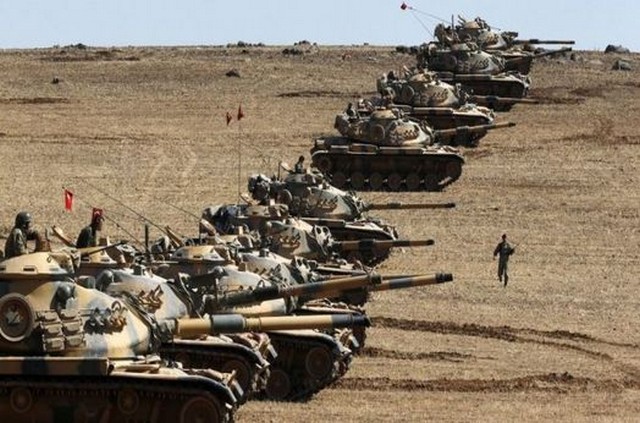
Nearly three days have passed since a faction within Turkey’s military attempted to overthrow the government, deploying tanks to the streets of Istanbul and Ankara, blocking bridges, arresting top military officers, seizing TV stations and launching coordinated attacks on police and security headquarters, promising to restore true democracy.

That effort was short-lived but bloody, with hundreds of lives lost and thousands wounded in the carnage. The capital city is pockmarked with tell-tale signs of the violence, abandoned tanks now a curiosity for locals posing on the metal carcasses left in the streets. Shattered glass and concrete adorn the grounds of local security and intelligence headquarters and the parliament building, itself bombed in an attack on democratic institutions of symbolic importance.

But as Turkey picks up the pieces after the failed coup, new details are emerging of how it unfolded, and just how close the military intervention came to succeeding. Many observers have labelled the attempt amateurish, but accounts by officials contradict this characterisation, describing it as well organised and very nearly successful.

In Ankara on Friday, the day of the coup, the interior minister had been invited, along with other top officials, to a high-level security meeting in military headquarters that was supposed to take place after 5pm, a ploy that turned out to be intended as a pretext to detain him. He did not go because he was too busy, and later when the coup unfolded he was stuck in Ankara’s Esenboğa airport, setting up a crisis cell there to manage the fallout, protected by crowds that had gathered to oppose the coup.

The top counter-terrorism official responsible for Turkey’s campaign against Islamic State did go to a “meeting” at the presidential palace in Ankara. He was later found with his hands tied behind his back, shot in the neck, according to a senior official.

President Erdoğan himself was at the resort of Marmaris, but had left the residence where he was staying some 20 minutes before coup plotters attacked it. Around 25 soldiers in helicopters descended on a hotel there on ropes, shooting, in an apparent attempt to seize him just after Erdoğan had left, broadcaster CNN Turk said.

But as he flew from Marmaris on a business jet, two F-16 fighter jets locked their radar targeting system on the president’s plane, according to an account first reported by Reuters and later confirmed to the Guardian.

The jets didn’t fire after the presidential plane’s pilot told the fighter jet pilots over the radio that it was a Turkish Airlines flight, a senior counter-terrorism official told the Guardian.

But that came later. At around 9pm, General Mehmet Dişli, the brother of a long-serving MP with the ruling AK party, allegedly gave the order that set the coup in motion, sending army special forces officers to arrest the military’s senior command. Tanks began rolling out into the streets of Ankara, and an hour later they had closed down Istanbul’s Bosphorus and Fatih Sultan Mehmet bridges.

Cemalettin Haşimi, a senior adviser of prime minister Binali Yıldırım, watched it all with a sense of foreboding. At 10.24pm, after surveying besieged Ankara, he walked into the office of the prime ministry’s undersecretary.

“Is it real?” he asked.

“Yes, it’s real,” came the reply. “But we are not sure if it’s within the chain of command or just a group in the army.”

By 10.37pm they had conferred with Yıldırım, who was in Istanbul, deciding to declare it an attempted coup on national television. They called TRT, but 10 minutes later the channel was overrun. So Haşimi called the private channel NTV, and minutes later Yıldırım was denouncing the plot.

Meanwhile, there were chaotic scenes in Ankara and Istanbul. A statement appeared on the military’s website and was circulated by email declaring it had taken control to restore democracy, feeding into the fears of government officials who worried the military chain of command had endorsed the takeover. Haşimi claimed that judges aligned with the coup had begun calling on associates to adhere to the military’s demands.

The national intelligence building and the police headquarters were attacked from the air. In the latter, helicopters had targeted the intelligence department in the top three floors of the facility, unleashing a hail of shattered glass and concrete that still scars the building.

“It was a nightmare,” said Murat Karakullukcu, a police official who spent the night at the headquarters through the attack and had served at UN peacekeeping missions in Kosovo. “Our first thought was how to survive, and then we started shooting at the helicopters with small arms.”

ack at the prime ministry, despair was setting in. They had resolved to make a final stand in the parliament, when Erdoğan appeared on a live broadcast at 12.37am on a reporter’s iPhone, exhorting the people to defend democracy.

“What is FaceTime? Why don’t I have it?” asked one of the ministers in attendance.

“That was the moment when the psychology were reversed and we thought we were going to win,” said Haşimi.

People began taking to the streets in larger numbers, answering the call of the president and the religious affairs Diyanet ministry, which had called on the imams of Turkey’s mosques to take to their minarets to declare “God is great”. The call to take to the streets was met with unease by some ministers, who worried it would result in a massacre.

On their way to the parliament, Haşimi and the rest of the ministers received the news that it had been bombed. That was one of the key pivotal points that led to the failure of the coup, he said. While he appreciated that many of those who took to the streets did not like Erdoğan’s government, the attack on the parliament, the first by the military since the 1920s, was too much of a provocation.

The statements by opposition leaders and top military officers, including army commanders, disavowing the coup sealed its fate.

Stories emerged of those crucial hours, between the president’s address and the successful quelling of the coup by 4am, that are sure to pass into the official mythology of the events. At 1am, officials say the police chief the city of Bursa arrested the local army commander, who possessed a 6-page list that included the names of designated judges and military officials who were to be appointed to various positions in the bureaucracy in the aftermath of the coup. Other pro-coup soldiers possessed lists of secure telephone lines to receive orders.

“There were crucial moments,” said Haşimi. “It was incredibly well organised actually, but sudden moves by the leadership and sudden movement by the people changed the whole plan.”

“It could have succeeded,” he added. “They lost the moment the president and the prime minister went on air, and when high-level army commanders came out on air and declared their support for democracy, and the people rejected going home.”

Kareem Shaheen is a Middle East reporter based in Beirut. Follow him on Twitter @kshaheen

18 July 2016

The Coup in Turkey has Thrown a Wrench in Uncle Sam’s “Pivot” Plan

By Mile Whitney

A failed coup in Turkey has changed the geopolitical landscape overnight realigning Ankara with Moscow while shattering Washington’s plan to redraw the map of the Middle East. Whether Turkish strongman Recep Tayyip Erdogan staged the coup or not is of little importance in the bigger scheme of things. The fact is, the incident has consolidated his power domestically while derailing Washington’s plan to control critical resources and pipeline corridors from Qatar to Europe. The Obama administrations disregard for the national security interests of its allies, has pushed the Turkish president into Moscow’s camp, removing the crucial landbridge between Europe and Asia that Washington needs to maintain its global hegemony into the new century. Washington’s plan to pivot to Asia, surround and break up Russia, control China’s growth and maintain its iron grip on global power is now in a shambles. The events of the last few days have changed everything.

This is from the Daily Sahbah:

“Turkey’s changing rhetoric toward Russia is also a direct consequence of Ankara’s unmet expectations regarding the Syria conflict. Turkey’s disappointment with the United States’ policy in Syria has increased with time, especially considering Washington’s continued support for the Kurdish fighters of the People’s Protection Units (YPG) in Syria. Ankara sees this group as an affiliate of the Kurdistan Workers’ Party (PKK) terrorist organization (Daily Sabah, 12 June).
(A Change in Turkish-Russian Relations: What Sort of Rapprochement?, The Jamestown Foundation)

Obama can only blame himself for the debacle that is now unfolding. Erdogan was completely clear about Turkey’s red lines, the most important of which is preventing the Kurdish militias from moving west of the Euphrates and creating a contiguous state along the Syrian side of Turkeys southern border. Here’s Erdogan commenting on developments a few months ago:

“Right now, there is a serious project, plan being implemented in northern Syria. And on this project and plan lay the insidious aims of those who appear as ‘friends’. This is very clear, so I need to make clear statements.”

Instead of addressing Erdogan’s security concerns, Obama brushed him aside in order to pursue the US goal of establishing bases and seizing territory in East Syria that will eventually be used as pipeline routes from Qatar to the EU. Naturally, Erdogan responded in kind, forming alliances with former enemies (Russia, Syria, Israel) in order to reset Turkish foreign policy and address the growing threat of an emerging Kurdish state on his southern flank. Keep in mind, Turkey believes that America’s new proxies in Syria–the Kurdish YPG– are linked to the PKK, which is listed as a terror organization by the U.S. and EU. Had Obama committed US troops to the fight, (instead of using the YPG) Erdogan would not have reacted at all. But the fact that Obama was deliberately strengthening Turkey’s traditional rivals in their westward move, was more than Erdogan could bear.

Erdogan Apologizes

At the end of June, Erdogan apologized to President Vladimir Putin for the death of a Russian pilot who was killed when Turkey downed a bomber flying over Syrian territory last November. The shootdown prompted Putin to break off relations with Ankara ending all communication between the two countries. Then, in the last week of June, Erdogan sent a letter to Putin “expressing his deep sympathy and condolences to the relatives of the deceased Russian pilot.” He added that Russia was “a friend and a strategic partner” with whom the Turkish authorities would not want to spoil relations.” (The Turkish pilots who shot down the Russian Su-24 have since been arrested and charged as members of the Gulenist coup.)

The White House inexplicably never commented on this thawing of relations which posed obvious risks to US ambitions in the region.

Why?

Then, just two weeks ago, reports began to emerge that Erdogan was making an effort to normalize relations with Syrian President Bashar al Assad. The news wasn’t reported in most of the western media, but the Guardian ran an article titled “Syrian rebels stunned as Turkey signals normalisation of Damascus relations”. Here’s an excerpt:

“More than five years into Syria’s civil war, Turkey, the country that has most helped the rebellion against the rule of Bashar al-Assad, has hinted it may move to normalise relations with Damascus.
The suggestion made by the Turkish prime minister, Binali Yıldırım, on Wednesday, stunned the Syrian opposition leadership, which Ankara hosts, as well as regional leaders, who had allied with Turkey in their push to oust Assad over a long, unforgiving war.

“I am sure that we will return [our] ties with Syria to normal,” he said, straying far from an official script that has persistently called for immediate regime change. “We need it. We normalised our relations with Israel and Russia. I’m sure we will go back to normal relations with Syria as well.”
(Syrian rebels stunned as Turkey signals normalisation of Damascus relations, Guardian)

You’d think that would set off alarms at the White House, after all, if Turkey wanted to normalize relations with Damascus, then clearly it had abandoned the war it had supported (through its proxy militants and jihadists) for more than five years signaling a fundamental shift in policy that could have broader implications for the US effort. But did the Obama team show any interest in the announcement or make any attempt to keep Erdogan in the fold?

Of course not. Washington gives orders and everyone else is expected to click their heels and stand at attention. Obama and Co don’t bother with the incidentals like the fear of the nascent Kurdish state that could pose a direct threat to Turkey’s national security. Why would they bother with something as trivial as that? They have an empire to run.

Then came the coup which, by the way, Erdogan may have been tipped off to by Russian intelligence agents who have a strong presence in Turkey. By informing Erdogan of the coup, Putin might have hoped that Erdogan would return the favor and block NATOs plan to deploy permanent fleet to the Black Sea that will further encircle and threaten Russia. (And, yes, Putin knows that Erdogan is a ruthless autocrat and a backer of terrorist organizations, but he also knows he can’t be “too picky” when NATO is making every effort to surround and destroy Russia. Putin must take his friends as he finds them. Besides, some analysts have suggested that Putin will require Erdogan to abandon his support for jihadists in Syria as a condition of their new alliance.)

In any event, Putin and Erdogan have settled their differences and scheduled a meeting for the beginning of August. In other words, the first world leader Erdogan plans to meet after the coup, is his new friend, Vladimir Putin. Is Erdogan trying to make a statement? It certainly looks like it. Here’s the story from the Turkish Daily Hurriyet:

“Turkish President Recep Tayyip Erdoğan and Russian President Vladimir Putin may meet in a face-to-face meeting in August as part of mutual efforts to normalize bilateral ties following months of tension due to the downing of a Russian warplane by the Turkish Air Forces in November…

With the normalization of ties, Russia removed some sanctions on trade and restrictions on Russian tourists, though it will continue to impose visa regime to Turkish nationals. A deeper conversation between the two countries over a number of international issues like Syria and Crimea will follow soon between the two foreign ministers before the Putin-Erdoğan meeting.” (Putin, Erdoğan to meet soon in bid to start new era in Turkey-Russia ties, Hurriyet)

Is it starting to sound like Turkey may have slipped out of Washington’s orbit and moved on to more reliable friends that will respect their interests?

Indeed. And this sudden rapprochement could have catastrophic implications for US Middle East policy. Consider, for example, that the US not only depends on Turkey’s Incirlik Airbase to conduct its air campaign in Syria, but also, that that same facility houses “roughly 90 US tactical nuclear weapons.” What if Erdogan suddenly decides that it’s no longer in Turkey’s interest to provide the US with access to the base or that he would rather allow Russian bombers and fighters to use the base? (According to some reports, this is already in the works.) More importantly, what happens to US plans to pivot to Asia if the crucial landbridge (Turkey) that connects Europe and Asia breaks with Washington and joins the coalition of Central Asian states that are building a new free trade zone beyond Uncle Sam’s suffocating grip?

One last thing: There was an important one-paragraph article in Moscow Reuters on Monday that didn’t appear in the western press so we’ll reprint it here:

MOSCOW (Reuters) – Russia’s joint projects with Turkey, including the TurkStream undersea natural gas pipeline from Russia to Turkey, are still on the agenda and have a future, RIA news agency quoted Russian Deputy Prime Minister Arkady Dvorkovich as saying on Monday.” (Russian Dep PM says joint projects with Turkey still on agenda, Reuters)

This is big. Erdogan is now reopening the door the Obama team tried so hard to shut. This is a major blow to Washington’s plan to control the vital resources flowing into Europe from Asia and to make sure they remain denominated in US dollars. If the agreement pans out, Putin will have access to the thriving EU market through the southern corridor which will strengthen ties between the two continents, expand the use of the ruble and euro for energy transactions, and create a free trade zone from Lisbon to Vladivostok. And Uncle Sam will be watching from the sidelines.

All of a sudden, Washington’s “pivot” plan looks to be in serious trouble.

Mike Whitney  lives in Washington state. He is a contributor to Hopeless: Barack Obama and the Politics of Illusion (AK Press). Hopeless is also available in a Kindle edition. He can be reached at fergiewhitney@msn.com.

20 July 2016

The Attempted Coup in Turkey: Hell Hath No Fury Like a Teflon Sultan

By Pepe Escobar

When Turkish President/aspiring Sultan Recep Tayyip Erdogan landed at Istanbul’s Ataturk airport early Saturday morning, he declared the attempted coup against his government a failure, and a “gift from God.”

God apparently uses Face Time. It was via that iconic iPhone footage from an undisclosed location shown live on CNN Turk by a bewildered female anchor that Erdogan managed to call his legion of followers to hit the streets, unleash People Power and defeat the military faction that had taken over state TV and proclaimed to be in charge.

So God does work in mysterious mobile ways. Erdogan’s call was heeded even by young Turks who had fiercely protested against him in Gezi Park; were tear-gassed or water-cannoned by his police; think the AKP governing party is disgusting; but would support them against a “fascist military coup.” Not to mention that virtually every mosque across Turkey relayed Erdogan’s call.

Ankara’s official version is that the coup was perpetrated by a small military faction remote-controlled by exiled-in-Pennsylvania cleric Fethullah Gulen, himself a CIA asset. As much as responsibility remains debatable, what’s clear is the coup was a Turk remix of The Three Stooges; the actual stooges in fact may have been the already detained 2nd Army Commander Gen. Adem Huduti; 3rd Army Commander Erdal Ozturk; and former Chief of Air Staff Akin Ozturk.

As over-excited former CIA ops were blaring on US networks – and they do know a thing or two about regime change — rule number one in a coup is to aim at, and isolate, the head of the snake. Yet the wily Turkish snake, in this case, was nowhere to be seen. Not to mention that no top generals sounding convincingly patriotic went on the TRT state network to fully explain the reasons for the coup.

(Erdogan) love is in the air

The coup plotters did aim at the intel services – whose top positions are at Istanbul’s airport, the presidential palace in Ankara and near the ministries. They used Cobra helicopters – with pilots trained in the US – against these targets. They also aimed at the army’s high command – which for the past 8 years is designated by Erdogan and is not trusted by many a mid-ranking officer.

As they occupied the Bosphorus bridges in Istanbul they seemed to be in touch with military police – which is spread out all over Turkey and have a solid esprit de corps. But in the end they did not have the numbers – and the necessary preparation. All key ministries seemed to be communicating among themselves as the plot developed, as well as the intel services. And as far as Turkish police as a whole is concerned, they are now a sort of AKP pretorian guard.

Meanwhile, Erdogan’s Gulfstream 4, flight number TK8456, took off from Bodrum’s airport at 1:43 A.M. and flew for hours over Turkey’s northwest with its transponder on, undisturbed. It was from the presidential plane, while still landed, that Erdogan had gone on Face Time, and then, on the air, managed to control the countercoup. The plane never left Turkish airspace – and was totally visible to civil and military radars. The coup plotters’ F-16s could have easily tracked and/or incinerated it. Instead they sent military choppers to bomb the presidential abode in Bodrum a long time after he had left the building.

The head of the snake must have been 100% sure that to board his plane and stay on Turkish airspace was as safe as eating a baklava. What’s even more startling is that the Gulfstream managed to land in Istanbul in absolute safety in the early hours of Saturday morning – despite the prevailing notion that the airport was occupied by the “rebels”.

In Ankara, the “rebels” used a mechanized division and two commandos. Around Istanbul there was a whole army; the 3rd command is actually integrated with NATO’s rapid reaction forces. They supplied the Leopards positioned in Istanbul’s key spots – which by the way did not open fire.

And yet the two key armies positioned in the Syrian and Iranian borders remained on “wait and see” mode. And then, at 2 A.M., the command of the also key 7th army based in Diyarbakir – in charge of fighting the PKK guerrillas – proclaimed his loyalty to Erdogan. That was the exact, crucial moment when Prime Minister Binali Yildırım announced a no-fly zone over Ankara.

That meant Erdogan controlled the skies. And the game was over. History does move in mysterious ways; the no-fly zone dreamed by Erdogan for so long over Aleppo or the Syrian-Turkish border in the end materialized over his own capital.

Round up the usual suspects

The US position was extremely ambiguous from the start. As the coup took over, the American embassy in Turkey called it “Turkish uprising”. Secretary of State John Kerry, in Moscow to discuss Syria, also hedged his bets. NATO was royally mute. Only when it became clear the coup was in fact smashed President Obama and the “NATO allies” officially proclaimed their “support for the democratically elected government”.

The Sultan went back to the game with a vengeance. He immediately went live on CNN Turk demanding Washington hands over Gulen even without any evidence he masterminded the coup. And that came with an inbuilt threat; “If you want to keep access to Incirlik air base you will have to give me Gulen”. It’s hard not to be reminded of recent history – when the Cheney regime in 2001 demanded the Taliban hand Osama bin Laden over to the US without offering proof he was responsible for 9/11.

So the number one eyebrow-raising possibility is a go; Erdogan’s intel services knew a coup was brewing; and the wily Sultan let it happen knowing it would fail as the plotters had very limited support. He also arguably knew – in advance — even the pro-Kurdish Peoples’ Democratic Party (HDP), whose members Erdogan is trying to expel from parliament, would support the government in the name of democracy.

Two extra facts add to the credibility of this hypothesis. Earlier last week Erdogan signed a bill giving soldiers immunity from prosecution while taking part in domestic security ops – as in anti-PKK; that spells out improved relations between the AKP government and the army. And then Turkey’s top judicial body HSYK laid off no less than 2,745 judges after an extraordinary meeting post-coup. This can only mean the list was more than ready in advance.

The major, immediate post-coup geopolitical consequence is that Erdogan now seems to have miraculously reconquered his “strategic depth” – as former, sidelined Prime Minister Davutoglu would have it. Not only externally – after the miserable collapse of both his Middle East and Kurdish “policies” – but also internally. For all practical purposes Erdogan now controls the Executive, the Legislative and the Judiciary – and is taking no prisoners to purge the military for good. Ladies and gentlemen, the Sultan is in da house.

This means the neo-Ottoman project is still on – but now under massive tactical reorientation. The real “enemy” now is Syrian Kurds – not Russia and Israel (and not ISIS/ISIL/Daesh; but they never were in the first place). Erdogan is going after the YPG, which for him is a mere extension of the PKK. His order of the day is to prevent by all means an autonomous state entity in northeast Syria – a “Kurdistan” set up like a second Israel supported by the US. For that he needs some sort of entente cordiale with Damascus – as in insisting that Syria must preserve its territorial integrity. And that also means, of course, renewed dialogue with Russia.

So what’s the CIA been up to?

Needless to add Ankara and Washington are now on a certified collision course. If there is an Empire of Chaos hidden hand in the coup – no smoking gun yet — that certainly comes from the Beltway neocon/CIA axis, not the lame duck Obama administration. For the moment Erdogan’s leverage only amounts to access to Incirlik. But his paranoia is ballooning; for him Washington is doubly suspicious because they harbor Gulen and support the YPG.

Hell hath no fury as an underestimated Sultan as well. For all his recent geopolitical follies, Erdogan’s simultaneous ballet of reconnecting with Israel and Russia is eminently pragmatic. He knows he needs Russia for the Turkish Stream and to build nuclear plants;  and he needs Israeli gas to consolidate Turkey’s role as a key East-West energy crossroads.

When we learn, crucially, that Iran supported Turkey’s “brave defense of democracy”, as tweeted by Foreign Minister Zarif, it’s clear how Erdogan, in a mater of only a few weeks, reconfigured the whole regional picture. And that spells out Eurasia integration and Turkey deeply connected to the New Silk Roads – not NATO. No wonder the Beltway – for whom, overwhelmingly, Erdogan is the proverbial “erratic and unreliable ally” — is freaking out. That dream of Turkish colonels under direct CIA orders is over – at least for the foreseeable future.

So what about Europe? Yildirim already said that Turkey might reinstate the death penalty – to be applied to the coup plotters. This means, in essence, bye bye EU. And bye bye to the European Parliament approving visa-free travel for Turks visiting Europe. Erdogan after all already got what he wanted from chancellor Merkel; those 6 billion euros to contain the refugee crisis that he essentially unleashed. Merkel bet the farm on Erdogan. Now she’s talking to herself – while the Sultan is able to dial God on Face Time.

This piece first appeared in Sputnik.

Pepe Escobar is the author of Globalistan: How the Globalized World is Dissolving into Liquid War (Nimble Books, 2007), Red Zone Blues: a snapshot of Baghdad during the surge and Obama does Globalistan (Nimble Books, 2009).

18 July 2016

How an iPhone defeated the tanks in Turkey

By David Hearst

#TurkeyCoup

Turkey’s reaction last night was that of a mature democracy. The West’s was that of corrupted democracy tainted by its support of autocracy
To mount a coup, senior Turkish army officers from the commando units, land forces, the first and fourth armies, and the airforce went to extreme lengths to seize power.

They occupied two airports and closed a third. They attempted to separate the European from the Asian sides of Istanbul. They bombed the parliament in Ankara nine times. There was a pitched battled outside the headquarters of MIT the Turkish intelligence agency. They deployed tanks, helicopter gunships and F16 jets.

To defeat the coup, the Turkish president used his iPhone. Mosques used their loudspeakers, broadcasting the call to prayer hours before dawn. Political leaders of all creeds, some staunch opponents of the president, called unambiguously for the coup to be defeated. Policemen arrested soldiers.

Unarmed people recaptured CNN Turk and the bridges across the Bosphorus, braving gunfire to recapture democracy for their country.

This was unambiguously a military coup. And yet the US Embassy in Ankara in its emergency message to US citizens called it an “uprising”.

Geopolitical Futures released an analysis saying the coup was successful. BBC Arabic, Sky News Arabic, El Arabiya TV, the ITN diplomatic editor, the US networks were all running commentaries saying Erdogan was finished, or had fled to Germany.

The Guardian ran a piece whose first headline (it was later amended) said everything about an author unable to contain his glee at the demise of a man he qualified as authoritarian islamist: “How Recep Tayyip Erdogan inflamed tensions in Turkey”.

As the people of Turkey battled for their future, there was a crashing silence from Western leaders whose brand image is democracy. The French consulate had closed two days earlier. Did it know something Turkey did not?

In his initial statement, US Secretary of State John Kerry used every word except the dreaded “d” one. He hoped for “stability and peace and continuity” within Turkey.

Nothing about supporting a legitimately elected president and a legitimately elected parliament. Only when it was already obvious that the coup was failing did President Barack Obama and Kerry issue a statement unambiguously backing Erdogan.

If you want to know why Europe and the US are a busted flush in the Middle East, why they have lost all moral authority, indeed any authority at all,  and why they are no longer the candle bearers of democratic change, look no further than the three hours of silence as they waited to see which way the wind was blowing in Istanbul and Ankara.

The Saudis waited 15 hours before issuing a statement supporting Erdogan. The Emiratis and the media they controlled spread the message that Erdogan had fled the country.

The exact opposite was the truth. Erdogan showed bravery getting into a plane and heading for Istanbul knowing F16s were in the air and that the runway at Ataturk airport could have been closed.

Only three countries in the world clearly supported Erdogan from the start – Morocco, Qatar, and Sudan.

What was particularly impressive were the statements of Turkish politicians who had every reason to want Erdogan to go, and who had themselves been displaced by him. To his credit, the leader of Turkey’s largest party, Kemal Kalicdaroglu of the centre-left People’s Republican Party (CHP), came out immediately against the coup in a series of tweets, saying the country has “suffered a lot” in past military takeovers.

Two AK Party leaders from the liberal wing, who had been displaced or recently sacked by Erdogan supported him. Former president Abdullah Gul told CNN Turk that “Turkey is not a Latin America country … I’m calling those who attempt to overthrow the government [they] should go back to their barracks.”

Former Turkish prime minister Ahmet Davutoglu told Al
Jazeera: “Turkey is a democracy … I don’t think this attempt will be successful. There cannot be any attempts to destabilise Turkey. We’re facing so many crises in Syria and other regions, it’s time to have solidarity with the Turkish people… At this moment people in different cities are in the streets, the squares [protesting] against this coup d’etat attempt.”

All these people could see what the Western consensus about Erdogan could not. That the process was more important than the man. That Turks, believe it or not, would fight and die for the right to elect their president, even though the majority clearly do not want him to have overriding presidential powers.

Turkey’s reaction last night was that of a mature democracy. The Western reaction was that of corrupted democracy, terminally tainted by its military and political support of autocracy.

The turning point in last night’s morality play in Turkey came when images of Erdogan speaking into his iPhone were broadcast and spread virally over social media.

Up until then, it looked as if the coup would succeed. He called for the people to come out onto the streets and stay out on them. And they heeded that call sometimes at the cost of their own lives. An iPhone defeated tanks.

Turkey proved it is not Egypt. If there is a lesson in these dark days for democracy in the Middle East, it is for the people who are living the other side of the Mediterranean and whose country is bleeding from the military autocracy it once hailed as a second revolution.

Not for the first time since 2011, autocrats across the region must be shivering today. The democratic forces which can disarm soldiers, can disarm them too.

David Hearst is editor-in-chief of Middle East Eye. He was chief foreign leader writer of The Guardian, former Associate Foreign Editor, European Editor, Moscow Bureau Chief, European Correspondent, and Ireland Correspondent. He joined The Guardian from The Scotsman, where he was education correspondent.

16 July 2016

When Law Is Not Justice

By  Brad Evans and Gayatri Chakravorty Spivak

This is the sixth in a series of dialogues with philosophers and critical theorists on the question of violence. This conversation is with Gayatri Chakravorty Spivak, who is a university professor in the humanities at Columbia University. She is the author of “An Aesthetic Education in the Era of Globalization,” and other books.

Brad Evans: Throughout your work, you have written about the conditions faced by the globally disadvantaged, notably in places such as India, China and Africa. How might we use philosophy to better understand the various types of violence that erupt as a result of the plight of the marginalized in the world today?

Gayatri Chakravorty Spivak: While violence is not beyond naming and diagnosis, it does raise many challenging questions all the same. I am a pacifist. I truly believe in the power of nonviolence. But we cannot categorically deny a people the right to resist violence, even, under certain conditions, with violence. Sometimes situations become so intolerable that moral certainties are no longer meaningful. There is a difference here between condoning such a response and trying to understand why the recourse to violence becomes inevitable.

When human beings are valued as less than human, violence begins to emerge as the only response. When one group designates another as lesser, they are saying the “inferior” group cannot think in a “reasonable” way. It is important to remember that this is an intellectual violation, and in fact that the oppressed group’s right to manual labor is not something they are necessarily denied. In fact, the oppressed group is often pushed to take on much of society’s necessary physical labor. Hence, it is not that people are denied agency; it is rather that an unreasonable or brutish type of agency is imposed on them. And, the power inherent in this physical agency eventually comes to intimidate the oppressors. The oppressed, for their part, have been left with only one possible identity, which is one of violence. That becomes their politics and it appropriates their intellect.

This brings us directly to the issue of “reasonable” versus “unreasonable” violence. When dealing with violence deemed unreasonable, the dominating groups demonize violent responses, saying that “those other people are just like that,” not just that they are worth less, but also that they are essentially evil, essentially criminal or essentially have a religion that is prone to killing.

And yet, on the other side, state-legitimized violence, considered “reasonable” by many, is altogether more frightening. Such violence argues that if a person wears a certain kind of clothing or belongs to a particular background, he or she is legally killable. Such violence is more alarming, because it is continuously justified by those in power.

B.E.: At least some violent resistance in the 20th century was tied to struggles for national liberation, whether anti-colonial or (more common in Europe) anti-fascist. Is there some new insight needed to recognize forces of domination and exploitation that are separated from nation states and yet are often explained as some return to localism and ethnicity?

G.C.S.: This is a complicated question demanding serious philosophical thought. I have just come back from the World Economic Forum, and their understanding of power and resistance is very different from that of a group such as the ethnic Muslim Rohingya who live on the western coast of Myanmar; though both are already deeply embedded in global systems of power and influence, even if from opposing sides. The Rohingya have been the victims of a slow genocide as described by Maung Zarni, Amartya Sen and others. This disrupts an Orientalist reading of Buddhism as forever the peace-loving religion. Today, we see Buddhists from Thailand, Sri Lanka and Myanmar engage in state-sanctioned violence against minorities.

The fact is that when the pro-democracy spokesperson Aung San Suu Kyi was under house arrest there, she could bravely work against oppressive behavior on the part of the military government. But once she was released and wanted to secure and retain power, she became largely silent on the plight of these people and has sided with the majority party, which has continued to wage violence against non-Buddhist minorities. One school of thought says that in order to bring democracy in the future, she has to align herself with the majority party now. I want to give Ms. Aung San Suu Kyi the benefit of the doubt. But when the majority party is genocidal, there is a need to address that. Aligning with them cannot possibly bring democracy.

However, rather than retreating back into focused identity politics, resistance in this context means connecting the plight of the Rohingya to global struggles, the context of which is needed in order to address any particular situation. Older, national, identity-based struggles like those you mention are less persuasive in a globalized world. All of this is especially relevant as Myanmar sets up its first stock exchange and prepares to enter the global capitalist system.

In globalization as such, when the nation states are working in the interest of global capital, democracy is reduced to body counting, which often works against educated judgments. The state is trapped in the demands of finance capital. Resistance must know about financial regulation in order to demand it. This is bloodless resistance, and it has to be learned. We must produce knowledge of these seemingly abstract globalized systems so that we can challenge the social violence of unregulated capitalism.

B.E.: What are the implications when the promotion of human rights is left to what you have called “self-appointed entrepreneurs” and philanthropists, from individuals such as Bill Gates onto organizations like the World Bank, who have a very particular conception of rights and the “rule of law?”

G.C.S.: It is just that there be law, but law is not justice.

The passing of a law and the proof of its existence is not enough to assure effective resistance to oppression. Some of the gravest violations of rights have occurred within legal frameworks. And, if that law governs a society never trained in what Michel Foucault would call “the practice of freedom,” it is there to be enforced by force alone, and the ones thus forced will find better and better loopholes around it.

That is why the “intuition” of democracy is so vital when dealing with the poorest of the poor, groups who have come to believe their wretchedness is normal. And when it comes time to starve, they just tighten their nonexistent belts and have to suffer, fatefully accepting this in silence. It’s more than children playing with rocks in the streets. It takes over every aspect of the people’s existence. And yet these people still work, in the blazing heat, for little or next to nothing for wealthy landowners. This is a different kind of poverty.

Against this, we have this glamorization of urban poverty by the wealthier philanthropist and aid agencies. There is always a fascination with the picture-perfect idea of poverty; children playing in open sewers and the rest of it. Of course, such lives are proof of grave social injustice. But top-down philanthropy, with no interest in an education that strengthens the soul, is counterproductive, an assurance that there will be no future resistance, only instant celebrity for the philanthropist.

I say “self-appointed” entrepreneurs because there is often little or no regulation placed upon workers in the nongovernmental sector. At best, they are ad hoc workers picking up the slack for a neo-liberal state whose managerial ethos cannot be strong on redistribution,, and where structural constitutional resistance by citizens cannot be effective in the face of an unconstituted “rule of law” operating, again, to protect the efficiency of global capital growth. The human rights lobby moves in to shame the state, and in ad hoc ways restores rights. But there is then no democratic follow-up, and these organizations rarely stick around long enough to see that.

Another problem with these organizations is the way they emphasize capitalism’s social productivity without mentioning capital’s consistent need to sustain itself at the expense of curtailing the rights of some sectors of the population. This is all about the removal of access to structures of reparation: the disappearance of the welfare state, or its not coming into being at all.

If we turn to “development,” we often see that what is sustained in sustainable development is cost-effectiveness and profit-maximization, with the minimum action necessary in terms of environmental responsibility. We could call such a thing “sustainable underdevelopment.”

The Stone

A forum for contemporary philosophers and other thinkers on issues both timely and timeless. The series moderator is Simon Critchley, who teaches philosophy at The New School for Social Research.

Where in the USA do people ever expect justice?All they ever get are “deals” – mostly in favor of the fat cats or a D.A..
Michael Kubara July 15, 2016

Pacifism has two varieties: Pure (PP) and Tactical (TP).PP prohibits violence under all circumstances. It is incoherent because sometime…
FFILMSINC July 15, 2016

“Justice is not just some abstract theory it is a living breathing principlle” President Obama in part selected quoteThere is a series of…

Today everything is about urbanization, urban studies, metropolitan concerns, network societies and so on. Nobody in policy circles talks about the capitalization of land and how this links directly to the dispossession of people’s rights. This is another line of inquiry any consideration of violence must take into account.

B.E.: While you have shown appreciation for a number of thinkers known for their revolutionary interventions, such as Frantz Fanon, you have also critiqued the limits of their work when it comes to issues of gender and the liberation of women. Why?

G.C.S.: I stand by my criticism of Fanon, but he is not alone here. In fact he is like most other men who talk about revolutionary struggle. Feminist struggle can’t be learned from them. And yet, in “A Dying Colonialism,” Fanon is really trying from within to understand the position of women by asking questions about patriarchal structures of domination.

After the revolution, in postcolonial Algeria and elsewhere, those women who were part of the struggle had to separate themselves from revolutionary liberation organizations that were running the state in order to continue fighting for their rights under separate initiatives. Gender is bigger and older than state formations and its fight is older than the fight for national liberation or the fight between capitalism and socialism. So we have to let questions of gender interrupt these revolutionary ideas, otherwise revolution simply reworks marked gender divisions in societies.

B.E.: You are clearly committed to the power of education based on aesthetic practices, yet you want to challenge the canonical Western aesthetic ideas from which they are derived using your concepts of “imaginative activism” and “affirmative sabotage.” How can this work?

G.C.S.: Imaginative activism takes the trouble to imagine a text — understood as a textile, woven web rather than narrowly as a printed page — as having its own demands and prerogatives. This is why the literary is so important. The simplest teaching of literature was to grasp the vision of the writer. This was disrupted in the 1960s by the preposterous concern “Is this book of relevance to me?” which represented a tremendous assault on the literary, a tremendous group narcissism. For literature to be meaningful it should not necessarily be of obvious relevance. That is the aesthetic challenge, to imagine that which is not immediately apparent. This can fight what is implicit in voting bloc democracy. Relevant to me, rather than flexible enough to work for others who are not like me at all. The inbuilt challenge of democracy – needing an educated, not just informed, electorate.

I used the term “affirmative sabotage” to gloss on the usual meaning of sabotage: the deliberate ruining of the master’s machine from the inside. Affirmative sabotage doesn’t just ruin; the idea is of entering the discourse that you are criticizing fully, so that you can turn it around from inside. The only real and effective way you can sabotage something this way is when you are working intimately within it.

This is particularly the case with the imperial intellectual tools, which have been developed not just upon the shoulders, but upon the backs of people for centuries. Let’s take as a final example what Immanuel Kant says when developing his “Critique of Aesthetic Judgment.” Not only does Kant insist that we need to imagine another person, he also insists for the need to internalize it to such an extent that it becomes second nature to think and feel with the other person.

Leaving aside the fact that Kant doesn’t talk about slavery whatsoever in his book, he even states that women and domestic servants are incapable of the civic imagination that would make them capable of cosmopolitan thinking. But, if you really think about it, it’s women and domestic servants who were actually trained to think and feel like their masters. They constantly had to put themselves in the master’s shoes, to enter into their thoughts and desires so much that it became second nature for them to serve.

So this is how one sabotages. You accept the unbelievable and unrelenting brilliance of Kant’s work, while confronting the imperial qualities he reproduces and showing the contradictions in this work. It is, in effect, to jolt philosophy with a reality check. It is to ask, for example, if this second-naturing of women, servants and others can be done without coercion, constraint and brainwashing. And, when the ruling race or class claims the right to do this, is there a problem of power being ignored in all their claimed benevolence? What would educated resistance look like in this case? It would misfire, because society is not ready for it. For that reason, one must continue to work — to quote Marx — for the possibility of a poetry of the future.

13 July 2016

Ups and downs

By Mazin Qumsiyeh

Life in Palestine moves along with its ups and downs, like the tides of the sea. Some days we feel depressed, some days more optimistic. Some of us even feel like manic depressives for the fact that we go through these cycles. The triggers are varied. We get depressed when we heard of the murders of 84 people in Nice by a deranged lunatic. We get uplifted when we hear of how victims’ families, friends, and concerned citizens (of all religions and backgrounds) came together in solidarity. We get depressed for the bombings in Baghdad that killed over 250 innocent civilians (again by deranged lunatics) or of the innocents in Yemen and Syria. We get uplifted watching good citizens rush to help the injured and then take to the streets to demand an end to end the mayhem created by the US, Saudi, and Israeli governments (the real axis of evil here).

We get depressed to hear from friends in Gaza of the continuing hardships and almost impossible life they live under Israeli siege. That siege does not seem to end as the Turkish government “normalized” its relationship with Israel (i.e. went back to being a partner in crime). We get uplifted by the indomitable spirit of resistance of the young people who don’t give up. We hear Bernie Sanders abandon his principles and support Hillary Clinton for President (she is a Zionist war monger and will not be much better than the lunatic Donald Trump). We get uplifted to see many citizens including many of the disgruntled supporters of Sanders move towards voting for the Green Party candidate Jill Stein. The Green Party is the only political party in the US which remains consistently anti-war, anti-exploitation, and for peace and justice around the world (including in Palestine with their support of the right of return). But even within the democratic and republican parties voices of reason are raised occasionally against special interests (including of the powerful Israel lobby that has hijacked US foreign policy).

We get depressed when I heard the right wing Israeli government approved a bill that targets human rights activists and appointed a racist to be chief rabbi of the Israeli army. But then we get uplifted seeing more young people refusing to serve/be conscripted in that immoral army.  All of us discover that a person we trusted and helped went on to try to hurt us. But many of us can recall unexpected kindness from strangers. All this can be confusing! Some days I am personally at the brink of despair due to the difficulties we face in trying to build a museum and a botanical garden under a very difficult situation and without support, to recruit volunteers, and to find donors. Working 15-17 hours a day, seven days a week to accomplish what in any other civilized country could be accomplished in half the time can be frustrating. But on these same days or in days before them or after them we feel elated by what is happening. A wave of positive energy seems to descend out of nowhere on some days. Just this week we had groups of visitors and volunteers daily and we had one day in which some 25 students came during their summer camp for an environmental day at the museum. Here they learned some new skills and ideas as they volunteered to work in our botanical garden. One day I learned that one grant was rejected and the next day I learned that one of our research papers was accepted and I learned of two other grant possibilities.

This back and forth continues and it could be just as natural as the cycle of the ocean tides or the rotation of the planets. Maybe expecting life to be good is like expecting the sun up 24 hours! So am are we optimists or pessimists or pessoptimist or realist? Tragedies around us continue. We could choose to isolate ourselves from them for example by going to live in a country with less troubles but in an increasingly globalized world that might be difficult. Even if possible, that life leads to a selfish disconnect from others and a life of pain and guilty conscience. The alternative is what the Buddhists call “joyful participation in the sorrows of this world.” The trick to being content is not to fight the rising tide nor to push against the falling tide but to learn to roll with that tide while also doing your best to stay true to yourself.

Professor Mazin Qumsiyeh teaches and does research at Bethlehem University (BU) and directs the BU’s cytogenetics laboratory and the Palestine Museum of Natural History and Institute of Biodiversity and Sustainability in occupied Palestine.

16 July 2016

Edhi : Greatest Of The Great, Warmest Of The Warm!

By Nilantha Ilangamuwa

The most fundamental question every human being at least one time in life will ask himself/herself is – ‘what is the meaning of the life?’ There is no fixed answer to this question but in fact, the answer is itself is a representation of humanity.  This inquisition is unique to everyone till the end of their life. This is the most fundamental question on which  one should never compromise with anyone, but unfortunately, practical life tells us that with most – it is just the opposite while mocking the system of  natural justice.

Many are still searching for the meaning! Then they will produce the result in their way on the basis of their understanding and experiences. Everybody will have their own justification for what they have done. Doesn’t matter whether it is  destructive or productive, as long as your justification, the legitimacy and the power you exercise are not in conflict. Then you can systematically assassin  the core notion of accountability and transparency.

Once one cheats him or herself, then, that person subconsciously or consciously  will cheat whoever crossed his/her path. But interesting thing is, he/she  will  articulate “philosophy” to justify his/her action. At this juncture, he/she deliberately ignores the principles, while expecting greater silence within the inner circle. He may be an illusion in thinking that  greater silence is mandatory acceptance of what he has been doing.

But this is much more than that. At this point, evil plays the major role, which will lead to  ultimate self-destruction . Goodwill leaves you , bad will overruns your spirit. Actions speak much stronger than words. Actions sharpened the world much stronger than the thousands of pages you have been produced in writing.

Let’s take the sage words of Camus,  “those who lack the courage will always find a philosophy to justify it”. At this point, many will have a screaming story to lament on, “how they have been cheated?”

When the day to day life is suppressing you how could you put your moral values and will power to the realm of life? Is there anyone who has not cheated himself. Yes, there are. The hope of candle in the hopelessness of darkness represents those splendid human beings. They lighten the world. They gave hope to mankind.

Edhi who passed away a few days ago in Pakistan has explained this very deep life experience in noble actions. The true man of principles was behind the relief ringing number of 115 in Pakistan. The decent man who  stood up beside the street and begged for resources to develop what later became one of the largest social work networks in the world.

Abdul Sattar Edhi, an icon of humanity has left us after leading  us to  experience spectacular events and rare history of humanity.  Edhi, a philanthropic giant is bigger than his life, a rare personality who struggled for a noble cause of humanity.

The iconic figure taught us by action how to find the meaning of Life –  Life without boundaries, he taught us. Help the helpless when they need help, he taught us. Go to the people and interact with them, he taught us. Let the people understand the bona fide in your action, he taught us. Let not the  eagerness  for someone to award you influence you , but continue what you ought to do, he taught us. The list goes on and on and on.

Let me reproduced the answers he gave in one of the interviews with the Local media in Pakistan,

What does Edhi Mean?

It is my caste, my tribe; not an ideology

What were you like in your childhood?

I was really mischievous, used to tease the poor and the needy

How do you spend your day?

I wake up at 3 or 4 in the morning and usually no one is around at the time. I lie here all alone. I think about this world, human beings and oppressed people. I keep lying here; whiling away my time

How did you start all of this?

I didn’t have a single penny; so, I stood at roadsides and collected (begged) alms. I always say be good and make others good. If I was not doing this, I wouldn’t be doing anything

Did you even want to quit?

I never thought about it. It was my destiny,  my cause, my intention. So I kept working

Do you think you have achieved your goal?

The cause ( Serving) of humanity is too big; Unfortunately, I couldn’t achieve it … I couldn’t eliminate poverty

Can you recount an incident you’ll never forget?

There was a woman who committed suicide by  jumping into the sea along with her six children. I was really saddened while giving them ghusl (bath) as part of the funeral ritual

Do you wonder why you haven’t won the Nobel Peace Prize?

I don’t care about it. The Nobel Prize doesn’t mean anything to me. I want these people. I want humanity

Edhi has physically left us, which is something we all will do eventually. But what he taught us is not merely the lengthy boring talks which contain nothing more than jargon, but in actions based on true principles, will remain. Let’s salute, and be united to continue with what he has strengthened.

Edhi the best!

Nilantha Ilangamuwa edits the Sri Lanka Guardian, an online daily newspaper, and he also an editor of the Torture: Asian and Global Perspectives, bi-monthly print magazine.

14 July 2016

Can The United States Transcend White Supremacy?

By Robert Jensen

Facing what seems like an endless stream of news about racialized conflicts and violence, many people call for us to get beyond our history and find solutions for today, concrete actions we can take immediately, ways of expressing love right now to help us cope with the pain.

This yearning is understandable, but it’s just as important that we grapple with history, realize the inadequacy of any actions we might take today, and accept the limits of love in the face of political and economic realities. Better that we start with a harsh, but honest, assessment: The United States has always been, and likely always will be, a white-supremacist country.

Start by (1) remembering that the United States is the wealthiest and most powerful country in the history of the world and (2) realizing that this wealth and power has depended on the idea of white supremacy. Recognize that the material comfort of the United States is the product of three racialized holocausts, rationalized by white supremacy.

Acquiring the land base of the United States required the most extensive genocide in recorded human history, the campaign to remove indigenous people and allow Europeans and their descendants to claim ownership of, and exploit, the land and its resources. This process killed millions and destroyed entire societies.

The United States in the 19th century was propelled into the industrial era in large part on the back of cheap cotton, which provided the raw material for the mills of the northeast and crucial hard currency from exports to Europe. This was not the product of free-market economics but the Atlantic slave trade, a process that killed millions and destroyed entire societies.

The United States in the 20th century eventually became the global power, through the use of overt military aggression, covert operations, and violence by proxies to maintain a world order hospitable to U.S. economic interests. From “our backyard” in Central America to southern Africa through the Middle East and Asia, U.S. policy drove toward dominance, a process that was easier to sell to the public because the millions killed and the societies destroyed were almost all non-white.

In all these endeavors, Europeans and their descendants did not dominate and exterminate because they hated non-white peoples but out of desire for wealth and power. The ideology of white supremacy developed to justify the domination and extermination of other human beings. Europeans have a long history of violence toward each other as well, but the conquest of non-white peoples throughout the world produced the distinctive pathology of white supremacy.

Because the wealth and power of the United States are so deeply rooted in white supremacy, the abandonment of that pathology would inevitably lead to difficult questions about the country’s moral and material obligations to non-white people, at home and abroad. If poor and working-class white people were to say, “But wait, I haven’t been able to cash in on much of this wealth,” that would inevitably lead to questions about the pathology of capitalism. If women were to say, “But wait, no matter what the race and class hierarchies, we still face endemic violence and denigration,” that would inevitably lead to questions about the pathology of patriarchy.

All systems of illegitimate authority that give some people unearned wealth and power are based on a similar pathology that tries to naturalize hierarchy and exploitation. Pull on one string, and the fabric of rationalizations for all systems of domination/subordination start to unravel.

The United States likely will always be a white-supremacist nation because we have neither the intellectual nor moral traditions to deal with these harsh realities. As a country, we are intellectually lazy and morally weak. Mainstream politics, conservative and liberal, are terrified of acknowledging these realities, and so they are pushed to the margins.

In 1962, James Baldwin wrote, “Not everything that is faced can be changed; but nothing can be changed until it is faced.” The United States still has not faced this history and contemporary reality.

That doesn’t mean we have made no progress. No one I know wants to go back to 1962. The accomplishments of the freedom struggle, anti-lynching campaigns, the civil-rights movement are not insignificant. The fact that a black person sits in the White House is not trivial.

But that doesn’t change the white-supremacist roots and contemporary reality of the United States, and the entrenched resistance to change in the fundamental distribution of wealth and power.

In that essay, Baldwin suggested that writers should “tell as much of the truth as one can bear, and then a little more.”

To date, the United States has turned away from Baldwin’s challenge. I see no evidence in contemporary culture that we are any closer to telling the truth. That means whatever actions we take today, however we make our love real in the world, we must push each other to face our history and ourselves.

Robert Jensen is a professor in the School of Journalism at the University of Texas at Austin and board member of the Third Coast Activist Resource Center in Austin.

13 July 2016

The End of Exceptionalism?

By Vijay Prashad

On June 22, France’s outspoken ambassador to the United States, Gérard Araud, said: “The next President will face a multipolar world where the U.S. will be the main but not the only power. Realism is the only possible agenda.” It is unusual for such a close ally of the U.S. to make this statement. After all, it has been one of the pillars of the U.S.’ self-identification that it is the major force in the world. Political leaders in the U.S. routinely speak of the country as the greatest in the world, the only country with truly global ambitions and with global reach. U.S. military bases litter the continents of the world, and U.S. warships move from ocean to ocean, bearing terrifying arsenals. When the Union of Soviet Socialist Republics (USSR) collapsed in 1991, it became self-evident that the U.S. was the sole remaining superpower. Unipolarity defined the world order. So what is it that makes the French ambassador speak of a multipolar world?

Araud is not alone in his realism. Some years ago, former U.S. Secretary of State Henry Kissinger alerted the political elite against its belligerent rhetoric about China. In his 2011 book On China, Kissinger wrote of the need for the U.S. and China to form a partnership which would be “essential to global stability and peace”. Confrontations over the shipping lanes in the South China Sea and disputes over currency manipulation dangerously flirt with the language of war. “Relations between China and the United States need not—and should not —become a zero-sum game,” wrote Kissinger. China had become too important for the U.S. to indulge in Cold War theatrics. It was far more important, Kissinger noted, for the two powers to come to an understanding on how to confront global imbalances—whether economic or political.

The Republican nominee for President, Donald Trump, not known for his political sobriety, is running on a campaign slogan that admits to today’s reality. “Make America Great Again!” says the slogan, which acknowledges the weaknesses of the U.S. at this present time. At least Trump admits to this, although he hastily suggests that somehow his presidency, miraculously, will transform the vulnerabilities of the U.S. into strengths. Trump blames the presidency of Barack Obama for the collapse of the country’s strength. He condenses the right-wing antipathy to Obama in his belief that it is Obama who has brought the U.S. into disrepute. Racism feeds into this rhetoric, but so does masculinity. Obama is too dark and too feminine to keep the U.S. great. It requires the machismo of Trump to do the job. What Trump does not see, but what Araud and Kissinger recognise, is that the current weakness of the U.S. is not somehow because of the policies of Obama.

Trump would like to channel Ronald Reagan, who said during his presidency in the 1980s: “Let’s reject the nonsense that America is doomed to decline, the world is sliding toward disaster no matter what we do.” But Reagan came to power in a different era. Then the USSR had been deeply weakened by economic crises, China had not yet emerged as a serious economic powerhouse and few other “rivals” threatened American supremacy. Reagan could afford to junk the “false prophets of decline”. The U.S. could take advantage of its financial power to reshape world affairs in its image. But times have changed. No longer does the U.S. have the economic and political power to thrust its “tremendous heritage of idealism” (as Reagan put it in 1981) onto the world. It is not the U.S. culture and character that produced its supremacy in the 1980s. It is not enough, as Trump does, to lean on culture and character for another thrust towards world leadership.

Reagan could pillory President Jimmy Carter, a soft-spoken Democrat, for the weakness of the U.S. Machismo came easily to Reagan. He had played enough cowboys in the movies. Obama is not Carter. He has been President for eight years, during which he has found that U.S. power has been depleted. What has led to this “decline of America”?

First, the great social process of globalisation allowed U.S. firms to move their production sites around the world. The “global commodity chain” provided benefits to the owners of ideas and capital. This “1 per cent”, as the Occupy movement called them, was able to earn ferocious returns on investment, while the workers of the U.S. found themselves unemployed, underemployed and certainly underpaid. Income inequality increased and access to basic social goods declined for the bulk of society. Bank credit allowed the workers to take enormous loans so as to manufacture a life along the grain of the American Dream. What these workers received was not “credit” but “debt”—debt rates on home mortgages, credit card, and college tuition rose astronomically. The bursting of the home mortgage balloon in 2007 set off the global credit crisis, which is one of the great indicators of the fragility of U.S. power.

Second, at the same time as the U.S. struggled with its financial crisis and its military overextensions in Afghanistan and Iraq, the Western alliance system frayed. The most important emergence, under the shadow of the Western alliance system, was the rapid growth of the German economy, which essentially absorbed major gains from European unity. German banks dominated the continent, as German firms took advantage of labour costs and its technological advancement to make the most of the common market. Southern Europe, from Portugal to Greece, suffered from the German success. European unity was threatened by this disparity.

At the same time, France made a dash to reclaim its central role amongst its old colonies, particularly in Africa. French military intervention in West Africa came alongside attempts to undermine the growth of a new African currency, the Afric. It was Araud, after all, who persuaded U.S. Secretary of State Hillary Clinton to pursue the war against Libya in 2011. Meanwhile, the United Kingdom wheezed itself into isolation from the European Union, as the Conservatives became churlish about the utility of Brussels. Brexit indicates the end of “European unity” as a dream, a major partner of the U.S. The old Western alliance system—the G7 and NATO—might well become collateral damage in this debate around “Europe” and in the rise of the old European imperial powers towards illusions of greatness.

Third, as Europe implodes, China’s rise seems secured by a crafty new relationship with a defensive Russia. The attempt by the West to encage both Russia and China seems to have failed. Europe’s gambit in Ukraine will fall apart as its own energy needs imperil a reconsideration of the sanctions against Russia. Meanwhile, on the eastern flank, China’s economic dominance has broken into the Western alliance system, with countries from Japan to Australia eager for trade with China rather than to remain as ramparts for a Western military project. Economic and military arrangements between Russia and China seem to increase as each month goes by. The Shanghai Cooperation Organisation’s (SCO) expansion into becoming a major Asian bloc, now including India and Pakistan, is an indicator of regionalism that has kept the West out. The Community of Latin American and Caribbean States (CELAC), created in 2010, pioneered this approach, since it actively saw itself as an alternative to the Organisation of American States, which was a U.S.-driven regional body. Both the SCO and CELAC have kept the U.S. and its major allies outside their decision-making process. It is a sign of the emergence of global multipolarity.

Raised on a diet of “American exceptionalism”, the U.S. public was unprepared for the compromises essential to Obama’s presidency. The deal with Iran and the inability to pursue regime change in Syria are two graphic indications of Obama’s sobriety. The Russian intervention in Syria, the first major one since the Soviet entry into Afghanistan and the Cuban entry into Angola, demonstrated the limitations of U.S. power. In February, two aid workers corralled U.S. Secretary of State John Kerry at a meeting in Istanbul. They wanted to know why the U.S. had not been more robust against the government of Bashar al-Assad. Kerry, irritated, replied: “What do you want me to do? Go to war with Russia?” These are important questions, a measure of the reality faced by the Obama team. A frazzled West and a defensive Russia-China alliance provide a new balance to the world order. The days of cowboy diplomacy are long gone. That is what Gérard Araud implies with his message.

This essay originally appeared in Frontline (India).

8 July 2016