Just International

Malaysian Fidel

By Masturah Alatas

The word ‘sosia’ takes its name from a character in Plautus’ Latin play, Amphitryon, and is still very much used in Italian today to refer to someone who looks a lot like a celebrity or an important person.  Sosias were extremely useful in mythology especially when they ended up tricking husbands and wives into thinking they were sleeping with their actual spouses.

But what about sosias in politics? Are people’s electoral tendencies or their acceptance or rejection of ideas subliminally influenced by a person’s resemblance to another in a position of authority? How would things have turned out if Donald Trump actually did look like those so many are saying he politically resembles—Hitler, Mussolini and Berlusconi? Would he look like one of them, or all three? What would a morphed monster of all three have to look like in order to attract or repel? Should it have Hitler’s moustache, Mussolini’s baldness and Berlusconi’s voice? And the height of all three? In the future, are men and women going to be encouraged or discouraged from entering politics because they look like Donald Trump or Hillary Clinton? What prospects of a political career would a woman who looks like, say, Queen Elizabeth II have in India? Or Malaysia? Or China?

I’m not sure if these are questions that can be taken seriously in political analysis. After all, we are not supposed to judge people on their appearance, on their identity. We can’t even agree on what ‘identity politics’ is if we are not seeing class, education, language, the way a person speaks and even dresses as crucial parts of identity that condition the way we perceive others and are perceived. Still, Chinese Trumps, Indian Queen Elizabeths, American Saddam Husseins, British Gadaffis and Italian Thatchers  are visions for a novelist’s imagination to play with.

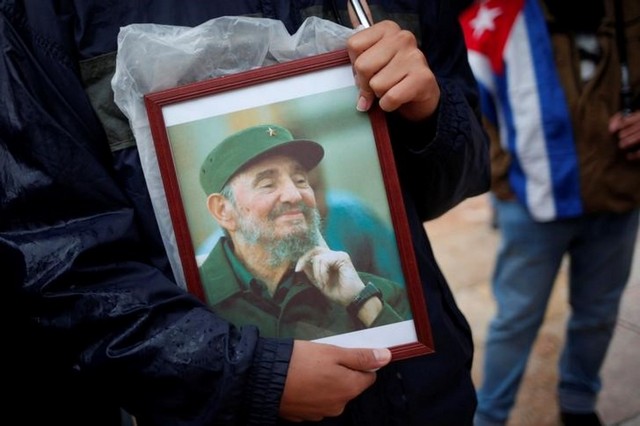
Malaysia had a politician who looked like Fidel Castro more than even Castro’s own brother, and he also happened to be my father: Syed Hussein Alatas (1928-2007). Even Edward W. Said who had seen my father only in pictures was amused by my father’s striking resemblance to Fidel. But beyond similarities in appearance and private jokes, my father was never considered to be a Malaysian Fidel Castro in any political sense, and with good reason, too.

Alatas was one of the founders of Gerakan formed in 1968, then a multiethnic, opposition party, and he served as senator for a short while in the early 1970s. But he was a sociologist and an academic for most of his life, not a revolutionary leader like Fidel Castro. And he hardly influenced social and public policy. Alatas was one of the first, and remains one of the few Malaysians, to have written extensively about the social evils of corruption. Yet today, Malaysia’s Prime Minister, Najib Razak, is having difficulty coming up with a convincing explanation as to how a sum amounting to almost USD 700 million ended up in his personal bank accounts.

Both Alatas and Castro were anti-imperialist and they were socialist, though the second we say ‘socialist’ we are called upon to qualify what kind of socialist we mean. It is not just people who have sosias but ideologies, too. Socialism has its sosias. Alatas did not like the Eurocentric bias and prejudices of Marx and Engels whom he called socialist. But he considered the assimilation of socialism into Islam as something good. “Socialism has shown the way to realize social justice,” he wrote in his essay ‘Islam and Socialism’ (1977). “Islamic principles associated with the theories of socialism will be very useful for the Muslim world. But this evolution should be achieved without the arrogance that characterizes our generation.” Early in 2016, however, the media carried reports about the Malaysian police forbidding the Socialist Party of Malaysia from holding a course on Marxism scheduled to be held in March for fear that such courses would “revive communism”. While Castro’s revolution was mainly about feeding the people, the revolution Alatas felt Malaysia most needed was principally an intellectual one against the doltish, backward, reactionary thinking that afflicted the ruling class.

As British Marxist historian Victor Gordon Kiernan wrote in his review of Alatas’ book, Intellectuals in Developing, Societies (1977) which my father originally wanted to title The Revolution of the Fool, for Alatas

“colonial rule could spread a taste for the advantages of technology but it could not inspire an authentic enlightenment. These
societies suffer from a prevailing dualism;
they are modernistic in material terms,
but with a mentality still traditionalist, ready to swallow astrology or magic as well as motor cars and electric fans” (The British Journal of Sociology, Vol. 31, No. 1, March, 1980).

This dualism, my father felt, would be detrimental to Malaysia in the long run because it would make the country always dependent on others for serious thinking and problem-solving, something we saw, for instance, in the way the case of the missing flight MH370 was handled.

I have not come across any imaginative works written by Malaysians about the fact that Alatas looked like Fidel Castro.  I, myself, do not have many anecdotes to tell; except for the one where Robert Kennedy and my father are in the same Kuala Lumpur radio station in 1964, and Kennedy is startled out of his wits to see my father sitting in a corner, smoking a cigar, trying to mind his own business.

We are in the period fresh out of the Cuban Missile Crisis and fresh into the Konfrontasi (the Indonesian-Malaysian Confrontation) for which US Attorney General Robert Kennedy had been called upon to express his concern and mediate. Robert Kennedy himself would be assassinated four years later, though not for reasons connected to his Malaysia visit as far as is known.  What is known is that he got the shock of his life seeing my father in the radio station.

“What the hell is he doing here?” was not the question Kennedy whispered into the ear of the Radio Station director, but something more diplomatic like “Who is that sitting over there?” And Alatas and Robert Kennedy were brought together to shake hands and exchange a few words.

Almost two decades later, in 1983, my father was in Washington D.C. to finish a book on corruption. He and my mother were living relatively close to the red castle of the Smithsonian where my father had a room in the tower to work. He also wanted to live within walking distance of the Congress Library. All this walking put him in close contact with the street youth. I regret not having a camera to take a shot of some of those youngsters simulating a machine gun with their arms and pointing it at my father when he walked by.

“Yo Fidel!”, one of them said.

Better that than In-Fidel, I thought to myself.

Those were the Reagan years. As someone coming from Malaysia and Singapore who was used to people of different backgrounds living together, it was the first time I had heard others define, and with such frequency, residential areas according to the ethnicity of their residents—Black neighbourhood, Hispanic neighbourhood, etc. I wondered how much the youth from those areas knew about Fidel Castro, how successful the media was in demonizing him, in making him the enemy to be sniped at or a brother to say Yo to. One thing I do know, and will always remember: the half smile on my father’s face as he gazed at the ground, each slow step taking him home.

He obviously never felt a real gun would be turned on him. Or on me.

Masturah Alatas is the author of The life in the Writing (Marshall Cavendish, 2010) and The girl who made it snow in Singapore (Ethos Books, 2008). She is currently working on a novel. Masturah teaches English at the University of Macerata in Italy, and can be contacted at: alatas@unimc.it

29 November 2016
How RT became the star of CIA, FBI & NSA’s anticlimactic ‘big reveal’

By Bryan MacDonald

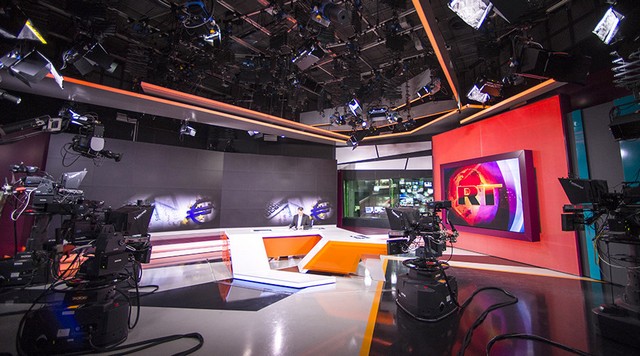
The eagerly awaited Director Of National Intelligence’s (DNI) report “Assessing Russian Activities and Intentions in Recent US Elections” didn’t need such a long winded title. They could have just called it: “We Really Don’t Like RT.”

Almost every major western news outlet splashed this story. But it was probably the New York Times’ report which was the most amusing. America’s “paper of record” hailed the DNI’s homework as “damning and surprisingly detailed.” Then a few paragraphs later admitted the analysis contained no actual evidence.

Thus, in a few column inches, the Gray Lady went from describing the DNI’s release as something conclusive to conceding how it was all conjecture. “The declassified report contained no information about how the agencies had collected their data or had come to their conclusions,” the reporter, one David E. Sanger, told us. He then reached further into his bag of tricks to warn how it is “bound to be attacked by skeptics.”

Yes, those skeptics. Aren’t they awful? Like, imagine not accepting an intelligence document at face value? Especially when it warns that a nuclear armed military superpower is interfering in the American democratic process, but then offers not a smidgen of proof for its assertions. Not to mention how it appears to have been put together by a group of people with barely a clue about Russia.

For instance, RT programs such as “Breaking The Set” and “The Truthseeker” are mentioned in a submission supposed to be about how RT seemingly cost Hillary Clinton the US Presidential Election. But both of these programmes went off air around two years ago.

And, back then, Clinton wasn’t even the Democratic Party candidate for the 2016 contest. Furthermore, it’s deeply odd how this seems to be part of a super old report, with just a tiny disclaimer in that regard.

The stream of obsolete information continues. Readers could be led to believe that the head of RT’s Arabic Service is Aydar Aganin and the London bureau is headed by Darya Pushkova. The problem is neither of these individuals currently work at RT, nor have done for a long time. And the focus on the latter is presumably because she’s defined as “the daughter of Aleksey Pushkov, the current chair of the Duma Russian Foreign Affairs Committee.”

But even if she were employed at RT, what would be unusual about it anyway? After all, many journalists have family members who’ve been involved in politics at one time or another. For instance, CNN host Christiane Amanpour’s husband James Rubin was an advisor to Hillary Clinton, and served as a US Assistant Secretary of State under her husband, Bill.

Plumbing the depths

So how bad is this report? You’d have to say on a scale of 1-10, it’d be eleven. The core message appears to be that having a point of view which is out of sync with the liberal popular media is considered a hostile act by US spooks. And it’s specifically the liberal press’ worldview they are defending here. Now, it’s up to you to judge whether this support, from state actors, is justified or not.

The DNI’s submission is ostensibly the work of highly qualified intelligence experts, but everything you learn about RT comes from publicly available interviews and Tweets posted by this channel’s own people. Yet, we are supposed to believe how the best Russia brains of three agencies – the CIA, FBI and NSA – laboured to produce this stuff? That said, the latter doesn’t appear to be fully on board, offering “moderate” confidence, in contrast to the other’s “high confidence.”

Approximately a third of the document centers on RT. And it appears that we should swallow how RT succeeded where the combined might of CNN, NBC, CBS, The Washington Post and the New York Times and others failed in influencing the US election. Not to mention the reality where 500 US media outlets endorsed Clinton and only 25 President-elect Donald Trump. It’s time to scream: “stop the lights!”

Meanwhile, the “background info” on RT offered here appears to have been compiled on the basis of poorly translated decade old articles and long-obsolete stats. As a result, the only current stuff, actually relevant to the 2016 election, comes down to “Russia hacked US election because RT criticized Clinton.” The absurdity of the claim is evidently lost on the authors.

Fragile facts

The mistakes are myriad. Audience figures are out of date. And the general feel is of some kind of amateurish compilation from a think tank. In fact, you could argue that many lobby firms’ anti-Russia reports have been more polished than this offering. But they are chancers, with faux academic sounding titles, and the DNI is supposed to boast the finest minds of US intelligence.

Of course, it could also be argued that it’s the inevitable result of how funding for Russian studies was choked in the US after the Soviet collapse. And many have argued this point. Because it’s abundantly clear that all three agencies urgently need to hire better experts for their Russian desks. For example, people who’ve spent a bit of time in the country and can point to a rudimentary grasp of the language.

More outdated facts follow. When it comes to YouTube views, the report cites a figure of 800 million for RT. However, it’s five times higher, at four billion, and counting. Indeed, the English language channel alone can be proud of over 1.5 billion hits at present.

The point needs to be laboured because it exposes how shoddy this submission is. The compilers plainly couldn’t have been bothered to engage an intern to update their figures before publication. And it speaks volumes. So too when a Kommersant article, dated 07/04/2012 is explained as the fourth of July, as opposed to the seventh of April. Because you’d imagine Russia focused spies would be able to understand the European dating style, wouldn’t you?

Then there’s how the ‘investigators’ refer to Dmitry Kiselev and Vladimir Zhironovsky as somehow influential here. They allege the former’s TV show was biased towards Trump’s candidacy. But it’s a domestic programme, in Russian, aimed at people who live in Russia and can’t vote in US elections. Likewise, Zhirinovsky’s presence is bizarre (he’s described as a ‘Kremlin proxy’) because he’s an ageing clown. And, as it happens, his remark about “drinking champagne’ in the event of a Trump victory is rather mild given his track record. We are talking about a man who once predicted that George Bush’s soldiers would be “torn to pieces” if they invaded Iraq. So Nostradamus, he ain’t. And his clout with Putin is probably somewhere between slim and none.

The DNI’s report is beyond bad. And it’s scary to think how outgoing President Obama has stirred up a nasty diplomatic battle with Russia based on intelligence so devoid of insight and quality. There is nothing here which suggests the authors have any special savvy or insight. In fact, you could argue how a group of students would’ve assembled something of similar substance by simply reading back issues of The New York Times.

But the biggest takeaway is that it’s clear how the calibre of Russia expertise in America is mediocre, if not spookily sparse. And while this report might be fodder for amusement, the actual policy implications are nothing short of dangerous.

The statements, views and opinions expressed in this column are solely those of the author and do not necessarily represent those of RT.

7 January 2017

SDGs in Asia Risk Hijacking by Western Activists

By Kalinga Seneviratne

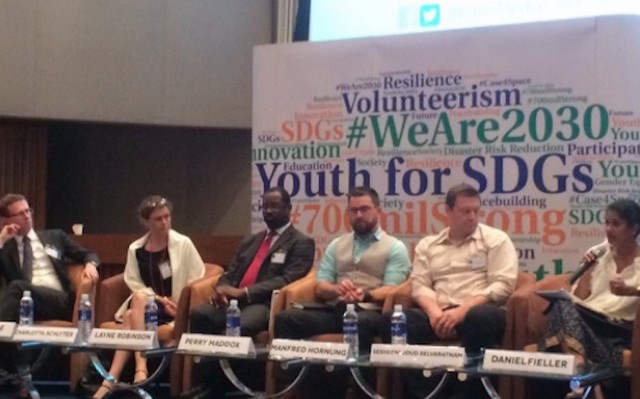
BANGKOK (IDN) – Early December three UN agencies UNDP, UNESCO and UNFPA organized a three-day youth mobilizing program at the UNESCAP building here called ‘Case for Space’ (C4S) touted as a campaign led by over 60 partners in the region to raise awareness and advocate for the promotion of Sustainable Development Goals (SDGs) in the Asia-Pacific region.

Yet, it was dominated by mainly European and American speakers and consultants, with the project being led by a UK-based activist group Restless Development, which made many participants from the region to wonder whether the SDG agenda is being hijacked by westerner activists.

The C4S campaign is supposed to mobilise young people in the Asia-Pacific region to be engaged as “critical stakeholders” in the implementation of the SDGs. It should also allow “socially excluded” people to be engaged in the process, by creating space via social media and digital communications. It is supposed to build networks and capacities for the engagement of young people.

While all sounds good on paper, the way the project was initiated in Bangkok raises many questions about the involvement of Asians themselves in the process. Most of the speakers in plenary sessions who were trying to motivate Asian youth were from Europe or America and there was no noteworthy Asian expert in digital or social media among the speakers. Asia is not short of such talent, there are many around such as Steven Gan from Malaysiakini or Maria Reza from Rapplers in the Philippines.

The event was attended by over 200 youth from across the region, most of them with an activist slant. Even the youth newsroom that was organized and coordinated by four westerners had about 15 young journalists but not from any of the mainstream media. The focus of their stories were mainly based on ‘voices of dissent’ rather than looking at communication methodologies that could contribute towards a more cooperative and peaceful path towards achieving the SGDs.

A youth participant from Cambodia with rural roots explained to IDN that this type of open dissent based methodologies do not work in his country. “Our land is often taken over for so-called development and when we shout slogans and protest we are thrown in jail or bashed up by police,” he told IDN asking not to name him. “I would like to learn how to communicate with grassroots government authorities in a less confrontative manner,” he added.

“Empowered youth are the engine of the progress we all seek,” said Caitlin Wiesen, Chief of
UNDP’s Regional Policy and Programme Support for Asia and the Pacific, during her remarks at the opening ceremony. “Through our work, we are continuously reminded that young people today are more connected, more creative, more informed and more persuasive than any previous generation.”

The UNDP has devised a Youth Strategy 2014-2017 to identify strategic entry points to SDGs for youth with social media playing a leading role. There was much discussion on the wave of legislation in the region that is shrinking the space available in cyberspace where young people express themselves.

“Liking and sharing on social media – while it raises awareness on issues, is a first step leading to action that brings change,” said Samira Hassan, a youth organizer from Singapore who works with a community advocacy group for migrant rights at her school. “As young people, we need to start conversations about the social issues that we think are important,” she added.

There were many sessions during the two days of workshops on marginalized groups, online freedoms and training for young human rights defenders. But, one wonders that if this is the same recipe that mobilized young people in the Arab world which led to the “Arab Spring” uprising and accompanying social and political chaos?

Peddling of such recipes were in abundance during a plenary session on the final day when a panel moderated by Daniel Fieller, UK Ambassador to Thailand and including four westerners, an African and an Asian based in Canada talked about “concrete actions and partnerships” where they were mainly talking about how to pitch project ideas for funding by them.

“We invest in research work with youth … we play an advocacy role,” said Perry Maddox of Restless Development. Manfred Hornung of Heinrich Boll Foundation said “we fund on the ideas which young people bring to us not based on identity”. At one point Ambassador Fieller argued that countries which are democratic and allow freedom of speech for its people will find it easier to achieve the SDGs, conveniently forgetting that countries in this region which have achieved these goals already such as China, Singapore, Taiwan and South Korea did not take that path to its success.

Thus, it was left to the African panelist, Layne Robinson, Head of Programs of the Youth Division of the Commonwealth Secretariat, to point out that governments are an important stakeholder in all this. “Lots of governments are trying to implement youth policies” he reminded the young participants, “you need to work with governments to get SDGs done, governments are critical to opening up space for young people”.

Speaking to IDN at the end of the event, Weipeng Wang, a youth participant from China said that translating information into local languages is crucial for communicating the SDGs. “We have a lot of experience in writing blogs. We can write and share information through Wechat,” he added.

Rejinel Valenua a youth from Philippines argued that it is not enough for only the youth to talk about these issues, lecturers at universities have to promote SDGs. “We need to dedicate a special day for C4S” he added.

The C4S has been an idea Restless Development brought to UNDP to be introduced to Asia, and UNDP has taken it up with UNESCO and UNFPA as well as another partner Forum-Asia to hold this event in Bangkok. Most of the funding came from the West.

UNDP’s Wiessen said in the closing remarks that 50 of their partners will be holding another meeting to plan a strategy to take the C4S forward in the region. “We want to expand this shrinking (civil society) space for young people (in Asia). We want to create space for young people. We stand with you to oppose restrictive practices,” she said.

After her closing remarks, one participant from an ASEAN (South East Asian) country who works with youth groups told IDN in disgust that the way the event was organized smacked of an European imperialistic initiative and it is not home driven. “This is a Restless Development project and they are pushing their agenda. This is not the way to do this in Asia,” she said asking not to use her name.  – IDN-InDepthNews

20 December 2016


A Loser’s Malice: What’s Behind Obama’s Attacks on Putin

By Michael Jabara CARLEY

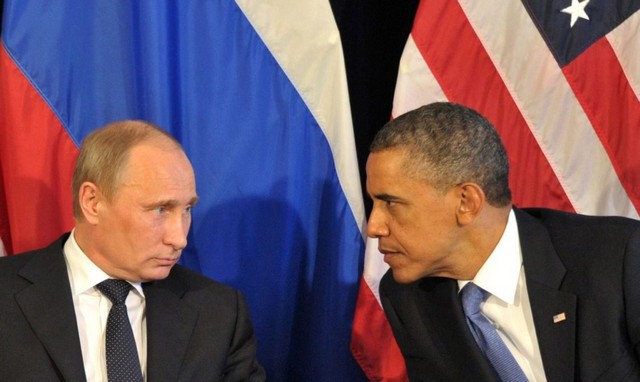
Relations between Russian president Vladimir Putin and US president Barack Obama are poisoned and irretrievably damaged. It’s therefore a good thing that Obama is leaving office on 20 January. Bad US-Russian relations are of course nothing new. Since the Anglo-American war against Iraq in 2003, the US-Russian relationship has been headed downhill. For Obama, it appears that everything has gotten personal. The US president often acts like a petulant adolescent, jealous of a high school rival. You know, the kid who does everything better than he does. The lad takes it badly and won’t let it go. He challenges his nemesis to some new contest at every opportunity only to lose again and again. That’s got to be hard on the ego. Between Obama and Putin there have been many such encounters. Nor can it help that western cartoonists so often ridicule Obama as out of his depth in comparison to Putin.

Let’s consider Obama’s remarks at his last press conference on Friday, 16 December. «The Russians can’t change us or significantly weaken us», said Obama: «They are a smaller country. They are a weaker country. Their economy doesn’t produce anything that anybody wants to buy, except oil and gas and arms. They don’t innovate». This was insulting both Putin and his country, but not enough apparently for Obama. «They [the Russians] can impact us if we lose track of who we are. They can impact us if we abandon our values. Mr. Putin can weaken us, just like he’s trying to weaken Europe, if we start buying into notions that it’s okay to intimidate the press, or lock up dissidents, or discriminate against people because of their faith or what they look like».

What on earth is Mr. Obama talking about? Intimidate the press? The Moscow newspapers and television media are loaded with «liberals». Many Russians call them «fifth columnists». They are «people with ‘more advanced’ worldview[s] who do not tolerate ‘Russian propaganda’ themselves», according to one colleague in Moscow. But Mr. Putin tolerates them and pays them no mind.

«Lock up dissidents… discriminate against people»? What alternate reality does Mr. Obama live in? Doesn’t produce anything people want to buy? The United States buys rocket engines that it does not now produce at home. Maybe the Americans, a Russian commentator joked, can use high tech trampolines to get into space and do without Russian technology.

In an interview the previous day with the American National Public Radio Obama ranted about Putin. It must have been a rehearsal for his press conference. «This is somebody, the former head of the KGB», said Obama, «who is responsible for crushing democracy in Russia… countering American efforts to expand freedom at every turn; is currently making decisions that’s leading to a slaughter in Syria». What stupefying hypocrisy; what utter nonsense. Putin was a lieutenant colonel in the KGB, but never its head, and he certainly has not «crushed democracy in Russia». He even treats his political opposition with respect compared to Obama who dismisses president-elect Donald Trump as some kind of Russian Manchurian candidate. The Russians, according to Obama, interfered in the US presidential elections, and helped defeat fellow Democrat Hillary Clinton. They hacked the Democratic National Committee’s hard drive and passed thousands of emails to WikiLeaks, although, according to others, an outraged Clinton insider leaked the cache of embarrassing emails. Obama has dismissed that possibility. The Russians did the hack, he insists , and Putin must be held personally responsible.

In Syria, the United States and its NATO and regional vassals are waging a war of aggression against the legitimate government in Damascus, backing jihadist terrorists

Where’s the evidence? In Moscow, an angry Putin challenged Obama to put up or shut up. This is a hard thing for Obama to do. The Russians, he says, «counter American efforts to expand freedom at every turn». One wonders where that would be. In the Ukraine where the United States and European Union backed and guided the coup d’état against the democratically elected Ukrainian government? Or in Syria where the United States and its NATO and regional vassals are waging a war of aggression against the legitimate government in Damascus, backing jihadist terrorists? How many democratic governments or popularly supported political movements has the United States plotted against or destroyed since 1945? The list is long, including the 1996 Russian presidential election.

Remember 2013, when the US government started a propaganda campaign about Syrian chemical weapons and warned of «red lines» that could not be crossed?

Obama directly raised the issue of Syria during his NPR interview. The liberation of E. Aleppo from Al-Qaeda and other jihadists has infuriated the west. To the everlasting shame of France, the Eiffel Tower was darkened to mourn the defeat of Al-Qaeda. The Mainstream Media (MSM) is up in arms. Russia, Iran, Hezbollah, Palestinian and Iraqi militias have helped the Syrian Arab Army to cleanse Aleppo of jihadist terrorists, and thwart the United States and its vassals. This is what galls Obama, being outmanoeuvred by a lesser man than he and a lesser country than the United States. How deplorable to speak of the liberation of E. Aleppo as «a slaughter in Syria».

Obama’s frustrations began several years ago. Remember back in 2013, when the US government started a propaganda campaign about Syrian chemical weapons and warned of «red lines» that could not be crossed? Apparently, the US government came within an ace or two of launching massive air attacks on Syria. Putin intervened and the Syrian government gave up its chemical weapons, removing the US pretext for intervention. The print media had a field day showing Putin helping Obama out of a corner of his own making. All the while, Putin kept urging Russian-US cooperation against the jihadists in Syria, trying to draw the United States away from its ruinous policies. To no avail. Who then acted with greater statesmanship, Putin or Obama?

In 2013, when the US government started a propaganda campaign about Syrian chemical weapons, Putin intervened and the Syrian government gave up its chemical weapons, removing the US pretext for intervention. The print media had a field day showing Putin helping Obama out of a corner of his own making.

Temporarily thwarted in Syria, the United States opened up a new front on Russia’s southern frontier in the Ukraine. It backed the coup d’état in Kiev and turned a blind eye to the fascist vanguard, which kept the new Ukrainian junta in power. «The fascists are just ‘a few bad apples’», officials said in Washington, thinking that NATO had scored a great victory in getting its hands on Sevastopol so it could kick the Russian Black Sea fleet out of its traditional home base.

You have to give credit to Obama; he was ambitious, aiming for a big prize and the humiliation of Russia and its president. Again, he was thwarted not so much by President Putin but by the Russian people of the Crimea who immediately mobilised their local self-defence units backed by «polite people», Russian marines stationed in Sevastopol, to kick out the Ukrainians with scarcely a shot fired. They organised a referendum to approve entry into the Russian Federation. Reunification was quickly approved by a huge majority and celebrated in Moscow. Putin gave a remarkably candid speech, explaining the Russian position. «NATO remains a military alliance,’ he said, «and we are against having a military alliance making itself at home right in our backyard or in our historic territory. I simply cannot imagine that we would travel to Sevastopol to visit NATO sailors. Of course, most of them are wonderful guys, but it would be better to have them come and visit us, be our guests, rather than the other way round».

«NATO remains a military alliance,’ he said, «and we are against having a military alliance making itself at home right in our backyard or in our historic territory», Putin said

It all happened so quickly, Obama must have looked on, dumbfounded, sputtering with angry frustration at having been outmanoeuvred by Crimean Russians who knew a thing or two after all about «innovating» and defending their land. Russians in the eastern Ukraine also resisted, taking up arms to defend themselves against Kiev’s fascist battalions.

That was too much. Putin became Obama’s nemesis. The US president struck back with economic sanctions, which his European vassals quickly endorsed. When Malaysian Airlines, MH17, was shot down over the eastern Ukraine, Obama and the EU at once accused Putin of being responsible without a shred of evidence. In fact, the available evidence points to the Kiev junta as the guilty party, but the MSM paid no attention. It ran an orchestrated propaganda campaign leading to harder sanctions against Russia intended to sabotage the Russian economy and break the Russian government.

Obama and his advisors again miscalculated. The Russian government instituted its own sanctions against the EU, and looked for other sources of supply or replaced foreign imports with Russian products. «We can do without Polish apples and French cheese», most Russians thought. «Liberals» sulked over the loss of their camembert, but that’s a small price to pay for Russian independence. Obama was outsmarted again by Russians who, he insists, can’t innovate. As for the EU, it suffered huge economic losses because of sanctions at American behest in a classic case of shooting oneself in the foot. It’s getting to be a habit; the EU has again renewed its sanctions against Russia.

The EU has suffered huge economic losses because of its anti-Russia sanctions at American behest in a classic case of shooting oneself in the foot.

Whilst the Ukrainian crisis dragged on, Obama had to turn his attention back to Syria. In the autumn of 2015, Putin ordered Russian aerospace and naval forces to intervene on behalf of the hard-pressed Syrian government which asked for assistance against the western-backed jihadist invasion. The tide of battle slowly turned. Again, Obama was caught off guard; again, the US plan to overthrow the Syrian government was thwarted by Obama’s nemesis. The United States tried bogus truces to allow its jihadist mercenaries to refit and resupply. At first, the Russians did not seem to catch on, accepting American proposals as genuine. They had to learn the hard way, but they did eventually. The liberation of E. Aleppo, although overshadowed by the simultaneous loss of Palmyra, is another blow to Obama’s policies and to his fragile ego.

How could this «weaker… smaller country» outsmart the all-powerful Mr. Obama and the great US Hegemon?

No wonder the US president is lashing out at Putin, publically insulting him and his country. No wonder the MSM is up in arms. How could this «weaker… smaller country» outsmart the all-powerful Mr. Obama and the great US Hegemon?

Like the USSR before it, Russia has always had to pursue a politique du faible, a poor man’s policies, never having the abundant resources of it western adversaries. Russians learned early on to innovate. The fox has to make its way in a world full of dangerous wolves.

What Obama must hate most of all is Putin’s exposure of US support for Al-Qaeda and the Islamic State. Who indeed is responsible for the «slaughter» in Syria? Obama calls it fighting for democracy. «Airstrike democracy», Putin once derisively replied. «Do you realise what you have done?» Putin asked at the UN in 2015, shocking the MSM. Obviously not, if one is to judge by Obama’s remarks of the last few days. He’s still the obsessive adolescent with doubts about himself and in over his head against a real statesman. Thank heavens Obama is on his way out the door of the White House. It’s not a minute too soon. Olliver Cromwell’s famous remark in 1653 to the Rump Parliament seems apposite. «You have sat too long for any good you have been doing lately… Depart, I say; and let us have done with you. In the name of God, go!»

23 December 2016

Myanmar Generals have found a winning ideology, for them.

By M Zarni

To be Burmese is to be Buddhist: Myanmar Generals’ Winning Ideology

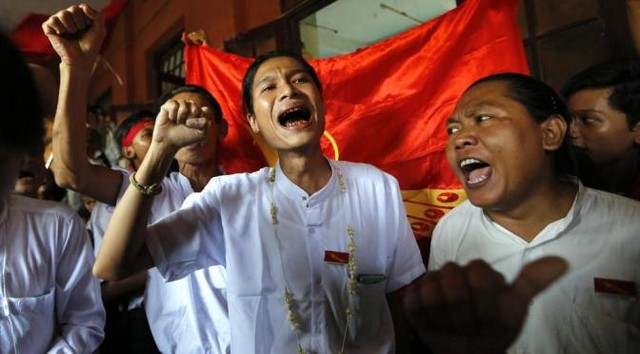
To build peace and reconciliation within society, Myanmar must destroy the view/sentiment that to be Burmese is to be Buddhist.

It is one big narrow-minded, religious obsession which has nothing whatsoever to do with Buddhism.

It is tinged with the old culturalist nationalism hoisted as the initial flag of resistance against the predominantly Christian British colonial rule. It is an anathema to the multi-faith founders of post-colonial Union of Burma, particularly the late U Aung San, the martyred father of the “Buddhist” leader of the NLD.

It makes non-Buddhists, whatever their ethnic ancestry, feel they are not fully equal or welcome or entitled to citizenship privileges, rights and protection.

This narrow view of Burmese identity amounts to religious bigotry. Bigotry serves the interests of the bigots – Buddhist monks, who operate within a closed system of thought, because of their devotional embrace of Buddhism as the only or superior Faith.

For their own strategic ends, the Burmese generals perniciously exploit this orthodox ideological community – nearly half-million men, usually drawn from rural, conservative backgrounds, not unlike the rank and file of the Burmese Armed Forces.

When Ne Win came to power in 1962, his regime of Burma Socialist Programme Party identified two above-ground social forces as major threats to the military and its attempts to shape society along its socialistic authoritarian lines. They were the Buddhist monks and university students.

Now the military has found a winning strategy: use the popular religious bigotry commonly shared among key national institutions – the Order, the armed forces and the society – to turn old enemies of monks and public into the tools of their own oppression.

It is an absolute necessity for those of who want to see a secularist country where people of different faiths and diverse ethnic ancestries can feel they are all equal, both in theory and in society to demolish this bigoted definition of the people of Burma.

National identities in a religiously diverse society must not be tied to any faith, deistic or atheistic, if the goal of the government and political parties are to forge an inclusive country.

Alas, that is not what is being pursued by neither Myanmar military, which thrives on exploiting ethnic and religious divisions in society, nor Aung San Suu Kyi and her NLD, which attempt to placate, rather than educate and confront, the bigoted vocal minority.

10 January 2017

8 Strategic Objectives behind Myanmar Military’s Rohingya persecution and Islamophobia

By M Zarni

Myanmar Generals and Their 8 Strategic Objectives behind Racism

Why does Myanmar Generals openly encourage Islamophobia?

Myanmar Military involves in using racism against Muslims and Islam to accomplish the following objectives, besides being themselves deeply racist:

1) to permanently disable NLD from governing the country: conflicts and societal instability serve the military’s strategic interests while undermining the NLD’s ability to push for reforms;

2) to keep in tact the military’s long-entrenched primacy and final say on the country’s affairs;

3) to enable the public to take their popular frustration, anger and discontent living in a deeply impoverished and un-just social order out on the vulnerable groups, which have long been subjects of disdain, disrespect and “Buddhist” mainstream racism;

4) to push the Burmese military on to the powerful – if failing and racist – western bandwagon of “global war on terror”;

5) to stunt the spread of human rights and democratic/liberal discourses within the society at large;

6) to remake the conservative ill- or little-educated orthodox Buddhist Order from one of the military’s main opposition social force into a powerful racist instrument against religious minorities;

7) to deflect attention from the economic plunder of the country by the Burmese generals, their families and cronies; and last but not least;

8) to prevent the development of a powerful, democratizing, inclusive society with mutually dependent, diverse ethnic and religious communities.

8 january 2017

Saudi Arabia’s dream of becoming the dominant Arab and Muslim power in the world has gone down in flames

By Patrick Cockburn

As recently as two years ago, Saudi Arabia’s half century-long effort to establish itself as the main power among Arab and Islamic states looked as if it was succeeding. A US State Department paper sent by former Secretary of State, Hillary Clinton, in 2014 and published by Wikileaks spoke of the Saudis and Qataris as rivals competing “to dominate the Sunni world”.

A year later in December 2015, the German foreign intelligence service BND was so worried about the growing influence of Saudi Arabia that it took the extraordinary step of producing a memo, saying that “the previous cautious diplomatic stance of older leading members of the royal family is being replaced by an impulsive policy of intervention”.

An embarrassed German government forced the BND to recant, but over the last year its fears about the destabilising impact of more aggressive Saudi policies were more than fulfilled. What it did not foresee was the speed with which Saudi Arabia would see its high ambitions defeated or frustrated on almost every front. But in the last year Saudi Arabia has seen its allies in Syrian civil war lose their last big urban centre in east Aleppo. Here, at least, Saudi intervention was indirect but in Yemen direct engagement of the vastly expensive Saudi military machine has failed to produce a victory. Instead of Iranian influence being curtailed by a more energetic Saudi policy, the exact opposite has happened. In the last OPEC meeting, the Saudis agreed to cut crude production while Iran raised output, something Riyadh had said it would always reject.

In the US, the final guarantor of the continued rule of the House of Saud, President Obama allowed himself to be quoted as complaining about the convention in Washington of treating Saudi Arabia as a friend and ally. At a popular level, there is growing hostility to Saudi Arabia reflected in the near unanimous vote in Congress to allow families of 9/11 victims to sue the Saudi government as bearing responsibility for the attack.

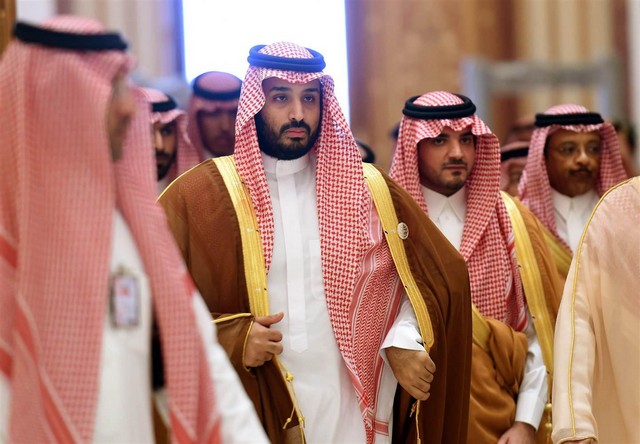
Under the mercurial guidance of Deputy Crown Prince and Defence Minister Prince Mohammed bin Salman, the most powerful figure in Saudi decision making, Saudi foreign policy became more militaristic and nationalistic after his 80 year old father Salman became king on 23 January 2015. Saudi military intervention in Yemen followed, as did increased Saudi assistance to a rebel alliance in Syria in which the most powerful fighting force was Jabhat al-Nusra, formerly the Syrian affiliate of al-Qaeda.

Nothing has gone well for the Saudis in Yemen and Syria. The Saudis apparently expected the Houthis to be defeated swiftly by pro-Saudi forces, but after fifteen months of bombing they and their ally, former President Saleh, still hold the capital Sanaa and northern Yemen. The prolonged bombardment of the Arab world’s poorest country by the richest has produced a humanitarian catastrophe in which at least 60 per cent of the 25 million Yemeni population do not get enough to eat or drink.

The enhanced Saudi involvement in Syria in 2015 on the side of the insurgents had similarly damaging and unexpected consequences. The Saudis had succeeded Qatar as the main Arab supporter of the Syrian insurgency in 2013 in the belief that their Syrian allies could defeat President Bashar al-Assad or lure the US into doing so for them. In the event, greater military pressure on Assad served only to make him seek more help from Russia and Iran and precipitated Russian military intervention in September 2015 which the US was not prepared to oppose.

Prince Mohammed bin Salman is being blamed inside and outside the Kingdom for impulsive misjudgments that have brought failure or stalemate. On the economic front, his Vision 2030 project whereby Saudi Arabia is to become less wholly dependent on oil revenues and more like a normal non-oil state attracted scepticism mixed with derision from the beginning. It is doubtful if there will be much change in the patronage system whereby a high proportion of oil revenues are spent on employing Saudis regardless of their qualifications or willingness to work.

Protests by Saudi Arabia’s ten million-strong foreign work force, a third of the 30 million population, because they have not been paid can be ignored or crushed by floggings and imprisonment. The security of the Saudi state is not threatened.

The danger for the rulers of Saudi Arabia, Qatar and the other Gulf states is rather that hubris and wishful thinking have tempted them to try to do things well beyond their strength. None of this is new and the Gulf oil states have been increasing their power in the Arab and Muslim worlds since the nationalist regimes in Egypt, Syria and Jordan were defeated by Israel in 1967. They found – and Saudi Arabia is now finding the same thing – that militaristic nationalism works well to foster support for rulers under pressure so long as they can promise victory, but delegitimises them when they suffered defeat.

Previously Saudi Arabia and the Gulf states had worked through allies and proxies but this restraint ended with the popular uprisings of 2011. Qatar and later Saudi Arabia shifted towards supporting regime change. Revolutions transmuted into counter-revolutions with a strong sectarian cutting edge in countries like Iraq, Syria, Yemen and Bahrain where there were Sunni and non-Sunni populations.

Critics of Saudi and Qatari policies often demonise them as cunning and effective, but their most striking characteristic is their extreme messiness and ignorance of real conditions on the ground. In 2011, Qatar believed that Assad could be quickly driven from power just like Muamar Gaddafi in Libya. When this did not happen they pumped in money and weapons willy-nilly while hoping that the US could be persuaded to intervene militarily to overthrow Assad as Nato had done in Libya.

Experts on in Syria argue about the extent to which the Saudis and the Qataris knowingly funded Islamic State and various al-Qaeda clones. The answer seems to be that they did not know, and often did not care, exactly who they were funding and that, in any case, it often came from wealthy individuals and not from the Saudi government or intelligence services.

The mechanism whereby Saudi money finances extreme jihadi groups was explained in an article by Carlotta Gall in the New York Times in December on how the Saudis had bankrolled the Taliban after their defeat in 2001. The article cites the former Taliban Finance Minister, Agha Jan Motasim, as explaining in an interview how he would travel to Saudi Arabia to raise large sums of money from private individuals which was then covertly transferred to Afghanistan. Afghan officials are quoted as saying that a recent offensive by 40,000 Taliban cost foreign donors $1 billion.

The attempt by Saudi Arabia and Gulf oil states to achieve hegemony in the Arab and Sunni Muslim worlds has proved disastrous for almost everybody. The capture of east Aleppo by the Syrian Army and the likely fall of Mosul to the Iraqi Army means defeat for that the Sunni Arabs in a great swathe of territory stretching from Iran to the Mediterranean. Largely thanks to their Gulf benefactors, they are facing permanent subjection to hostile governments.

7 January 2017

What Will Baghdad Face In 2017?

By Cathy Breen

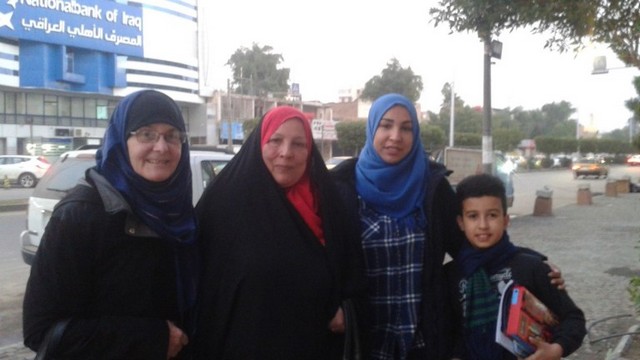
January 2, 2017: Being stuck in traffic is daily fare in Baghdad. While checkpoints have been dramatically reduced in recent times, and the number of concrete walls appear markedly decreased, traffic jams still defy description. It doesn’t help in the least that everyone is leaning on their horns. A half-a-million taxis roam around Baghdad spewing pollution as they look for potential fares. Proposals to counter this problem have been put forth to authorities, for example, the creation of taxi stands throughout the city. All attempts to remedy this problem seem futile.

In my travels this trip to Najaf, Karbala, Babylon and Baghdad, the dilemma of widespread corruption is of predominant concern. Young and old, without exception, feel caught in and strangulated by this reality. One young person related how one of the bosses in their workplace substantially increased their salary by fudging figures. If someone were to speak up they would, at best, be let go.

This past Monday a woman journalist, Afrah Shawqu al Qaisi, was kidnapped from her home in the Saidiya district of Baghdad by men claiming to be security personnel. She had written an article expressing anger that armed groups could act with impunity (BBC news Dec. 27, 2016).

“How do you get up in the morning?” I gently asked a young woman from Baghdad. “How do you manage?”

“With no hope” she replied.  “Each morning I get up with no hope.”  Her mother is ill and worries each day that her daughter will not get home safely from work. “All Iraqis want hope,” she added, “but they are resigned to bad conditions.”

But a gentleman who was also part of this conversation responded “There is no future if we keep silent.” Although he himself lost his position for speaking out against the corruption, he fears for the future of his children if the problem is not addressed. He believes that an answer for corruption is to educate by setting an example.

I had the great joy of visiting a family we have not seen for over three years.  Kathy Kelly first introduced me to this family in 2002, and we have tried to remain in contact throughout the years. As evening descended, some of us walked the streets of the old neighborhood where this family lives and where Voices rented an apartment, in 2003-2004.

We went to the site of the horrific suicide bombing of July 3, 2016, only two blocks away from the family’s apartment as well as where the Voices apartment was. The night of the bombings was on the eve of EID, ending the fasting month of Ramadan. Many people were out doing the final shopping for this celebration.  Vendors with their wares on the sidewalks, children eating ice cream in the blistering heat of summer. It was about 10:00 p.m. The blasts took the lives of over 300 people, many of them children. Over 200 more wounded. In the apartment where some of this family lives, three families lost children, mothers and fathers, sisters and brothers in this explosion. I passed two of the survivors on the stairs this night.

I had my young friend take a photo across the street from one of the sites.  We became silent as we looked at this blackened mass towering over us. Months later the area is still blocked off by a corrugated fence as you can see in the picture. Across the street was a second bombed building. All around us were people visiting, walking, looking at wares, etc. “It is good to see life” said my young friend as we walked arm in arm. Armed vehicles and police were very present as well in this area.

A pain for me during my stay in Baghdad was not to be able to contact another family with whom we are also very close. I’ve written extensively about this family as the father and oldest son fled to Finland over a year ago. I had hoped to be able to meet up with the mother and at least some of the children at a place that would be safe for them. Sadly, this was not possible.

Baghdad cannot be compared to the relative quiet and safety of Karbala and Najaf.  As I write, we just got the distressing news of a double suicide bomb in a Baghdad market this morning. At least 28 people were killed. Many of the victims were people who had gathered near a cart selling breakfast when the explosions went off.
“Torn clothes and mangled iron were strewn across the ground in pools of blood at the site of the wreckage near Rasheed Street, one of the main thoroughfares in Baghdad,” an AFP photographer reported. “The targeted area is packed with shops, workshops and wholesale markets and usually teeming with delivery trucks and daily laborers unloading vans or wheeling carts around…Hugh crowds were expected to gather on Saturday evening in the streets of Baghdad to celebrate the New Year for only the second time since the lifting in 2015 of a year-old curfew.”  (The Telegraph News, UK, Dec. 31, 2016)

I was on Rasheed Street only yesterday.

While in Baghdad I stayed with a gracious couple who made the pilgrimage to Mecca, the Haj, this past year. In one of our many conversations, my host asked somewhat mischievously, “Which of the four do you think is the greatest sin in Islam?  Theft, illicit sex, drinking or lying?” I mulled this over not really knowing, but enjoying the exercise. The answer turned out to be “lying” and, curiously, I got it right.

But then the 2003 U.S. led invasion of Iraq was based on lies and deceit. Many in the U.S. accepted, without adequate investigation or even curiosity, the notion that the U.S. would improve conditions ordinary Iraqis faced following the 2003 invasion. Tragically, almost fourteen years later, nothing could be further from the truth. Yet we should ask now, with genuine care, what Iraqis will face in 2017 and how we can make reparations for the suffering we’ve caused.

Cathy Breen (newsfromcathy@yahoo.com) helps coordinate Voices for Creative Nonviolence (www.vcnv.org)

4 January 2017

Suu Kyi’s Astute Move On Rohingya Issue in Myanmar

By Kalinga Seneviratne

This article is the 11th in a series of joint productions of Lotus News Features and IDN-InDepthNews, flagship of the International Press Syndicate.

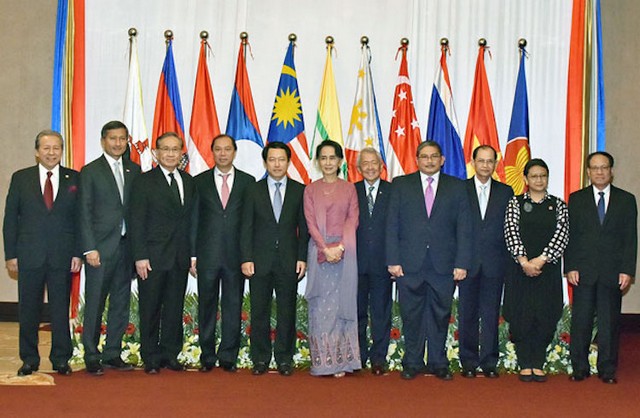
BANGKOK (IDN) – With mounting demonstrations in support of Rohingyas in fellow ASEAN (Association of South East Asian Nations) Muslim majority countries Malaysia and Indonesia, Myanmar’s de-facto leader and Foreign Minister Aung San Suu Kyi made an astute move to summon Foreign Ministers of ASEAN for a one-day “retreat” to Yangoon on December 19 to brief them on the situation in Myanmar’s Rakhine State where most Rohingyas live.

A first of its kind for ASEAN where a member country has summoned ministers to discuss an internal affairs, yet, it demonstrated that Suu Kyi is no hostage to western human rights groups who supported her long campaign to bring “democracy” to Myanmar.

The Myanmar government has been irked by the behaviour of Malaysian Prime Minister Najib Razak after he participated in a protest rally in support of Rohingyas in Kuala Lumpur recently and appeared to be fuelling increasing public anger about alleged human rights violations against a fellow Muslim community in the region. Some 56,000 Rohingya refugees are believed to be living in Malaysia.

Many of Razak’s critics in Malaysia and in the region have accused him of using the Rohingyas to deflect corruption allegations against him in Malaysia and also waning support for his party among grassroots Malay Muslims.

Rohingyas are a Muslim minority of Bengali origin who have been living mainly in the northern Rakhine State in Buddhist majority Myanmar for generations. But they are not recognized as citizens by Myanmar nor are they recognized as Bengalis by Bangladesh. Recently, Muslim majority Bangladesh closed its border to Rohingya refugees fleeing Myanmar.

For years, Buddhists in Myanmar have viewed the Rohingyas as a threat since they are among the poorest in the country, and susceptible to exploitation by foreign jihadi groups.

The latest flare up started on October 9 when Muslim militants with suspected links to Islamists overseas are believed to be behind attacks on security posts near Myanmar’s border with Bangladesh, in the north of Rakhine State that killed nine police officers. Since then there has been a heavy crackdown against the Muslim minority in the region with at least 86 people killed and an estimated 27,000 Rohingyas have fled to Bangladesh according to human rights groups.

Thus Rohingyas have become the latest rallying point for western and regional human rights groups and Muslim activists as well as the international media, especially Al Jazeera. Rohingyas have also become a lucrative new source of income for human traffickers and asylum lawyers.

On the eve of the ASEAN foreign ministers’ retreat in Yangoon, Amnesty International, which campaigned for long for Suu Kyi’s release during the military regime, released a report accusing her government of a campaign against the Rohingyas.

“While the military is directly responsible for the violations, Aung San Suu Kyi has failed to live up to both her political and moral responsibility to try to stop and condemn what is unfolding in Rakhine State,” Rafendi Djamin, Amnesty International‘s director for Southeast Asia and the Pacific, said in a statement.

But, many in the region see things differently. Thailand’s Nation newspaper published a report from Deutsche Press-Agentur (dpa) on December 16 that referred to an analysis of the International Crisis Group (ICG) with headquarters in Brussels. ICG has warned Myanmar that “a well-organised, apparently well-funded group” has been behind the recent attacks on the armed forces in Myanmar.

ICG says: “The insurgent group, which refers to itself as Harakah al-Yaqin (Faith Movement, HaY), is led by a committee of Rohingya émigrés in Saudi Arabia and is commanded on the ground by Rohingya with international training and experience in modern guerrilla war tactics. It benefits from the legitimacy provided by local and international fatwas (religious judicial opinions) in support of its cause and enjoys considerable sympathy and backing from Muslims in northern Rakhine State, including several hundred locally trained recruits.”

While human rights groups working with Rohingyas on the ground such as Burma Human Rights Network has rejected the allegations, Priscilla Clapp, a retired U.S. diplomat who was the chargé d’affaires at the American Embassy in Myanmar from 1999 to 2002, has in an interview with Radio Free Asia (RFA) questioned the veracity of the accusations by outside nongovernmental organizations and others. She told RFA’s Myanmar Service on December 12 that those who support such charges “don’t known what the situation is”.

“They don’t understand the language, and people make things up,” she said. “They make things up just to spread rumors.” Myanmar government has also often accused international media of spreading “fabricated” news stories.

During the retreat, which was closed to the media although about 100 journalists have arrived at the venue, Suu Kyi is believed to have briefed the foreign ministers about the ground situation.

In a statement released to the media after the retreat, the Myanmar leader reiterated her government’s commitment to resolving what she termed “complex issues” with regards to the Rohingyas and argued that they need time and space to resolve it.

In a direct reference to those from outside the region who want to internationalise the issue, the statement said that it would be resolved among “ASEAN family members through peaceful and friendly consultations”.

In a commentary in Thailand’s The Nation newspaper, regional analyst Kavi Chongkittavorn argues that Suu Kyi has displayed her “political instincts and diplomatic finesse” to engage ASEAN where she has overall control of the process. “As such, she wanted to keep this sensitive issue within the region,” he noted.

Chongkittavorn is critical of the role of Malaysian Foreign Minsiter Anifah Aman who proposed ASEAN coordinating humanitarian aid and setting up an independent expert group to investigate conditions there. “It was unlikely these proposals would receive backing from Suu Kyi or other ASEAN members,” he argues.

“Kudos must also go to Indonesian Foreign Minister Retno Marsudi, who has served as an honest broker,” he notes. “Jakarta has politely declined to collaborate with Malaysia’s call to show solidarity as the world’s largest Muslim country, knowing full well that it could polarise ASEAN. Her position was clear that ASEAN should not get involved in the region unless Myanmar invites the group to help.”

Immediately after the retreat, Marsudi visited Bangladesh to argue for more compassionate attitude towards Rohingyas crossing the border to Bangladesh. She asserted that the solution to the crisis has to come from the source country and the region need to support whatever initiatives Myanmar government is taking to ensure inclusive development in Rakhine state.

Meanwhile, Myanmar’s Buddhist neighbour Thailand has offered $200,000 at the retreat to help displaced people in Rakhine state and intensified cooperation with Myanmar authorities to apprehend several local human traffickers and their trawlers operating near coastal towns in the Andaman Sea, disrupting the flow of Rohingya from both Myanmar and Bangladesh that is fuelling the international outcry.

“As Myanmar moves forward with economic and democratic development, there are high hopes the ongoing peace process will proceed to end the half-century of fighting with ethnic armed groups,” argues Chongkittavorn. “This prospect of peace would enable more refugees to return home.” IDN-InDepthNews

27 December 2016

Britain Secretly Pulled the Strings on UN Vote Regarding Israel’s Illegal Settlements. Trump and Netanyahu Blame Obama

By Global Research News

According to Haaretz, in an article titled “Britain Pulled the Strings and Netanyahu Warned New Zealand It Was Declaring War: New Details on Israel’s Battle Against the UN Vote”  According to Haaretz: “The British secretly worked the Palestinians and urged New Zealand to move ahead with the resolution, and a call from Netanyahu to Putin triggered a real drama at the UN HQ just one hour before the vote.”

Last Friday, a few hours before the UN Security Council vote on the settlements, Prime Minister Benjamin Netanyahu phoned New Zealand’s foreign minister, Murray McCully. New Zealand, together with Senegal, Malaysia and Venezuela, was leading the move to resubmit for a vote the resolution from which Egypt had backed down the day before.

A few hours earlier, a senior official in the Foreign Ministry in Jerusalem called New Zealand’s ambassador to Israel, Jonathan Curr, and warned that if New Zealand’s move came to a vote, Israel might close its embassy in Wellington in protest. Ambassador Curr noted this and reported it to his government, but when dawn came in New York Israel understood that things were still moving ahead.

Netanyahu’s phone call to McCully was almost his last attempt to prevent the vote, or at least to postpone it and buy a little time. Western diplomats say the conversation was harsh and very tense and Netanyahu let loose with sharp threats, perhaps unprecedented in relations between Israel and another Western country.

“This is a scandalous decision. I’m asking that you not support it and not promote it,” Netanyahu told McCully, according to the Western diplomats, who asked to remain unnamed due to the sensitivity of the matter. “If you continue to promote this resolution from our point of view it will be a declaration of war. It will rupture the relations and there will be consequences. We’ll recall our ambassador to Jerusalem.” McCully refused to back down from the vote. “This resolution conforms to our policy and we will move it forward,” he told Netanyahu.

Just one month earlier, when McCully visited Israel and met with Netanyahu, he found the latter an entirely different man. Netanyahu was pleasant, friendly and overflowing with warmth. He showed McCully the famous PowerPoint presentation that he had shown in a round of background briefings for the media last summer. Laser pointer in hand, Netanyahu told McCully that Israel was expanding its foreign relations, breaking through in the region and making friends in Africa, Asia and Latin America.

The Western diplomats said that McCully, who over the past two years had been consistently pushing the Israeli-Palestinian issue in the UN Security Council, spoke with Netanyahu about the resolution his country wanted to promote. It was a much softer and more moderate version than the motion that passed last Friday. New Zealand’s resolution did talk about freezing construction in the settlements, but also about freezing Palestinian steps in the UN and the International Criminal Court in The Hague, and called for direct negotiations without preconditions. (Haaretz)

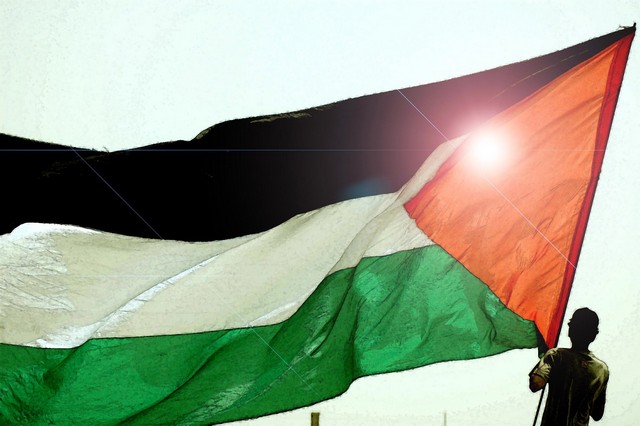
UNSC Resolution 2334, demands that

“[Israel] immediately and completely cease all settlement activities in the occupied Palestinian territory, including East Jerusalem… [Israeli settlements] have no legal validity and constitutes a flagrant violation under international law and a major obstacle to the achievement of the two-State solution and a just, lasting and comprehensive peace.”

The US did not exercise its veto on behalf of Israel. The US abstained and the resolution was carried.

It is worth noting that a week or so prior to the UNSC vote, the head of Mossad Yossi Cohen was (unofficially) in Washington for consultations with the Trump team.

This high level meeting was an initative of Netanyahu. It was the object of US media coverage.  The Israeli news report was dated December 17, The date of the “secret” meeting in Washington was not confirmed. One suspects that the head of Mossad Yossi Cohn met Donald Trump and members of his cabinet, although there was no confirmation by the Israeli media.

Following the UNSC resolution, Donald Trump criticized the United Nations Security Council resolution on Twitter. He also confirmed his intention to move the US embassy to Jerusalem.

Trump also intimated that things would change with regard to Palestine after his inauguration on January 20th.

In turn, Netanyahu blamed Obama for not having exercised the veto power in the UNSC vote.

…Israel’s ambassador to Washington, Ron Dermer, accused the Obama administration of orchestrating Friday’s U.N. vote behind the scenes, despite U.S. denials.

The diplomatic drama unfolded over the Christmas holiday, with twists and turns unusual even for the serpentine path followed by Netanyahu’s relationship with a Democratic president who opposes settlement building.

On Thursday, Netanyahu successfully lobbied Egypt, which proposed the draft resolution, to withdraw it — enlisting the help of President-elect Trump to persuade Cairo to drop the bid.

But the Israeli leader was ultimately outmaneuvered at the United Nations, where New Zealand, Venezuela, Senegal and Malaysia, resubmitted the proposal a day later.

It passed 14-0, with an abstention from the United States, withholding Washington’s traditional use of its veto to protect Israel at the world body in what was widely seen as a parting shot by Obama against Netanyahu and his settlement policy. (CNBC, December 26, 2016)

Michel Chossudovsky contributed to this report

27 December 2016