
Just International

Think again, guys…’bomb away’ is not an effective policy

by Rami G. Khouri

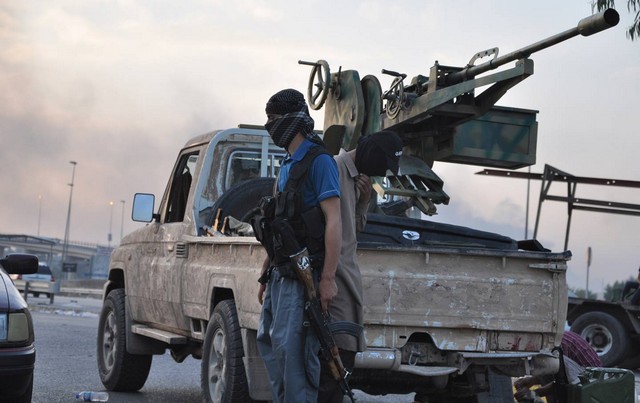
BEIRUT — The flurry of attacks around the Middle East and other parts of the world in recent months by militants related to the “Islamic State” (ISIS) has sharpened the urgency of figuring out how to defeat ISIS and rid the world of this terror. The continued expansion of Al-Qaeda in parallel with ISIS’ robustness heightens the urgency of implementing a strategy that could minimize the immediate threats from such militant groups, while also allowing the dozens of countries — mostly in Asia and Africa — that are the breeding ground for such fanatical groups to look forward to more normal and peaceful national development.

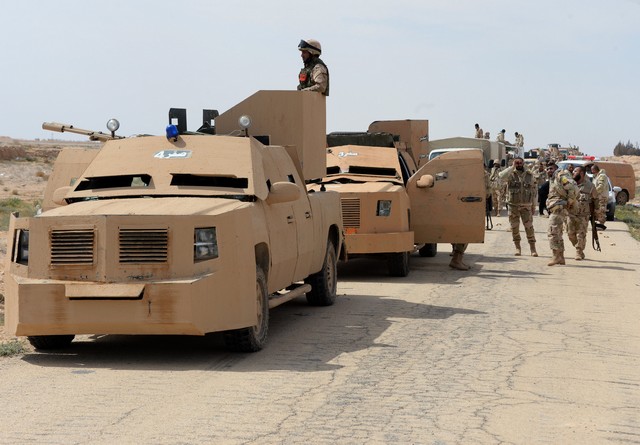
The recent news from leading Western states is not encouraging in this respect, as the United States, France, the United Kingdom and some of their allies among the world’s industrialized democracies continue to focus heavily on a military response to the ISIS threat. A major global meeting of these countries fighting ISIS is taking place in Paris this week, while a few weeks ago the /New York Times/ revealed that the United States is considering a Pentagon proposal to build up a string of military bases in Africa, Southwest Asia and the Middle East that could be used, “for collecting intelligence and carrying out strikes” against ISIS’ many affiliates across those regions. The bases would serve as hubs for Special Operations troops and intelligence operatives who would conduct counterterrorism missions, creating what the /Times/ quoted Pentagon officials as calling an “enduring” American military presence in these volatile regions.

Say what? An enduring American military presence across the Middle East? And this is supposed to promote stability, peace and security? Please think again, guys, and get some Middle Eastern scholars, sociologists, anthropologists, psychologists, and, especially, historians in the room with you to give you a more accurate analysis of what happens when foreign militaries park themselves long-term in local societies across the global South.

Military force should be used on occasions when it is the most appropriate response to an immediate threat or aggression, such as liberating Kuwait from Iraq’s occupation in 1990. But in this situation of seeking a policy to reduce and ultimately eliminate the threats from ISIS and similar groups, long-term military action anchored in a permanent foreign presence in our region is probably the most nonsensical and counterproductive approach that could be adopted — especially if it does not include a serious mechanism to reform the autocratic, corrupt, unjust, and mostly inefficient security-based governance systems in our region.

We have almost half a century of experience in foreign powers using military means across the Arab-Asian region to ensure their and their local allies’ well-being. Any rational analysis of the actual consequences of such a military-heavy approach to the legitimate triple goals of defeating ISIS, protecting one’s allies, and enhancing one’s own national interests suggests that this policy does not work, as the Al-Qaeda and ISIS experience alone should show.

The main problem is that foreign military actions tend to achieve exactly the opposite of the intended goals. Military assaults against terror groups, resistance movements, and just plain old civilian demonstrators or non-violent rebels — whether carried out by local governments or foreign powers, or both — tend to harden and expand the resolve of those who challenge the states in question. Militarism as the main response to citizen grievances only heightens the sense of humiliation and degradation that sparked citizen protests in the first place; it also tends to widen the circle of aggrieved citizens who join the ranks of those who oppose their militaristic states. Egypt and Bahrain today are ongoing examples of this.

A more familiar example for Americans is the FBI’s and Alabama Governor George Wallace’s failed policies against African-Americans who struggled for their full civil rights as American citizens. When something similar happens which also includes foreign militarism to thwart citizen aspirations and rights — like Russian, Iranian, and Hizbullah action in Syria today — the angry reaction of aggrieved citizens is even more acute.

The ensuing heightened citizen challenges to the state backed by foreign militarism tend to reduce the legitimacy of the state government or regime, which only increases the regime’s reliance on foreign support to remain in power; this sets in motion a destructive cycle of deteriorating national integrity and stability, as the Syria, Bahrain, and Yemen situations today reveal (for an American lesson, remember Vietnam and Afghanistan).

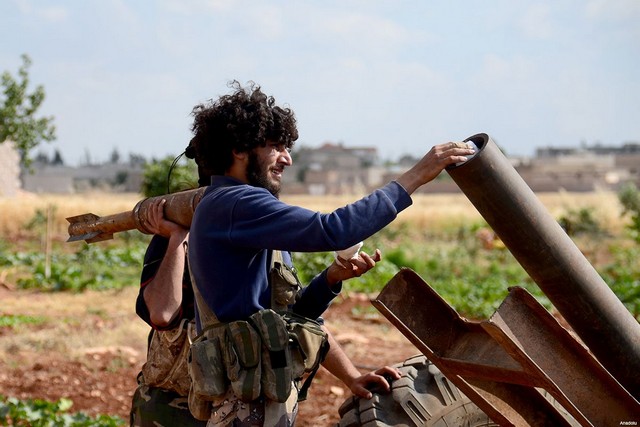
These trends ultimately lead the local citizens across our region to hold very negative views of both the military-happy foreign powers /and/ the local governments. This often contributes to triggering terror attacks by individuals or small groups in Paris, London, New York, California, Madrid and other far away lands — but in fact they are not so far away, when seen from the perspective of villagers who just saw their families killed and their homes destroyed in Yemen, Iraq, Afghanistan, Egypt, Lebanon, Syria and a dozen other places where the local government and foreign military forces bomb at will.

Rami G. Khouri is published twice weekly in the /Daily Star/. He was founding director and now senior policy fellow of the Issam Fares Institute for Public Policy and International Affairs at the American University of Beirut.

16 January 2016

As Myanmar enters a new era, Washington and Beijing vie for influence

By Nile Bowie

Myanmar is a country rapidly moving toward uncharted political terrain. By March 2016, the National League for Democracy (NLD) will take power for the first time in history, bringing an end to five decades of rule by the military establishment. Once suppressed by the military junta, the NLD – led by longtime dissident and Nobel laureate Aung San Suu Kyi – has secured an indisputable victory during the country’s November 2015 elections, winning a majority in both houses of Parliament.

The ascent of the NLD comes at a time when Myanmar finds itself at a new strategic crossroads, pulled toward the geopolitical orbit of major powers: the United States and China, as well as India. Since the outgoing military-backed government opened the country to Western investment in 2011, the US has prioritised its relationship with Myanmar as part of its strategy to reassert influence in the Asia-Pacific region. The country has received numerous visits by US high-ranking leaders, including President Obama on two occasions.

China, the country’s neighbour and largest trading partner, has long suspected Washington of seeking to influence Myanmar’s opening to nurture a regime with an antagonistic position toward Beijing. While the NLD positions itself to form a new government, the rise of this political force with a thoroughly pro-Western orientation, which has long anchored itself as a pro-democracy movement lauded throughout the West, begs the question of Myanmar’s place in the current geopolitical scenario.

The Constitutional Question

As the military-backed Union Solidarity and Development Party (USDP) prepares to handover power to the NLD, it appears that the political dynamics of the ongoing transition are based around pragmatism between the military establishment and the pro-democracy camp, both of whom harbour old enmities. The military issued a conciliatory response and expressed interest in working together with the NLD, signalling a desire to peacefully transfer power.

Under the current constitution, drafted by the military in 2008, Aung San Suu Kyi is ineligible to become president due to her children holding foreign (British) citizenship. Despite widespread NLD opposition to the constitution, Suu Kyi will be effectively appointing the next president to avoid any clashes with the military, signalling that the party is not looking to rustle feathers by pushing for constitutional change in the near-term.

The military is the most powerful institution in the country, both de facto and constitutionally. Under the terms of the military-drafted constitution, 25 percent of the parliament is allotted to unelected military representatives, while a powerful part of the bureaucracy will remain under the direct control of the military, including control over the police, military, and domestic security apparatus, and the power to issue passports.

After the NLD’s sweeping victory, Suu Kyi took aim at the military-drafted constitution by saying she would serve above the president, who she described as being subservient to her as party president. Despite this rhetoric, there are many indications that the NLD understands that the key to a functioning government involves cooperation with the military. It would simply be impossible to administer the country without having the support of the home ministry and Myanmar’s generals, and the NLD is not prepared to mount a direct challenge to the military.

The extent of this cooperation remains to be seen. Despite the NLD formally taking over the executive, it should be understood that the military’s acquiescence to peacefully transfer power implies that the new political arrangement is a de facto power-sharing arrangement between Suu Kyi and the military. Despite a contentious past that saw the violent suppression of the NLD and its leader condemned to two decades of house arrest, Suu Kyi is now in some dimension aligned with her former captors.

The Question of Development

The degree to which the NLD and the military have today found common ground on a wide range of positions has spurred disappointment from Western rights advocates who view her pragmatic political conservatism as a retreat from defending human rights. Most notably, Suu Kyi has kept silent on the official discrimination of Rohingya Muslims across displacement camps in western Myanmar, as well as the current government’s attacks against ethnic minorities in various parts of the country.

On developmental matters, the NLD have failed to articulate a detailed strategy and there is reason to believe that Suu Kyi’s stewardship over the economy will be an extension of the status quo, characterised by an upending of human rights concerns by the enormous bargaining power of global investment capital. Myanmar’s rapidly liberalising economy – brought about by reforms that have driven displacement, human rights abuses, and social unrest – have given a boost to a growing urban middle class at the expense of an exploited underclass.

In recent years, Suu Kyi has collaborated closely with the USDP government by courting foreign investment and encouraging closer diplomatic ties with the US and its allies. Myanmar owes its investment boom in no small part to the personality of Suu Kyi, who leveraged her close ties with the West to end US sanctions and open the floodgates of foreign capital, bringing with it poverty wages, gruelling hours, and unsafe working conditions for a large segment of the domestic labour market.

The NLD and the USDP see eye-to-eye on pro-market restructuring to encourage multinational investment and an export-oriented industrialisation strategy, which has thus far not been offset by increased expenditure on basic services. Suu Kyi’s embrace of neoliberalism and reluctance to advocate for human rights since entering politics signals that the NLD will put the bottom line of foreign investors before the rights and general welfare of labourers and ethnic minorities.

The Question of Federalism

The NLD has long garnered support across ethnic lines, from rural villages and urbanites alike, though its leadership represents sections of the majority ethnic Burman elite whose interests were undermined for decades by the military’s monopoly over important sectors of the economy. Despite capturing a larger-than-expected segment of the ethnic minority vote, Suu Kyi carefully avoided rhetoric during her campaign that would upset ethno-nationalist and Burman chauvinist sentiment.

Myanmar is one of the most ethnically diverse countries on the planet, with over 100 ethnic minorities and sub-groups, each with separate languages, culture and customs. Armed conflicts between rebel groups have continued unabated in the nearly seven decades since Myanmar’s independence, and the question of federalism is one of the largest political challenges the incoming government must face. Attempts to broker a nationwide ceasefire have been unsuccessful in recent years, despite active engagement between the USDP government and ethnic leaders in multiple rounds of negotiations.

In recent times ethnic parties have begun to call more forcefully for a federal structure comprised of politically autonomous ethnic states, as well as greater self-government in regards to administration, culture, education, and the management of natural resources. The NLD has voiced a public commitment to bringing about a federal system but has offered few specifics, though it is still widely seen by ethnic minorities as being more amenable to making concessions in contrast to the military.

President Thein Sein has expressed support for a federal system in theory, but top military leaders oppose a central demand of many of ethnic leaders: the integration of ethnic militias into a federal army. The USDP government has also failed to integrate some of the most powerful and influential armed groups into ceasefire negotiations, such as the ethnic Chinese separatist guerrillas that operate in the remote Kokang region on the border with China’s Yunnan province, as well as the Kachin Independence Army and Shan State Army.

Kokang guerrillas clashed with the military for four months during 2015 in one of the most intense standoffs in decades prior to declaring a unilateral ceasefire after coming under pressure from Beijing. The military incurred hundreds of causalities and failed to make much headway against the Kokang forces, despite sending tens of thousands of troops into the mountainous region supported by aircraft and artillery.

During an offensive last March against the Kokang rebels, Myanmar mistakenly dropped a bomb on the Chinese side of the border, killing five Chinese farmers working in a sugar-cane field. Beijing responded angrily and called on the USDP government to open peace negotiations with the Kokang, which government officials refused. The issue of federalism and a national ceasefire between the government and all armed groups is central not only to promoting development and national coherence, but also to China’s strategic interests in Myanmar and its own landlocked southwestern Yunnan region.

As the daughter of Myanmar’s independence hero, Aung San (who promoted a federalist system before his assassination in 1947), Suu Kyi and the NLD are uniquely positioned to lead the peace process. Her failure to break the impasse and achieve an outcome on federalism that is agreeable to powerful ethnic minorities could deepen racial friction and instil the perception that she has become co-opted by her alliance with the military.

The Question of China

Myanmar’s landmark election was watched closely from Beijing, which publicly welcomed the results but nonetheless holds concerns about the orientation of the incoming NLD government. As Myanmar’s largest trading partner and neighbour, China wields irreplaceable influence over the country’s geopolitical and economic development. Since the 2011 policy shift, however, Naypyidaw has drawn closer to Washington, effectively downgrading its relationship with Beijing.

China was the main backer of Myanmar’s military junta and largest investor during years of international seclusion, spending billions on infrastructure such as pipelines, ports, and dams. Despite major investments, anti-Chinese sentiment is rife throughout Myanmar due to the controversial implementation of large-scale projects, which saw populations forcibly relocated by the army and major land confiscations. Since the relaxation on censorship laws, public criticism of China is now commonplace in local-language media.

Though there is no overt signs of hostility between Beijing and Naypyidaw, a gradual deterioration of relations has taken place in recent years, evidenced by China’s foreign direct investment having dropped from $8.2 billion in the peak year of 2010/11 to merely $56 million in 2013/14. China-backed projects such as the Myitsone dam and the Letpadaung copper mine have been the subject of protests, spurred on by US-funded NGOs and media outlets.

Beijing has taken a pragmatic approach to the rise of Aung San Suu Kyi and the NLD, and appears willing to accommodate with her. There is, however, deep skepticism toward Suu Kyi and concerns that she could pursue policies that undermine China’s interests. In a rare occasion of state-level interaction with an opposition leader, China invited Suu Kyi to Beijing last June, where she met with President Xi Jinping.

Beijing was clearly anticipating an NLD victory and moved proactively to open dialogue with Suu Kyi to promote the development of relations. To offset any antagonism between China and the NLD, its likely that Beijing will offer its financial muscle in various aid projects and assistance as a mediator in the domestic peace process when the new government takes over.

China would seek the re-opening of the now-suspended suspended Myitsone dam project, as well as resolutions to numerous economic initiatives, such as the Kyaukphyu special economic zone, plans to construct a Sino-Myanmar highway, and various joint transportation initiatives. Despite attempts by civil society in Myanmar to disseminate hostility against China, the NLD appears cognisant that a constructive relationship with Beijing is essential to ensuring investment for major capital-intensive development projects.

India has taken notice of China’s presence on the Indian Ocean, where Chinese state-owned firms manage Myanmar’s Kyaukphyu port and Pakistan’s Gwadar port. Delhi’s response has been to develop a port in Sittwe, on Myanmar’s western coast, which is currently in the final stages of construction. Myanmar’s political establishment are favourably disposed toward India and have maintained excellent bilateral relations, though Delhi is widely seen as being unable to match the level of financing that Beijing has shown a willingness to put forward.

Suu Kyi’s visit to China underscores how there will not be a wholesale rejection of Chinese investment and assistance, despite Beijing’s mishandling of past projects with Myanmar’s military and the neglect of Myanmar’s pro-democracy camp. China has an important stake in Myanmar’s stability because military conflicts inside the country are impediments to it’s own economic and strategic programs. Furthermore, Beijing is by far the most qualified candidate to monitor Myanmar’s peace process given its geographic position and familiarity with the region’s internal dynamics.

It is in China’s interests to revaluate its economic cooperation with Myanmar to ensure the welfare and interests of local people through grass-roots communication with communities in areas marked for development. Beijing should better regulate the performance of Chinese enterprises that have garnered contentious reputations in Myanmar while doing more to ensure Chinese investors comply with the rule of law.

The Question of Washington’s Pivot to Asia

Since 2011, the large-scale refocusing of American corporate and military muscle to the Asia-Pacific region has been a key foreign policy objective in Washington. Naypyidaw’s opening to the United States is one component of an over-arching policy to harness the power of developing nations throughout the ASEAN region to serve as an economic counterweight to Beijing.

The United States is attempting to realise this goal through instruments like the Trans-Pacific Partnership (TPP) agreement – a sweeping trade deal that includes a number of Pacific Rim nations but excludes China – which aims to formulate new rules for international trade around core US strategic interests. Though Myanmar is not part of the TPP, it was once firmly in Beijing’s orbit but has now realigned itself to Washington.

Naypyidaw’s policy shift and the subsequent triumph of Aung San Suu Kyi will surely be utilised as a vehicle for US interests in the region, under the guise of promoting the universality of Western democracy. Though the NLD has indicated its penchant for pragmatism with its approach to Beijing, it remains to be seen to what extent Suu Kyi would acquiesce to attempts by the West to drive a wedge between China and Myanmar.

Moreover, she may decide to demonstrate support for pro-democracy movements in China or Nobel laureates like the Dalai Lama or activist Liu Xiaobo of her own accord. In the past, Suu Kyi has selectively criticised the practices of Chinese state-enterprises while applauding the conduct of Western energy firms like Total, despite its controversial history of collaborating with the military junta.

Though she may be predisposed to give preferential treatment to Western investment, she notably endorsed the China-backed Letpadaung copper mine project as leader of an investigative committee tasked with evaluating the project. Despite considerable opposition from local residents and Myanmar society in general, she displayed pragmatism in handling a major Chinese project in this instance even at the cost of alienating her own supporters.

Despite being ideologically aligned with the West, the NLD appears to understand that balanced relations with China and other Asian countries are the surest means of securing investment for large-scale infrastructure, while American companies are only just testing the waters and expanding their business relationships in Myanmar in areas such as tourism, energy, and telecommunications.

Military ties between Washington and Naypyidaw have been modest at this stage, with the inclusion of observers from Myanmar’s military during the annual Cobra Gold regional military exercises led by the US and Thailand. There remains a high degree of distrust between members of the US Congress and Myanmar’s generals, but these misgivings could quickly give way if the military maintains a conciliatory approach to the NLD. Increased US military presence in Myanmar will be unfavourably perceived in Beijing.

As the NLD prepares to lead the next government, there are enormous expectations for Suu Kyi to clean up corruption and improve the effectiveness of long-neglected and underfunded government services. Myanmar is now emerging from six decades of isolation, and political stability is crucial to allowing the country to rebuild its economic and social institutions to reverse the severe underinvestment in education and infrastructure it suffers from.

Unfortunately, the NLD has yet to articulate policy specifics and a strategy for the future of the country. Much of the incoming government’s focus is on manoeuvring through a political landscape still shaped by the military. Myanmar’s generals made a bargain on the West and have gotten what they came for: a huge influx of foreign capital and a secure inroad to the global economy. If Suu Kyi can promise the generals that they need not fear reprisals under an NLD government, perhaps only then would the military consent to constitutional reform, allowing her to hold the presidency.

Nile Bowie is a Singapore-based political commentator and columnist for the Malaysian Reserve newspaper. He can be reached at nilebowie@gmail.com.

17 January 2016

What Happens To A Dream Deferred?Ask Martin Luther King Jr.

By John W. Whitehead

What happens to a dream deferred?
Does it dry up
like a raisin in the sun?
Or fester like a sore—
And then run?
Does it stink like rotten meat?
Or crust and sugar over—
like a syrupy sweet?
Maybe it just sags
like a heavy load.
Or does it explode?—Langston Hughes, “Harlem”

Martin Luther King Jr. could tell you what happens to dreams deferred. They explode.

As I point out in my book Battlefield America: The War on the American People, more than 50 years after King was assassinated, his dream of a world without racism, militarism and materialism remains a distant dream.

Indeed, the reality we must contend with is far different from King’s dream for the future: America has become a ticking time bomb of racial unrest and injustice, police militarization, surveillance, government corruption and ineptitude, the blowblack from a battlefield mindset and endless wars abroad, and a growing economic inequality between the haves and have nots.

King’s own legacy has suffered in the process.

The image of the hard-talking, charismatic leader, voice of authority, and militant, nonviolent activist minister/peace warrior who staged sit-ins, boycotts and marches and lived through police attack dogs, water cannons and jail cells has been so watered down that younger generations recognize his face but know very little about his message.

Rubbing salt in the wound, while those claiming to honor King’s legacy pay lip service to his life and the causes for which he died, they have done little to combat the evils about which King spoke and opposed so passionately: injustice, war, racism and economic inequality.

For instance, President Obama speaks frequently of King, but what has he done to bring about peace or combat the racial injustices that continue to be meted out to young black Americans by the police state?

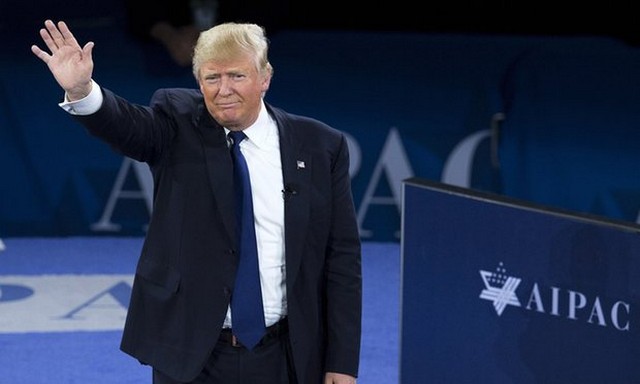
Republican presidential candidate Donald Trump plans to “honor” Martin Luther King Jr.’s legacy by speaking at a convocation at Liberty University, but what has he done to combat economic injustice?

Democratic presidential contender Hillary Clinton will pay tribute to King’s legacy by taking part in Columbia, South Carolina’s King Day at the Dome event, but has she done anything to dispel her track record’s impression that “machines and computers, profit motives and property rights are still considered more important than people”?

Unlike the politicians of our present day, King was a clear moral voice that cut through the fog of distortion. He spoke like a prophet and commanded that you listen. King dared to speak truth to the establishment and called for an end to oppression and racism. He raised his voice against the Vietnam War and challenged the military-industrial complex. And King didn’t just threaten boycotts and sit-ins for the sake of photo ops and media headlines.Rather, he carefully planned and staged them to great effect.

The following key principles formed the backbone of Rev. King’s life and work. King spoke of them incessantly, in every sermon he preached, every speech he delivered and every article he wrote. They are the lessons we failed to learn and, in failing to do so, we have set ourselves up for a future in which a militarized surveillance state is poised to eradicate freedom.

Practice militant non-violence, resist militarism and put an end to war

“I could never again raise my voice against the violence of the oppressed in the ghettos without having first spoken clearly to the greatest purveyor of violence in the world today—my own government.”—Martin Luther King Jr., Sermon at New York’s Riverside Church (April 4, 1967)

On April 4, 1967, exactly one year before his murder, King used the power of his pulpit to condemn the U.S. for “using massive doses of violence to solve its problems, to bring about the changes it wanted.” King called on the U.S. to end all bombing in Vietnam, declare a unilateral cease-fire, curtail its military buildup, and set a date for troop withdrawals. In that same sermon, King warned that “a nation that continues year after year to spend more money on military defense than on programs of social uplift is approaching spiritual death.”

Fifty-some years later, America’s military empire has been expanded at great cost to the nation, with the White House leading the charge. Indeed, in his recent State of the Union address, President Obama bragged that the U.S. spends more on its military than the next eight nations combined. Mind you, the money spent on wars abroad, weapons and military personnelis money that is not being spent on education, poverty and disease.

Stand against injustice

“Injustice anywhere is a threat to justice everywhere… there are two types of laws: just and unjust. I would be the first to advocate obeying just laws. One has not only a legal but a moral responsibility to obey just laws. Conversely, one has a moral responsibility to disobey unjust laws.”― Martin Luther King Jr., “Letter from a Birmingham Jail” (April 16, 1963)

Arrested and jailed for taking part in a nonviolent protest against racial segregation in Birmingham, Ala., King used his time behind bars to respond to Alabama clergymen who criticized his methods of civil disobedience and suggested that the courts were the only legitimate means for enacting change. His “Letter from a Birmingham Jail,” makes the case for disobeying unjust laws when they are “out of harmony with the moral law.”

Fifty-some years later, we are being bombarded with unjust laws at both the national and state levels, from laws authorizing the military to indefinitely detain American citizens and allowing the NSA to spy on American citizens to laws making it illegal to protest near an elected official or in front of the U.S. Supreme Court. As King warned, “Never forget that everything Hitler did in Germany was legal.”

Work to end poverty. Prioritize people over corporations

“When machines and computers, profit motives and property rights, are considered more important than people, the giant triplets of racism, extreme materialism, and militarism are incapable of being conquered.” —Martin Luther King Jr., Sermon at New York’s Riverside Church (April 4, 1967)

Especially in the latter part of his life, King was unflinching in his determination to hold Americans accountable to alleviating the suffering of the poor, going so far as to call for a march on Washington, DC, to pressure Congress to pass an Economic Bill of Rights.

Fifty-some years later, a monied, oligarchic elite calls the shots in Washington, while militarized police and the surveillance sector keep the masses under control. With roughly 23 lobbyists per Congressman, corporate greed largely dictates what happens in the nation’s capital, enabling our so-called elected representatives to grow richer and the people poorer. One can only imagine what King would have said about a nation whose political processes, everything from elections to legislation, are driven by war chests and corporate benefactors rather than the needs and desires of the citizenry.

Stand up for what is right, rather than what is politically expedient

“On some positions, cowardice asks the question, is it expedient? And then expedience comes along and asks the question, is it politic? Vanity asks the question, is it popular? Conscience asks the question, is it right? There comes a time when one must take the position that is neither safe nor politic nor popular, but he must do it because conscience tells him it is right.”—Martin Luther King Jr., Sermon at National Cathedral (March 31, 1968)

Five days before his assassination, King delivered a sermon at National Cathedral in Washington, DC, in which he noted that “one of the great liabilities of life is that all too many people find themselves living amid a great period of social change, and yet they fail to develop the new attitudes, the new mental responses, that the new situation demands. They end up sleeping through a revolution.”

Freedom, human dignity, brotherhood, spirituality, peace, justice, equality, putting an end to war and poverty: these are just a few of the big themes that shaped King’s life and his activism. As King recognized, there is much to be done if we are to make this world a better place, and we cannot afford to play politics when so much hangs in the balance.

It’s time to wake up, America.

To quote my hero: “[O]ur very survival depends on our ability to stay awake, to adjust to new ideas, to remain vigilant and to face the challenge of change. The large house in which we live demands that we transform this world-wide neighborhood into a world-wide brotherhood. Together we must learn to live as brothers or together we will be forced to perish as fools.”
About John W. Whitehead: Constitutional attorney and author John W. Whitehead is founder and president of The Rutherford Institute. His book Battlefield America: The War on the American People(SelectBooks, 2015) is available online at www.amazon.com. Whitehead can be contacted at johnw@rutherford.org. Information about The Rutherford Institute is available at www.rutherford.org.

16 January, 2016
Countercurrents.org

Freedom For Ashraf Fayadh

By Dr. Ludwig Watzal

Beginning of 2016, the Saudi Arabian dictatorship went on a beheading spree. 47 people were decapitated, among them the Shiite cleric and civil rights activist Nimr al-Nimr. None of them had a fair trial. Now, it’s Ashraf Fayadh’s turn, a Palestinian born in Saudi Arabia.

As in many other cases, the charges against Fayadh are made up. On 17 November 2015, he was sentenced to death for “apostasy”. The Saudi Arabian Kangaroo courts have charged him with the “questioning of religion” and for the “dissemination of atheism”. Arrested in January 2014, Fayadh hasn’t seen a lawyer, and the trial was held in camera.

Fayadh belongs to a nascent art scene. He has curated art shows in Jeddah and at the Venice Biennale. Originally, Fayadh was sentenced to four years in prison and 800 lashes by a court in the city of Abha. Despite his repentance, his appeal was dismissed and he was retried by another Kangaroo court, which passed the final deadly verdict. So far, not a single evidence was presented. There are rumors that he has been sentenced to death because of his Palestinian origin though born in Saudi Arabia.

Although the Saudi Arabian dictatorship is the closest ally of the West, the Western governments seem to have no interest in preventing the unlawful beheadings. One argument is that Saudi Arabia is part of the coalition against terrorism while the fundamentalist regime is the largest supporter of international terrorism against the West. ISIS is a “Saudi army in disguise”. Therefore, the Obama administration has only halfheartedly fought these terrorists until Russia has intervened alongside Syrian president Bashar al-Assad.

The present Saudi king has been the Godfather of international terrorism, dating back to the creation of Al Qaeda and the establishment of a terror infrastructure in Bosnia-Herzegovina. His son, the current Saudi defense minister is waging a terror war against Yemen. Instead of supporting the most devilish regime under the sun, the West should go for a regime change in Saudi Arabia to get rid of the myth of “international terrorism” that the West’s closest ally has established against its so-called Western friends.

Dr. Ludwig Watzal works as a journalist and editor in Bonn, Germany. He runs the bilingual blog
http://between-the-lines-ludwig-watzal.blogspot.de/

16 January, 2016
Countercurrents.org

From Copenhagen To India, Restoring The Link Between Farmer And Consumer And Challenging The Corporate Hijack Of Global Food And Agriculture

By Colin Todhunter

“Food systems have been reduced to a model of industrialised agriculture controlled by a few transnational food corporations together with a small group of huge retailers. It is a model designed to generate profits… Instead of being dedicated to the production of food … it focuses increasingly on the production of raw materials such as agrofuels, animal feeds or commodity plantations… it has caused the enormous loss of agricultural holdings and the people who make their living from those holdings… it promotes a diet which is harmful to health and which contains insufficient fruit, vegetables and cereals.”

The above quote comes from the final declaration of the Nyeleni Europe food sovereignty forum in 2011. Nyeleni Europe represents community-supported agriculture collectives, organic farmer unions, local food cooperatives, seed swapping organisations, food activists, farmers’ markets and community gardens. The organisation forms part of the global resistance to the corporate hijack of food and agriculture that has resulted in bad food, poor health, environmental degradation and the marginalisation and displacement of small farmers along with the destruction of local (and global) food sovereignty and security.

The global agritech/agribusiness sector is poisoning people and the environment with its pesticides, herbicides, GMOs and various other chemical inputs. The Rockefeller clan exported the petrochemical intensive ‘green revolution’ around the world with the aim of ripping up indigenous agriculture to cement its hegemony over global agriculture and to help the US create food deficit regions and thus use agriculture as a tool of foreign policy.

Last year, 31 pesticides with a value running into billions of pounds could have been banned in the EU because of potential health risks if a blocked EU paper on hormone-mimicking chemicals had been acted upon. The global agrichemicals lobby is responsible for preventing public protection from chronic diseases and environmental damage. Certain industries are raking in massive profits to the detriment of the public’s health and the environment.

Also last year, a study by the University of Koblenz-Landau explained that no field data-based evaluation of the regulatory acceptable concentrations (RACs) and therefore of the overall protectiveness of EU pesticide regulations exists. The researchers found that 44.7 percent of the 1,566 cases of measured insecticide concentrations in EU surface waters exceeded their respective RACs. The findings challenged the efficacy of the regulatory environmental risk assessment conducted for pesticide authorisation and concluded that effective mitigation measures are urgently needed to reduce the risks arising from agricultural insecticide use.

In the US, some 34,000 pesticides are currently registered for use. Drinking water it is often contaminated by pesticides, more babies are being born with preventable birth defects due to pesticide exposure and chemicals are so prevalent that they show up in breast milk. Many illnesses are on the rise too, such as asthma, autism and learning disabilities, birth defects and reproductive dysfunction, diabetes and Parkinson’s and Alzheimer’s diseases along with several types of cancer. The connection to pesticide exposure is clear.

Moreover, pollinating insects have been impacted by chemical herbicides and pesticides, which are also stripping the soil of nutrients. As a result, for example, there has been a 41.1 to 100 percent decrease in vitamin A in 6 foods: apple, banana, broccoli, onion, potato and tomato. Both onion and potato saw a 100 percent loss of vitamin A between 1951 and 1999.

In India, the impacts of depleted soils, water-guzzling cash crops and loss of food diversity and biodiversity due to green revolution practices have been condemned by campaigner and farmer Bhaskar Save and by botanist Stuart Newton. The fact that, according to Newton, mineral-depleted soils lead to undernourishment speaks volumes.

The unnecessary transportation of food over long distances also does not help, not least in terms of energy consumption and pollution and chemical treatment and processing.

The modern corporate-controlled food system is not only bad for our health and the environment but farmers’ incomes are also being forced downwards. Take the case of the India farmer, for instance.

According to the Navdanya website, a customer pays 10 rupees for a 50-gram packet of Pepsico’s Lays chips. A potato farmer in West Bengal gets only 50 paise (half a rupee) to one rupee for a kg of potato, which is only 0.02 percent of what the customers pays for the processed food packet.

While the customer pays 50 rupees for a kg of branded atta (wheat flour), the farmer only gets 14 rupees out of which he has spent a large share on buying chemicals and earns only 1,645 rupees per month per acre. This amounts to a mere 51.15 rupees per day. The daily legal wage for a skilled worker is 423 rupees. Even an unskilled worker’s minimum wage is 348 rupees per day. The farmer therefore earns only 1/10th of the minimum legal wage. According to Vandana Shiva,

“Farming is one of the most skilled vocations because a farmer is a soil scientist and soil conserver, a seed breeder, manager of water, weeds and pests. Industry produces the chemicals that are destroying the planet and our health. Only small farmers can take care of the soil and the health of the soil is linked to our health.”

The small-scale farmer, the backbone of global food production, especially in the Global South, is being discriminated against through various policies (see this, this and this), marginalised and forced from the land. At the same time, however, the urban consumer across the world seems ever more disconnected from agriculture. The consumer has often become what Vandana Shiva describes as an “ignorant link” in the food chain.

Ultimately, the crisis affecting food and agriculture results from the capture of governments and international policy-making bodies by corporate interests (see this, this and this) and the relations of profit-driven global capitalism that, for example, fuel distorted trade, food commodity and land speculation, poverty and food deficit areas, etc.

Restoring the link between producer and consumer

While we should rightly expose and campaign against this system and the international and national bodies and public officials that have been co-opted by global agribusiness and agri-chemical companies, there are many grass-root initiatives throughout the world that are challenging the corporate dominance of the food system by bringing small-scale farmers and consumers together. By raising consumer awareness and rebuilding what has become a broken link between the urban dweller and the farmer, the aim is to create a better food system from the bottom up: in other words, ‘food smart’ environments whereby citizens actually know what they are eating and where their food comes from.

In Kerala, India, for example, Thanal supports a sustainable form of agriculture that enhances incomes for local farmers and their families as well as food safety and security for consumers by promoting organic farming and linking farmers to consumers through its ‘organic bazaar’.

The bazaar provides a wide range of organic products produced by organic farmers across the state. It was launched in 2003 to bring organic farmers and consumers together and was made possible through consistent outreach and sensitisation among marginal farmers in different pockets of Kerala to enlarge the supply base. Consumer sensitisation and awareness programmes also played an important role in getting more consumers to support the initiative.

In Europe too, there is an increasing awareness that local farmers need to secure a decent price for their produce, that organic food is healthier and that locally sourced food eradicates many of the environmental and health-related problems associated with transporting food over long distances. Copenhagen Food Cooperative is a city-wide initiative that offers an alternative to the profit-driven supermarket chains, it focuses on offering fresh, organic seasonal fruits and vegetables at fair but affordable prices. Founded in 2008, the initiative now has 3,000 and 10 local outlets supplying five tons of vegetables each week sourced from local farms.

All members are expected to put in three hours of work each month on a voluntary basis. This could be packing vegetables in the shop, ordering vegetables, arranging debates, fixing the website, etc. Any profit is used to reduce the price of the vegetables or to develop the co-op or socially responsible projects in the city. By buying from local farmers the costs are lowered, the produce is fresh and the impact on the environment is kept to a minimum. The co-operative supports local farmers who produce organic or biodynamic produce, which in turn supports sustainable agriculture that is good for the soil, the farmer and the health of the consumer

Throughout Europe there are similar community-supported agriculture initiatives that are bringing farmers and urban consumers together to support local farmers who produce healthy food that both respects the environment and keeps rural communities alive. From farmers’ markets to food co-ops, many consumers are no longer ‘ignorant links’ in a globalised corporate-controlled chain.

The Nyeleni Europe website contains some valuable information and serves as a resource for the food sovereignty movement in Europe. As a global movement, Nyeleni has a radical agenda that is committed to challenging, among other things:

“Imperialism, neo-liberalism, neo-colonialism and patriarchy, and all systems that impoverish life, resources and eco-systems, and the agents that promote the above such as international financial institutions, the World Trade Organisation, free trade agreements, transnational corporations, and governments that are antagonistic to their peoples.”

Less overtly political in scope, perhaps, is the concept of ‘food smart cities’. Some key principles underlying this concept include decentralized co-operation on food security and on sustainable development. In Europe, the initiative ‘Food Smart Cities for Development’ aims at creating a network of smart cities to guide European local authorities and civil society organizations in drafting, developing and implementing local food related policies. The initiative aims to maximise the contributions of local food policies to sustainable urban development and to increase understanding of the relation between local and global food systems. One aim is to enhance knowledge on how local food systems can contribute to sustainable cities worldwide and what role cities can take in the global challenge to optimise food sovereignty and sustainability.

While governments, trade agreements and regulatory agencies remain tethered to the interests of the powerful corporations that have come to define global food and agriculture in their own profit-driven image, local communities are fighting back with grass-root initiatives and city authorities are at least placing pertinent issues on the agenda for action and debate.

Colin Todhunter is an independent writer
16 January, 2016
Countercurrents.org

Gaza’s Children Grow Up With Trauma

By Isra Saleh el-Namey

It has taken Mansour’s mother a long time to learn to cope with her 12-year-old son’s changing personality.

Once a top student, Mansour has become aggressive and disobedient. His grades are down, his mother says, and he suffers night terrors.

Mansour’s mother can date his transformation to Israel’s war on Gaza in 2014.

“He was a top student before then. He used to be a cheerful boy,” she recalled.

During the assault, the family had to evacuate their home and move to a UN shelter, a school that was then also bombed. Since then, Mansour’s mother told The Electronic Intifada, he now prefers to be alone at school or at home. He has also started wetting the bed.

“He is easily terrified by loud sounds like thunder,” according to his mother who, like other families interviewed for this story, declined to be named in order to protect their privacy.

These are classic signs of post-traumatic stress disorder, or PTSD, though as health care professionals at the Gaza Community Mental Health Program (GCMHP) never tire of pointing out, in Gaza there is never any “post.”

GCMHP, Gaza’s best known mental health care provider founded in 1990, has noted a sharp rise in the number of children and adults with PTSD since the 2014 attack.

Psychological first aid

In the six months after the war, 51 percent of the children who received services from GCMHP were diagnosed with PTSD, according to the organization’s director, Dr. Yasser Abu Jamei.

“Since the war, people have been so absorbed with how to manage their lives that they neglect their psychological welfare,” Zahia al-Qarra, a mental-health professional with GCMHP told The Electronic Intifada.

The enormous stress endured during the 51 days of bombing — as well as during two previous large-scale Israeli assaults over the past eight years — and the nine-year Israeli blockade that is still preventing most reconstruction, has affected the whole population, al-Qarra said.

Studies prior to the 2014 attack had demonstrated already high levels of PTSD among the population in Gaza as a result of exposure to earlier wars and trauma.

In this situation, health care professionals are struggling to keep up.

“Our work is to intervene to provide the psychological first aid for affected communities,” al-Qarra said.

GCMHP has paid special attention to children. They have registered an alarming rise in the number of children exhibiting one or more symptoms of PTSD, attention deficit disorders, sleep walking, memory loss, nightmares and other anxiety disorders.

It has been nearly a year and a half since the war and Mansour still fears he is dying. He worries that poisonous insects will enter his room at night and bite him. “I feel I walk with a knife in my heart,” he said.

The source of his fear is no mystery. His family home still bears the scars of the intense bombardment the Beit Hanoun neighborhood in northern Gaza suffered during the 2014 onslaught.

There is neither money nor material to repair the holes in the walls.

The kind of visualisation of fear that haunts Mansour is very common among children, according al-Qarra.

GCMHP works with children like Mansour to allow them to express their fears in other ways.

“We see the scars of war explicit in children’s productions like narratives or drawings,” al-Qarra said. “What they tend to draw are pulverized buildings and mutilated bodies laid out on the ground.”

Priorities

GCMHP says it has mobilized 28 mental-health professionals into nine teams in mobile clinics in an effort to cope with the burgeoning needs.

According to al-Qarra, such clinics have reached nearly 21,500 children and adults who otherwise might never get treatment and who certainly cannot afford it.

It is clinics like these that reach children like Mansour, or Salim.

Just 9 years old, Salim has been diagnosed with obsessive-compulsive disorder. Since the 2014 attack, he is always touching surfaces, tables and walls. He has begun to pull out chunks of his own hair.

Salim’s mother contacted GCMHP because she didn’t have anywhere else to turn. “He lost a lot of his hair due to this habit. And he can’t stop,” she told The Electronic Intifada.

She has had to go to Salim’s school to explain his situation to his teachers and friends.

“I don’t want anyone to talk to him about his hair. Negative comments from others could hamper the treatment,” Salim’s mother said.

Treatment in a place where so many experience trauma is an almost insurmountable challenge, however. Due to the great demand, GCMHP prioritizes care for the families of the dead or injured, or those whose homes were completely or partially destroyed.

Group sessions are practical with such numbers, but the psychiatrists, psychologists and nurses working with GCMHP try to use a mix of approaches including group and individual therapy and play therapy for children.

Community support

But clinical interventions cannot succeed in the absence of wider social support.

“A community-based approach is an integral part of our treatment. The family, school and all other cultural and religious institutions play a part in supporting those with mental health issues,” al-Qarra said.

“We try to reassure the children, to make them feel as safe as we can,” al-Qarra added. “Memories of war are deeply embedded in their minds.”

But in Gaza no one feels safe. Successive Israeli attacks have wrought extensive damage to an impoverished territory that is defenseless against them.

Assurances that things will get better — the kind adults like to give children — ring false when houses are not rebuilt, when there are no jobs and there is no hope for the future.

There is no certainty that the horrors Palestinians in Gaza have already witnessed will be the last. “At every anniversary of the war, you start to listen to people’s speculations that another conflict is looming,” al-Qarra said.

International pledges in October 2014 for an unprecedented amount of money to rebuild Gaza gave people a rare moment of optimism.

Much of that money has not materialized and the Israeli blockade on supplies entering and exiting Gaza has remained in place. As a result, despair returned with even greater intensity, al-Qarra said.

Lost hope

Ayman, 8, is from Rafah, Gaza’s southernmost city, specifically the area Israel bombarded intensely as it implemented the so-called Hannibal Directive on 1 August 2014, after reports that the Palestinian resistance had captured one of its soldiers.

Israel’s ferocious shelling of homes killed scores of civilians in indiscriminate attacks Amnesty International concluded were often motivated by a desire for revenge.

At the time, Ayman’s family fled in fear. Their home was partially destroyed, though they were able to return and now live there.

Since then, Ayman shuns company and is prone to flashes of temper.

“He is terribly detached from the rest of the family,” his mother said.

He is easily irritated and avoids conversations about the war.

Ayman has been diagnosed with a panic disorder and now attends regular therapy sessions at a clinic affiliated with GCMHP.

But his mother still detects his fear and alienation.

“He lost hope of ever having an easy life. He is sure that he will fail.”

Isra Saleh el-Namey is a journalist from Gaza.

15 January, 2015
Electronic Intifada

Obama’s Final State Of The Union: Lies, Evasions And Threats

By Patrick Martin

The final State of the Union speech delivered Tuesday night by President Barack Obama was a demonstration of the incapacity of the American political system to deal honestly or seriously with a single social question.

Obama evaded the real issues that affect tens of millions of working people in America every day of their lives. He painted a ludicrous picture of economic recovery and social progress that insulted the intelligence of his television audience—and went unchallenged by the millionaire politicians assembled in the chamber of the House of Representatives.

Summing up what he called “the progress of these past seven years,” Obama gave first place to “how we recovered from the worst economic crisis in generations.” The so-called “recovery” has been a bonanza for corporate profits, stock prices, and the wealth and income of the super-rich. For the working people who are the vast majority of the population, it has been a disaster.

By most social indices, the American people are worse off in January 2016 than when Obama took office seven years ago. The real wages of working people have fallen, social services have deteriorated, pension benefits have been gutted, and cities such as Detroit and San Bernardino have been forced into bankruptcy.

According to a report by the National Association of Counties issued on the eve of the State of the Union address, of the 3,069 counties in the United States, 93 percent are worse off than before the 2008 financial crash according to at least one of four economic indicators: total employment, the unemployment rate, the size of the economy and home values.

In 27 states, not a single county has recovered fully from the 2008 crash and the deep economic slump that followed. These include such major states as Florida, Georgia, Illinois, Massachusetts, Missouri, New Jersey, New York and Pennsylvania.

Obama, however, painted a picture of nearly unblemished economic advance, declaring, “The United States of America, right now, has the strongest, most durable economy in the world.” He boasted, “We’re in the middle of the longest streak of private-sector job creation in history. More than 14 million new jobs; the strongest two years of job growth since the ‘90s; an unemployment rate cut in half.”

The president did not acknowledge that the post-2008 “recovery” is the weakest on record, that the vast majority of the new jobs created have been low-wage and many of them part-time, or that the drop in the unemployment rate is primarily due to the withdrawal of millions of people from the work force because they lost all hope of getting a decent-paying job.

He went on, tellingly, to cite the auto industry as a symbol of success, declaring that it “just had its best year ever.” This perfectly expresses the utter blindness, not just of Obama, but of the entire political establishment. The “best year ever” was for General Motors, Ford and Fiat-Chrysler, which enjoyed record profits, not for the auto workers who produced those profits.

Real wages for auto workers have dropped sharply since the Obama White House forced through a 50 percent cut in wages for all new hires as part of the bankruptcy reorganization of the industry in 2009. Mass discontent among auto workers was expressed at the end of 2015 in the rejection of contracts at Fiat-Chrysler and Nexteer, a major supplier, and in widespread demands for strike action, smothered by Obama’s stooges in the United Auto Workers union.

“Anyone claiming that America’s economy is in decline is peddling fiction,” Obama concluded. The social position of the American working class has, in fact, suffered a dramatic decline, through the combined efforts of the corporate bosses, the unions and the two capitalist parties, the Democrats and Republicans.

The president conceded that economic inequality has grown in the United States, but he described it as the outcome of long-term trends such as globalization and automation, as though the policies of his administration—bailouts for Wall Street, budget cuts and wage cuts for workers—had nothing to do with it.

In the seven years since the financial crash, brought on, as he admitted, by “recklessness on Wall Street,” not a single banker or speculator has been prosecuted or jailed. On the contrary, the billionaires have greatly increased their wealth, gobbling up 95 percent of all new income since Obama entered the White House.

Obama listed a few other policy “successes,” claiming that “we reformed our health care system, and reinvented our energy sector… we delivered more care and benefits to our troops and veterans.” He was referring, however, to a series of social disasters: the reactionary attack on health benefits for workers and their families known as Obamacare; the devastation of Appalachia and other energy-producing regions; and the abuse of ex-soldiers, wounded in body and mind, by the Veterans Administration.

Obama sought to defend the foreign policy record of his administration from criticism, mainly from the Republican right, where demands are being raised for military escalation in the Middle East and stepped-up attacks on democratic rights at home in the name of fighting “terrorism.”

While he claimed to reject an American role as the world’s policeman, he nonetheless boasted, “The United States of America is the most powerful nation on Earth. Period. It’s not even close. We spend more on our military than the next eight nations combined.”

He continued, “Our troops are the finest fighting force in the history of the world,” winning the bipartisan standing ovation that always accompanies any mention of American soldiers engaged in combat overseas.

Obama indulged in the glorification of killing that has become an essential part of the degraded spectacle that passes for political discourse in America. Describing the US war against the Islamic State in Iraq and Syria, he claimed, “With nearly 10,000 air strikes, we are taking out their leadership, their oil, their training camps, and their weapons.”

He called on Congress to pass an Authorization for the Use of Military Force against ISIS, but vowed to wage war with or without legislative approval. The leaders of ISIS, he proclaimed, “will learn the same lessons as terrorists before them. If you doubt America’s commitment—or mine—to see that justice is done, ask Osama bin Laden. Ask the leader of al Qaeda in Yemen, who was taken out last year…”

Then he declared, in language that will be noted by nations all over the world, that when it comes to waging war against potential adversaries, “our reach has no limit.”

Obama concluded his speech with an appeal to his Republican opponents to work with his administration and pull back from the extreme anti-immigrant and anti-Muslim rhetoric that has characterized the contest for the Republican presidential nomination.

In a clear reference to Donald Trump, he argued that “we need to reject any politics that targets people because of race or religion. This is not a matter of political correctness, but understanding what makes us strong.”

Obama was making an argument, not so much that racism and bigotry are intrinsically wrong, but that they make it more difficult for American imperialism to maintain its dominant world role. “When a politician insults Muslims,” he said, “it makes it harder to achieve our goals.”
13 January, 2016
WSWS.org


Why Bernie Sanders is a Dead End

By Joshua Frank

‘Tis the season once again. You should know it well by now: a “progressive” Democrat running in the primaries for president of the United States. We’ve seen it all before, from Jesse Jackson to Dennis Kucinich, left-leaning voters have time-and-again been asked to support candidates that are working to transform the corrupt and war-hungry Democratic Party from within. And each and every time this strategy has failed — not only to elect a progressive Democrat into the White House, but to alter the party that offer themselves up as a lighter shade of neo-con.

This time around that “progressive” Democrat is self-proclaimed “socialist” Senator Bernie Sanders of Vermont. Even though it’s early in the primary push, Bernie is hitting the trail, spreading a message of hope for working class people that he’s there to fight for their cause. He wants to create new jobs, challenge Wall Street crooks and take on the corporate control of our political quagmire. These are fine positions to take, but what Bernie isn’t about to tell you is that in order to radically alter the system in favor of workers, the Democrats must be abandoned altogether — for it’s their neoliberal policies, from Bill Clinton on down, that exacerbated the sell-out of the American workforce.

Sure, Bernie will talk tough when it comes to these failed policies. He’ll criticize fast tracked free-trade agreements and corporate plutocracy, but his hardy embrace of the Democrats continues to undermine his own criticisms. It’s as if Bernie got a job at a coal mining outfit in hopes of stopping the melting of ice caps in the Arctic. His bid for the White House is simply a dead end and a waste of scarce resources. Progressives would be better off working to reinvigorate the antiwar movement and Occupy than spending time and money on Bernie’s hollow campaign.

Even so, while Bernie may come across as sincere about class politics, make no mistake, he’s is a militarist that isn’t about to challenge U.S. supremacy. He supported the ugly war on Kosovo, the invasion of Afghanistan, funding for the endless Iraq disaster as well as the losing and misguided War on Terror. He voted in favor of Clinton’s 1996 Anti-Terrorism and Effective Death Penalty Act, which expanded the federal death penalty and acted as the precursor to the PATRIOT Act.

As for Israel, Bernie has been a hawkish advocate that would never halt the $3 billion the U.S. government sends to the country every year. Last summer he backed Israel’s murderous bombing of Gaza. He’s even had some nasty words about Palestine’s right to resist. It shouldn’t come as a surprise then that several former members of Bernie’s staff have also been employed by AIPAC, including Israel apologists David Sirota and Joel Barkin. His is a disgusting record. Want to change in the U.S.’s meddling in the Middle East? Bernie isn’t your guy.

If the Senator’s support for ongoing war and the occupation of Palestine don’t make you squeamish, then you may as well stop reading. I doubt you’ll grasp the importance of challenging empire by refusing to cast a vote for a party that pumps fuel into the war machine’s tank. Such an effort requires a willingness to step out on the Democrats, especially at the national level, where they have waged war on workers at home and employed a blood-thirsty foreign policy abroad.

The Bernie Sanders campaign, while a slight breath of fresh air in the national debate on class issues, is a complete loser in terms of impact. There’s no sign he’ll break from the Democrats and challenge both parties down the road. Bernie doesn’t oppose U.S. power, nor does his campaign do a single thing to build independent politics in the country, perhaps the last chance to salvage any democracy we may have left. In the end, Bernie Sanders will play the lesser-evil card and plea for us all to hold our noses and vote for Hillary Clinton, who guarantees a future of more war and economic inequality.

That’s why Bernie’s is not a bandwagon I’ll be jumping on anytime soon.

JOSHUA FRANK is managing editor of CounterPunch. He is author of Left Out! How Liberals Helped Reelect George W. Bush (Common Courage Press, 2005), and along with Jeffrey St. Clair, the editor of Red State Rebels: Tales of Grassroots Resistance in the Heartland and Hopeless: Barack Obama and the Politics of Illusion, both published by AK Press. He can be reached at brickburner@gmail.com. You can follow him on Twitter@brickburner.

3 June 2015

In a dangerous world, North Korea’s latest nuclear test makes a kind of sense

By Aidan Foster-Carter

North Korea’s latest nuclear test, announced triumphantly on Wednesday, is of course a worry. But a surprise it is not. Kim Jong-un has many reasons to do this, and all too few incentives not to.

Technology is one motive. Having taken the nuclear road, that threat has to be credible. This requires regular tests: in 2006, 2009, 2013 and now 2016. Pyongyang’s specific claims – this time, that it is an H-bomb – may be exaggerated, but we cannot be complacent. The Democratic People’s Republic of Korea’s (DPRK) skilled scientists, slowed only slightly by UN and other sanctions, are steadily refining Kim’s arsenal. Two key steps are miniaturisation – making a bomb small enough to fit on an intercontinental ballistic missile (ICBM) – and perfecting the latter. North Korea has been testing submarine-based launches, which in principle would be a game-changer, allowing it to threaten the US, or indeed anywhere else on the planet.

Domestic politics is a second factor: specifically, loyalty and legitimation. Kim Il-sung made the initial nuclear choice, which was faithfully implemented by his son Kim Jong-il. Kim Jong-un, young and insecure, has no option but to endorse and reinforce the legacies of his father and grandfather.

National pride is at play too. Like Iranians, ordinary North Koreans are proud of their country’s nuclear prowess – and also of the satellite launches which double up as partial ICBM tests. We may see another of those too – the last was in 2012 – to provide further patriotic fireworks in the run-up to this year’s big event in Pyongyang: the first full Congress of the nominally ruling Workers’ party (WPK) in 36 years, scheduled for May.

In a third arena, the international one, the gains appear less clear. North Korea well knows that its latest nuclear test, like the three before and indeed those ICBM tests, will attract near-universal opprobrium. The UN Security Council (UNSC) will meet for an emergency session and pass yet another condemnatory resolution. As ever, this will be unanimous: Russia and China deplore their sometime protege’s nuclear waywardness no less than the west does. Sanctions will be tightened still further, though in truth there is not a lot left to sanction. Some countries might now follow Japan and ban all trade; the UN specifies only military and luxury goods.

Beijing’s reaction will be crucial. Despite visibly warm ties with South Korea’s President Park Geun-hye – whose own attitude to the North is sadly unimaginative and contradictory: no hope there – Xi Jinping had been shifting back to a more balanced Korea policy. A senior Chinese politburo member attended the WPK’s 70th anniversary celebrations in October, and talk was growing of Kim Jong-un making a long overdue first visit to China as leader. That cannot now happen anytime soon. Beijing is furious, having on this occasion not even been afforded the brief advance warning which Pyongyang had given it before previous tests.

China is the DPRK’s most dominant trade partner by far and could, should it choose, put one or more fingers to Kim Jong-un’s windpipe simply by stopping buying North Korean coal, seafood and other exports. Kim is gambling Xi will not do that, for the same reason as always. China fears chaos on its borders, and generating refugee flows which could cause contagion within. The ongoing refugee crisis in Europe is a portent, the last thing China wants to face in its own back yard.

Kim is probably right to bet that China’s strategic calculus will not soon change. Still, North Korea’s nuclear option strikes outsiders as risky and perverse. Its costs in terms of squandered opportunity are huge. Keen to boost a backward economy, Kim Jong-un has created about 20 new special economic zones. But who will put their money into a country under UN sanctions, which also treats its few foreign investors so badly? The biggest, Egypt’s Orascom, is unable to repatriate profits from its mobile telecoms joint venture – which now faces a domestic DPRK competitor.

As both the nuclear test and Orascom’s fate show, the North Korean regime does not give a damn what the world thinks. While deplorable and to a degree self-defeating, this insouciant defiance also makes a grim kind of sense, both historically and reinforced by recent events.

The last century was extremely tough for Korea: it was brutally occupied by Japan, then sundered in 1945 by its liberators. Kim Il-sung’s bid for reunification by force precipitated the Korean war (1950-53) which saw the North bombed and napalmed mercilessly by the US on behalf of the UN.

To grasp the mentality this apocalypse bred, think Israel. Kim Il-sung resolved to ensure that no one would ever do that to his realm again. Taking aid where he could, but trusting friends no more than foes, he built a mighty, impregnable fortress – literally and metaphorically.

Just as in Jerusalem – which gets away with this, unlike North Korea – the view from the Pyongyang bunker is that, in a dangerous world, nuclear weapons are the only sure guarantee of security and survival. The argument is essentially the same as the National Rifle Association’s case against gun control. Fortunately most of the world’s 200-odd states do not think and act this way. Yet recent events can only have confirmed the DPRK in its worldview.

A decade ago, siren voices urged Kim Jong-il to emulate that sensible Colonel Muammar Gaddafi: give up weapons of mass destruction, come in from the cold. Pondering both Gaddafi’s miserable end and the state of Libya today, Kim Jong-un’s firm grip on his bomb makes a kind of sense.

Ignoring North Korea, as the US under Obama and other powers have done of late, is not a solution. There are no easy answers, but re-engaging Pyongyang is the only way forward. The dreary tit-for-tat of tests, sanctions, more tests, more sanctions has resolved nothing. Hopes of a collapse, which I used to share, appear wishful thinking.

Besides, be careful what you wish for. Loose nukes, chaos, millions of refugees: how is that better than the Korean status quo?

Aidan Foster-Carter is honorary senior research fellow in Sociology and Modern Korea at Leeds University, and a freelance writer, consultant and broadcaster on both Koreas

6 January 2016

Where Were the Post-Hebdo Free Speech Crusaders as France Spent the Last Year Crushing Free Speech?

By Glenn Greenwald – The Intercept

It’s been almost one year since millions of people — led by the world’s most repressive tyrants — marched in Paris ostensibly in favor of free speech. Since then, the French government — which led the way trumpeting the vital importance of free speech in the wake of the Charlie Hebdo killings — has repeatedly prosecuted people for the political views they expressed, and otherwise exploited terrorism fears to crush civil liberties generally. It has done so with barely a peep of protest from most of those throughout the West who waved free speech flags in support of Charlie Hebdo cartoonists.

That’s because, as I argued at the time, many of these newfound free speech crusaders exploiting the Hebdo killings were not authentic, consistent believers in free speech. Instead, they invoke that principle only in the easiest and most self-serving instances: namely, defense of the ideas they support. But when people are punished for expressing ideas they hate, they are silent or supportive of that suppression: the very opposite of genuine free speech advocacy.

Days after the Paris march, the French government arrested the comedian Dieudonné M’bala M’bala “for being an ‘apologist for terrorism’ after suggesting on Facebook that he sympathized with one of the Paris gunmen.” Two months later, he was convicted, receiving a suspended two-month jail sentence. In November, on separate charges, he was convicted by a Belgian court “for racist and anti-Semitic comments he made during a show in Belgium” and was given a two month prison term. There were no #JeSuisDieudonné hashtags trending, and it’s almost impossible to find the loudest post-Hebdo Free Speech crusaders denouncing the French and Belgian governments for this attack on free expression.

In the weeks after the Free Speech march, dozens of people in France “were arrested for hate speech or other acts insulting religious faiths, or for cheering the men who carried out the attacks.” The government “ordered prosecutors around the country to crack down on hate speech, anti-Semitism and glorifying terrorism.” There were no marches in defense of their free speech rights.

In October, France’s highest court upheld the criminal conviction of activists who advocate boycotts and sanctions against Israel as a means of ending the occupation. What did these criminals do? They “arrived at the supermarket wearing shirts emblazoned with the words: ‘Long live Palestine, boycott Israel’” and “also handed out fliers that said that ‘buying Israeli products means legitimizing crimes in Gaza.’” Because boycotts against Israel were deemed “anti-semitic” by the French court, it was a crime to advocate it. Where were all the post-Hebdo crusaders when these 12 individuals were criminally convicted for expressing their political views critical of Israel? Nowhere to be found.

More generally, the French government seized “emergency powers” in the wake of the Paris attack that they originally said would last twelve days. It was then extended to three months, and there is now talk, as the deadline approaches, of extending those powers indefinitely or permanently. Those powers have been used exactly as one would suspect: to barge into places without warrants where French Muslims gather, shut mosques and coffee shops, detain people with no charges, and otherwise abolish basic liberties. They’ve also now been used beyond the Muslim community, against climate activists. If that sort of classic, creeping repression does not anger and upset you, then you may be many things, but a genuine advocate of free expression in France is not one of them.

Even before the Hebdo murders, prosecutions in Europe against Muslims for the expression of their political opinions were common, especially when those opinions were critical of Western policy. Indeed, a week before Hebdo, I wrote an article detailing that growing threat to free speech in the U.K, France and throughout the West. Those types of actions — carried out by the world’s most powerful governments — were, and remain, the greatest threat to free speech in the West. Yet they receive a tiny fraction of the attention that the Hebdo killings did.

Where were, and where are, all the self-proclaimed free speech advocates about all of that? It was only when anti-Islam cartoons were at issue, and a few Muslims engaged in violence, did they suddenly become animated and passionate about free speech. That’s because legitimizing anti-Islam rhetoric and demonizing Muslims was their actual cause; free speech was just the pretext.

In all the many years I’ve worked in defense of free speech, I’ve never seen the principle so blatantly exploited for other ends by people who plainly don’t believe in it as was true of the Hebdo killings. It was as transparent as it was dishonest. Their actual agenda was illustrated by how they invented a brand new free speech standard specially for that occasion: in order to defend free speech, one must not merely defend the right to express an idea, they decreed, but must embrace the idea itself.

This newly-minted “principle” is, in fact, the exact antithesis of genuine free speech protections. Central to an actual belief in free speech rights is the view that all ideas — those with which one most fervently agrees and those one finds most loathsome and everything in between — are entitled to be expressed and advocated without punishment. The most important and courageous free speech defenses have typically come from those who simultaneously expressed contempt for an idea while defending the rights of other people to freely express that idea. This is the principle that has long defined authentic free speech activism: those ideas being expressed are vile, but I will work to defend the right of others to express them.

Those who exploited the Hebdo murders sought to abolish this vital distinction. They insisted that it was not enough to denounce or condemn those who murdered the Hebdo cartoonists. Instead, they tried to impose a new obligation: one must celebrate and embrace the ideas of the Hebdo cartoonists, support the granting of awards to them, cheer for the substance of their views. Failure to embrace the ideas of Charlie Hebdo (rather than just their free speech rights) subjected one to accusations — by the world’s slimiest smear artists — that one was failing to uphold their rights of free expression or, worse, that one sympathized with their killers.

This cheap bullying tactic — trying to force people not merely to defend Hebdo’s free speech rights to but to embrace the ideas being expressed — has endured to this day (but only when it comes to speech critical of Muslims). A full year later, it’s still common to hear supporters of Western militarism falsely accuse portions of “the left” of having sanctioned or justified the attack on Charlie Hebdo solely on the ground that they refused to cheer for the content of Hebdo’s ideas.

This accusation is an absolute, demonstrable lie, an obvious slander. I’ve never heard a single person on the left express anything other than revulsion at the mass murder of the Hebdo cartoonists, nor have I ever heard anyone on the left suggest that the murders were “deserved” or that the cartoonists “had it coming.” I certainly did hear, and myself expressed, opposition to the relentless targeting of a marginalized minority in France by Hebdo cartoonists (that critique, just by the way, was most eloquently expressed by a former Hebdo staffer, Olivier Cyran: “The obsessive pounding on Muslims to which [Hebdo] has devoted itself for more than a decade has had very real effects. It has powerfully contributed to popularising, among ‘left-wing’ opinion, the idea that Islam is a major ‘problem’ in French society”). But objections to the substance of an idea quite obviously does not denote or even suggest a failure to uphold the rights of free speech for those who express that idea: unless you’re endorsing the noxious, deceitful, entirely novel concept that one can only defend the free speech rights of those with whom one agrees.

But this all highlights that free speech was not the principle being upheld here; free speech was just a weapon used by some tribalistic Westerners to try to force people into cheering for anti-Islam and anti-Muslim cartoons (not merely the right to publish the cartoons without punishment or violence, but the cartoons themselves).

And what even more powerfully demonstrates the sham at the heart of this post-Hebdo spectacle is that before the Paris march, and especially since, there has been a systematic assault on the free speech rights of huge numbers of people in France and throughout the West who are either Muslim and/or critics of the West or Israel, and the newfound Hebdo free speech crusaders have exhibited almost no opposition, and at times tacit or explicit support. That’s because free speech was their cynical weapon, not their actual belief.

Glenn Greenwald is a journalist, constitutional lawyer, and author of four New York Times best-selling books on politics and law. His most recent book, No Place to Hide, is about the U.S. surveillance state and his experiences reporting on the Snowden documents around the world. Prior to his collaboration with Pierre Omidyar, Glenn’s column was featured at The Guardian and Salon.

8 January 2016