
By V.A. Mohamad Ashrof
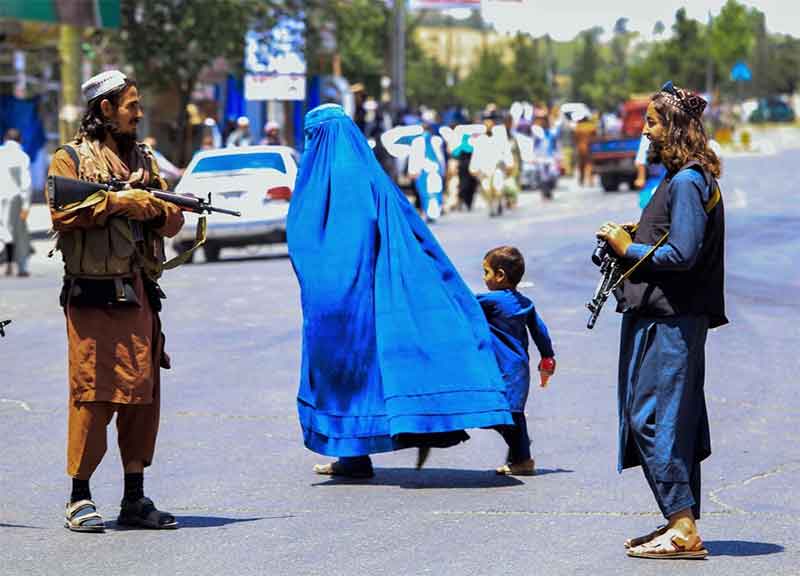
This paper examines the systematic legal framework enacted by the Taliban since their return to power in August 2021, through which the rights of Afghan women have been progressively dismantled under the stated objective of implementing Shariah. Focusing specifically on the 2025/2026 Penal Code—particularly provisions legalizing wife-beating without bone fracture and imposing imprisonment upon women who visit relatives without spousal permission—and the comprehensive bans on female education, this paper deploys the interpretive frameworks of Islamic scholarship to demonstrate the profound disjuncture between Taliban policies and the gender-just ethos of the Quran. This paper argues that Taliban jurisprudence represents not the application of Islamic law but its patriarchal distortion—a reading of scripture mediated through androcentric cultural traditions rather than the Quran’s fundamental affirmation of human equality before God.
The crisis of women’s rights in Afghanistan is not merely a regional political conflict; it is a global theological and humanistic emergency. When a state apparatus utilizes the vocabulary of the Divine to institutionalize the erasure of half its population, it necessitates a response that is both academically rigorous and morally resolute. This monograph seeks to dismantle the monopoly on “truth” claimed by the Taliban. By synthesizing legal documentation, human rights reports, and, most crucially, the liberatory exegesis of Islamic feminist scholars, we demonstrate that the Taliban’s anti-women decrees are an affront to the very religion they claim to defend. This is a scholarly project of reclamation—retrieving the Quranic spirit of ‘adl (justice) and rahmah (mercy) from the suffocating grip of patriarchal authoritarianism [1, 7].
The Codification of Erasure
In January 2026, the Taliban’s supreme leader, Hibatullah Akhundzada, signed into effect a new penal code (De Mahakumu Jazaai Osulnama) that formalized what human rights monitors had documented since August 2021: the systematic reduction of Afghan women to legal non-persons. This 119-article code, spanning three sections and ten chapters, represents the most comprehensive legal codification of gender apartheid in the twenty-first century [5, 12]. Yet its significance extends beyond the humanitarian catastrophe it produces; it poses fundamental theological questions about the relationship between divine revelation and its human interpretation.
The Taliban project is predicated on the claim of “purity”—a return to a perceived authentic Islamic social order. However, as this paper will argue, this “purity” is a modern construction, a hybrid of Deobandi-influenced revivalism and rigid Pashtun tribal codes (Pashtunwali), which ignores fourteen centuries of diverse Islamic legal thought. By examining two categories of Taliban restrictions—the juridification of domestic violence and the total ban on female education—we deploy the interpretive frameworks developed by scholars who read the Quran “with believers’ eyes” while refusing patriarchal mediation [1, 14].
We contend that the Taliban’s shariah is neither necessary nor authentic, but rather a contingent political project dressed in religious vocabulary. Through the lens of Maqasid al-Shariah (the higher objectives of the law), we find that these decrees violate the essential protections of life, intellect, and dignity [1, 6].
The Juridification of Violence
The February 2025/January 2026 Penal Code, bearing the authority of Supreme Leader Hibatullah Akhundzada, contains provisions that fundamentally restructure marital relations through state coercion. Article 9 of the code establishes a four-tier social hierarchy—religious scholars (ulama/mullahs), elites (ashraf), middle class, and lower class—with punishments determined not by offense but by the perpetrator’s social standing [9]. This stratification alone contradicts the Quran’s repeated affirmation that human dignity derives from taqwa (consciousness of God) rather than social status: “O mankind, indeed We have created you from male and female and made you peoples and tribes that you may know one another. Indeed, the most noble of you in the sight of God is the most righteous of you” (Quran 49:13).
Of particular concern for this analysis is Article 32. This provision permits husbands to discipline their wives physically, with state intervention triggered only when beatings result in “broken bones or open wounds” [4]. Husbands face a maximum of fifteen days’ imprisonment for using “obscene force” resulting in bruises or fractures, contingent upon wives proving abuse under evidentiary standards that render conviction nearly impossible. This “bone fracture” doctrine effectively decriminalizes soft-tissue damage, psychological trauma, and repetitive battery, transforming the marital home into a site of legally sanctioned violence.
The 2026 Code represents a radical departure from the 2009 Law on the Elimination of Violence Against Women (EVAW), which criminalized twenty-two acts of violence against women, including battery and forced marriage. By replacing a rights-based framework with a “minimal injury” threshold, the Taliban have institutionalized what legal scholars call “gendered vulnerability.”
Under Article 33 of the new code, the burden of proof is placed squarely on the victim. She must present her injuries in a court where she is often denied female legal representation, as the Taliban have effectively banned women from the legal profession. Furthermore, she must be accompanied by a mahram (male guardian), who is frequently a relative of the abuser or the abuser himself. This creates a “closed loop” of systemic disenfranchisement. As noted by UN experts, this framework does not seek to adjudicate justice but to enforce a hierarchy of “ownership” [12, 13].
The Taliban’s wife-beating provision derives from a particular, stagnant reading of Quran 4:34. The verse reads in part: “Men are qawwamuna over women… As for those from whom you fear nushuz, admonish them, then abandon them in bed, then idribuhunna.” Traditionalist and patriarchal interpretations have historically translated idribuhunna as “beat them,” providing the basis for juristic permission of corporal discipline.
However, gender just Islamic hermeneutics fundamentally challenges this reading. Asma Barlas, in her foundational work Believing Women in Islam, demonstrates that patriarchal readings of 4:34 violate the Quran’s holistic hermeneutic principles. Barlas argues that the Quran consistently describes marital relations in terms of mawaddah (love) and rahmah (mercy) (Quran 30:21). Any interpretation permitting violence must be reconciled with these fundamental descriptions. Barlas posits that “the Quran does not sanction domestic violence; rather, it provides a method for its cessation by restricting the husband’s response to nushuz (disloyalty) to a symbolic gesture aimed at reconciliation, not harm” [3].
Abla Hasan’s linguistic analysis in Decoding the Egalitarianism of the Quran pushes further. Hasan examines the semantic range of the root d-r-b across Quranic usage. She notes that the root appears in contexts meaning “to set an example,” “to travel,” or “to separate.” Hasan suggests that idribuhunna may indicate a temporary separation—a withdrawal that creates space for reflection—rather than physical violence [6]. The Taliban’s codification of “beating without broken bones” ignores these scholarly nuances, opting instead for a reading that reduces women to bodies subject to male disciplinary power.
The Taliban claim to follow the Sunnah (the path of the Prophet Muhammad), yet the Prophetic record (Hadith) provides a direct rebuke to the “bone fracture” doctrine [1, 3, 15]. Aisha, the Prophet’s wife, famously stated, “The Messenger of God never hit anything with his hand, neither a woman nor a servant” (Sahih Muslim 2328) [3, 5, 14]. Furthermore, the Prophet explicitly stated, “The best of you are those who are best to their wives” (Tirmidhi 1162) [3, 14, 15].
By legalizing “moderate” violence, the Taliban are not reviving the Sunnah; they are reviving the Jahiliyyah (pre-Islamic ignorance) that the Prophet sought to dismantle. The Quranic trajectory was one of progressive restriction of male violence, moving toward a state of total mutual respect. The Taliban have inverted this trajectory, moving from the legal protections of the 21st century back to a distorted, mid-century tribalism.
Enclosure of the Female Soul
In the 2026 Criminal Procedure Regulations (De Mahakumu Jazaai Osulnama), Article 34 stands as a definitive instrument of domestic enclosure. The article stipulates that if a married woman visits her parental home or the home of other relatives without the express permission of her husband—and refuses to return upon his demand—she is subject to criminal prosecution, carrying a penalty of up to three months’ imprisonment [4]. Crucially, the decree extends criminal liability to the woman’s family members if they “harbour” her, thereby dismantling the traditional social safety net that has historically protected Afghan women from domestic abuse.
This provision represents a radical shift from marital companionship to a carceral relation. By making a woman’s physical presence in her own parents’ home a “crime” against the husband’s authority, the Taliban have effectively codified the concept of women as mamluk (owned property) rather than sharik (partner). This legal framework creates a “total institution” within the home, where a woman’s social existence is entirely mediated by a male gatekeeper.
The Taliban justify these restrictions as a means of ensuring “domestic stability” and preventing fitna (social discord). However, an enlightened critique through the lens of Quranic ethics reveals that Article 34 constitutes a direct violation of one of Islam’s most sacred mandates: Silat al-Rahim (the joining of the ties of kinship).
The Quran places the maintenance of family ties in a position of supreme ethical importance, often linking it directly to the worship of God. The Quran commands: “Fear God, through whom you ask one another, and [do not cut] the wombs (al-arham). Indeed, God is ever, over you, an Observer” (Quran 4:1). The term al-arham (the wombs) serves as a metonym for the sacred bond between parents, children, and siblings. By criminalizing a daughter’s visit to her mother, the Taliban are forcing a woman to choose between a state-enforced “obedience” to a husband and a divinely-enforced duty to her parents.
Furthermore, the Quran explicitly commands “good treatment” (ihsan) of parents (Quran 17:23). This duty is not conditional upon a husband’s permission. In the Quranic worldview, marriage is a mithaqan ghalizan (a solemn covenant, 4:21) that enhances a woman’s status; it is not a contract of enslavement that nullifies her prior religious obligations to her lineage. As scholar Khaled Abou El Fadl argues, “Any interpretation that permits the severing of the most basic human bonds of mercy is a betrayal of the Shariah’s objective of preserving the family” [1].
Since August 2021, the Taliban have issued dozens of decrees (notably the 2022 Decree on Hijab and the 2024 Law on the Promotion of Virtue) mandating that women be accompanied by a mahram (a male blood relative or husband) for travel beyond short distances (approx. 45 miles/72 km). The stated justification is “protection” (hifz).
However, from a humanistic and liberatory perspective, the mahram system functions as a form of paternalistic surveillance. It treats women as perpetual minors who lack the moral and intellectual agency to navigate the public square. This contradicts the Quranic portrayal of women as autonomous moral actors. The Queen of Sheba (Bilqis), for instance, is depicted as traveling across borders, engaging in high-level diplomacy, and making independent theological decisions without a mahram gatekeeper (Quran 27:22-44).
Islamic scholarship, such as that of Fatima Mernissi, demonstrates that the restriction of female mobility in Islamic history was often a tool of the “male elite” to monopolize the public and political sphere [7]. In the context of 21st-century Afghanistan, the mahram requirement has catastrophic economic and health consequences. When a widow or a woman with no adult male relatives is barred from the market or a clinic, the “protection” offered by the state becomes a death sentence through starvation or medical neglect [13].
The Closure of Minds—Educational Restrictions as Intellectual Genocide
The Taliban’s war on women’s intellect has not been a single event but a compounding series of decrees designed to phase women out of the cognitive life of the nation. The trajectory reveals a systematic intent to create a permanent, uneducated female underclass:
• September 17, 2021 (Directive Edu-786): Shortly after the fall of Kabul, the Ministry of Education ordered the reopening of secondary schools for boys; the deliberate omission of girls effectively banned education for females from grades 7 through 12.
• March 23, 2022: Despite international assurances, the Taliban leadership in Kandahar issued a last-minute verbal decree keeping girls locked out as they arrived for the first day of the school year.
• December 20, 2022 (Order HE-2022-011): Neda Mohammad Nadim, the Minister of Higher Education, issued a formal letter to all public and private universities suspending female attendance “until further notice.”
• December 2024 (Order No. 402): In a move that signaled the end of any vocational path, the Taliban banned women from medical education, midwifery, and nursing training, effectively dismantling the future of female healthcare [11].
By early 2025, over 2.2 million girls were barred from secondary education. This is what international legal scholars now term “Gender Apartheid”—the systematic exclusion of a protected group from the fundamental resources of life, the most critical of which is knowledge.
The Taliban justify these bans by citing the need for an “Islamic environment” and “curriculum purification.” However, from an enlightened theological perspective, the ban on female education is not merely a human rights violation; it is an act of religious apostasy against the first command of the Quran.
The very first word of the Quranic revelation was Iqra—”Read!” or “Recite!” (Quran 96:1). This command was addressed to the Prophet Muhammad and, through him, to every human being (insan). The Quran does not contain a single verse that restricts the pursuit of knowledge to a specific gender. On the contrary, the text repeatedly asks: “Are those who know equal to those who do not know?” (Quran 39:9). The implied answer is a resounding no; knowledge is the primary source of human distinction and moral standing.
Islamic scholars, such as Amina Wadud, argue that because the Quran identifies both men and women as Khulafa (vicegerents or stewards) on earth (Quran 2:30), both must possess the intellectual tools to exercise that stewardship. To deny women education is to prevent them from fulfilling their divine purpose. It is a form of Zulm (oppression) that attempts to override God’s mandate for human growth [14].
The Taliban’s claim that Islam mandates a domestic-only role for women is historically illiterate. Aisha bint Abi Bakr, the wife of the Prophet, was one of the leading jurists, political leaders, and scholars of her time. She is credited with narrating over 2,210 Hadiths and was a primary source of legal knowledge for the male companions of the Prophet.
Prophet Muhammad himself stated: “Seeking knowledge is an obligation upon every Muslim” (Ibn Majah 224) [5, 14, 15]. In Arabic, the word “Muslim” in this context is a collective noun including both men and women [1, 5, 14]. The historical record shows that the Prophet even designated specific days for the education of women (Bukhari 101) [5, 11, 14]. By barring women from universities, the Taliban are returning to a pre-Islamic Jahiliyyah (ignorance). As scholar Muhammad Faizul Haque notes, “The restriction of education is a cultural projection of patriarchal fear… it stems from the realization that an educated woman is a woman who can challenge the misinterpretations of the state” [5].
The Morality Law and Auditory Erasure
On August 21, 2024, the Taliban’s Ministry for the Promotion of Virtue and Prevention of Vice promulgated a 114-page law that codified the total auditory and visual erasure of women from the public square.
• Article 13 (The Auditory Ban): This article stipulates that a woman’s voice is considered Awrah (an intimate part of the body to be concealed). Consequently, women are prohibited from singing, reciting, or reading aloud in public. Even within the home, a woman’s voice must not be loud enough to reach non-relative men outside [13].
• Article 13 (The Visual Ban): It mandates the full-body covering and requires that the face be covered to avoid “temptation.”
• Article 17 (The Ban on Images): Prohibits the publication of images of living beings, further erasing women from media and public documentation.
Islamic scholar Khaled Abou El Fadl argues that the Taliban’s interpretation is a “pathology of modesty” [1]. By categorizing a woman’s ordinary speech as a “temptation” (fitna), the Taliban shift the entire burden of male self-control onto the forced silence of women. This contradicts the Quranic mandate for men to “lower their gaze” (Quran 24:30).
The “Theology of Silence” contradicts Surah At-Tawbah: “The believing men and believing women are protecting friends (Awliya) of one another. They enjoin what is right and forbid what is wrong…” (Quran 9:71). To fulfil this duty, a woman must be able to speak. By silencing women, the Taliban prevent them from performing the very religious duty the Ministry of Virtue claims to promote. As Amina Wadud notes, “A silent woman cannot be a protector of the community” [15].
In December 2024, the Taliban mandated the total suspension of women from medical education (Order No. 402). By early 2025, this produced a “brain drain” of midwives and doctors. In a nation where maternal mortality rates are among the highest in the world, the removal of the next generation of healthcare workers constitutes an assault on the fundamental right to life [11].
In the framework of Maqasid al-Shariah, the preservation of life (Hifz al-Nafs) is paramount. The Quran establishes: “…if anyone saves a life, it shall be as though he had saved the lives of all mankind” (Quran 5:32). By dismantling the female medical workforce while simultaneously forbidding women from being treated by male doctors, the state is effectively sentencing the female population to death. This is not Shariah; it is a form of Zulm (gross oppression) [15].
The Shariah of Liberation vs. The Shariah of Erasure
What has been observed since August 2021—culminating in the January 2026 Penal Code—is a carefully constructed “closed loop” of disenfranchisement. The education bans ensure future dependency; the mobility bans (Article 34) remove social safety nets; and the legalization of battery (Article 32) removes bodily integrity. Synthesized, these decrees constitute Gender Apartheid [13].
The Taliban project fails on every metric of Maqasid al-Shariah (Teleological Spirit of the Shariah). It destroys the intellect (‘Aql) through education bans, life (Nafs) through medical prohibitions and normalized violence, and lineage (Nasl) by severing sacred bonds of kinship (Silat al-Rahim). True Shariah is not a static list of punishments but a dynamic path toward justice (‘Adl). As Ibn Qayyim al-Jawziyya (d.1350) profoundly affirmed, “the Shariah is entirely justice, mercy, benefit, and wisdom; any ruling that produces injustice, cruelty, harm, or folly cannot be attributed to God, even if cloaked in juridical language.” Measured against this classical criterion, the Taliban’s policies collapse morally, legally, and theologically.
This paper has demonstrated that the “Shariah of Erasure” implemented by the Taliban is a dead-end for civilization. It produces a society that is half-blind, half-silent, and entirely broken. In contrast, the “Shariah of Liberation” envisioned by the Quran is one of Rahmah (Mercy). It is a system where the education of a girl is a sacred duty and the voice of a woman is a moral witness. The daughters of Afghanistan continue to resist, testifying that the human spirit and the voice that carries it cannot be erased by decree. “Truth has come, and falsehood is bound to perish” (Quran 17:81).
Bibliography
- Abou El Fadl, Khaled. Speaking in God’s Name: Islamic Law, Authority and Women. Oxford: Oneworld Publications, 2001.
- https://www.egypttoday.com/Article/1/144809/Grand-Imam-of-Al-Azhar-announces-decisions-on-women%E2%80%99s-rights.
- Barlas, Asma. Believing Women in Islam: Unreading Patriarchal Interpretations of the Quran. Austin: University of Texas Press, 2002.
- https://giwps.georgetown.edu/2026/01/30/taliban-regulation-legalizes-slavery-violence-repression-women/.
- Haque, Muhammad Faizul. “Women Empowerment: An Analysis from the Quranic Perspective.” PhD dissertation, International Islamic University Malaysia, 2020.
- Hasan, Abla. Decoding the Egalitarianism of the Quran: Retrieving Lost Voices on Gender. Lanham, MD: Lexington Books, 2020.
- Mernissi, Fatima. The Veil and the Male Elite: A Feminist Interpretation of Women’s Rights in Islam. Reading, MA: Addison-Wesley, 1991.
- https://femena.net/2025/09/05/factsheet-the-prevention-of-vice-and-promotion-of-virtue-law-in-afghanistan-and-implications-for-womens-rights/.
- https://rawadari.org/press_releases/press-release-regarding-the-implications-of-the-the-criminal-procedure-code-for-courts-issued-by-the-taliban/
- Siregar, Muhammad Sururi Alfajri Wannahar, et al. “Feminist Interpretation of Quran Surah al-Nisa’ Verse 34: An Educational Study.” Ahlussunnah: Journal of Islamic Education, 2025.
- UNESCO. New report warns that Afghanistan’s education crisis threatens the future of an entire generation https://www.unesco.org/en/articles/new-report-warns-afghanistans-education-crisis-threatens-future-entire-generation
- https://unama.unmissions.org/sites/default/files/english_-_unama_hrs_update_on_human_rights_in_afghanistan_april-june_2025_final.pdf.
- https://docs.un.org/en/CEDAW/C/SR.2160
- Wadud, Amina. Quran and Woman: Rereading the Sacred Text from a Woman’s Perspective. New York: Oxford University Press, 1999.
- Wadud, Amina. Inside the Gender Jihad: Women’s Reform in Islam. Oxford: Oneworld Publications, 2006
V.A. Mohamad Ashrof is an independent Indian scholar specializing in Islamic humanism. With a deep commitment to advancing Quranic hermeneutics that prioritize human well-being, peace, and progress, his work aims to foster a just society, encourage critical thinking, and promote inclusive discourse and peaceful coexistence.
25 February 2026
Source: countercurrents.org