
By Balaka Chattaraj
8th March is celebrated as International Women’s Day around the world. The feminist struggle is deeply rooted in its socialist struggle. On 8th March 1917, the female textile workers from Petrograd went on strike. The struggle was for “bread and peace” against rising inflation, better conditions of work and political autocracy. Later the movement inspired and contributed to the Bolsheviks uprooting the monarchy and establishing the dictatorship of the proletariat led by Lenin.
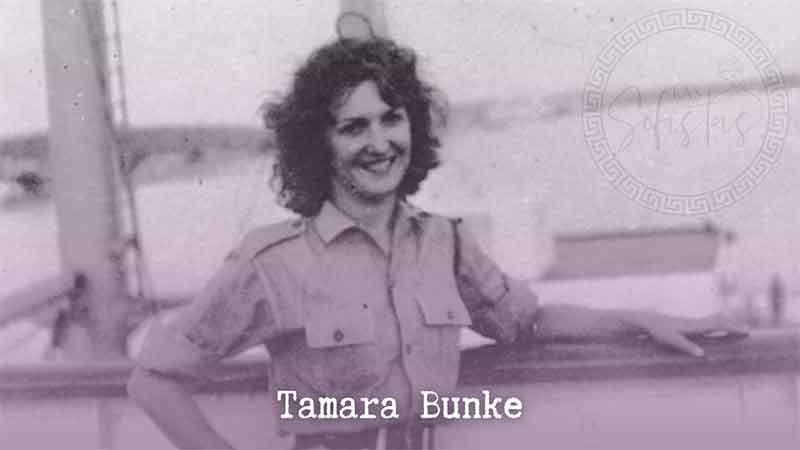
Since then the socialist-communist, revolutionaries around the world have united to challenge capitalism, patriarchy, class hierarchy and imperialism around the world. One of the most inspiring communist struggles against imperialism, uprooting the class dictatorship and establishing a people’s government, was the Cuban revolution against the USA’s imperialist backing of the Batista regime. The revolutionaries like Fidel Castro, Che Guevara, and Camilo Cienfuegos led the revolution. The Cuban revolutionaries become the figures of inspiration, particularly Castro and Guevara. However, history forgot the women revolutionaries like Tamara Bunke, who was part of Che Guevara’s revolutionary mission against global imperialism in Latin America.
Tamara Bunke was born to Argentinian communist parents. Since her childhood, she was exposed to communist struggle within the household. After completing her degree in political science at the University of Berlin, she joined the Free German Youth party (part of the Socialist Unity Party). In 1960 she met Ernesto Che Guevara, and post-success of the Cuban revolution, she was tasked with translating for Cuban politicians. She was fluent in multiple languages such as Spanish, German, Russian, French and English. Due to her multilingual background, she was part of Che’s Bolivian revolution, which inspired socialist struggle against imperialism around Latin America. She received training in combat and adopted her famous nom de guerre Tania. She has fought against the class hierarchy and capitalist exploitation in Bolivia, shoulder to shoulder with other comrades in the mountains and rainforest. Later, due to deterioration in political and physical weather, she, along with injured guerrilla fighters, was sent back as she was suffering from illness. On 31st August 1967, the Bolivian army, backed by the CIA, captured her for infiltration in the country and planning revolution for working-class interests and shot her through her lung. After her death Castro hailed her as a hero of the working class, and her remains were later buried in Santa Clara in the Che Guevara Mausoleum, Cuba.
Tamara successfully sacrificed her life for international solidarity for the working class. Yet she is very little known and less celebrated around the world among the working class compared to Castro and Guevara. The socialist/communist parties, particularly in South Asia, remember Castro, Guevara and Ho Chi Minh for their fight against imperialism, class exploitation and solidarity for the global working-class population. The pop culture and social media turned the revolutionaries into symbols of “manhood” and “aura”. Others appropriated them for their fiery speech and have the revolutionaries’ faces printed on t-shirts and posters in rooms without knowing their politics and struggle. However, the women guerrilla fighters like Tamara are remembered by very few within Communist parties highlighting the intersectional struggle of women comrades within communist parties. However, the proletariat women remember her as a shining example of sacrifice and working-class internationalism. Her story reminds us how she breaks the stereotype of the portrayal of women in famous spy movies of Hollywood, where women are projected as an object of desire, the espionage that rubs the shoulders of elites. Tamara breaks the taboos and stereotypes of popular perception of women as spies. She was an icon of the Cuban revolution, who was a guerrilla fighter and attained martyrdom in Bolivia for her fight against imperialism and working-class solidarity.
But in her final poem Tamara asked, “Will my name one day be forgotten and nothing of me remain on the earth?” May we remember her communist struggle always? From Rosa Luxemburg to Tamara Bunke to Phoolan Devi we remember every women who contributed for uplifting the lives of working class women globally and their fight against patriarchy that serve capitalism and imperialism. As we fight against patriarchy we must remember “imperialism is the highest stage of capitalism” mentioned by Lenin and capitalism is safeguarded by patriarchy which thrives on women’s unpaid labour within and outside household. In order to smash patriarchy, capitalist exploitation and imperial hegemony we must read and remember the politics and struggle of communist women from Luxemburg to Tamara.
Reference –
International women’s day: Tamara Bunke, (n.d) young communist league of Britain.
Lal, C. (2022), Tania-undercover for Che Guevara in Bolivia. Frontier, Vol 55, no. 19.
Tania Bunke: Anti imperialist warrior who lives in the heart of people. (2024). Con El Mazo Dnado.
Balaka Chattaraj is pursuing PhD in Social Work, Tezpur University. She is dedicated social worker.
10 March 2026
Source: countercurrents.org