
By Dr. Mohmad Maqbool Waggy
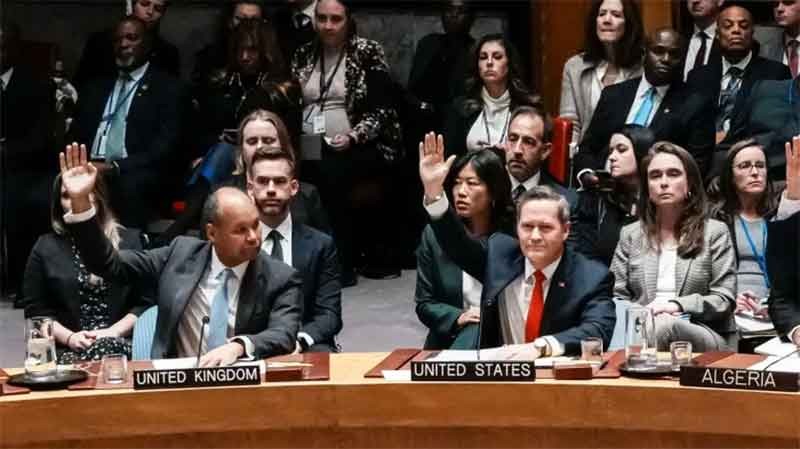
The United Nations Security Council adopted Resolution 2803 on 17th of November 2025 to give effect to what was termed a “Comprehensive Plan to End the Gaza Conflict.” In the heart of this plan is the establishment of a Board of Peace. This Board of Peace is entrusted with the responsibility to reconstruct Gaza and its economic recovery programs, and the coordination and supporting of and delivery of public services and humanitarian assistance in Gaza. This resolution also authorizes the members of the Board of Peace to deploy International Stabilization Force (ISF) in Gaza. Many governments hailed the resolution as a long-awaited breakthrough, an instance of decisive international action after years of devastation in Gaza. Yet implicitly in its humanitarian language lies the undercurrents of deeper and more troubling dilemma. This has been long recognized by scholars of international relations: the tension between sovereignty and trusteeship, relief and justice, external management and self-determination.
The Gaza is effectively placed under a form of international trusteeship by the Resolution 2803. It assigned Palestinians technocratic, and apolitical roles responsible for delivering the day –to-day running of public services and municipalities for the people in Gaza. While meaningful authority remains with the external actors, the Board of Peace headed by Donald J Trump. This arrangement closely mirrors what Michael Barnett and Martha Finnemore, in Rules for the World, identify as the bureaucratic authority of international organizations. Such institutions claim legitimacy by presenting governance as technical, neutral, and humanitarian, yet in practice they reproduce existing power hierarchies. The Board of Peace is framed as a humanitarian necessity, but its structure consolidates U.S. and Israeli influence, ensuring that reconstruction aligns with their geopolitical priorities rather than Palestinian political aspirations. This is not peacebuilding rooted in self-governance; it is trusteeship without consent.
The dilemma posed by Resolution 2803 is not new. Roland Paris, in At War’s End, tests the hypothesis that liberalisation promotes peace in conflict-torn states by reviewing the success or failure of every major peacebuilding mission launched between 1989 and 1999: Namibia (1989), Nicaragua (1989), Angola (1991), Cambodia (1991), El Salvador (1991), Mozambique (1992), Liberia (1993), Rwanda (1993), Bosnia (1995), Croatia (1995), Guatemala (1997), East Timor (1999), Kosovo (1999) and Sierra Leone (1999). He famously argued that post-conflict interventions often prioritize “institutionalization before liberalization,” placing societies under external management in the name of stability before allowing meaningful sovereignty or democratic agency. While this model is intended to prevent chaos, it frequently produces a condition of suspended sovereignty. Kosovo remains the clearest illustration. Following NATO’s intervention in 1999, the UN’s interim administration (UNMIK) delivered stability and humanitarian relief, yet left the question of sovereignty unresolved for nearly a decade. Even after Kosovo’s declaration of independence in 2008, its international status remains contested. Humanitarian governance thus produced what might be called a frozen sovereignty, order without resolution.
East Timor offers a contrasting lesson. The UN Transitional Administration (UNTAET) initially marginalized local voices, but crucially, international oversight gave way to full independence in 2002. That transition succeeded not because of prolonged trusteeship, but because trusteeship was explicitly temporary and ultimately relinquished. Gaza now stands at a similar crossroads. Resolution 2803 may deliver immediate relief, but unless Palestinians are recognized and empowered as sovereign political actors, it risks replicating Kosovo’s failures rather than East Timor’s conditional success.
The humanitarian catastrophe in Gaza is undeniable. Entire neighbourhoods lie in ruins, healthcare systems operate on the brink of collapse, and generations of children are growing up amid trauma and displacement. Relief is urgent and morally necessary. Yet relief without rights sets a dangerous precedent. Humanitarian aid can alleviate suffering, but when detached from political agency it risks institutionalizing dependency. Palestinians may receive food, medicine, and reconstruction funds, but without sovereignty they remain subjects of external administration rather than citizens shaping their own future. This is precisely the danger identified by David Chandler in his critique of liberal peacebuilding. Chandler argues that such interventions often produce a “post-liberal peace”: stability without sovereignty, governance without accountability, and order without justice. Resolution 2803 risks reproducing this model in Gaza, a managed calm that defers, rather than resolves, the underlying political question.
The legitimacy of Resolution 2803 is therefore deeply contested. Although it passed with 13 votes in favour and none against, the abstentions of Russia and Algeria signalled unease within the Security Council itself. More critically, Palestinians were side-lined during negotiations. This raises a fundamental question: can international governance ever be legitimate when it excludes the very population it claims to protect? As Barnett and Finnemore remind us, international organizations exercise authority through bureaucratic rationality, masking political choices as technical imperatives. The Board of Peace embodies this logic. Reconstruction is framed as an administrative necessity, obscuring the reality of external control. Yet legitimacy cannot be manufactured through humanitarian language alone; it requires consent. Palestinians have not consented to governance by a body dominated by actors widely viewed as complicit in their dispossession.
The regional politics surrounding Resolution 2803 further expose its contradictions. Pakistan’s decision to join the Board of Peace in January 2026 triggered significant domestic backlash. The Khyber Pakhtunkhwa Assembly formally rejected the move, while opposition parties accused the government of subordinating the Palestinian cause to U.S. strategic interests. India’s position is more ambivalent. Historically, India was among the earliest and most vocal supporters of Palestinian self-determination. Jawaharlal Nehru opposed the 1947 partition plan, and India voted against Israel’s admission to the UN in 1949. For decades, Palestinian sovereignty formed a core pillar of India’s non-aligned foreign policy. Since the 1990s, however, India has deepened strategic ties with Israel, particularly in defence and technology. Today, New Delhi attempts to balance its historical commitments with contemporary geopolitical partnerships, often resulting in cautious or muted responses. Resolution 2803 places India in a delicate position: endorsing the Board risks complicity in side-lining Palestinian sovereignty, while opposing it risks diplomatic costs. For a state aspiring to global leadership, silence is not neutrality, it is abdication.
From an international relations perspective, Resolution 2803 invites multiple readings. Realists see power politics cloaked in humanitarian rhetoric, with the Board of Peace consolidating U.S. and Israeli influence. Liberals emphasize multilateral cooperation, but one distorted by asymmetrical power. Constructivists highlight the normative contradiction between self-determination and trusteeship, while critical theorists see global governance reproducing hierarchies that marginalize voices from the Global South. Despite their differences, these perspectives converge on a common conclusion: Resolution 2803 may stabilize Gaza materially, but it undermines its political future. It manages conflict without resolving it.
The implications extend far beyond Gaza. Resolution 2803 speaks to the future of global governance itself. Can international institutions provide humanitarian relief without eroding sovereignty? Can peace be constructed without justice? Can those most affected by intervention meaningfully shape the structures imposed upon them? The Board of Peace is a test case. If it evolves into a mechanism that genuinely empowers Palestinians, it could signal a new model of intervention that reconciles relief with self-determination. If it does not, it will reinforce long-standing critiques of international governance as paternalism cloaked in humanitarian language.
Resolution 2803 may ultimately be remembered as a turning point in Gaza’s history. Whether it becomes a pathway to justice or a mechanism of dispossession depends on one central question: are Palestinians treated as sovereign political actors, or as subjects of international trusteeship? As Barnett and Finnemore remind us, international organizations are never neutral. As Roland Paris warns, stabilization without sovereignty freezes conflict rather than resolving it. And as David Chandler argues, peace without justice is merely managed order. Resolution 2803 is therefore a stark reminder that humanitarianism without self-determination is not peace. True peace begins with sovereignty.
Dr. Mohmad Maqbool Waggy is PhD Scholar from Central University of Kashmir in Political Science with his research focus on Climate Change, Migration, Conflict, and Gender.
29 January 2026
Source: countercurrents.org