
By Ranjan Solomon
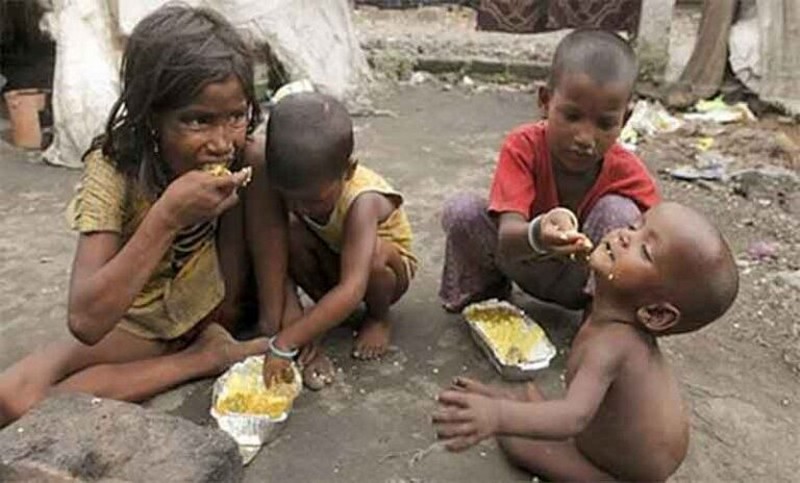
India today wears two faces, locked in the same body but living in radically different realities. One face smiles confidently at global summits, speaks the language of rankings and growth curves, and celebrates itself as an emerging world power. The other face does not smile. It queues for work that never comes, buries its dead quietly, negotiates fear daily, and survives on debt, charity, or silence.
This split is not accidental. It is political.
The first face is manufactured through slogans -India Shining, Ache Din, Ab ki Baar Modi Sarkar, Vishwaguru. Each arrived with spectacle, promise, and certainty. Each collapsed when confronted with lived reality. Vajpayee’s India Shining failed because the rural poor, the informal worker, and the unemployed refused to recognise themselves in that narrative. Two decades later, Ache Din has followed the same path—only with louder amplification and deeper denial.
Slogans fail when they insult experience
The much-touted dream of “char sau par” collapsed not merely because of electoral arithmetic, but because India itself is cracking under the weight of unresolved structural crises. No amount of propaganda can erase hunger, joblessness, fear, or grief. When the gap between narrative and reality becomes too wide, legitimacy erodes.
The claim that India is now the world’s fourth-largest economy is the latest iteration of this narrative excess. Economic rankings are paraded as proof of national success, yet they float above collapsing foundations. GDP size does not translate automatically into well-being. Growth without redistribution is arithmetic, not justice. Nirmala Sitharaman’s celebratory statistics may satisfy investors, but they do not reflect the India that lives below, besides, and outside those numbers.
That India tells a far more disturbing story
Despite decades of growth, over 60 percent of India’s economy remains informal, and over 90 percent of its workforce lacks job security or social protection. Wealth has concentrated dramatically: the top 1 percent controls over 40 percent of national wealth, while the bottom half struggles to survive on a sliver of the economy. India today is among the most unequal societies in the world, a fact rarely acknowledged in official discourse.
Poverty, despite repeated claims of eradication, persists in stubborn and degrading forms. Conservative estimates suggest over 200 million Indians still live on extremely low daily incomes, while deprivation in nutrition, healthcare, housing, and education remains widespread. India continues to house one-third of the world’s poor, a staggering contradiction for a country aspiring to global leadership.
Nowhere is this contradiction sharper than in rural India
Nearly two-thirds of Indians still depend on rural livelihoods, yet agriculture contributes less than 18 percent to GDP. Farm incomes remain volatile, climate shocks are increasing, and institutional support is weak. More than half of all agricultural households are indebted, borrowing not to expand production but to survive—paying for seeds, fertilisers, healthcare, marriages, and funerals.
This structural neglect has produced one of India’s gravest tragedies: farmer suicides. Since the mid-1990s, over 300,000 farmers have taken their own lives, according to official crime records. Even in recent years, when the government speaks of rural resurgence, thousands of farmers die by suicide annually, crushed by debt, crop failure, price volatility, and the absence of meaningful state support.
These deaths are not accidents. They are policy outcomes.
Migration from villages has become an act of compulsion rather than choice. Entire regions are hollowing out as young people leave not in search of opportunity, but escape. Villages are ageing, feminising, and impoverishing, even as political rhetoric romanticises the “resilient farmer.”
Urban India, meanwhile, showcases the two faces of the nation in brutal proximity. Skyscrapers rise beside slums. Luxury housing stands vacant while over 65 million people live in informal settlements, and at least 1.8 million are officially homeless, a figure widely believed to be a gross undercount. Informal workers build cities they will never own, clean spaces they will never inhabit, and commute through systems designed to exclude them.
Employment—the foundation of dignity—has been systematically undermined. Youth unemployment remains alarmingly high, hovering around 20–25 percent, with even higher rates among educated youth. Women’s participation in the workforce has fallen to around 25 percent, among the lowest globally. This is not empowerment; it is economic erasure.
The government speaks endlessly of entrepreneurship while small and medium enterprises—the largest employers—collapse under credit shortages, erratic taxation, and policy shocks. MSMEs employ over 110 million people, yet receive only a fraction of the support extended to large corporations. Jobless growth has been normalised, and insecurity reframed as flexibility.
Infrastructure is paraded as proof of progress, yet it increasingly reveals the recklessness of speed over safety. India records over 150,000 road deaths annually, the highest in the world. Rail accidents, collapsing bridges, unsafe construction, and poorly regulated highways expose a governance model obsessed with announcements rather than accountability. Development measured in kilometres instead of lives is not development—it is negligence.
The second face of India is also visible in its mounting debt. India’s public debt now exceeds 80 percent of GDP, placing enormous strain on future generations. States borrow heavily not for transformation, but to meet routine expenditure. Household debt has surged, with personal and informal borrowing rising faster than incomes. For millions, debt has become a survival mechanism, not a ladder to mobility.
Several states are now fiscally stressed, struggling to service debt while maintaining basic welfare. Goa stands as a stark example. Often projected as a prosperous state due to tourism and high per capita income, Goa is today among the most indebted states in the country on a per capita basis. Its public finances are strained, its dependence on volatile tourism revenue deepened, and its local livelihoods hollowed out. Youth unemployment is rising, environmental degradation is accelerating, and informal work dominates the economy behind the postcard image. Goa’s crisis exposes a deeper truth: headline prosperity can mask profound structural fragility.
Perhaps the most damning failure of the current model lies in the condition of women and children.
Beti Bachao, Beti Padhao has become one of the most cynical slogans of our time. Crimes against women are reported every few minutes, with over 30,000 rape cases annually and conviction rates that barely cross 30 percent. Violence has become routine, justice delayed, and accountability absent. Safety is no longer assumed; it is negotiated daily.
India’s children—its most repeated rhetorical asset—bear the silent cost of this fractured reality. Over one-third of Indian children are stunted, and nearly one-third are underweight. Learning losses post-pandemic has been severe, particularly among government school students. Child labour, migration, and early dropouts continue unabated. The so-called demographic dividend is being starved before it matures.
The two faces of India also experience democracy differently. One celebrates electoral spectacle and majoritarian confidence. The other confronts shrinking freedoms, criminalised dissent, and hollowed institutions. Protest is delegitimised, civil society constrained, media intimidated, and constitutional safeguards treated as inconveniences.
Nationalism has become a substitute for economic accountability. Communal polarisation diverts attention from material failure. Identity is mobilised to silence questions of justice, redistribution, and dignity. What makes this moment dangerous is not inequality alone, but denial. Surveys are delayed, definitions changed, uncomfortable data buried. But hunger cannot be redefined away. Debt cannot be wished into prosperity. Despair cannot be marketed as pride indefinitely.
India does not need another slogan. It needs an honest reckoning.
Until the two faces of India are forced into conversation – until growth answers to hunger, infrastructure to safety, and power to accountability – the smiling face will continue speaking.And the suffering face will continue waiting.
History will not remember rankings or catchphrases. It will remember whether a nation chose truth over theatre—and justice over denial.
Ranjan Solomon has worked in social movements since he was 19 years of age in Social Movements.
27 December 2025
Source: countercurrents.org