
By Laala Bechetoula
The contemporary international order no longer requires sophisticated theory to be understood. It exposes itself daily, mechanically, in the unequal distribution of outrage. Place two comparable tragedies side by side and observe the response. In one case, headlines erupt, sanctions are rushed through, leaders deliver grave speeches, and moral language saturates the public sphere. In the other, deaths are reduced to figures, filed away as unfortunate but acceptable losses. From this contrast emerges a truth that is no longer controversial but deeply unsettling: the modern world continues to operate according to a silent hierarchy in which skin color, civilizational proximity, and geopolitical alignment determine the value of human life.
Western power no longer needs to proclaim its superiority. It has perfected something far more efficient: the routine administration of superiority. Through selective indignation, conditional legality, and moral asymmetry, North America and Europe continue to position themselves as the measure of humanity, the arbiters of legitimacy, and the guardians of so-called universal values. These values are endlessly invoked, solemnly defended, and strategically suspended. Some lives are assumed sacred by default. Others must qualify, explain themselves, or simply disappear.
At the heart of this system lies a binary logic that is rarely acknowledged but constantly enforced: the Western, white, Judeo-Christian self on one side, and the rest of the world on the other. This is not a racial doctrine in the old biological sense; it is a political and cultural architecture inherited from colonial modernity and updated for the twenty-first century. Where nineteenth-century empires spoke openly of civilizing missions, today’s powers speak of democracy promotion, counterterrorism, humanitarian intervention, and a rules-based international order. The language has been sanitized. The hierarchy remains untouched.
Donald Trump did not invent this worldview. He exposed it. By referring to entire regions as “shithole countries,” by signing executive orders barring entry to people from predominantly Muslim nations, by ranking countries and peoples according to desirability, Trump did not depart from Western logic—he articulated it without shame. He stripped Western power of its diplomatic camouflage. Trump was not an aberration. He was a disclosure. He said aloud what had long been practiced quietly: that the world is a gated system, and equality was never part of the blueprint.
History offers abundant confirmation. The 2003 invasion of Iraq was justified through claims of weapons of mass destruction later dismantled by official investigations and intelligence reviews. A sovereign state was destroyed, hundreds of thousands of lives were lost, and an entire region was plunged into long-term instability. Yet no sanctions regime targeted the architects of this war. No international tribunal summoned them. No collective punishment followed. The explanation is structural: when violence emanates from the center of power, it is reframed as error, miscalculation, or tragic necessity. When it emanates from the periphery, it is criminalized, moralized, and punished.
Nowhere is this asymmetry more glaring than in Palestine. For decades, occupation, settlement expansion, siege, and collective punishment have been documented, condemned, and declared illegal under international law. United Nations resolutions exist. Legal opinions exist. The facts are not disputed. And yet accountability never arrives. Law is invoked ceremonially, then suspended indefinitely. Alignment overrides legality. Identity eclipses justice. The violence of a “civilized ally” is contextualized and absorbed, while the suffering of the colonized is managed, not resolved.
This hierarchy does not end with bombs and borders; it extends to empathy itself. When war erupted in Ukraine, Europe responded with unprecedented speed and generosity. Borders opened. Temporary protection was activated. Refugees were welcomed with dignity, housing, and legal security. This response was humane and necessary. But it also exposed a disturbing contrast. Why is such urgency not universal? Why are refugees from the Middle East and Africa subjected to detention, suspicion, pushbacks, and bureaucratic humiliation? Why are some displaced people framed as neighbors, while others are framed as threats? The answer lies not in capacity, but in perception. Those who resemble the dominant self pass through the front door of empathy. Those who do not are redirected into the machinery of fear.
The Mediterranean Sea stands as a vast, silent indictment of this moral order. Thousands drown each year attempting to cross into Europe, their deaths catalogued under the antiseptic label of “irregular migration.” Language here becomes an accomplice. It kills first through policy, then through abstraction. If these bodies belonged to the correct demographic, emergency summits would follow, naval corridors would be activated, and solemn vows would be issued. Instead, the sea absorbs them, and the system moves on.
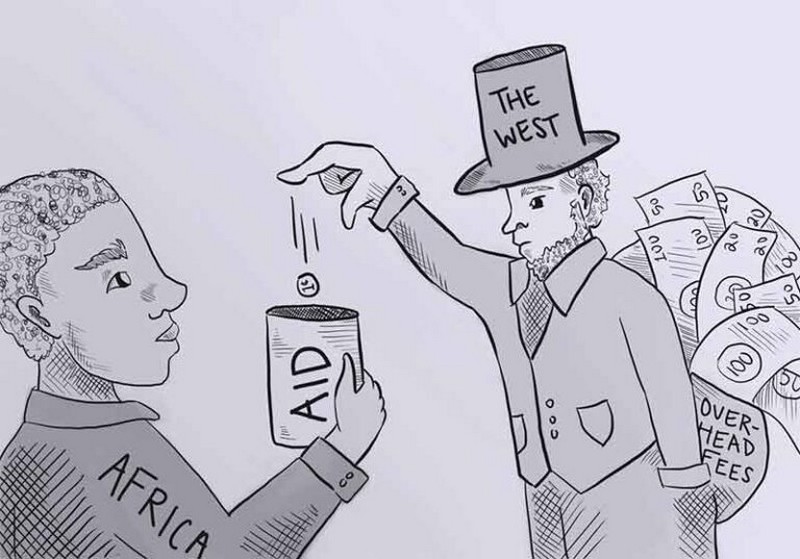
Climate injustice completes the picture. The industrialized West bears primary historical responsibility for global carbon emissions. The data is clear and uncontested. Yet the most severe consequences—droughts, floods, desertification, food insecurity—fall overwhelmingly on the Global South. Even when responsibility is acknowledged rhetorically, accountability is postponed indefinitely. Aid replaces reparations. Sympathy substitutes for justice. Those who engineered the crisis recast themselves as its moral managers, lecturing the victims on adaptation and resilience.
Across Europe, the political climate hardens further. Far-right and identitarian movements gain ground in France, the Netherlands, Germany, Italy, and the United Kingdom. Their rhetoric is no longer marginal; it is normalized. Concepts like “replacement,” “civilizational threat,” and cultural purity re-enter mainstream discourse, carefully laundered for parliamentary respectability. This is not mere electoral turbulence. It is the defensive reflex of a civilization anxious about losing its symbolic monopoly on universality.
Let us be precise. This is not an indictment of the West as a culture, nor a denial of its intellectual, scientific, or philosophical contributions. It is a rejection of its self-mythology—specifically, the myth of moral innocence. A system that claims universality while practicing selectivity is not universal. It is imperial, albeit in moral form.
What distinguishes the present moment is that the illusion no longer holds. Comparisons are instantaneous. Archives are public. Contradictions are documented in real time. The Global South, long spoken for, now speaks back. It observes that international law carries a passport, that human rights have preferred beneficiaries, and that freedom often functions as an exclusive franchise rather than a shared principle.
The most dangerous illusion today is not Western power itself, but Western righteousness. Power can be contested, resisted, and eventually rebalanced. Righteousness that refuses self-examination becomes untouchable—and therefore unaccountable.
The question, then, is not whether the West will confess. Power rarely does. The real question is whether the rest of the world will continue to accept the role assigned to it: the perpetual “other,” required to prove its humanity, its moderation, its worth. Or whether it will assert a simpler, more radical truth—one that requires no civilizational endorsement at all.
That dignity is not granted by proximity to power.
That life does not require cultural resemblance to matter.
And that universality, if it is to mean anything, must finally apply to everyone.
Laala Bechetoula is an independent Algerian writer and analyst.
30 January 2026
Source: countercurrents.org