
By Nilofar Suhrawardy
United States’ attack on Venezuela, overthrow and capture of its President Nicolas Maduro along with his wife, is another stark indicator of the limited credibility United Nations has today. Divisions among its member-countries, marked by increase in wars, naturally raises questions on how “united” it really is. Added to it this is the hard reality about the limited respect this organization has from its most powerful members. And this is primarily marked by the veto-power they have in the UN Security Council. Their respect for United Nations’ “unity” seems to be limited to the veto-power they can exercise to only display their stand against what other members may support.
President Donald Trump seems to be giving importance to nothing else, but to what he believes should be pursued. There is nothing surprising about this. Perhaps, his priority is to let his own voice boom louder than all others around him and also elsewhere. Little significance is apparently given by him to his words contradicting his own voiced earlier. Trump’s move against Venezuela from no angle justify/legitimize the claim made earlier by him for the Nobel Peace Prize and he declaring himself to be a “peacemaker,” responsible for bringing several wars to an end.
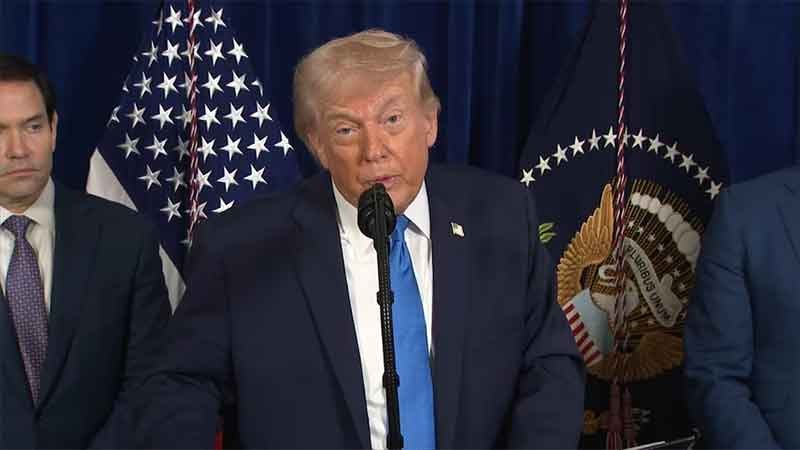
Little importance has been given to ethics at practically all levels, diplomatic, political, legal, humanitarian and even economic. As expressed by Trump at the press conference (Jan. 3) that US is going to run the country, that is Venezuela, it is clear, he has given priority to probably only his approval for the purpose. And none practically to Venezuela and its citizens. Strangely, the President appears to be moving on a track with little consideration for law- national as well as international law and that of Venezuela. No consideration has been displayed for members of the US Congress. Certainly, as head of the only superpower, a country that is viewed globally as the most powerful, the US President has the right and unwritten authority to decide his priorities and thus take action against other powers. But this definitely does not justify the manner in which he has and is deciding his moves for Venezuela. In fact, if he did this for any state within his own country, this would most probably agitate his own citizens against him. It would perhaps even provoke a few to take legal action against him.
Quite a few facts cannot be disputed. One is sovereignty of Venezuela as a nation. United States has taken military action against a country which did not provoke it militarily. United States’ war-exercises have been conducted as if the superpower had all the authority to do so and that they are justified. Venezuela is not a disputed piece of property to which claim can be laid simply on the basis of military prowess and/or its wealth. But this is what has been done. The impact is simply not limited to the country’s President and his spouse being captured. It extends beyond that. In addition to taking control of its oil reserves and keeping its reins of powers in US hands, it literally amounts to reducing Venezuelans to the stage of being no longer free in their own country, the freedom of which has been snatched in a matter of few hours. And they have been reduced to the stage similar to slavery.
Trump aims at United States’ domination of Western Hemisphere. This doesn’t spare other countries in the region. His strike may not be confined to Venezuela. It isn’t without reason that other Latin American countries are wondering whether their turn could be next. Columbia, Cuba and Mexico have already been given “threats” by Trump. Besides, it may be recalled, less than a year ago, Trump described Canada as 51st state of United States. He also wants Greenland to become a part of US. So, there is no knowing as to when in which direction he may decide to abuse his own power, legally, diplomatically, politically, economically, unilaterally, regionally, globally and at various other levels. He has abused these by not exercising them as he is bound to. His prowess as President of a Superpower doesn’t entitle him to treat other leaders and countries as if they were his pawns, with their moves decided by him – as and how he desires.
When Trump had chosen to give some diplomatic importance to Russian President Vladimir Putin to discuss Ukraine-crisis and other issues at Alaska, his European allies were alarmed. Soon after the Alaska Summit, they rushed to Washington to present their views to him. They have probably been shocked by Trump’s stand against Venezuela, but they have not yet come out with strong criticism or a stand even remotely similar to that they have regarding Ukraine. Meanwhile, Israel’s violations of Gaza-ceasefire continue, with no criticism from Trump, the one who played a key role in this being reached. He had also begun talking about steps towards next phase of ceasefire. But Trump’s war-moves against Venezuela and their impact leave no room for explaining his silence on violations of Gaza-ceasefire or abuse of peace as well as peace-talks, which also amount to abuse of Palestinians’ rights. In the same vein, there is nothing surprising about the so-called phase of “democracy” – labeled as Arab Spring – referred to now as Arab Winter, was nothing but abuse of democracy. Democracy cannot be imposed by use of weapons, be imported and/or be forced upon any community.
Trump cannot be accused of imposing “democracy” upon Venezuelans as he has brazenly referred to Venezuela being run by United States and if his voice is not heard, a second phase of attack on their country will be considered. And even if he had, he would not have been most probably believed. What an irony- US has been considered as a major democratic power, a nation that is looked up to. But Trump’s Venezuelan-strike has certainly burst this belief- like a bubble. Irrespective of what US gains/loses by this move of Trump, the hard reality that the superpower has risked more than it can afford to, diplomatically, cannot be missed!
Nilofar Suhrawardy is a senior journalist and writer with specialization in communication studies and nuclear diplomacy.
6 January 2026
Source: countercurrents.org