
By Bharat Dogra
The humanitarian crisis situation has become acute in Iran, Lebanon and Cuba very quickly in recent days. In most reviews of the countries that were worst affected by humanitarian crisis at the beginning of the year, prepared by various humanitarian aid organizations, these three countries were not mentioned as the worst affected countries, and most of the nearly 239 million people estimated by the UN to need urgent humanitarian assistance were from other countries (including mainly African countries like Sudan, South Sudan, Somalia, the wider Sahel region but also some Asian countries and territories like Afghanistan, Myanmar, Yemen and Gaza). While humanitarian aid needs to be maintained at high levels in all these and other countries identified earlier as leading areas of humanitarian crisis, at the same time there is also a new urgency of taking more humanitarian aid to Lebanon, Iran and Cuba.
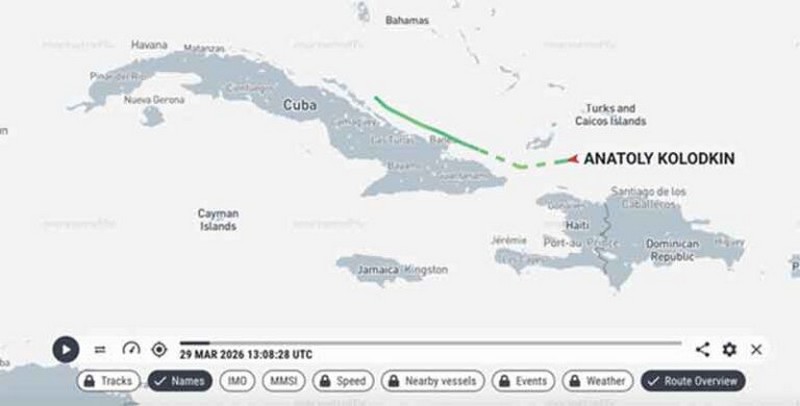
It will be even more difficult to take humanitarian aid to these three countries, compared to the difficult conditions prevailing in many countries identified earlier, but nevertheless the challenge has to be taken up to the extent possible, keeping in view the urgency of the task. Some volunteers have already made very courageous efforts to take help to Cuba in difficult conditions and while keeping in view the needs this small help could only be symbolic, it is the spirit of these noble efforts that is really needed today.
While the UN has the main responsibility for this, other organizations like BRICS and the movement of non-aligned countries should also become more active in arranging humanitarian aid for those countries where it is more urgently needed. The cause of humanitarian aid can be a more unifying factor among several nations that are eager to make a constructive contribution.
Lebanon has a total population of six million people and out of this over a million have already been displaced after about a month of recent war and conflict in the region. In Iran, given the overall larger population, the number of people needing humanitarian assistance is much higher, and the situation must be considered keeping in view the fact that after years of severe sanctions the economic capacity of the government here has been greatly reduced.
In the context of Cuba the crisis created by many decades of highly unfair sanctions and other pressures has been aggravated increasingly by the Trump administration in recent times with increasing aggression towards the small neighbor country.
In fact in all these three countries as well as in most other countries facing humanitarian crisis, the problem has been caused to a large extent and is being aggravated greatly by entirely avoidable wars, conflicts and aggression. While the Iran war or the wider middle-east war is the most dangerous just now, there are also serious humanitarian crisis situations associated with the Ukraine war, the Sudan civil war, the Rwanda-DRC conflict and the various conflicts of the wider Sahel region which too can be aggravated during this year and in fact some of these crisis situations are already getting aggravated in serious ways. There is a danger that some of the killer crisis situations may get neglected under the shadow of the Iran crisis.
In fact the risk of a bigger regional war erupting in Africa is something about which we should be very concerned, and should do all to prevent. This can grow out of existing civil war in Sudan (increasingly also South Sudan) or various sectarian and other conflicts in the Sahel region or the tense-situation in eastern DRC along Rwanda-DRC borders. Ethiopia is increasingly desperate to regain its lost access to sea which can potentially ignite new conflicts with Eritrea and Somalia, apart from re-activating Tigray based militias. On the other hand, Ethiopia can have increasing conflict also with Egypt over its Grand Renaissance Dam and the access to Nile river waters. An aggravating problem is that there are possibilities of various African country groups being formed on two or more sides of some of these conflicts, and worse still, of more resourceful countries from West Asia providing more destructive weapons to rival sides in Africa, making the situation much more destructive.
Hence while collecting and rushing more humanitarian aid is very important, it is even more important (if anything can be more important) to strive to end or reduce various conflicts and wars.
It is also important to remember the warnings voiced right at the beginning of the year, or even earlier, by the UN and various humanitarian aid organizations that the funds available for humanitarian aid are now much lesser than in earlier years. In fact the fund shortage for this most important task has never been as acute now as in any recent times.
Keeping in view all these factors, unless immediate remedial actions are taken, the number of people affected by serious humanitarian crisis may quickly rise closer to or even beyond the previous peak of 323 million people. Keeping in view the serious funds crunch and other difficulties, if just 2 per cent of these highly vulnerable people die, then this will mean over 6 million deaths this year. Let there be no doubts about this. The life of millions of people is threatened this year, and the world should heed such timely warnings. This huge and very painful tragedy can still be averted by stopping wars and rushing humanitarian aid to highly vulnerable people before it is too late.
Bharat Dogra is Honorary Convener, Campaign to Save Earth Now.
1 April 2026
Source: countercurrents.org