
By Aman Namra
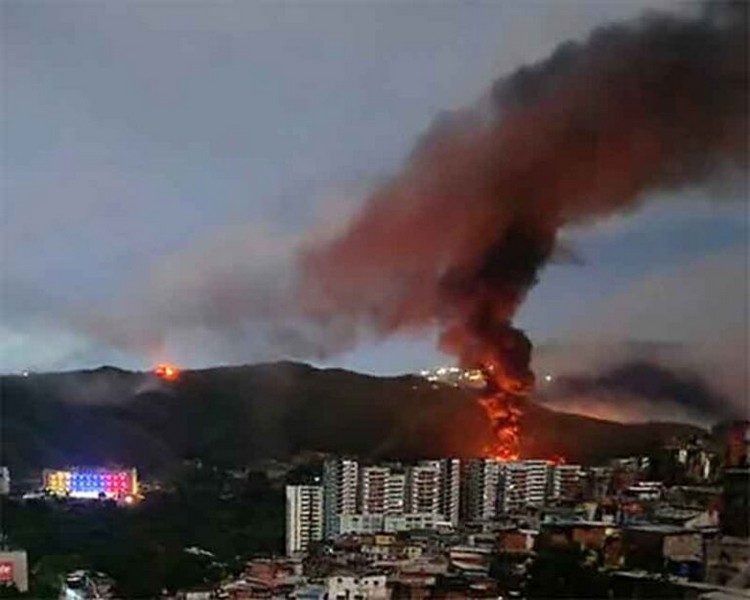
Caracas woke up to a different kind of morning. There were reports of explosions, panic near strategic installations, disruptions in power and communication. By noon, the government of Venezuela had said it plainly: this was not an accident, it was an attack — and the finger was pointed at the United States.
The timing was impossible to ignore. Just a day earlier, Venezuela had announced the detention of five US citizens, accusing them of activities linked to destabilisation and security threats. Washington responded sharply, calling the arrests illegal. Within hours, the crisis escalated.
Was this merely about detained citizens? Or was it about something far older, deeper, and far more valuable?
A country sitting on the world’s biggest prize
To understand Venezuela, one must look beneath its soil.
Venezuela holds the largest proven crude oil reserves in the world, concentrated mainly in the Orinoco Belt. This single region has the potential to influence global energy markets for decades. Oil here is not just fuel — it is power.
Beyond oil, southern Venezuela is rich in gold, coltan and rare minerals essential for modern technology, defence systems and future industries. These are resources that shape geopolitics quietly but decisively.
That is why Venezuela has never been just another country on the map. It is strategic terrain.
When oil became ‘public’, relations turned hostile
The current crisis cannot be separated from history.
In 1999, then-president Hugo Chávez made a declaration that changed Venezuela’s place in the world order: The country’s oil would belong to its people, not foreign corporations.
For Washington, this was more than rhetoric. It signalled shrinking influence over one of the world’s most critical energy suppliers. Over time, political confrontation hardened, sanctions followed, and Venezuela was increasingly isolated.
Under Nicolás Maduro, the standoff intensified. Sanctions targeted oil exports, banking systems and state institutions. The stated aim was to pressure the government. The real impact, however, was felt most by ordinary Venezuelans — inflation, shortages and economic collapse.
Yet, the government did not fall.
History suggests that when economic pressure fails to deliver political outcomes, the language of pressure often changes.
From detentions to detonations
The arrest of five US citizens was presented by Venezuela as a matter of national security. The US dismissed this claim. What followed — reported military strikes or targeted actions — has been justified by Washington in fragments, invoking security and anti-narcotics operations.
But in geopolitics, narratives matter less than patterns.
For many observers, the sequence appears too precise to be accidental. The escalation revived an old suspicion: that destabilisation, not diplomacy, is once again being tested as a tool.
And inevitably, the question arises — is this about resources?
Is this a resource war?
There is, as of now, no public document or explicit admission proving that the actions were undertaken solely to seize Venezuela’s natural wealth.
But geopolitics rarely works through signed confessions.
Iraq, Libya and other resource-rich nations offer a familiar lesson: humanitarian language, security concerns and democratic ideals often coexist with strategic and economic interests. Oil-rich countries that attempt independent paths tend to attract disproportionate attention.
Venezuela fits that pattern too well to dismiss the suspicion lightly.
Why the world should care
This is not a bilateral conflict confined to Latin America.
- Any disruption in Venezuelan oil supply can shake global energy prices
- Fuel costs, inflation and market instability may follow
- The region risks another refugee and humanitarian crisis
- And the precedent of force over diplomacy grows stronger
In a world already fractured by wars and economic uncertainty, Venezuela is another reminder of how fragile global order remains.
More than an attack, less than peace
This story is not just about explosions near Caracas. It is about a country rich in resources trying to assert sovereignty, and a superpower determined to preserve strategic dominance.
Venezuela’s crisis reflects an uncomfortable truth of global politics: as long as the earth hides immense wealth beneath its surface, power struggles above it will rarely be peaceful.
For now, the dust has not settled. But the direction of the wind is unmistakable.
Aman Namra, a seasoned Development Journalist with a remarkable three-decade career, has made significant contributions in the field. As the Incharge and Resident Editor of the prominent National Development Communication Network “Charkha,” headquartered in Delhi, Aman has played a pivotal role in advancing the organization’s mission.
3 January 2026
Source: countercurrents.org