
By Quds News Network
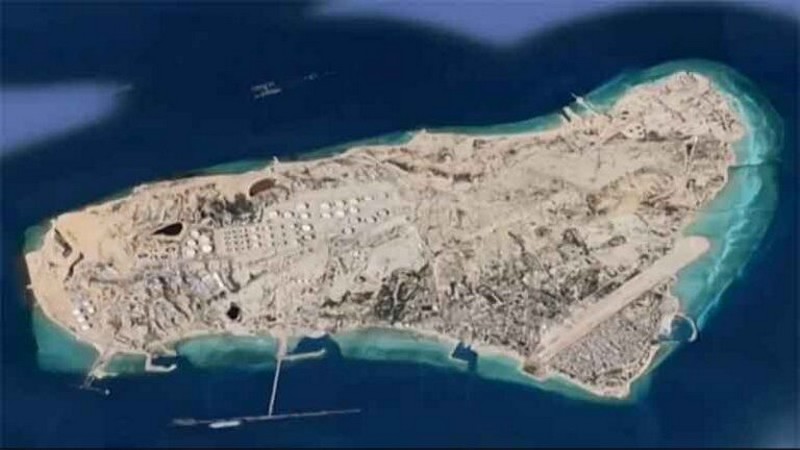
The United States has carried out strikes on Kharg Island, a strategic Iranian oil hub in the northern Gulf, in what analysts describe as one of the most dangerous escalations in the expanding Israeli war between Washington and Tehran.
US President Donald Trump claimed on social media that American forces had “completely destroyed all military targets” on the island. He also warned that Washington could strike Iran’s oil infrastructure if Tehran continues to disrupt shipping in the Strait of Hormuz. The island contains no military targets; it mainly hosts oil export terminals, storage tanks, and shipping infrastructure.
The attack has drawn intense attention because Kharg Island sits at the heart of Iran’s oil export system. The small coral island, located about 26 kilometers off Iran’s coast and roughly 483 kilometers northwest of the Strait of Hormuz, serves as the main terminal for Iranian crude exports.
The Heart of Iran’s Oil Exports
Iran has relied on Kharg Island since the 1960s as the central hub for shipping its crude oil to global markets. Around 90 percent of Iran’s oil exports pass through the island’s terminals, pipelines, and massive storage tanks.
The infrastructure on Kharg is almost entirely civilian. It consists mainly of oil loading facilities, storage tanks, and ports designed for large tankers that cannot dock in the shallow waters near Iran’s mainland.
Because of this role, Iranian officials have long considered the island a red line. Any attack on its infrastructure could severely damage the country’s economy.
Iran currently exports between 1.1 million and 1.5 million barrels of crude oil per day, according to tanker tracking services. Data from shipping analytics firms shows that about 1.55 million barrels per day have moved through Kharg Island since the beginning of the year.
Before the war expanded, Iran had increased production and exports sharply. Shipments reached roughly 2.17 million barrels per day in February, and tanker tracking data recorded a weekly peak of nearly 3.79 million barrels per day in mid-February.
A Target Long Considered Too Dangerous to Hit
For months, military planners in Washington and Tel Aviv avoided striking Kharg Island despite their ongoing bombing campaign across Iran. Analysts warned that hitting the island would likely trigger a major regional escalation.
Richard Nephew, a former US deputy special envoy for Iran, told the Financial Times that attacking Kharg would represent a dangerous step.
He said such a strike could push Iran to retaliate against oil facilities across the Gulf, including infrastructure belonging to US partners.
Iran’s military has already issued similar warnings. Iranian officials said any attack on the country’s oil and energy infrastructure would lead to strikes on energy facilities owned by companies cooperating with the United States in the region.
Such retaliation could target oil installations in Gulf states that host US forces or cooperate with Washington.
Oil Markets on Edge
Energy markets are watching the situation closely because even limited damage to Kharg’s infrastructure could disrupt global supply.
Dan Pickering, chief investment officer at Pickering Energy Partners, warned that destroying the island’s export system could remove around two million barrels of oil per day from the market.
That loss would likely persist until shipping routes reopen or the situation in the Strait of Hormuz stabilizes.
Iran ranks as the third-largest oil producer in the Organization of the Petroleum Exporting Countries (OPEC). The country produces roughly 3.3 million barrels per day of crude oil and another 1.3 million barrels per day of condensates and other liquids.
Iranian crude plays a major role in Asian markets, especially in China, the world’s largest oil importer. Shipping data shows that Iranian crude accounted for about 11.6 percent of China’s seaborne oil imports this year.
Tehran may now feel compelled to escalate in response. Iran has already restricted shipping through the Strait of Hormuz, a narrow waterway that carries roughly 20 percent of global oil supply.
Any broader disruption in the strait could trigger severe price spikes and destabilize global energy markets.
15 March 2026
Source: countercurrents.org