
By Dr. Ashraf Zainabi
When dialogue reaches a dead end, politics rarely stays calm. Narratives harden, positions freeze, small incidents acquire larger meanings, and escalation begins to feel less like an accident and more like a direction. The present moment in U.S.–Iran relations appears to carry many of these features at once.
Big wars are rarely announced. They arrive quietly, through signals that seem disconnected when seen alone but form a clear pattern when viewed together. Russia evacuating its citizens from Iran through specially arranged flights is one such signal. By itself, it proves nothing. But it matters because it comes at a time when several other indicators are moving in the same direction. To understand why escalation now feels closer than before, we must look beyond any single event.
First, diplomacy between the United States and Iran has effectively collapsed. There is no meaningful negotiation channel left that carries trust. Nuclear talks are stalled, indirect messaging is reduced to warnings, and red lines are repeated rather than negotiated. When diplomacy stops producing movement, power politics fills the vacuum. History shows that prolonged diplomatic paralysis often precedes confrontation, not compromise.
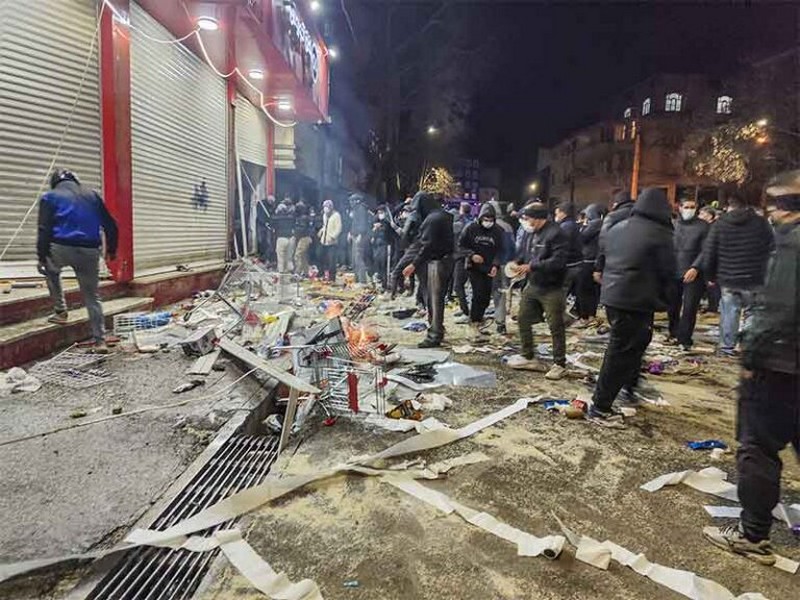
Second, Iran is passing through one of its most serious internal crises in decades. Protests, economic pressure, and social anger have placed the state under intense strain. Governments under such pressure tend to behave in one of two ways, either they seek compromise, or they externalise threat. Iran’s leadership has increasingly framed its internal unrest as externally encouraged, especially by the United States and its allies. This framing narrows space for restraint. When a regime begins to see protest and pressure as part of a foreign strategy, escalation becomes easier to justify internally.
Third, U.S. signalling has changed in tone. Washington has moved from managing Iran to openly questioning the durability of the Iranian system. Statements emphasising “support for the Iranian people,” combined with tightened sanctions and military readiness in the region, are read in Tehran not as moral concern but as pressure. Even when intervention is not intended, signalling matters. Perception often drives response more than intent.
Fourth, the military environment around Iran has become denser and more alert. Increased patrols, higher readiness levels among U.S. regional forces, and parallel preparedness by Iran’s own military reduce reaction time. When forces operate closer, faster, and under stress, the risk of miscalculation rises sharply. Escalation does not always begin with a decision; sometimes it begins with an incident.
Fifth, regional actors are behaving as if instability is possible. Russia’s evacuation of citizens must be read in this context. States evacuate civilians not because war is certain, but because they believe conditions could deteriorate rapidly. Such actions reflect risk assessment, not panic. When multiple states quietly prepare for disruption, it signals that escalation is being treated as a serious possibility.
Sixth, Iran occupies a special place in U.S. global strategy. The United States today is not primarily fighting regional adversaries; it is managing competition with Russia and China. In that larger contest, Iran functions as a buffer. Its independence limits how far U.S. influence can move across West and Central Asia. As long as Iran remains intact and resistant, it blocks corridors, complicates alliances, and slows strategic pressure on America’s real challengers.
This makes Iran persistently uncomfortable for Washington, not because it is the strongest enemy, but because it blocks the road.
At the same time, the U.S. has learned that direct wars are costly. Iraq and Afghanistan reshaped American thinking. Large troop deployments, body bags, and long occupations are no longer acceptable at home. The preference now is indirect pressure, sanctions, isolation, internal stress, strategic signalling. Ukraine demonstrates this approach clearly, heavy support, but no boots on ground, and externalised cost.
Iran resists this model more stubbornly than most states. Its geography, energy role, and political posture make it difficult to fold into U.S.-led systems. That resistance ensures pressure never truly eases. Over time, sustained pressure creates moments of instability. Those moments are often when escalation becomes tempting. Does all this mean war is inevitable? No.
But escalation does not require inevitability. It only requires narrowing options. Right now, options are shrinking. Trust is absent. Communication is minimal. Internal pressures are high. Military alertness is rising. External actors are preparing quietly. Narratives on both sides frame the other as unreasonable and dangerous. This is how escalation begins, not with declarations, but with convergence.
The danger is not intention alone. It is misjudgement. Each side may believe the other will step back. Each may believe pressure can be controlled. History suggests such confidence is often misplaced. If escalation occurs, it will not remain confined to Iran and the United States. Buffer states, regions, and ordinary people will bear the cost. Stability, once broken, does not return easily.
The question, therefore, is not only whether U.S.–Iran escalation seems imminent. The deeper question is whether the world is prepared for the consequences if restraint fails.
Dr. Ashraf Zainabi is a teacher and researcher based in Gowhar Pora Chadoora J&K
12 January 2026
Source: countercurrents.org