
By Junaid S. Ahmad
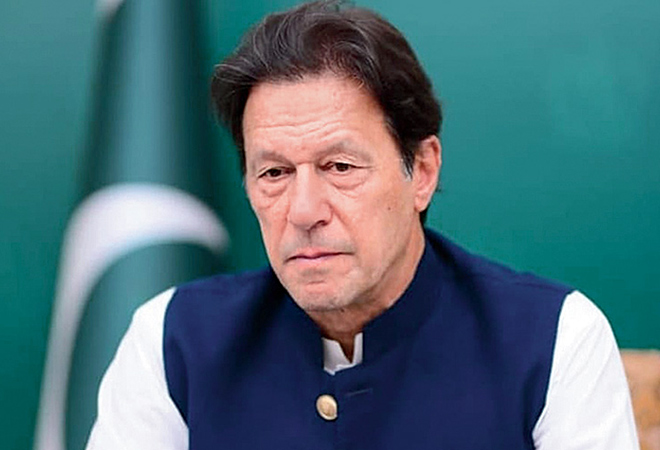
History sometimes produces moments when entrenched power collides with a nation’s conscience so abruptly that the collision reshapes politics. These moments do not create new leaders; they reinvent those already present. Pakistan is living through such a moment now. Through a blend of repression, miscalculation, and geopolitical fantasy, the country’s rulers — and their foreign enablers — have accomplished what once seemed impossible: they have transformed a mild reformist, Imran Khan, into Pakistan’s closest equivalent to a 21st-century revolutionary. This transformation was not Khan’s strategy. It was engineered — unintentionally and disastrously — by those who believed they controlled every lever of the Pakistani state. Their actions have pushed the country toward a crisis where repression without legitimacy resembles not authority but decline. This is not merely Khan’s story. It is the story of a state discovering that fear does not always produce obedience — sometimes it produces awakening.
The Snap: A Nation Demands “Proof of Life”
The turning point of Pakistan’s current anti-regime wave did not come from a speech or a verdict. It came from a plea. When Imran Khan’s son publicly demanded proof of life for his father — held in near-total isolation, denied visitors and sunlight — the national mood shifted. Pakistanis had long known the severity of Khan’s imprisonment. But the demand for proof stripped away even an iota of lingering denial. The image of the country’s most popular political figure effectively hidden in a dungeon evoked the darkest dictatorships of the last century. That the state feared one man’s popularity so intensely that it severed him from the world felt like a collective humiliation. A state may assume fear guarantees compliance. Sometimes it triggers revolt.
The Intellectual Silence Breaks
For nearly three years, much of Pakistan’s intellectual class practiced a refined evasiveness: condemn injustice everywhere except where it mattered most — the rulers of their own country. After Khan’s removal in April 2022, they shrank into carefully calibrated silence, shaped not by nuance but by fear. Enter Tariq Ali. In a widely circulated post, one of the world’s most respected leftist intellectuals — and an old friend of Khan — condemned the repression. His intervention exposed the moral contortions of Pakistan’s elite commentators, revealing that their silence was less about principle than self-preservation. At the same time, Fatima Bhutto added her voice. Her critique of the regime, coming from a member of Pakistan’s most storied political family, carried a particular sting. Her words underscored how far the current political class had drifted from the democratic values they once claimed. These interventions acted as a mirror. What reflected back was complicity. Whether this embarrassment evolves into courage remains unknown. What is undeniable is that the movement confronting Pakistan’s rulers grew without intellectual permission — and now dwarfs it.
Cracks in the Khaki–Civilian Alliance
Military-dominated regimes rarely collapse from external pressure alone; they fracture internally. Pakistan’s current hybrid order — military authority wrapped in civilian veneer — is showing unmistakable cracks. Nowhere is this clearer than in the hesitation surrounding an extension for Army Chief General Asim Munir. In a system where extensions are typically bestowed like loyalty badges, the delay is a political shockwave. Two forces drive this paralysis. First, public anger is unprecedented. The Sharif dynasty, long experts in survival, now faces a dilemma: extend Munir and inherit responsibility for his repression, or refuse and risk retaliation. Second, within the military itself, a dangerous sentiment is spreading: disgust. Not mutiny, but its precursor. Soldiers enforcing orders to persecute civilians, freeze charitable hospital accounts, and torture political detainees may obey — but they do not forget. Foreign capitals sense the instability. Beijing views Islamabad’s drift toward Washington with unease. Washington increasingly treats Munir — Trump’s self-proclaimed “favorite Field Marshal” — as a potential liability. And liabilities, in Washington, do not enjoy longevity.
The Kabul Delusion Returns
As domestic repression escalates, Pakistan’s establishment has revived an old obsession: manipulating Kabul. Border militarization, mass deportations of Afghans, and cross-border strikes have returned as policy tools. The farce reached global proportions when Donald Trump abruptly declared he wanted to “retake” Bagram air base — a proclamation widely believed to stem from Munir’s briefings framing the Taliban as once again harboring terrorists. The irony is sharp. After decades assuming the Taliban were “Pakistan’s boys,” Islamabad has discovered that they intend to remain independent — and immune to Pakistani pressure. Unable to control Kabul, the regime has turned frustration inward, weaponizing ethnic scapegoating and manufacturing security crises at home. History is unlikely to judge this chapter kindly.
Repression Without Borders
Pakistan’s intimidation tactics now extend beyond its borders. Dissidents and even foreign commentators report harassment linked to regime networks. Mario Nawfal, a global podcast host, hinted that despite interviewing critics of Zionism and Empire, he really feared for his safety now – just after he completed an episode with Imran Khan’s sister. His implication was unmistakable: the Pakistani state’s insecurity now reaches into global conversations. The regime’s investment in controlling narratives abroad reflects a deeper truth: the anti-regime movement is no longer confined to Pakistan. It has become transnational, and increasingly impossible to contain.
A Political Class Afraid of Its Own People
Pakistan’s civilian elites — the Sharifs, the Bhutto-Zardaris, and their orbiting powerbrokers — have long excelled at political survival. But every mechanism they rely on is failing. They have lost legitimacy, lost the narrative, and lost public trust. In attempting to destroy Khan, they have destroyed their own credibility. Weaponizing the courts, media, police, and intelligence apparatus has left the state brittle and ungovernable. Attempting to erase the largest political movement in the country has only expanded it. The ruling elites now resemble a regime fighting its own shadow — and losing.
A Movement That Refuses to Vanish
The most remarkable feature of Pakistan’s uprising is its discipline. For years, millions have resisted repression without resorting to violence. The state expected armed revolt; what it received was something far more destabilizing to authoritarian rule: a nonviolent, nationwide mobilization. Every tool meant to break the movement has strengthened it.
Prison transformed Khan into a martyr.
Torture deepened loyalty.
Freezing Shaukat Khanum’s accounts reminded the public of his humanitarian legacy.
Solitary confinement turned him into a myth. And myths cannot be jailed.
The Constitutional Stranglehold
The Pakistani Academics’ Collective’s Open Letter (https://wp.nyu.edu/pakistan_academics_collective/) on the 27th Constitutional Amendment captured the authoritarian climax: a new Constitutional Court to neuter the judiciary, lifelong immunity for military elites, arbitrary transfers of judges, and amendments to Article 243 formalizing military supremacy. This was not the onset of dictatorship. It was its attempted legal codification. Regimes confident in their future do not need such maneuvers; regimes anticipating collapse do.
Khan as the Living Martyr
Imran Khan is not Mandela or Che. But Pakistan’s rulers, driven by fear and hubris, have made him into something he never claimed to be: a living martyr — unseen yet omnipresent. His popularity has not endured imprisonment; it has grown because of it. The regime cannot release him without surrendering. It cannot keep him confined without inflaming revolt. And it dare not kill him — because the country would not recover. Khan may be imprisoned. But it is the regime that is trapped.
The Final Reckoning
History will record many things about this era: the arrogance of Pakistan’s rulers, the cowardice of its elite, the ambitions of foreign capitals, the ruthlessness of the security apparatus, and the extraordinary patience and resilience of the people. But above all, it will record the unintended creation of a revolutionary. To turn a reformist into a martyr is negligent. To turn a martyr into a symbol is dangerous. To turn a symbol into the nucleus of a national awakening — that is political suicide. Pakistan’s rulers have crossed that threshold. “Proof of life” is now not merely a question about Imran Khan — but about the republic itself, its dignity, and its future. What the regime calls strength is panic. What it calls stability is the stillness before rupture. Silence fractures. And eventually, truth walks through.
Prof. Junaid S. Ahmad teaches Law, Religion, and Global Politics and is the Director of the Center for the Study of Islam and Decolonization (CSID), Islamabad, Pakistan. He is a member of the International Movement for a Just World (JUST – https://just-international.org/), Movement for Liberation from Nakba (MLN – https://nakbaliberation.com/), and Saving Humanity and Planet Earth (SHAPE – https://www.theshapeproject.com/).
1 December 2025