
By HS Wong
This article was written by HS Wong. An earlier draft was edited and formatted with assistance from ChatGPT and Gemini for language polishing, structural organization, and clarity. All content, analysis, and perspectives reflect the author’s original views and have been fully reviewed and approved by the author.
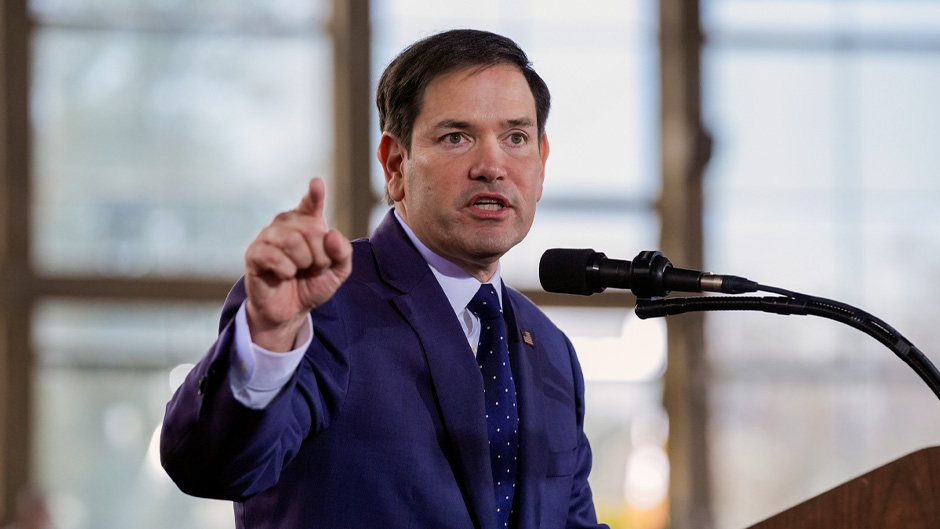
The 2026 Munich Security Conference (MSC) offered a familiar spectacle: the United States, Europe, and other global actors convening to discuss the shifting architecture of the post-Ukraine, post-pandemic world. Amid this, U.S. Secretary of State Marco Rubio delivered a speech that immediately drew attention; not least for the standing ovation he received. Headlines framed it dramatically, claiming Rubio had called for a return to centuries of Western expansion and even “recolonization of the Global South.”
From where I sit in Kuala Lumpur, that framing misses the real story. While many in the Western audiences cheered, many in the Global South and Middle East remained cautious. Understanding why requires reading not just the speech, but the subtext of who applauded and who did not.
The Ovation Was Relief, Not Affirmation
Rubio’s rhetoric was framed as a lesson in history. He reminded the audience that over five centuries, the United States and Europe had “walked together” in shaping global affairs. But the perceptive observer will note that the ovation came not for historical nostalgia, but for his closing lines:
“For the United States and Europe, we belong together… our destiny will always be intertwined.”
European leaders and Western delegates rose in collective relief. Rubio’s speech was necessary precisely because transatlantic unity is under severe strain. Years of “America First” policies, trade disputes, and divergent approaches to the war in Ukraine and the rise of China have created deep fissures. When Europeans rose to their feet, they were not just celebrating unity; they were desperately hoping the reassurance was genuine. Frankly, the standing ovation spoke as much about Western anxiety as it did about Western solidarity.
The Silence That Spoke Louder
Notably, Middle Eastern and Global South delegates did not join the ovation. Coverage from Reuters, Euronews, and Foreign Policy indicates that applause was almost exclusively from Western-aligned attendees. For delegates outside Europe and North America, references to centuries of Western expansion, even when framed historically, carry different resonances. They evoke legacies of colonialism and caution about Western-led narratives.
That silence carried distinct meanings across different quarters. China’s delegation likely stayed quiet for strategic reasons—any sign of tighter U.S.-Europe unity threatens Beijing’s leverage in tech, trade, and security forums. Gulf states like Saudi Arabia and the UAE probably did the same, protecting their carefully calibrated multivector foreign policy: Western security partners on paper, but deeply intertwined economically with China and Russia. Cheering a “Western destiny” speech would only complicate that balance. For ASEAN neighbors, including us here in Malaysia—where mainstream coverage of the event was thin and focused far more on Wang Yi than Rubio’s address—the silence simply reflected our longstanding non-alignment. We’ve always prioritized bilateral and regional ties over picking sides in great-power games.
Polite silence, therefore, was itself revealing. While the standing ovation signaled reassurance for the West, it did not translate into universal endorsement. In global forums, who applauds and who remains silent often speaks louder than the speech itself.
Closer To Home: The Economic Subtext
Rubio’s speech was not merely a history lesson. It carried a clear economic message aimed at countering Chinese influence and promoting a Western-led model for infrastructure, technology, and trade. For many Global South delegates, this economic pitch landed differently.
Countries across Asia, Africa, and Latin America have benefited tangibly from Chinese investment through the Belt and Road Initiative. These are often with fewer conditionalities attached than Western development models. Malaysia itself is a prime example of a nation balancing Western investment with Chinese infrastructure projects. When Rubio spoke of a shared Western destiny, the unspoken question for many listeners was: What concrete economic partnership does this offer us, and on what terms?
The silence from the Global South may have reflected skepticism toward a narrative that offered historical reassurance to Europeans. But this narrative provided little clarity on how the “shared destiny” would include, or benefit, the rest of the world.
Why The “Recolonization” Framing Sticks
The sensational headlines about Rubio calling for “recolonization” were, as noted, hyperbolic. Rubio was not advocating colonial expansion. Yet the fact that such interpretations gain traction warrants examination.
For many in the Global South, the language of a shared Western destiny, framed without acknowledgment of the centuries when that destiny was imposed on others, evokes not partnership but paternalism. Contemporary grievances compound this: economic coercion, conditional aid, lectures on governance, and military interventionism still characterize much of Western engagement with the developing world. When Rubio spoke of walking together for five centuries, the unspoken response from much of the Global South was: We were not walking beside you; we were the ground beneath your feet.
The silence in the hall was not just about history. It was about a present in which Global South nations continue to navigate a global order largely designed by others.
What Malaysia Should Take Away
Rubio’s MSC speech underscores a persistent geopolitical reality: Western alliance-building is largely Western-centric. For Malaysia and other Global South countries, this offers a dual lesson:
Western reassurance is selective. Applause reflected reassurance for transatlantic allies grappling with their own anxieties, not global consensus.
Engagement requires discernment. Regional players must read beyond rhetoric, balancing diplomatic courtesy with strategic autonomy.
Silence is strategic data. Observing who applauds, and who does not, offers critical insight into global power perceptions. The quiet delegates were not passive observers. They were signaling, in the only way diplomatically appropriate, that Western-centric narratives do not automatically command their allegiance.
Moving Forward for Malaysia
Malaysia can turn such moments into opportunity. While the standing ovation highlighted Western solidarity, born partly of anxiety, the response from Malaysia should focus on asserting regional leadership and strategic independence.
Southeast Asian coalitions can be strengthened to advance shared regional priorities. ASEAN’s centrality is not merely a diplomatic principle. It is a necessity in a multipolar world. Ties with other Global South partners can be deepened to balance Western influence without severing ties. South-South cooperation offers practical alternatives to dependence on any single power bloc.
And while we should continue to engage with Western powers constructively, we must ensure they are on terms that protect national and regional interests. Malaysia can welcome investment and partnership while resisting narratives that presume a shared destiny defined in Washington or Brussels. Importantly, economic relationships should be diversified to ensure that no single partner, whether West or East, holds disproportionate leverage over Malaysia’s development trajectory.
By doing so, Malaysia ensures that Western-centric narratives do not dictate its strategic choices, while still maintaining constructive relations with transatlantic partners. The MSC, in this light, becomes not only a stage for Western reassurance, but also a mirror reflecting where Malaysia must assert its agency.
Conclusion
Rubio’s Munich speech was an attempt at a reaffirmation of U.S.-Europe unity, celebrated by the Western core of the conference. But the standing ovation was as much about Western anxiety as it was about Western solidarity. It reflects a desperate hope that the transatlantic partnership can withstand internal and external pressures.
Middle Eastern and Global South delegates listened politely, signaling that Western-centric narratives rarely resonate universally. Their silence was not empty; it was filled with the weight of colonial memory, contemporary economic calculus, and strategic independence.
For Malaysia, the key takeaway is simple: in a world where alliances, histories, and global narratives are interpreted differently across regions, strategic discernment is as important as diplomacy. Observing who applauds, and who does not, offers critical insight into global power perceptions and informs how nations like Malaysia can navigate a complex, multipolar order with clarity, confidence, and autonomy.
This article was written by HS Wong. An earlier draft was edited and formatted with assistance from ChatGPT and Gemini for language polishing, structural organization, and clarity. All content, analysis, and perspectives reflect the author’s original views and have been fully reviewed and approved by the author. HS Wong is a member of the Executive Committee of the International Movement for a Just World.
18 February 2026