
By Junaid S. Ahmad
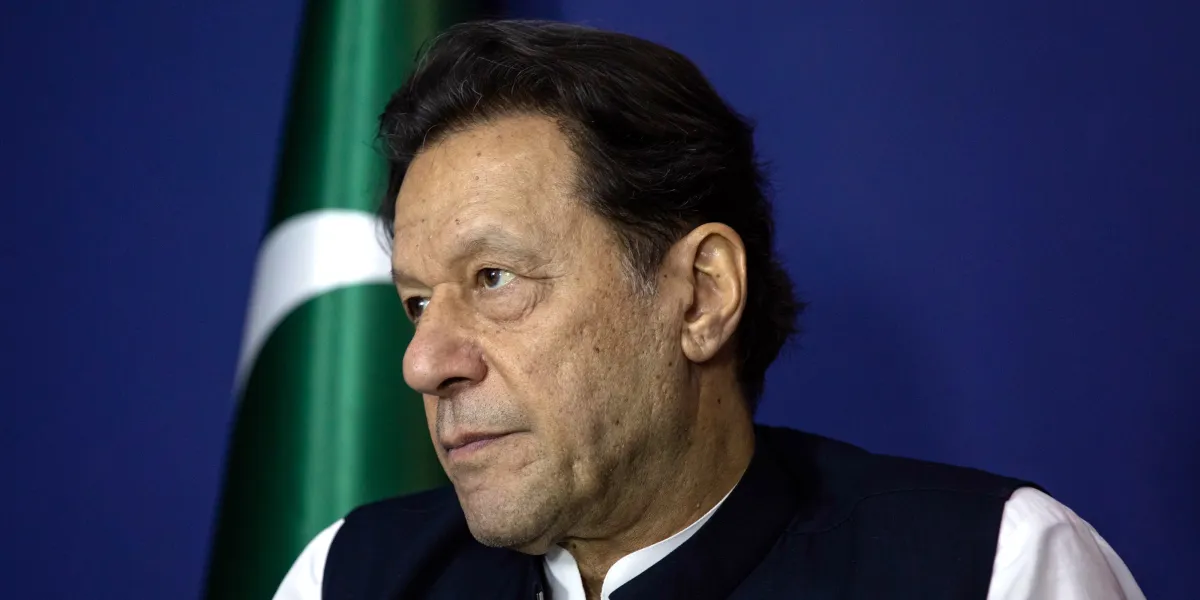
A country can drag itself through incompetence and still pretend to be a state. It can wallow in corruption and still mouth the language of democracy. It can survive vanity in office and mediocrity in command. What it cannot survive — without decomposing into something predatory and obscene — is the open conversion of custodial cruelty into a governing method. The instant a regime uses a prisoner’s body as a political weapon, it forfeits every moral claim to republicanism. And when credible reports indicate that Imran Khan — former prime minister, mass political force, and the most popular public figure of his era — has suffered catastrophic vision loss in state custody, this is not a medical update. It is a charge sheet.
Custody is not an unfortunate circumstance. It is absolute control.
A state that locks a man in a cell seizes total power over his physical existence. It dictates his light, his air, his doctors, his movement, his contact with the world. There is no haze of confusion, no bureaucratic accident, no procedural technicality that can dilute that fact. If a prisoner’s eyesight collapses under total state monopoly, the state owns the collapse. Power authors the darkness.
In Pakistan, that power converges in one man above all: Field Marshal Asim Munir.
Munir presides over an establishment that boasts of omnipotence. It engineers elections. It bends judges. It silences journalists. It fractures parties. It rearranges governments like furniture. It insists it sees everything and controls everything. For such a regime to claim that it somehow cannot guarantee adequate medical care in a prison it commands is not merely implausible — it is contemptuous. It insults the intelligence of an entire nation.
You cannot run a country like a surveillance grid and then feign helplessness over a detainee’s failing eyesight.
If the military perimeter is sacred, then so is its responsibility. If the chain of command is absolute, then so is its liability. Munir cannot cloak himself in medals and invoke “national security” while a captive’s vision reportedly disintegrates under his watch. That is not tragic irony. It is institutional brutality. Rank does not soften this fact; it sharpens it. Authority that demands submission but refuses accountability is not strong. It is predatory.
The Field Marshal persona — uniform as virtue, hierarchy as holiness — is a brittle fiction sustained by intimidation. It demands that citizens confuse fear with respect. It treats obedience as proof of legitimacy. But a regime that must shrink a rival’s physical world — cut his sunlight, filter his visitors, ration his medical access — and then parade this as “order” is not projecting confidence. It is broadcasting terror. It is a command structure so insecure that it polices a captive’s body to reassure itself.
Beneath this uniformed dominance sit the Houses of Sharif and Bhutto-Zardari — dynastic enterprises that trade on inherited names while underwriting a system that reeks of custodial abuse. Their speeches about constitutionalism ring hollow when they continue to anchor a political order under which a rival’s physical integrity is credibly in question. This is not reluctant participation. It is calculated partnership.
They are not passive bystanders caught in a storm. They are political shareholders in the structure that keeps the cell locked.
Every parliamentary vote they cast, every public statement they calibrate, every silence they maintain while a prisoner’s health deteriorates is not nuance — it is complicity. They provide civilian camouflage for a regime that governs by attrition. Their polish does not civilize the system; it sanitizes it for broadcast.
And the regime’s endless invocation of “law” is nothing more than camouflage. Law without accountability is a prop. When the state exercises total control over a body and that body suffers severe harm, the state is responsible — fully, immediately, and without evasion. There is no labyrinth of procedure that can erase that. There is no semantic trick that can convert physical deterioration into administrative neutrality. Delay is not diligence. Silence is not sovereignty. Both are shields for power afraid of exposure.
The symbolism is savage and unmistakable. Eyesight is not a trivial faculty; it is the instrument of witnessing. To see is to document. To document is to remember. To remember is to resist. When a prisoner’s sight fails in custody, the message radiates outward: even perception is conditional. Even your senses exist at the mercy of power. The dissident’s body becomes a warning to the public — this is what defiance costs.
And yet the regime’s cruelty has produced the opposite of its intended result. Custodial severity has not reduced Imran Khan; it has elevated him. Confinement has hardened him into a symbol precisely because the state has tried so relentlessly to diminish him. The contrast is now unavoidable: a man reportedly losing vision in a concrete cell versus a military command terrified of open political competition. Attempts to erase him have engraved him deeper into public consciousness.
Even sections of the liberal intelligentsia — long wary, sometimes skeptical, occasionally hesitant — are no longer hiding behind aesthetic distance. The rawness of alleged bodily harm in custody has stripped away comfortable abstractions. This is no longer a debate about rhetoric or style. It is about a prisoner’s failing eyesight under state control. Where there was once restraint, there is now growing condemnation. Custodial brutality has forced clarity.
Western backers, meanwhile, continue their ritual murmurs about “stability.” Stability for whom? Stability for markets, for security arrangements, for diplomatic convenience. Rarely stability for the citizen whose political rights are throttled or the prisoner whose health is in jeopardy. Their selective outrage — thunderous when adversaries are accused, subdued when partners are implicated — does not create legitimacy. It launders power. By treating Pakistan’s ruling apparatus as a respectable ally while credible claims of custodial abuse mount, they normalize what should be intolerable.
But the body cannot be spun.
If a detainee’s vision collapses in custody, no press conference can reverse that reality. The louder the proclamations of control, the clearer the truth: a regime that must dim a prisoner’s world to maintain its own dominance is not secure. It is frightened. It is brittle. It is aware — perhaps more than anyone — that its authority rests not on consent but on coercion.
The state may still command prisons, judges, cameras, and decrees. It may still stage-manage its solemn declarations. But power that governs by shrinking a captive’s light — his visitors, his doctors, his sight — is not sovereign. It is exposed. It is admitting that it cannot defeat a rival in the open arena of votes and persuasion and must instead retreat to confinement and control.
A republic proves itself by how it treats the powerless. If Pakistan’s rulers believe they can normalize custodial degradation as routine governance, they are gambling that fear will permanently substitute for legitimacy.
History does not reward regimes that govern through the erosion of a prisoner’s body.
And in the final reckoning, a command structure that trembles before one captive has already revealed the poverty of its strength. It is not sovereign. It is merely armed.
Prof. Junaid S. Ahmad teaches Law, Religion, and Global Politics and is the Director of the Center for the Study of Islam and Decolonization (CSID), Islamabad, Pakistan. He is a member of the International Movement for a Just World (JUST – https://just international.org/), Movement for Liberation from Nakba (MLN – https://nakbaliberation.com/), and Saving Humanity and Planet Earth (SHAPE – https://www.theshapeproject.com/).
13 February 2026
Junaid S. Ahmad
Professor of Law, Religion, and Global Politics
Director, Center for the Study of Islam and Decolonization (CSID)
Islamabad, Pakistan
@Academicatarms
https://wp.nyu.edu/pakistan_academics_collective/
https://just-international.org/
https://nakbaliberation.com/
https://www.theshapeproject.com/