
Friday 13-November-2026
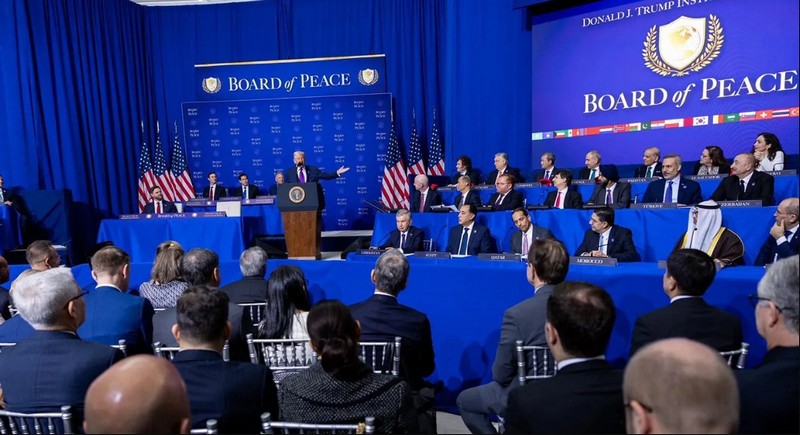
There is a word that keeps appearing in almost every document, every press release, and every pledge from the Board of Peace: reconstruction. The word carries an assumption so obvious that almost no one questions it: that what existed before the genocide can be restored. That the hospitals, the schools, the neighborhoods, the families, the future that was stolen can somehow be rebuilt, as if three years of industrial slaughter were merely a temporary interruption.
This assumption is false. And until we confront this falsehood, we will continue to fight the wrong battle. What was destroyed cannot simply be rebuilt!
Let me be precise about what happened in Gaza. Israel did not merely destroy buildings, though UN satellite data shows that more than eighty percent of structures have been damaged, the majority destroyed. It did not merely destroy infrastructure, though water, electricity, and sanitation systems have been systematically dismantled. Israel destroyed a society.
When more than seventy-four thousand Palestinians were killed, entire family lineages were erased, grandparents, parents, children, grandchildren, removed from the civil registry in single strikes. When universities were bombed, the accumulated knowledge of generations was destroyed: the professors, the researchers, the students, the libraries, the archives. When doctors and nurses were killed or kidnapped, the capacity to heal was crippled. When more than two hundred Palestinian journalists were targeted and killed the capacity to remember was attacked.
A joint assessment by the United Nations, the European Union, and the World Bank has estimated that human development in Gaza has been set back by seventy-seven years, and that more than $71 billion will be needed over the next decade. (Note here that the World Bank, a co-author of this ledger of ruin, wants us to believe they can be part of the remedy!). But even this statistic understates the reality. What took seventy-seven years to build was not merely infrastructure, it was a society; and societies cannot be rebuilt by foreign contractors with World Bank loans.
This is the first truth that must be confronted: there is no going back. The Gaza that existed before the genocide is gone. It can, and will, be replaced by something new, something that Palestinians themselves must define, but it cannot be reconstructed as if nothing happened.
The Board of Peace and the replacement project
The Board of Peace is not a reconstruction mechanism. It is a replacement mechanism. It is designed to replace Palestinian political agency with international trusteeship, Palestinian sovereignty with external oversight, and Palestinian self-determination with a technocratic administration accountable to foreign capitals.
The structure reveals this. The Board’s chairman is Donald Trump, who in February 2025 proposed that the United States take over Gaza, relocate its population, and turn it into “the Riviera of the Middle East.” Under a charter that makes him chairman for life, he holds authority to set agendas, break tie votes, create or dissolve subsidiary bodies, and direct spending. Its envoy is Nickolay Mladenov, who has said the Board is building its plan on verification, and who told the United Nations Security Council there can be no credible pathway to Palestinian self-determination while Hamas and other armed groups control Gaza. Statehood is thereby made conditional on a verification process that carries no date, which is another way of saying there is no timeline for Palestinian self-governance. Its Executive Board includes the like of Tony Blair, whose role in the illegal 2003 invasion of Iraq remains a stain on international justice, and representatives from donor states, but no place was reserved for the Palestinians on board. The National Committee for the Administration of Gaza operates under external supervision. This is not a temporary arrangement pending Palestinian elections. It is a permanent structure of external control presented as humanitarian necessity.
And the Board’s own record confirms this trajectory. The charter places authority in one man, accountable to no Palestinian body. In May 2026, seven months into the truce, Mladenov conceded that “the door to the future of Gaza is still closed.” Statehood is framed as an outcome contingent on verified disarmament, not as a right with a date attached. These are not slips of the tongue. They are structural features. They reveal what the Board of Peace actually is: a structure designed to manage Gaza in the interests of Israel and its Western backers, not in the interests of Palestinians.
The Bangkok protests and the global connection
This is why activists have been gathering in Bangkok to protest against the IMF and the World Bank during their October annual meetings, and why the Board of Peace belongs in the same critique. Their struggle is not separate from Gaza’s. It is the same struggle.
The IMF and World Bank have always used financial leverage to restructure economies in the interests of creditors and powerful states. Structural adjustment programs in Thailand, in Asia, in Africa, and in Latin America have imposed austerity, privatization, and dependency on nations that were told these were the conditions of development. The Board of Peace’s reconstruction plan for Gaza is the same logic applied to a territory under occupation. It is austerity dressed as humanitarianism, and trusteeship dressed as peace.
The protesters in Bangkok understand what many diplomats refuse to acknowledge: that the Board of Peace is not a neutral humanitarian body. It is the financial and political arm of a system that uses debt and conditionality to control the weak, and that system must be confronted everywhere: in Bangkok, in Gaza, in every capital where the IMF and World Bank impose their conditions.
Steadfastness (Sumud) as the answer
The Palestinian people have already demonstrated, over three years of genocide, that they will not accept the terms of their own erasure. This is what we call steadfastness or Sumud: the stubborn, unreasonable, magnificent refusal to break.
The same steadfastness that denied Israel military victory will deny the Board of Peace political legitimacy. The same resilience that kept Palestinians on their land despite bombardment will keep them from accepting external tutelage. The same persistence that built tunnels to resist siege will build institutions to resist trusteeship.
This is not optimism. It is an assessment of political reality. The Board of Peace presides over a ceasefire that remains fragile: Gaza’s health authorities report more than 1,500 Palestinians killed since it took effect. Under a third of the aid and reconstruction trucks anticipated under the agreement have been allowed in. Its own envoy describes the stabilization force as “a little bit stuck” on Israel’s commitments, and Israel’s prime minister has rejected its disarmament roadmap outright. The Board has failed because it was never designed to succeed on Palestinian terms, and Palestinians will not accept success on any other terms.
What Palestinian-Led reconstruction would look like
It would begin with Palestinian sovereignty over the process. Not consultation, not inclusion, not “Palestinian ownership” as a slogan. Sovereignty! Palestinians would decide what gets built, where, and under what conditions. They would control the flow of resources, the allocation of contracts, and the design of institutions. External actors would provide support, not direction.
It would center Palestinian agency, not victimhood. The Palestinians of Gaza are not passive recipients of aid. They are political actors with legitimate national aspirations. Reconstruction must be embedded in a political horizon that includes ending the siege, opening the crossings, and realizing the right to self-determination for all Palestinians. Without this horizon, reconstruction is merely the management of despair.
It would prioritize the reconstruction of society over the reconstruction of buildings. This means investing in education, healthcare, culture, and community institutions. It means rebuilding the social fabric that three years of genocide has torn apart. It means creating the conditions for Palestinians to remember, to mourn, to heal, and to organize.
It would be funded not through loans and conditions but through reparations and unconditional support. The destruction of Gaza is a crime. The perpetrators must pay. The International Court of Justice has already affirmed that Israel is under an obligation to make reparation for damage caused by its internationally wrongful acts in the occupied territory. The international community, which has been complicit with Israel through arms transfers and diplomatic protection, has a moral and legal obligation to provide reparations without strings attached.
This is not utopian. It is the minimum condition for any meaningful reconstruction. Anything less is not reconstruction. It is the administration of permanent dispossession.
The Global South and the new international order
The refusal of the Board of Peace is not a Palestinian task alone. It is a task for the entire Global South: for all peoples who have experienced colonialism, who have suffered under IMF conditionality, who have been told that their sovereignty must be sacrificed for stability and development.
The Palestinian struggle is the frontline of a broader struggle: the struggle for a world where international law applies equally to all peoples, where institutions of global governance serve the weak as well as the strong, and where development is not conditional on political compliance.
The Global South possesses the resources, the institutions, and the experience to build a different model. We have development banks, sovereign wealth funds, engineering expertise, and medical capacity. What we lack is the political will to deploy these resources in defense of Palestinian sovereignty, rather than deferring to Western-led frameworks that reproduce dependency.
This must change. The Global South cannot continue to produce declarations of solidarity while allowing Western institutions to dictate the terms of Gaza’s future. We must build independent mechanisms: a Gaza Reconstruction Fund governed by Palestinian priorities, a coalition of Global South states committed to funding reconstruction without conditions, and a diplomatic bloc willing to challenge the legitimacy of the Board of Peace in international forums.
The choice before the world
Three years of genocide have brought the world to a crossroads. It can continue down the path of the Board of Peace, the World Bank fund, and the International Stabilization Force, a path that leads to permanent trusteeship and the erasure of Palestinian political agency. Or it can choose a different path: the path of Palestinian sovereignty, international accountability, and genuine reconstruction.
The choice is actually between two models: destruction and reconstruction. One is a model of external control, in which Palestinians are managed and controlled by pro-Israel international institutions accountable to Trump and donors rather than to Palestinians. The other is a model of Palestinian self-determination, in which reconstruction is an expression of sovereignty, not a substitute for it.
The first model will fail. It will fail because it is built on the illusion that what has been destroyed can be selectively rebuilt, and that Palestinians will accept the terms of their own permanent dispossession. The second model is clearly the only path to a viable future.
The steadfastness of the Palestinians has already denied the occupier its victory. Now it must deny the international community its trusteeship. The struggle has moved from the battlefield to the boardroom, from the rubble of Gaza to the corridors of international diplomacy. But the principle remains the same: no people can be rebuilt by those who destroyed them. And no future can be reconstructed on the foundations of occupation.
The goal is not only to rebuild Gaza. The goal is to liberate Gaza and see a free Palestine.
-Dr Muslim Imran is the Director of Asia Middle East Center. He contributed this article to the PIC.
Source: english.palinfo.com